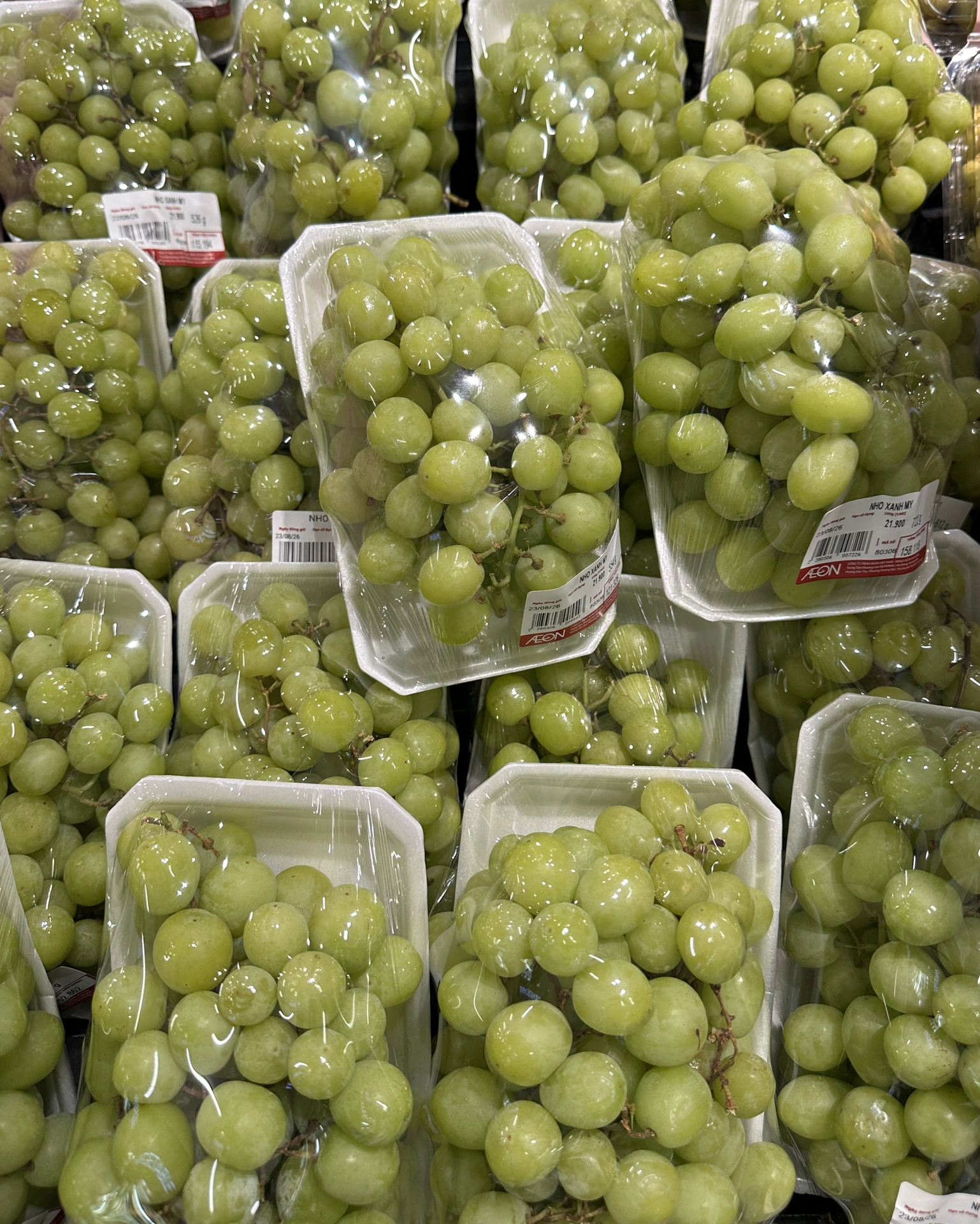
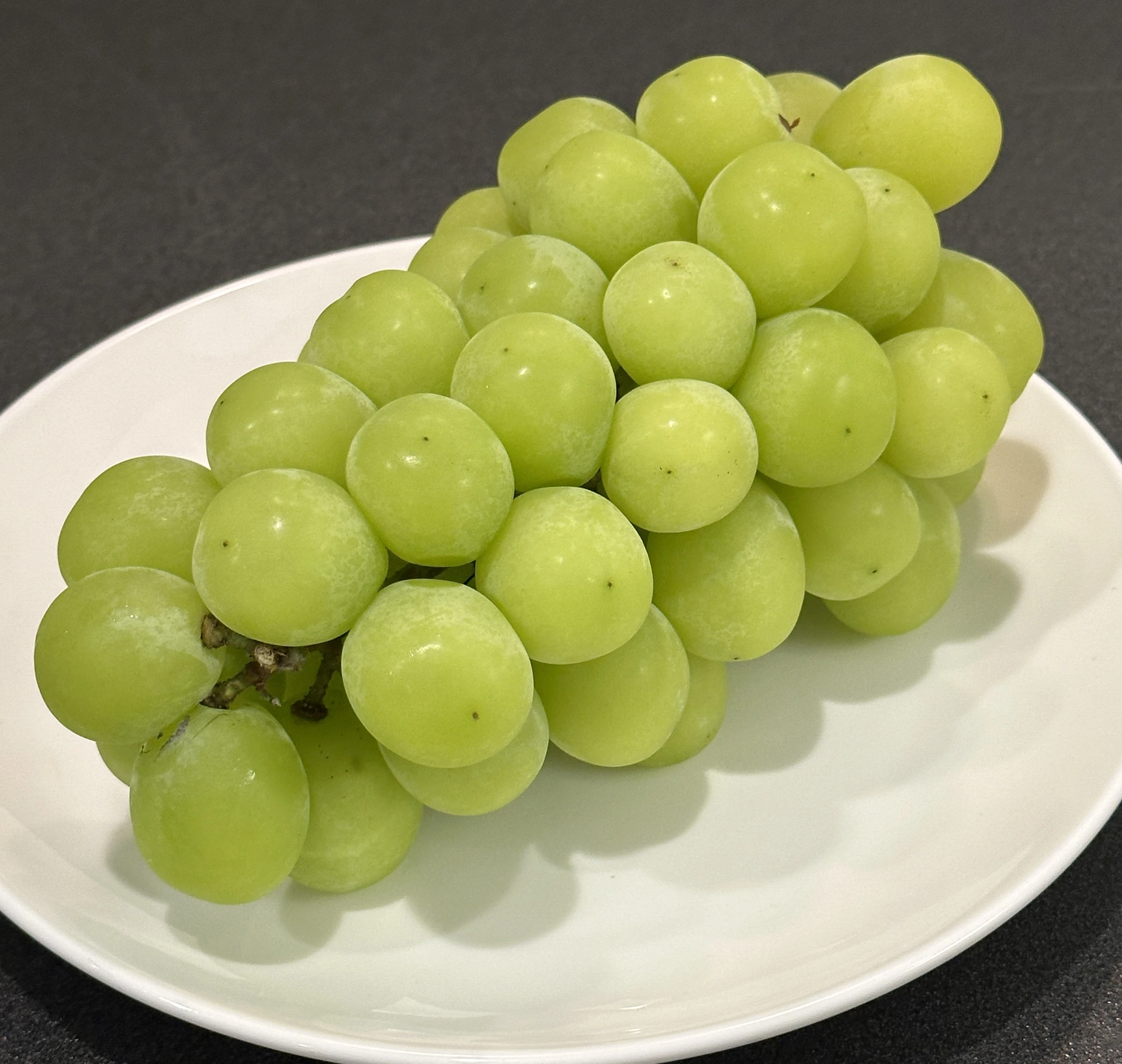
I bought these grapes at MaxValu in Hanoi and tasted them on October 20, 2026. Read my notes on flavor and texture alongside photographs of grapes at the store and on a plate, or jump to the preparation guidance.
Tasting notes · How to cut grapes · Purchase record
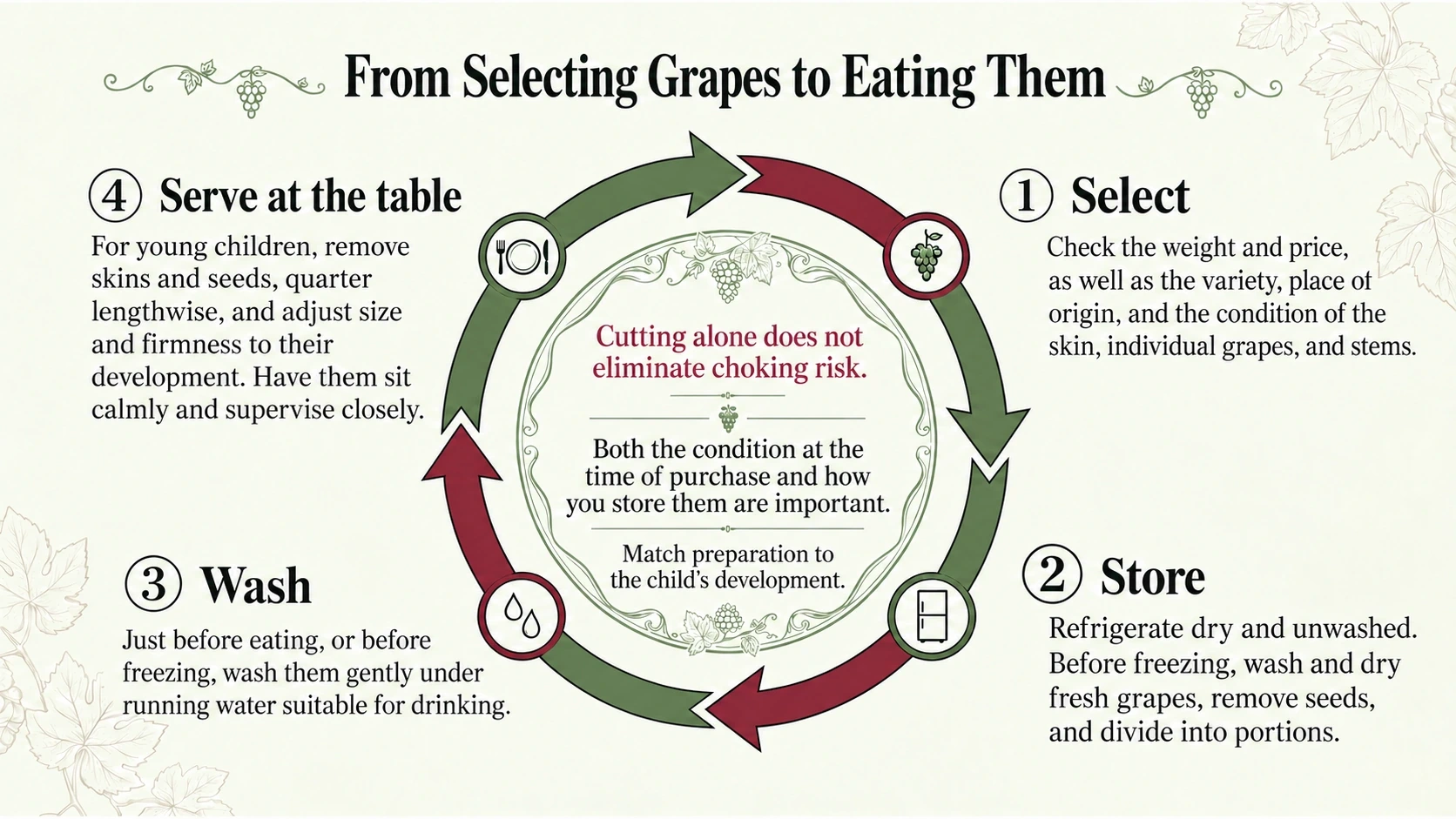
After buying grapes in Vietnam, keep them cool and rinse the portion you plan to eat under running water just before serving. How you handle the skin and seeds depends on the variety. For young children, do not serve grapes whole: preparation and cutting matter.
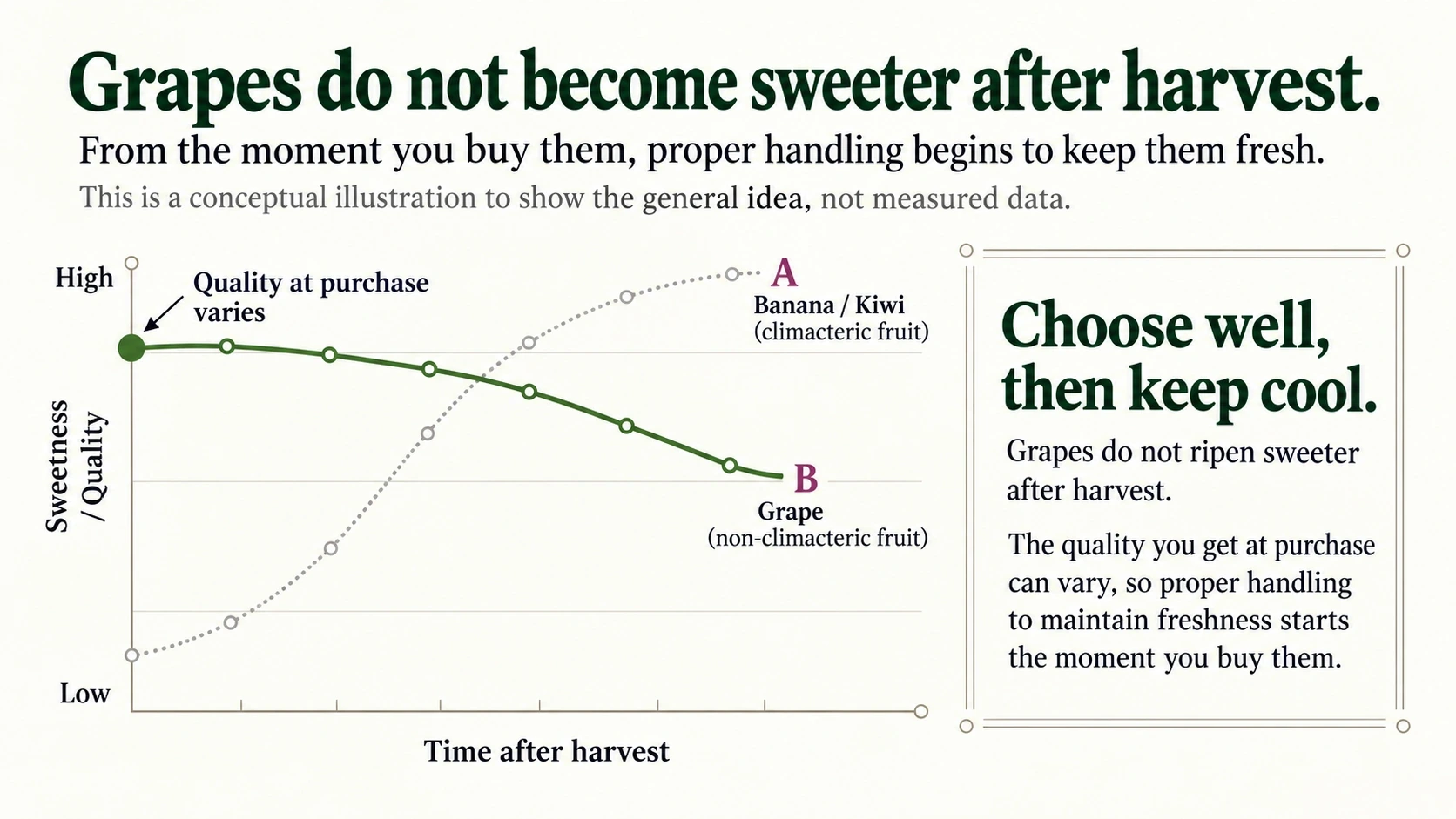
Grapes are not a fruit to leave out in the hope that they will ripen sweeter after harvest, as bananas or kiwifruit can. This does not mean their flavor and texture stay unchanged in storage: they can lose moisture, soften, or spoil. Both their condition at purchase and their storage afterward matter. Research on postharvest quality
A quick guide to buying and eating grapes
| Topic | What to check |
|---|---|
| Vietnamese name | nho |
| Flavor and texture | Vary with variety, ripeness, and storage conditions |
| Origin | Check country of origin, producer, and importer information |
| Choosing | Look at firmness, damage, mold, and stem condition |
| Washing | Rinse gently under drinking-quality running water just before eating |
| Skin and seeds | Peel if the skin is unpleasant to eat; remove seeds |
| Storage | Refrigerate dry and unwashed; freeze fresh fruit if you cannot use it soon |
| Serving children | Avoid whole grapes; quarter lengthwise and adapt to the child’s development |
What do grapes grown in Vietnam taste like?
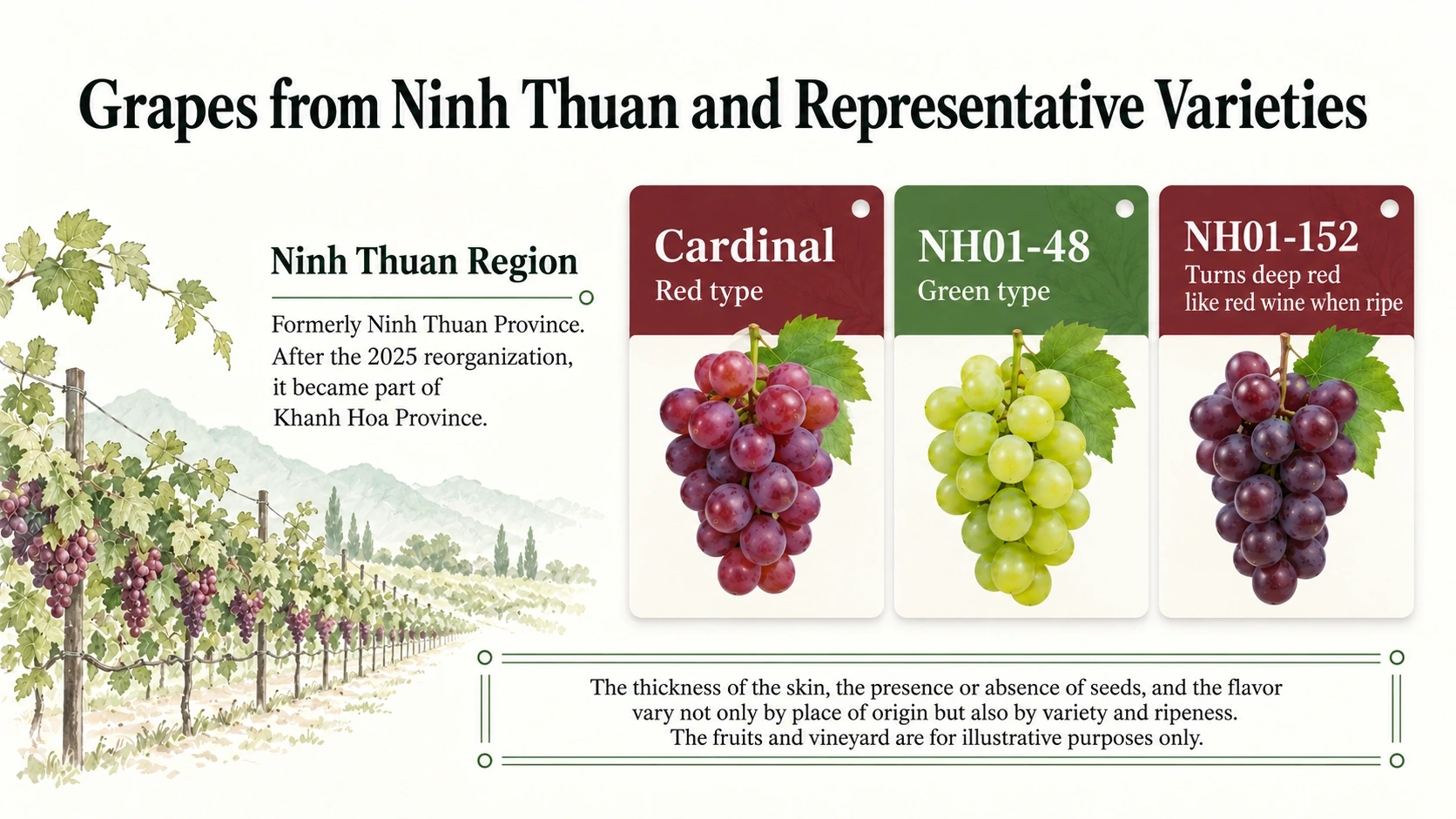
Ninh Thuan is a major domestic grape-growing region. Following the 2025 administrative reorganization, the former province became part of Khanh Hoa. This article uses Ninh Thuan as the familiar name of the growing area. Information on the reorganization (in Vietnamese)
Varieties grown there include red Cardinal, green NH01-48, and NH01-152, which becomes wine-red when ripe. VAAS variety overview (in Vietnamese) Both local and imported grapes come in different varieties. Origin alone cannot establish that one country’s grapes are sweeter than another’s. Consider sweetness, acidity, skin thickness, and the presence of seeds separately.
For more background, see our guide to grape varieties and growing regions in Vietnam.
Grape prices in Vietnam: compare the cost per kilogram
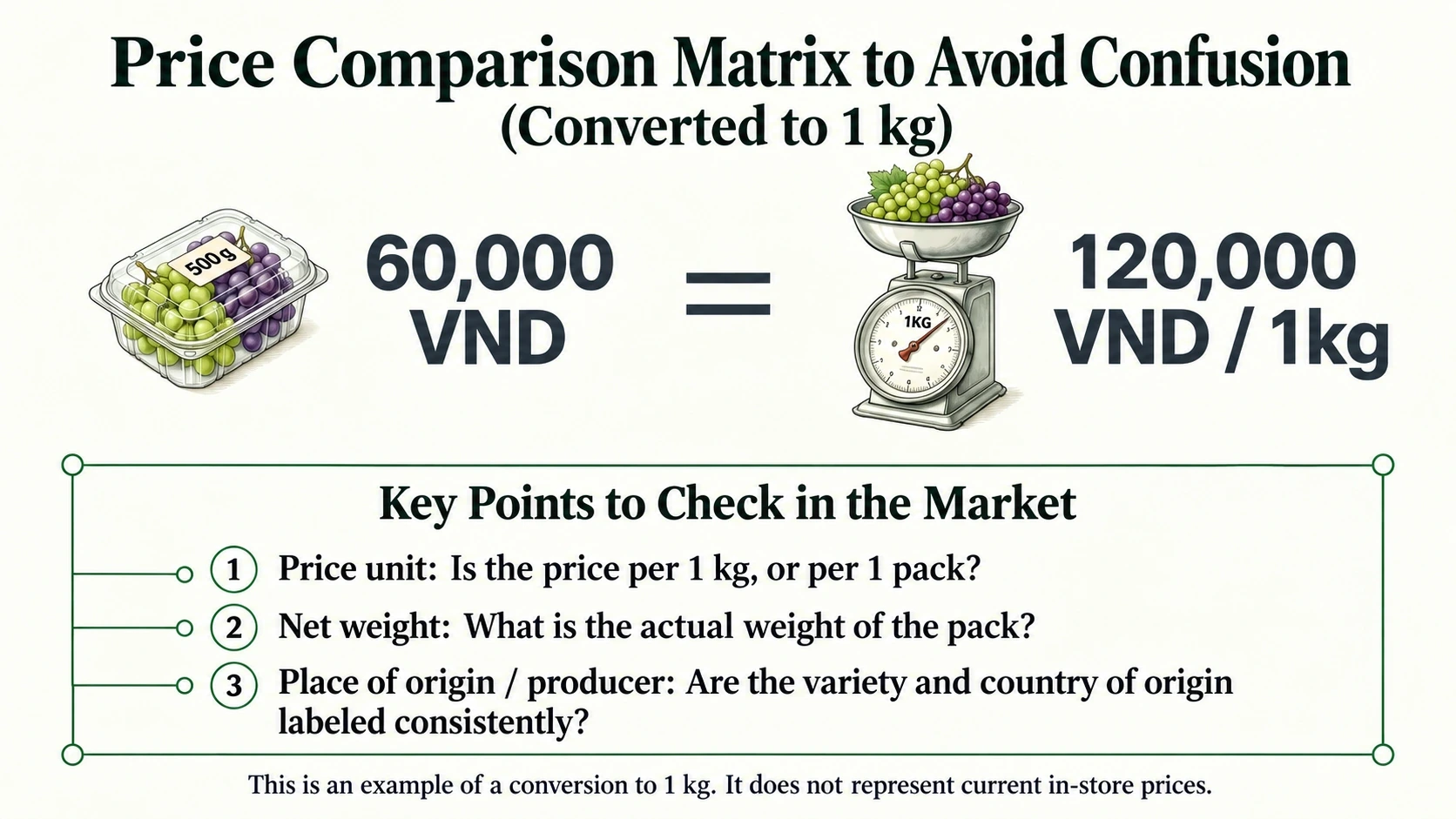
Prices vary by variety, grade, season, and package weight. When comparing similar varieties from the same origin, converting prices to a cost per kilogram makes differences easier to understand.
For example, a 500 g pack costing VND 60,000 works out at VND 120,000 per kilogram. This is a calculation example, not a quotation of current retail prices.
At supermarkets, fruit shops, farm stalls, or online stores, check:
- Whether the price is per kilogram or per pack.
- The net weight, variety, and country of origin.
- Producer, seller, and importer information.
- Fruit condition, storage, and handling during delivery.
When shopping online, you cannot inspect the fruit directly, so also compare the listing with the labels on the delivered product. A low price alone does not establish counterfeiting or false origin labeling.
MaxValu purchase and tasting record: October 2026
This pack was purchased at MaxValu on October 18, 2026, and eaten on October 20, two days after purchase.
| Item | Record |
|---|---|
| Purchase date | October 18, 2026 |
| Date eaten | October 20, 2026 |
| Store | MaxValu, Hanoi |
| Origin labeling | “H.QUOC” appears in the product name; a separate country-of-origin field is not visible in the retained label photograph. |
| Product label | NHO XANH SM H.QUOC |
| Labeled weight | 0.580 kg (580 g) |
| Labeled unit price | VND 24,900 per 100 g (VND 249,000 per kg) |
| Labeled total | VND 144,420 |
| Packing date | 18/10/26 (October 18, 2026) |
These prices document this particular pack, rather than a general market price.
Flavor and texture: personal impressions on October 20, 2026
| Attribute | Impressions of this pack of Shine Muscat grapes |
|---|---|
| Sweetness | Very sweet to my taste. |
| Acidity | Almost no noticeable sourness. |
| Aroma | A pleasant grape aroma. |
| Texture | Crisp, pleasantly firm flesh released plenty of juice with each bite. The thin skin broke with a light pop. |
I found no seeds and enjoyed eating them with the skin on. These are personal impressions of this particular pack.
How to choose good grapes
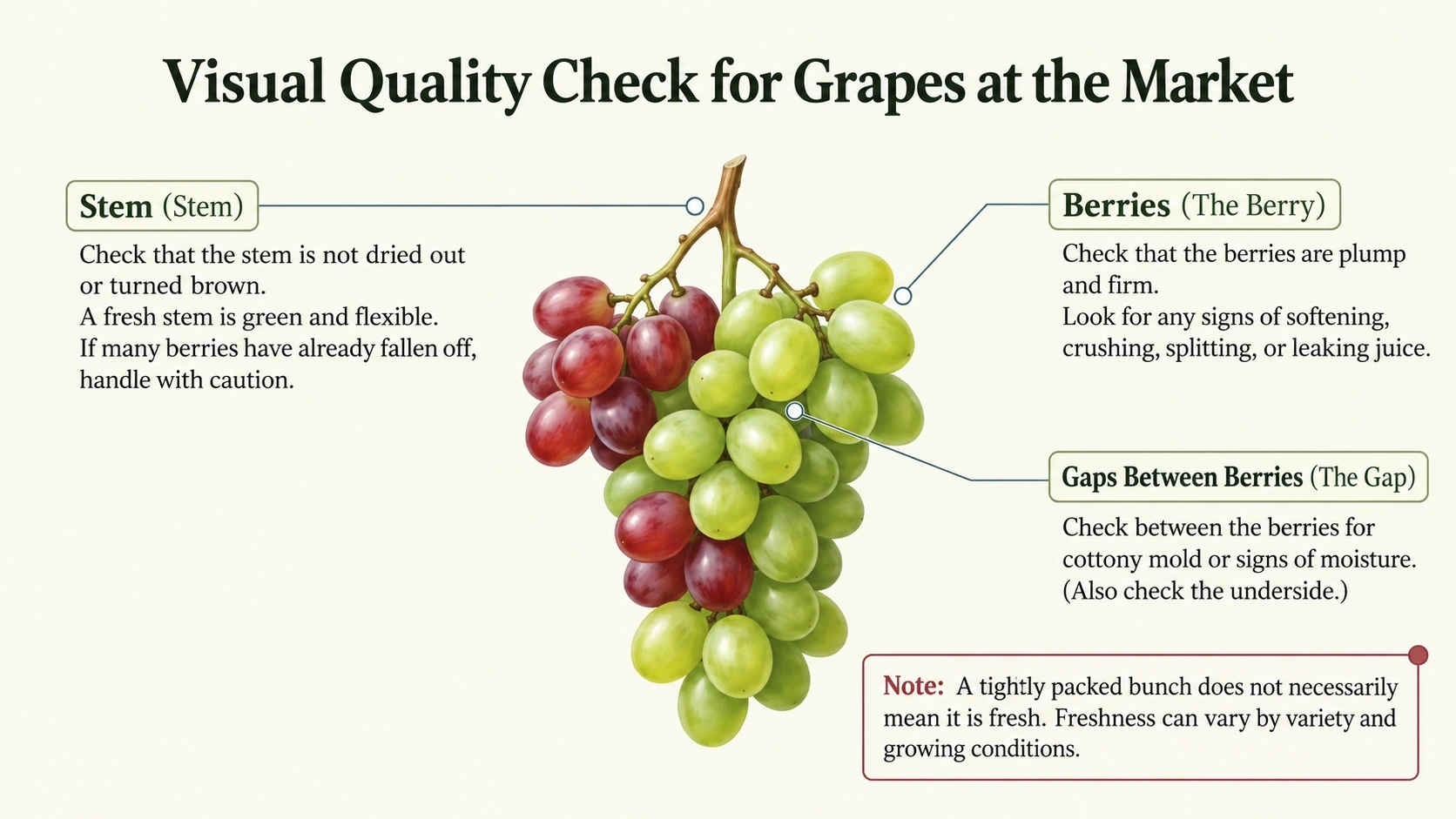
Start with the berries: look for plump fruit without splits, mold, or leaking juice. Dry or brown stems and shriveled berries are also clues to condition. UC Davis quality indicators
- Inspect the berries. Look for plump fruit with little crushing or splitting.
- Check for mold and leakage. Look between berries and at the bottom of the pack where visible.
- Look at the stems and berry attachment. If stems are very dry or many berries have detached, inspect the rest of the bunch carefully.
- Read the variety label. If you want seedless grapes or an easy-to-eat skin, check the label or ask the seller rather than judging by color alone.
Spacing between berries varies with the variety and how the bunch was grown. Tightly packed fruit is not necessarily fresher. Inspect gently without pulling at or squeezing grapes that are for sale.
Can you identify local and imported grapes by appearance?
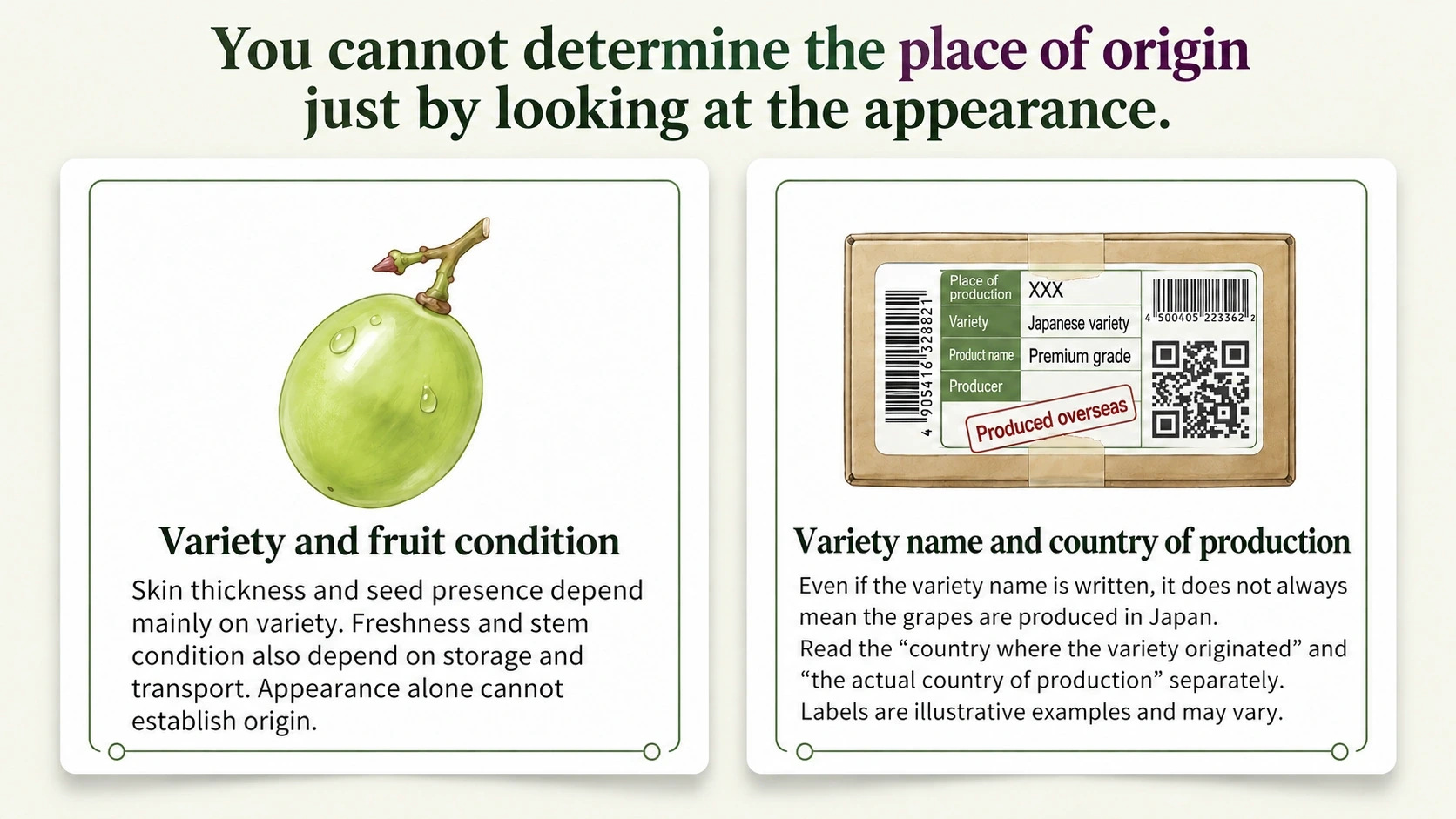
Appearance alone cannot establish where grapes were grown. Skin thickness, seeds, sweetness, and stem color are influenced by variety and, for some characteristics, by storage and transport conditions.
If you want grapes from Ninh Thuan, check origin labels and producer information. A Japanese-developed variety name such as Shine Muscat does not mean the fruit was grown in Japan. Read the variety’s country of development separately from the fruit’s actual country of production.
The white coating: grape bloom and washing
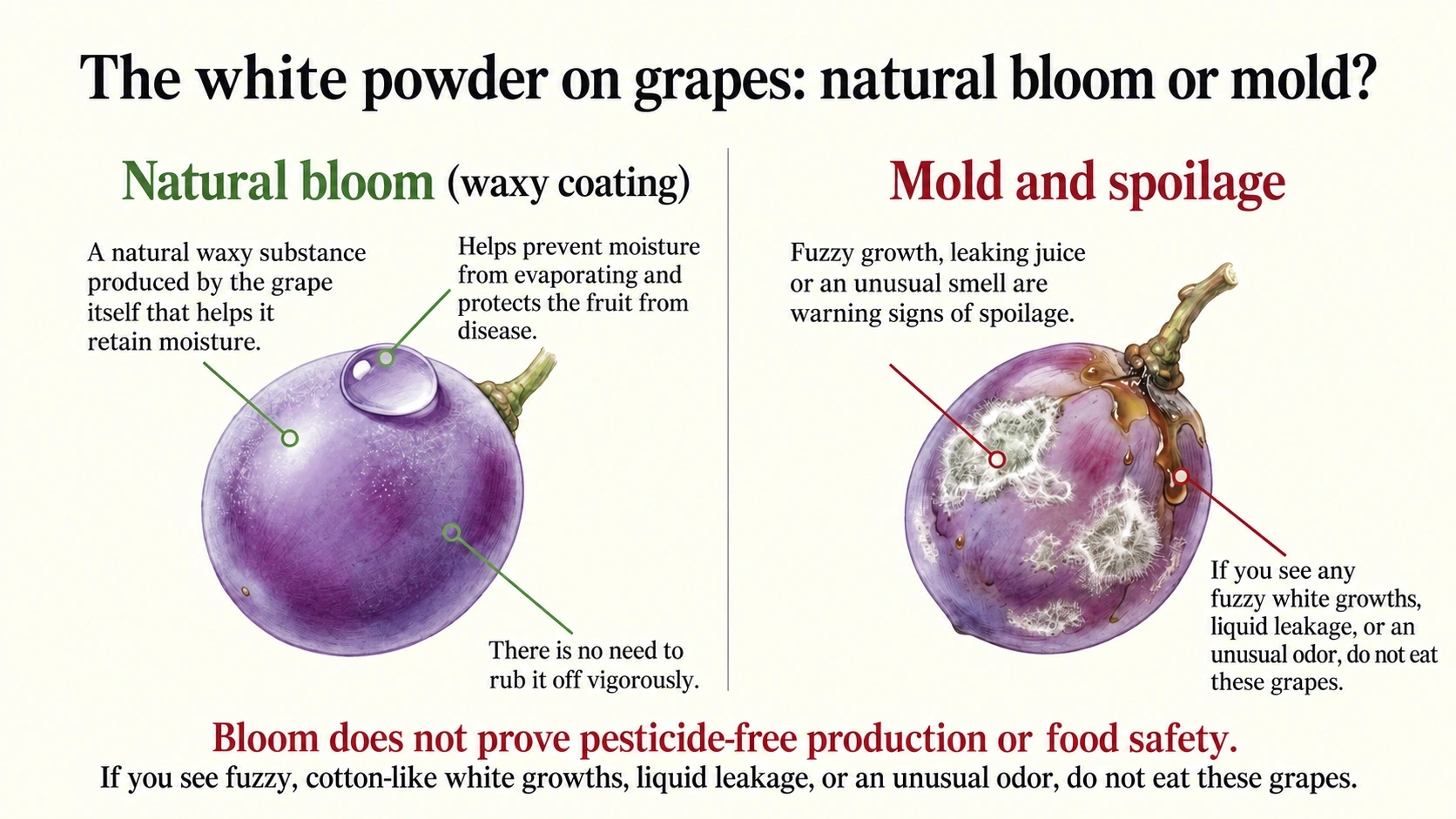
Bloom is produced by the fruit itself
A fine white coating may be bloom, a waxy substance naturally produced by the fruit. It helps protect grapes, including by reducing moisture loss. MAFF’s explanation (in Japanese)
Bloom does not prove that grapes were grown without pesticides or that they are hygienically safe. Not every white deposit is bloom: avoid fruit with fuzzy mold, leaking juice, or an unusual smell.
Wash under running water just before eating
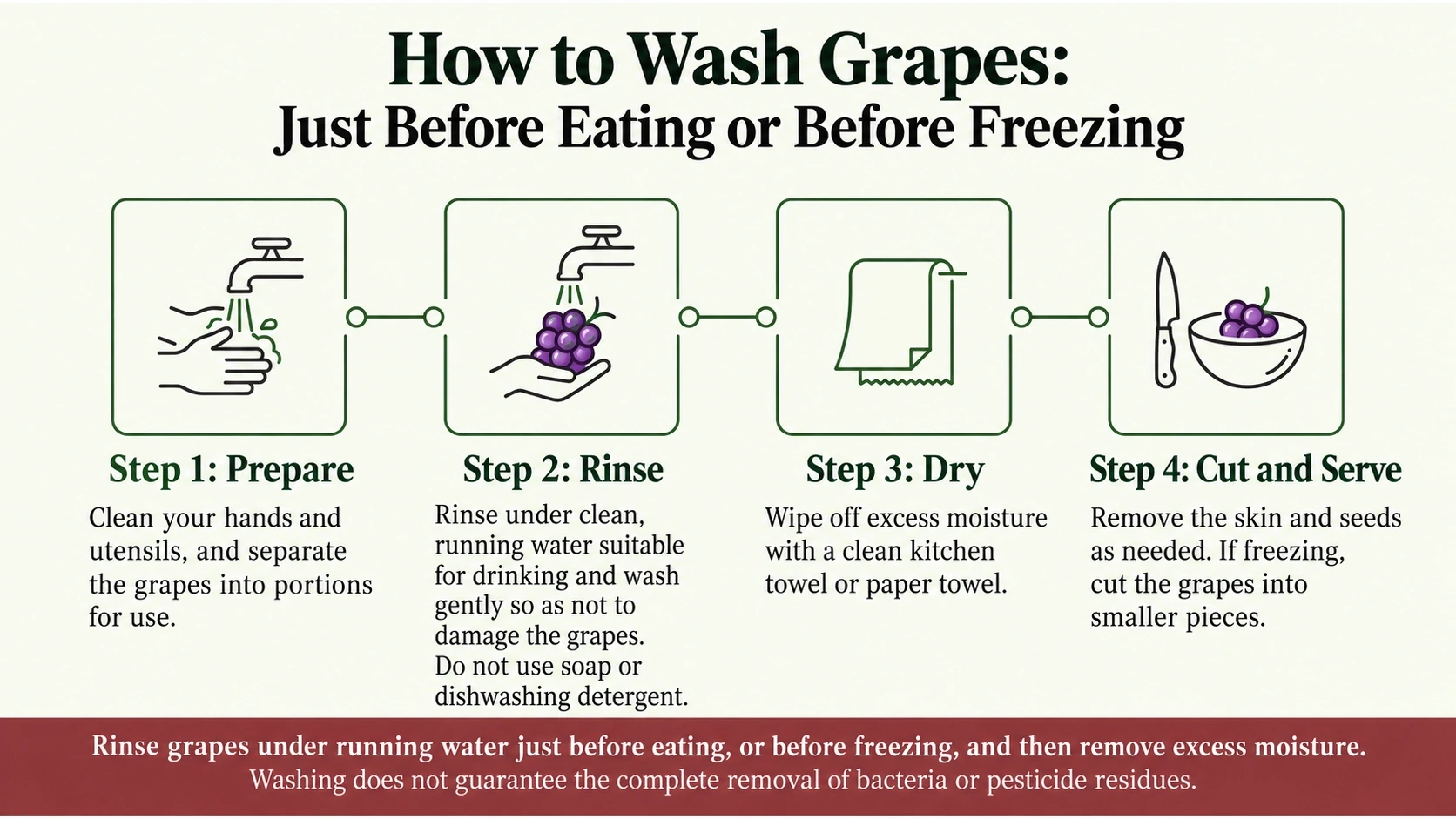
- Clean your hands and utensils, and set aside the amount you will use.
- Rinse gently under drinking-quality running water without damaging the berries.
- Pat dry with clean kitchen paper or a similar clean material.
- Peel, cut, and remove seeds as needed.
Wash before cutting even if you intend to peel the grapes. Do not use soap or dishwashing detergent. Rinsing reduces surface dirt and bacteria; it does not sterilize the fruit or guarantee complete pesticide removal. FDA guidance on washing produce
Should you eat the skin and remove the seeds?
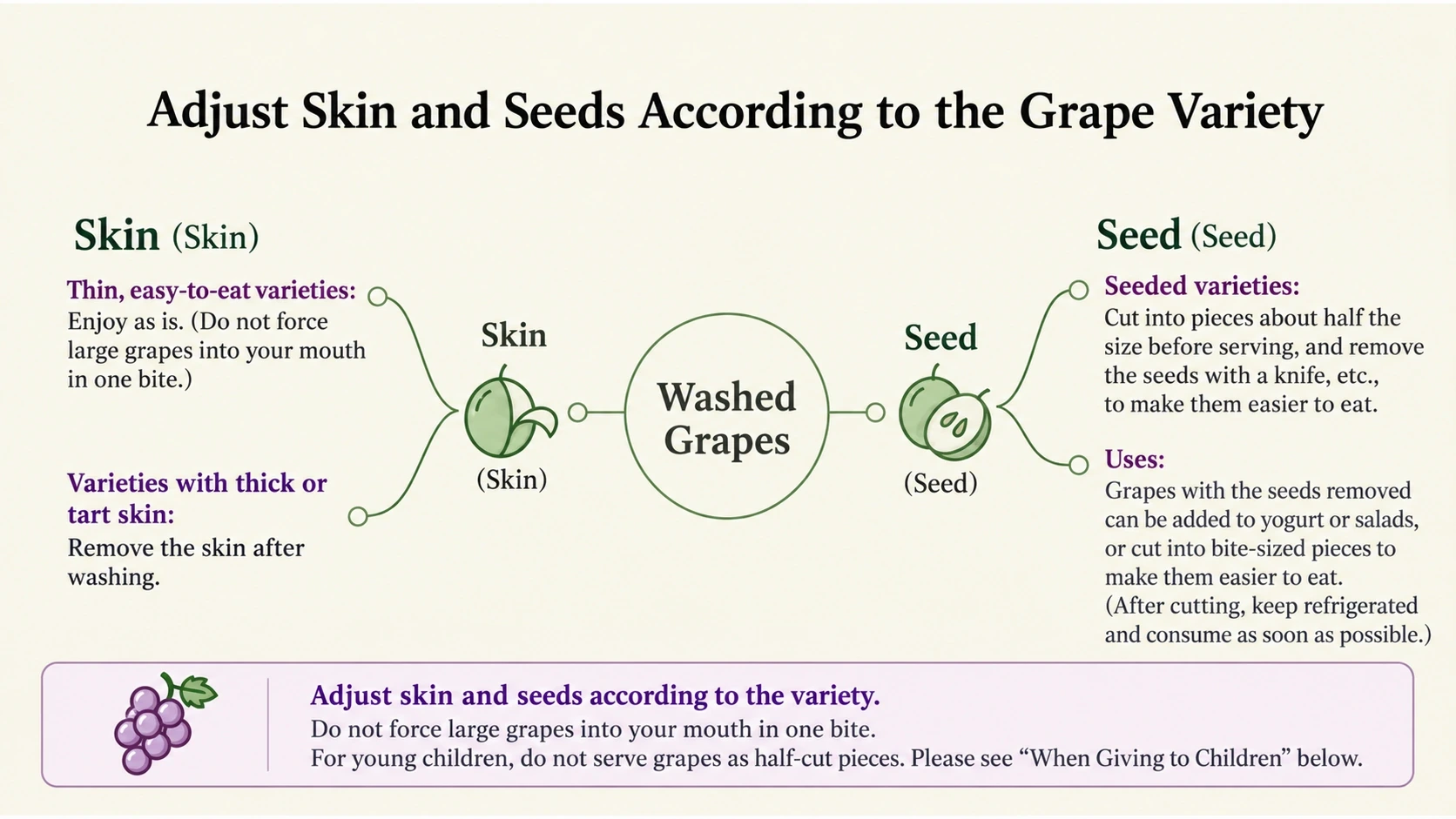
After washing, eat the skin if you find it pleasant, or peel it if it is thick or astringent. Cutting seeded varieties and removing the seeds can make them easier to eat.
Even when the skin is easy to eat, there is no need to put a large grape into your mouth whole. Cut fruit to suit the person eating it.
Add grapes to yogurt or salads
Cut grapes into manageable pieces, remove seeds, and add them to yogurt or leafy salads for sweetness and juiciness. Refrigerate cut fruit and use it promptly.
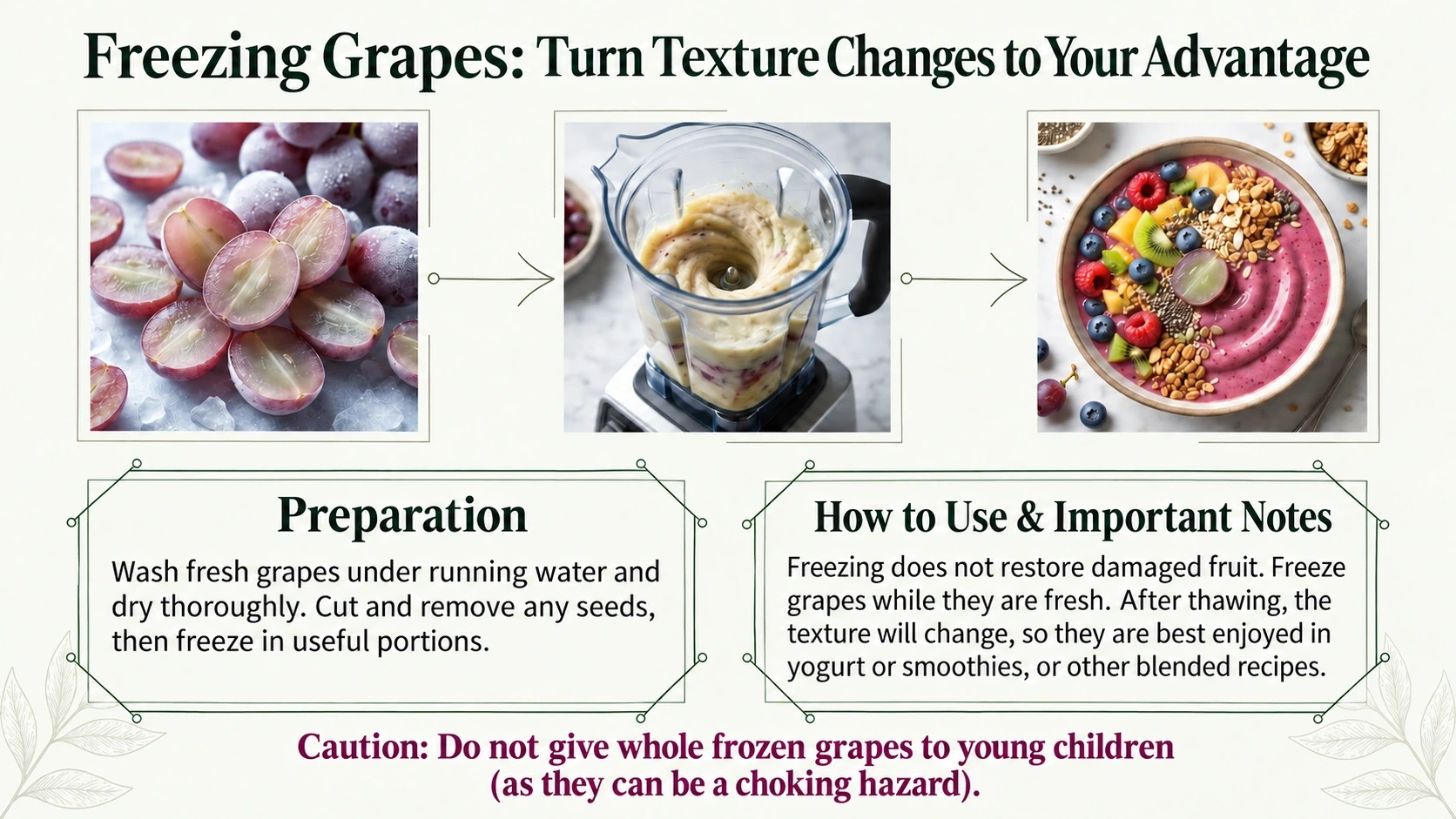
Freeze grapes
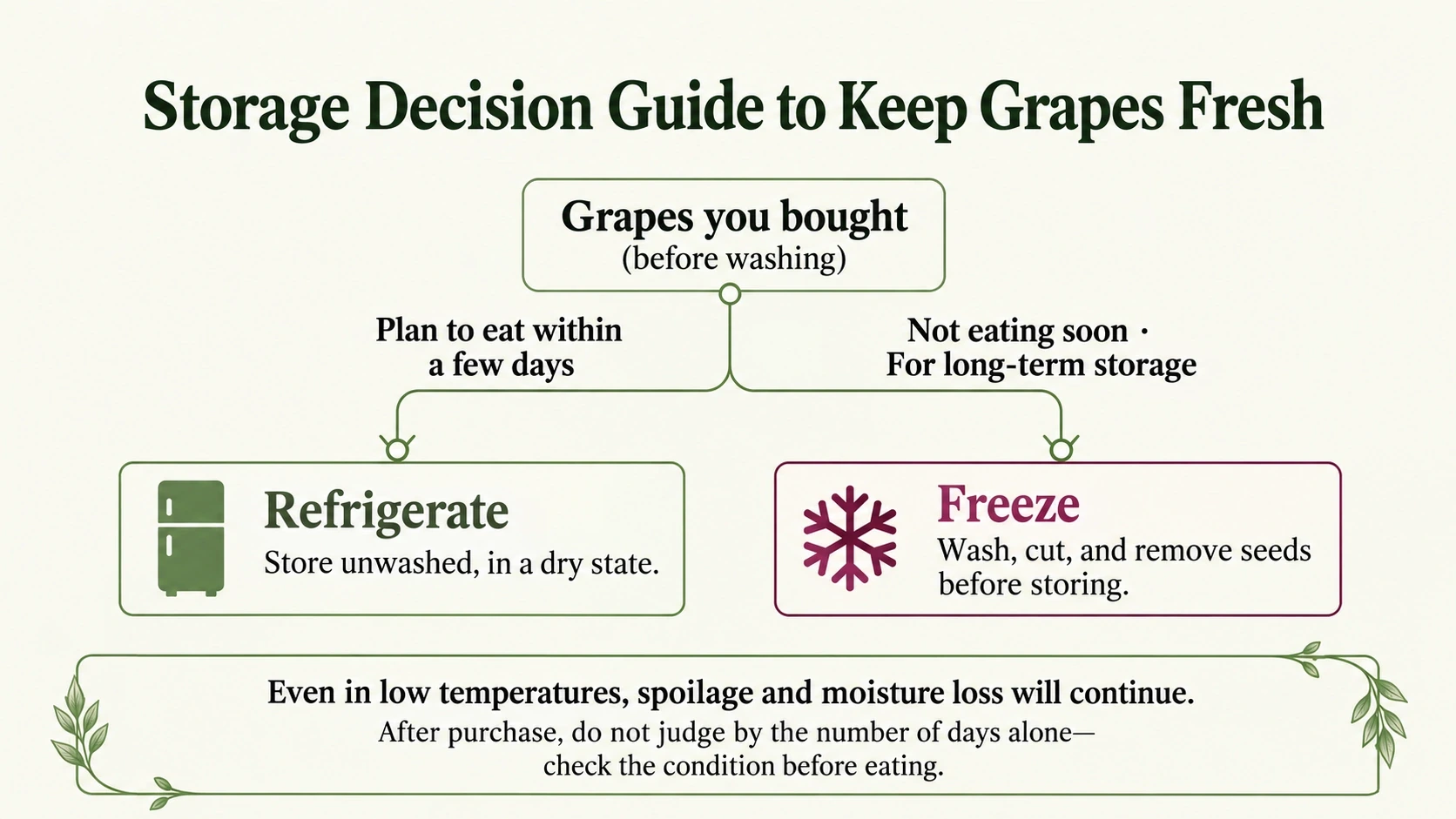
Wash and dry the grapes thoroughly. If they have seeds, cut them and remove the seeds before placing the fruit in a freezer-safe bag or container. Adjust the firmness before eating, for example by allowing some thawing. Do not give whole frozen grapes to young children.
How to store grapes
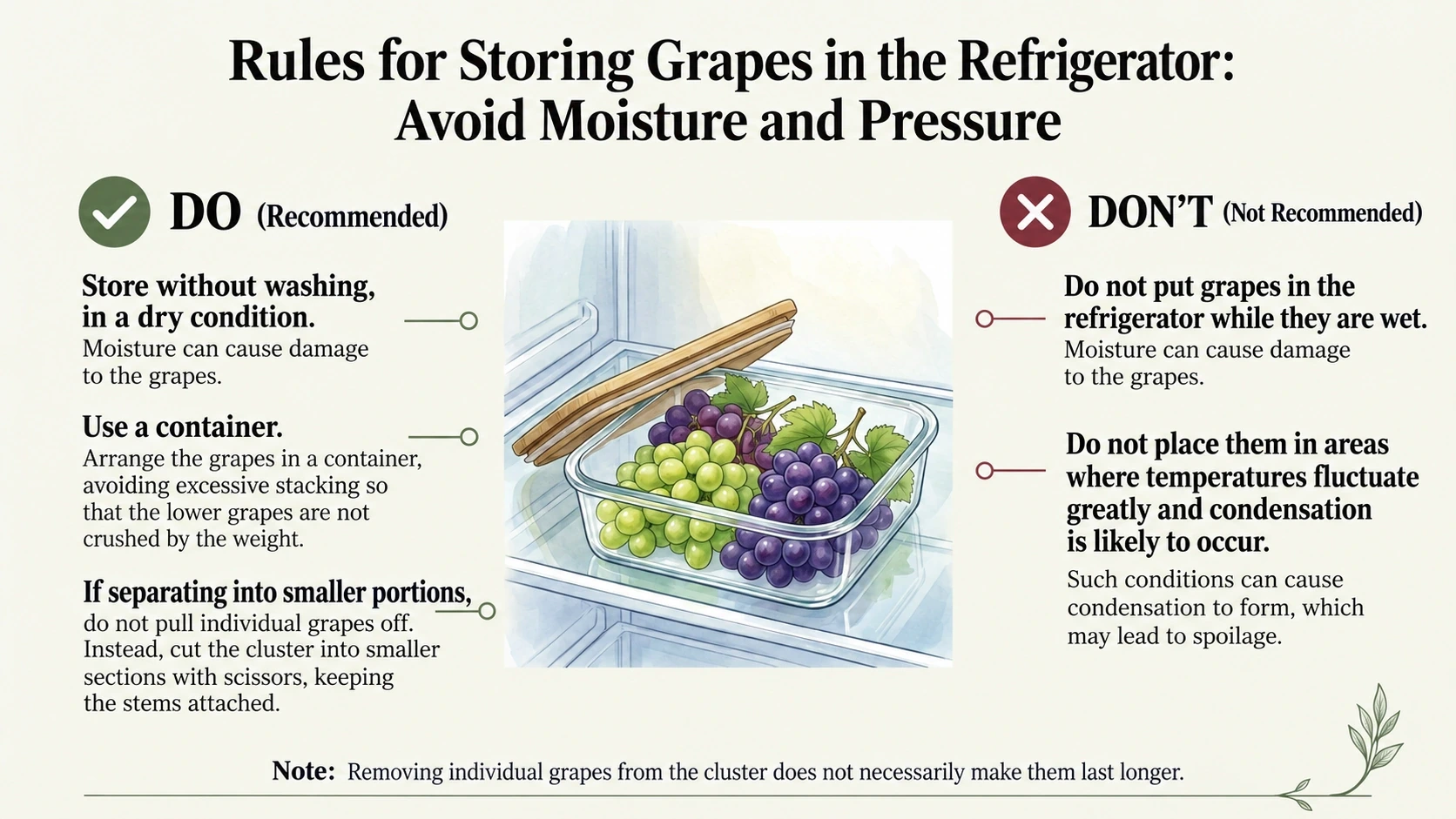
Refrigeration: keep them dry and avoid crushing
Refrigerate grapes you will not eat immediately in a suitable container, dry and unwashed. Avoid piling them so deeply that the lower berries are crushed. Check for condensation and spoilage, and use them promptly.
To divide a bunch, snip the branching stems with scissors rather than pulling off the berries. Removing berries from the bunch does not automatically extend their storage life.
Storage life depends on freshness at purchase, variety, and refrigerator temperature. Do not judge only by the number of days since purchase. Avoid grapes with mold, leaking juice, or an unusual smell. UC Davis notes that some grape decay can continue even at low temperatures. Postharvest storage and quality
Freezing: divide surplus fruit into portions
Wash and dry grapes while they are still fresh, then freeze in useful portions. Freezing does not make spoiled fruit suitable to eat again. Thawed grapes have a different texture from fresh ones, making them useful in yogurt or smoothies.
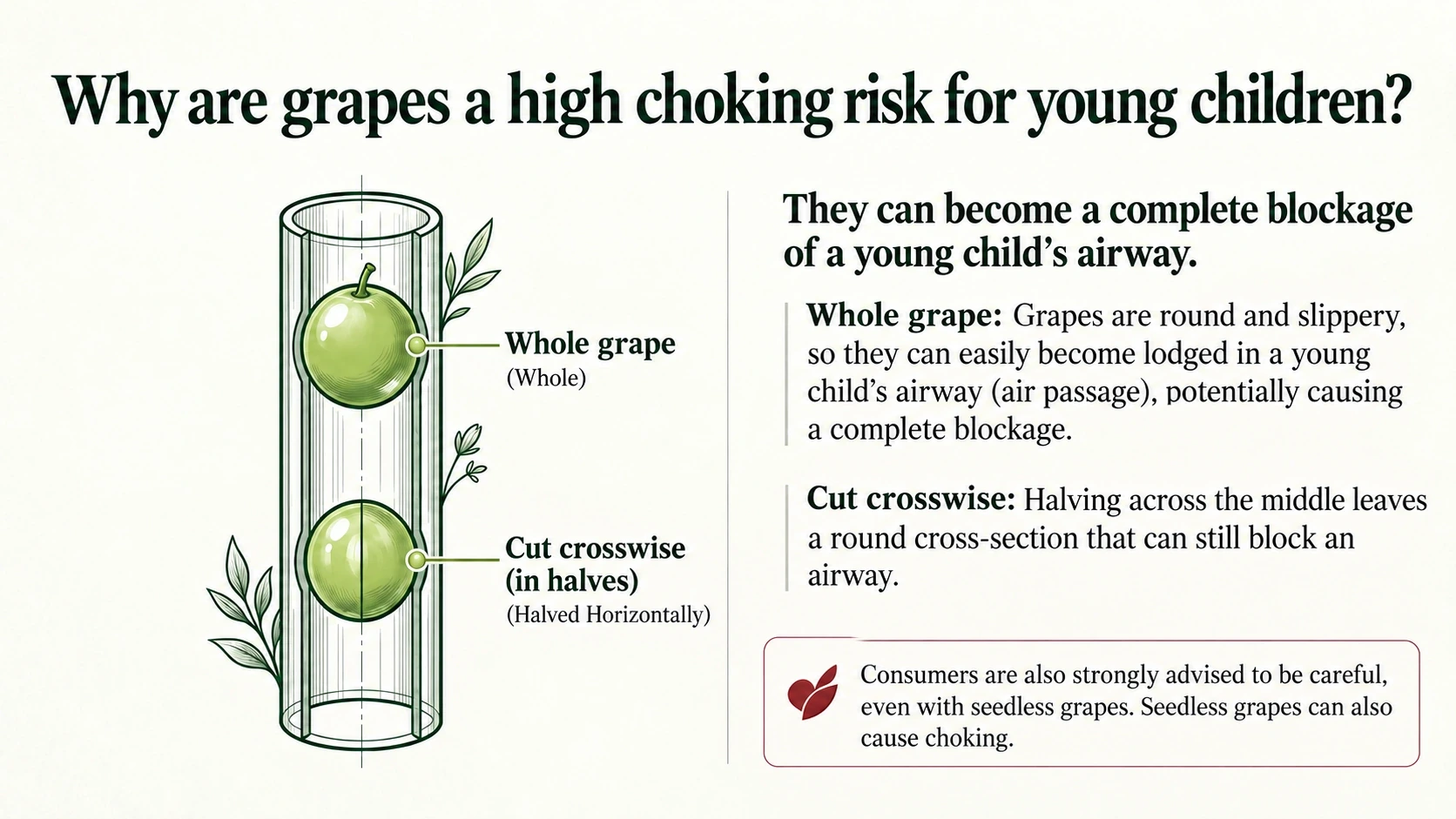
Serving young children: remove skins and seeds, and never serve whole grapes
Grapes are round and slippery and can cause choking in young children. Japan’s Consumer Affairs Agency advises measures including quartering large grapes and removing their skins. Consumer Affairs Agency guidance (in Japanese)
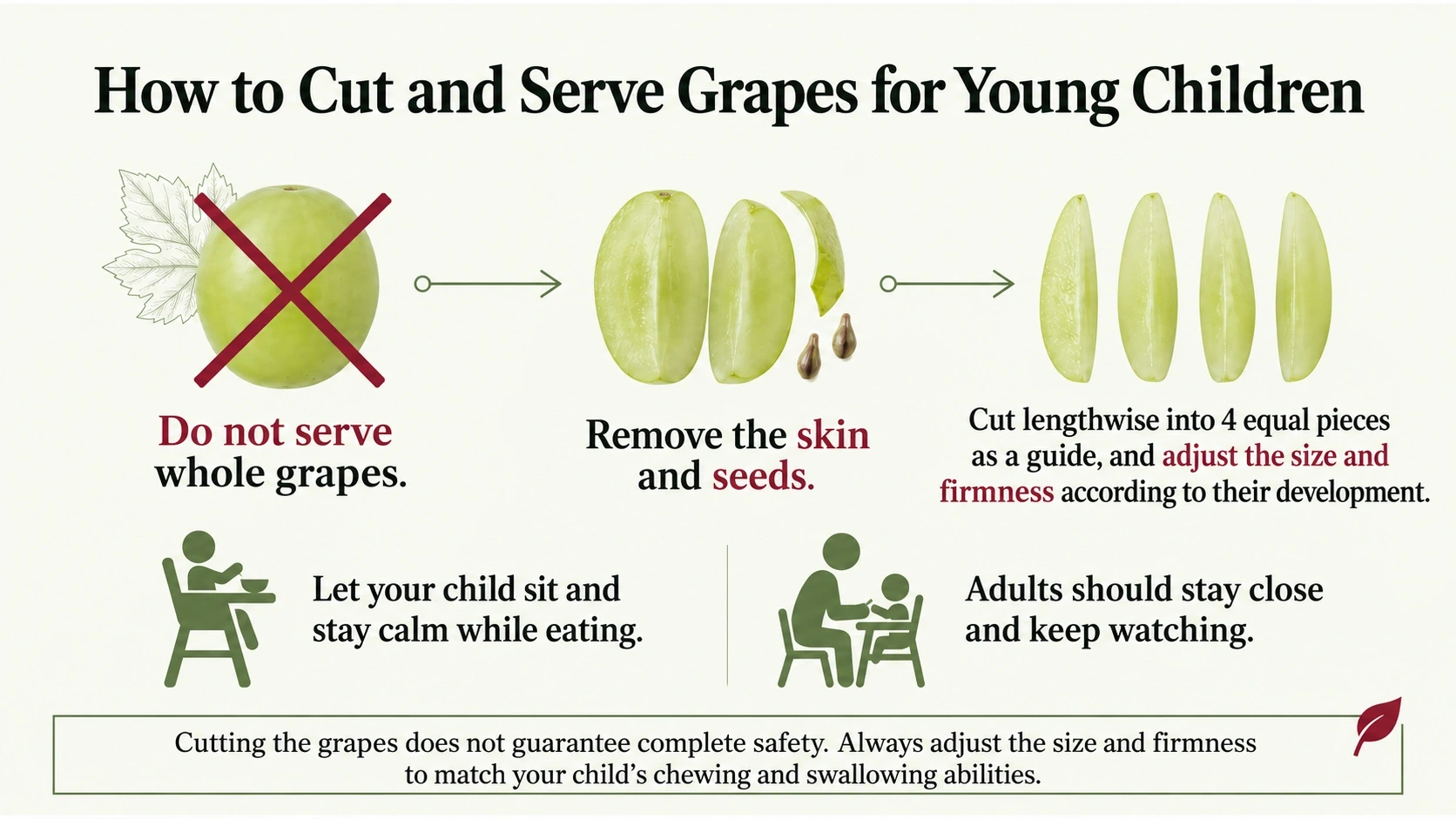
- Quarter lengthwise and remove skins and seeds. Adjust size and firmness further to suit the child’s development.
- Do not assume that halving is enough; avoid leaving a round shape.
- Have children sit calmly while eating, with an adult nearby watching them.
- Avoid walking, running, or playing with food in the mouth.
Cutting does not guarantee safety. Nor should age alone—for example, turning four—be treated as proof that a child can safely eat whole grapes. Preparation should reflect their ability to chew and swallow.
Can you take grapes from Vietnam to Japan?
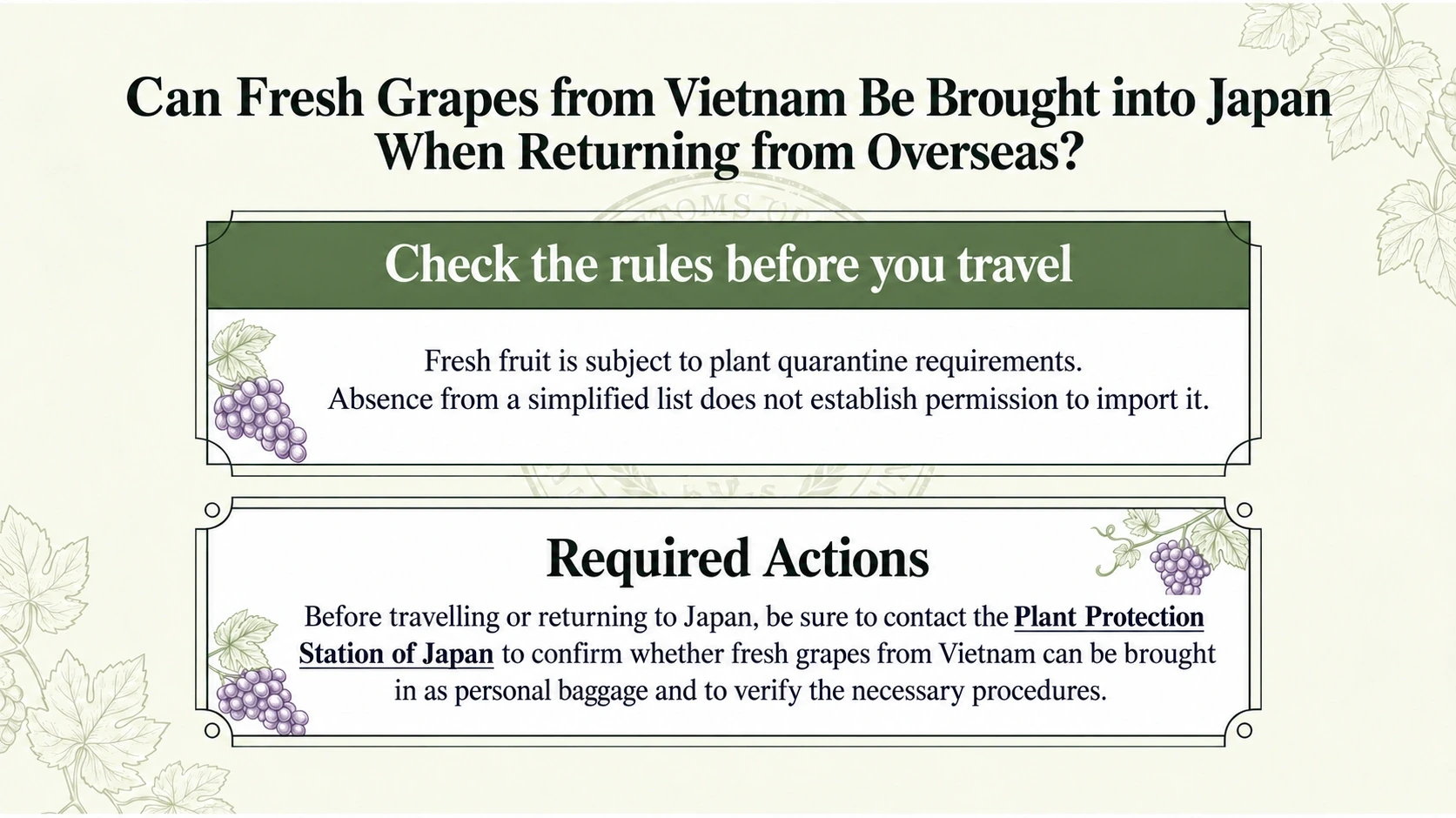
The absence of “grapes” from a simplified country list published by Japan’s Plant Protection Station does not establish that bringing them in is permitted. Fresh fruit is subject to plant quarantine requirements. Before traveling, ask the Plant Protection Station whether fresh grapes grown in Vietnam may be brought into Japan in personal baggage and which procedures apply. Plant Protection Station guidance for Vietnam (in Japanese)
Frequently asked questions
Will grapes get sweeter if I leave them out?
Do not expect the increase in sweetness associated with postharvest ripening in bananas. Refrigerate grapes after purchase and eat them promptly rather than waiting at room temperature.
Can I eat grape skins?
If the variety has a skin you enjoy, rinse the fruit under running water and eat it with the skin. Peel if thickness or astringency bothers you. For young children, remove skins and seeds and cut the fruit to suit their development.
Should I scrub off all the white coating?
There is no need to scrub bloom away aggressively. Rinse gently under running water before eating. Remember that not all white deposits are bloom.
Can children eat seedless grapes whole?
Seedless grapes can still cause choking. For young children, remove the skin and prepare an appropriate shape, such as lengthwise quarters, adjusting further to their development.