Milk Fruit (Star Apple) Guide: Taste, Season, Nutrition and Varieties
Updated
Milk fruit is a tropical fruit known in Vietnamese as Vú sữa. Also called star apple, it has a mellow sweetness and a distinctive star-shaped pattern when sliced across the middle. In Japanese, it is known as suishōgaki, or “crystal persimmon.”
This guide introduces its taste, season, nutrients and names, along with the main varieties, growing areas and market developments in Vietnam.
Here are the five things you will learn:
- What milk fruit tastes like, its texture, its season and its main nutrients
- Where the names Vú sữa, star apple and suishōgaki come from
- Why a star appears in its cross section
- The main varieties grown worldwide and in Vietnam
- Vietnam’s export situation for the United States and Japan
What is milk fruit? Taste, season and growing areas
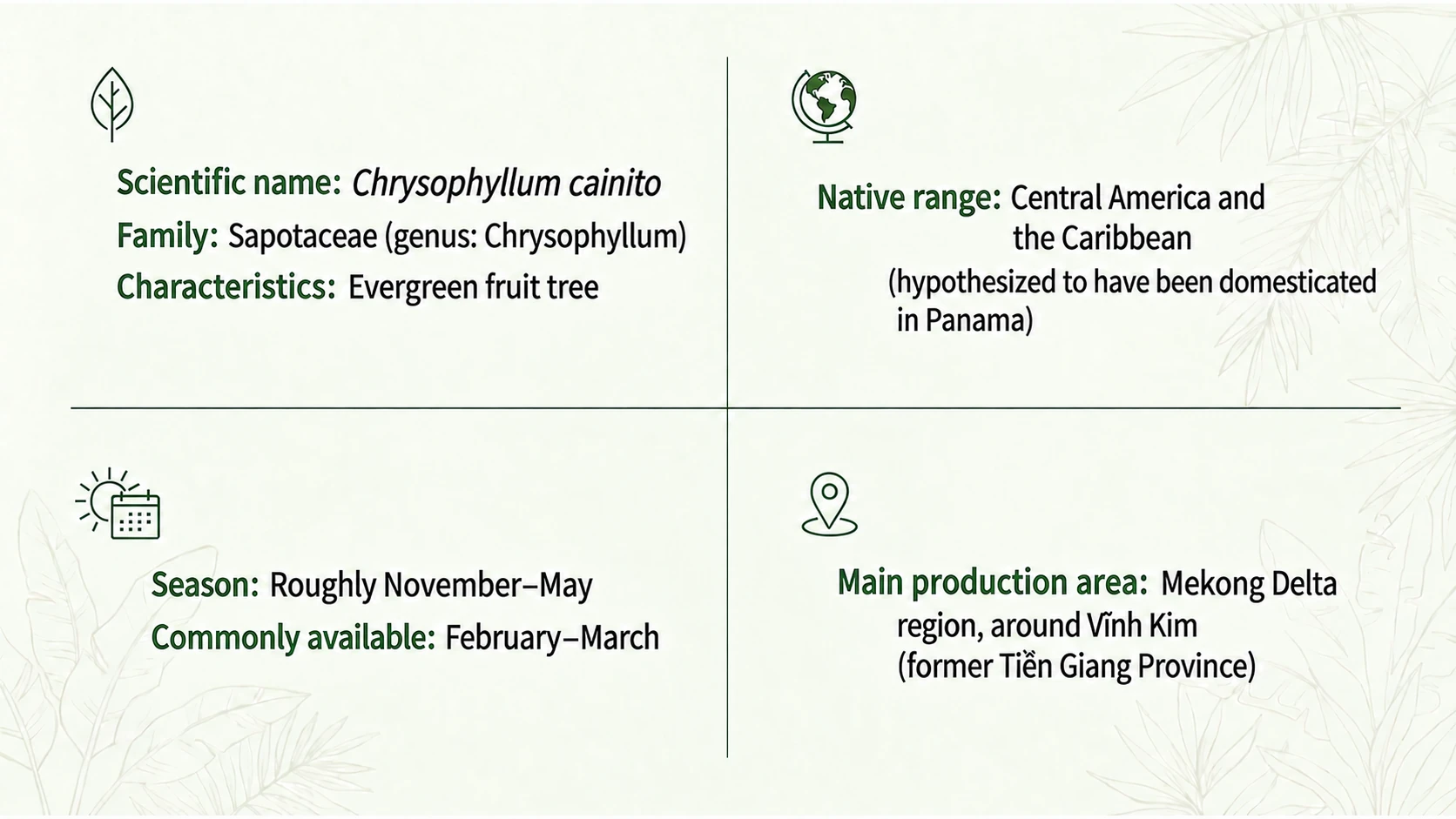
- Common names: milk fruit; star apple; Japanese suishōgaki (“crystal persimmon”).
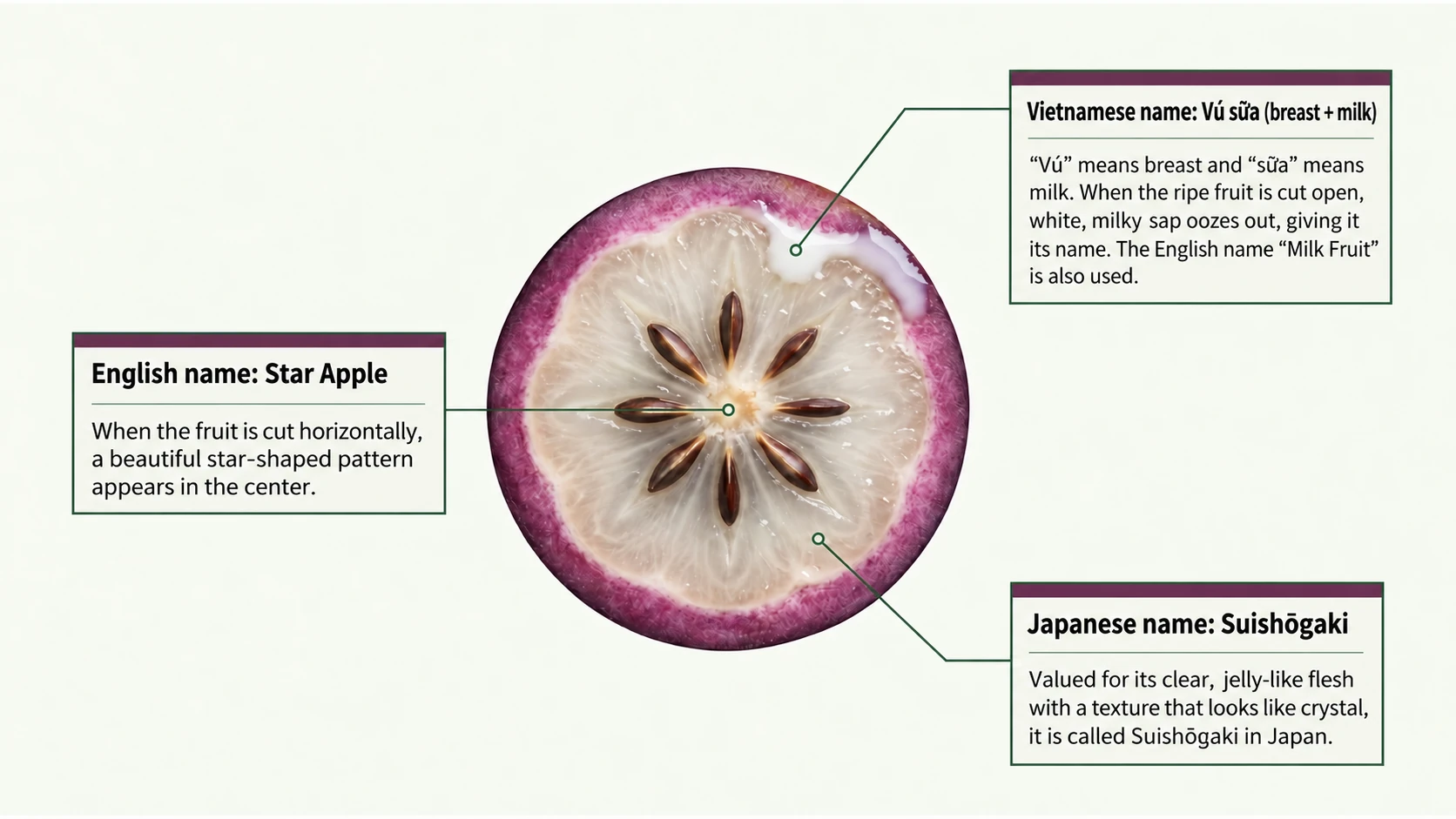
- Vietnamese name: Vú sữa: vú means “breast” and sữa means “milk.” Japanese media sometimes use a nickname meaning “breast fruit.”
- Scientific name: Chrysophyllum cainito.
- Taste and texture: mellow sweetness and smooth, soft flesh; impressions vary with ripeness.
- Classification: a tall evergreen fruit tree in the genus Chrysophyllum, family Sapotaceae.
- Origin: Kew describes a cultivated-origin species associated with Panama. A 2014 genetic study supports the hypothesis of domestication on the Isthmus of Panama.
- Season in Vietnam: roughly November–May in the south; February–March is a guide to peak availability.
- Main growing area in Vietnam: the Mekong Delta, especially Vĩnh Kim (former Tiền Giang Province).
- Main nutrients: vitamin C, dietary fiber, calcium, phosphorus and iron.
Sources are listed at the end of this article.
The names of milk fruit and its star-shaped cross section
Milk fruit grows on a tree. Its milky-white flesh and star-shaped cross section have inspired several different names.
A name inspired by milky-white juice
The Vietnamese name Vú sữa combines vú (“breast”) and sữa (“milk”). It is commonly explained as a reference to the sweet, white juice that seeps out when a fully ripe fruit is cut. The English name milk fruit evokes the same appearance.
The widely used English name star apple refers to the star in the cut fruit. The Japanese name suishōgaki likens its translucent flesh to a persimmon. One fruit can carry several names inspired by quite different features.
A tall evergreen tree reaching approximately 8–30 meters
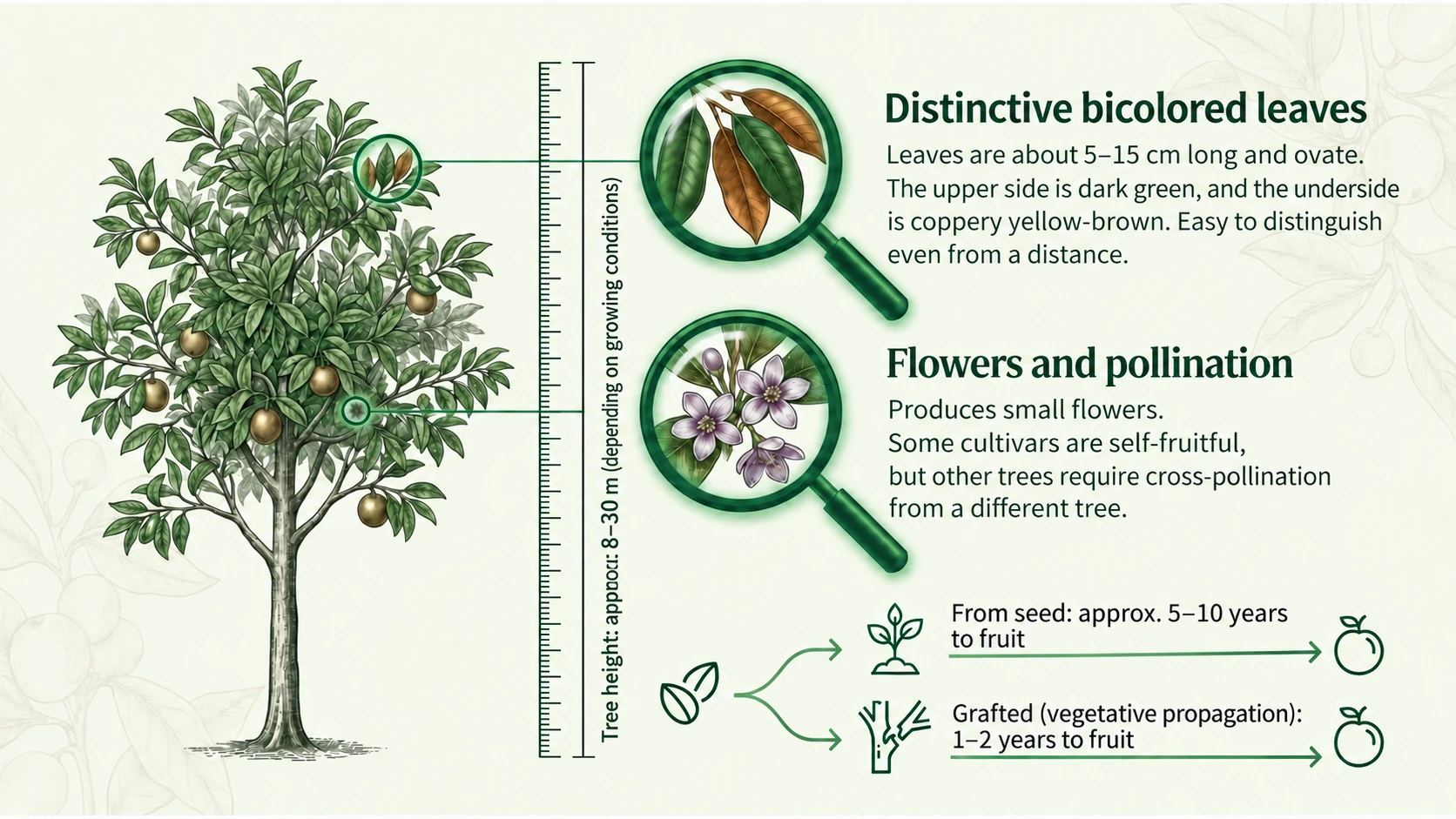
Milk fruit is a tall evergreen tree, often described as reaching around 12–15 meters. Height varies with growing conditions; the University of Florida describes a range of approximately 8–30 meters. The oval leaves are roughly 5–15 centimeters long, dark green above and coppery yellow-brown underneath. Their contrasting surfaces make the tree recognizable from a distance.
The tree produces small flowers. Trees grown from seed may take around 5–10 years to bear fruit, while grafted or otherwise vegetatively propagated trees may begin in 1–2 years. Some varieties set fruit without cross-pollination; other trees need pollen from another tree. Growing conditions also affect the outcome.
Why the seed chambers form a star
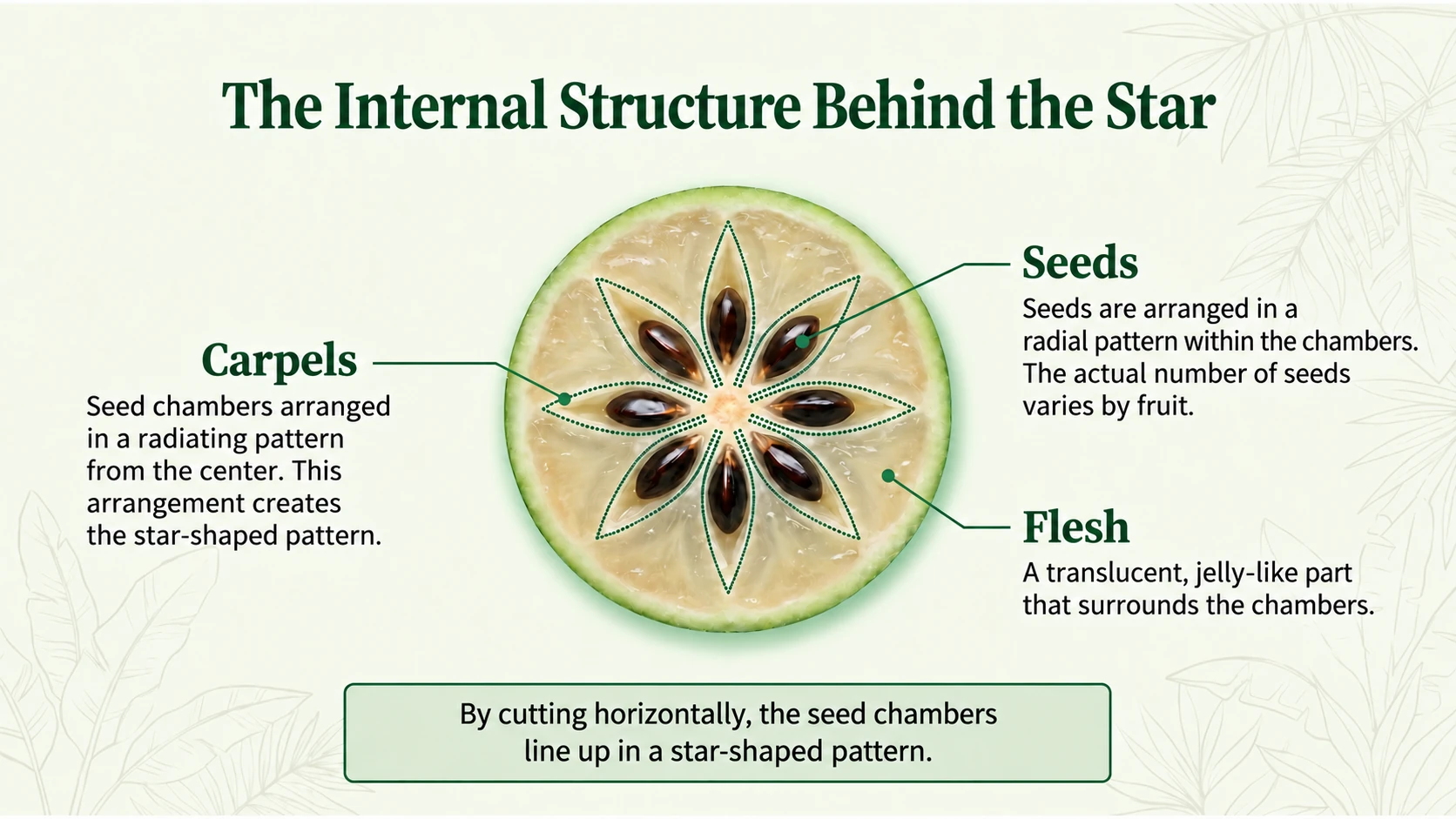
Cut a milk fruit across its middle and the chambers around the seeds radiate outward from the center, creating a star-like pattern. The number of seeds and the pattern vary from fruit to fruit.
Translucent, jelly-like flesh surrounds the seeds. The skin can be purple or green, while fruit size and flesh thickness depend on the variety and growing conditions.
Avoid the bitter latex near the skin and core
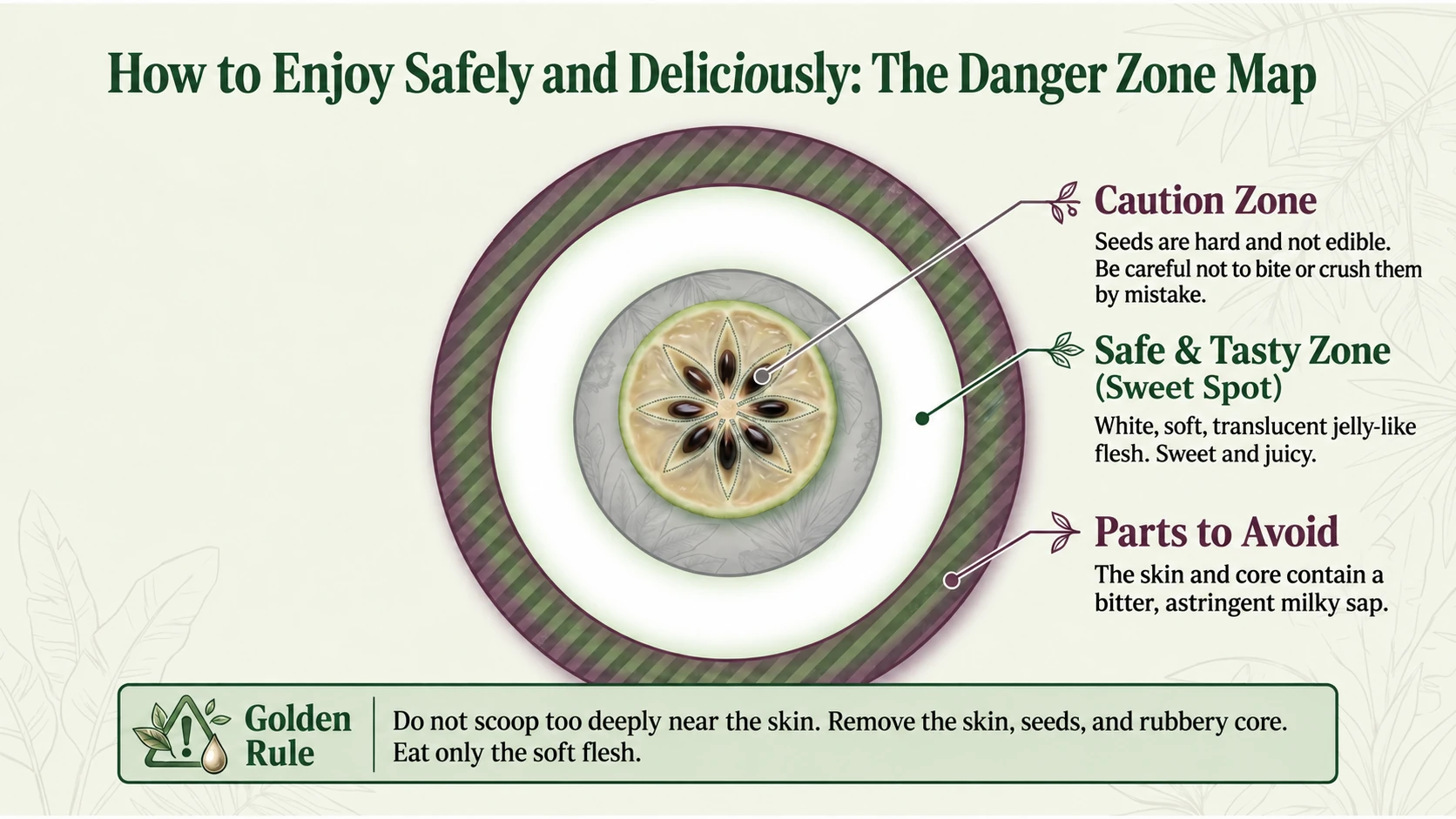
Eat the soft flesh inside the fruit. Remove the skin, hard seeds and rubbery core. Sticky latex near the skin may taste astringent.
When scooping with a spoon, leave a little flesh next to the skin rather than scraping deeply into the inner rind. For the practical steps, see how to choose, cut and store milk fruit.
Milk fruit nutrition
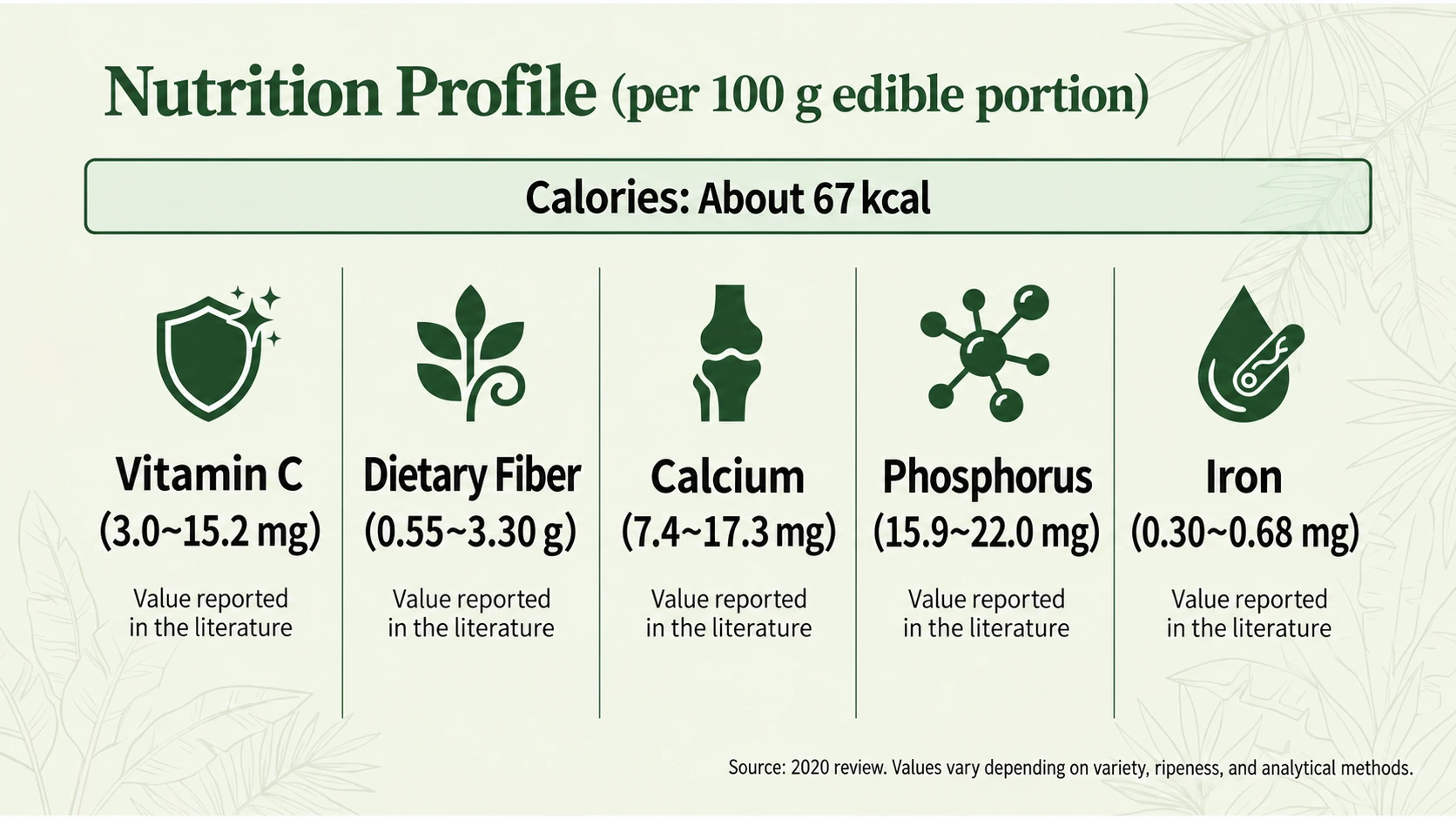
The following values are reported in the literature per 100 grams of edible flesh. The ranges reflect differences in variety, ripeness and analytical methods.
- Energy: approximately 67 kcal
- Dietary fiber: 0.55–3.30 g
- Vitamin C: 3.0–15.2 mg
- Calcium: 7.4–17.3 mg
- Phosphorus: 15.9–22.0 mg
- Iron: 0.30–0.68 mg
Source: the nutrition table in a 2020 review. Containing nutrients does not mean that eating the fruit can prevent or treat disease. Enjoy it as part of a balanced diet.
Milk fruit types and varieties around the world and in Vietnam
A fruit from the American tropics that spread worldwide
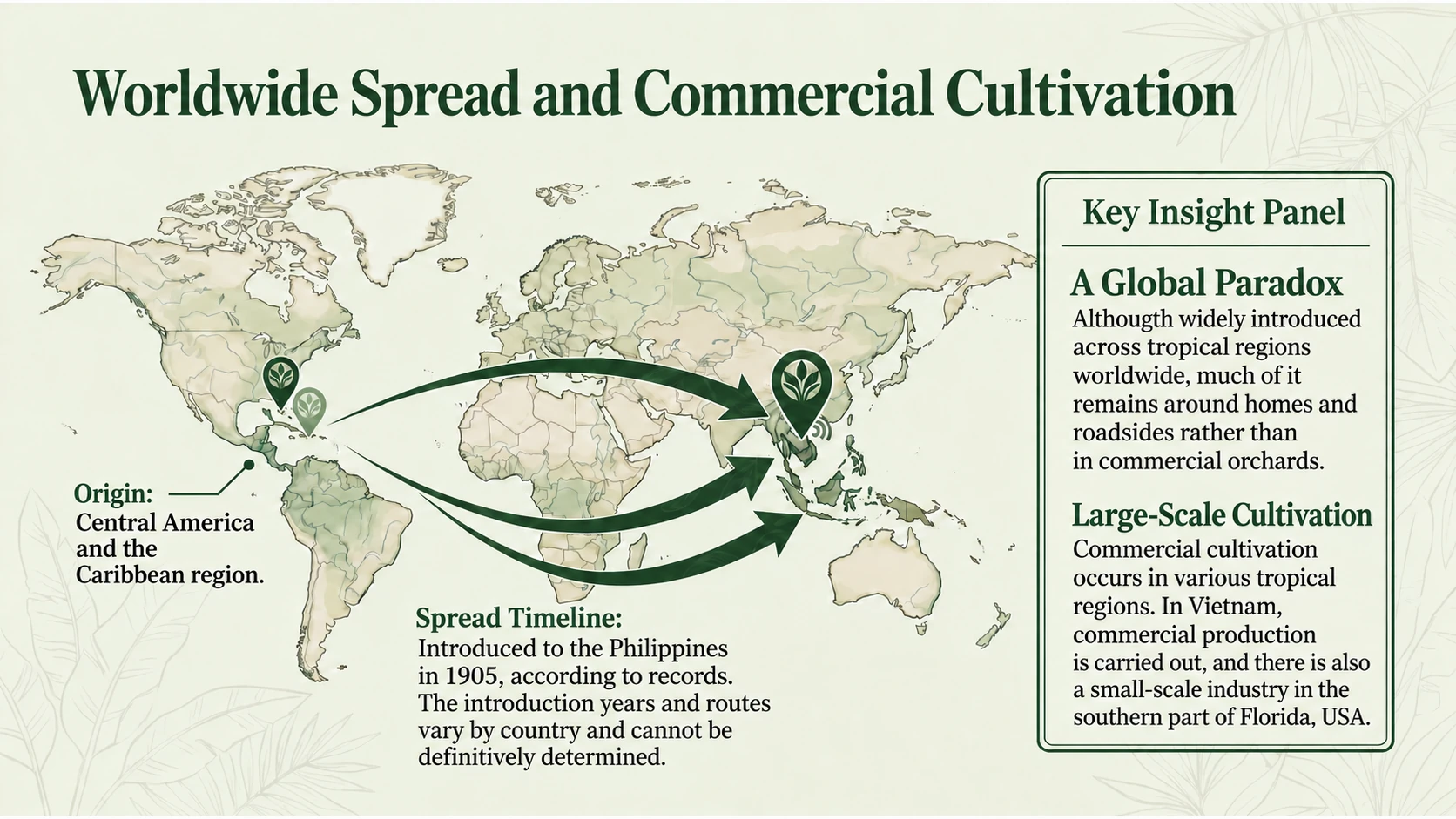
Milk fruit is associated with the tropical region stretching from Central America to the Caribbean. It spread to tropical parts of Southeast and South Asia, including the Philippines, India, Sri Lanka, Thailand, Vietnam, Indonesia and Bangladesh. Accounts of its introduction to the Philippines give 1905 as the year seedlings were brought in.
Milk fruit is a familiar tree in home gardens and along roadsides, while commercial production also takes place in Vietnam. The University of Florida describes a small commercial industry in southern Florida.
Two main skin-color types
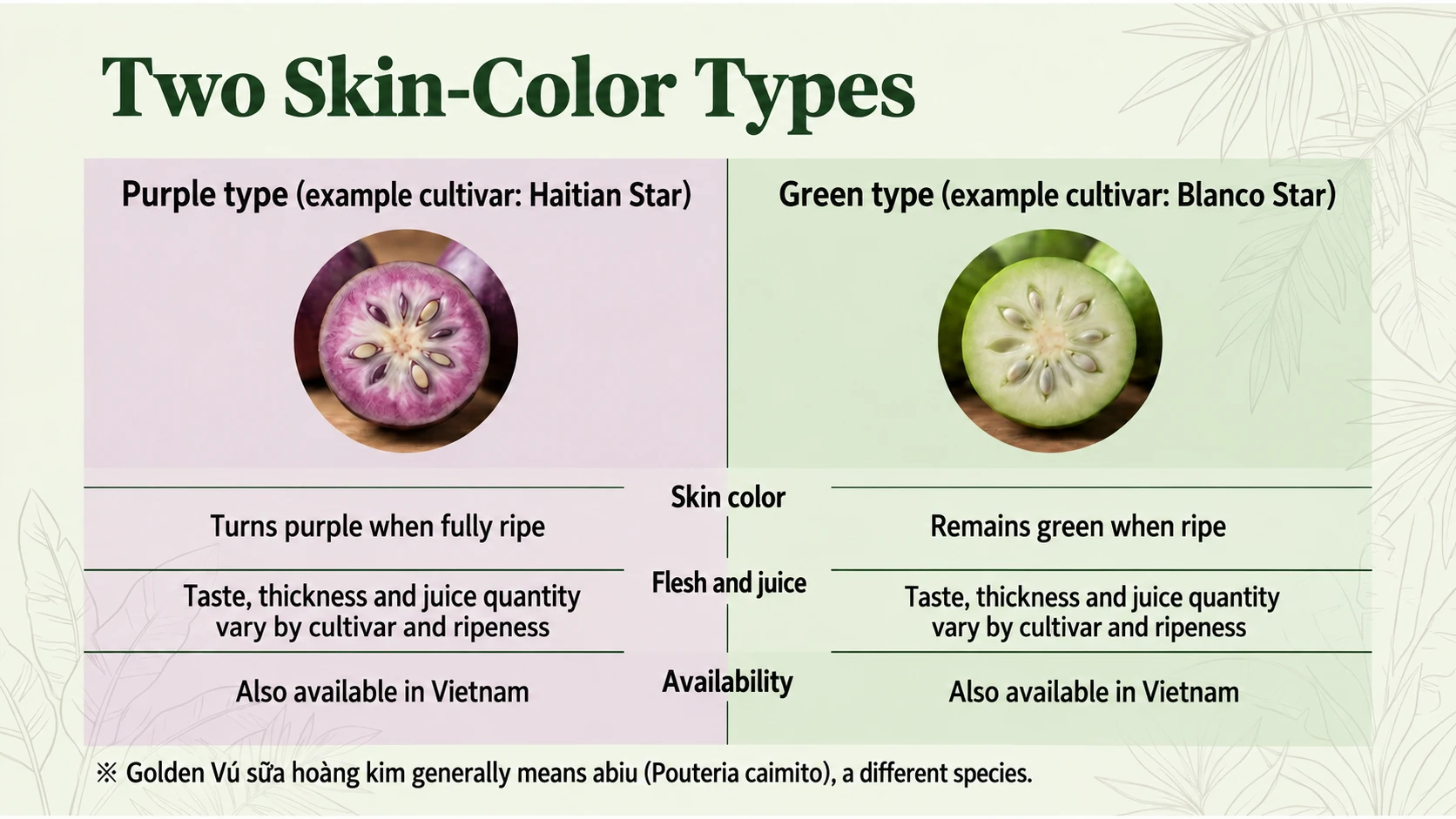
Milk fruit is broadly divided into two types by skin color:
- Purple-skinned types: “Haitian Star” is one cultivar described in southern Florida.
- Green-skinned types: “Blanco Star” is one cultivar example. These cultivar names do not refer to every fruit in their respective color groups.
Both green and purple fruit can be found in Vietnam. Skin color alone does not reliably determine flavor, price or ripeness. The golden fruit called Vú sữa hoàng kim generally refers to abiu (Pouteria caimito), a different species from the milk fruit discussed here, Chrysophyllum cainito.
Vietnam’s well-known Vú sữa Lò Rèn Vĩnh Kim
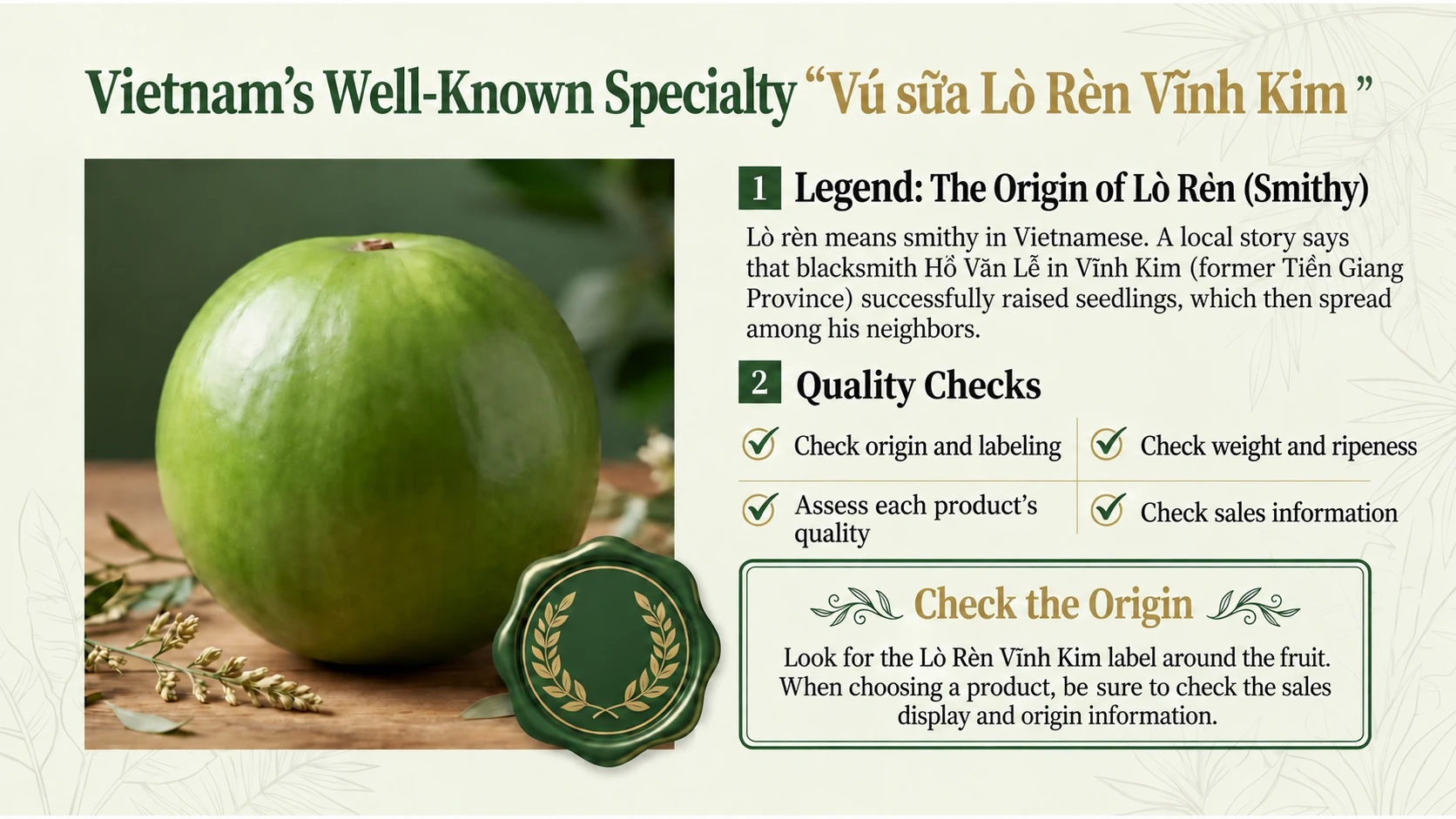
Vú sữa Lò Rèn Vĩnh Kim is a well-known Vietnamese variety and regional name. It is associated with Vĩnh Kim in the Mekong Delta (former Tiền Giang Province). A local story explains its name: a blacksmith named Hồ Văn Lễ is said to have successfully raised the first seedlings, which then spread among his neighbors. Lò rèn means “smithy” in Vietnamese.
Lò Rèn Vĩnh Kim remains closely associated with the Vĩnh Kim area of southern Vietnam. When buying a product bearing a growing-area name, check the seller’s labeling and origin information.
Milk fruit markets and exports
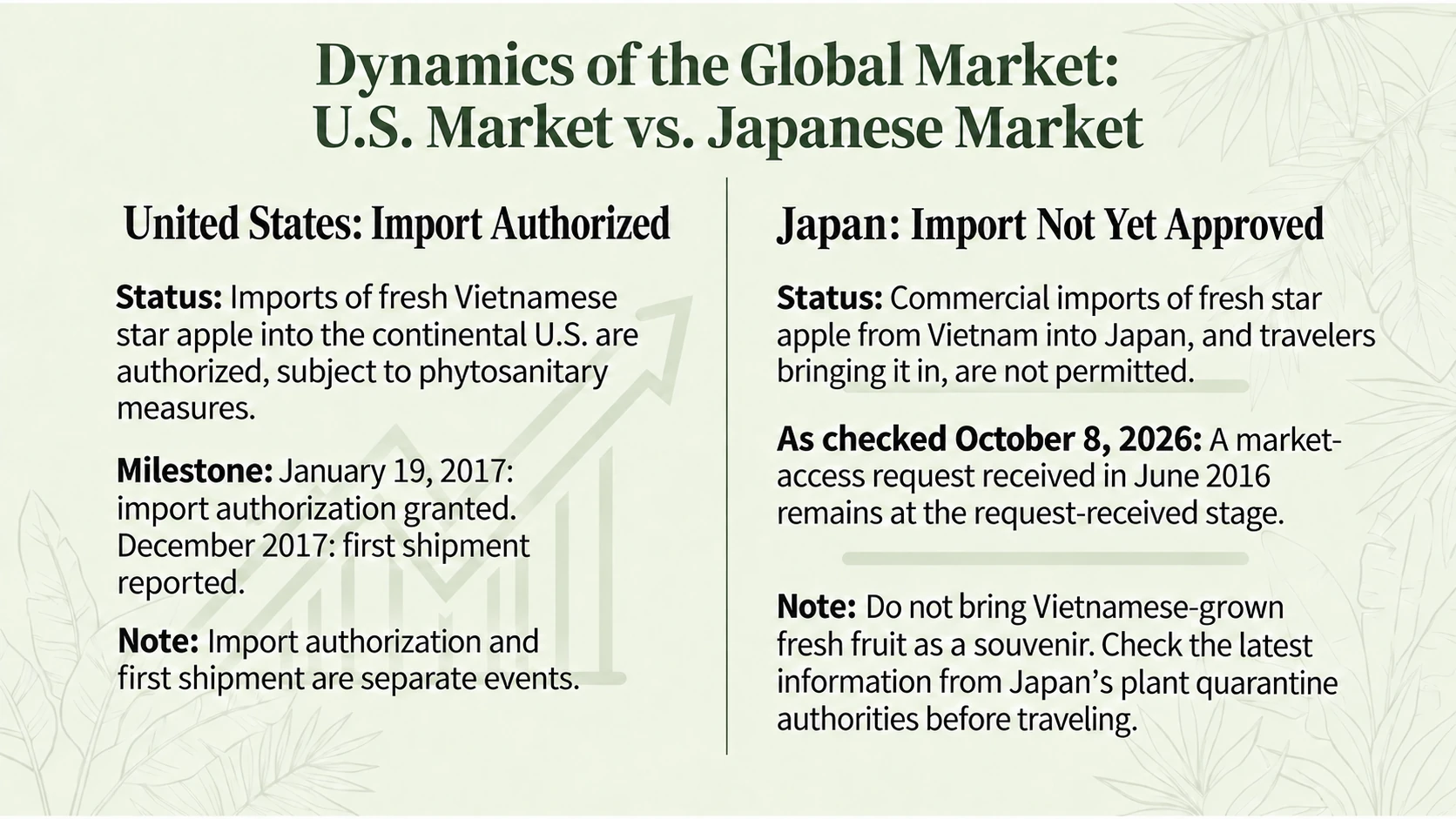
Vietnam’s exports to the United States began in 2017
In the Federal Register notice dated January 19, 2017, the United States authorized imports of fresh star apple from Vietnam into the continental United States, subject to phytosanitary measures. The first shipment was reported in December of that year. The import-approval date and the date of the first shipment are separate milestones.
Exports depend on suitable plant-quarantine measures and distribution systems.
Can you bring fresh Vietnamese milk fruit into Japan?
In the Japanese Ministry of Agriculture, Forestry and Fisheries list of market-access discussions, checked on October 8, 2026, fresh star apple from Vietnam was listed at the stage of a market-access request received in June 2016. Do not treat it as a fruit already cleared for import into Japan, or bring fresh fruit home as a souvenir. Conditions may change, so check current Plant Protection Station information before traveling.
Frequently asked questions about milk fruit
Are milk fruit and star apple the same fruit?
The milk fruit in this article is star apple, scientifically named Chrysophyllum cainito. In Vietnamese, it is called Vú sữa.
What does milk fruit taste like?
Fully ripe flesh is sweet, smooth and jelly-like. There is astringent latex near the skin, so scoop out the soft flesh rather than eating the rind.
When is milk fruit in season?
In southern Vietnam, approximately November–May is a useful guide to availability. The timing varies with the growing area, variety and weather.
Is golden milk fruit the same species?
Vú sữa hoàng kim generally refers to abiu, Pouteria caimito. The Can Tho University research-project listing also uses this scientific name. It is a different species from star apple.
Summary of milk fruit’s main characteristics
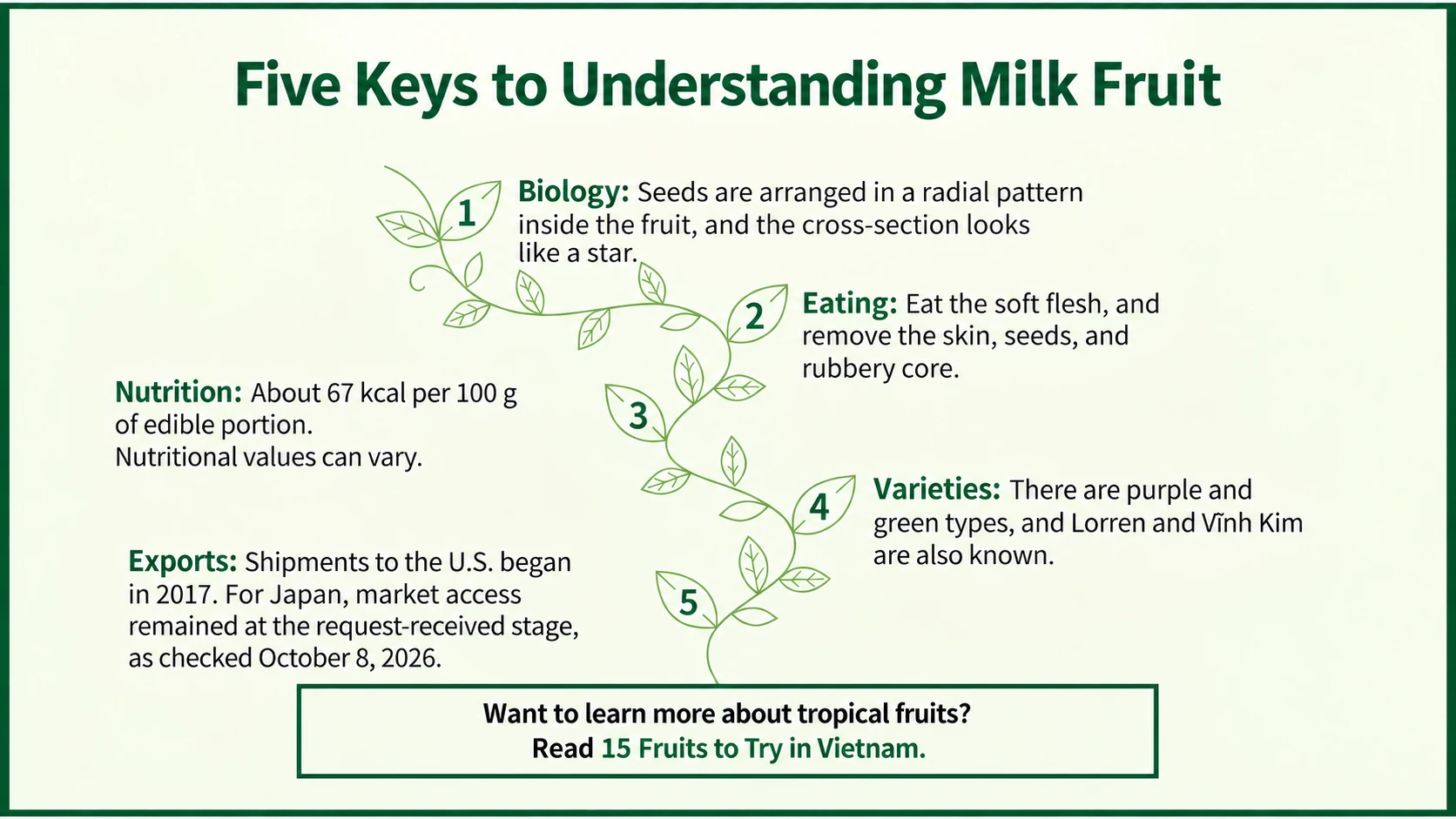
These are the key points:
- Milk fruit, or Vú sữa, grows on a tall evergreen tree. Its name evokes the sweet, milky-white juice, while the star pattern comes from the radial arrangement of the seed chambers.
- Eat the soft white flesh. Avoid the skin, seeds and rubbery core, and do not scrape too deeply near the rind.
- It contains vitamin C, dietary fiber and other nutrients. Nutritional values vary and do not guarantee particular health effects.
- The main skin-color groups are purple and green, and both occur in Vietnam. Vú sữa Lò Rèn Vĩnh Kim is a regional name associated with Vĩnh Kim.
- Vietnam’s exports to the United States began in 2017. As checked on October 8, 2026, Japan’s market-access discussions remained at the request-received stage.
For practical advice, read How to Eat Milk Fruit. For names, folklore and recorded history, see The History and Stories of Milk Fruit. You can also explore 15 Fruits to Try in Vietnam (Japanese).
References
- VIETJO Daily Vietnam News: “Milk Fruit / Vú sữa” (Japanese)
- nongsandungha.com: “Quả vú sữa kỵ với gì?” and other Vietnamese health-media sources
- Purdue University Horticulture & Landscape Architecture: “Star Apple”; Specialty Produce: “Star Apples Information and Facts”
- Inquirer Business: “Vietnam exports first batch of star apples to US”
- Vietnam Government News: “Việt Nam-nước đầu tiên xuất khẩu quả vú sữa vào thị trường Mỹ” (Vietnamese)
- VietnamPlus: “Vietnam – Sole country exporting star apples”
- Japan’s Ministry of Agriculture, Forestry and Fisheries: import market-access requests from Vietnam (Japanese)
- Kew Science: “Chrysophyllum cainito L.”
- National Library of Medicine: “Chrysophyllum cainito: A Tropical Fruit with Multiple Health Benefits”
- Intellectual Property Office of Vietnam: geographical-indication protection for Vĩnh Kim Lò Rèn star apple (Vietnamese)
The source edition was fact-checked and updated on October 8, 2026. Recheck prices and plant-quarantine conditions when buying fruit or traveling.
- UF/IFAS: “Caimito (Star Apple) Growing in the Florida Home Landscape”
- U.S. Federal Register: authorization for Vietnamese star apple imports, January 19, 2017
- Can Tho University: research project on Vú sữa Hoàng Kim (Pouteria caimito)
About the Author

Chuta
Based in Hanoi, Vietnam, Chuta buys fruit at local markets and supermarkets and writes about its taste, seasons, selection and preparation. Drawing on life in Vietnam, he introduces tropical fruits that are less familiar to readers in Japan.
About Fruit Guide