How to Eat Coconut in Vietnam: Prices, Choosing, Drinking and Storage
Published October 9, 2026
A coconut with a straw is a familiar sight on Vietnamese streets. Have a stallholder open a young fruit, enjoy its refreshing water, then try the white flesh inside. When I bought one at a Hanoi market, it cost 31,000 VND (about ¥190, checked in July 2026).
This guide covers coconut prices and selection in Vietnam, having staff open the fruit, enjoying the flesh and local desserts, storage, and the conditions for taking coconuts back to Japan.
Coconuts in Vietnam: Prices, Taste, and Eating at a Glance
| Item | Details |
|---|---|
| Vietnamese name | Dừa |
| Pronunciation note | Often approximated as “zua” in Japanese; Vietnamese pronunciation varies by region |
| Taste | Lightly sweet, refreshing water; milky flesh with a gentle sweetness |
| Texture | Water: a light, water-like feel. Flesh: often soft in young fruit, becoming thicker and firmer as it matures. |
| Season | Year-round |
| Example prices | My observations: 31,000 VND for one fresh fruit in July 2026; 69,000–79,000 VND for a café drink in August 2026. Yen conversions are approximate purchase-time values. |
| Where to buy | Open-air markets, street stalls, supermarkets, cafés, and juice shops |
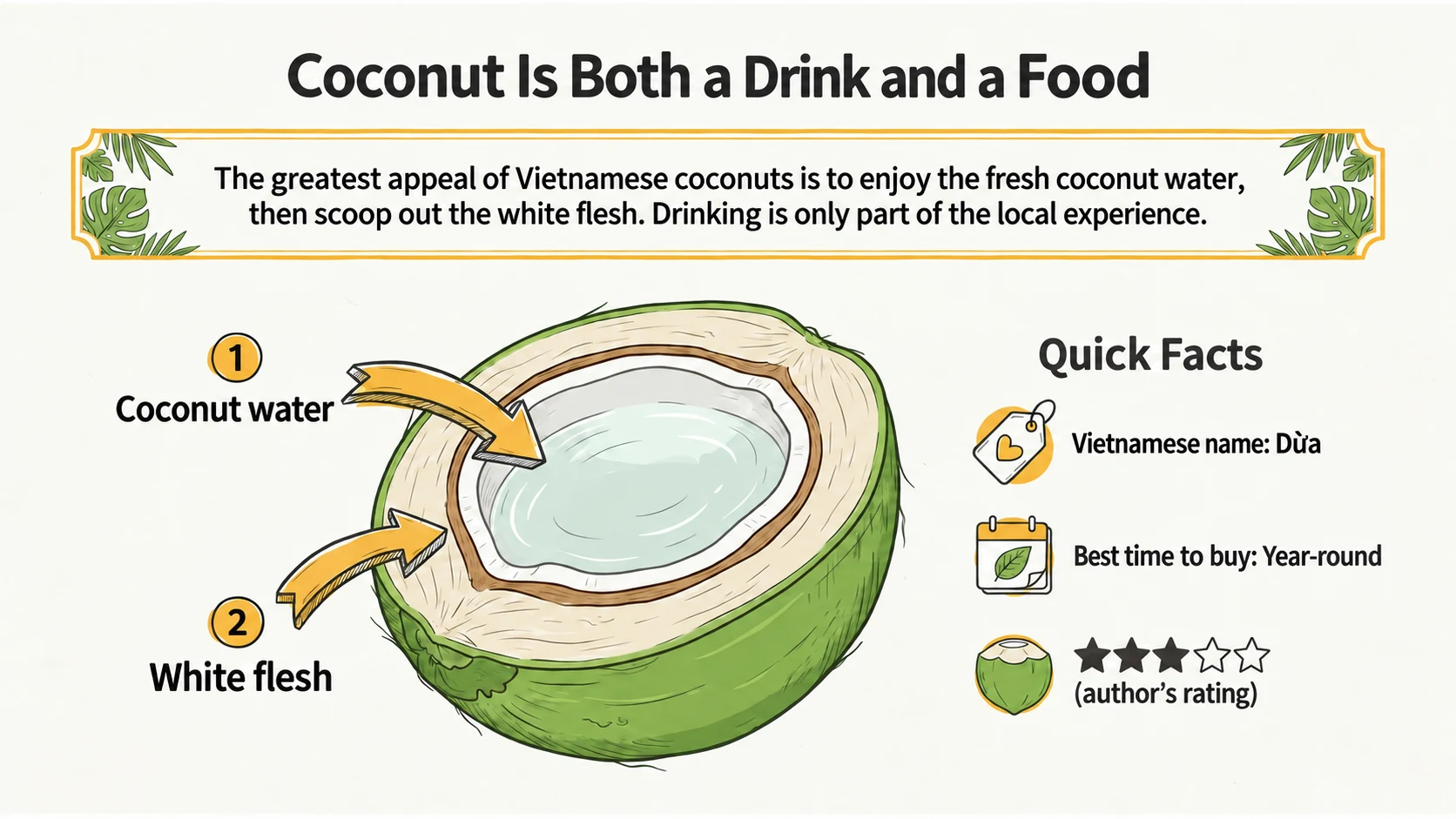
| Basic way to enjoy it | Drink the water through a straw inserted at the top, then have the fruit split and scoop out the white flesh with a spoon. |
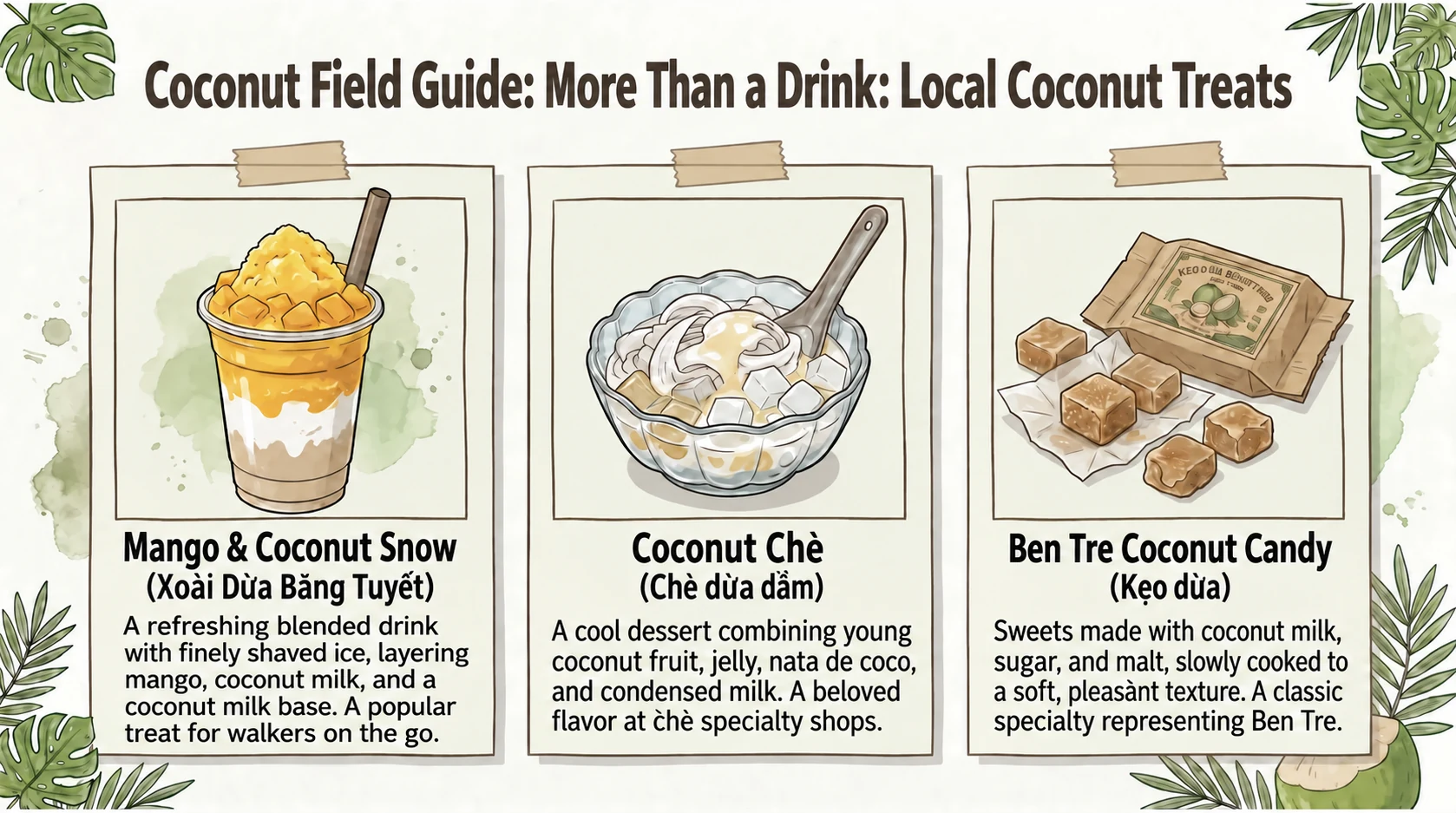
| Local specialties | Xoài Dừa Băng Tuyết (Mango & Coconut Snow); Kẹo dừa (Ben Tre coconut candy) |
| Beginner rating | ★★★☆☆ (my personal rating) |
The Vietnamese Name: Dừa
Coconut is called “Dừa” in Vietnamese. The Coconut Field Guide explains how this monocot palm has no growth rings yet can supply timber. Coconut History and Stories explores its role in Austronesian voyages and Vietnam’s Đạo Dừa, the Coconut Religion.
The northern Vietnamese name for pineapple, “Dứa,” is a different word with a different tone mark and pronunciation, although it often receives the same Japanese katakana rendering as Dừa. Pointing to the fruit you want is a reliable way to order at a market.
Taste and Texture Before You Try It
Fresh coconut water drunk through a straw is lightly sweet, with a refreshing, water-like feel. It is easy to sip during a break from walking around hot Vietnamese streets.
After you finish the water, white flesh remains inside. It is often soft in young fruit and becomes thicker and firmer as the fruit matures. Some coconuts I tried had a crisp texture and a milky, gentle sweetness. Texture varies by maturity and variety, so ask the stallholder to split the fruit and try the flesh as well.
Coconut Prices and Where to Buy in Vietnam
Open-Air Markets and Street Stalls
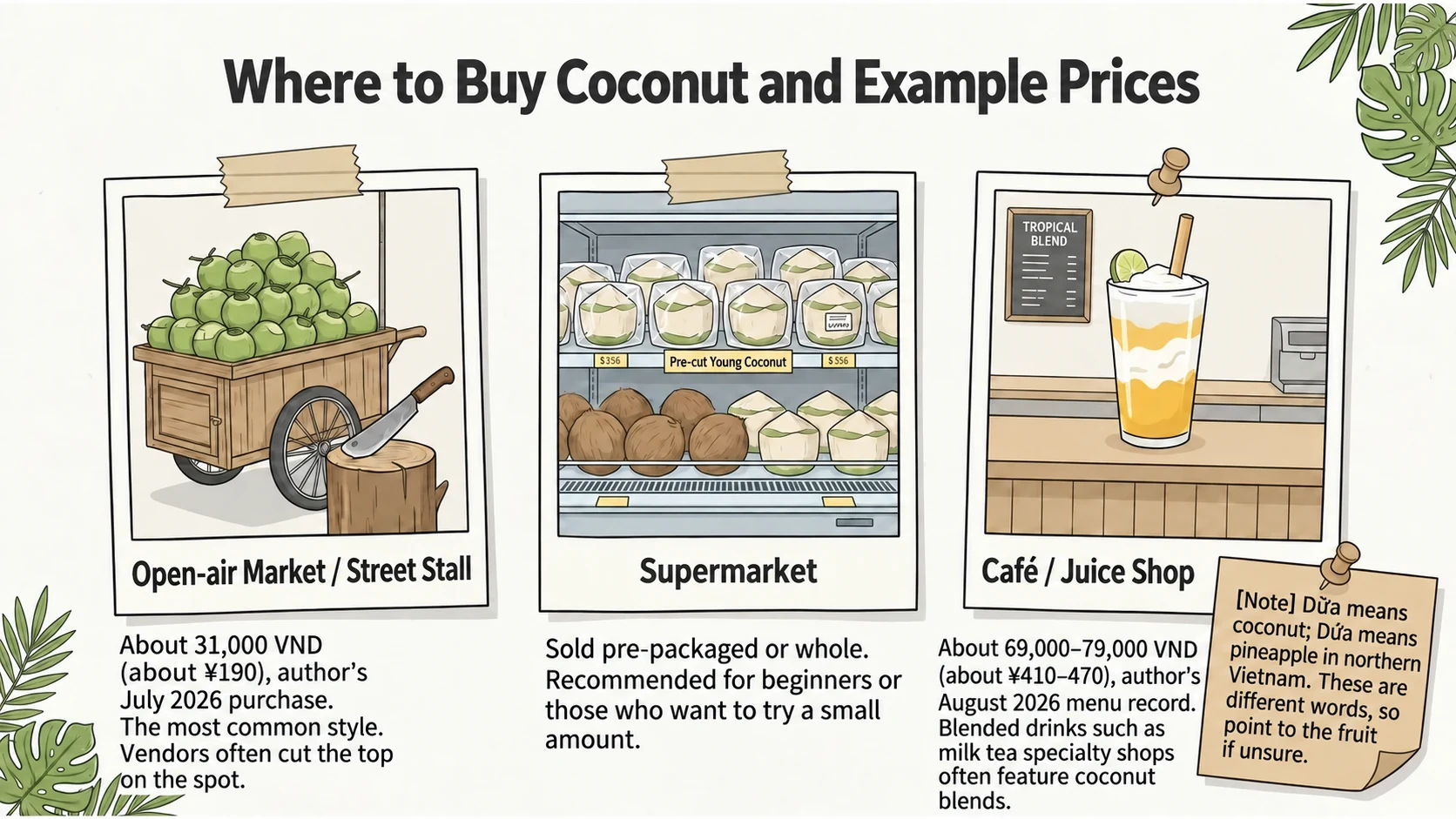
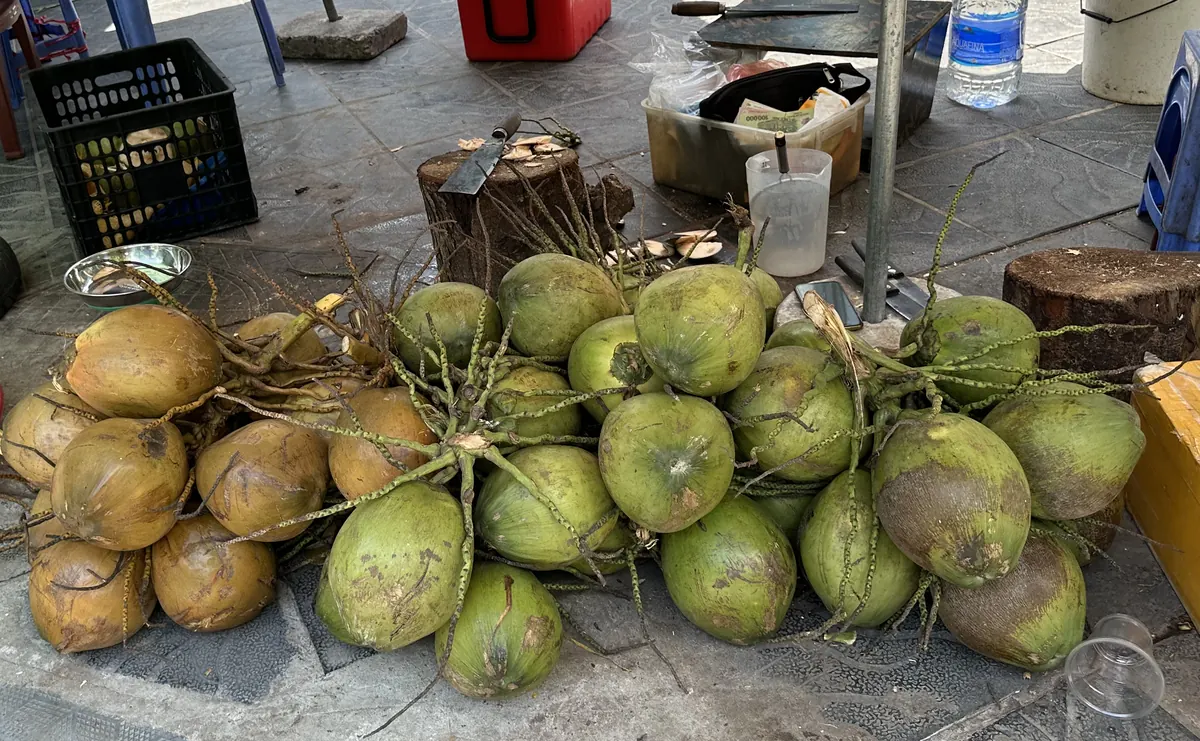
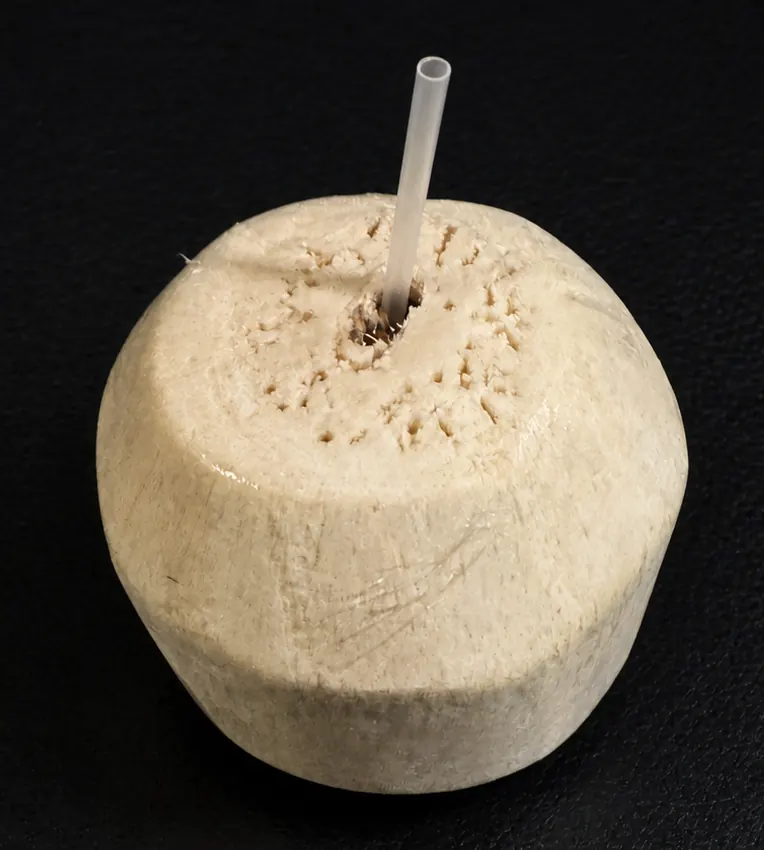
This is the simplest and most familiar option. My purchase record from a Hanoi market shows 31,000 VND for one fresh coconut (about ¥190, checked on July 31, 2026). Staff shave the top with a machete and hand it over with a straw.
Supermarkets
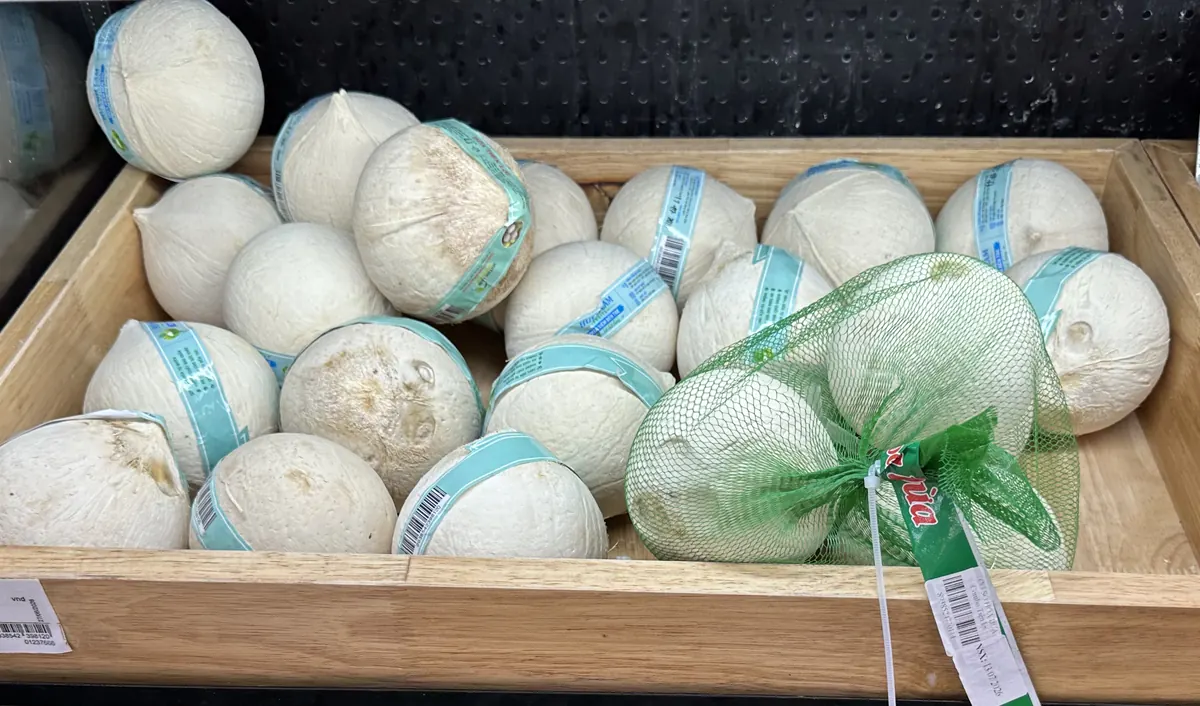
You can find packaged coconut water and whole fruit. This is convenient if you want to try a small amount or are unfamiliar with ordering at a street stall.
Cafés and Juice Shops
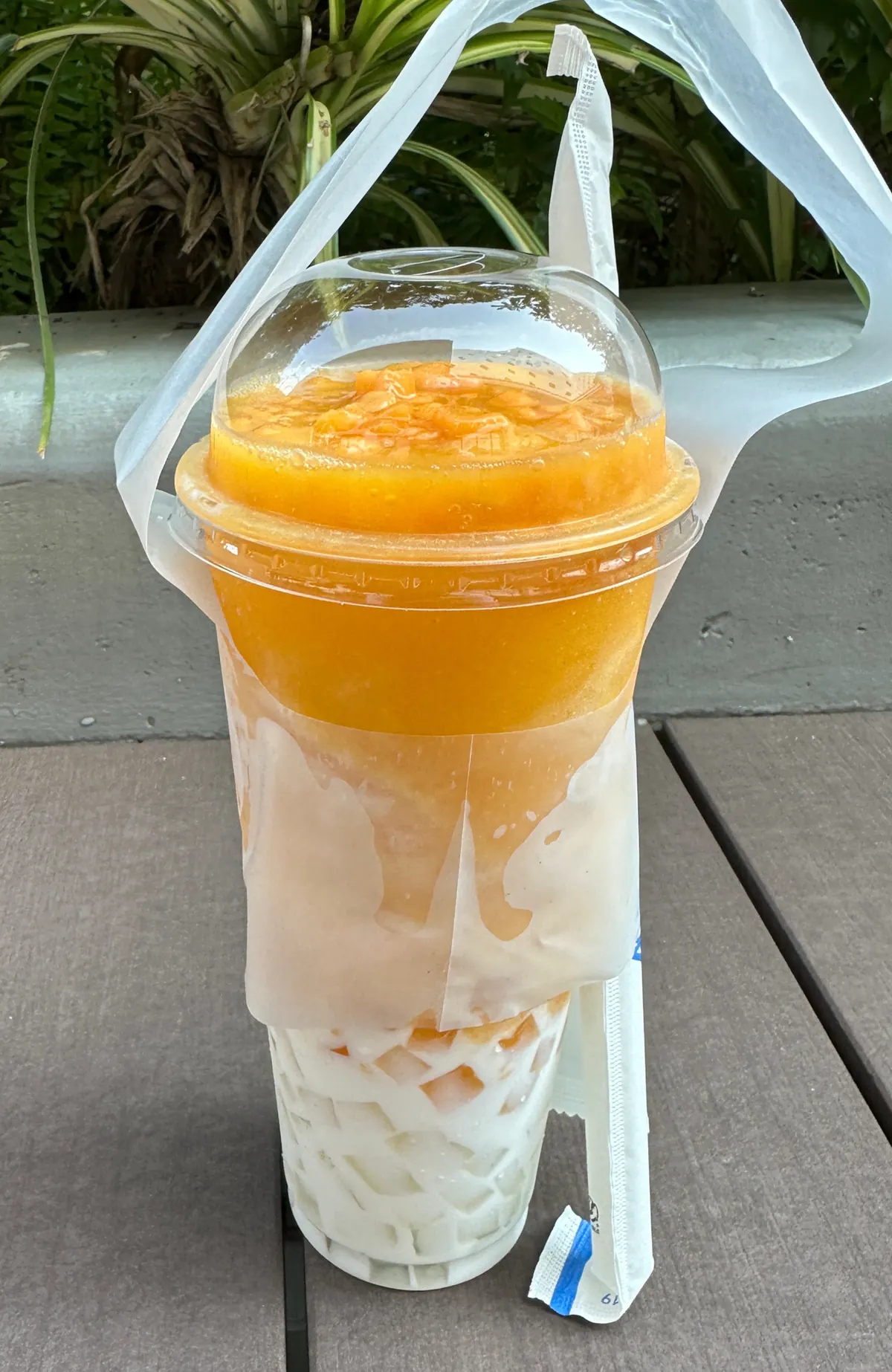
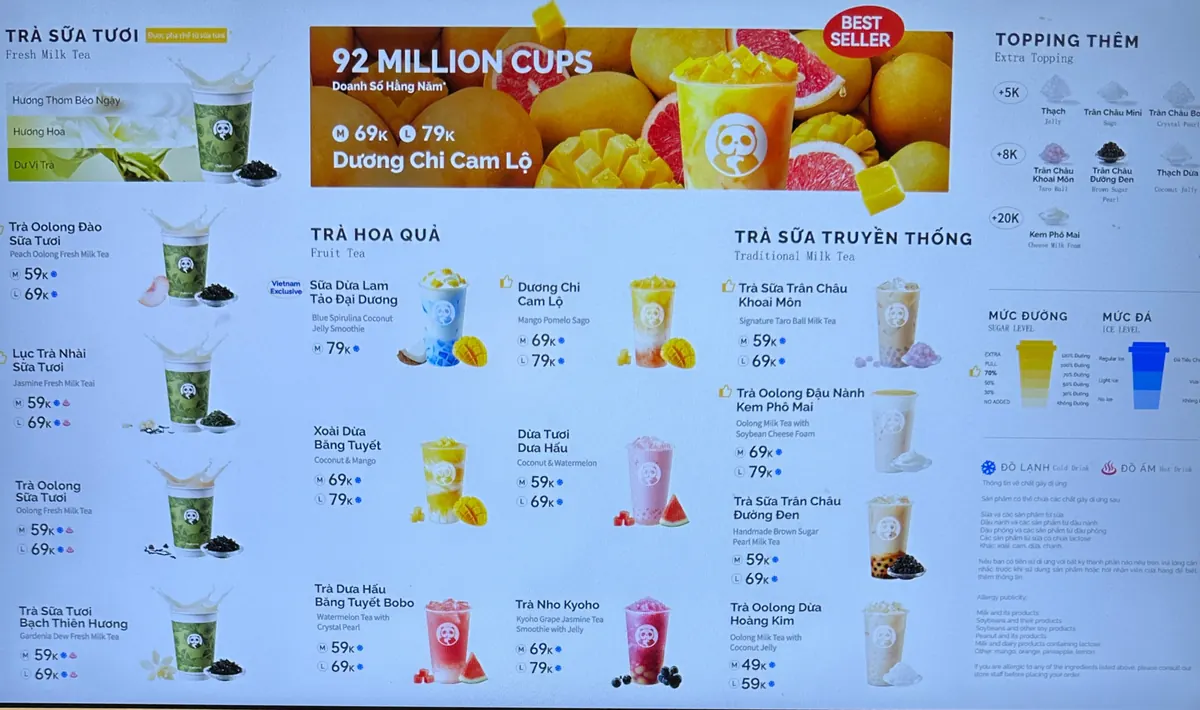
Coconut-based blended drinks have become popular at milk-tea shops and similar businesses. I bought “Xoài Dừa Băng Tuyết,” Mango & Coconut Snow, at a Hanoi drink shop on August 9, 2026. It combines finely shaved mango ice and a coconut-milk-based layer. The menu listed 69,000 VND for medium and 79,000 VND for large (about ¥410–470); I bought the large at 79,000 VND.
How to Choose a Good Coconut
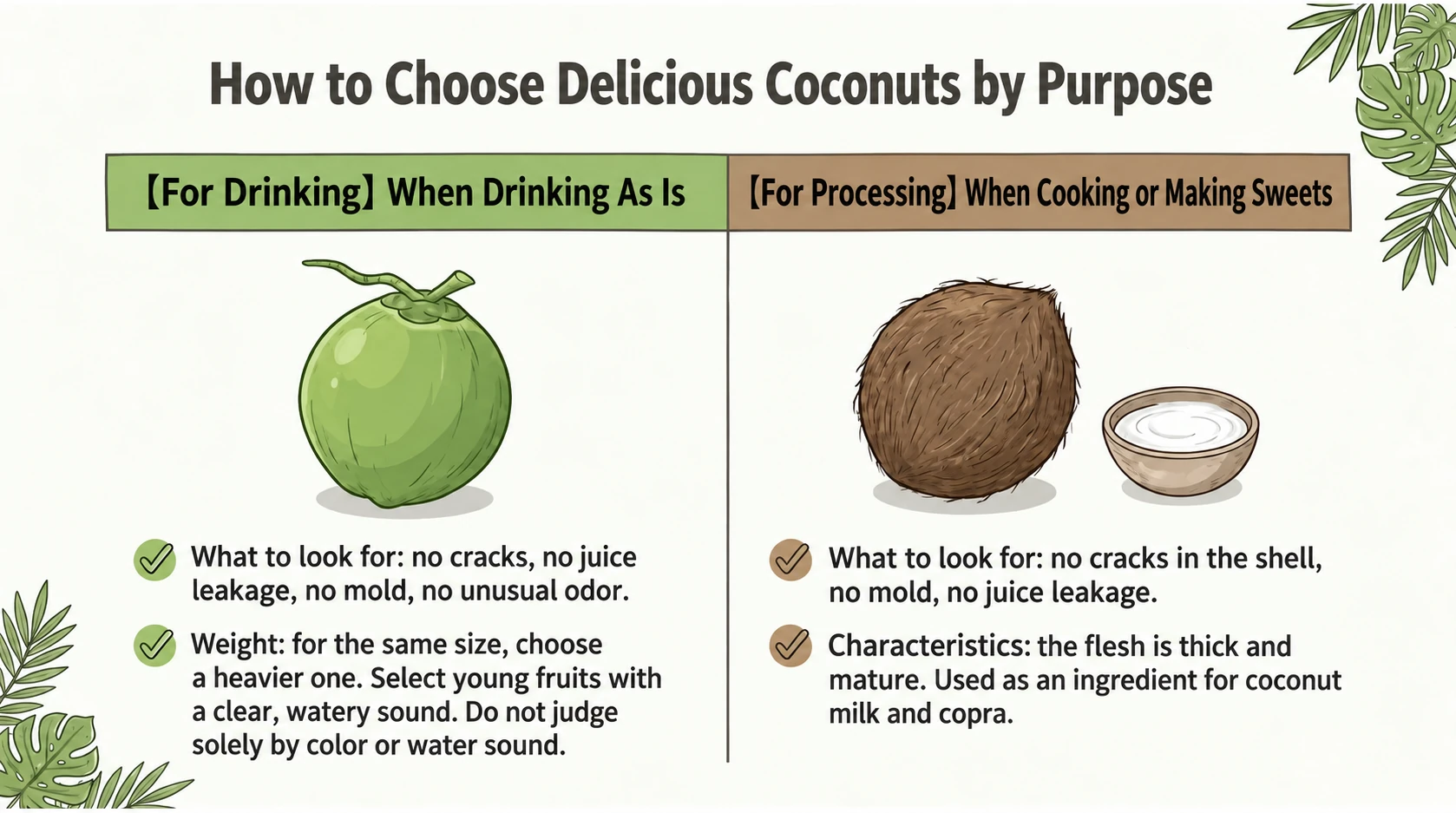
What to look for depends on whether you want a drinking coconut or fruit for cooking and processing.
Choosing Fruit to Drink Fresh
Husks may be green, yellow, or orange depending on variety and presentation; some fruit is shaved white. Color alone does not establish freshness. Choose good weight for its size and avoid cracks, leaks, mold, and unusual odors. A loud sloshing sound can also occur in mature fruit with more internal space, so louder does not necessarily mean fresher. While traveling, a busy stall where staff open it for you is a straightforward option.
Choosing Fruit for Milk, Cooking, or Desserts
Mature brown coconuts contain less water but thicker flesh. These are suited to making coconut milk or cooking and desserts that use dried flesh, or copra.
The Basics of Opening a Coconut
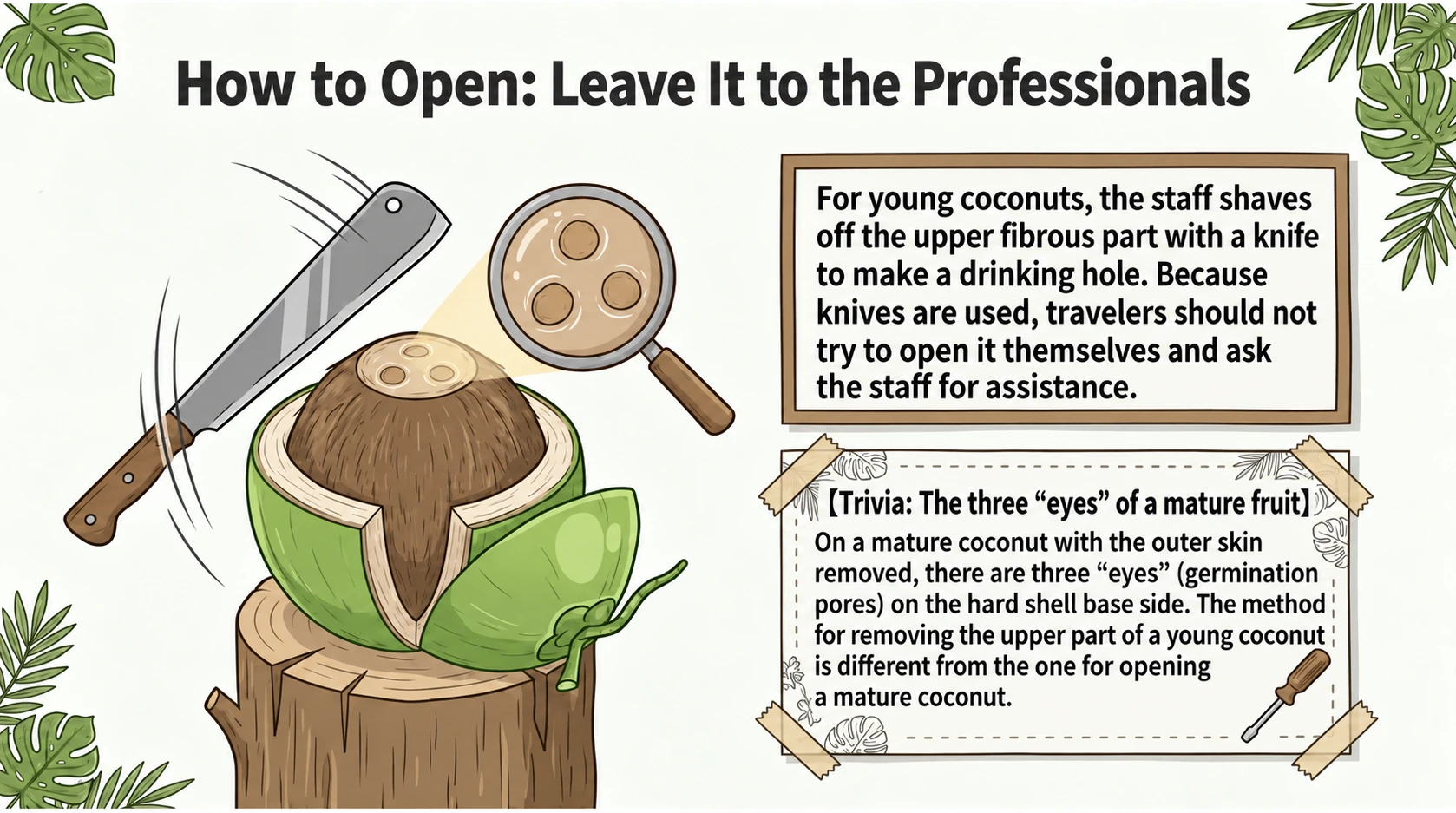
At stalls and supermarkets, staff commonly shave the top with a machete and make a drinking opening. Travelers usually do not need to handle a machete themselves.
On a mature brown fruit with the fibrous husk removed, the three “eyes” are at the base of the shell; the softer germination pore can be used to drain the water. Young fruit at stalls is typically opened by shaving through the outer husk. Methods differ by fruit type, and hard shells and blades can cause injuries, so travelers are better off leaving the task to staff.
Five Local Ways to Encounter Coconut
1. Drink Fresh Water Through a Straw
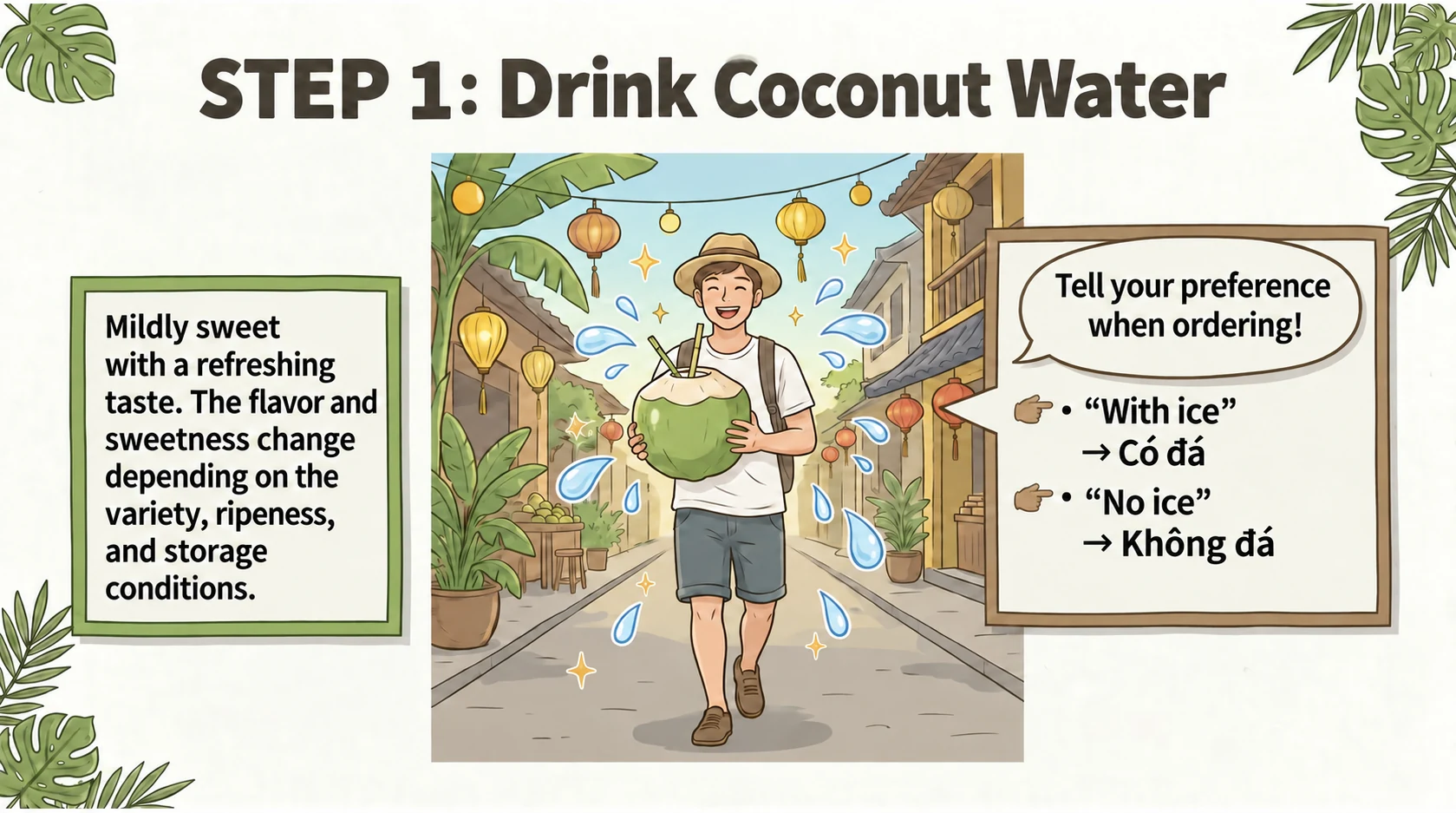
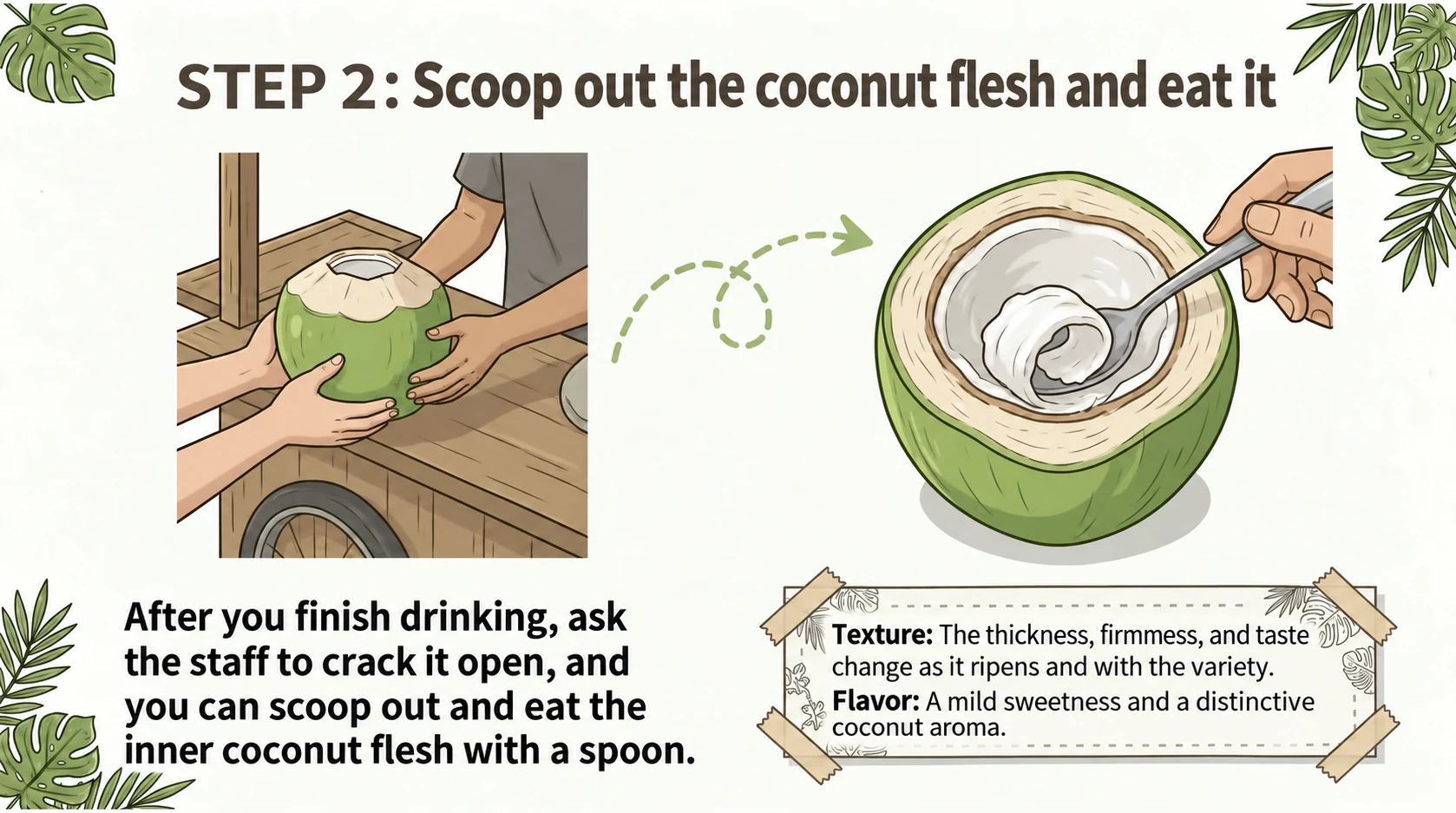
This is the easiest and most familiar option. Ask for ice, Có đá, or no ice, Không đá. After drinking, ask staff to split the fruit and scoop out the white flesh with a spoon.
2. Xoài Dừa Băng Tuyết (Mango & Coconut Snow)
A familiar menu choice at cafés and milk-tea shops. Stir together the mango ice and coconut-milk-based layer with a straw as you drink. A takeaway cup makes a convenient break while walking around town.
3. Chè dừa dầm (Coconut Chè)
A cold dessert combining young coconut flesh, jelly, nata de coco, condensed milk, and similar ingredients. It is enjoyed in Vietnamese homes and chè shops.
4. Kẹo dừa (Ben Tre Coconut Candy)
A moist, chewy confection made by cooking coconut milk with sugar, maltose, and similar ingredients. It is a well-known specialty of the Ben Tre area in the Mekong Delta, formerly Ben Tre Province and now Vinh Long Province, and a familiar souvenir. Check the shop’s price, since it varies by product and quantity.
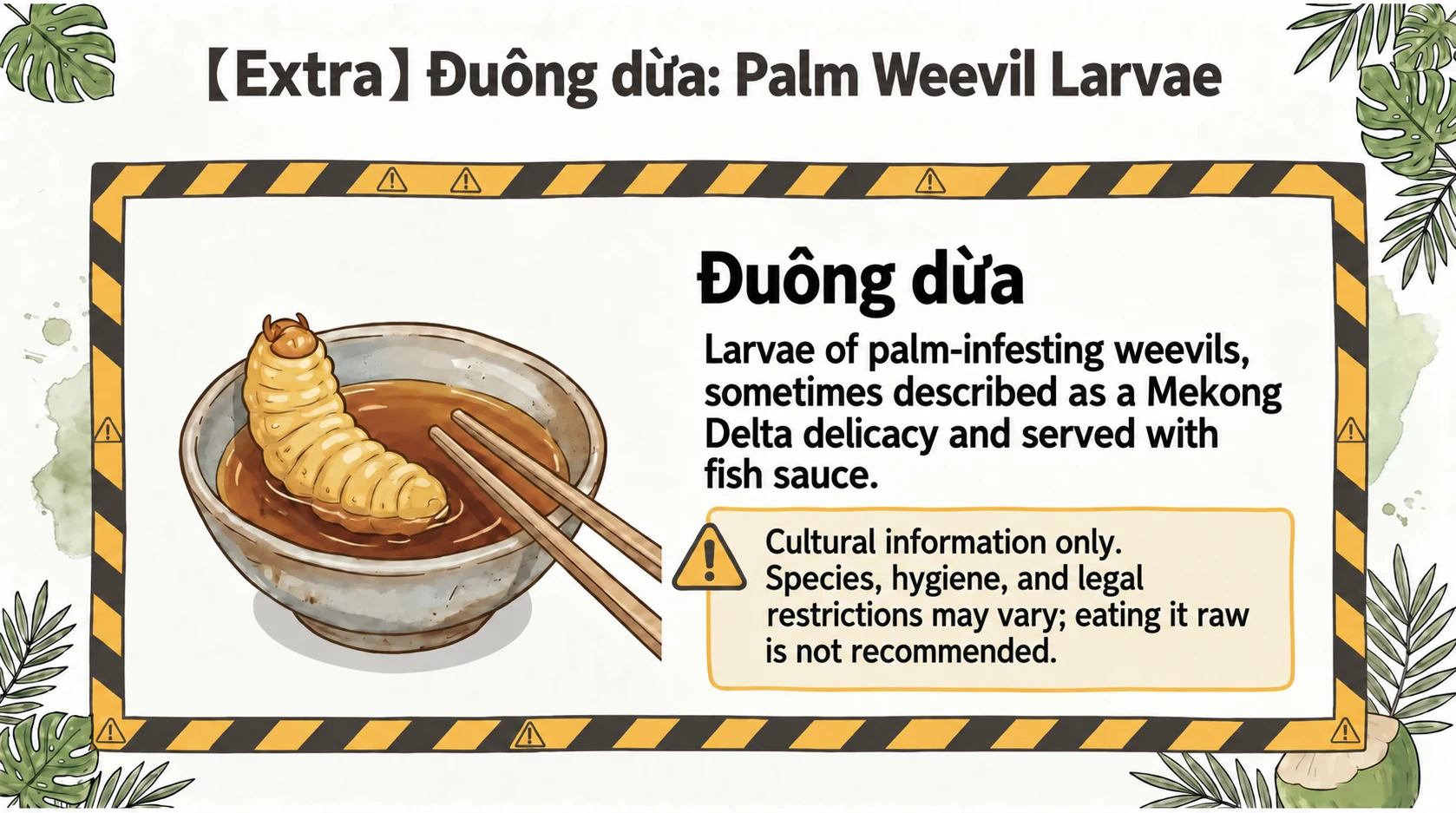
5. Đuông dừa (Palm Weevil Larvae)
This dish name refers to larvae of weevils that infest palms and is sometimes presented as a Mekong Delta delicacy. Examples served alive in fish sauce are known, but ordinary travelers cannot readily assess the species, hygiene, or legal restrictions. This article presents it as cultural information and does not recommend eating it.
Allergies: Check Your Individual Situation
As explained in the Coconut Field Guide, coconut is botanically a drupe rather than a nut.
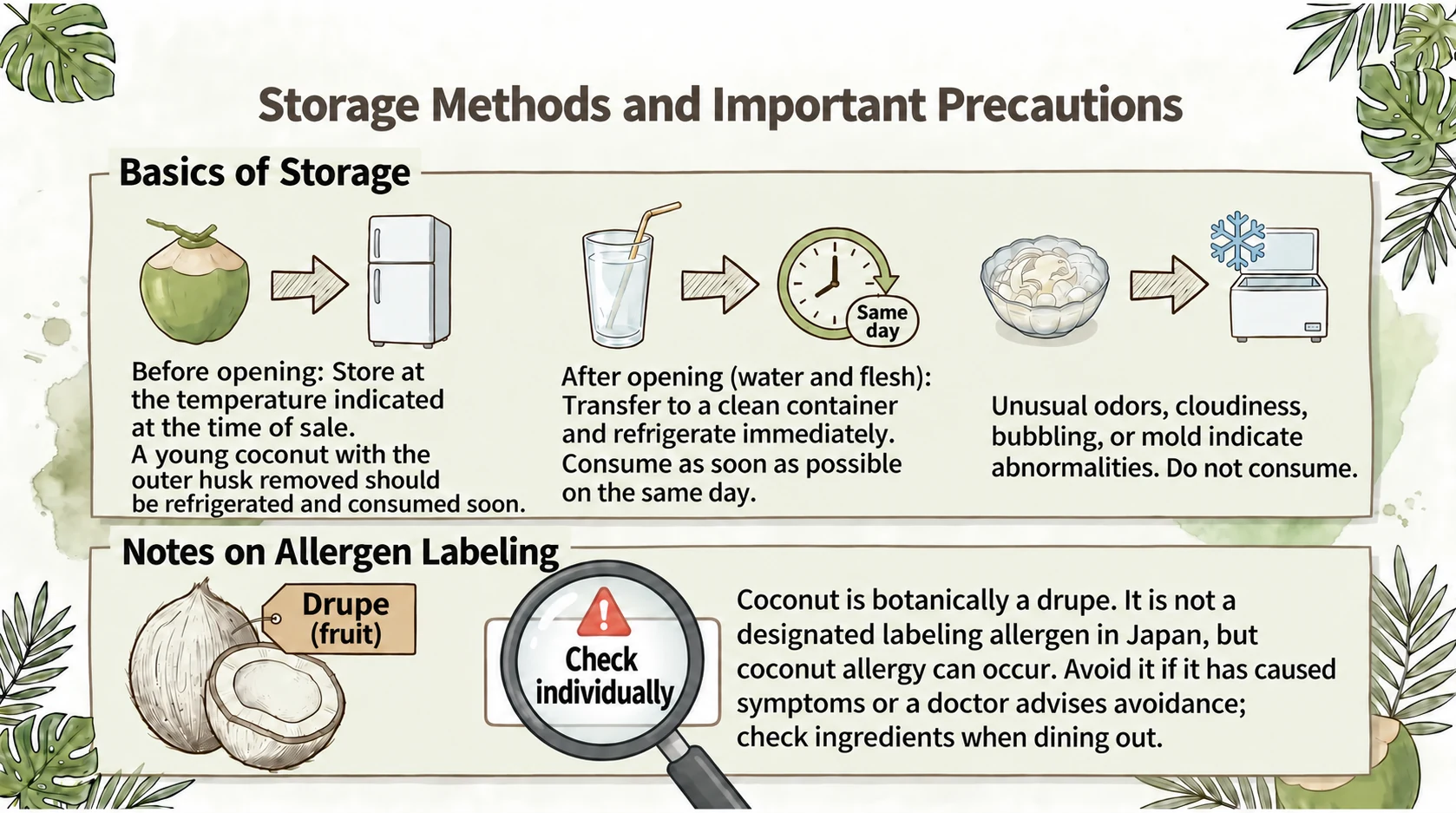
Japan’s food-labeling system does not include coconut among the designated allergens requiring or recommending labeling. The US FDA’s 2025 guidance also excludes coconut from the tree-nut list used for major allergen labeling. Coconut itself can nevertheless cause allergic reactions. If you have had symptoms after coconut or have been advised by a doctor to avoid it, do not eat it, and check ingredients when dining out. Do not decide whether coconut is suitable solely from an allergy to other tree nuts; consult a doctor if concerned.
Storage
- Fresh fruit before opening: Follow the temperature conditions used at sale and the packaging instructions. Refrigerate young fruit with the husk shaved off and use it promptly.
- Water and flesh after opening: Transfer to a clean container, refrigerate immediately, and consume preferably the same day. Do not consume fruit left at room temperature for a long time or showing unusual odor, cloudiness, bubbling, or other abnormalities.
Can You Take a Fresh Coconut Back to Japan?
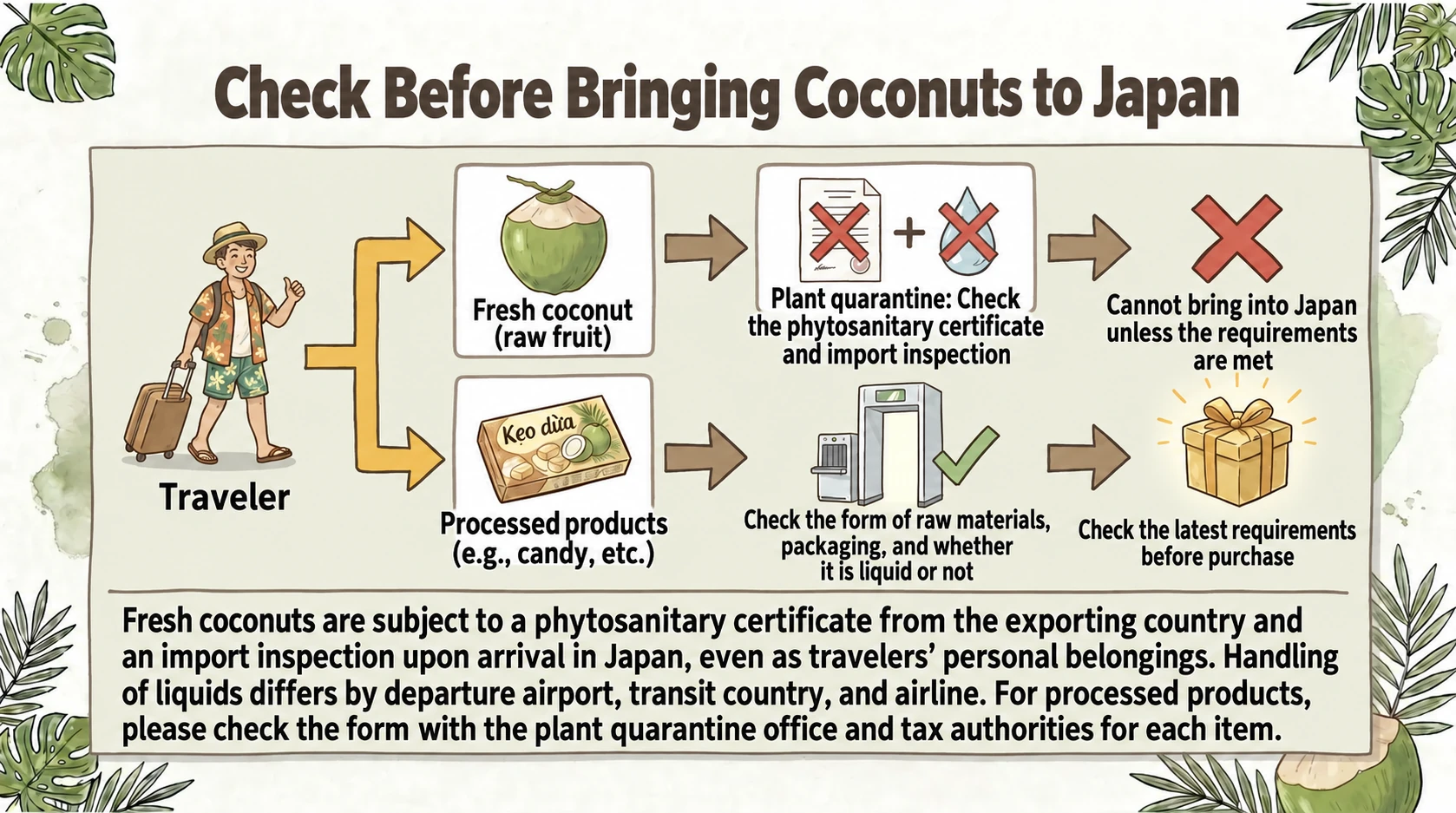
As discussed in the Coconut Field Guide, Japan’s Plant Protection Station lists coconut, tamarind, durian, pineapple, and chestnut as fruit items travelers may bring from Vietnam subject to conditions. Coconut is included in this list. Unlike many tropical fruits, such as papaya and rambutan, it is one of the few for which import may be possible.
The permission is strictly conditional. You need a phytosanitary certificate issued by the exporting country’s government authority, and the fruit must pass inspection at Japan’s airport or seaport plant quarantine counter. Arranging such a certificate for one coconut bought at a stall or market is not practical for an individual traveler.
Aviation security and airline rules also matter. Treatment of a fresh coconut containing water may differ by departure airport, transit point, and airline, so check in advance. Checking it into hold baggage does not remove the separate plant quarantine requirements. Processed products also vary by ingredients and processing, so they are not automatically acceptable in every case.
Plant quarantine and cabin baggage rules can change. Always check the latest information before traveling.
My Tasting Notes
Purchase record 1: fresh coconut
Place: a Hanoi market
Date: July 31, 2026
Price: 31,000 VND (about ¥190)
Purchase record 2: café blended drink
Place: a Hanoi drink shop
Date: August 9, 2026
Price: 79,000 VND (about ¥470, large)
Menu item: Xoài Dừa Băng Tuyết (Mango & Coconut Snow)
My impressions
The water was refreshing. The white flesh of the fruit I bought felt crisp, with a milky, gentle sweetness; texture differs by maturity and variety. Xoài Dừa Băng Tuyết combined mango ice and a coconut-milk-based layer; I bought the large.
Beginner rating: ★★★☆☆ (my personal rating)
Frequently Asked Questions
Should I choose drinking or processing fruit?
Choose young fruit for drinking fresh and mature fruit with thick flesh for milk or desserts. Color alone is not enough: choose good weight for its size, with no cracks, leaks, mold, or unusual odors.
Can I split the shell myself?
Because opening involves blades, travelers are better off asking stall staff to do it.
Is coconut suitable if I have a nut allergy?
Coconut is not a designated labeling allergen in Japan, but allergy to coconut itself is possible. Avoid it if you have had symptoms, and consult a doctor if concerned.
Can I take it to Japan?
Coconuts are conditionally permitted, but require an official phytosanitary certificate and arrival inspection. Check aviation security and airline conditions as well. Processed products are treated differently by form, so consult current Plant Protection Station and customs information.
Recap: Enjoying Coconut in Vietnam
A coconut in Vietnam offers both a drink and something to eat in one fruit.
- Choose: young fruit for drinking, with no damage, leaks, mold, or unusual odors and good weight for its size; mature fruit with thick solid endosperm for processing.
- Open: leave young fruit to stall staff. If handling a mature shell yourself, take care with blades and the hard shell.
- Drink and eat: enjoy the water through a straw, then the remaining flesh. Also try café blends, Chè dừa dầm, and Ben Tre’s Kẹo dừa.
- Allergies: avoid coconut if it has caused symptoms and consult a doctor as needed.
- Store: follow sale-time temperature conditions and packaging instructions; refrigerate shaved young fruit. Consume opened water and flesh preferably the same day.
- Take home: fresh coconuts are conditionally permitted into Japan, but arranging the certificate as an individual is impractical. Consider processed souvenirs and check their requirements.
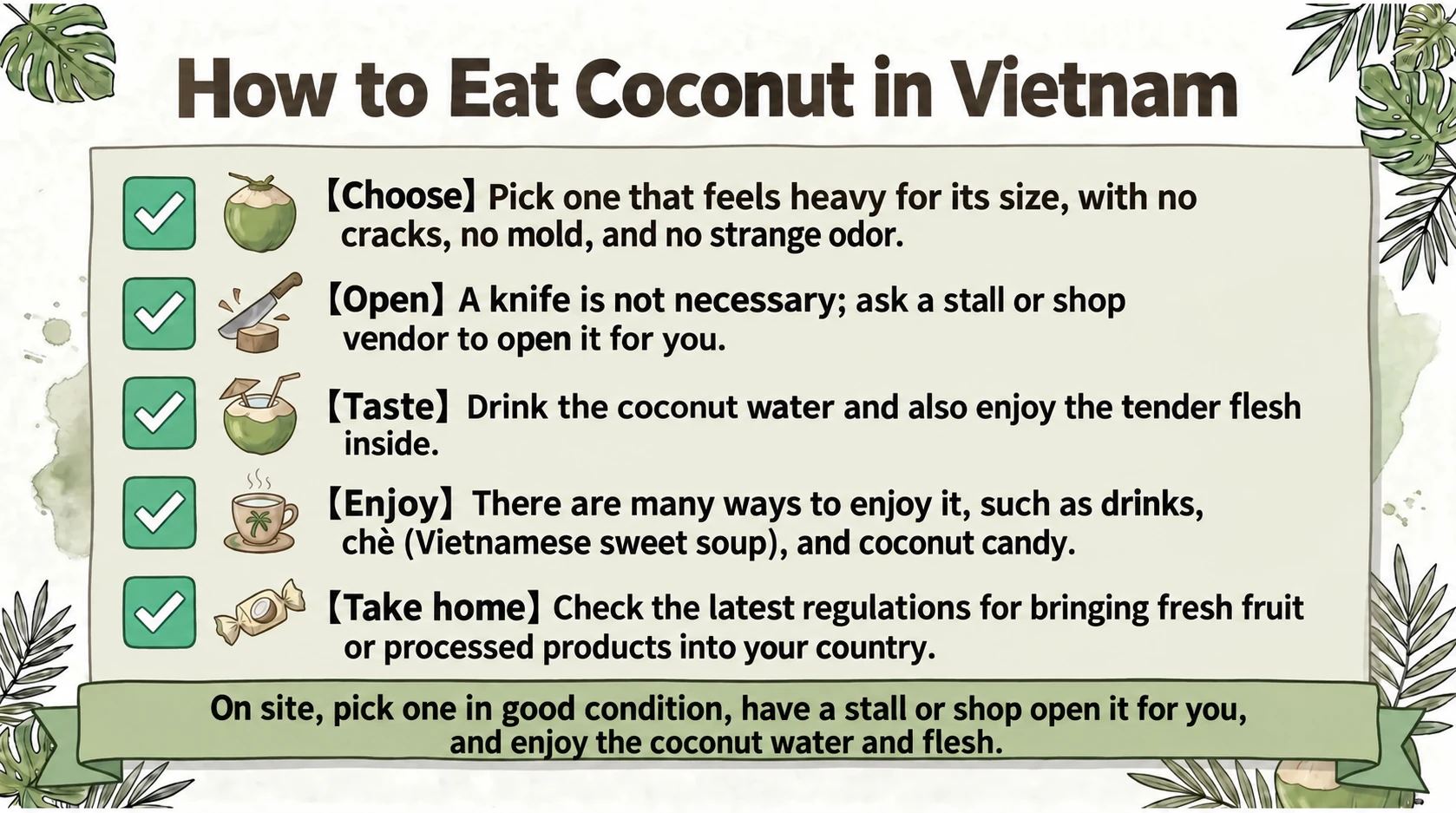
Start by buying one at a stall and taking a sip through the straw. When you finish the water, try the flesh inside too.
Explore More About Coconut
For ecology, naming, varieties, and Japanese plant quarantine, read the Coconut Field Guide. For Pacific voyaging, European treasures, and Vietnam’s Đạo Dừa religious movement, see Coconut History and Stories.
Sources
- Vietnam Government: Provincial Administrative Reorganization in 2025 (Vietnamese)
- Consumer Affairs Agency: Food Allergy Labeling (Japanese)
- FDA: Frequently Asked Questions—Food Allergen Labeling Guidance
- Japan Plant Protection Station: Vietnam (Japanese)
- Cách chọn dừa xiêm ngon, nhiều nước – Dừa Tâm Việt
- 4 Cách chọn dừa uống nước ngon – Agrismart
- Cách chọn dừa nhiều nước – afamily.vn
- Coconut Juice: Nutrition, Opening, Types, and Selection — SweetsVillage (Japanese)
- 14 Vietnamese Snacks — Poste (Japanese)
- What Is Vietnamese Chè? — VietVoice (Japanese)
- Coconut Candy in Vietnamese — HAKATA Foreign Language School (Japanese)
- Vietnamese Coconut Candy Brands — VINA (Japanese)
- Types of Nut Allergy and Precautions — DietitianJob (Japanese)
- Coconut Excluded from Tree-Nut Allergen List — Dora Kitchen (Japanese)
- Japan Plant Protection Station: Items from Vietnam (Japanese)
About the Author

Chuta
Based in Hanoi, Vietnam, Chuta buys fruit at local markets and supermarkets and writes about its taste, seasons, selection and preparation. Drawing on life in Vietnam, he introduces tropical fruits that are less familiar to readers in Japan.
About Fruit Guide