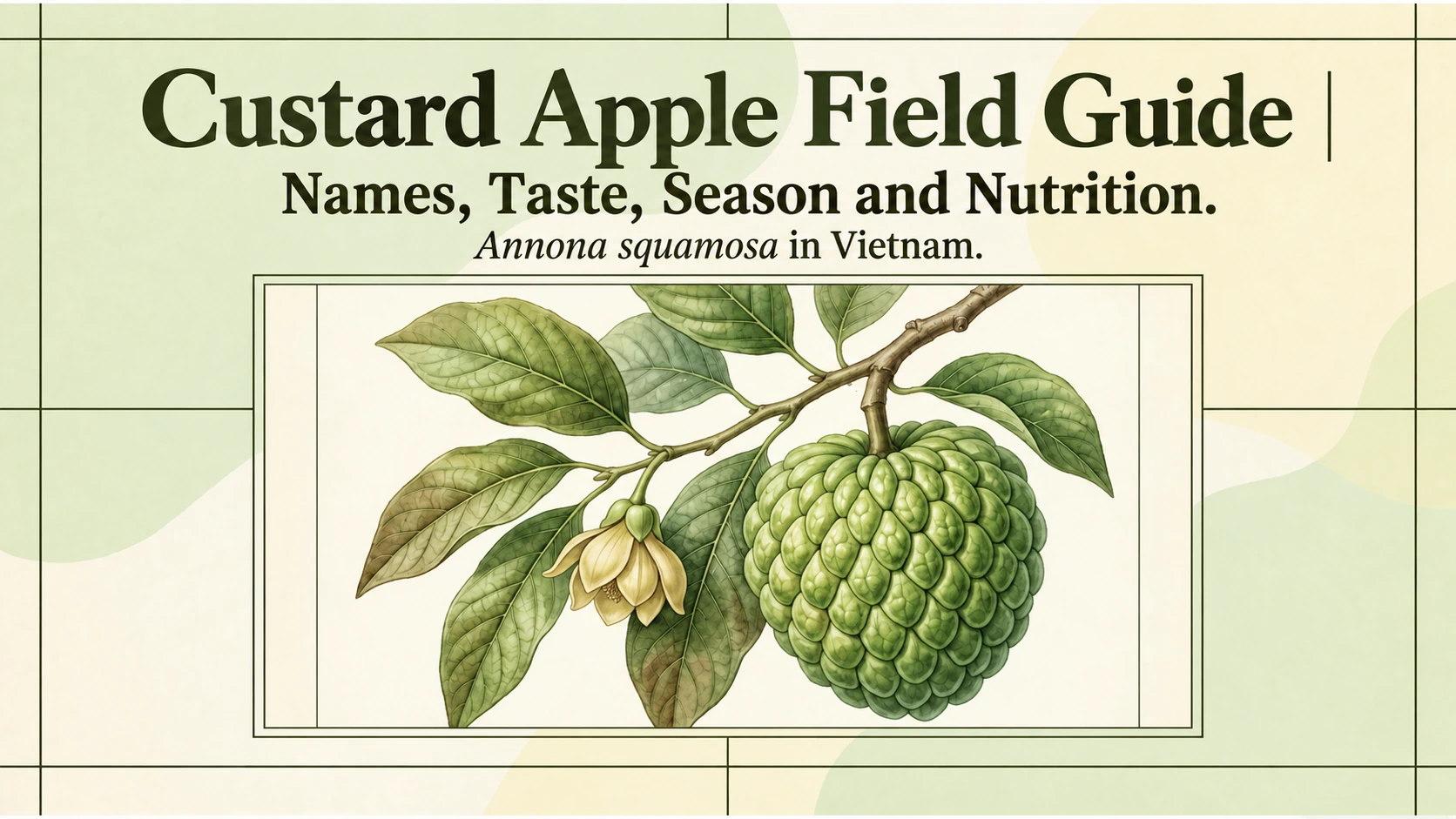
With its green, segmented skin and sweet white flesh, the sugar apple is an easy fruit to recognise at Vietnamese markets. Sellers often call it na or mãng cầu ta.
The English name custard apple can refer to several related fruits. This guide focuses on the sugar apple, Annona squamosa, explaining its names, flavour, season, nutrition, biology and Vietnamese varieties. For practical instructions, see the companion eating guide; the history article explores its names and cultural meaning.
Custard apple at a glance
| Item | Details |
|---|---|
| Fruit covered here | Sugar apple / sweetsop |
| Scientific name | Annona squamosa L. |
| Family | Annonaceae |
| Growth habit | Shrub or small tree |
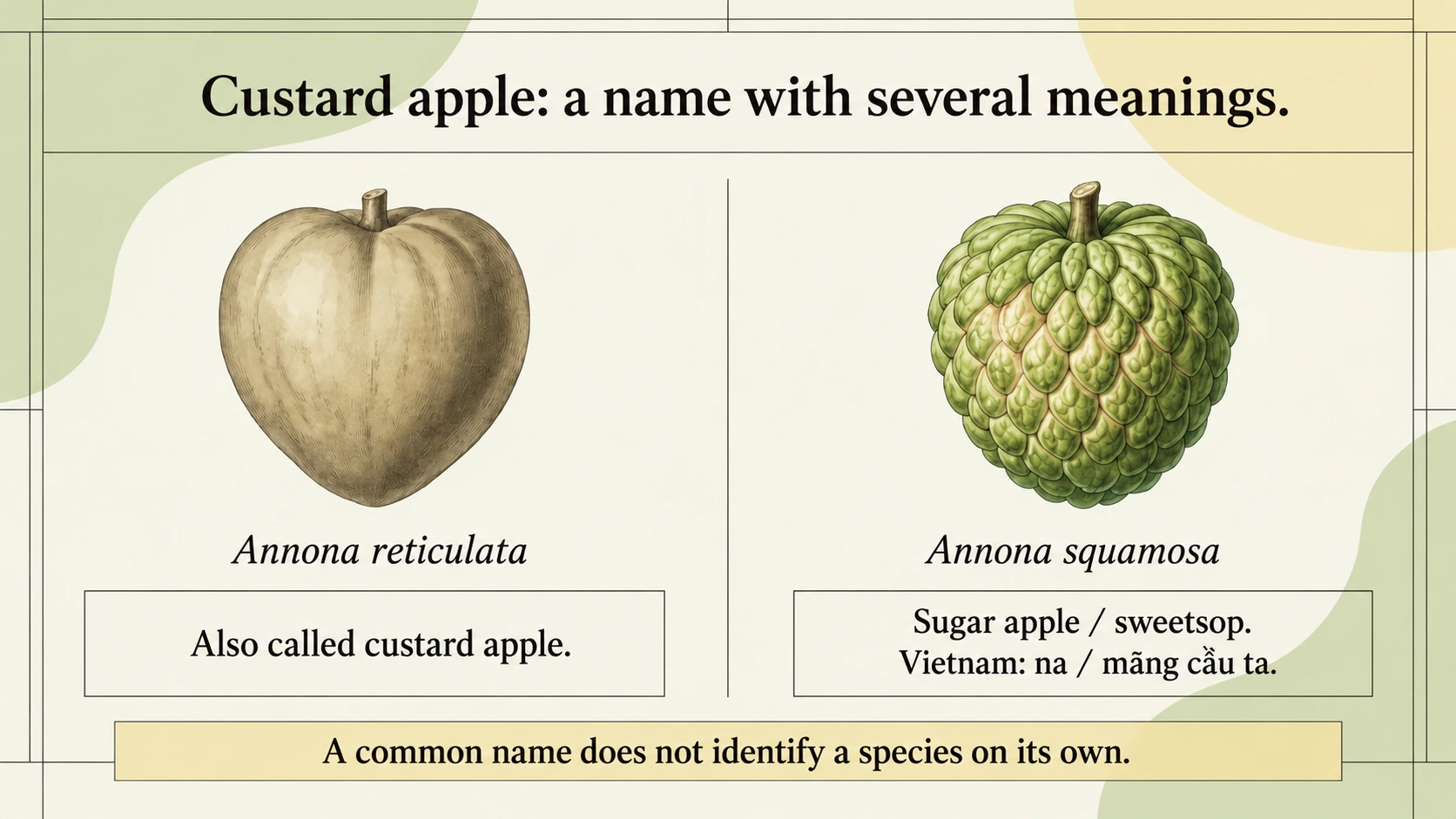
| English names | Sugar apple, sweetsop; also custard apple in some regions |
| Japanese name | Banreishi |
| Taiwanese names | 番荔枝; 釋迦, commonly romanised as shijia |
| Vietnamese names | Mainly na in the north and mãng cầu ta in the south |
| Native range | Mexico to Colombia, according to Kew |
| Main harvest in Vietnam | Roughly June–September, with regional variation; around August in Chi Lăng |
| Taste and texture | Very sweet; softens as it ripens; texture varies with cultivar and maturity |
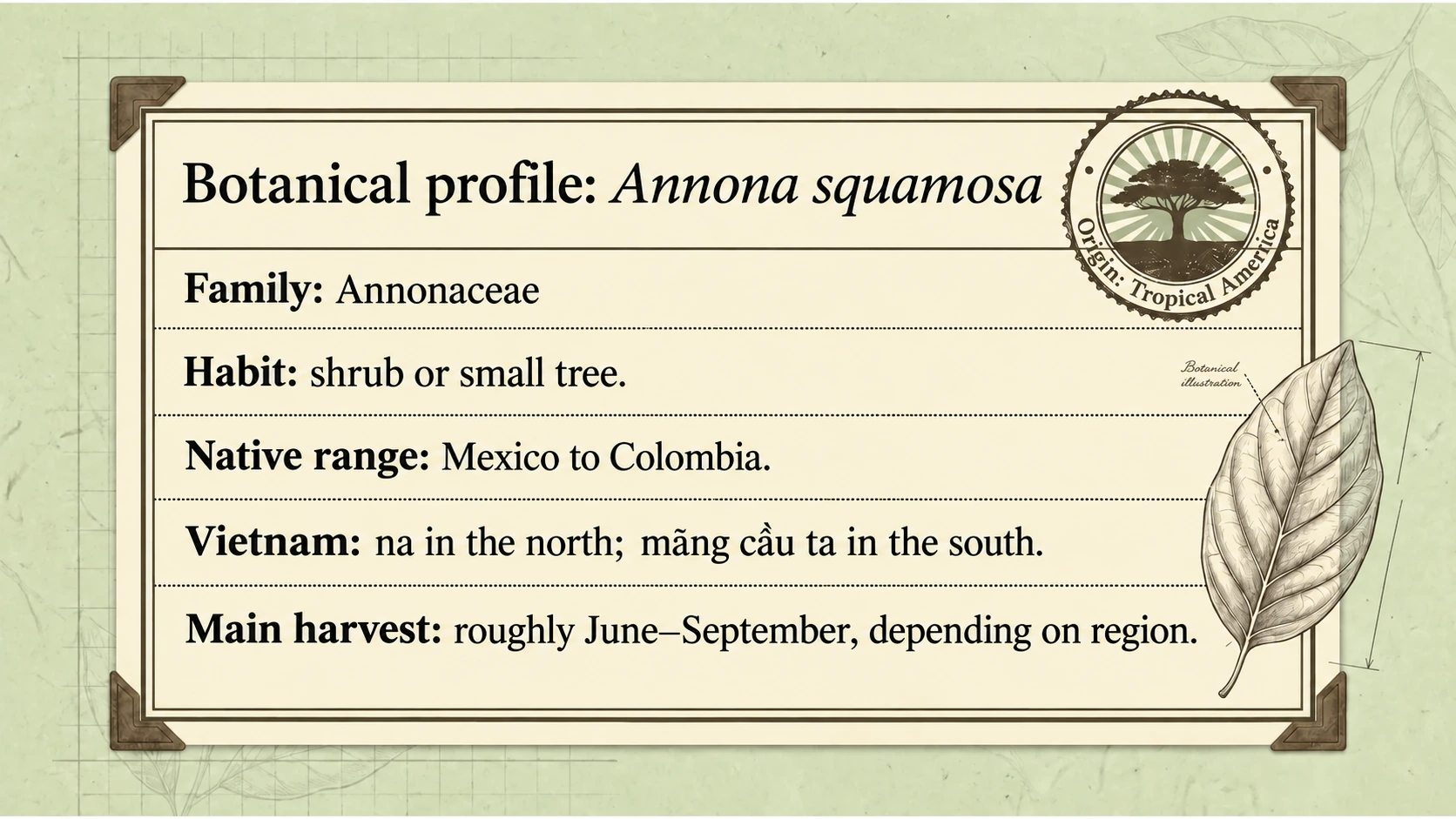
Kew distinguishes the native range from the many places where this fruit has been introduced. Its widespread cultivation in Asia does not make it native to Asia.
Do custard apple, sugar apple and sweetsop mean the same thing?
Sugar apple and sweetsop are common English names for Annona squamosa. In Vietnam, na and mãng cầu ta generally refer to this fruit. The Japanese name banreishi and the Taiwanese name shijia are also used for it.
Custard apple is less precise. Depending on the country and source, it may mean A. squamosa, A. reticulata or atemoya. A common name alone is therefore not enough to identify the species.
| Fruit | Scientific name | Typical features |
|---|---|---|
| Sugar apple / sweetsop | Annona squamosa | Prominent segments that separate more easily when ripe |
| Cherimoya | Annona cherimola | Less prominent surface scales; skin markings vary with cultivar |
| Atemoya | Annona cherimola × A. squamosa | A hybrid of cherimoya and sugar apple |
| Soursop | Annona muricata | Larger fruit, soft spines and tart flesh |
| Custard apple / bullock’s heart | Annona reticulata | Often has a net-like skin pattern |
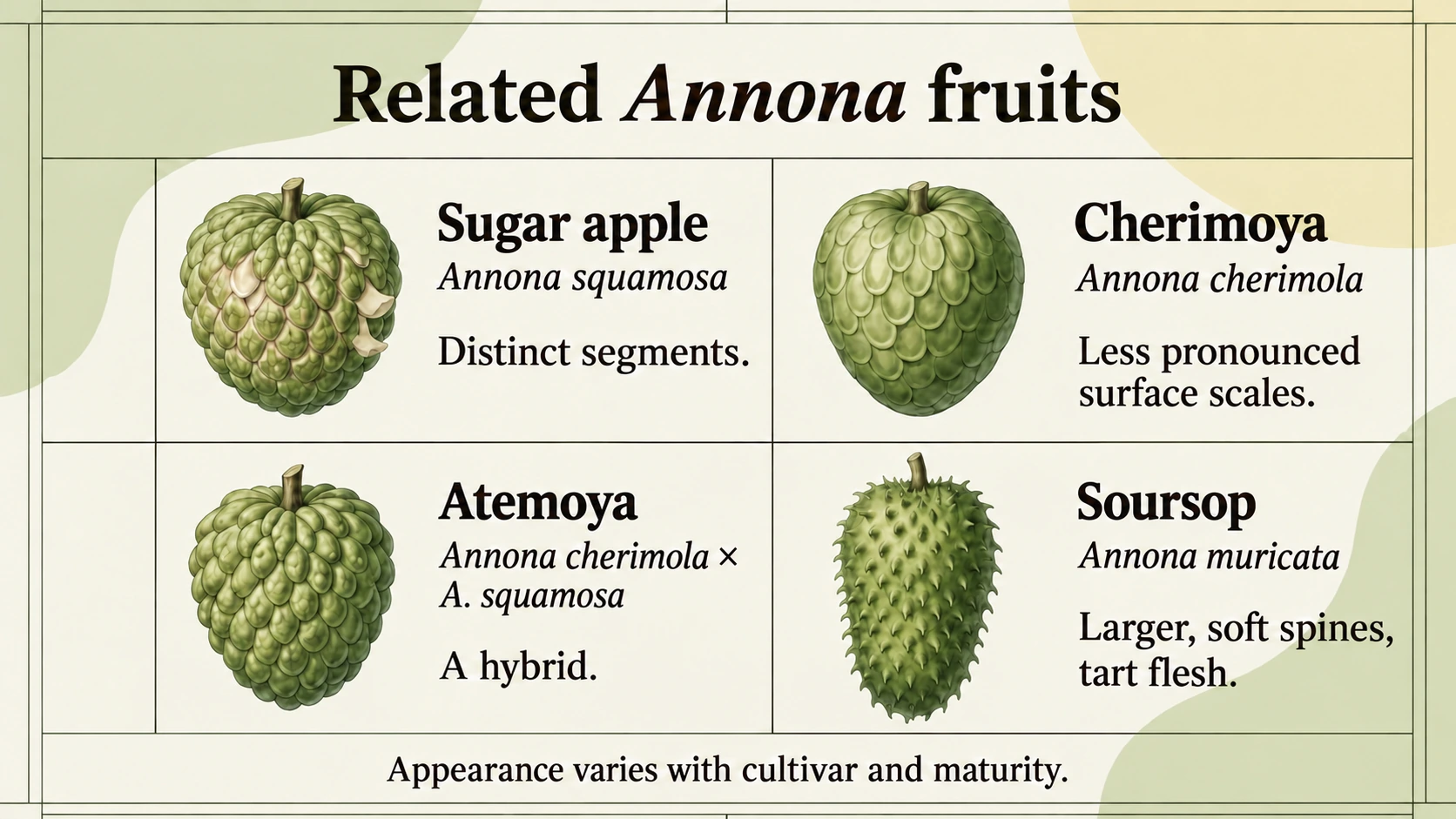
Appearance also varies within a species. When buying or researching a fruit, combine its appearance with its local name and, where available, its scientific name.
How a sugar apple forms: one flower, many carpels
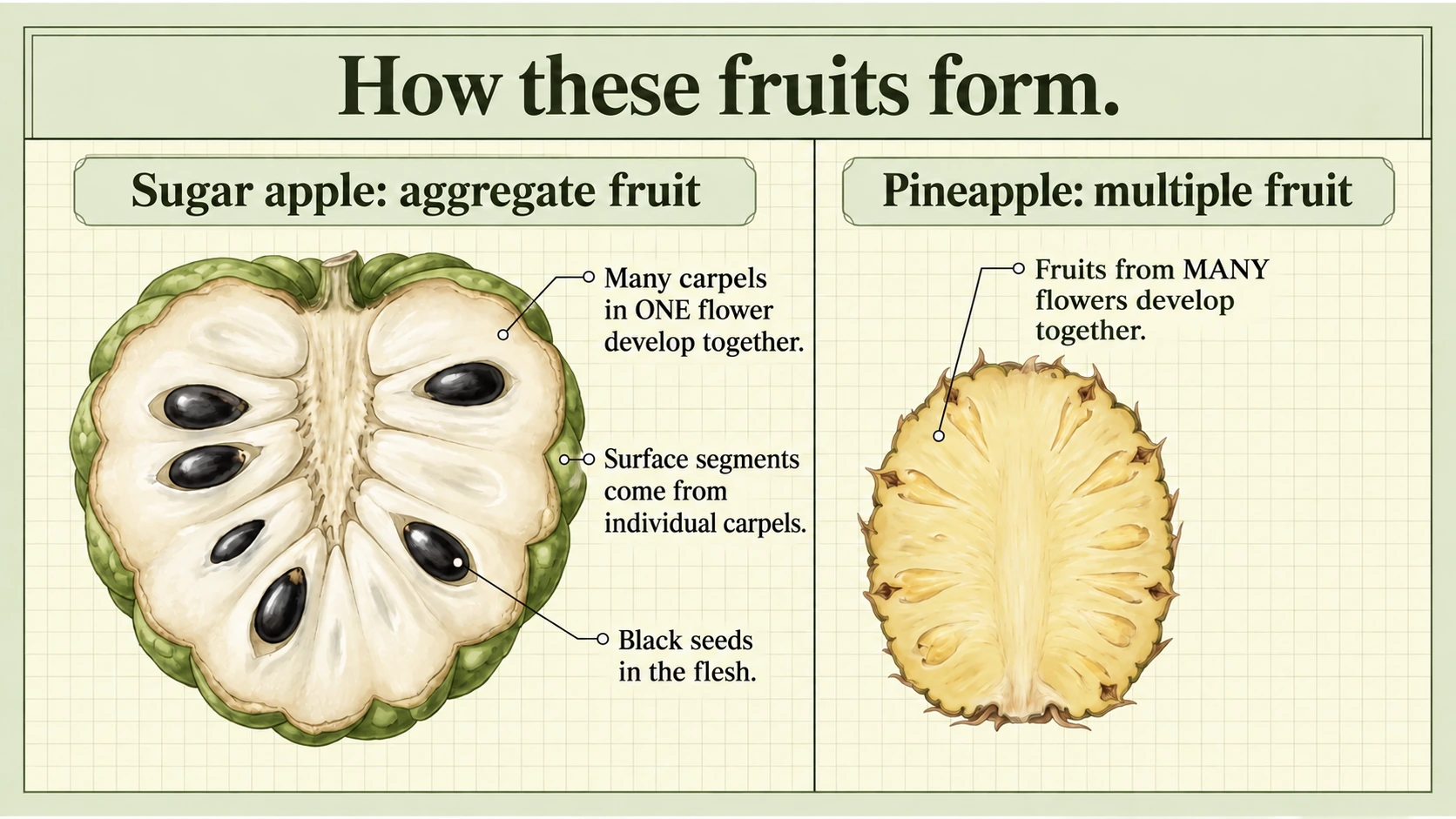
A sugar apple is an aggregate fruit. Many carpels within one flower develop together to form the fruit. The visible segments on the surface come from those individual carpels.
A pineapple forms differently: fruits from many flowers develop together into a multiple fruit. Their patterned surfaces may look comparable, but their botanical origins differ.
Flowers and beetle pollination
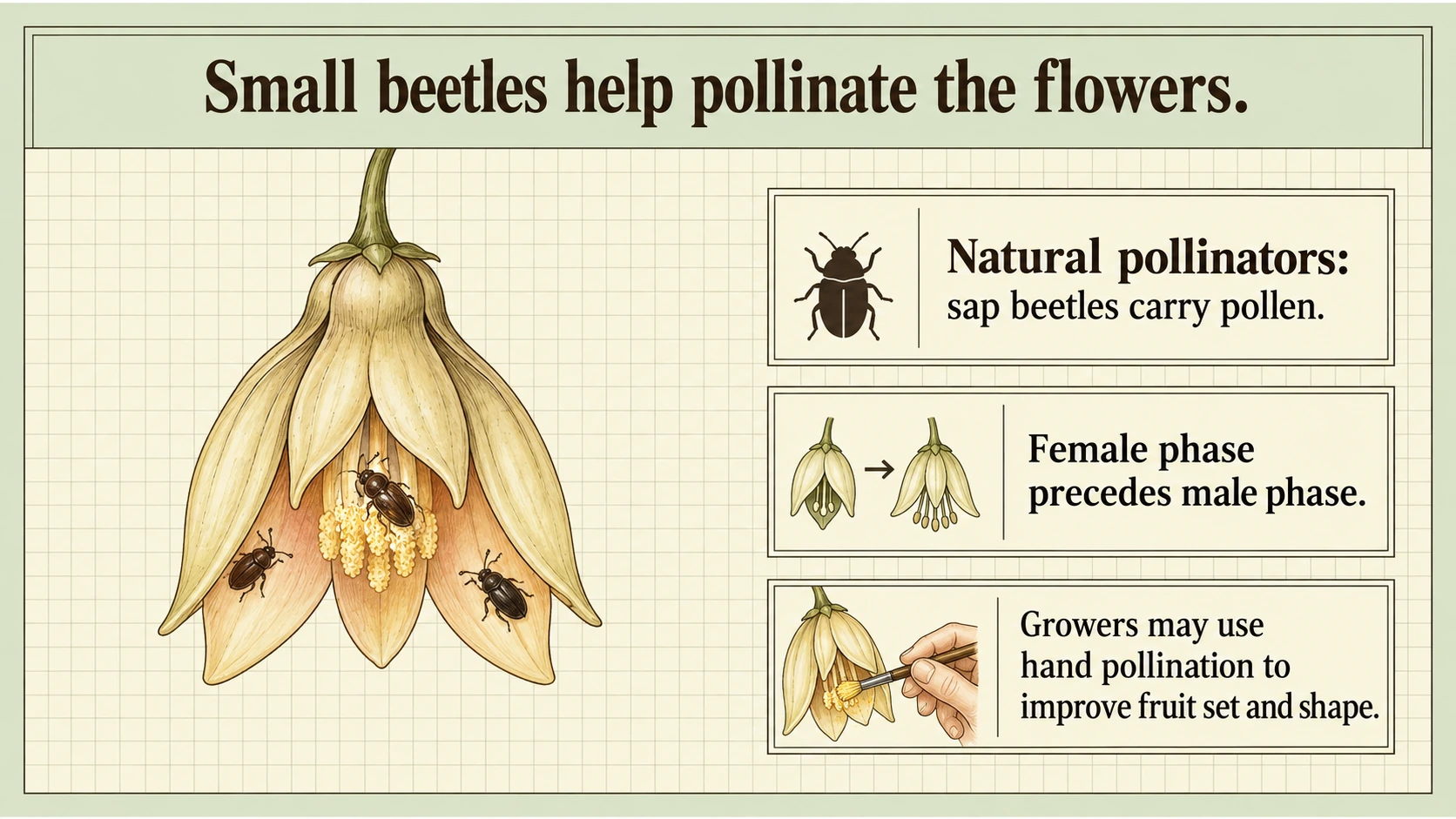
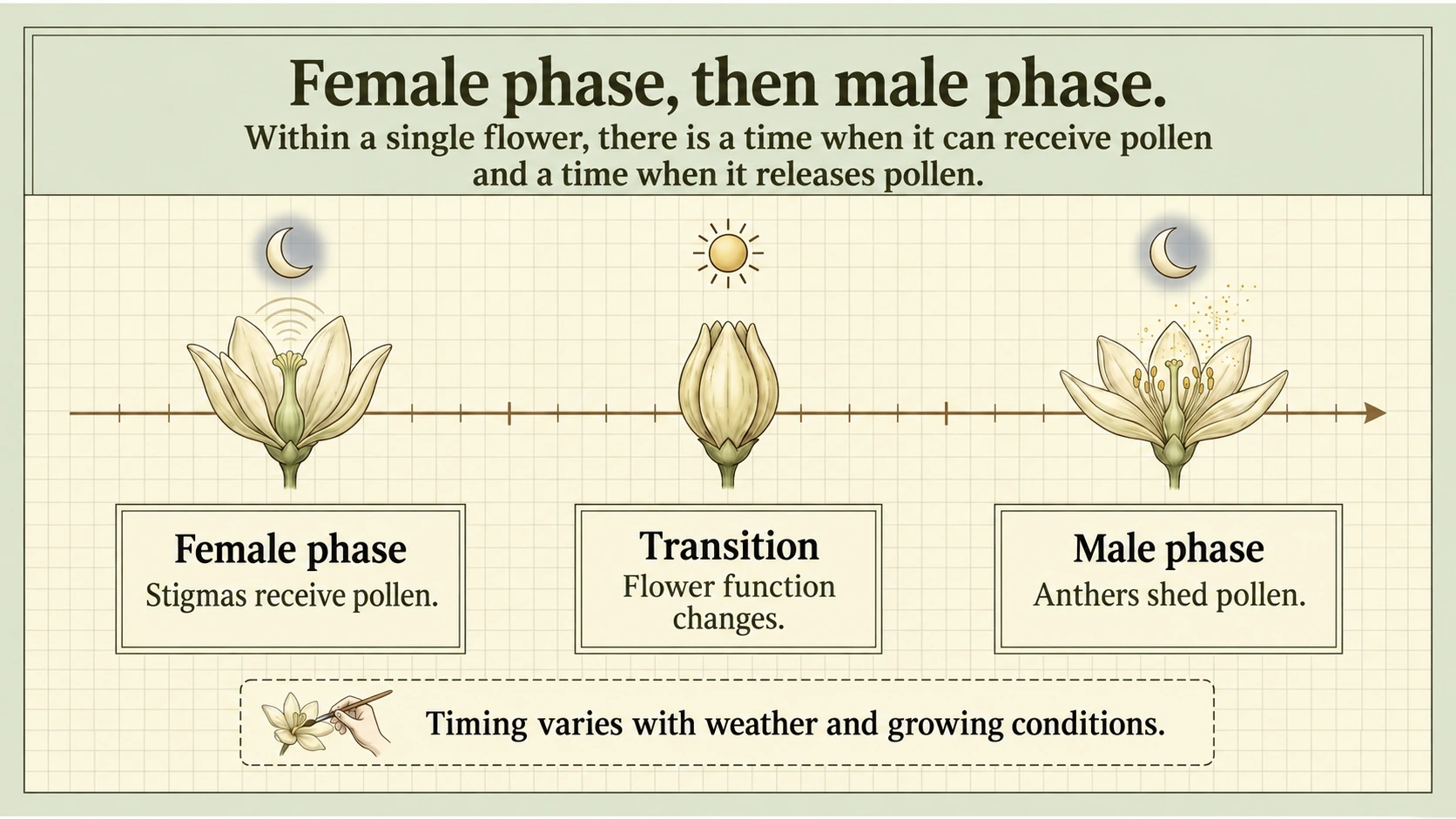
Sugar-apple flowers contain both female and male organs, but those organs function at different times. The stigmas receive pollen in the female phase; later, the anthers shed pollen in the male phase. This female-first sequence is called protogyny.
Sap beetles, including members of the family Nitidulidae, move pollen between flowers. In growing areas where natural fruit set is poor, hand pollination can improve fruit set and shape.
The University of Florida describes the female-to-male sequence in its cultivation guidance. Exact timing depends on weather and growing conditions, so it should not be treated as a fixed timetable for every orchard.
Ripening: let mature fruit soften at room temperature
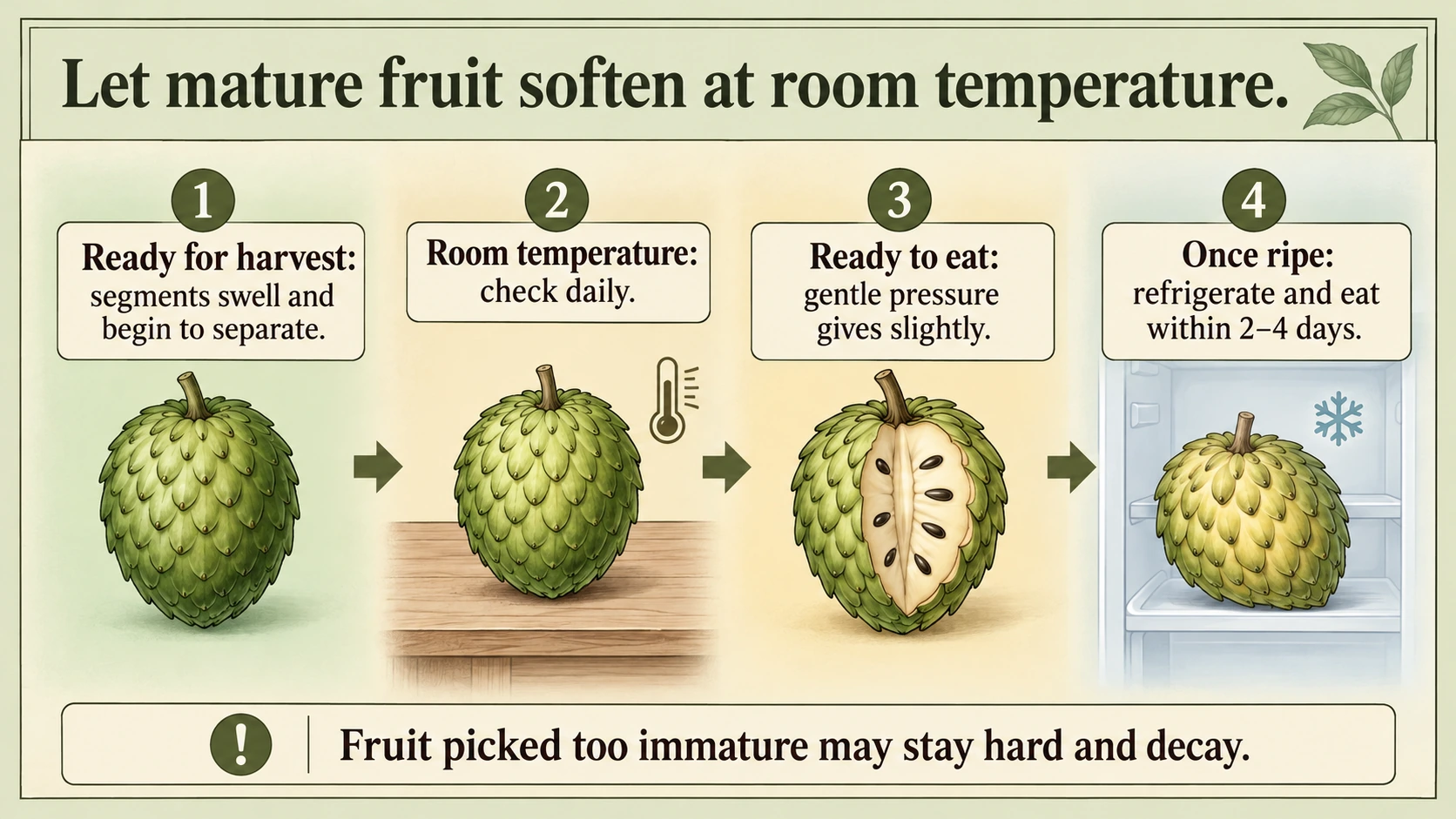
Harvest-mature fruit can soften after picking. For green-skinned selections, signs of maturity include swollen segments, wider gaps and a shift towards yellow-green.
Fruit picked too immature may remain hard, turn brown and decay without ripening properly. A firm fruit is not automatically a good candidate for ripening at home.
Once ripe, refrigerate it and eat it promptly. The University of Florida gives a short storage period of 2–4 days for ripe sugar apples. Check the fruit’s condition as well as the number of days.
Remove the black seeds
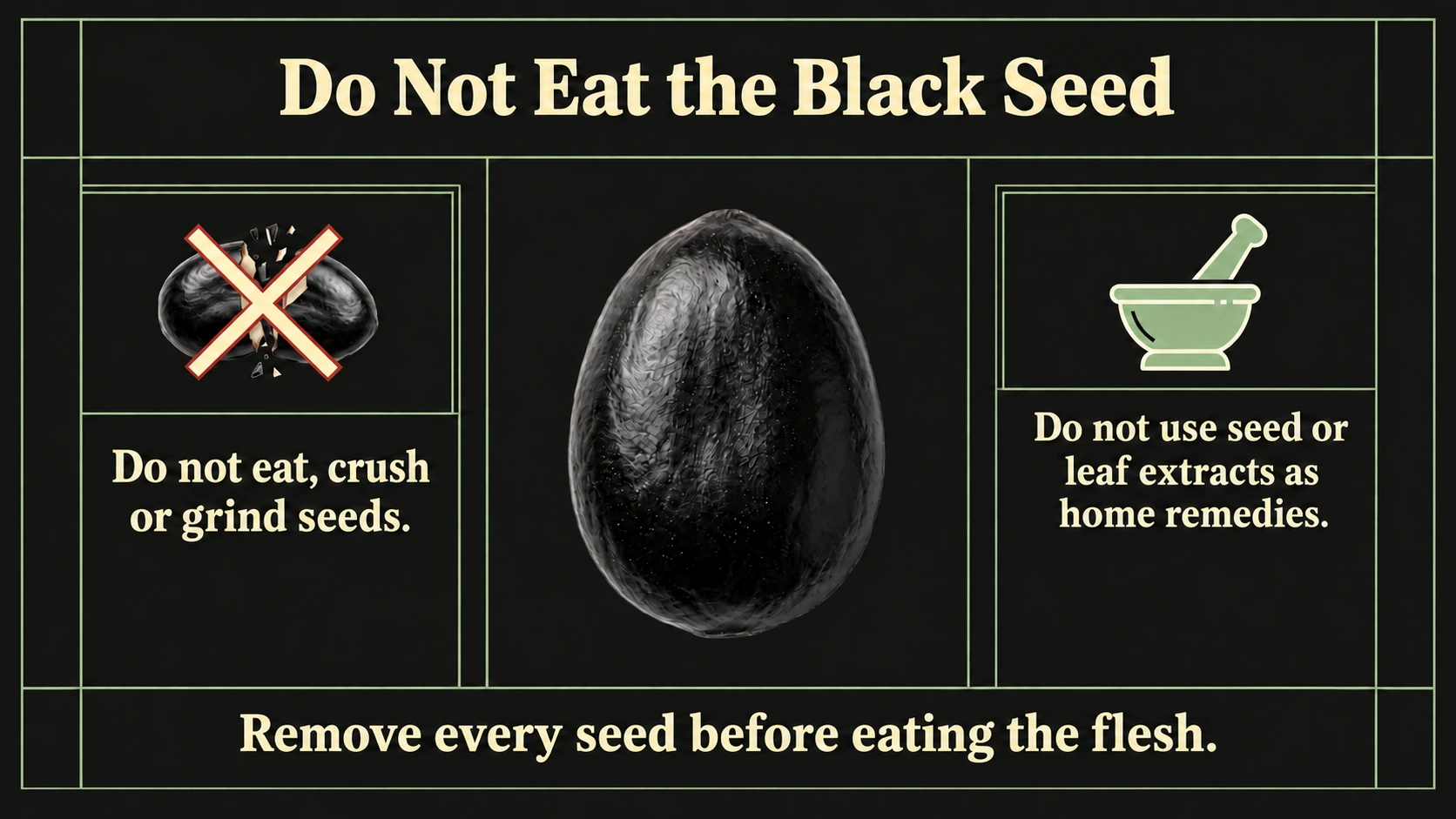
The black seeds are not food. Remove them from the flesh; do not chew, crush or grind them into drinks. Seeds contain biologically active compounds, and seed or leaf extracts should not be used as home remedies.
Eating the flesh as a normal food is different from consuming seeds, leaves or concentrated extracts. For young children, an adult should remove the seeds before serving the flesh.
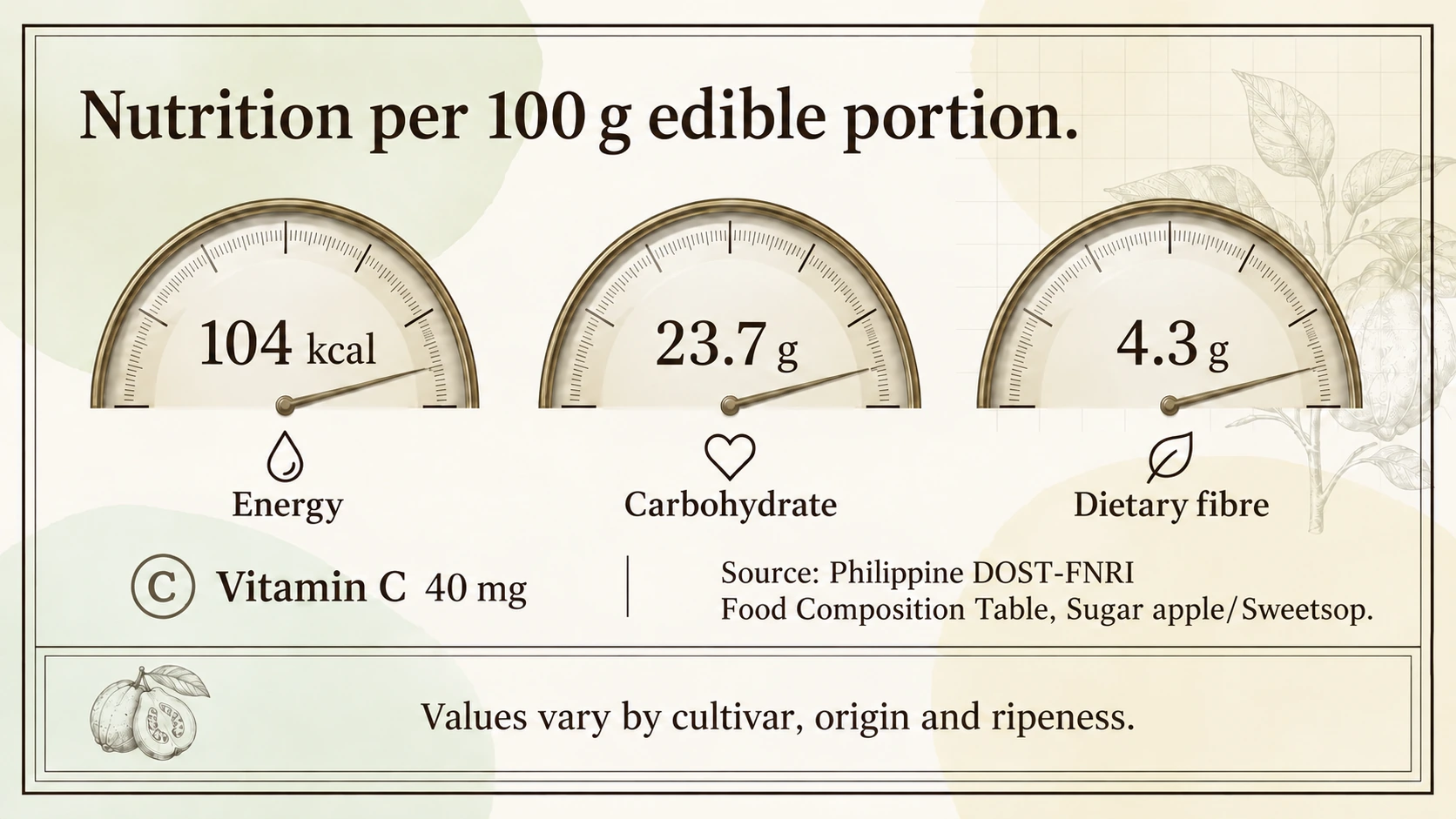
Sugar-apple nutrition per 100 g
The Philippine DOST-FNRI Food Composition Table gives the following values for sugar apple/sweetsop:
| Nutrient | Per 100 g edible portion |
|---|---|
| Energy | 104 kcal |
| Carbohydrate | 23.7 g |
| Dietary fibre | 4.3 g |
| Vitamin C | 40 mg |
These figures apply to the edible portion, excluding skin and seeds, rather than to 100 g of whole fruit. Values vary with cultivar, origin, maturity and analysis method.
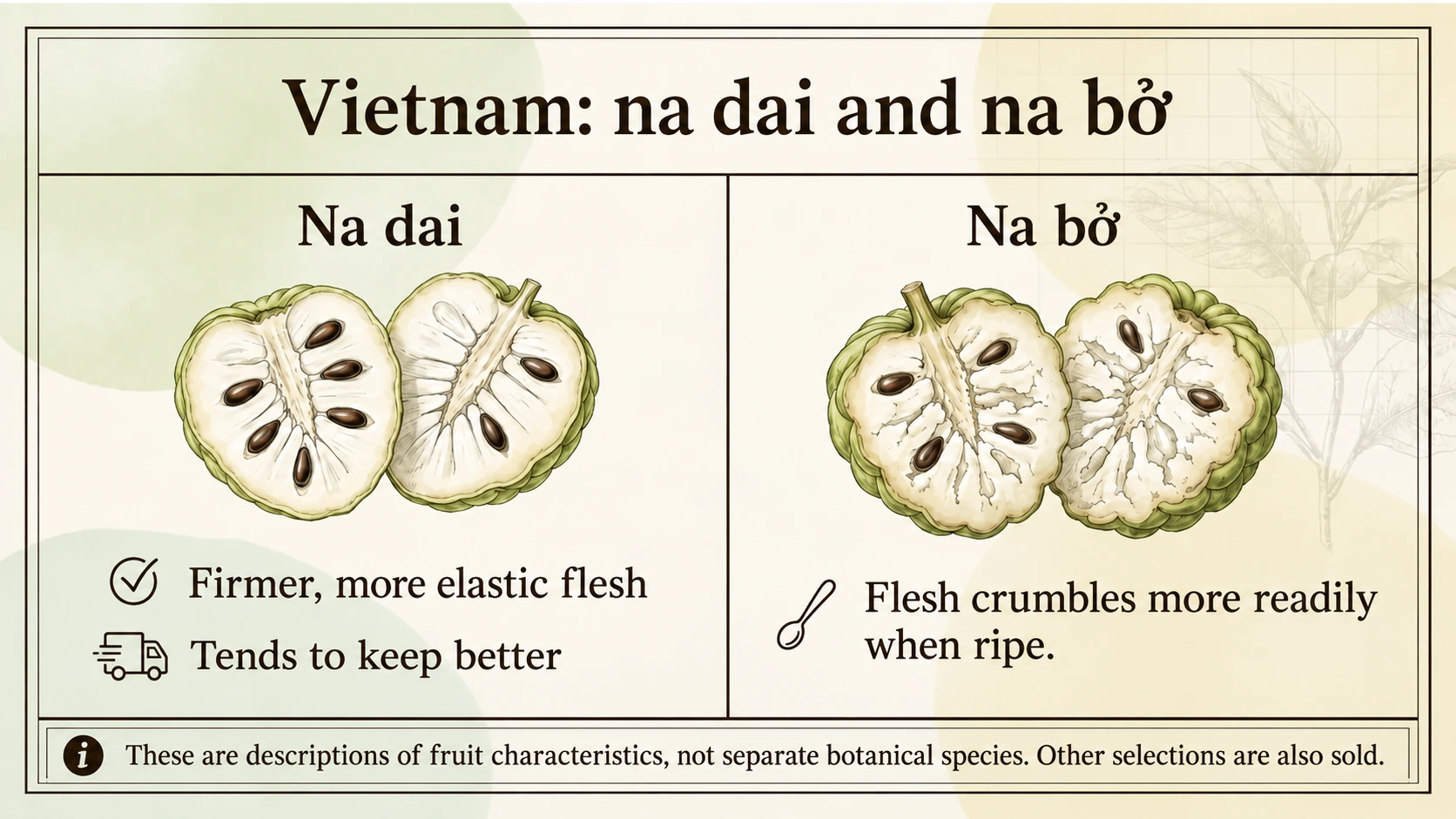
Vietnamese na dai and na bở
In northern Vietnam, sugar apples may be described as na dai or na bở:
- Na dai: firmer, more elastic flesh; tends to keep better.
- Na bở: flesh that crumbles more readily when ripe.
These descriptions refer to fruit characteristics or cultivated types, not to separate botanical species. Other selections, including fruit marketed as na Thái, are also sold; the market is not limited to two varieties.
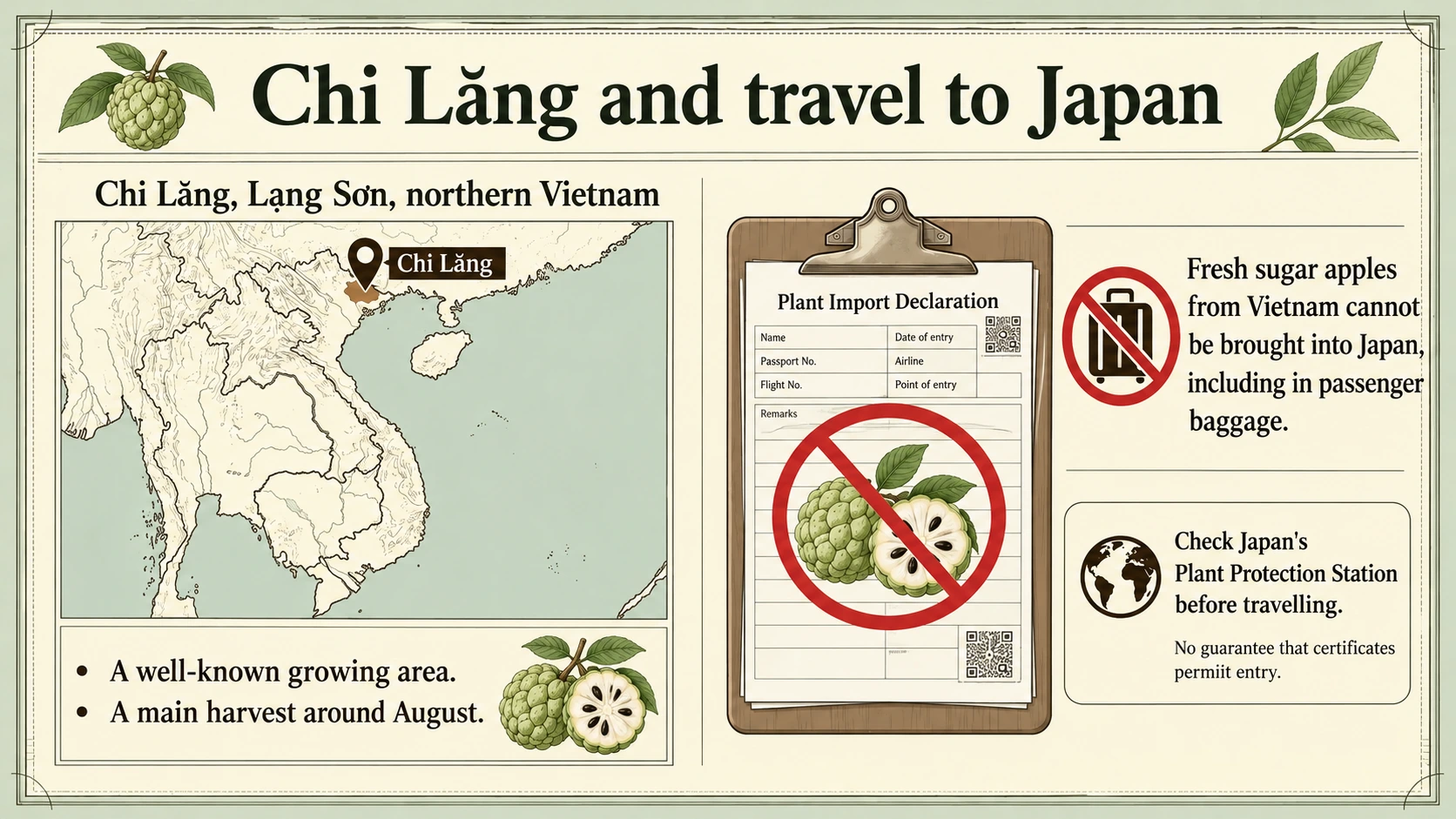
Chi Lăng: a well-known growing area
Chi Lăng in Lạng Sơn Province, northern Vietnam, is known for Na Chi Lăng. Vietnam’s Ministry of Industry and Trade describes its thin skin, thick flesh, relatively few seeds and sweetness. August is an important harvest period in the area. Some products have OCOP certification.
Can fresh sugar apples from Vietnam be taken into Japan?
No. Fresh sugar apples from Vietnam are prohibited from entering Japan, including in passenger baggage. A phytosanitary certificate does not make this a fruit that travellers can simply bring in.
Japan’s Plant Protection Station has published enforcement examples involving fresh Vietnamese sugar apples brought in as baggage. Check its current rules before travelling. This information was checked on October 9, 2026.
Key points
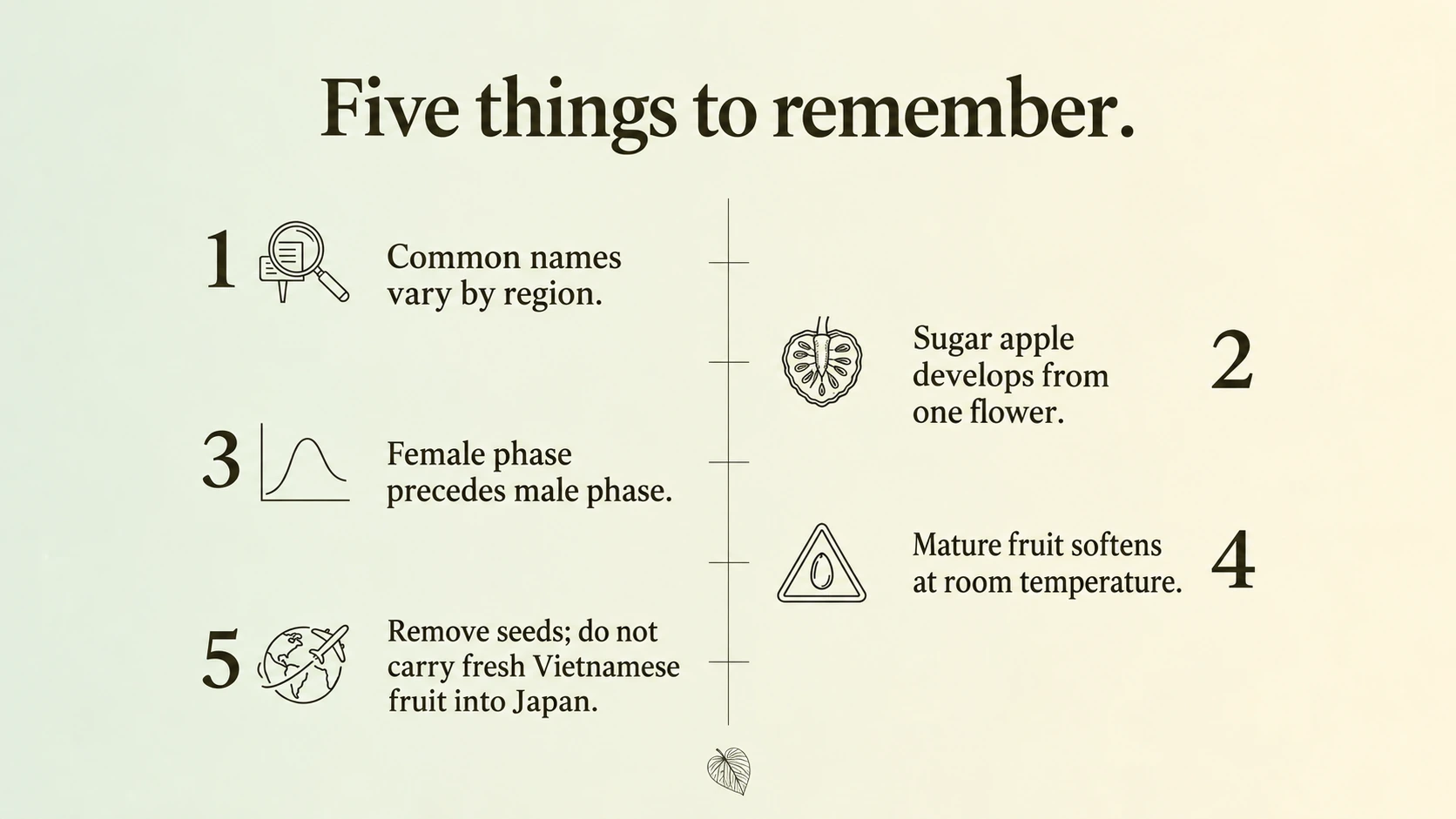
- Custard apple is a regional common name, not a unique species identifier.
- This guide covers Annona squamosa: sugar apple or sweetsop.
- One flower produces its aggregate fruit; pineapple is a multiple fruit formed from many flowers.
- Mature fruit softens at room temperature; fruit picked too immature may not ripen properly.
- Remove the seeds and refrigerate once ripe.
- Do not take fresh Vietnamese sugar apples into Japan.
Frequently asked questions
What does a sugar apple taste like?
It is very sweet. Ripe flesh becomes soft, with texture ranging from slightly grainy to more elastic depending on the cultivar and maturity.
When is custard apple in season in Vietnam?
A broad guide is June–September, but regions and growing practices differ. Around August is an important period for Chi Lăng fruit.
Is shijia the same as sugar apple?
Shijia is a Taiwanese name used for Annona squamosa. Related fruit may also be sold with expanded local names, so check the specific fruit.
Can I take one back to Japan as a souvenir?
Not as a fresh fruit from Vietnam. The restriction also applies to passenger baggage.
Related articles
- Custard Apple: History and Stories: origins, names and Tết culture.
- How to Eat Custard Apple in Vietnam: choosing, opening and storing the fruit.
- Fruits in Vietnam: explore other fruits.
References
- Royal Botanic Gardens, Kew, “Annona squamosa L.”
- University of Florida IFAS Extension, “Sugar Apple Growing in the Florida Home Landscape”
- National Parks Board Singapore, “Annona squamosa”
- Department of Science and Technology, Philippines, “Philippine Food Composition Table: Sugar apple/Sweetsop”
- Bộ Công Thương, “Quảng bá na Chi Lăng, nông đặc sản tỉnh Lạng Sơn tại Hà Nội”
- Japan Plant Protection Station: enforcement cases under the Plant Protection Act
- Japan Plant Protection Station: frequently asked questions about bringing plants into Japan
- “A high-quality genome assembly of Annona squamosa (custard apple) provides functional insights into an emerging fruit crop”
- “Seed Waste from Custard Apple (Annona squamosa L.): A Comprehensive Insight on Bioactive Compounds, Health Promoting Activity and Safety Profile”
