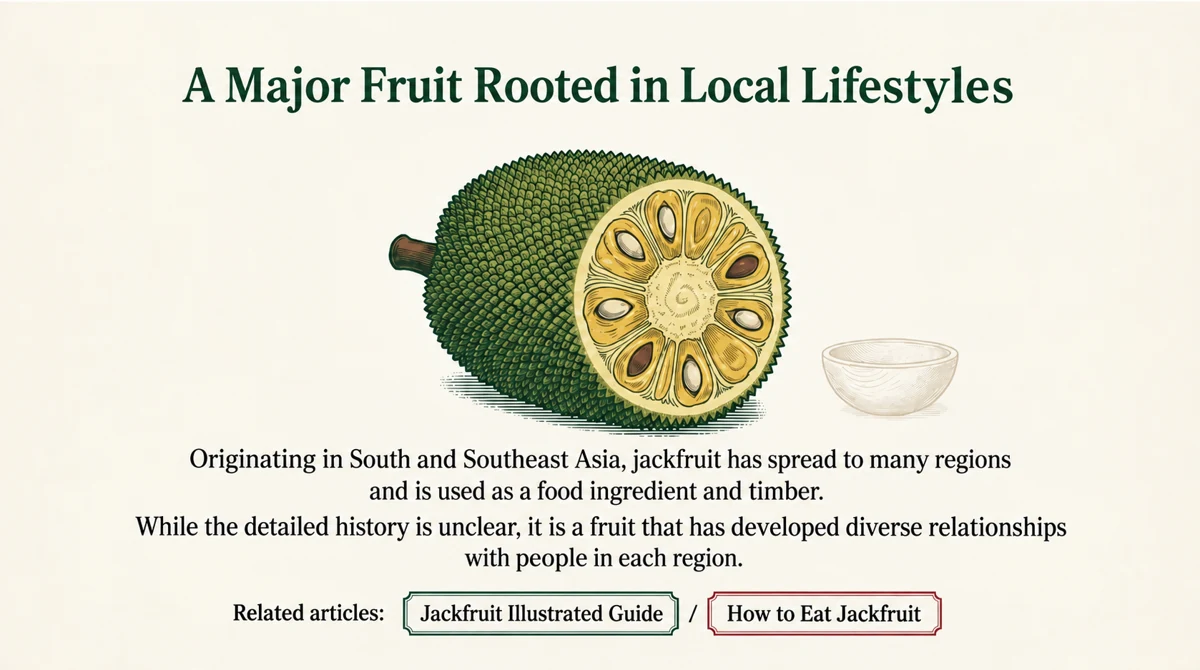
Jackfruit is native to southwestern India. It spread from South Asia into Southeast Asia, appeared as jaca in a book published in Portuguese Goa in 1563, and reached Brazil during the colonial period.
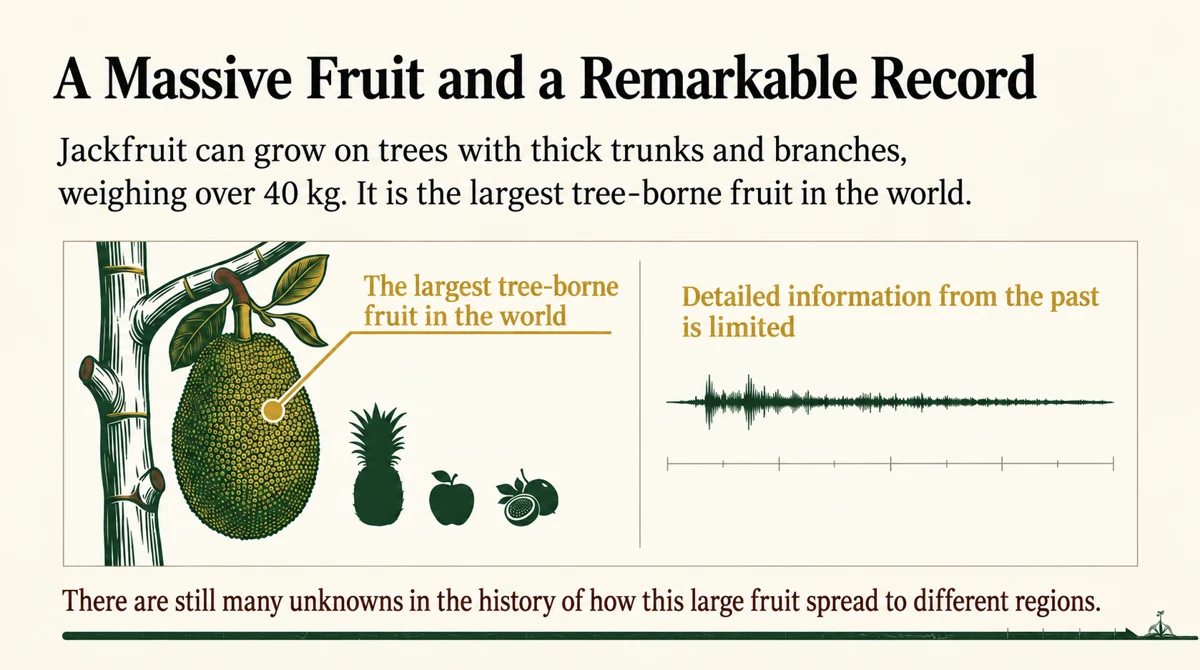
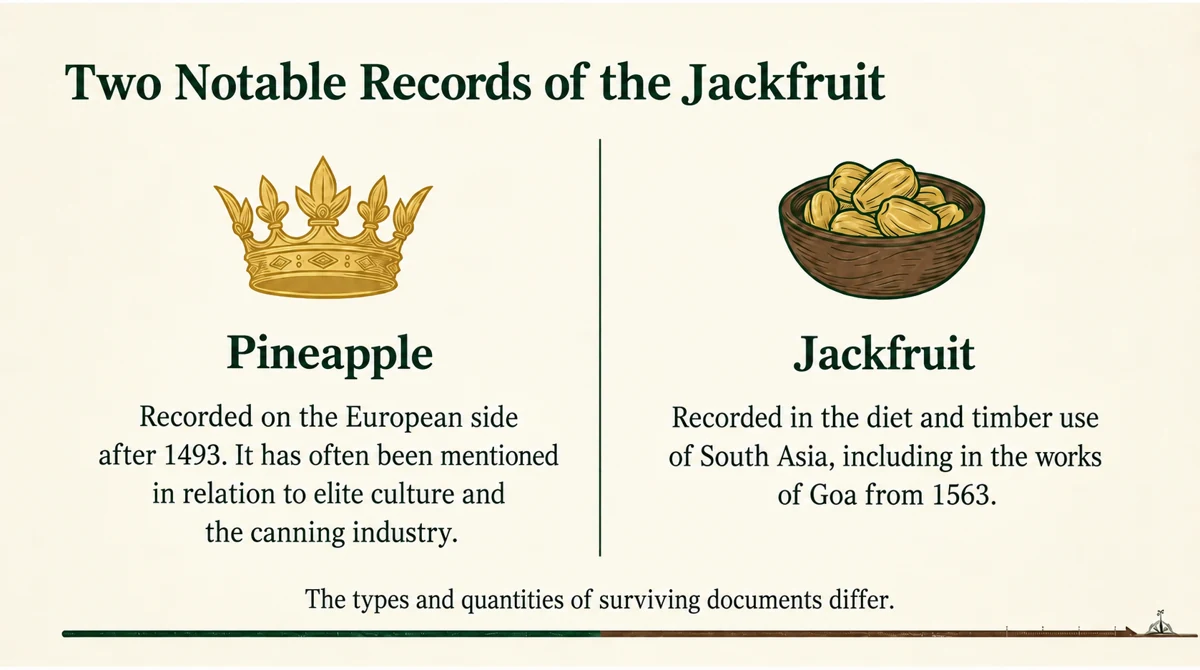
Despite its striking size, jackfruit’s history is less often told through spectacular episodes than pineapple’s. Pineapple histories feature ocean voyages, elite European culture and canning. Jackfruit has long belonged to everyday food and timber use in South and Southeast Asia.
This is the story of a conspicuous fruit whose detailed journeys are often poorly documented. We follow its origins, names and regional uses while keeping written evidence separate from folklore.
For taste, nutrition and varieties, see Jackfruit Guide. For buying and preparation, see How to Eat Jackfruit in Vietnam.
Jackfruit’s Origins: Southwestern India
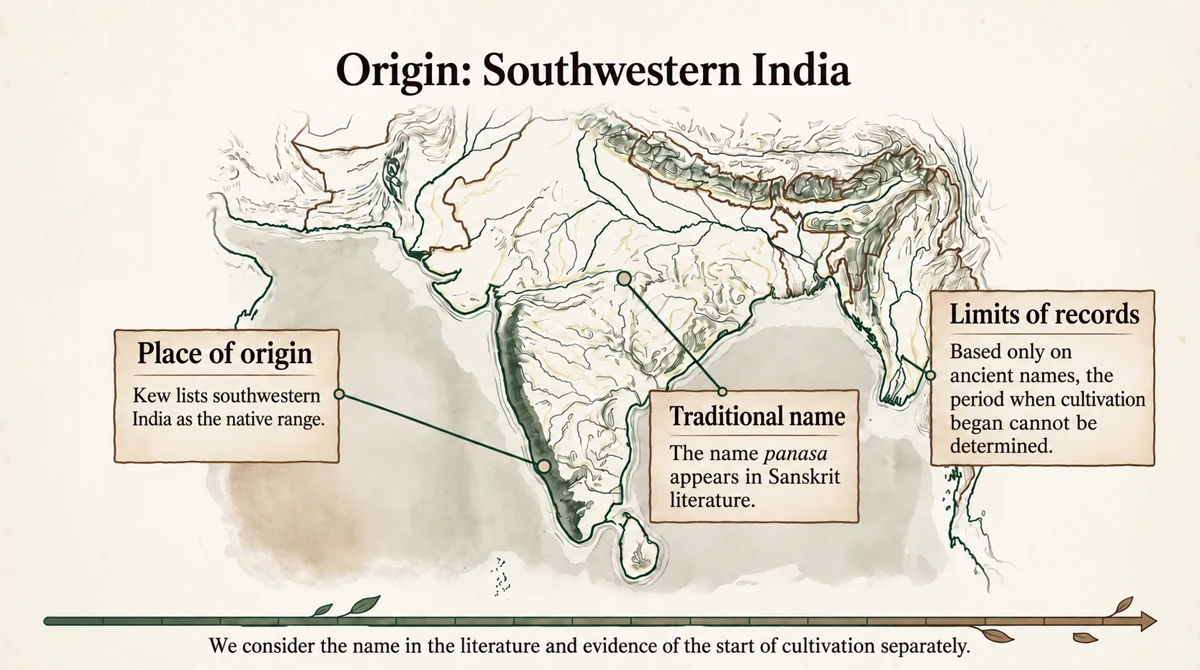
Kew’s database gives southwestern India as jackfruit’s native range. The Western Ghats, with diversity in cultivated and wild forms, are important to discussions of its origins.
The Sanskrit name panasa appears in classical literature. However, the dates of literary works vary, and the occurrence of a name does not by itself establish when cultivation began. The tree was used for food and timber in South Asia before it entered European accounts.
Its history therefore does not begin with a particular European’s “discovery.”
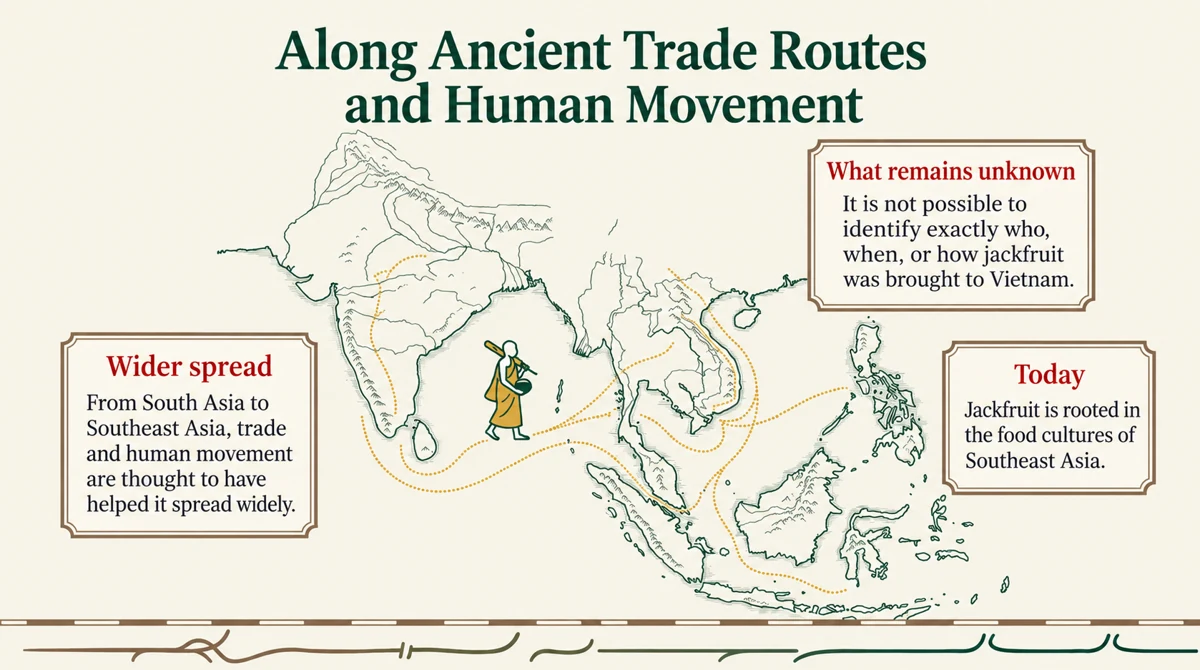
How Jackfruit Spread from South Asia to Southeast Asia
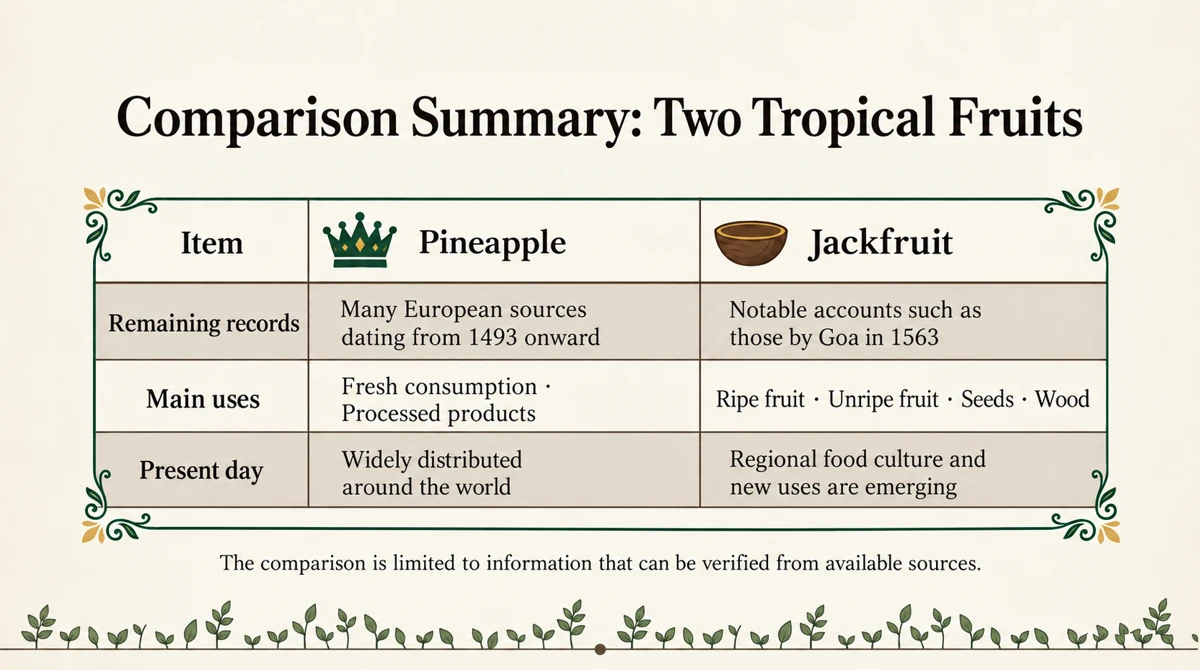
Pineapple spread into Asia through Portuguese and Spanish shipping in the sixteenth century. Jackfruit’s movement from South Asia into Southeast Asia cannot be reconstructed as a similarly precise sequence.
Jackfruit is now cultivated across Vietnam, Malaysia, Indonesia and the Philippines. The sources reviewed do not identify exactly when, by whom or along which routes it arrived in each place. Gradual movement of seeds and plants through trade and migration is a cautious interpretation.
Its precise arrival date in Vietnam is also uncertain. It is now cultivated across the country and embedded in its food culture. Gaps in written records need not mean nothing happened: many unnamed people may have carried and grown the tree.
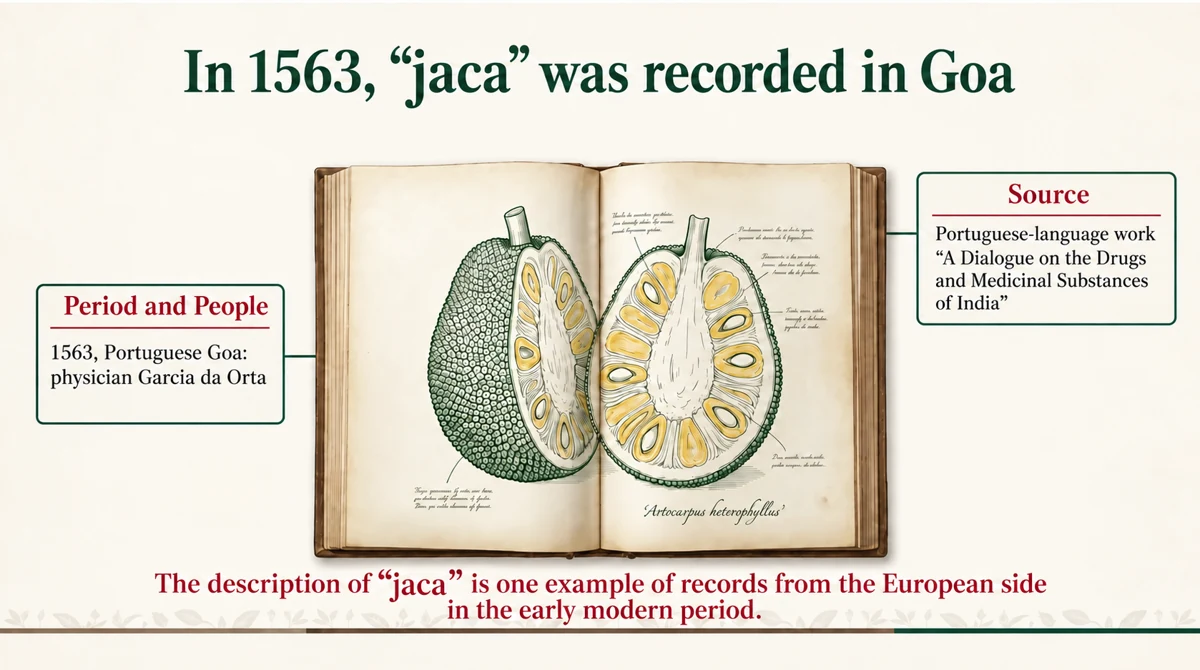
The Name Jackfruit: Jaca in a 1563 Book
Pineapple’s encounter with Europeans in the Caribbean in 1493 is a familiar episode in its history. Jackfruit’s early European-language accounts took a different form.
Jackfruit is generally traced from Malayalam chakka to Portuguese jaca and then English jackfruit. The name does not refer to a man named Jack.
In 1563, Garcia de Orta, a physician working in Portuguese Goa, published Colóquios dos simples e drogas da Índia. This Portuguese dialogue on Indian medicinal materials includes a chapter on jaca, one early European-language account of jackfruit.
This account concerns local names and uses rather than a royal presentation. Even within the same age of maritime trade, different fruits left different kinds of written evidence.
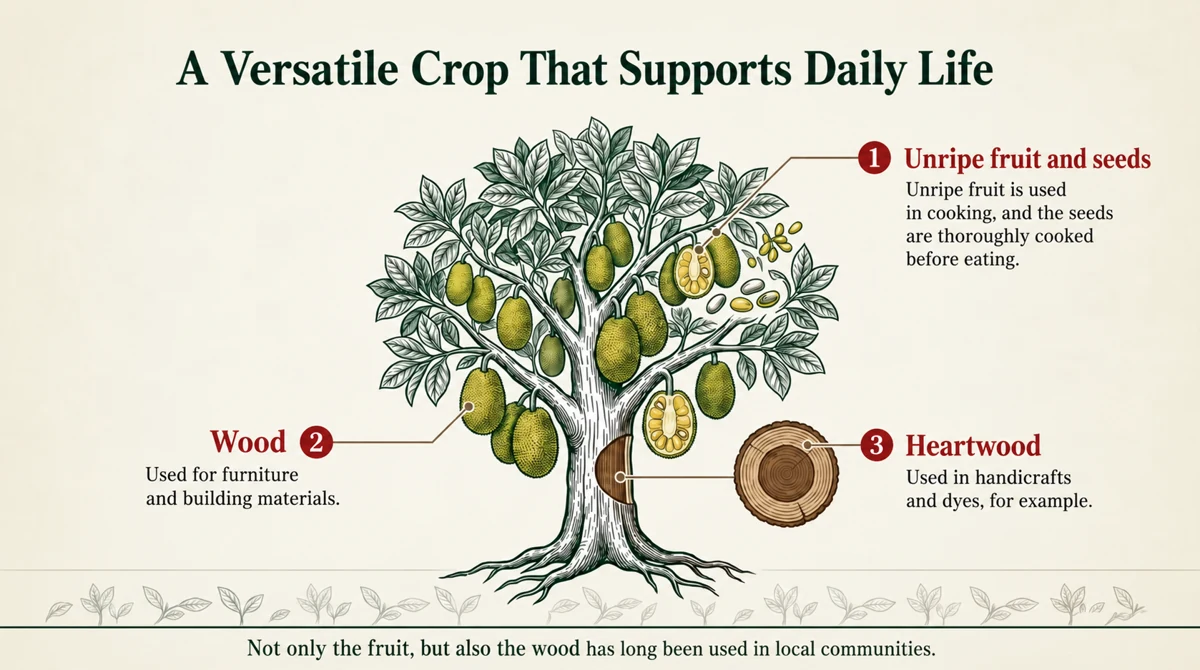
Fruit, Seeds and Timber in Everyday Life
Pineapple became a symbol of wealth in seventeenth- and eighteenth-century Europe, appearing in displays and architectural ornament. Such a history should not be assumed for every tropical fruit.
The sources reviewed do not establish a comparable European court fashion for jackfruit. In South and Southeast Asia, ripe fruit, cooked unripe fruit and cooked seeds have been eaten, while timber has been used in buildings and furniture. One tree could serve several everyday needs.
Unripe jackfruit is now also known abroad as a meat alternative, although in growing regions it has long been an ordinary cooking ingredient.
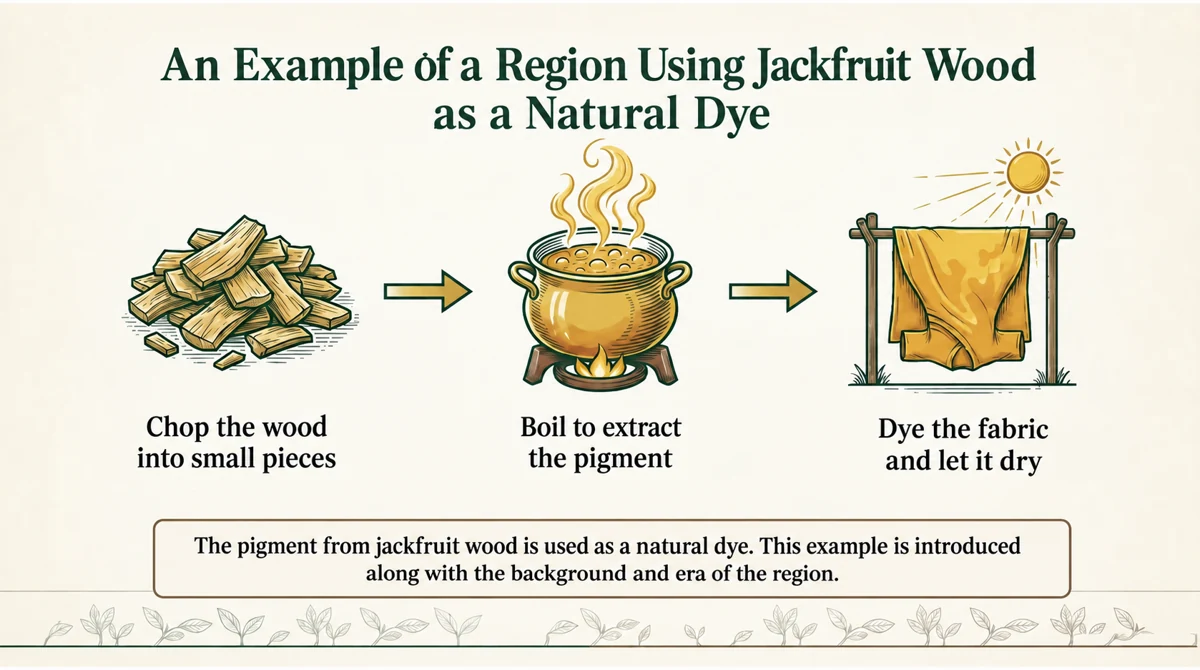
Jackfruit Wood as a Dye: Regional Examples
Plants can acquire religious associations through their shapes, stories or practical uses. Jackfruit’s timber provides an example of practical material use alongside cultural meanings.
Some regional accounts describe jackfruit heartwood as a source of yellow dye, including use for robes in particular Buddhist communities, and timber used for carved religious objects. These examples should not be generalized to every Buddhist tradition or presented as the sole origin of saffron-colored robes.
Such examples connect a tree with everyday craft and religious life, rather than establishing a universal sacred status for the species.
Jackfruit in Brazil: An Introduced Species
While pineapple traveled from the Americas to the Old World, jackfruit also traveled in the other direction, from Asia to Brazil.
Sources describe jackfruit’s introduction to Brazil during the Portuguese colonial period, often placing it in the seventeenth century. Explanations of the purpose differ, including acclimatizing Asian plants and food use. It was also planted in the mid-nineteenth-century restoration of Tijuca’s forest.
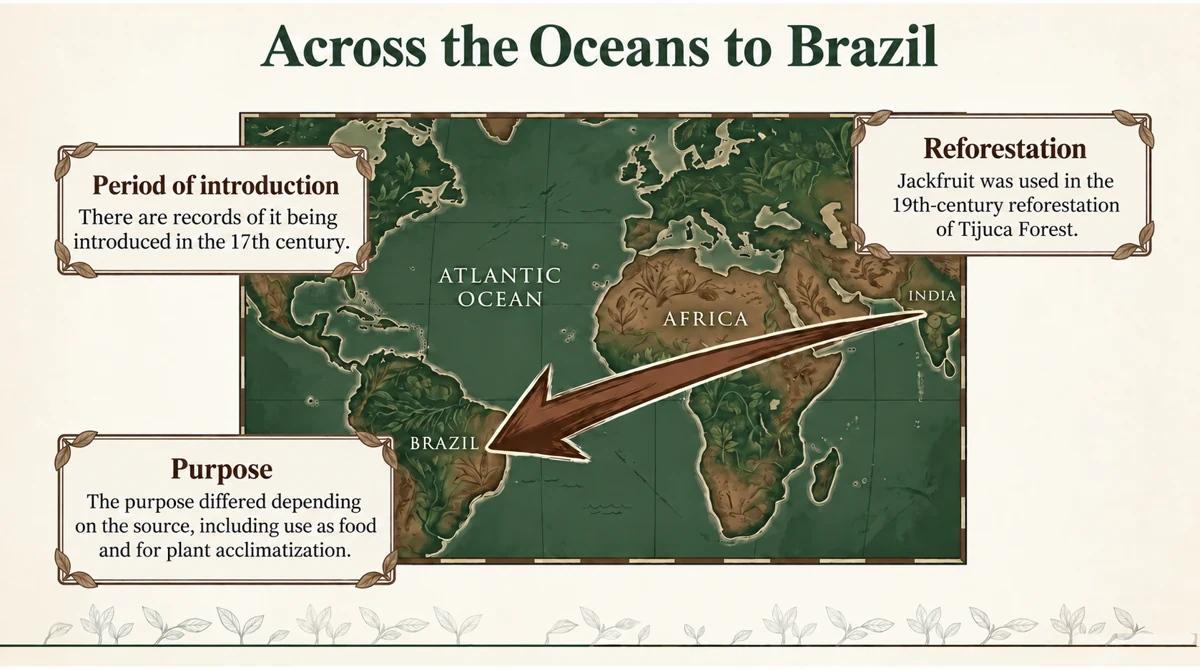
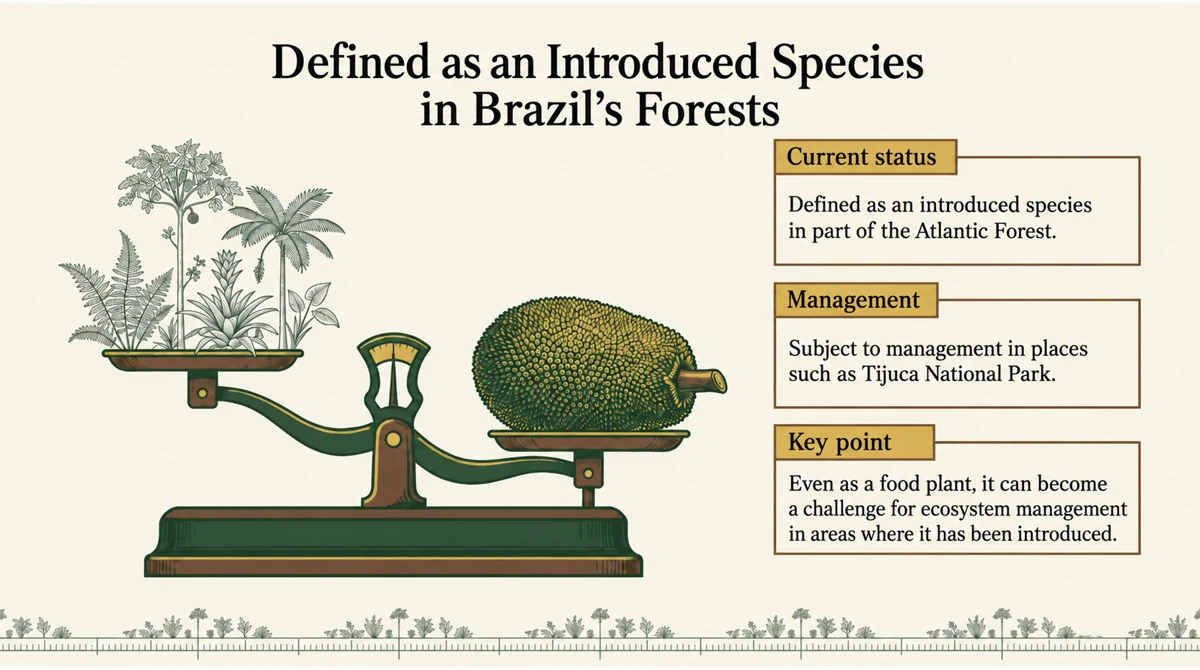
Today it is established as an introduced species in parts of Brazil’s Atlantic Forest and is managed in places such as Tijuca National Park. A useful food tree can nevertheless create ecological problems where it is introduced.
Vietnamese Folklore: The Honest Bà Mít
Pineapple folklore often tells stories of family conflict and transformation. A Vietnamese jackfruit tale instead centers on honesty between neighbors.
One story is called Sự tích cây đa và cây mít, or the origin of the banyan and jackfruit trees. It is presented here as folklore, not evidence of the tree’s historical introduction.
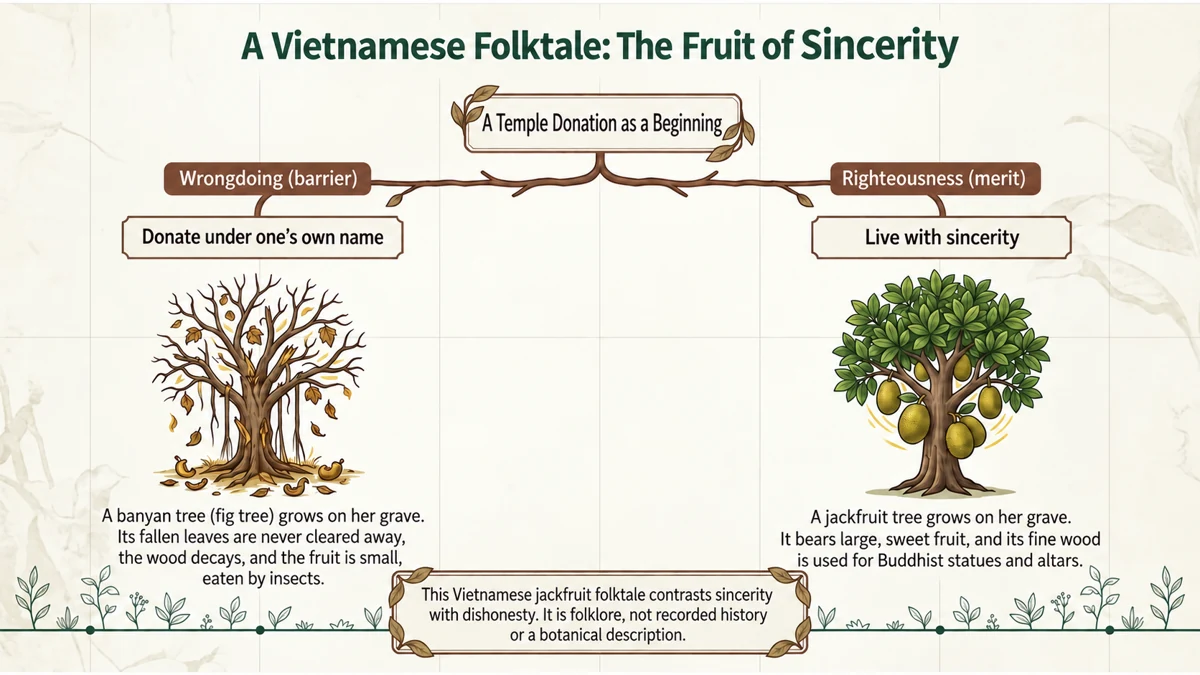
In one version, two elderly women, Bà Đa and Bà Mít, visited a temple on new- and full-moon days. Bà Mít entrusted her donations to Bà Đa. Bà Đa kept part of that trust for her own reputation by presenting some of the money under her own name.
After they died, a banyan grew from dishonest Bà Đa’s grave, while a jackfruit tree grew from honest Bà Mít’s. The story portrays the former as troublesome and the latter as a source of large sweet fruit and useful timber for carvings and altars. These judgments belong to the tale, not a botanical description of all banyans.
The contrast expresses a lesson about honesty bringing good results. Its ending connects fruit and wood with religious craft. It illustrates one way a community gives meaning to a familiar tree, without speaking for every Vietnamese belief.
Jackfruit in Japan: Cultivation and Quarantine
Pineapple has a documented cultivation and processing history in Okinawa. Jackfruit’s relationship with Japan is less extensively recorded.
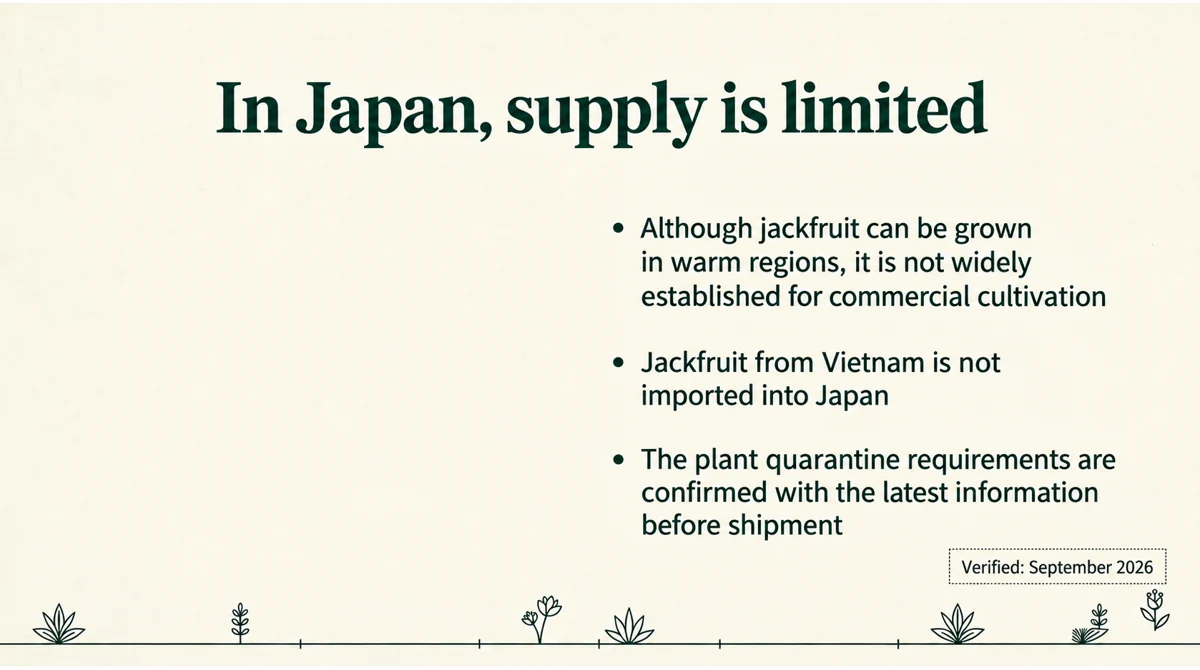
Jackfruit has been grown in some warm parts of Japan, but is not a widely established commercial fruit there. The September 2026 source classified fresh Vietnamese jackfruit as prohibited under Japanese plant quarantine requirements; confirm the latest conditions before travel.
Compared with pineapple’s longer industrial history, fewer materials describe jackfruit’s place in Japan. Its Japanese story remains a relatively short chapter.
Jackfruit’s History: From Its Origins to the World
Pineapple’s changing role in oceanic trade, elite culture and processing offers one way to understand a tropical fruit’s history. The comparison is limited by the kinds of evidence that survive.
Jackfruit’s story begins in southwestern India and continues through food and wood use across South and Southeast Asia. A 1563 book recorded jaca; colonial-era introductions carried it to Brazil, where it is managed as an introduced species in some forests. Vietnamese folklore adds a lesson about honesty. These are different regional relationships, rather than one heroic voyage.
The fruit is enormous, but the people and dates behind many of its movements are harder to see. Next time you encounter it, remember the many local lives in which it has served as food, timber and a subject of stories.
Frequently Asked Questions About Jackfruit History
Where is jackfruit native?
Kew gives southwestern India as its native range. The Western Ghats are important to discussions of its origins.
Was jackfruit named after a person called Jack?
No. Its name is traced from Malayalam chakka through Portuguese jaca into English.
When did jackfruit arrive in Vietnam?
The precise date and carrier are unknown. Gradual movement with trade and migration is a cautious interpretation.
Is the Vietnamese story historical fact?
No. It is one example of folklore showing the cultural meanings attached to jackfruit.
Related Articles
- Taste, nutrition, varieties and quarantine: Jackfruit Guide
- Prices, choosing, cutting and storage: How to Eat Jackfruit in Vietnam
- Another tropical fruit’s changing history: Pineapple History and Stories
- More fruit to enjoy in Vietnam: 15 Vietnamese Fruits
References
- Kew Science: Artocarpus heterophyllus
- Garcia de Orta, Colóquios dos simples e drogas da India
- Rodriguésia: Artocarpus heterophyllus in the Atlantic Forest
- Bioscience Journal: Management of jackfruit in Tijuca National Park
- Japan Plant Protection Station: Travel FAQ
The Vietnamese tale is not used as evidence for historical events.
