15 Vietnamese Fruits: 14 Tasted, with Photos, Names & Prices
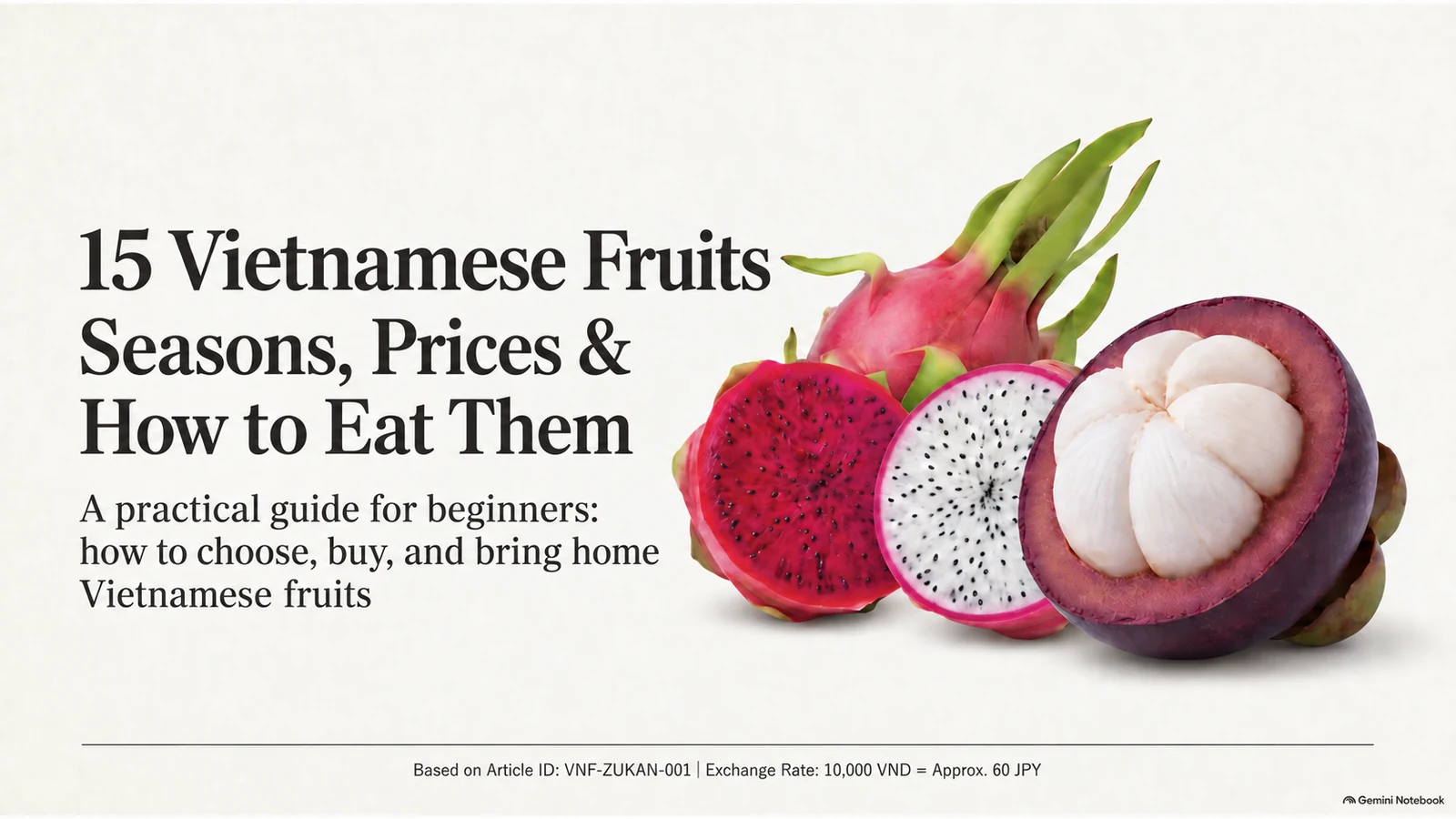
If you are eating fruit in Vietnam for the first time, mango, mangosteen, and lychee are good choices when they are in season. Dragon fruit and pineapple are easier to find throughout the year.
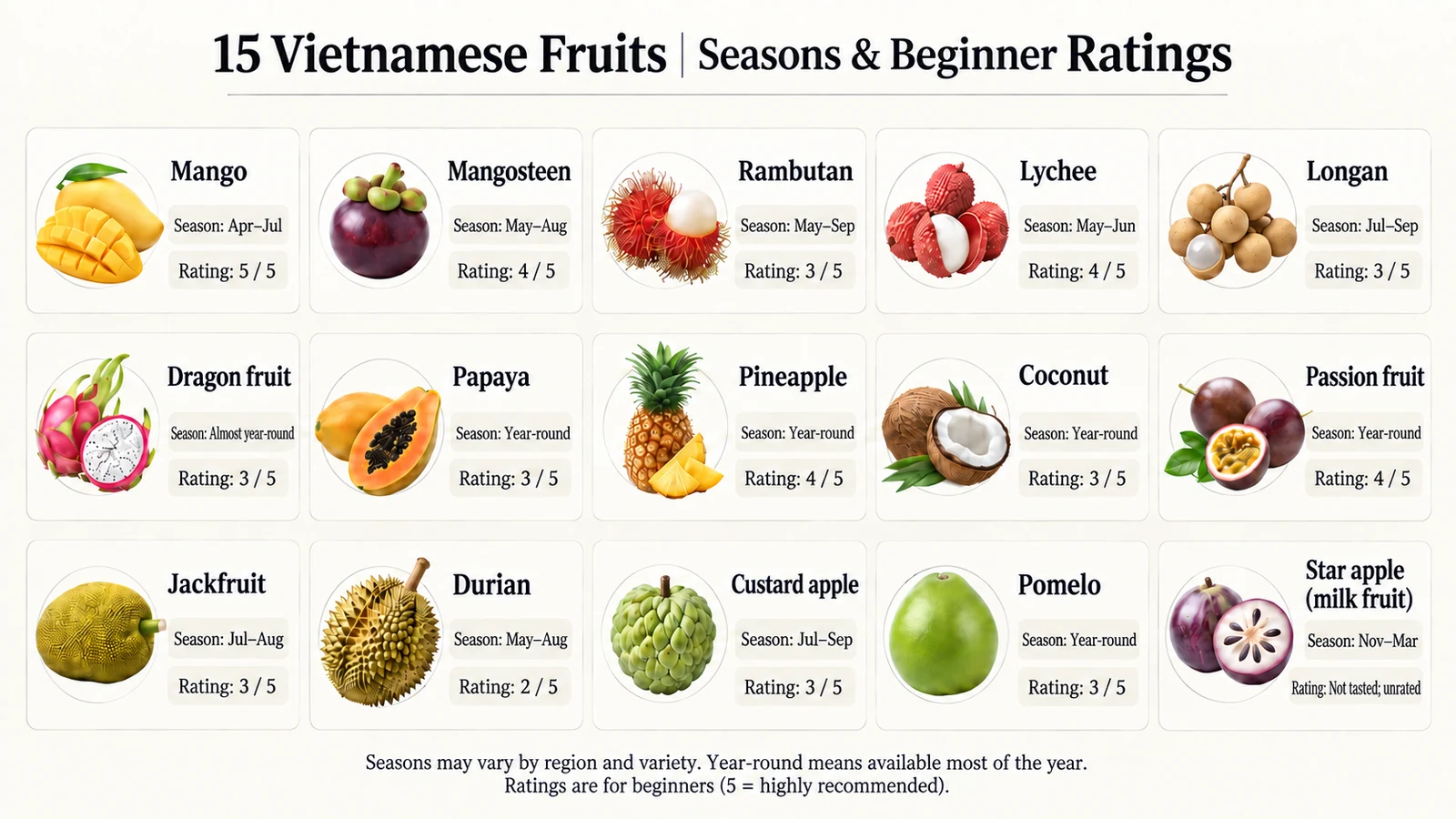
In this guide, I introduce 15 fruits with photos: 14 I have personally tasted while living in Hanoi, plus star apple (milk fruit), which is not yet in season and which I have not tasted. The table below lets you compare Vietnamese names, flavors, and seasons. I also explain prices, how to eat the fruit, where and how to buy it locally, and what to know about taking it to Japan.
Tasting notes are based primarily on personal experience; descriptions of star apple are based on reference information. Prices are estimates based on purchases, prices checked in stores, and reference sources.
15 Vietnamese Fruits: Names, Flavors, and Seasons at a Glance
The beginner rating reflects availability, ease of eating, and how likely you are to have a good first experience. Also consider the season and the condition of the fruit on sale.
Select a photo or fruit name to jump to its introduction. On mobile, swipe the table sideways to see all columns.
| # | Photo | Fruit | Vietnamese name | Season or availability (approximate) | Flavor and texture | Beginner rating |
|---|---|---|---|---|---|---|
| 1 | 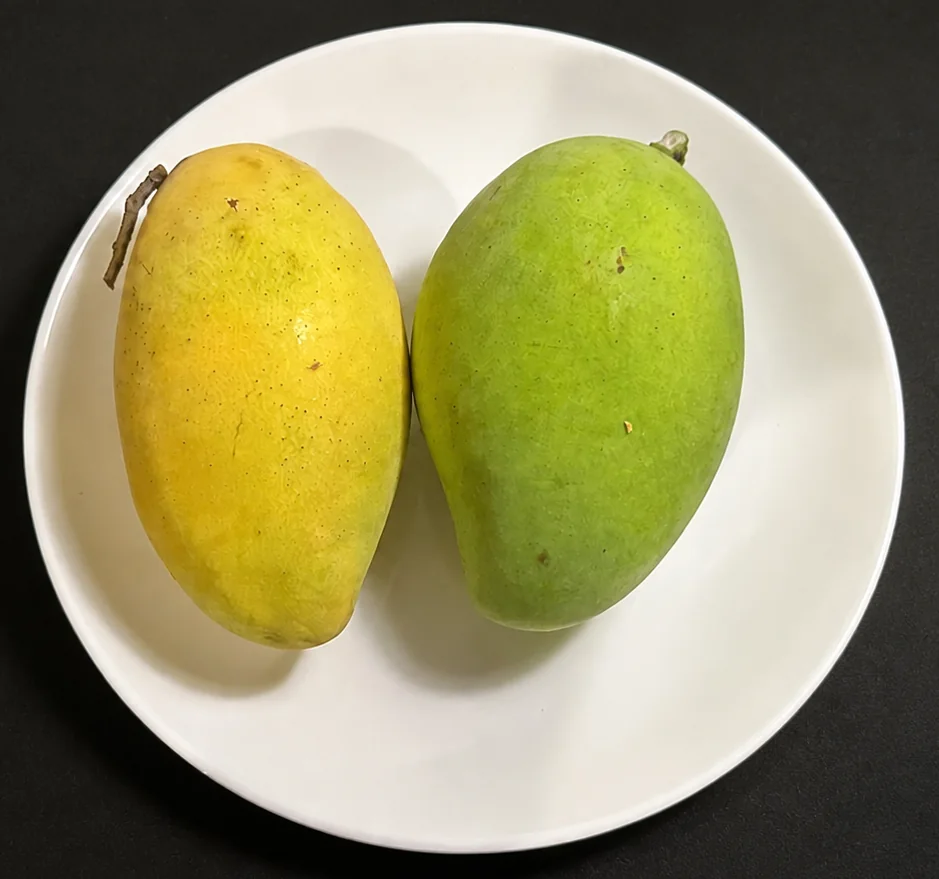 | Mango | Xoài | April–July | Smooth and juicy, with rich sweetness and a fragrant aroma. | ★★★★★ |
| 2 | 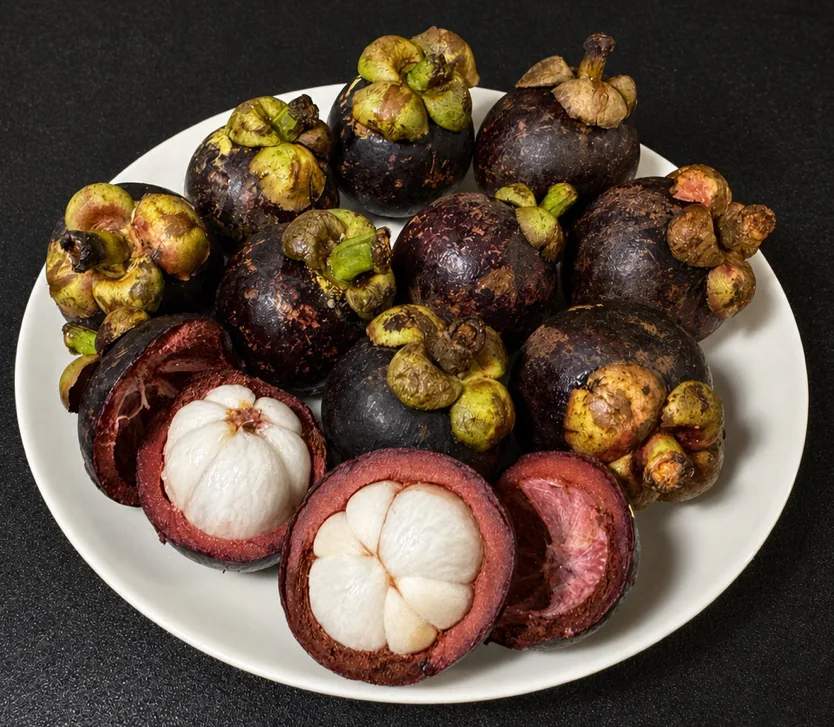 | Mangosteen | Măng cụt | May–August | Soft and succulent, with delicate sweetness and refreshing tartness. | ★★★★☆ |
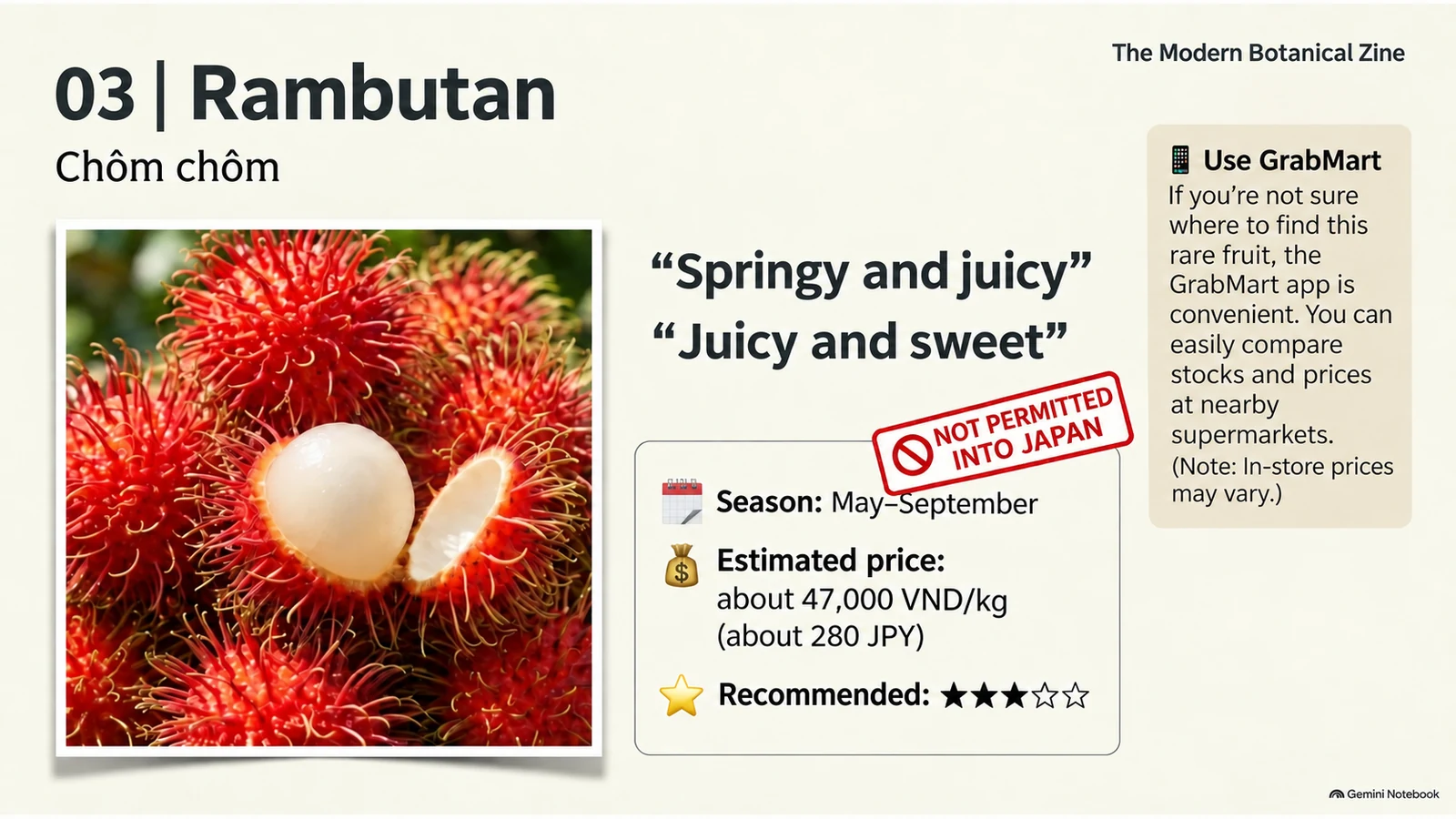
| 3 | 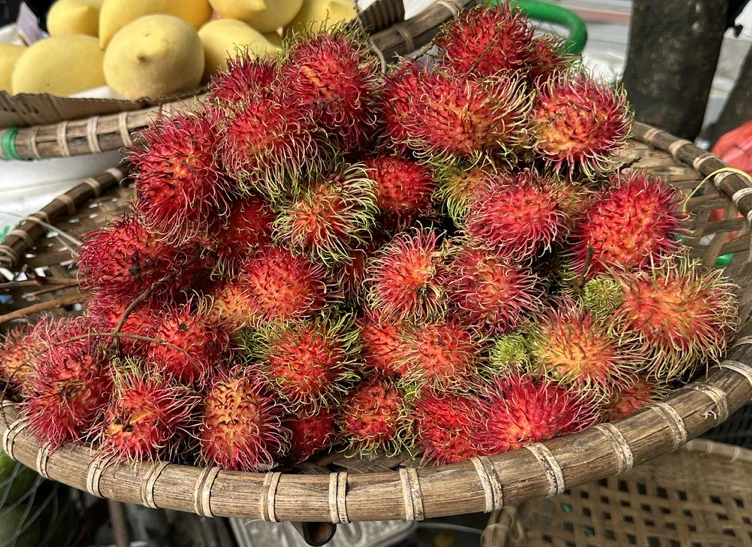 | Rambutan | Chôm chôm | May–September | Springy, juicy, and sweet. | ★★★☆☆ |
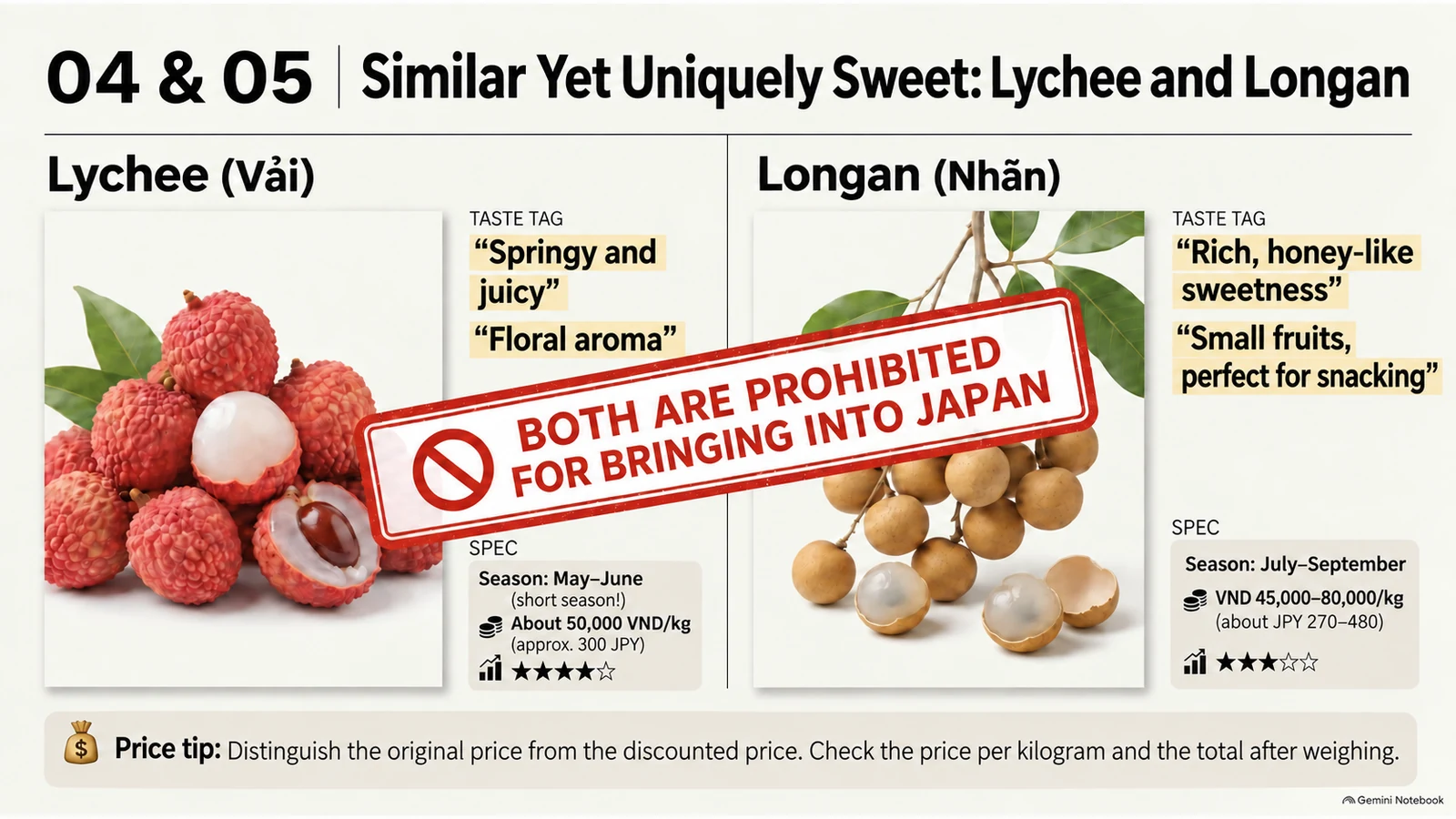
| 4 | 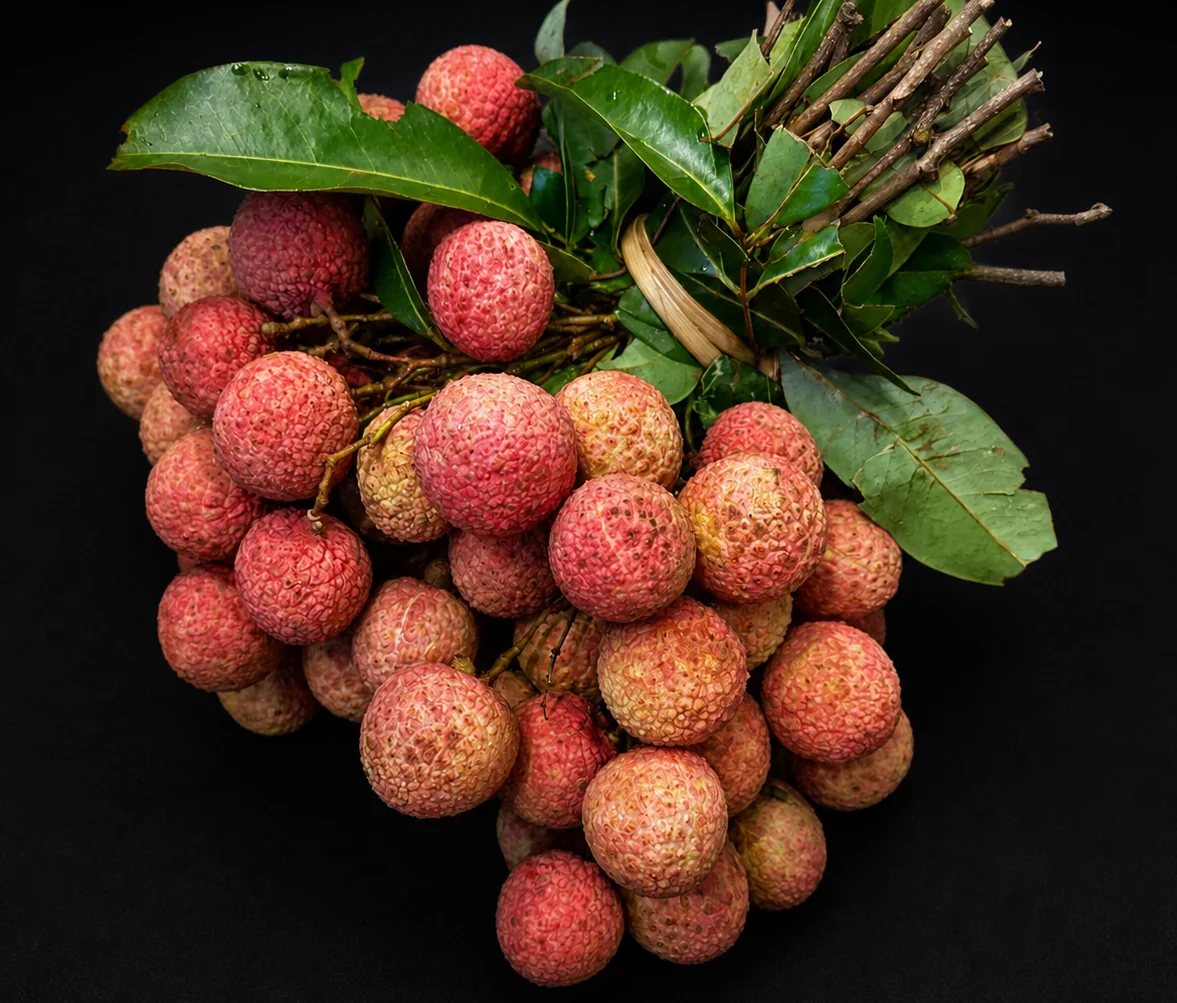 | Lychee | Vải | May–June | Springy and juicy, with intense sweetness and a floral aroma. | ★★★★☆ |
| 5 | 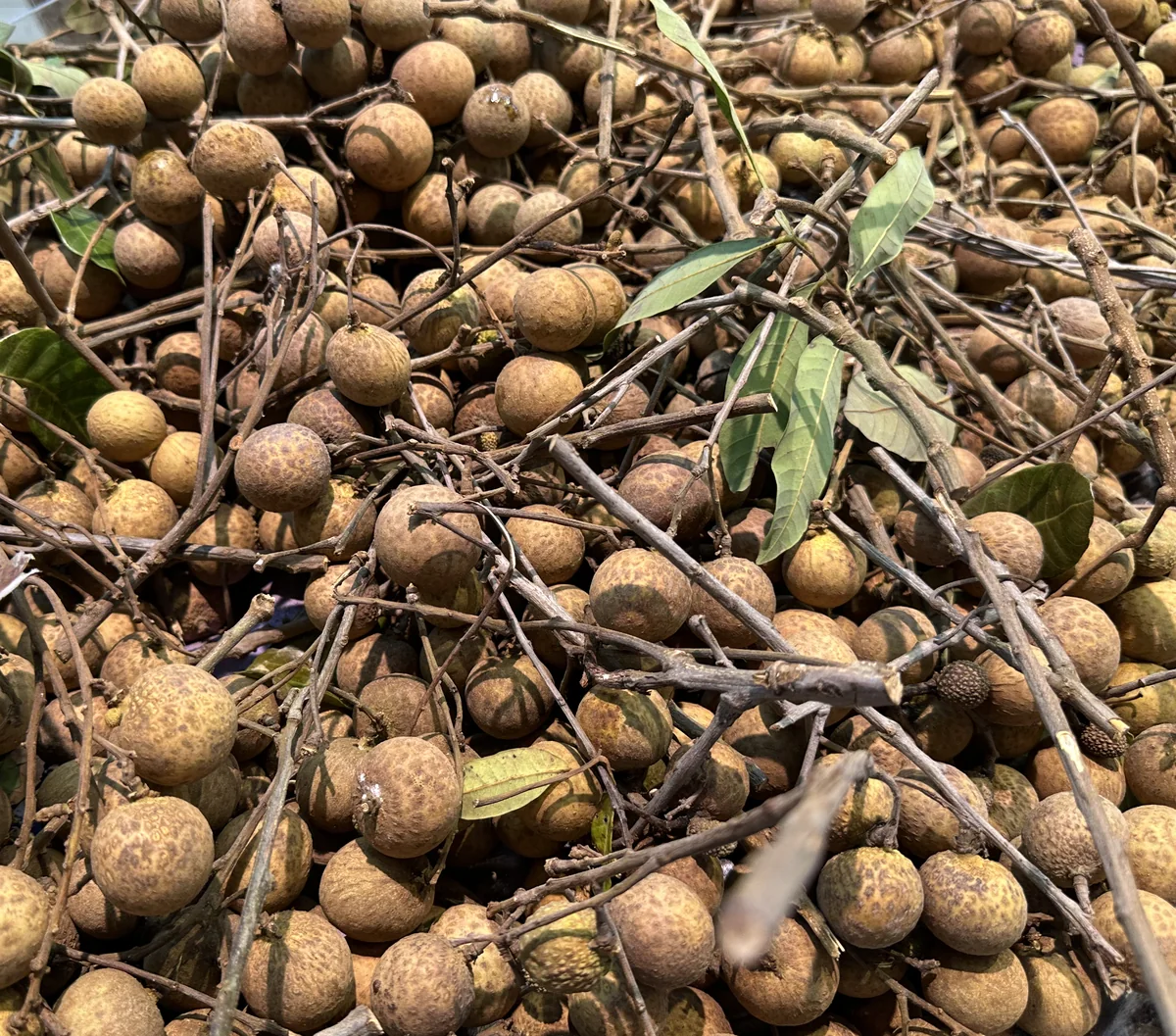 | Longan | Nhãn | July–September | Soft and springy, with rich, honey-like sweetness. | ★★★☆☆ |
| 6 | 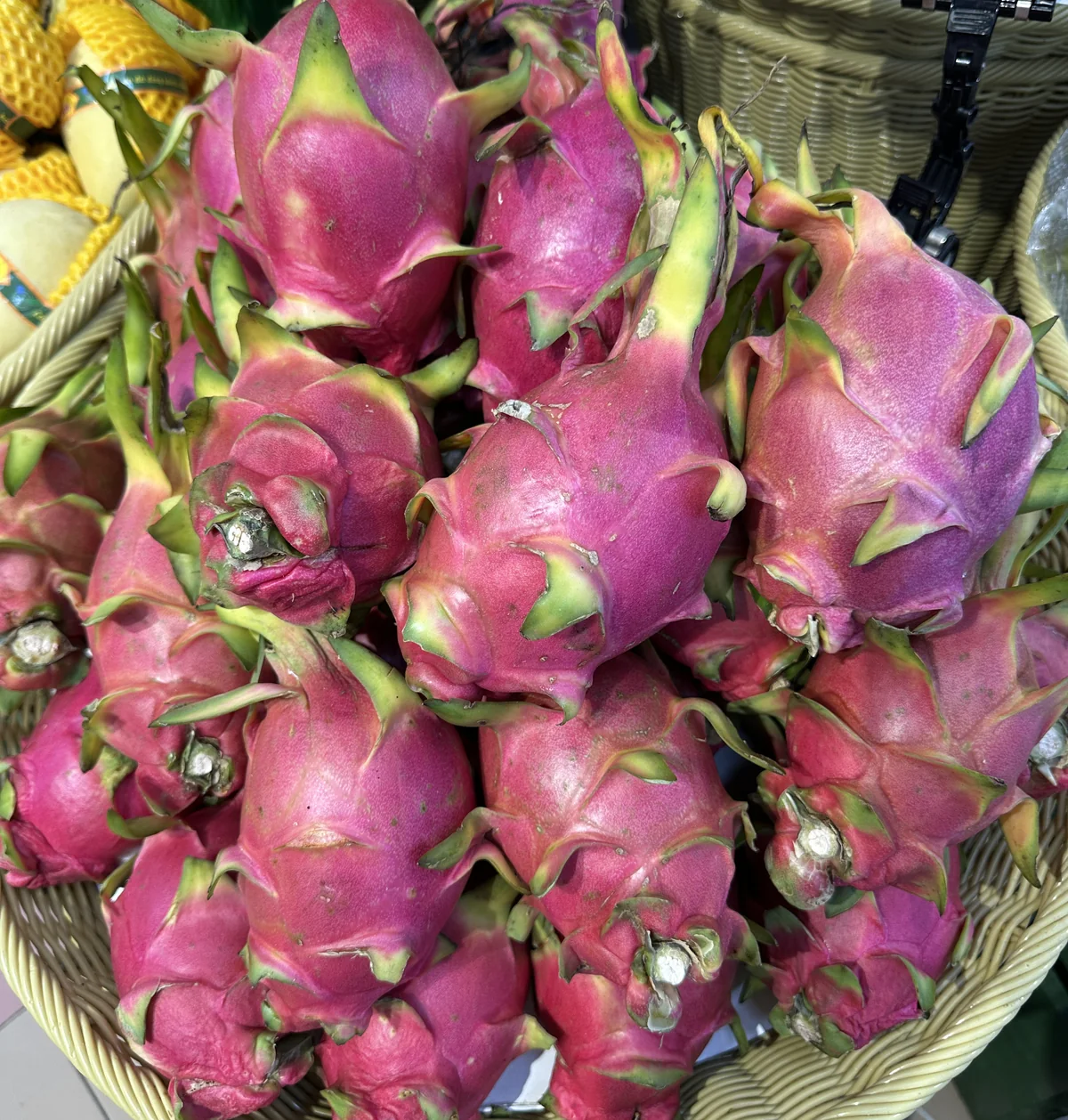 | Dragon fruit | Thanh long | Almost year-round | White flesh: juicy and soft. Red flesh: sweeter in my tasting experience; flavor varies by variety and ripeness. | ★★★☆☆ |
| 7 | 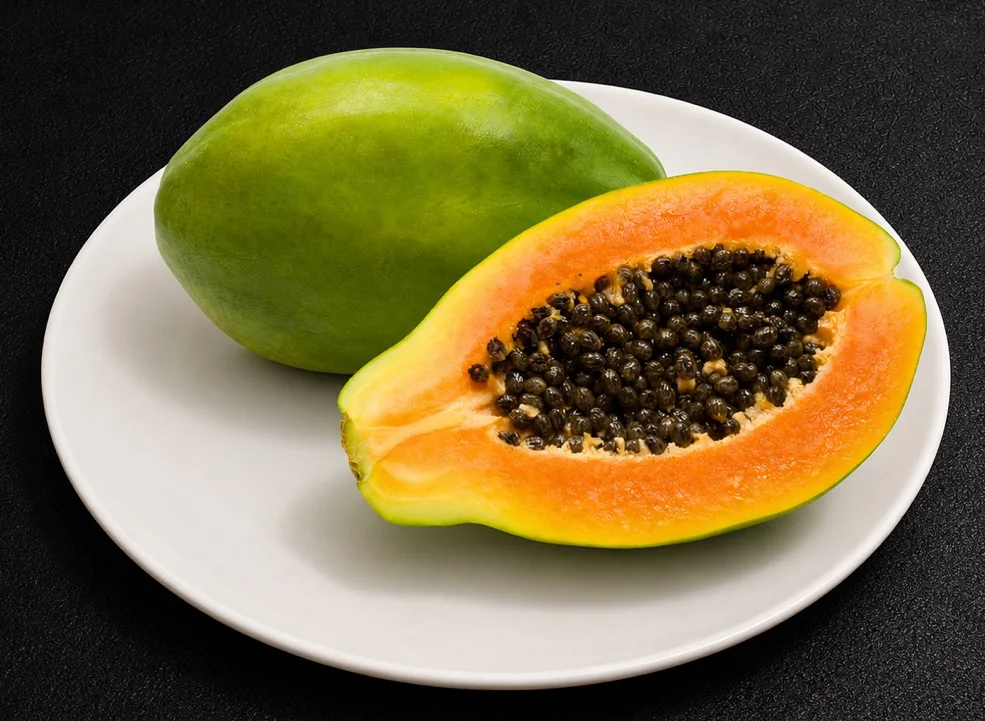 | Papaya | Đu đủ | Year-round | Soft and smooth, with gentle, mellow sweetness. | ★★★☆☆ |
| 8 | 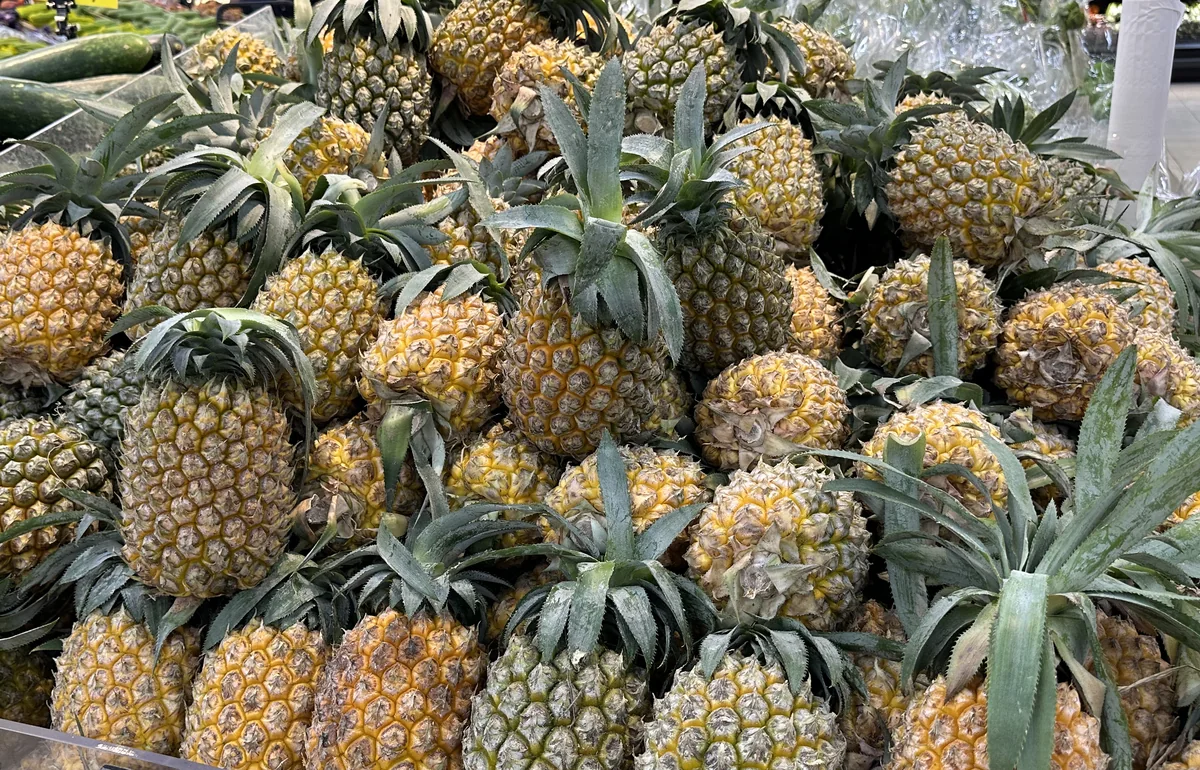 | Pineapple | Dứa | Year-round | Juicy with a slightly firm texture; sweet, tart, and aromatic. | ★★★★☆ |
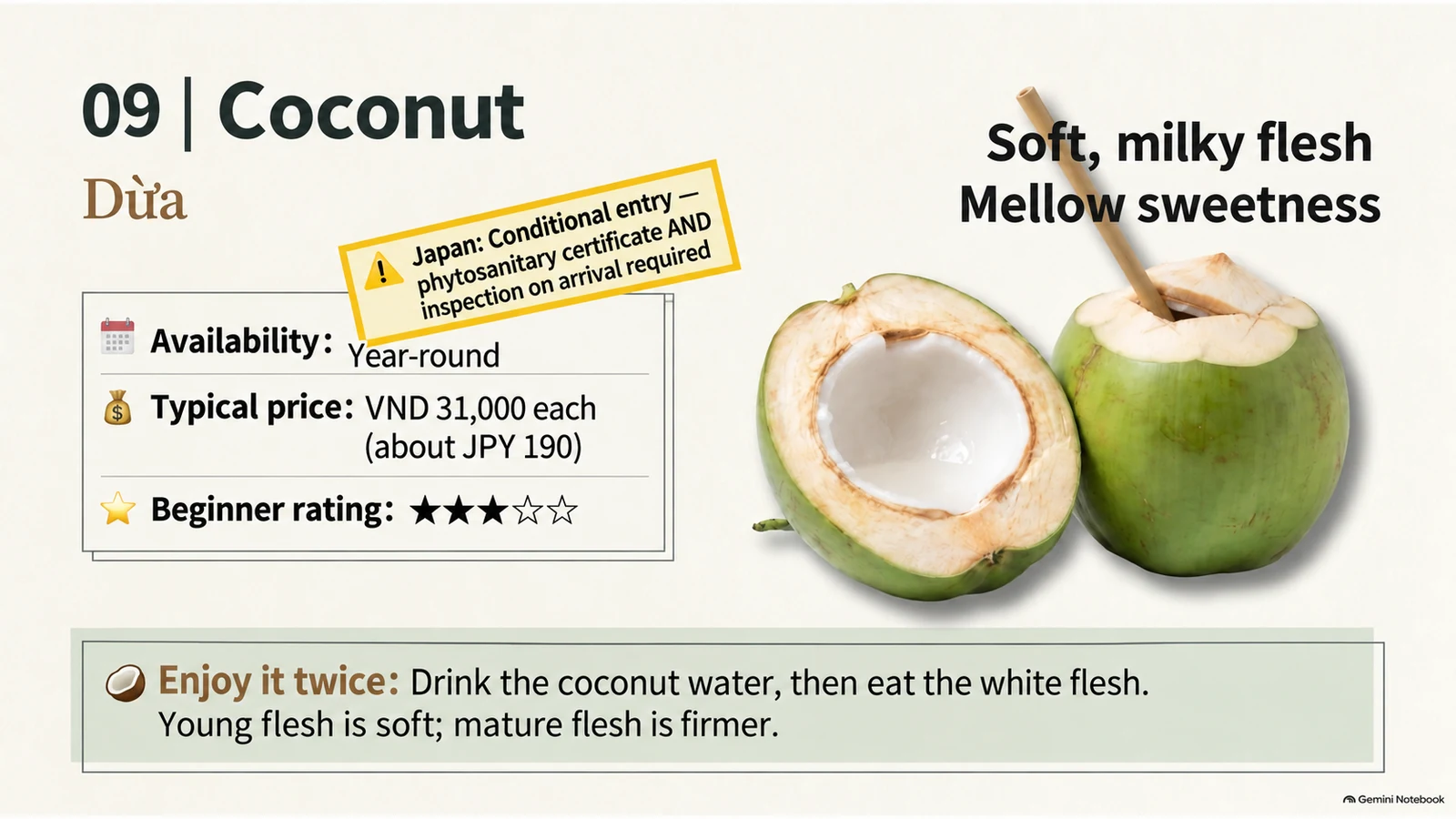
| 9 | 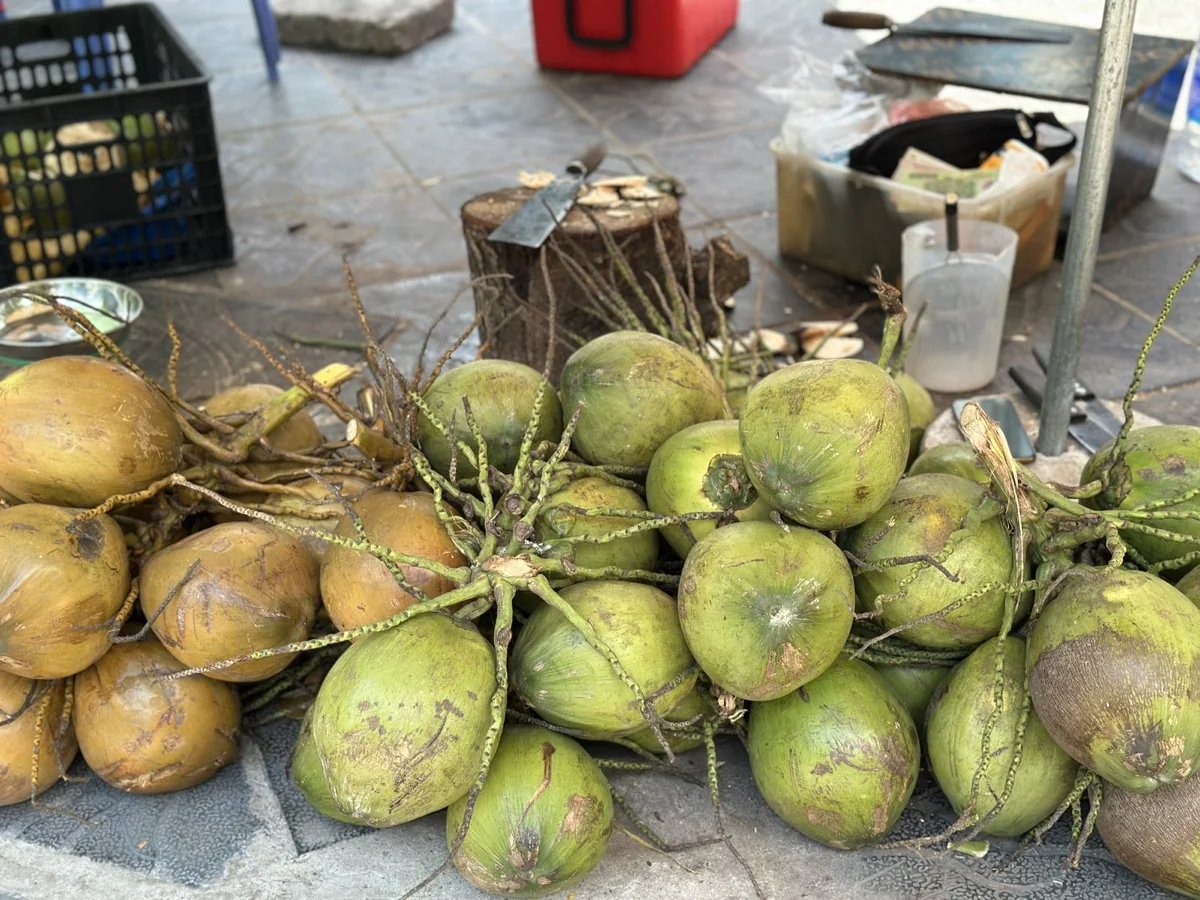 | Coconut | Dừa | Year-round | Young coconut flesh is soft, with a milky flavor and mellow sweetness. | ★★★☆☆ |
| 10 | 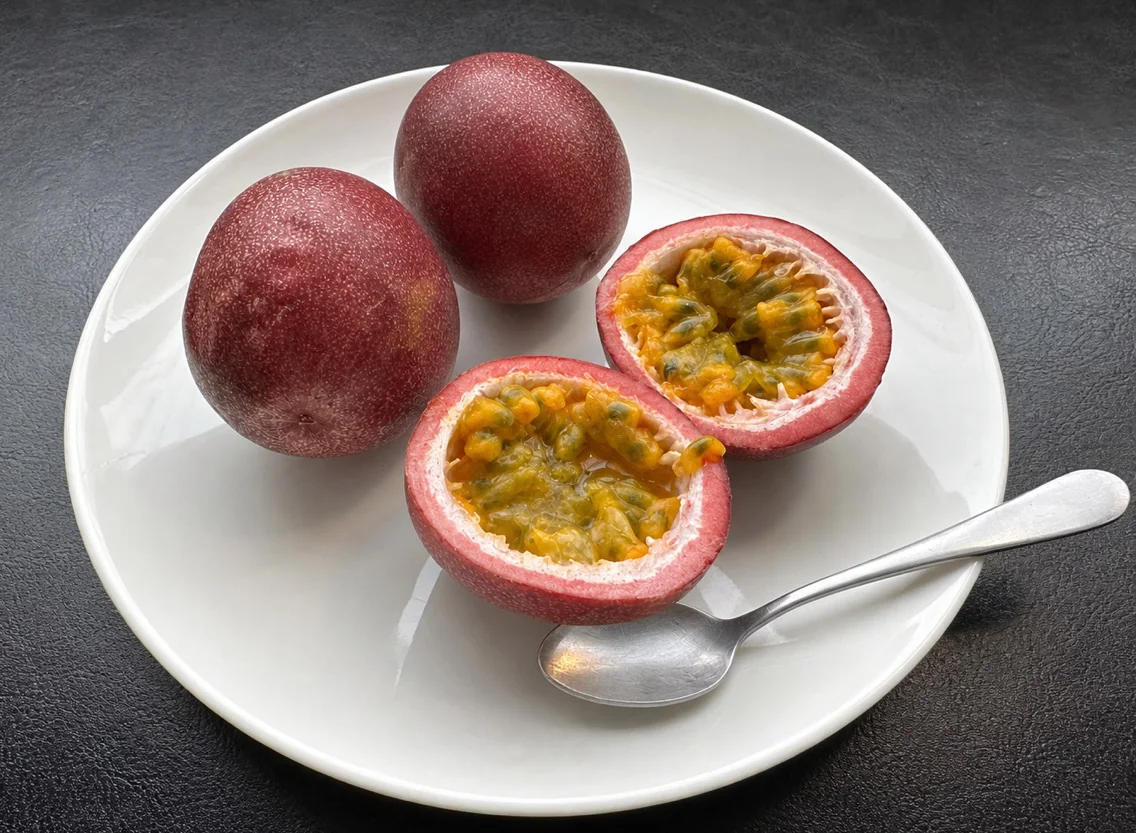 | Passion fruit | Chanh leo | Year-round | Crunchy seeds, strong tartness, and an intense aroma. | ★★★★☆ |
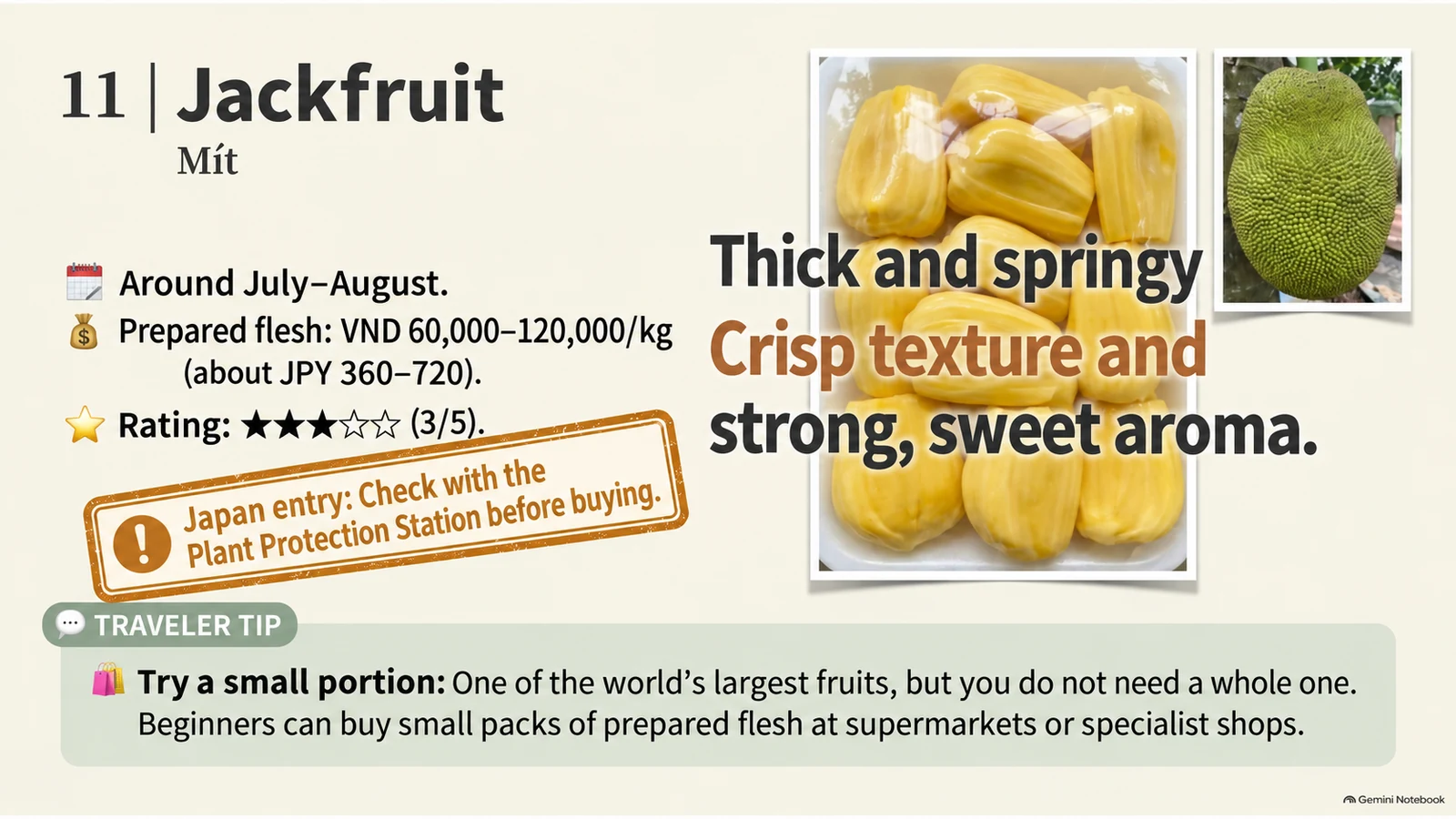
| 11 | 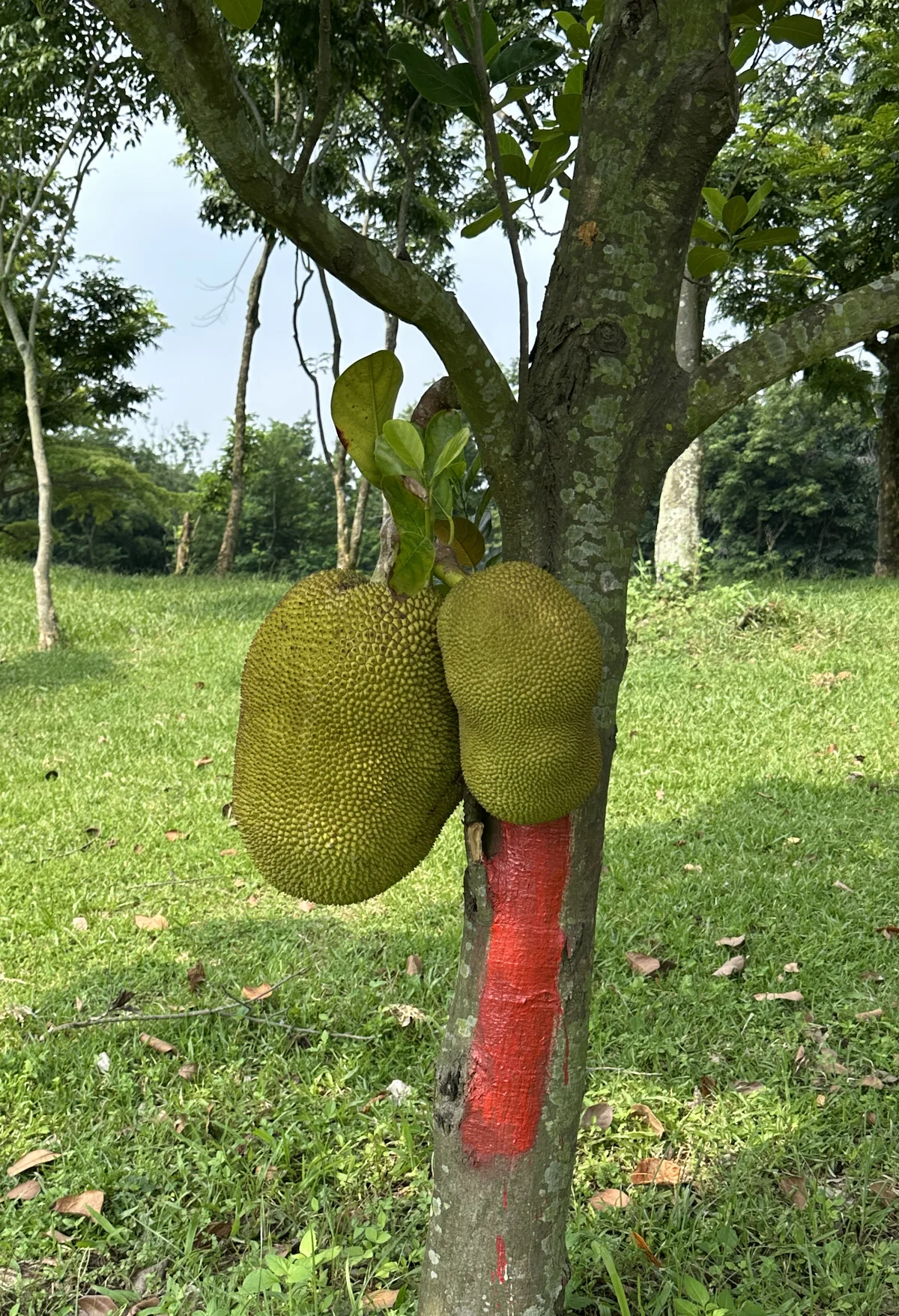 | Jackfruit | Mít | Around July–August | Thick, springy flesh, with rich sweetness and a strong aroma. | ★★★☆☆ |
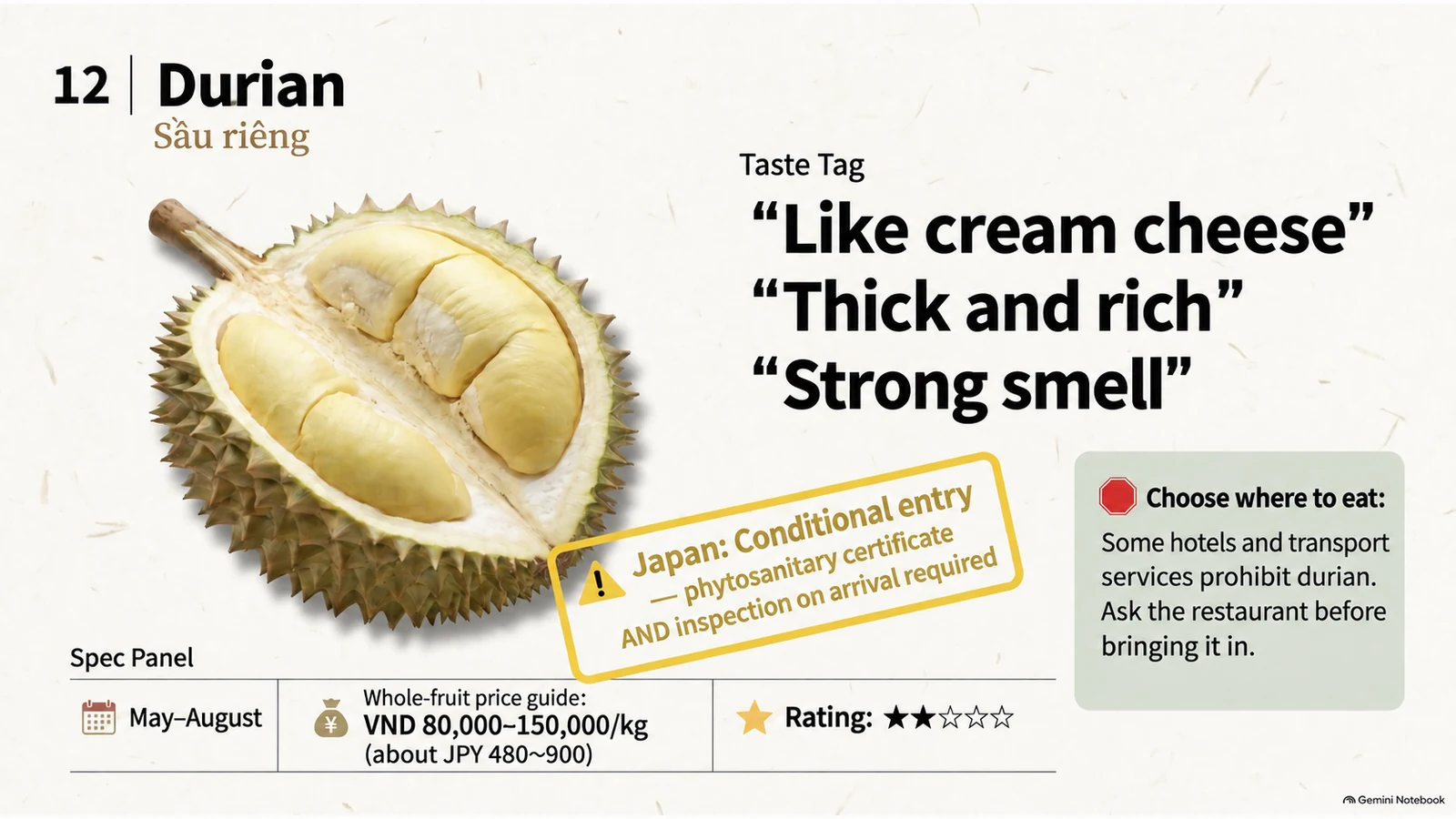
| 12 | 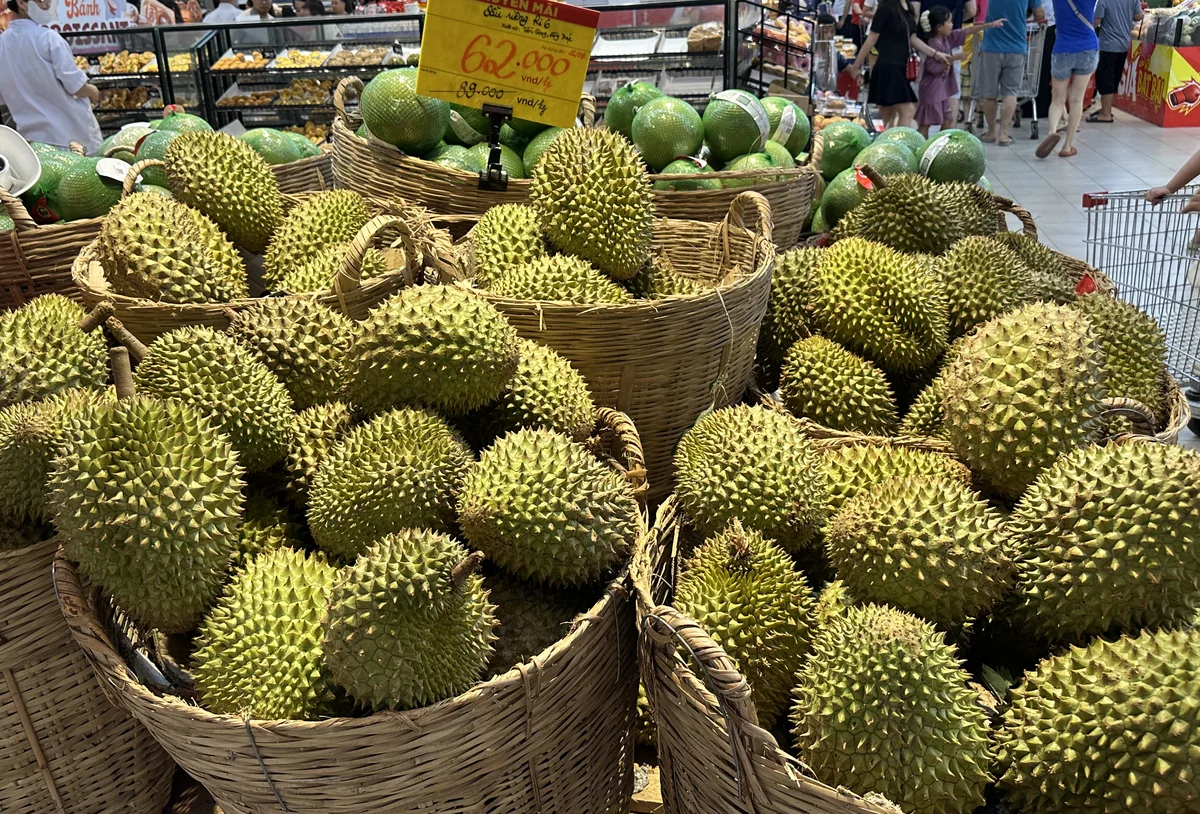 | Durian | Sầu riêng | May–August | Smooth and creamy, like cream cheese; rich, with a strong aroma. | ★★☆☆☆ |
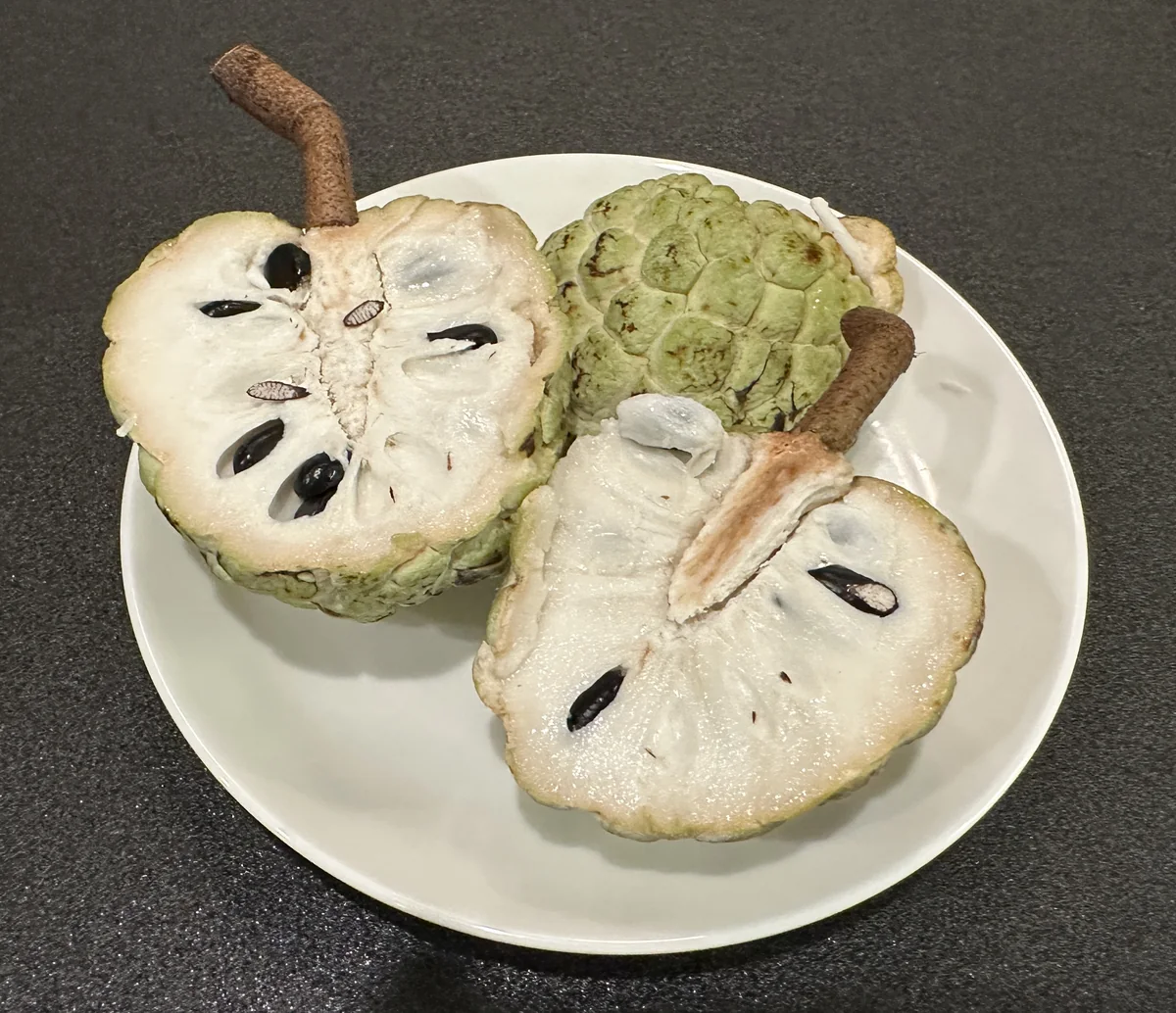
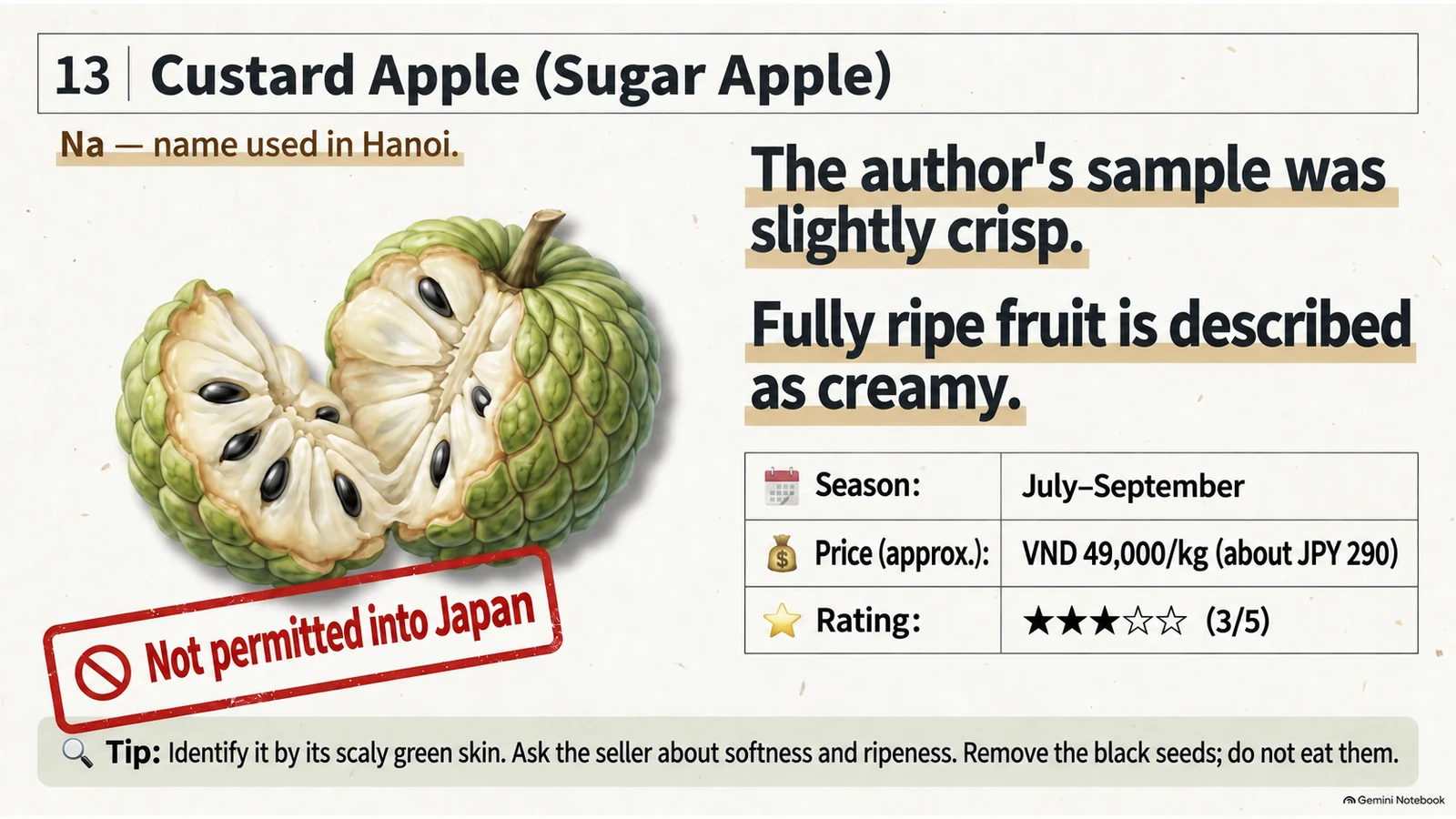
| 13 | 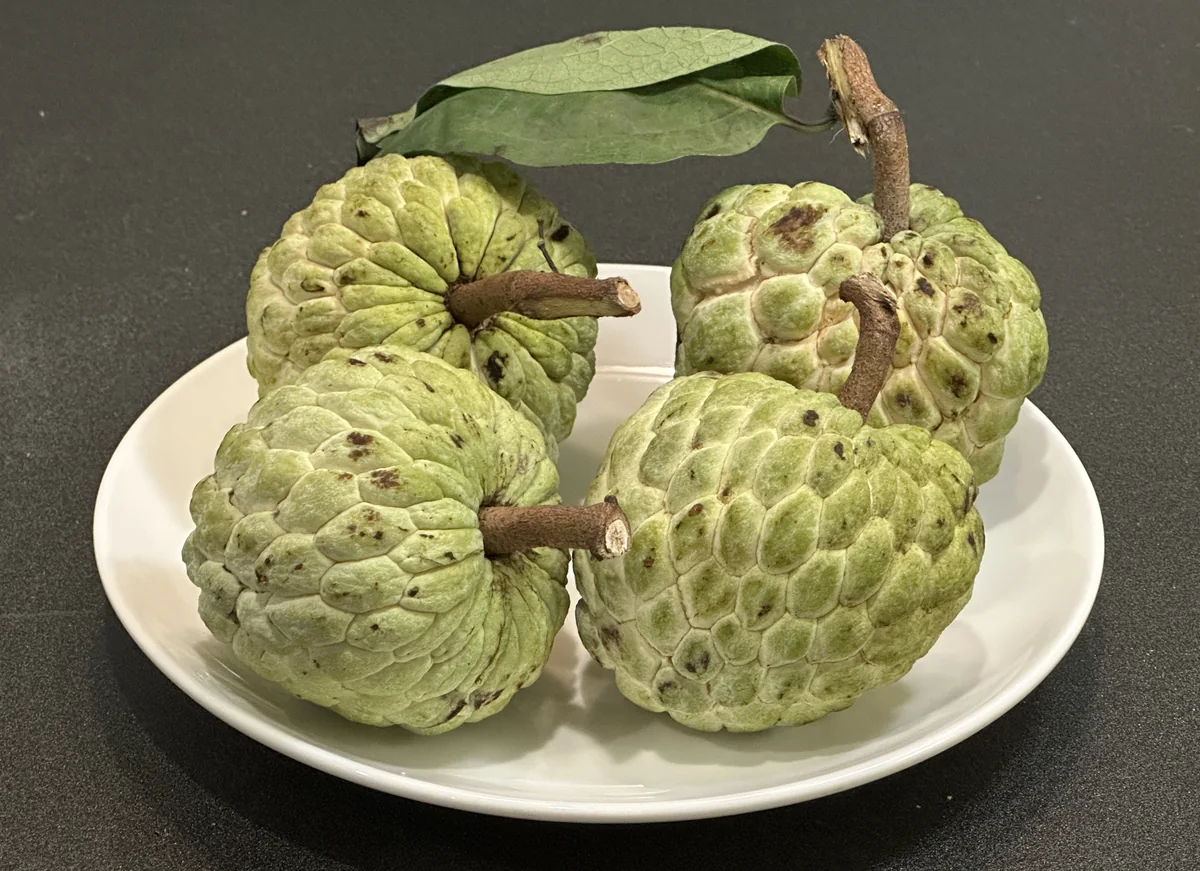 | Custard apple (sugar apple) | Na | July–September | The fruit I tasted had a slightly crisp texture. Fully ripe fruit is described as creamy. The seeds are fairly large. | ★★★☆☆ |
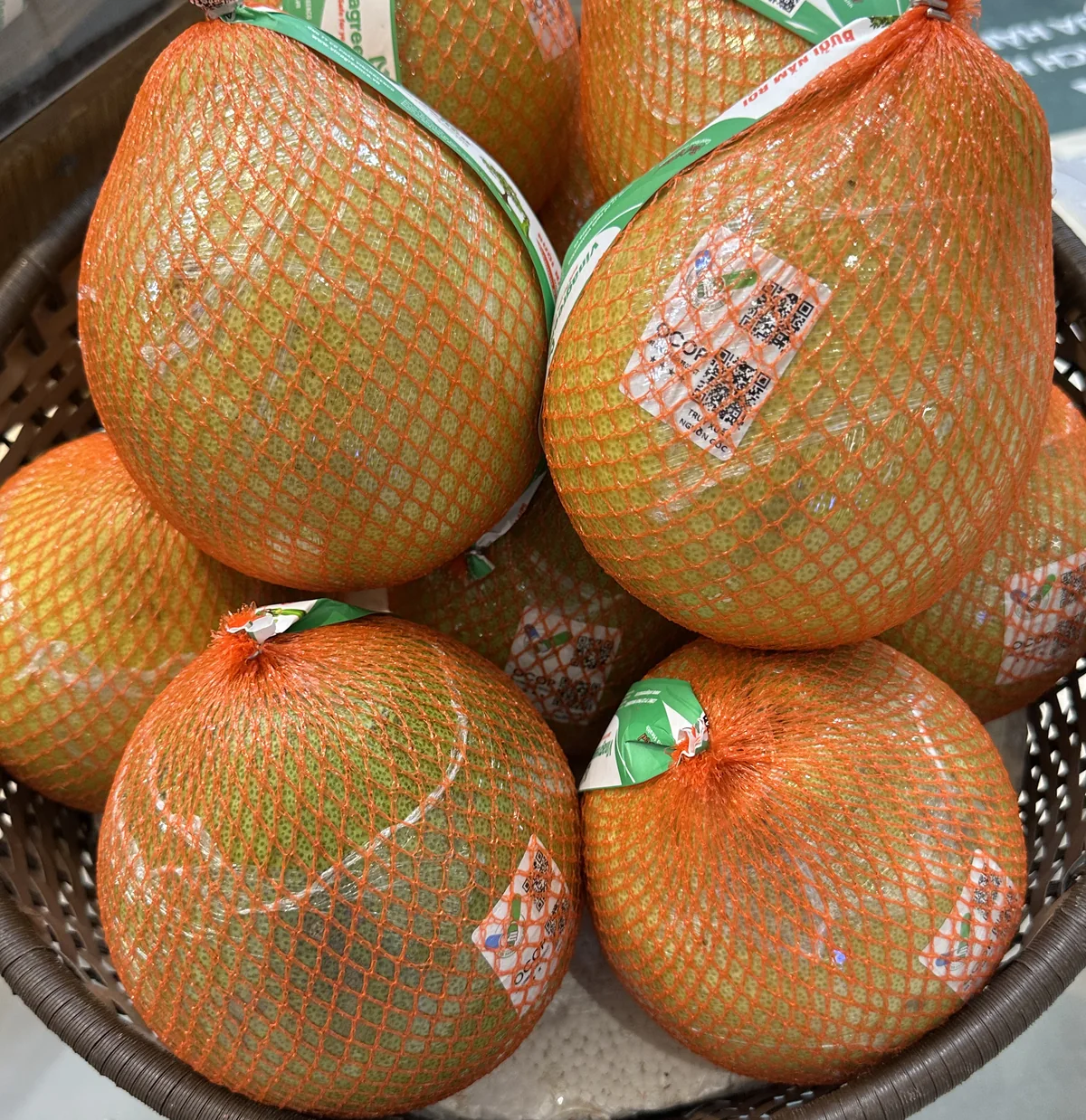
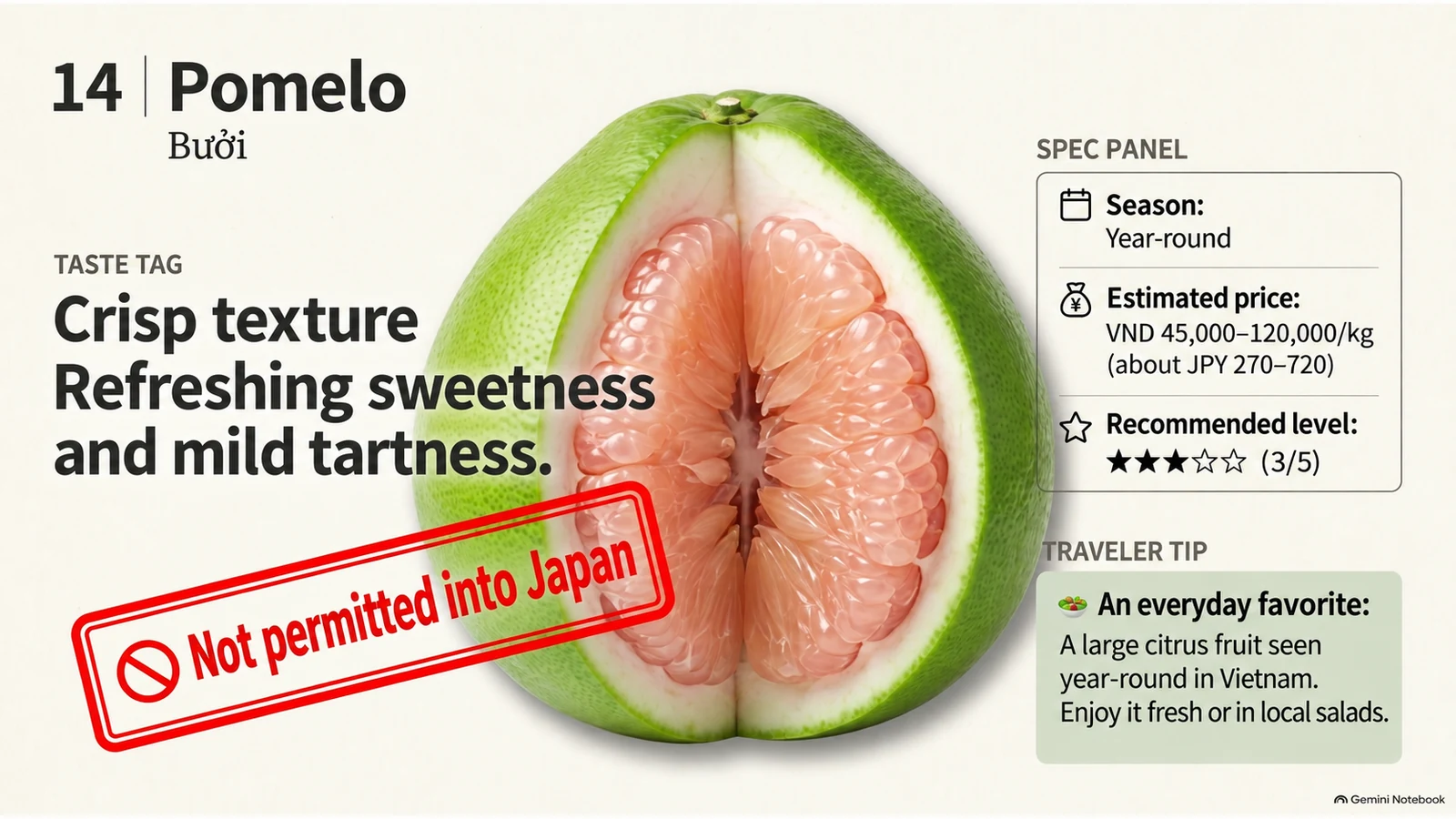
| 14 | 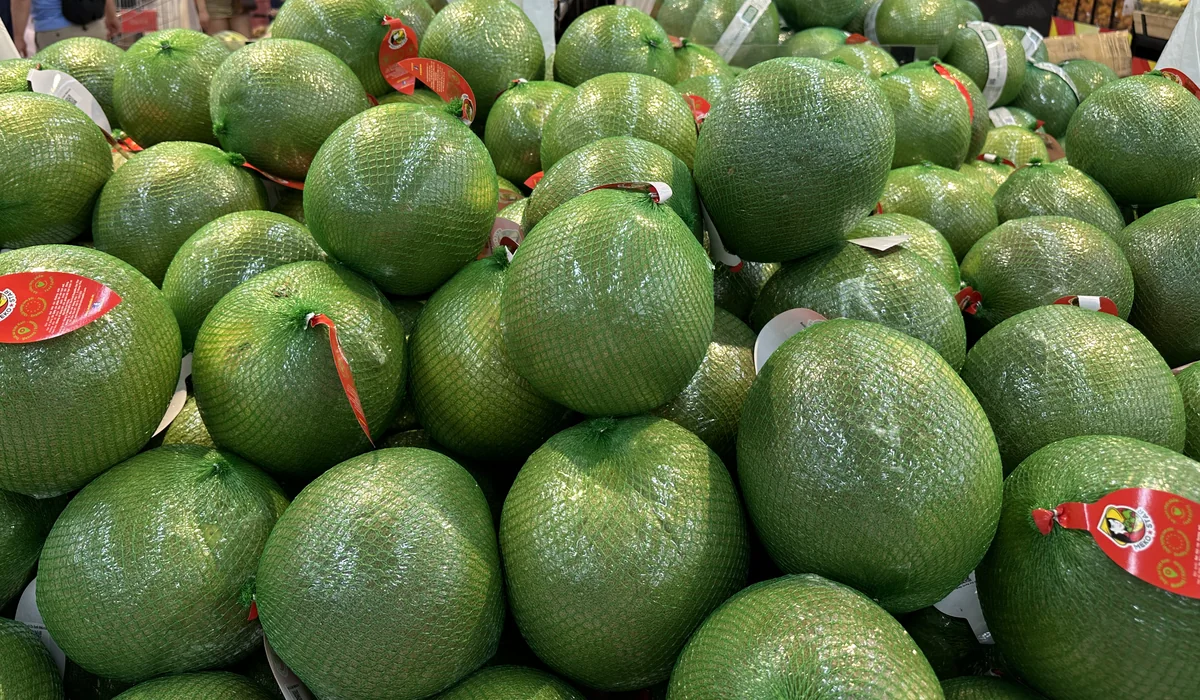 | Pomelo | Bưởi | Year-round | Crisp, with refreshing sweetness and mild tartness. | ★★★☆☆ |
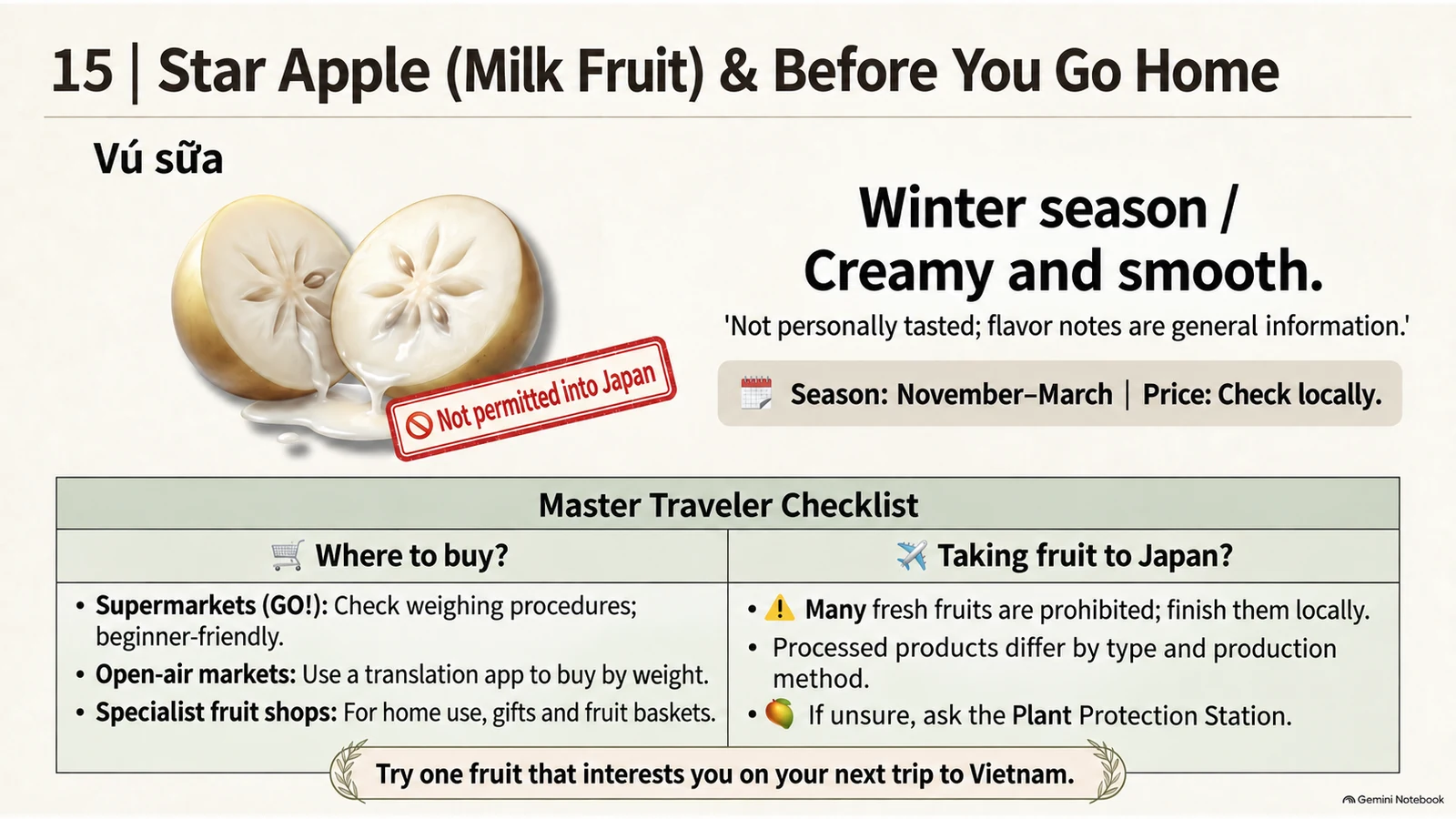
| 15 | 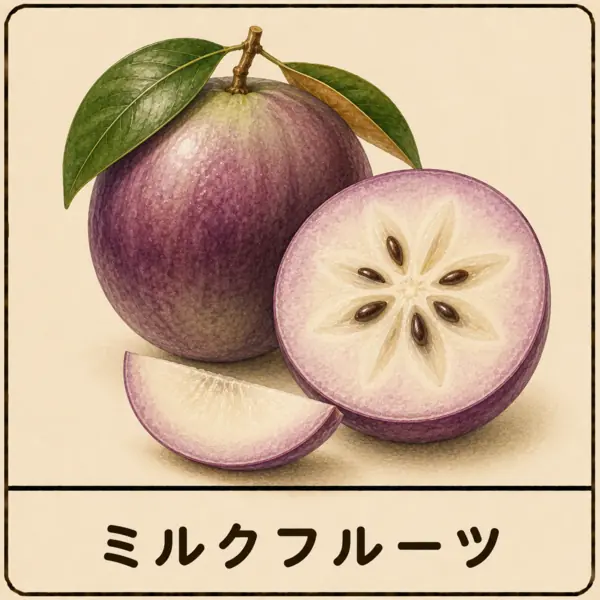 Reference illustration Not yet tasted | Star apple (milk fruit) | Vú sữa | November–March | Creamy and smooth, with gentle, mellow sweetness (general information; not personally tasted). | − |
The stars are a guide for beginners, taking availability, ease of eating, and the likelihood of a good first experience into account. They are not a ranking of my personal favorites. A dash indicates fruit I have not tasted. Vietnamese names follow usage in Hanoi, northern Vietnam; some names differ in the south (pineapple, for example, is called Thơm). Seasons vary by year, region, and variety. “Year-round” refers to availability in shops, not a year-round peak season. Yen conversions use the original article’s illustrative rate of VND 10,000 ≈ JPY 60.
How Much Does Fruit Cost in Vietnam? Prices and Where to Buy
How to read prices
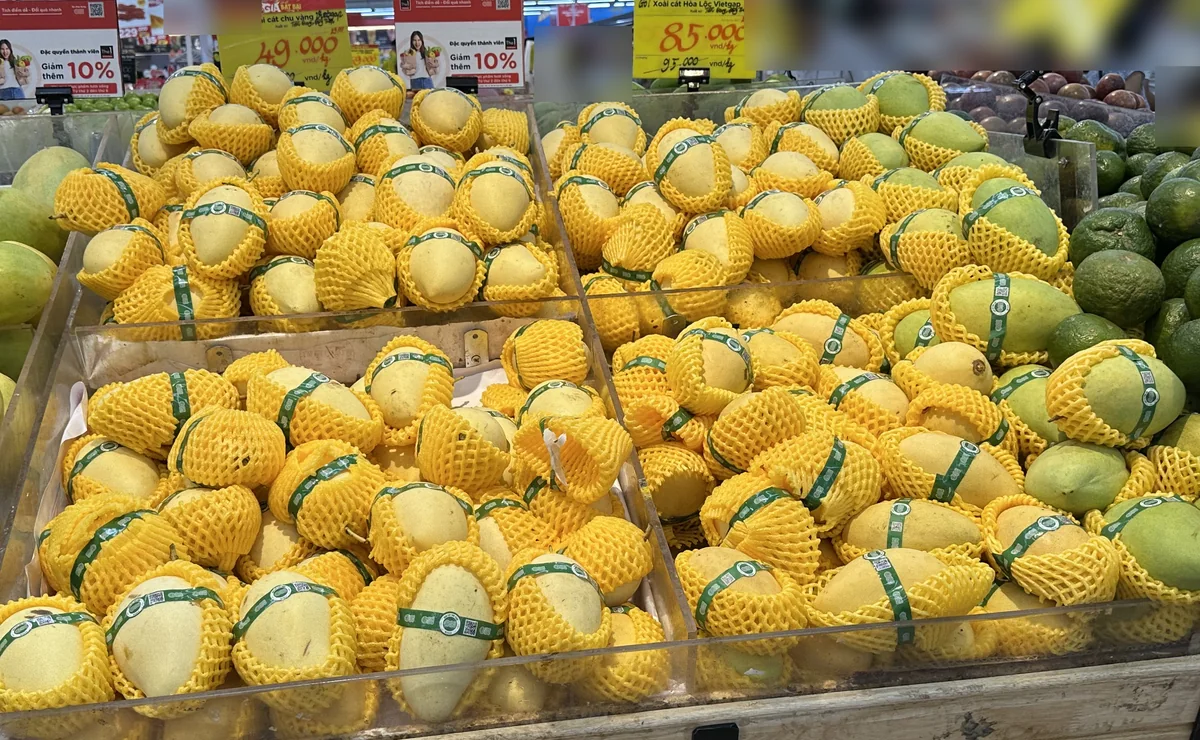
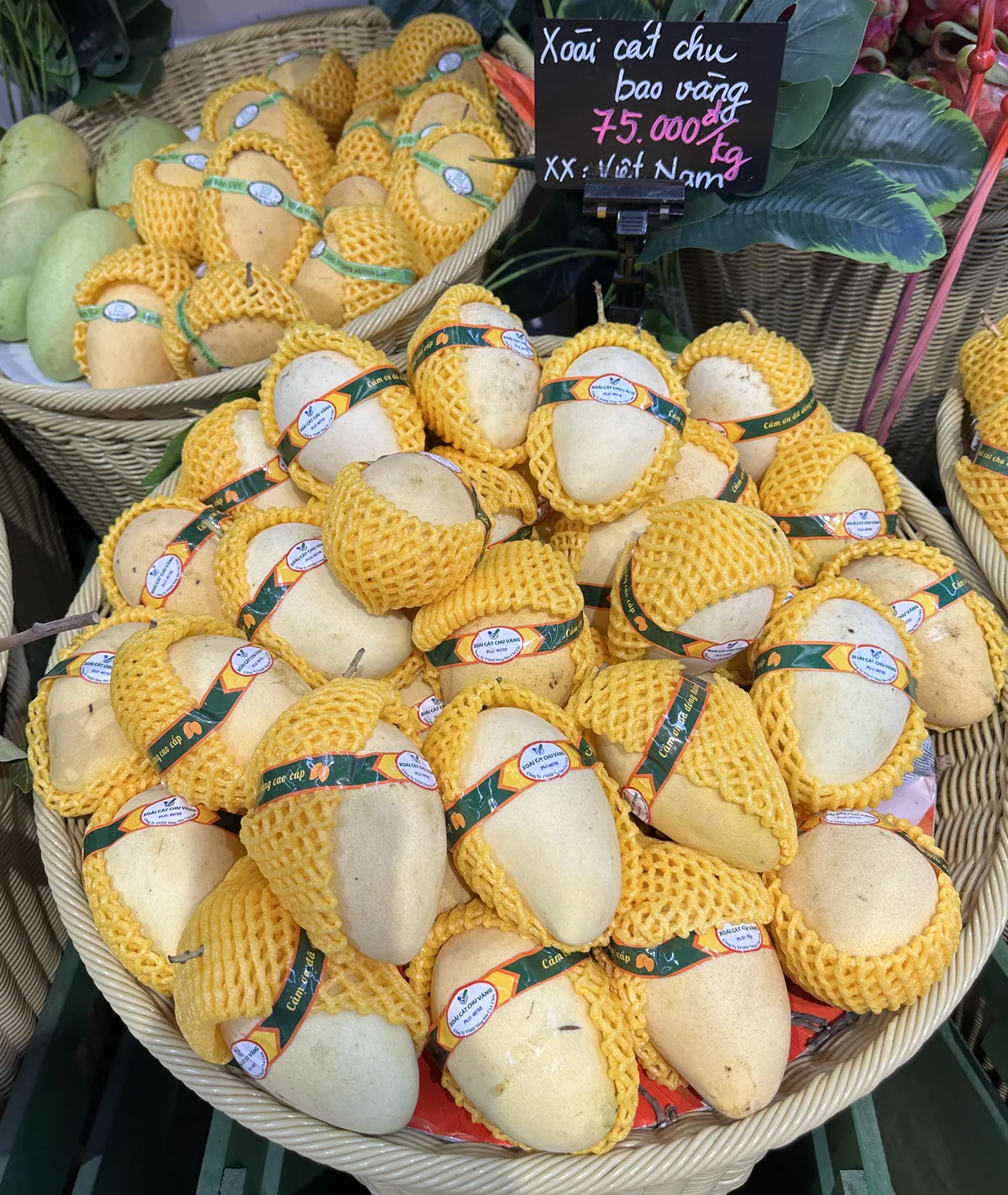
Prices vary by season, origin, variety, and seller. Check whether a price is per fruit, per 100 g, or per kilogram. Price labels in the photos show prices at the time of photography and may differ from the purchase prices quoted in the text.
The table below offers a rough budget for buying fruit for yourself in Hanoi, based on my purchases, store price checks, and reference sources. Check the unit price and the total after weighing at the shop.
For a comparison with Japan, see Vietnam vs. Japan Fruit Prices: 15 Fruits Compared per Kilogram (Japanese), which includes research dates, purchase locations, and unit prices.
| # | Fruit | Typical price | Approximate equivalent in JPY (same unit) | Where to buy |
|---|---|---|---|---|
| 1 | Mango | VND 50,000–60,000/kg | JPY 300–360 | Supermarkets, open-air markets |
| 2 | Mangosteen | VND 56,000–90,000/kg | JPY 340–540 | Supermarkets, open-air markets, specialist fruit shops |
| 3 | Rambutan | About VND 47,000/kg | About JPY 280 | Supermarkets, open-air markets |
| 4 | Lychee | About VND 50,000/kg | About JPY 300 | Supermarkets, open-air markets, specialist fruit shops |
| 5 | Longan | VND 45,000–80,000/kg | JPY 270–480 | Supermarkets, open-air markets, shops listed on GrabMart |
| 6 | Dragon fruit | VND 30,000–55,000/kg | JPY 180–330 | Supermarkets, open-air markets |
| 7 | Papaya | VND 20,000–40,000/kg | JPY 120–240 | Supermarkets, open-air markets |
| 8 | Pineapple | About VND 25,000 each | About JPY 150 | Supermarkets, open-air markets, street fruit vendors |
| 9 | Coconut | About VND 31,000 each | About JPY 190 | Supermarkets, open-air markets, juice shops |
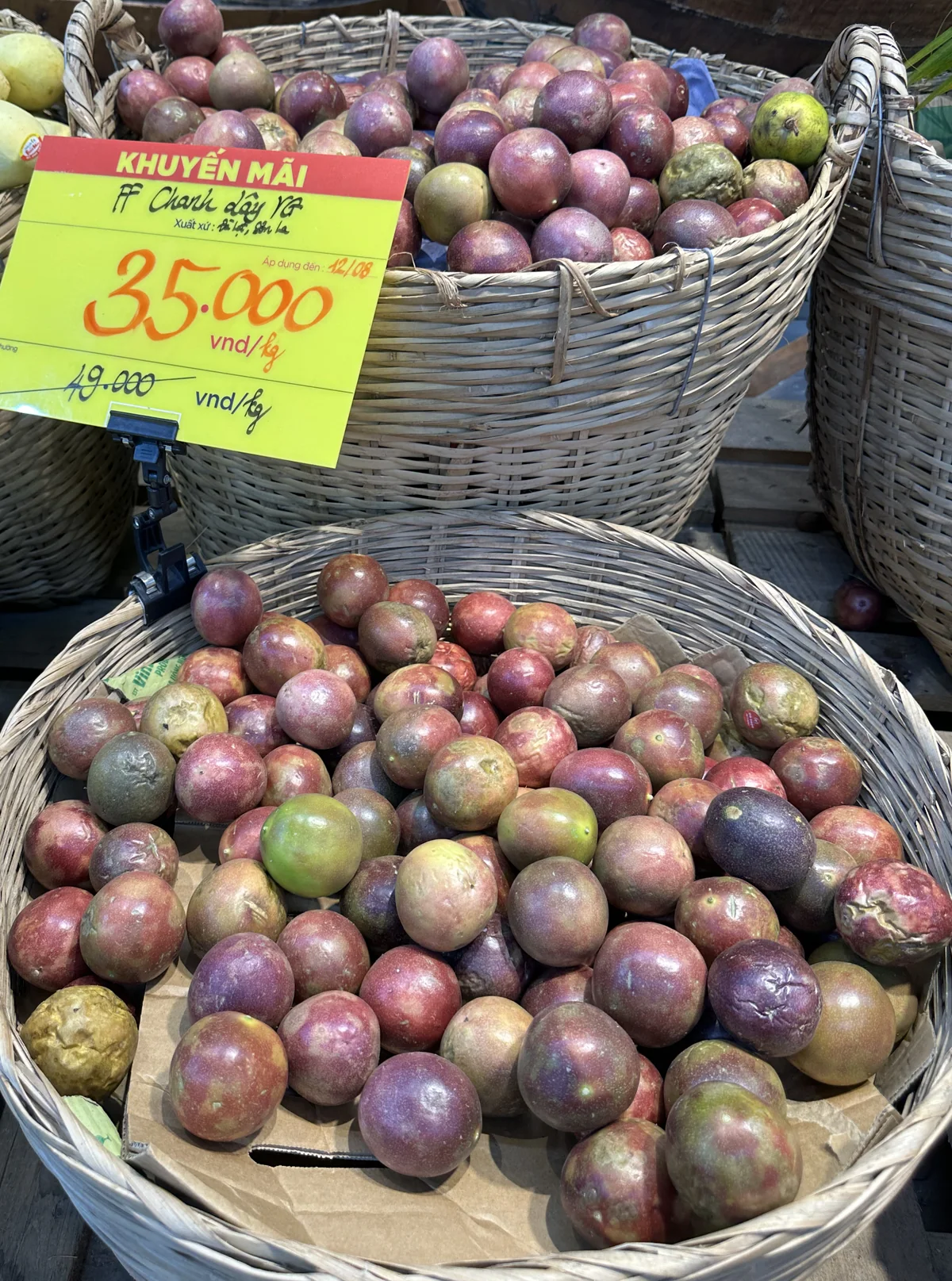
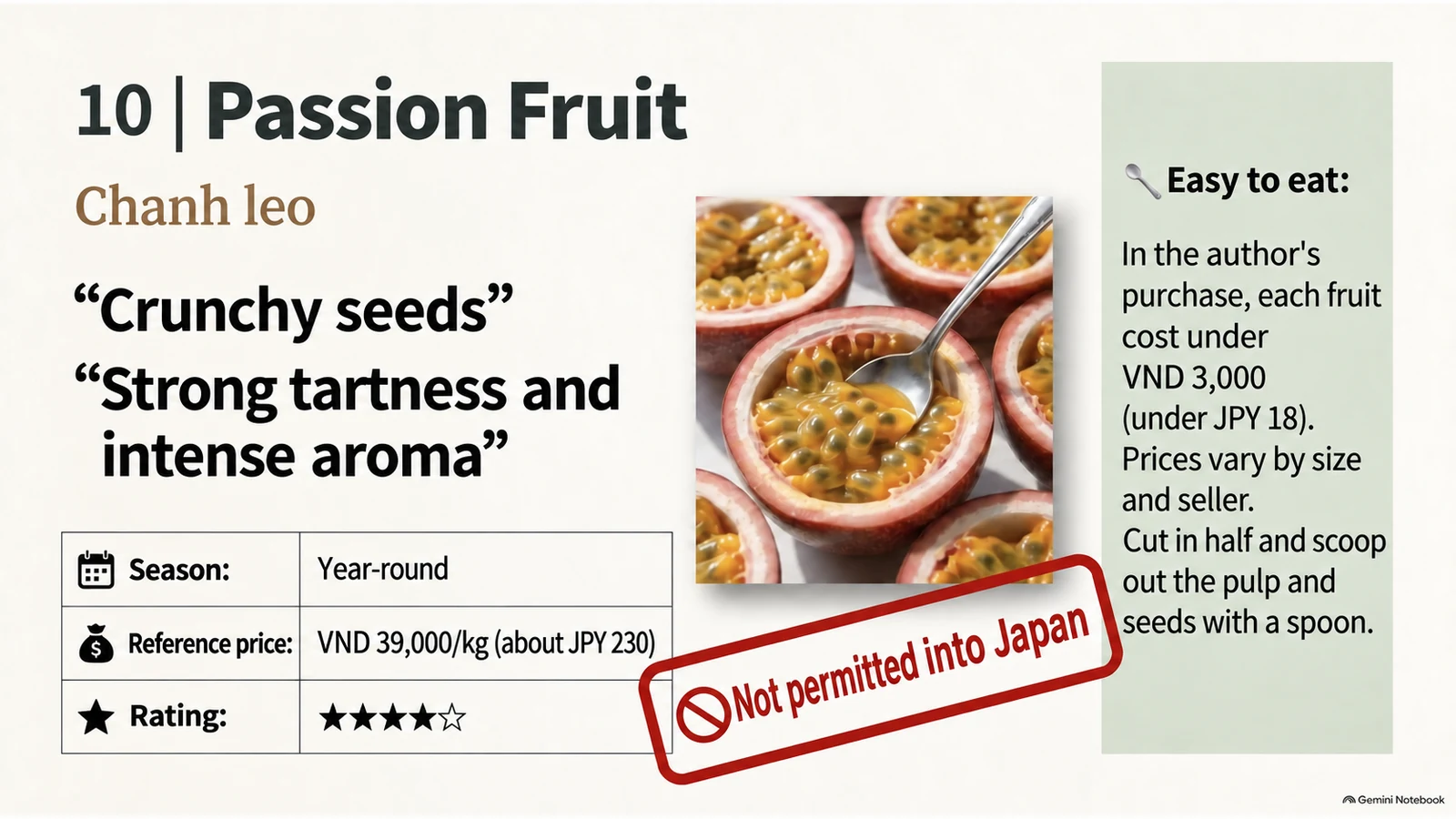
| 10 | Passion fruit | About VND 39,000/kg | About JPY 230 | Supermarkets, open-air markets, shops listed on GrabMart |
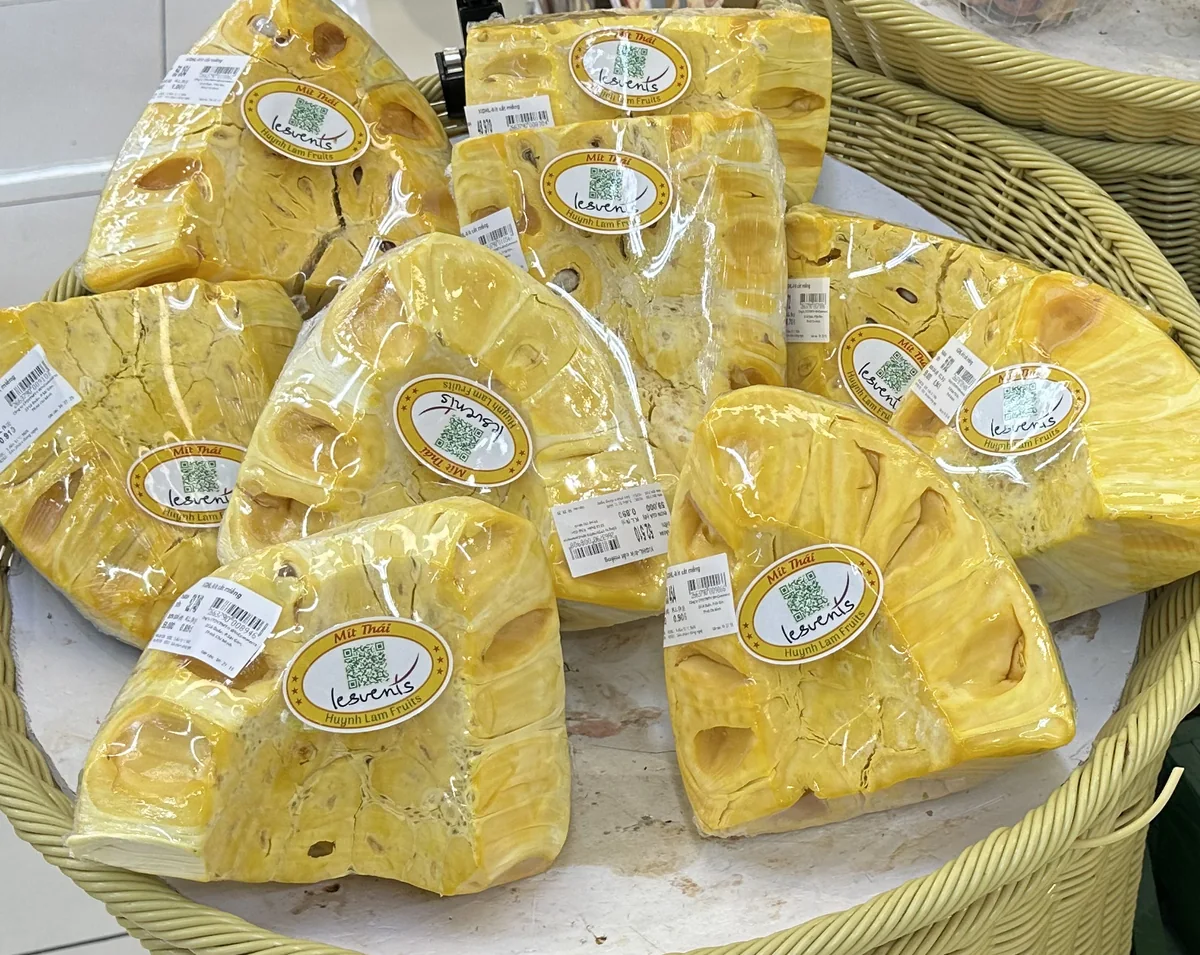
| 11 | Jackfruit | VND 60,000–120,000/kg, prepared flesh | JPY 360–720 | Supermarkets, specialist fruit shops |
| 12 | Durian | VND 80,000–150,000/kg | JPY 480–900 | Supermarkets, open-air markets, specialist durian vendors |
| 13 | Custard apple (sugar apple) | VND 49,000/kg | About JPY 290 | Supermarkets, open-air markets, specialist fruit shops |
| 14 | Pomelo | VND 45,000–120,000/kg | JPY 270–720 | Supermarkets, open-air markets, specialist fruit shops |
| 15 | Star apple (milk fruit) | Check locally | — | Supermarkets, open-air markets, specialist fruit shops |
JPY equivalents use the original article’s illustrative rate of VND 10,000 ≈ JPY 60 and are rounded for readability. Mango, rambutan, lychee, longan, dragon fruit, pineapple, coconut, passion fruit, and custard apple prices are based on my purchases or store price checks. Mangosteen (VND 56,000/kg) and durian (VND 109,000/kg) also include my purchase prices, with external sources used to provide a wider range. Other estimates draw on 2026 retail examples and official market information, allowing a range for purchases in Hanoi. For star apple, I could only confirm prices at a northern production area, so its Hanoi retail price needs to be checked locally.
Vietnamese Fruit Seasons: What to Choose for Your Trip
If you know when you are traveling, use the seasonal table to narrow down your choices.
- Around May–June: Consider lychee, mango, and mangosteen.
- Around July–September: Consider longan and custard apple. July–August is the approximate season for jackfruit.
- Around November–March: This is the approximate season for star apple. I have not tasted it yet, so check availability and ripeness at the shop.
- Easier to find throughout the year: Dragon fruit, papaya, pineapple, and coconut. Even when fruit is sold year-round, flavor and prices vary by season.
These are approximate seasonal groupings from the table above. Availability varies between northern and southern Vietnam and with variety and weather. Being in season does not guarantee that every shop will stock a fruit.
10 Familiar Favorites to Try: Photos, Flavors, and How to Eat Them
Enjoying the 10 familiar favorites
If you are unsure, begin with fruit that is easy to eat, such as mango, mangosteen, or lychee. Buy small amounts to compare flavors and textures.
1. Mango (Xoài)
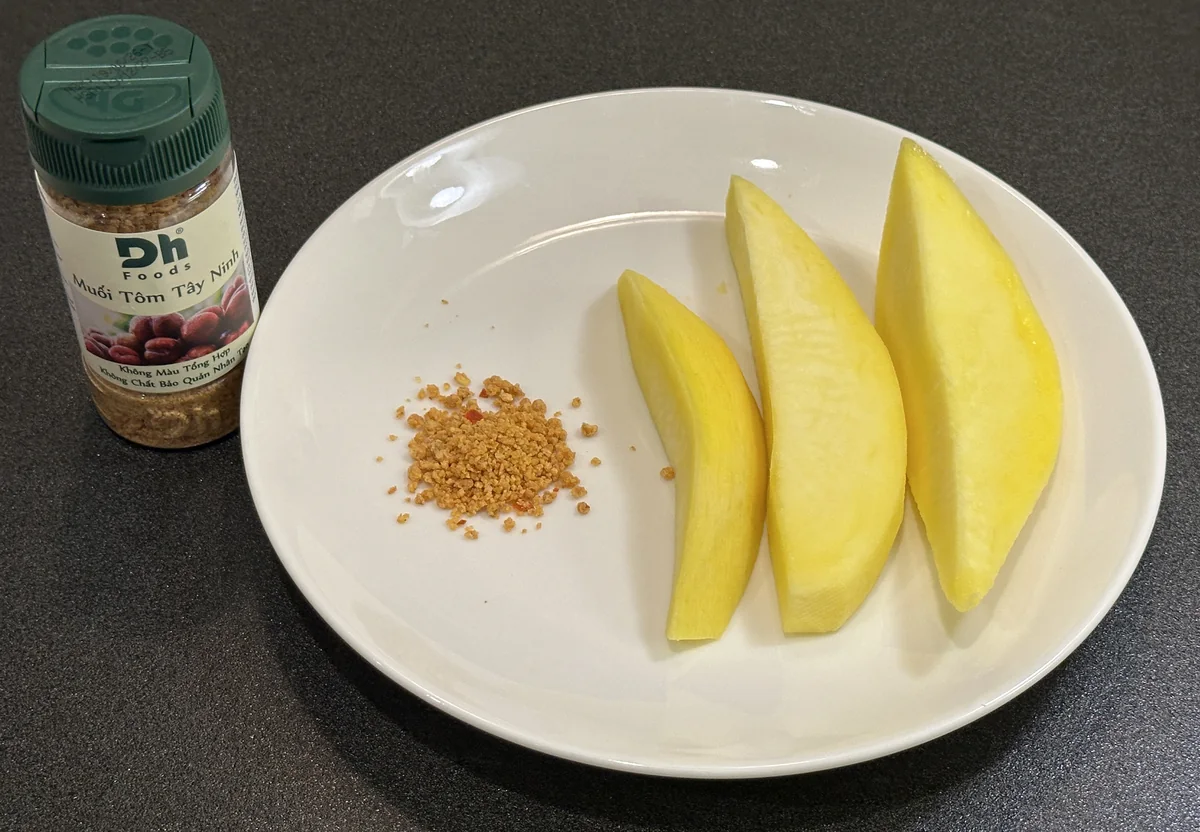
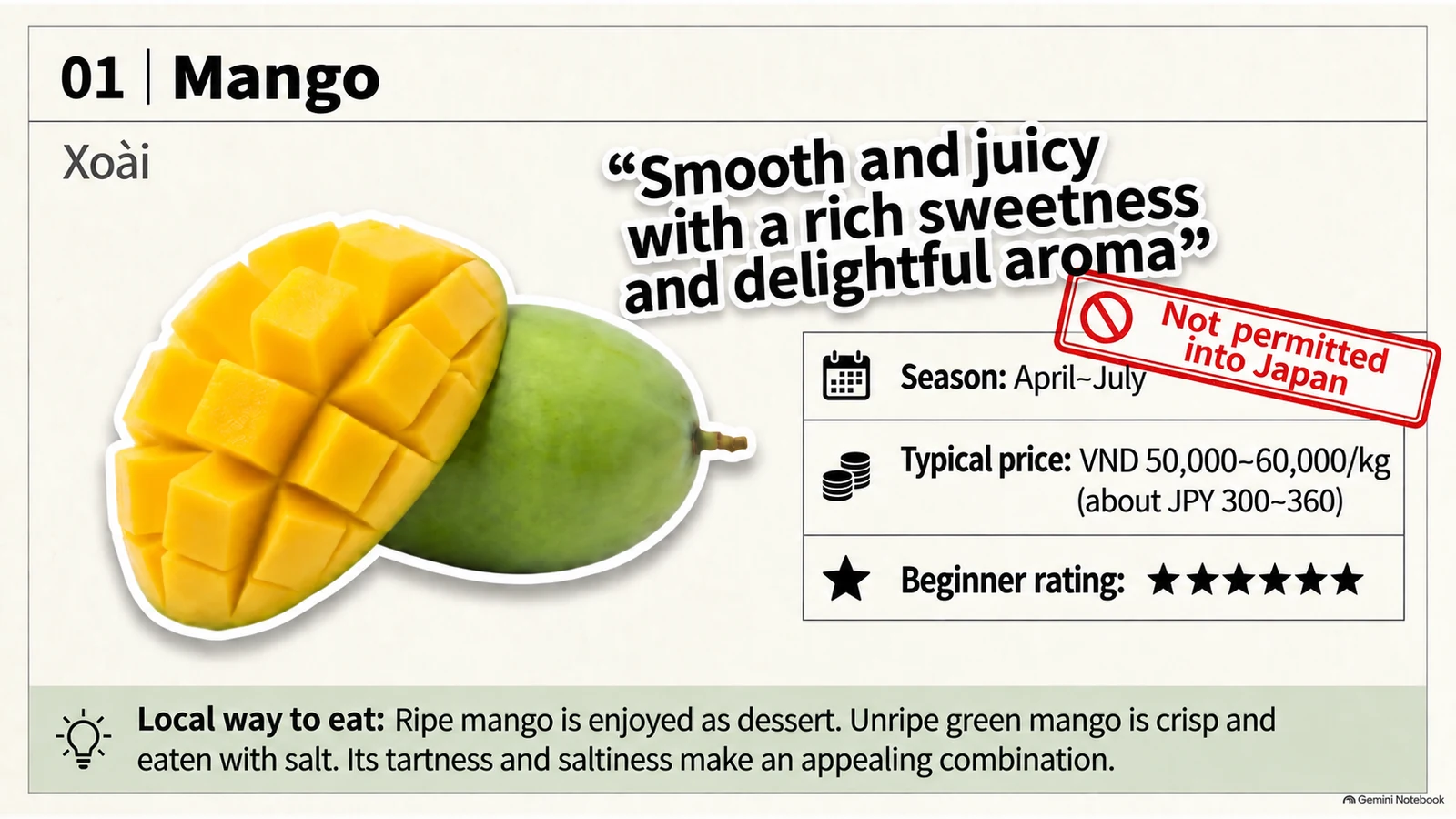
Mango is an essential fruit to try in Vietnam. What makes it interesting is how differently you can enjoy it at different stages of ripeness. Ripe mango is smooth and intensely sweet—a dessert in itself. Unripe green mango is crisp and is eaten locally with salt. The combination of tartness and salt can become addictive once you get used to it. Dried mango is chewy and sweet, and a popular souvenir. If you intend to take it to Japan, check the processing method and ingredients.
Expect about VND 50,000–60,000/kg (JPY 300–360). When I bought mangoes, two fruits weighing about 0.6 kg cost roughly VND 36,000 (JPY 220). A small quantity is an affordable way to try them.
Read more: Mango Guide | The Story of Mangoes | How to Eat Mangoes
2. Mangosteen (Măng cụt)
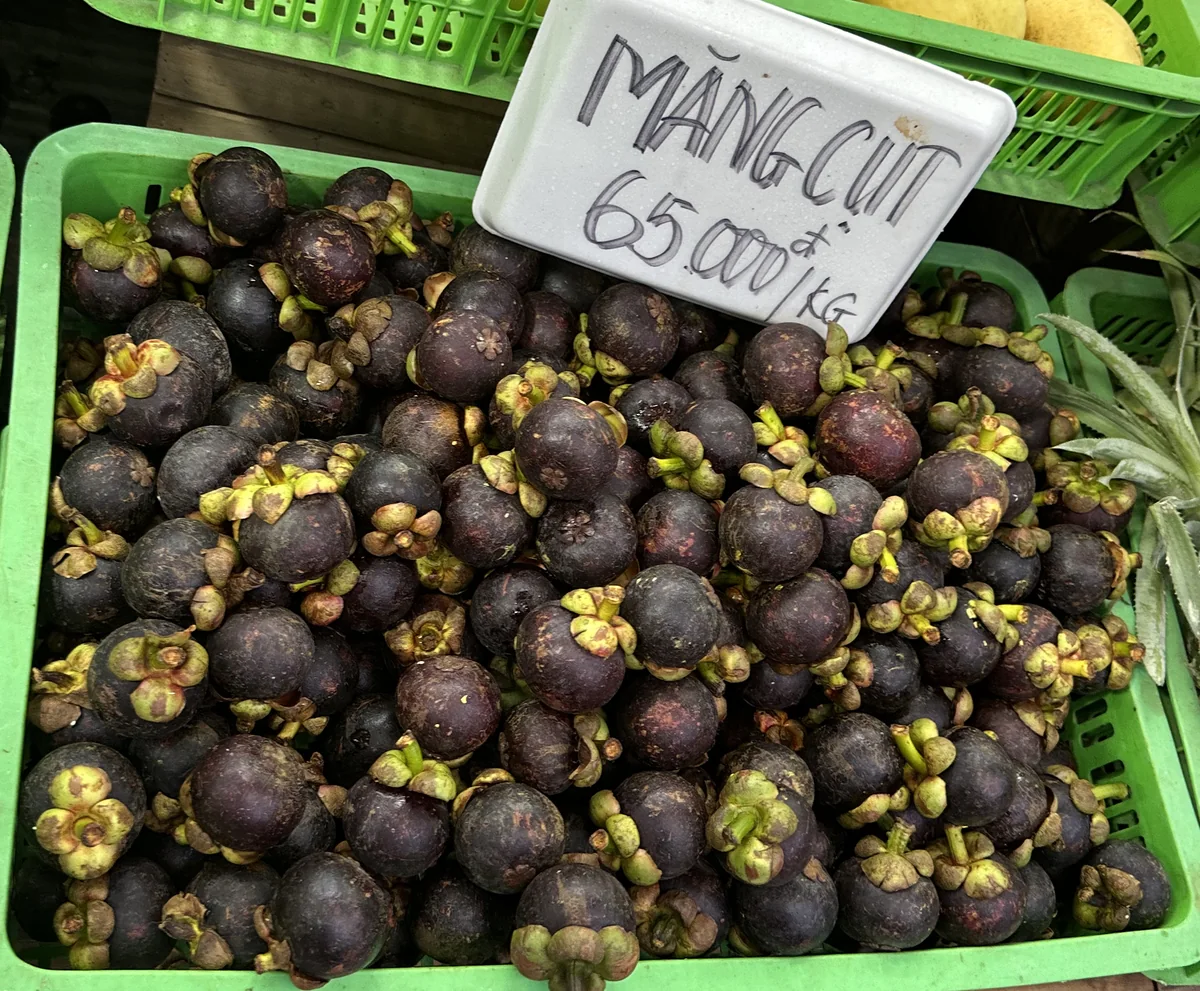
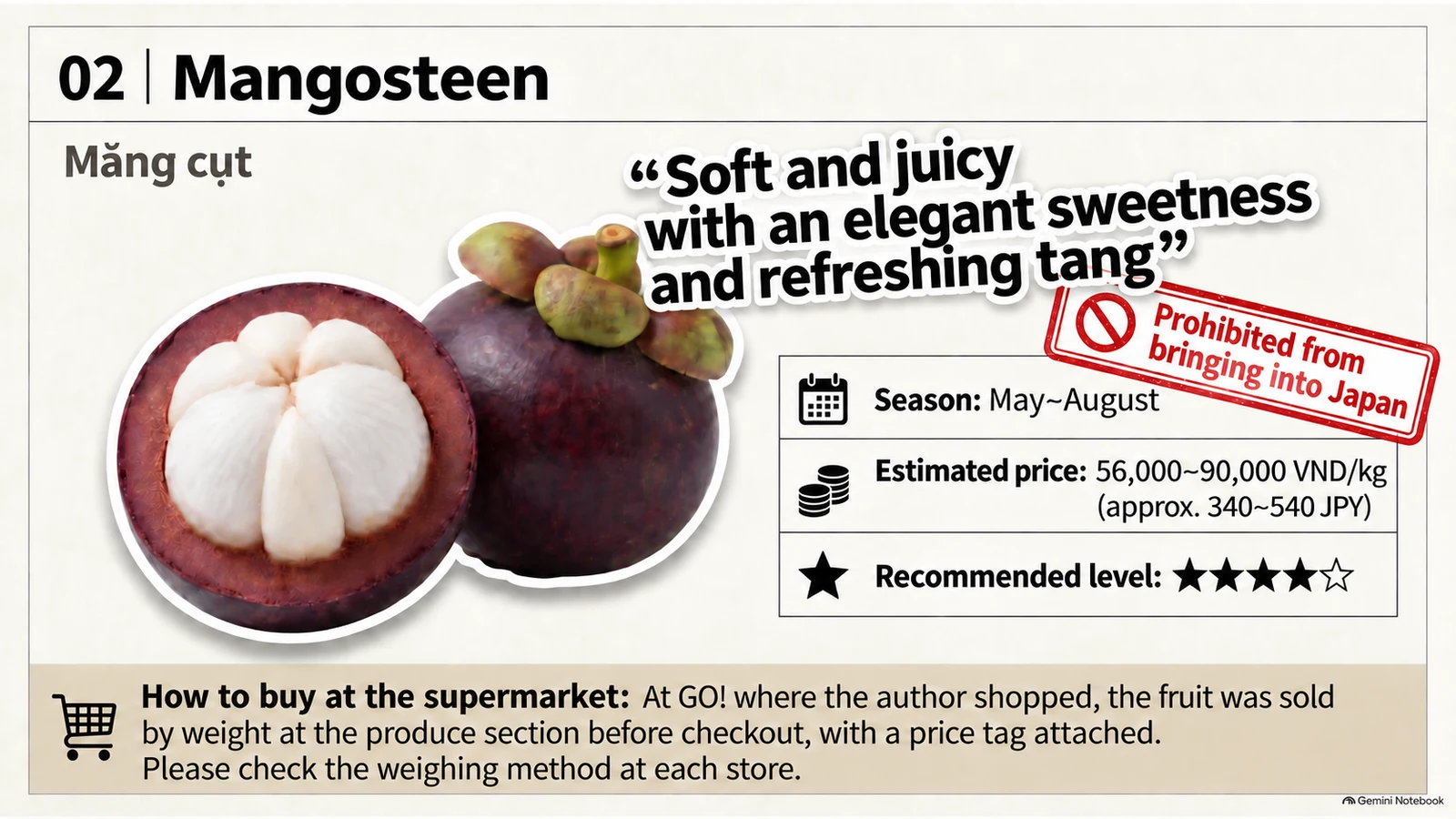
Known as the “queen of fruits,” mangosteen has white flesh inside a firm, deep-purple rind. Its smooth texture is delicious, and it is my personal favorite. Fresh mangosteen is not often seen in Japan, so it is well worth trying if you visit Vietnam during its season, around May–August.
When I bought it, the price was around VND 56,000/kg (JPY 340). There were about 12–13 fruits per kilogram, working out to approximately VND 4,300–4,700 (JPY 26–28) each.
Read more: Mangosteen Guide | The Story of Mangosteens | How to Eat Mangosteens
3. Rambutan (Chôm chôm)
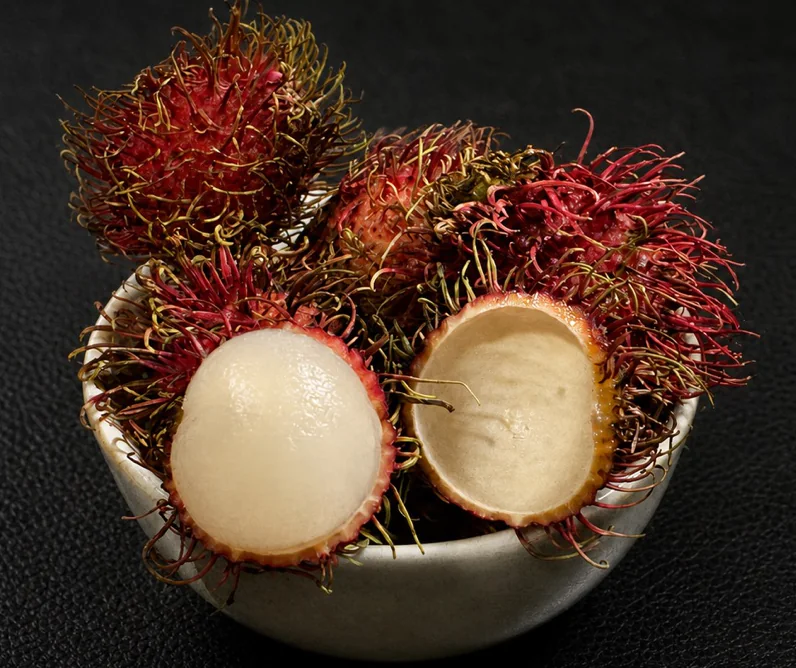
Rambutan makes an impression with its red skin covered in soft hairs. Its Vietnamese name, Chôm chôm, evokes tousled hair. Peel it to reveal translucent white flesh with a springy texture and a sweet flavor similar to lychee.
The supermarket price I checked was VND 46,550/kg (about JPY 280), slightly below the lychee and mango estimates in this guide. Despite its unusual appearance, it is an affordable fruit to try.
Read more: Rambutan Guide | The Story of Rambutans | How to Eat Rambutans
4. Lychee (Vải)
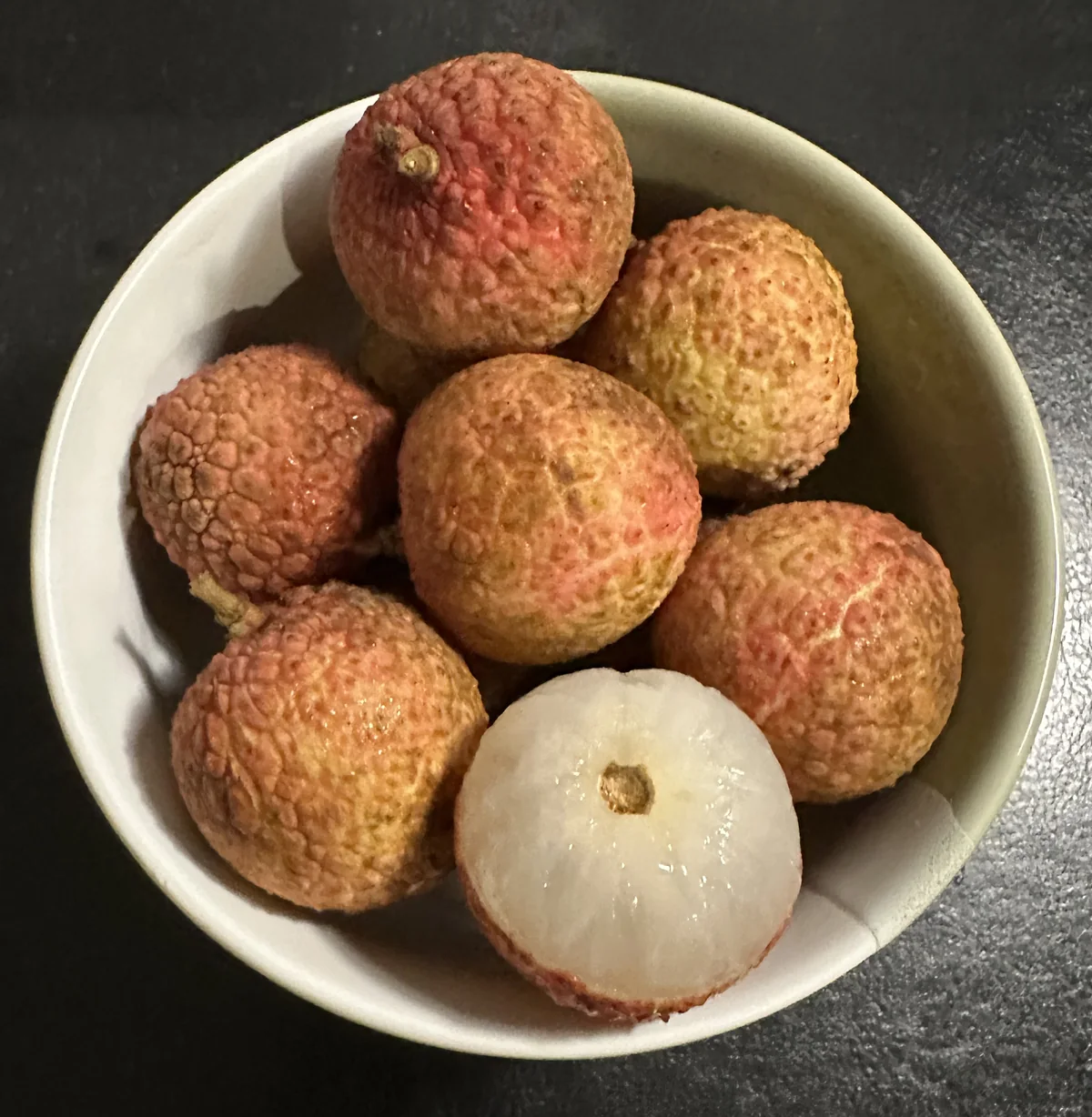
Fresh lychee is especially worth trying if you have only eaten frozen lychees in Japan. The flesh is springy, and I found it sweeter than rambutan. Its short season, May–June, makes it harder to find at other times. I did not see much of it around my neighborhood in 2026. Prices are around VND 50,000/kg (JPY 300), similar to mango. Finding fresh lychees in season can be a matter of luck, as availability varies from year to year.
Read more: Lychee Guide | The Story of Lychees | How to Eat Lychees
5. Longan (Nhãn)
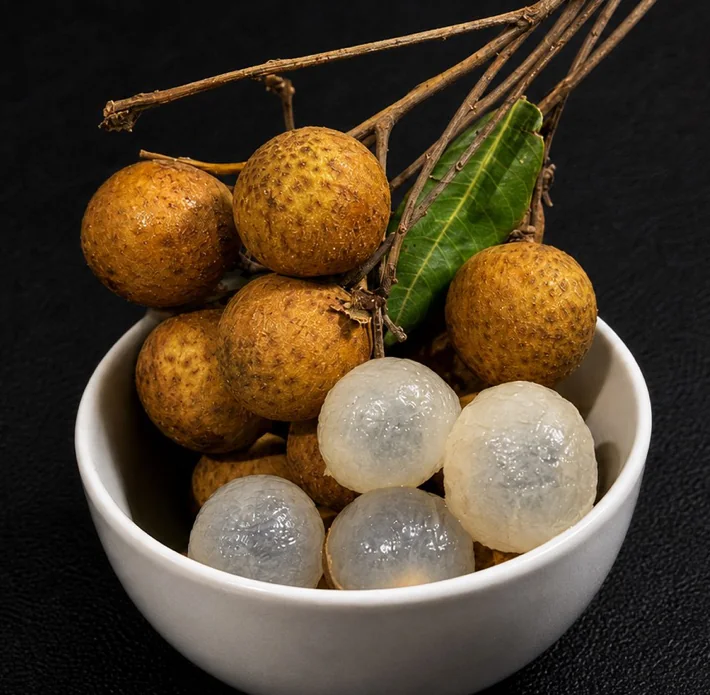
Related to lychee and rambutan, longan has sweet, springy flesh. It is a little smaller, with light-brown skin. The small fruits are easy to eat and just the right size for a snack.
The original price on the label I saw was VND 79,900/kg (about JPY 480), above the lychee and mango estimates in this article. It was discounted when I bought it, however: 0.86 kg cost VND 38,700 (JPY 230), equivalent to VND 45,000/kg (JPY 270). At supermarkets, check for discounts rather than relying only on the original price.
Read more: Longan Guide | The Story of Longans | How to Eat Longans
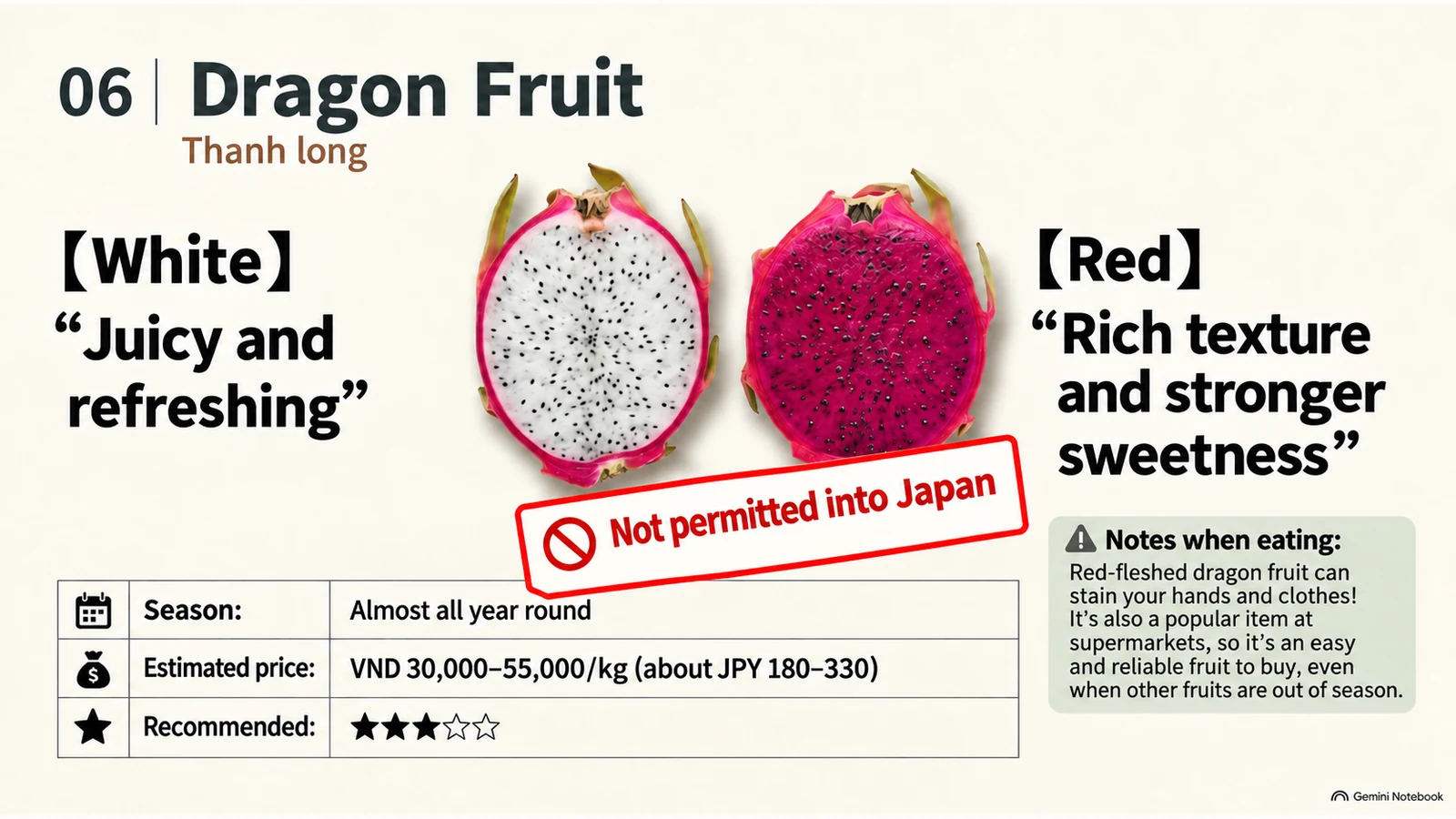
6. Dragon Fruit (Thanh long)
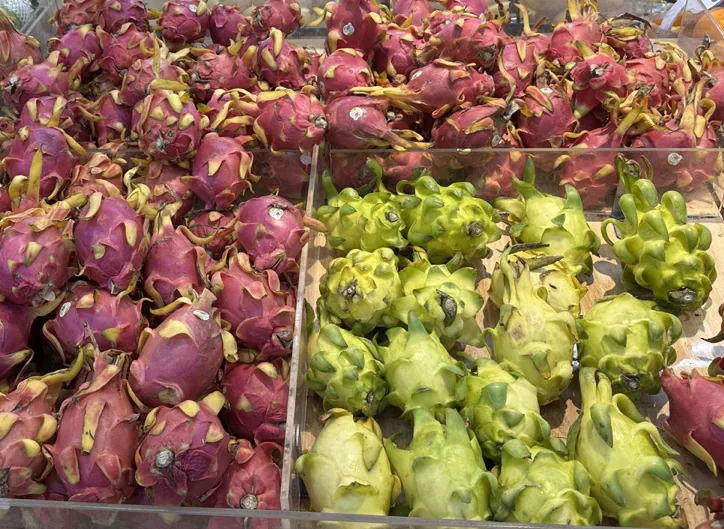
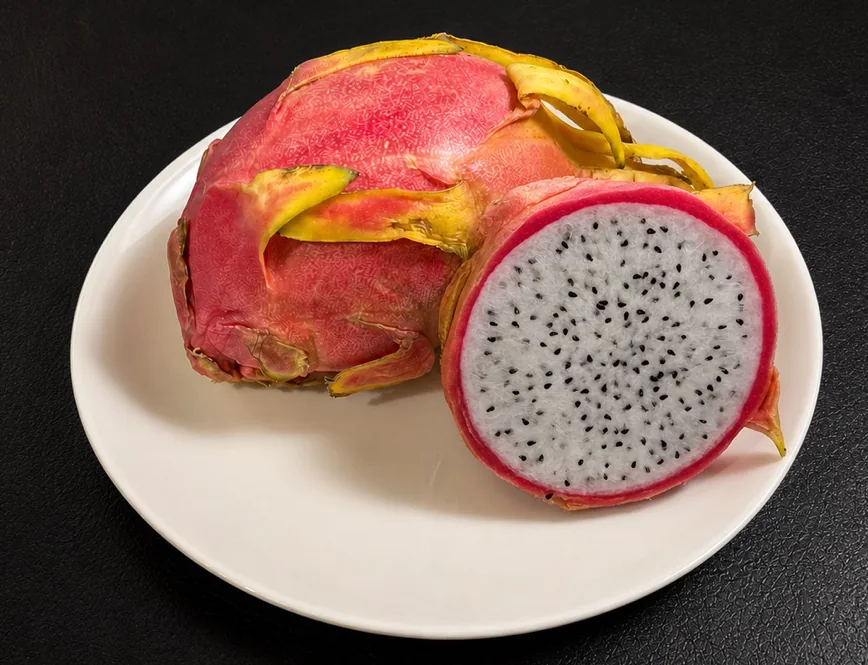
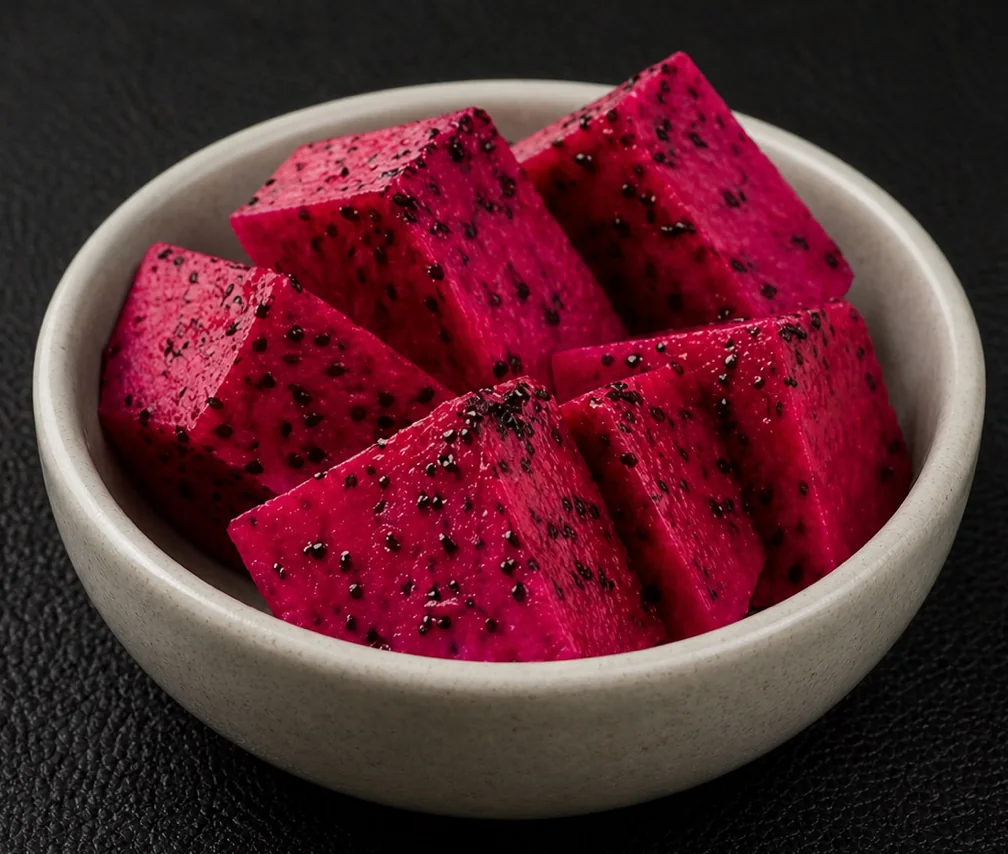
Known for its pink skin, dragon fruit is available almost all year, and Vietnam is one of its major producers. It is relatively affordable at many supermarkets and useful to remember when you miss the season for other fruits. This guide covers white-fleshed and red-fleshed types. White flesh is juicy and refreshing. Red flesh has a denser texture and a sweeter flavor. Be careful when eating the red type, as its juice can stain your hands.
Prices are around VND 30,000/kg. When I bought it, one fruit weighing about 0.55 kg cost VND 17,000 (JPY 100). It is among the most affordable fruits in this guide.
Read more: Dragon Fruit Guide | Dragon Fruit History and Stories | How to Eat Dragon Fruit
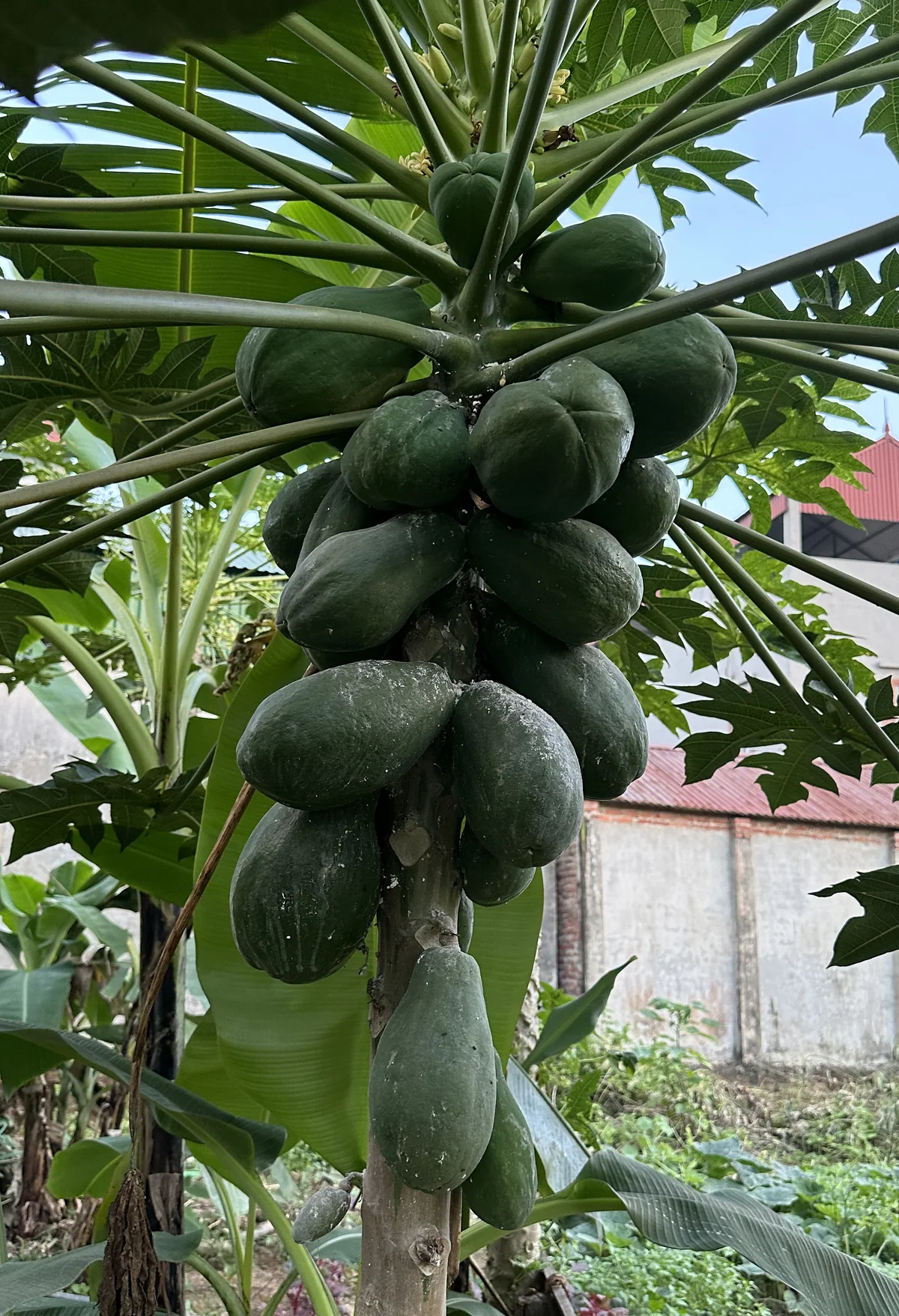
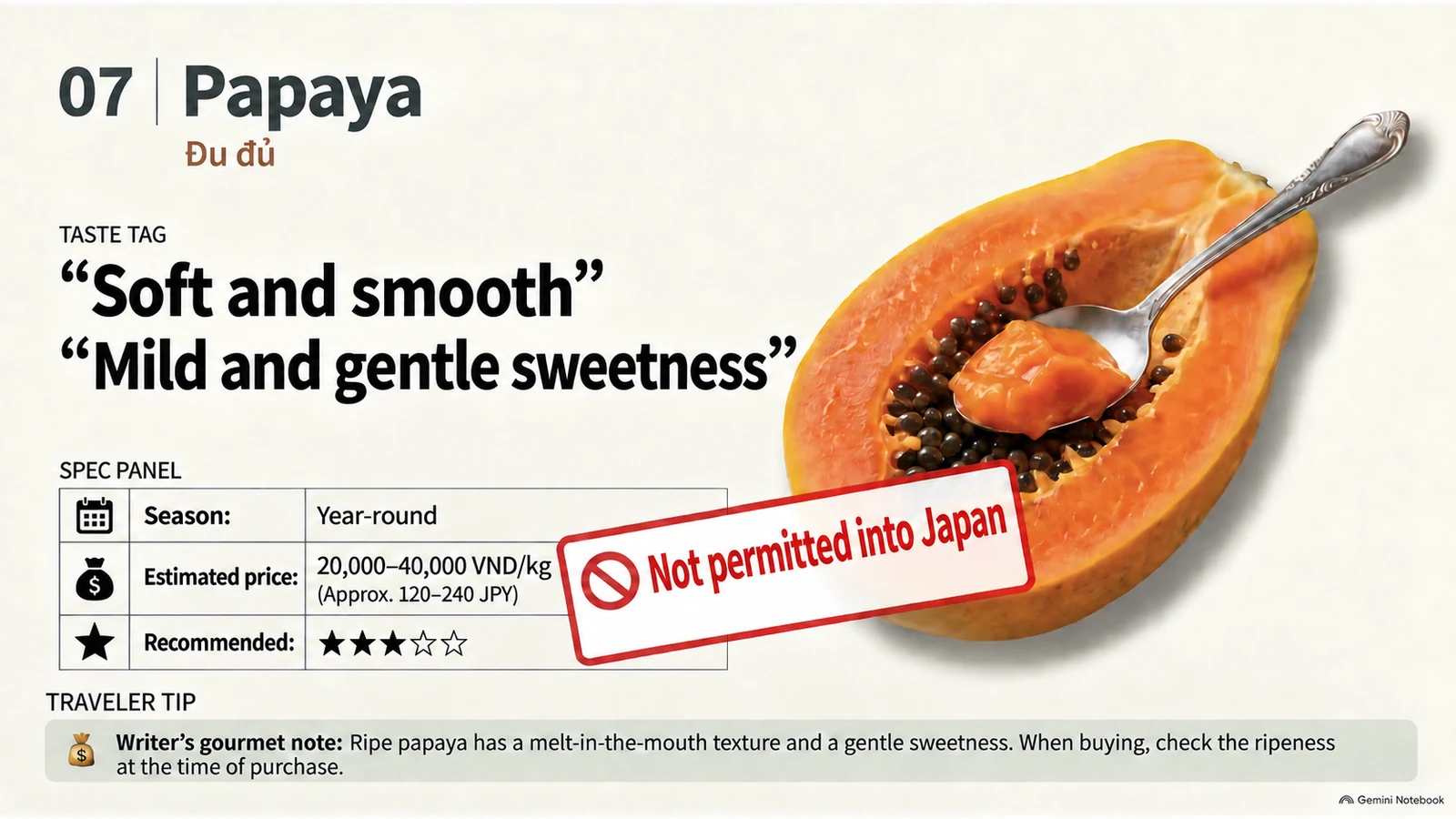
7. Papaya (Đu đủ)
The ripe papaya I tasted was juicy, with a soft texture that melted in my mouth. It is another fruit I recommend trying locally.
Read more: Papaya Guide | The Story of Papayas | How to Eat Papayas
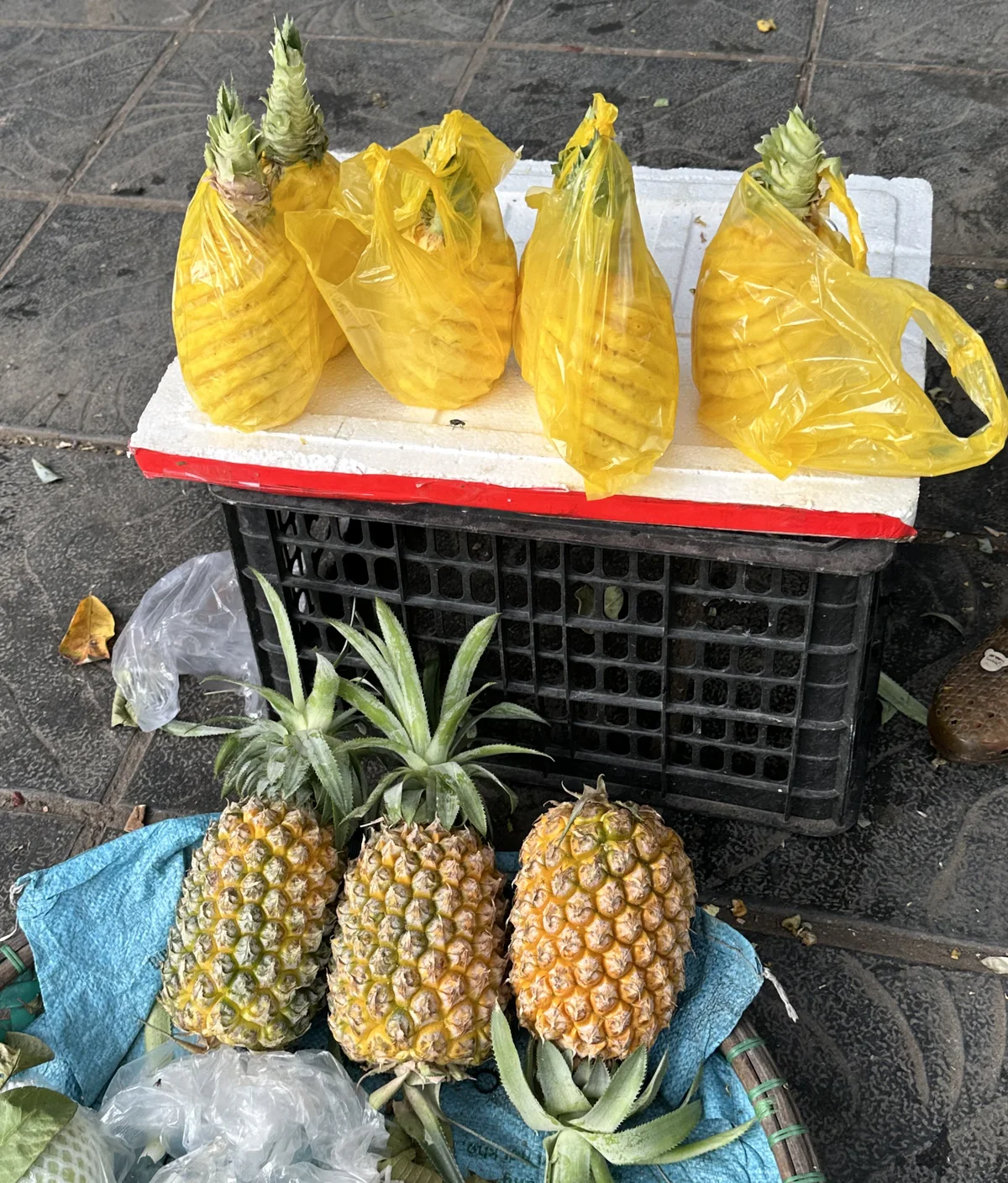
8. Pineapple (Dứa)
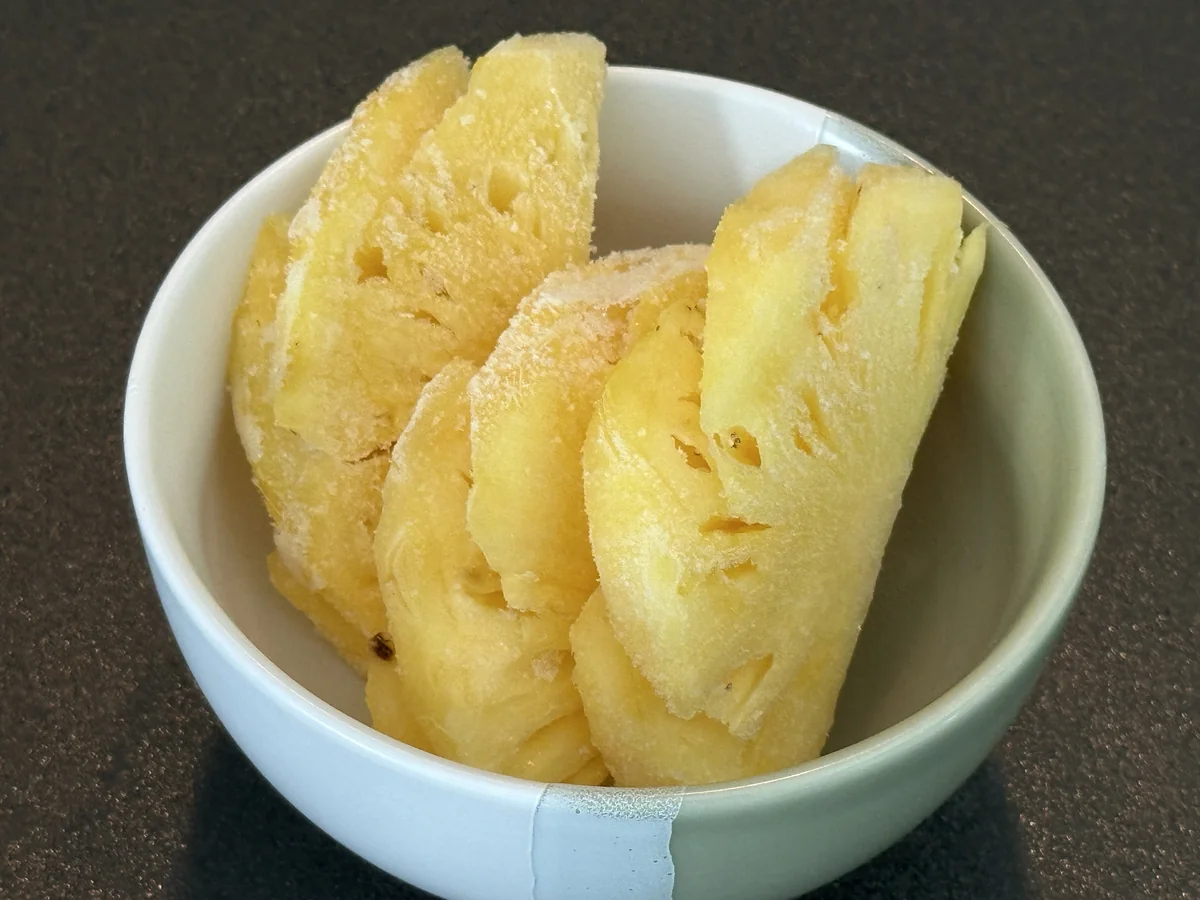
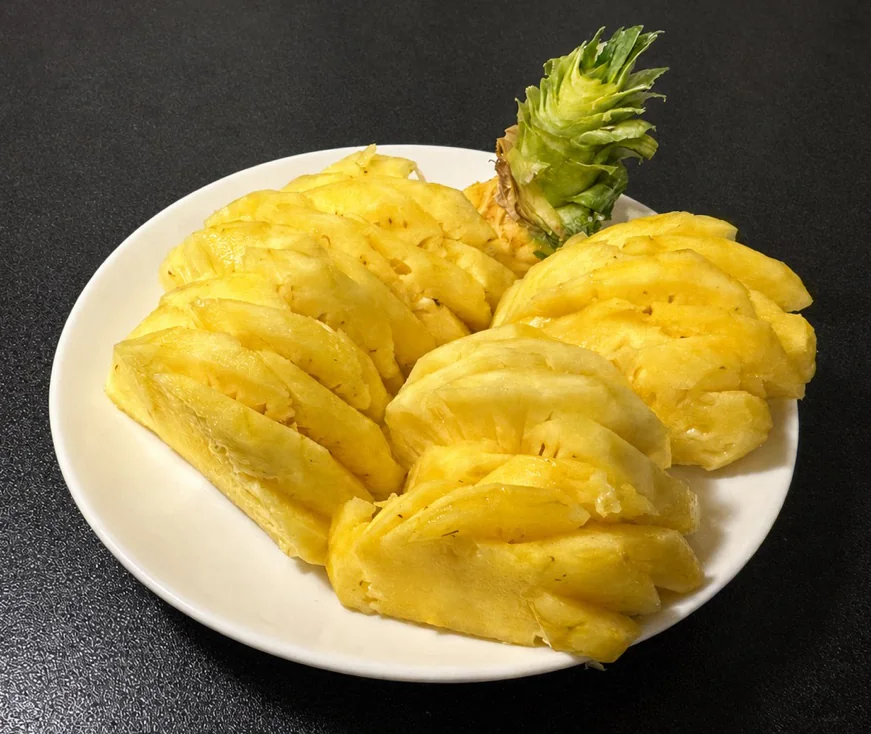
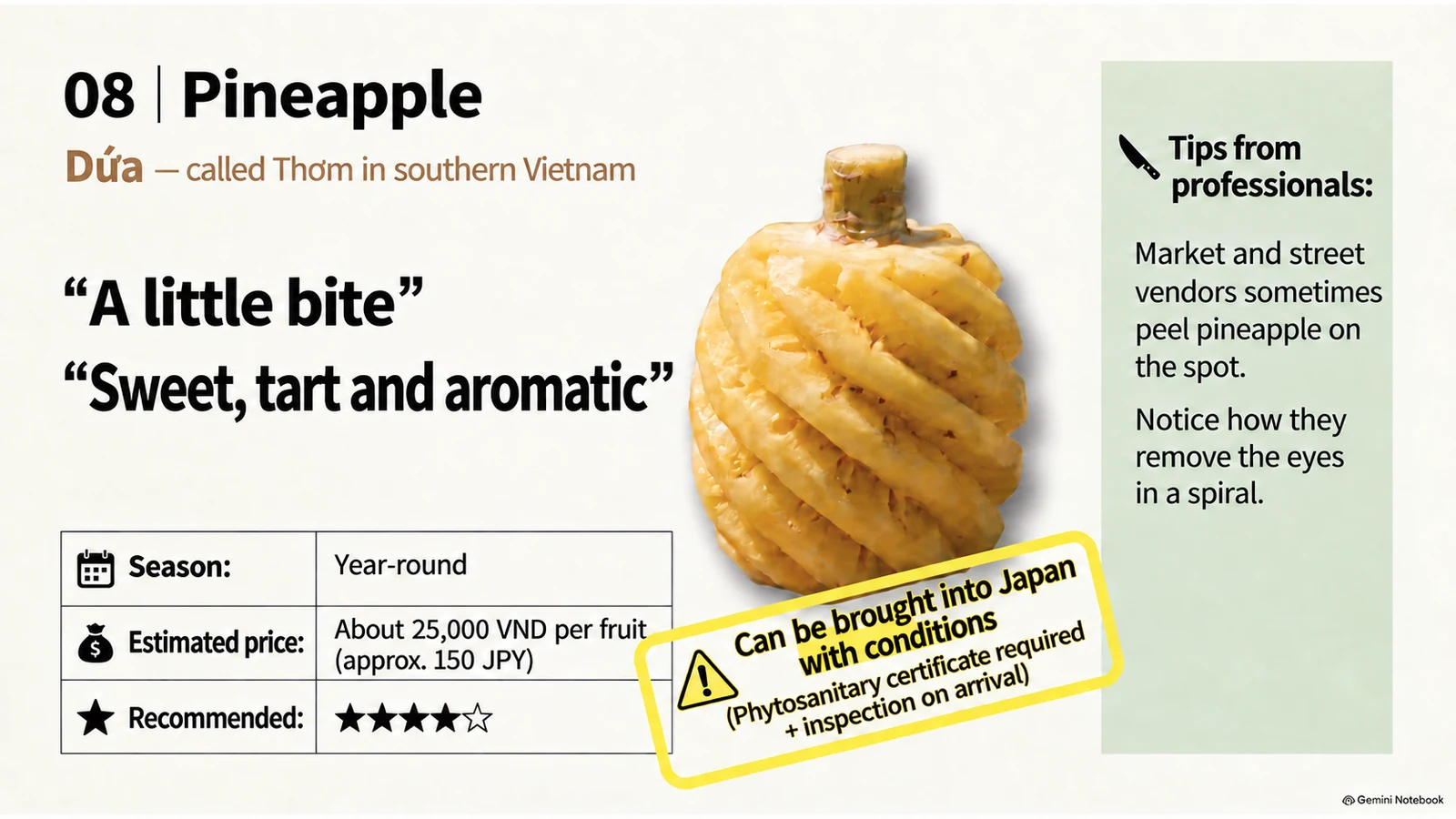
The pineapples I bought in Vietnam were small, with tender yet slightly firm flesh. One cost VND 25,000 (JPY 150). Market vendors sometimes peel them for you on the spot. It is also interesting to watch them remove the remaining hard “eyes” in a spiral after peeling.
Read more: Pineapple Guide | The Story of Pineapples | How to Eat Pineapples
9. Coconut (Dừa)
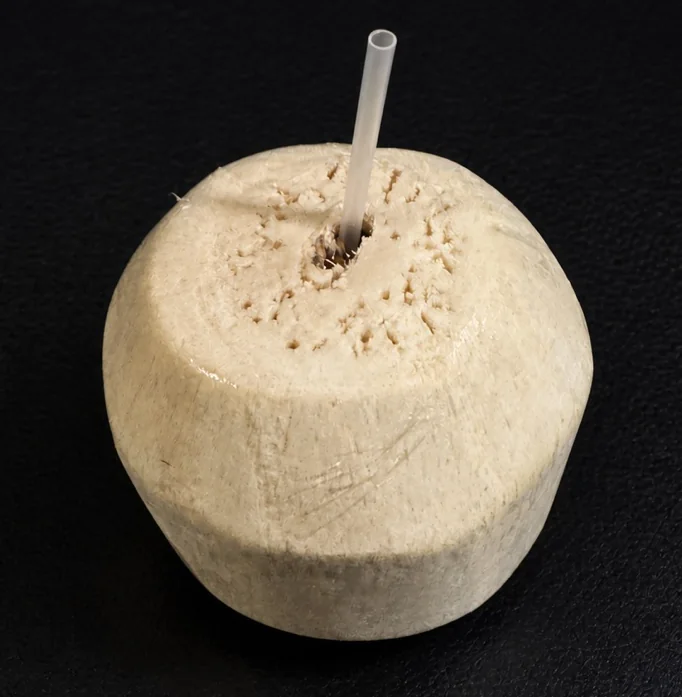
Drinking coconut water through a straw is the usual way to enjoy it, but you can also eat the white flesh afterward. Young coconut flesh is soft; as the fruit matures, the flesh becomes thicker and firmer. Coconut is also widely used in café drinks and chè, Vietnamese sweet desserts.
The supermarket price was VND 31,000 each (JPY 190). Being able to enjoy both the water and the flesh makes a coconut a satisfying purchase.
Read more: Coconut Guide | The Story of Coconuts | How to Eat Coconuts
10. Passion Fruit (Chanh leo)
Cut it in half and scoop out the pulp with a spoon. The edible seeds add a crunchy texture to the sweet-tart pulp. Passion fruit juice is also popular locally.
Prices are around VND 39,000/kg, but individual fruits are small and light. When I bought them, three fruits weighing about 0.2 kg cost just over VND 8,000 (about JPY 50). At under VND 3,000 each, they are easy to try.
Read more: Passion Fruit Guide | The Story of Passion Fruit | How to Eat Passion Fruit
5 Unusual Vietnamese Fruits: Identify Them in Photos
Trying distinctive fruits
For fruit with a strong aroma or unusual texture, begin with a small portion or a prepared pack rather than a large whole fruit. This makes it easier to discover what you like.
11. Jackfruit (Mít)
One of the world’s largest fruits, jackfruit is sold in small portions of yellow flesh at markets and supermarkets. You do not need to buy a whole fruit, so it is easy to try even if you have never eaten it before. It has a crisp texture and a strong, sweet aroma.
Read more: Jackfruit Guide | The Story of Jackfruit | How to Eat Jackfruit
12. Durian (Sầu riêng)
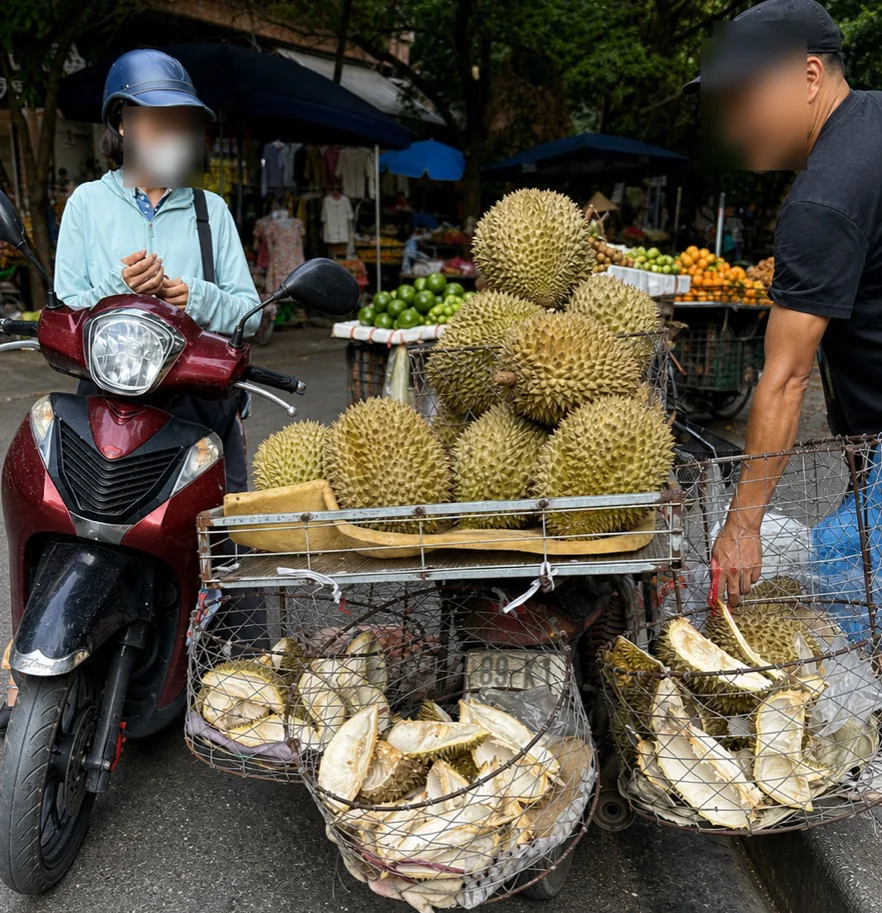
Known as the “king of fruits,” durian is often sold on Hanoi streets from the backs of motorbikes. Vendors sell whole fruits as well as fruits opened on the spot and arranged in wire baskets. Walk nearby and you can smell its distinctive, sweet, intense aroma.
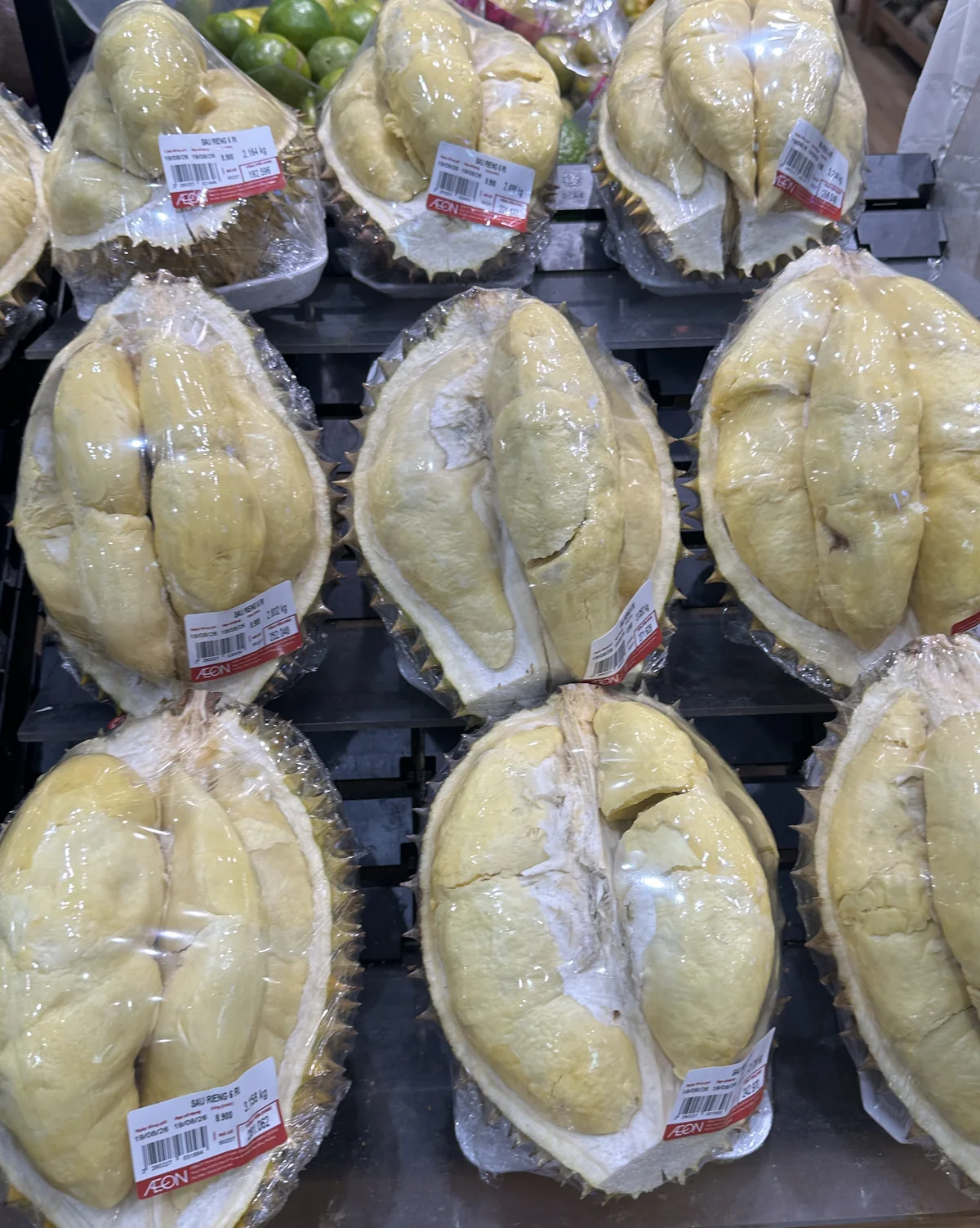
I bought durian at a supermarket and took it to a café to taste. It cost VND 109,000/kg (about JPY 650); the portion I purchased weighed about 1.46 kg and cost VND 159,396 (about JPY 960). Because of the smell, I was directed to an outdoor table rather than inside the café. If you want to eat it at a restaurant or café, ask in advance whether you may bring it in.
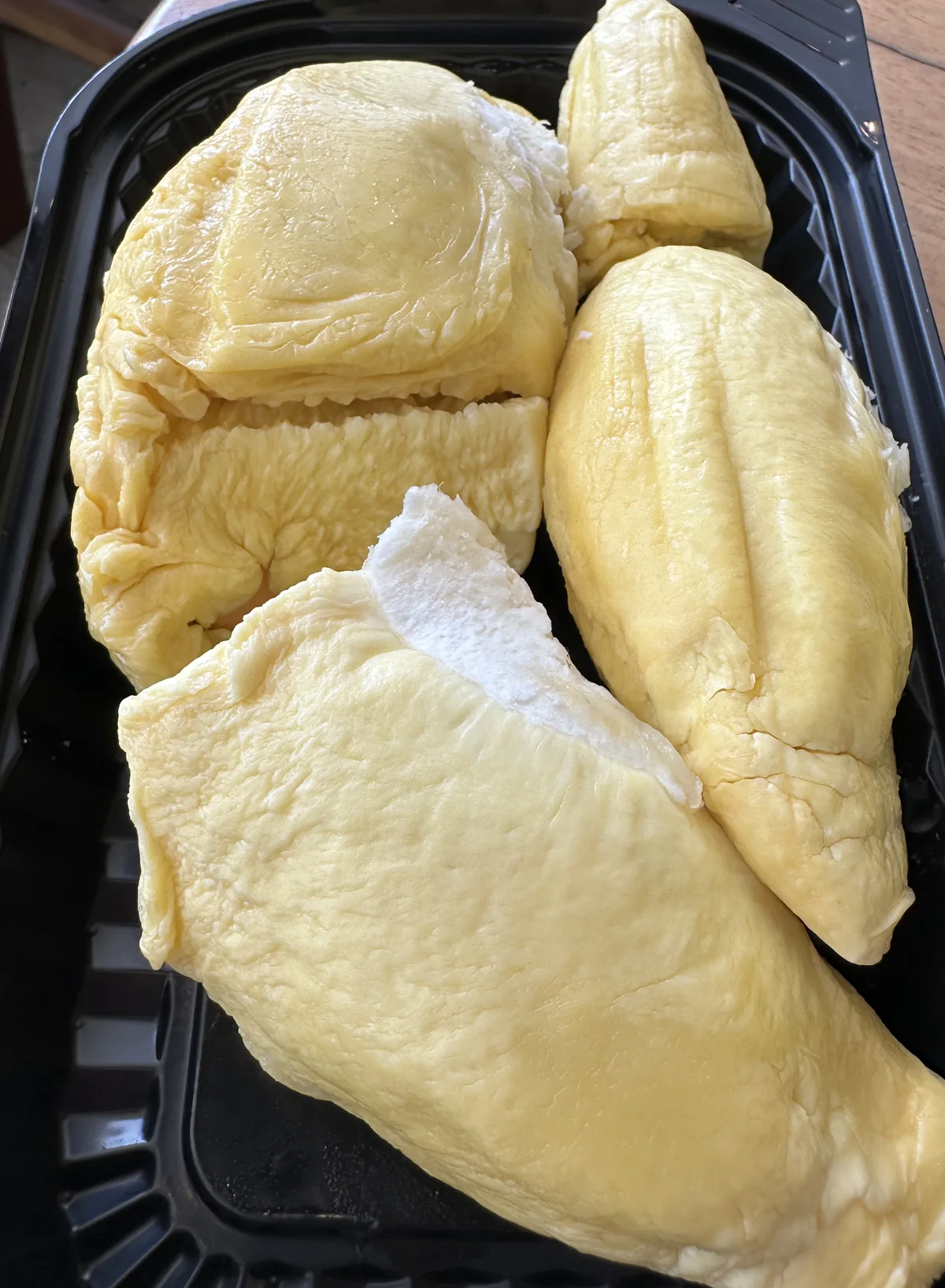
Around each large seed is flesh so soft that it almost falls apart when touched. The texture is smooth and creamy, like cream cheese, with a rich, full flavor. Its smell and handling make it a more challenging choice, so I gave it a modest beginner rating of two stars.
As explained below, durian may be taken into Japan with a phytosanitary certificate issued by a Vietnamese government authority and after passing an import inspection on arrival in Japan.
Read more: Durian Guide | The Story of Durian | How to Eat Durian
13. Custard Apple / Sugar Apple (Na)
Recognizable by its scaly green skin, this fruit is called Na in Hanoi. It is said to have a custard-like sweetness, but the one I tasted seemed not quite fully ripe and was crisper than I expected. The seeds were fairly large, and the skin had softened enough to peel by hand. Fully ripe flesh is generally described as creamy, although I have not tasted it at that stage.
Read more: Custard Apple Guide | The Story of Custard Apples | How to Eat Custard Apples
14. Pomelo (Bưởi)
This large citrus fruit is commonly seen throughout the year in Vietnam and is also used in salads. Having tasted it myself, I remember its crisp texture, refreshing sweetness, and mild tartness. The one I ate had plenty of pink flesh inside thick green skin and white pith.
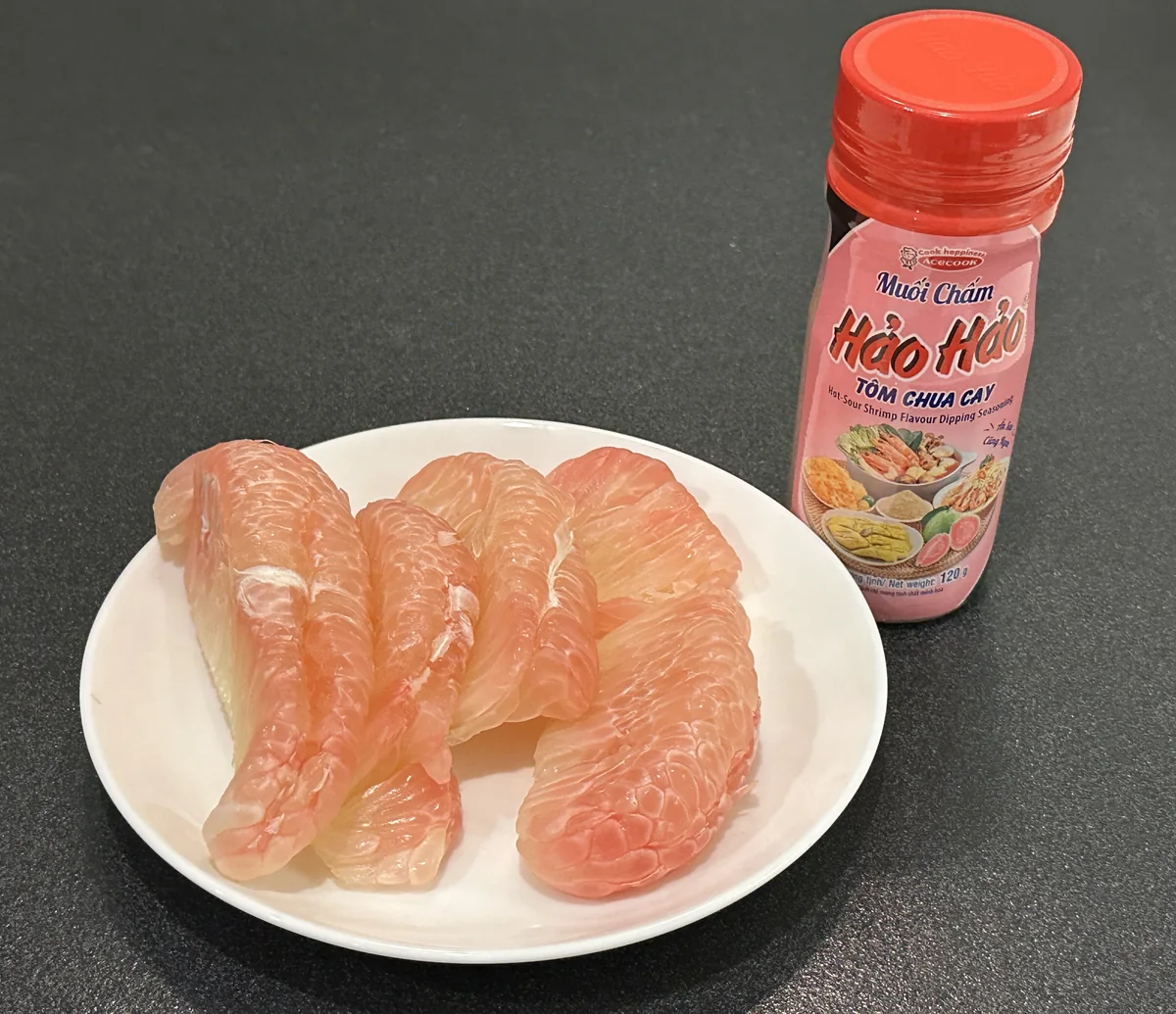
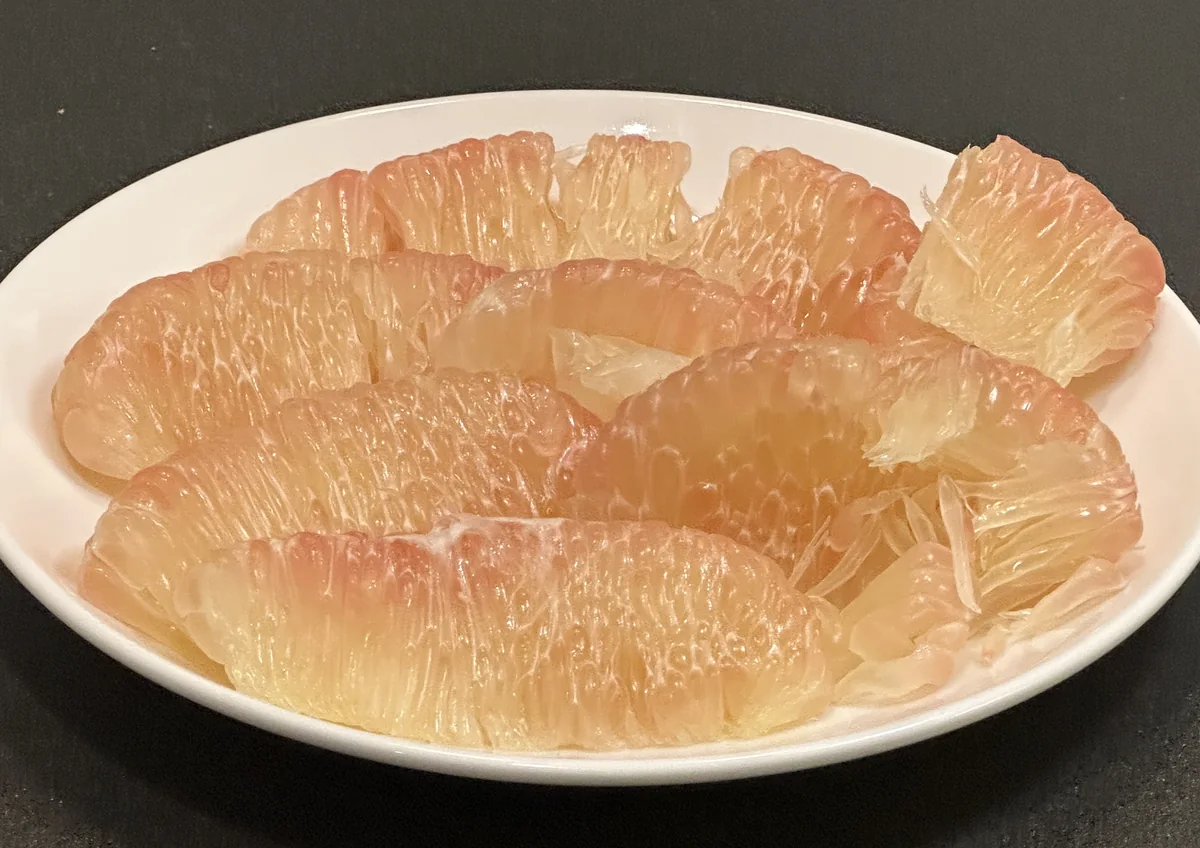
Read more: Pomelo Guide | The Story of Pomelos | How to Eat Pomelos
15. Star Apple / Milk Fruit (Vú sữa)
Its Vietnamese name, Vú sữa, refers to the milky sap released when the fruit is cut. Its approximate season is November–March, so I plan to taste it during the winter of 2026–2027 and update this guide.
Read more: Star Apple Guide | The Story of Star Apples | How to Eat Star Apples
Where to Buy Fruit in Vietnam: Shopping at Hanoi Markets and Supermarkets
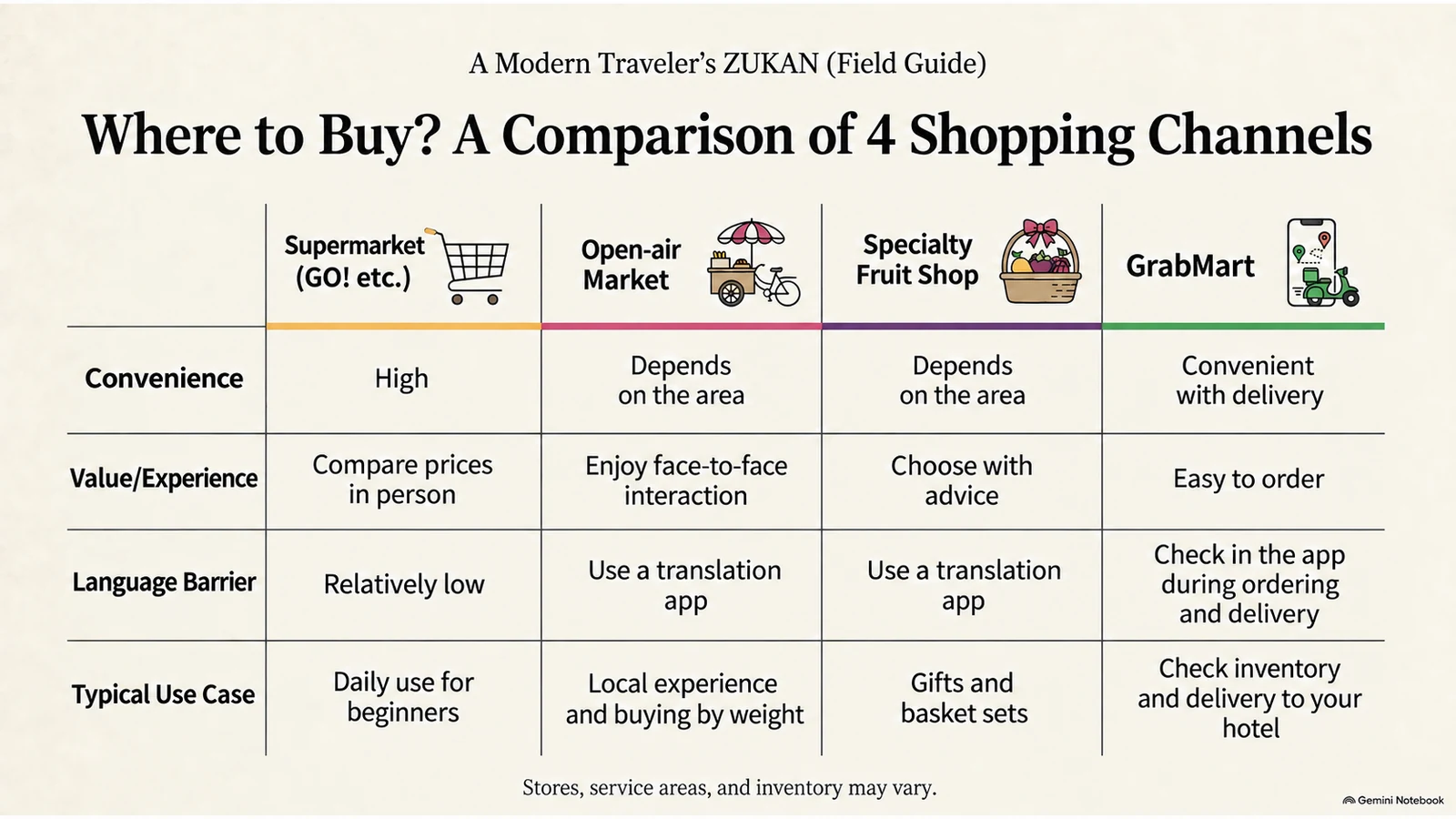
There are four main ways to buy fruit in Hanoi. I use different options depending on what I need.
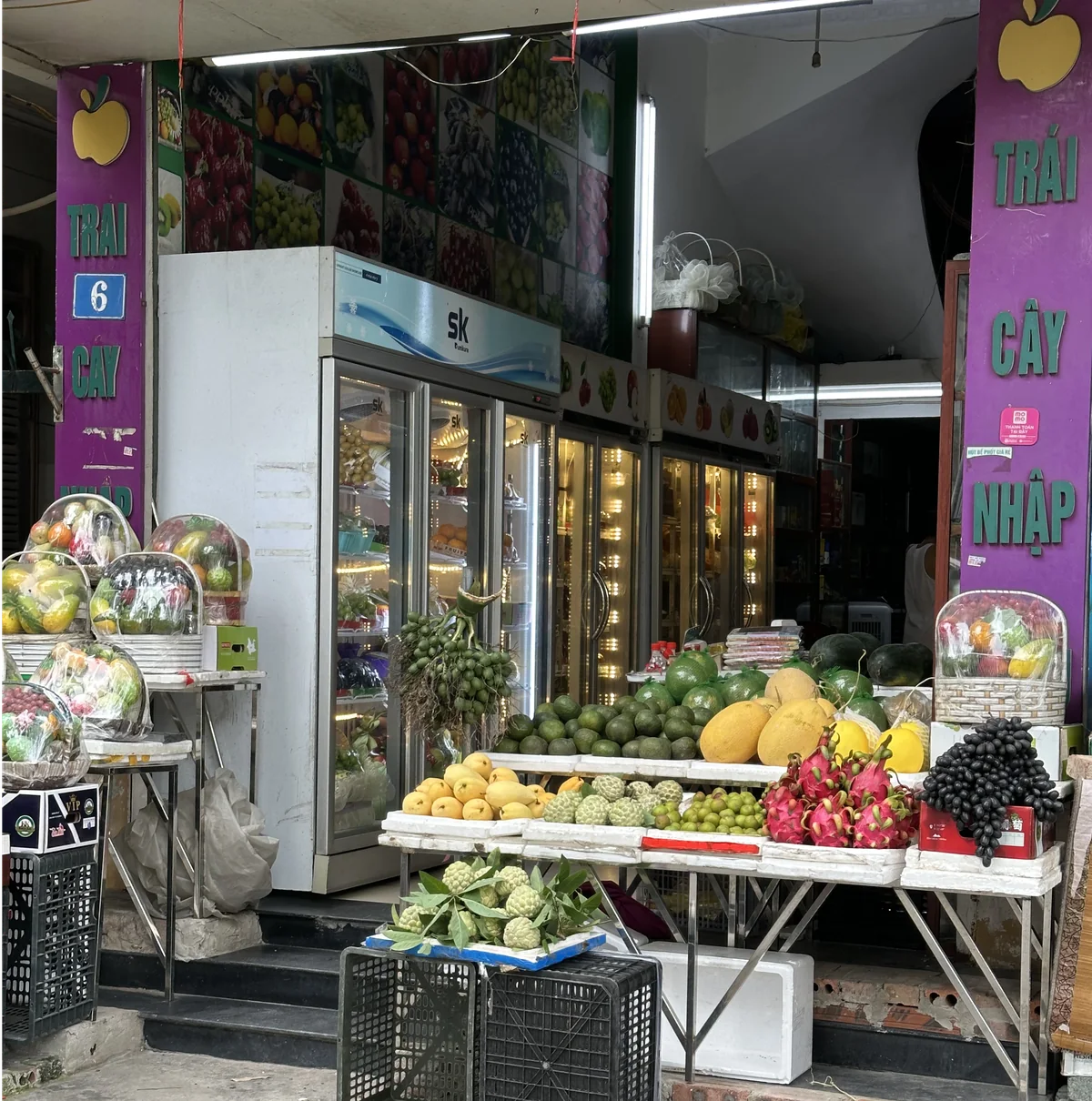
Specialist fruit shops — a good choice for gifts
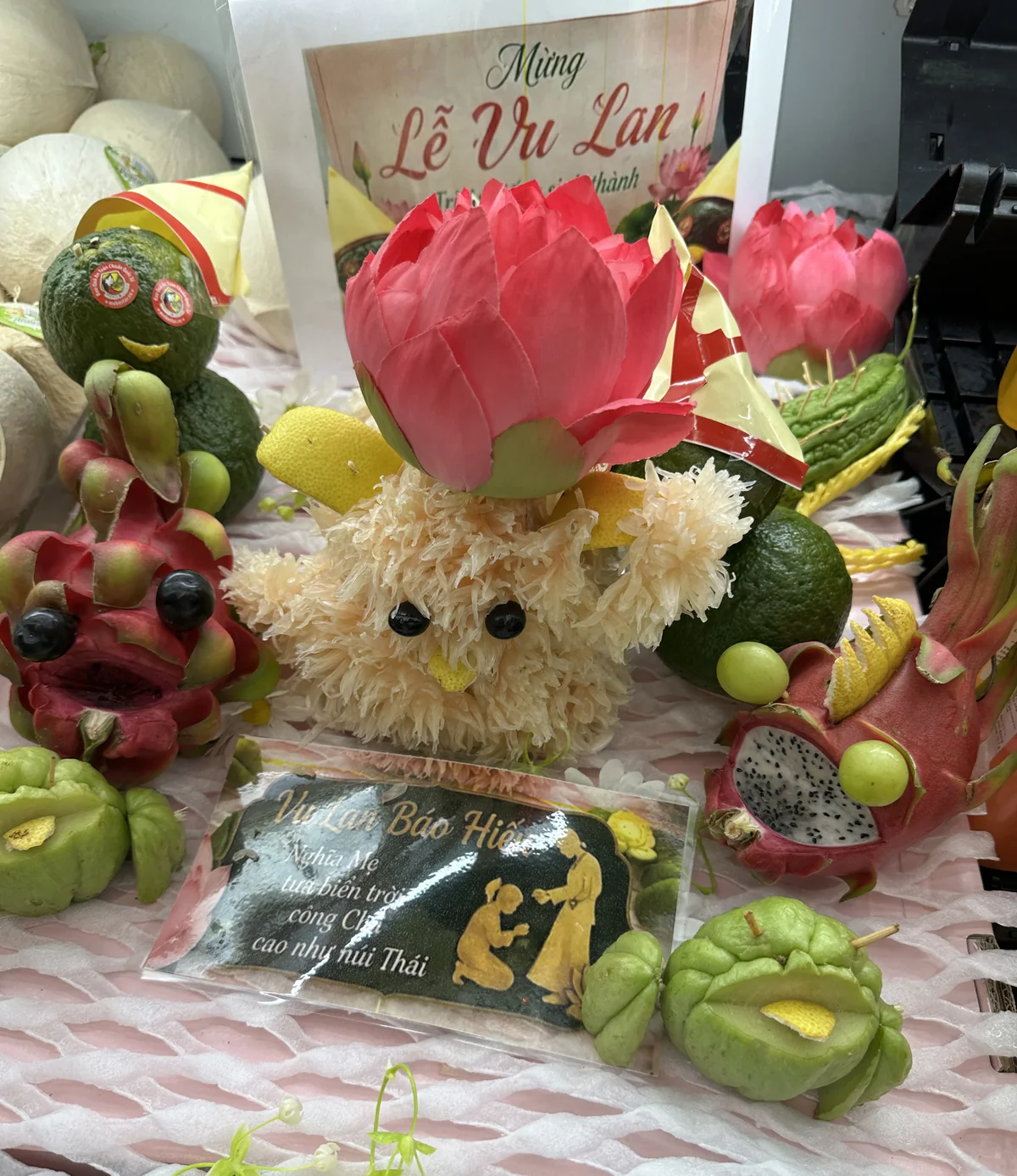
These shops specialize in fruit. For wedding gifts, get-well gifts, and other occasions, they can arrange fruit in baskets and wrap it for you. They are convenient both for home use and for giving fruit as a gift.
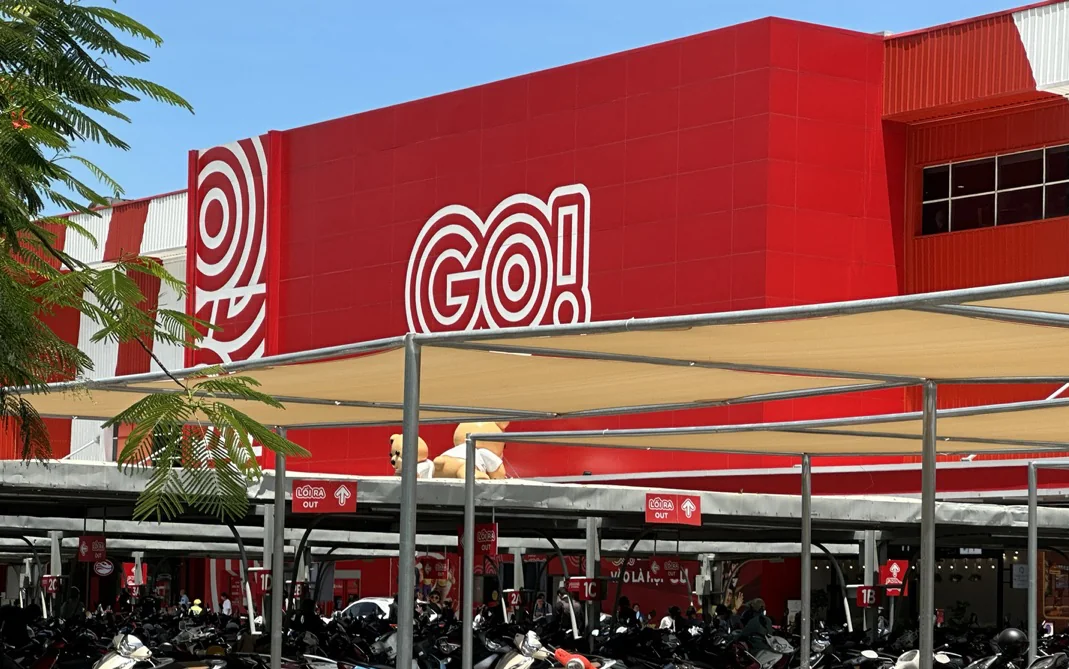
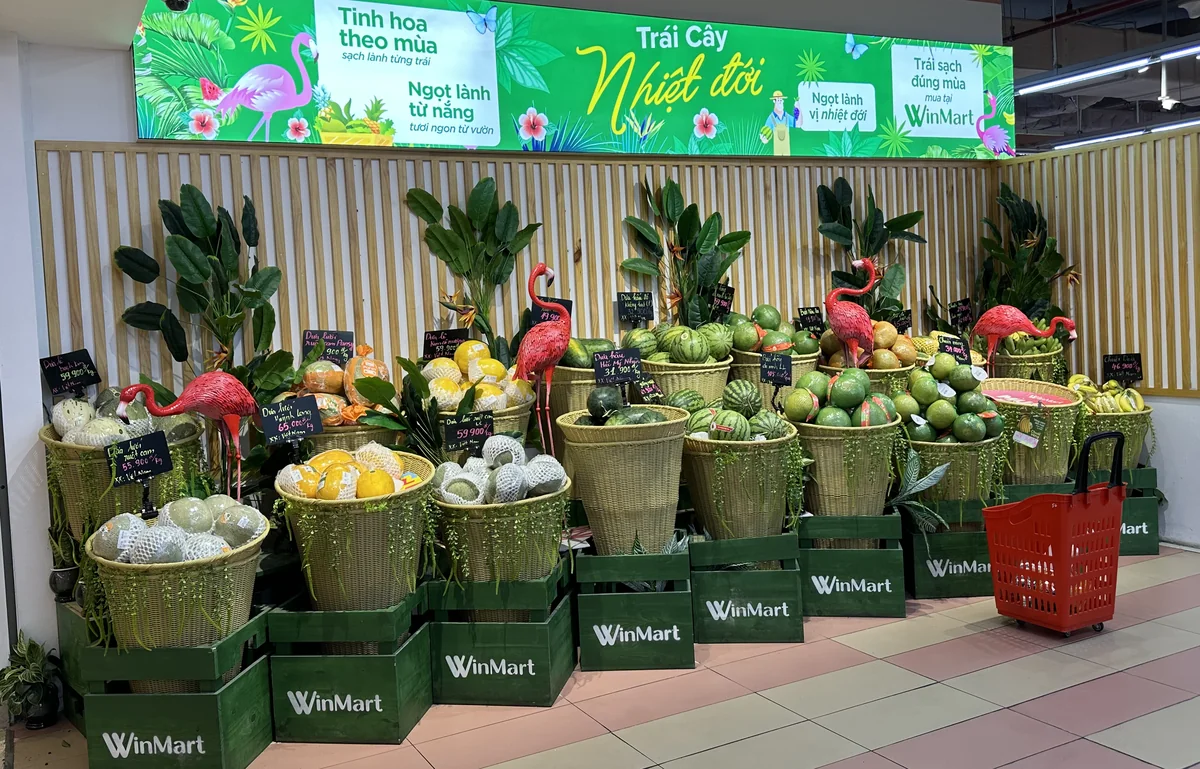
Supermarkets (GO! and WinMart) — convenient everyday options
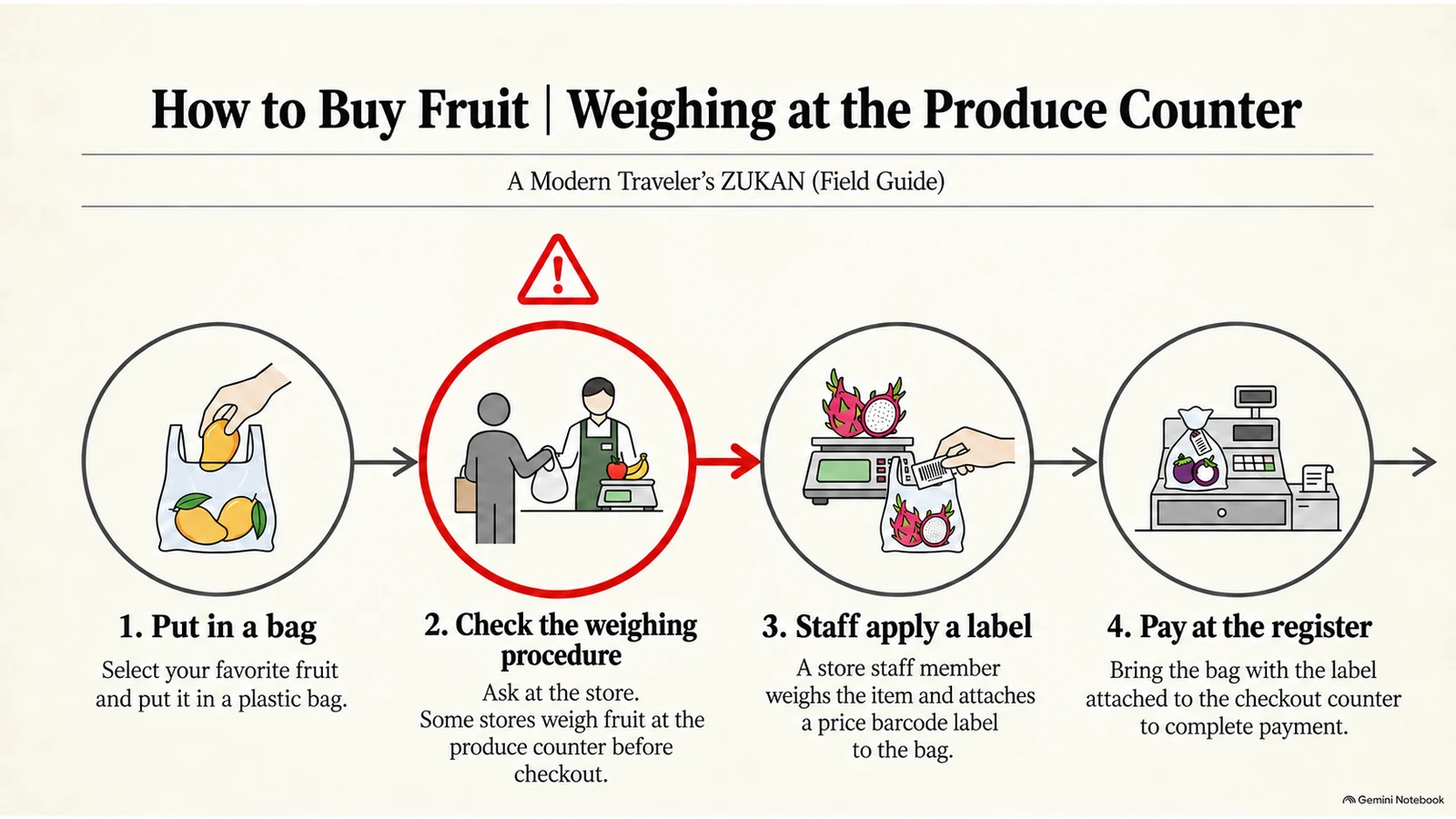
Nearby supermarkets such as GO! and WinMart are convenient for everyday shopping. At the GO! I use, fruit sold by weight must be weighed at the produce counter. Put the fruit in a plastic bag, hand it to a staff member, and have it weighed and labeled with the price. Then take it to the checkout to pay. It may be confusing the first time, but once you have the price label, the rest works like ordinary shopping.
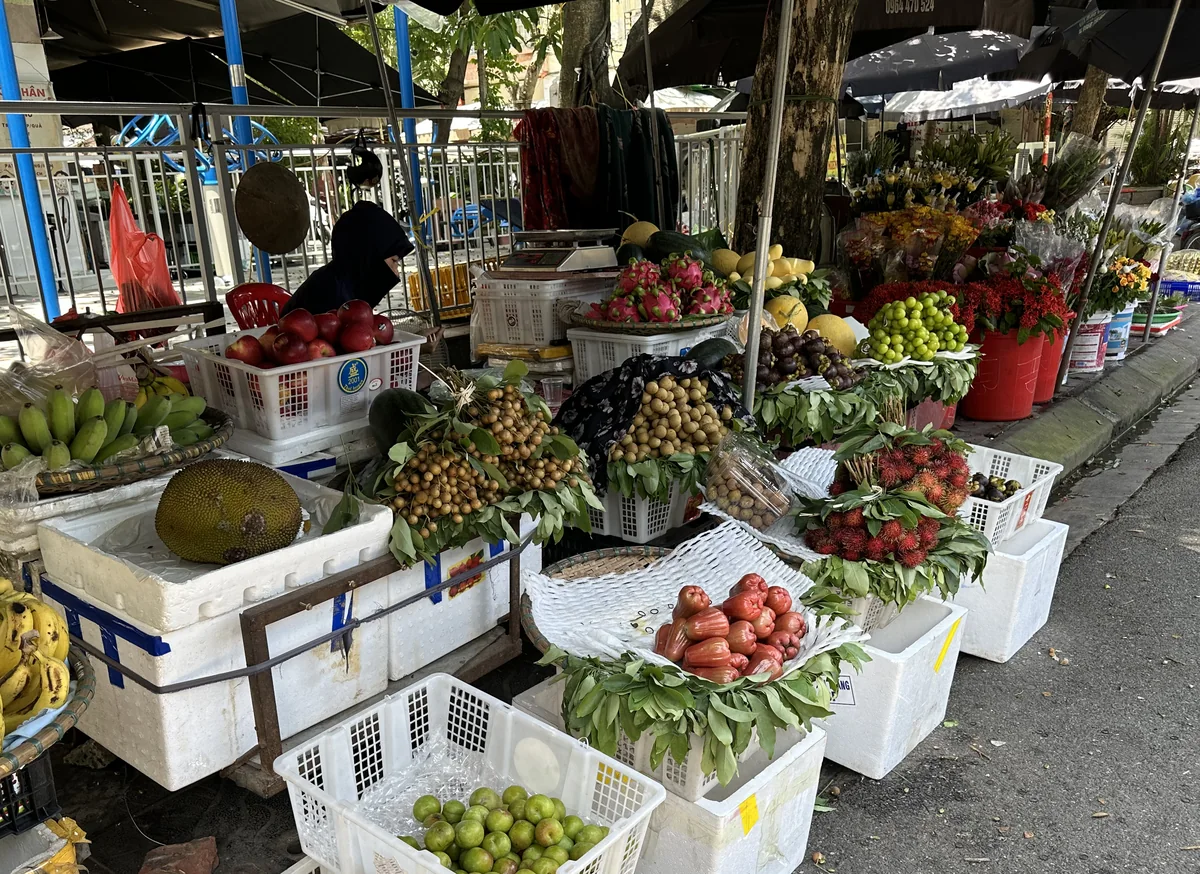
Open-air markets — local street stalls
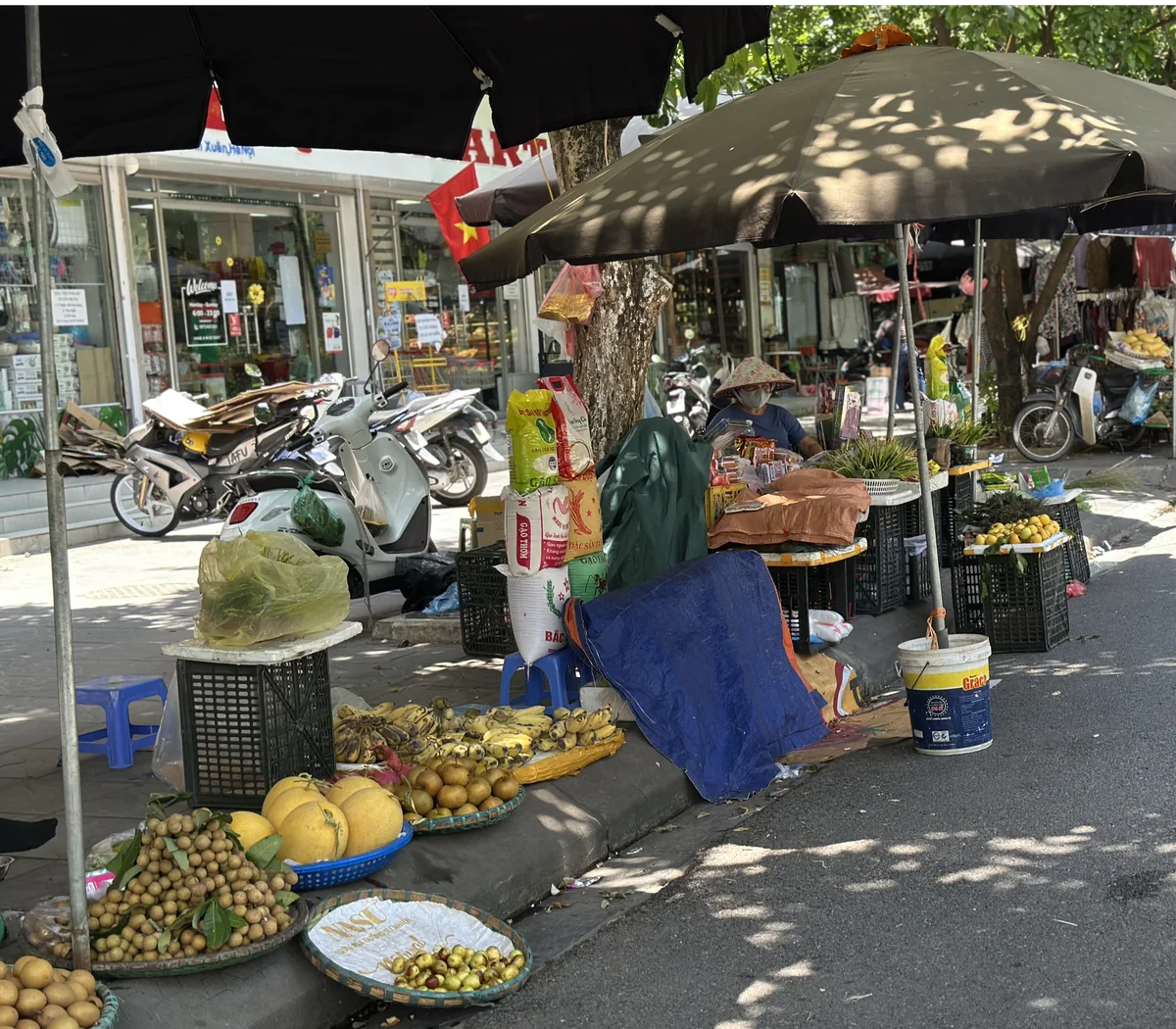
At neighborhood open-air markets, vendors bring fruit and vegetables by motorbike and sell them from street stalls. Opening hours and selection vary by market and time of day. Most fruit is sold by weight. Even if you do not speak Vietnamese, a translation app can help you communicate; I use one myself.
GrabMart — compare availability and prices in advance
GrabMart is available in Hanoi and lets you search products at supermarkets and fruit shops near your location. It is useful when you are unsure whether a shop has an unusual fruit, or when you want delivery to your hotel or home. However, listed shops and stock vary by location and time, and prices may differ from those in stores. Check the final total, including product prices, delivery charges, and fees, before ordering.
For travelers, I suggest starting at an easy-to-use supermarket, checking availability on GrabMart, trying markets as you become more comfortable, and using specialist shops for gifts.
Can You Take Vietnamese Fruit to Japan? Plant Quarantine Requirements
Before taking fruit to Japan
Whether fresh fruit can be taken to Japan depends on the type and applicable conditions. Check the latest plant quarantine information before buying it, rather than packing it based on your own assumptions.
Take particular care if you want to buy fruit as a souvenir. Many fresh fruits carried in personal baggage from Vietnam are prohibited from entering Japan.
- Prohibited fresh fruit: Mango, dragon fruit, mangosteen, lychee, rambutan, longan, passion fruit, papaya, custard apple (sugar apple), pomelo (citrus), star apple, bananas, and others.
- Fruit requiring a phytosanitary certificate and inspection on arrival: Durian, pineapple, coconut, and tamarind (a phytosanitary certificate issued by a government authority in the exporting country and an import inspection on arrival in Japan are required).
- Fruit requiring an individual check in advance: Jackfruit was not included in the country-specific list consulted, so contact Japan’s Plant Protection Station before buying it.
- Processed products with varying requirements: Dried fruit and similar products. Requirements vary by fruit and degree of processing; ask the Plant Protection Station if you are unsure.
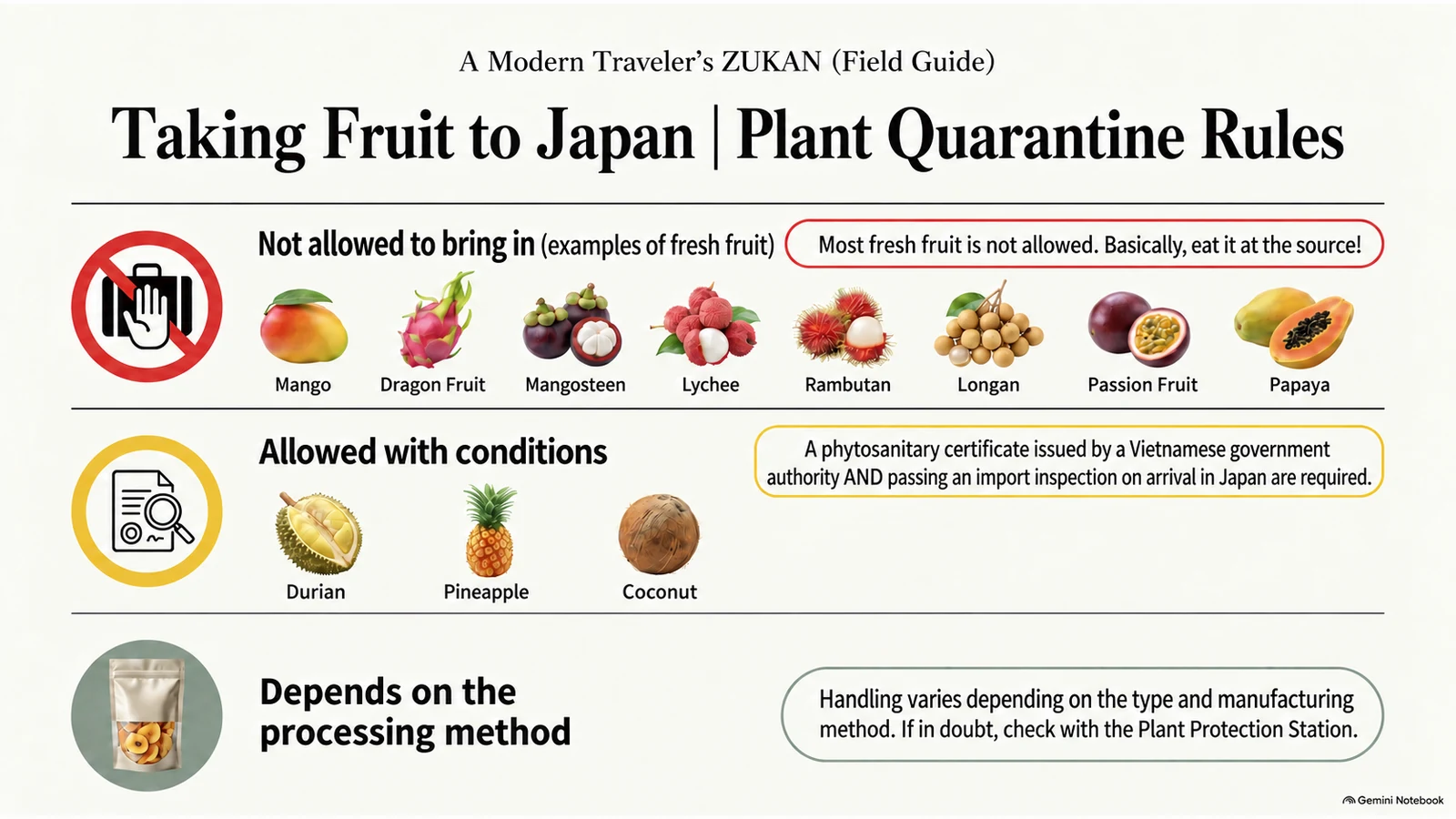
To avoid buying fruit only to have it disposed of at the airport, it is generally best to eat fresh fruit before leaving Vietnam. Commercially packaged processed products are not automatically permitted just because they are unopened. If you are unsure, contact the Plant Protection Station and explain the product type and processing method.
The Japanese and English editions checked the Plant Protection Station’s list of import restrictions for personal baggage from Vietnam and FAQ on bringing plants into Japan from overseas on October 6, 2026. Requirements may also vary depending on transit locations, so check the latest information before traveling.
Frequently Asked Questions About Vietnamese Fruit
Which fruits should I try first?
This guide recommends mango, mangosteen, and lychee. If they are out of season, consider pineapple or dragon fruit. Use the names, flavors, and seasons table to choose something that suits your taste.
How much fruit can I buy for JPY 1,000?
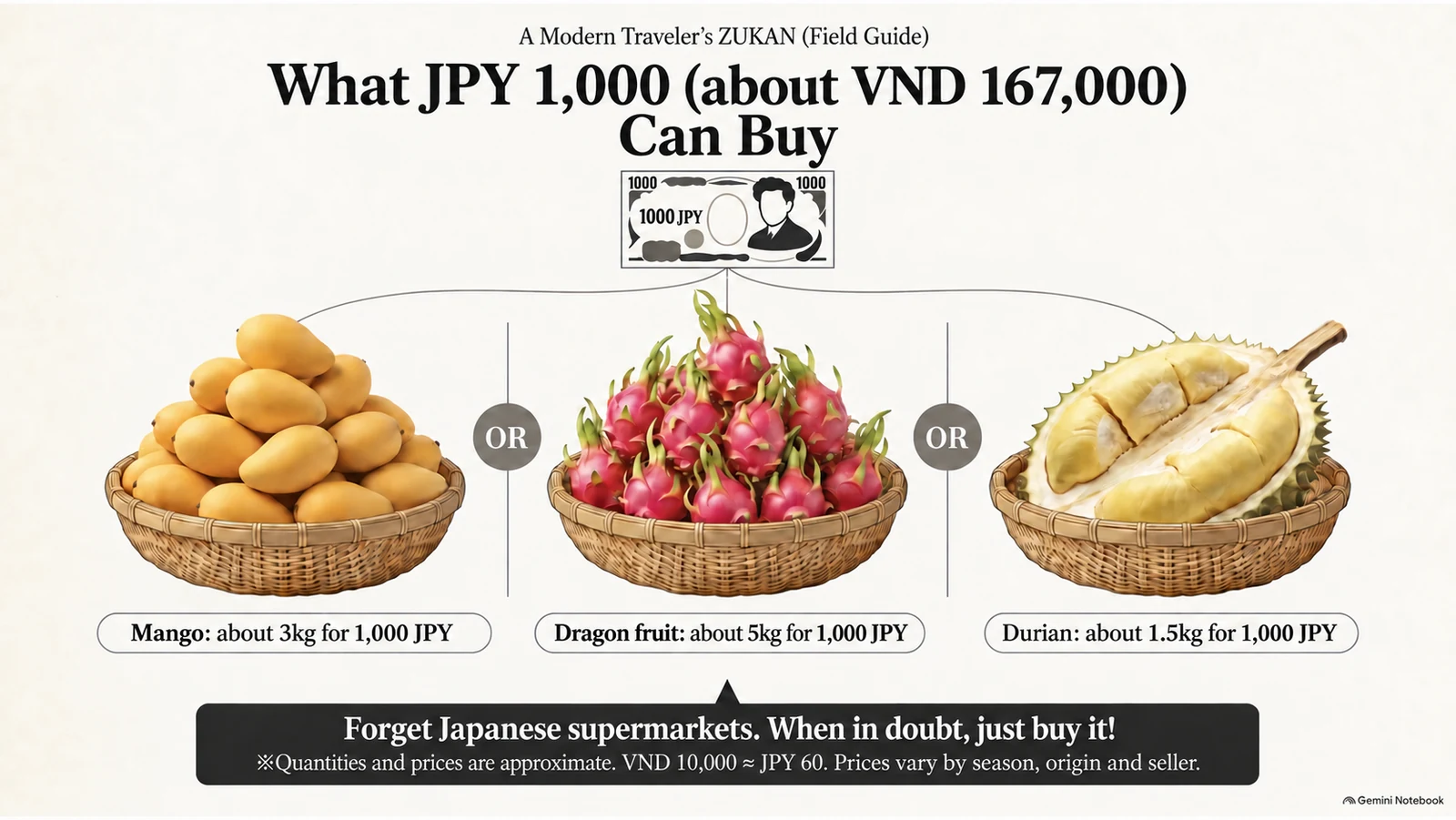
Using this article’s illustrative conversion rate, JPY 1,000 is about VND 167,000. If mangoes cost VND 50,000–60,000/kg, that buys roughly 2.8–3.3 kg. The actual quantity depends on the shop’s unit price and the weight. While traveling, start with a small amount you can finish.
How do I buy a fruit if I do not know its name?
Show the seller a photo or Vietnamese name from this guide and explain how many fruits or what weight you want. A translation app can also help. Check the pricing unit—per kilogram, per 100 g, or per fruit—and confirm the total before paying.
Can I bring Vietnamese fruit to Japan as a souvenir?
Many fresh fruits are prohibited, and conditionally permitted items still require formalities. Processed products are treated differently depending on the type and production method, so check the section on taking fruit to Japan and plant quarantine and the latest guidance from the Plant Protection Station.
Three Tips for Enjoying Vietnamese Fruit
Here are the key points to remember.
- Start with mango, mangosteen, and lychee. These three have high beginner ratings and offer an easy way to notice differences from fruit you may have eaten in Japan. Mangosteen is also my personal favorite. When they are out of season, try pineapple or dragon fruit, which are easier to find year-round.
- Aim for the right season. Lychee (May–June) and mangosteen (May–August) become harder to find outside their seasons.
- Eat fresh fruit before leaving Vietnam. Many fruits cannot be taken to Japan. If you choose processed products as souvenirs, check their condition and ingredients, and ask the Plant Protection Station if you are unsure.
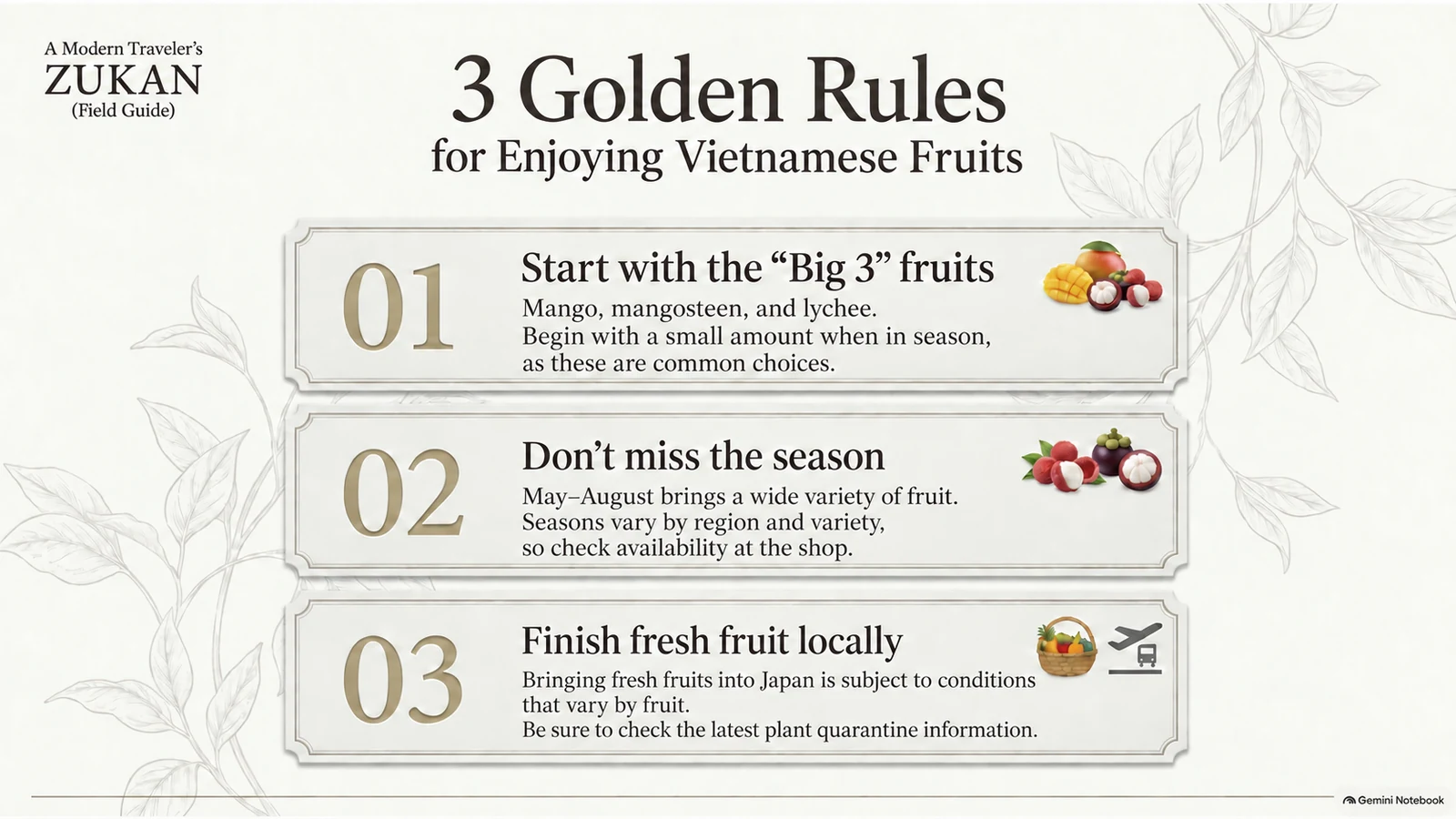
Explore the linked English fruit guides, history articles, and eating tips for more detail. On your next trip or while living in Vietnam, start by trying one fruit that interests you.
References for Prices, Shopping, and Plant Quarantine
- GrabMart: “Summer 2026 Fresh Fruit Campaign” — A promotional example with an original mangosteen price of VND 90,000/kg
- Bách Hóa XANH: “Keo Mango”
- Hanoi Agricultural Extension Center: “2026 Agricultural Market Information” — Retail price examples for mango, red-fleshed dragon fruit, pomelo, and other fruit at Hanoi markets
- Vĩnh Long Agricultural Price Information
- Vietnam Agricultural Market Information: “May 2026 Fruit and Vegetable Market Report”
- Hải Phòng newspaper: “Vú sữa An Lăng được mùa, giá cao” (An Lăng star apples: a good harvest and high prices) — A star apple price example from a production area in Hải Phòng, not a Hanoi retail price
- Official GrabMart Information
- Japan Ministry of Agriculture, Forestry and Fisheries, Plant Protection Station: “Vietnam”
- Japan Ministry of Agriculture, Forestry and Fisheries, Plant Protection Station: “Frequently Asked Questions: Bringing Plants into Japan from Overseas”
About the Author
Chuta is based in Hanoi, Vietnam, and buys fruit at local markets and supermarkets to share first-hand observations on flavor, seasons, selection, and preparation.
