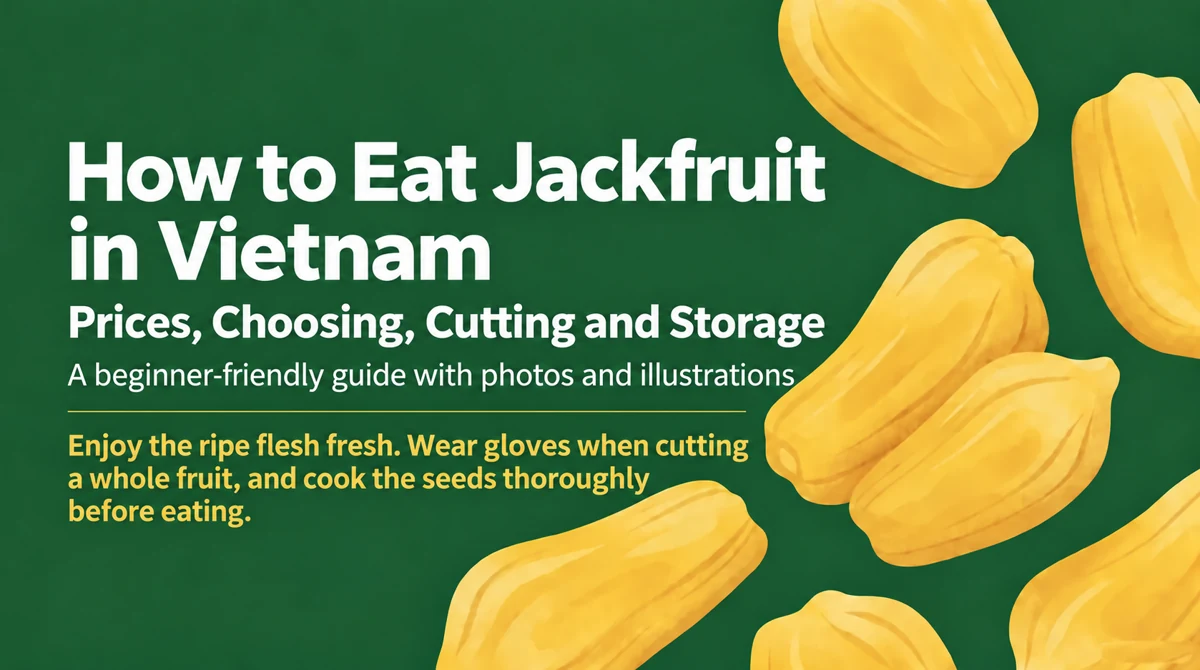
Prepared yellow jackfruit flesh can be eaten fresh after removing the seed. Markets and supermarkets sell small packs, making them a convenient starting point for a first taste.
As Jackfruit Guide explains, jackfruit grows on the trunk and thick branches and forms a multiple fruit, like pineapple. Here we cover buying and preparation, dishes, seeds, storage, allergies and quarantine. For its history, see Jackfruit History and Stories.
Jackfruit in Vietnam: Prices, Season and a Quick Guide
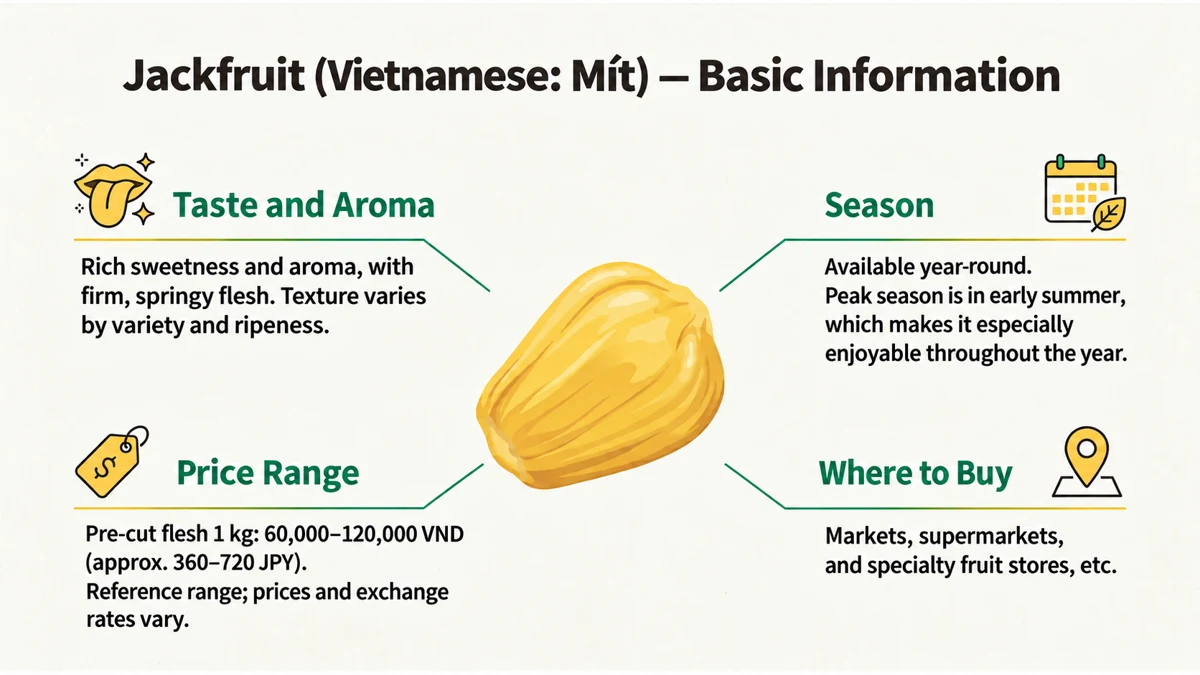
| Item | Details |
|---|---|
| Vietnamese name | Mít |
| Name at the shop | Mít |
| Taste | Rich sweetness and a strong aroma |
| Texture | Thick and springy; varies with ripeness and variety |
| Availability | Often available through much of the year; supply varies by region |
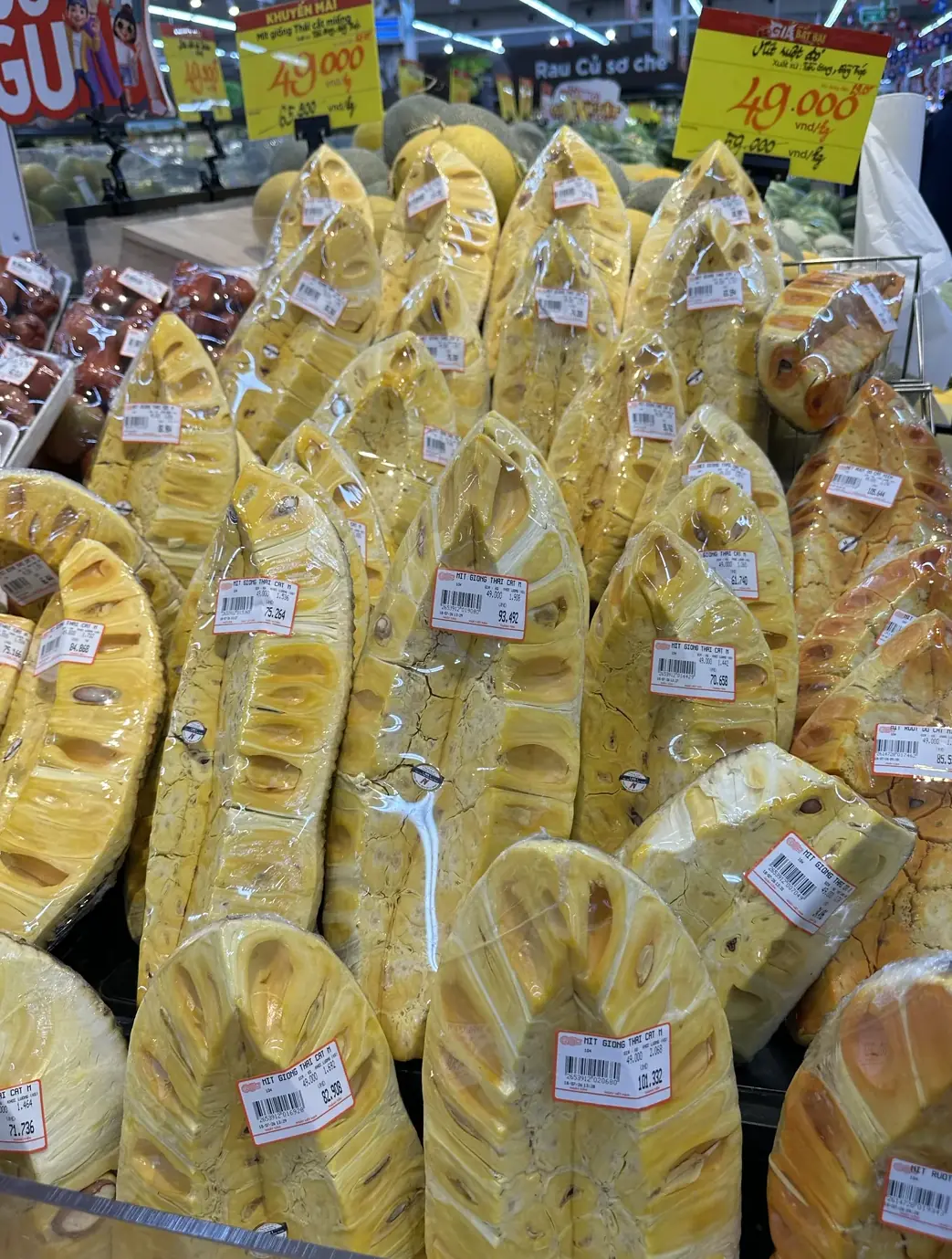
| One purchase example | 73,500 VND for 1.5 kg of prepared flesh, or 49,000 VND/kg, at a Hanoi supermarket in July 2026 |
| Where to buy | Markets and supermarkets, often in small prepared packs |
| Basic preparation | Remove the seeds and eat ripe flesh fresh; use gloves and an oiled knife for a whole fruit |
| Vietnamese dish | Xôi mít: jackfruit with sticky rice |
| Author’s beginner rating | ★★★☆☆ |
Its Vietnamese Name Is Mít
Jackfruit is called Mít in Vietnamese. The sources reviewed did not identify major regional differences in this basic name; Mít is a useful word to use at a shop.
Jackfruit History and Stories explains the name’s unexpected origin and the fruit’s place in South and Southeast Asian life.
What Jackfruit Tastes Like
Ripe jackfruit is richly sweet and strongly aromatic. In the author’s fruit-tasting record, it had thick, springy flesh. Compared with juicy mango or pineapple, its substantial bite can be part of the appeal.
Texture depends on both variety and ripeness: some types remain firm, while others become soft and sticky. Do not judge every variety by a single texture.
Jackfruit Prices and Where to Buy It in Vietnam
In July 2026, the author bought 1.5 kg of prepared jackfruit at a Hanoi supermarket for 73,500 VND, equivalent to 49,000 VND/kg. The earlier fruit guide quoted 60,000–120,000 VND/kg for prepared flesh. These are examples with different conditions, not a current universal price. Small packs save the work of opening an entire fruit.
Markets and Supermarkets
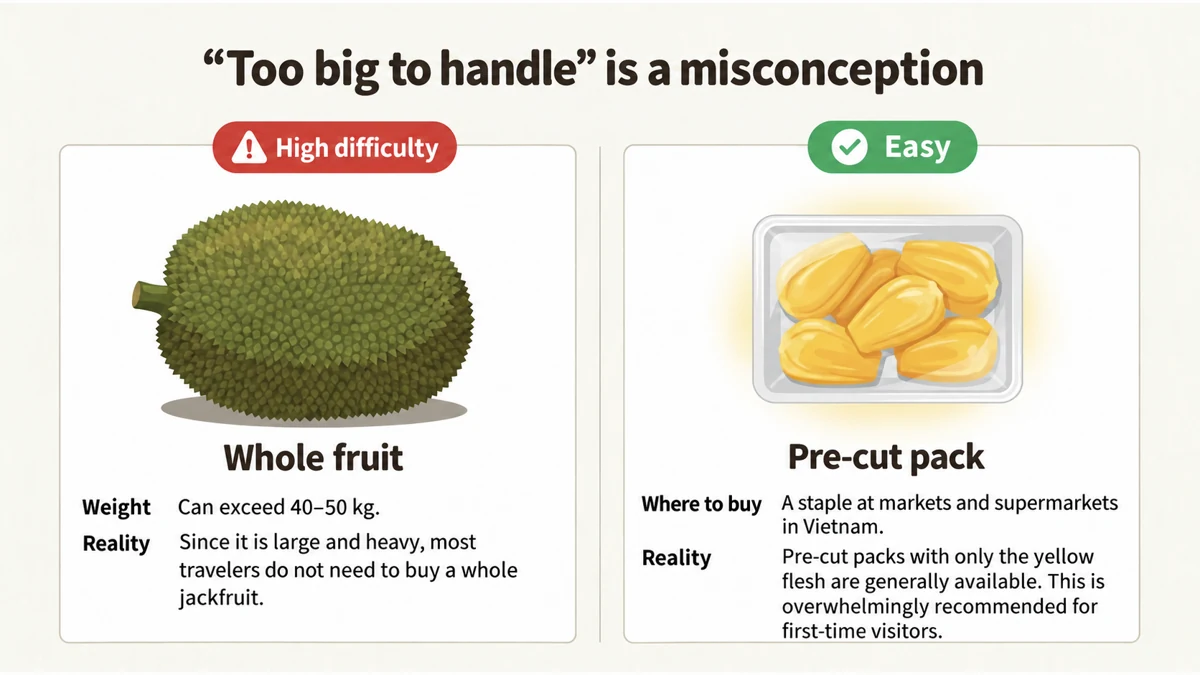
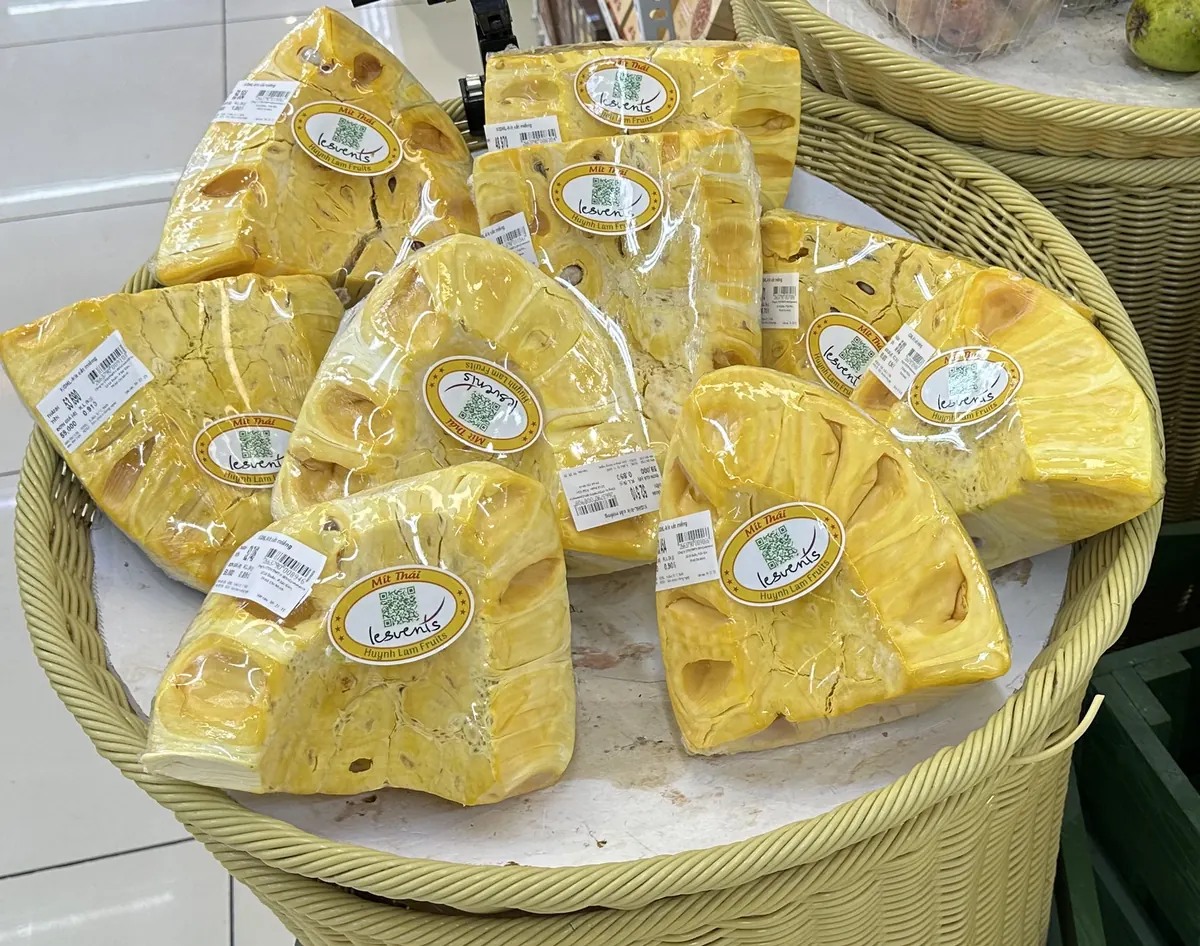
Markets and supermarkets commonly sell yellow bulbs in clear packs or trays, with price depending on quantity and variety. Whole fruits may also be available, but prepared flesh is convenient for beginners.
Fruit Shops and Cafes
Some specialist shops and cafes sell Mít sấy chips or jackfruit drinks, offering other ways to try the fruit.
Choosing Jackfruit: Aroma, Rind and Prepared Flesh
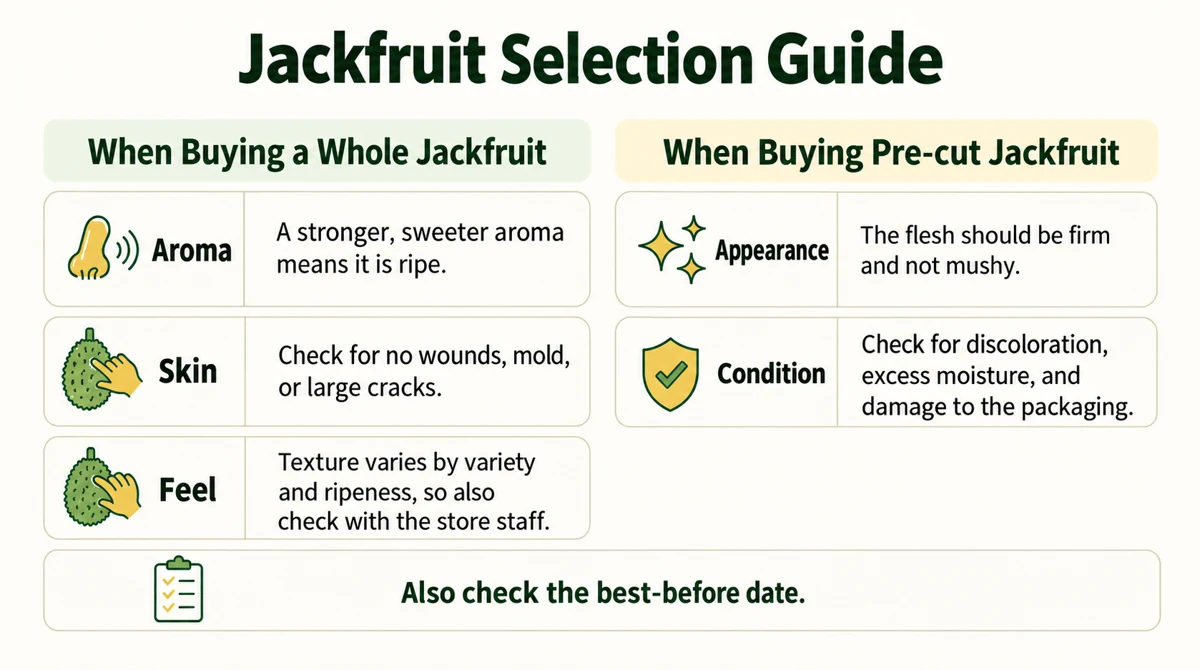
For a whole fruit, check its sweet aroma and look for mold, damage or major cracks. Rind color and feel vary with variety and maturity. Tell the seller when you plan to eat it instead of relying on one sign alone.
Prepared flesh should look plump, without discoloration, excessive leakage or damaged packaging. Check storage temperature and the labeled use-by date.
How to Cut Jackfruit: Gloves and Cooking Oil
The main difficulty with a whole jackfruit is its milky, sticky latex. It does not wash off readily with water, so prepare your tools and work area before making a cut.
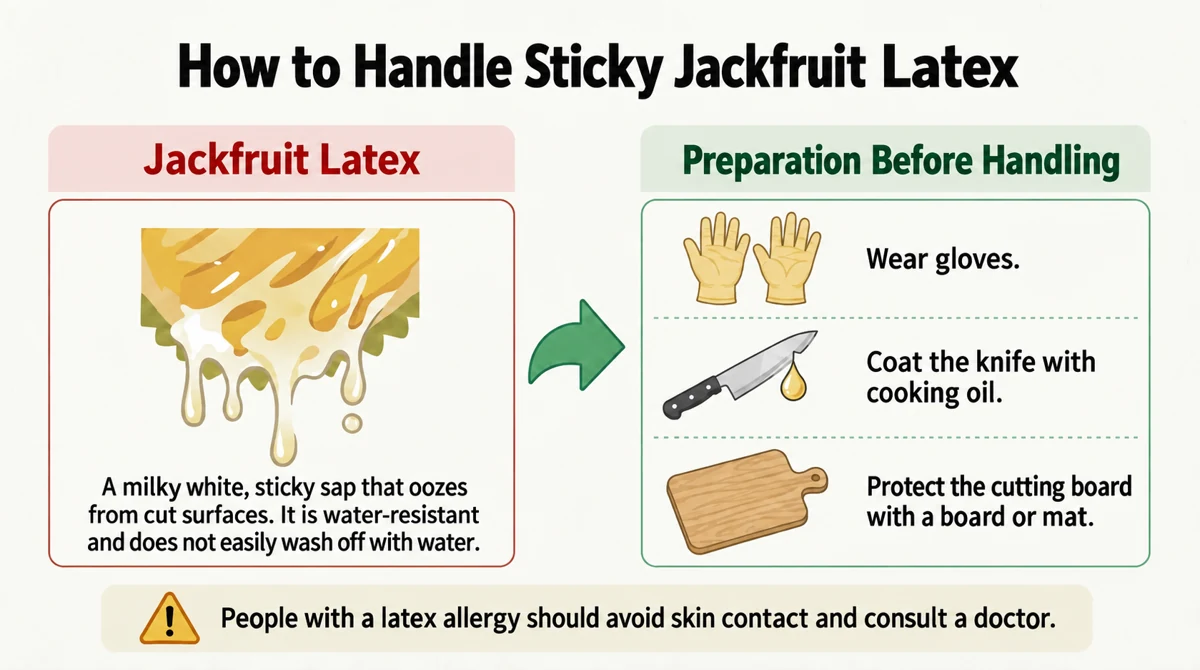
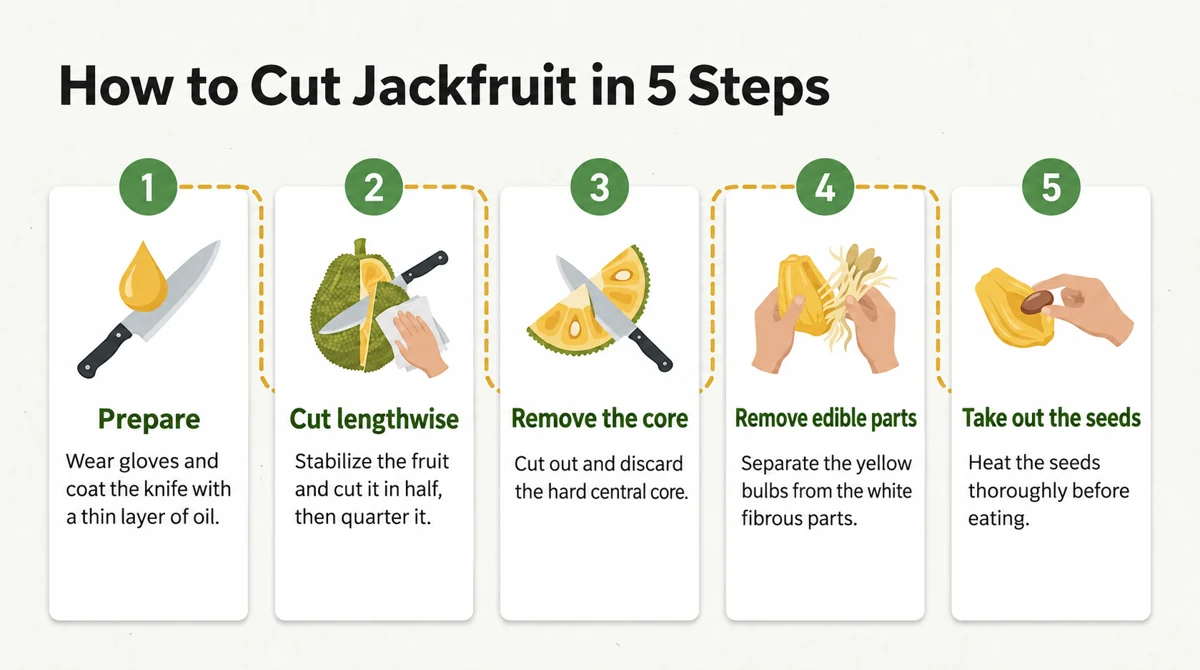
- Wear suitable gloves, lightly coat the knife with cooking oil, and protect the cutting board. Keep the board stable.
- Place and stabilize the fruit on its side, cut lengthwise into halves, then quarters. Wipe away emerging latex with kitchen paper, keeping hands away from the blade.
- Cut out the hard pale central core.
- Separate the yellow edible bulbs from the pale fibers.
- Remove the seed from each bulb before eating. Seeds can be saved for thorough cooking.
Working bare-handed can leave latex stuck to skin and tools. Suitable gloves and a light coating of cooking oil on the knife help with handling and cleanup. Avoid contact if you have latex allergy.
Four Ways to Enjoy Jackfruit in Vietnam
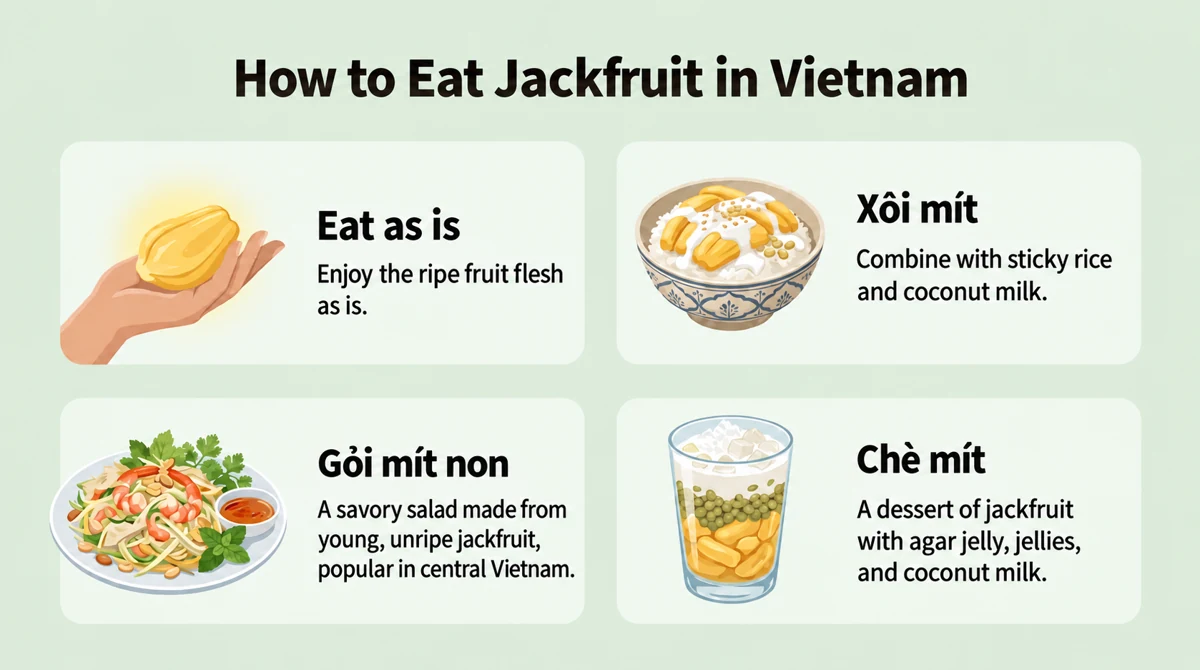
1. Eat the Ripe Flesh Fresh
Eating ripe bulbs fresh is the simplest option. Remove the seeds, chill the flesh if desired, and enjoy it in small pieces.
2. Xôi mít: Jackfruit with Sticky Rice
Xôi mít combines sweet sticky rice with ripe jackfruit. Coconut milk or mung-bean filling may be added; versions vary by shop.
3. Gỏi mít non: Young Jackfruit Salad
Young green jackfruit is also used in savory cooking. Gỏi mít non, associated with central Vietnam, combines prepared young jackfruit with ingredients such as herbs, peanuts, shrimp or pork.
4. Chè mít: A Jackfruit Dessert
Chè is a broad name for Vietnamese sweet desserts. Chè mít can combine jackfruit with agar jelly, other jellies and coconut milk, and may be served cold rather than being a dish that must be boiled.
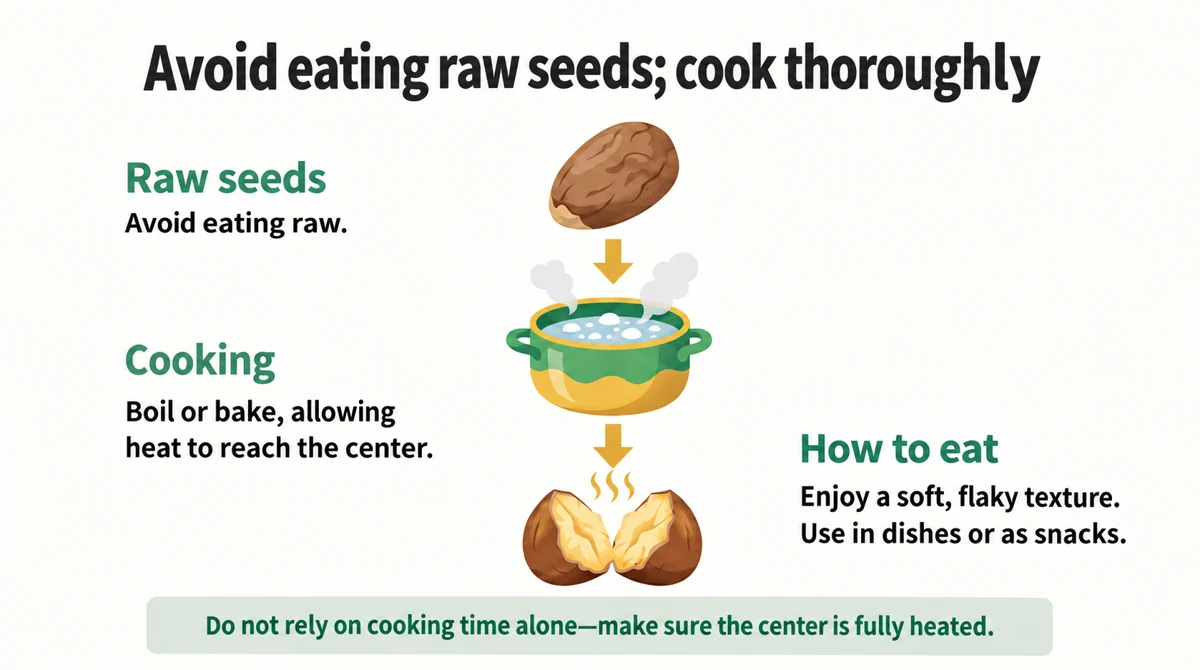
Eating Jackfruit Seeds: Cook Them Thoroughly
Jackfruit seeds are edible when cooked, but should not be eaten raw. They contain antinutritional compounds, including tannins and trypsin inhibitors, whose amounts can be reduced by cooking.
Boil or roast seeds thoroughly until cooked through. Do not judge safety by a fixed cooking time alone. Cooked seeds have a starchy, chestnut-like texture and can be eaten on their own or added to dishes.
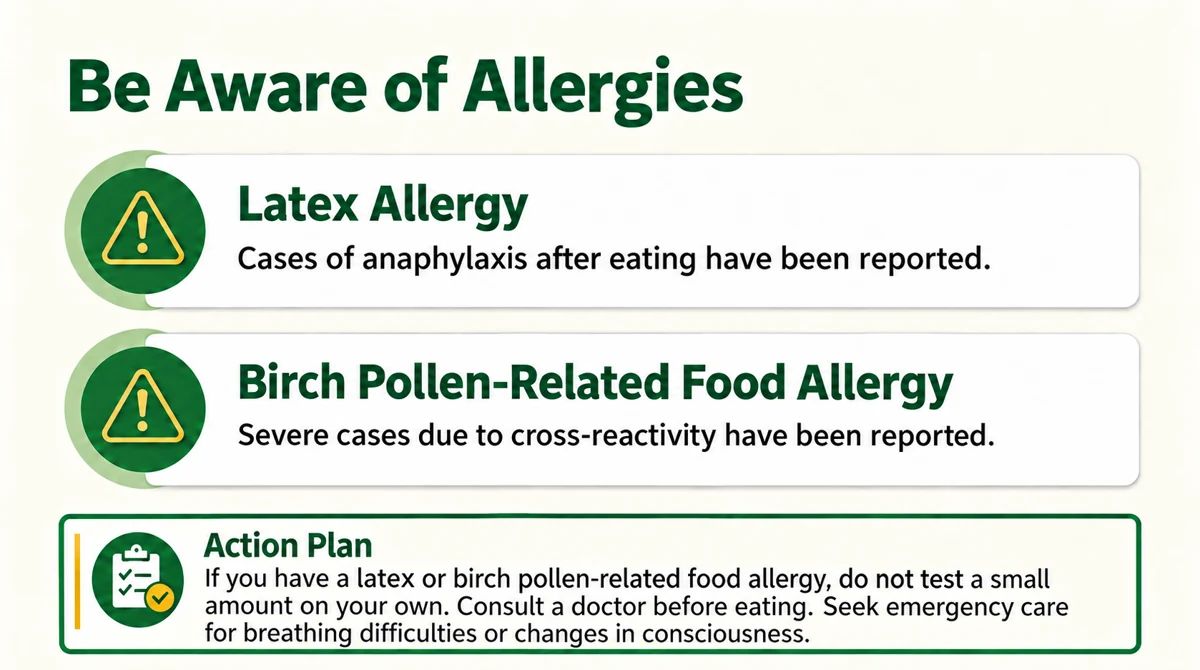
Jackfruit Allergy: Latex and Pollen-Related Reactions
Medical case reports describe anaphylaxis after jackfruit in people with latex allergy. Reports do not establish how common such reactions are or prove one shared allergen mechanism in every case.
Severe reactions have also been reported in people with birch-pollen-related food allergy. If you have these allergies, consult a clinician before trying jackfruit; do not test your tolerance by eating a small amount on your own.
Stop eating if symptoms occur. Breathing difficulty, throat swelling, faintness or altered consciousness require urgent local medical care. Follow an existing allergy emergency plan if you have one.
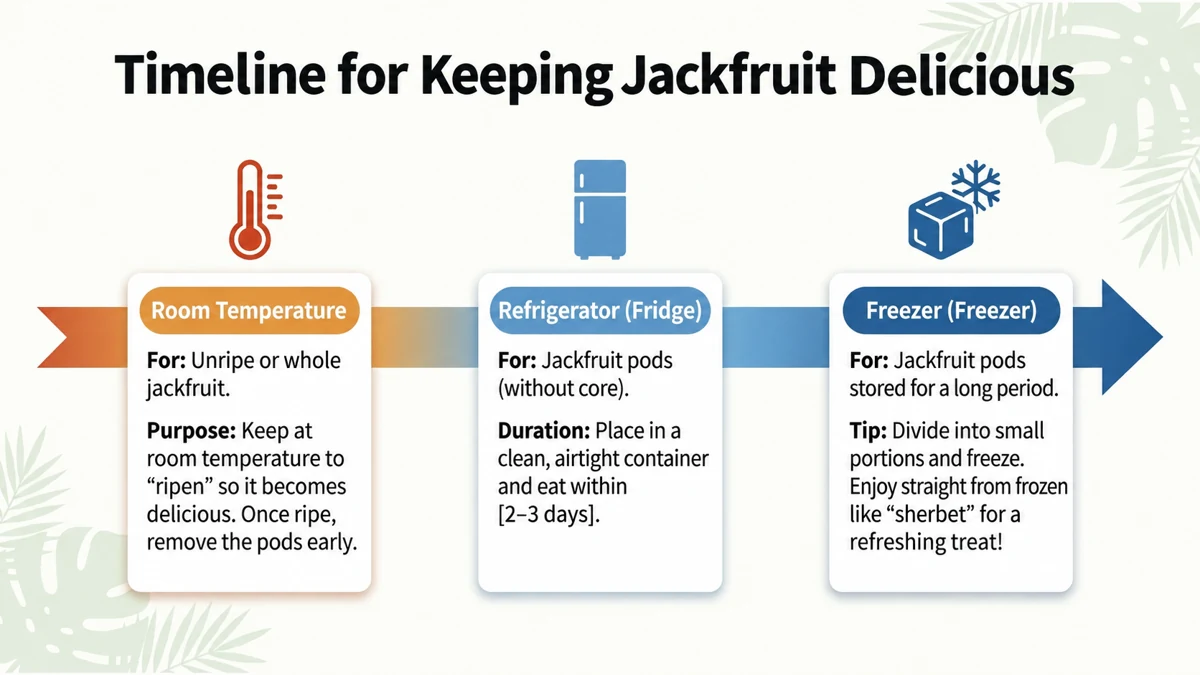
Storing Jackfruit: Refrigerating and Freezing
- Whole unripe fruit: Allow to ripen at room temperature; prepare promptly once ripe.
- Prepared flesh: Refrigerate in a clean airtight container. The source suggests using it within 2–3 days, but follow a shorter labeled date and discard spoiled fruit.
- Longer storage: Freeze flesh in portions. Partly thawed flesh can have a sorbet-like texture.
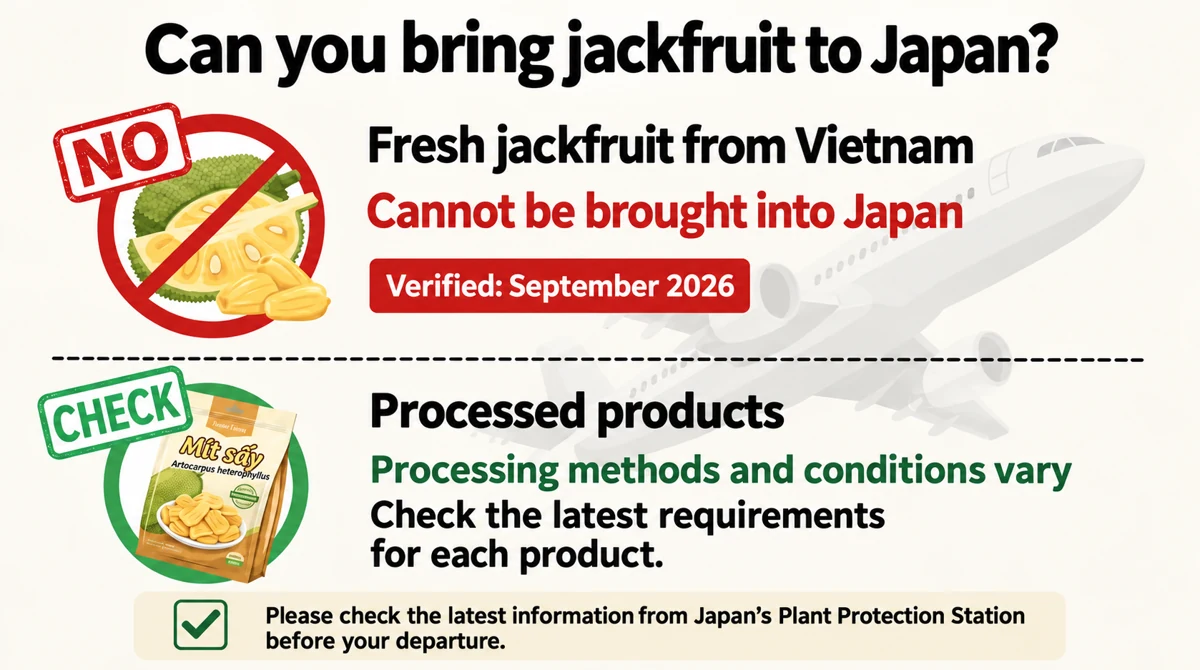
Can You Bring Jackfruit to Japan? Check Plant Quarantine
The source’s September 2026 plant quarantine check classified fresh Vietnamese jackfruit as prohibited for entry into Japan, including travelers’ baggage. Check the current requirements before travel.
Processing can change quarantine treatment, but “processed” does not automatically mean permitted. For dried chips and other products, check their condition and ingredients and contact the Plant Protection Station if uncertain.
Quarantine requirements can change. Confirm the latest conditions before traveling.
The Author’s Purchase and Tasting Notes
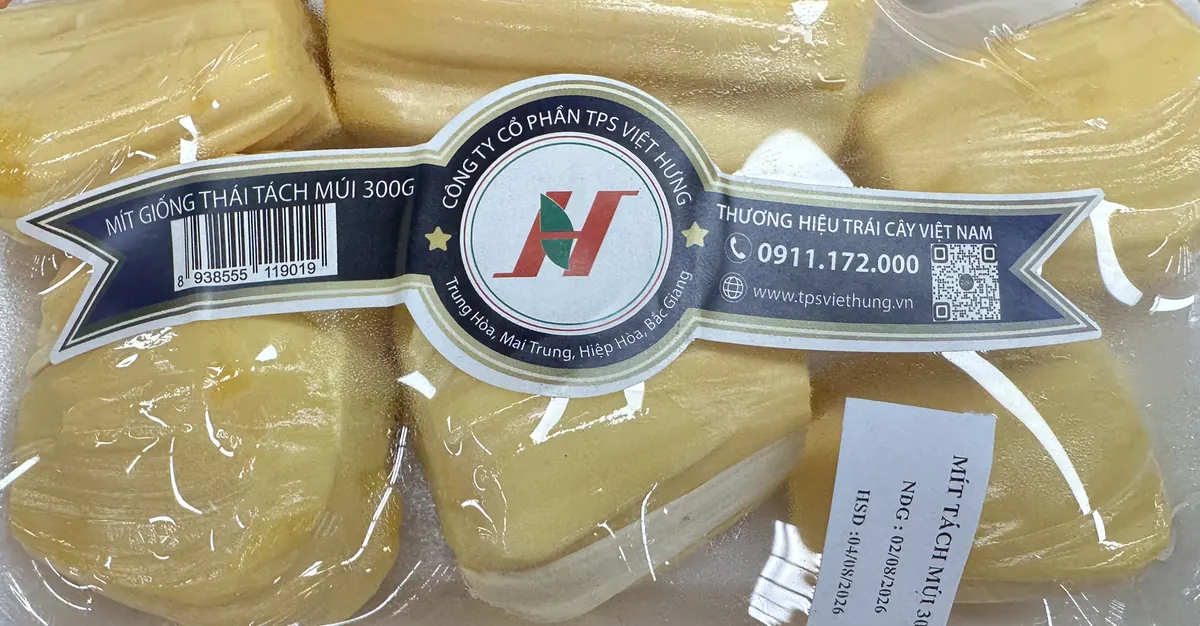
Purchase record
Place: A Hanoi supermarket
Date: July 2026
Price: 73,500 VND for 1.5 kg; equivalent to 49,000 VND/kg. The original note estimated about 294 JPY/kg using its assumed exchange rate.
Tasting notes
Thick, springy flesh with rich sweetness and a strong aroma.
Author’s beginner rating: ★★★☆☆.
Frequently Asked Questions
Do I need to buy a whole fruit?
No. Markets and supermarkets commonly sell small packs of prepared flesh. These are convenient for a first taste.
How do I remove sticky sap from my hands?
Cooking oil can help loosen sticky latex before wiping and washing. Gloves and lightly oiling the knife before cutting reduce cleanup; people with latex allergy should avoid contact.
Can I eat the seeds?
Yes, after thorough boiling or roasting. Do not eat the seeds raw.
Can I take jackfruit back to Japan?
The September 2026 source classified fresh fruit from Vietnam as prohibited. Verify current conditions with Japan’s Plant Protection Station before traveling.
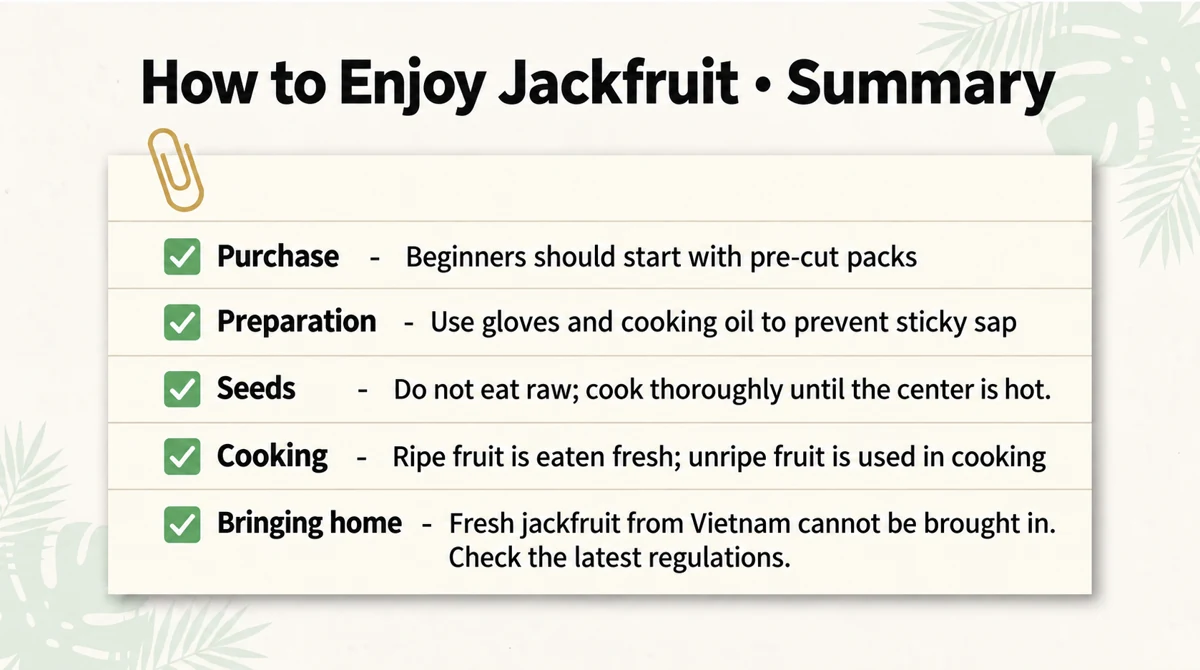
Start with a Pack of Prepared Jackfruit
Despite its imposing size on the tree, jackfruit is easy to try when sold as prepared flesh.
- Choose according to aroma, rind condition, variety and when you will eat it. Small prepared packs are convenient.
- Use gloves and a lightly oiled knife when cutting to manage sticky latex.
- Enjoy fresh ripe flesh, Xôi mít, Gỏi mít non or Chè mít.
- Cook seeds thoroughly. Consult a clinician before eating if you have latex or birch-pollen-related food allergy.
- Refrigerate prepared flesh promptly and follow its labeled date; freeze portions for longer storage.
- Fresh Vietnamese jackfruit was classified as prohibited in the September 2026 Japan quarantine check. Verify current conditions.
If you see it in a market or supermarket, a small pack lets you discover its sweetness and chewy texture without opening a giant fruit.
Learn More About Jackfruit

For biology, names and varieties, see Jackfruit Guide. For its spread from South Asia and Vietnamese folklore, see Jackfruit History and Stories.
References
- University of Florida IFAS: Jackfruit Growing in the Florida Home Landscape
- SAGE Journals: Jackfruit Anaphylaxis in a Latex Allergic Non-Healthcare Worker
- Annals of Allergy, Asthma & Immunology: Jackfruit Induced Anaphylaxis Associated Birch Pollen-Related Food Allergies
- Japan Plant Protection Station: Travel FAQ
Jackfruit Anaphylaxis in a Latex Allergic Non-Healthcare Worker
