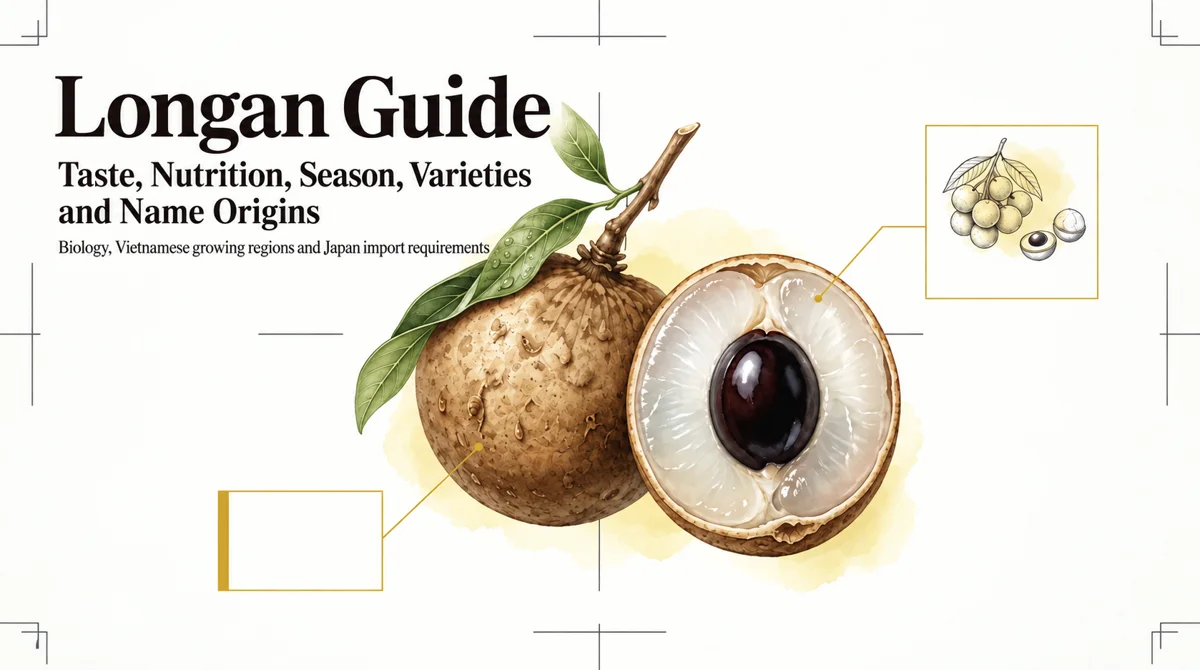
Longan is familiar in Vietnam’s markets and supermarkets. The main season in the north is around July to September; growing schedules in the south allow supplies outside that period. It resembles lychee, but its name, appearance and availability in Japan tell a different story.
Longan belongs to the soapberry family, Sapindaceae, alongside lychee and rambutan. Its sweetness recalls honey, with a gentle aroma. The dark seed surrounded by a pale aril resembles a dragon’s eye, the image behind its name. This guide covers taste, season, nutrition and varieties in the context of Vietnam.
What Is Longan? Taste, Season and Basic Facts
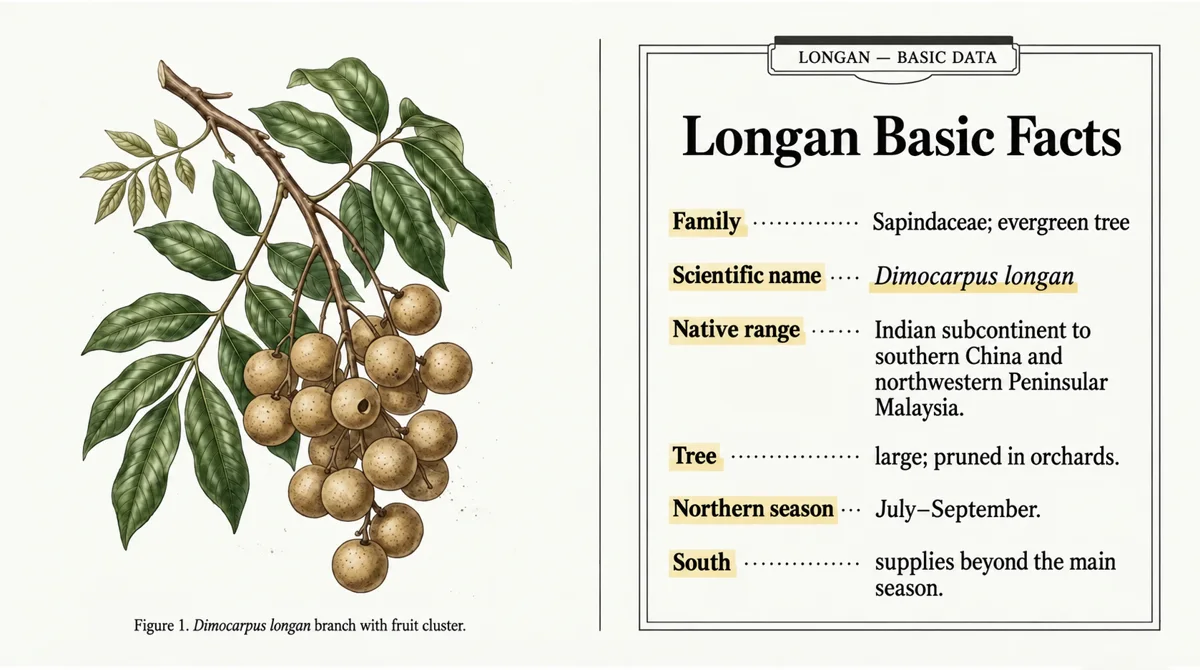
| Item | Details |
|---|---|
| Common name | Longan; Japanese name: ryūgan |
| Vietnamese name | Nhãn |
| Scientific name | Dimocarpus longan |
| Classification | Evergreen tree in Sapindaceae, the family of lychee and rambutan |
| Native range | Indian subcontinent to southern China and northwestern Peninsular Malaysia |
| Tree size | Can become a large tree; orchard pruning keeps it manageable |
| Cultivation in Japan | Limited cultivation in warm areas such as Okinawa; small domestic supply |
| Availability in Vietnam | Main northern season: July–September; southern growing schedules extend supplies |
| Nutritional features | Vitamin C and potassium |
Sources are listed at the end of the article.
Longan’s Name and Biology
A Name Inspired by the Open Fruit
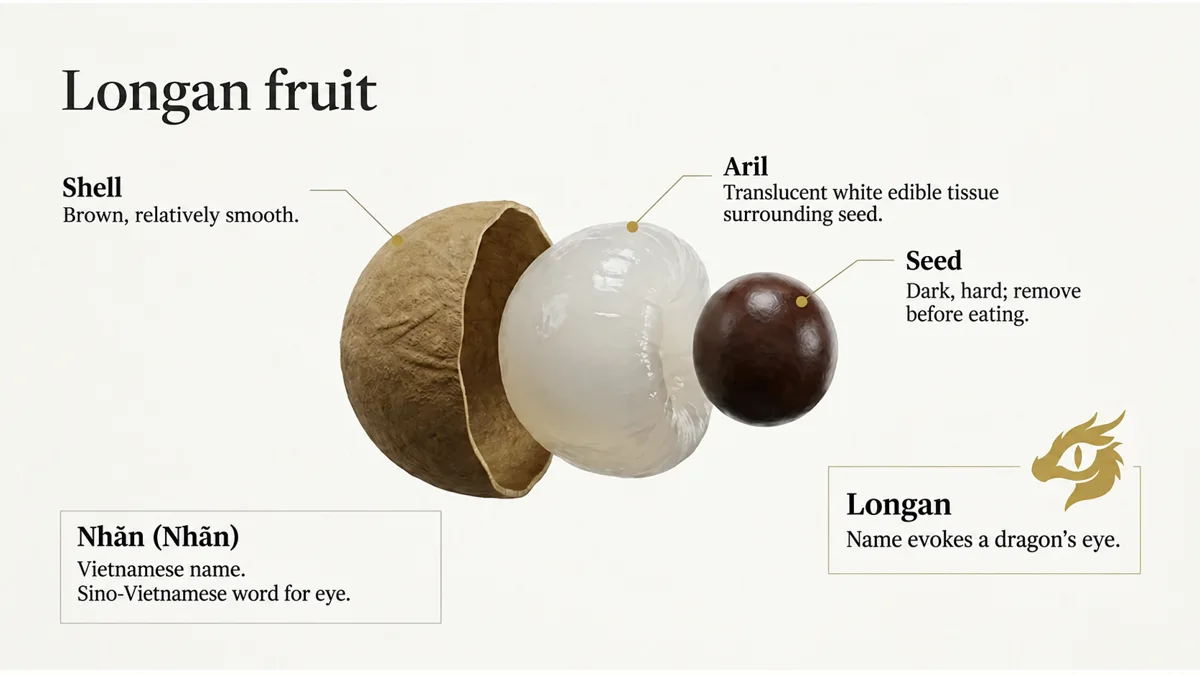
The Chinese name longyan means “dragon’s eye.” When the fruit is opened, the dark brown seed and surrounding translucent white aril resemble an eye. In Japanese, the corresponding name is ryūgan.
In Vietnamese, longan is called Nhãn. The Sino-Vietnamese word nhãn corresponds to “eye.” Rambutan’s name, by contrast, comes from a Malay word for hair: fruit names can reflect very different features.
A Relative of Lychee and Rambutan
Longan is an evergreen tree in the Sapindaceae family, like lychee and rambutan. Trees can become large if left unpruned, so orchards often keep them lower for management and harvesting.
The white edible tissue is an aril surrounding the seed. Lychee and rambutan have a similar edible structure. See Lychee Guide for more about arils.
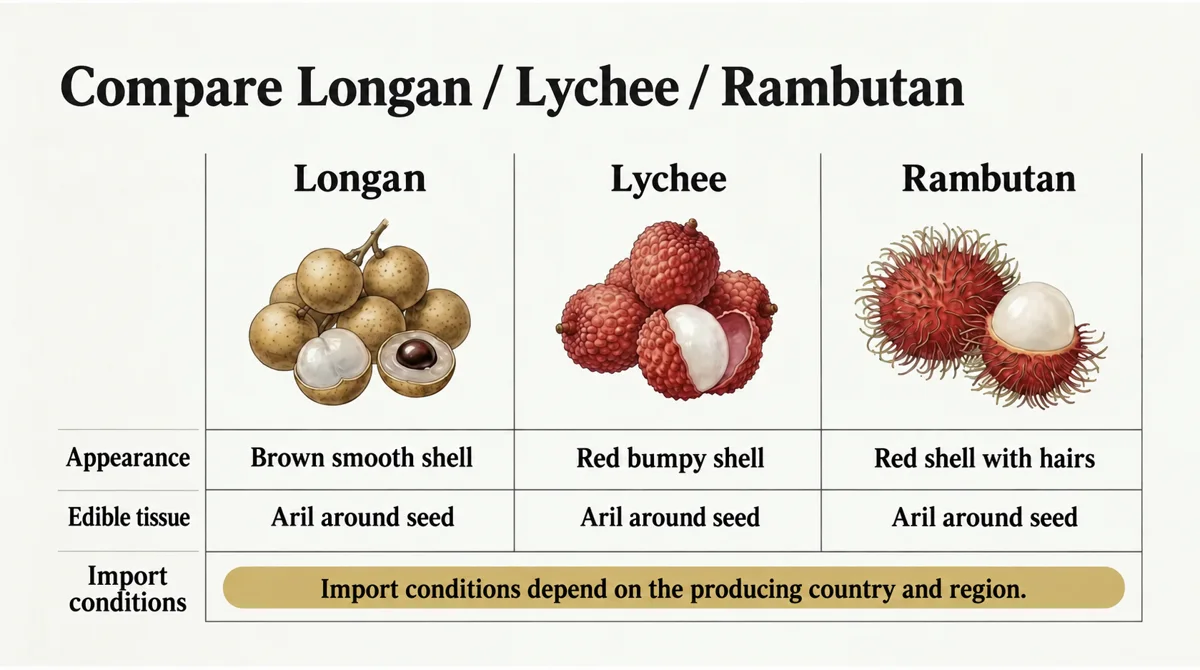
Longan has a brown, relatively smooth shell. It lacks lychee’s red, bumpy surface and rambutan’s hair-like projections, making the three fruits easy to distinguish when placed together.
Bees and Other Pollinating Insects
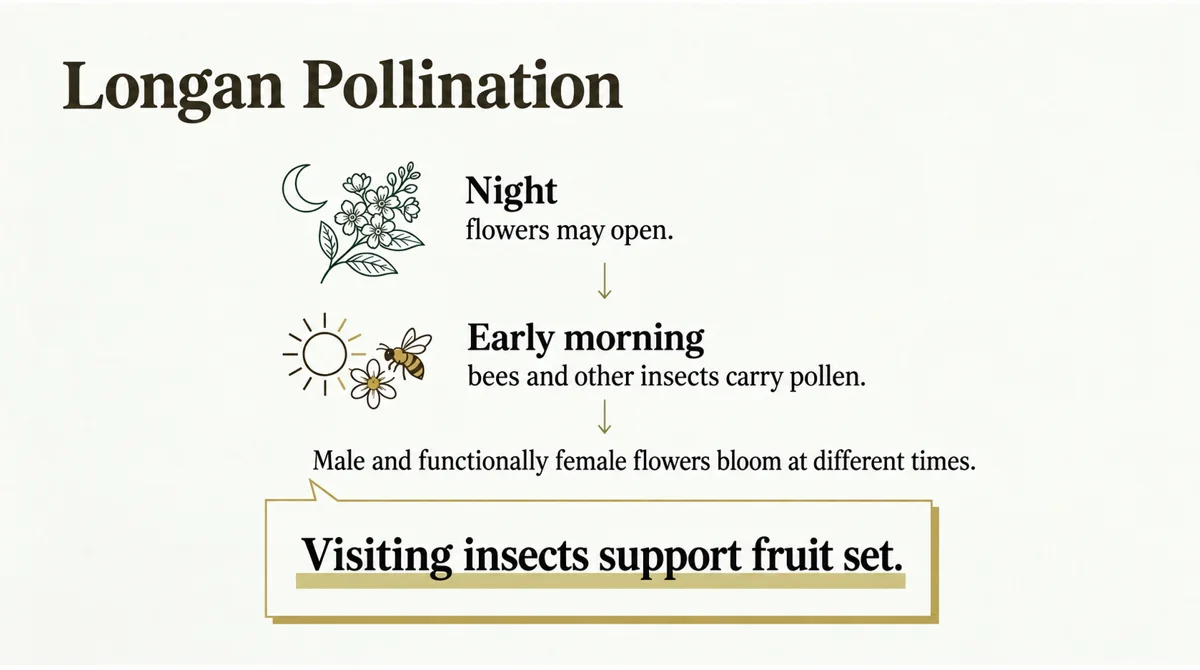
Flowers may open at night, and bees and other insects visit from early morning. Male and functionally female flowers appear at different times on a panicle. Insect movement of pollen contributes to fruit set; only some flowers develop into fruit.
Fresh Fruit and Dried Longan
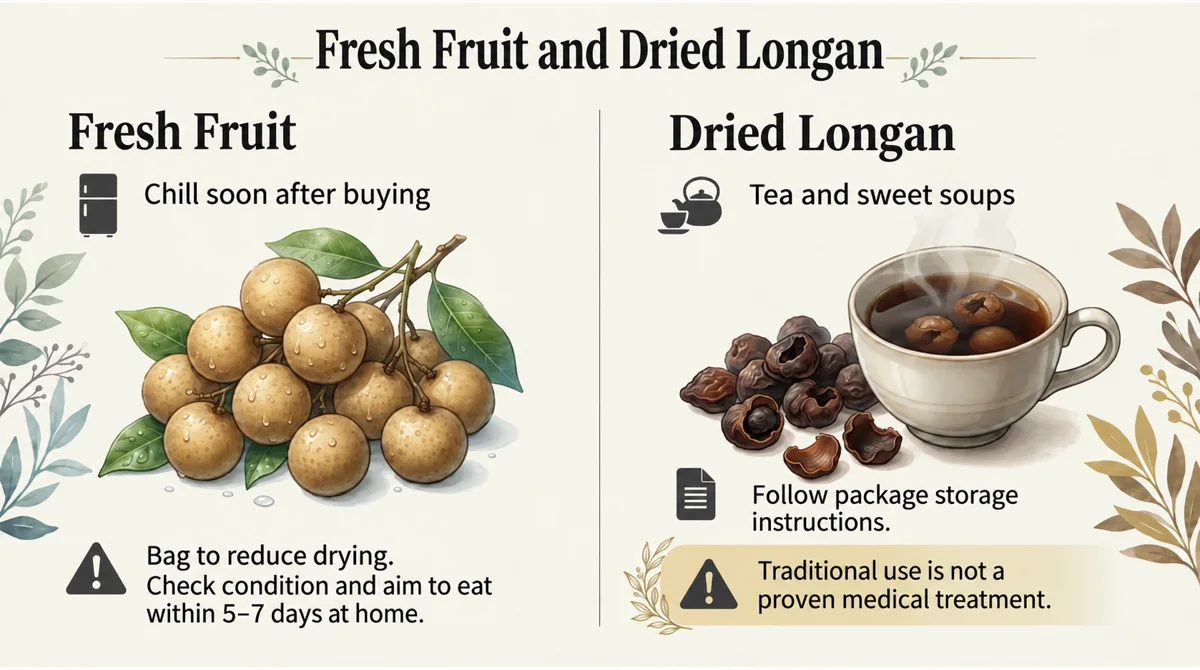
Longan deteriorates more quickly in a hot room, so chill it soon after buying. Put it in a bag to limit moisture loss and aim to eat it within about five to seven days at home, checking its condition. Avoid fruit with mold, unusual odors or leaking juice. Darkening of the shell alone can also reflect drying.
The edible arils are also dried and sold as dried longan, known by Chinese names such as longyan rou or guiyuan rou. In China and Vietnam they are used in tea, sweet soups and traditional food preparations. Traditional medicinal use does not establish a treatment benefit in modern medicine.
Longan Nutrition
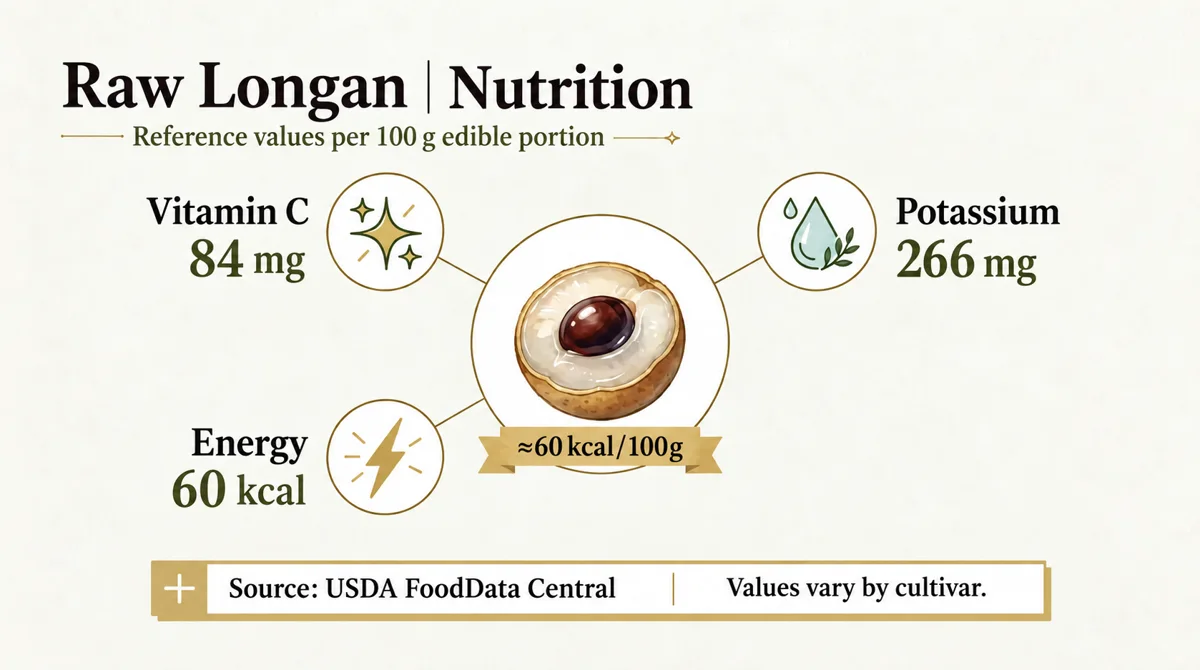
USDA reference data give the following values per 100 g of raw edible longan.
- Energy: 60 kcal
- Vitamin C: 84 mg
- Potassium: 266 mg
These are U.S. reference values rather than figures from Japan’s standard food composition tables. Iron is 0.13 mg and zinc 0.05 mg per 100 g; those small amounts do not justify presenting them as major nutritional features.
Drying removes water, concentrating sugars and some nutrients when compared by equal weight. Serving sizes also differ. Fresh fruit and dried arils offer different culinary uses, including drinks and sweet soups.
Varieties Around the World and in Vietnam
Representative Varieties Around the World
Many varieties of longan are grown around the world. Representative names include the following.
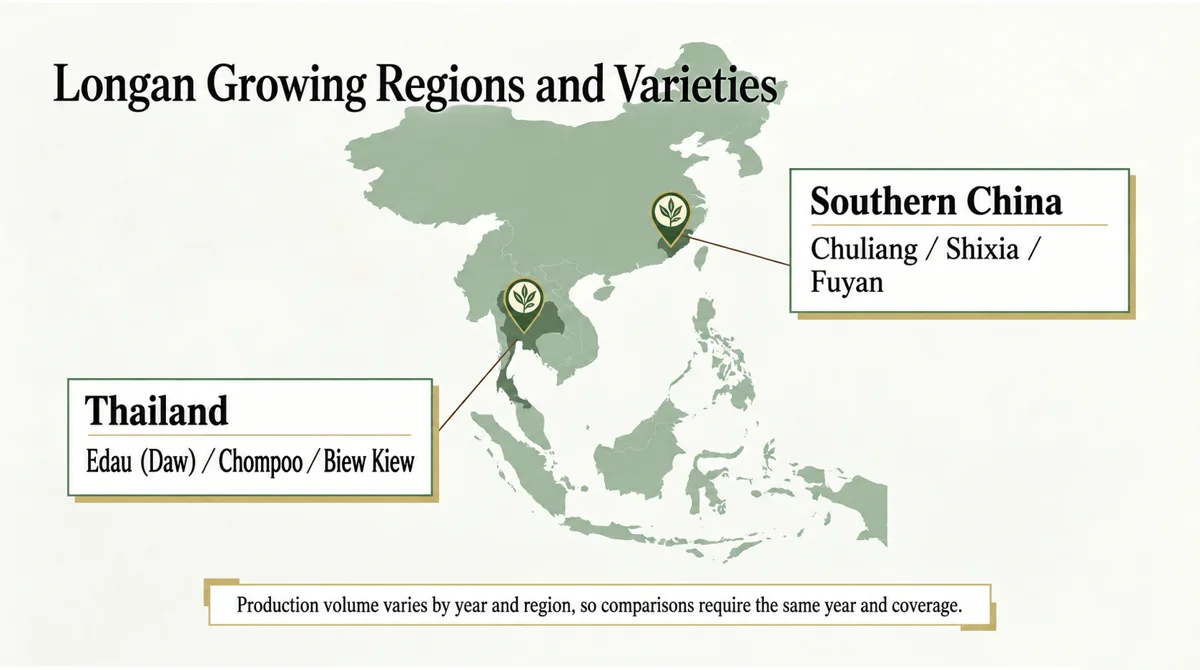
- China: Chuliang, Shixia and Fuyan, among others.
- Thailand: Edau (Daw), Chompoo and Biew Kiew; transliterations differ.
Spellings vary between sources. The University of Florida lists Thai cultivars including Edau (Daw), Chompoo and Biew Kiew.
Varieties Grown in Vietnam
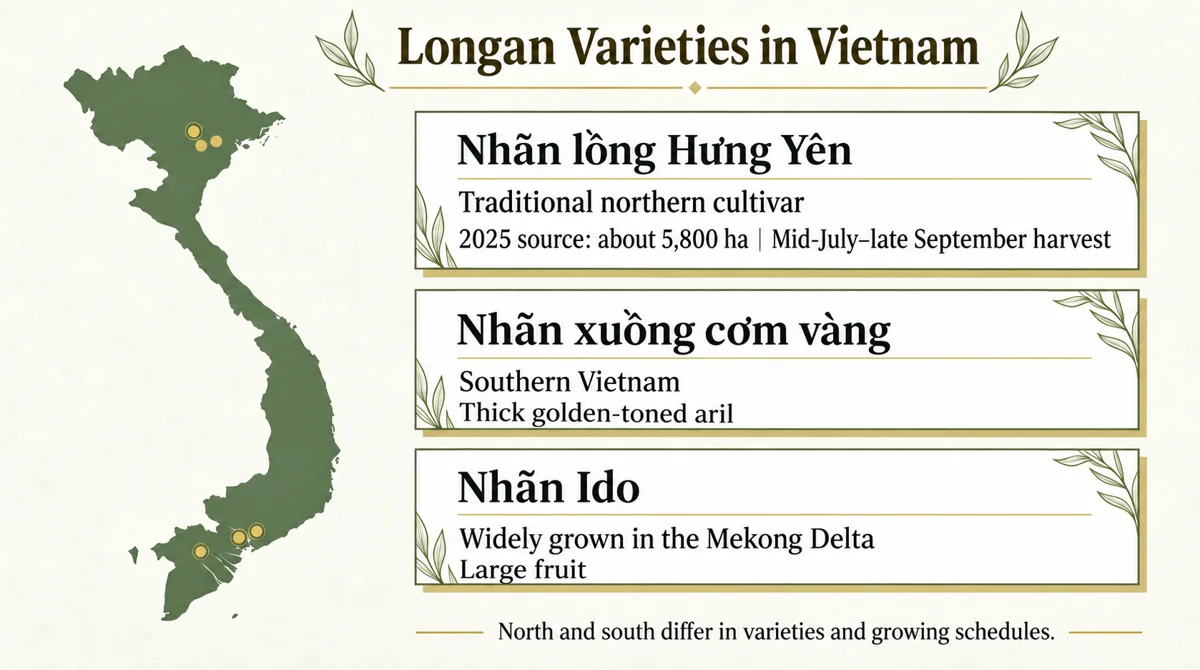
Vietnam’s growing regions have different cultivars.
- Nhãn lồng Hưng Yên: A traditional northern longan associated with Hưng Yên.
- Nhãn xuồng cơm vàng: Associated with the Bà Rịa–Vũng Tàu region in southern Vietnam; golden-toned, crisp arils with relatively little juice and a sweet, gentle aroma.
- Nhãn Ido: Popular in southern Vietnam and the Mekong Delta, with relatively large fruit and thick arils.
Longan Growing Regions and Trade
Known as Nhãn, longan is a familiar seasonal fruit in Hanoi’s markets and supermarkets around July to September. Its production and trade also help explain how it reaches consumers.
Southern China, Thailand and Vietnam are important growing regions. Recent, directly comparable global statistics are limited, so this article does not give a definitive production ranking or total.
Hưng Yên in northern Vietnam is a traditional center. Provincial material published in 2025 reported about 5,800 hectares of longan and a harvest period from mid-July to late September. The Mekong Delta is another major growing region, with production schedules that can extend supplies through the year. These figures describe the 2025 source, rather than a new 2026 census.
Japan Opened Conditional Imports in 2022
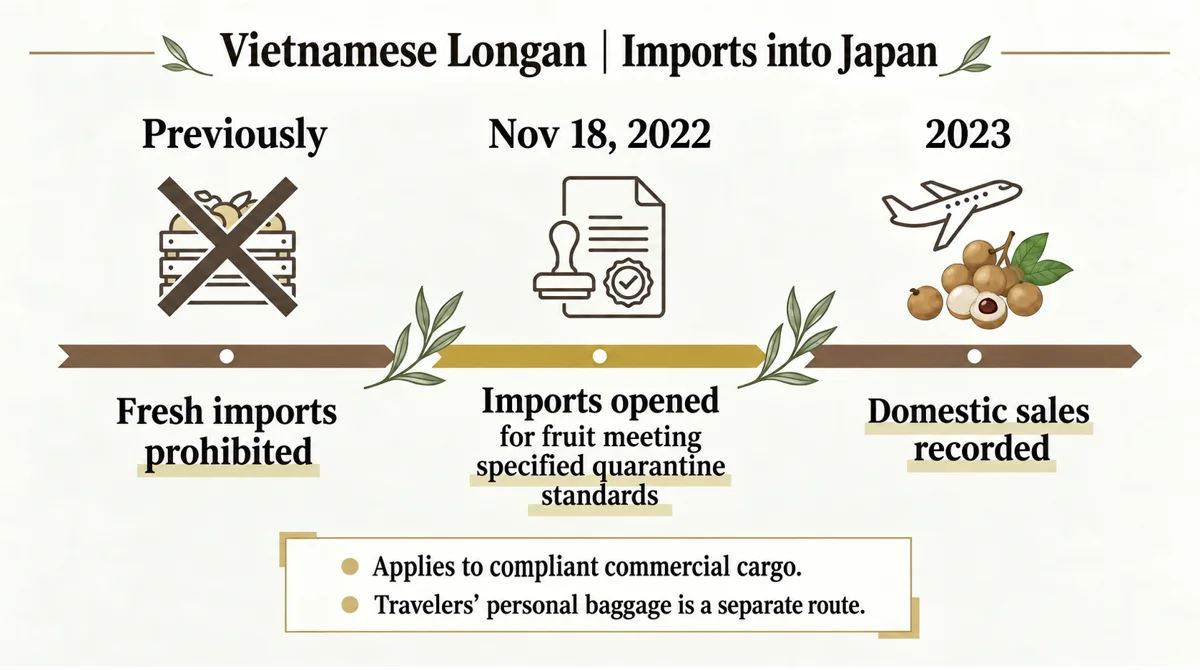
Fresh Vietnamese longan was formerly prohibited from entering Japan because of plant quarantine risks, including fruit flies.
On November 18, 2022, Japan opened imports of Vietnamese fresh longan meeting specified standards and detailed plant quarantine procedures. Domestic sales appeared in 2023. This concerns compliant commercial consignments; it does not permit travelers to bring market-bought fruit in personal baggage.
Import conditions depend on origin and shipment arrangements as well as the species. Avoid a simple allowed-or-banned comparison across longan, lychee and rambutan: the relevant change was conditional commercial access for Vietnamese longan.
Longan Guide: Key Points
The main points are as follows.
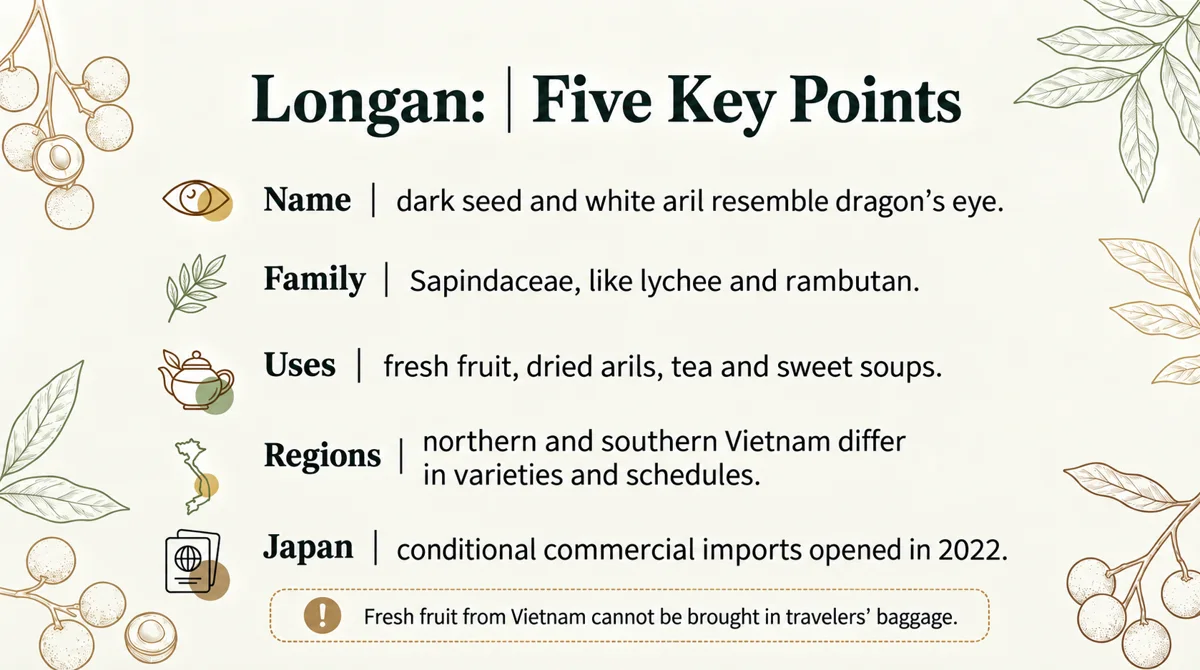
- The name longan refers to a dragon’s eye: a dark seed surrounded by a pale aril. Vietnamese Nhãn also corresponds to “eye.”
- Longan, lychee and rambutan are relatives in Sapindaceae. Their edible tissue is an aril; longan has a brown, relatively smooth shell.
- Arils can be eaten fresh or dried for tea, sweet soups and traditional food preparations.
- Hưng Yên is a traditional northern growing center; the Mekong Delta is another important region.
- Japan opened conditional commercial imports of Vietnamese fresh longan in November 2022. Travelers’ personal baggage is a different route and is not covered by that permission.
Frequently Asked Questions About Longan
What does longan taste like?
Longan has concentrated, honey-like sweetness and a gentler aroma than lychee. Its pale aril is soft with a springy texture.
How is longan different from lychee?
Both are in the soapberry family. Longan has a brown, relatively smooth shell; lychee’s is red and bumpy. Longan’s gentler aroma can make its sweetness more prominent.
When is longan in season in Vietnam?
The main northern season is around July to September. Production schedules in the south also provide fruit outside that period.
Can you buy fresh longan in Japan?
Conditional commercial imports from Vietnam opened in 2022, and domestic sales have been recorded. Supplies remain limited. Travelers cannot bring market-bought fresh fruit from Vietnam in personal baggage.
Related Articles
For more fruit to try, see Everyday Fruits in Vietnam. Related species appear in Lychee Guide and Rambutan Guide. Follow Han-era accounts and Hưng Yên’s ancestral tree in Longan History and Stories, or see How to Eat Longan in Vietnam for buying, peeling and serving.
References
- Kew: Dimocarpus longan Lour.
- UC Davis: Longan postharvest facts
- University of Florida IFAS: Longan Growing in the Florida Home Landscape
- Hưng Yên provincial government: Longan production and promotion, 2025
- USDA FoodData Central
- Flower Types, Pollen Morphology, and In Vitro Pollen Germination of Longan
- Fruiting pattern in longan: from pollination to aril development
- Cần Thơ product traceability: Nhãn Ido
- Japan Plant Protection Station: Conditional imports of Vietnamese fresh longan
