
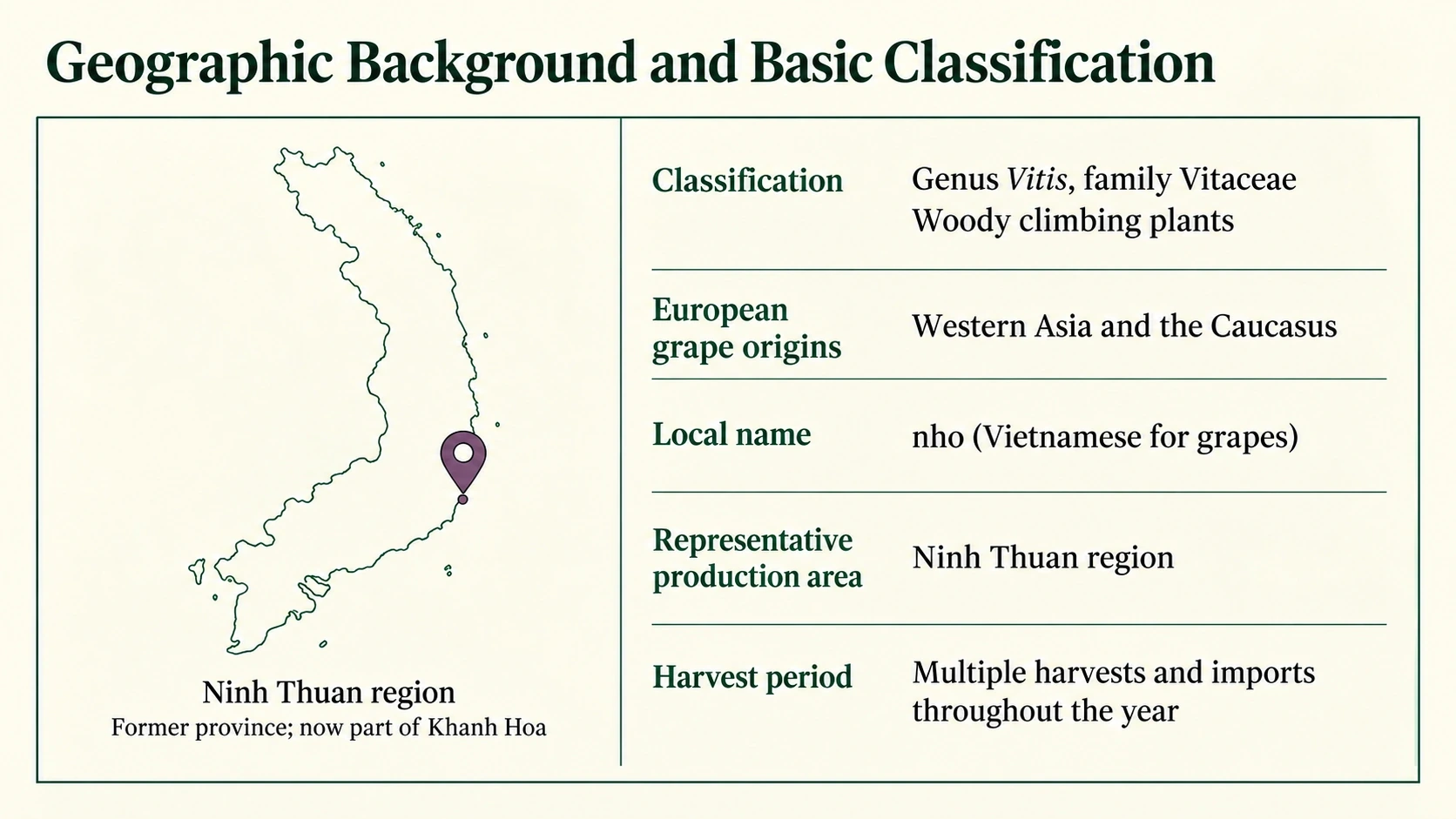
Grapes sold in Vietnam include both locally grown and imported fruit. One of the country’s best-known growing areas is Ninh Thuan on the south-central coast. The Vietnamese word for grapes is nho.
This guide explains why grapes grow in Ninh Thuan, introduces some representative varieties, and looks at nutrition data. For handling fruit after purchase, see how to choose, wash and store grapes. For their journey from antiquity, read the history of grapes.
Grapes at a glance
| Item | Details |
|---|---|
| English / Japanese | Grape / budo |
| Vietnamese | nho |
| Classification | Woody climbing plants in the genus Vitis, family Vitaceae |
| Main cultivated species | European grape (Vitis vinifera) and hybrids involving other species |
| European grape origins | A domestication history associated with Western Asia and the Caucasus |
| Major Vietnamese growing area | Ninh Thuan, formerly a province and now part of Khanh Hoa |
| Availability | Multiple domestic harvest periods and imports; supply varies by variety and shop |
| Main nutrients | Carbohydrates, potassium, and other nutrients |
A note on place names: Ninh Thuan and Khanh Hoa provinces were merged in Vietnam’s 2025 administrative reorganization. This article uses Ninh Thuan as the familiar name of the grape-growing region. Vietnamese government information (in Vietnamese)
Why grapes grow in Ninh Thuan
Suitable varieties, pruning, and careful crop management
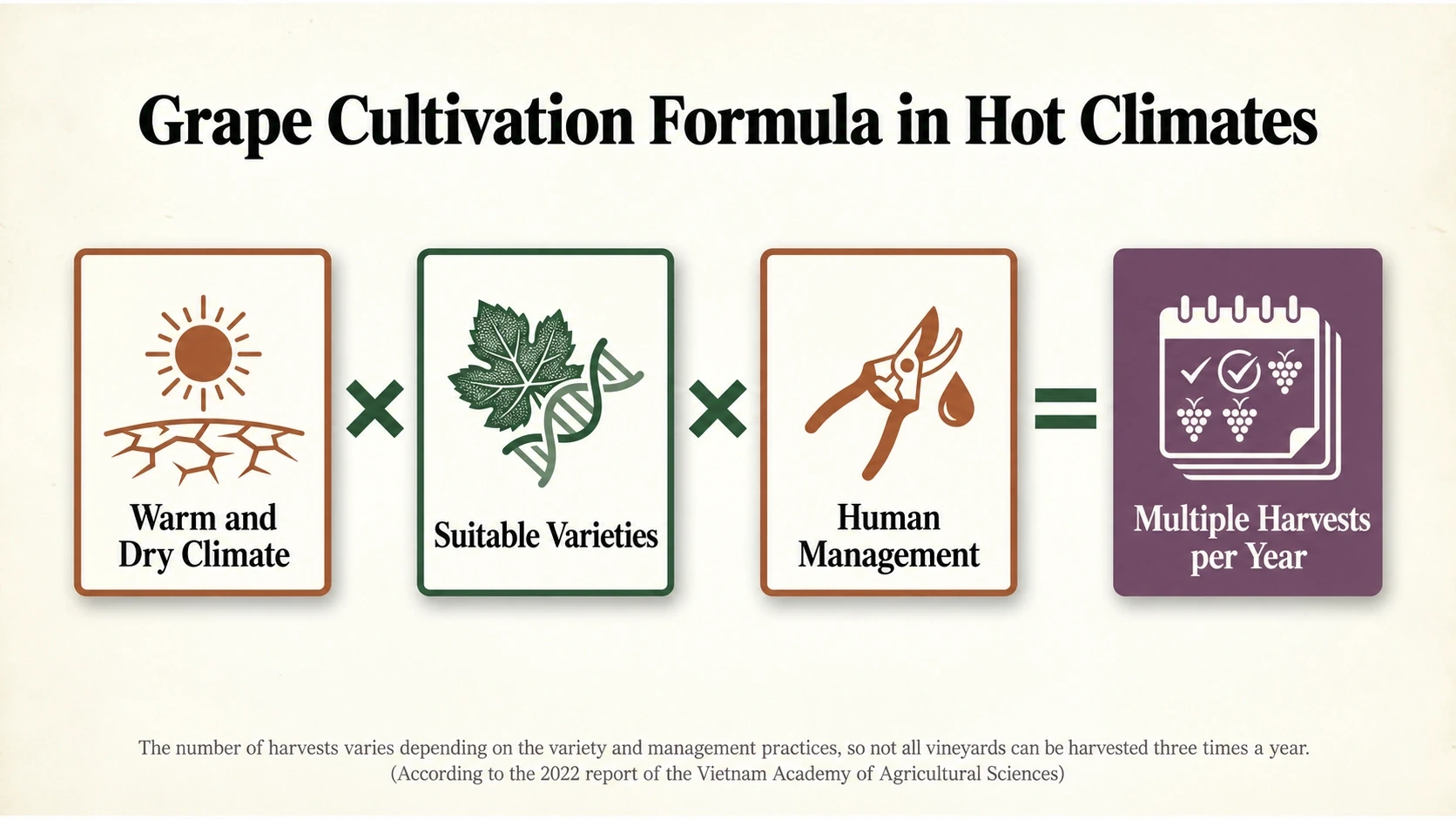
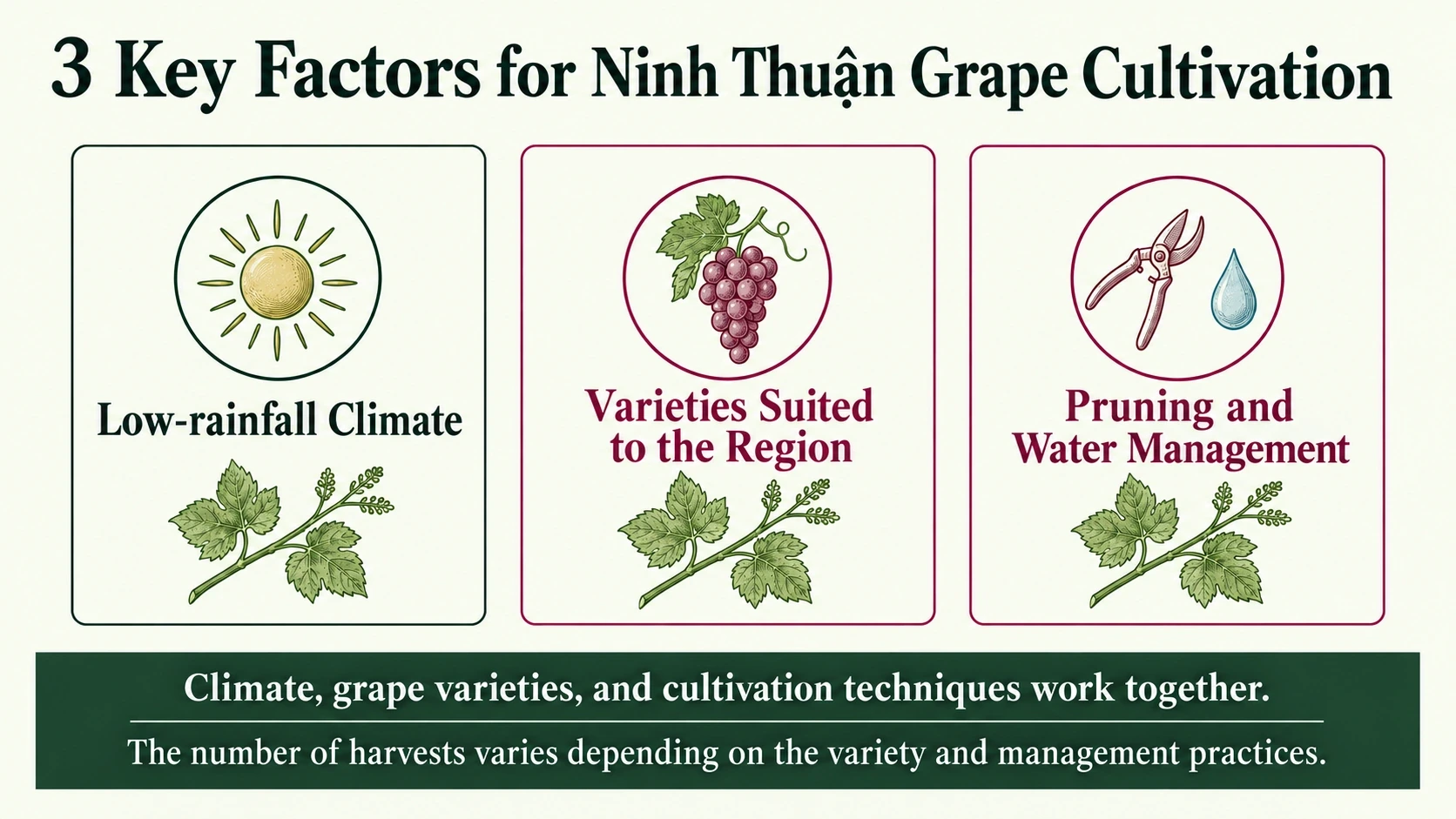
Grapes may bring to mind temperate orchards with cold winters. Yet they are also grown in warm regions through the selection of suitable varieties and techniques such as pruning and water management.
Grape growing in Ninh Thuan developed in a relatively dry climate. Research published by the Vietnam Academy of Agricultural Sciences reported two crops per year for NH01-48 and NH01-152 under protected cultivation. Harvest frequency varies by variety and management; it does not mean every vineyard produces three crops each year. A 2022 cultivation trial report (in Vietnamese)
Pruning helps manage new shoot growth and fruiting, but saying it simply “replaces winter cold” overlooks the physiology of different varieties and their growing conditions. The key is the combination of climate, locally suitable varieties, and cultivation techniques.
How the growing region developed
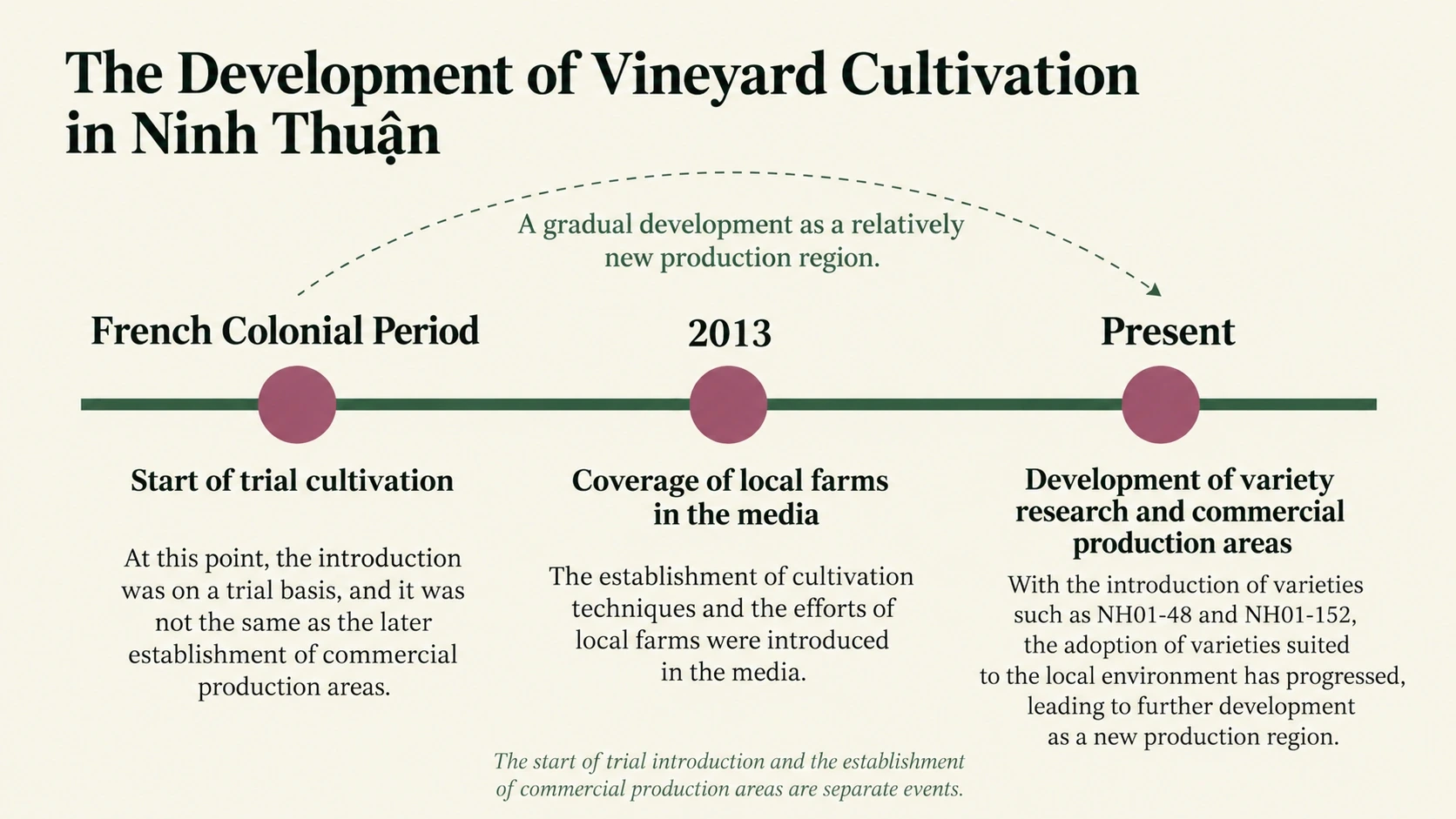
A local report published in 2013 describes experimental cultivation during French colonial rule. Experimental introduction and the establishment of a commercial growing area are separate developments. Rather than fixing the history at “exactly 100 years,” it is more accurate to describe the gradual development of a comparatively recent growing region. Reporting from local vineyards (in Vietnamese)
Grape varieties and Vietnamese names
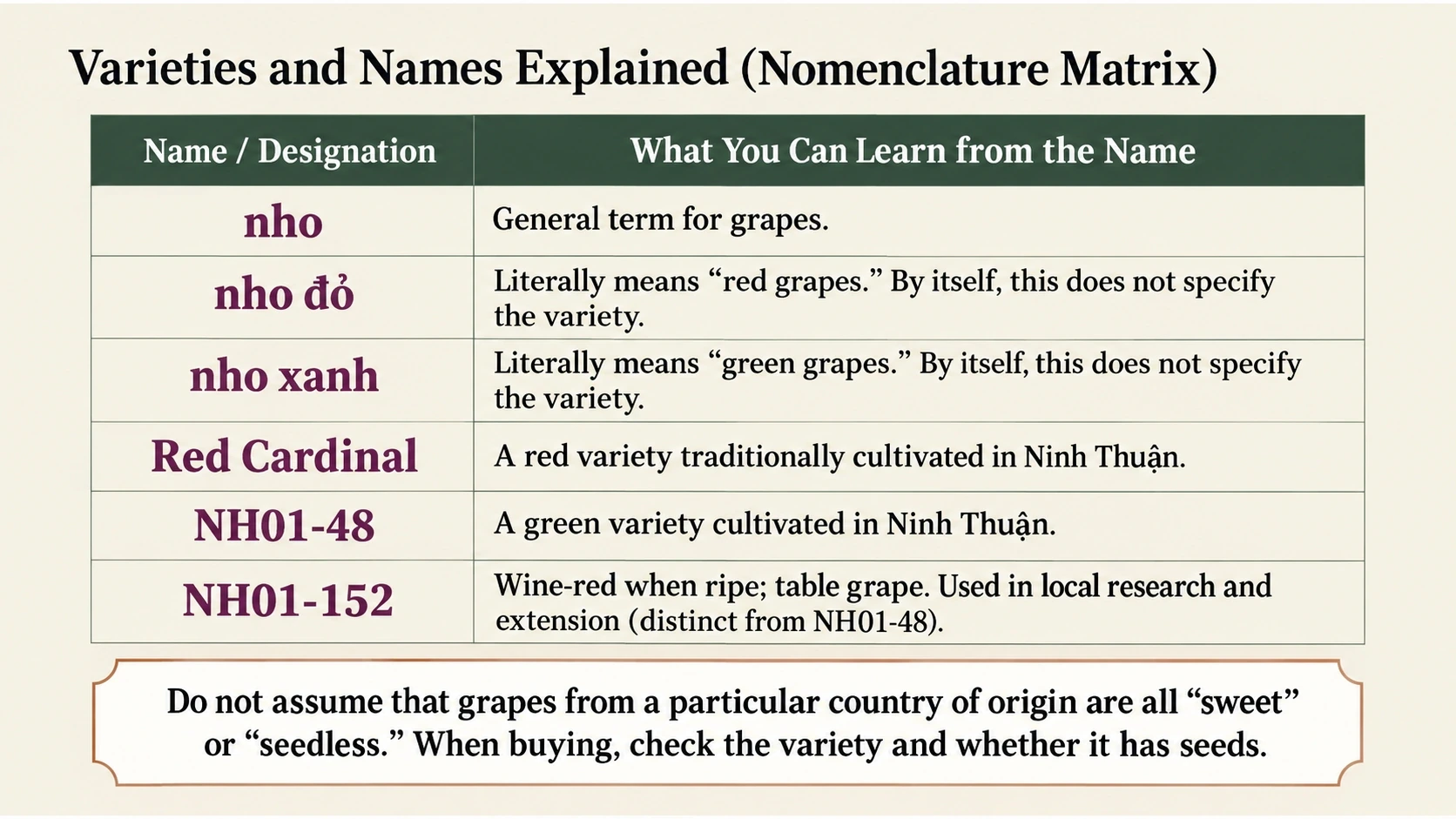
| Name or label | What it tells you |
|---|---|
| nho | The general word for grapes |
| nho đỏ | Red grapes; not enough to identify a variety |
| nho xanh | Green grapes; not enough to identify a variety |
| Red Cardinal | A red variety long grown in Ninh Thuan |
| NH01-48 | A green variety grown in Ninh Thuan |
| NH01-152 | A table grape that turns wine-red when ripe; distinct from green NH01-48 |
Research and introductions have focused on varieties suited to local conditions, including NH01-48 and NH01-152. Rather than assuming that all grapes from one country are sweet, seedless, or thin-skinned, check the variety and whether it has seeds. VAAS variety information (in Vietnamese)
For both local and imported fruit, appearance alone is an unreliable way to identify the country of production. Color and berry size can provide clues about a variety, but origin labels and producer or importer details are the appropriate sources for checking where the fruit was grown.
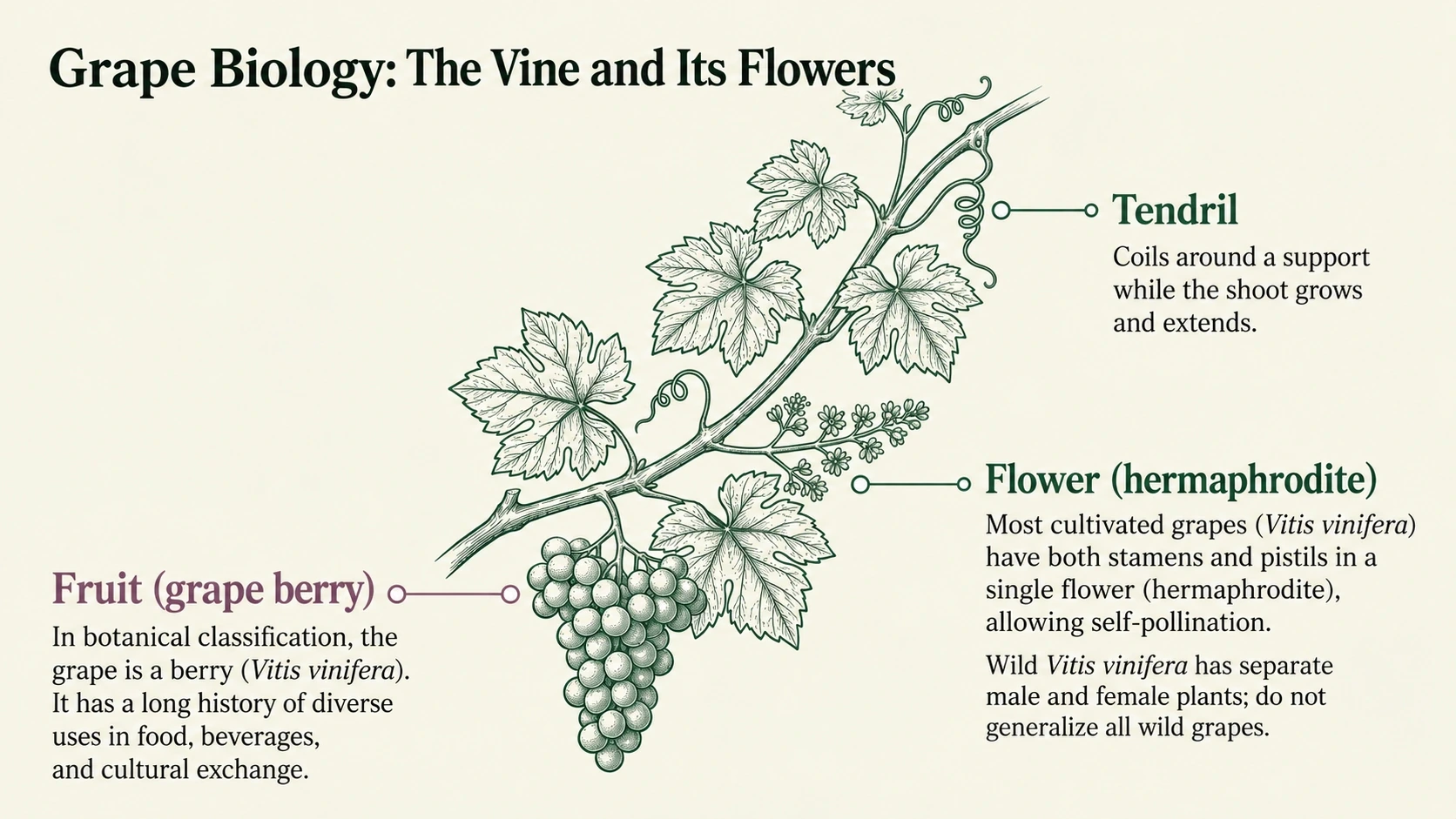
Grape biology: vines, tendrils, and flowers
Grapevines extend their shoots while using tendrils to grasp supports. Many cultivated grapes have bisexual flowers, with both stamens and pistils in the same flower, and are self-fruitful. The wild form of Vitis vinifera, by contrast, is known for having separate male and female plants.
Botanically, the fruit is a berry. Table and wine grapes include diverse species and histories of hybridization, so all grapes cannot be explained by a single place of origin or one lineage. Our grape history article explores domestication research in more detail. A study of domestication and morphological change
Grape nutrition: with and without skins
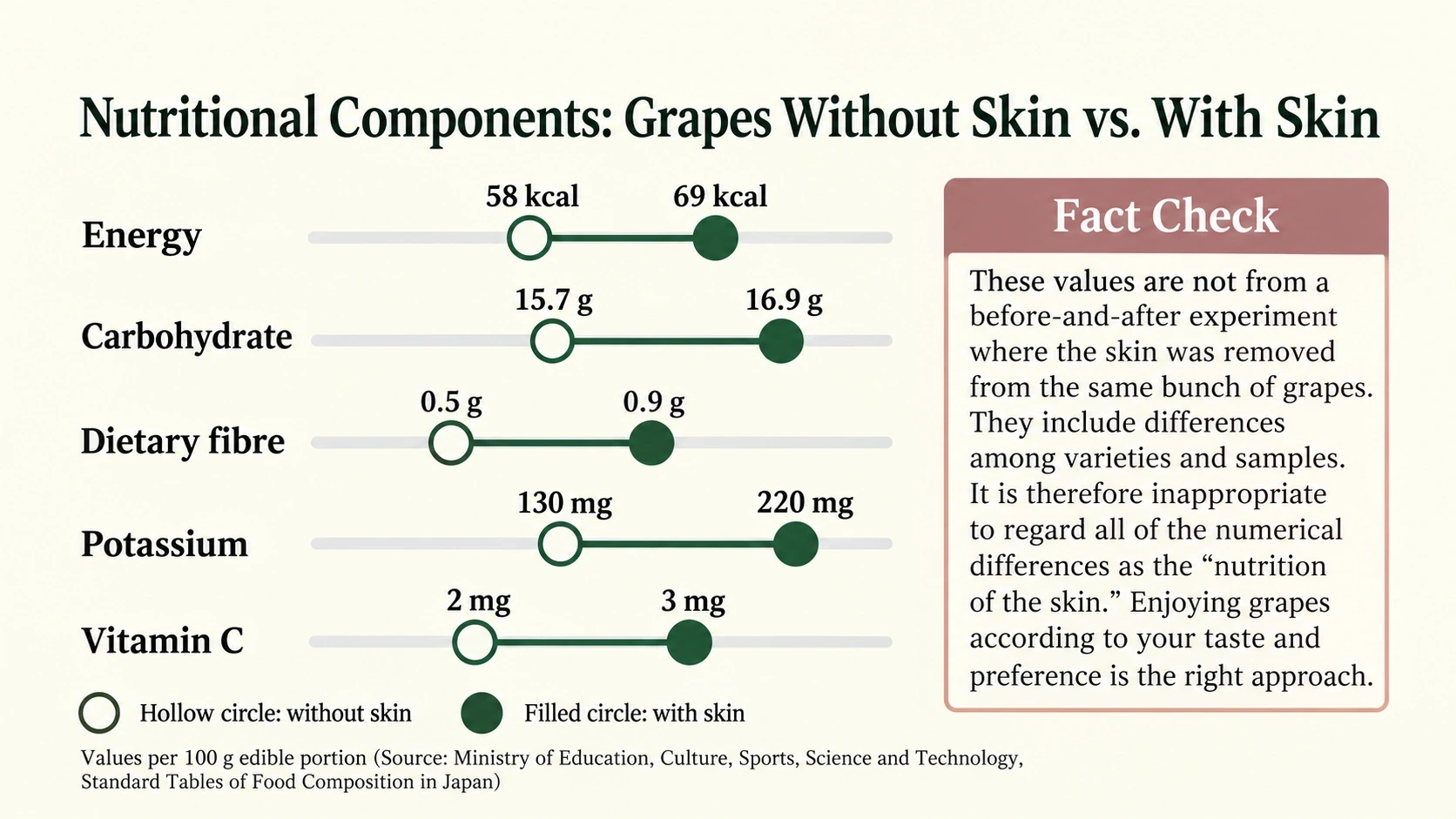
These values are per 100 g of edible portion, as listed in Japan’s Ministry of Education, Culture, Sports, Science and Technology food composition database.
| Nutrient | Raw, without skin | Raw, with skin |
|---|---|---|
| Energy | 58 kcal | 69 kcal |
| Water | 83.5 g | 81.7 g |
| Carbohydrates | 15.7 g | 16.9 g |
| Dietary fiber | 0.5 g | 0.9 g |
| Potassium | 130 mg | 220 mg |
| Vitamin C | 2 mg | 3 mg |
Sources: raw grapes without skin and raw grapes with skin (Japanese database).
These two entries are not the results of a before-and-after peeling experiment on the same bunch. Varieties and samples may differ, so it would be misleading to attribute every numerical difference to nutrients in the skin. Choose how to eat the skin according to its texture and your preferences.
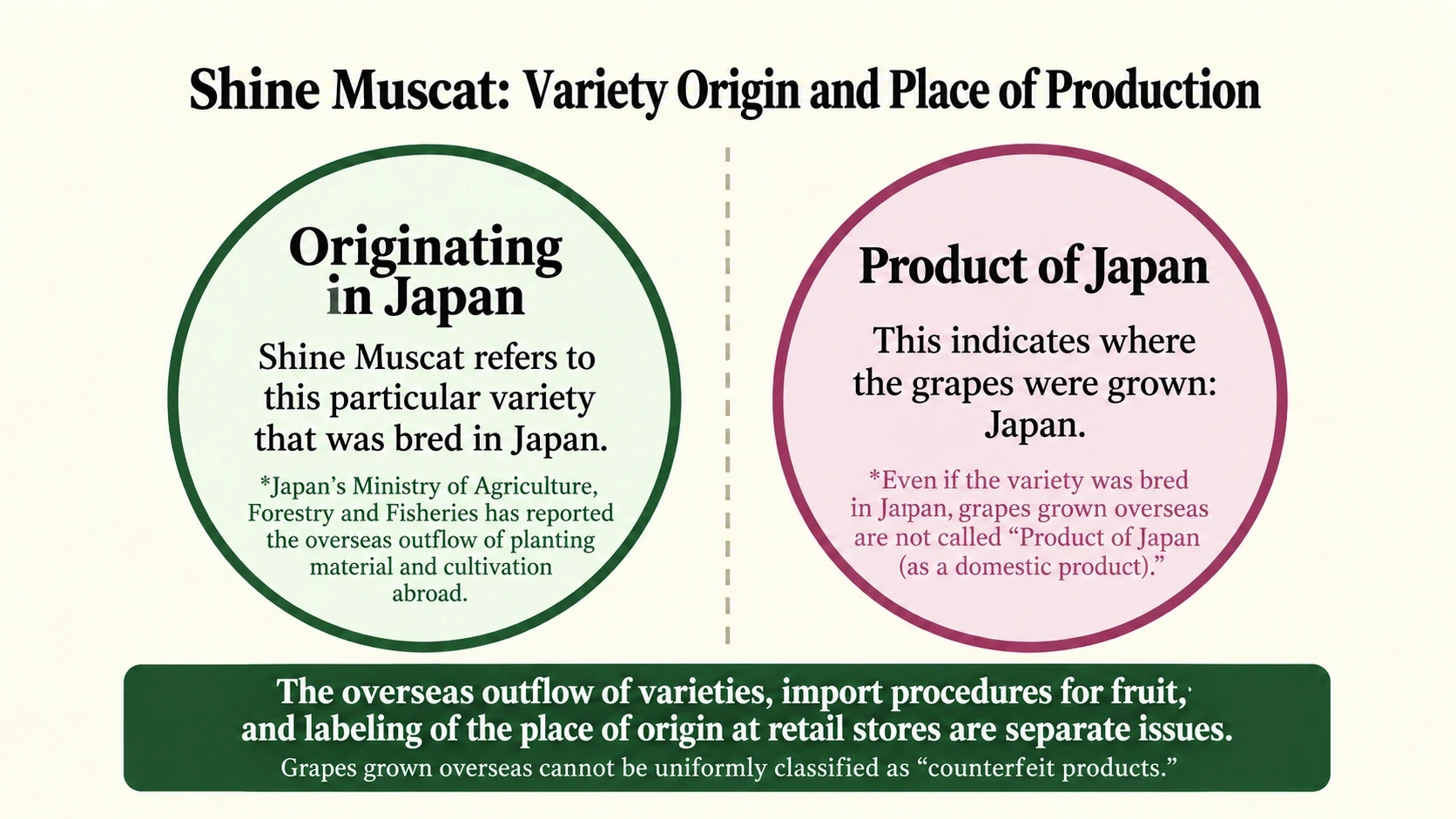
Shine Muscat: developed in Japan is not the same as grown in Japan
Shine Muscat is a variety developed in Japan. A country-of-origin label stating Japan, however, indicates that the fruit was produced there. When a Japanese-developed variety is grown abroad, its name alone does not make the fruit Japanese-grown.
Japan’s Ministry of Agriculture, Forestry and Fisheries has reported the spread of Shine Muscat planting material to China and South Korea and the expansion of cultivation and distribution there. Overseas movement of a variety, fruit import procedures, and retail origin labeling are separate issues. Foreign-grown fruit should not automatically be described as counterfeit or falsely labeled. MAFF’s explanation (in Japanese)
For exports from Japan to Vietnam, a February 2025 MAFF document listed negotiations to open the market for grapes. The Japanese V05 source article records that, when reviewed on October 3, 2026, grapes were not listed under Vietnam in the bilateral phytosanitary conditions list. That list alone cannot be treated as a complete table of permission or prohibition for every product. When assessing fruit labeled as grown in Japan, check the seller’s information and the latest applicable phytosanitary requirements. Market-access document and bilateral phytosanitary conditions (in Japanese).


Frequently asked questions
Are grapes grown in Vietnam?
Yes. Ninh Thuan is one of Vietnam’s representative grape-growing regions. Shops also sell imported grapes, so check origin labels if you want locally grown fruit.
When are grapes in season in Vietnam?
Harvest periods vary by variety and pruning schedule, and some cultivation systems produce several harvests. Imports also contribute to supply. Availability cannot be reduced to a single season matching the Japanese grape season.
Does nho xanh mean Shine Muscat?
No. Nho xanh means green grapes. It is neither the variety name Shine Muscat nor an indication that the fruit was grown in Japan.
Related articles