
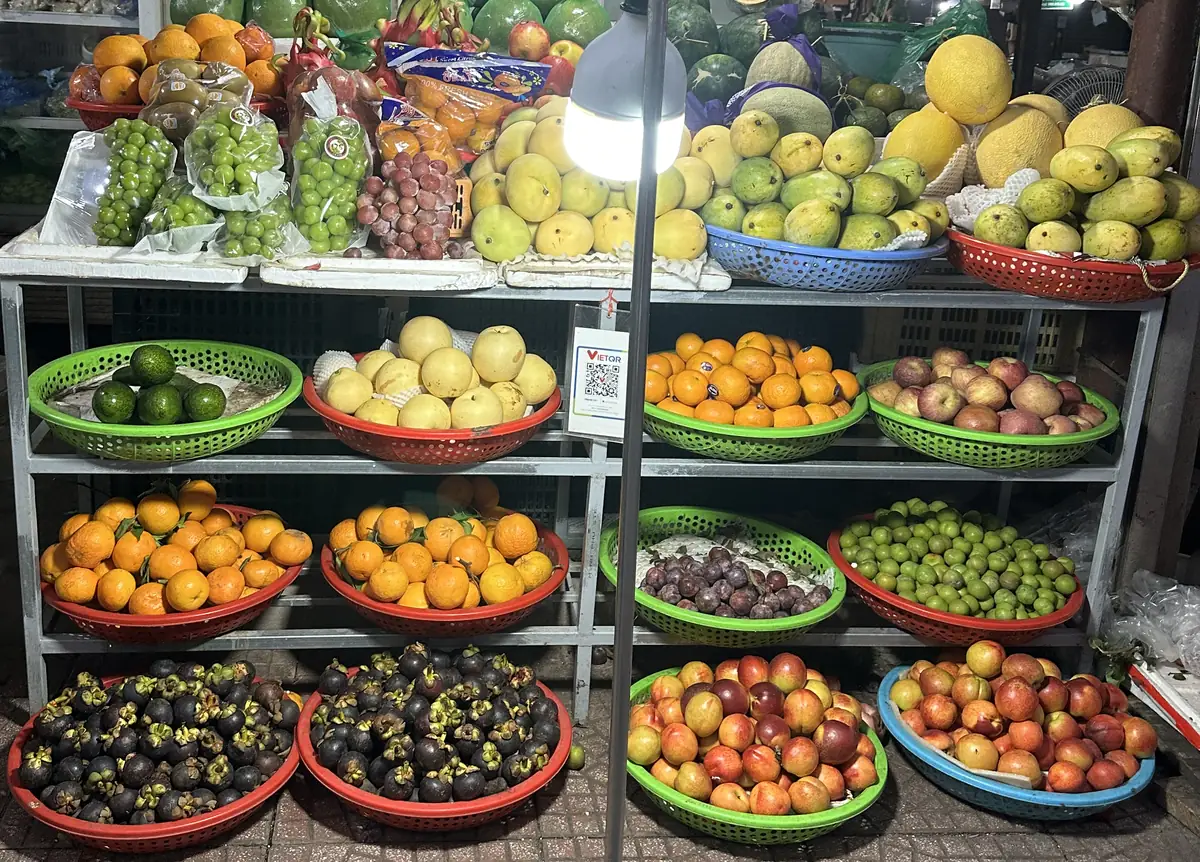
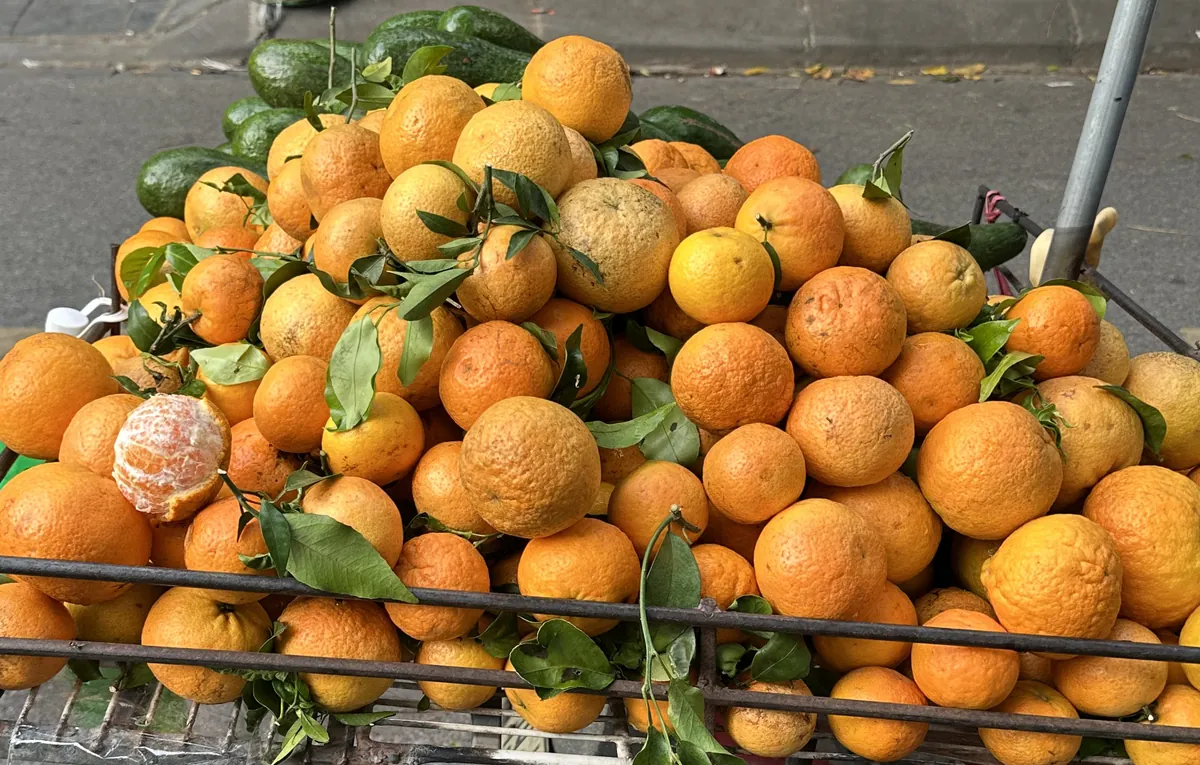
Vietnamese mandarins, Quýt, are sold in supermarkets, open-air markets and by street vendors. They are convenient travel snacks because you can peel them by hand. The August 2026 reference material recorded roughly 25,000–80,000 VND/kg, often around 35,000–40,000 VND/kg; these are historical examples, not a current price quote.
Mandarin Guide explains the distinction between Japanese satsuma and Vietnamese Quýt. Mandarin History and Stories follows citrus through poetry, American orchards and Vietnamese traditions. Here, the questions are practical: how do you choose a mandarin, peel it and enjoy it locally?
Unlike a pineapple that needs trimming or a pomelo with a thick rind and segment membranes, a mandarin usually needs only your hands. The ease of peeling varies by variety, but a knife and cutting board are often unnecessary.
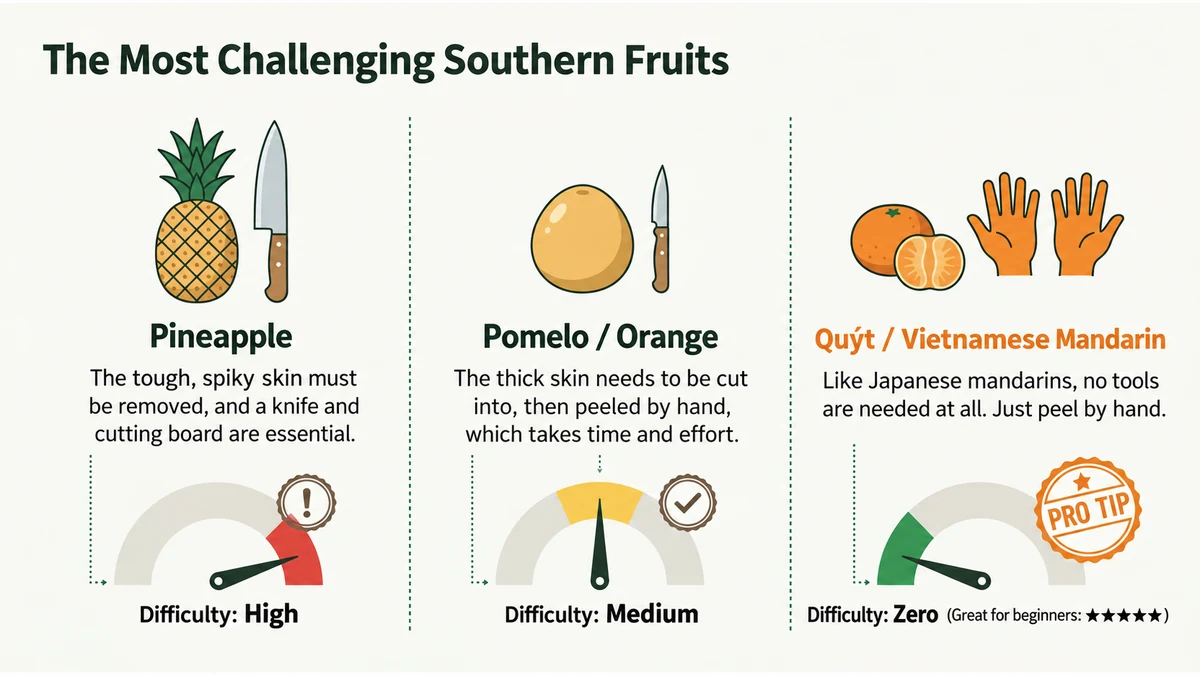
Follow the practical sequence: find the fruit, check the price, choose, peel, eat and store.
Buying and Eating: Quick Reference
| Item | Details |
|---|---|
| Vietnamese name | Quýt |
| Pronunciation aid | Roughly “kwit”; pronunciation varies by dialect |
| Taste | Sweetness balanced with acidity; varies by cultivar and ripeness |
| Texture | Juicy segments with soft flesh |
| Season | Roughly October–February in important northern growing regions; varies by cultivar |
| Historical price examples | 25,000–80,000 VND/kg; often 35,000–40,000 VND/kg in the August 2026 reference material. Confirm the price when buying. |
| Where to buy | Supermarkets, open-air markets and street vendors |
| Basic eating method | Peel by hand, separate the segments and eat the flesh |
| Other uses | Nước ép quýt juice, traditional dried peel called trần bì and candied peel called mứt vỏ quýt |
| Ease for beginners | ★★★★★ |
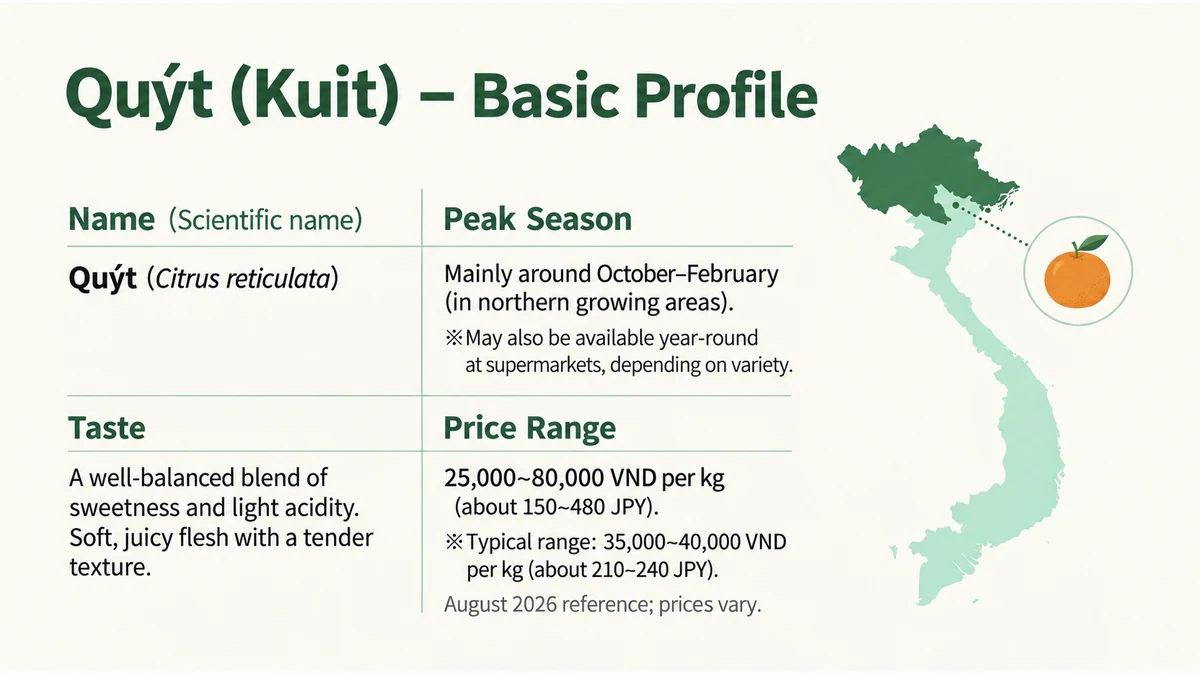
The Vietnamese Word Quýt
Quýt is the useful word to remember when looking for mandarins. Regional names include Quýt vàng Bắc Sơn, Quýt Bắc Kạn and Quýt Hương Cần, as described in Mandarin Guide. Do not confuse quýt with quất, the kumquat-type citrus commonly seen in potted Tết displays.
Taste and Texture
Vietnamese mandarins can combine sweetness and acidity with juicy flesh. Variety, origin and ripeness affect the balance. In the author’s tasting, the segment membranes seemed a little thicker and the acidity stronger than in familiar Japanese satsumas. That is one firsthand experience, not a description of every Vietnamese mandarin.
Prices and Places to Buy
The August 2026 reference material gave examples around 25,000–80,000 VND/kg, with 35,000–40,000 VND/kg as a common guide. The author paid 40,000 VND/kg at an open-air market that month. Prices change with variety, season and seller; check the displayed weight and price before buying.
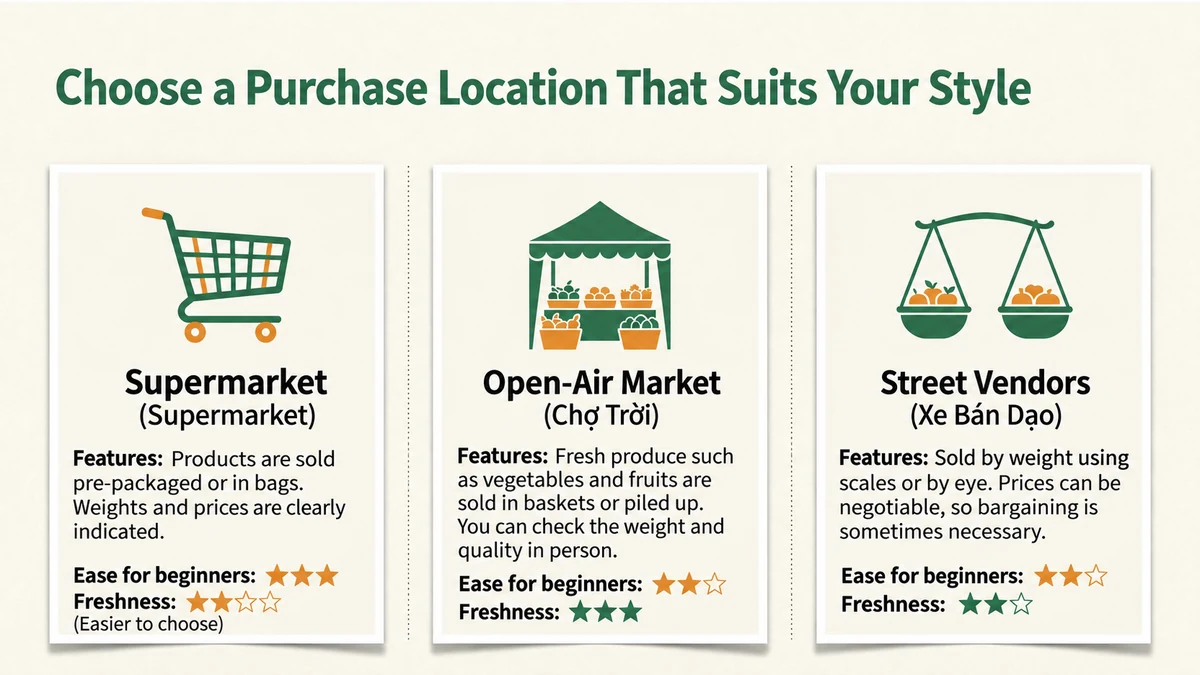
Open-Air Markets
Fruit may be piled in baskets or on stalls. Ask whether you can handle it before checking weight, firmness and visible condition.
Supermarkets
Labeled weights and prices can make comparison easier. Net bags and prepacked fruit are common options, especially if you prefer to shop without negotiating.
Street Vendors
Vendors may carry a shoulder pole called quang gánh or display fruit on a cart. Check the condition of individual fruit and the stated price carefully.
How to Choose Mandarins
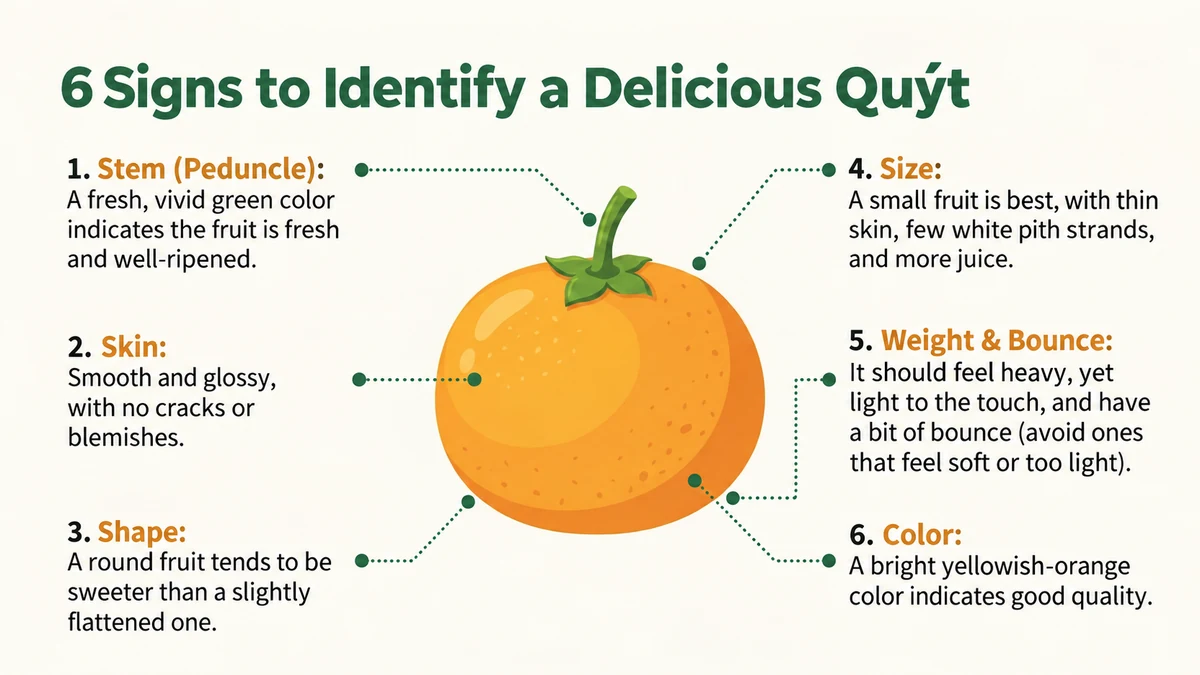
Use several signs together rather than relying on one feature.
- Weight and firmness: choose fruit that feels reasonably heavy for its size and gently firm. Avoid shriveled fruit, leaks and very soft patches.
- Size: some shoppers favor smaller fruit for a thinner rind, but size alone does not establish sweetness or juiciness.
- Skin: look for sound peel without cracks, mold or damaged areas.
- Stem: an attached green stem can be a freshness clue, but its absence does not by itself make the fruit poor quality.
- Shape: a slightly flattened fruit is often favored in local buying advice; this is a rule of thumb rather than a sweetness test.
- Color: yellow and orange shades vary by cultivar and climate. Color alone cannot establish ripeness or flavor.
These signs are buying heuristics, not guarantees. Inspect several fruit and, if the seller permits it, taste a sample.
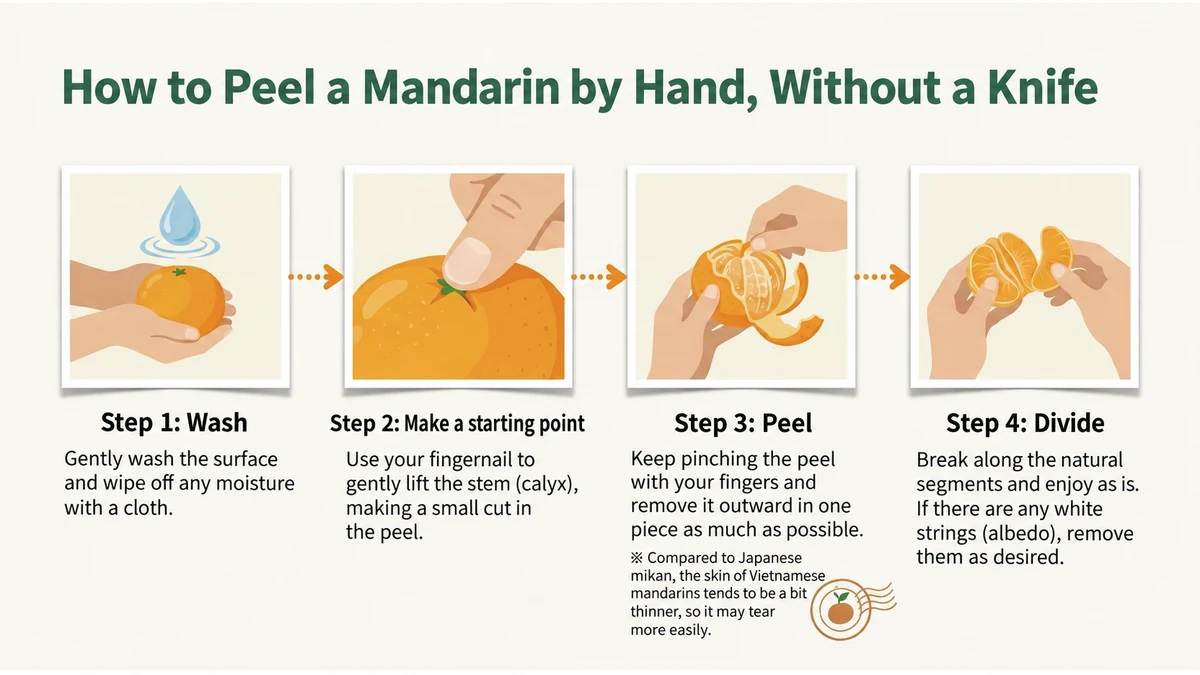
How to Peel a Mandarin by Hand
Mandarins are usually simpler to peel than thick-rinded pomelos or pineapples. Some Vietnamese varieties have tighter-fitting peel, so work gently rather than forcing it.
- Wash the surface and dry it; use clean hands.
- Make a small opening in the rind near the stem with your thumbnail.
- Pull the rind outward a little at a time. Take extra care if the skin fits tightly against the segments.
- Separate the segments. Remove any seeds as you eat; the white pith can be left on or gently removed according to preference.
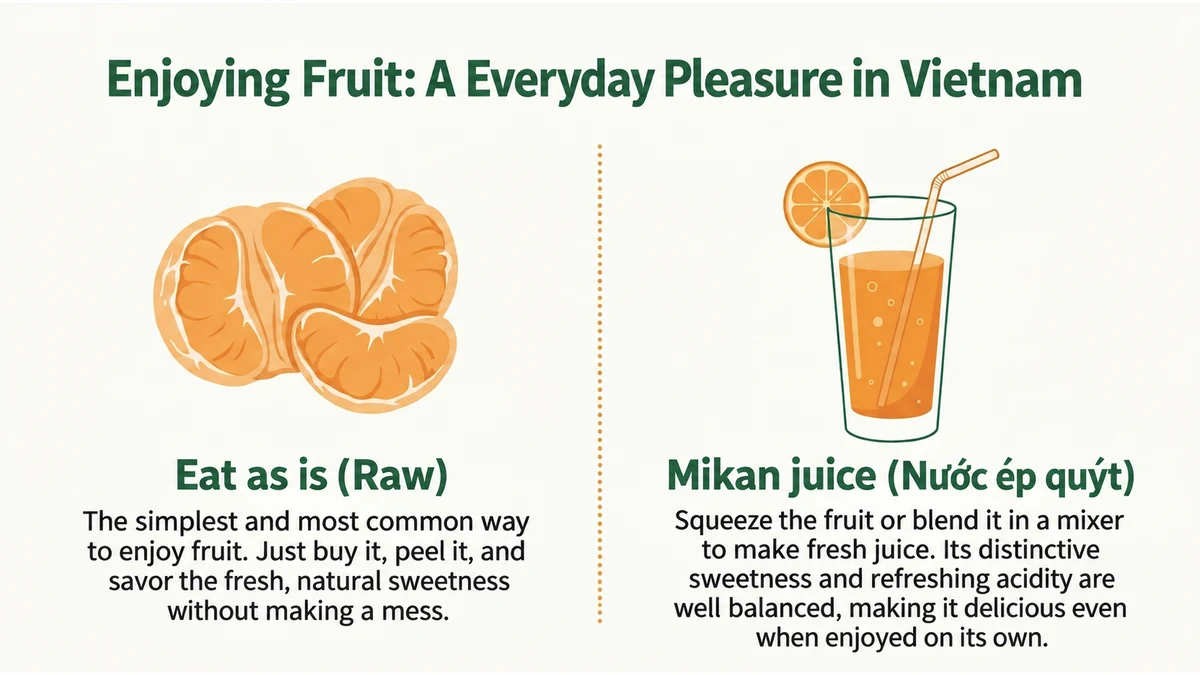
Ways to Enjoy Quýt in Vietnam
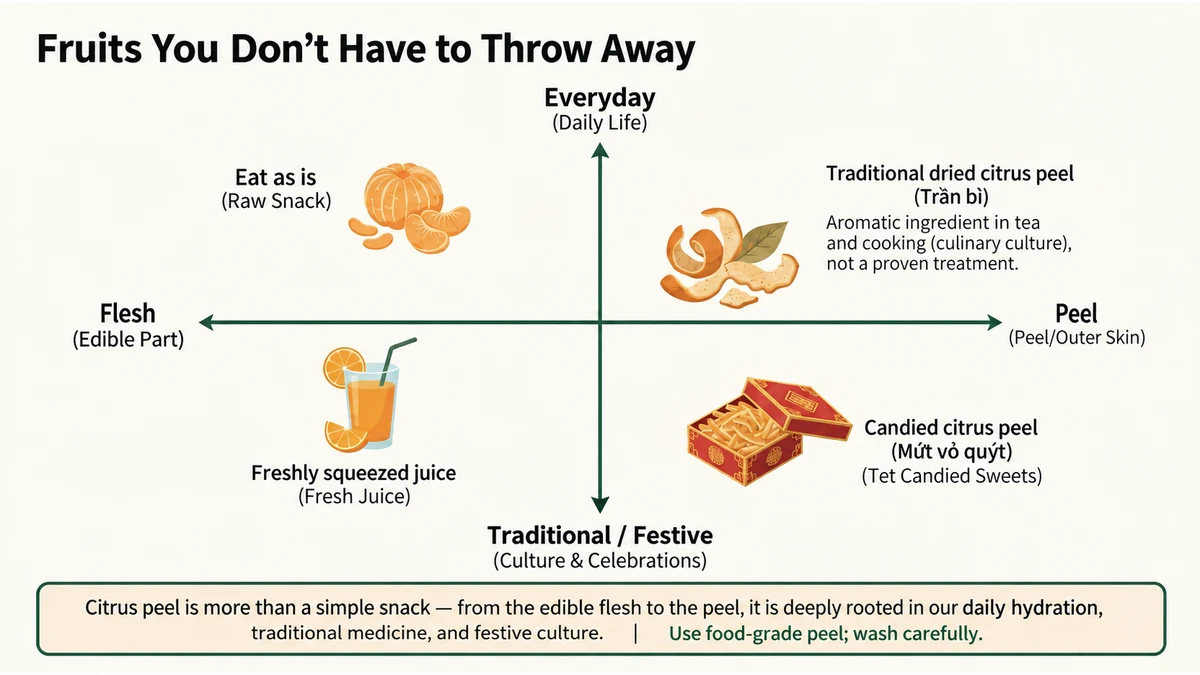
1. Fresh Segments
The simplest way is to peel the fruit and eat the segments, removing seeds if present.
2. Nước Ép Quýt: Mandarin Juice
Squeeze the flesh or blend the peeled, deseeded segments. Taste before adding sugar: the fruit already contains naturally occurring sugars, and sweetness varies.
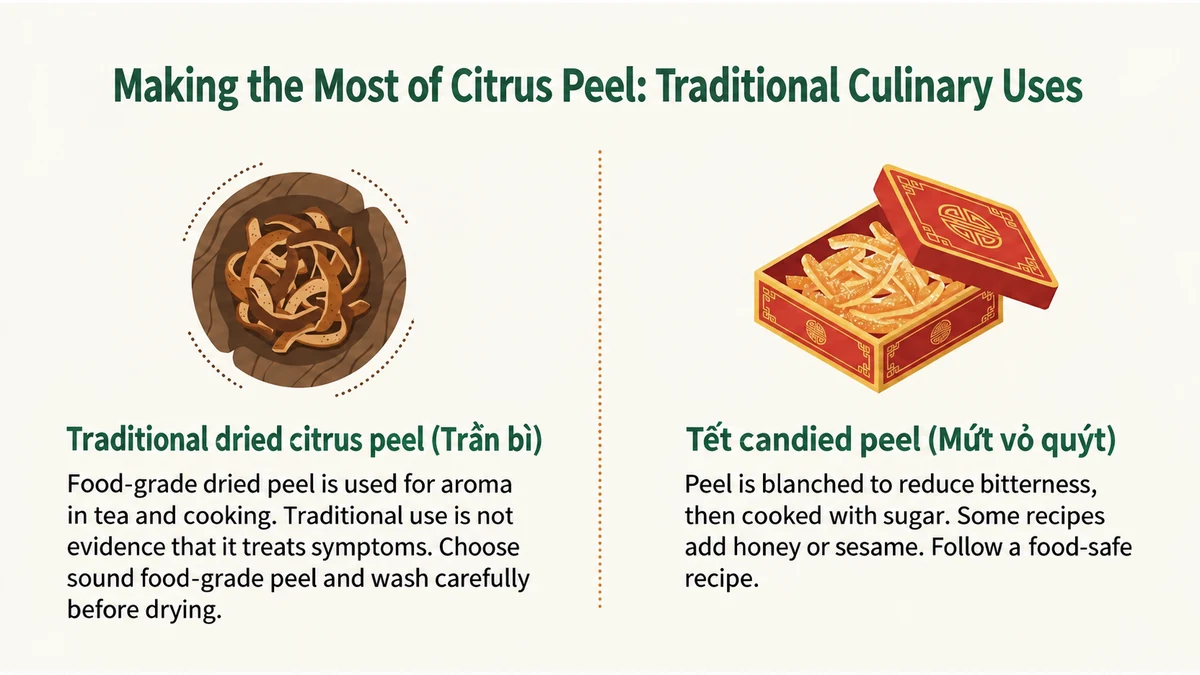
3. Trần Bì: Traditional Dried Citrus Peel
Dried citrus peel called trần bì has a place in Vietnamese culinary and traditional medicine culture. Food-grade dried peel can add fragrance to tea or cooking. This cultural description does not establish a treatment effect. Use peel intended for food, wash it carefully, and do not treat home-dried peel as a substitute for medical care.
4. Mứt Vỏ Quýt: Candied Mandarin Peel
Candied peel can appear among Tết sweets. Recipes often slice and blanch the peel to reduce bitterness, then simmer it with sugar, sometimes adding honey or sesame. Use sound, food-grade peel and follow a tested food recipe. The result is a sweet confection, distinct from fresh fruit.
Storage
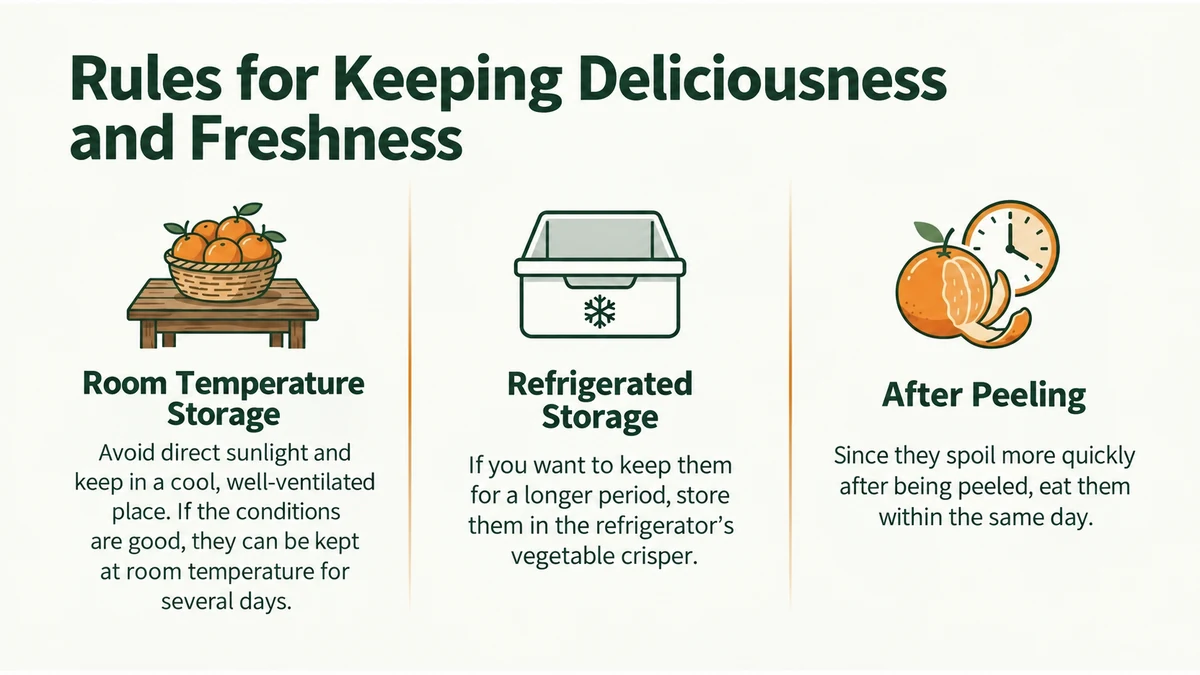
- At room temperature: keep whole fruit in a cool, ventilated place away from direct sunlight. Warm, humid conditions shorten storage life, so inspect it daily.
- In the refrigerator: refrigerate whole fruit for longer storage and remove damaged or moldy fruit from the batch.
- After peeling: refrigerate promptly in a clean covered container and eat soon, preferably that day. Do not leave peeled fruit in tropical heat.
A Note on Yellowing Skin
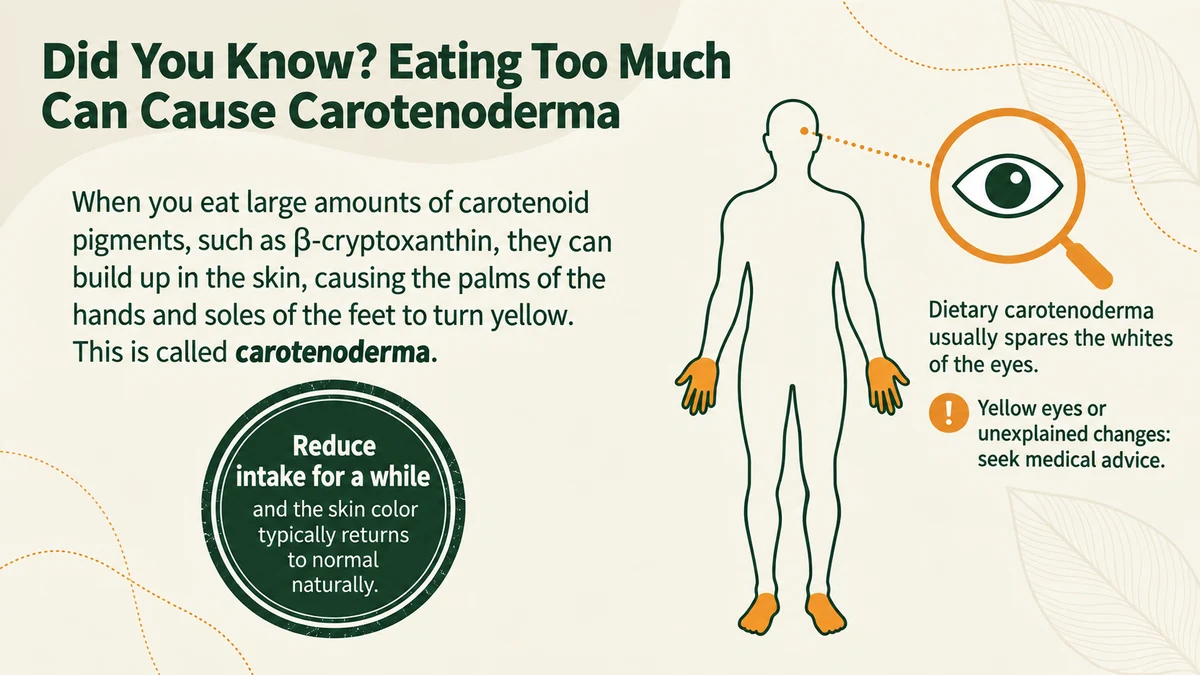
A high intake of carotenoid-rich foods can sometimes cause dietary carotenoderma, particularly on palms and soles. It often improves after reducing excess intake, though this can take weeks. The whites of the eyes are usually unaffected. Yellow eyes, unexplained skin changes or other symptoms need medical assessment; do not diagnose the cause from food intake alone.
Can You Take Fresh Mandarins to Japan?
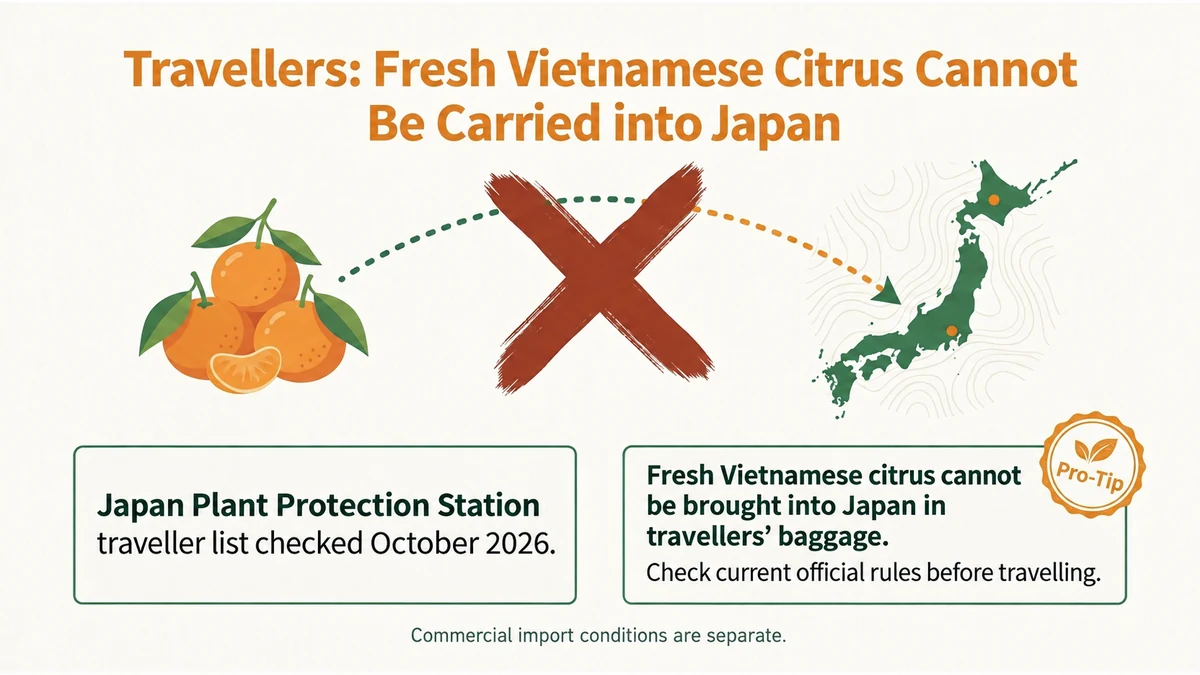
Japan’s Plant Protection Station lists fresh citrus from Vietnam among fruits that travelers cannot bring into Japan in baggage. This traveler restriction is the relevant rule for market-bought mandarins carried home after a visit.
Check current official guidance before traveling. Do not assume an airport sale, washing or ordinary packaging makes prohibited fresh fruit admissible.
The Author’s Firsthand Tasting Notes
Purchase record
August 2026, an open-air market: 40,000 VND/kg. The original note’s approximate 240 yen conversion is historical, not a current exchange-rate calculation.Tasting impression
The segment membranes felt a little thicker and the flavor somewhat more acidic than the Japanese satsumas familiar to the author. It was a different local experience rather than a direct substitute.
The 40,000 VND/kg purchase falls within the reference range and at the upper end of its 35,000–40,000 VND/kg typical band. It is not near the high end of the full 25,000–80,000 VND/kg range. Treat it as a dated purchase example.
Frequently Asked Questions
How much do Vietnamese mandarins cost?
Historical August 2026 examples were around 25,000–80,000 VND/kg, often 35,000–40,000 VND/kg. The author paid 40,000 VND/kg. Check the current seller’s price because variety and season matter.
What is mandarin called in Vietnamese?
Quýt. This is the useful general word for finding mandarins at a market or supermarket.
Can you buy them year-round?
Important northern growing regions harvest roughly October–February. Supermarket supply can extend beyond a local harvest season, depending on origin and variety.
Do you need to peel them?
Yes. Remove the outer rind, then eat the segments. A knife is often unnecessary; remove seeds if present.
What can happen if you eat too many?
A sustained high intake of carotenoid-rich foods can sometimes yellow the skin. Dietary carotenoderma usually spares the eyes, but unexplained yellowing or other symptoms should be assessed by a clinician.
Can you bring them back to Japan?
Fresh citrus from Vietnam cannot be carried into Japan in travelers’ baggage under the official guidance checked for this October 2026 revision.
Practical Points for Enjoying Quýt
Mandarins offer an approachable way to explore fruit in Vietnam: usually no knife is needed.
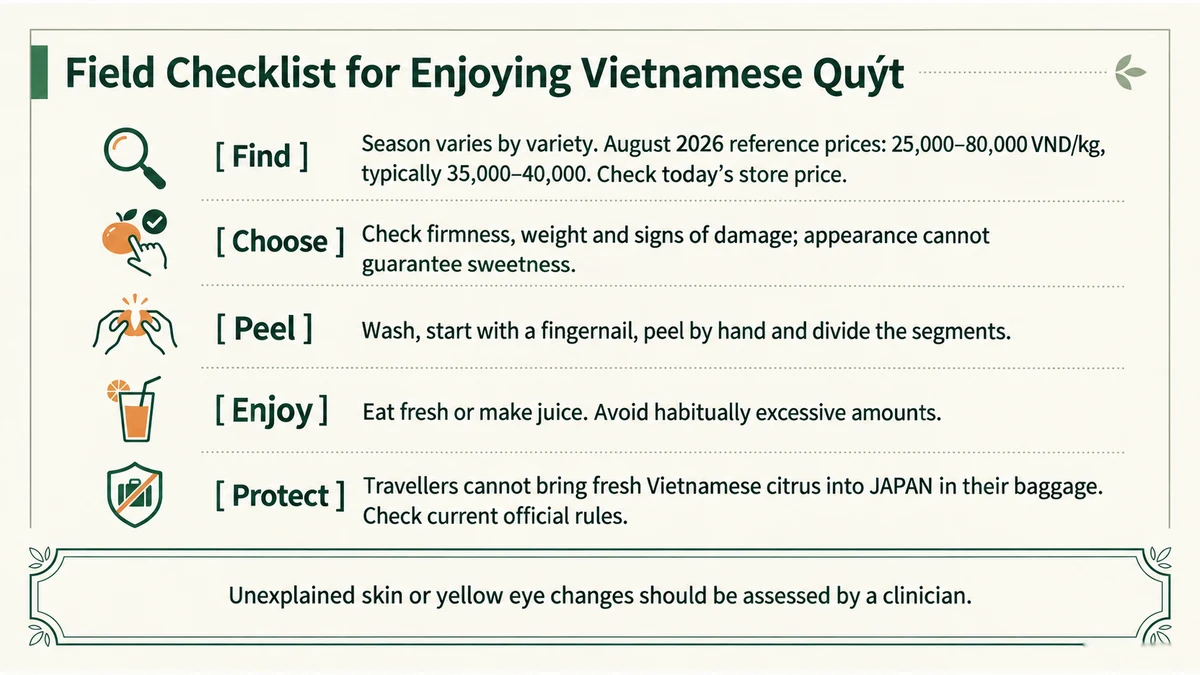
- Choose: combine weight, firmness and visible condition; do not rely on color or shape alone.
- Peel: wash, make a small opening and pull the rind off gently.
- Enjoy: try segments or juice; use only suitable food-grade peel for culinary preparations.
- Pay attention: avoid routinely excessive portions, and seek advice for unexplained skin or eye yellowing.
- Store: keep whole fruit cool; refrigerate peeled segments promptly and eat soon.
- Travel: enjoy fresh fruit during your stay; do not carry prohibited fresh citrus into Japan.
At a market or supermarket, check the price and condition, choose a sound fruit, then peel it slowly and discover its flavor for yourself.
Related Mandarin Articles
- Biology, nutrition and regional varieties: Mandarin Guide.
- Citrus poetry, satsuma’s American journey and Vietnamese traditions: Mandarin History and Stories.
- More fruit to try in Vietnam: Vietnam Fruit Guide.
References
- Historical price background: Kingfoodmart and Gianongsan mandarin-price articles (Vietnamese). These are reference material, not live price quotations. Source 1, Source 2
- Buying heuristics: Luat Minh Khue, bTaskee and Thanh Nien Viet guidance (Vietnamese). Source 1, Source 2, Source 3
- Traditional dried-peel context: Vinmec and An Khang articles on trần bì (Vietnamese); traditional use is not treated here as established efficacy. Source 1, Source 2
- Candied peel recipe background: Bach Hoa Xanh on mứt vỏ quýt for Tết (Vietnamese). Source 1
- Carotenoderma background: Ito Noen and Yamamoto Yorisoi Clinic (Japanese). Source 1, Source 2
- Travel restrictions: Japan’s Plant Protection Station, Vietnam baggage guidance. MAFF’s import-request page provides a separate commercial-policy context (Japanese). Source 1, Source 2
DermNet: Carotenoderma — Reference for dietary carotenoid-related skin colour changes; reviewed October 2026.
