
Called Bưởi in Vietnamese, pomelo has large segments inside a thick rind. Once you understand how to score the peel, it is manageable to prepare at home.
This guide follows buying, peeling and enjoying pomelo fresh or in local dishes. It also covers medicine interactions and Japan’s plant quarantine rules for travellers.
The basic method is to make shallow cuts in the outer rind, peel it away by hand, remove the white pith, segment membranes and seeds, and eat the flesh.
Pomelo at a Glance
| Item | Details |
|---|---|
| Vietnamese name | Bưởi |
| Approximate pronunciation | Buoi |
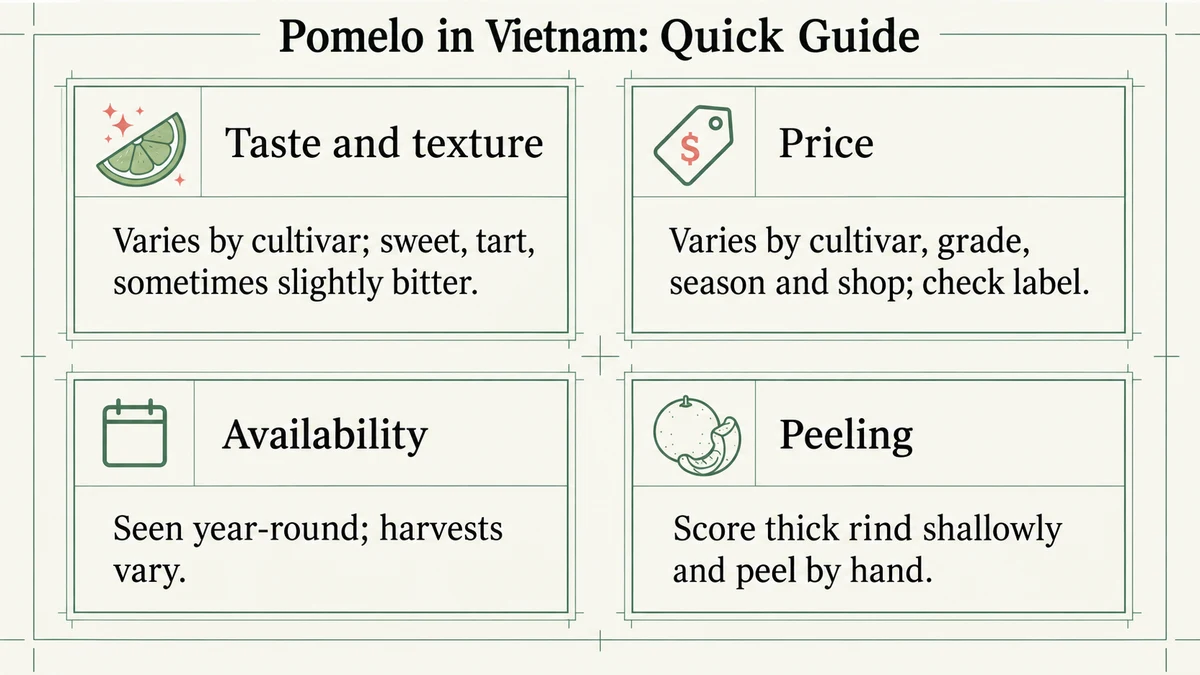
| Taste and texture | Cultivars vary: sweetness, acidity and slight bitterness, often with firm juice sacs |
| Availability | Seen throughout the year because several cultivars are grown; main harvest periods vary by region and cultivar |
| Where to buy | Supermarkets, markets and specialist fruit shops |
| Basic preparation | Remove the rind and white pith, then the segment membranes and seeds, and eat the flesh |
| Local dishes | Gỏi bưởi, a pomelo salad; Chè bưởi, a sweet dessert using prepared white pith |
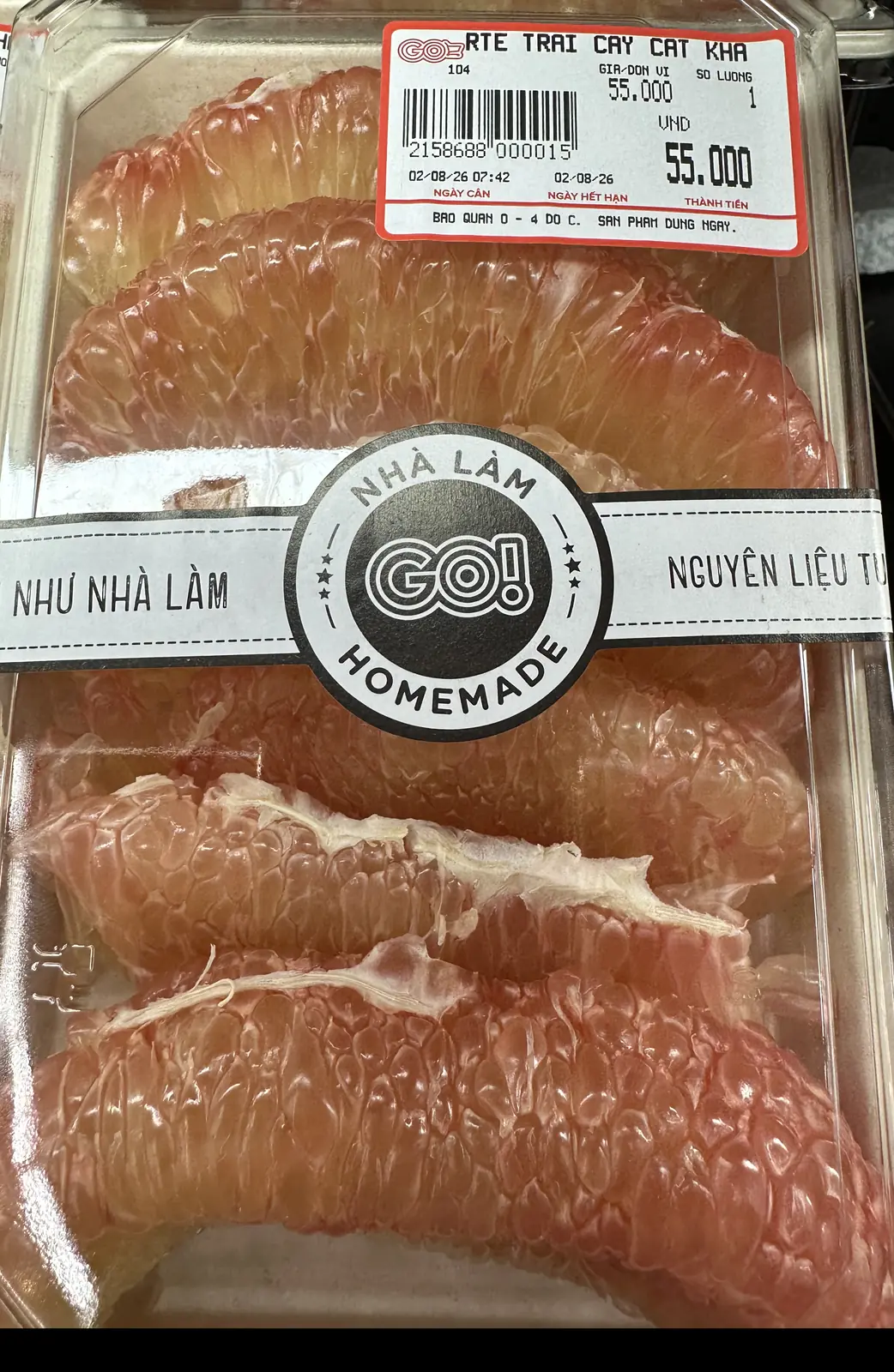
Prices vary with cultivar, grade, season and shop. The 55,000 VND mentioned below is the author’s actual purchase price for one prepared pack in August 2026, rather than a general per-kilogram market rate.
Where to Buy Pomelo in Vietnam
Supermarkets
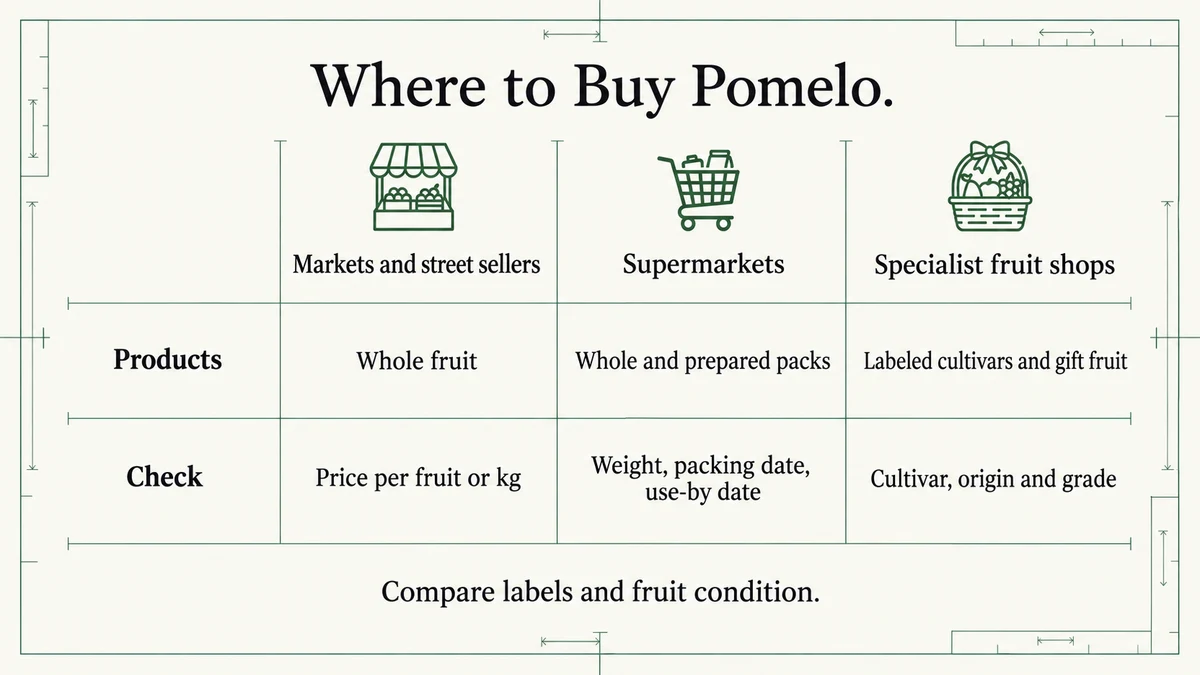
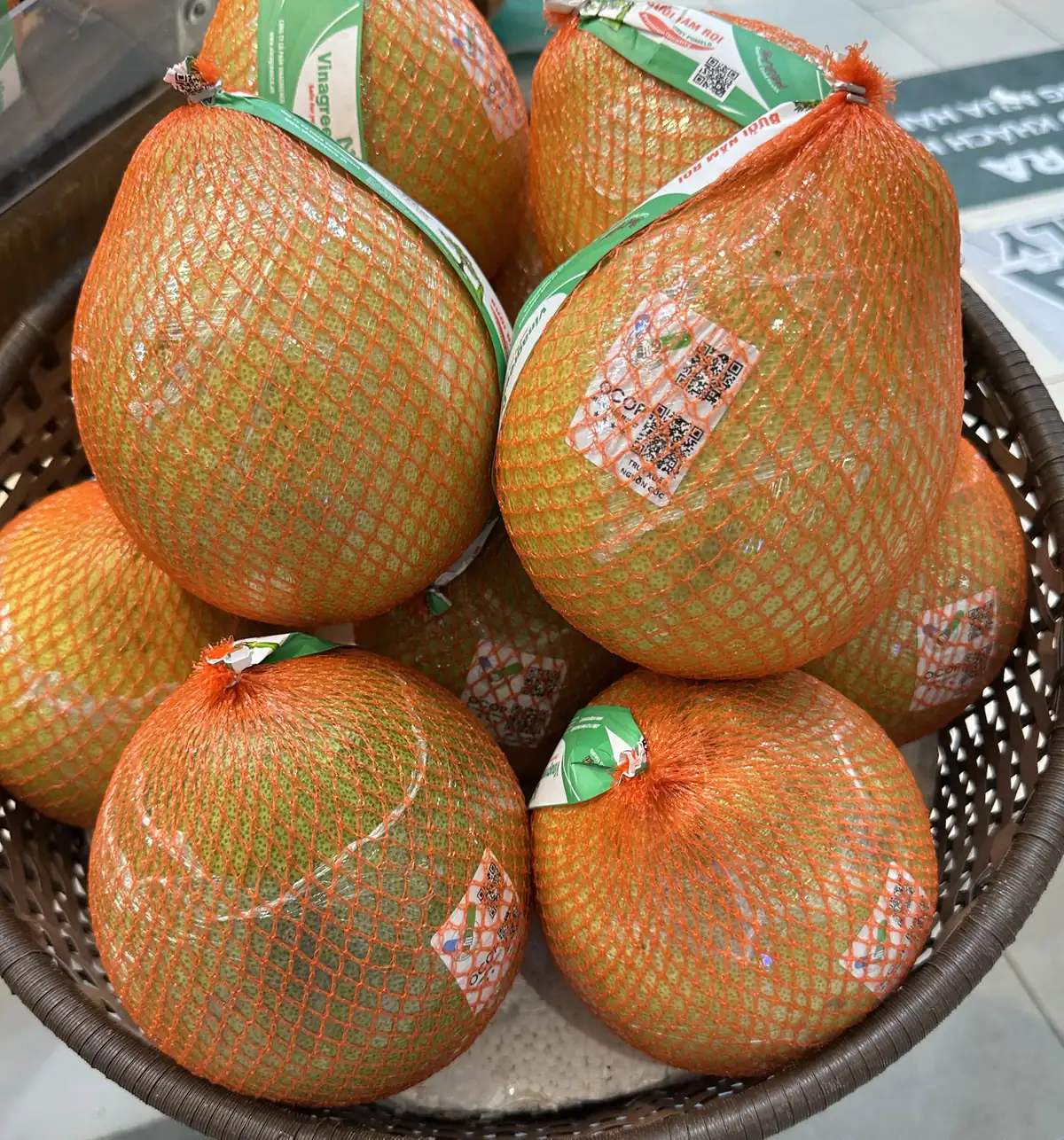
Weight and price are displayed, and prepared packs may be available. For a first purchase, a supermarket makes it easier to check cultivar, origin, packing date, use-by date and storage temperature.
Markets and Street Fruit Sellers
Compare whole fruits. If there is no price label, ask whether the quoted amount is per fruit or per kilogram before buying.
Specialist Fruit Shops
These shops may offer labeled cultivars and origins, as well as fruit intended for gifts.
How to Choose Pomelo
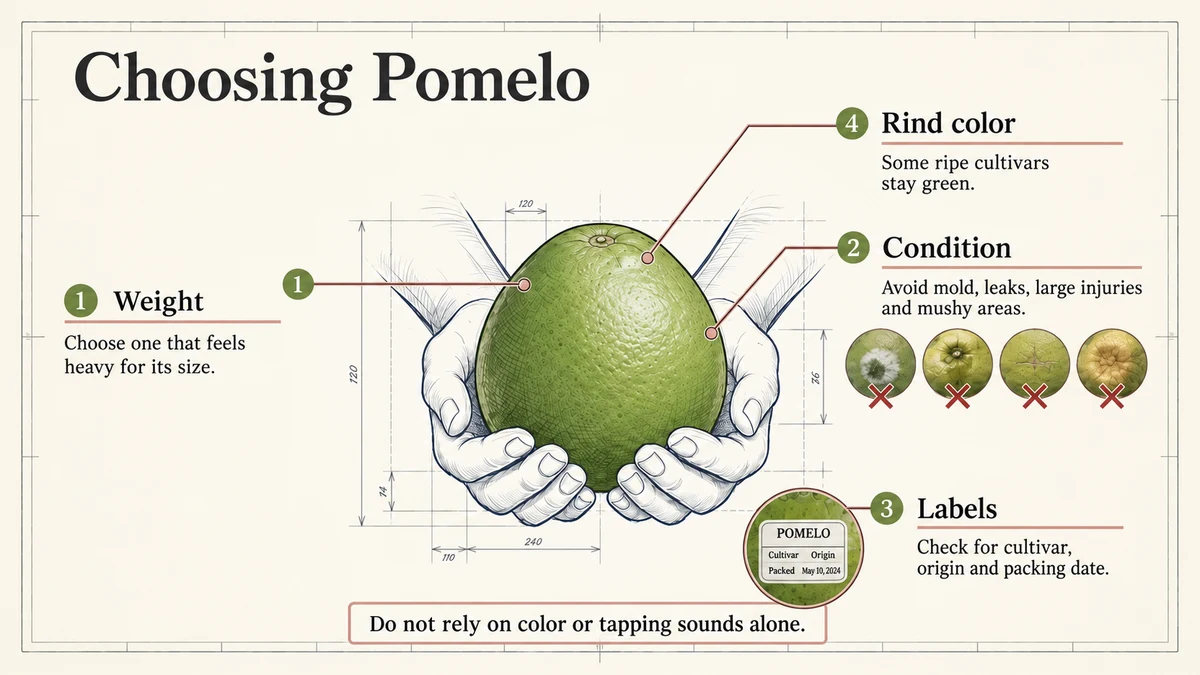
For a household purchase, check the following:
- Among fruits of a similar size, look for one that feels heavy.
- Inspect for mold, leaking juice, large injuries or soft, mushy areas.
- Check cultivar, origin, packing date and harvest information when available.
- Do not judge maturity by rind color alone. Cultivars such as Da Xanh often remain green at eating maturity.
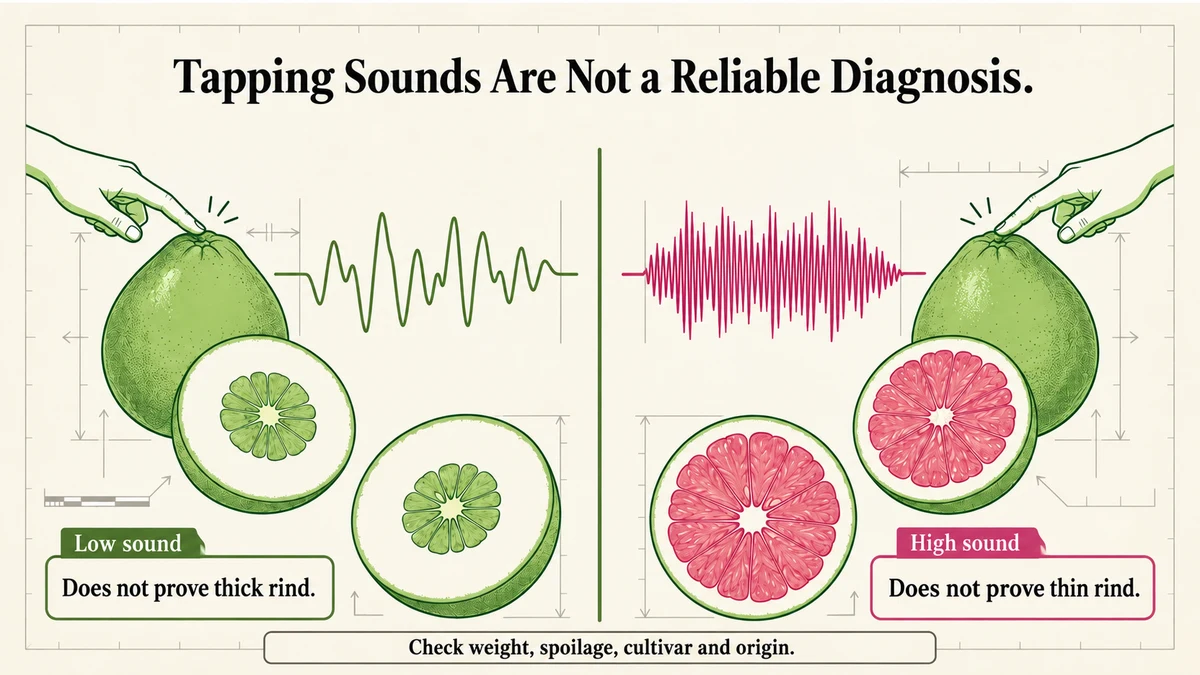
Tapping sounds, bump size and pressing the stalk do not provide a reliably verified diagnosis of rind thickness or maturity. Use several observable checks rather than an unsupported single test.
How to Peel Pomelo
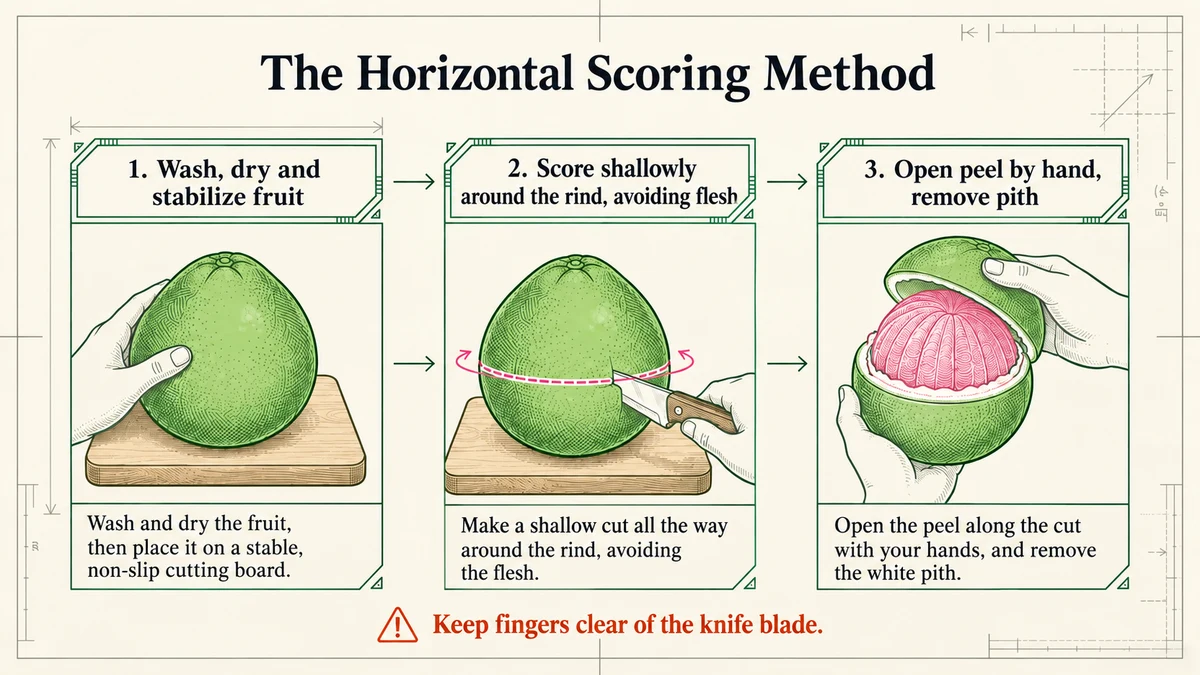
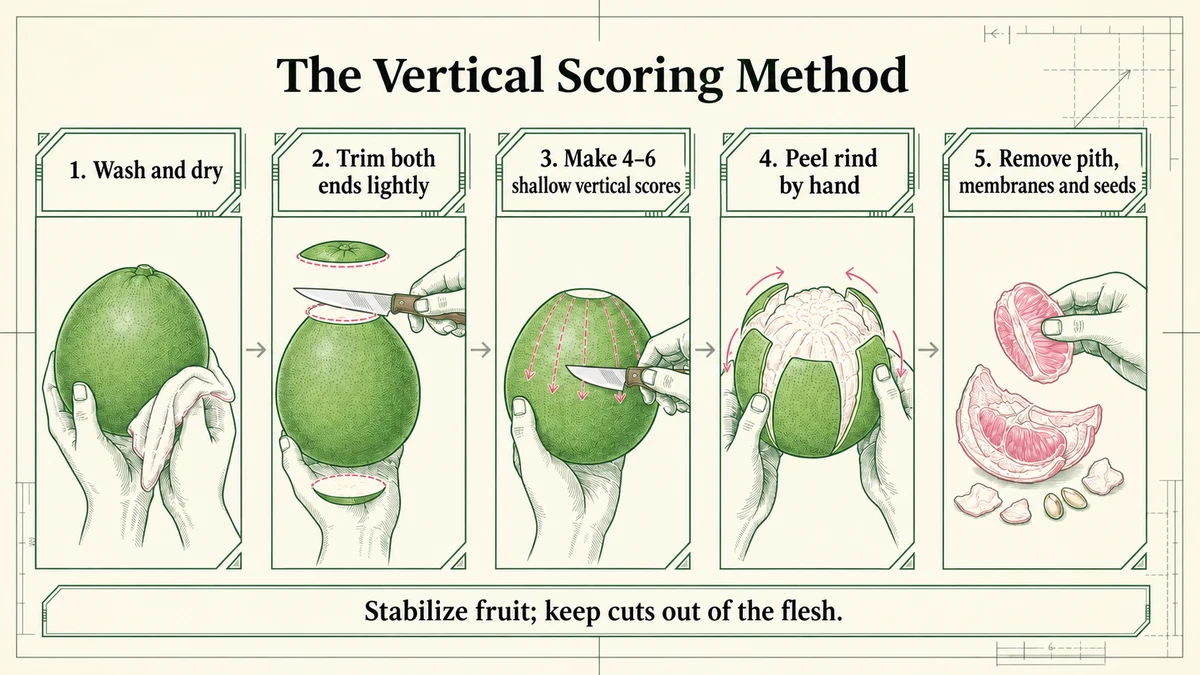
The thick rind is easiest to remove after scoring it shallowly. Work on a stable cutting board and keep the fruit from rolling while using a knife.
The Vertical Scoring Method
- Wash the fruit and dry it.
- Cut thin slices from the stalk end and opposite end.
- Make four to six shallow vertical scores through the rind, avoiding the flesh.
- Pull the rind open by hand along the scores.
- Remove the white pith and separate the fruit into segments.
- Open each segment membrane and remove the flesh.
- Remove any seeds.
An alternative is to score around the fruit horizontally and lift away the two sections of rind. Choose a method you can perform safely; there is insufficient evidence to prescribe a fixed peeling method for each cultivar based solely on juiciness.

Ways to Eat Pomelo in Vietnam
Enjoy It Fresh
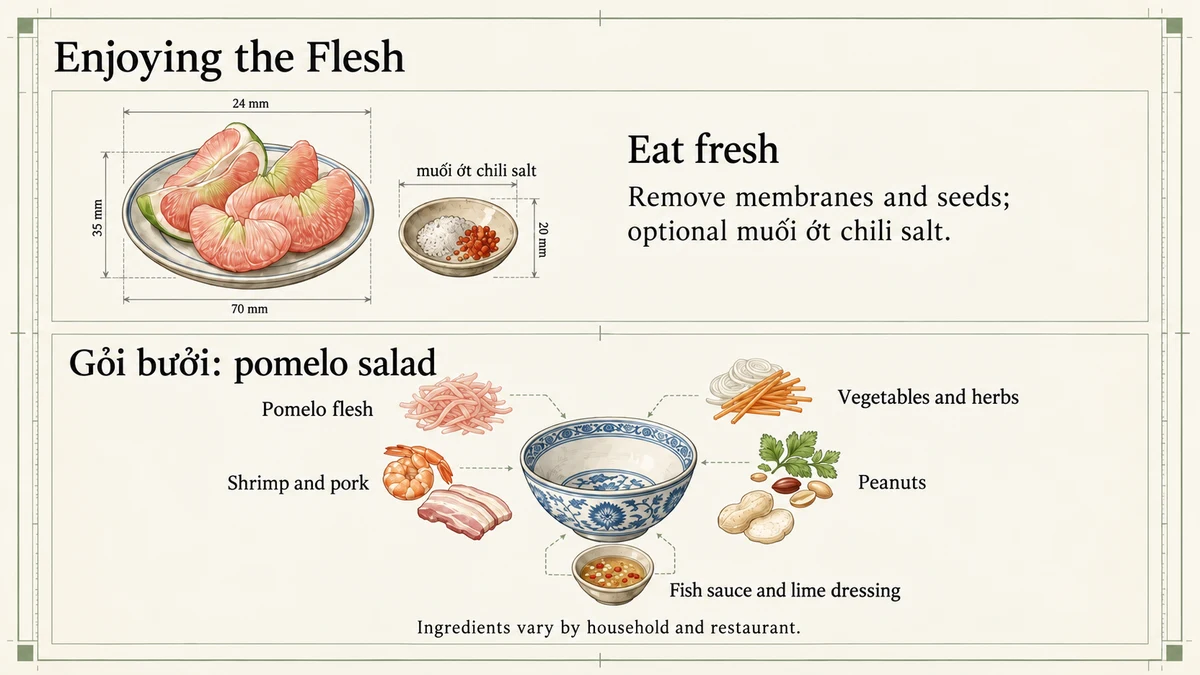
Remove the segment membranes and seeds, then eat the flesh. Some people add a small amount of muối ớt, or chili salt, to taste.
Gỏi Bưởi: Pomelo Salad
Pomelo flesh is combined with ingredients such as shrimp, pork, vegetables, herbs and peanuts, with a dressing made from fish sauce, lime juice, sugar, garlic and chili. Ingredients vary by restaurant and household.
Chè Bưởi: A Sweet Pomelo Dessert
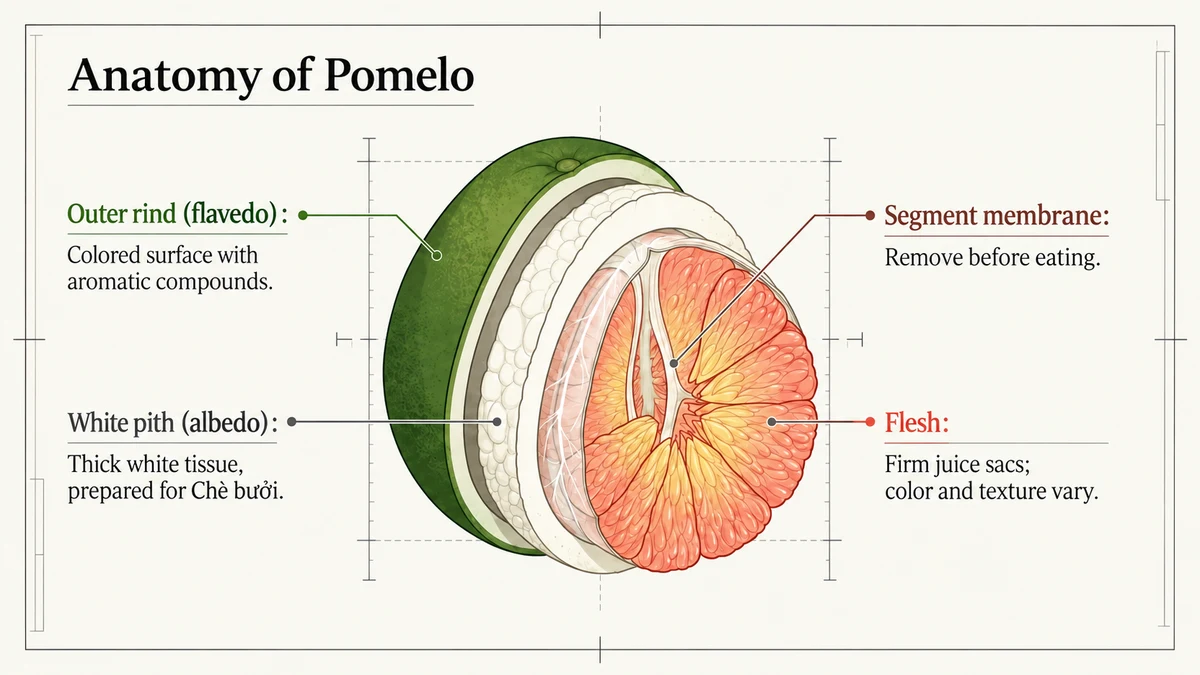
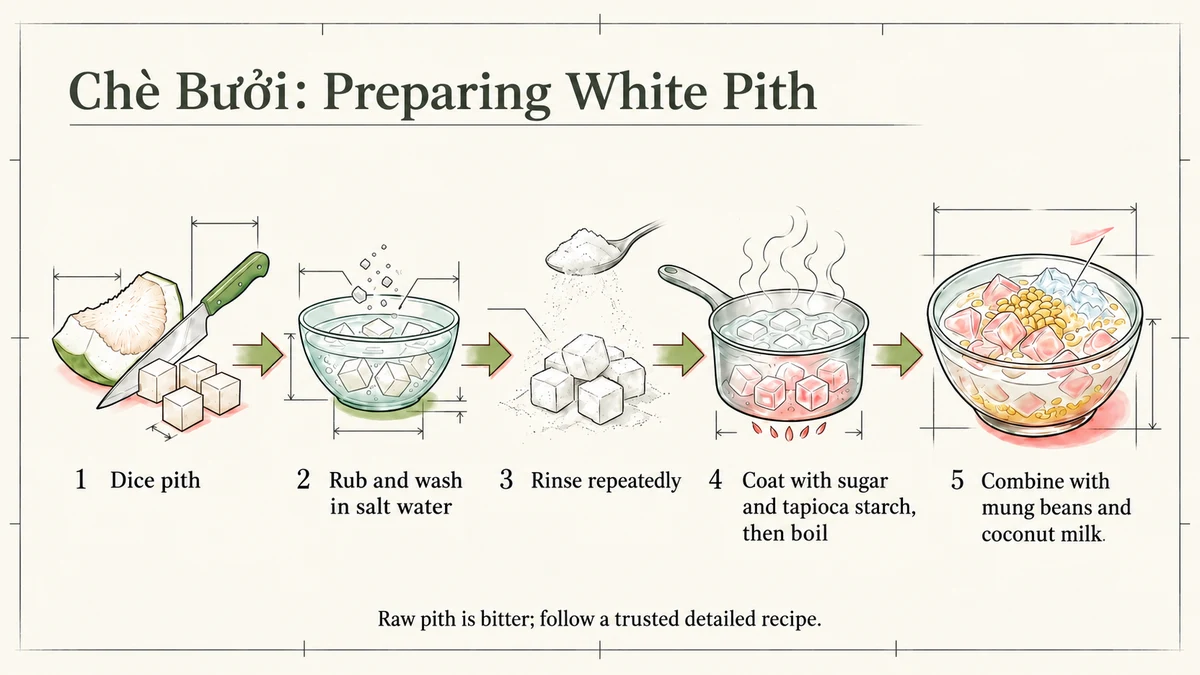
Chè bưởi uses the white pith inside the outer rind. The pith is generally diced, repeatedly rubbed and rinsed with salt water and fresh water to remove bitterness, coated with sugar and tapioca starch, boiled, and combined with mung beans and coconut milk.
Raw pith can be intensely bitter. A brief soak alone is not a complete preparation method. Follow a trusted detailed recipe if making this dish at home.
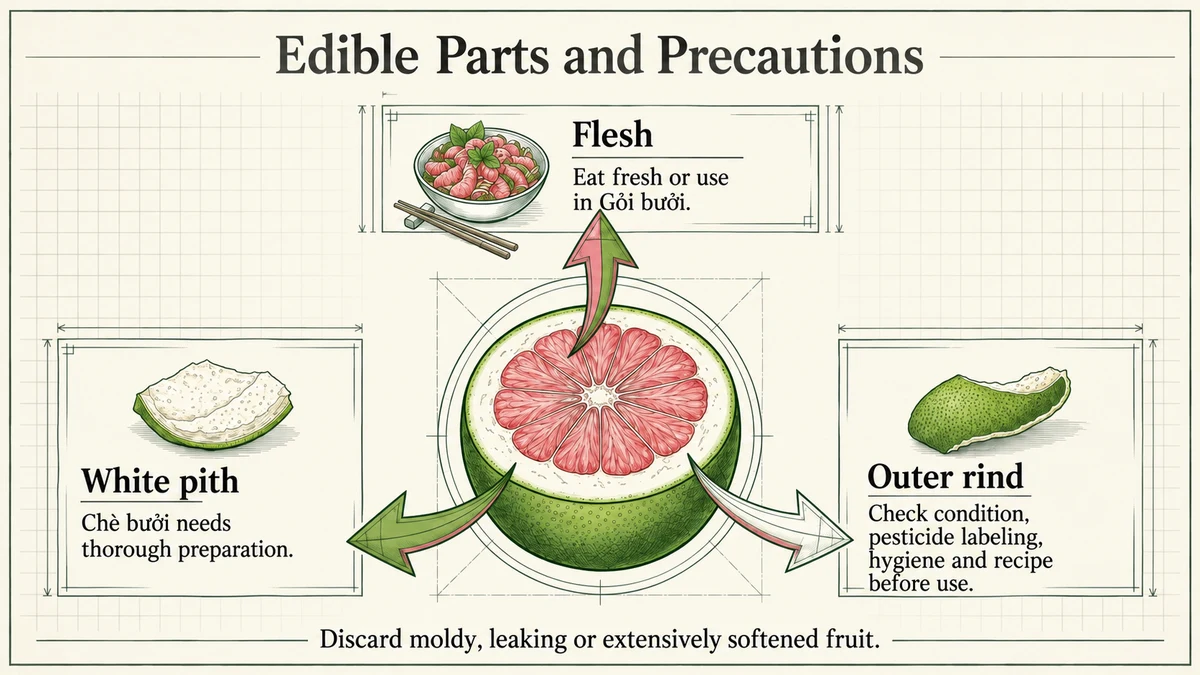
Rind can have culinary uses, but that does not make every part automatically suitable to eat. Check condition, pesticide labeling, hygiene and the preparation method before using peel or pith.
How to Store Pomelo
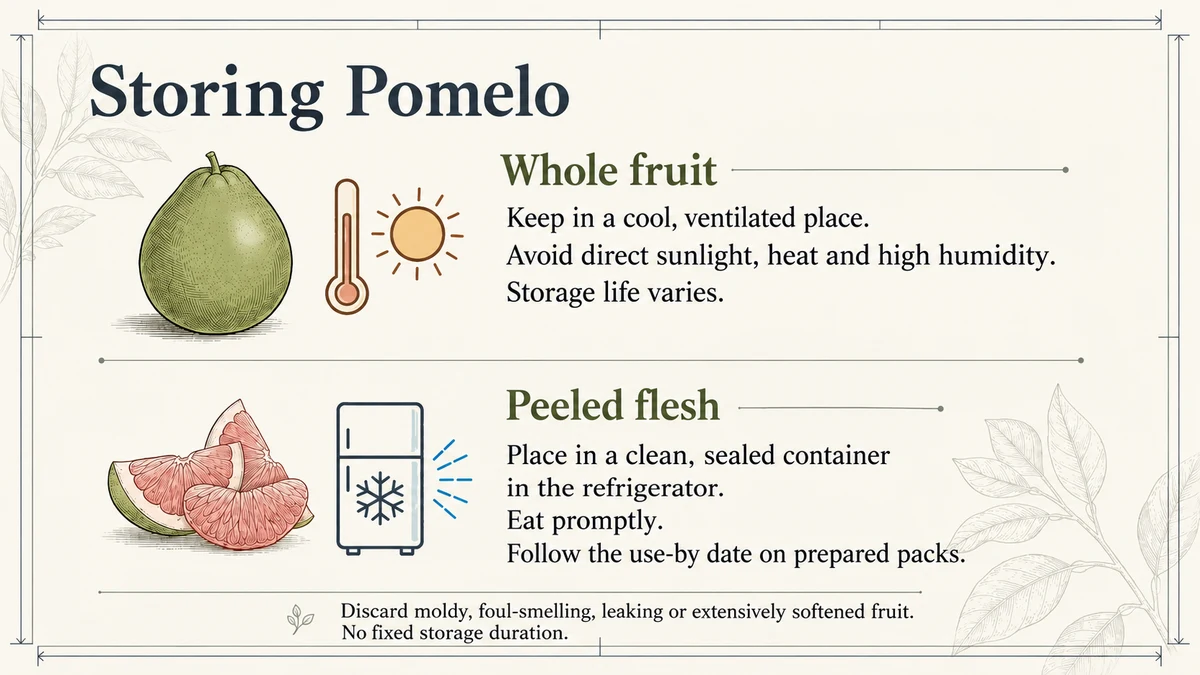
Whole Fruit
Keep it in a cool, ventilated place away from direct sunlight and hot, humid conditions. Storage life depends on cultivar, harvest maturity, temperature, humidity and damage.
Commercial temperature and humidity control is different from household room-temperature storage. A single promise of weeks or months would be misleading. Do not eat fruit with mold, an unusual smell, leaking juice or extensive softening.
After Peeling
Refrigerate the flesh in a clean sealed container and eat it promptly. For purchased cut fruit, follow the stated storage temperature and use-by date.
Medicine Interactions
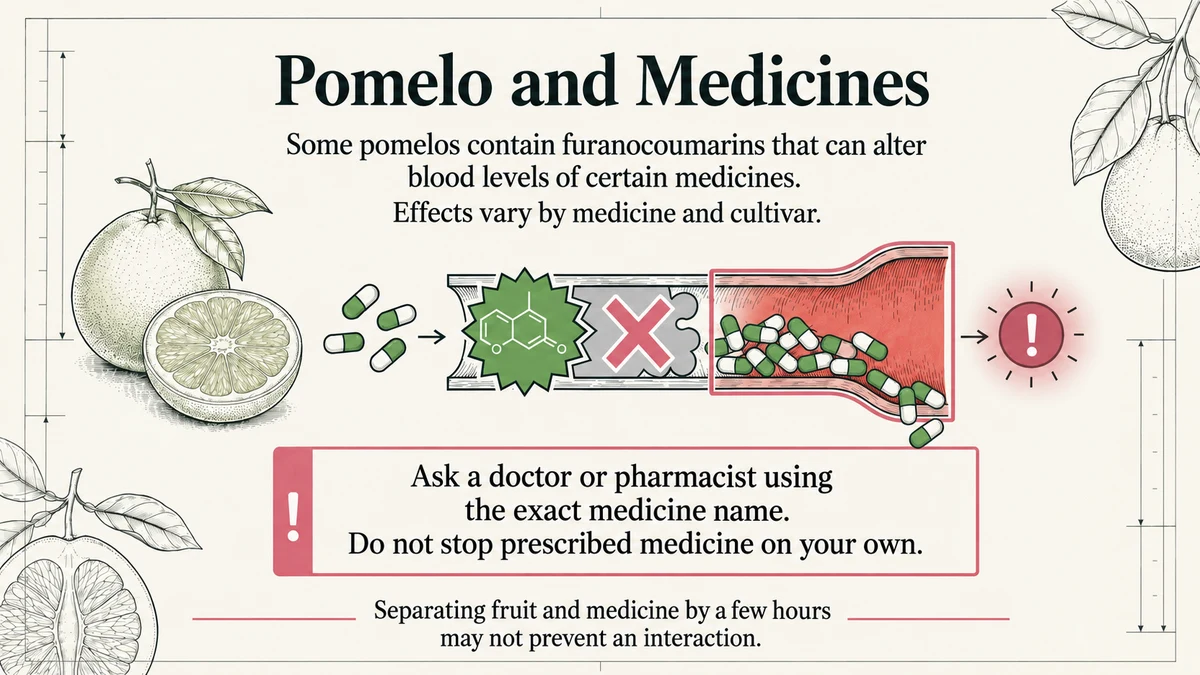
Some pomelo types contain furanocoumarins in their flesh. These compounds can affect intestinal CYP3A4 and alter blood levels of certain medicines.
The issue is not confined to calcium-channel blockers. Interactions differ between active ingredients, and citrus composition varies by cultivar and individual fruit. Separating medicine and fruit by a few hours does not necessarily prevent an interaction.
If your medicine warns about grapefruit, or you are unsure, tell a doctor or pharmacist the exact product name and ask before eating pomelo. Do not stop prescribed medicine on your own.
Can You Bring It into Japan?
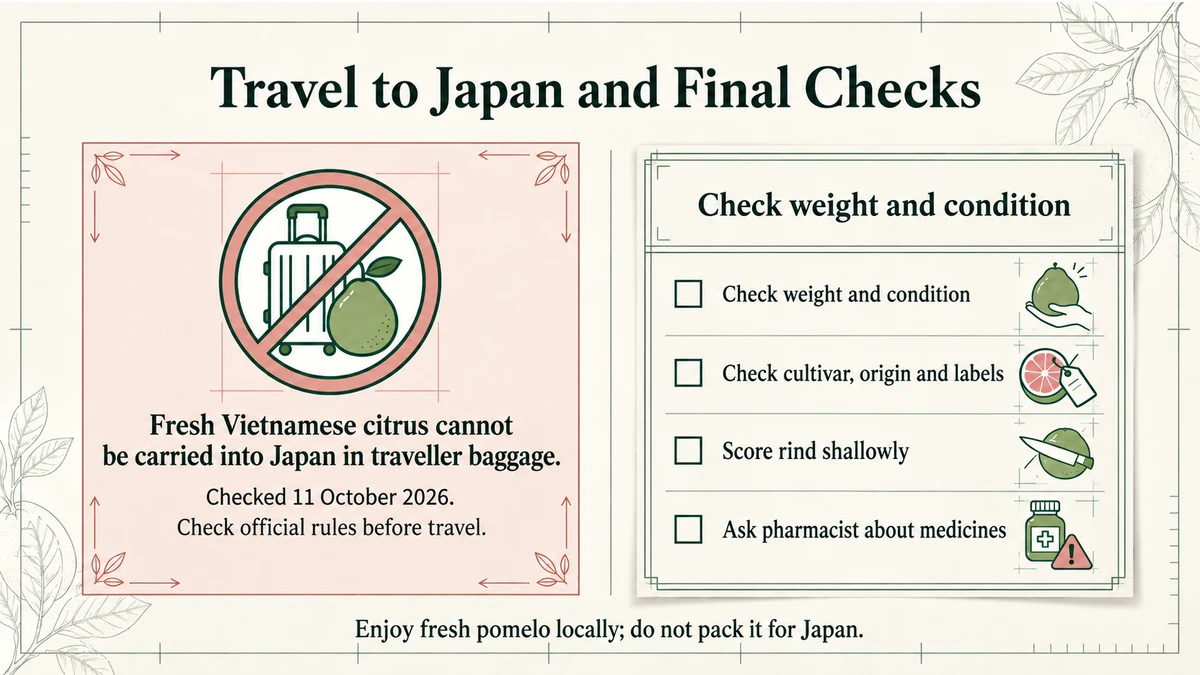
Japan’s Plant Protection Station lists fresh citrus from Vietnam, including pomelo, as not permitted in traveller baggage, checked on 11 October 2026.
This is a prohibition under the listed traveller conditions, rather than simply a requirement to obtain a certificate. Check the official traveller guidance before departure because rules can change. Commercial shipments and processed products are separate matters.
The Author’s Tasting Notes
Purchase record
Place: a supermarket
Date: August 2026
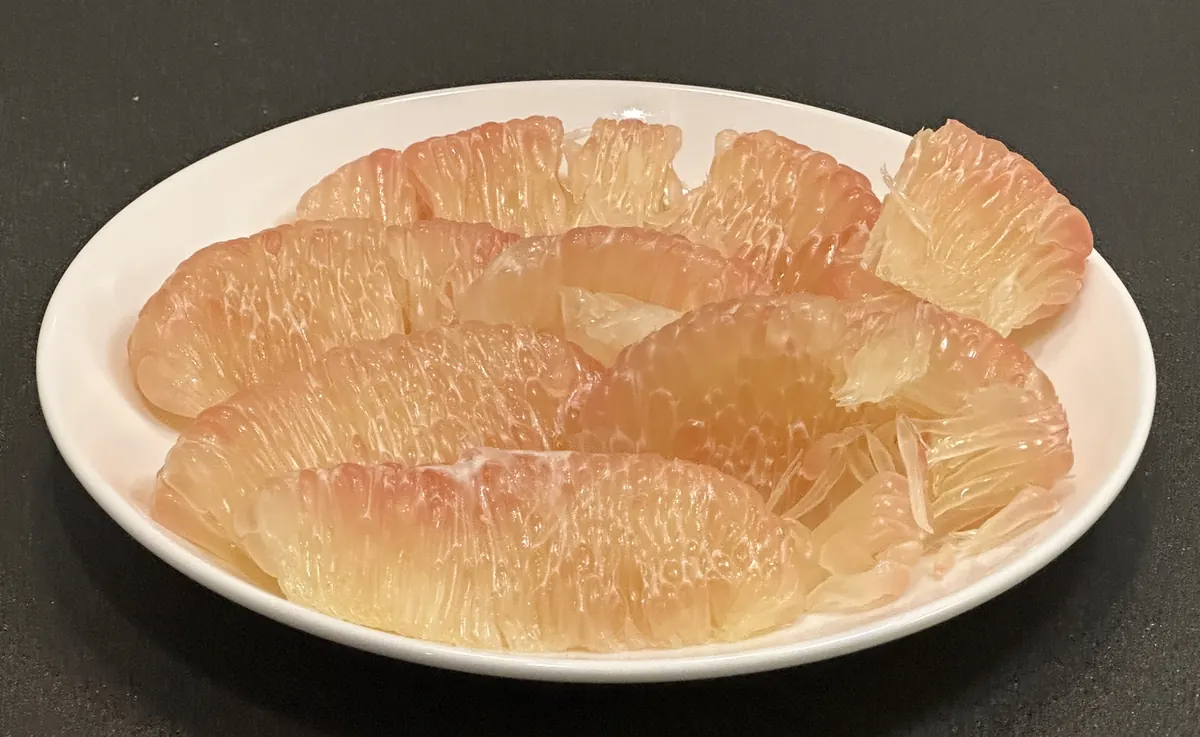
Price: 55,000 VND for one prepared pack
Tasting impression
The juice sacs had a crisp texture, refreshing sweetness and mild acidity. This describes one purchased product; taste and texture vary with cultivar and maturity.
Key Points
- Check weight, signs of spoilage and cultivar or origin labels.
- Do not diagnose maturity or rind thickness solely from color or tapping sounds.
- Score the rind shallowly, then remove the pith, membranes and seeds.
- Enjoy the flesh fresh or in Gỏi bưởi; prepared pith is used in Chè bưởi.
- Refrigerate peeled flesh, follow product labels and eat it promptly.
- People taking medicine should ask a doctor or pharmacist about the exact product and possible interactions.
- Fresh Vietnamese pomelo cannot be carried into Japan under the traveller rules checked on 11 October 2026.
Frequently Asked Questions
Which parts of pomelo are eaten?
The flesh is normally eaten after removing the rind, thick white pith, membranes and seeds. Pith is used in Chè bưởi after repeated rubbing and rinsing to remove bitterness, following a detailed recipe.
How do you remove the thick rind?
Stabilize the fruit and make four to six shallow vertical scores in the outer rind without reaching the flesh. Pull the rind open by hand, remove the pith and separate the segments.
How should peeled pomelo be stored?
Refrigerate it in a clean sealed container and eat it promptly. Follow the storage temperature and use-by date on purchased cut-fruit packs.
Related Articles
- Names, varieties, season and nutrition: Pomelo Guide: Names, Varieties, Season and Nutrition
- Origins, journeys and festivals: Pomelo History and Stories: Names, Journeys and Festivals
References
- FAO — Fruits of Vietnam: Pummelo
- FAO — Processing of fresh-cut tropical fruits and vegetables: A technical guide
- University of Florida IFAS Extension — Postharvest Storage, Packaging, and Handling of Specialty Crops
- Ehime University Hospital Pharmacy — Drug interactions with furanocoumarins in grapefruit and other citrus
- Japan Ministry of Agriculture — Vietnam’s requests for import access
- Japan Plant Protection Station — Rules for bringing fruit and vegetables from overseas
Japan Plant Protection Station: Vietnam traveller restrictions — Reviewed 11 October 2026.