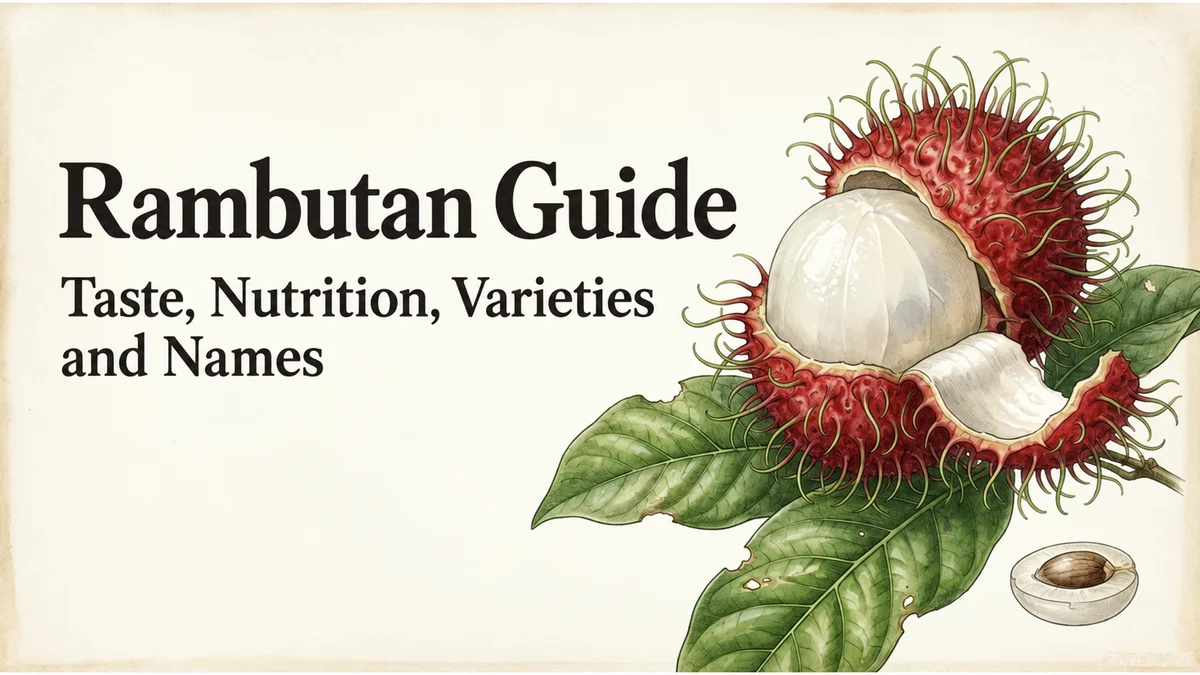
Rambutan is a Southeast Asian fruit with soft hair-like projections growing from its red rind. Its juicy white edible flesh is sweet with gentle acidity, reminiscent of lychee and longan.
This guide explores its taste and nutrition, native range, name, lychee relatives, flowers and pollination, Thai and Vietnamese varieties, storage and travel restrictions for Japan.
For choosing and peeling, see How to Eat Rambutan in Vietnam: Prices, Choosing, Peeling and Storage. For its journey from its native range to tropical growing regions, see Rambutan History and Stories: Origins, Names and Documented Journeys.
What Is Rambutan? Taste, Nutrition and Basic Facts
| Item | Details |
|---|---|
| Scientific name | Nephelium lappaceum L. |
| Classification | A tree in the genus Nephelium, family Sapindaceae |
| Vietnamese name | Chôm chôm |
| English name | Rambutan |
| Growing conditions | Prefers humid tropical conditions; sensitive to cold and drought |
| After harvest | A non-climacteric fruit harvested when ready to eat on the tree |
| Edible part | The white to pale yellow fleshy tissue surrounding the seed |
| Taste and texture | Juicy and sweet with mild acidity; ease of separating flesh from the seed varies by cultivar |
Kew’s Plants of the World Online gives the native range as southern China to Malesia and includes Vietnam. Some accounts of cultivation describe Malaysia and Indonesia as the origin. Wild distribution and the centre of domestication should be distinguished.
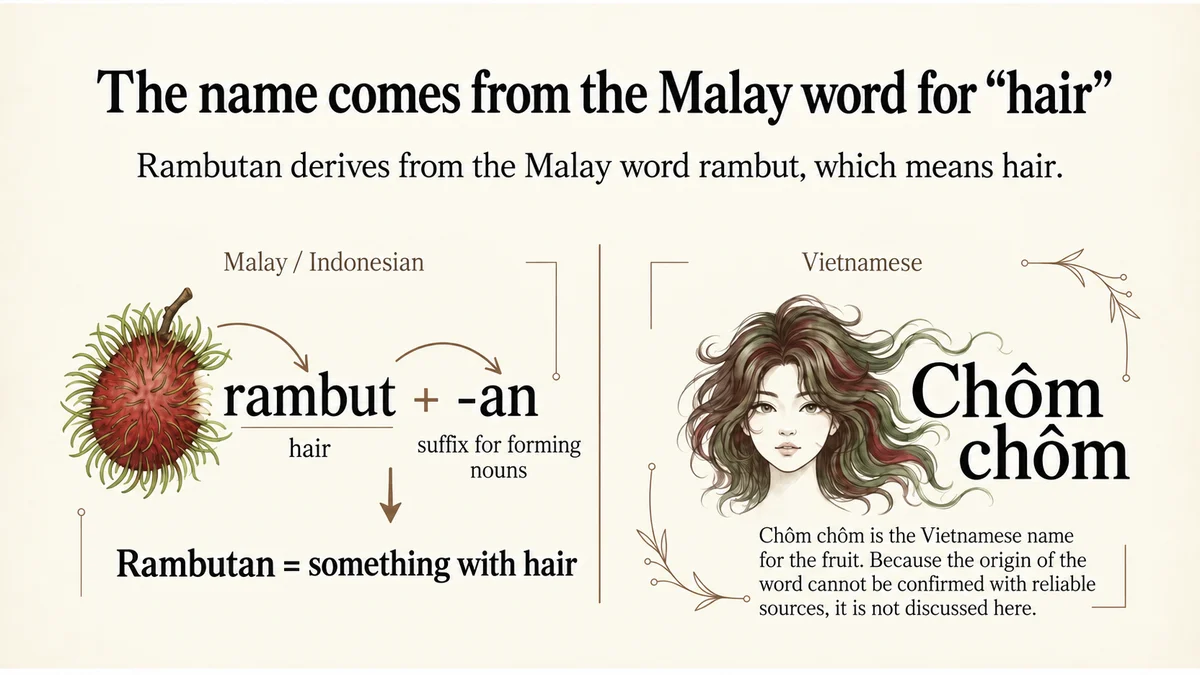
A Name Derived from the Malay Word for Hair
The name rambutan comes from Malay and Indonesian rambut, meaning hair. The soft projections covering the rind suggest a head of hair. English horticultural sources call these projections spinterns.
In Vietnamese, the fruit is called Chôm chôm. The claim that this means “messy hair” is not presented here as an established etymology because reliable supporting sources have not been identified.
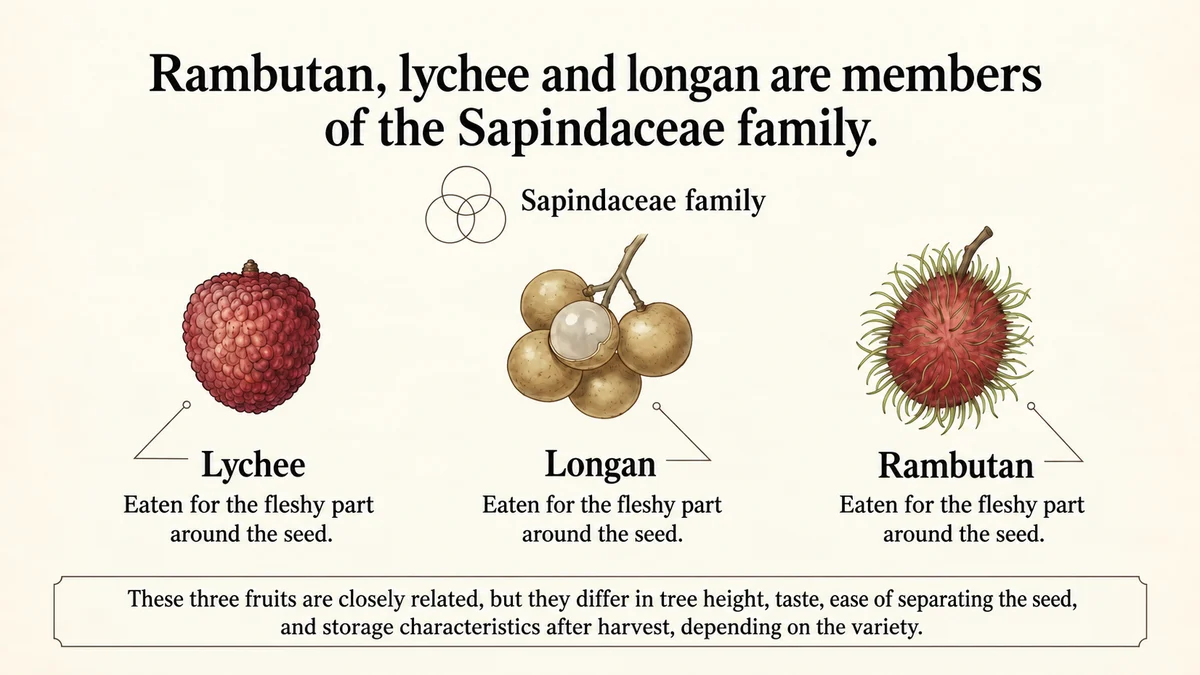
A Sapindaceae Relative of Lychee and Longan
Rambutan is an evergreen tree of the humid tropics, in the same family as lychee and longan. Sources describe its translucent white edible tissue as an aril or as a fleshy seed-coat tissue called a sarcotesta. For everyday eating, it is enough to remember that the edible flesh surrounds the seed.
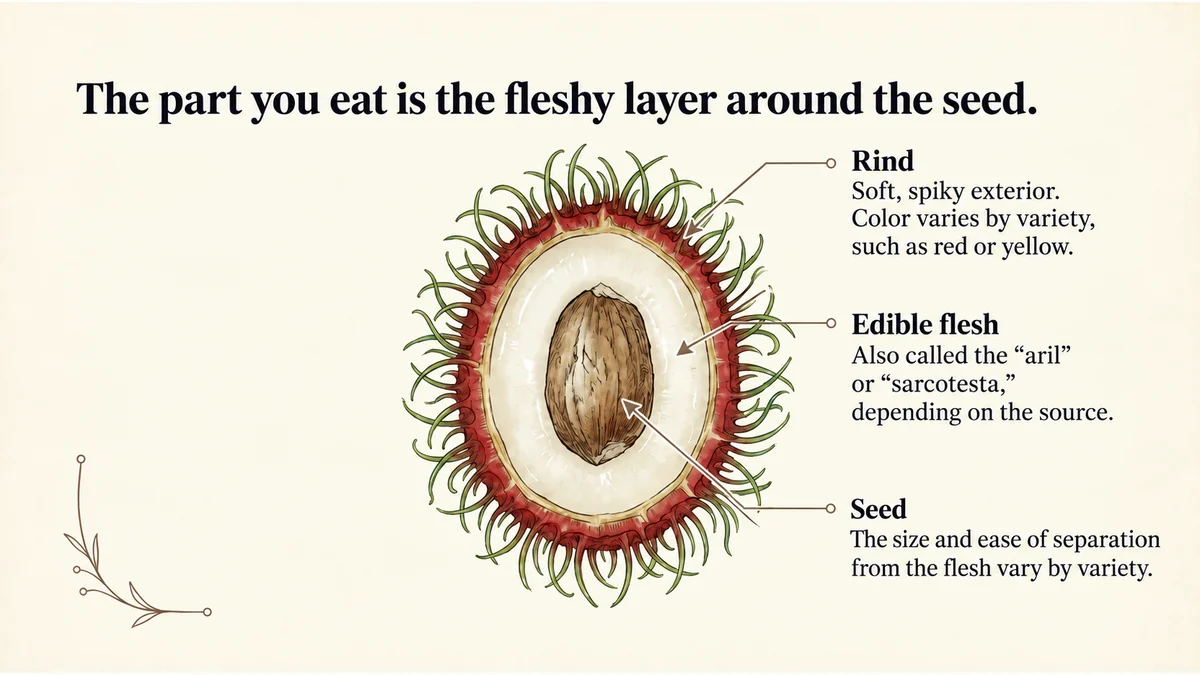
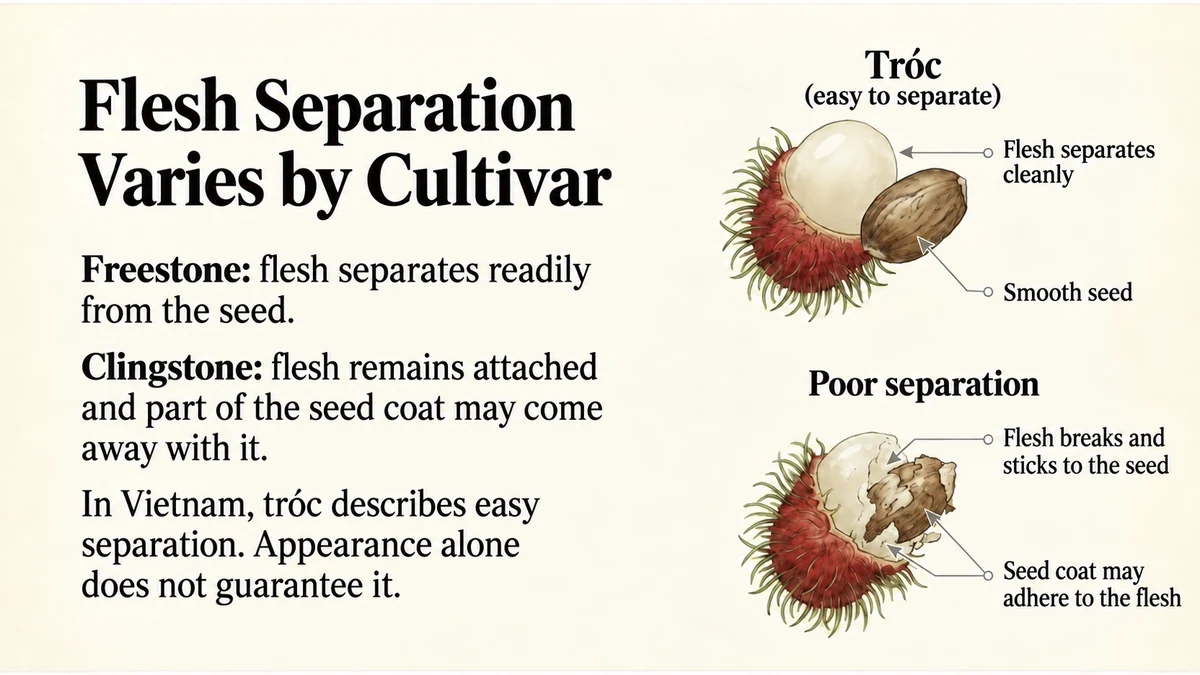
Some cultivars have flesh that separates easily from the seed; others retain part of the seed coat. These are described as freestone and clingstone, respectively. In Vietnamese markets, tróc also indicates ease of separation.
Flower Types and Pollination
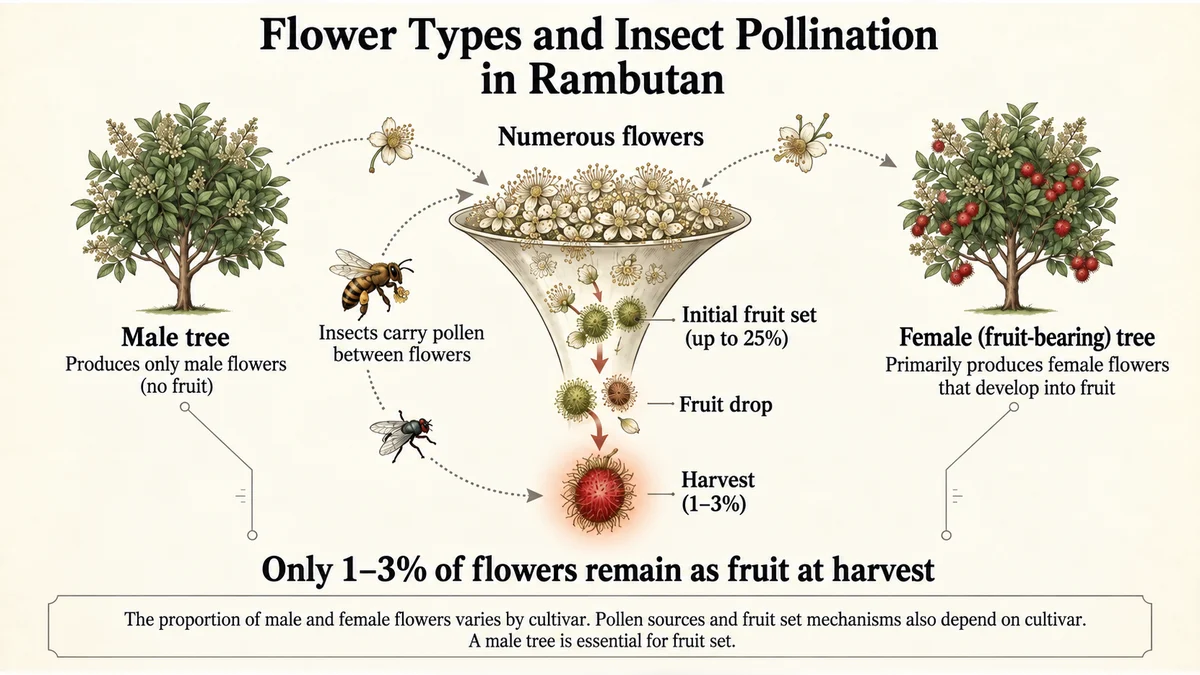
Rambutan has male trees bearing only male flowers and trees with apparently bisexual flowers that mainly function as female flowers. Some cultivated varieties also produce a small number of functionally male flowers.
In many growing conditions, insects, especially bees, carry pollen. However, male trees and trees with bisexual flowers are not always both necessary. Research on CERI61 in Mexico found that some flowers produced viable pollen without male trees, and mature fruit numbers increased greatly where insects were admitted. Pollen sources and fruit set vary with cultivar and conditions.
The frequently quoted “1–3% fruit set” does not mean that only 1–3% of flowers initially set fruit. USDA pollination material describes initial fruit set reaching around 25% in some cases, with only 1–3% remaining until harvest after fruit drop.
Rambutan Does Not Become Sweeter After Harvest
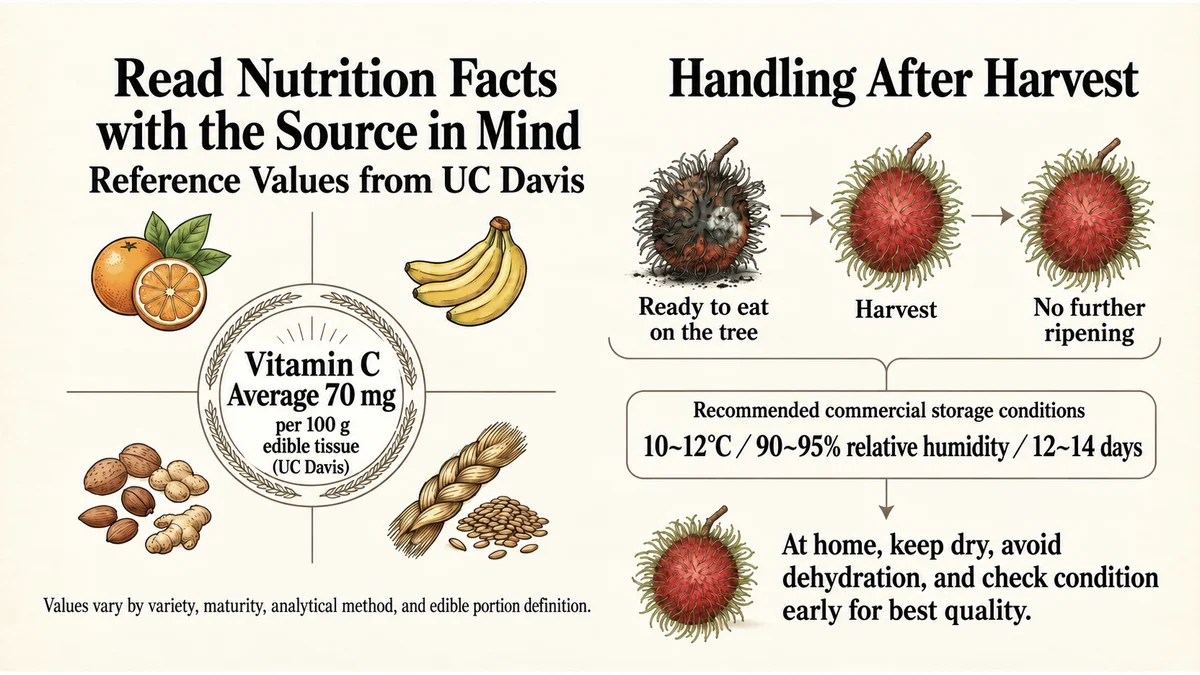
UC Davis describes rambutan as non-climacteric, harvested ready to eat, with no expected benefit from ethylene treatment. Leaving it after purchase will not ripen it into a sweeter fruit in the way a banana ripens.
Browning is associated with moisture loss, physical damage and chilling injury. Commercial recommendations are 10–12°C, depending on cultivar, and 90–95% relative humidity, with a potential storage life of 12–14 days. A household refrigerator differs from these conditions: prevent drying, check the fruit and eat it promptly.
Read Nutrition Figures with Their Sources
UC Davis reports an average of 70 mg vitamin C per 100 g of edible tissue. Other sources give different figures. Comparing values without matching cultivar, maturity, analytical method and the definition of edible tissue can be misleading.
Energy values and other figures should likewise come from measurements made under comparable conditions. Nutrient content alone does not establish disease-prevention or beauty benefits.
Rambutan Varieties: Names in Thailand and Vietnam
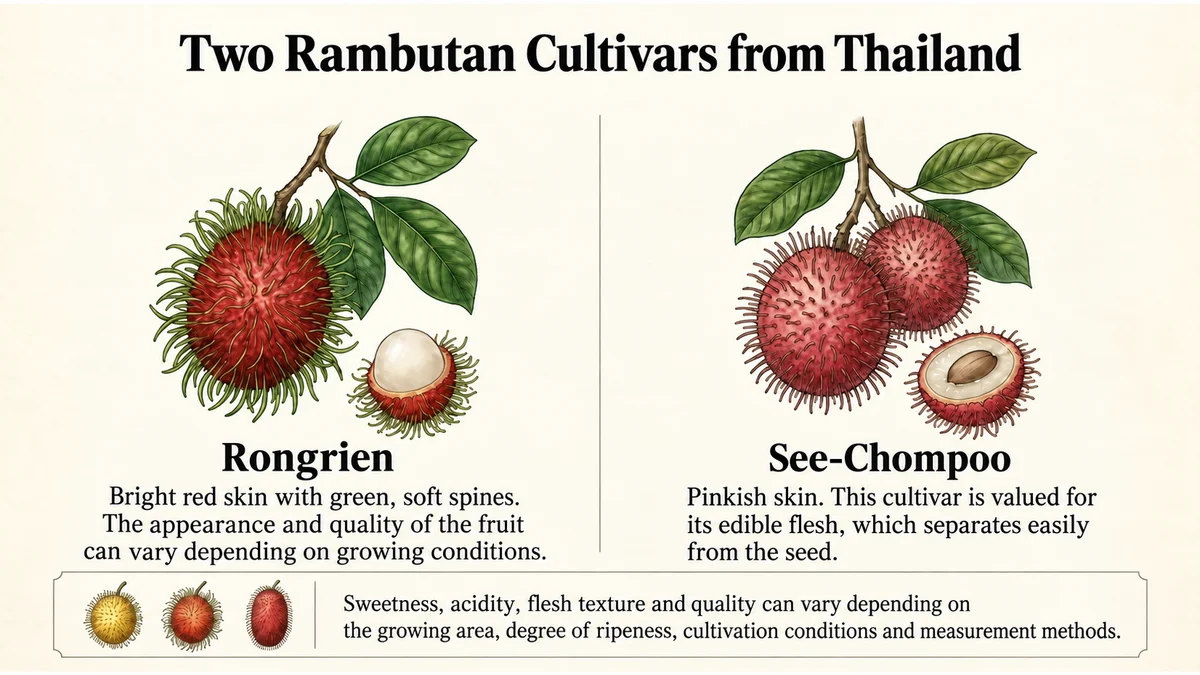
Two well-known Thai cultivars are red-skinned Rongrien and pinkish See-Chompoo. Rind thickness, projection shape and moisture loss vary by cultivar. Appearance alone should not be used to assign a fixed taste or sugar level.
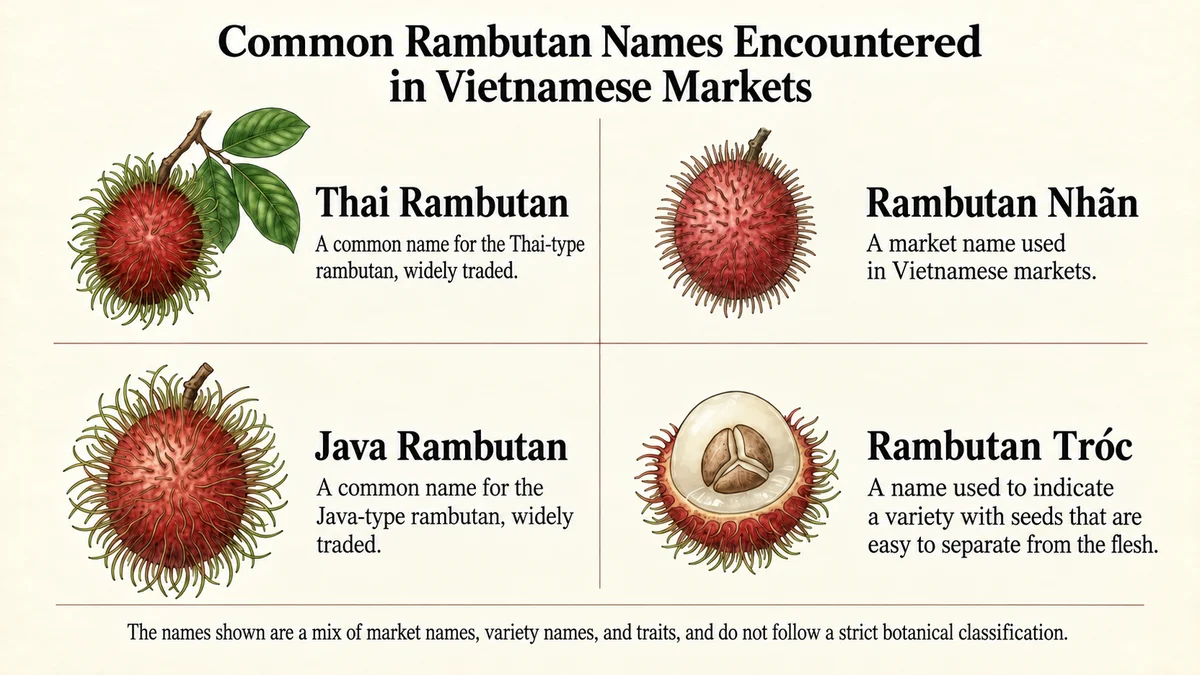
Vietnamese markets use names such as Chôm chôm nhãn and Chôm chôm Java. Sales names, cultivar names and terms describing traits such as seed separation overlap; four market categories should not be treated as a botanical classification.
Long Khánh’s Geographical Indication
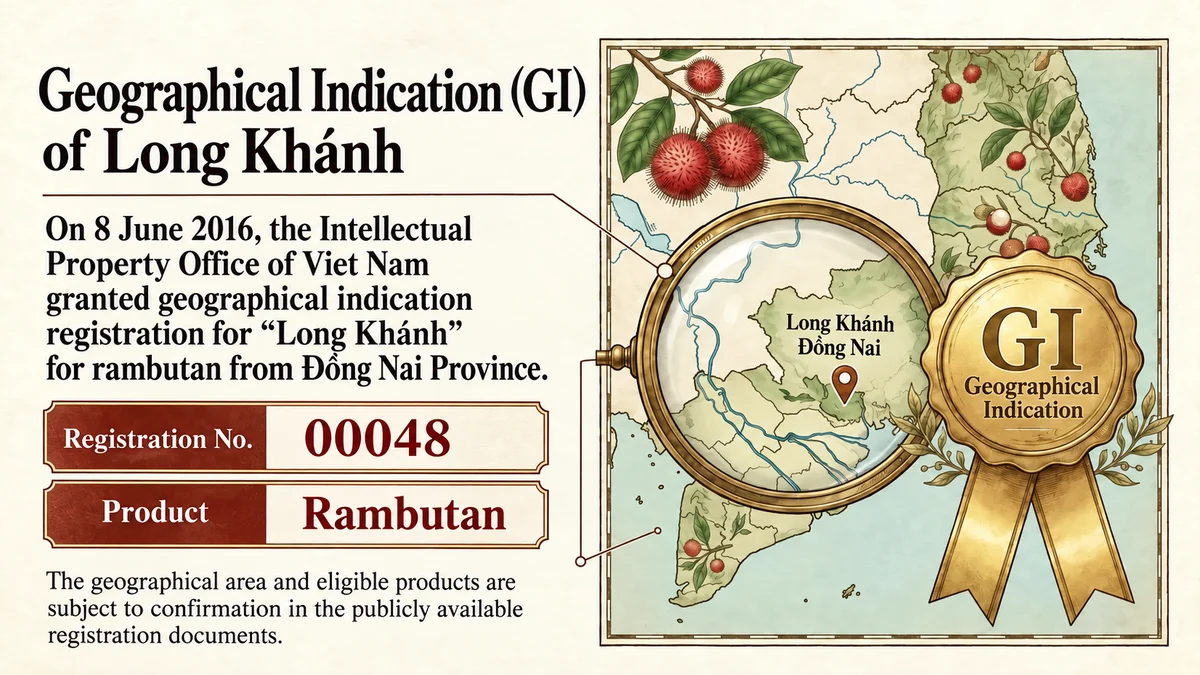
Long Khánh in Đồng Nai Province is a major Vietnamese rambutan-growing area. On 8 June 2016, the Intellectual Property Office of Vietnam registered Long Khánh as a geographical indication for rambutan, registration number 00048.
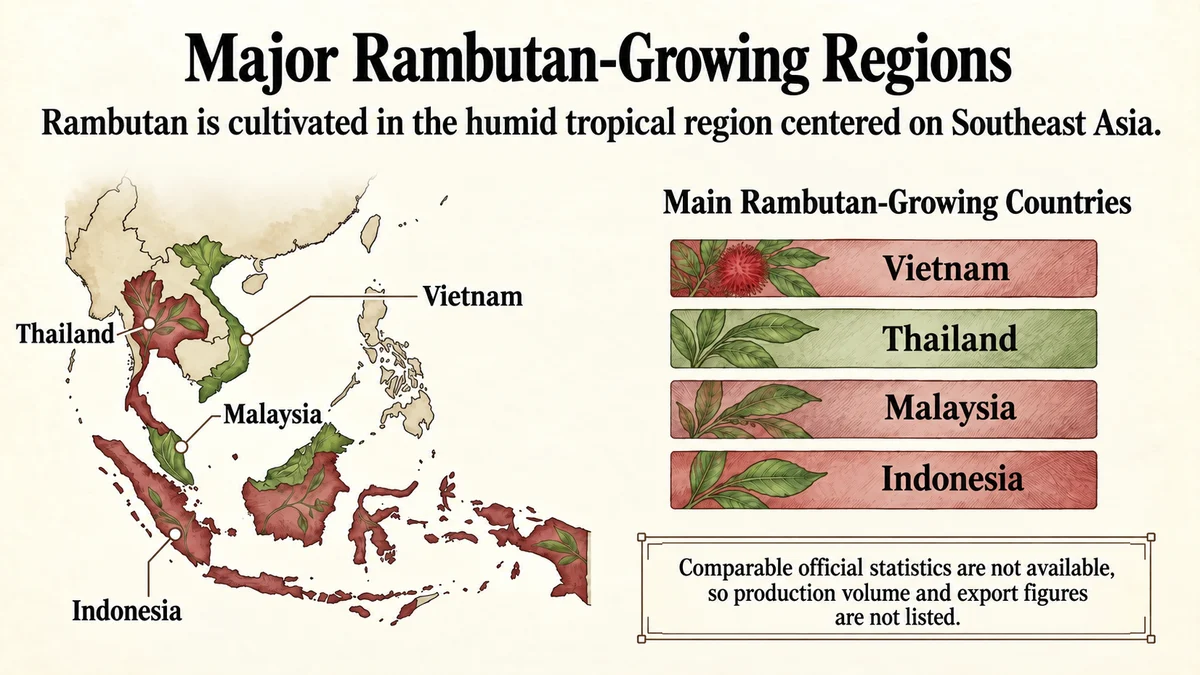
Comparable official statistics were not identified for global rambutan production, country rankings or export counts. This guide therefore introduces growing regions without assigning unsupported rankings or quantities.
Can You Bring Rambutan into Japan?
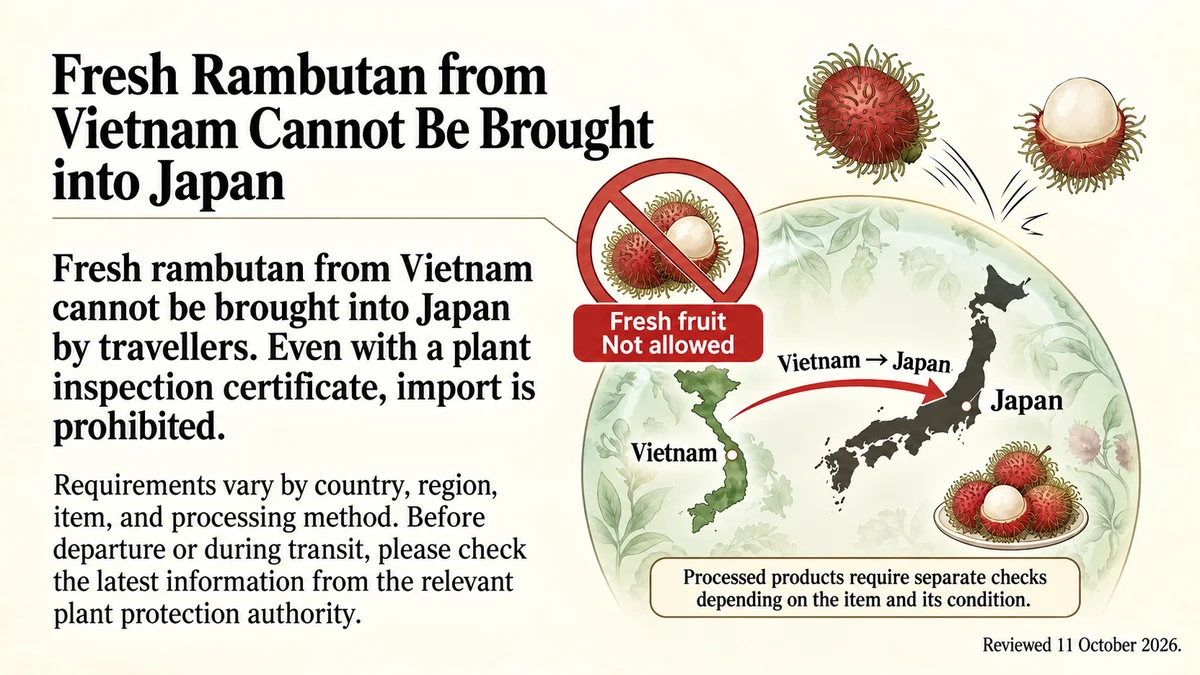
Japan’s plant import conditions depend on country of origin, commodity, plant part and treatment. Fresh rambutan from Vietnam and other areas affected by the oriental fruit fly is prohibited. A phytosanitary certificate alone does not make it admissible for travellers.
This should not be generalized into a claim that fresh rambutan from every origin is prohibited or never sold in Japan. Select the departure country in the Plant Protection Station’s official guidance and check current conditions before travel.
Key Points
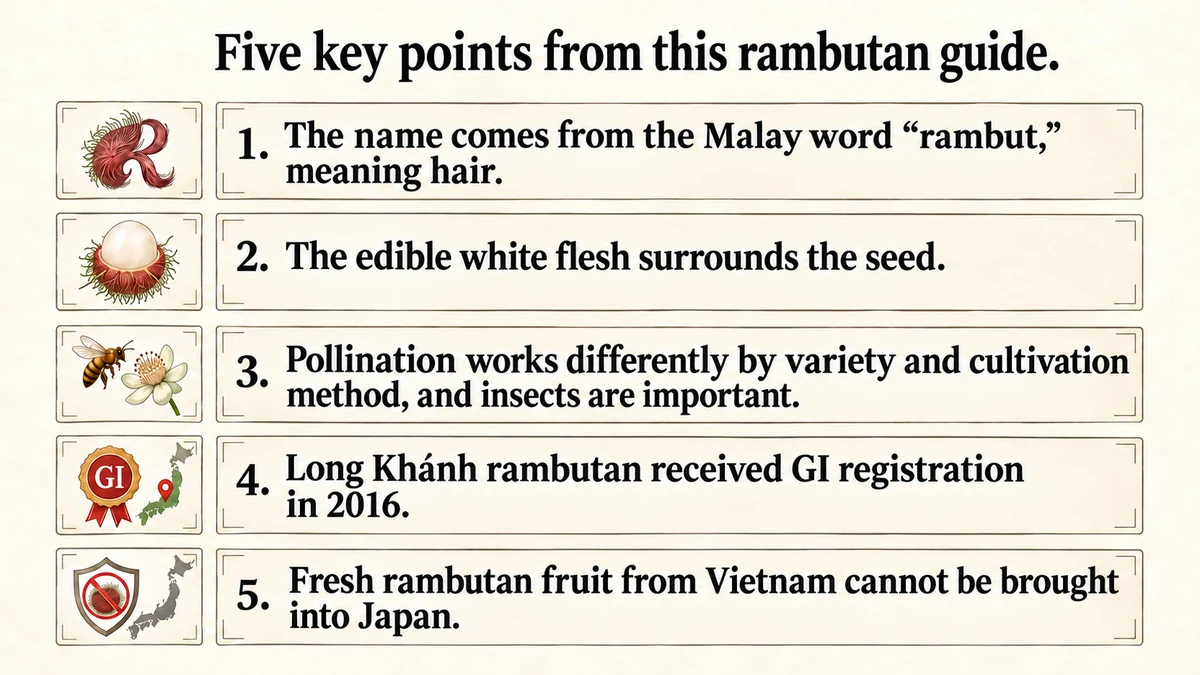
- The name derives from Malay and Indonesian rambut, meaning hair
- The edible white flesh surrounds the seed; ease of separation varies by cultivar
- Pollen sources and fruit set vary by cultivar and planting conditions; insects contribute to pollination
- Long Khánh rambutan received geographical indication registration in 2016
- Fresh rambutan from Vietnam cannot be brought into Japan
Rambutan FAQs
What Does Rambutan Taste Like?
It is juicy and sweet with gentle acidity. It may remind you of lychee or longan, but flavour and texture vary with cultivar and maturity.
Does Rambutan Ripen After Picking?
No. Leaving it after harvest does not make it sweeter like a banana. Prevent drying, check its condition and eat it promptly.
Is the White Part of Rambutan Fruit Flesh?
It is commonly called flesh. Botanical accounts describe it as an aril or sarcotesta, with terminology differing between sources.
Can I Take Vietnamese Rambutan Home to Japan?
Fresh fruit cannot be brought in. Processed products are treated differently depending on their condition; check current Plant Protection Station and customs guidance.
References
- Royal Botanic Gardens, Kew: Nephelium lappaceum L.
- World Agroforestry: Nephelium lappaceum species profile
- USDA: Insect Pollination of Cultivated Crop Plants — Rambutan
- Roubik et al.: High yields and bee pollination of hermaphroditic rambutan
- Kawabata et al.: Production of Male Flowers on Rambutan Trees in Hawaiʻi
- UC Davis Postharvest Research and Extension Center: Rambutan
- Intellectual Property Office of Vietnam: Long Khánh rambutan GI
- Japan Plant Protection Station: Examples of non-compliance with plant quarantine requirements
- Japan Plant Protection Station: Import prohibitions
Japan Plant Protection Station: Vietnam traveller restrictions — Reviewed 11 October 2026. Fresh rambutan cannot be brought into Japan.
