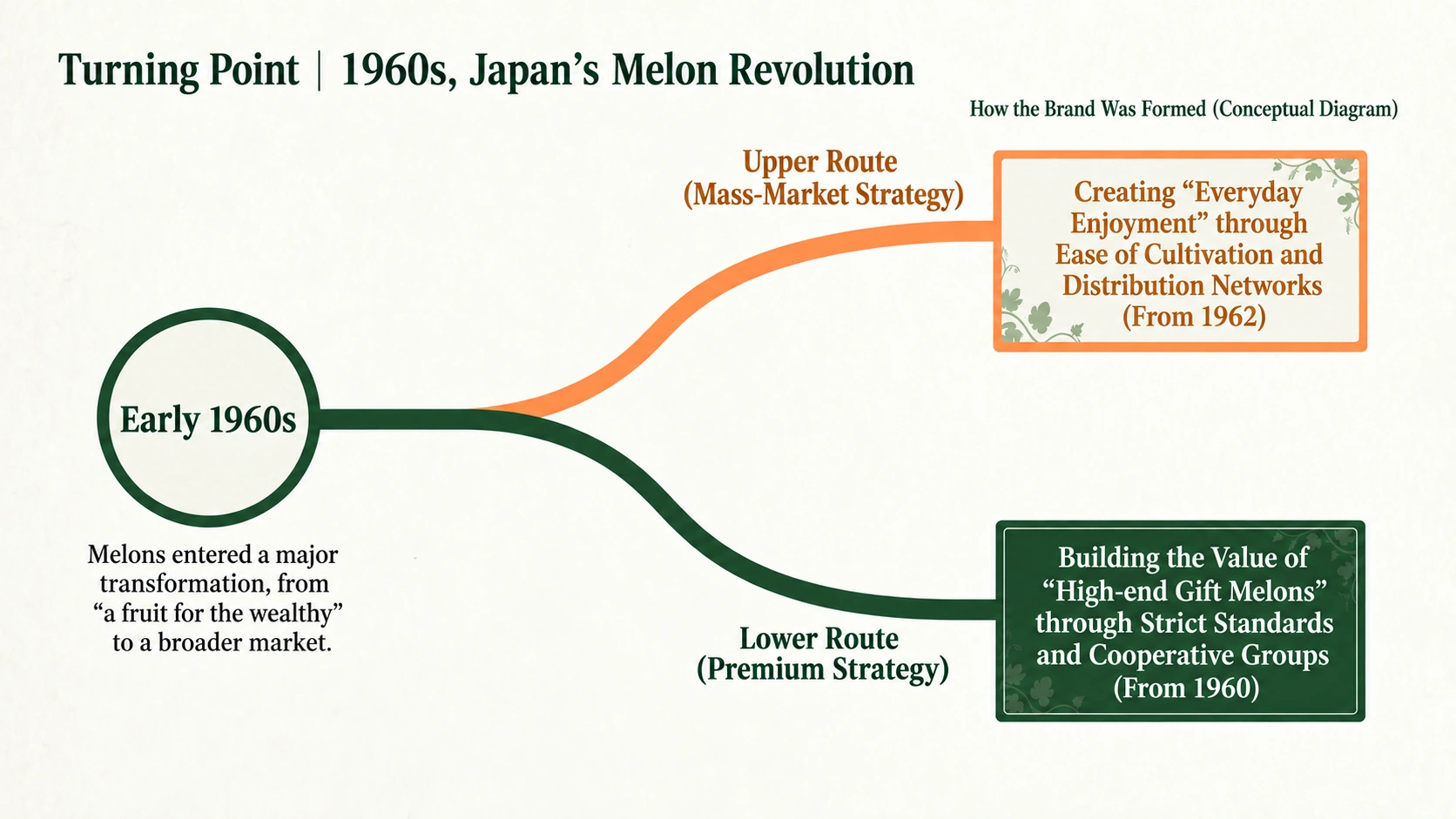
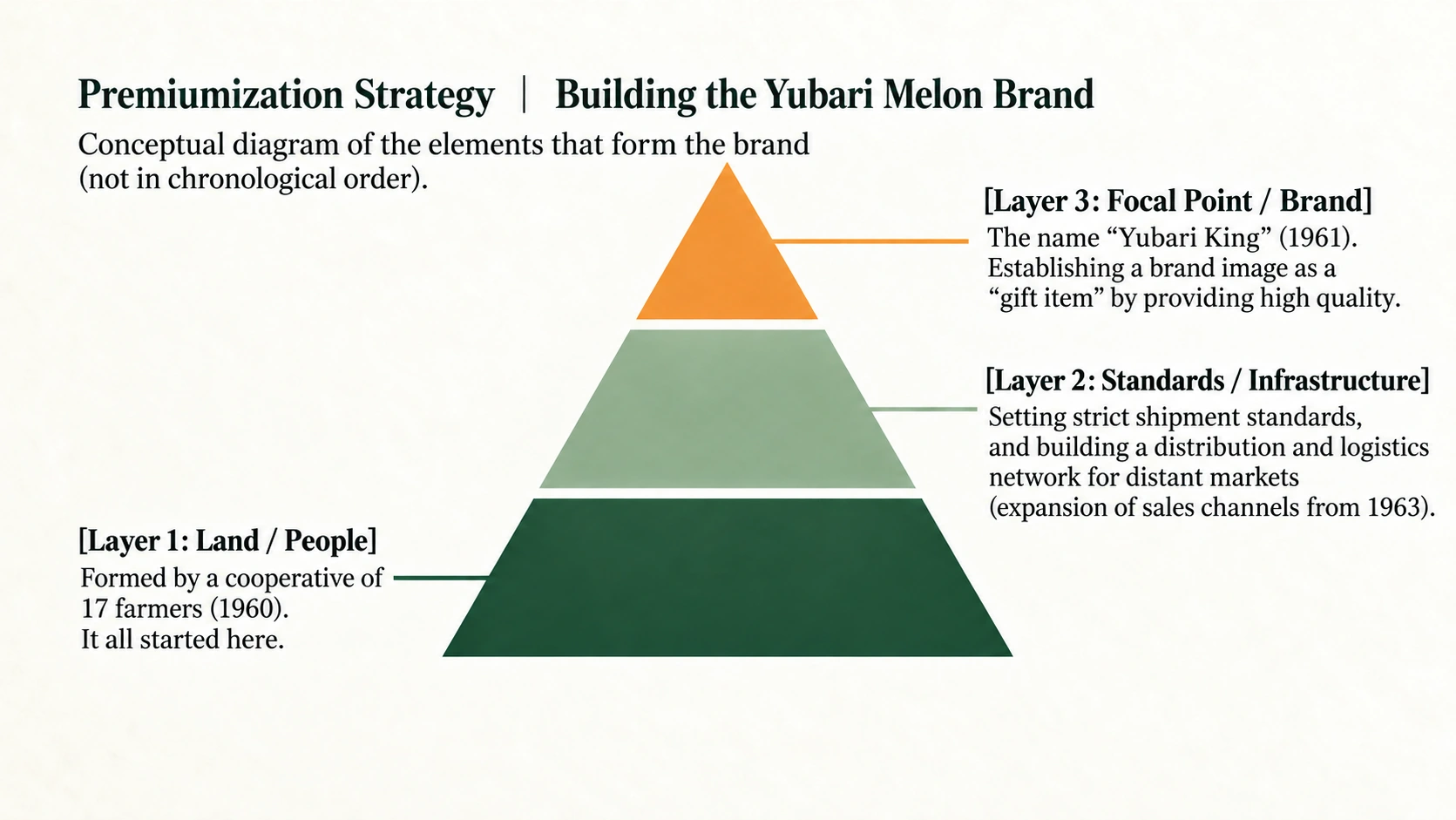
According to its developer, Prince melon takes its name from the Prince-kai, a group of fruit merchants. In Yubari’s melon history, a major turning point came in 1960, when 17 farmers formed a growers’ association.
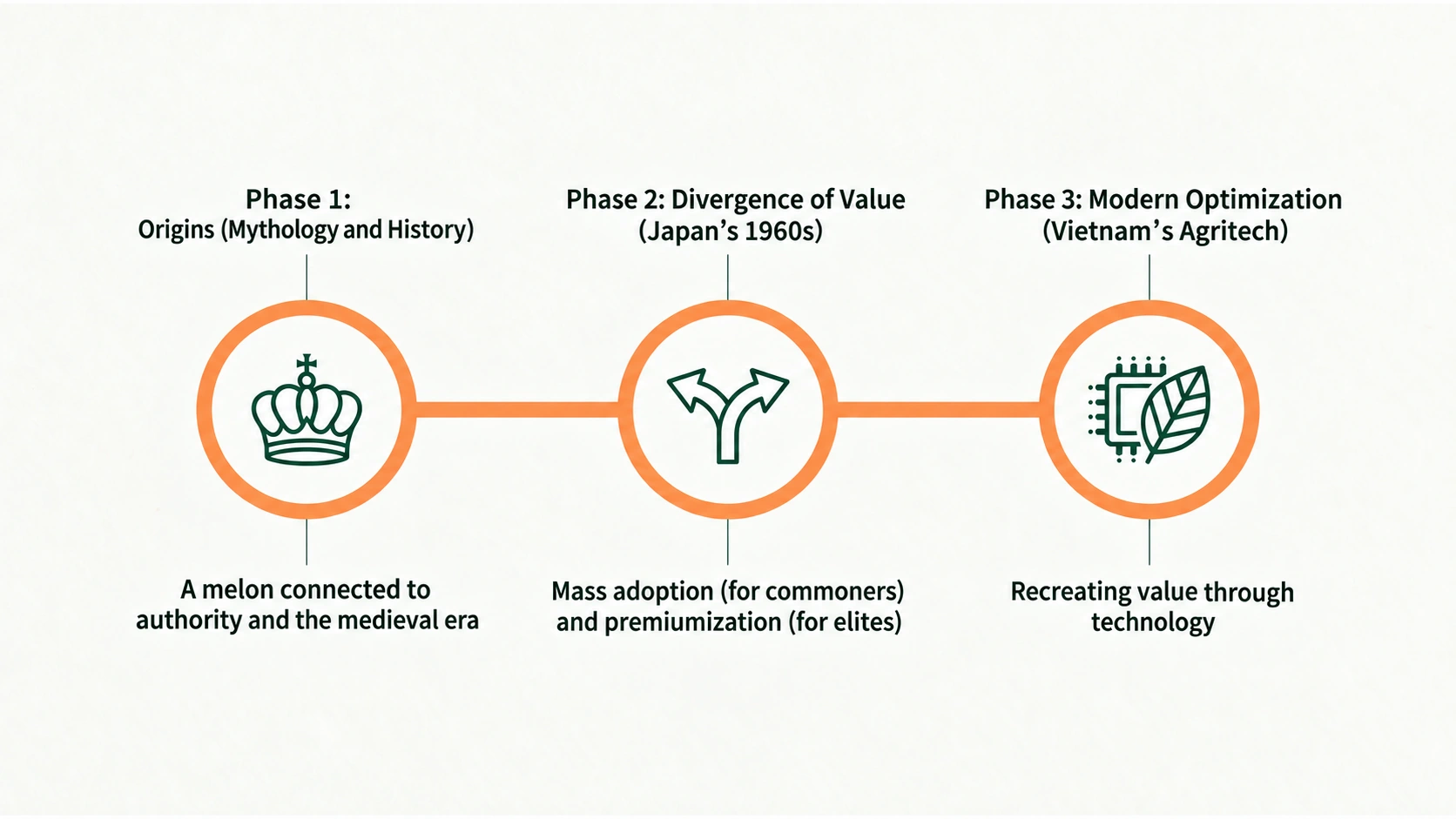
Melon history also includes an emperor’s final days and the word cantaloupe, whose name is linked to a papal summer residence. This article separates accounts and interpretations from established events as it follows melons into ordinary households and the gift-fruit market.
For varieties and nutrients, see Melons in Vietnam.
Melon origins and the history of cultivation
Melon history cannot be explained by a single journey from one place. A 2019 genomic study suggests three independent domestication events: two in India and one in Africa. The history of domestication and later stories about cultivar names and brands need to be considered separately. Source: research participant IRTA’s account of the study.
From there, we turn to European anecdotes and names, followed by the people who developed and distributed melons in Japan. For botanical classification and rind netting, see the melon guide.
Melons in the story of an emperor’s death
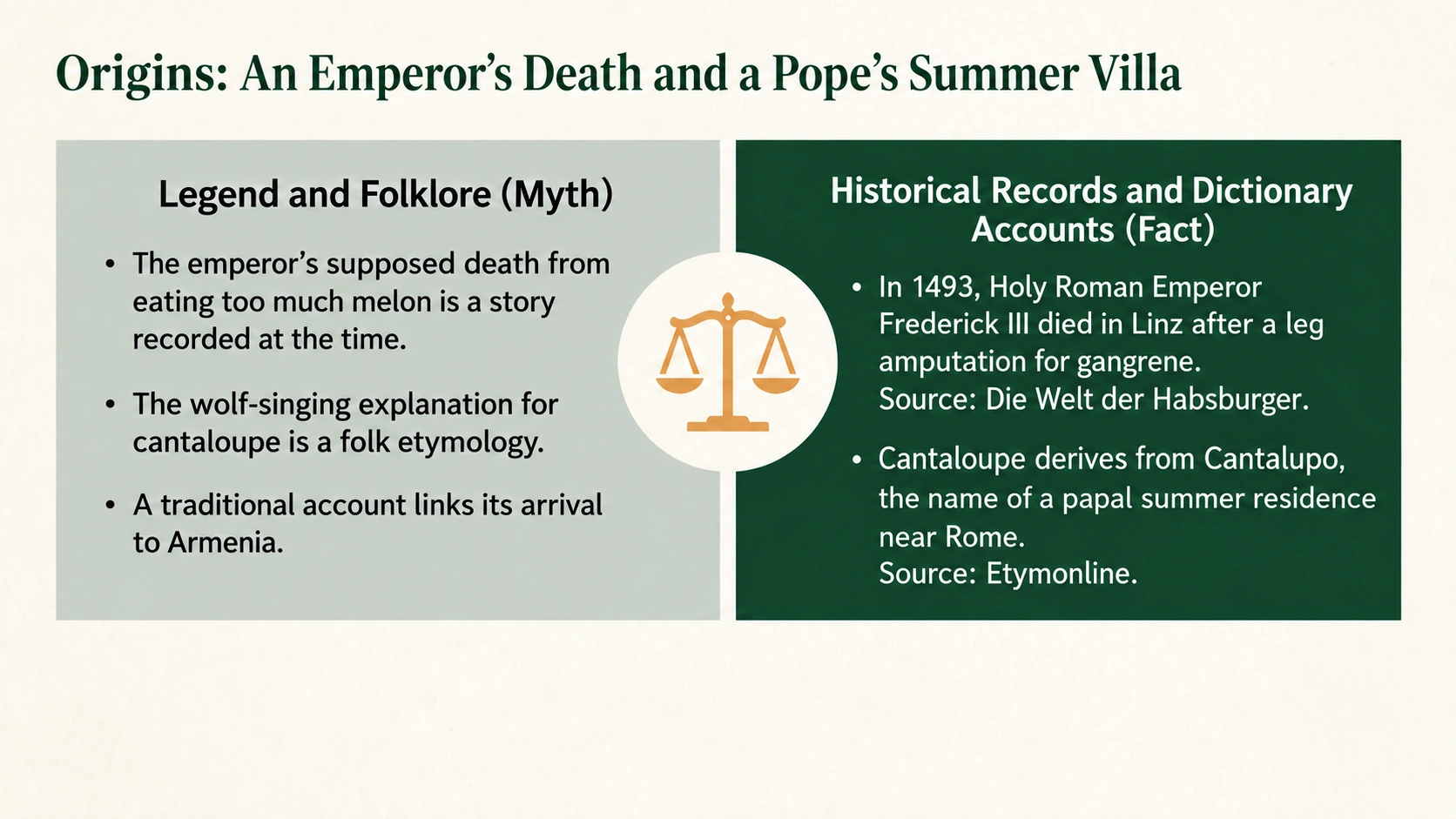
Holy Roman Emperor Frederick III died in Linz in 1493. The Habsburg history website Die Welt der Habsburger describes his death after the amputation of a leg affected by gangrene. It also reports that contemporary sources attributed his death to eating too many melons. Source: “Frederick V: death and legacy”.
That account does not mean melon was medically established as the cause of death. Illness and the effects of surgery also form part of the history; a single cause cannot simply be assigned from a modern perspective.
What makes the anecdote interesting is the appearance of everyday food in the explanation of an emperor’s death. Melons were enjoyed for sweetness and fragrance, but people also considered them in relation to health.
Where does the word cantaloupe come from?
Melon is a broad English term; cantaloupe refers to a group within it. The etymological dictionary Etymonline links the word to Cantalupo, the name of a papal summer residence near Rome. Source: Etymonline, “cantaloupe”.
The dictionary also mentions an account of introduction from Armenia. Detailed routes of introduction and stories explaining the place name should be treated cautiously. The interpretation “singing wolf” is presented as possibly a folk etymology.
Even with those uncertainties, a place name surviving in a fruit’s name is a revealing part of melon history. Behind a label on a shop shelf may lie the memory of a place and its people.
Prince melon: its name and launch in 1962
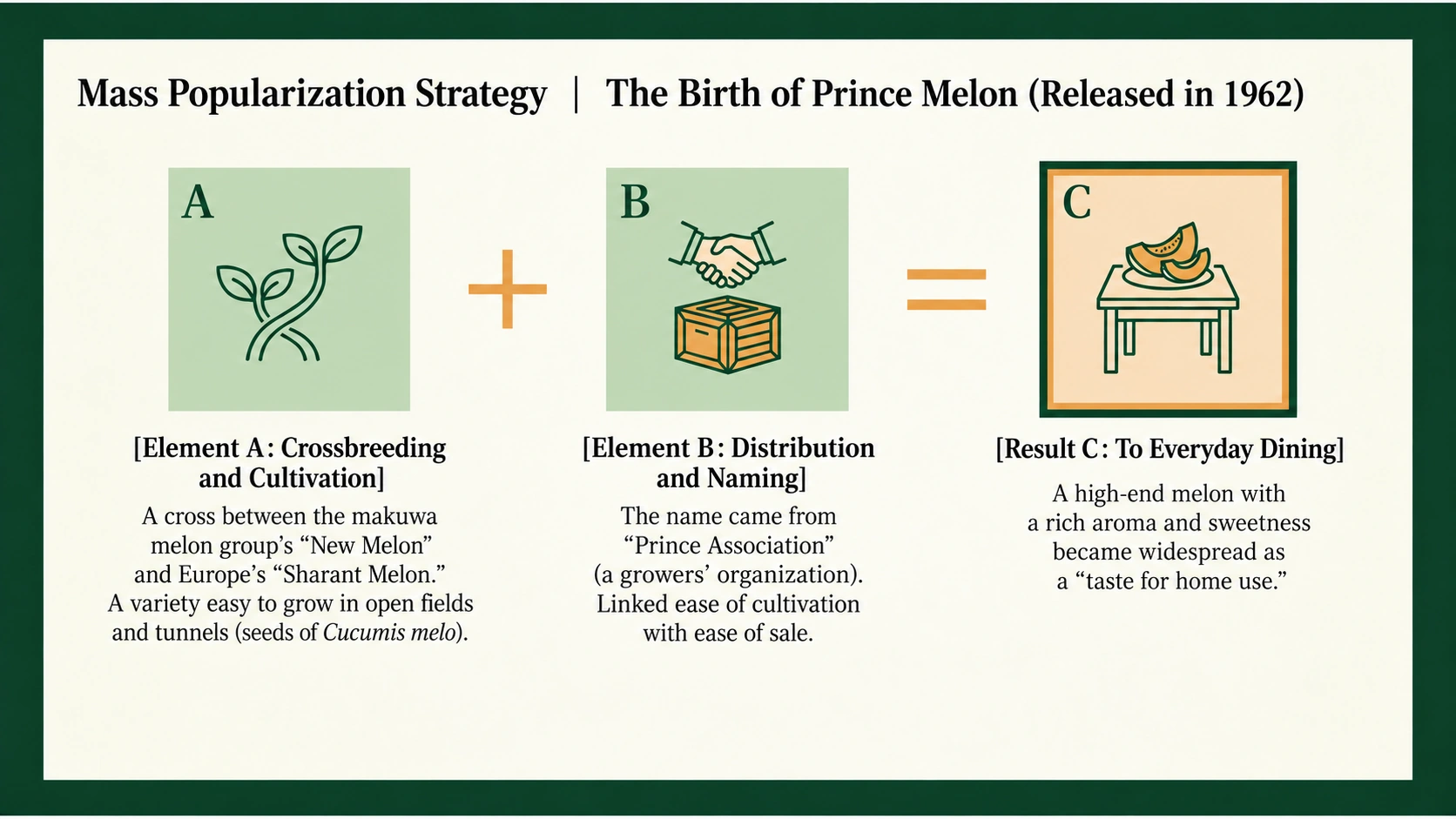
A turning point in Japan’s melon history was Sakata Seed’s launch of Prince in 1962.
Its parents were the makuwa-type New Melon and a European Charentais-type melon. Work toward a melon suitable for open-field or low-tunnel cultivation produced a cultivar combining fragrance and sweetness. Source: Sakata Seed, “Episode 07 Melon”.
Sakata explains that the name came from the Prince-kai, the fruit merchants’ group that tasted the new melon. The group’s name became the cultivar’s name. Source: Sakata Seed, “History 03” (Japanese).
Making a fruit associated with luxury accessible to households took more than flavor. Ease of cultivation and distribution mattered too.
Yubari Melon: a brand that began with 17 farmers
The challenge taken on by a growers’ association
In Yubari, Hokkaido, 17 farmers formed a melon growers’ association in 1960. Alongside cultivar development came work on cultivation standards, shipping specifications and growing techniques. The cultivar Yubari King received its name in 1961. Source: Yubari City, “About Yubari Melon” (Japanese).
Developing a local industry required more than growing one delicious fruit. Growers needed to deliver consistent quality under the same name.
Consistent quality, delivered farther away
JA Yubari’s history describes demanding shipping standards and the difficulties of transporting the fruit beyond Hokkaido. As coal mines closed from 1963 onward, growers also worked to expand their markets. Source: JA Yubari, “The Birth of Yubari Melon” (Japanese).
Getting fruit named after a place to distant customers in good condition required grading, transport and sales as well as cultivation. Those accumulated efforts helped build the Yubari brand.
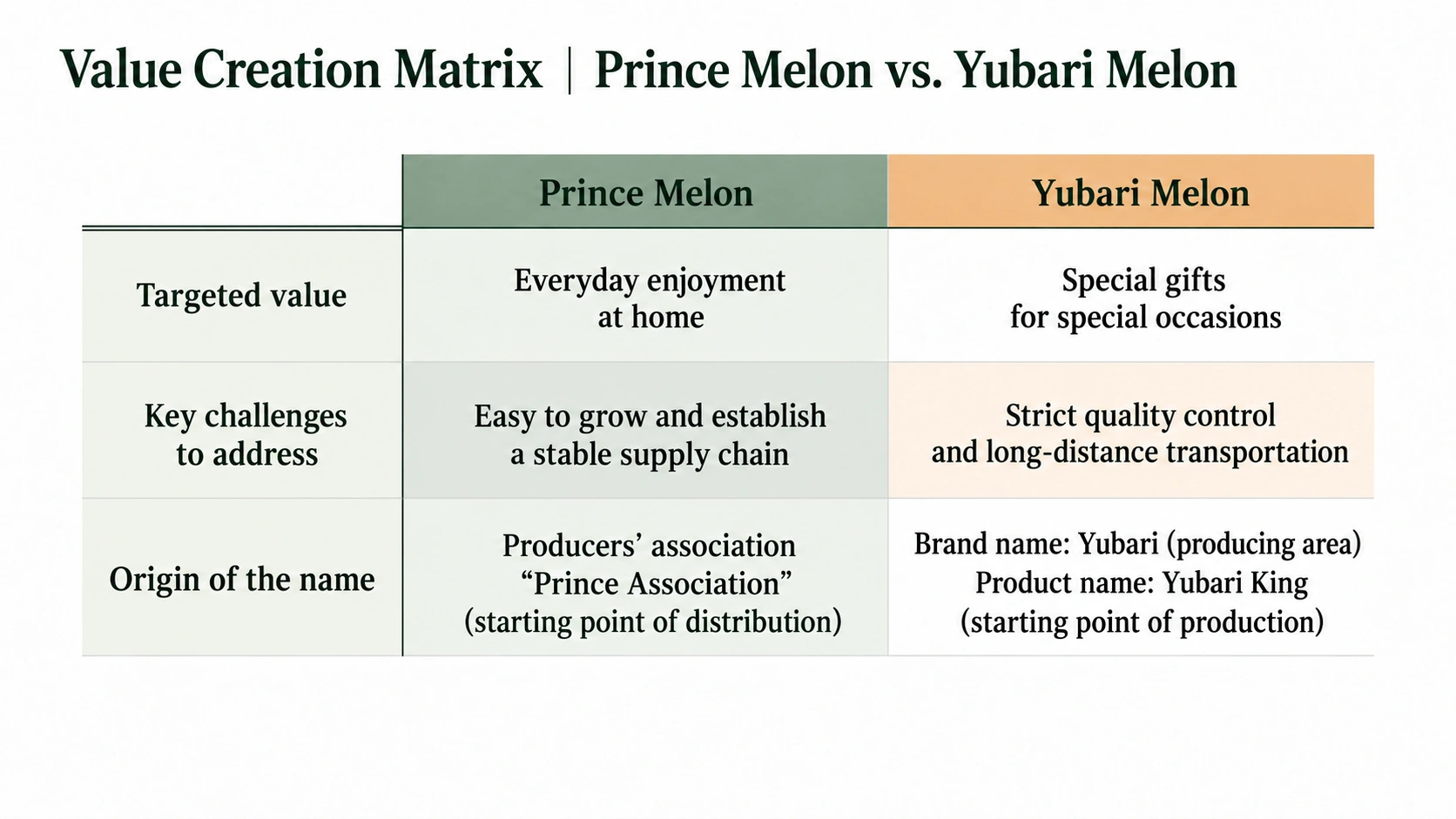
While Prince helped bring melons to households, Yubari developed systems to protect the quality associated with its growing region. Everyday enjoyment and premium gifts became different sources of value for the same kind of fruit.
Continuing cultivation improvements in Vietnam
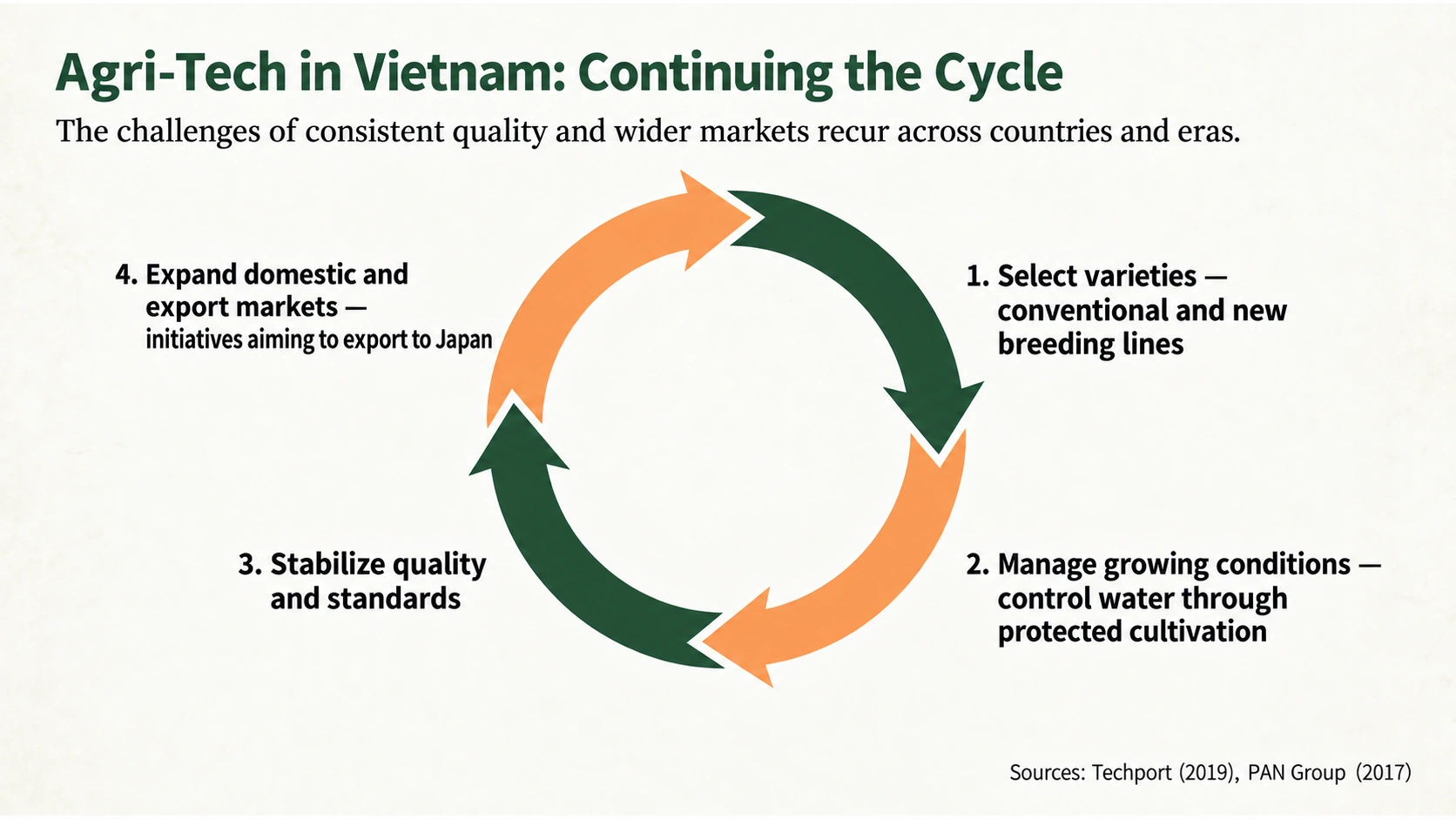
Vietnam also has a history of growing melon types. A 2019 Techport article discusses locally grown melons alongside newer hybrids and protected cultivation. Source: Techport’s introduction to Unifarm’s system (Vietnamese).
One recurring question in protected cultivation is how to make fruit quality more consistent. Choosing cultivars and managing water and growing conditions echo some of the efforts that supported melon access and branding in Japan.
A 2017 article published on PAN Group’s website also described PAN Farm and Vinaseed’s efforts to develop the domestic market and pursue exports to Japan. Source: PAN Group article, September 11, 2017 (Vietnamese).
An export ambition at that time is separate from present export results. What the article shows is producers and businesses working to raise quality and broaden their markets.
The people who create a fruit’s value
An imperial anecdote, a name linked to a place, Prince reaching households, and Yubari’s regional quality standards: a single fruit carries many stories.
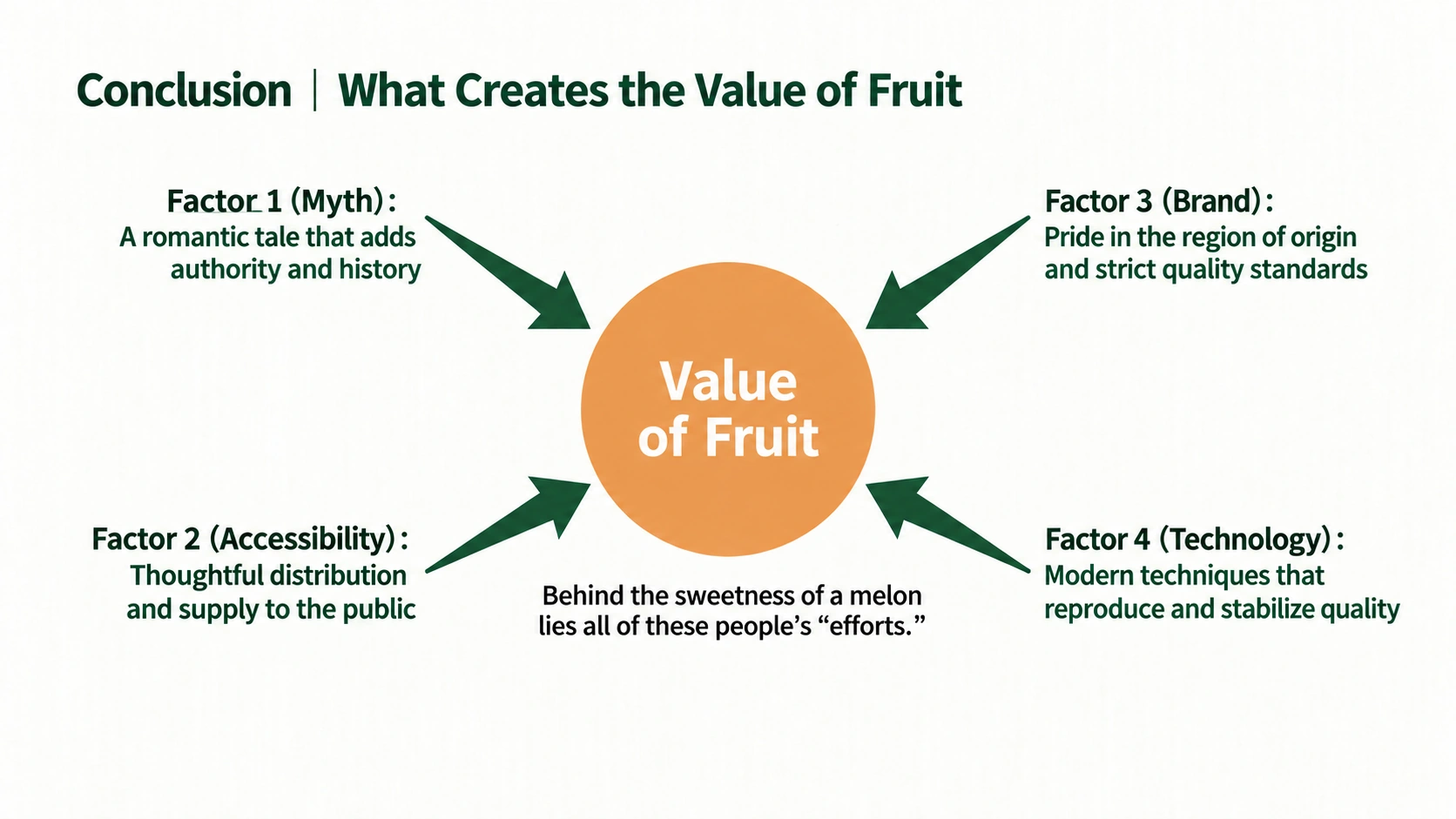
The melons on a Vietnamese shop shelf also reflect the work of people involved in varieties, cultivation and distribution. When you next pick one up, consider where and how it was grown as well as how sweet it might be.
Frequently asked questions about melon history
Where does Prince melon’s name come from?
According to Sakata Seed, it comes from the Prince-kai, a fruit merchants’ group that tasted the new melon. The cultivar was launched in 1962. The naming and launch history are described in the developer’s records linked above.
Are Yubari Melon and Yubari King the same name?
Yubari Melon is the regional brand name; Yubari King is the cultivar used to grow it. The brand’s history includes grading standards and efforts to transport the fruit in good condition.
Did an emperor die from eating too many melons?
That explanation appears in contemporary historical accounts, but it is not a medically established cause of death. It needs to be distinguished from the history of his illness and surgery.
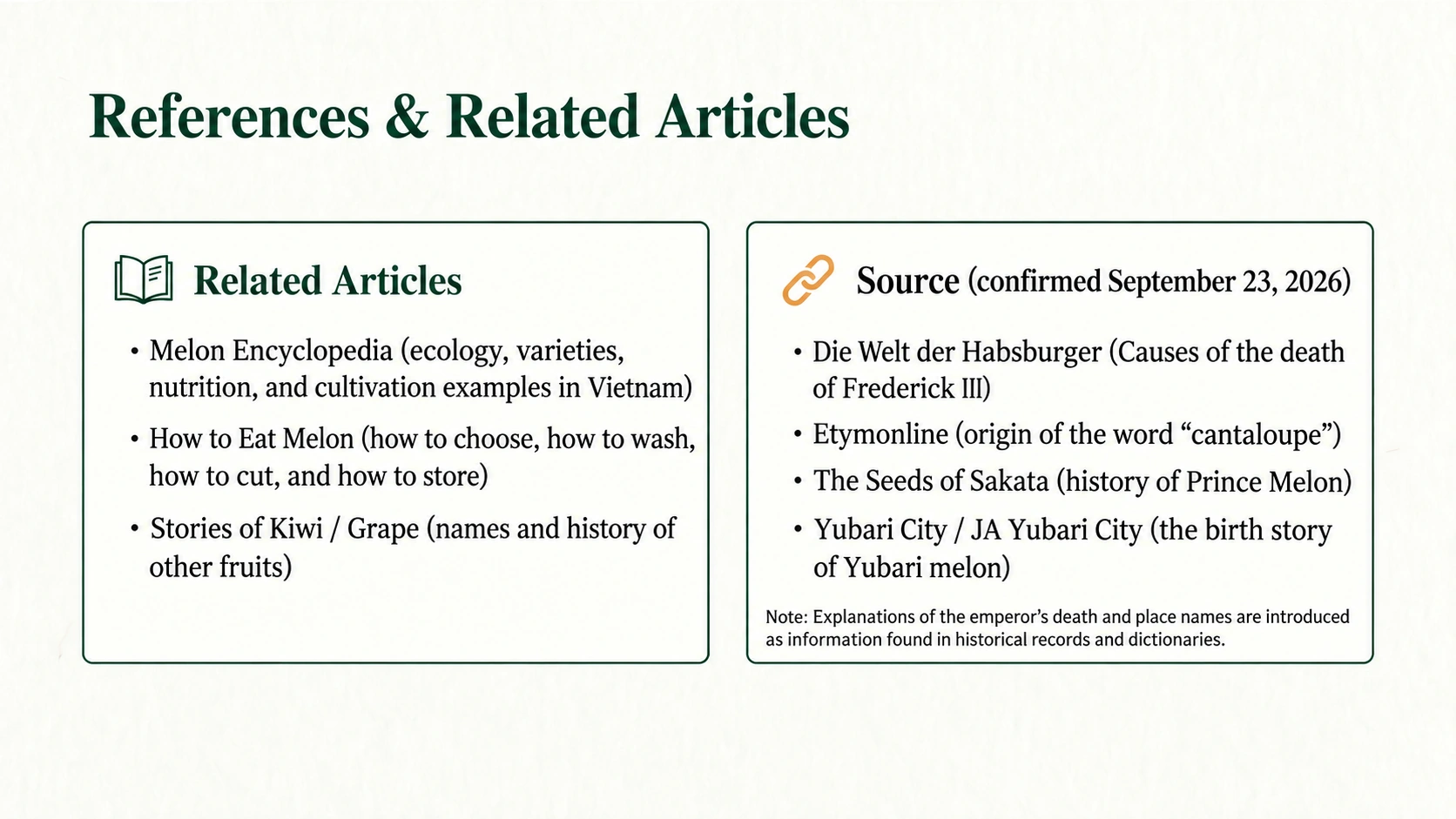
Related articles
- Varieties, nutrients and cultivation: Melons in Vietnam.
- Choosing, washing, cutting and storing: How to Eat Melon in Vietnam.
Sources and verification dates
The Japanese source article first checked its source links on September 23, 2026. On October 17, 2026, it rechecked Sakata’s naming and launch records, JA Yubari’s history, the imperial anecdote and the etymology of cantaloupe. The domestication account was also checked against research participant IRTA’s explanation. Claims about the emperor’s death and place-name interpretations remain attributed accounts.