How to Eat Milk Fruit in Vietnam: Choosing, Cutting and Storage
Updated
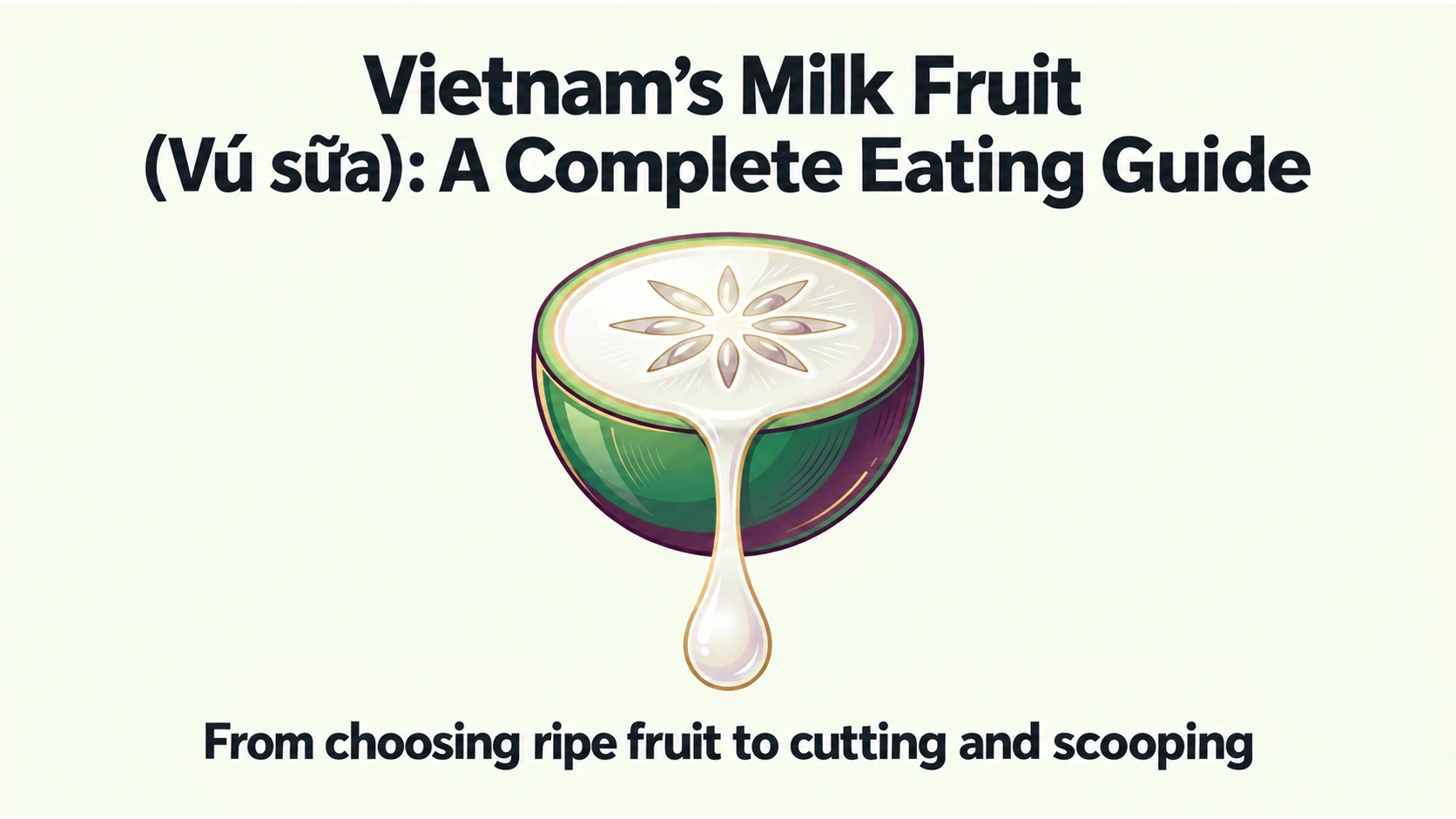
Milk fruit, or star apple, appears in Vietnamese markets with its mellow sweetness and soft flesh. If you are holding one for the first time, you may wonder how to judge its ripeness or why some people gently massage it before eating.
This article takes you through where to buy it, how to compare prices, how to choose a ripe fruit, how to massage and cut it, how to scoop out the flesh and how to store it. It also explains how to avoid the astringent latex near the skin and what to consider if you are traveling to Japan.
Here are the five things you will learn:
- Where to buy milk fruit in Vietnam and how to check prices
- How to choose fruit that is ready to eat
- How to massage and cut a ripe fruit, and the basic eating method
- Refrigeration and precautions when eating it
- Whether you can bring fresh milk fruit into Japan
The companion Milk Fruit Guide explains how its milky-white juice inspired its name and why a star appears in the cut fruit.
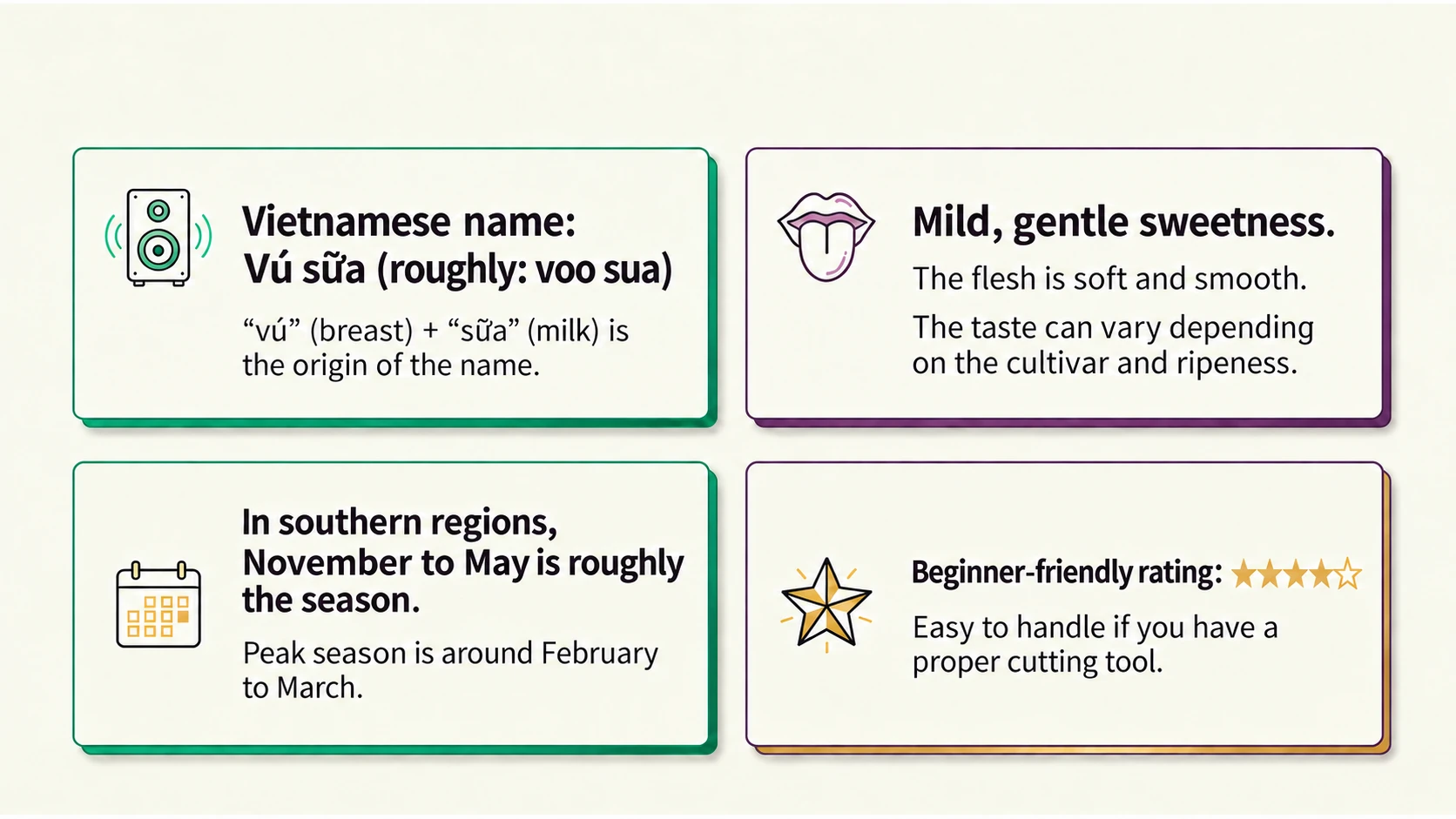
Milk fruit in Vietnam at a glance
| Item | Details |
|---|---|
| Vietnamese name | Vú sữa |
| Approximate pronunciation | “Voo sua,” as a rough guide; Vietnamese tones are not represented by this spelling |
| Taste | Mellow, gentle sweetness |
| Texture | Soft and smooth |
| Availability | Approximately November–May in southern Vietnam during the dry-season period; February–March is a guide to peak availability |
| Checking the price | Prices vary by variety, origin, season and seller. Check whether the price is per kilogram or per pack. |
| Where to buy | Supermarkets, open-air markets, fruit shops and online stores |
| Basic eating method | Cut a ripe fruit in half and scoop it with a spoon. Gently massaging it is optional. |
| Local preparations | Fruit mixed with condensed milk and crushed ice (Vú sữa dầm sữa đặc đá), or a smoothie (sinh tố vú sữa) |
| Ease for beginners | ★★★★☆ — straightforward if you have cutting utensils; an editorial assessment |
Its Vietnamese name is Vú sữa
Milk fruit is called Vú sữa in Vietnamese. As explained in the Milk Fruit Guide, the name combines vú (“breast”) and sữa (“milk”), evoking the sweet, milky-white juice that seeps out when it is cut. Showing the name Vú sữa can help explain which fruit you are looking for in markets or supermarkets.
Milk fruit prices and where to buy it in Vietnam
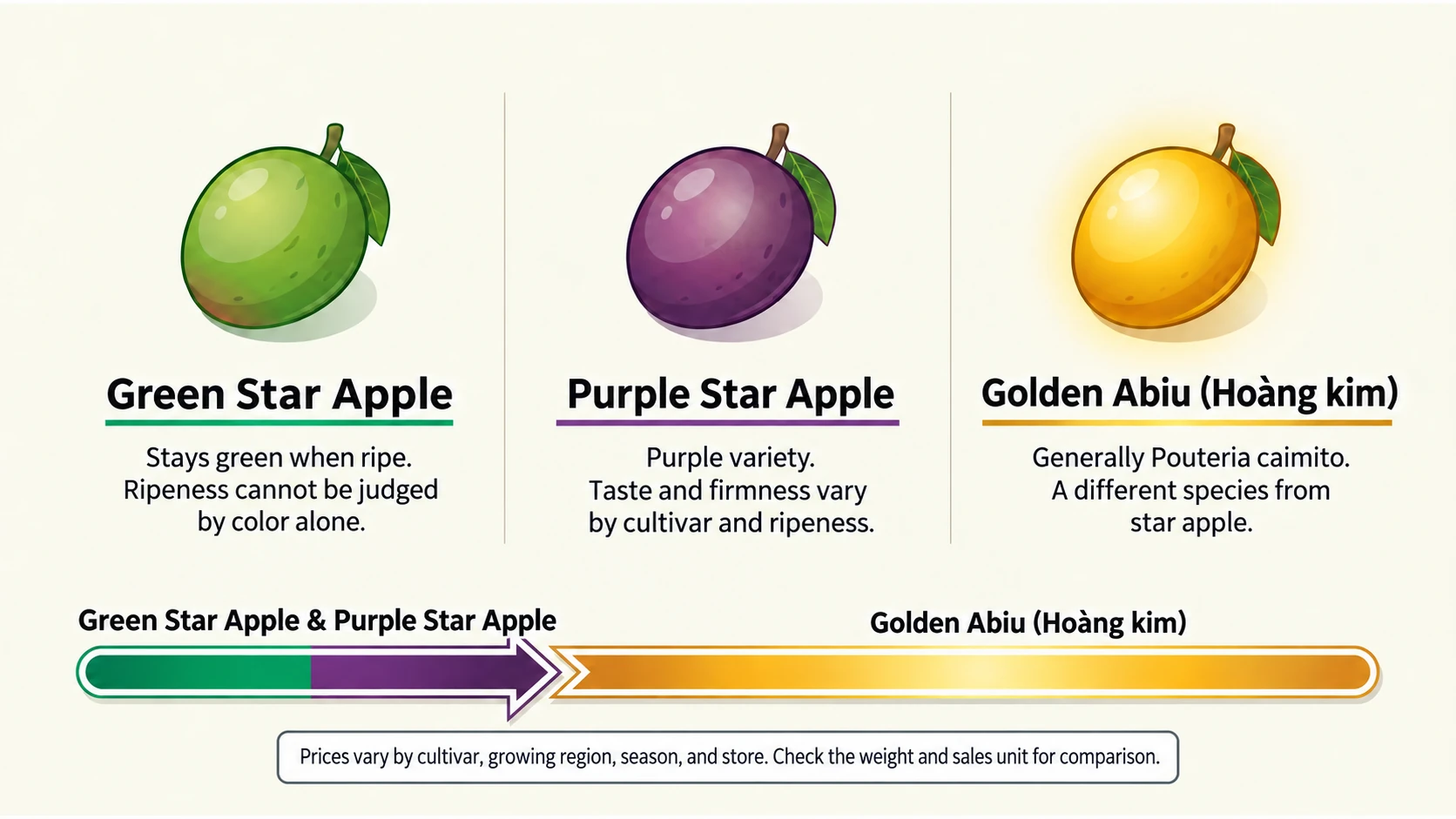
Prices vary with the growing area, season, quality and seller. Compare the price per kilogram with the weight of a pack. The source edition does not yet include the author’s own purchase records, so it does not give a fixed current price range or a conversion into Japanese yen.
The golden fruit called Vú sữa hoàng kim generally refers to a different species, abiu (Pouteria caimito). The Can Tho University research-project listing also uses this scientific name. Do not confuse it with green or purple star apple when comparing prices.
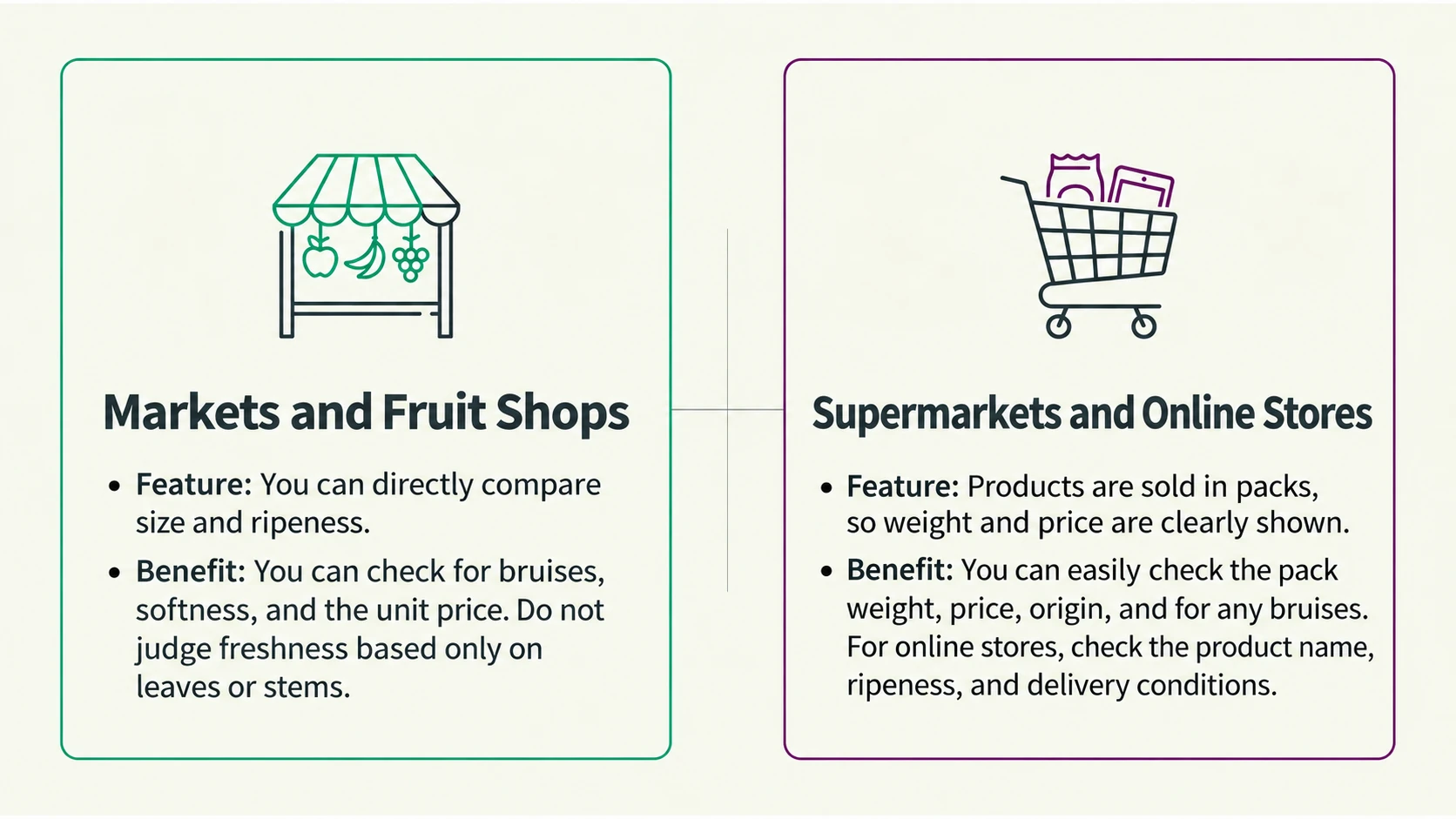
Open-air markets and fruit shops
You can compare fruit size and ripeness in person. Some fruit has leaves or stalks attached, but those alone do not establish freshness. Check for damage and assess softness as well.
Supermarkets and online stores
Weights and prices may be easier to check, and the fruit may be sold in packs. This can be convenient if you find market conversations difficult. Some online sellers offer fruit from growing areas associated with Vú sữa Lò Rèn Vĩnh Kim, the regional name introduced in the Milk Fruit Guide.
What to check at each type of seller
| Place | What to check |
|---|---|
| Markets and fruit shops | Damage, softness, sales unit and readiness to eat. Do not judge freshness from leaves or stalks alone. |
| Supermarkets | Pack weight, price, origin labeling and signs of spoilage. |
| Online stores | Product and scientific names, origin, weight, ripeness and delivery conditions. Distinguish golden abiu from star apple. |
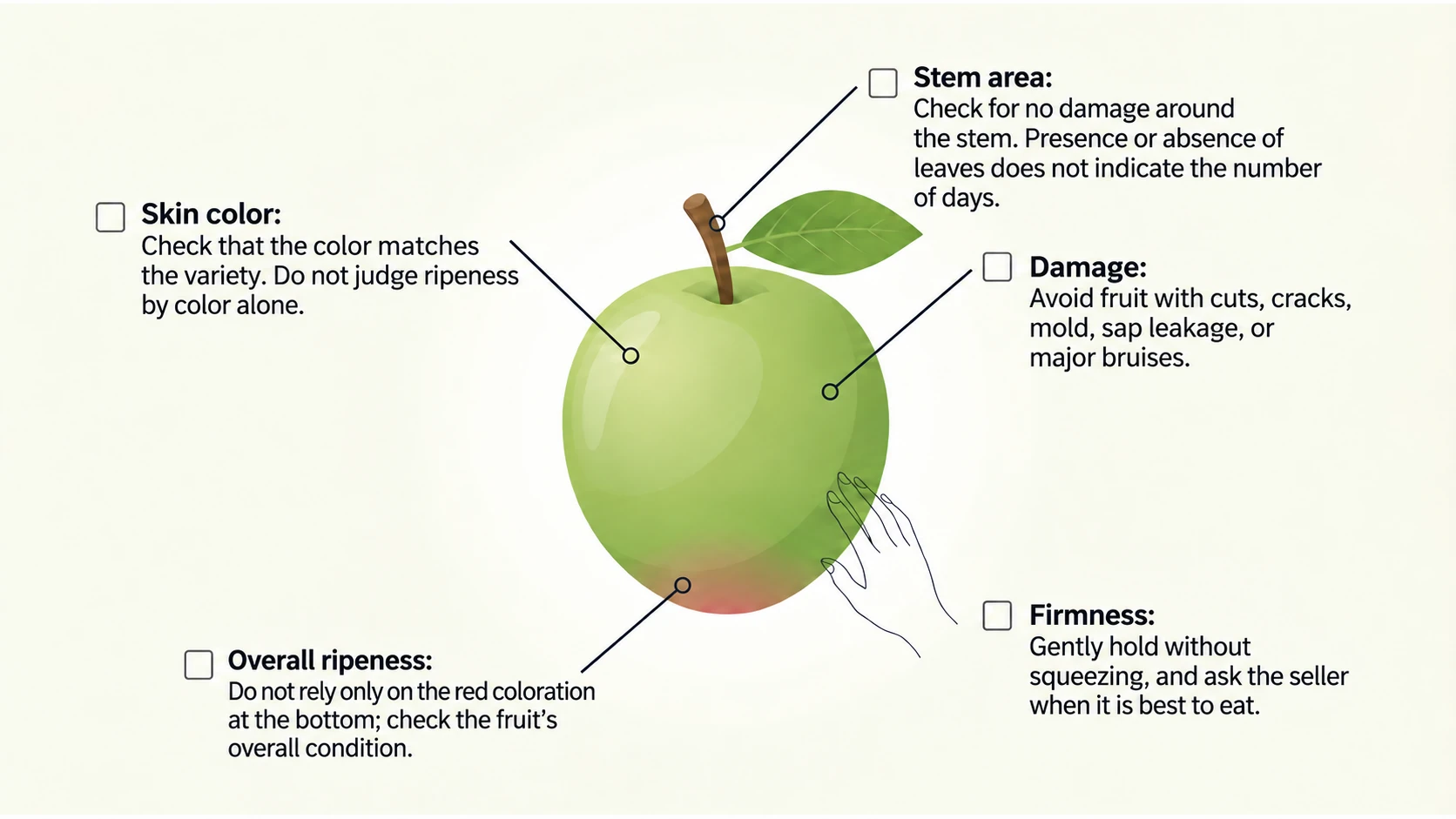
How to choose milk fruit that is ready to eat
Consider these points together:
- Color appropriate to the variety: some fruit remains green when ripe; other types turn purple. Color alone is not a reliable test.
- Damage or spoilage: look for splits, mold, leaking juice or large bruises.
- Around the stalk: check for deterioration. An attached leaf does not tell you exactly how long ago it was harvested.
- Ripeness across the whole fruit: ripe fruit becomes softer. Check its overall condition rather than relying only on a reddish patch at the bottom.
- Softness: do not squeeze hard. Ask the seller when it will be ready to eat. Avoid extremely hard fruit or fruit with a spot so soft that it is collapsing.
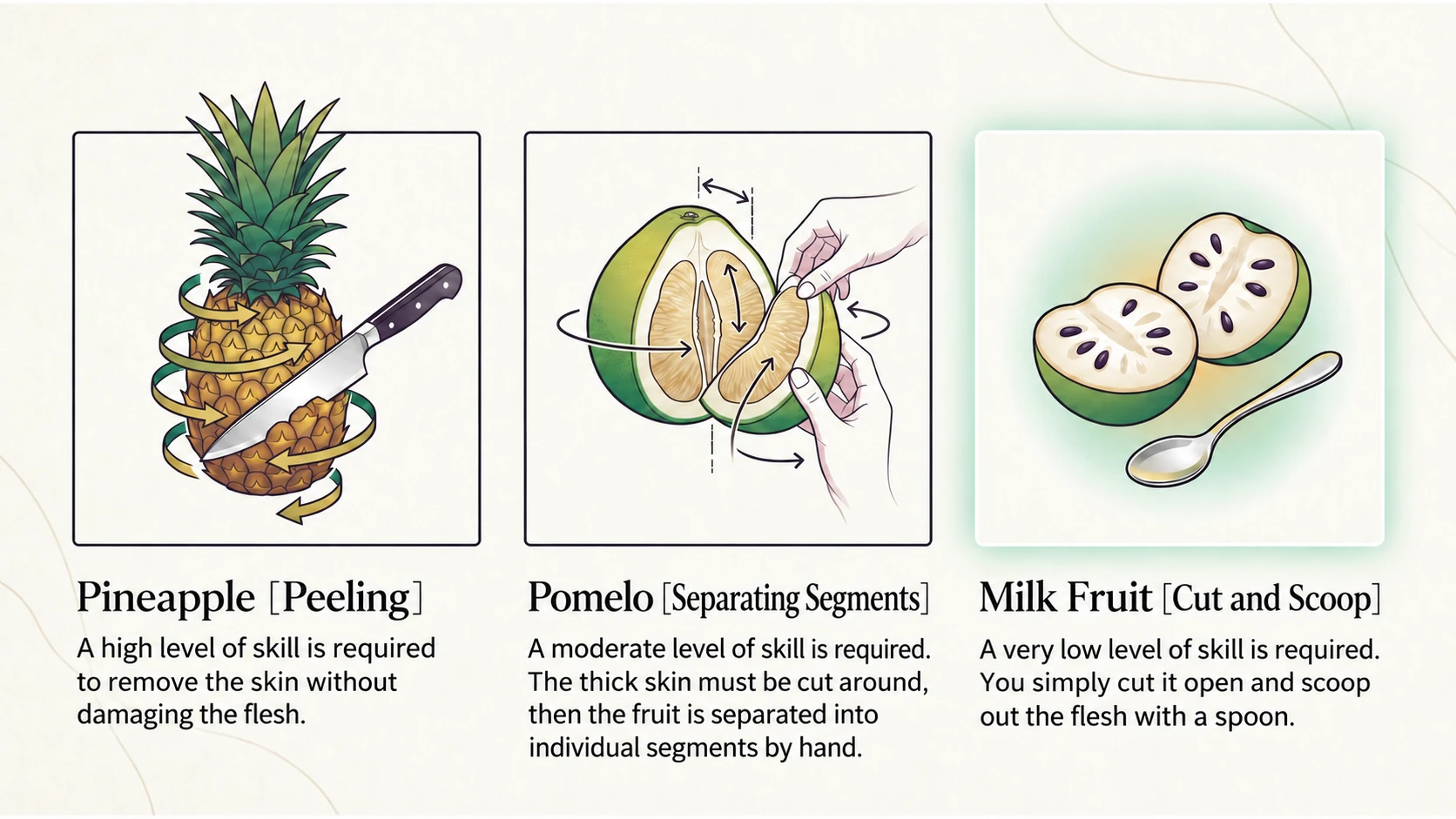
How to eat milk fruit by massaging, cutting and scooping
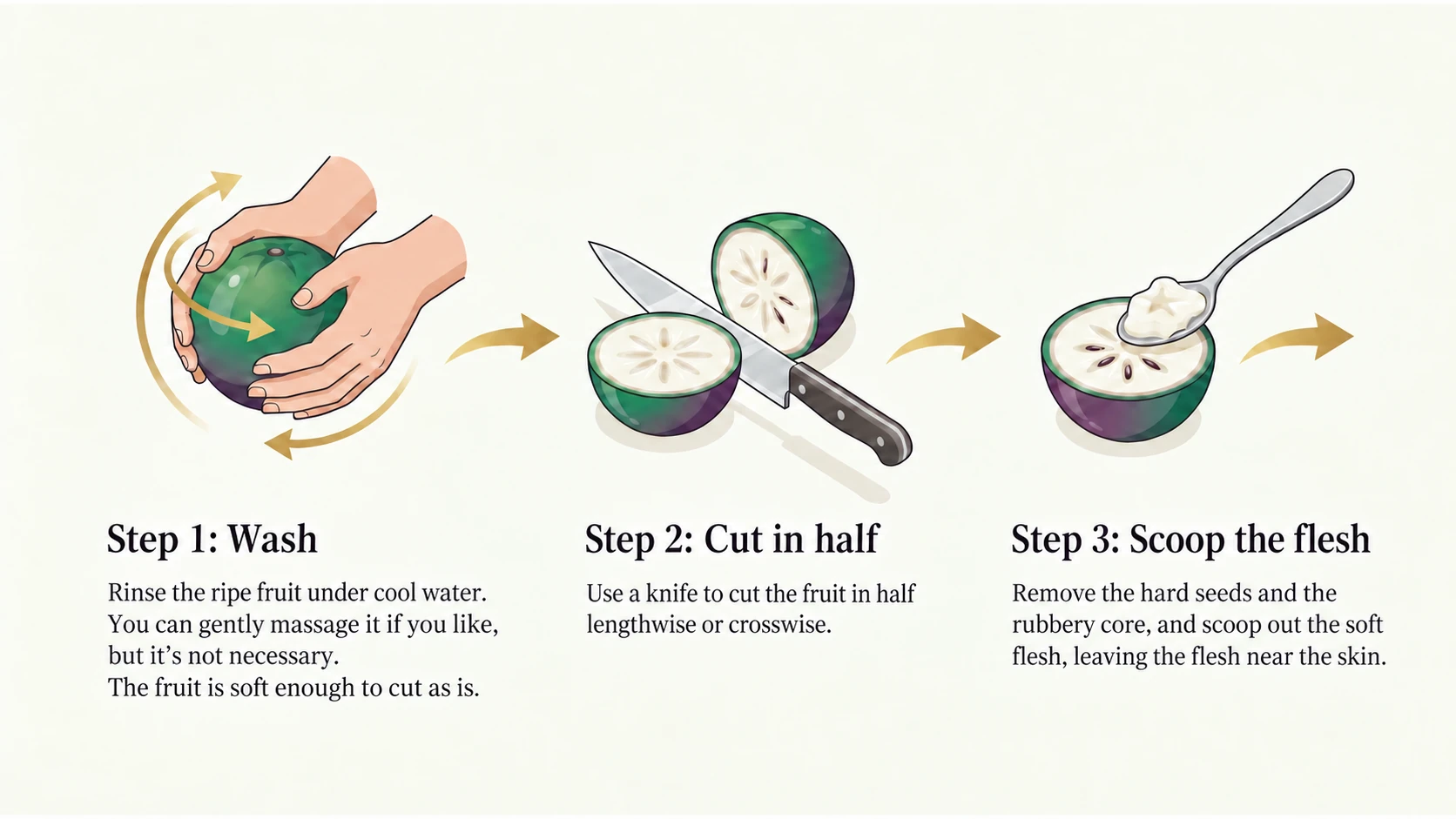
Wash a ripe fruit under running water and prepare a clean knife and spoon. Hard, immature fruit contains more latex and can be strongly astringent; do not force yourself to eat it.
Steps for eating milk fruit
| Step | Method |
|---|---|
| 1 — Wash | Wash a ripe fruit under running water. Prepare a clean knife and spoon. |
| 2 — Cut | Gently massage it if you like, then cut it in half. Massaging is optional. |
| 3 — Scoop | Remove the seeds and hard core, then scoop out the soft flesh, leaving the layer close to the skin. |
If you do not have a knife, ask the shop or your accommodation to cut the fruit for you.
- Gently massage the ripe fruit, if you like: cup it in both hands and move it gently without crushing it. If it is already soft enough, you can simply cut it.
- Cut it in half: use a knife to cut lengthwise or across the middle.
- Scoop out the flesh: insert a spoon at the cut surface and scoop the white flesh, leaving a little next to the skin.
- Remove seeds and hard parts: take out the seeds before eating and eat only the soft flesh.
You do not need to peel the fruit completely. Each half of the skin can serve as a little bowl.
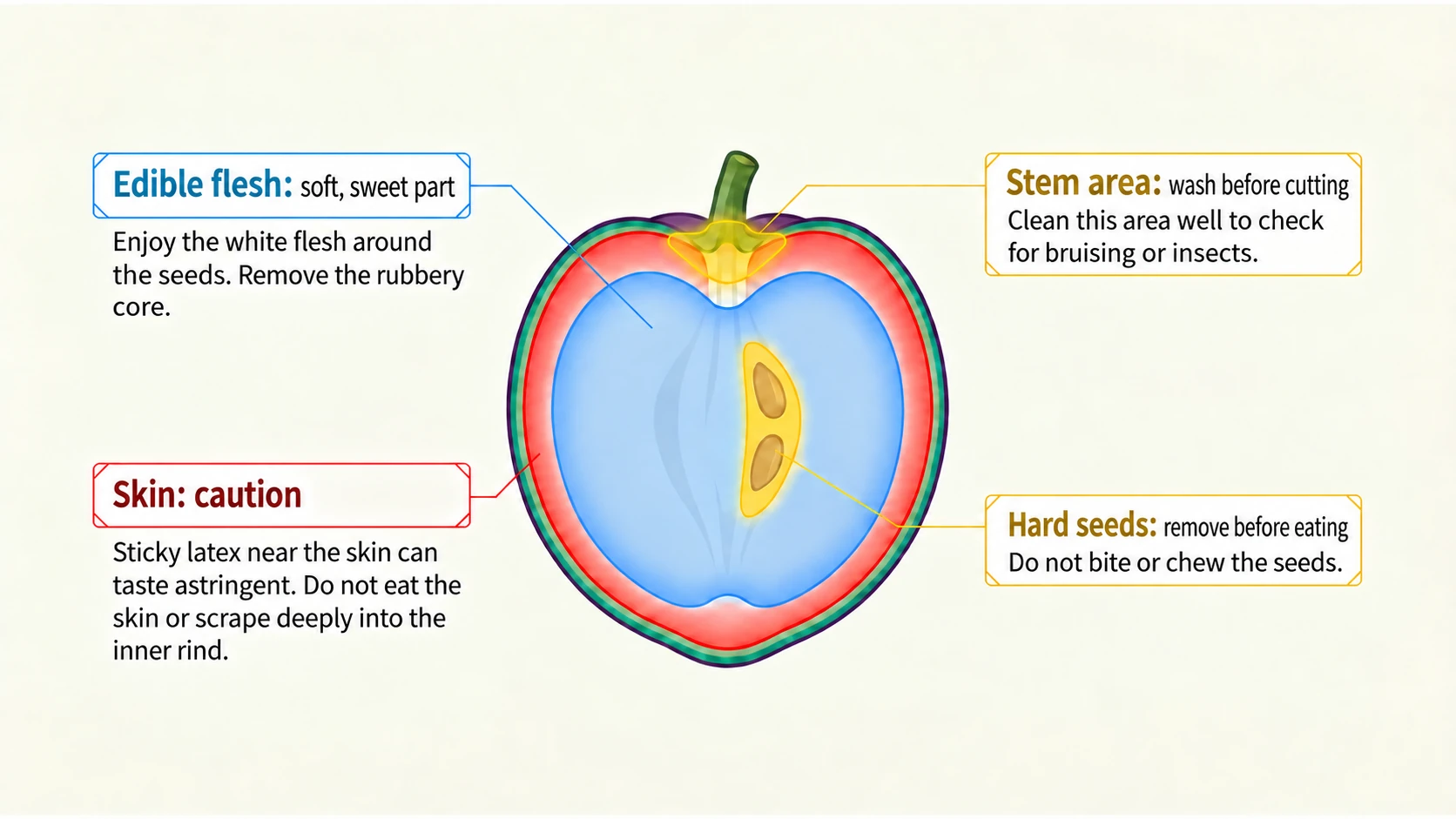
Precautions when eating milk fruit
Sticky latex occurs in the skin and hard core. Scoop the soft flesh without scraping deeply into the rind to help avoid astringency.
Wash the skin before cutting, and check the exposed flesh for insects or spoilage. Cutting the fruit and using a spoon lets you inspect the inside more easily than sucking at the stalk end.
The seeds are hard and unsuitable for eating. Be careful not to bite down on them.
Local ways to enjoy milk fruit
1. Eat it directly with a spoon
The simplest method is to cut it in half and scoop out the flesh. Chilling it first gives it a more refreshing feel.
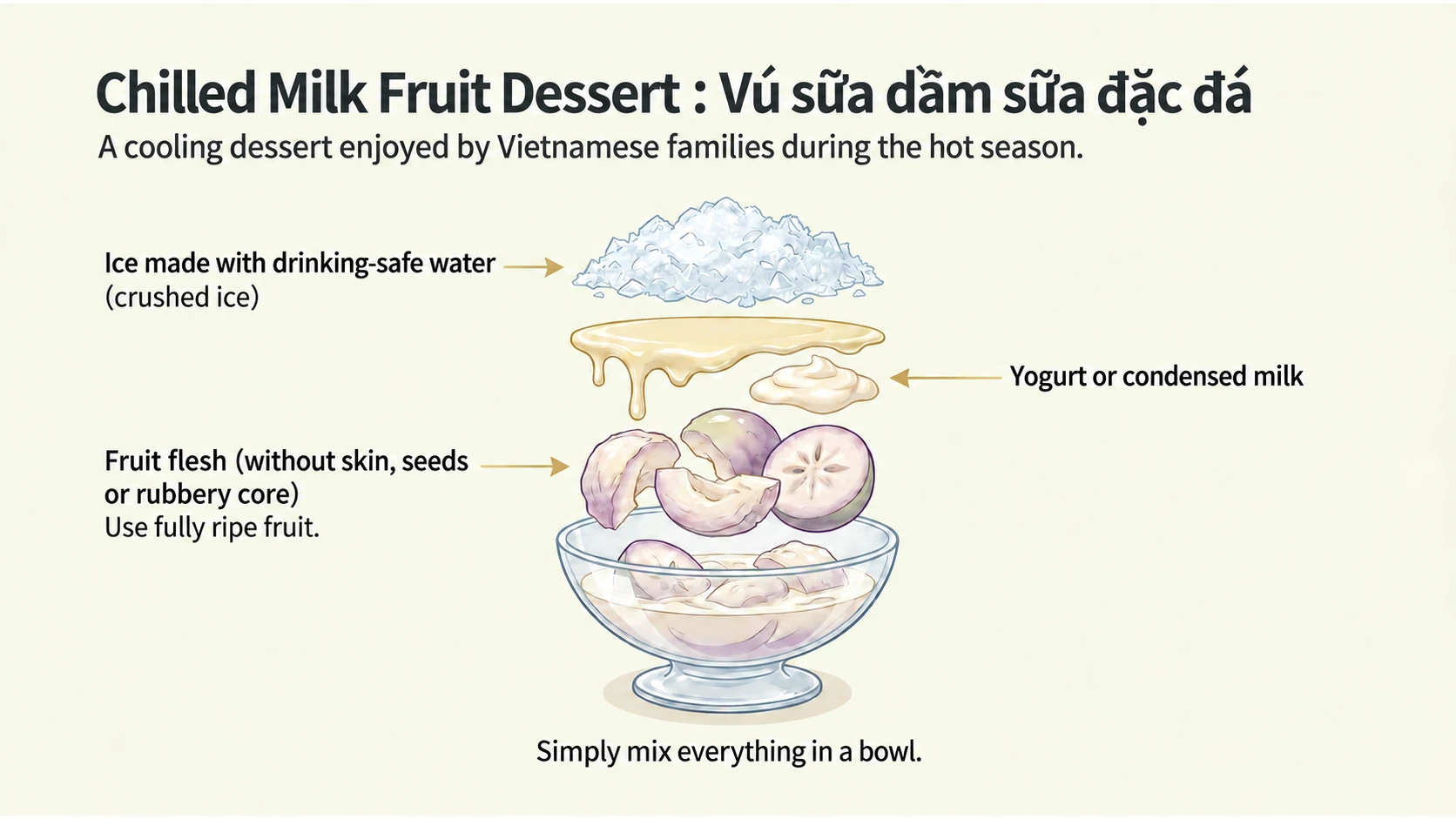
2. Milk fruit with condensed milk and ice
Vú sữa dầm sữa đặc đá is a dessert made by removing the skin, seeds and rubbery core, then mixing the flesh with condensed milk and crushed ice. Yogurt is another possible addition. Use ice made from water suitable for drinking.
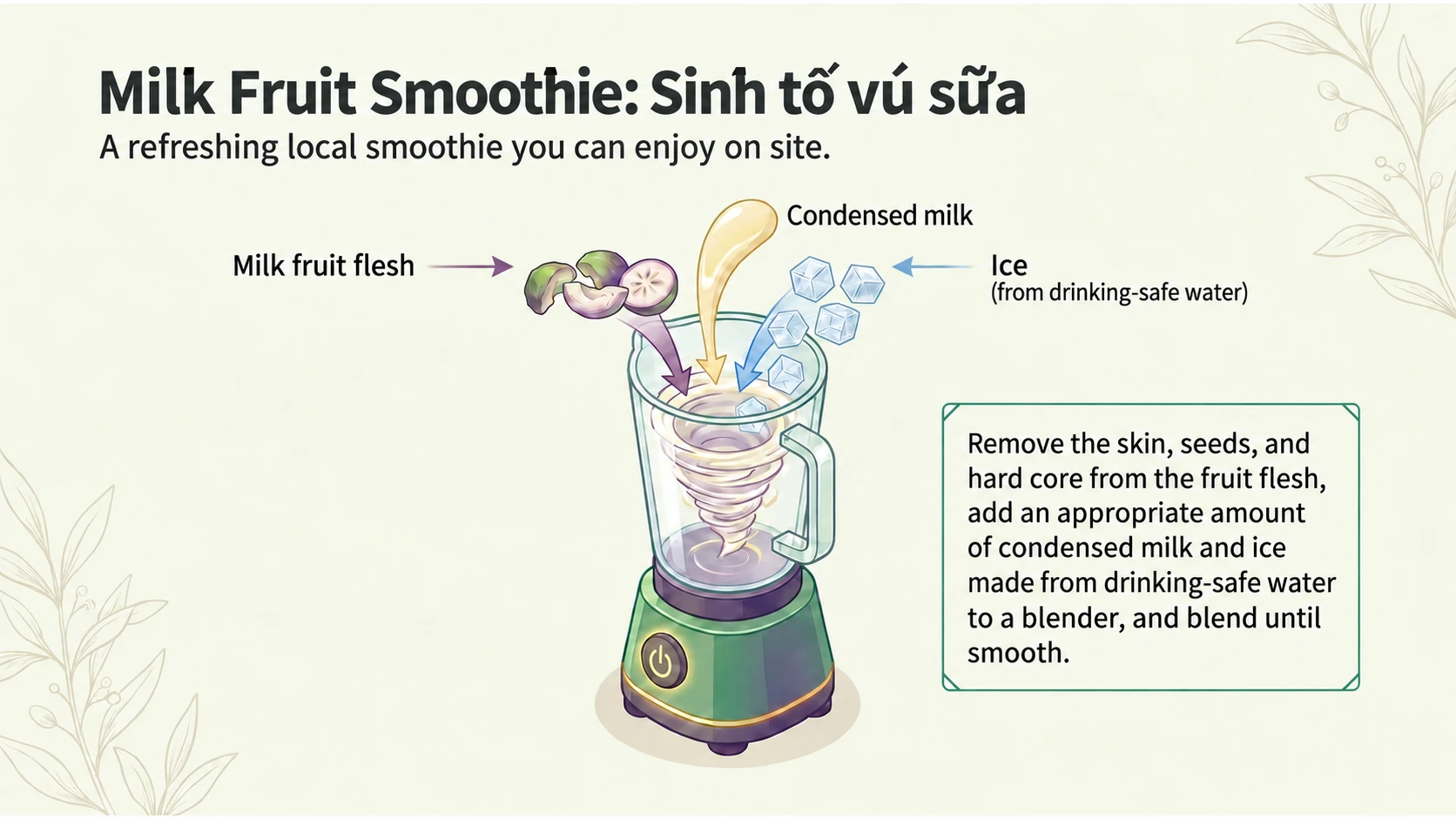
3. A milk fruit smoothie
For sinh tố vú sữa, blend the flesh with condensed milk and ice. This preparation may also appear on café menus.
Making a milk fruit smoothie (Sinh tố vú sữa)
| Stage | Method |
|---|---|
| Prepare | Wash and cut a ripe fruit. Remove the skin, seeds and hard core, and take out the flesh. |
| Combine | Put the flesh, your preferred amount of condensed milk and ice made from drinking-quality water into a blender. |
| Finish | Blend until smooth. Adjust the ice and condensed milk to taste. |
This is one preparation method, rather than a standardized recipe with fixed quantities.
How to store milk fruit
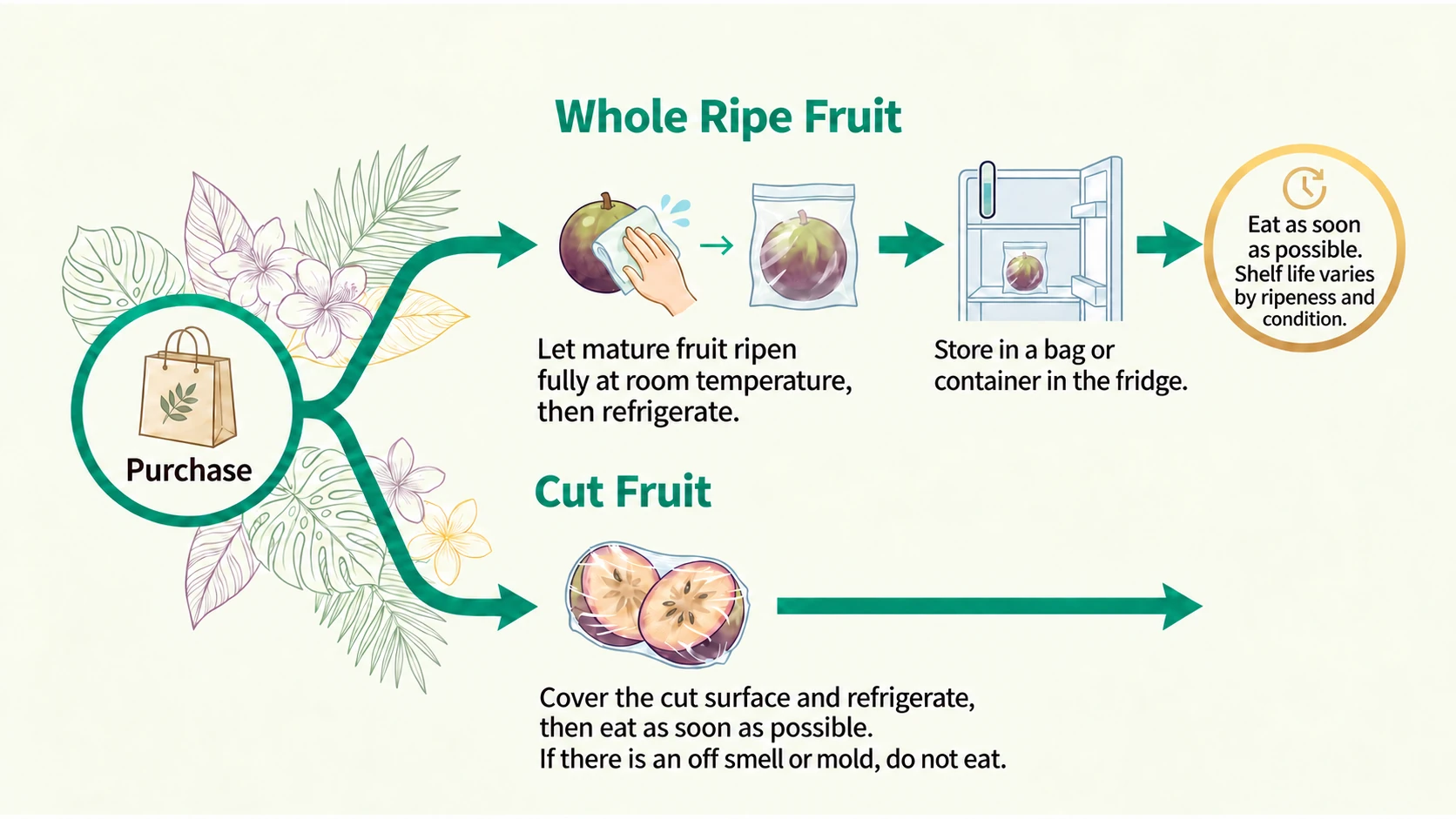
The University of Florida growing and storage guide describes allowing mature fruit to ripen fully at room temperature, then placing ripe fruit in a bag in the refrigerator. Base your storage decisions on ripeness and any signs of damage at purchase.
- Mature fruit that is still firm: keep it out of direct sunlight and check its softness. Fruit picked while immature will not necessarily ripen into good eating quality.
- Whole fruit ready to eat: refrigerate it in a bag or container and eat it soon. No single number of storage days can be guaranteed for every home or fruit.
- Cut fruit: cover the cut surface, refrigerate it and eat it as soon as possible. Do not eat fruit showing mold, an unusual smell or other signs of spoilage.
Can you bring fresh milk fruit into Japan?
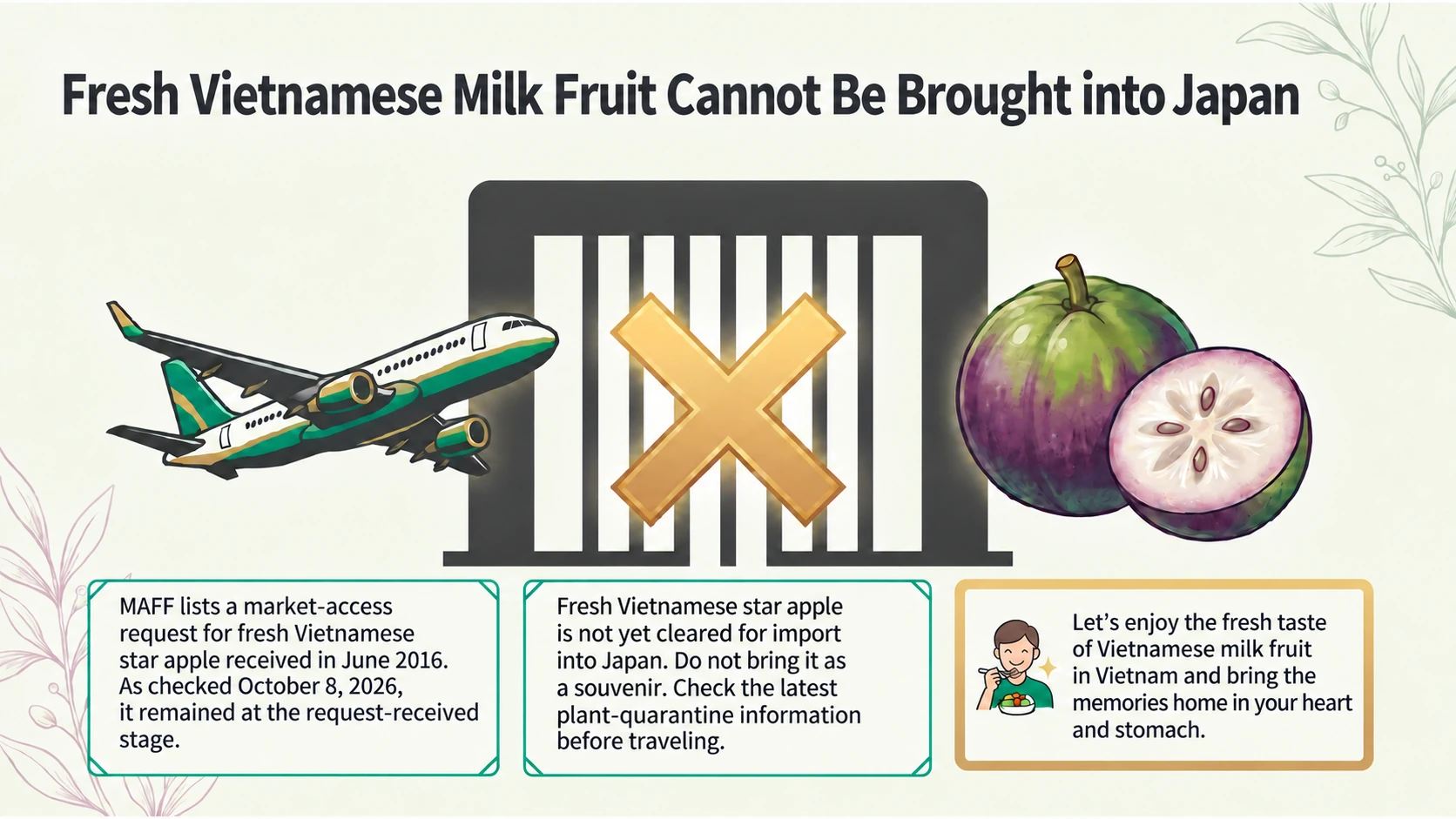
Do not treat fresh Vietnamese star apple as a fruit already cleared for import into Japan. In the Japanese Ministry of Agriculture, Forestry and Fisheries discussion list, checked on October 8, 2026, it remained listed at the stage of a market-access request received in June 2016.
Enjoy it locally rather than bringing fresh fruit to Japan as a souvenir. Plant-quarantine conditions may change, so consult current Plant Protection Station information before traveling.
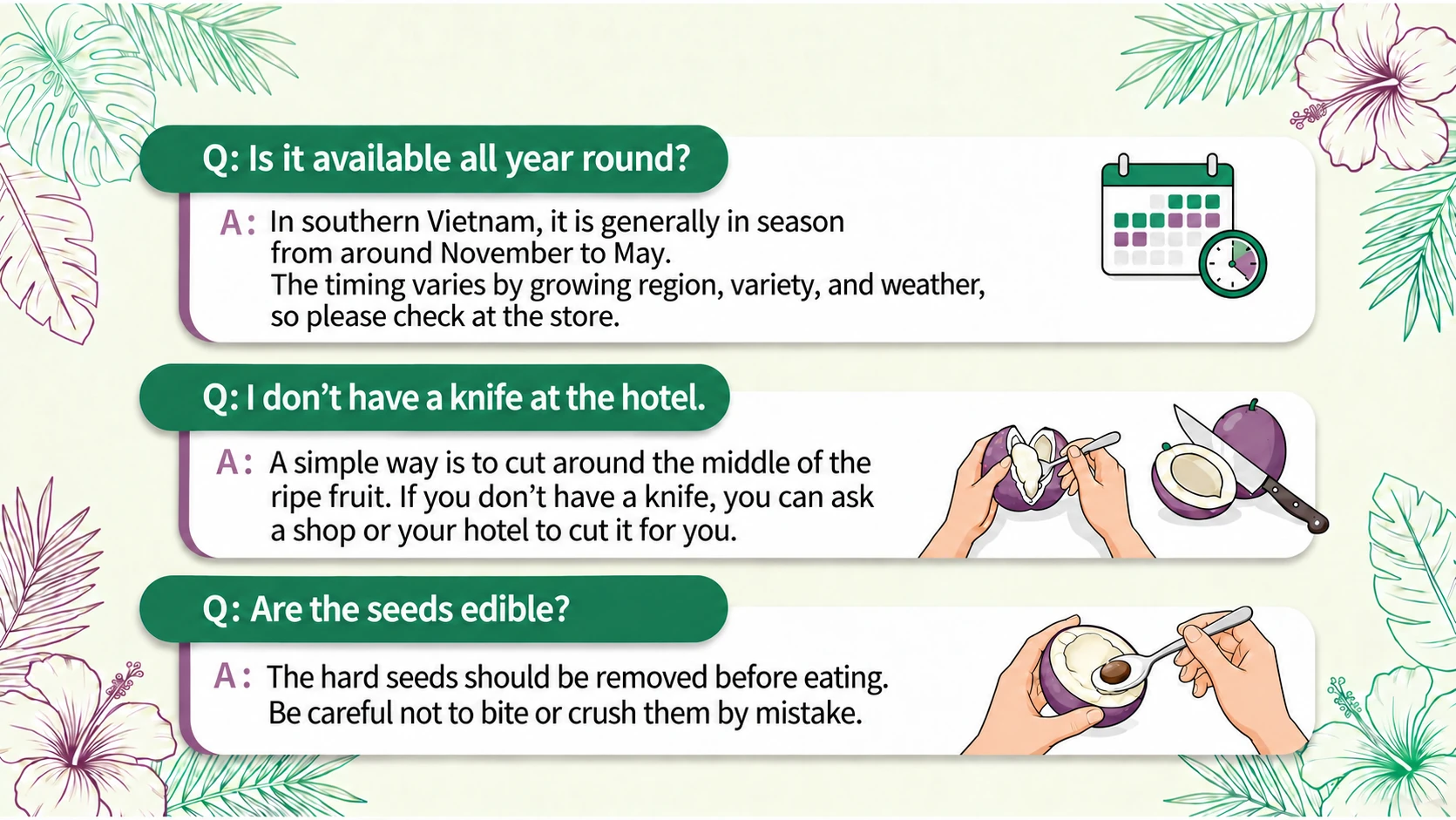
Frequently asked questions about eating milk fruit
Can you buy milk fruit throughout the year?
In southern Vietnam, November–May is an approximate guide to availability. Growing areas, varieties and weather affect the timing, so check with the seller.
Do you have to massage milk fruit before eating it?
If the fruit is fully ripe and soft, you can simply cut it in half and scoop out the flesh. Gently massaging it is one local eating method, but it is not essential.
Can you eat milk fruit without a knife?
Some people open ripe fruit by hand, but a knife makes it easier to cut it in half and inspect the inside. If you do not have one, ask the shop or your accommodation to cut it.
Can you eat the skin and seeds?
Remove the skin, hard seeds and rubbery core, and eat the soft flesh. Avoid scooping too deeply near the skin.
Can you take fresh milk fruit to Japan?
As checked on October 8, 2026, market-access discussions for fresh Vietnamese star apple remained at the request-received stage. Do not take fresh fruit as a souvenir, and check current information from Japan’s Plant Protection Station.
The author’s tasting records
As of October 8, 2026, the author’s purchase and tasting records were not included in the source edition. These eating methods are presented on the basis of reference materials. The purchase location, price, ripeness and personal tasting impressions are to be added after the author tries the fruit.
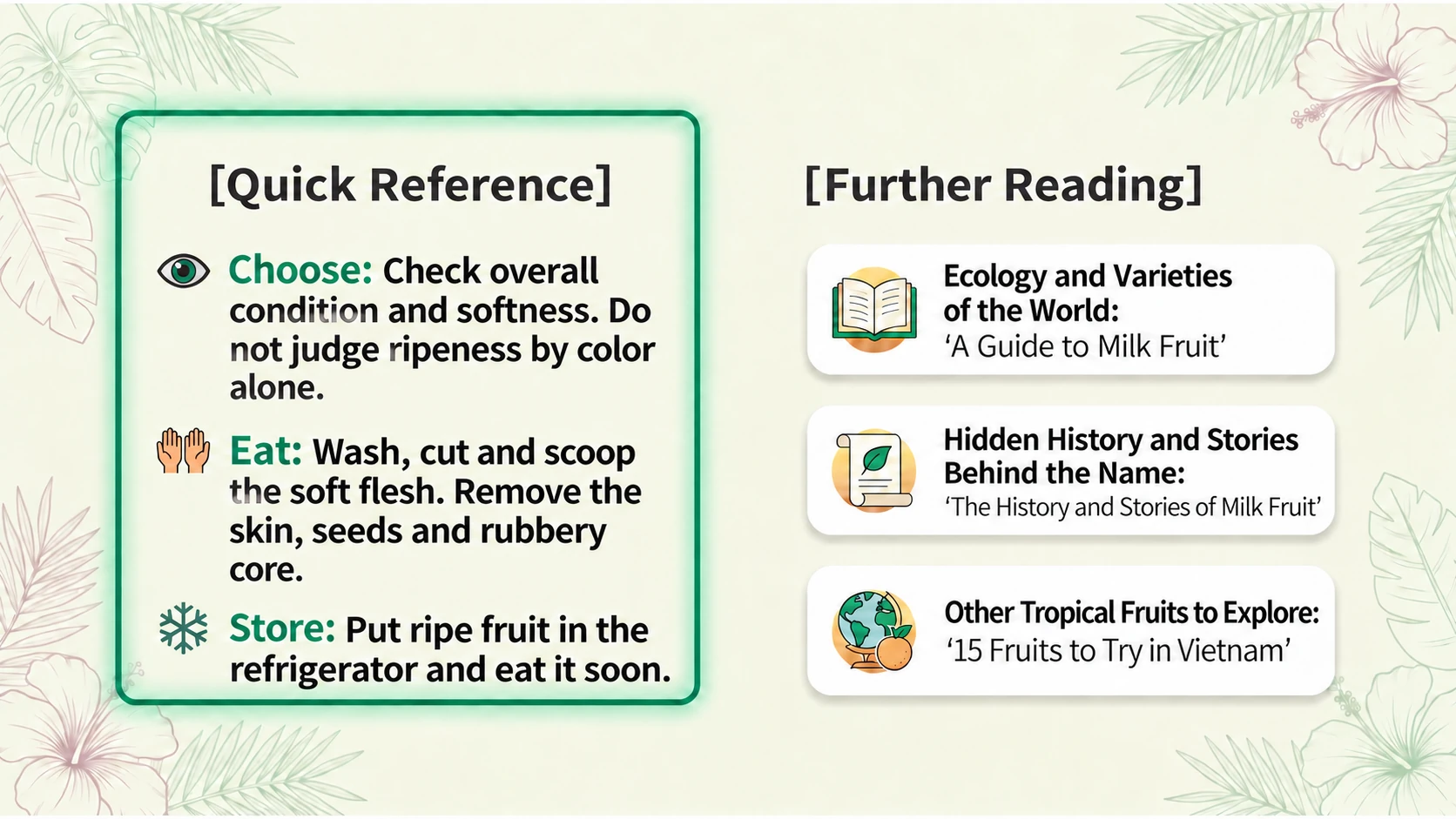
How to enjoy milk fruit in Vietnam
Milk fruit is best approached by cutting a ripe fruit in half and scooping out the flesh with a spoon.
- Choose: check softness and signs of spoilage, rather than relying on color alone.
- Eat: wash before cutting, leave the flesh close to the skin and remove seeds and the hard core.
- Store: refrigerate ripe fruit in a bag or container and eat it soon.
- Travel: do not take fresh Vietnamese fruit to Japan as a souvenir.
For names and nutrition, see the Milk Fruit Guide. For the folktale of a mother and her son, read The History and Stories of Milk Fruit.
More about milk fruit
- The tree, nutrition, varieties and markets: Milk Fruit Guide
- Names around the world, Vietnamese folklore and recorded history: The History and Stories of Milk Fruit
- Other fruits to enjoy in Vietnam: 15 Fruits to Try in Vietnam (Japanese)
References
- dienmayxanh.com: choosing, eating and storing star apple (Vietnamese)
- VIETJO Daily Vietnam News: “Milk Fruit / Vú sữa” (Japanese)
- nongsandungha.com: “Quả vú sữa kỵ với gì?” (Vietnamese)
- vietnamnet.vn: an article on the changing price of Vú sữa hoàng kim (Vietnamese)
- gianongsan.org: star apple prices per kilogram (Vietnamese)
- fptshop.com.vn: “Cách làm sinh tố vú sữa” (Vietnamese)
- vietgiaitri.com: a star apple and yogurt dessert (Vietnamese)
- Japan’s Ministry of Agriculture, Forestry and Fisheries: import market-access requests from Vietnam (Japanese)
The source edition was fact-checked and updated on October 8, 2026. Recheck prices and plant-quarantine conditions when buying fruit or traveling.
- UF/IFAS: ripeness, cutting and storage
- Can Tho University: research project on Vú sữa Hoàng Kim (Pouteria caimito)
About the Author

Chuta
Based in Hanoi, Vietnam, Chuta buys fruit at local markets and supermarkets and writes about its taste, seasons, selection and preparation. Drawing on life in Vietnam, he introduces tropical fruits that are less familiar to readers in Japan.
About Fruit Guide