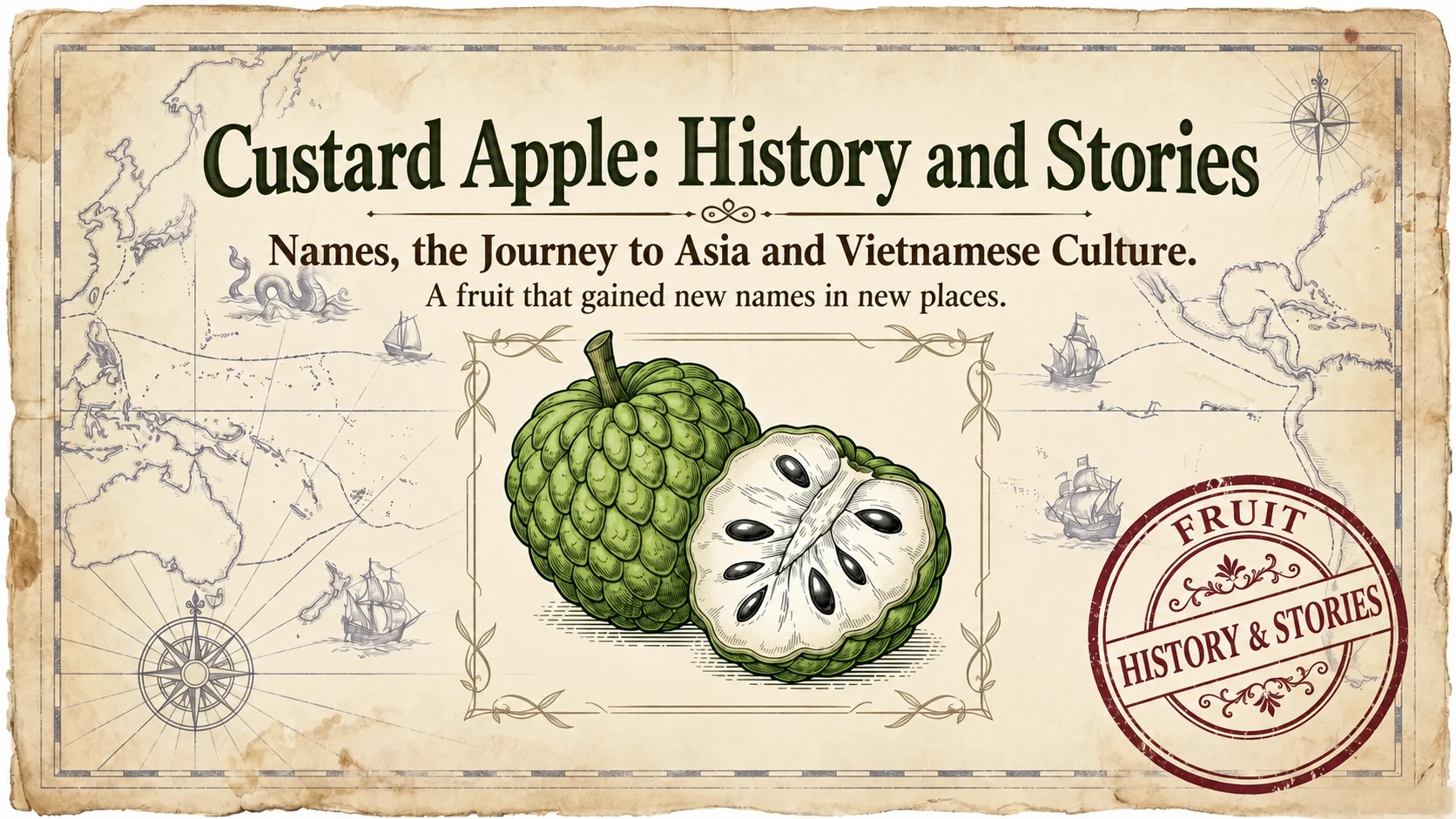
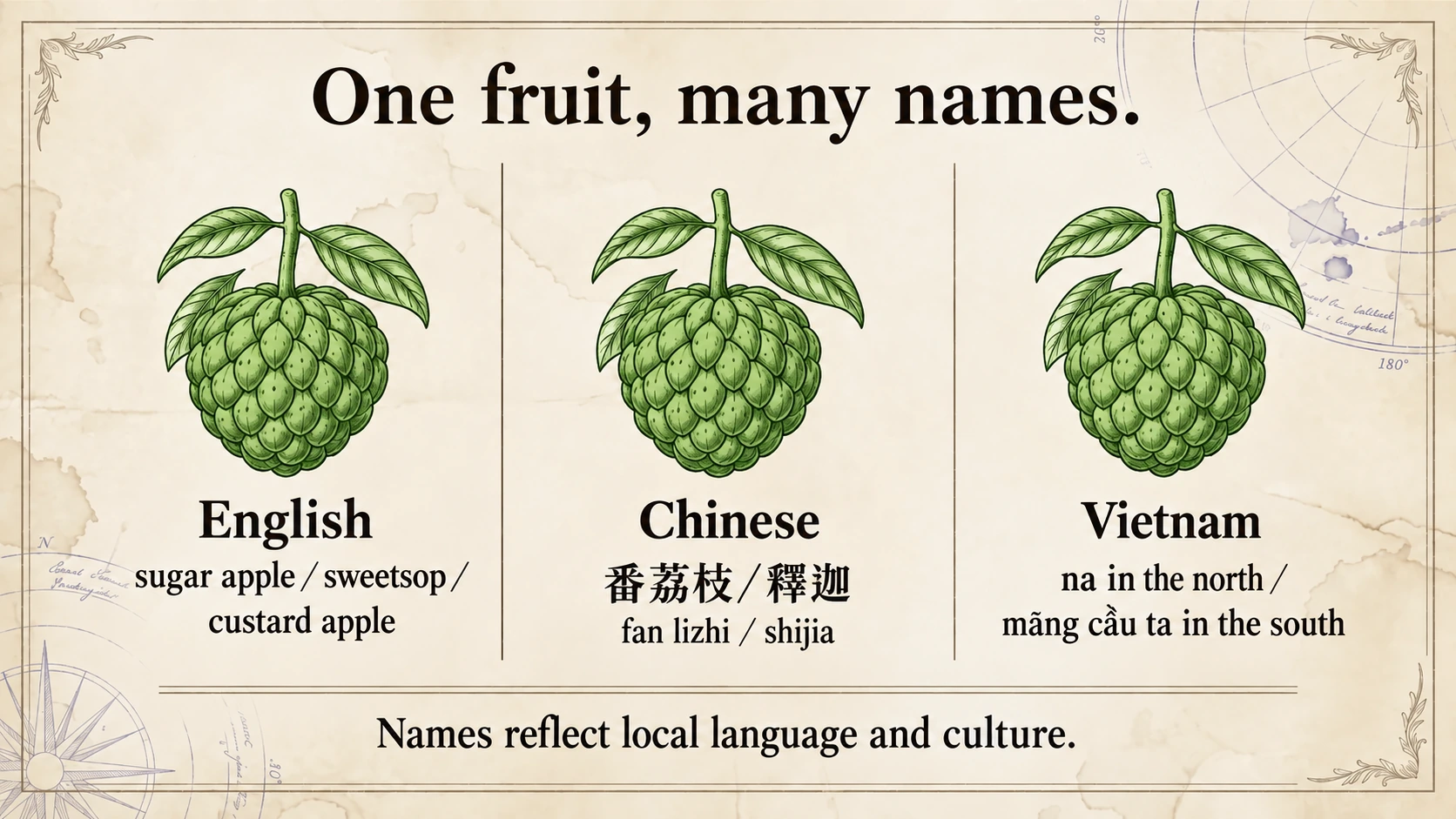
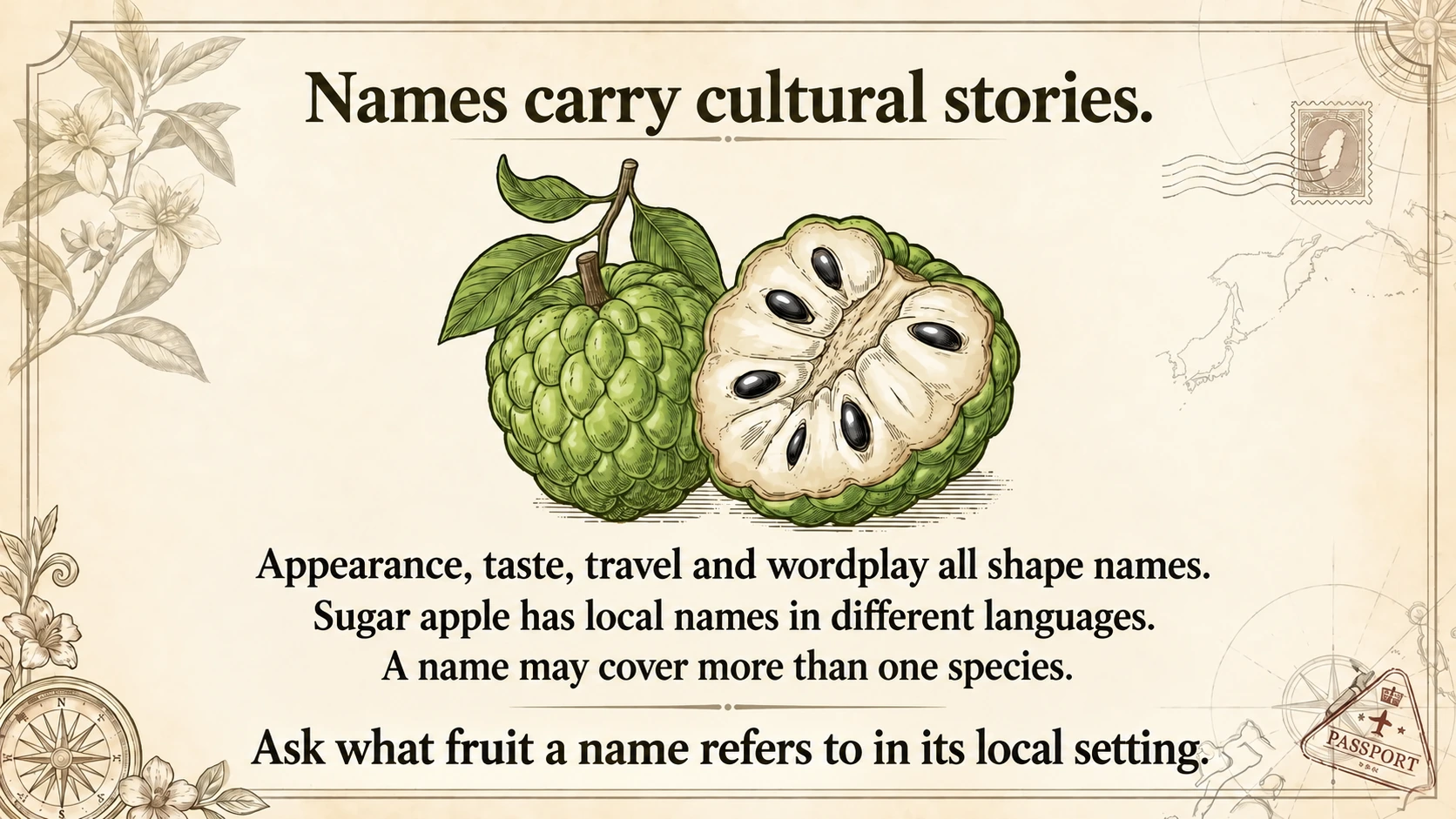
Sugar apple, sweetsop, custard apple, banreishi and shijia: one fruit can have many names. In Vietnam, na and mãng cầu ta reflect another set of local words and traditions.
The sugar apple, Annona squamosa, travelled from tropical America to Asia. Its names carry traces of appearance, flavour, travel and cultural wordplay. Following those names offers a way to explore its history without pretending that every step of the journey is known.
A tropical American origin
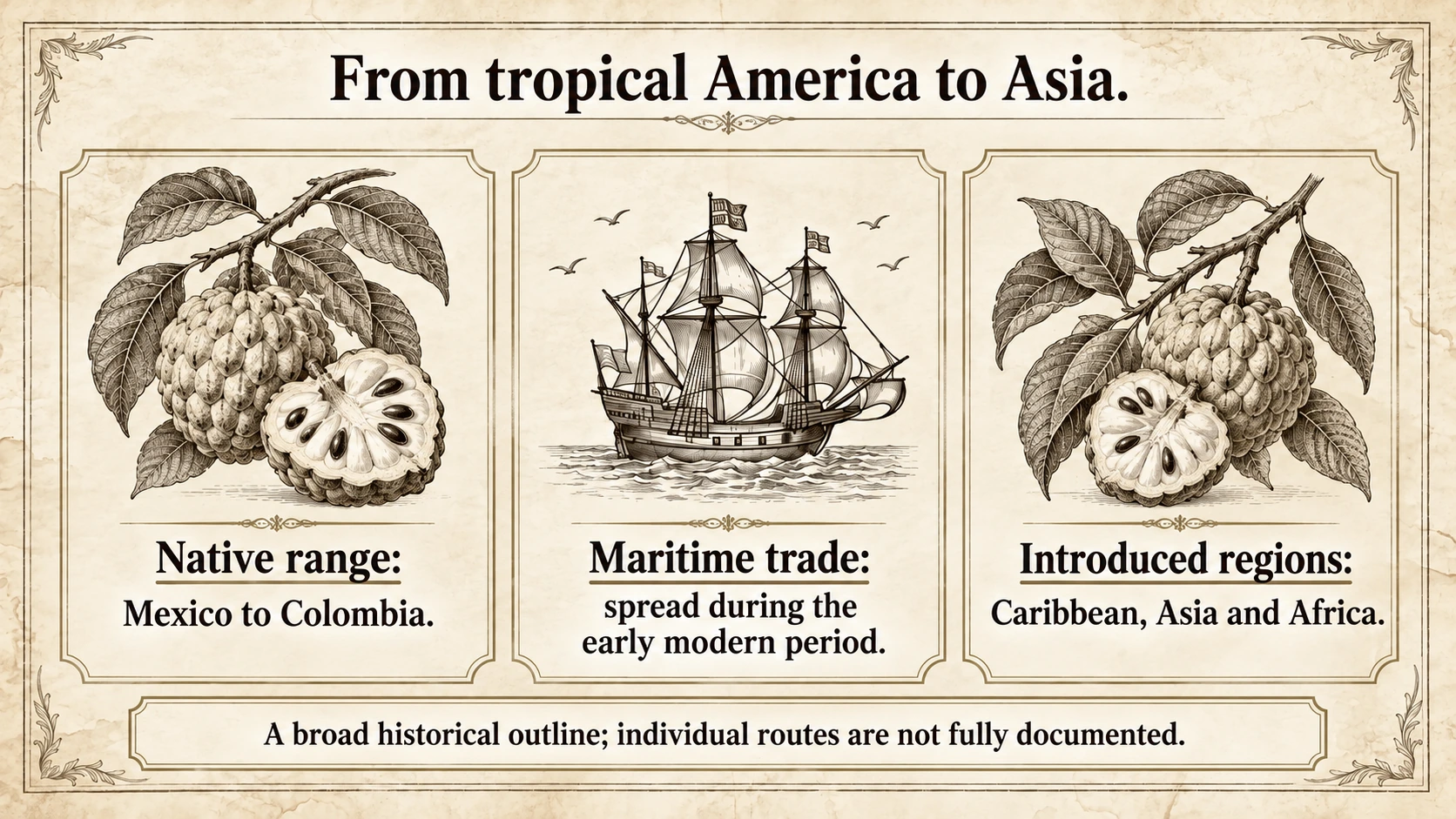
Kew’s Plants of the World Online gives the native range of Annona squamosa as Mexico to Colombia. Its presence in the Caribbean, Asia and Africa includes many introduced populations.
The genus name Annona has been traced through the Spanish word anón to a Taíno word from Hispaniola. The scientific name itself therefore preserves a connection to languages of the Americas.
Maritime trade and the journey to Asia
Sugar apple is generally understood to have spread from the Americas to Asia through the maritime trade of the early modern period. Networks across the Pacific and Indian oceans created opportunities for plants to reach new growing areas.
The broad movement is clearer than the exact route. It would be misleading to give a single confirmed sequence of ports leading from Mexico to the Philippines, China and India. A historical overview is different from a documented itinerary for this particular fruit.
Why the name custard apple is ambiguous
Custard apple is an English common name rather than a globally unique botanical label. It is used for Annona reticulata, but in some regions also for A. squamosa and atemoya.
Sweet, soft flesh helps explain why related fruits can share a name that evokes custard. The name developed through everyday use rather than through a universal naming authority. For the species distinctions, see the Custard Apple Field Guide.
China and Japan: 番荔枝 and banreishi
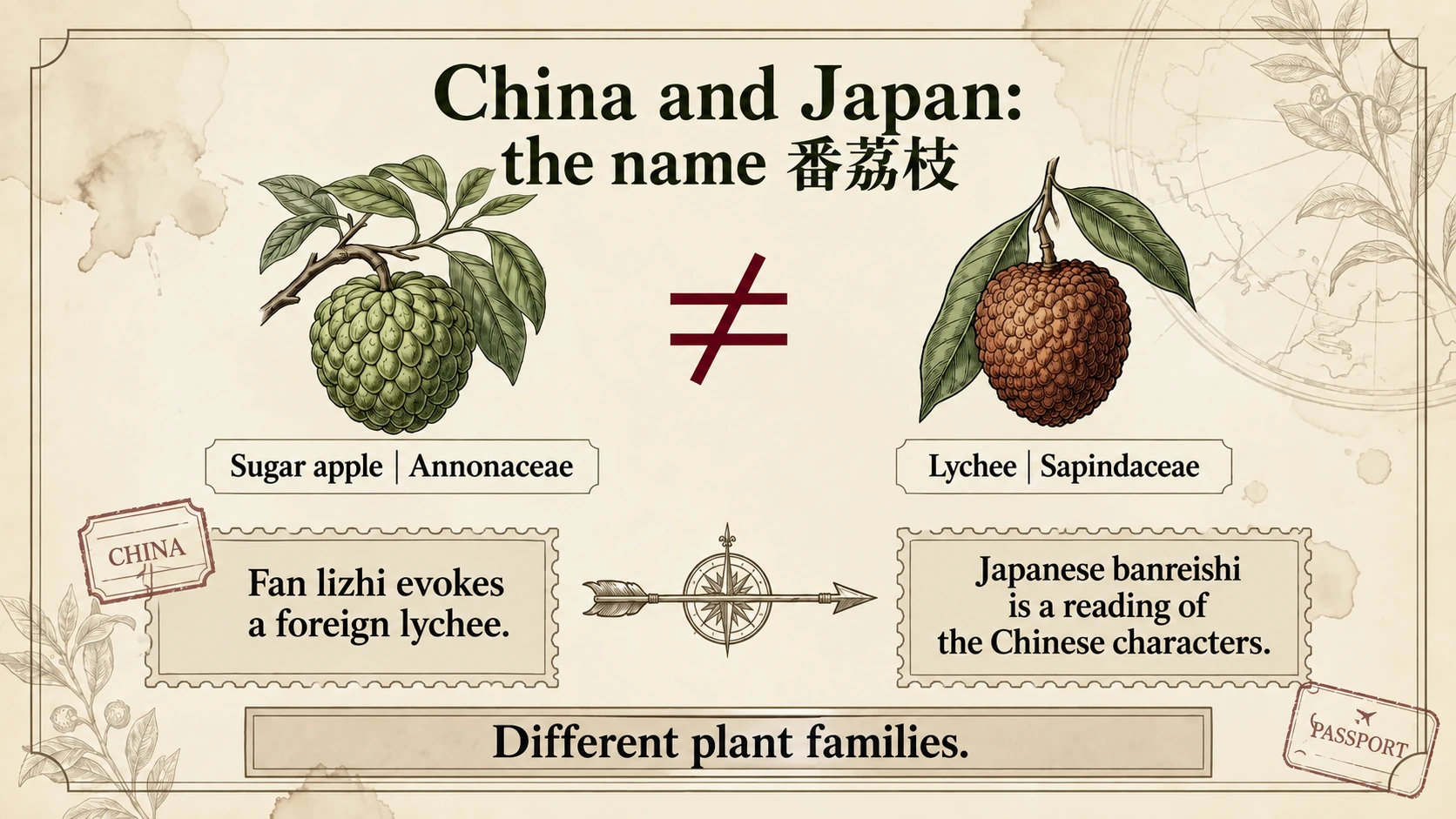
The Chinese name 番荔枝, fan lizhi, evokes a lychee from elsewhere. Sugar apple and lychee are botanically distinct: sugar apple belongs to Annonaceae and lychee to Sapindaceae.
Using a familiar fruit to describe a newly encountered one is an understandable naming practice. The Japanese word banreishi is a reading of the Chinese characters. The name travelled across a shared written culture along with knowledge of the fruit.
Taiwan: the name shijia
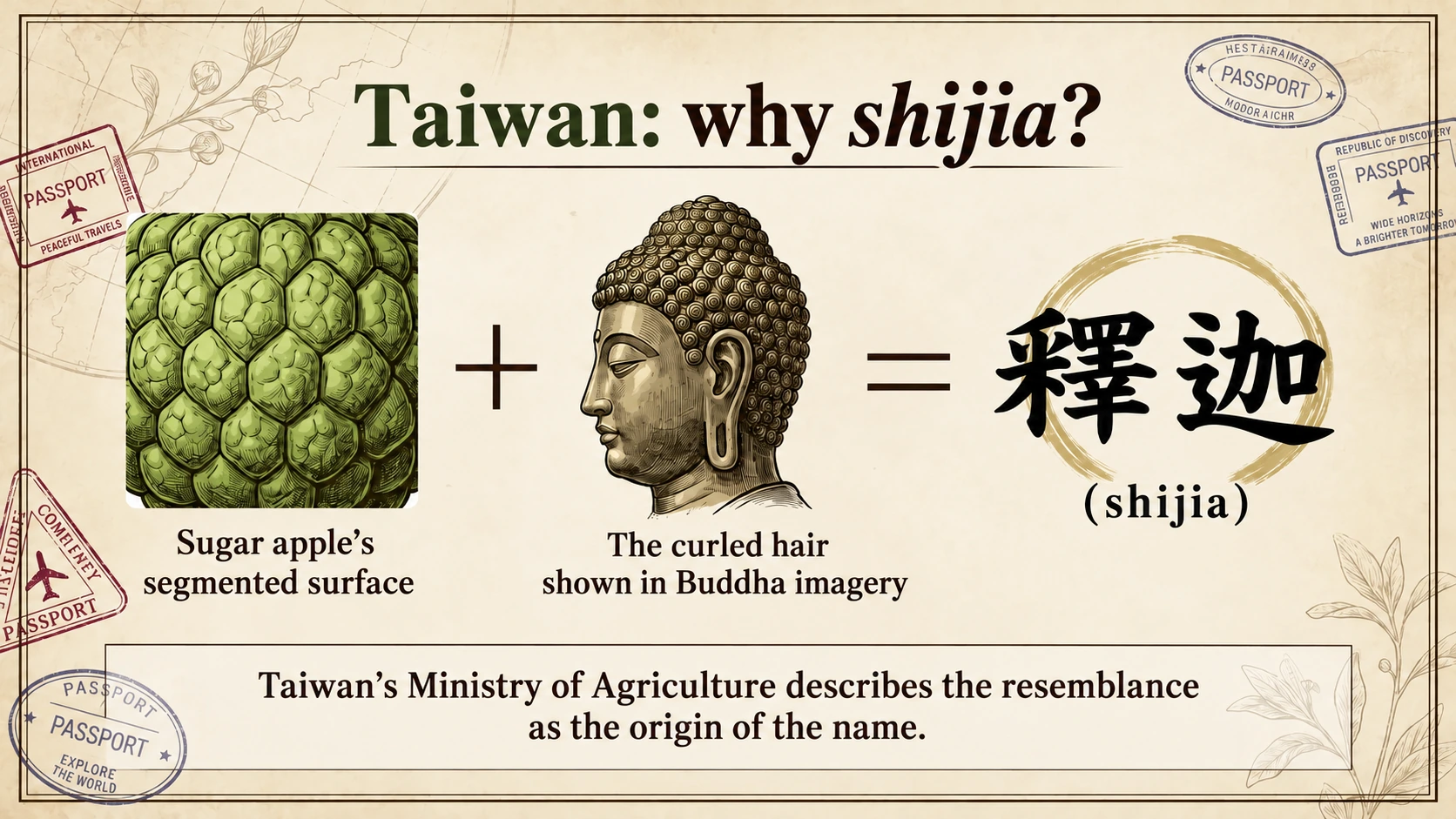
In Taiwan, sugar apple is commonly called 釋迦, shijia. Taiwan’s Ministry of Agriculture explains the name through the resemblance between the fruit’s segmented surface and the curled hair shown in depictions of the Buddha.
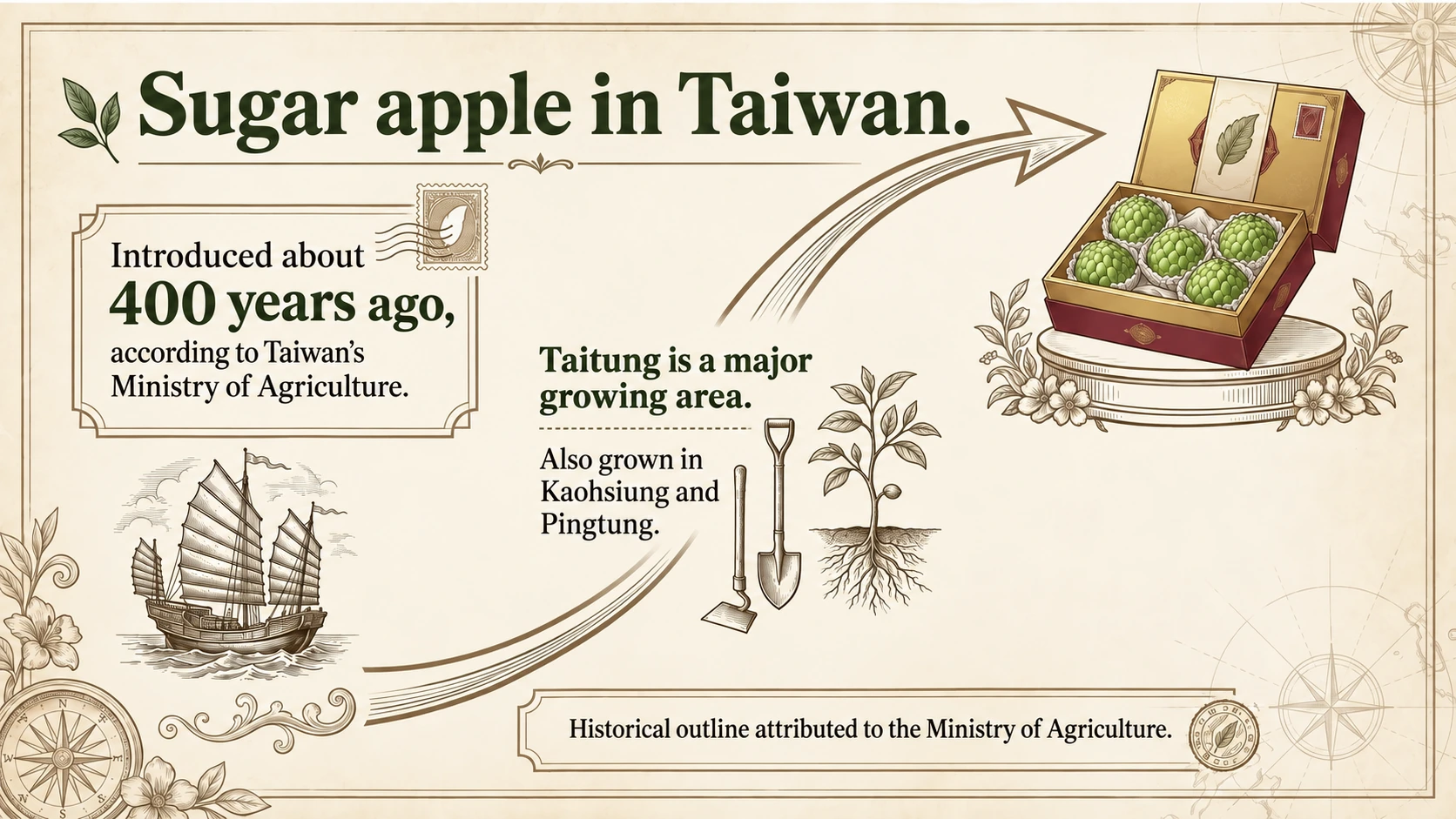
The ministry’s agricultural knowledge website describes introduction during the Dutch period about 400 years ago. This is an attributed historical outline, not an exact arrival date established here from archival shipping records.
Cultivation subsequently spread in southern and eastern Taiwan. Taitung became a major growing area, with cultivation also in Kaohsiung and Pingtung.
India: the regional name sitaphal
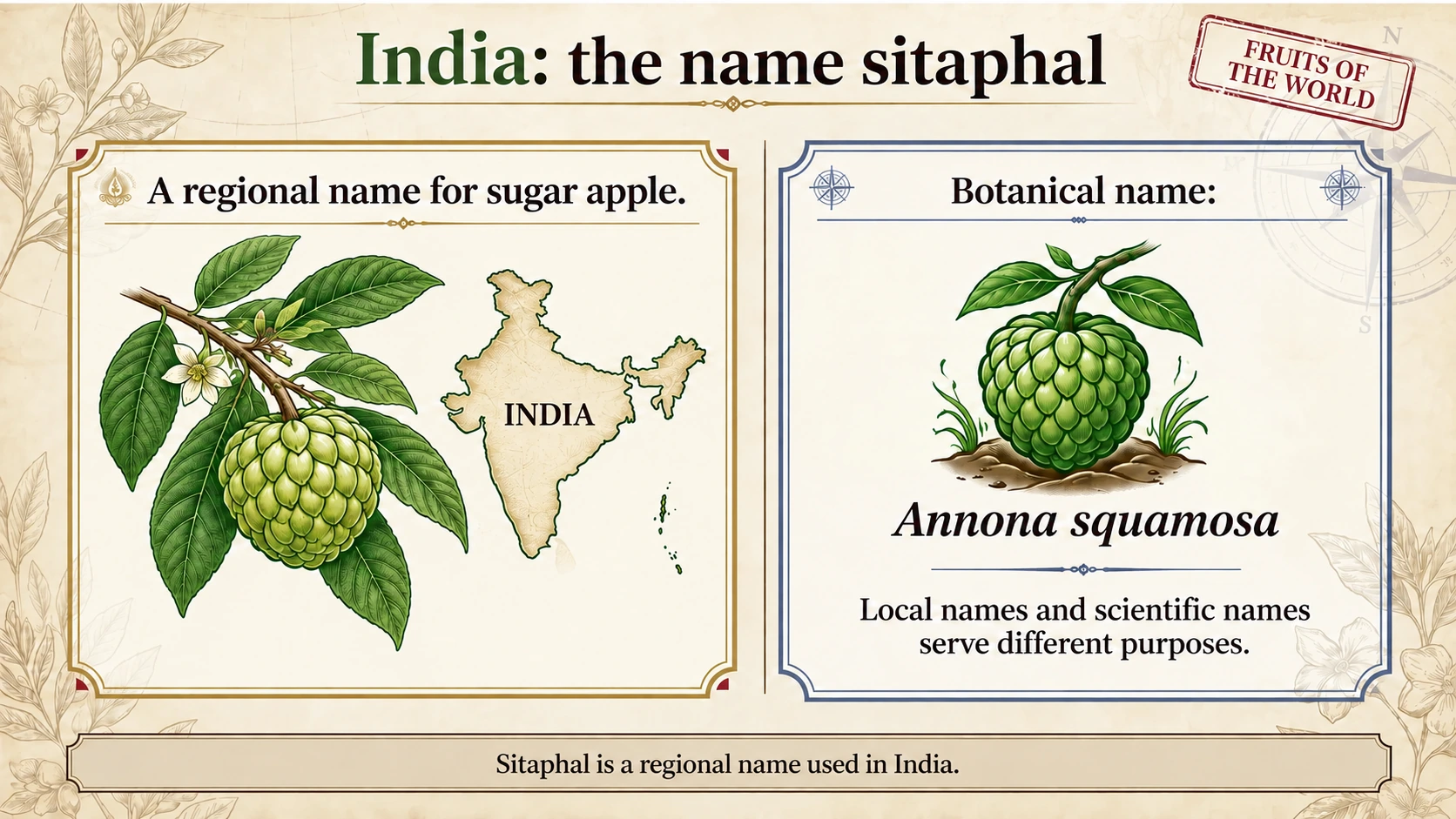
In India, the sugar apple is known by regional names including sitaphal. Like sugar apple in English or na in Vietnamese, it is a name used in everyday life.
Local names vary by region and language. The scientific name Annona squamosa helps identify the plant when a common name is ambiguous.
Vietnam: na and mãng cầu ta
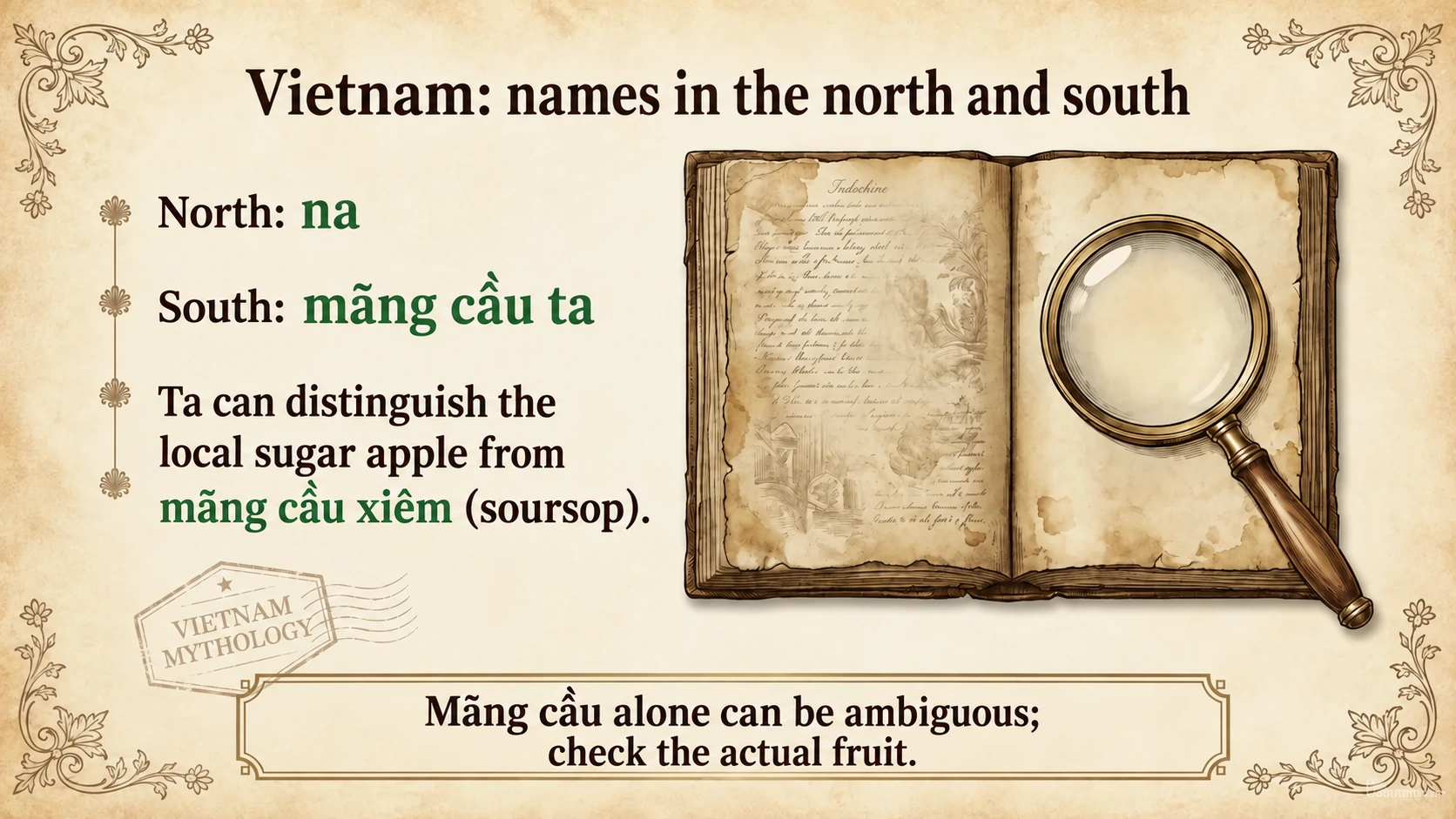
In northern Vietnam, the familiar name is generally na. In the south, mãng cầu ta is used for sugar apple. The word ta can distinguish it from mãng cầu xiêm, or soursop.
The shorter term mãng cầu can be ambiguous. When buying fruit or ordering a drink, it helps to check the actual fruit rather than rely on the abbreviated name alone.
Tết fruit offerings: cầu vừa đủ xài
In southern Vietnam, families display fruit on the ancestral altar for Tết, the Lunar New Year. The arrangement is called mâm ngũ quả, often translated as a five-fruit offering.
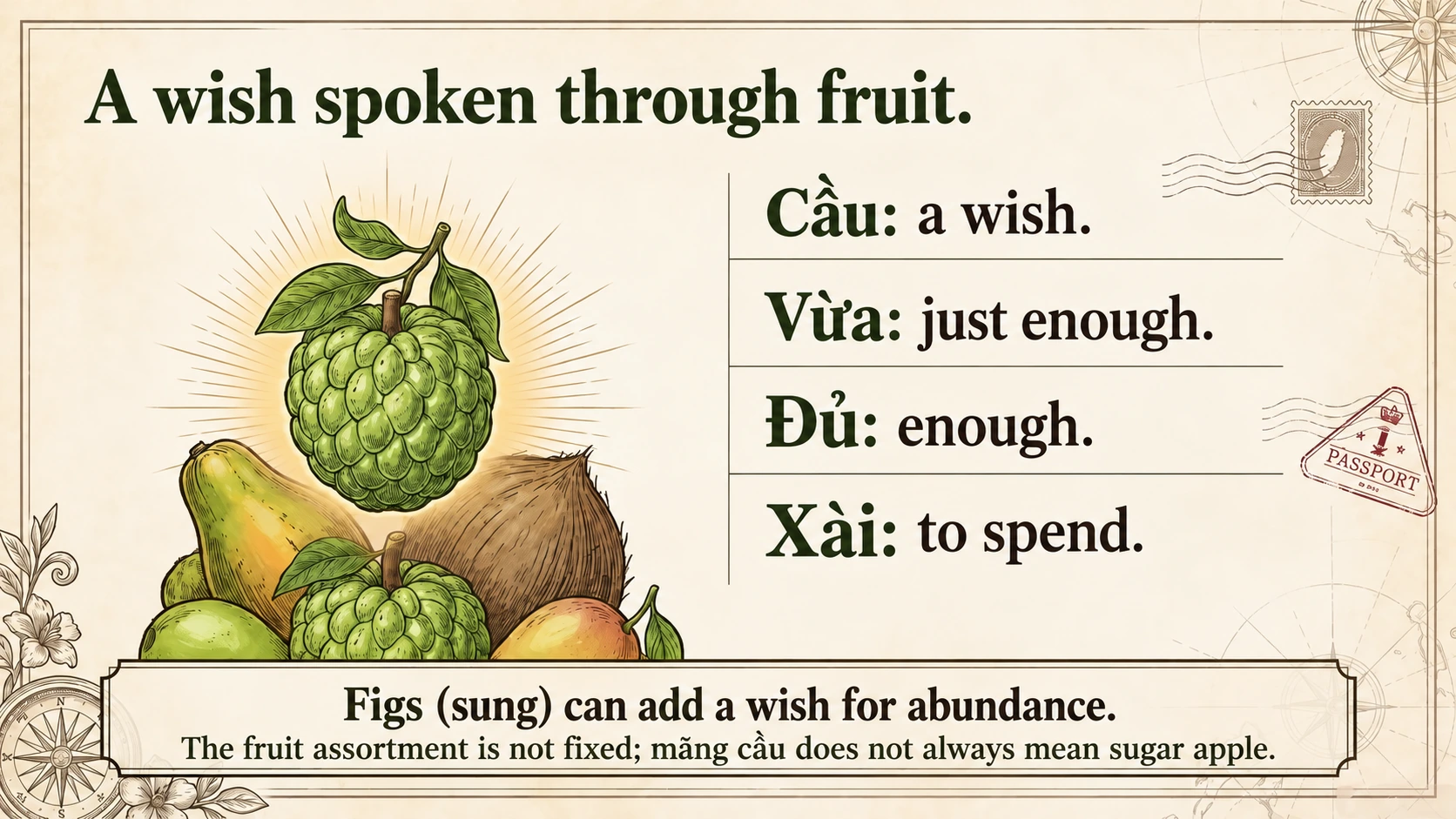
One familiar combination includes mãng cầu, coconut (dừa), papaya (đu đủ) and mango (xoài). Figs (sung) may be added. Their names echo words in a New Year wish:
| Fruit name | Word echoed | Meaning in the wish |
|---|---|---|
| Mãng cầu | Cầu | Wish or pray |
| Dừa | Vừa | Just enough |
| Đu đủ | Đủ | Enough |
| Xoài | Xài | Spend or use |
| Sung, when included | Sung, associated with sung túc | Abundance |
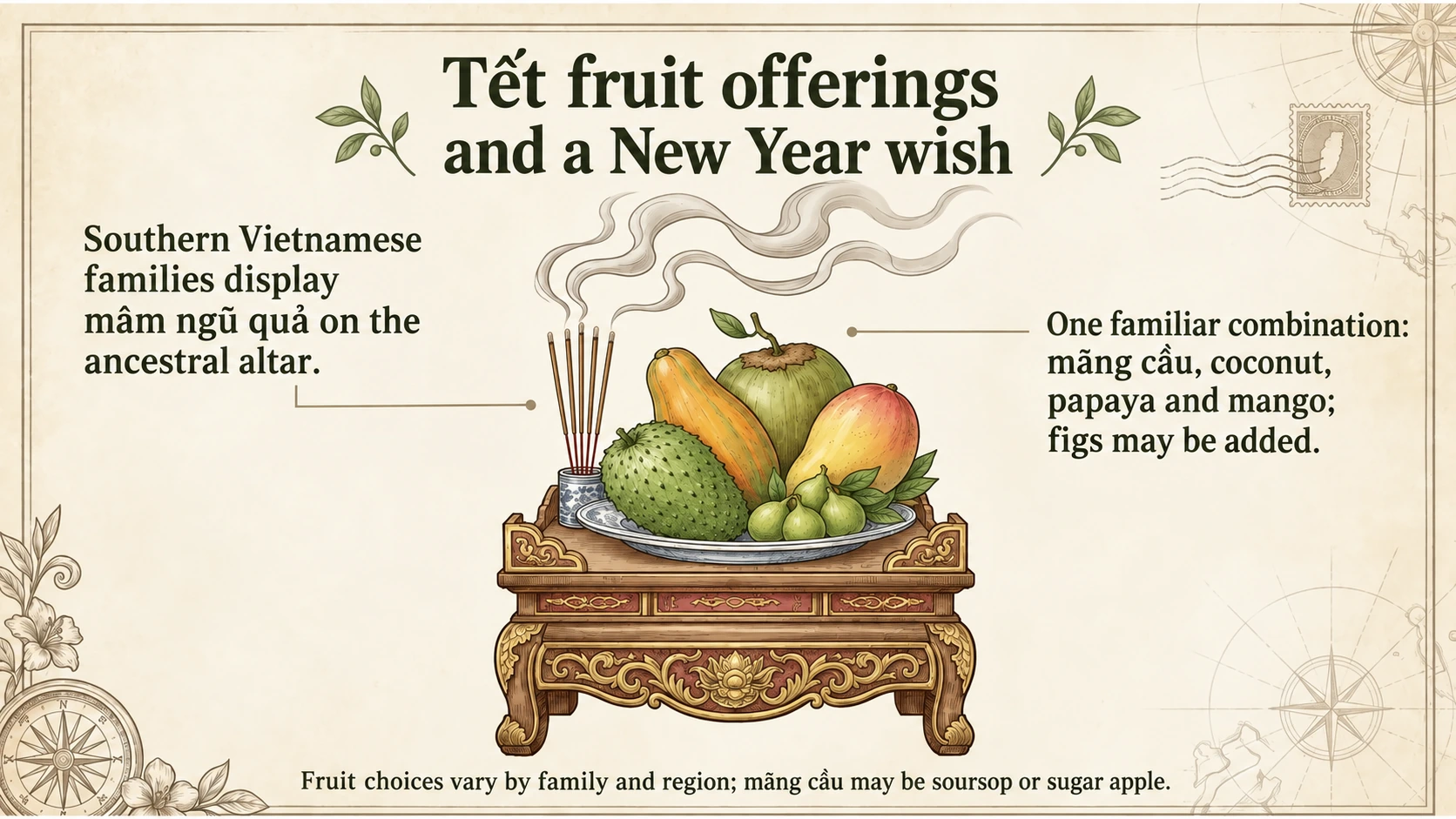
Together, cầu vừa đủ xài expresses a wish to have enough for one’s needs. With figs, cầu sung vừa đủ xài can add a wish for abundance. The wordplay depends on local pronunciation; it is not a literal translation of every fruit name.
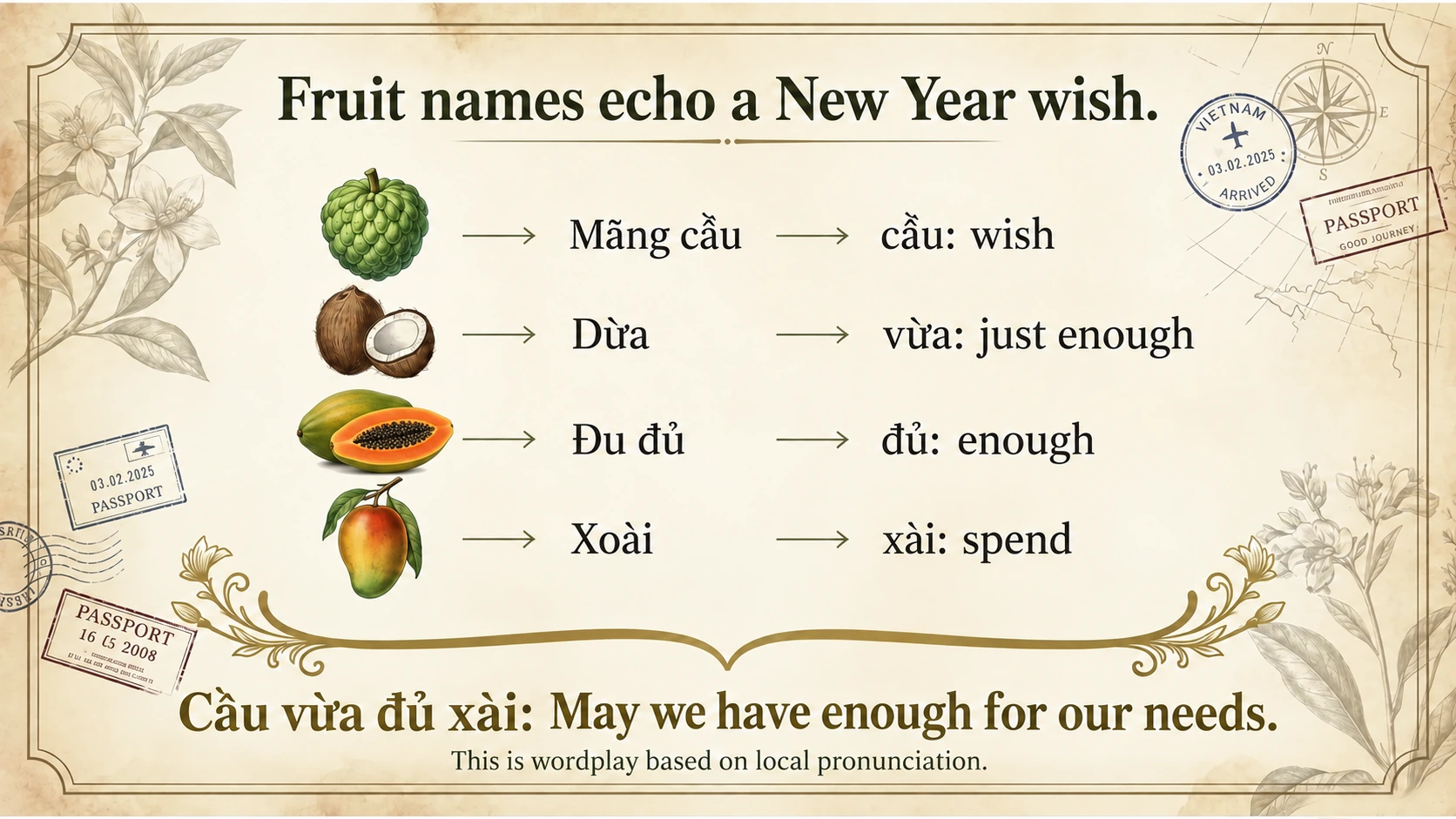
The selection varies by family and region. Mãng cầu in an offering need not be sugar apple; soursop is also used. The cultural role belongs to the locally understood name and its sound, rather than exclusively to one botanical species.
What the different names tell us
Names connected with the Americas, English sugar apple and custard apple, Chinese fan lizhi and shijia, and Vietnamese na and mãng cầu ta all record ways people understood the fruit.
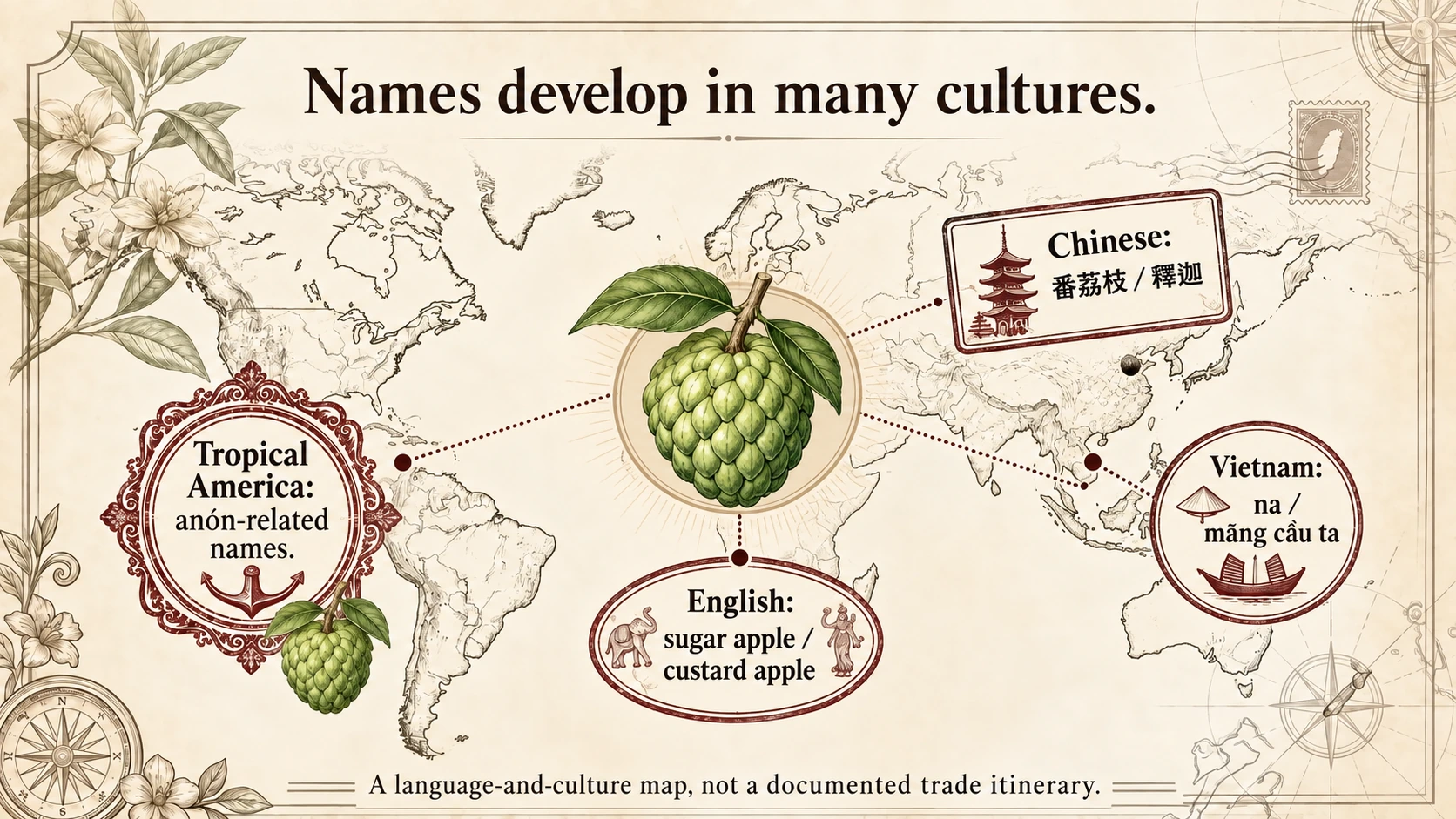
Appearance, sweetness, travel and wordplay shape those names. The next time you see a sugar apple, its flesh offers one pleasure; the cultural meanings carried by its names offer another.
Frequently asked questions
Why is it called custard apple?
The English common name evokes sweet, soft flesh like custard. It is used for more than one related fruit, depending on the region.
Are banreishi and shijia sugar apple?
Both names are used for Annona squamosa: banreishi in Japanese and shijia in Taiwan. Check expanded local names when related fruit is being sold.
Did sugar apple originate in Asia?
No. Kew gives its native range as Mexico to Colombia. Its long history of cultivation in Asia followed introduction.
Is sugar apple always one of the Tết fruits?
No fixed assortment applies to every family. Mãng cầu can refer to sugar apple or soursop, and other fruit choices also vary.
Related articles
- Custard Apple Field Guide: species, flavour, season and nutrition.
- How to Eat Custard Apple in Vietnam: buying, ripening, opening and storage.
- Fruits in Vietnam: find other fruit guides.
References
- Royal Botanic Gardens, Kew, “Annona squamosa L.”
- Merriam-Webster, “Annona”
- University of Florida IFAS Extension, “Sugar Apple Growing in the Florida Home Landscape”
- World History Encyclopedia, “Manila Galleon”
- Taiwan Ministry of Agriculture: historical origins in the Dutch period
- Taiwan Ministry of Agriculture: introduction to the Taitung No. 2 sugar-apple cultivar
- Sơn Tây Ward, Hanoi “Mâm ngũ quả – Triết lý nhân sinh trong sắc xuân Việt”
- State Committee for Overseas Vietnamese “Trang trí bàn thờ tổ tiên đón Tết”
- Thanh Niên “Mâm ngũ quả cầu dừa đủ xài”
