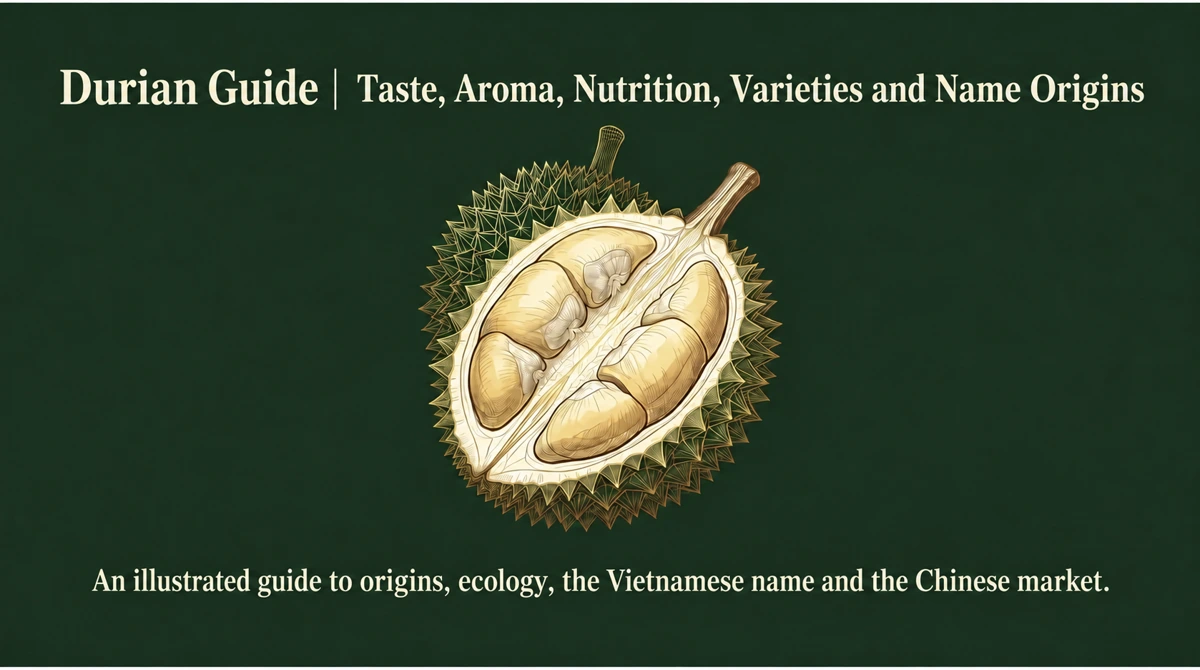
Open a large durian covered in hard spikes, and you find a powerful aroma and smooth, creamy flesh. Known as the “king of fruits,” it is called Sầu riêng in Vietnam.
What does durian taste like, why does it smell so distinctive, and how do Ri6 and Monthong differ? This illustrated guide covers taste, aroma, nutrition, name origins, its native range, flowering, pollination and major varieties.
For choosing fruit and opening it, see How to Eat Durian in Vietnam. For historical accounts and legends, see Durian History and Stories.
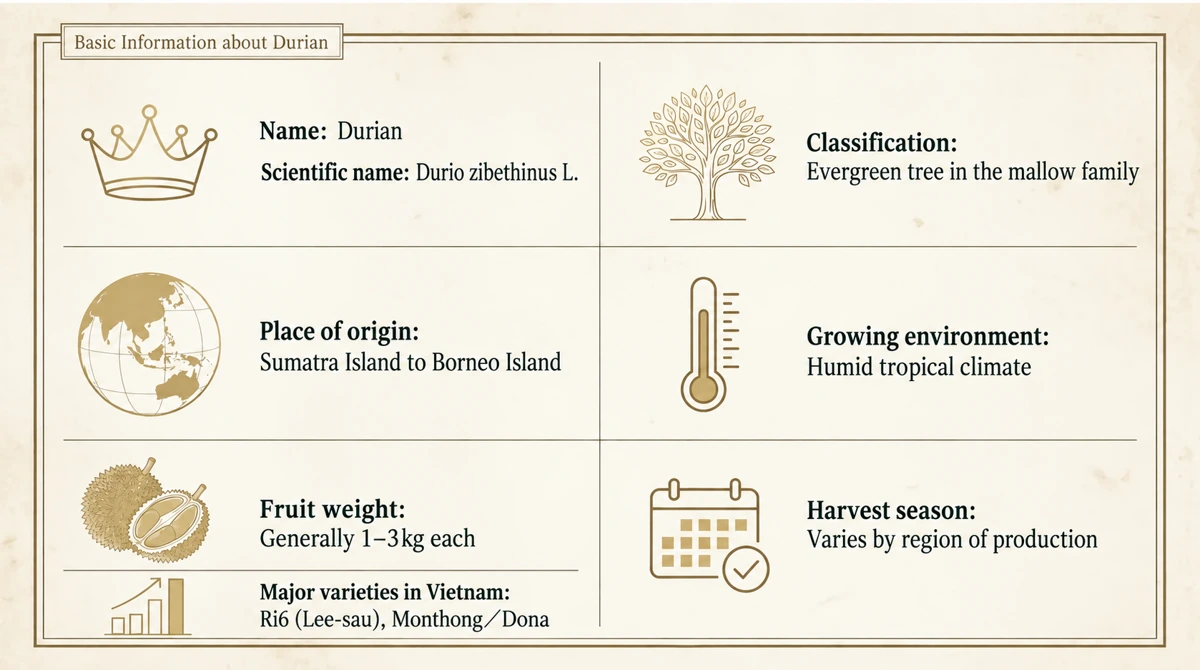
What Is Durian? Taste, Aroma and Basic Facts
| Item | Details |
|---|---|
| Name | Durian |
| Vietnamese name | Sầu riêng |
| Scientific name | Durio zibethinus L. |
| Classification | Evergreen tree in the mallow family (Malvaceae), genus Durio |
| Native range | Sumatra to Borneo |
| Fruit | Often about 1–3 kg; varies with variety and growing conditions |
| Major varieties in Vietnam | Ri6, Monthong / Dona and others |
| Main nutrients | Carbohydrate, fat, dietary fiber, potassium and vitamin C |
What Does Durian Taste Like? Rich Sweetness and Creamy Flesh
Ripe flesh is richly sweet, smooth and sticky. Its mouthfeel can resemble custard or cream cheese, with some varieties adding bitterness or onion-like notes. Aroma also varies with variety and ripeness. A small pack of prepared flesh is an easy way to discover whether you enjoy it.
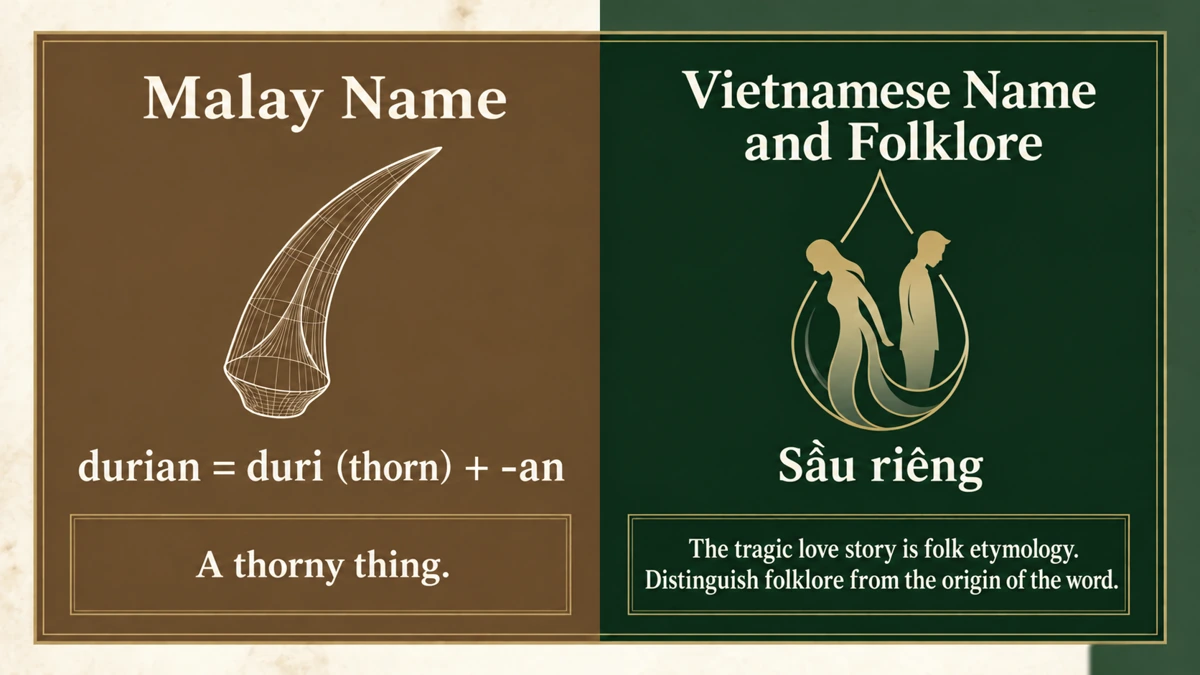
Where Does the Name Durian Come From?
The Malay word “durian” combines “duri,” meaning thorn, with the noun-forming suffix “-an.” Its name describes its appearance: a thorny thing.
The Vietnamese name is “Sầu riêng.” Interpreting it as “sầu” (sorrow) plus “riêng” (one’s own) and connecting it to a tragic love story is a well-known folk etymology. The history of the word and the folklore attached to it should be considered separately.
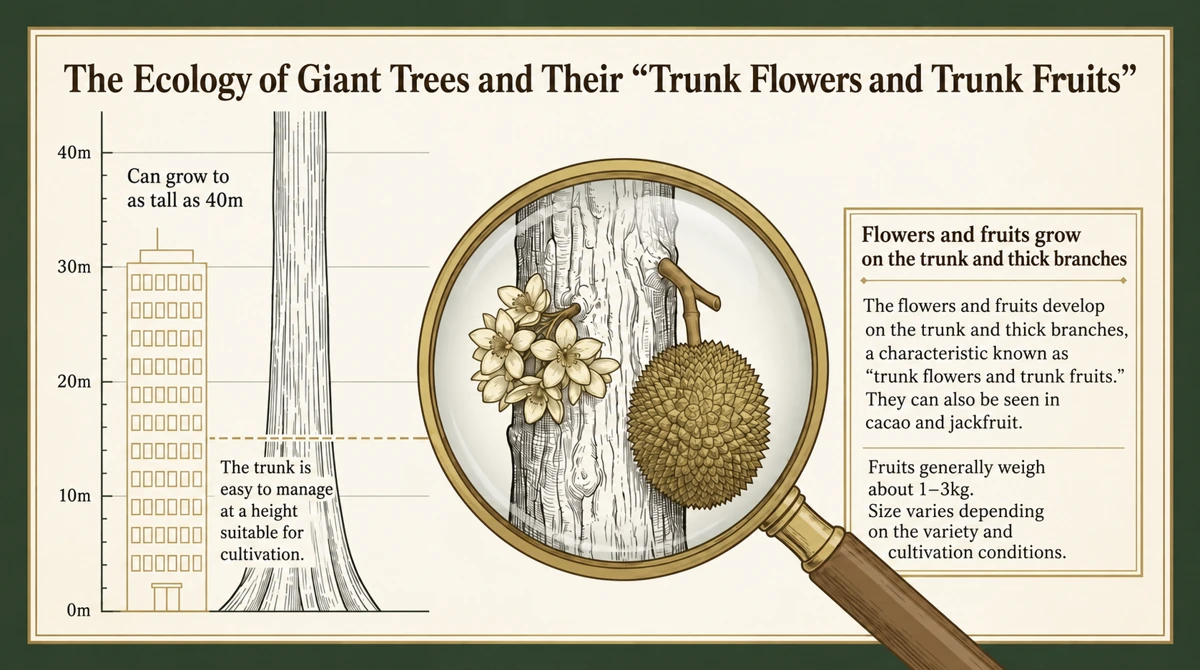
A Tall Tree with Flowers and Fruit on Its Trunk and Branches
Durian is a tall tree of the humid tropics, and cultivated trees can also grow large. Flowers and fruit appear on the trunk and thick branches. This habit is called cauliflory and caulicarpy and also occurs in cacao and jackfruit.
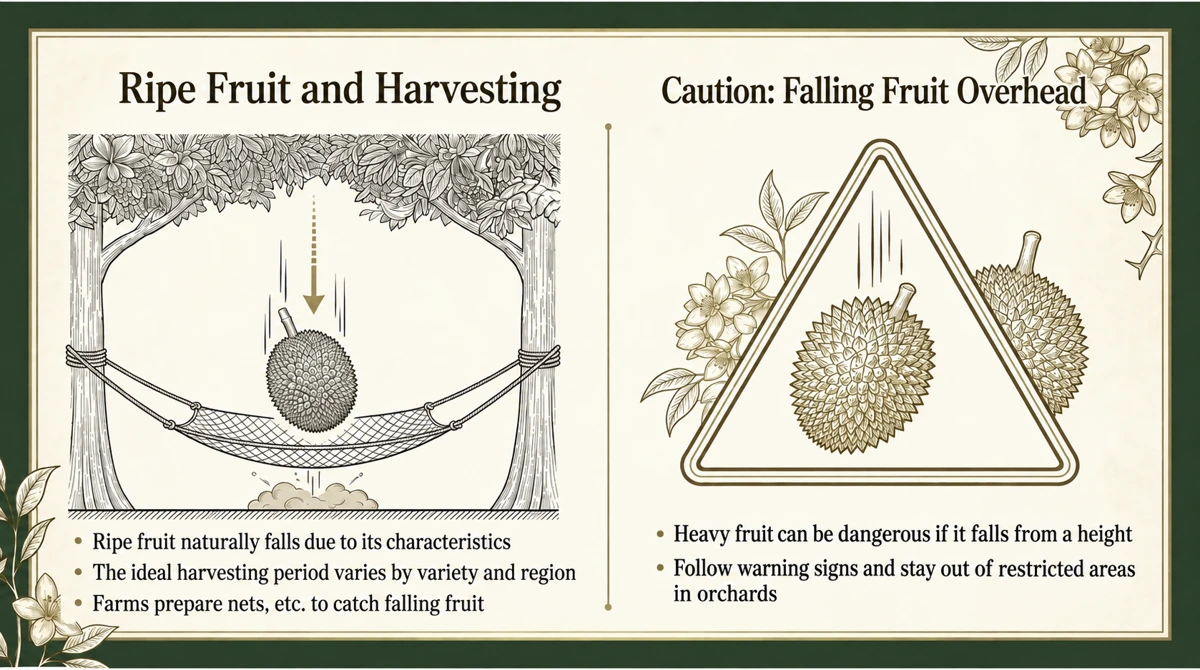
The fruit is divided into chambers containing seeds surrounded by creamy edible arils. Including its hard, spiny rind, a fruit is heavy, so falling fruit is a hazard in orchards.
Night Flowers and Bat Pollination
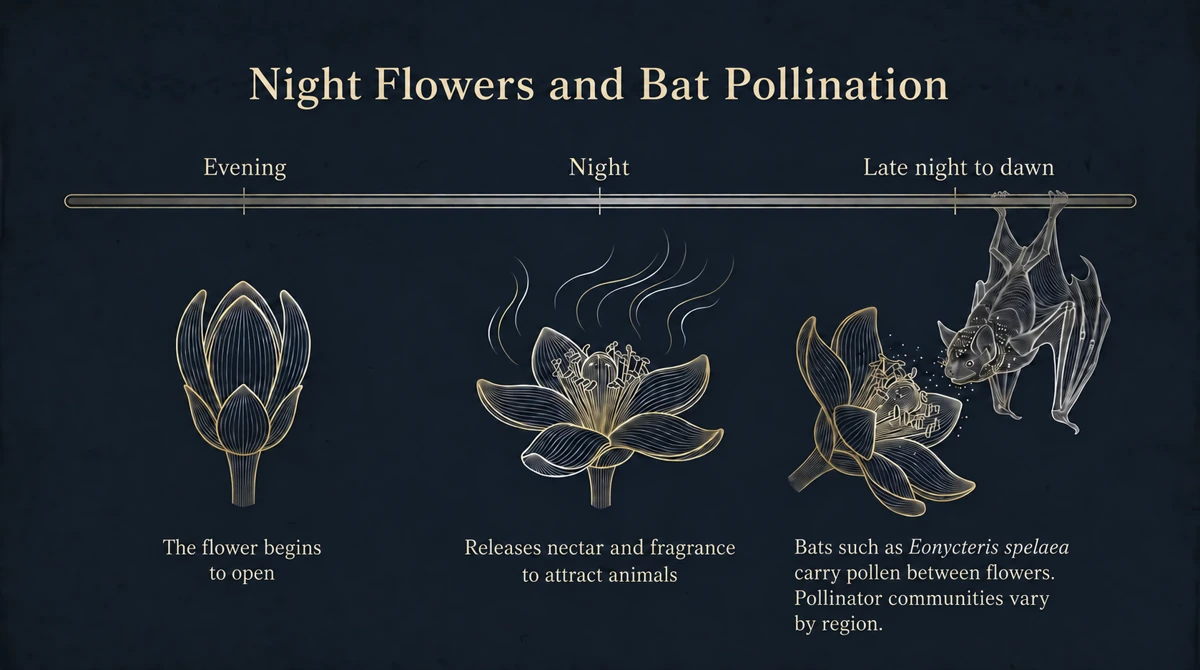
Durian flowers open from evening into the night. Research shows that the cave-dwelling nectar bat Eonycteris spelaea carries durian pollen, and visits by the island flying fox Pteropus hypomelanus contribute to fruit set. Pollinator communities vary by region; it would be too strong to say that all durian depends on a single bat species.
Naturally falling fruit is one characteristic of ripe durian. Fruit for commercial distribution is also harvested at the appropriate maturity for its variety and origin. In orchards, watch for fruit overhead and follow warnings about falling fruit.
Why Durian Smells: A Blend of Many Compounds
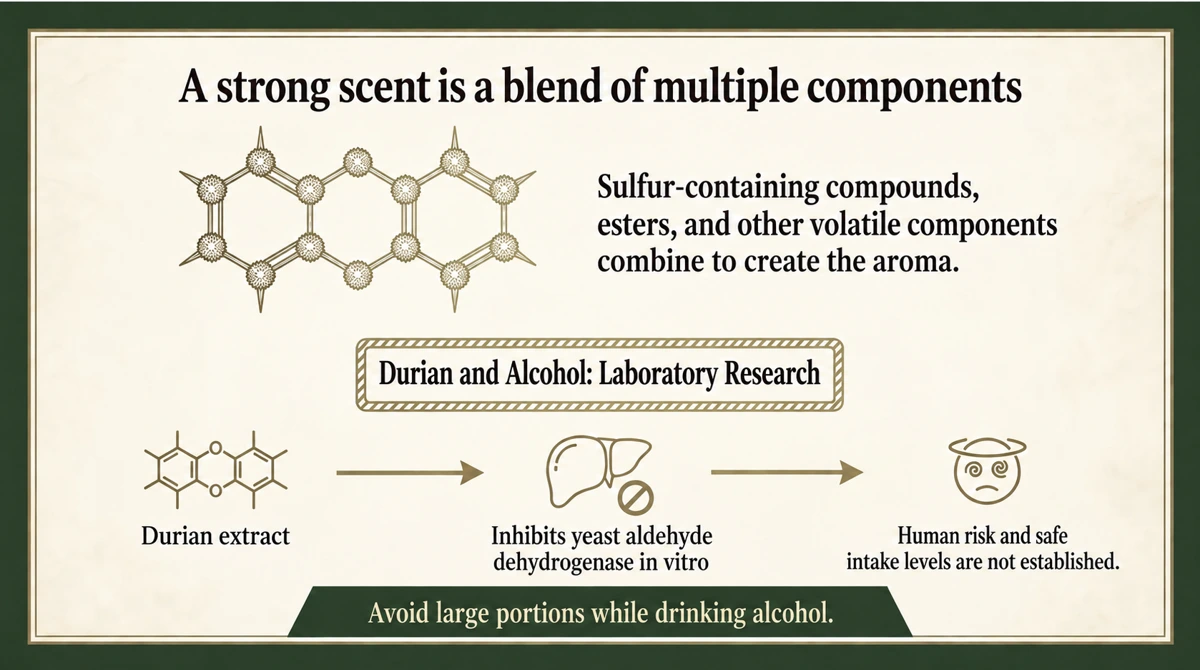
Durian’s aroma comes from many volatile compounds, including sulfur compounds and esters. A study of Thai Monthong detected 44 odor-active compounds and identified 41 of them. Sulfur compounds contribute onion-like notes, while esters contribute sweet, fruity aromas.
An in vitro study found that durian extract inhibited aldehyde dehydrogenase from yeast. This did not establish the danger or a safe intake level for people consuming durian with alcohol. It does not prove that the combination is fatal; nevertheless, avoid eating large quantities of durian while drinking alcohol.
Durian Varieties: Ri6, Monthong and Musang King
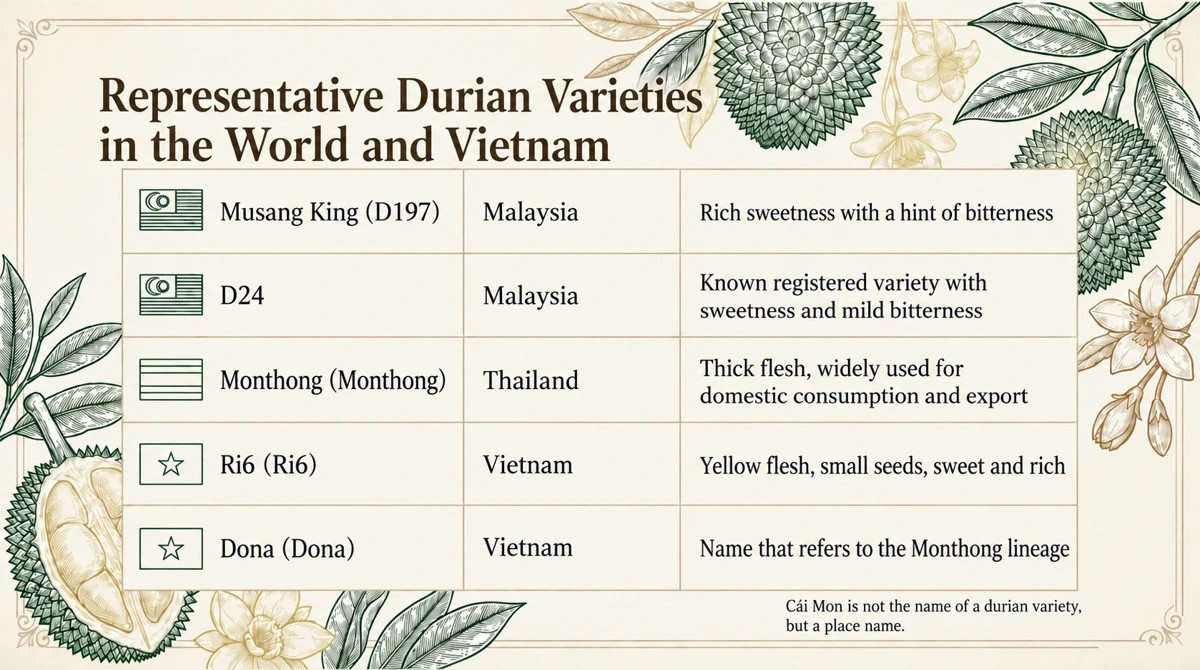
- Musang King: A major Malaysian variety registered as D197, known for intense sweetness and bitter notes.
- D24: A long-established Malaysian registered variety with sweetness and a touch of bitterness.
- Monthong: A major Thai variety with thick flesh, widely used in distribution and export.
- Ri6: A major variety selected in Vietnam. The number 6 is pronounced “sáu” in Vietnamese. It is known for yellow flesh, small seeds and a richly sweet flavor.
- Dona: A name used in Vietnam for Monthong-type durian, grown for its thick flesh and suitability for distribution.
Cái Mơn is a fruit-growing area in the Mekong Delta, rather than a variety name. It lies in the former Bến Tre province; local information published in 2026 identifies it with Vĩnh Thành in present-day Vĩnh Long province.
Ri6 vs. Monthong
Ri6 is known for yellow flesh and rich sweetness. Monthong has thick flesh and is widely used in distribution and export. Ripeness affects both varieties’ texture and aroma, so ask the shop whether the fruit will be ready on the day you plan to eat it.
Vietnamese Durian and the Chinese Market
Durian is grown in Vietnam’s Mekong Delta, southeastern region and Central Highlands. Different regional harvest seasons keep it in circulation over a long period.
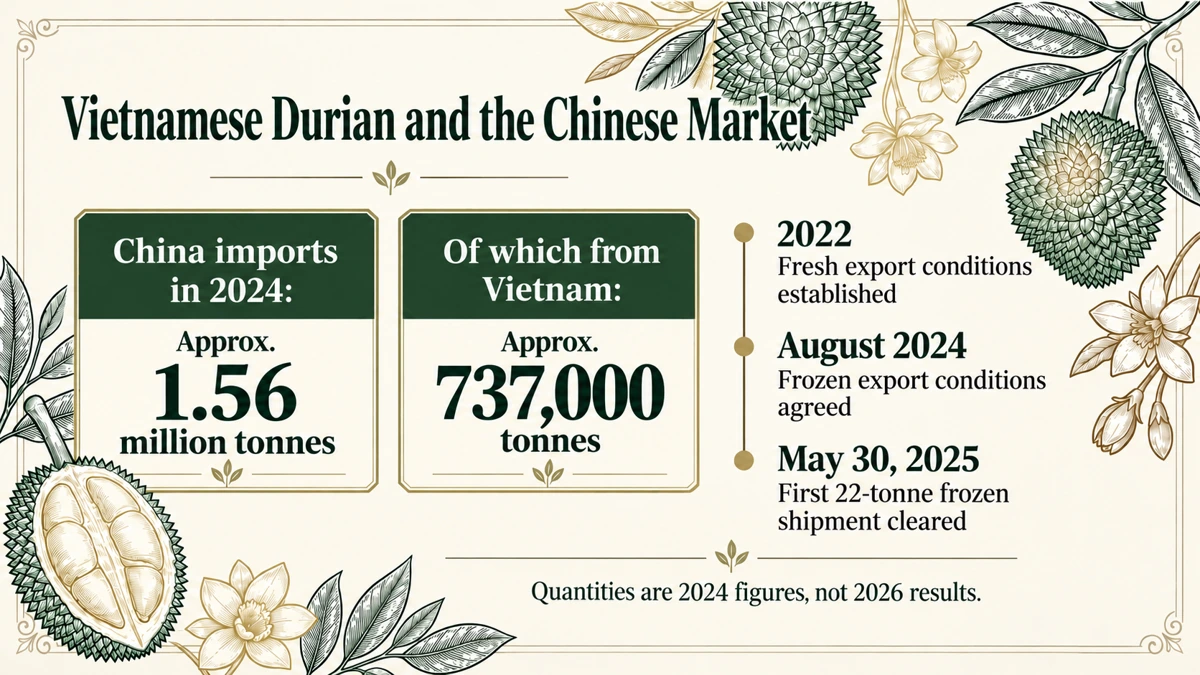
Official exports to China expanded after fresh-durian phytosanitary conditions were established in 2022. In 2024, China imported 1.56 million tonnes of durian, including approximately 737,000 tonnes from Vietnam. These are 2024 figures, not 2026 results. Conditions for frozen exports were agreed in August 2024. Vietnam’s Ministry of Agriculture and Environment reported that the first 22-tonne frozen shipment cleared Chinese customs on May 30, 2025.
Requirements for Bringing Fresh Durian to Japan
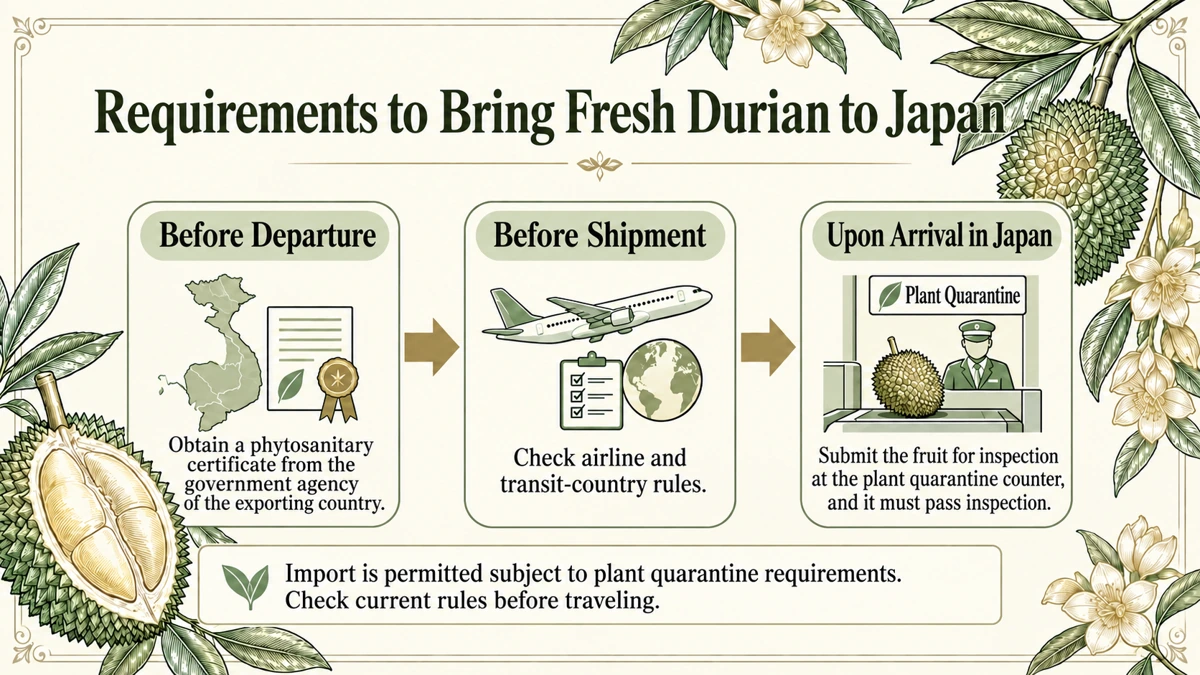
Japan’s Plant Protection Station list for items carried from Vietnam does not classify durian as prohibited. It requires a phytosanitary certificate issued by the exporting country’s government authority and a successful plant quarantine inspection on arrival in Japan. Airline and transit-country rules are separate requirements. Check the latest conditions before traveling.
Durian Nutrition and Calories
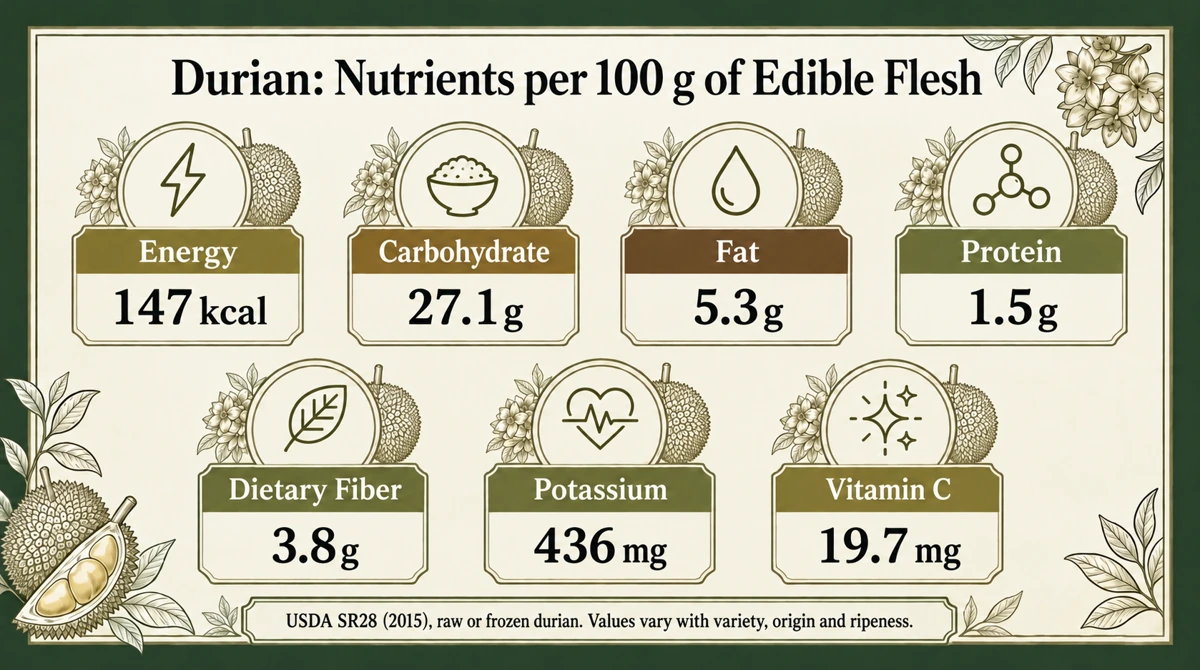
USDA SR28 (2015) lists these reference values for 100 g of edible raw or frozen durian: 147 kcal, 27.1 g carbohydrate, 5.3 g fat, 1.5 g protein, 3.8 g dietary fiber, 436 mg potassium and 19.7 mg vitamin C. Rind and seeds are excluded. Values vary with origin, variety and ripeness.
Durian contains vitamins and minerals, but should not be presented as a treatment or preventive measure for a particular disease. It is relatively high in energy and fat for a fruit, so keep portions moderate.
Durian Guide: Key Points
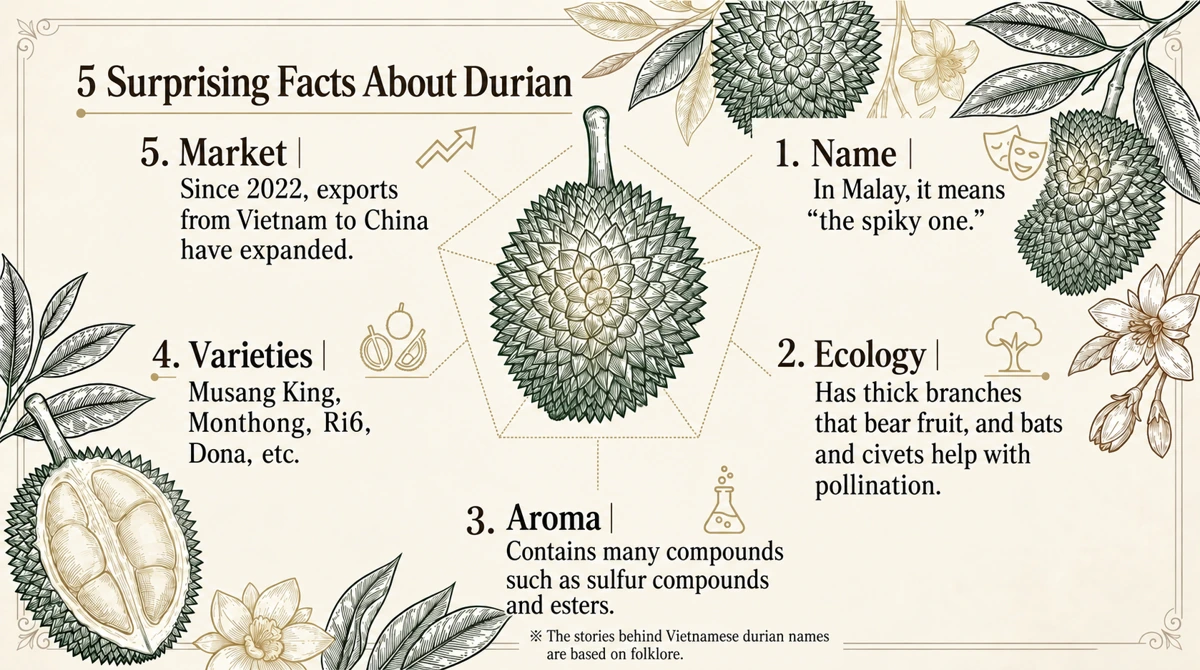
- The Malay name means a thorny thing. The tragic love story attached to the Vietnamese name is folk etymology.
- It is a tall tree in the mallow family, native from Sumatra to Borneo, with flowers and fruit on the trunk and thick branches.
- Flowers open at night, and several bat species and other animals contribute to pollination.
- Its strong aroma combines many compounds, including sulfur compounds and esters.
- Ri6 and Monthong/Dona are grown in Vietnam, where exports to China have become a major industry.
For practical advice, see How to Eat Durian in Vietnam: Prices, Choosing, Opening and Storage. For historical records and changing attitudes, see Durian History and Stories.
Frequently Asked Questions About Durian
What does durian taste like?
Taste depends on variety and ripeness, but rich sweetness and a smooth, creamy texture are typical. Some varieties also have bitter or onion-like notes.
Why does durian have such a strong smell?
Its distinctive aroma is produced by a combination of many volatile compounds, including sulfur compounds and esters.
What is durian called in Vietnamese?
It is called “Sầu riêng.” Explanations involving sorrow are familiar folk etymology, rather than an established linguistic origin.
References
- Royal Botanic Gardens, Kew: Durio zibethinus L.
- Acharya et al.: Differential pollen placement on an Old World nectar bat increases pollination efficiency
- Aziz et al.: Pollination by the locally endangered island flying fox
- Li et al.: Characterization of the major odor-active compounds in Thai durian
- Maninang et al.: Inhibition of aldehyde dehydrogenase enzyme by Durian fruit extract
- Vietnam Ministry of Agriculture and Environment: Frozen durian exports: A breakthrough
- Vietnam Ministry of Industry and Trade: Agricultural, Forestry and Fishery Market Report (January 31, 2025)
- Japan Plant Protection Station: Items carried from Vietnam
- USDA SR28 (2015): Durian, raw or frozen
- Vĩnh Long Tourism: Cái Mơn (2026)
