この記事の結論
Vivid pink dragon fruit is a familiar sight in Vietnamese markets and supermarkets. Its scale-like skin catches the eye, but enjoying the juicy flesh is simple: cut it in half and…
| 記事タイプ | 主な比較ポイント | 向いている人 |
|---|---|---|
| 図鑑 | 分類・生態・品種・旬 | 特徴や違いを比較したい人 |
| 物語 | 原産地・歴史・文化・伝説 | 背景まで深く知りたい人 |
| 食べ方 | 選び方・切り方・保存方法 | 買って実際に楽しみたい人 |
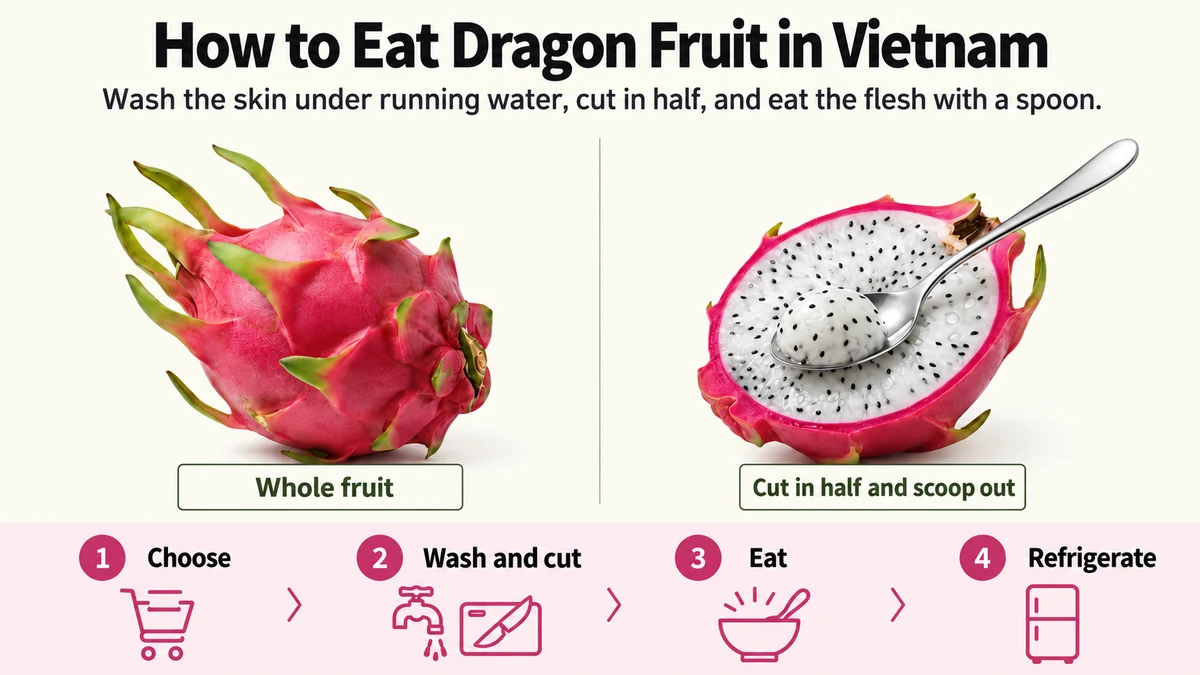
Vivid pink dragon fruit is a familiar sight in Vietnamese markets and supermarkets. Its scale-like skin catches the eye, but enjoying the juicy flesh is simple: cut it in half and scoop it out with a spoon.
This guide takes you through the price I paid at a Vietnamese supermarket in July 2026, how to choose and cut the fruit, local ways to enjoy it, storage, and the rules for taking it to Japan.
For biology, taste, nutrition and varieties, see Dragon Fruit Field Guide: Taste, Nutrition, Varieties and Cactus Biology. For origins and its arrival in Vietnam, see Dragon Fruit History and Stories.
Dragon Fruit in Vietnam: Prices and Eating at a Glance
| Item | Details |
|---|---|
| Vietnamese name | Thanh long |
| Pronunciation note | Pronunciation varies by region; the Vietnamese spelling is “Thanh long” |
| Taste | Generally juicy and mildly sweet. In my tasting, the white-fleshed fruit was refreshing, while the red-fleshed fruit tasted sweeter and richer. Results vary with cultivar and ripeness |
| Texture | Juicy, soft flesh with a gentle crunch from tiny seeds |
| Availability | Almost year-round; see the companion Dragon Fruit Field Guide for more detail |
| Example price | I bought one fruit weighing about 0.55 kg for 17,000 dong. The supermarket label showed a regular price of 33,000 dong/kg, discounted to 30,000 dong/kg (July 2026) |
| Easy places to buy | Supermarkets and open-air markets |
| Basic way to eat | Cut in half and scoop out the flesh with a spoon |
| A local way to enjoy it | Fresh spring rolls made with pink “Bánh tráng thanh long” dragon fruit rice paper |
| My recommendation for first-time tasters | ★★★☆☆ |
“Thanh long”: Dragon Fruit in Vietnamese
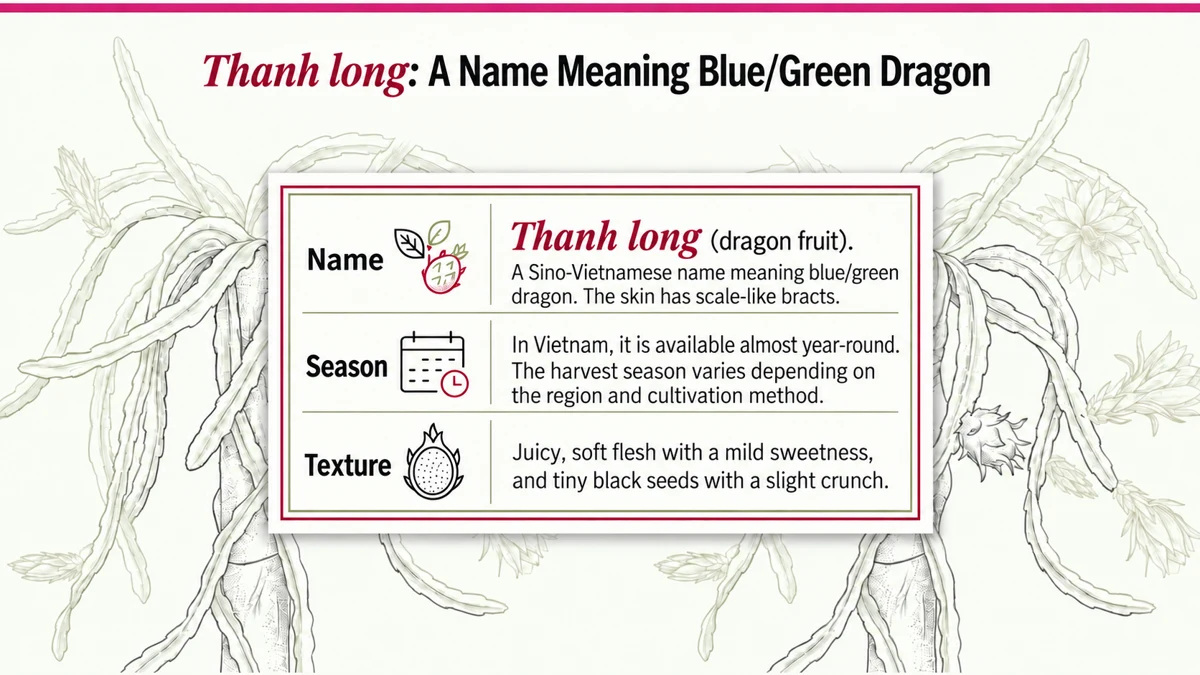
Dragon fruit is called “Thanh long” in Vietnamese, a Sino-Vietnamese name meaning “blue/green dragon,” commonly associated with the scale-like skin. For the names and the plant’s surprising identity as a cactus, see the companion Dragon Fruit Field Guide.
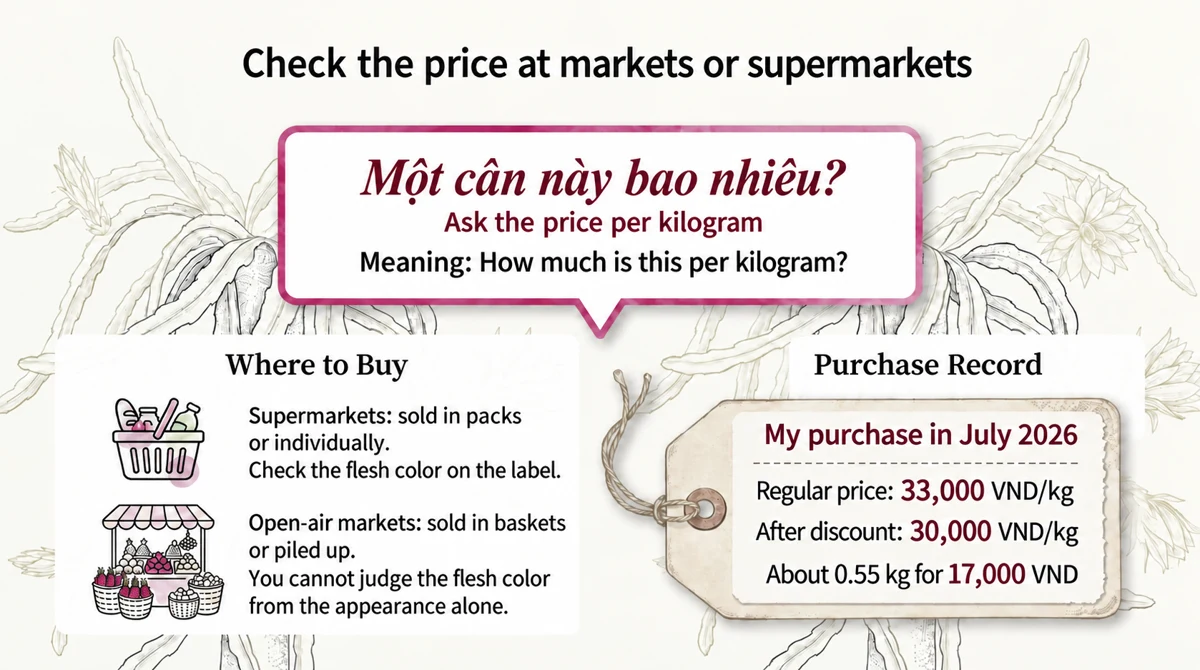
You can use the following phrase to ask the price at a market:
Một cân này bao nhiêu?
“How much is this per kilogram?”
Dragon fruit is generally sold by weight or as individual fruit.
Dragon Fruit Taste and Texture: White Flesh and Red Flesh
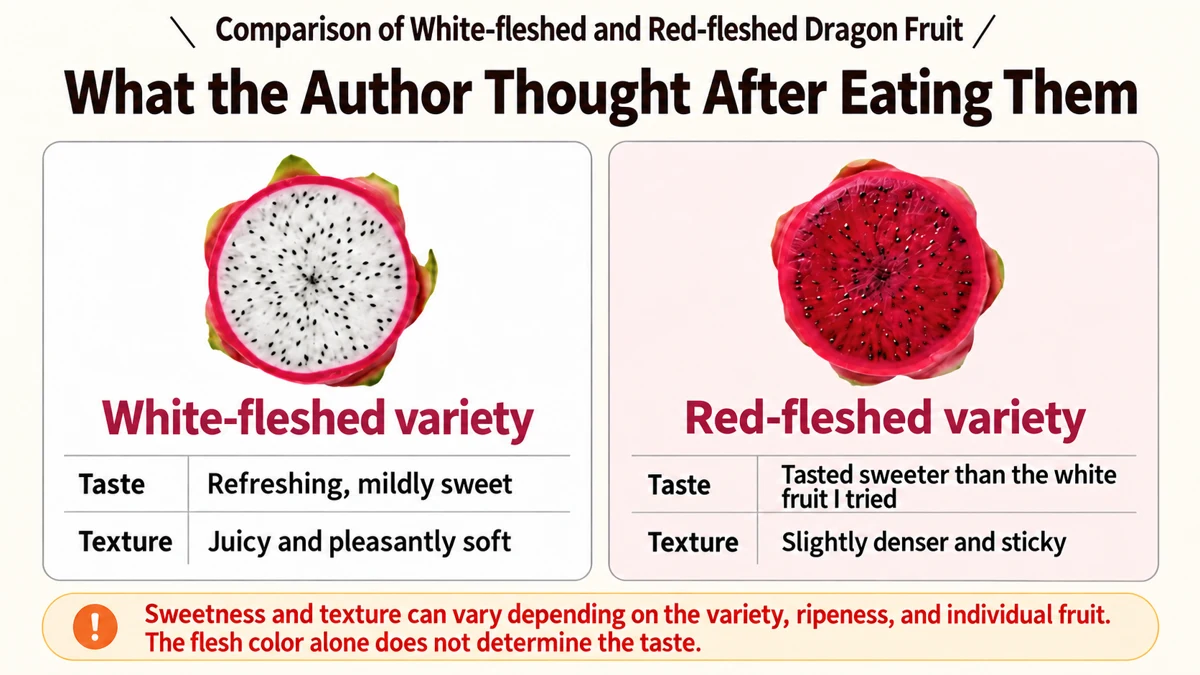
White-fleshed and red-fleshed types are common in Vietnam. In my comparison, the white flesh was juicy and soft with refreshing, mild sweetness. The red flesh was slightly denser and tasted sweeter to me. These are impressions of the particular fruits I ate; sweetness varies by cultivar, ripeness and growing conditions. For the types in more detail, see the Dragon Fruit Field Guide.
Countless tiny black seeds, reminiscent of kiwi seeds, are scattered through the flesh and can be eaten with it. Juicy flesh and the seeds’ delicate crunch are characteristic. The thick skin is normally removed rather than eaten.
Dragon Fruit Prices and Where to Buy It in Vietnam
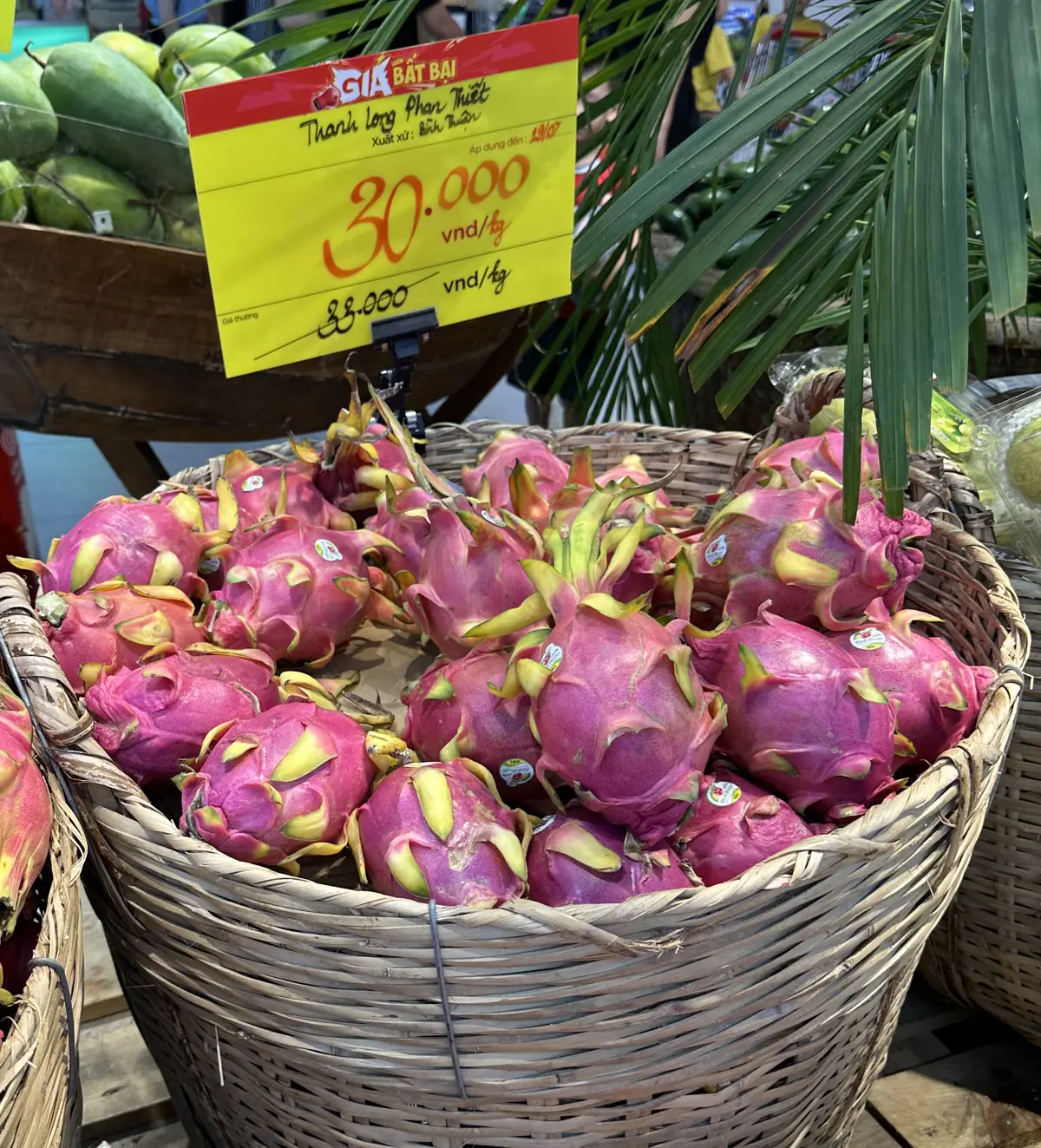
In July 2026, I bought one fruit weighing about 0.55 kg at a supermarket for 17,000 dong. The label showed a regular price of 33,000 dong/kg and a discounted price of 30,000 dong/kg. Prices vary by cultivar, origin, season and seller, so these figures are one purchase example, not a standard price.
Open-Air Markets and Street Fruit Sellers
Dragon fruit is often piled in large baskets and sold by weight. Its almost year-round availability also makes it a handy choice when other fruits are out of season.
Supermarkets
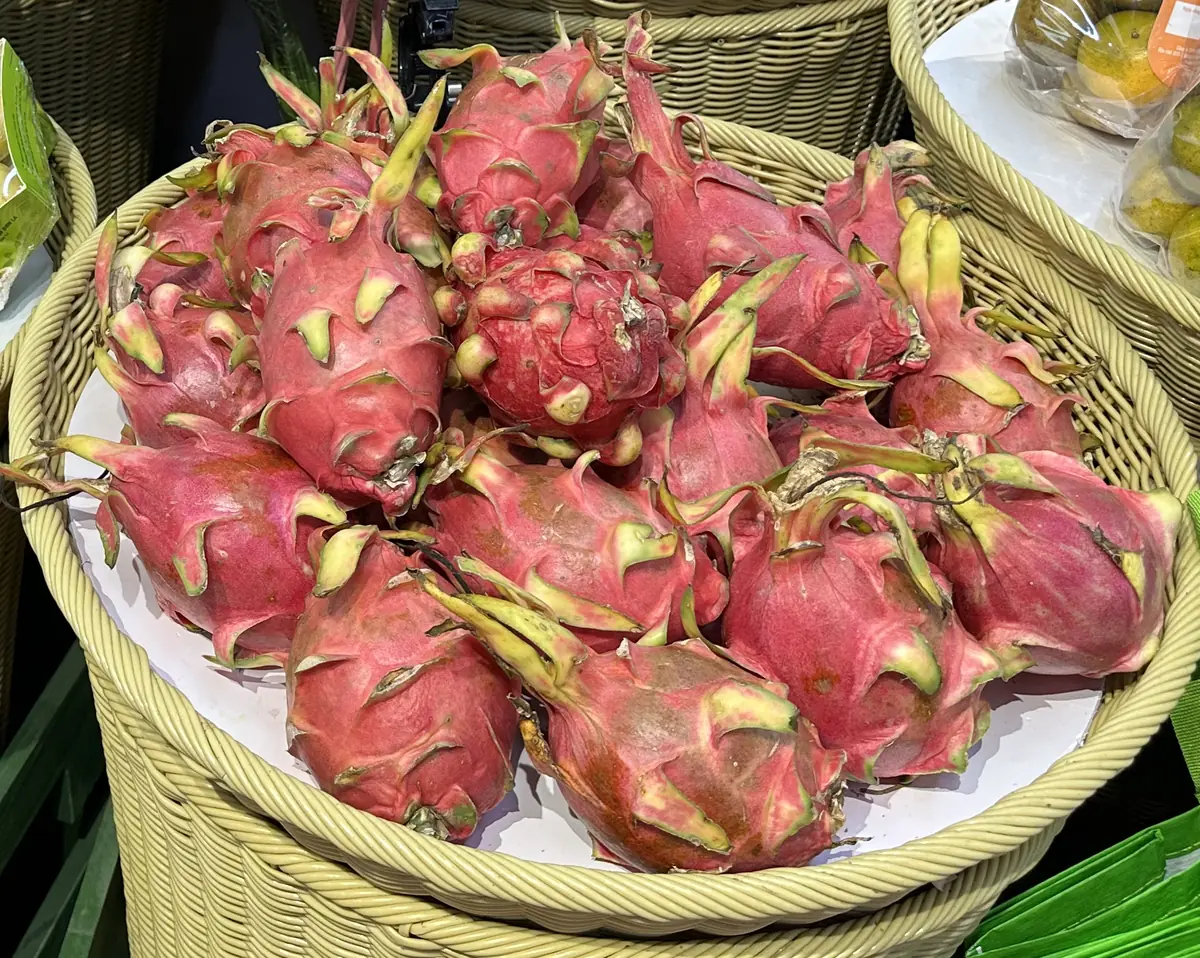
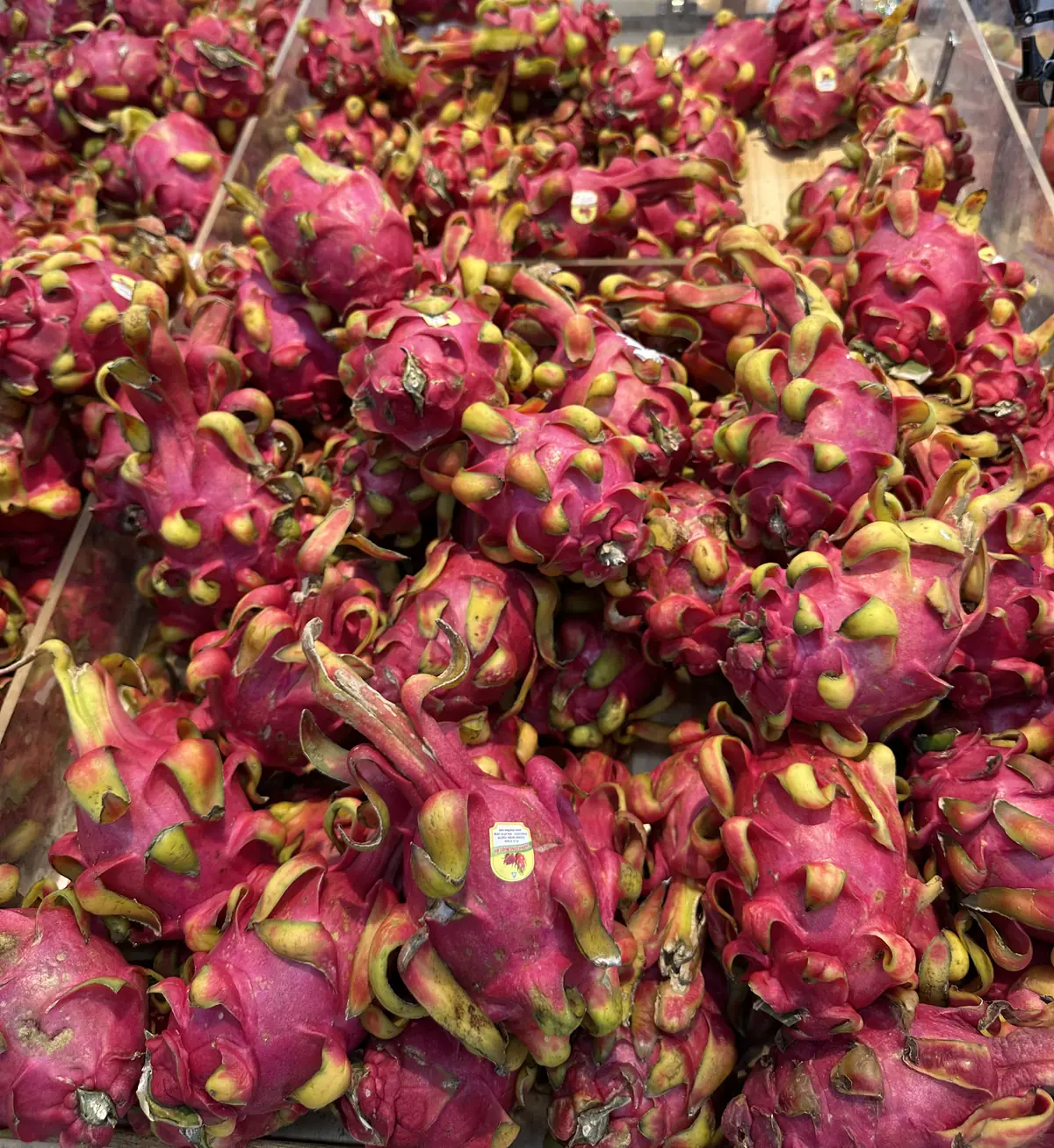
Fruit may be sold in packs or individually, making prices and weights easy to check. White-fleshed and red-fleshed types are often displayed together, allowing you to compare the labels.
Fruit Shops and Delivery Apps
If the type you want is unavailable, try a fruit shop or grocery delivery app and search for a term such as “thanh long ruột đỏ” (red-fleshed dragon fruit).
How to Choose a Good Dragon Fruit
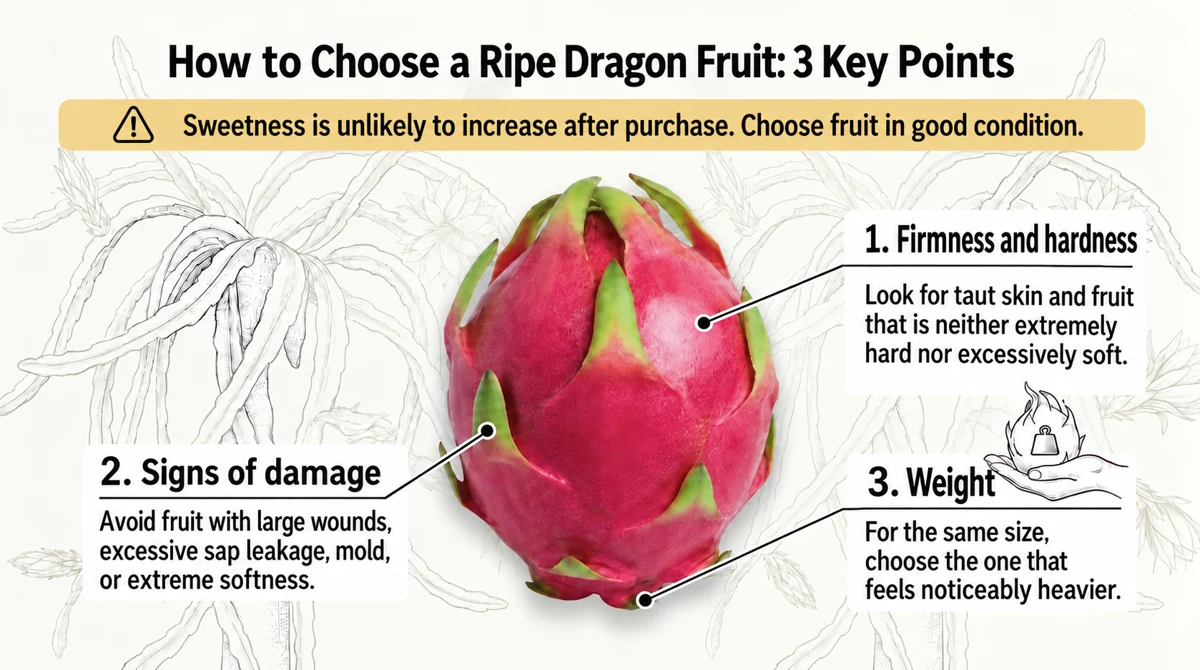
As explained in the companion Dragon Fruit Field Guide, this fruit, like pineapple, is not expected to become sweeter after harvest. It is therefore important to choose one that is already suitably mature when you buy it.
Look for taut skin and fruit that feels heavy for its size. Avoid large injuries, leaking juice, mold and extreme softness. Slightly dry bract tips do not necessarily indicate poor quality. Skin color and shine alone cannot tell you how sweet it will be; where possible, also check the cultivar, origin and harvest timing.
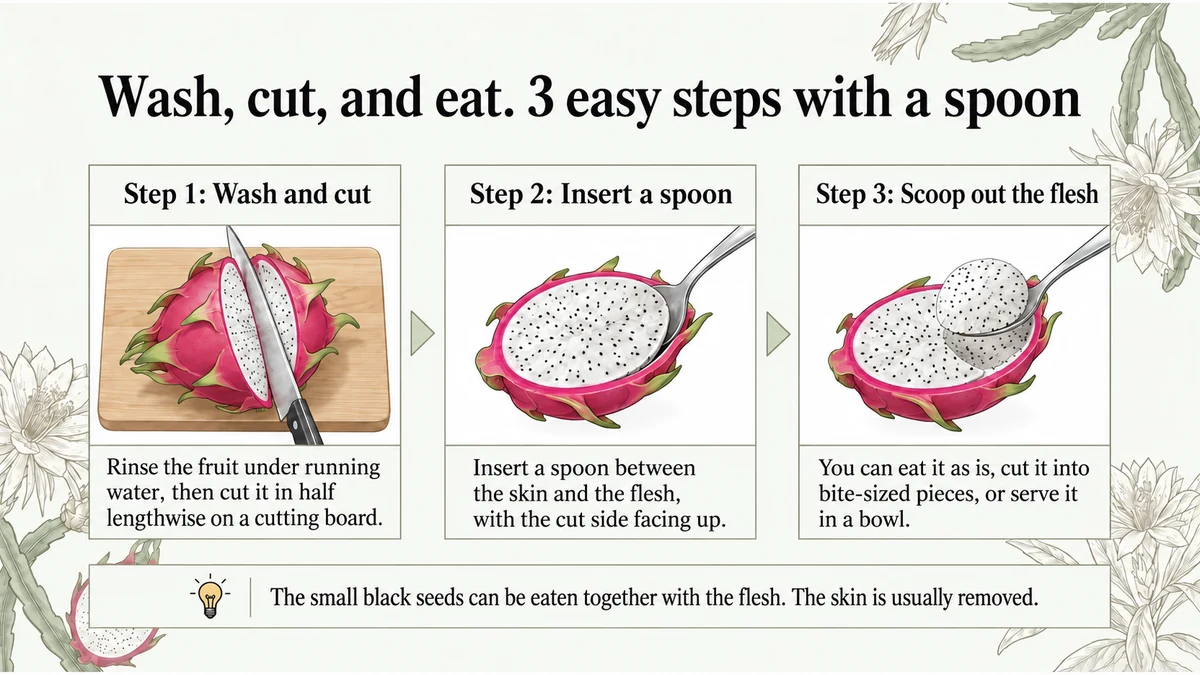
How to Cut Dragon Fruit: Halve It and Use a Spoon
Although the skin is thick, an ordinary kitchen knife cuts through it easily. Wash the outside under running water before cutting.
- Place the washed fruit securely on a cutting board and cut it lengthwise into two halves.
- Turn the cut surface upward and slide a spoon between the skin and flesh.
- Scoop out the flesh and eat it directly, or cut it into bite-sized pieces and serve in a bowl.
You can also cut the unpeeled fruit into quarters and gently push at the ends to separate skin and flesh. There is no spiral peeling as with pineapple, or peeling individual fruit as with lychee and rambutan. This makes dragon fruit one of the simpler fruits to prepare in this series.
Four Ways to Enjoy Dragon Fruit in Vietnam
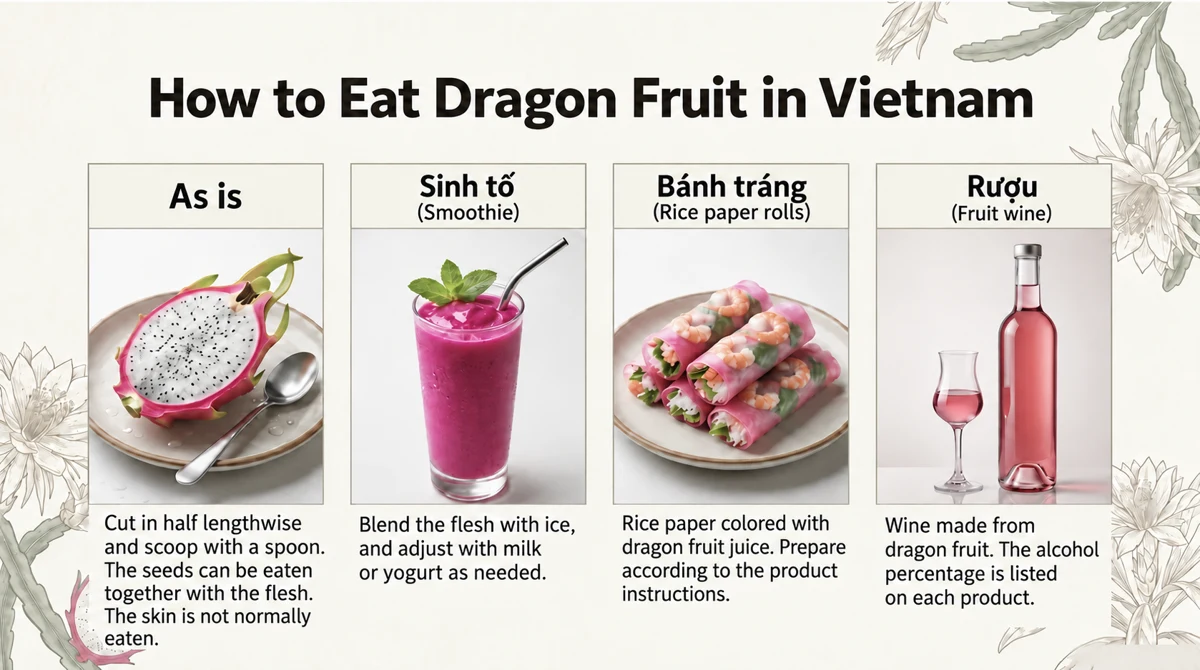
1. Eat It Fresh
The basic approach in Vietnam is to cut the fruit in half and eat the flesh with a spoon. Chilled fruit makes an especially refreshing dessert on a hot day.
2. Sinh tố thanh long (Dragon Fruit Smoothie)
“Sinh tố” is a Vietnamese drink made by blending fruit with ice and ingredients such as milk or condensed milk. Red-fleshed fruit gives it a vivid pink color. Not every shop offers this flavor, so look for “sinh tố thanh long” on the menu.
3. Bánh tráng thanh long (Fresh Spring Rolls with Pink Rice Paper)
“Bánh tráng thanh long” is pink rice paper made with dragon fruit, developed and sold in former Binh Thuan Province, now part of Lam Dong. Depending on the product, soften it in water and wrap shrimp, pork, vegetables and rice noodles to make fresh spring rolls. Follow the package instructions for softening and intended uses.
4. Rượu thanh long (Dragon Fruit Wine or Liqueur)
Alcoholic drinks made with dragon fruit are also sold. Products vary in type, including fermented drinks and liqueurs, and in alcohol content, so check the label. Drink in moderation as you would other alcoholic beverages, rather than treating them like juice.
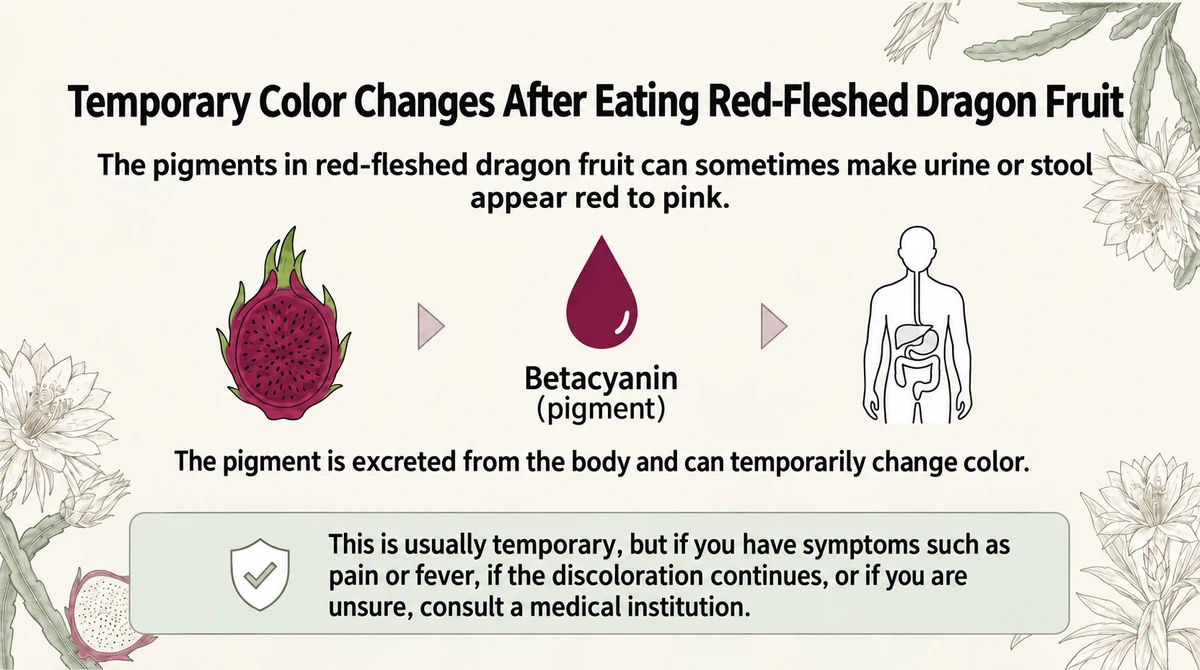
Red Urine or Stool Can Occur
After eating a large amount of red-fleshed dragon fruit, pigments such as betacyanin can temporarily make urine or stool appear red. Medical literature includes a case of a five-year-old boy whose urine became bright red after eating red-fleshed fruit, with tests finding no blood.
However, do not assume that red urine or stool is caused by food. Seek medical advice if it comes with pain, fever, blood clots, black stool or dizziness, if the color persists, or if you cannot identify a likely cause.
Storing Dragon Fruit: Refrigeration and Freezing
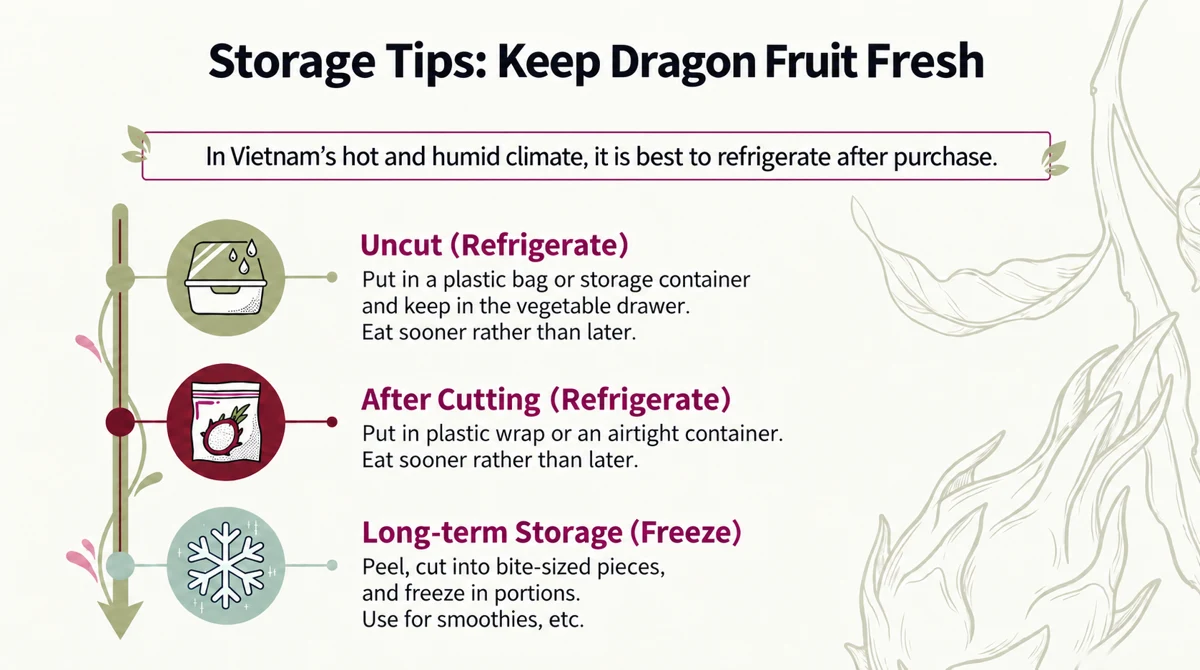
Whole dragon fruit is not expected to become sweeter after purchase, so eat it while it is in good condition. In Vietnam’s hot, humid climate, avoid leaving it at room temperature for long; refrigerate it while protecting it from drying out.
- Whole fruit: put it in a bag to reduce moisture loss and refrigerate in the crisper drawer. Check its condition and eat it promptly
- After cutting: place it in a clean, sealed container, refrigerate and eat as soon as possible
- Longer storage: peel, cut into bite-sized pieces and freeze. The frozen flesh can go directly into a smoothie
Can You Take Fresh Dragon Fruit to Japan?
Travelers cannot bring fresh dragon fruit back to Japan as personal souvenirs.
The Ministry of Agriculture, Forestry and Fisheries Plant Protection Station’s Vietnam item-by-item page (in Japanese) lists “dragon fruit (pitaya): cannot be brought in” under the rules for accompanied baggage (checked October 9, 2026).
As the companion Dragon Fruit Field Guide explains, Japan approved imports of Vietnamese white-fleshed dragon fruit in 2009 and red-fleshed fruit in 2017 as cargo meeting specified plant-quarantine conditions. This system is for distribution routes involving registered facilities, vapor heat treatment and inspections. It does not mean travelers can bring market-bought fruit home in their luggage.
Processed products such as rice paper or fruit wine may be souvenir options, but plant quarantine, animal quarantine and customs treatment depend on ingredients and manufacturing methods. Choose unopened commercial products and check current entry requirements before buying and before traveling. Alcohol also has duty-free allowances and age restrictions.
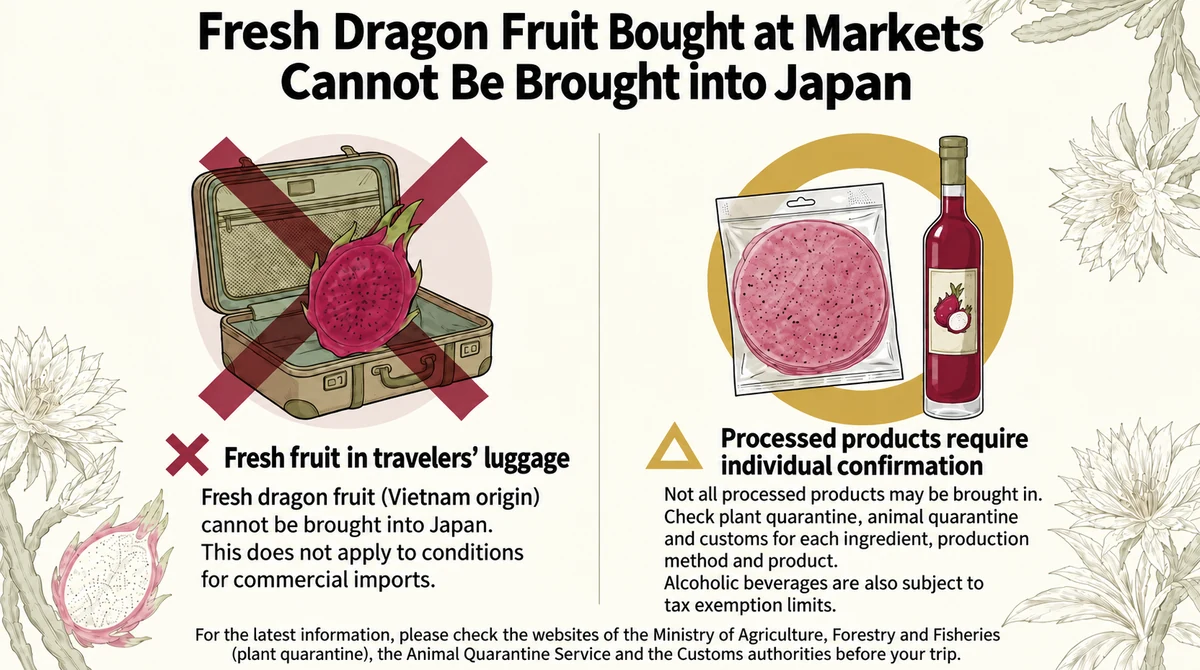
Quarantine conditions can change. Always check the latest information before traveling.
My Tasting Notes
Purchase record
Place: supermarket
Date: July 2026
Price: 17,000 dong for one fruit (about 0.55 kg)
Tasting impressions
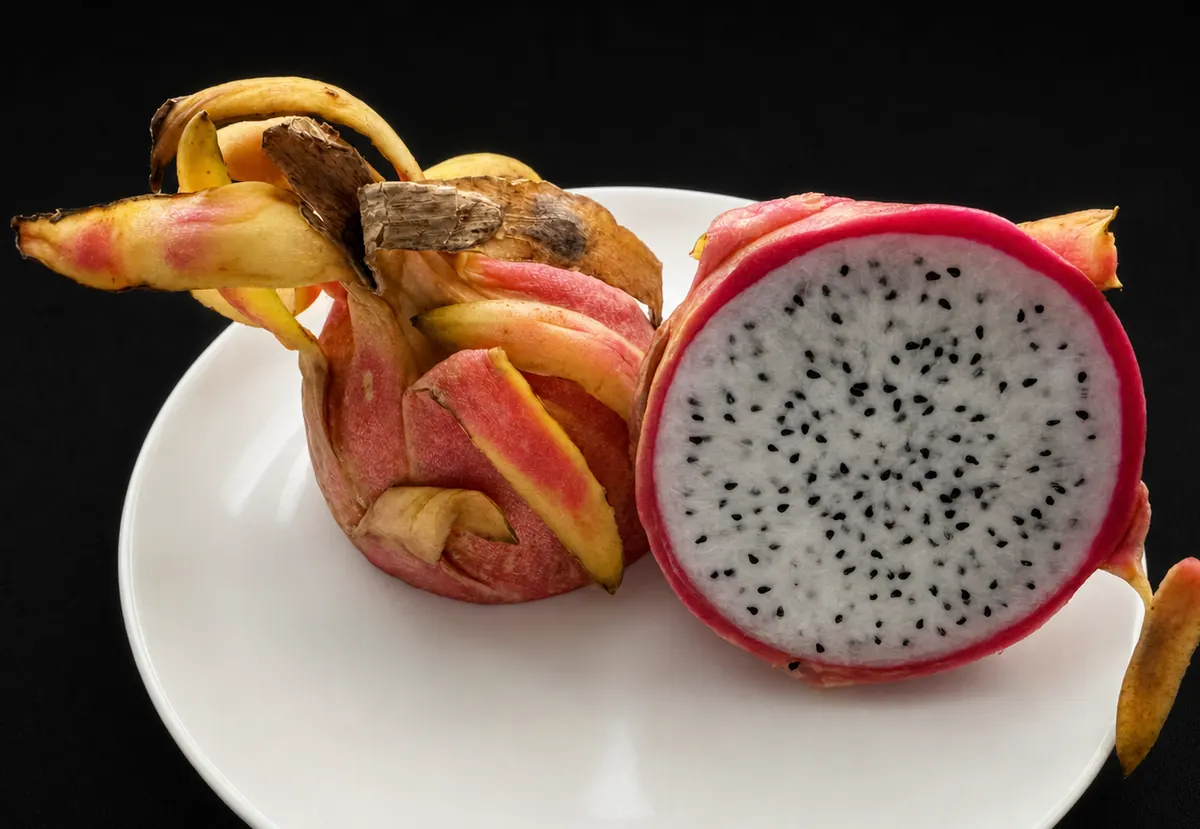
White flesh: juicy, soft and mildly sweet. Red flesh: sweeter and richer than the white fruit I tried, with juice that stained my hands red.
My recommendation for first-time tasters: ★★★☆☆
Frequently Asked Questions About Eating Dragon Fruit
Should I choose white-fleshed or red-fleshed fruit?
In my tasting, the white-fleshed fruit was refreshing and the red-fleshed fruit tasted sweeter. However, flesh color alone does not determine sweetness. Consider cultivar and ripeness as well. For more detail, see the Dragon Fruit Field Guide.
Will it become sweeter if I leave it after buying?
No. It is not a fruit that is expected to become sweeter after harvest. Choose fruit with taut skin and weight for its size, without large injuries, leaking juice, mold or excessive softness, and eat it promptly.
Can I eat the skin and seeds?
The seeds can be eaten with the flesh. The skin is used in some cooked preparations, but it is normally removed when eating the fresh fruit.
Can I take it to Japan?
Fresh fruit bought at a market or similar outlet cannot enter Japan in travelers’ baggage. Processed products are not automatically permitted either: check ingredients and the latest quarantine and customs conditions.
How to Eat Dragon Fruit in Vietnam: Key Points
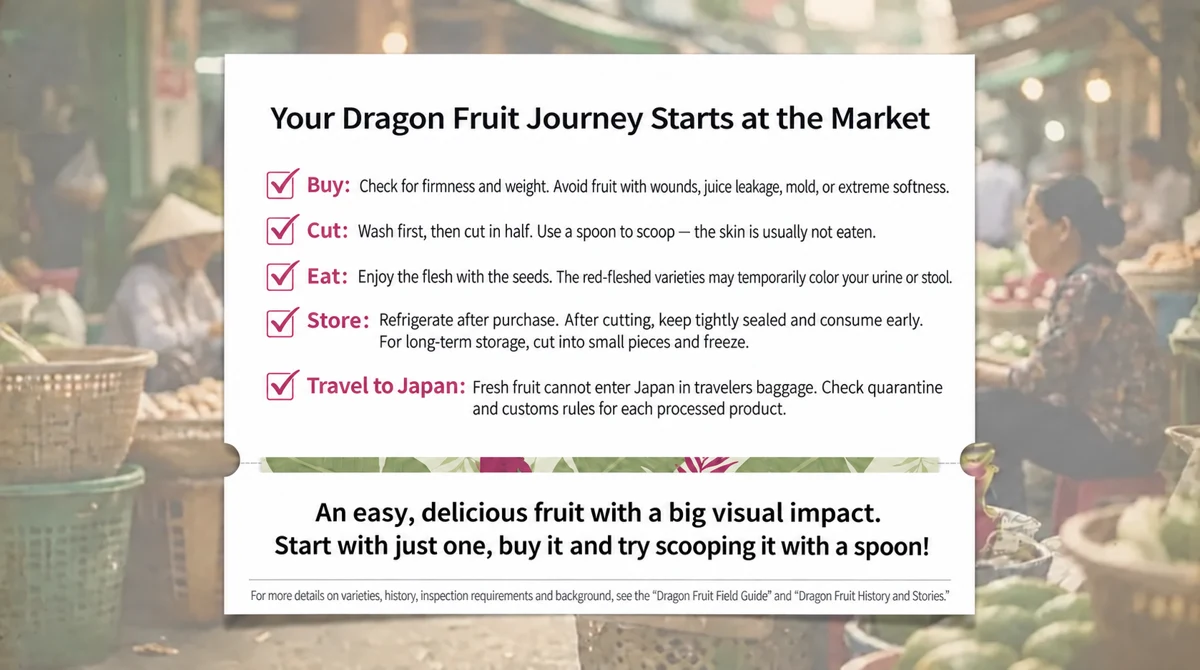
Dragon fruit is one of the easiest fruits in this series to prepare: cut it in half and scoop out the flesh with a spoon.
- Choose: look for taut skin and weight for its size; avoid large injuries, leaking juice, mold and excessive softness
- Cut: wash the fruit, halve it lengthwise and scoop out the flesh with a spoon
- Enjoy: eat it fresh, in sinh tố (smoothies), bánh tráng thanh long (pink rice-paper spring rolls), or rượu thanh long (fruit wine or liqueur)
- Be aware: red-flesh pigments may discolor urine or stool, but seek medical advice rather than assuming a food cause if symptoms occur or the color persists
- Store: eat it promptly; use refrigeration or freezing when keeping it longer
- Take home: market-bought fresh fruit cannot be brought to Japan. Check current, product-specific rules for processed items too
When you see it at a market, try buying one, cutting it in half and using a spoon. Despite its striking appearance, its mild flavor makes it an approachable Vietnamese fruit to try.
Explore Dragon Fruit’s Biology and History
For biology, taste, nutrition, varieties and Japanese quarantine requirements, see Dragon Fruit Field Guide: Taste, Nutrition, Varieties and Cactus Biology. For its journey from the Americas to Vietnam and the distinction between documents and local traditions, see Dragon Fruit History and Stories.
References
- UC Davis Postharvest Research and Extension Center“Dragon Fruit”
- MEXT Food Composition Database: Raw Dragon Fruit (in Japanese)
- Osamu Motoyama et al.: A Five-Year-Old Boy with Transient Bright Red Urine after Dragon Fruit Consumption, Shonika 60(10), 2019 (in Japanese)
- Lim et al.“Are Red Stools after Red Dragon Fruit Ingestion a Red Herring?”Clinical Case Reports Journal (2022)
- Japan Plant Protection Station: Rules for Bringing Vegetables and Fruit from Overseas (in Japanese)
- Japan Plant Protection Station: Item-by-Item Rules for Vietnam (in Japanese)
- Japan Customs: Duty-Free Allowances for Overseas Travelers (in Japanese)
