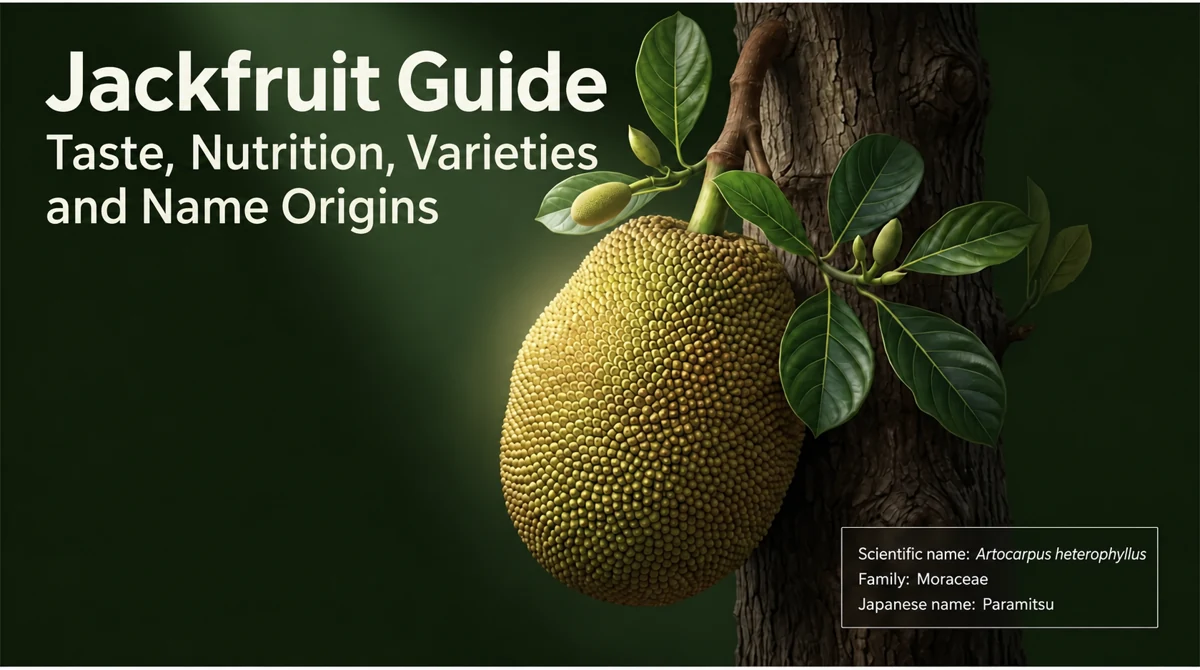
Jackfruit is a tropical fruit with rich sweetness and thick, substantial flesh. It is among the world’s largest tree-borne fruits. Called Mít in Vietnam, it is eaten ripe as fruit, unripe in savory dishes, and as cooked seeds.
Its fruit grows directly on the trunk and thick branches. Like pineapple, jackfruit is a multiple fruit formed from many flowers in one inflorescence. The “jack” in its name is not a person’s name. This guide explains its biology, origins, varieties and uses.
For choosing and cutting, see How to Eat Jackfruit in Vietnam. For its journey around the world, see Jackfruit History and Stories.
What Is Jackfruit? Taste, Nutrition and Basic Facts
| Item | Details |
|---|---|
| Name | Jackfruit; Japanese name: Paramitsu |
| Vietnamese name | Mít |
| Scientific name | Artocarpus heterophyllus |
| Classification | Evergreen tree, family Moraceae, genus Artocarpus |
| Native range | Southwestern India |
| Fruit size | Often 5–30 kg; some exceed 50 kg. A very large multiple fruit |
| Availability in Japan | Fresh fruit is uncommon; import requirements differ by origin |
| Growing and sales in Vietnam | Mekong Delta, southeastern and central regions; Mít sấy chips are common |
| Main nutrients | Carbohydrate, dietary fiber, potassium and vitamin C |
Sources are listed at the end of the article.
Jackfruit Biology: Flowers on the Trunk and Multiple Fruits
Jackfruit’s size is striking, but where it grows on the tree and how its edible parts develop are equally interesting.
One of the World’s Largest Tree-Borne Fruits
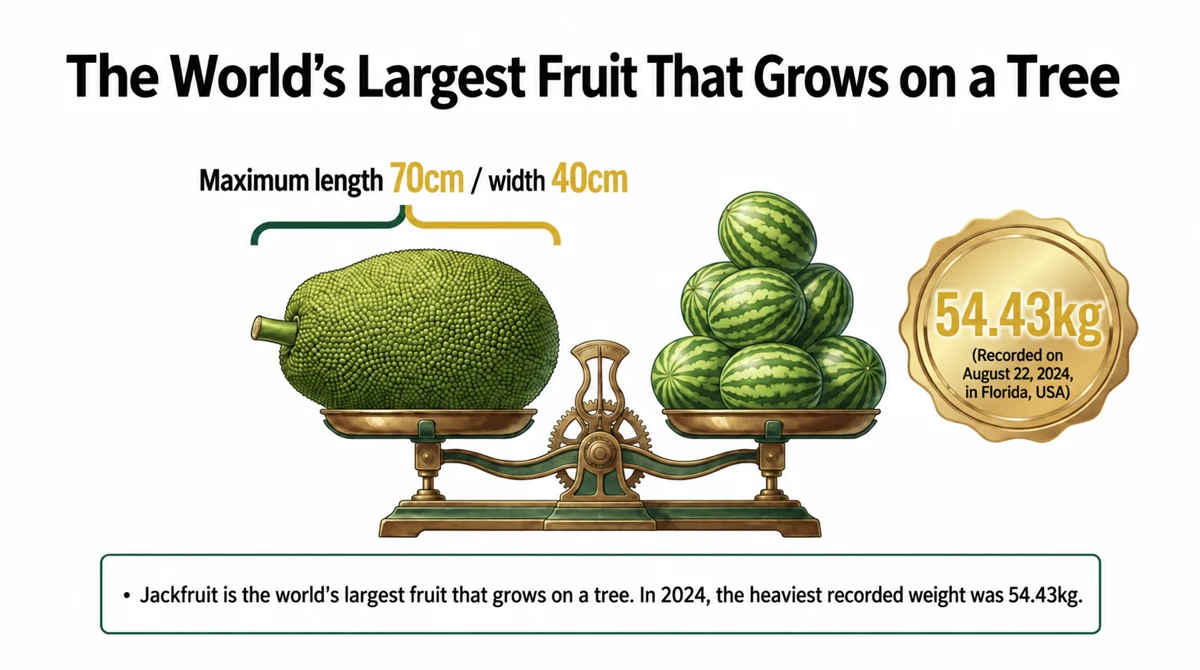
Individual fruits often weigh about 5–30 kg, with examples exceeding 50 kg. Jackfruit is one of the largest fruits borne by a tree.
Guinness World Records lists a 54.43 kg jackfruit verified in Homestead, Florida, USA, on August 22, 2024. It illustrates just how large one fruit can become; the dated record should not be confused with a typical fruit’s weight.
Cauliflory: Flowers and Fruit on the Trunk and Thick Branches
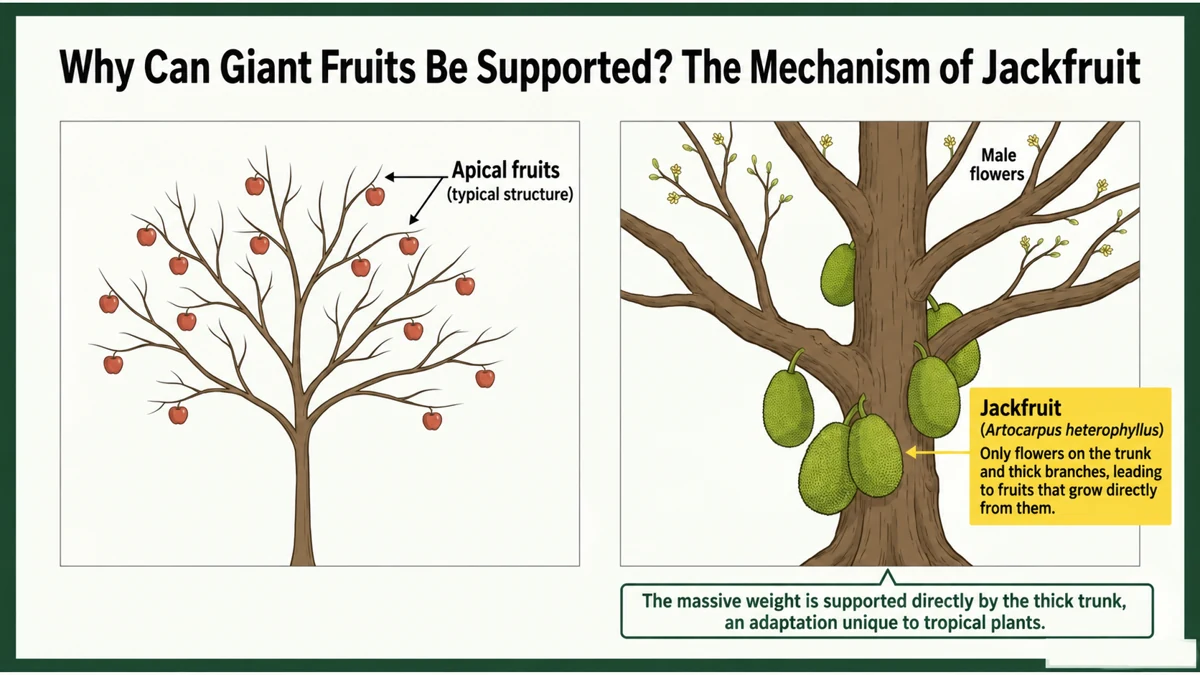
Jackfruit is an evergreen tree in the mulberry family, Moraceae, and the genus Artocarpus. It bears male and female inflorescences on the same tree. Female inflorescences on the trunk and thick branches develop into fruit.
Flowers growing on the trunk or older branches are described as cauliflory. The sight of a huge fruit hanging from a thick trunk is one of jackfruit’s distinctive features.
A Multiple Fruit, Like Pineapple
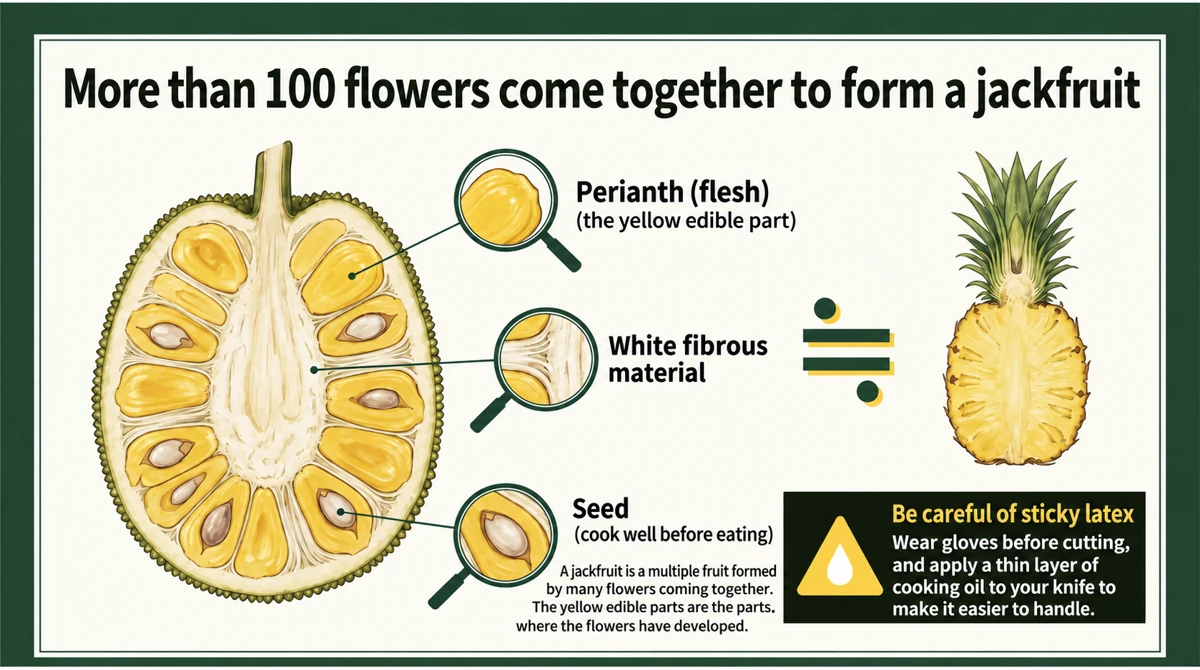
What looks like one giant fruit develops from many flowers within an inflorescence. This is called a multiple fruit. Pineapple Guide explains another example of this fruit structure.
The main edible yellow bulbs develop from the perianth surrounding each flower, rather than being true arils. Numerous bulbs fill a single fruit. The pale fibers between them include tissues derived from unfertilized flowers.
Watch Out for Sticky Latex
Cutting jackfruit releases milky, sticky latex that clings to hands and knives. Wear suitable gloves and lightly coat the knife with cooking oil before cutting. People with latex allergy should avoid contact and seek medical advice.
The Seeds Are Edible When Cooked
The seeds can also be eaten after thorough cooking. Do not eat them raw. Boiled or roasted seeds have a starchy, chestnut-like texture.
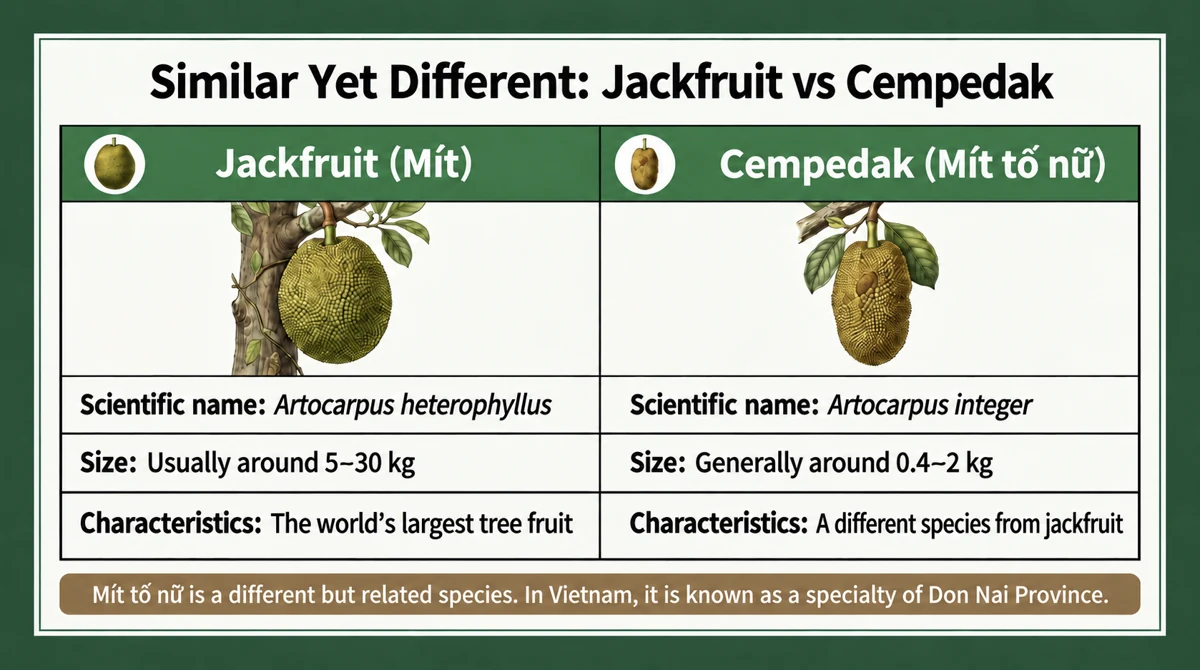
Related Species: Mít tố nữ Is a Different Fruit
Related Artocarpus species include breadfruit, a staple food in parts of the Pacific, and cempedak, Artocarpus integer.
Vietnam’s Mít tố nữ is generally treated in agricultural sources as cempedak, Artocarpus integer, rather than a jackfruit variety. Its fruit is often about 0.4–2 kg. It is associated with Long Khánh in Đồng Nai.
Where Does the Name Jackfruit Come From?
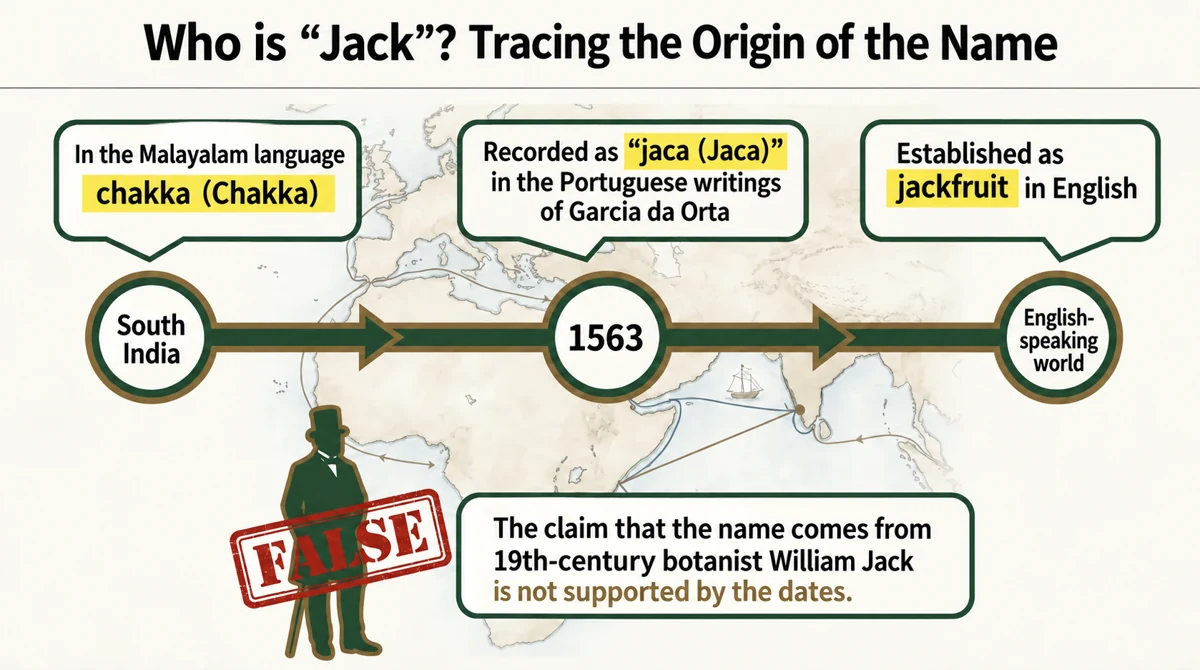
The word “jackfruit” may suggest someone named Jack, but its name has a different origin.
The usual etymology traces it to Malayalam chakka in southern India, through Portuguese jaca. Jaca appears in Garcia de Orta’s Portuguese work published in Goa in 1563; jackfruit later became established in English.
The “jack” in jackfruit is therefore not a personal name.
Jackfruit Varieties: Producing Countries and Vietnam’s Mít Thái
Major Producing Countries
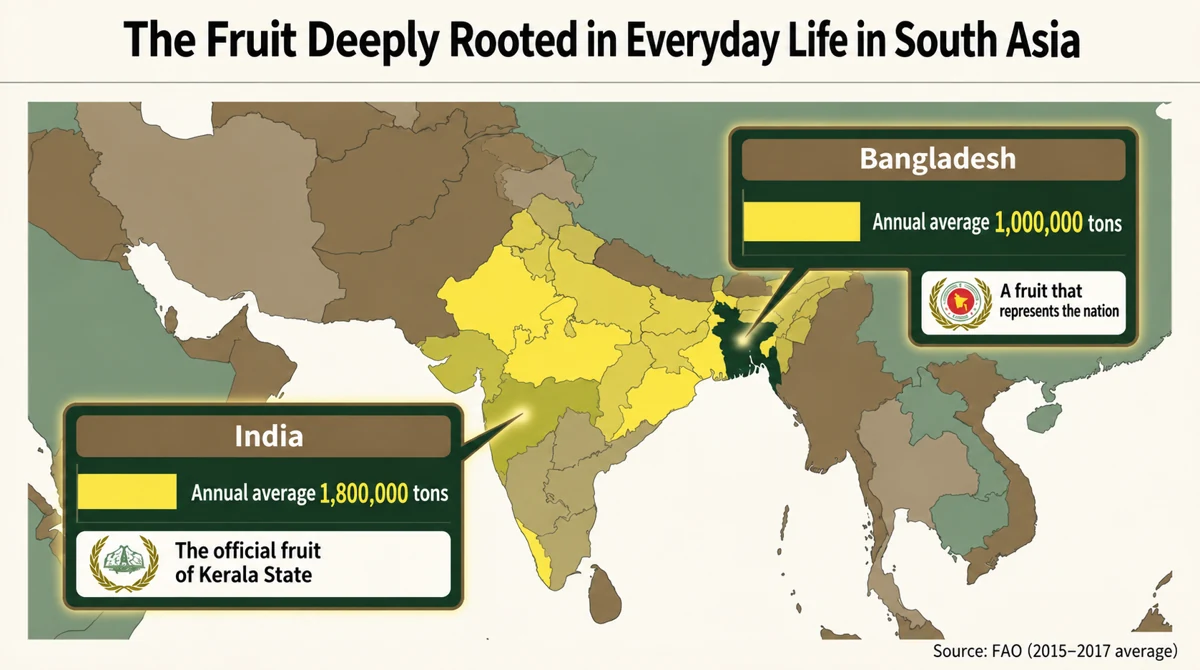
FAO estimates based on 2015–2017 material put annual average production at about 1.8 million tonnes in India, 1.0 million in Bangladesh and 0.7 million in Indonesia. These are historical estimates, not figures for 2026.
Jackfruit is Bangladesh’s national fruit and the official state fruit of Kerala in southern India, reflecting its place in South Asian life.
Vietnam’s Traditional Firm and Soft Types
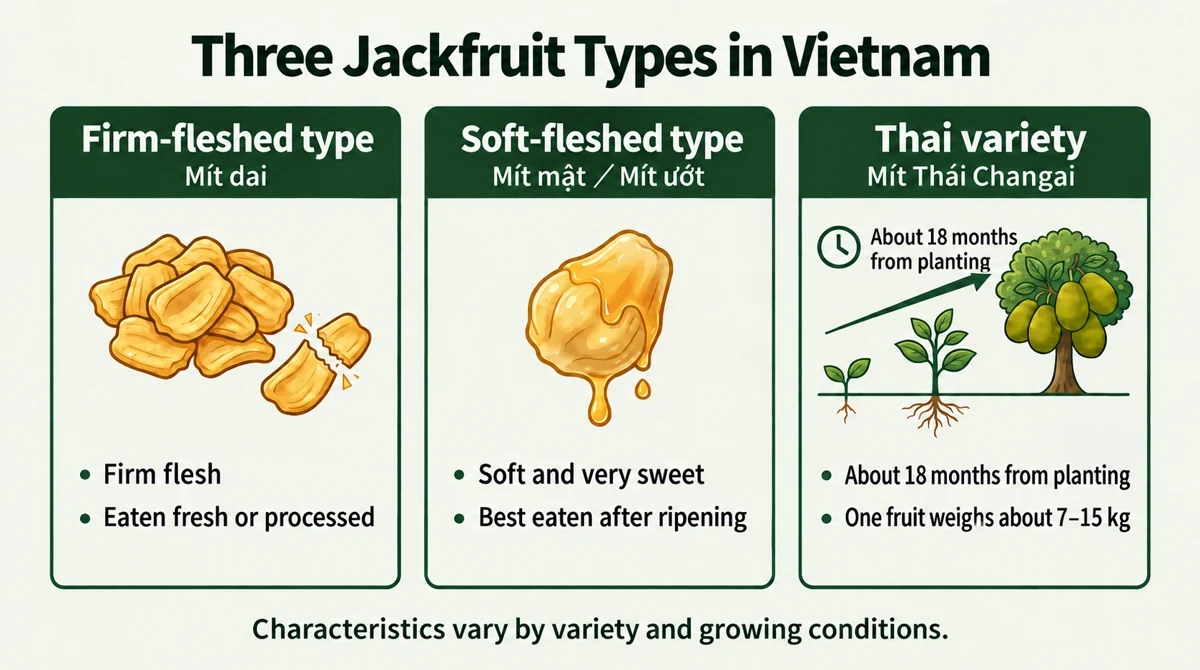
Vietnamese names traditionally distinguish two broad textures of jackfruit flesh.
- Mít dai: Firm, fibrous flesh with a crisp bite; also used for dried chips and other processing.
- Mít mật / Mít ướt: Soft, sticky and sweet flesh, best eaten promptly when ripe.
The Widely Grown Mít Thái
Mít Thái Changai is an early-bearing type widely grown in Vietnam. Vietnamese agricultural extension material describes first harvests at around 18 months after planting and fruit commonly weighing about 7–15 kg. Conditions and varieties affect these figures.
Jackfruit in Vietnam: Season, Names and Souvenirs
Mít is a useful Vietnamese word for jackfruit. Other fruits, including pineapple and passion fruit, have well-known regional names. The sources reviewed did not establish comparable major regional differences for jackfruit; this does not mean every local name has been documented.
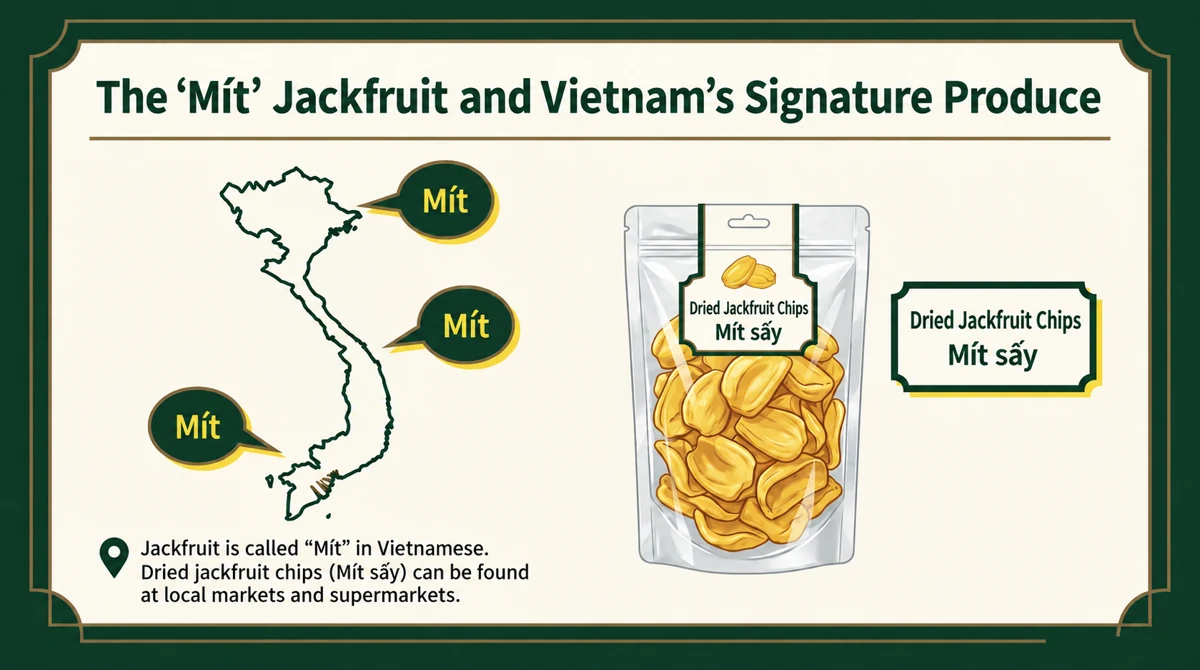
Jackfruit is grown in the Mekong Delta, southeastern Vietnam and central regions, and is often available through much of the year. Crisp dried chips, Mít sấy, are a familiar supermarket and souvenir-shop product.
Fresh Vietnamese Jackfruit Cannot Be Carried into Japan
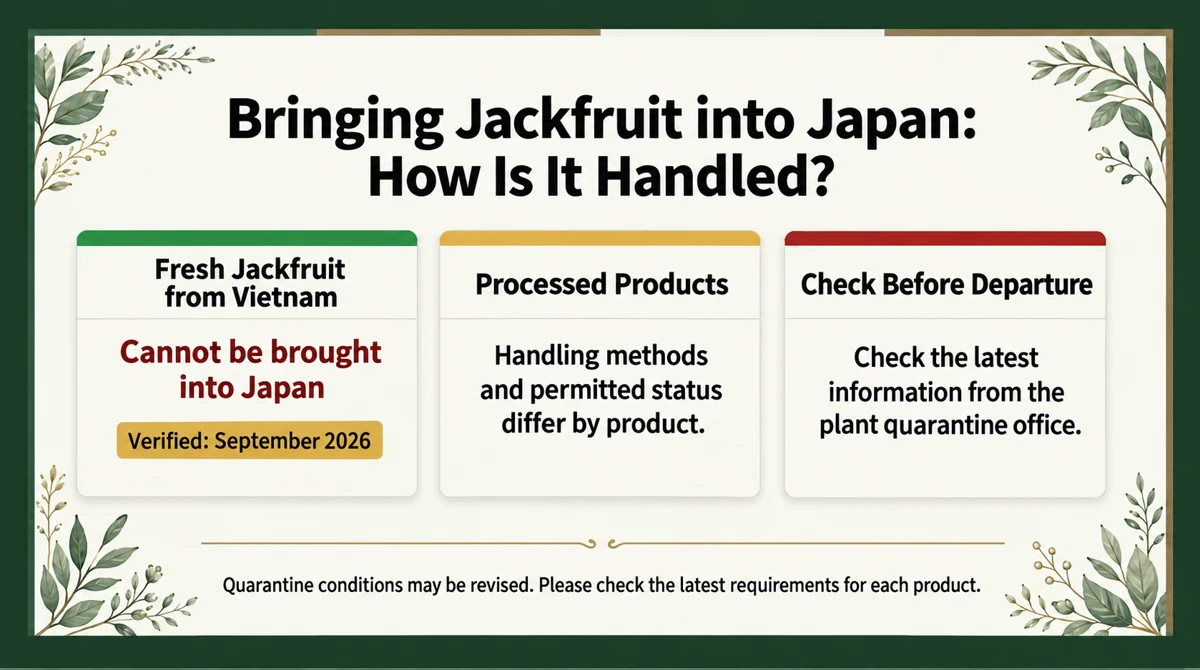
Jackfruit is a host of several fruit flies. The Japanese quarantine conditions checked for the September 2026 source classify fresh Vietnamese jackfruit as prohibited, including fruit carried in travelers’ baggage. Check the current conditions with Japan’s Plant Protection Station before traveling.
Some thoroughly processed products may fall outside plant quarantine requirements, but treatment depends on the product’s condition and ingredients. Do not assume all dried or processed products are exempt. Contact the Plant Protection Station if uncertain.
Jackfruit Nutrition: Calories and Nutrients per 100 g
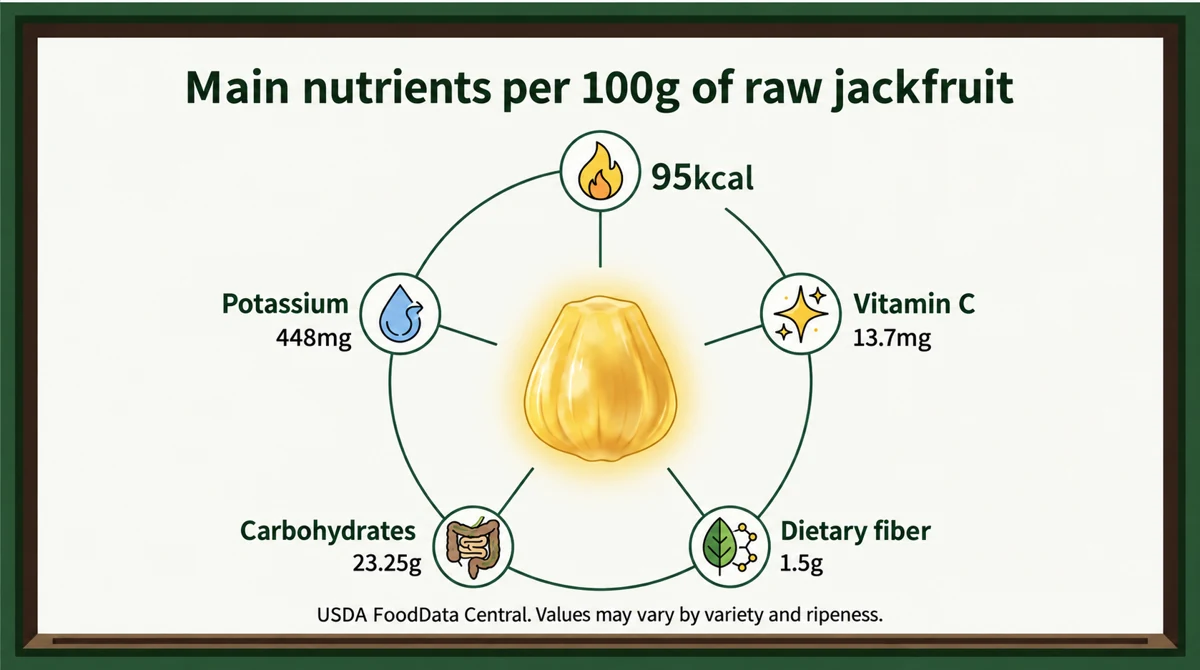
The following reference values apply to 100 g of raw edible jackfruit flesh.
- Energy: 95 kcal
- Carbohydrate: 23.25 g
- Dietary fiber: 1.5 g
- Potassium: 448 mg
- Vitamin C: 13.7 mg
The figures are USDA reference values for raw jackfruit; variety and ripeness can change its composition. These values do not establish a treatment or preventive health benefit.
Unripe Jackfruit as a Meat Alternative
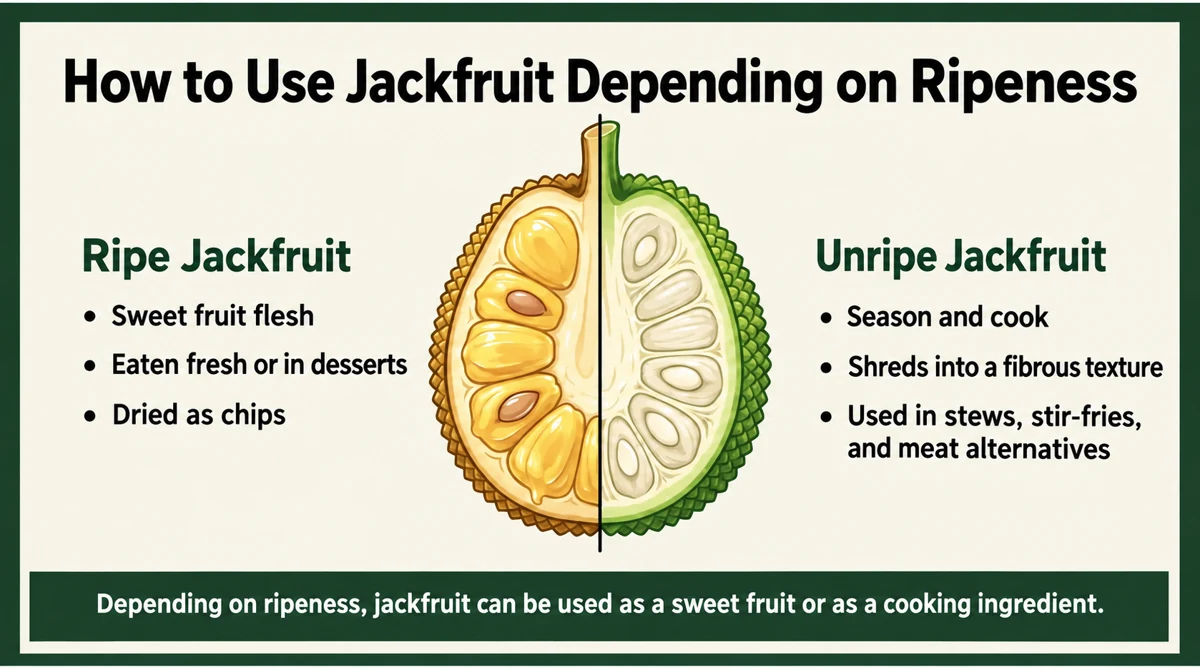
Unripe jackfruit has a mild flavor and fibrous texture that takes up seasonings. It can be cooked and shredded for dishes resembling pulled pork. This is a culinary substitution: its protein content is not equivalent to meat. Ripeness changes the fruit from a savory ingredient into a sweet dessert fruit.
Frequently Asked Questions About Jackfruit
What does jackfruit taste like?
Ripe flesh is richly sweet and aromatic, with a thick, springy bite. Softness and aroma vary with variety and ripeness.
Why can jackfruit grow so large?
Many flowers contribute to one large multiple fruit, which grows on the trunk or thick branches. Some individual fruits exceed 50 kg.
Can you eat jackfruit seeds?
Yes, after thorough boiling or roasting. Avoid raw seeds and cook them all the way through.
Can you bring Vietnamese jackfruit to Japan?
The source’s September 2026 check classified fresh fruit from Vietnam as prohibited. Processed products are treated according to their condition. Confirm current requirements before traveling.
Jackfruit Guide: Key Points
Here are the main features of jackfruit.
- Jackfruit is a large multiple fruit, with flowers and fruit growing on the trunk and thick branches.
- Its name is traced from Malayalam chakka through Portuguese jaca, rather than a person named Jack.
- India and Bangladesh are major producers. Vietnamese names include Mít dai, Mít mật and Mít Thái.
- In Vietnam it is called Mít; Mít sấy chips are familiar souvenirs. Fresh Vietnamese fruit was classified as prohibited in the September 2026 Japan quarantine check.
- Reference values per 100 g include 95 kcal, 448 mg potassium and 1.5 g fiber. Unripe fruit is also used in savory cooking.
See How to Eat Jackfruit in Vietnam for buying and preparation, Jackfruit History and Stories for its history and Vietnamese folklore, and 15 Vietnamese Fruits for other fruit to try in Vietnam.
References
- Kew Science: Artocarpus heterophyllus
- International Journal of Plant Sciences: Development and Evolution of the Female Flowers of the Jackfruit
- University of Florida IFAS: Jackfruit Growing in the Florida Home Landscape
- Guinness World Records: Heaviest jackfruit
- FAO: Minor Tropical Fruits—Mainstreaming a Niche Market
- USDA FoodData Central
- Vietnam National Agricultural Extension Center: Mít Thái siêu sớm
- Japan Plant Protection Station: Travel FAQ
