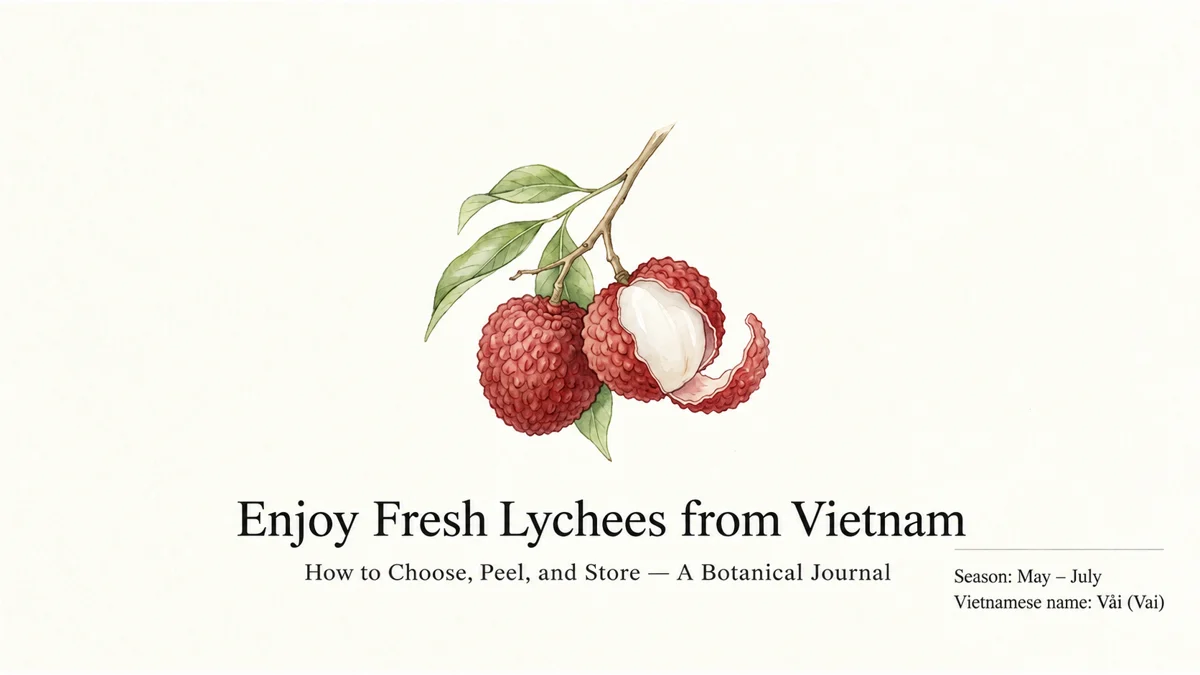
Split the rind near the stalk, open it and remove the white edible part. Do not eat the hard central seed. In Vietnam, lychee is usually in season around May–July and sold by weight, often in clusters.
We cover how to buy and enjoy it, then storage and travel rules. For biology, nutrients and cultivars, see Lychee Guide; for imperial stories and its spread, see Lychee History and Stories.
Lychee in Vietnam: Season, Prices and a Quick Guide
| Item | Details |
|---|---|
| Vietnamese name | Vải |
| Pronunciation guide | Approximately “vai”; listen locally for the correct tone |
| Taste | Rich sweetness and floral aroma |
| Texture | Springy and juicy |
| Fresh season | Usually May–July; supply and harvest vary by year |
| Example prices | Around 50,000 VND/kg in the companion purchase record; the author paid 60,000 VND for 3 kg at an open-air market on June 14, 2026 |
| Where to buy | Markets, street sellers, supermarkets and fruit shops |
| Basic peeling | Split the rind near the stalk and open it |
| Local dishes | Chè vải hạt sen, a lychee and lotus seed dessert; Trà vải, lychee tea |
| Beginner rating | ★★★★★ |
Its Vietnamese Name Is Vải
Lychee is called Vải in Vietnamese. The name Vải thiều is also familiar in established growing regions such as Luc Ngan and Thanh Ha.
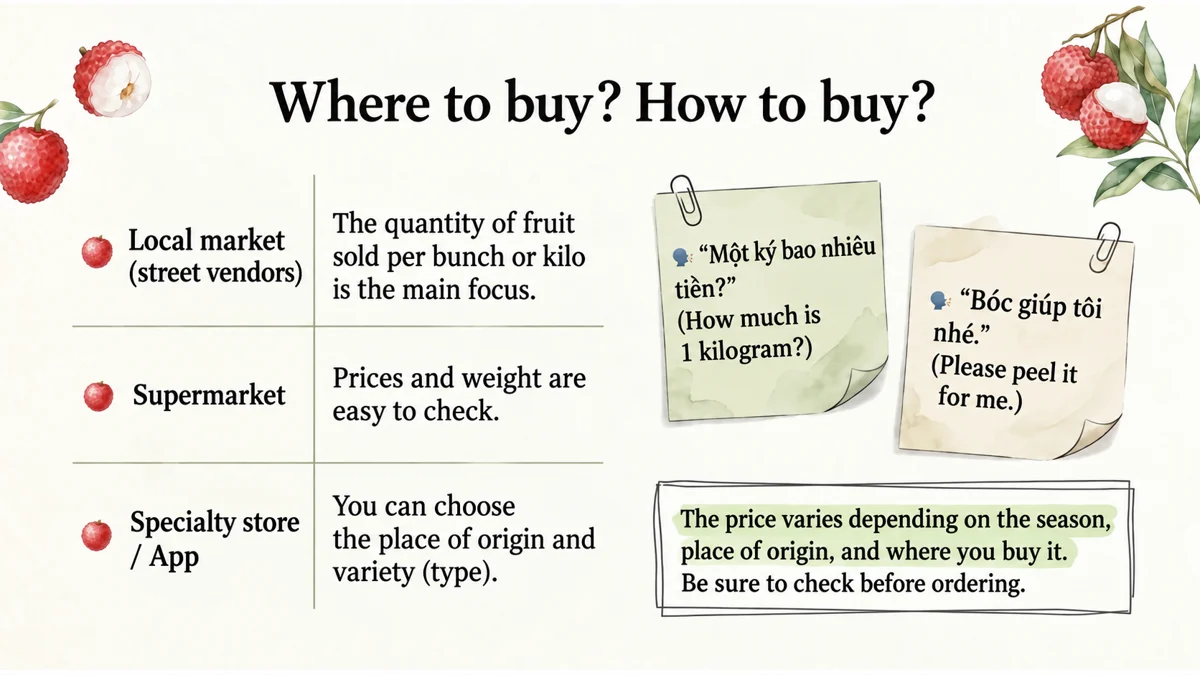
Fruit is commonly priced by weight, rather than by individual piece. The following phrase is useful.
Một ký bao nhiêu tiền?
“How much is one kilogram?”
To ask for help peeling it, try this phrase.
Bóc giúp tôi nhé.
“Please peel it for me.”
Showing the written sentence on your phone can help if pronunciation is difficult.
What Lychee Tastes Like
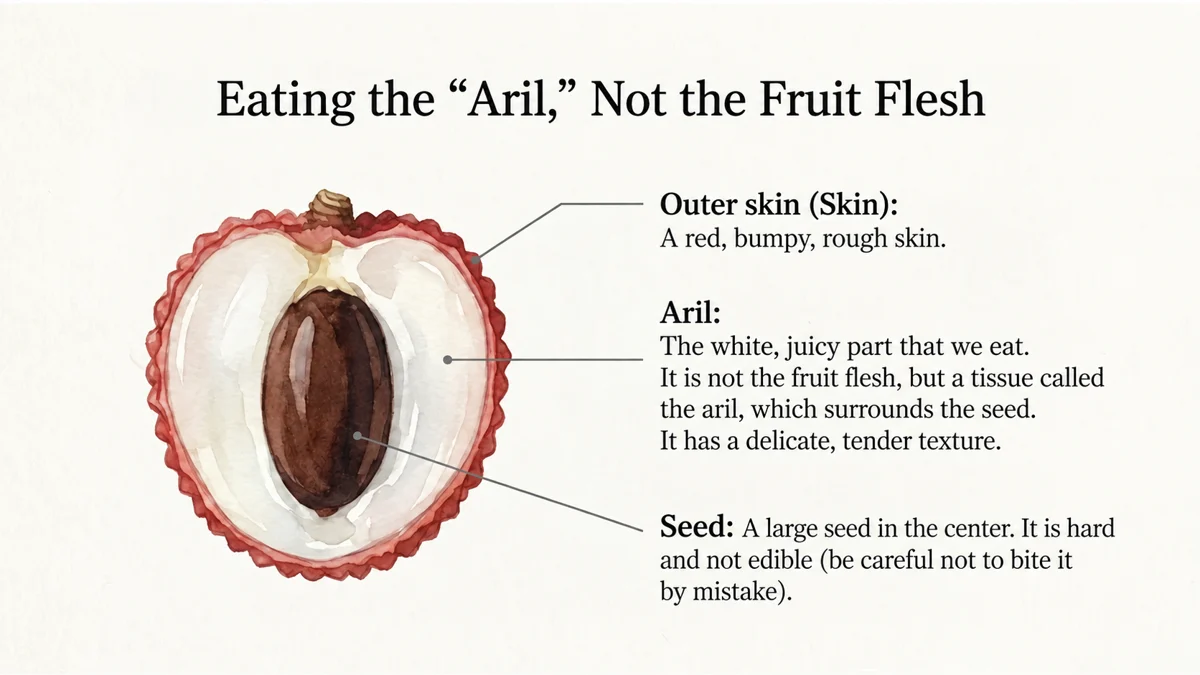
Lychee is richly sweet and floral. As Lychee Guide explains, its translucent white edible part is an aril surrounding the seed, with a springy bite and plentiful juice.
Sweetness, acidity and aroma vary by cultivar. See Lychee Guide for the main varieties and growing regions.
Lychee Prices and Where to Buy It in Vietnam
The companion 15 Vietnamese Fruits article recorded an example price of around 50,000 VND/kg. On June 14, 2026, the author bought 3 kg at an open-air market for 60,000 VND, or roughly 20,000 VND/kg. These are dated purchase examples, not current universal prices. Season, crop size, origin, cultivar, fruit size and shop affect the price.
Open-Air Markets and Street Fruit Sellers
Markets commonly sell clusters by weight, and some sellers can peel a sample. Confirm the price before ordering when no label is displayed.
Supermarkets
Supermarkets make weight and labeled prices easier to compare, often with packaged options. Check packaging, storage conditions and product quality.
Fruit Shops and Delivery Apps
Fruit shops and apps may offer information on origin and cultivar, sometimes at a higher price. Stock varies with the short season.
Choosing Fresh Lychee
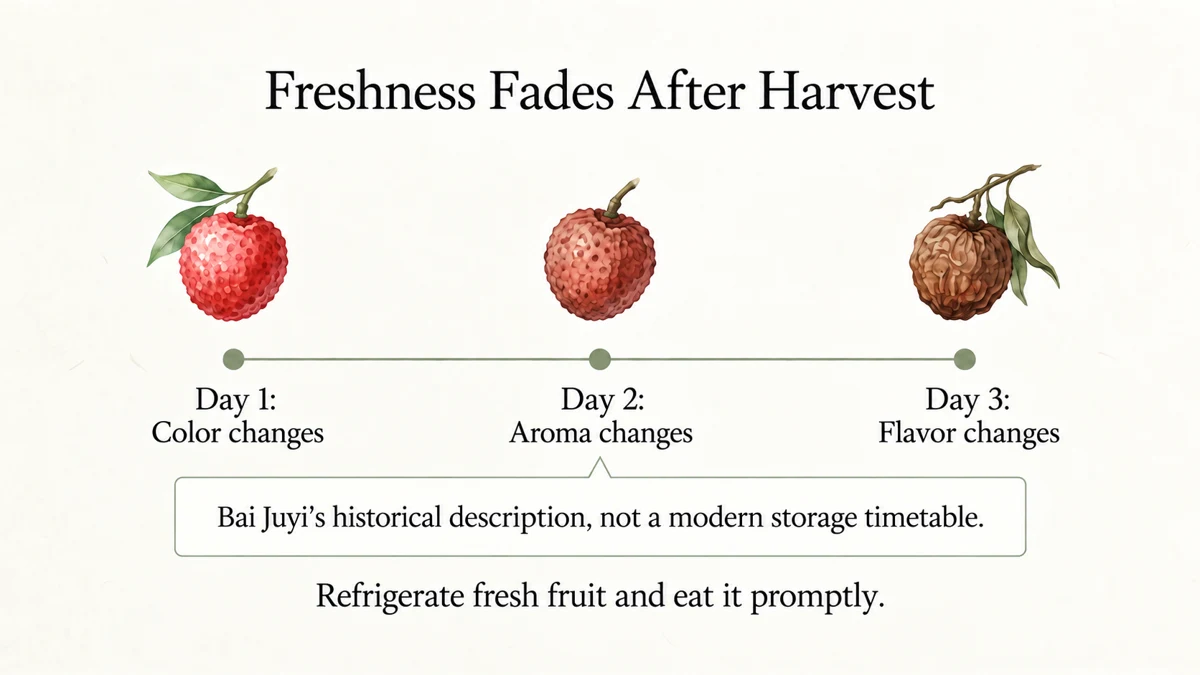
Lychee loses quality quickly after harvest. Bai Juyi’s historical description of changes in color, aroma and taste illustrates the problem, though it is not a fixed modern storage schedule. See Lychee History and Stories for the original context.
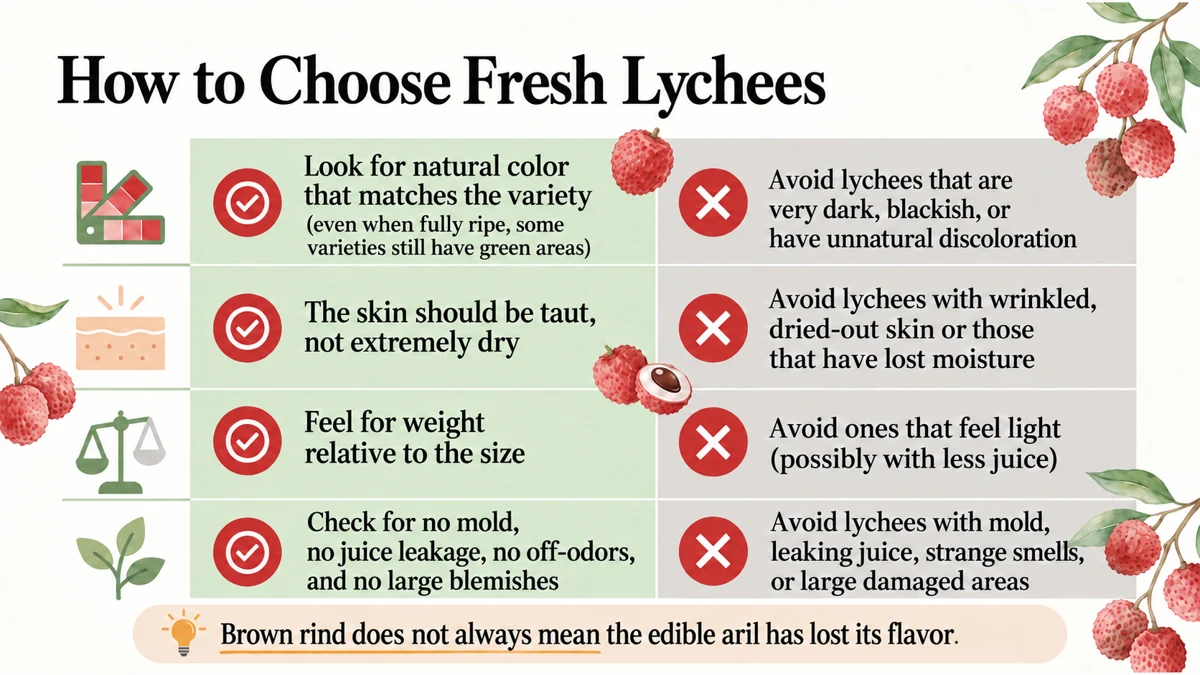
Check these features when choosing fruit.
- Look for color appropriate to the cultivar. Some ripe cultivars remain partly green, so redness alone is not a reliable test.
- Choose taut rind that is not badly dried.
- Look for fruit that feels substantial for its size.
- Avoid mold, leaking juice, off odors and widespread damage.
Drying can turn the rind brown without necessarily spoiling the edible part. However, avoid badly dried, damaged or spoiled fruit. Inspect the whole cluster when buying it on the branch.
How to Peel and Eat Lychee
Peeling lychee is straightforward compared with cutting a large pineapple or mango.
- Split the rind near the stalk with your fingers, or make a shallow opening with a fingernail.
- Open the rind from the split and remove the white aril.
- Remove or eat carefully around the central seed; do not bite or swallow it.
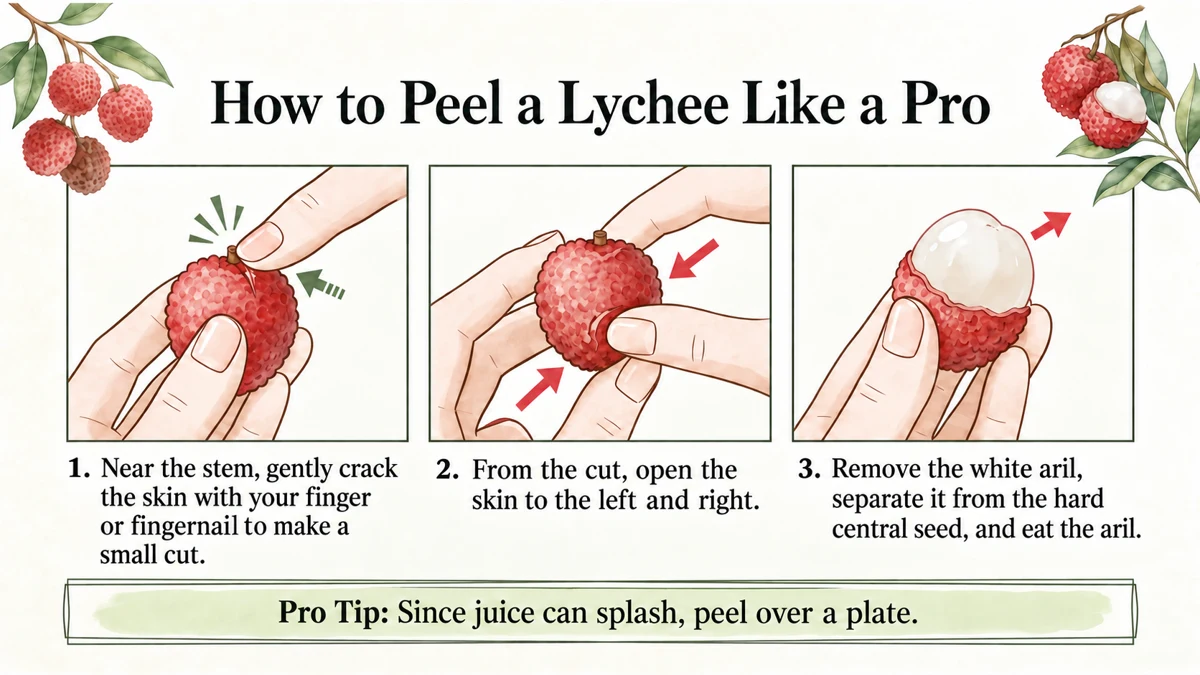
Peel over a plate to catch escaping juice.
Three Ways to Enjoy Lychee in Vietnam
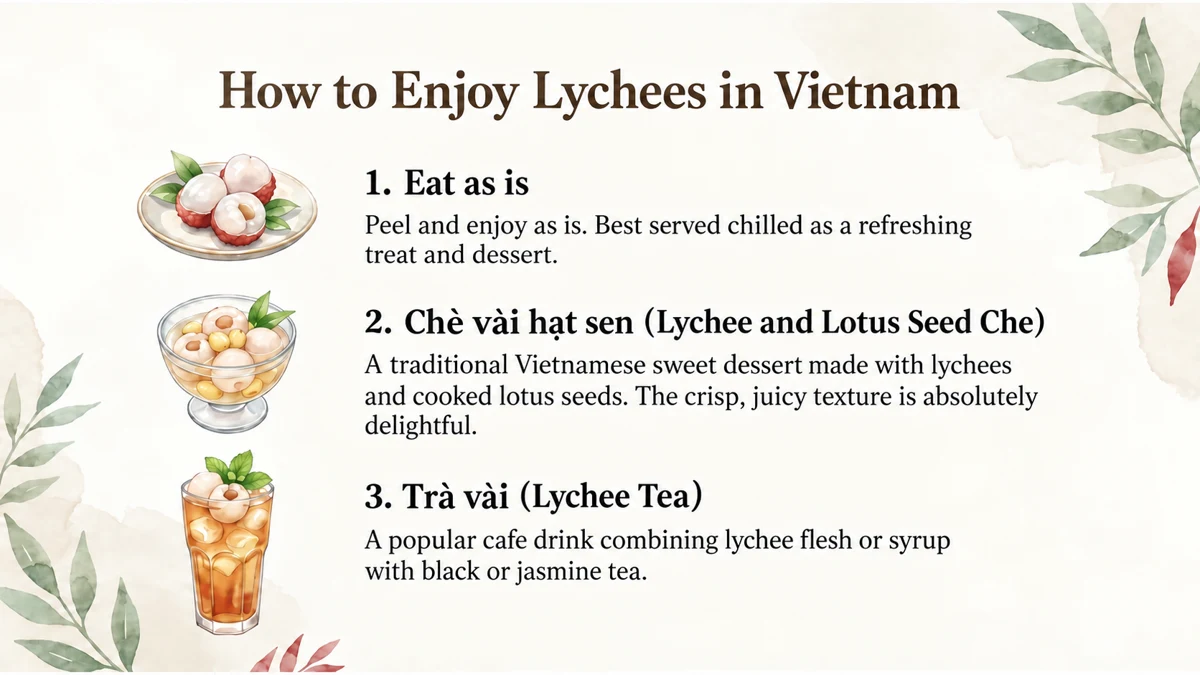
1. Eat It Fresh
Freshly peeled lychee is the simplest way to enjoy it. Chilled fruit makes a refreshing dessert.
2. Chè vải hạt sen: Lychee and Lotus Seed Dessert
Chè vải hạt sen combines lychee with lotus seeds. A cooked lotus seed may be placed inside a peeled, deseeded lychee, then served in a sweet syrup. The juicy aril and starchy lotus seed provide contrasting textures; recipes vary.
3. Trà vải: Lychee Tea
Trà vải is lychee tea, found in Vietnamese cafes and drink shops. Black or jasmine tea may be combined with lychee flesh and syrup.
Storing Lychee
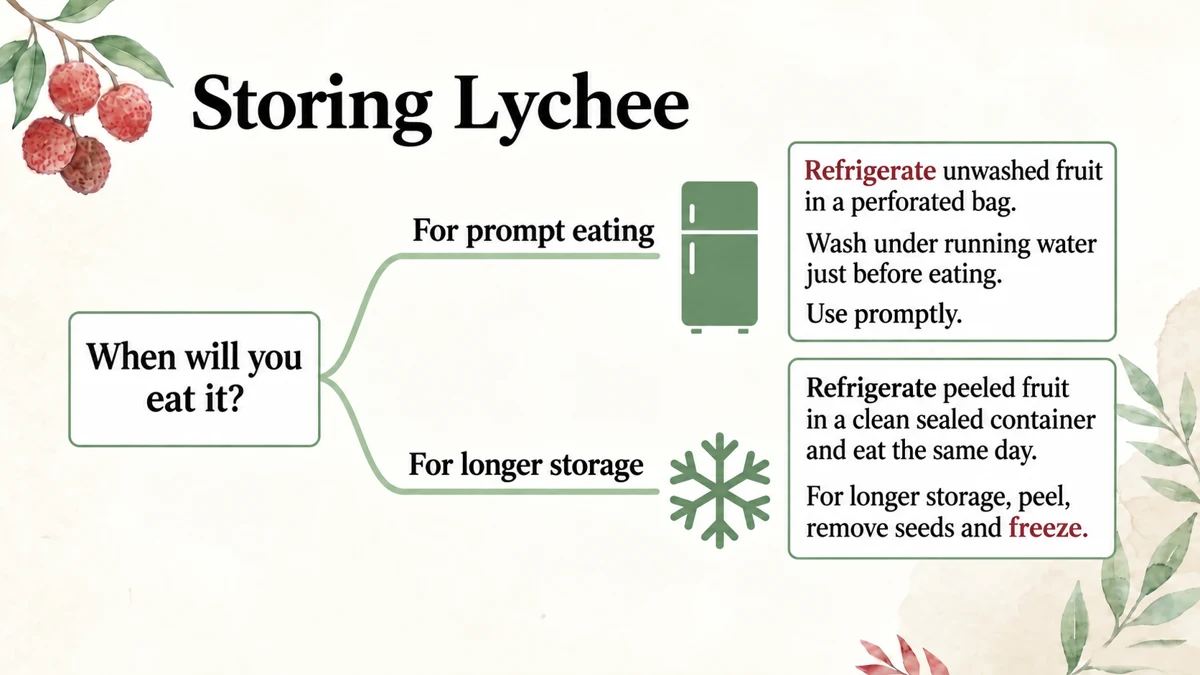
The basic storage rule is to eat lychee as soon as practical after buying it.
- For prompt eating: Refrigerate unwashed fruit in a perforated bag that limits drying while allowing ventilation. Wash under running water just before eating and use promptly.
- After peeling: Keep in a clean sealed container in the refrigerator and eat the same day.
- For longer storage: Peel and deseed before freezing. Thawed arils soften and work well in smoothies.
Lychee Precautions: Avoid Large Amounts on an Empty Stomach
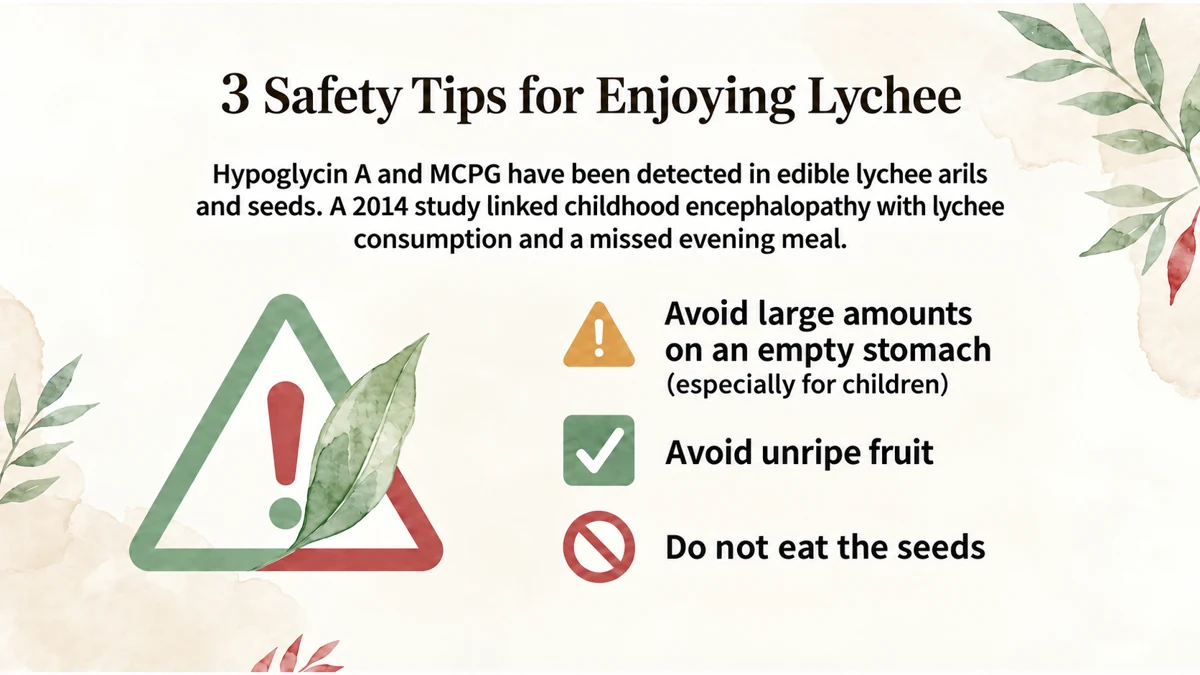
Hypoglycin A and MCPG have been detected in edible arils as well as seeds. See Lychee Guide for the relevant research and precautions.
The 2014 Muzaffarpur investigation linked childhood encephalopathy with lychee consumption and a missed evening meal. It does not show the same risk from an ordinary serving in every healthy adult. Avoid large quantities on an empty stomach, particularly for undernourished children.
- Avoid large amounts on an empty stomach.
- Avoid unripe fruit.
- Do not eat the hard seeds.
Can You Bring Fresh Vietnamese Lychee to Japan?
Travelers cannot bring fresh Vietnamese lychee to Japan in their baggage under the guidance checked on October 9, 2026.
Japan’s Plant Protection Station lists Vietnamese lychee as prohibited for travelers. Conditional commercial imports of approved Thiều lychee are a separate system, with specified treatment and inspection requirements. Buying fruit in a market or supermarket does not meet those conditions.
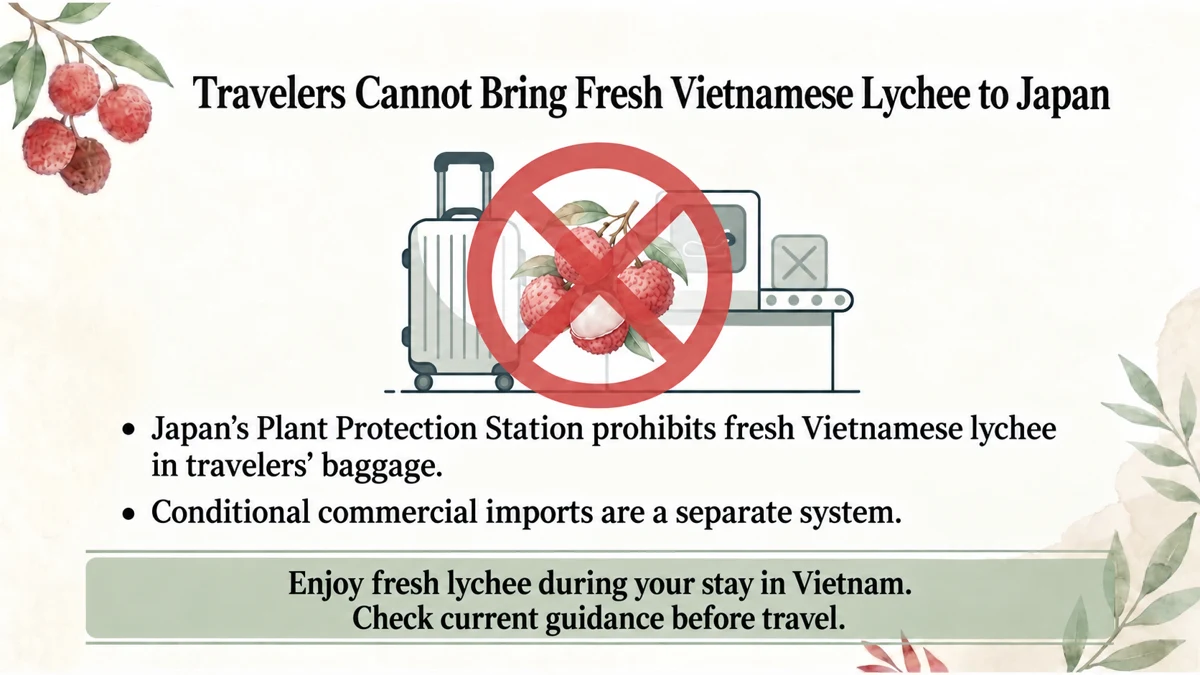
Requirements can change. Check the Plant Protection Station’s current guidance before travel.
The Author’s Purchase and Tasting Notes
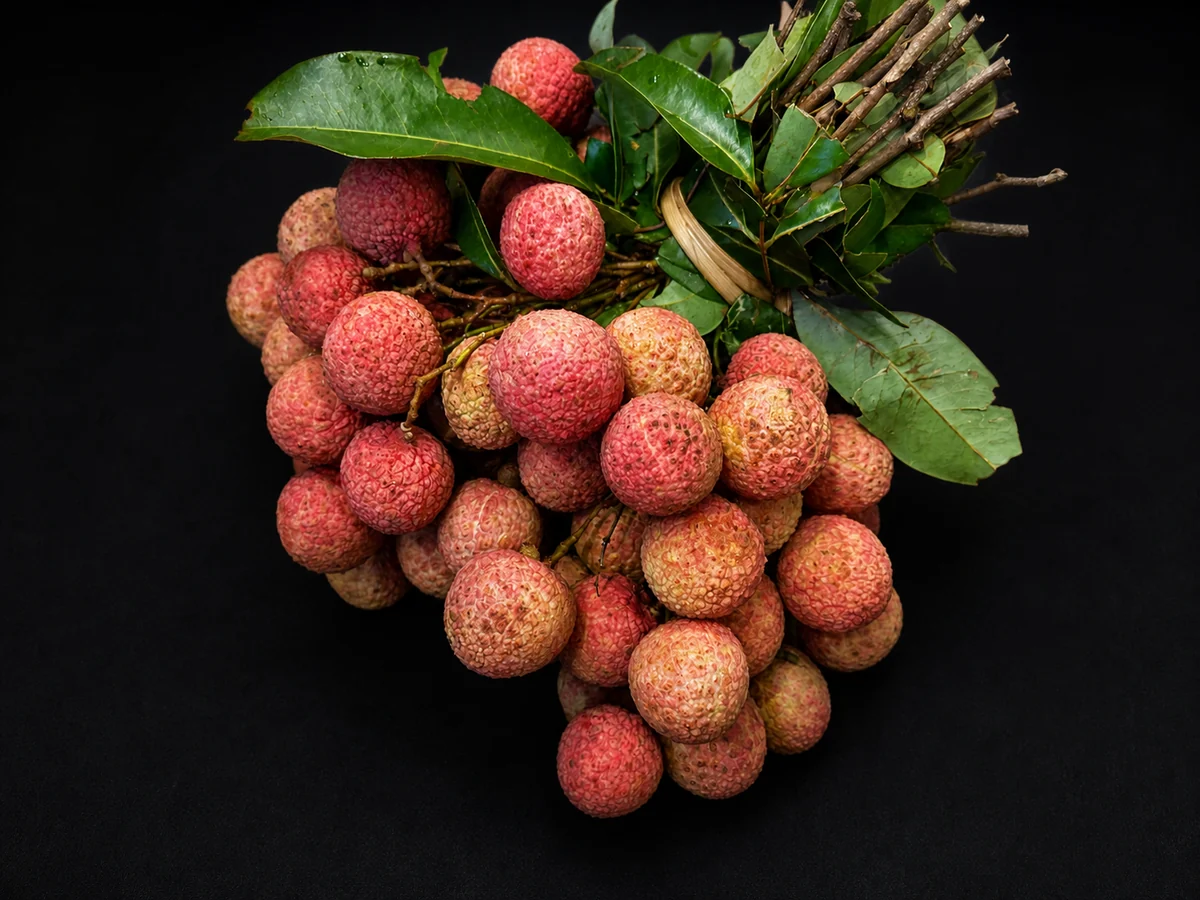
A cluster of lychees bought at an open-air market, still attached to leaves and branches.
Purchase record
Place: open-air market
Date: June 14, 2026
Price: 60,000 VND for 3 kg, approximately 20,000 VND/kg
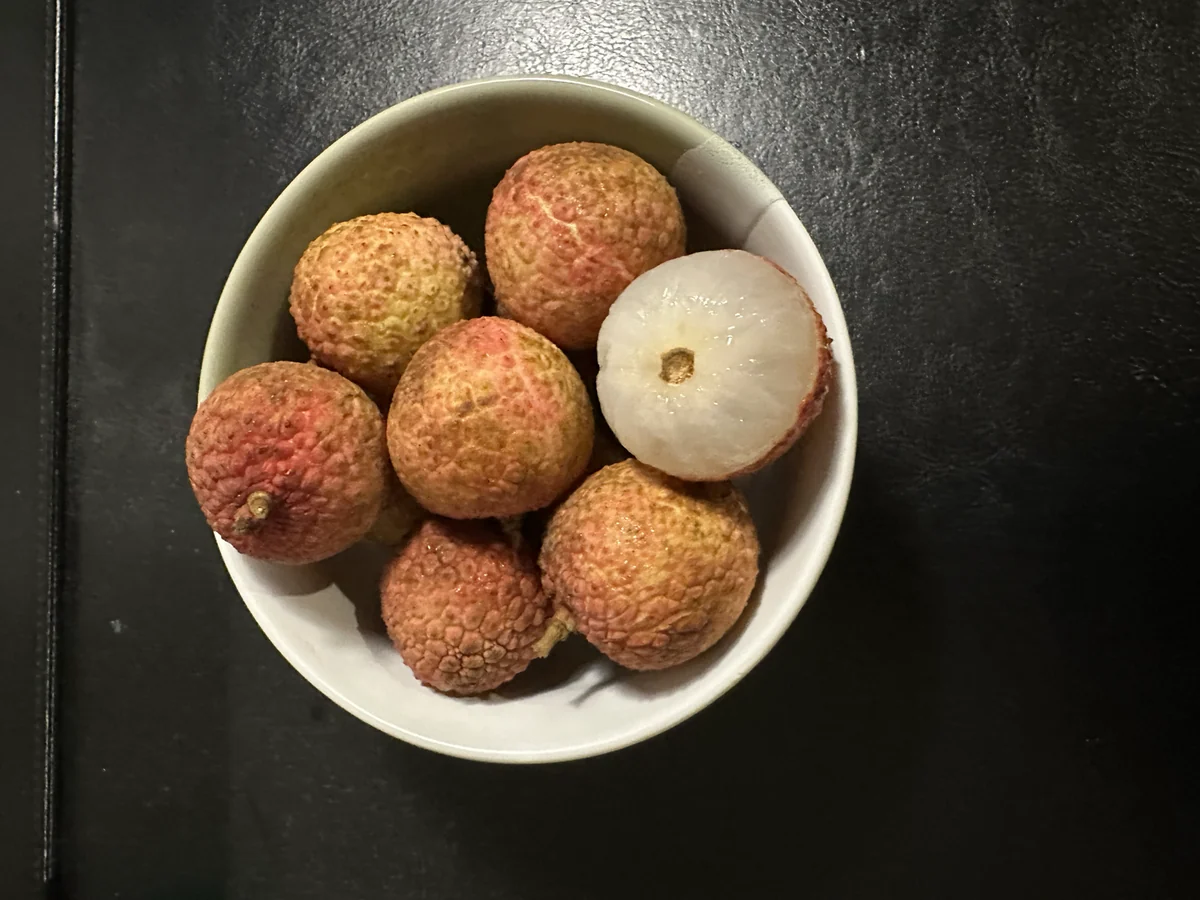
Sweet, springy lychees. The peeled fruit in front shows the translucent white aril.
Tasting notes
Rich sweetness with a little acidity and a springy bite. The author felt market supplies were relatively limited that year; this is a personal observation rather than a production statistic.
Beginner rating: ★★★★★
The author also encountered lychee juice at a hotel breakfast.
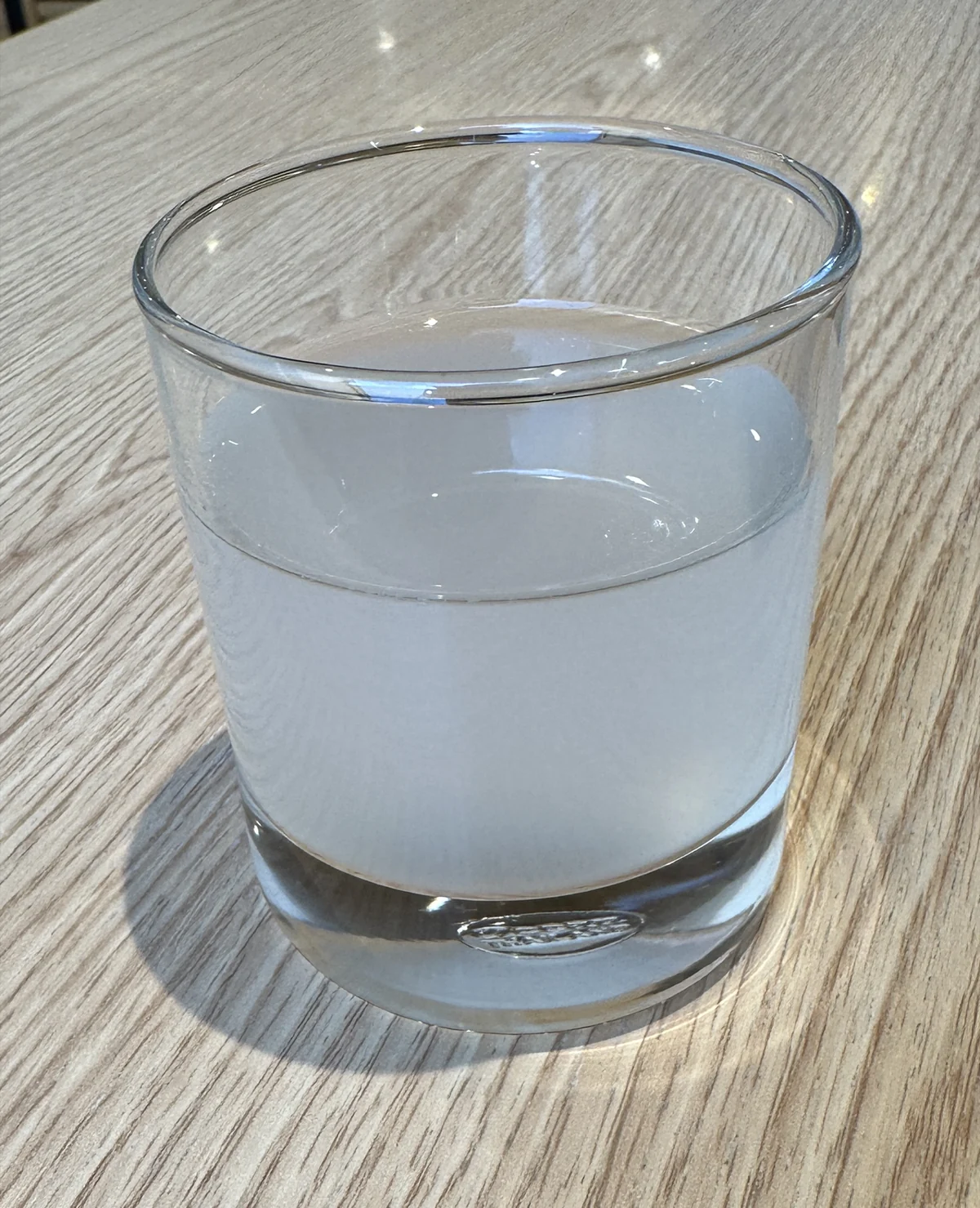
Lychee juice served at a hotel breakfast.
Frequently Asked Questions
Can I buy fresh lychee all year in Vietnam?
No. The fresh season is roughly May–July, and supply varies with the harvest. Frozen and canned products are separate options.
Can a seller peel it for me?
Some market and street sellers can help. Ask “Bóc giúp tôi nhé,” or confirm by pointing to peeled fruit or demonstrating the peeling motion.
Can I eat the seeds?
No. The hard seeds are not the usual edible part. Compounds associated with hypoglycemia have also been detected in the aril, so removing seeds alone does not address every consumption risk.
Can children eat lychee?
Serve an age-appropriate small portion with a normal meal. Avoid large amounts on an empty stomach and unripe fruit, particularly for undernourished children. Remove the seed and cut the aril into suitable pieces to reduce choking risk for young children.
Can I bring it back to Japan?
Fresh Vietnamese lychee is prohibited in travelers’ baggage under the checked Japanese guidance. Enjoy it during your stay and recheck requirements before traveling.
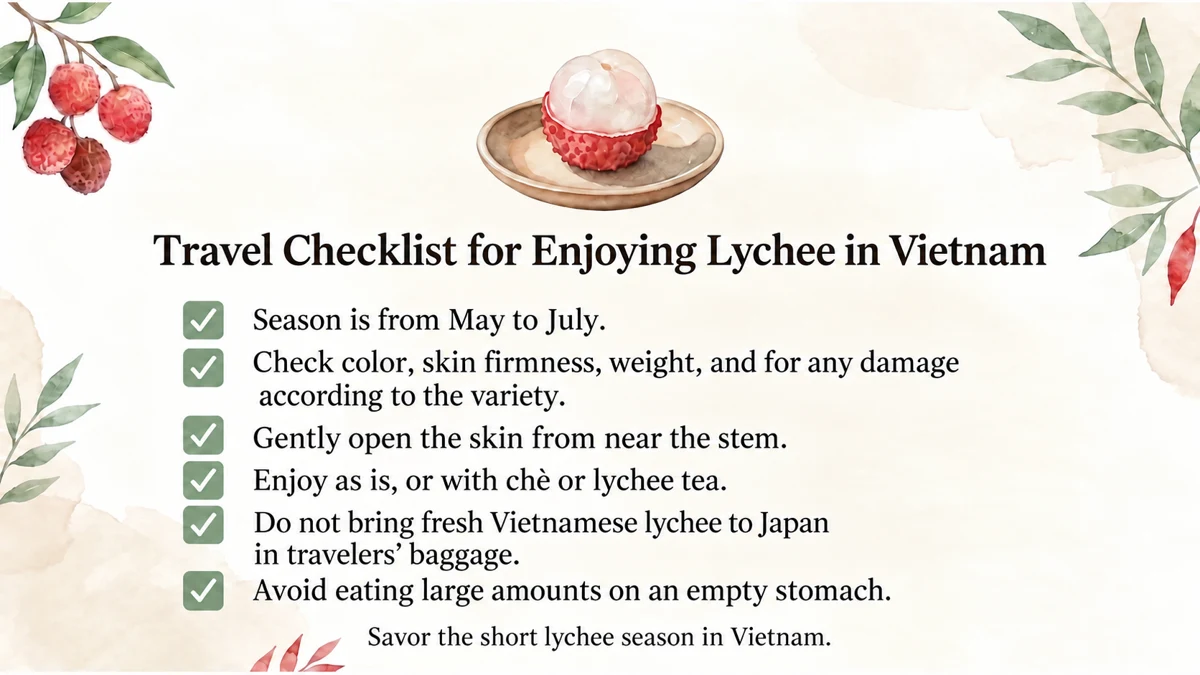
How to Enjoy Vietnamese Lychee: Key Points
Because lychee loses quality quickly, freshness at purchase and prompt eating matter.
- Choose cultivar-appropriate color, taut rind and substantial weight; avoid mold, leakage and off odors.
- Split the rind near the stalk, open it and remove the seed.
- Enjoy it fresh, in Chè vải hạt sen or in Trà vải.
- Refrigerate unwashed fruit in ventilated packaging and eat promptly; freeze peeled, deseeded arils for longer storage.
- Avoid large amounts on an empty stomach and do not eat seeds.
- Do not bring fresh Vietnamese lychee to Japan in travelers’ baggage.
When it is in season, choose a fresh cluster and enjoy it soon after peeling. The short season makes a good fresh purchase especially welcome.
Learn More About Lychee
- Taste, season, nutrients, cultivars and growing regions: Lychee Guide
- Origins, imperial anecdotes and global spread: Lychee History and Stories
- More fruit to enjoy in Vietnam: 15 Vietnamese Fruits
References
- chisou-media.jp — original source referenced by the Japanese manuscript
- comorich.com — original source referenced by the Japanese manuscript
- foodslink.jp — original source referenced by the Japanese manuscript
- www.kudamononavi.com — original source referenced by the Japanese manuscript
- danang.style — original source referenced by the Japanese manuscript
- vnexpress.net — original source referenced by the Japanese manuscript
- www.bachhoaxanh.com — original source referenced by the Japanese manuscript
- delishkitchen.tv — original source referenced by the Japanese manuscript
- Japan Plant Protection Station: Vietnam traveler guidance
- 2014 Muzaffarpur encephalopathy case-control study
- UC Davis: Lychee postharvest handling
- www.pubs.ext.vt.edu — original source referenced by the Japanese manuscript
- For the corresponding background sources, see Lychee Guide and Lychee History and Stories.
FAO: Lychee Production in China — cultivar names
FAO: Lychee origins and historical introductions
Vietnam Government: 2025 provincial administrative changes (in Vietnamese)
