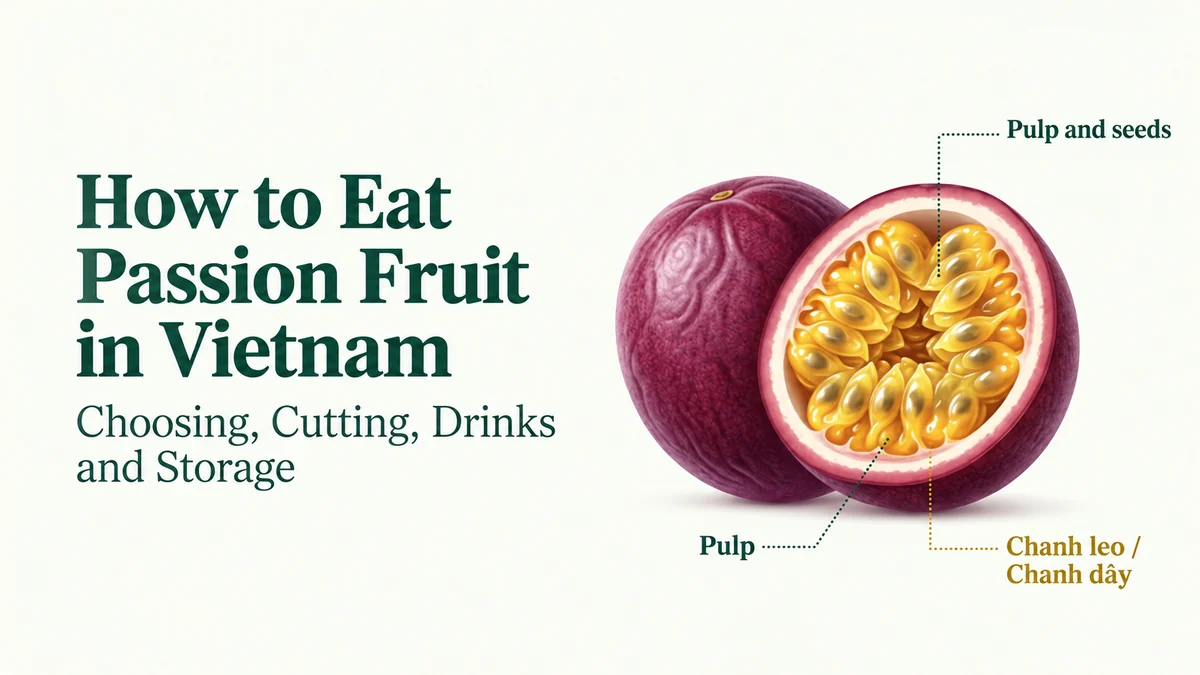
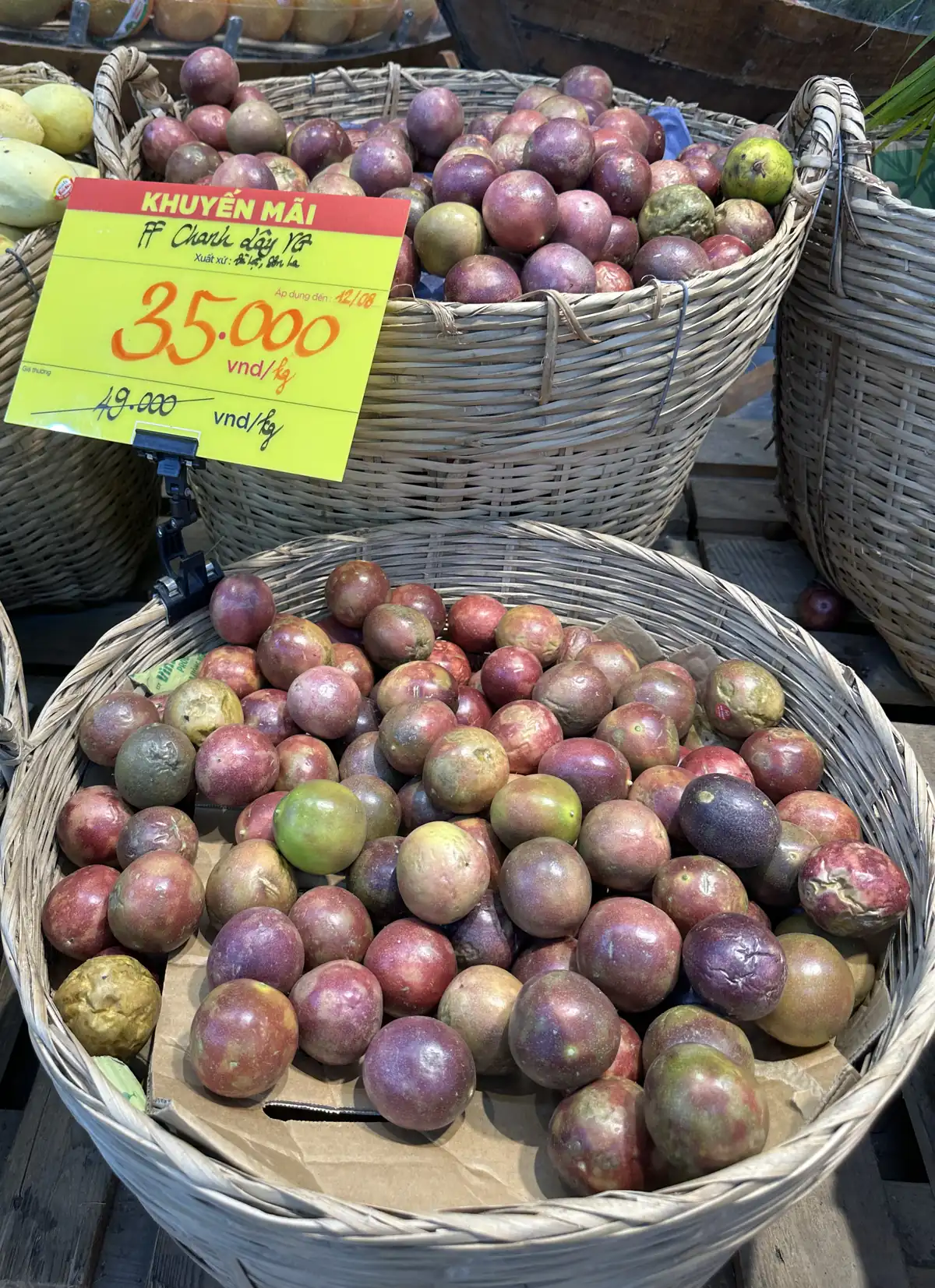
Vietnamese markets and supermarkets often sell purple-red or yellow fruits about the size of an egg. These are passion fruit. If you are unsure how to eat one, the basic method is simple: cut it in half and scoop out the middle with a spoon.
When choosing fruit, check color, weight, aroma and condition. A few wrinkles do not necessarily mean spoilage, but wrinkles alone cannot tell you sweetness or freshness. This guide follows the practical sequence of finding, pricing, choosing, cutting, eating and storing it.
Buying and Eating at a Glance
| Item | Details |
|---|---|
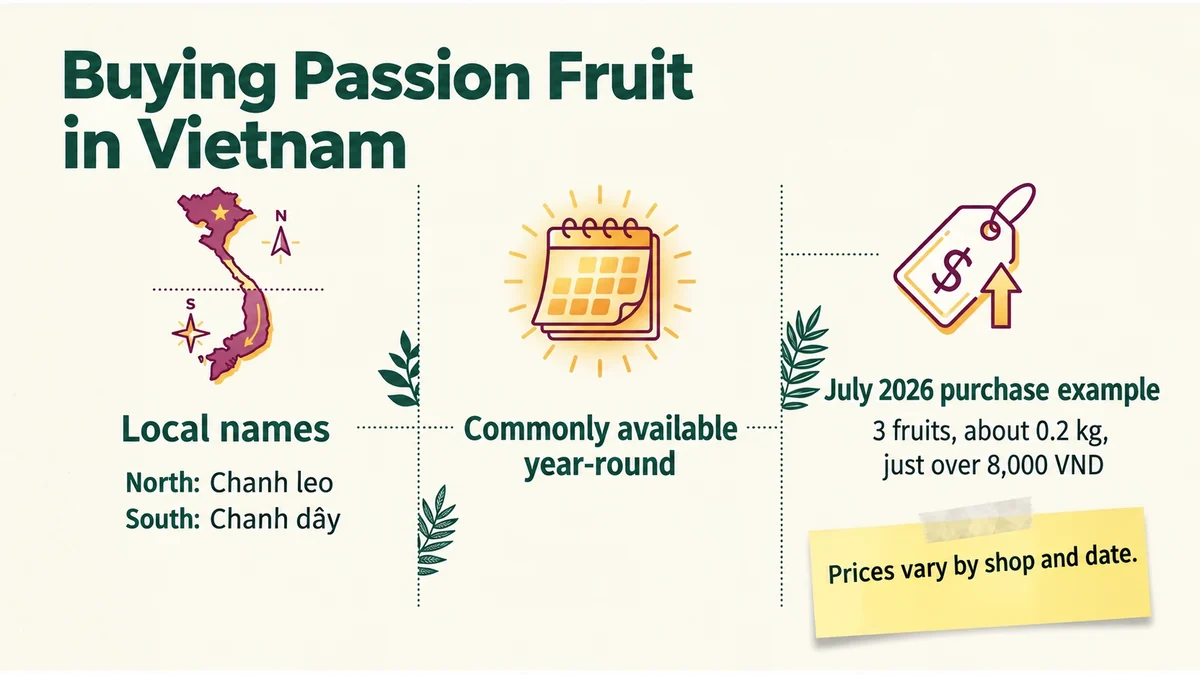
| Vietnamese names | Chanh leo in the north; Chanh dây in the south |
| Pronunciation guide | Approximately “chanh leh-oh” and “chanh zay”; pronunciation varies by region |
| Flavor | Strong acidity with a fragrant, fruity aroma; sweetness varies |
| Texture | Jelly-like pulp and crunchy seeds, eaten together |
| Availability | Commonly available year-round |
| A recorded price example | About 39,000 VND/kg in a July 2026 purchase record; three fruits, approximately 0.2 kg, cost just over 8,000 VND. This is a dated example, not a current price quote. |
| Where to buy | Markets, supermarkets, shops listed on delivery services, and cafés selling passion fruit drinks |
| Basic method | Cut in half and scoop out the pulp and seeds |
| Local drinks | Trà chanh dây, passion fruit tea; Nước ép or Sinh tố chanh dây, juice or smoothies |
| Author’s beginner rating | ★★★★☆ |
Vietnamese Names: Chanh leo and Chanh dây
In northern Vietnam, passion fruit is commonly called Chanh leo; in the south, Chanh dây. The author lives in Hanoi and frequently hears the northern name in local shops.
For regional names and the surprising religious origin of the English word “passion,” see Passion Fruit Guide. The companion Passion Fruit History and Stories explores its South American origins and the international attention given first to its flower and later to commercial fruit growing.
Taste and Texture: You Can Eat the Seeds
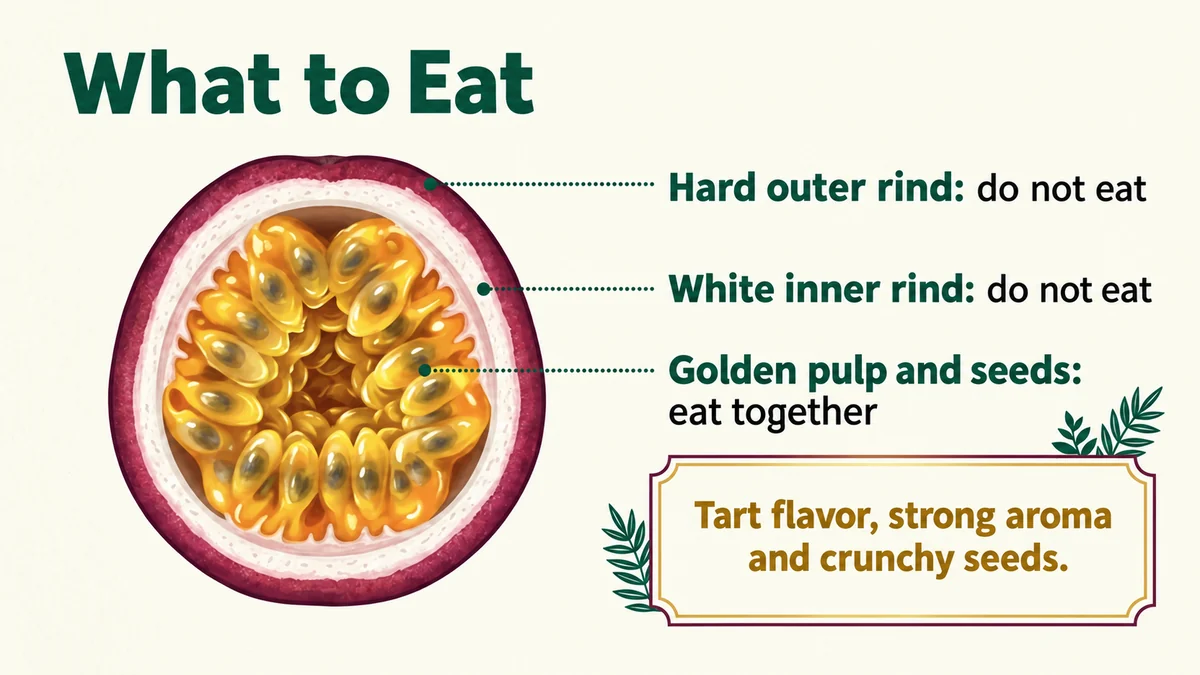
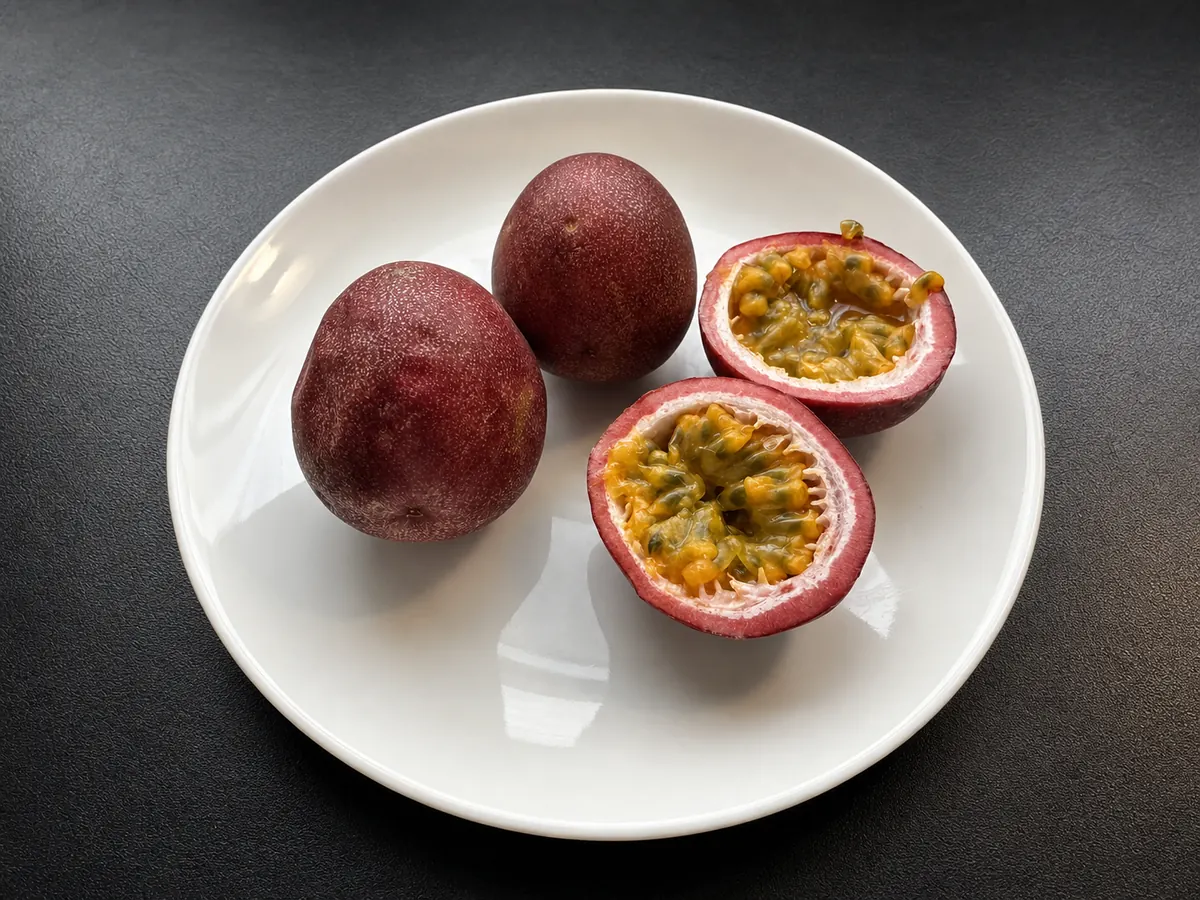
Passion fruit often tastes more tart than sweet. Its fragrant, jelly-like pulp contains many small, crunchy seeds. Ripe fruit pulp and seeds can be eaten together.
In the author’s tasting notes, its main qualities were strong acidity, concentrated aroma and crunchy seeds. The balance of sweetness and acidity depends on cultivar and condition; purple and yellow forms can taste different.
Prices and Places to Buy in Vietnam
The author’s July 2026 record lists about 39,000 VND/kg. Three small fruits, weighing approximately 0.2 kg, cost just over 8,000 VND. Prices vary by date, store, season and fruit quality, so use this as a past purchase example.
Markets and Supermarkets
These are convenient places to buy whole fruit. It is usually possible to buy a few pieces by weight.
Cafés and Juice Shops
You can also try passion fruit as Trà chanh dây or as juice. This is convenient when you want a cold drink without preparing the fruit yourself.
Choosing Passion Fruit and Judging Ripeness
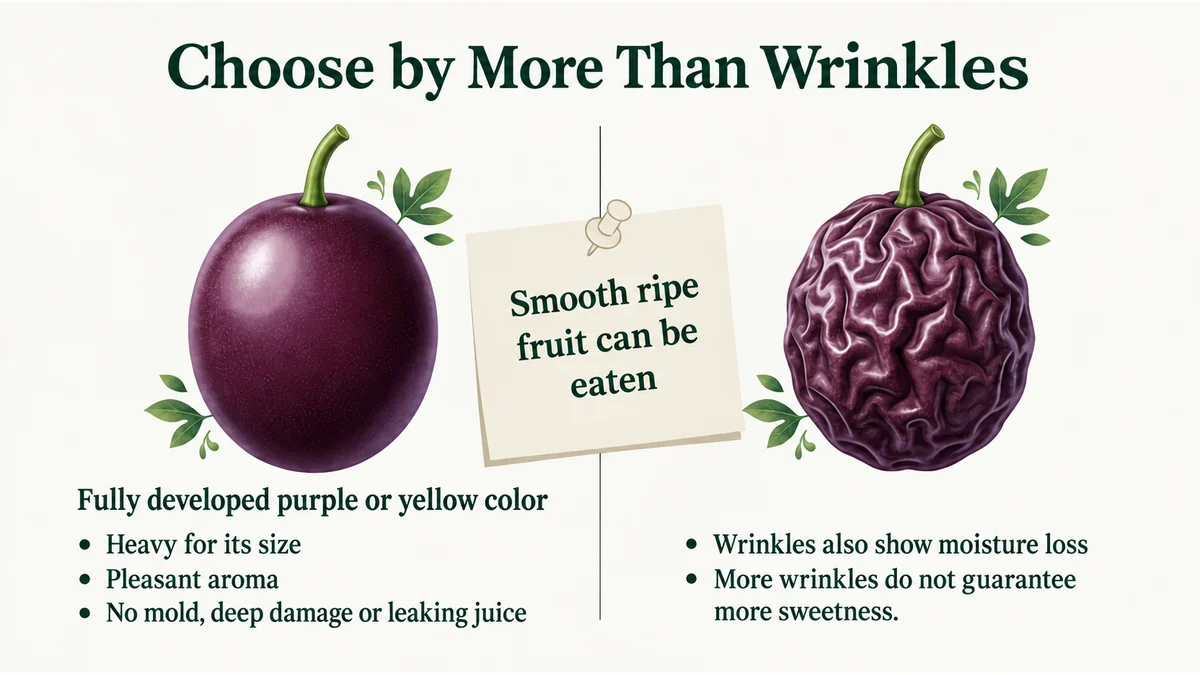
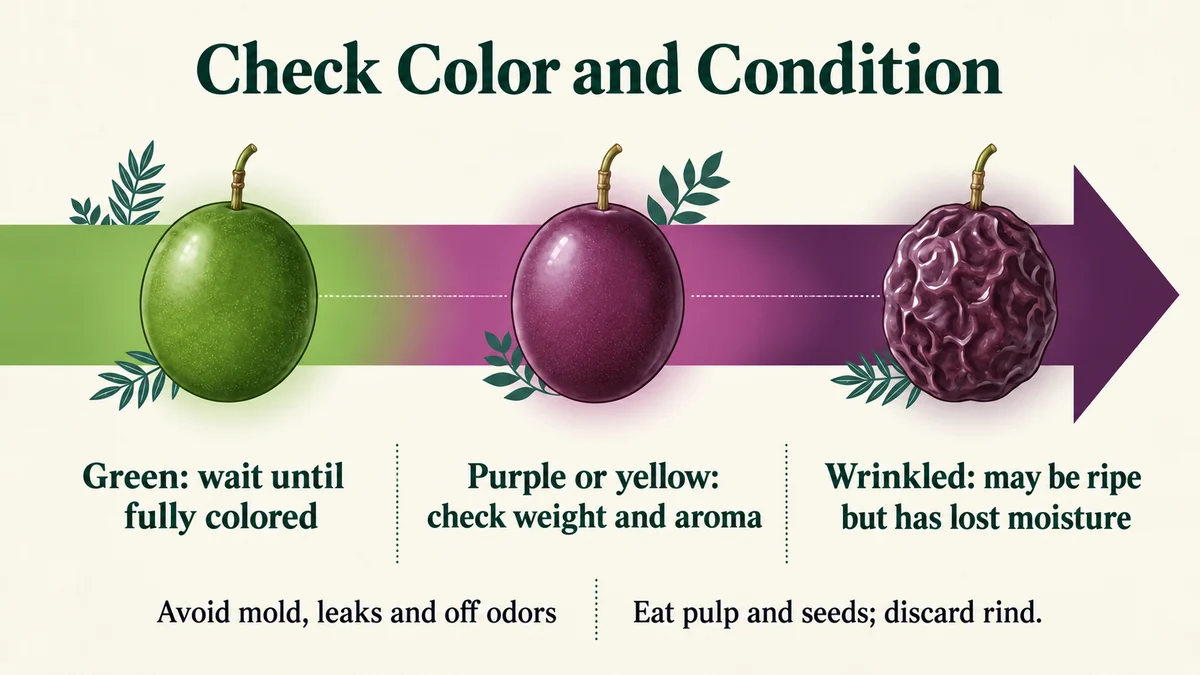
Choose fruit that has developed the purple or yellow color typical of its cultivar. Ripe fruit may become wrinkled as it loses moisture after harvest. A little wrinkling is not necessarily spoilage, but more wrinkles do not guarantee more sweetness or better quality.
Also look for these signs:
- Fully developed color appropriate to the cultivar
- Good weight for its size
- A pleasant fruity aroma, with no mold, deep damage or leaking juice
Fruit that is not fully colored can be left at room temperature and checked daily. Ripening time depends on its condition and the room temperature, so avoid treating a fixed number of days as a guarantee.
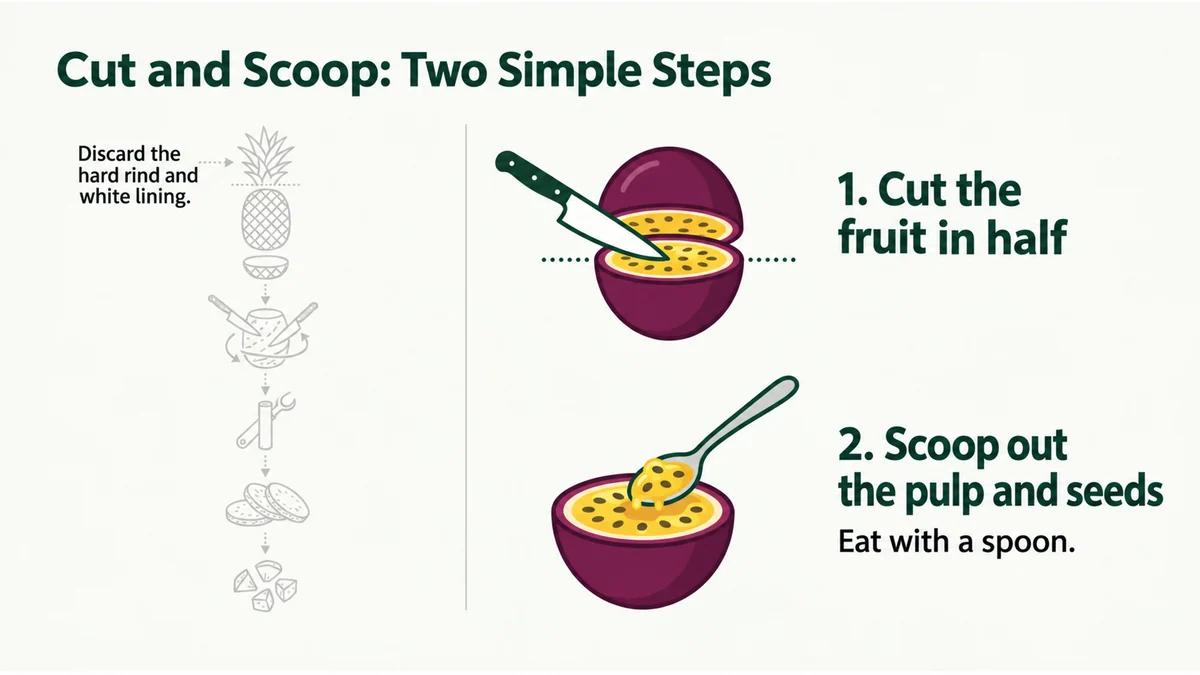
How to Cut It: Halve and Scoop
Pineapple requires more preparation, including removing the eyes; see How to Eat Pineapple. Passion fruit is much simpler.
- Place the washed fruit securely on a cutting board and cut it in half.
- Turn the halves cut-side up and scoop out the pulp, seeds and juice with a spoon.
- Eat the scooped pulp and seeds together.
Discard the hard outer rind and white inner lining. These are not the parts normally eaten fresh.
Four Ways to Eat or Drink It in Vietnam
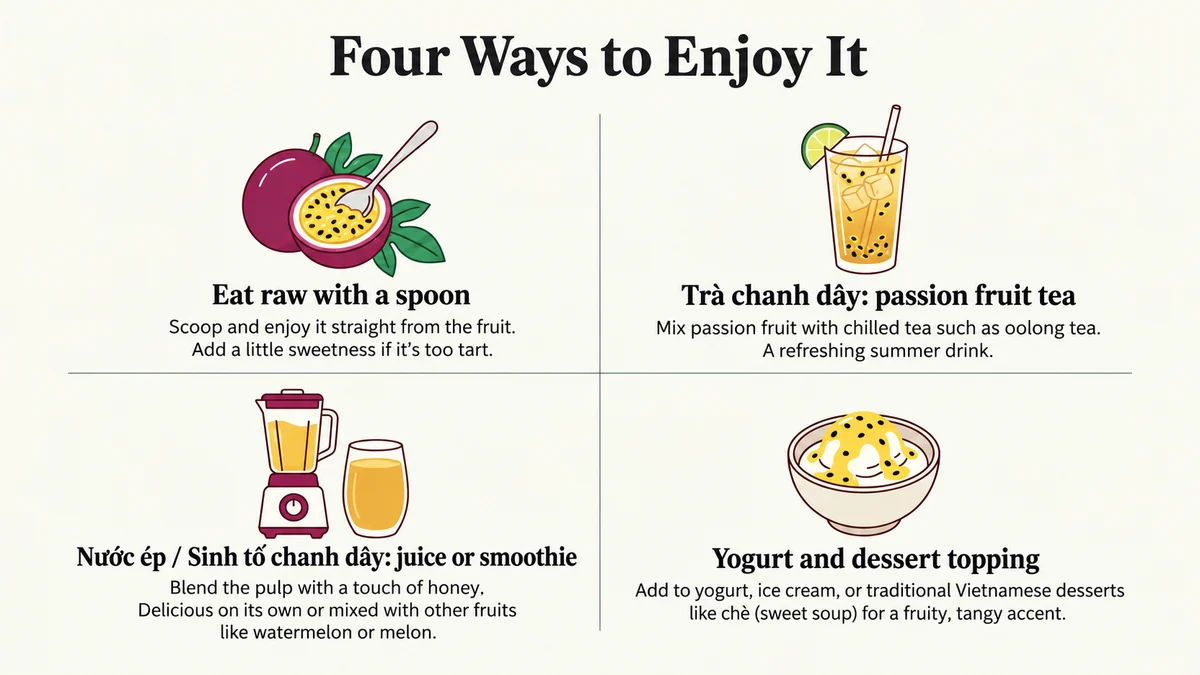
1. Eat It Fresh
Halve the fruit and eat the middle with a spoon. If the acidity feels too strong, a little sugar or condensed milk can soften the flavor.
2. Trà chanh dây: Passion Fruit Tea
A chilled drink combining passion fruit pulp and juice with tea, such as oolong. It is a familiar choice in cafés and street drink shops.
3. Nước ép or Sinh tố chanh dây: Juice and Smoothies
Strained juice can be sweetened to taste. Passion fruit also works in blended drinks with ingredients such as carrot, watermelon or other fruits.
4. Yogurt and Dessert Toppings
Spoon the tart pulp over yogurt or ice cream, or use it in a dessert sauce. It may also appear in variations of chè, a Vietnamese sweet dessert.
What to Avoid: Discard the Rind and Choose Fully Colored Fruit
Research has identified naturally occurring cyanogenic compounds in passion fruit tissues. Their presence alone does not establish the risk from a normal serving, and the study cited here does not justify a blanket claim about a dangerous dose in every unripe fruit.
For ordinary fresh eating, use fully colored, sound commercially sold fruit and eat the pulp and seeds. Discard the hard rind and white lining. Avoid green unripe fruit and fruit with mold, leaking juice or an off odor.
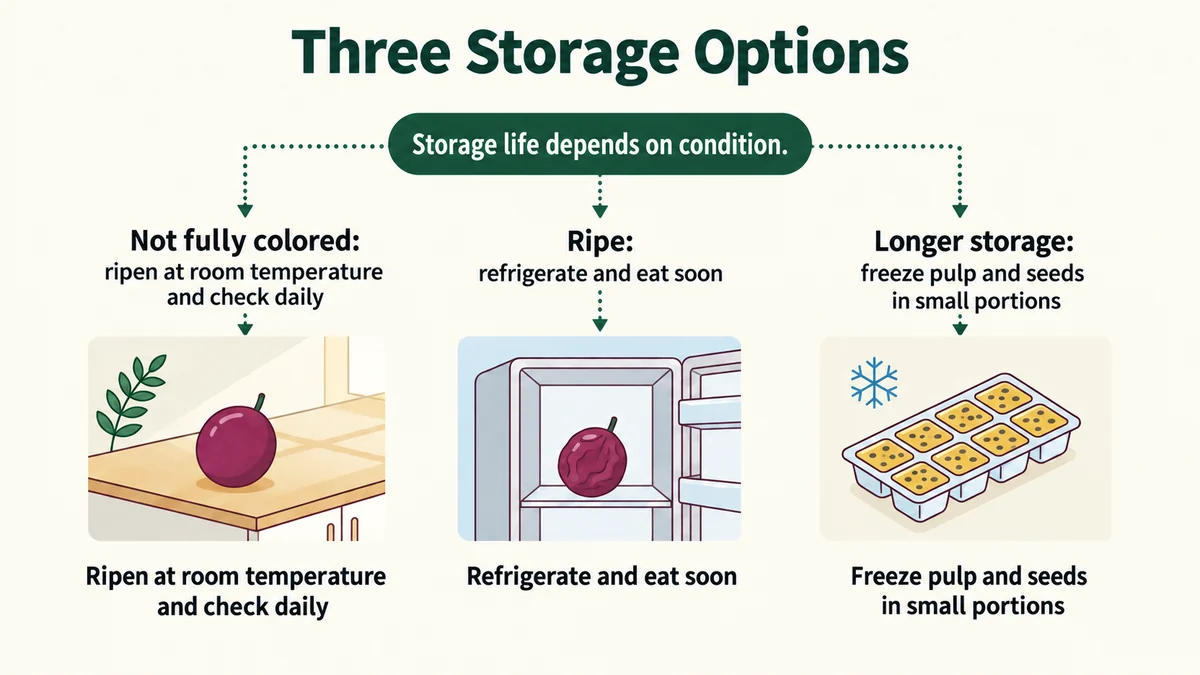
Storage: Room Temperature, Refrigerator or Freezer
- Not fully colored: leave at room temperature and check color, aroma and condition daily.
- Ripe fruit: refrigerate and eat soon. Storage life depends on its condition.
- For longer storage: scoop out the pulp and seeds and freeze small portions, for example in an ice cube tray, for drinks or desserts.
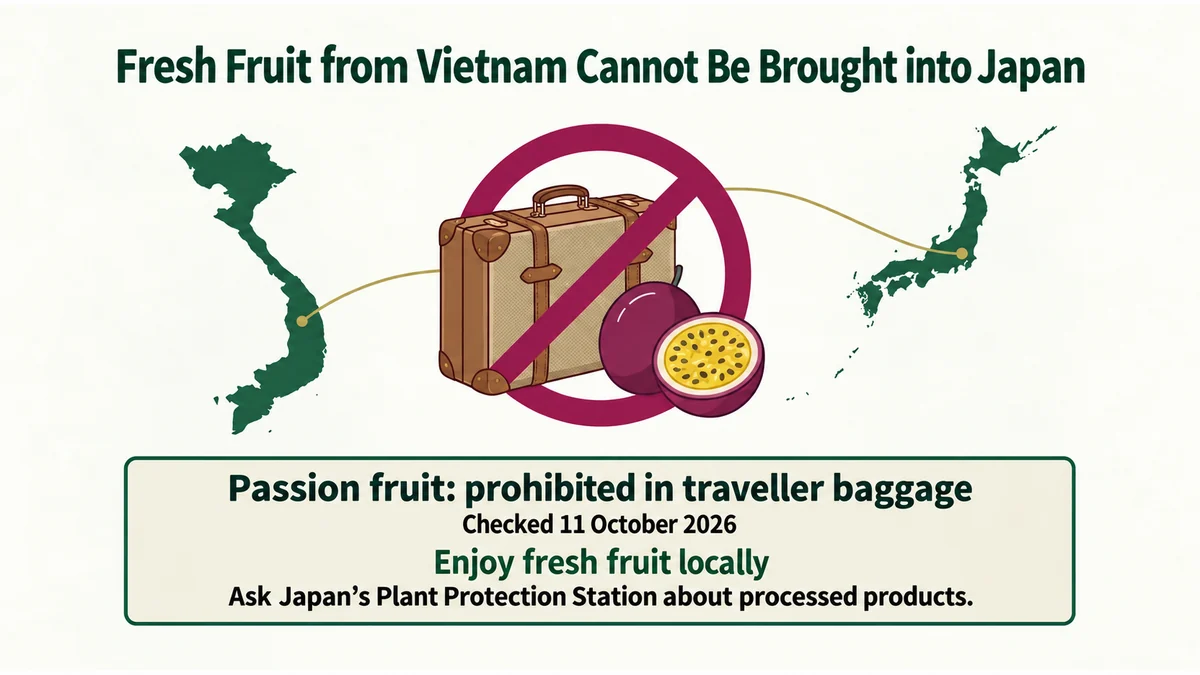
Can You Bring Fresh Passion Fruit into Japan?
Japan’s Plant Protection Station lists fresh passion fruit from Vietnam as not permitted in traveller baggage. Commercial cargo has a separate regulatory framework. A request for import access is not itself permission to bring fruit home.
The traveller rule was checked on 11 October 2026. For processed products, conditions depend on the ingredients and processing. Ask the Plant Protection Station about a specific product, or enjoy the fresh fruit while you are in Vietnam.
Quarantine conditions can change. Check the official rules again before travelling.
The Author’s Buying and Tasting Notes
Purchase record
Place: an open-air market in Hanoi
Date: July 2026
Price: just over 8,000 VND for three fruits, approximately 0.2 kg
Tasting notes
Crunchy seeds, strong acidity and a rich aroma.
Author’s beginner rating: ★★★★☆
Frequently Asked Questions
Can You Eat the Rind?
The rind is not normally eaten fresh. Eat the pulp, juice and seeds, and discard the hard outer rind and white lining.
Does Wrinkled Skin Mean It Has Gone Bad?
A few wrinkles can develop as ripe fruit loses moisture, so wrinkles alone do not establish spoilage. More wrinkles do not necessarily mean more sweetness. Check color, weight and aroma, and avoid mold, leaking juice and off odors.
Can You Eat the Seeds?
Yes. The crunchy seeds in ripe passion fruit can be eaten with the pulp. Discard the rind and white lining, and avoid green unripe fruit.
Can You Bring It Back to Japan?
Under the traveller rules checked on 11 October 2026, fresh passion fruit from Vietnam cannot be brought into Japan. Enjoy it locally.
Enjoying Passion Fruit in Vietnam
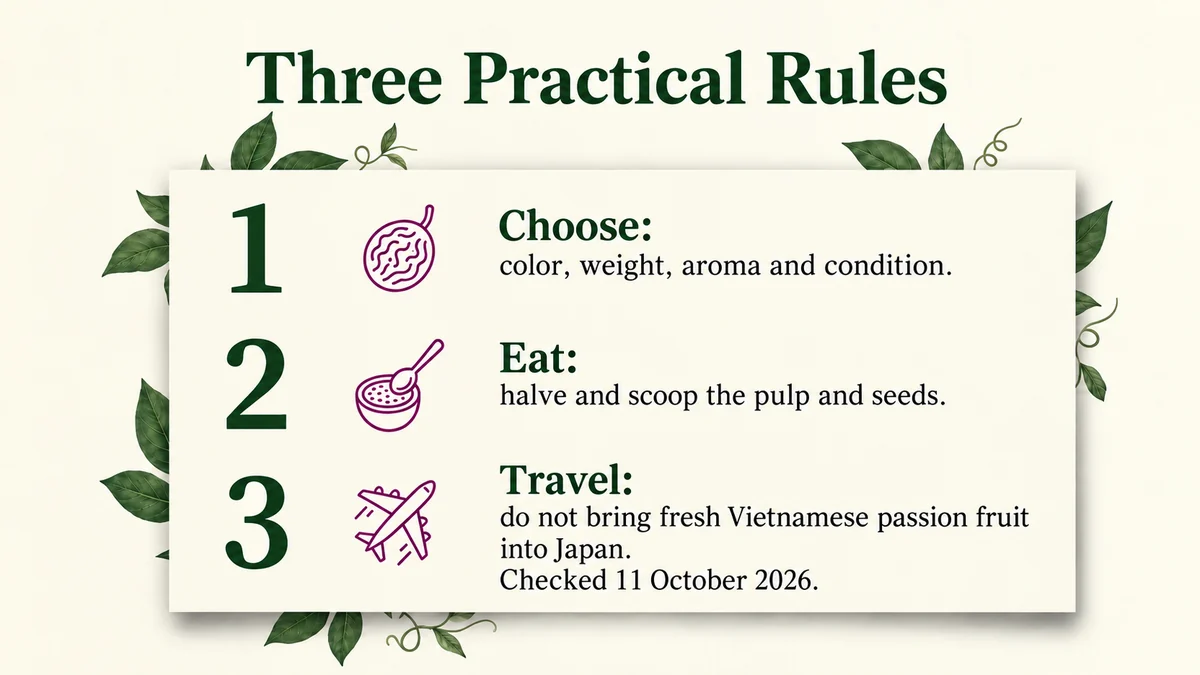
Passion fruit is one of the easiest fruits to prepare: cut it in half and scoop out the middle.
- Choose: fully developed color, good weight, a pleasant aroma and no mold or damage.
- Cut: halve the fruit and scoop with a spoon.
- Eat: fresh, in Trà chanh dây, as juice or a smoothie, or over yogurt.
- Avoid: the hard rind, white lining, green unripe fruit and spoiled fruit.
- Store: room temperature for fruit that is not fully colored, refrigeration for ripe fruit, and frozen pulp for longer storage.
- Travel: fresh Vietnamese passion fruit cannot be brought into Japan under the traveller rules checked on 11 October 2026.
At a market, choose a sound, fully colored fruit with good weight and aroma, then try the simple cut-and-scoop method. That ease is part of its appeal.
Learn More About Passion Fruit
For flowers, names, varieties and the fruit’s place in Vietnam, read Passion Fruit Guide. For the South American origins and the different histories of flower symbolism and commercial fruit growing, see Passion Fruit History and Stories.
References
- Tokubai News — Preparing and choosing passion fruit
- Foodslink — Choosing, storing and eating passion fruit
- Sweets Village — Ripeness and selection
- Mynavi Agriculture — Judging ripeness
- Kudamono Navi — Choosing passion fruit
- Journal of Agricultural and Food Chemistry — Identification and Quantification of Passion Fruit Cyanogenic Glycosides
- Passionflow — Passiflora Toxicity
- Dien May Xanh — Recipes for Trà chanh dây
- Nhà Hàng Hồng Hạnh — Passion fruit juice at home
- Japan Ministry of Agriculture — Vietnam’s requests for import access
- Japan Plant Protection Station — Traveller plant import conditions for Vietnam
- UC Davis Postharvest Research and Extension Center — Passion Fruit
Japan Plant Protection Station: Vietnam traveller restrictions — Reviewed 11 October 2026.
