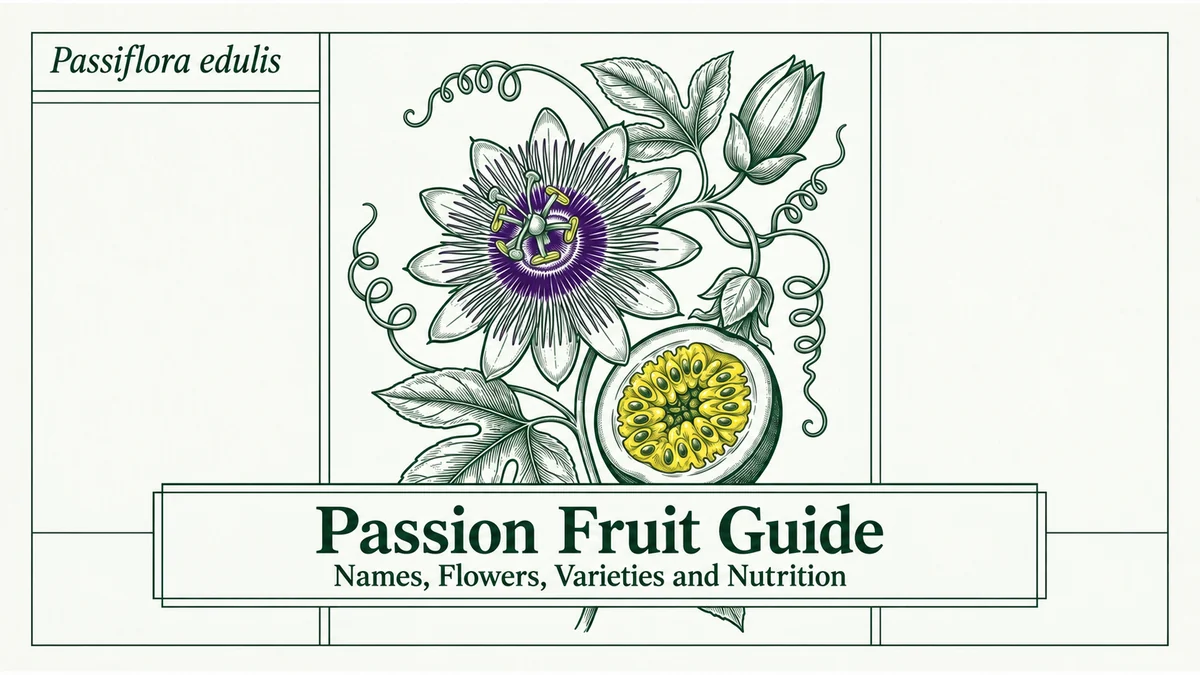
Passion fruit is familiar in tart juices and desserts. Yet its name, the way it grows and the differences between purple and yellow fruits still raise questions. What does “passion” mean? Does the fruit grow on a tree? And why do the two colors matter?
The name refers to the Passion of Christ, through a religious interpretation of the flower. The plant is a perennial climbing vine, with stems that can become woody. This guide explores its names, growth and varieties, alongside observations from everyday life in Vietnam.
Passion Fruit at a Glance
| Item | Details |
|---|---|
| Common names | Passion fruit; in Japanese, kudamono-tokeisō, or edible clock flower |
| Vietnamese names | Northern Vietnam: Chanh leo; southern Vietnam: Chanh dây |
| Scientific name | Passiflora edulis |
| Plant family and growth | Passifloraceae; a perennial climbing vine whose stems can become woody |
| Native range | South America: Brazil, Paraguay and northeastern Argentina |
| Growing conditions | Tropical to subtropical conditions, sunlight, good drainage and a trellis or fence |
| Season in Japan | Generally June–September; domestic production includes Kagoshima and Okinawa |
| Availability in Vietnam | A familiar market and supermarket fruit, commonly seen year-round by the author; the Central Highlands are an important growing region |
| Nutrients | Vitamin C, potassium, beta-carotene and dietary fiber, depending on the edible portion measured |
Sources are listed at the end of the article.
Why Is It Called Passion Fruit?
The “passion” in passion fruit refers to Christ’s suffering and crucifixion. Christian observers interpreted the unusual flower as a representation of that story, giving rise to the name “passion flower” and, later, “passion fruit.”
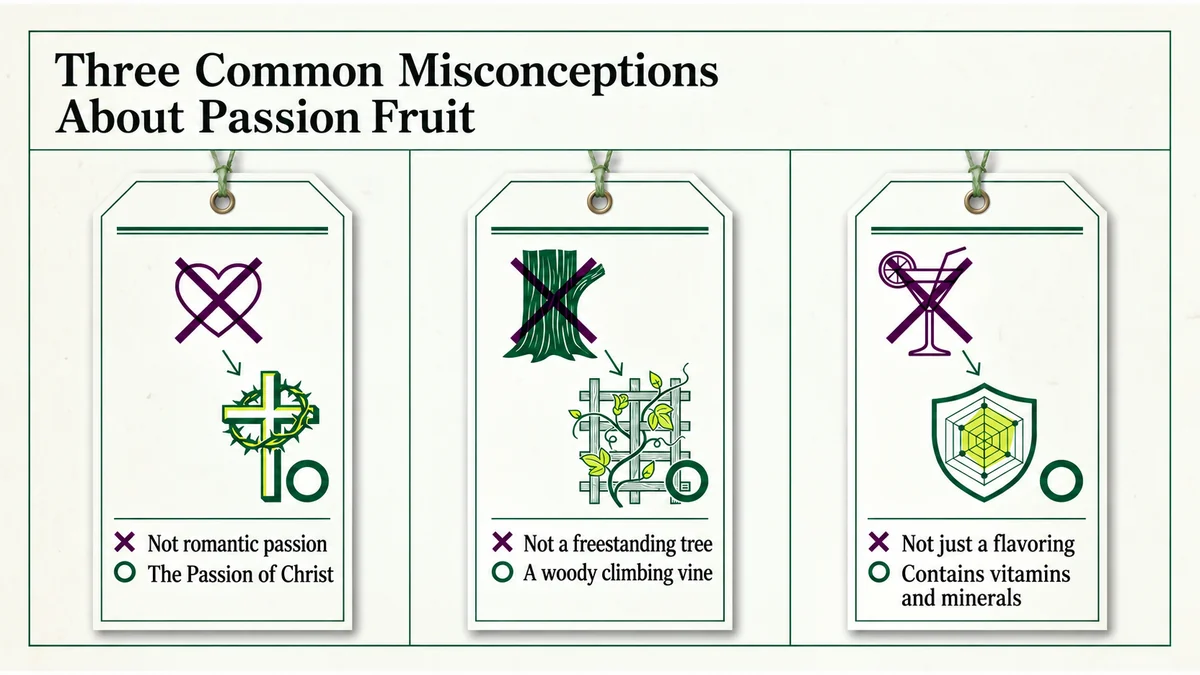
A Perennial Climber with Woody Stems
Passion fruit belongs to the passion flower family and grows as a perennial climbing vine. It attaches to supports with tendrils rather than standing upright as a freestanding tree. Its stems can become woody. In gardens and farms, a fence or trellis supports its spreading growth.
Religious Symbolism in the Flower
Christian writers and missionaries associated passion flowers with the crucifixion during the early colonial period. Historical accounts differ over the exact people and dates involved. The companion Passion Fruit History and Stories explores how the flower’s religious meaning became part of its international story.
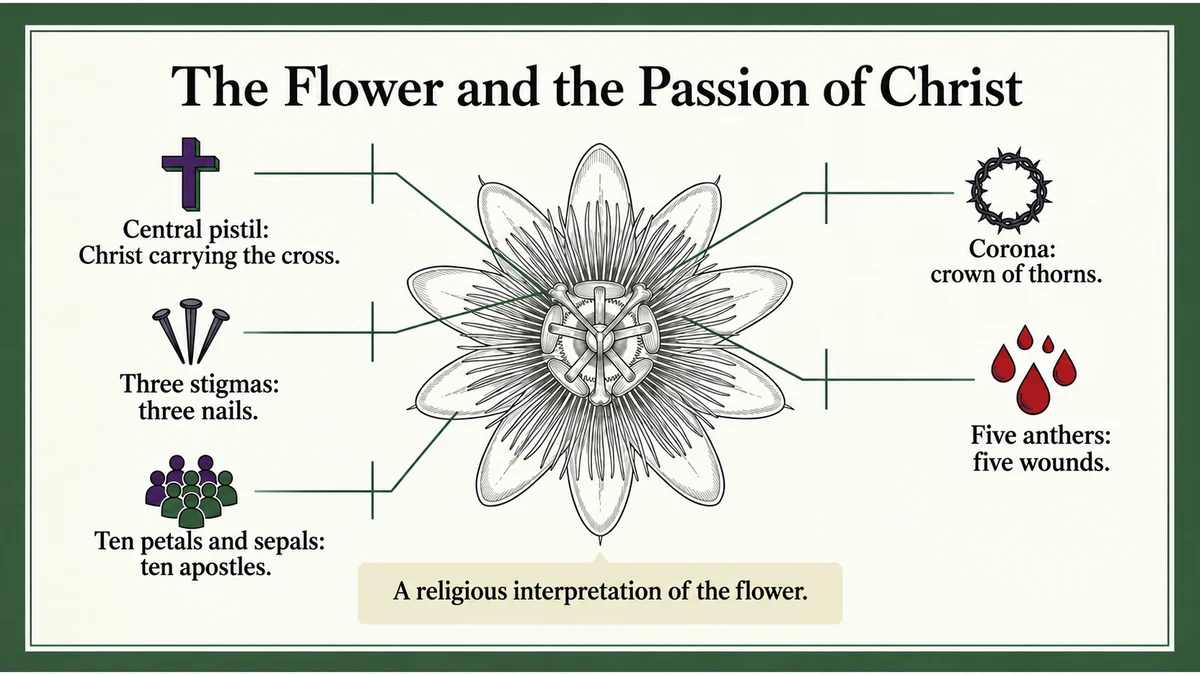
Commonly described symbolic associations include:
- The central pistil: Christ carrying the cross, in some interpretations
- The corona, the ring of threadlike filaments: the crown of thorns
- Five anthers: Christ’s five wounds
- Three stigmas: the three nails of the crucifixion
- Ten petals and sepals: ten apostles, excluding Judas and Peter in this interpretation
Details vary among accounts. These associations describe a religious interpretation of the flower. They do not explain its biological function. Japanese accounts also connect the flower with ideas such as faith and sacred love.
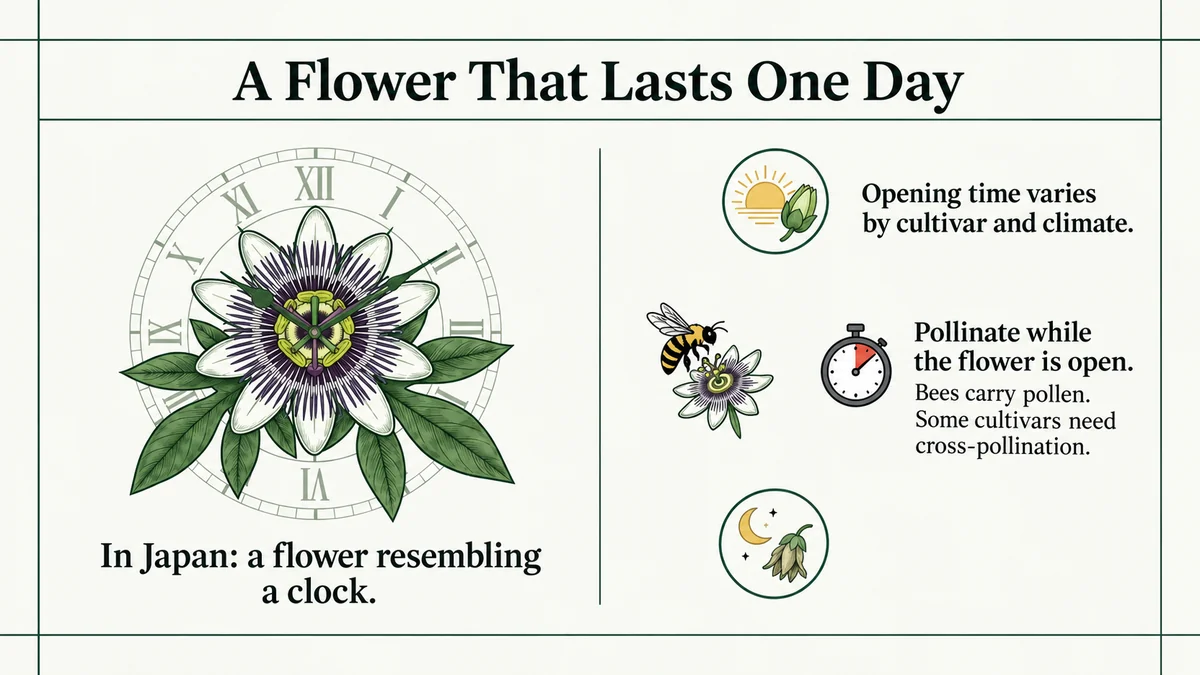
In Japan, the flower suggested a different object: a clock face. That resemblance gave it the name tokeisō, or “clock flower.” The edible species is called kudamono-tokeisō. One flower thus inspired both a religious image and an everyday mechanical one.
A One-Day Flower and the Work of Pollination
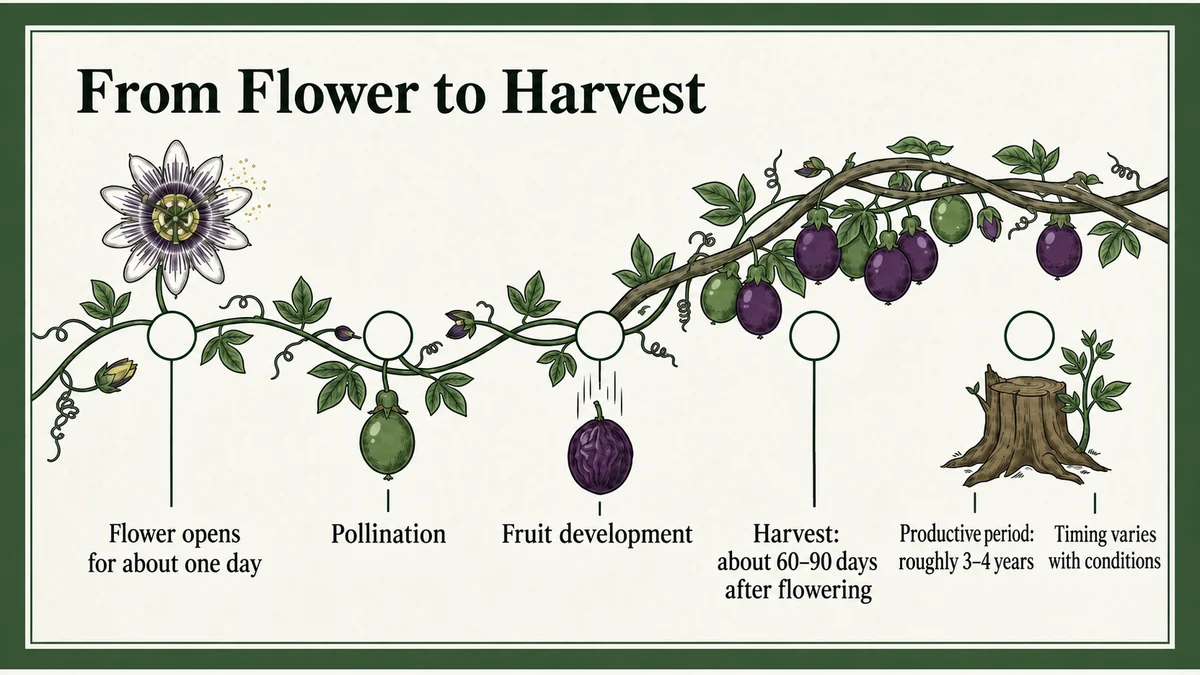
An individual passion fruit flower generally lasts about one day. Opening time varies with cultivar and growing conditions, so hand pollination must be timed while the flower is open.
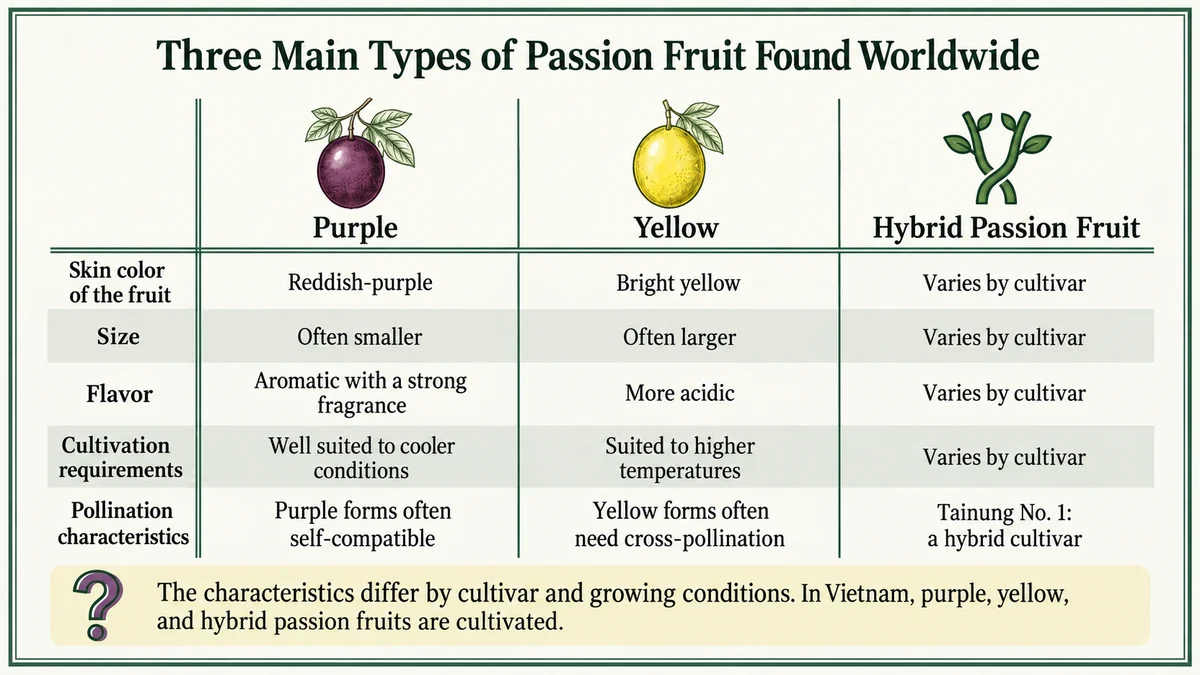
Pollination behavior also varies. Many purple cultivars are self-compatible, while yellow forms often need pollen from a genetically different plant. Hybrids vary. Carpenter bees are important pollinators; hand pollination may help where suitable visiting insects are scarce.
From Flowering to Harvest
Fruit development from flowering and pollination to harvest commonly takes about 60–90 days, depending on cultivar and temperature. Mature fruit develops its characteristic purple or yellow color, and some fruit falls naturally when ripe.
A productive period of roughly three to four years is a useful general guide. Plants may live longer, but diseases and growing conditions influence how often a commercial planting is renewed.
Purple, Yellow and Hybrid Passion Fruit
Passion fruit is commonly discussed in three groups: purple forms, yellow forms and hybrid cultivars combining their traits.
| Group | Botanical name | Characteristics |
|---|---|---|
| Purple forms | Passiflora edulis | Purple-red rind; often smaller, aromatic and less sharply acidic than yellow forms. Suitability depends on climate and disease pressure. |
| Yellow forms | Passiflora edulis; traditionally described as f. flavicarpa | Bright yellow rind; often larger and more acidic. Frequently grown in warm tropical conditions. |
| Hybrids | — | Cultivars selected from purple–yellow crosses to combine desirable eating and growing traits. Characteristics vary by cultivar. |
Purple forms are familiar in Japan. Vietnam also grows purple, yellow and hybrid fruit. A commonly discussed cultivar is Tainung No. 1, introduced from Taiwan. Propagation methods differ by growing region, with grafting used in Vietnamese production.
Passion Fruit in Vietnam: Names, Growing Regions and Exports
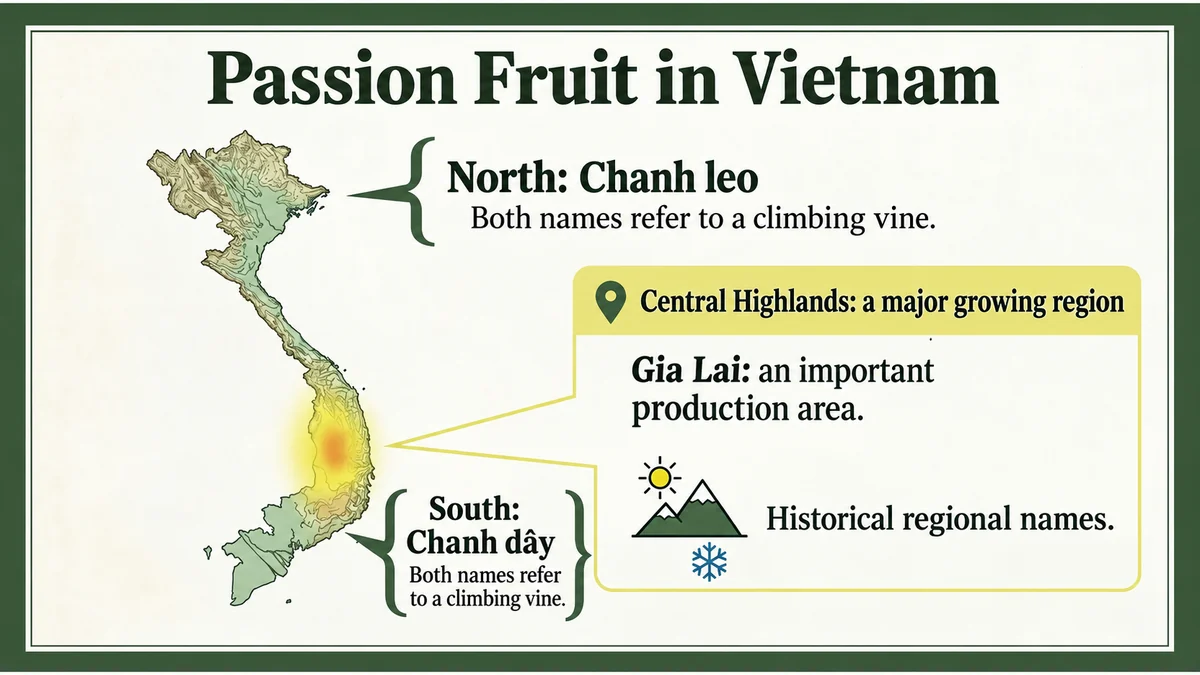
Vietnamese names vary by region. In the north it is commonly Chanh leo; in the south, Chanh dây. Living in Hanoi, the author regularly hears the northern name in shops and markets.
Chanh usually means lemon or lime, suggesting the fruit’s acidity. Dây refers to a vine or string, while leo means to climb. Both names evoke its climbing habit. Regional naming also occurs with pineapple, whose Vietnamese names include dứa, khóm and thơm.
The Central Highlands, or Tây Nguyên, are an important growing region. Historical reports cited in the sources described national cultivation of about 12,600 hectares and production of about 178,500 tonnes, with a large share concentrated in this region. These are dated figures, rather than a current census; provincial names in those reports reflect the administrative geography at the time.
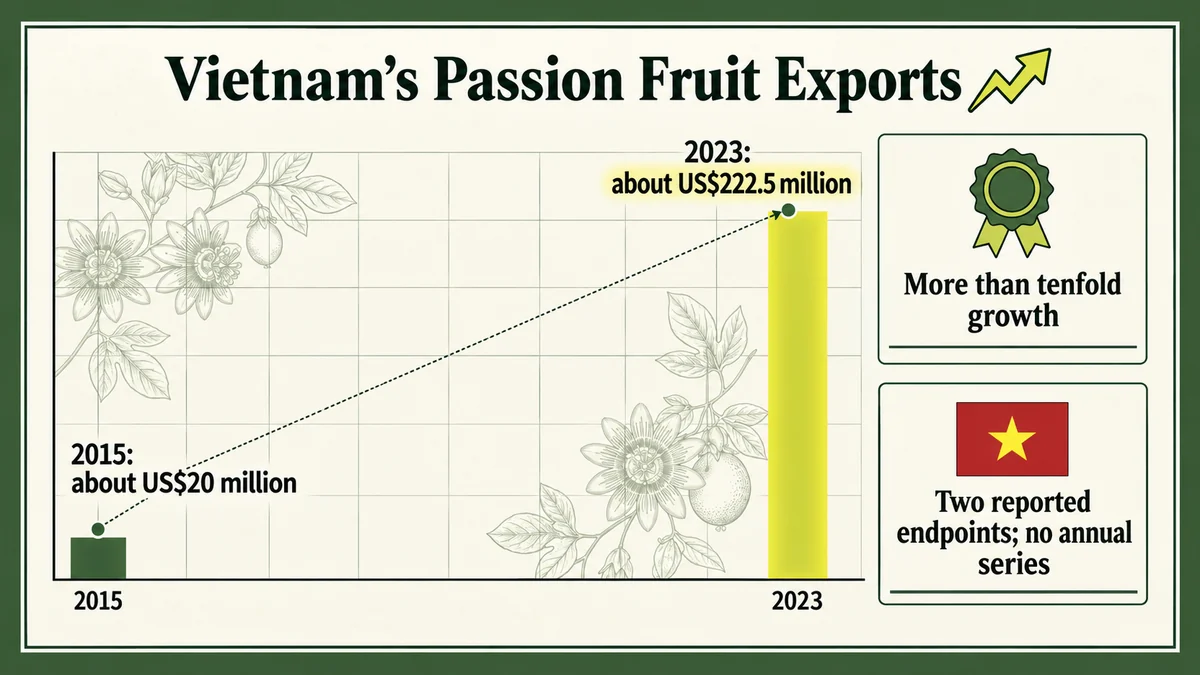
Reported export values rose from about US$20 million in 2015 to about US$222.5 million in 2023. Those two dated figures illustrate strong growth. They do not provide a complete annual series. Sources also describe formal export access to China beginning in July 2022.
Can Travellers Bring It into Japan?
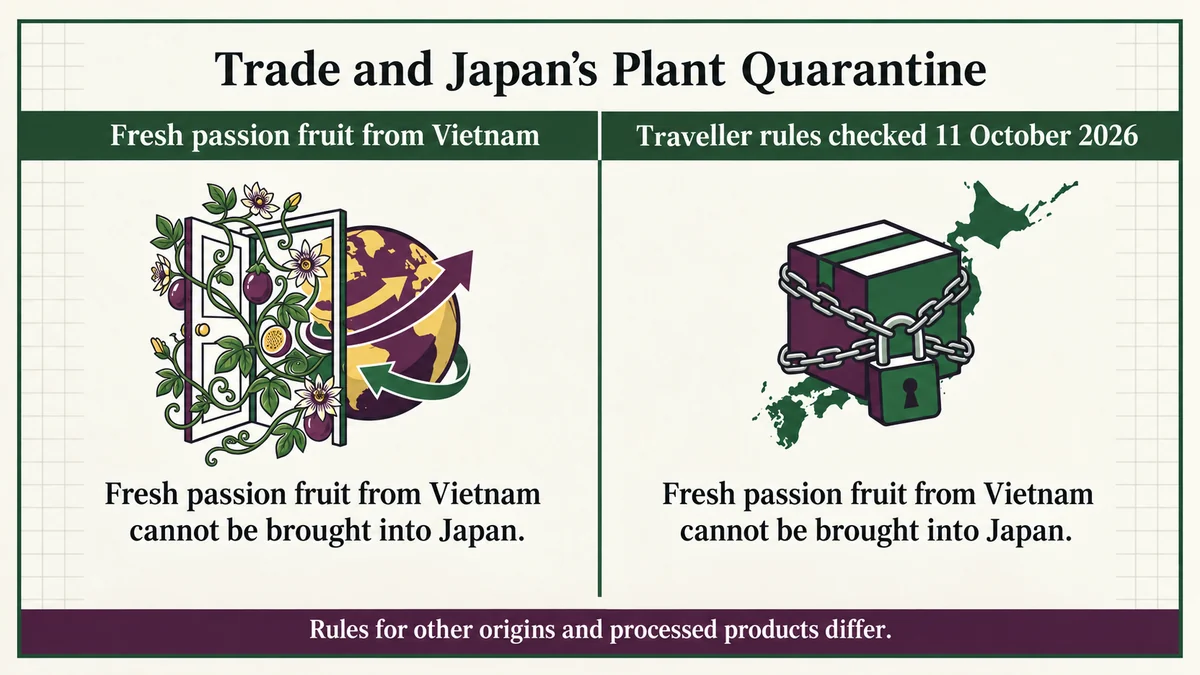
Japan’s Plant Protection Station lists fresh passion fruit from Vietnam as not permitted in traveller baggage, checked on 11 October 2026. This does not mean passion fruit is unavailable in Japan: domestic fruit and fruit from other origins are subject to different conditions. Rules for commercial cargo and processed products must be checked separately.
For the fruit’s wider history, including the search for traditional tales, see Passion Fruit History and Stories.
Nutrition: Raw Juice per 100 g
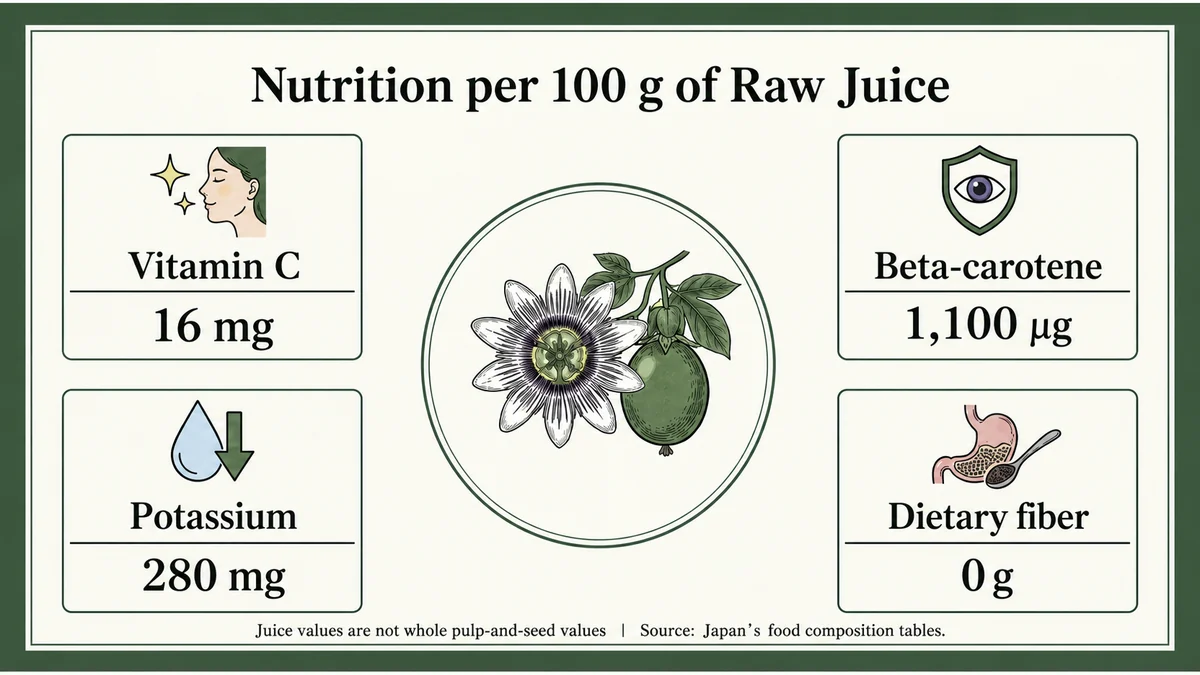
Japan’s food composition tables list the following values for 100 g of raw passion fruit juice:
- Vitamin C: 16 mg
- Potassium: 280 mg
- Beta-carotene: 1,100 μg
- Dietary fiber: 0 g in this juice entry; values for whole pulp and seeds are a different measurement
Passion fruit’s strong fragrance makes it a familiar flavor in drinks and sweets. Its nutrient values need to be read with attention to the portion tested: strained juice and pulp with seeds are not interchangeable.
Exploring Passion Fruit Further
A few useful points to take with you:
- The name refers to the Passion of Christ, through a religious interpretation of the flower. Its Japanese name refers to a clock face.
- The plant is a perennial climbing vine with stems that can become woody. Individual flowers last about one day; pollination behavior varies by cultivar.
- Purple, yellow and hybrid cultivars differ in flavor and growing characteristics. Tainung No. 1 is one cultivar associated with Vietnamese production.
- Chanh leo and Chanh dây are regional Vietnamese names. The Central Highlands play a major role in cultivation, and dated export figures show substantial growth.
- Raw juice contains vitamin C, potassium and beta-carotene. Fresh passion fruit from Vietnam cannot be brought into Japan in traveller baggage under the traveller rules checked on 11 October 2026.
For practical buying and eating advice, see How to Eat Passion Fruit in Vietnam. For its contrasting journey alongside pineapple, read Passion Fruit History and Stories. The broader Vietnam Fruit Guide: 15 Fruits introduces other fruits you may encounter in Vietnam.
References
- Wikipedia — Passion fruit
- GetNews — Why “passion” in passion fruit refers to the flower’s religious symbolism
- Kudamono Navi — Passion fruit and its Japanese names
- GreenSnap — Passion flower symbolism and characteristics
- Kikuchi’s Garden Observations — Growing, flowering, pollination and harvest
- Blooming Scape — Growing passion fruit
- Fruit Tree — Vine lifespan and replacement in container cultivation
- Sanchoku Prime — Passion fruit cultivars and their characteristics
- Note — Passion fruit cultivar comparison
- Citriena — A passion fruit workshop in Vietnam
- VIETJO — Passion fruit / Chanh dây
- Wiktionary — Chanh leo
- FreshPlaza — Vietnam’s passion fruit supply, quality and market diversification
- Vetter — Vietnam’s passion fruit exports
- Produce Report — China’s phytosanitary requirements for fresh Vietnamese passion fruit
- Japan Ministry of Agriculture — Vietnam’s requests for import access
- Japan Ministry of Education — Food composition tables: raw passion fruit juice
- Royal Botanic Gardens, Kew — Passiflora edulis Sims
- University of Florida IFAS Extension — The Passion Fruit in Florida
- Foodslink — Passion fruit nutrition
- Chisou — Nutrients in passion fruit, rind and seeds
Japan Plant Protection Station: Vietnam traveller restrictions — Reviewed 11 October 2026.
