Pineapples are familiar sights in supermarkets and markets. Yet a few simple questions can be surprisingly hard to answer: do they grow on trees or on the ground, and how many fruits grow on one flower stalk?
Pineapple is a perennial herb rather than a tree, and each flower stalk normally bears one fruit. This guide explains its growth, season, nutrition, varieties and lack of postharvest sweetening. From my home in Vietnam, I also share the names and market scenes I encounter locally.
What you will learn: how the fruit develops, Japan’s harvest season, nutrients per 100 g of raw edible flesh, major cultivar groups, Vietnamese names and producing countries.
Pineapple at a glance
| Item | Details |
|---|---|
| Names | Pineapple; fènglí in Taiwan and bōluó in mainland China |
| Vietnamese names | Dứa is common in northern Vietnam; thơm and khóm are also used, especially in the south. Usage varies locally. |
| Scientific name | Ananas comosus |
| Classification | A perennial herb in the bromeliad family, not a tree |
| Origin | Tropical South America, around southern Brazil and Paraguay |
| Growing conditions | Warm tropical and subtropical conditions, well-drained soil and adequate water; requirements vary by cultivar and production system |
| Season in Japan | Usually May–August for domestic fruit, grown mainly in Okinawa. Imported fruit, principally from the Philippines, is available year-round. |
| Availability in Vietnam | A familiar year-round fruit in the Hanoi markets and supermarkets I visit; supply and quality vary |
| Key nutrients | Vitamin C, thiamin, potassium and dietary fibre |
| Enzymes | Bromelain, a group of protein-digesting enzymes |
Sources are listed at the end of the article.
A herb, not a tree: how pineapples grow
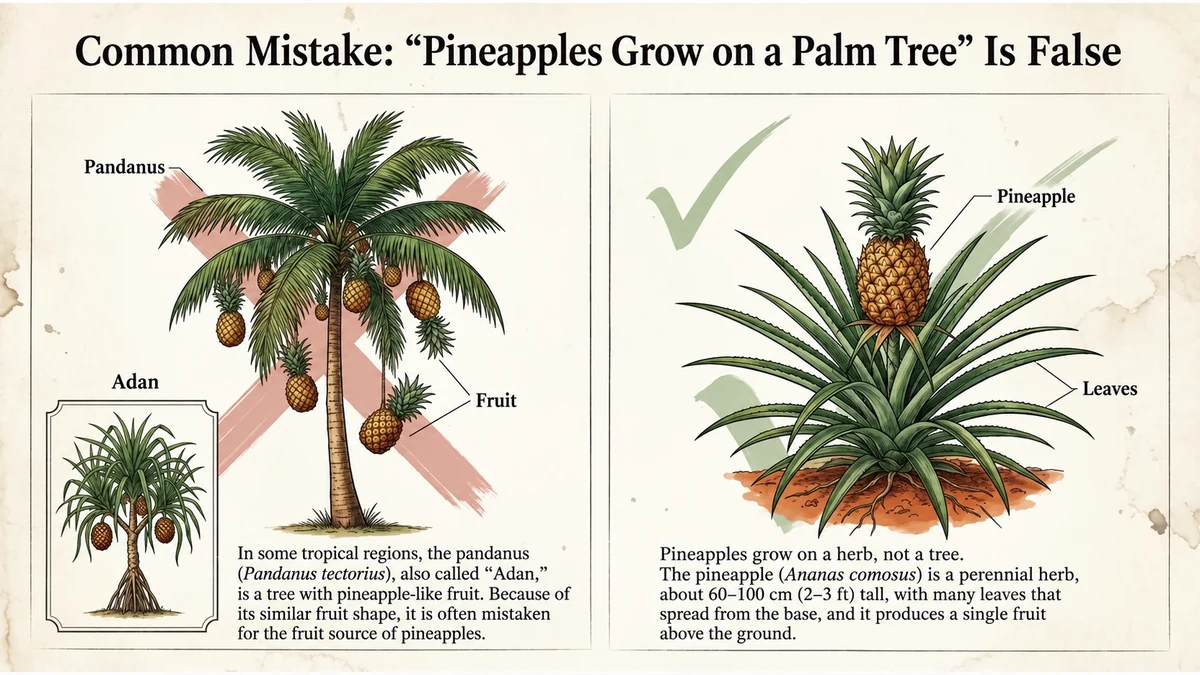
It is easy to imagine a pineapple hanging from a tall palm. In fact, the plant is a perennial herb, often around 60–100 cm tall, with leaves spreading from near ground level, somewhat like an aloe rosette.
Pandanus trees found in Japan’s southwestern islands bear fruit that resembles pineapple. They are woody plants in a different family. A pineapple grows at the top of a flower stalk rising from the centre of its leaf rosette.
The structure of a pineapple plant
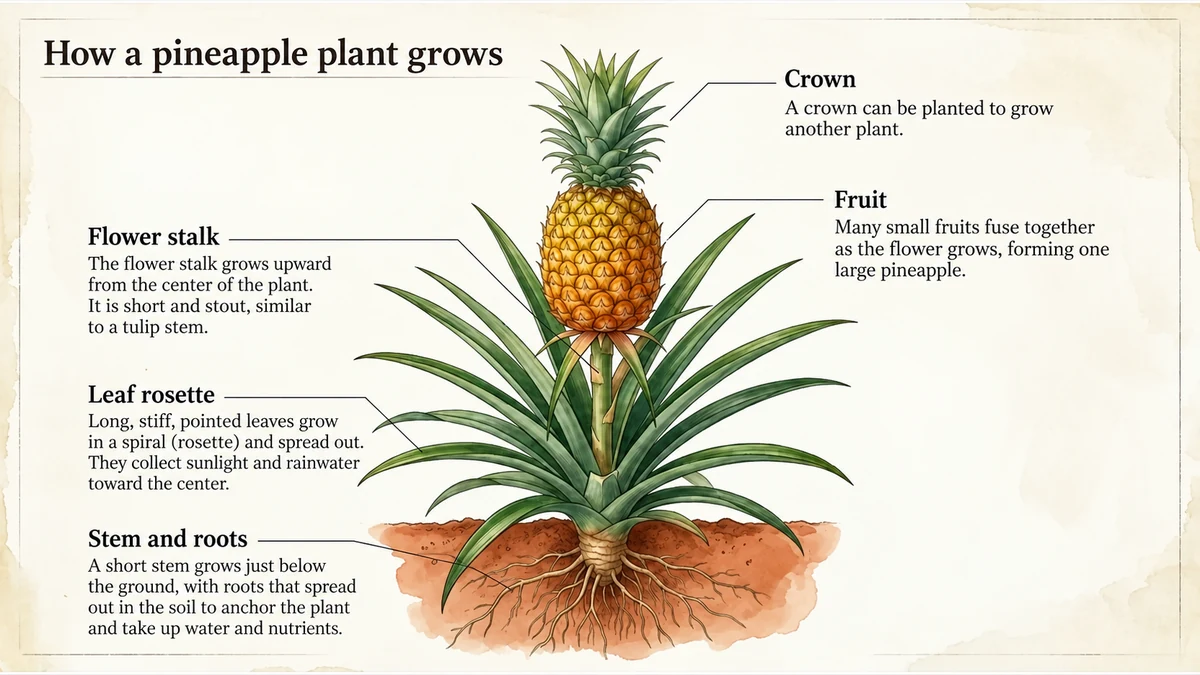
A flower stalk rises from the centre of the plant and carries one large fruit at its tip.
The stiff, sword-shaped leaves form a dense rosette. Their bases overlap, and relatively shallow roots support the plant.
The crown above the fruit forms as the axis continues growing. It can be removed and planted to produce a new plant.
One fruit formed from many flowers
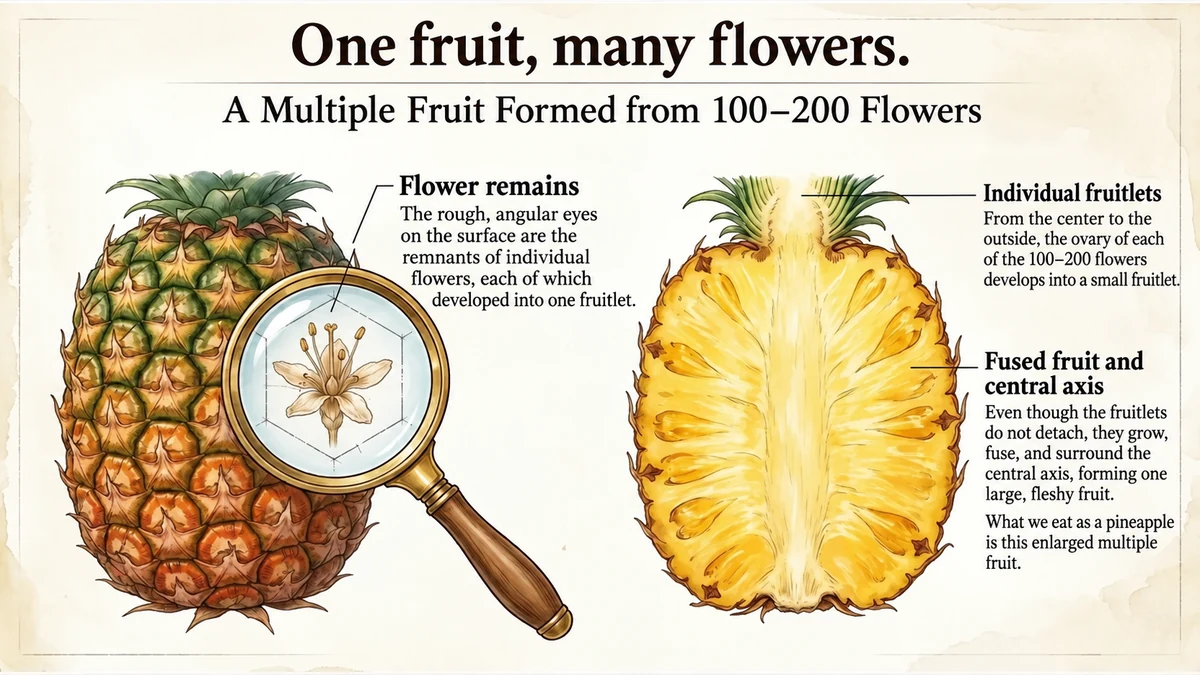
The roughly hexagonal eyes on the surface correspond to individual flowers. Around 100–200 small flowers, with estimates varying among sources, develop on an inflorescence at the top of the stalk.
Fruit development does not require pollination. Commercial fields often contain plants of the same clone, and the harvested fruit usually has no developed seeds. Individual fruitlets and associated floral tissues grow and fuse with the central axis into the pineapple we eat.
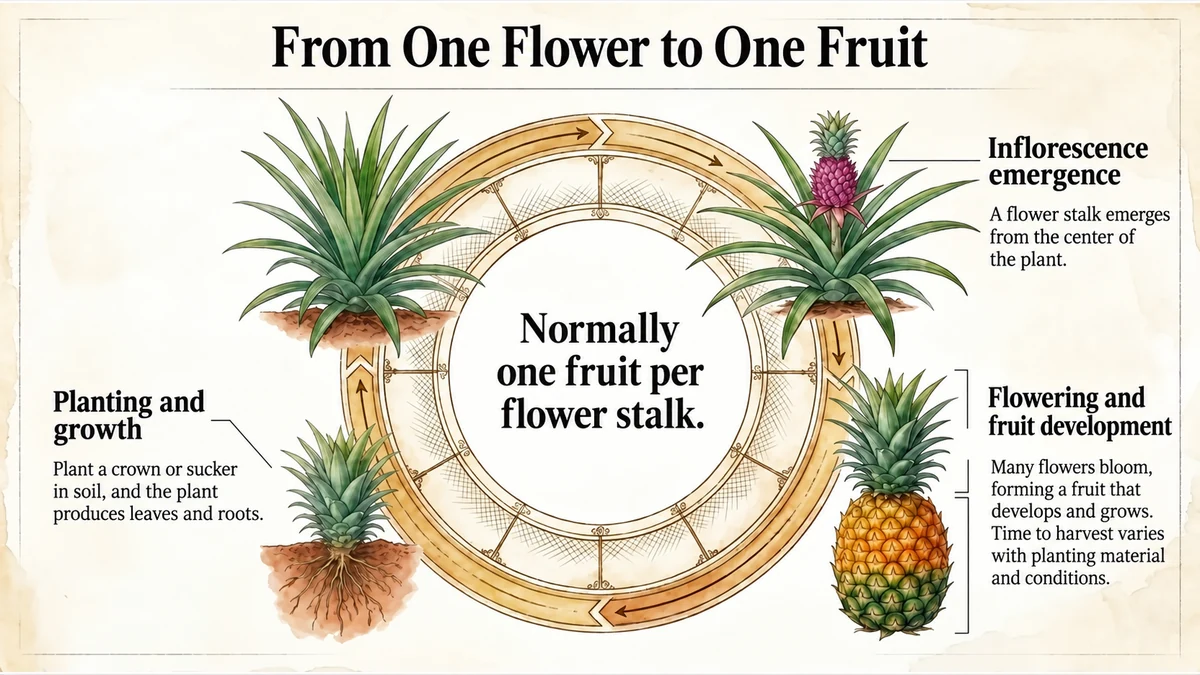
Normally one fruit per flower stalk
Each flower stalk normally bears one pineapple. Time from planting to first harvest varies with planting material, climate and cultivation. A plant grown from a crown can take more than two years to fruit.
- Planting and growth: a crown or shoot develops roots and a larger rosette of leaves.
- Inflorescence emergence: a small pink flower head appears in the centre.
- Flowering and fruit development: flowers open progressively from the lower part upwards. The fruit enlarges and changes appearance as it approaches harvest maturity.
After harvest, growers may retain a shoot for another crop, a practice known as ratooning. The number of crops depends on the cultivar, production system, plant condition and commercial goals.
Pineapple does not become sweeter after harvest
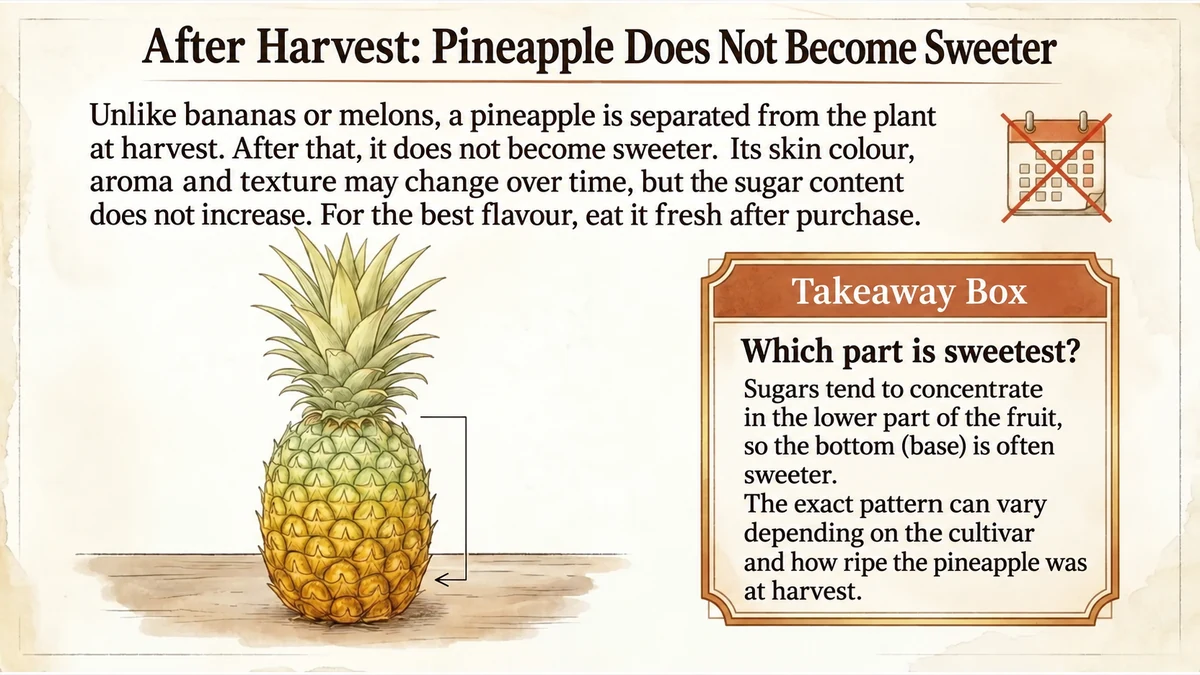
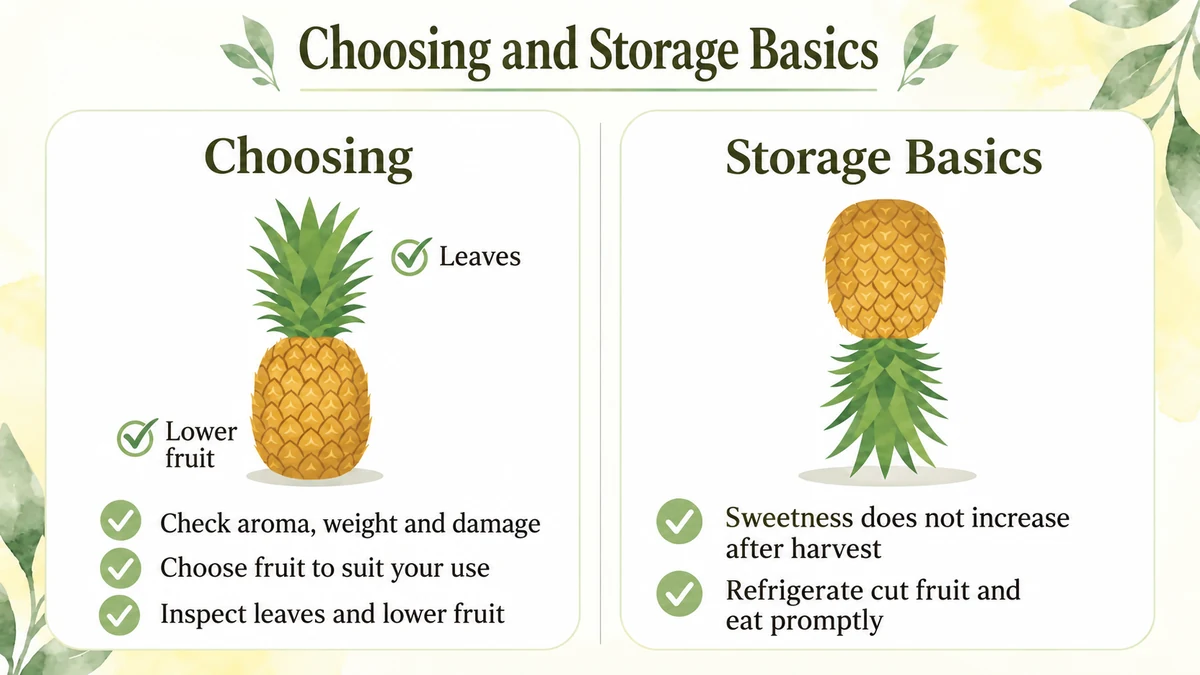
Pineapple does not gain sugar and improve eating quality after harvest in the way some other fruit does. Skin colour, softness and aroma may change during storage, but it is best eaten while still in good condition.
The lower part of the fruit often tastes sweeter. The distribution varies with variety and maturity.
Nutrition and eating precautions
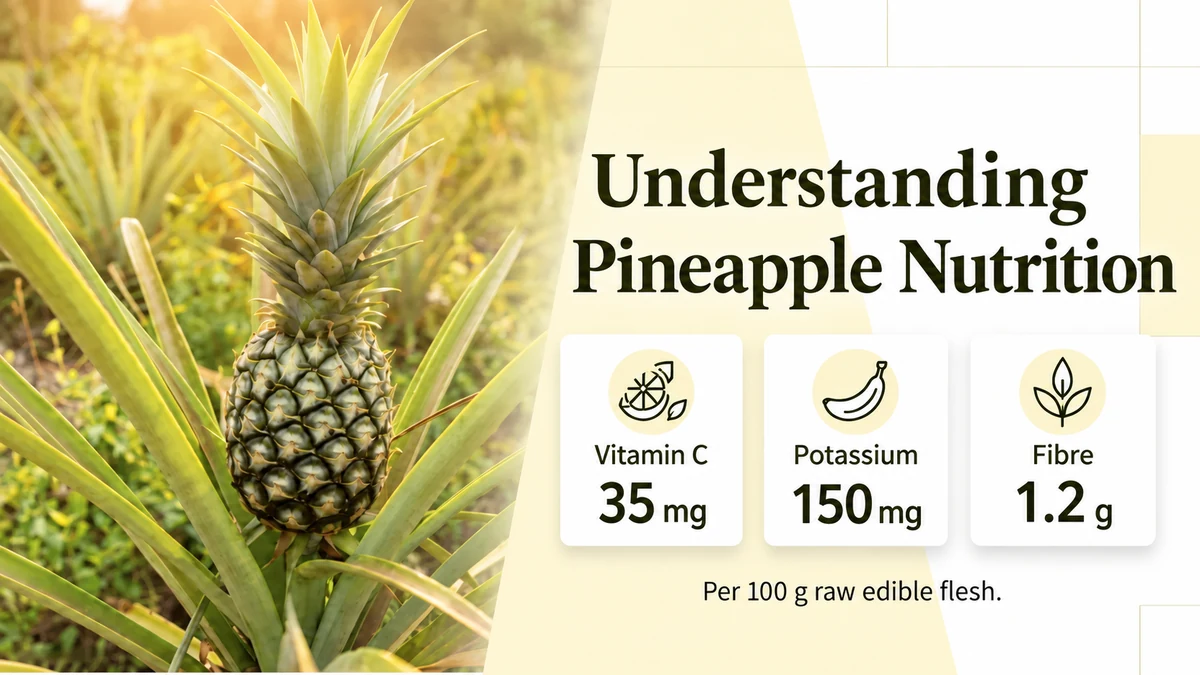
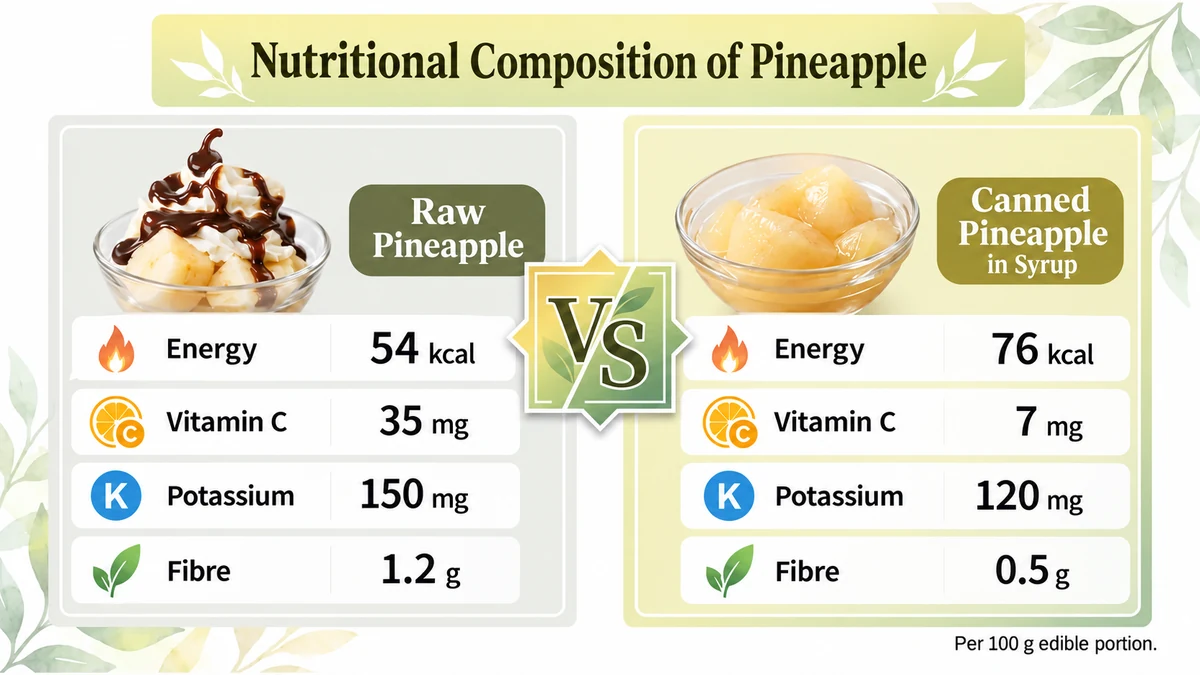
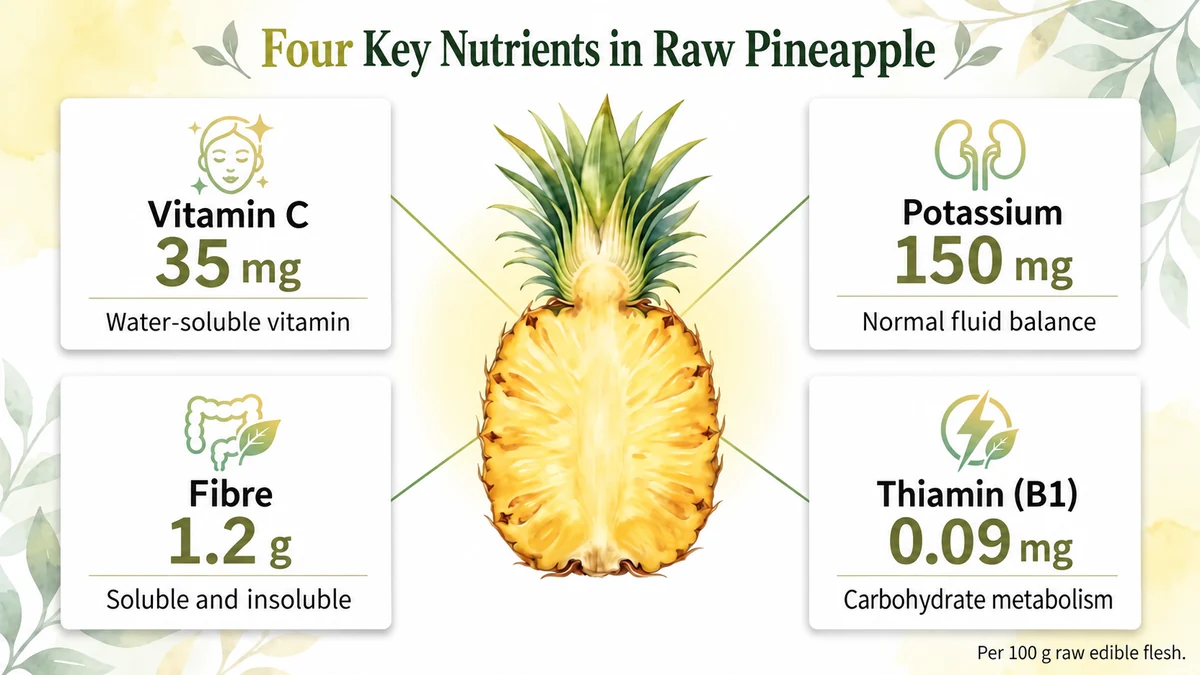
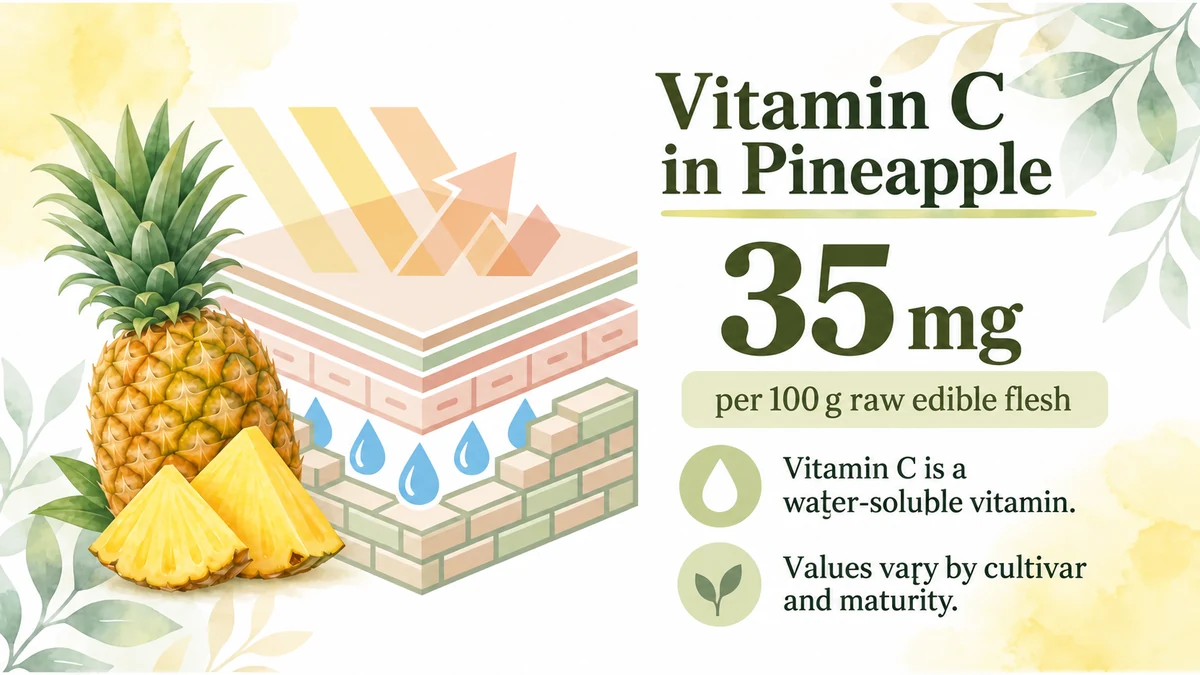
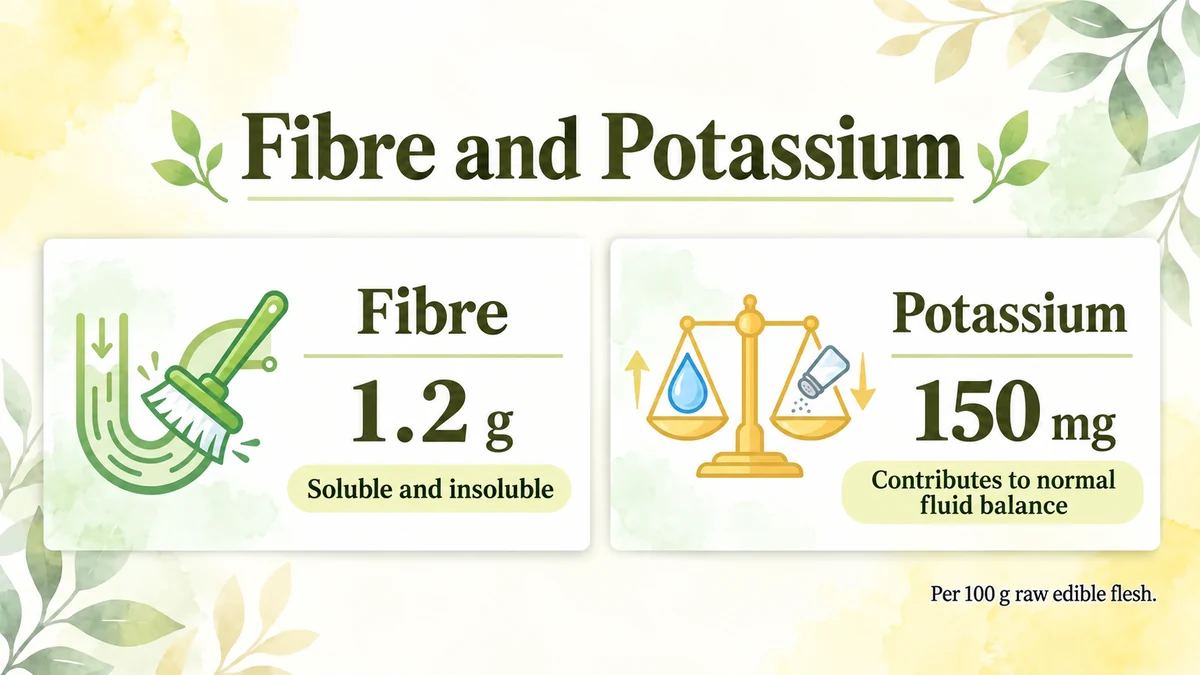
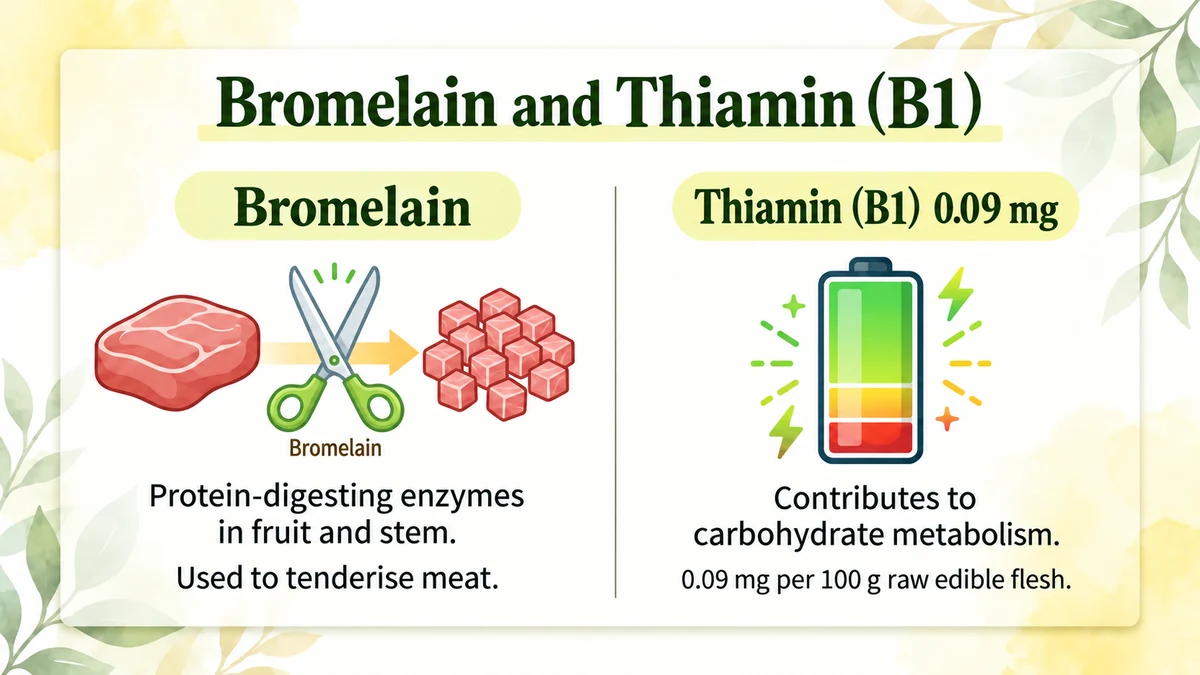
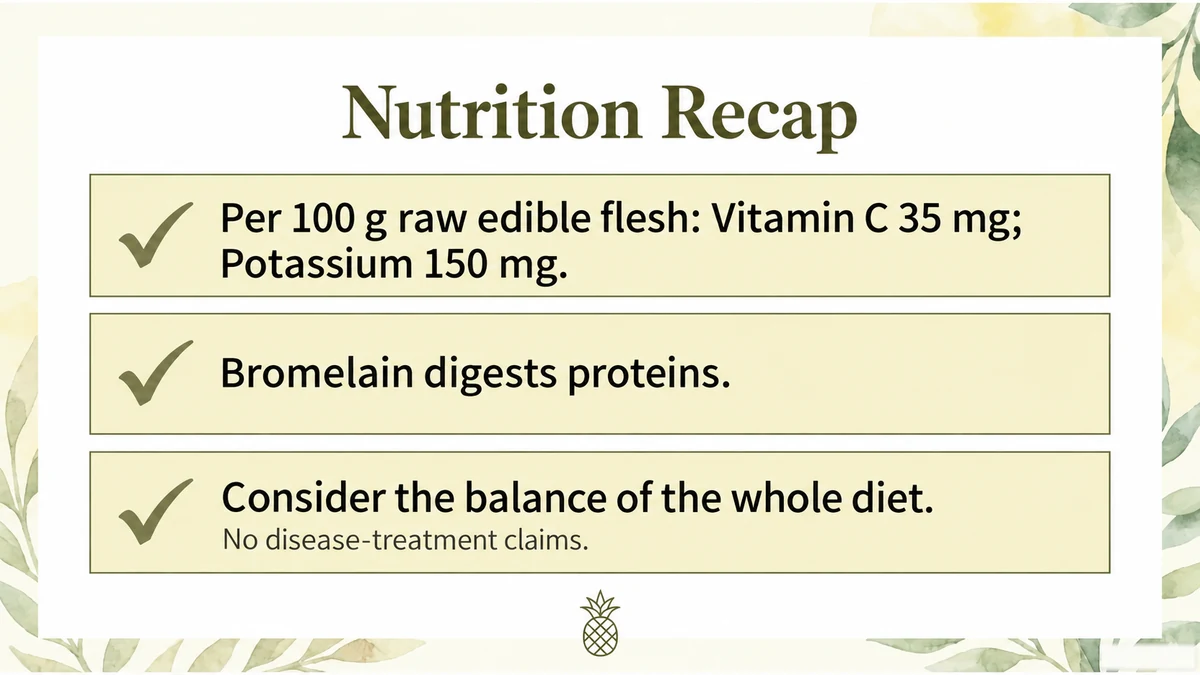
Japan’s Standard Tables of Food Composition, 2023 supplement to the eighth edition, list 35 mg vitamin C, 150 mg potassium, 1.2 g fibre and 0.09 mg thiamin per 100 g of raw edible pineapple. These are composition values, not evidence that eating pineapple prevents or treats particular symptoms.
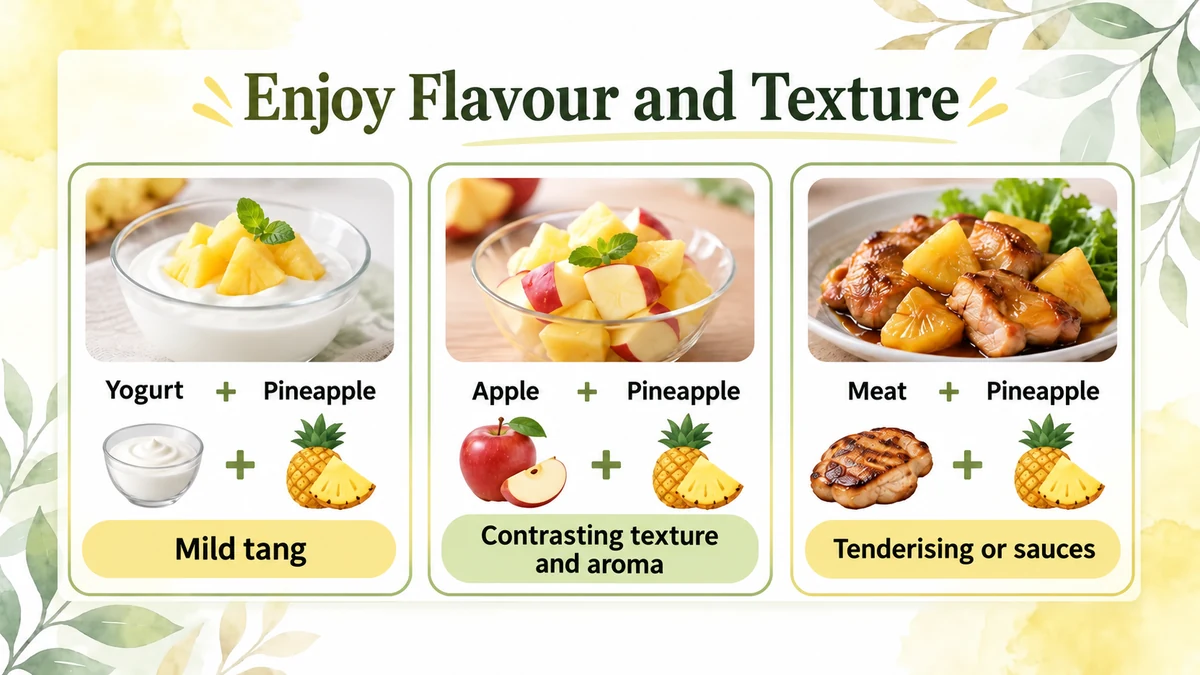
The fruit and stem contain bromelain, a group of enzymes that breaks down proteins. Pineapple can tenderise meat in cooking, but strong evidence does not establish that eating the fresh fruit treats fatigue or prevents atherosclerosis.
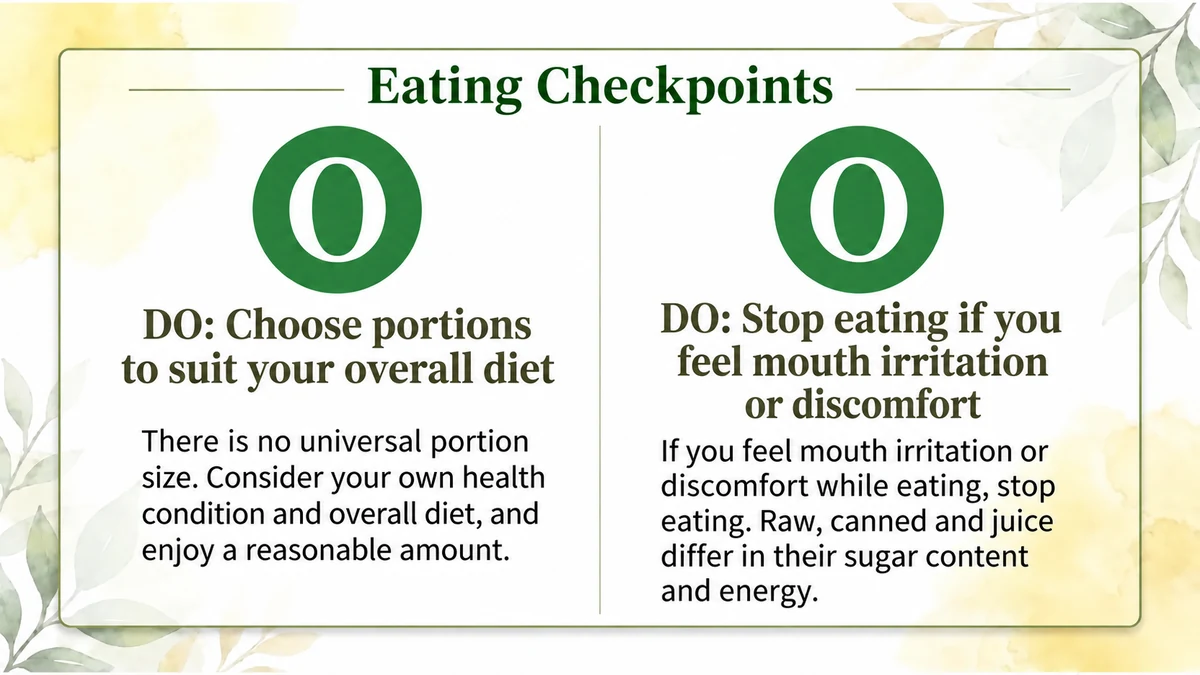
Raw pineapple may irritate the mouth. Stop eating if it causes discomfort. Hives, swelling of the face or throat, or difficulty breathing can indicate an allergic reaction and require prompt medical attention; severe symptoms require emergency care.
Varieties around the world and in Vietnam
Fruit size, flesh colour, sweetness, acidity, aroma and core texture differ among cultivars. Okinawa has developed fresh-eating cultivars such as Okinou P17, marketed as Sandolce, which has recorded soluble solids above 19 °Brix in development trials.
Here we look at pineapple through cultivar groups, growing regions and distinctive varieties.
Five traditional cultivar groups
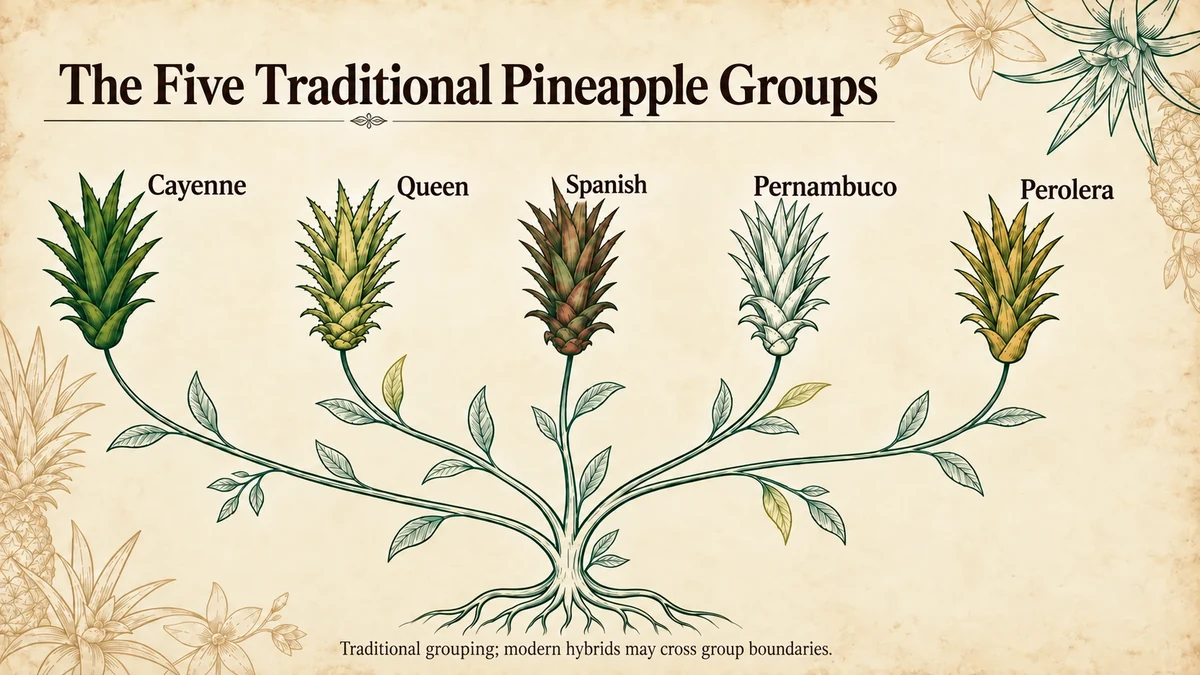
Pineapple has many named cultivars. A traditional classification describes five major groups, although modern hybrids do not always fit neatly into these categories.
| Group | Characteristics |
|---|---|
| Cayenne | Includes Smooth Cayenne, historically used for fresh fruit and processing |
| Queen | Often has spiny leaves, relatively small fruit, firm flesh and a pronounced sweet aroma |
| Spanish | Includes cultivars with relatively tough skin and good transport characteristics |
| Pernambuco | Includes pale or white-fleshed cultivars with strong sweetness and mild acidity |
| Perolera (Mordilona) | Includes Perolera and related cultivars grown in Central and South America |
Smooth Cayenne has long been important for both fresh eating and canning. MD2 is also widely traded in the international fresh-fruit market.
Other familiar cultivars include the following.
- Bogor, often sold as Snack Pine: introduced to Okinawa from Taiwan in the 1960s and known for fruitlets that can be separated by hand
- Soft Touch, marketed as Peach Pine: developed in Okinawa, with pale flesh and a distinctive aroma
- Gold Barrel, Summer Gold and Sandolce: fresh-eating cultivars developed in Okinawa
Gold Barrel is discussed further below among distinctive fresh-eating varieties.
How growing regions affect flavour
Origin alone does not determine flavour. Cultivar, harvest maturity, growing conditions, transport and storage all influence sweetness, acidity, aroma and texture. Most fresh pineapple imported into Japan comes from the Philippines.
Perceived sweetness depends on acidity as well as sugar. Fruit acids and bromelain can contribute to mouth irritation.
Distinctive premium varieties
Some cultivars are valued for their particular sweetness or texture.
Okinawa grows Gold Barrel, Sandolce, Bogor and Soft Touch, each with its own balance of sweetness, acidity, aroma and firmness. Sugar levels and fruit weight vary with location, cultivation and harvest season, so a single number cannot rank them fairly.
Varieties grown in Vietnam
Queen types, Cayenne types and MD2 are grown in Vietnam. Production systems differ by region, while pineapple is familiar in markets and supermarkets throughout the year.
- Queen types: often smaller, with a pronounced aroma and sweetness
- Cayenne types: generally larger and cylindrical, used fresh and for processing
- MD2: selected from a cross between breeding lines 58-1184 and 59-443 and widely traded internationally
The pineapple market
In Hanoi, I frequently hear pineapple called dứa. Names differ across Vietnam. The wider industry also varies considerably from country to country.
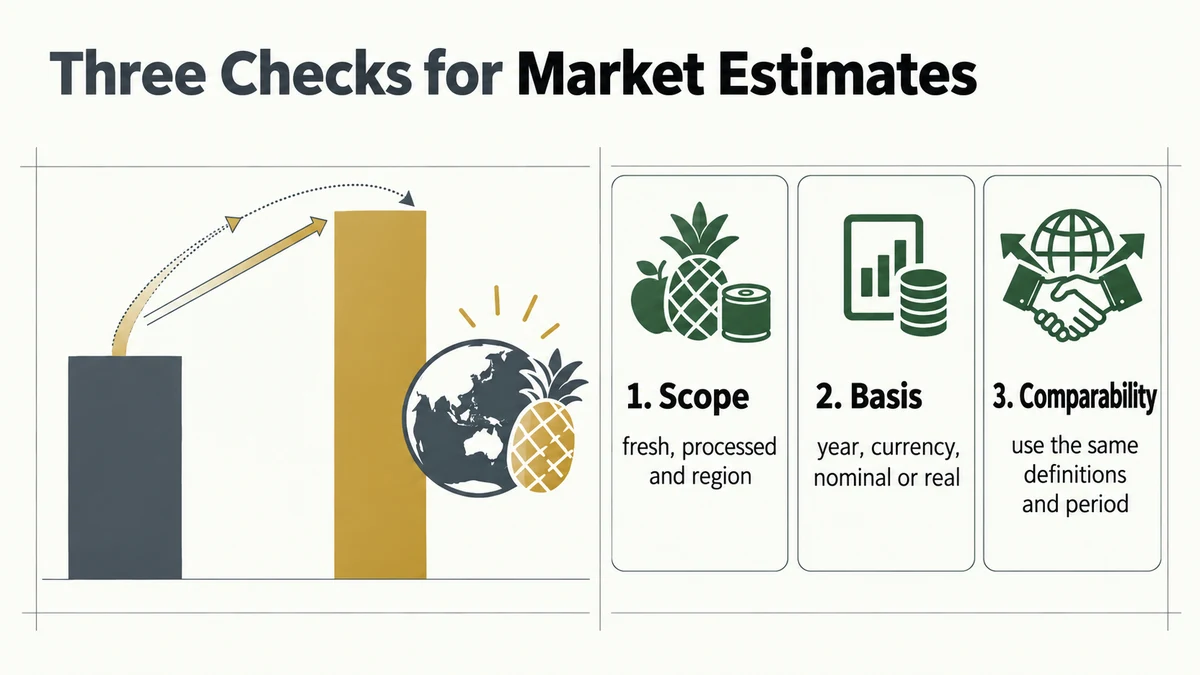
Market estimates may cover only fresh fruit or may include canned products and juice. Before comparing values, check the scope, reference year, currency and whether the figures are nominal or inflation-adjusted.
Major producers include Indonesia, the Philippines, Costa Rica and Brazil. Rankings and quantities change by statistical year, so comparisons should use FAOSTAT figures from a common year.
The Philippines is particularly important to Japan’s imports: Japan’s Ministry of Agriculture describes it as supplying over 90% of imported pineapple. Brazil, by contrast, has a large domestic market.
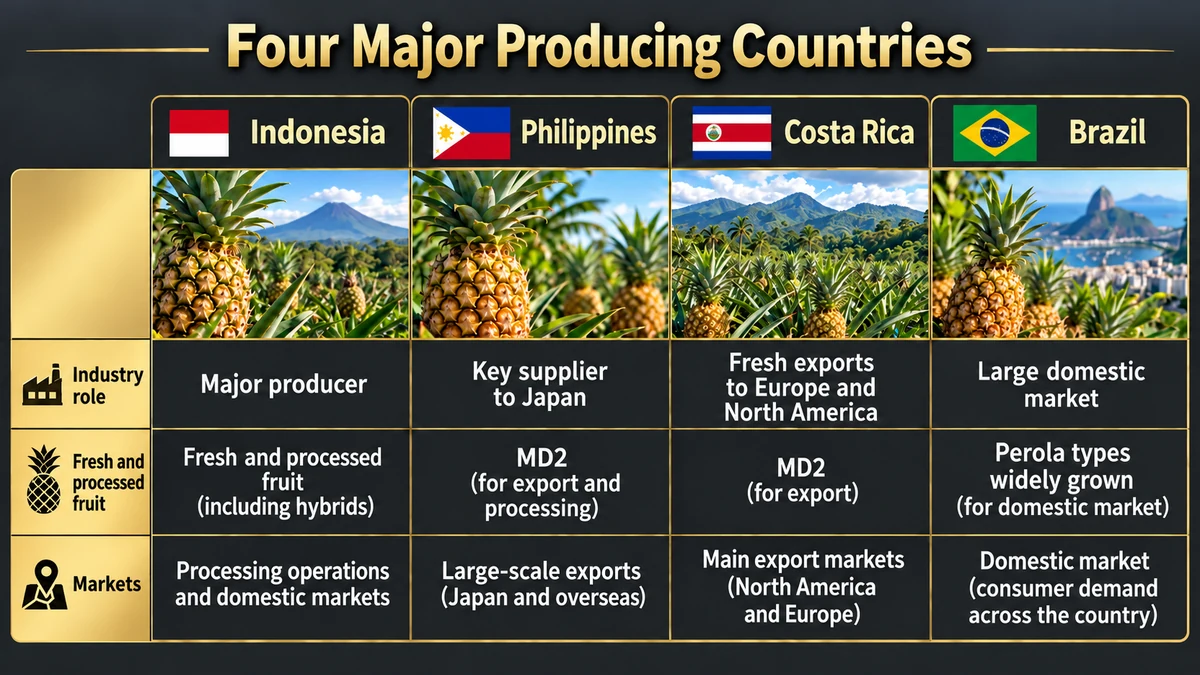
Countries differ in the balance between fresh and processed fruit and between domestic consumption and exports. The Philippines and Costa Rica are important fresh-fruit exporters, Brazil has a substantial domestic market, and Indonesia has large processing operations.
Imports dominate Japan’s supply, with the Philippines accounting for over 90% according to the agriculture ministry. Domestic production is concentrated in Okinawa; Japan’s 2024 harvest was reported as 7,100 tonnes.
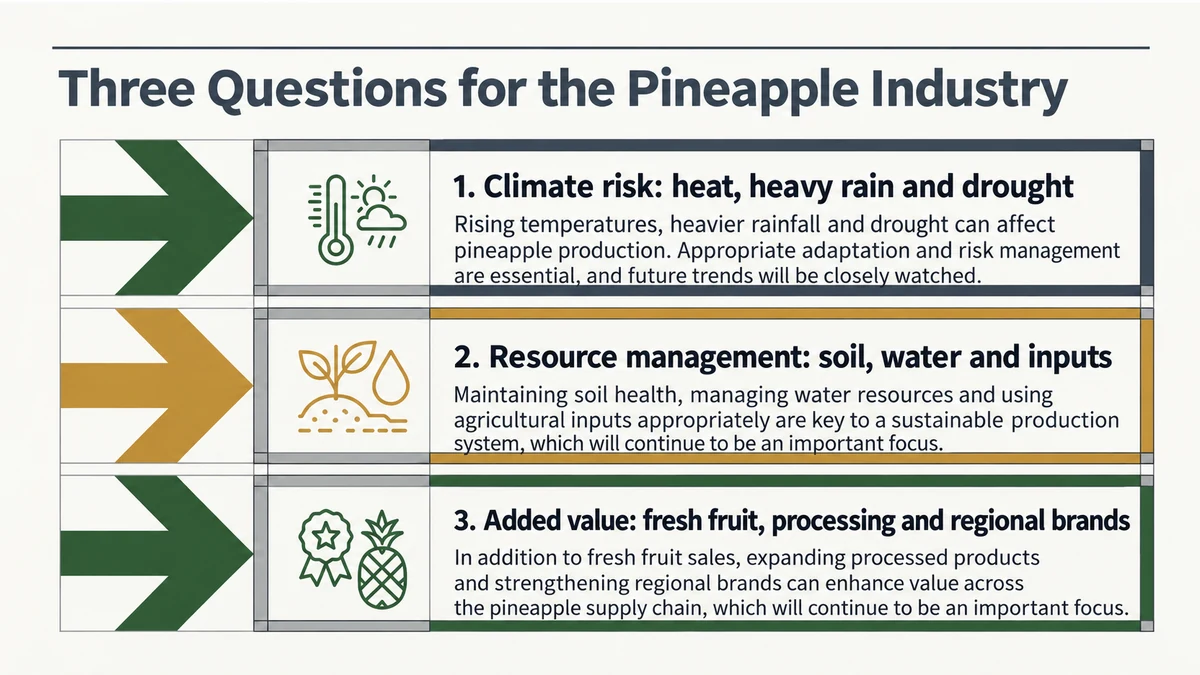
Heat, heavy rainfall, drought, soil and water management, and demand for fresh and processed fruit all matter. For updated quantities, consult statistics such as FAOSTAT and Japan’s agriculture ministry with clearly stated definitions and years.
Frequently asked questions
Do pineapples grow on trees?
No. Pineapple is a perennial herb in the bromeliad family. A flower stalk rises from the centre of the leaves near ground level.
How many fruits grow on one flower stalk?
Normally one. After harvest, a shoot near the base may be grown for a subsequent crop.
Does pineapple ripen and become sweeter after harvest?
It does not gain sugar after harvest. Check aroma, weight and condition when buying, then eat it while fresh.
Pineapple guide: a recap
The key points are as follows.
- Pineapple is a perennial herb. Many flowers form one multiple fruit, normally one per flower stalk. Growing time varies, and sweetness does not increase after harvest.
- Raw edible flesh contains vitamin C, potassium and fibre. Stop eating if acids or bromelain cause mouth irritation.
- Many cultivars exist, including distinctive Okinawan fresh-eating varieties such as Gold Barrel and Sandolce.
- Dứa, thơm and khóm are used in Vietnam, with local variation. Pineapple is available year-round in the markets I visit.
- Indonesia, the Philippines, Costa Rica and Brazil are major producers. Japan relies mainly on imports.
For more fruit, see Vietnam Fruit Guide: 15 Fruits. Find buying, cutting and storage advice in How to Eat Pineapple in Vietnam, and explore origins, names and legends in Pineapple History and Stories.
References
- MEXT: Food Composition Database — Pineapple, raw
- NCCIH: Bromelain — Usefulness and Safety
- UC Davis Postharvest Research and Extension Center: Pineapple
- North Carolina Extension Gardener Plant Toolbox: Ananas comosus
- International Tropical Fruits Network: Pineapple — Common Varieties
- NARO: Pineapple cultivars
- NARO: Okinawa No. 17, a high-sugar pineapple breeding selection
- Japan Ministry of Agriculture: Imported pineapple
- Japan Ministry of Agriculture: 2024 pineapple harvest
- FAOSTAT: Crops and livestock products
Japan Plant Protection Station: Vietnam traveller restrictions — Reviewed 11 October 2026.
