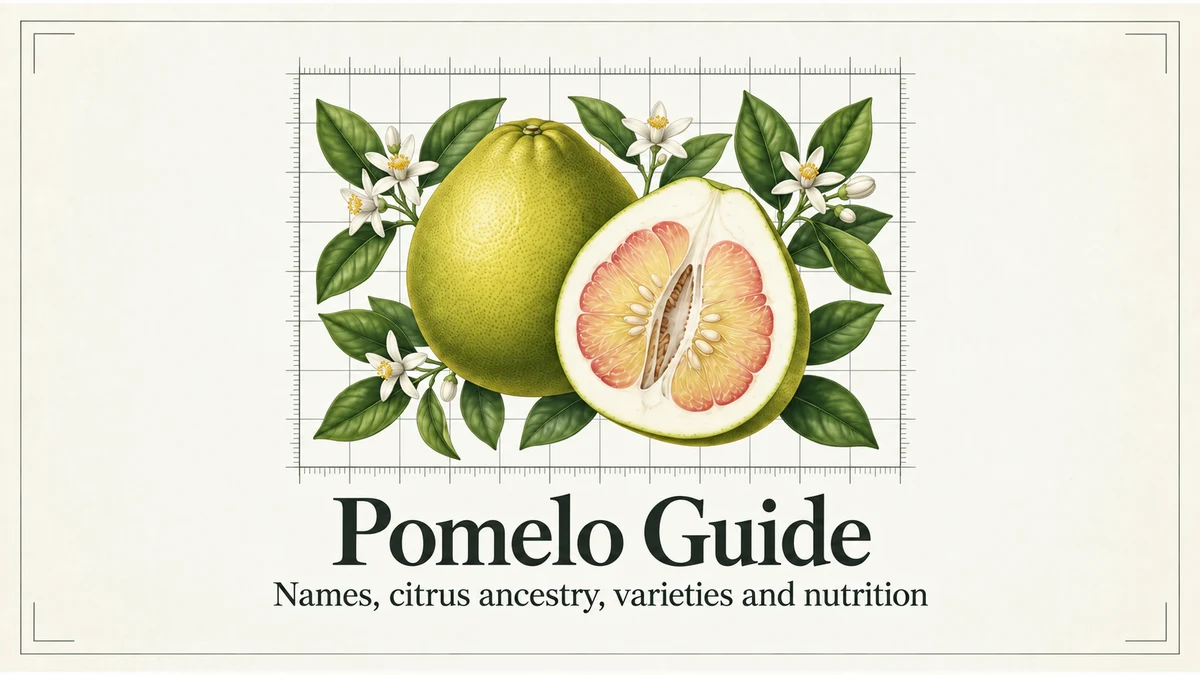
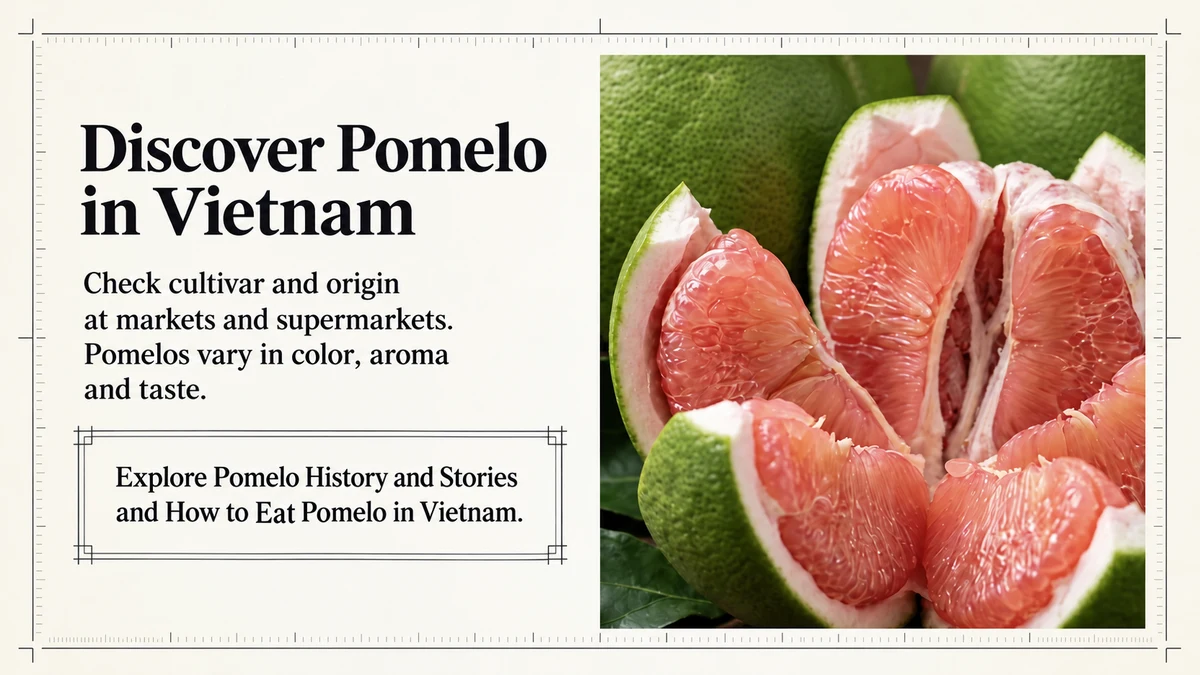
In Vietnam’s markets and supermarkets, Bưởi is the large citrus known in English as pomelo or pummelo. Japanese names include zabon, buntan and bontan.
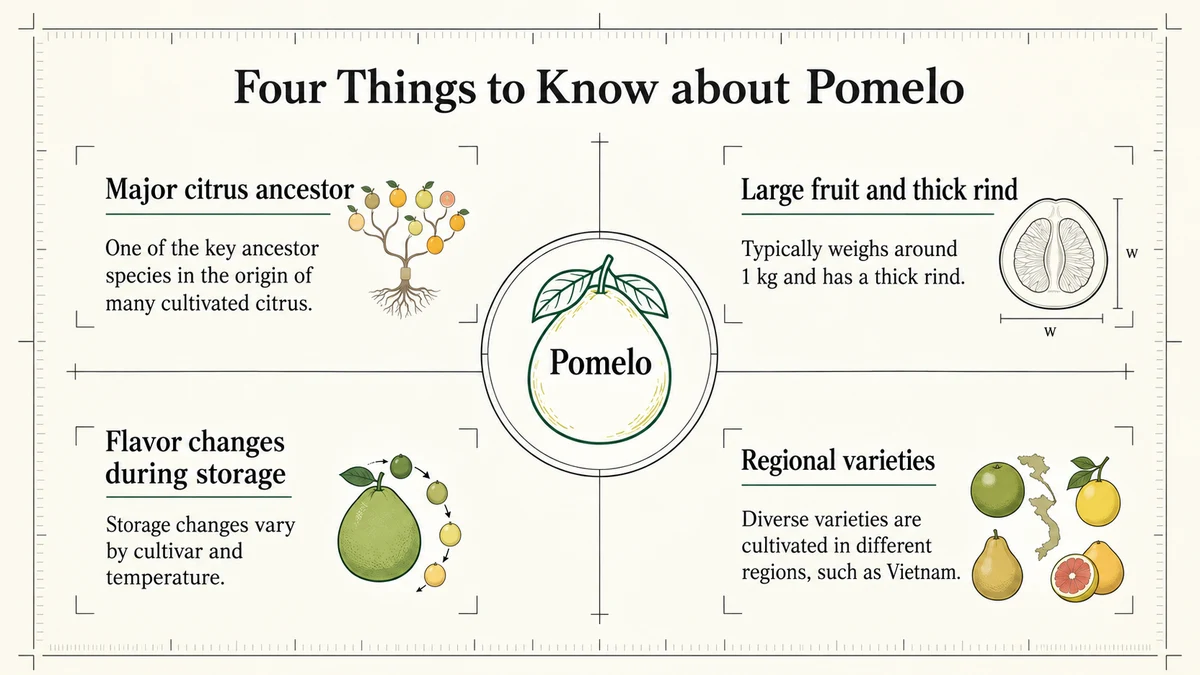
Pomelo is more than a large fruit. Genomic research identifies it, alongside mandarin and citron, as a major ancestral lineage contributing to many cultivated citrus fruits.
Zabon, buntan and bontan are overlapping Japanese names, rather than three neatly separated botanical species. Their use depends on region and cultivar. This guide explores those names, pomelo ancestry, nutrition and Vietnamese varieties.
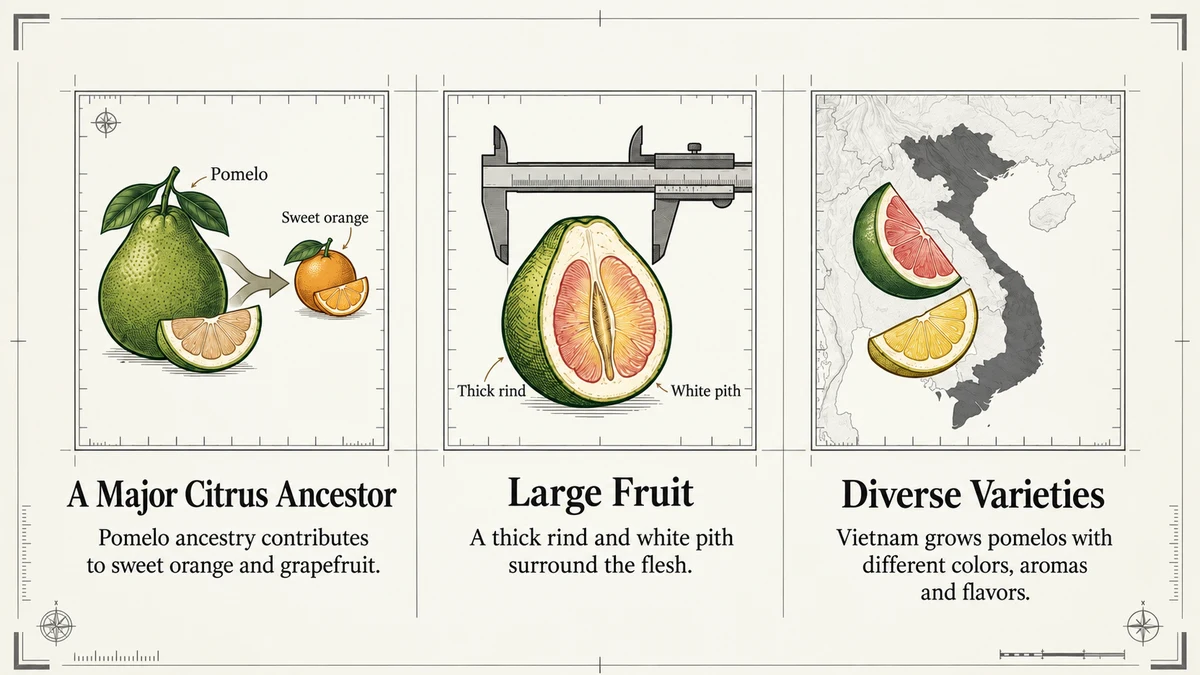
Pomelo at a Glance
| Item | Details |
|---|---|
| Accepted scientific name | Citrus maxima (Burm.) Merr. |
| An example of a synonym | Citrus grandis (L.) Osbeck |
| Classification | An evergreen tree in the citrus genus, family Rutaceae |
| English names | Pummelo, pomelo, shaddock |
| Vietnamese name | Bưởi |
| Native range | Assam to Indochina; Kew includes Vietnam within its native range |
| Fruit | Among the largest citrus fruits; shape, weight, rind and flesh colors vary greatly by cultivar |
| Availability in Vietnam | Several growing regions and cultivars supply markets throughout the year. Main harvest periods vary by cultivar and region. |
| Main nutrients | Vitamin C, potassium and other nutrients |
Kew’s Plants of the World Online describes the native range as Assam to Indochina. That botanical database provides the geographical framework used here.
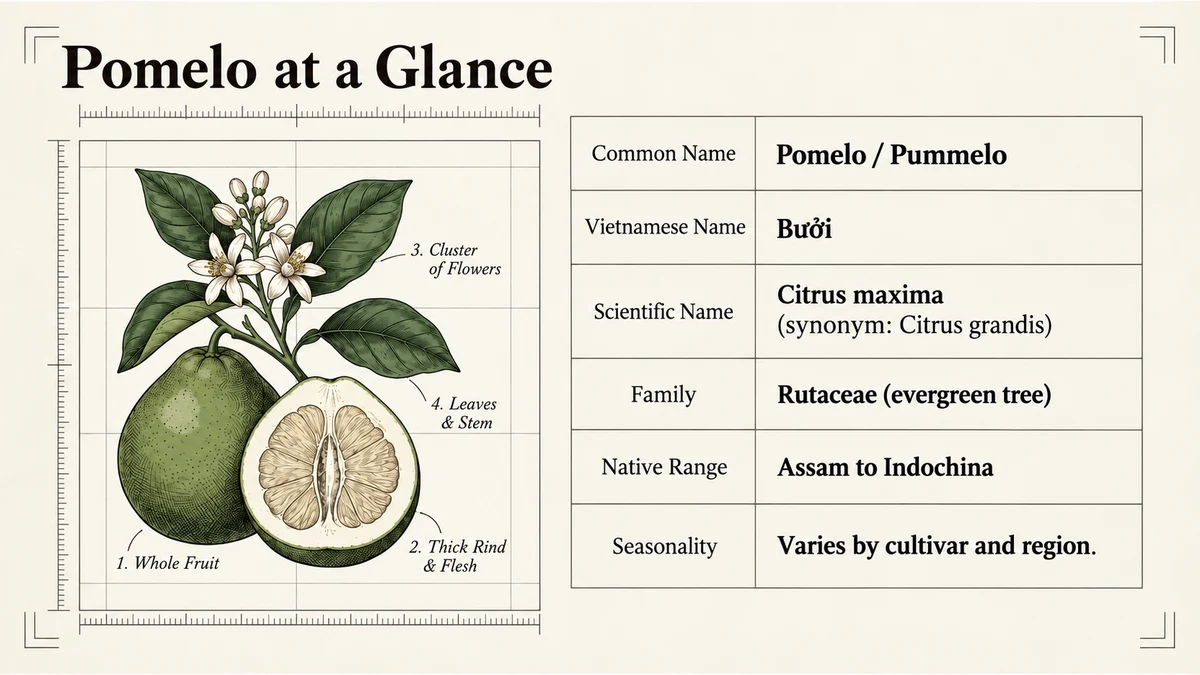
How Is Pomelo Related to Orange and Grapefruit?
Many cultivated citrus fruits arose through crosses between ancestral lineages. Pomelo is one of those important lineages.
- Sweet orange has a complex mixture of mandarin and pomelo ancestry.
- Grapefruit derives from a cross between pomelo and sweet orange.
- Lemon derives mainly from citron and sour orange ancestry.
Citrus ancestry is more complex than a family tree built from just three original species. A 2018 genomic study includes other lineages such as micrantha and kumquat. Pomelo is a major ancestor, rather than the single origin of all citrus.
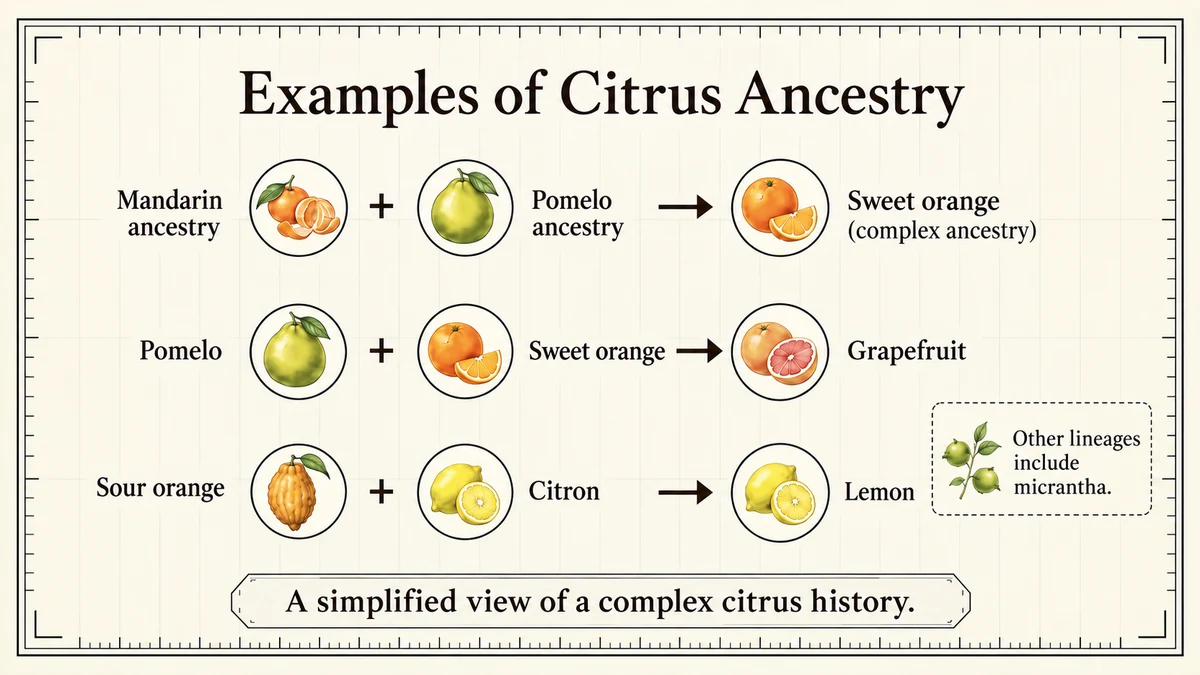
Among the Largest Citrus Fruits
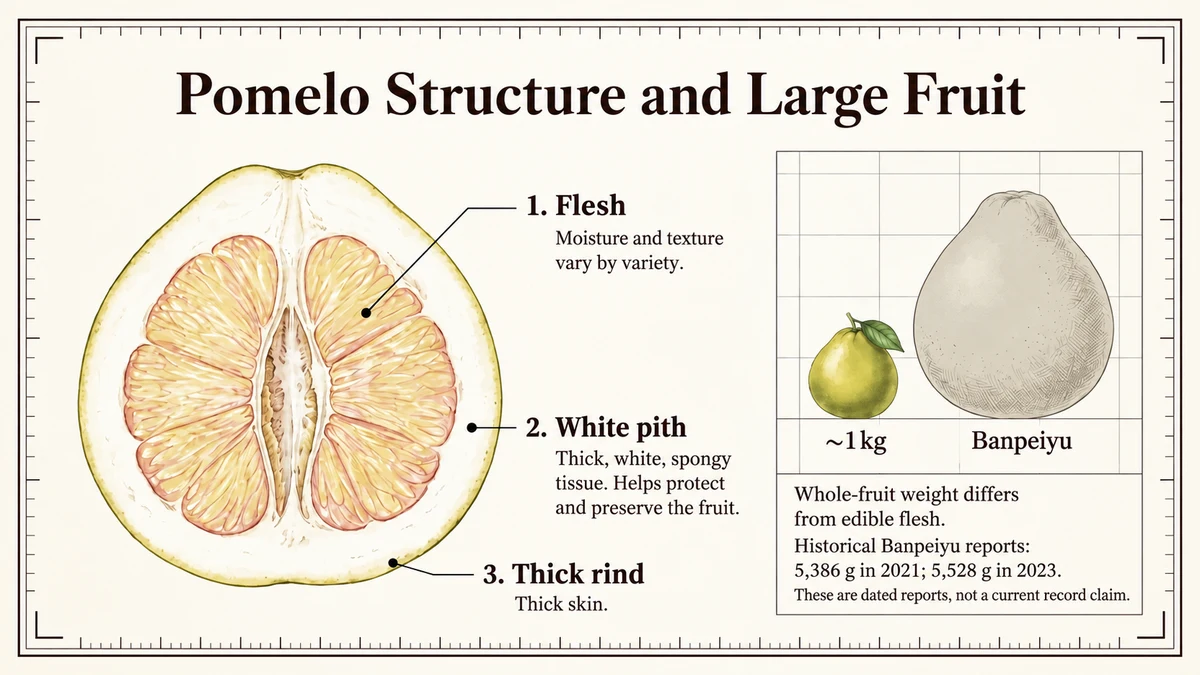
Some ordinary pomelos weigh around 1 kg, and certain cultivars grow much larger. The thick rind helps protect the fruit during transport and storage, but whole-fruit weight is different from the amount of edible flesh.
Banpeiyu from the Yatsushiro area of Kumamoto, Japan, is also a pomelo type. A Yatsushiro City publication reports a 5,386 g fruit recognized by Guinness World Records in 2021, followed by a 5,528 g fruit in 2023 that exceeded that earlier weight. These are dated reports, not a claim about the current record.
Storage Is Different from Ripening After Harvest
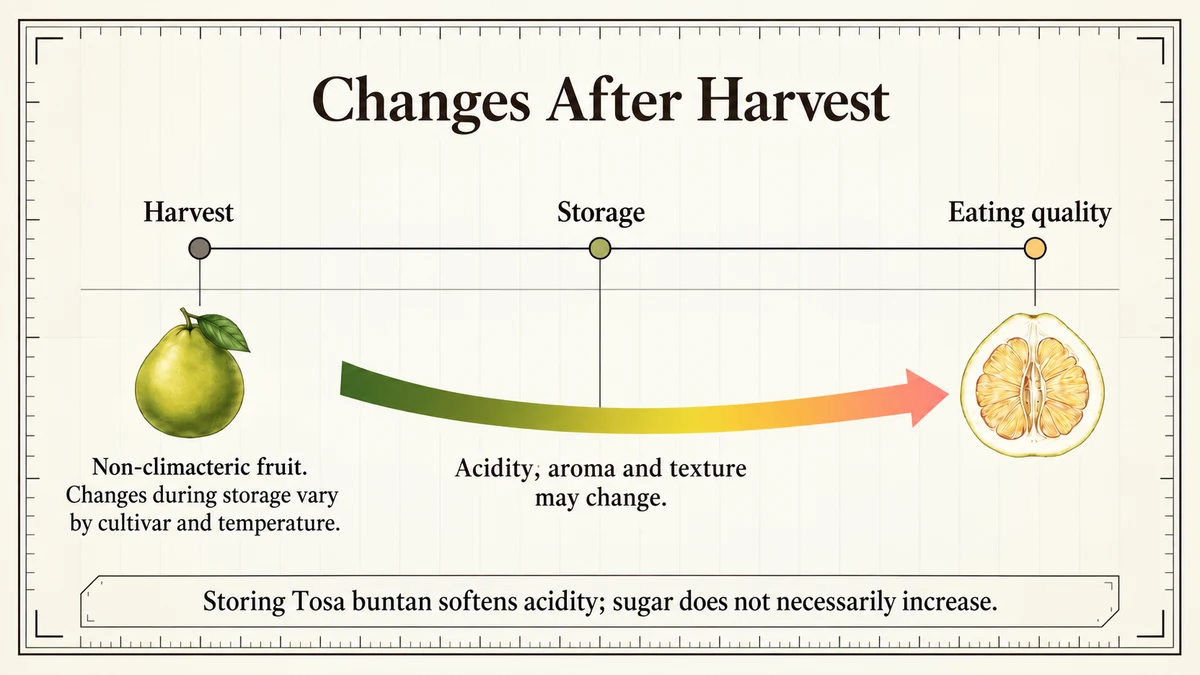
Pomelo does not undergo the strong postharvest ripening seen in climacteric fruits such as banana or mango. FAO classifies pomelo as a non-climacteric fruit.
Acids, sugars, aroma and texture may change during storage. The direction of change depends on cultivar and temperature: sugar does not consistently increase. Research reports both increases and decreases in the sugar-to-acid ratio among cultivars.
Tosa buntan is traditionally stored for a period after harvest, sometimes using a field-storage method called nogakoi, to soften acidity and improve eating quality. This is best understood as storage-related acidity reduction and flavor adjustment.
Zabon, Buntan and Bontan: What Is the Difference?
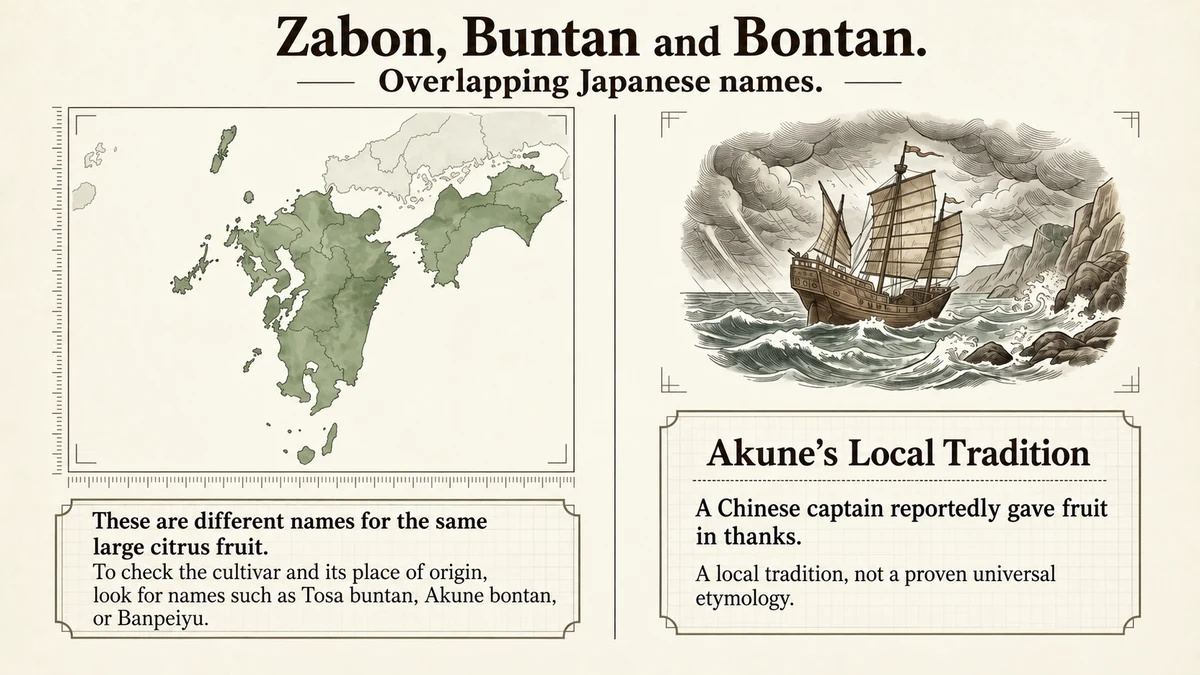
These Japanese names overlap. They do not clearly designate three different botanical species. For shopping, cultivar and origin names such as Tosa buntan, Akune bontan and Banpeiyu are more useful identifiers.
Akune City in Kagoshima preserves a story about a Chinese ship’s captain, Xie Wendan, who gave fruit in thanks for local hospitality during the Edo period. The city presents it as a local tradition; it does not establish every Japanese pomelo name’s etymology.
Nutrition
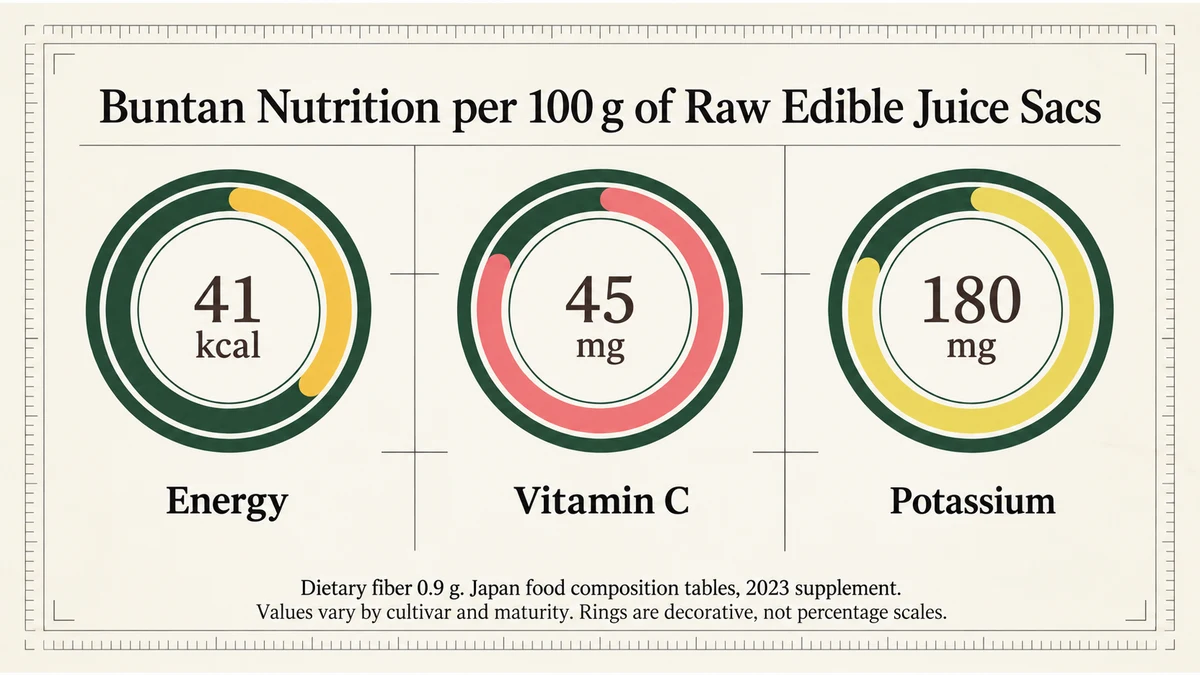
Japan’s food composition tables, eighth edition with the 2023 supplement, list the following values for 100 g of raw buntan juice sacs:
| Nutrient | Per 100 g |
|---|---|
| Energy | 41 kcal |
| Potassium | 180 mg |
| Vitamin C | 45 mg |
| Total dietary fiber | 0.9 g |
These values describe the buntan entry in Japan’s tables. They should not be applied unchanged to every Vietnamese cultivar. Composition varies with cultivar, growing conditions and maturity.
Containing nutrients does not mean that one fruit alone prevents or treats illness. Pomelo belongs within a varied diet.
Major Vietnamese Pomelos
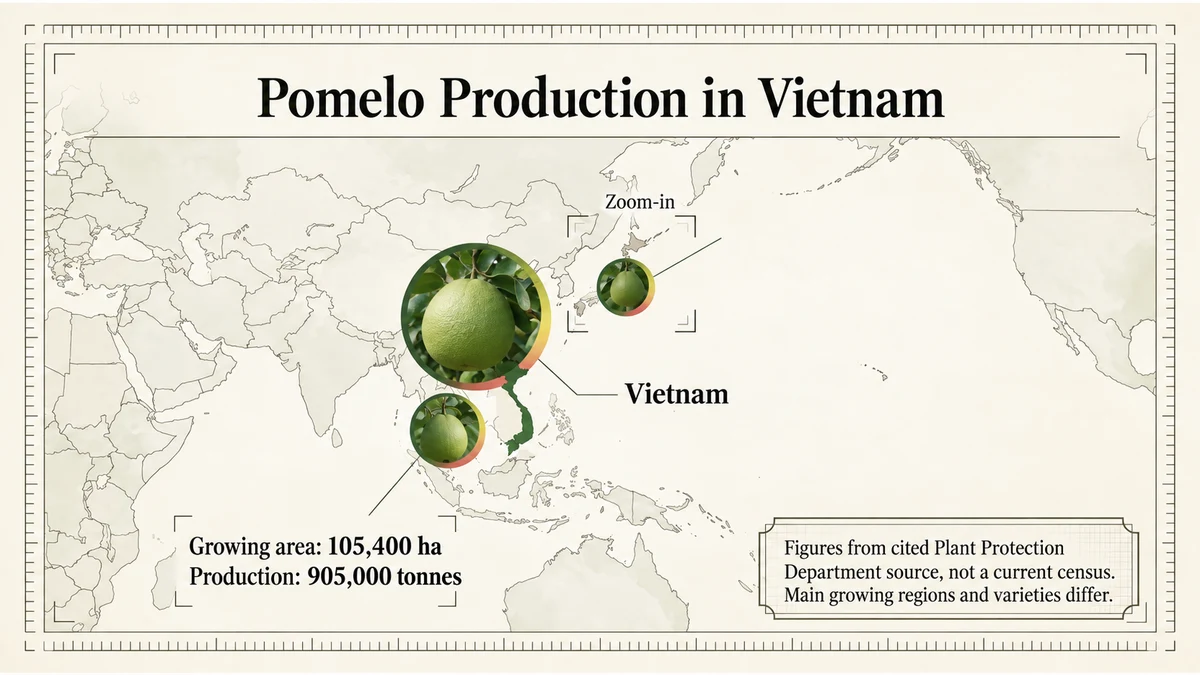
Vietnam’s Plant Protection Department information site reports approximately 105,400 hectares of pomelo cultivation and 905,000 tonnes of production. These are figures from the cited source, rather than a current census. Representative cultivars and growing regions include:
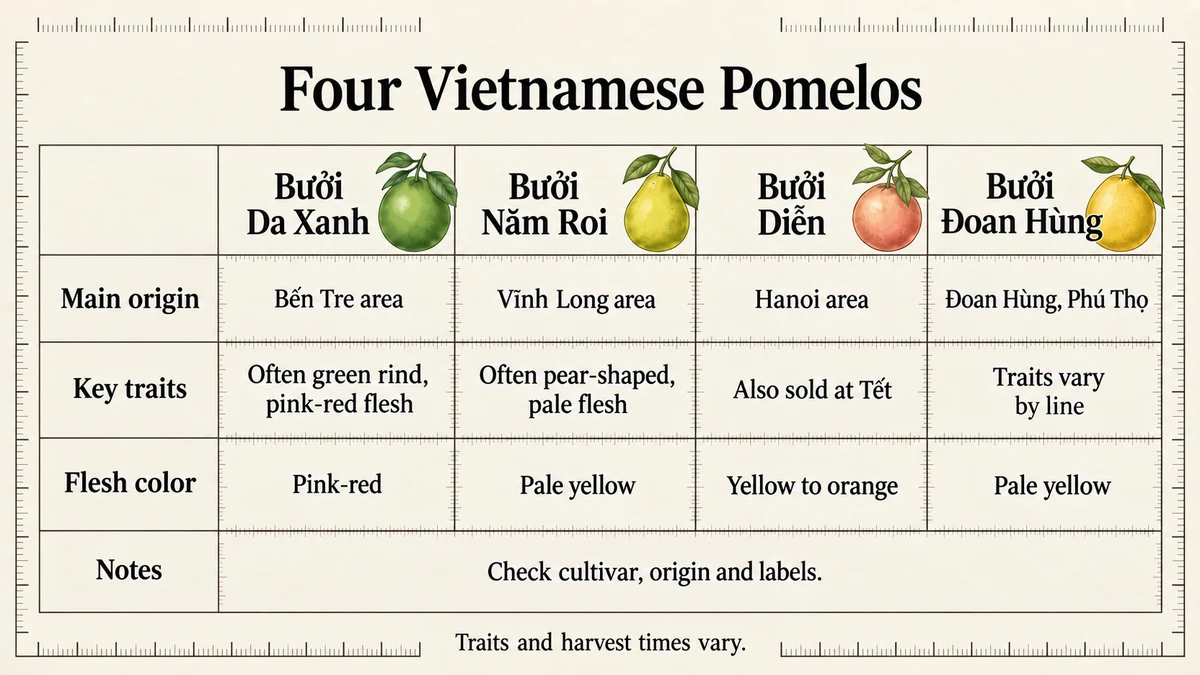
| Name | Main origins and features |
|---|---|
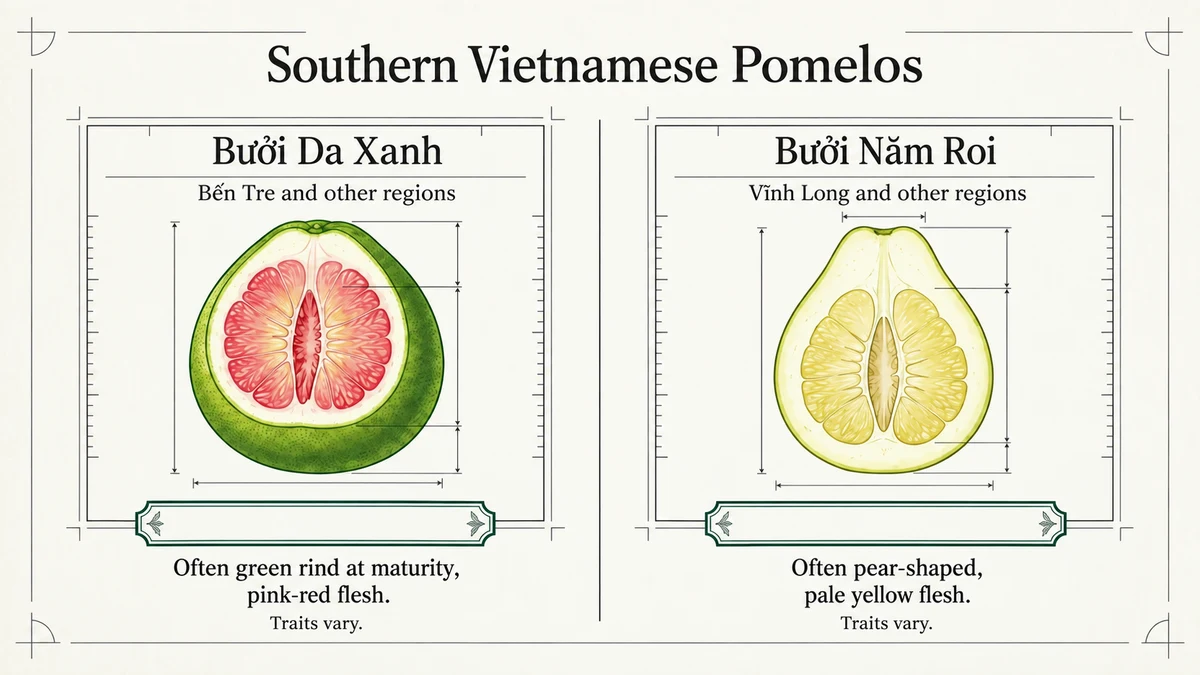
| Bưởi Da Xanh | Associated with Bến Tre and other southern growing regions; rind often stays green at eating maturity, with pink to reddish flesh |
| Bưởi Năm Roi | Associated with Vĩnh Long and other regions; often pear-shaped, with pale yellow flesh |
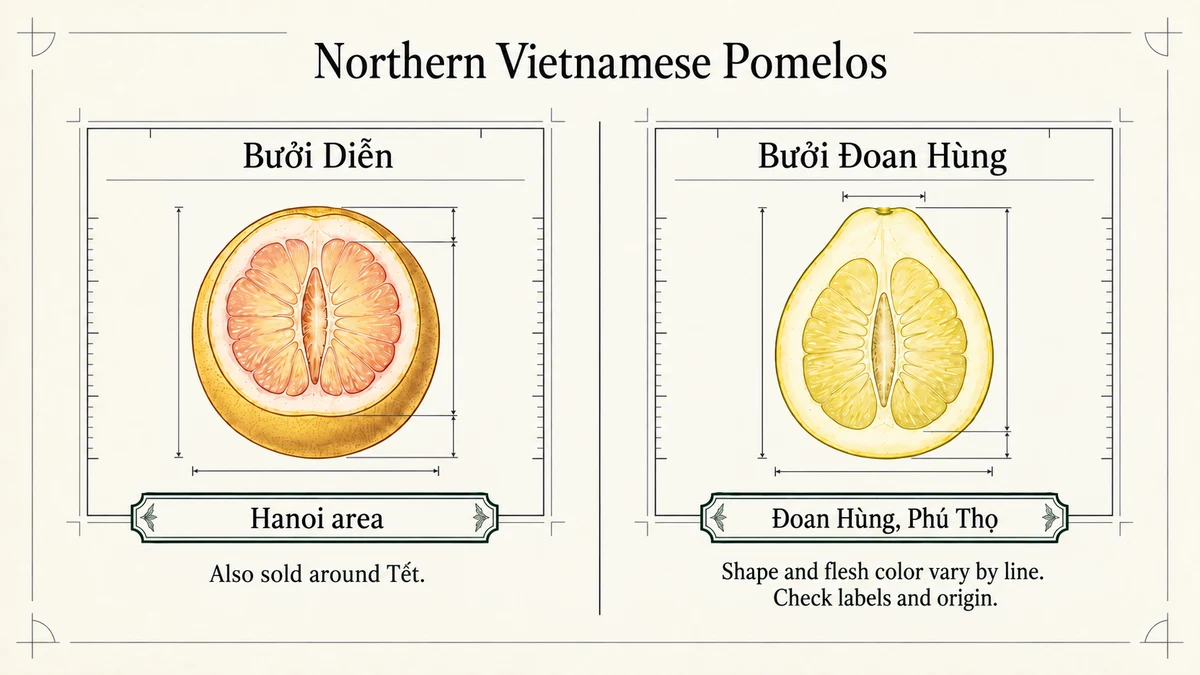
| Bưởi Diễn | Grown around Hanoi and sold during the Tết season |
| Bưởi Đoan Hùng | A specialty of Đoan Hùng, Phú Thọ; flesh color and shape vary between lines, so check origin and product labels |
Harvest timing, flesh color and sweetness or acidity can vary within a named group. Growing-region names here follow the cited sources and product-origin terminology.
Vietnamese Exports and Travel to Japan
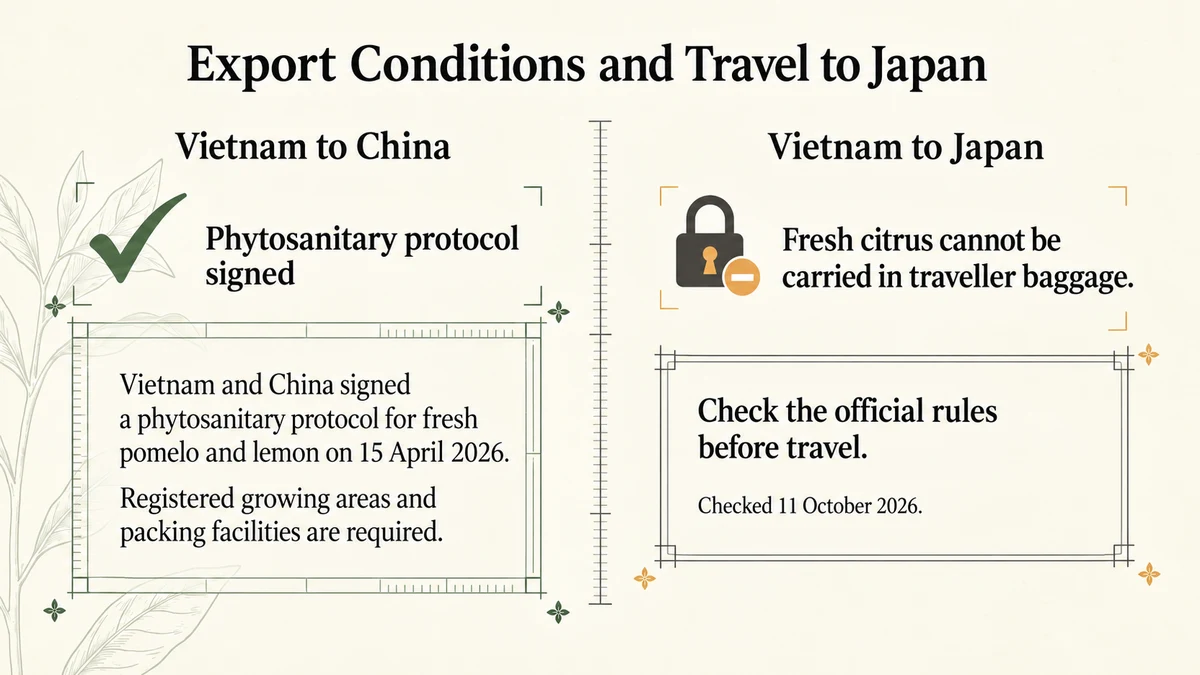
Vietnam’s government reported that Vietnam and China signed a protocol on phytosanitary requirements for fresh pomelos and lemons on 15 April 2026. Exports require registered growing areas and packing facilities and compliance with quarantine conditions. Market forecasts should be distinguished from actual export results.
Japan’s Ministry of Agriculture lists Vietnam’s request for fresh pomelo import access as received in February 2021, with identification of quarantine pests recorded in September 2025. This negotiation record must be distinguished from permission for travellers to carry fresh fruit.
Japan’s Plant Protection Station lists fresh citrus from Vietnam as not permitted in traveller baggage, checked on 11 October 2026. Check the official traveller guidance before departure, because conditions may change. Commercial cargo and processed products require separate checks.
Key Points
- Zabon, buntan and bontan overlap as Japanese names; English names include pomelo and pummelo.
- Citrus maxima is a major ancestral lineage contributing to sweet orange and grapefruit.
- Pomelo is non-climacteric; storage does not guarantee an increase in sugar.
- Vietnam grows regional cultivars such as Da Xanh, Năm Roi, Diễn and Đoan Hùng.
- Fresh Vietnamese citrus, including pomelo, cannot be carried into Japan in traveller baggage under the rules checked on 11 October 2026.
Frequently Asked Questions
Are zabon, buntan and bontan different fruits?
They do not clearly refer to three separate botanical species. They are used as regional or cultivar names. Look for cultivar and origin information such as Tosa buntan or Akune bontan when buying.
When is pomelo in season?
The season varies by cultivar and growing region. Several varieties make pomelo familiar throughout the year in Vietnam. Japanese buntan types also have different shipment periods, so there is no single month for all pomelos.
How is pomelo related to grapefruit?
Grapefruit derives from a cross between pomelo and sweet orange. They are related but distinct fruits.
Related Articles
- History, names and festivals: Pomelo History and Stories: Names, Journeys and Festivals
- Choosing, peeling and storage: How to Eat Pomelo in Vietnam: Choosing, Peeling, Dishes and Storage
References
- Royal Botanic Gardens, Kew — Citrus maxima (Burm.) Merr.
- Wu et al. — Genomics of the origin and evolution of Citrus
- FAO — Good practice in the design, management and operation of a fresh produce packing-house
- Huang et al. — Sugars and organic acids changes in pericarp and endocarp tissues of pumelo fruit during postharvest storage
- Kochi Agricultural Technology Center — Specialty citrus of Kochi
- Japan Ministry of Education — Standard Tables of Food Composition, eighth edition, 2023 supplement
- Vietnam Plant Protection Department — Bưởi Việt Nam
- Intellectual Property Office of Vietnam — Bưởi Đoan Hùng
- Vietnam Government News — Standardizing growing areas to maintain export markets
- Japan Ministry of Agriculture — Vietnam’s requests for import access
- Japan Plant Protection Station — Rules for bringing fruit and vegetables from overseas
- Akune City — Citrus grown in Akune
- Yatsushiro City — Municipal newsletter, September 2023
Japan Plant Protection Station: Vietnam traveller restrictions — Reviewed 11 October 2026.
