Guava Guide: Taste, Seasons, Nutrition, Varieties and Vietnamese Name
Published October 8, 2026
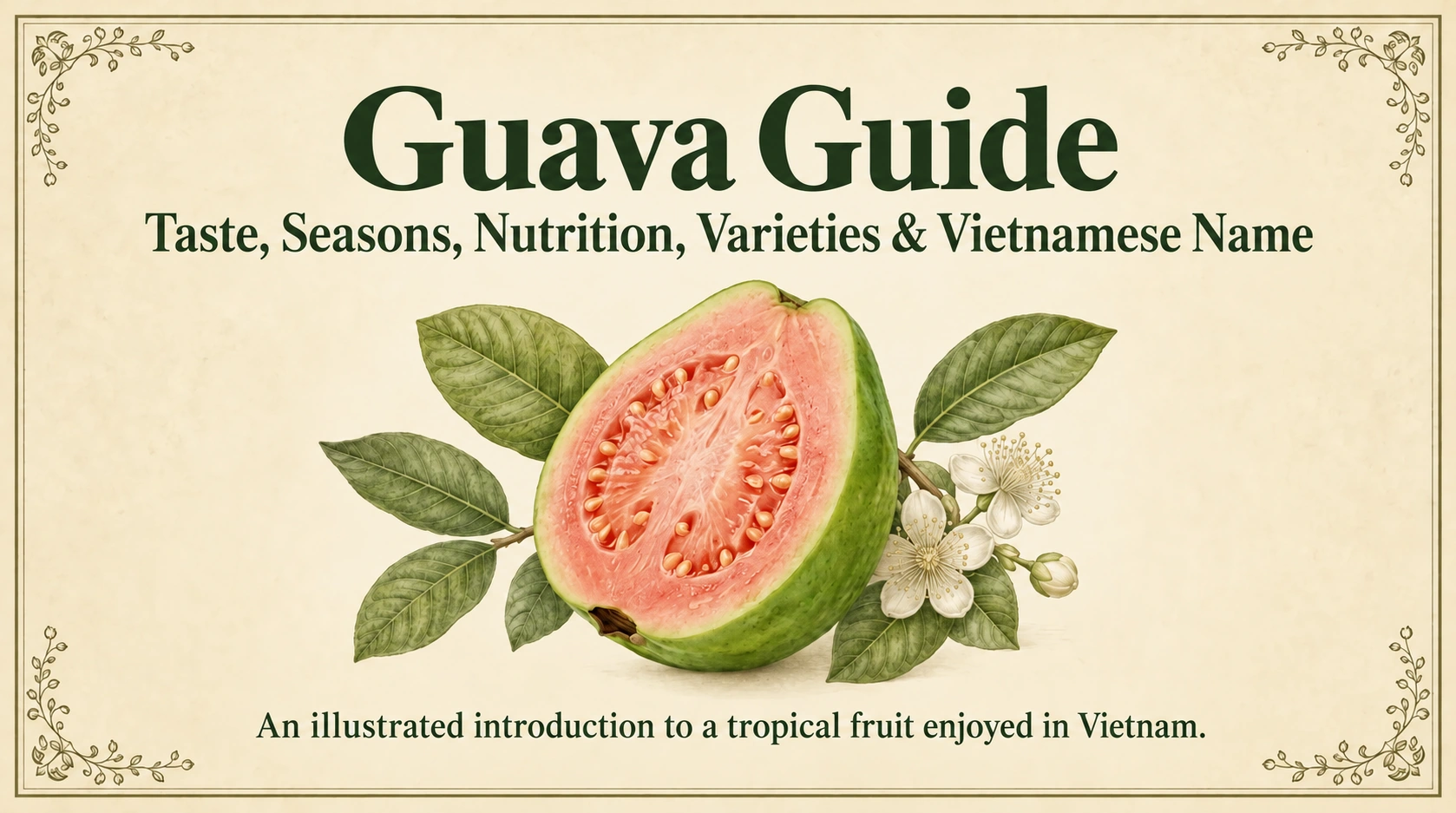
Guava is a tropical fruit with a sweet aroma and a distinctive texture. In Vietnam it is called Ổi and is enjoyed both firm and crunchy and soft and ripe.
The fruit grows on evergreen shrubs or small trees in the genus Psidium, part of the myrtle family. Different varieties offer different flesh colors, textures and flavors. This guide introduces guava’s taste, seasons, nutrition, origins, names and varieties, along with ways to enjoy it in Vietnam.
What is guava? Essential facts
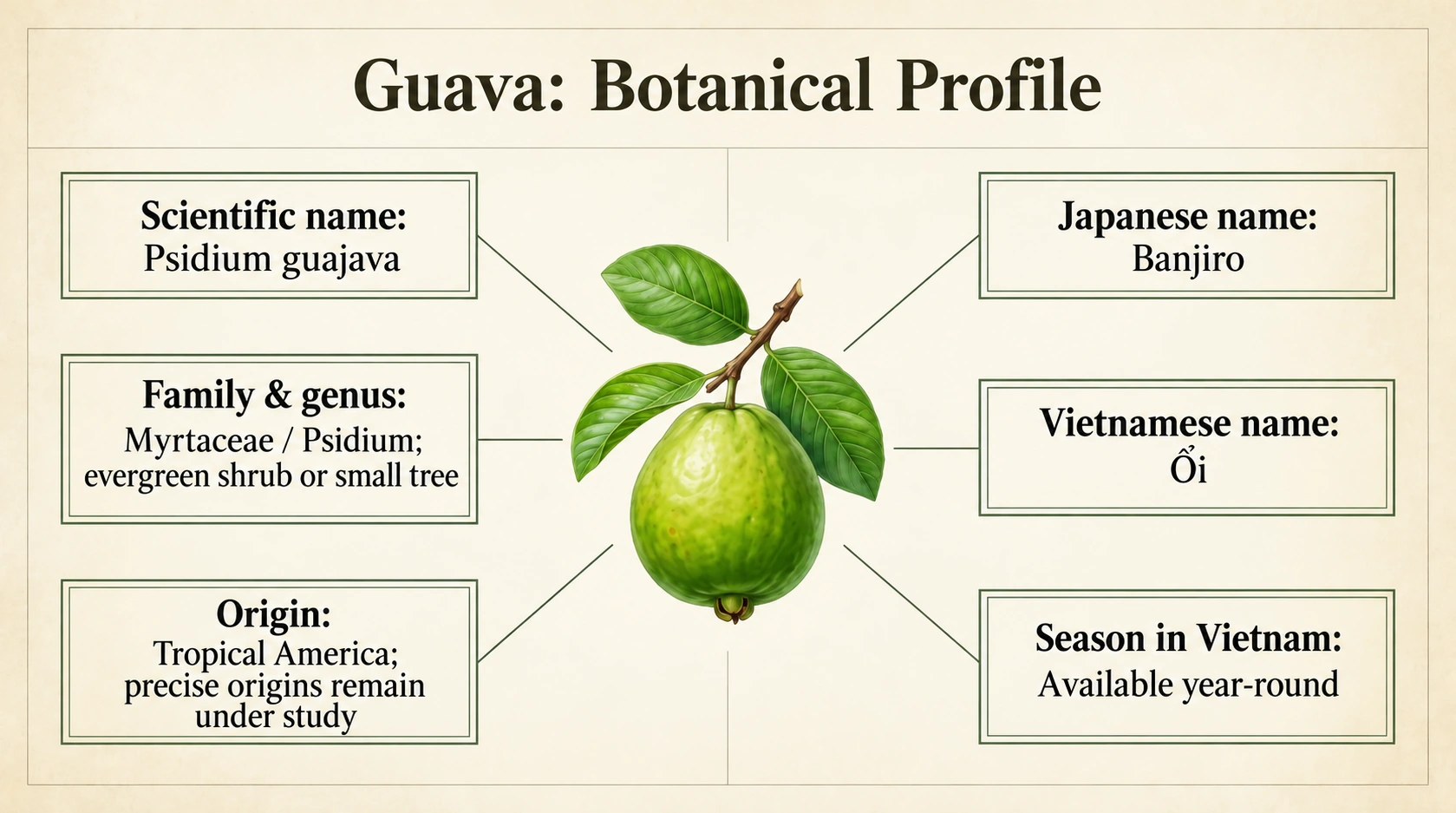
| Item | Details |
|---|---|
| Common name | Guava; Japanese spellings include guaba, guwaba and gwaba |
| Japanese name | Banjiro; also called ban-zakuro |
| Vietnamese name | Ổi; roughly “oy,” with a Vietnamese tone |
| Scientific name | Psidium guajava |
| Classification | Myrtle family (Myrtaceae), genus Psidium; evergreen woody shrub or small tree |
| Origin | Tropical America; precise origins remain debated |
| Season in Vietnam | Grown and harvested throughout the year |
| Major producing region in Vietnam | The southern Mekong Delta region |
| Nutrients highlighted here | Vitamin C, dietary fiber, potassium and β-carotene equivalents |
Sources are listed at the end of this article.
Guava grows on a tree: botany and names
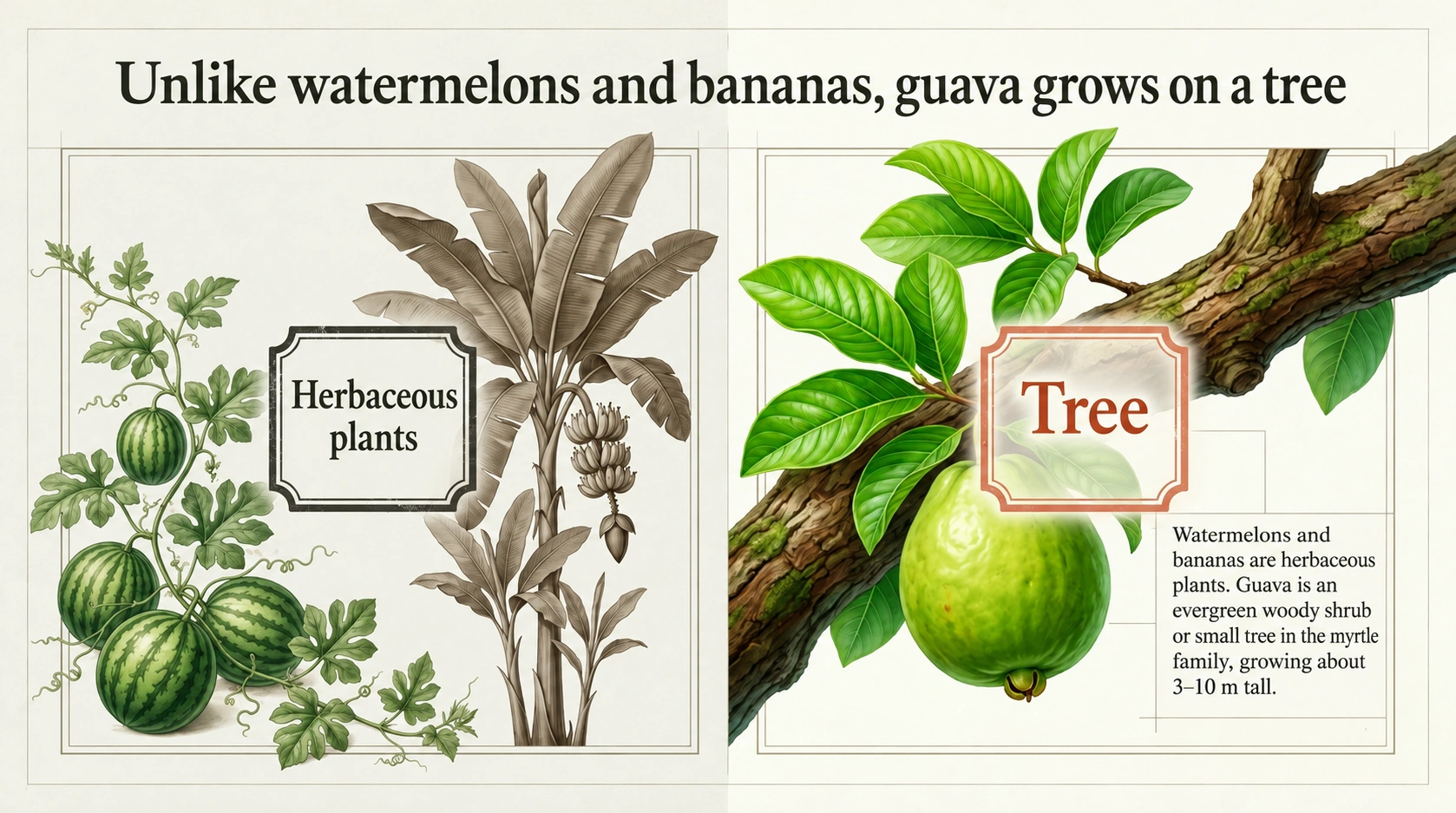
This series has introduced fruits such as pineapple, watermelon and banana that do not grow on true trees. Guava, however, is a woody plant. Its classification and names reveal some interesting connections.
An evergreen shrub or small tree in the myrtle family
Guava belongs to the genus Psidium in the family Myrtaceae. It is an evergreen shrub or small tree, commonly reaching about 3–10 m. Unlike watermelon and banana, which are herbaceous plants, it develops a woody trunk and branches.
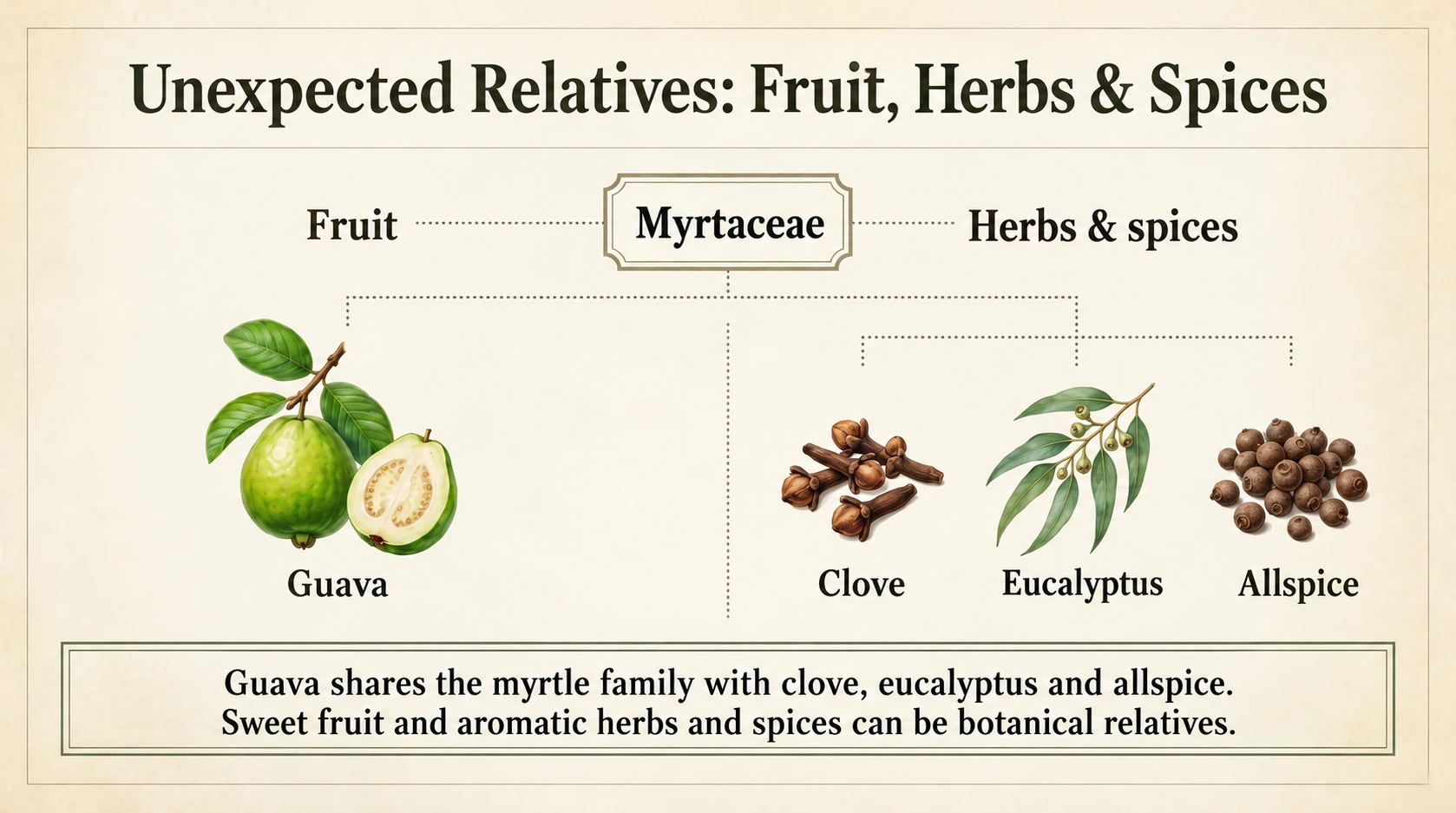
The myrtle family includes some surprising relatives: clove, familiar as a spice; eucalyptus, known for its aromatic leaves; and allspice. Sweet fruit and strongly scented herbs and spices can belong to the same botanical family.
The name traces back to an Indigenous Caribbean language
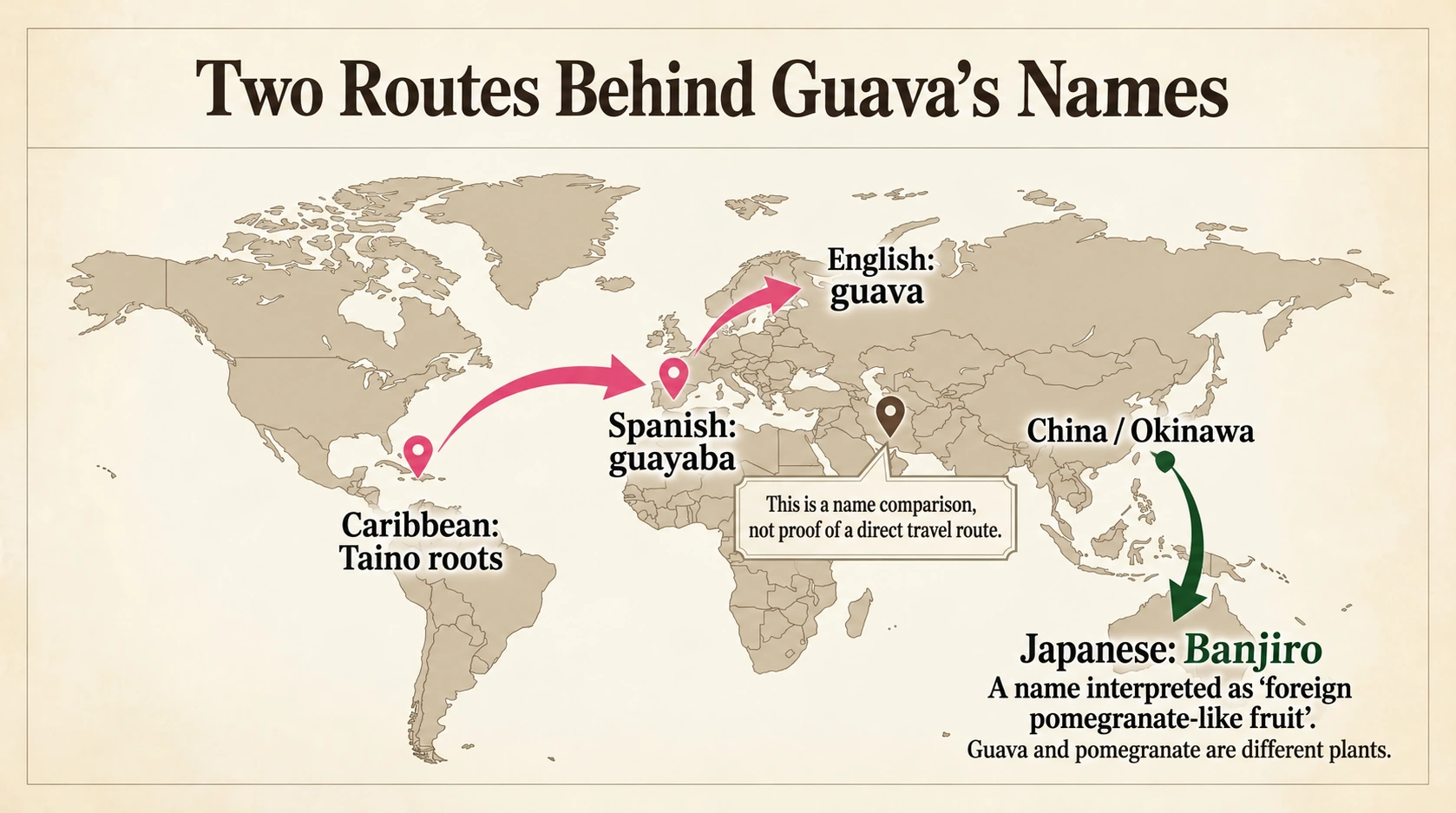
The English word guava is thought to derive from a word used by the Taino people of the Caribbean, an Arawakan-speaking people, through the Spanish guayaba. Its name reflects a fruit familiar to local people before Europeans reached the Americas.
The Japanese name banjiro comes from the reading of the Chinese characters used for its name. These are commonly interpreted as “foreign” and “pomegranate,” suggesting a foreign fruit resembling a pomegranate. Guava and pomegranate are different plants.
Its origins lie in tropical America
Guava originated in tropical America, but researchers continue to study its wild ancestors and domestication centers. Recent work points to links with South America, particularly the Amazon region. It would be misleading to identify a single country or area as its certain point of origin. Today, guava is grown throughout tropical and subtropical regions and is well established in Southeast Asia, including Vietnam.
A fruit with an invasive side
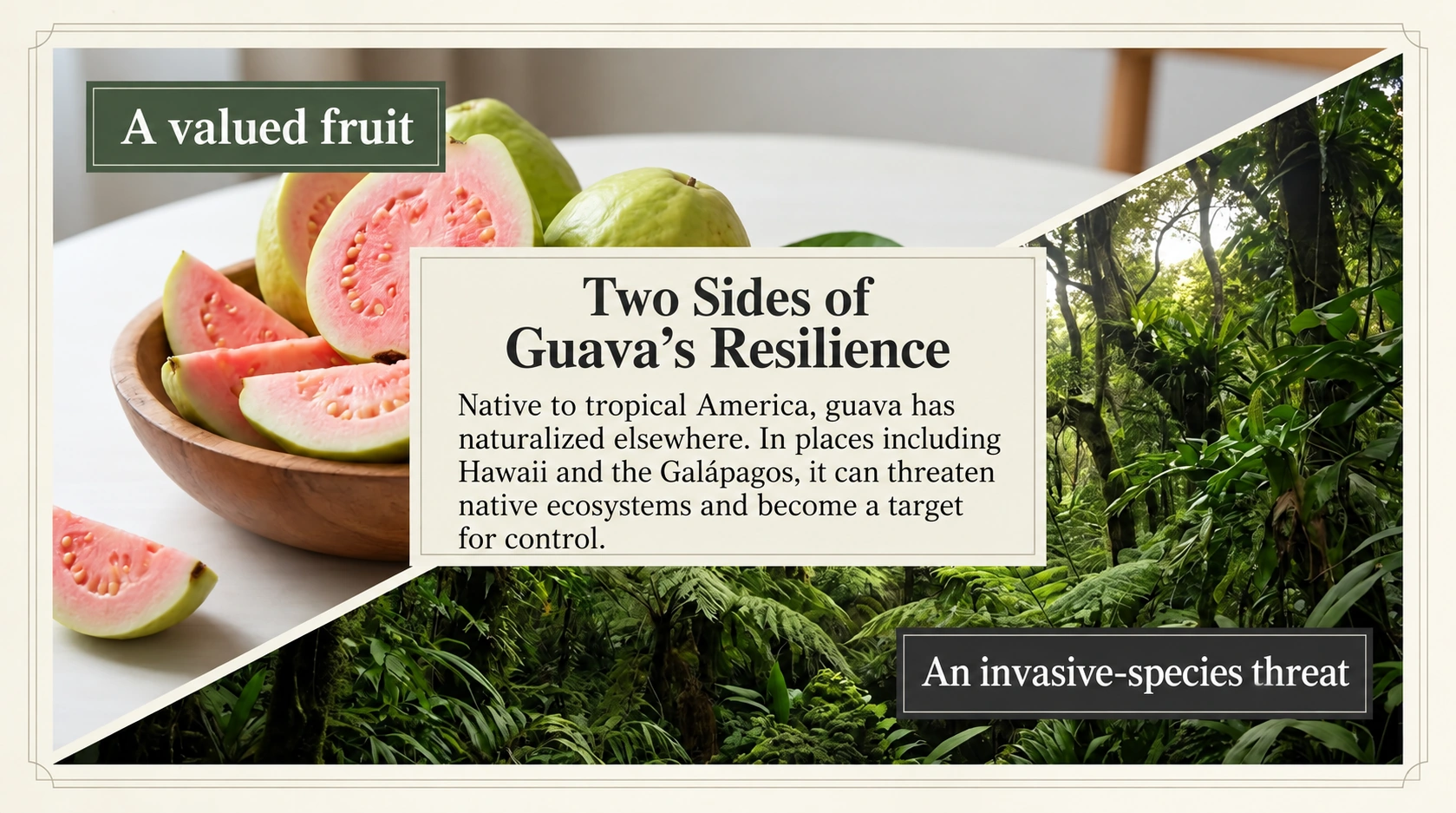
Guava’s ability to reproduce and spread has another consequence. Outside its native range, it can become an invasive alien species affecting native ecosystems. It has naturalized on islands including Hawaii and the Galápagos and is subject to control or removal in some places.
Guava nutrition: vitamin C, fiber and potassium
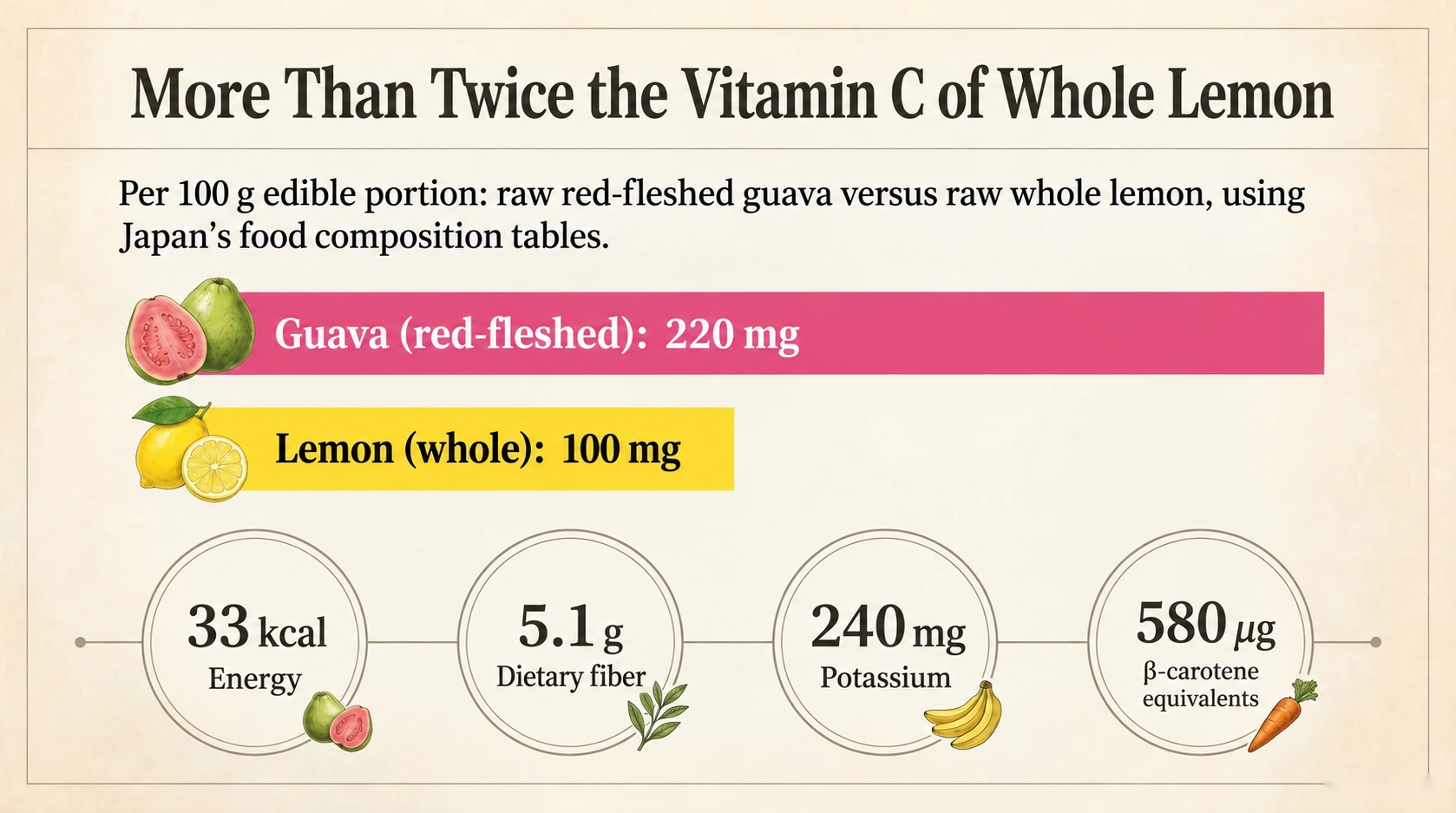
Japan’s food composition tables report the following values for raw red-fleshed guava, per 100 g of edible portion:
- Energy: 33 kcal
- Water: 88.9 g
- Carbohydrate: 9.9 g
- Dietary fiber: 5.1 g
- Potassium: 240 mg
- Vitamin C: 220 mg
- β-carotene equivalents: 580 µg
Vitamin C stands out. The same tables report 100 mg per 100 g of edible portion for raw whole lemon, compared with 220 mg for red-fleshed guava. This is a comparison between the specified foods, rather than a value for every guava variety. The figures come from the Ministry of Education, Culture, Sports, Science and Technology’s Standard Tables of Food Composition in Japan 2020 (Eighth Revised Edition), Supplement 2023.
Guava leaves are also used to make tea. Japan has some products containing guava leaf polyphenols approved as Foods for Specified Health Uses (FOSHU). Approval by the Consumer Affairs Agency applies to individual products. It does not establish the same approved health claims for all guava leaf teas.
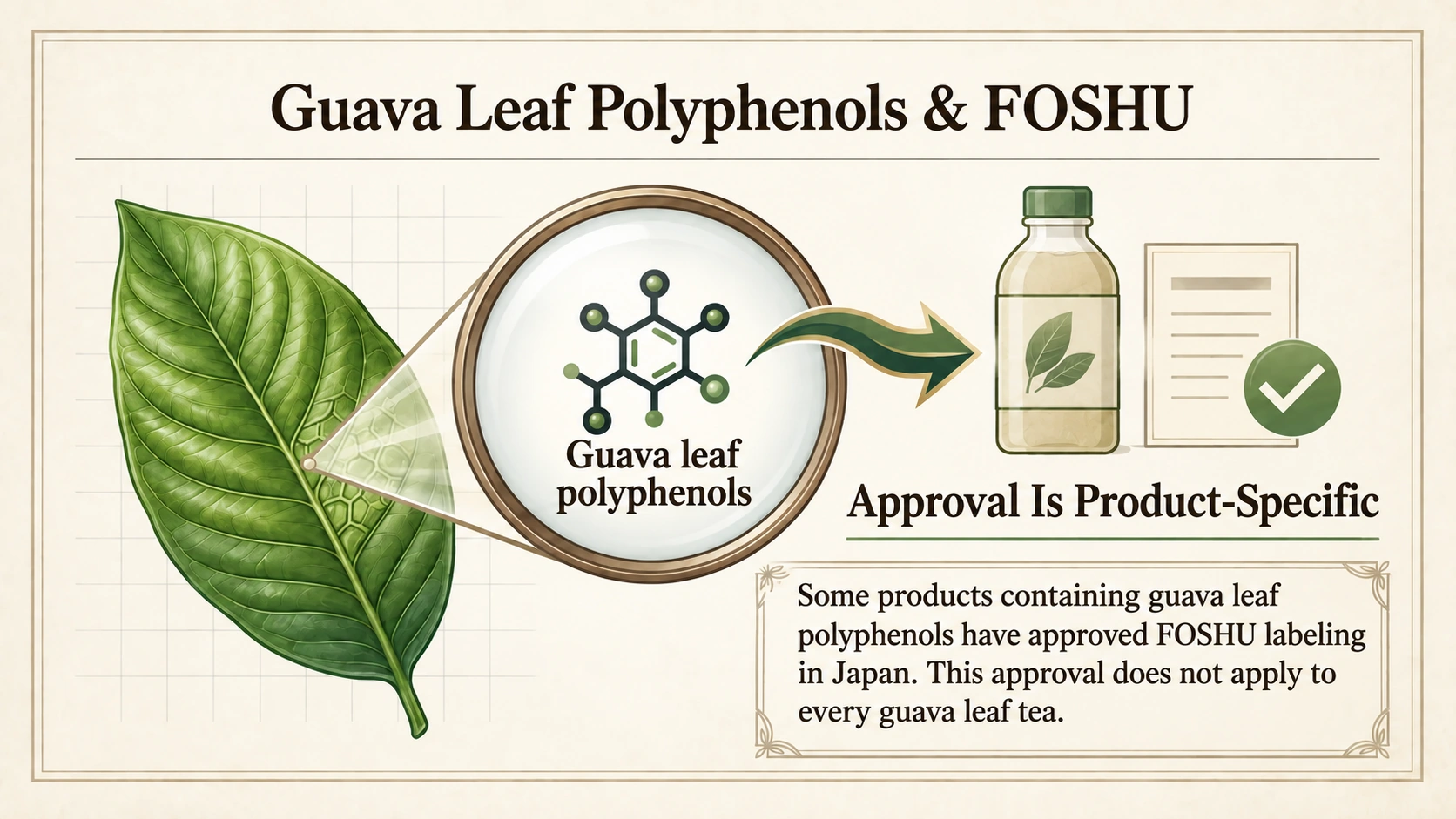
Food composition values and approved labeling for specific FOSHU products are separate kinds of information. They do not mean that fresh guava or ordinary guava leaf tea has an established role in preventing or treating disease.
Flesh colors, varieties and guava in Vietnam
Why global statistics combine three fruits
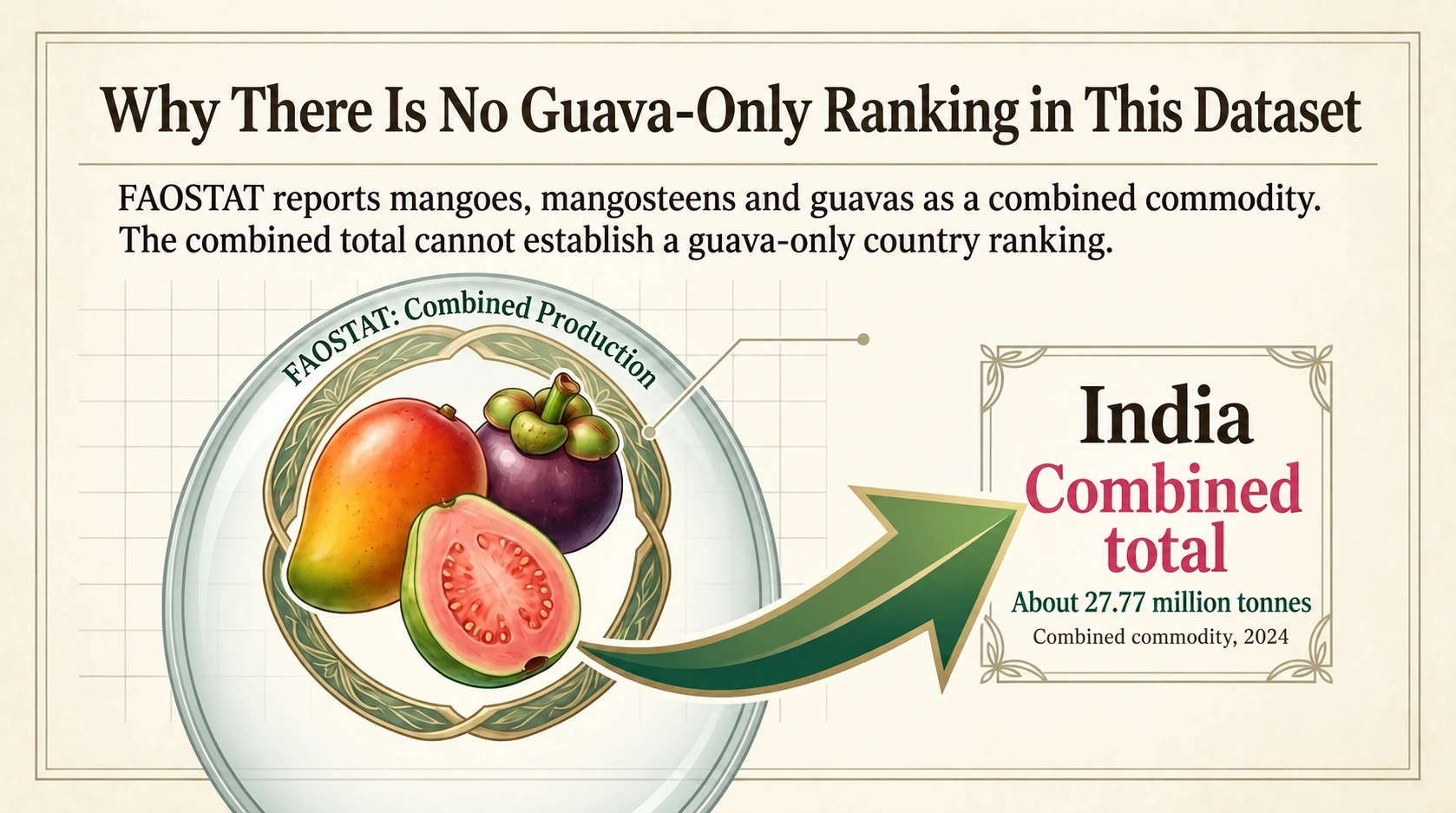
FAOSTAT publishes guava production under a combined commodity covering mangoes, mangosteens and guavas. India ranked first in the 2024 combined figures, with approximately 27.77 million tonnes. That is not a guava-only total. These data therefore cannot establish a separate country ranking for guava production (dataset checked in September 2026).
Vietnamese names and varieties
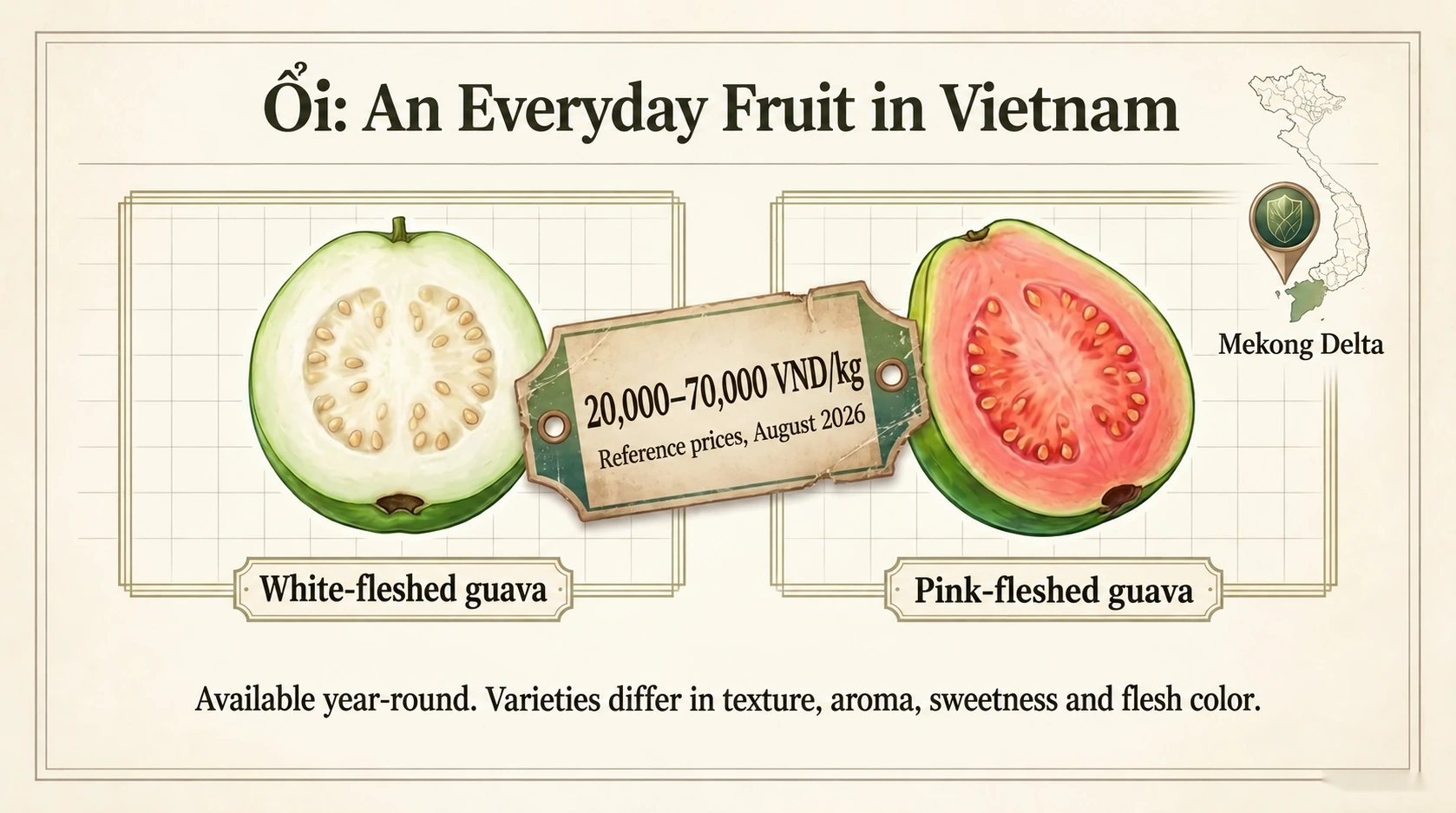
In Vietnamese, guava is Ổi. White-fleshed and pink-fleshed types are sold, and firm, crunchy guava is a familiar choice. Flesh color, texture, aroma and sweetness vary with the variety and degree of ripeness.
A familiar pairing: chili salt
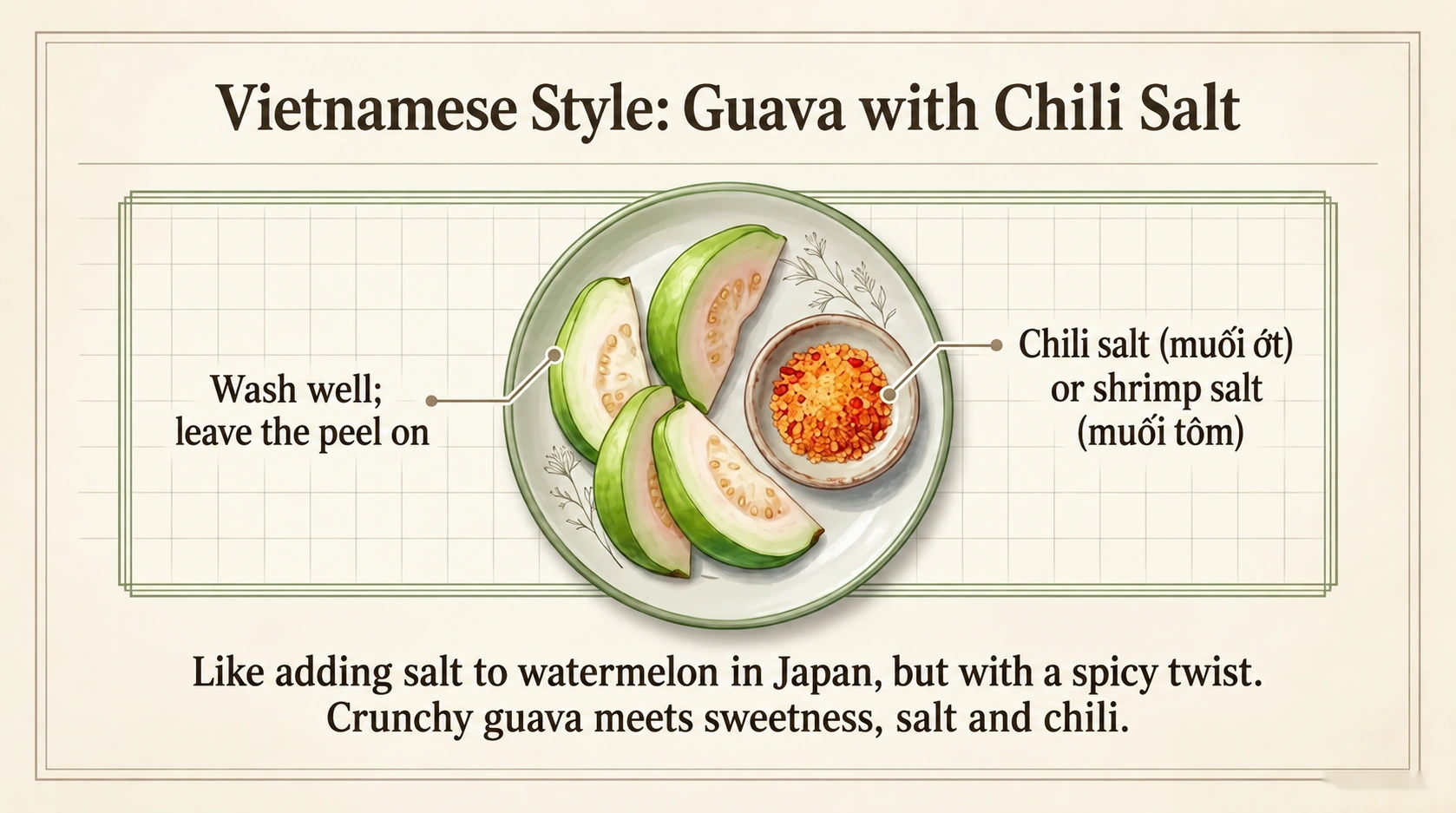
A popular way to eat guava in Vietnam is to wash it thoroughly under running water, cut it into wedges with the peel on, and dip it in chili salt (muối ớt) or shrimp salt (muối tôm). The idea is somewhat like adding salt to watermelon in Japan, but with the extra heat of chili. Like green mango and wax apple, guava is an everyday fruit often enjoyed with salt or chili.
Seasons, prices and bringing guava into Japan
An everyday fruit available year-round
Guava is commonly found in Vietnamese markets and supermarkets throughout the year. A reference price range is 20,000–70,000 VND per kg, depending on region, shop, variety, quality and season. These prices were surveyed in August 2026. Currency conversions fluctuate, so check the displayed price when buying.
Fresh guava from Vietnam cannot be brought into Japan
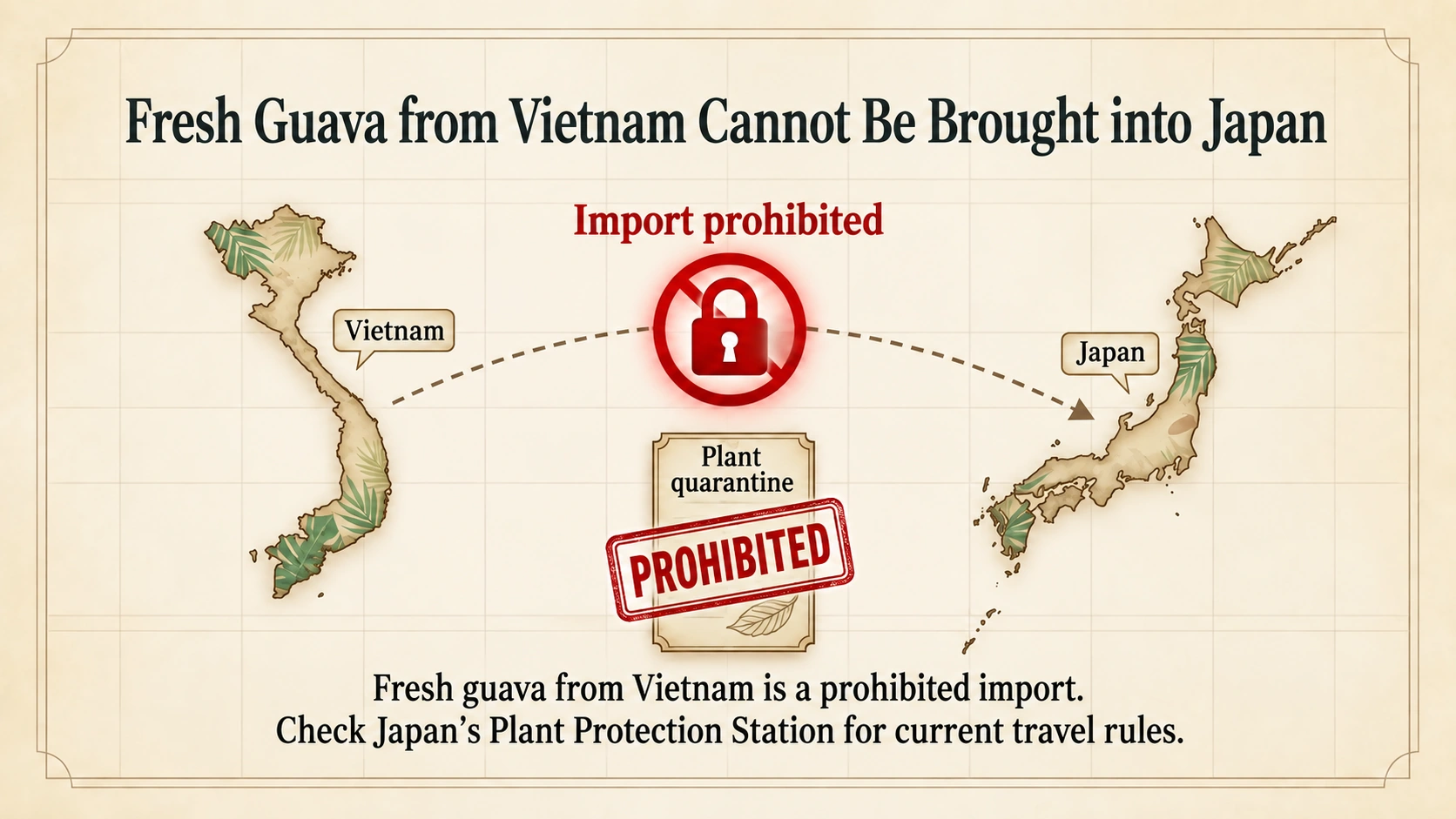
Fresh guava from Vietnam is prohibited from entry into Japan. Japan’s Plant Protection Station explicitly lists guava among fruits that cannot be brought in from Vietnam. Fruit is subject to plant quarantine rules, including purchases from airport duty-free shops and fresh cut fruit. Consult the Plant Protection Station’s current guidance before traveling.
Frequently asked questions about guava
Do the Japanese names guaba, guwaba and gwaba mean different fruits?
No. They are spelling variants for the same fruit. This article uses “guava” in English. Japanese food databases and other sources may use different spellings.
What does guava taste like?
Firm guava tends to be mildly sweet and crunchy. As it ripens, its sweet aroma becomes stronger and the flesh softens. Depending on the variety, the flesh may be white, yellow, pink or red.
When is guava in season in Vietnam?
It is available throughout the year. Prices and supply vary with region, variety, quality and time of year.
Can I take guava home to Japan?
Fresh guava from Vietnam cannot be brought into Japan. Check the Plant Protection Station’s current rules before traveling.
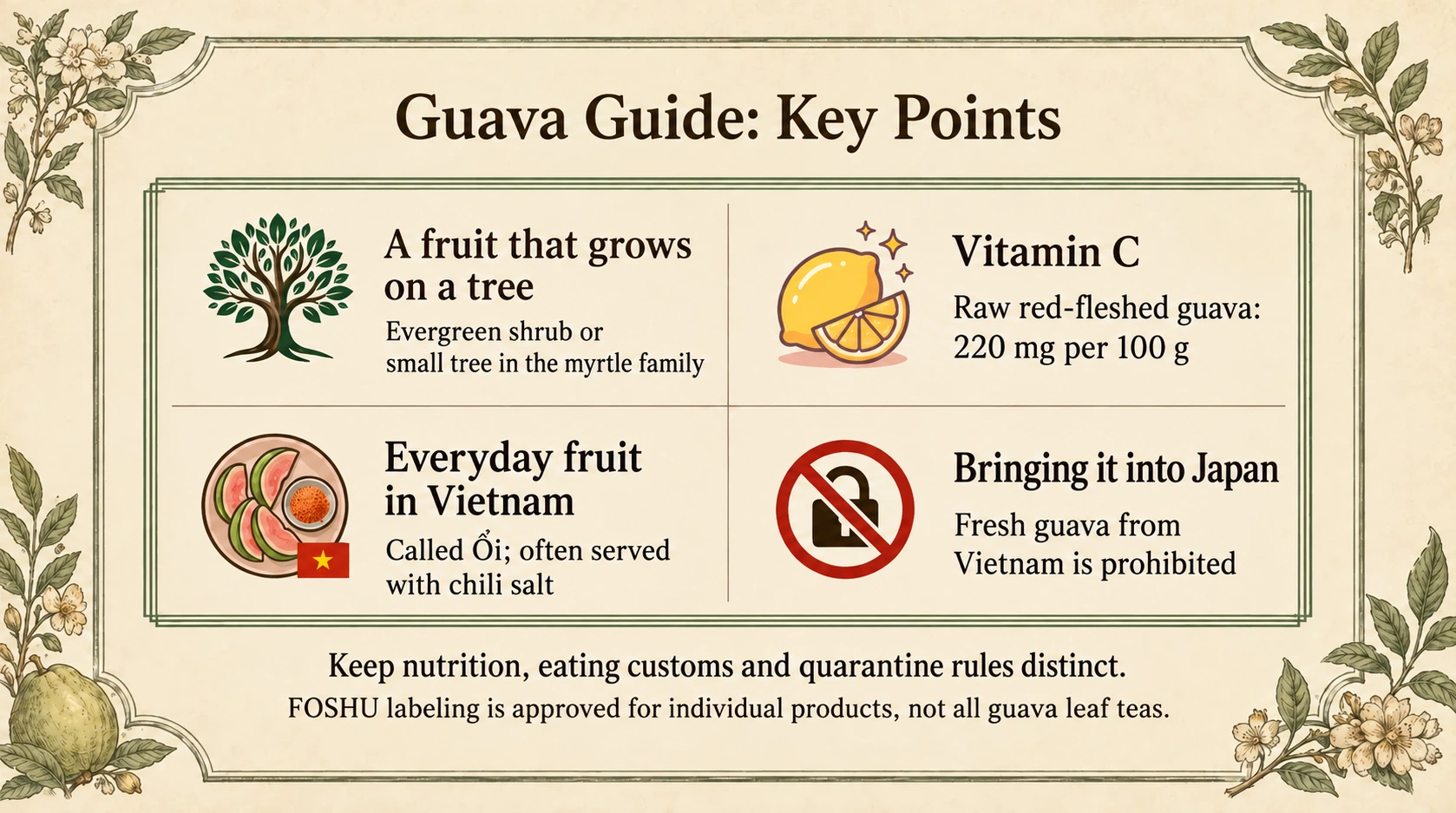
Guava guide: key points
- Guava is an evergreen woody shrub or small tree in the myrtle family. Its botanical relatives include clove and eucalyptus.
- Its name is thought to trace back to an Indigenous Caribbean language. It originated in tropical America and can become invasive outside its native range.
- Raw red-fleshed guava contains vitamin C and fiber. FOSHU approval for products containing guava leaf polyphenols is product-specific.
- FAOSTAT combines mangoes, mangosteens and guavas, so those figures cannot rank guava production on its own.
- In Vietnam, guava is called Ổi, is available year-round, and is often served with chili salt. Fresh guava from Vietnam cannot be brought into Japan.
For selecting, cutting and storing guava, see How to Eat Guava in Vietnam. For its journey around the world, see Guava: History and Stories. You can also explore the Vietnamese fruit guide.
References
- Alvarado-Sizzo et al.: The Taming of Psidium guajava: Natural and Cultural History of a Neotropical Fruit
- Pacheco et al.: Genetic analyses and dispersal patterns unveil the Amazonian origin of guava domestication
- Toho University Medicinal Botanical Garden: Guava (Banjiro)
- Kew Science: Psidium guajava L.
- Mental Floss: 12 English Words Derived from an Extinct Caribbean Language
- Kotobank: Banjiro (guava)
- GKZ Plant Dictionary: Banjiro (guava)
- Reef Resilience Network: Hawaii — Invasive Species
- Hawaii Tourism Authority Aloha Program: Harmful Plants
- MEXT Food Composition Database: Guava, red-fleshed, raw (2023 supplement)
- Yakult Central Institute: Guava Leaf Polyphenols
- J-STAGE: Guava leaf extract, antidiabetic effects in mice and post-meal glucose effects in human trials
- FAOSTAT: Crops and livestock products
- VIETJO: Guava / Ổi
- Japan Plant Protection Station: Vietnam — Quarantine Conditions for Accompanied Baggage
- Japan Plant Protection Station: Information for Visitors to Japan
- Consumer Affairs Agency: Foods for Specified Health Uses (FOSHU)
About the Author

Chuta
Based in Hanoi, Vietnam, Chuta buys fruit at local markets and supermarkets and writes about its taste, seasons, selection and preparation. Drawing on life in Vietnam, he introduces tropical fruits that are less familiar to readers in Japan.
About Fruit Guide