Guava: History and Stories
Published October 8, 2026
Guava, a familiar fruit in Vietnamese markets, originated in tropical America. Indigenous use and movement, followed by trade across the seas, helped it spread through tropical and subtropical regions. Researchers continue to study its precise origins and domestication centers.
This article follows guava’s relationship with people, from archaeological evidence and the origins of its name to its global spread, its invasive side and the story of the “laughing guava tree” at Lam Kinh in Vietnam.
Guava’s origins and prehistoric use
Guava originated in tropical America, although its exact wild origins and domestication centers remain debated. A genetic study published in 2024 suggests domestication may have begun in South America, particularly the Brazilian Amazon. Research is ongoing. Its botanical classification and ecology are covered in the Guava Guide.
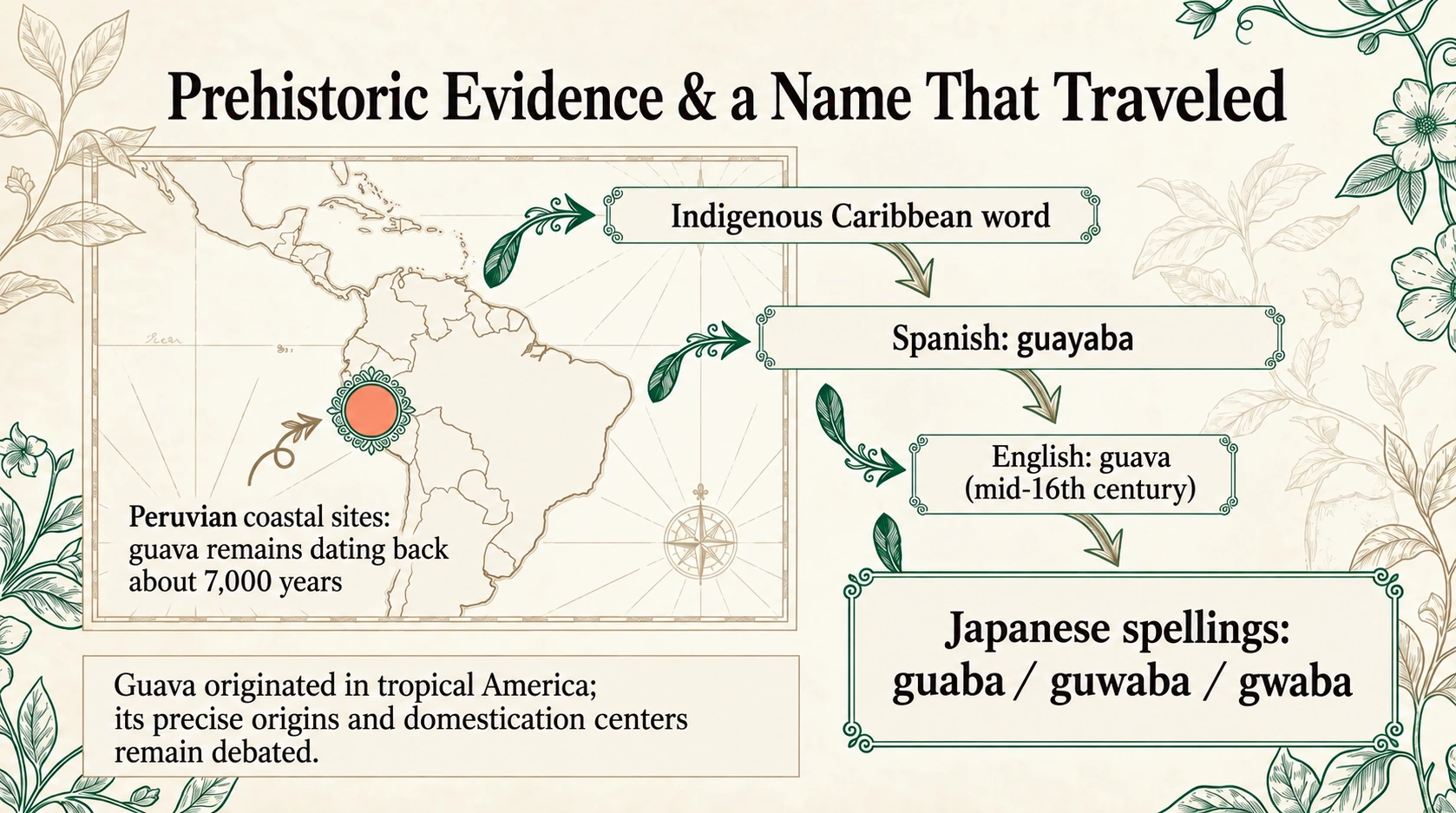
Its long relationship with people is especially striking. A 2021 review reports guava macroremains from coastal Peruvian archaeological sites dating back about 7,000 years. Seeds from sites in the southwestern Brazilian Amazon may be older, but broad dating ranges and limited evidence call for caution. These discoveries suggest guava may have been used and moved in prehistoric times; they do not establish that domestication was complete by a particular date.
How guava got its name
The English word guava is reported to have entered use in the mid-16th century. It is thought to derive from a word used by the Indigenous Taino people of the Caribbean, through the Spanish guayaba. The different Japanese spellings of guava also belong to this naming history.
How did guava spread around the world?
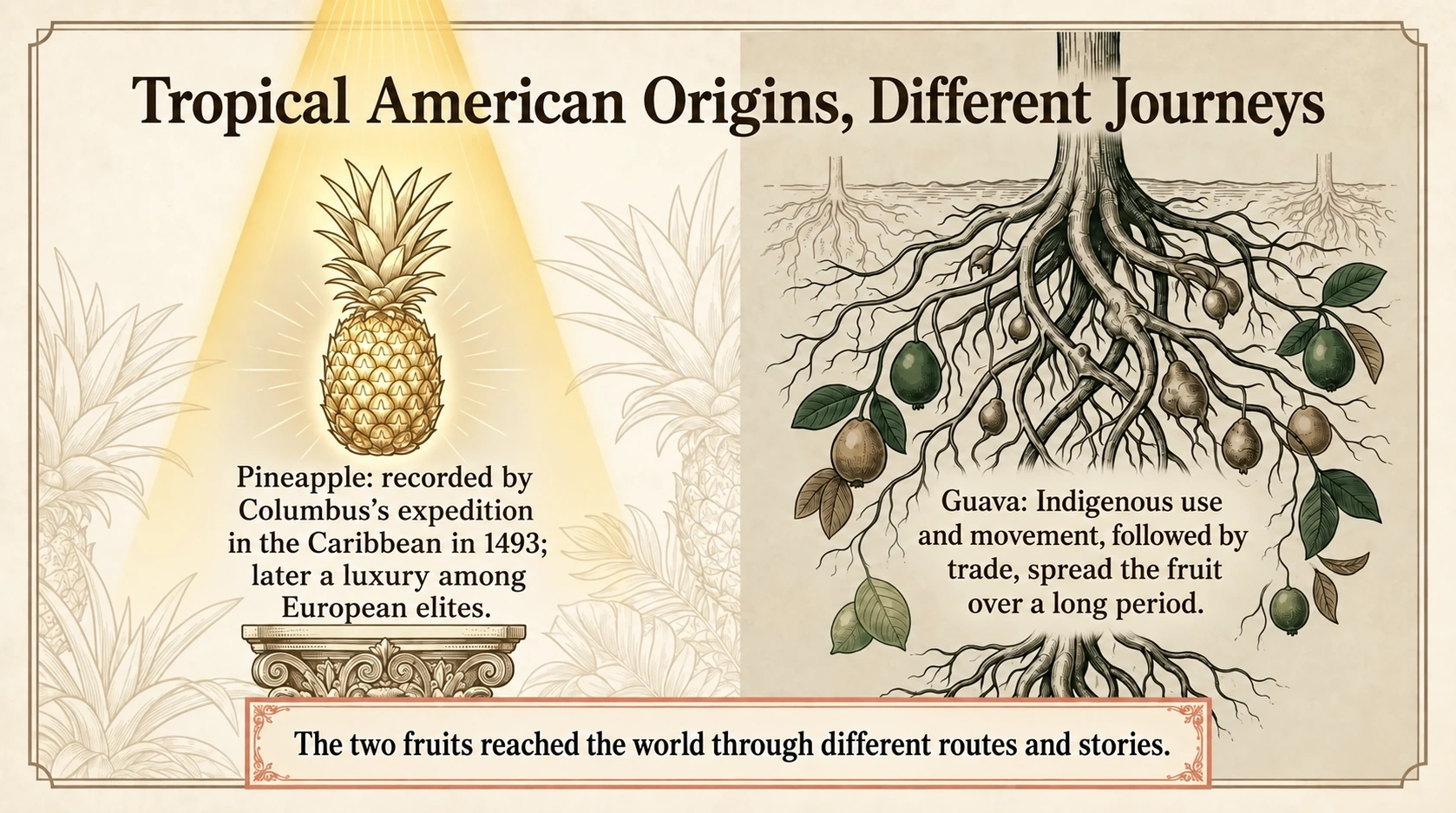
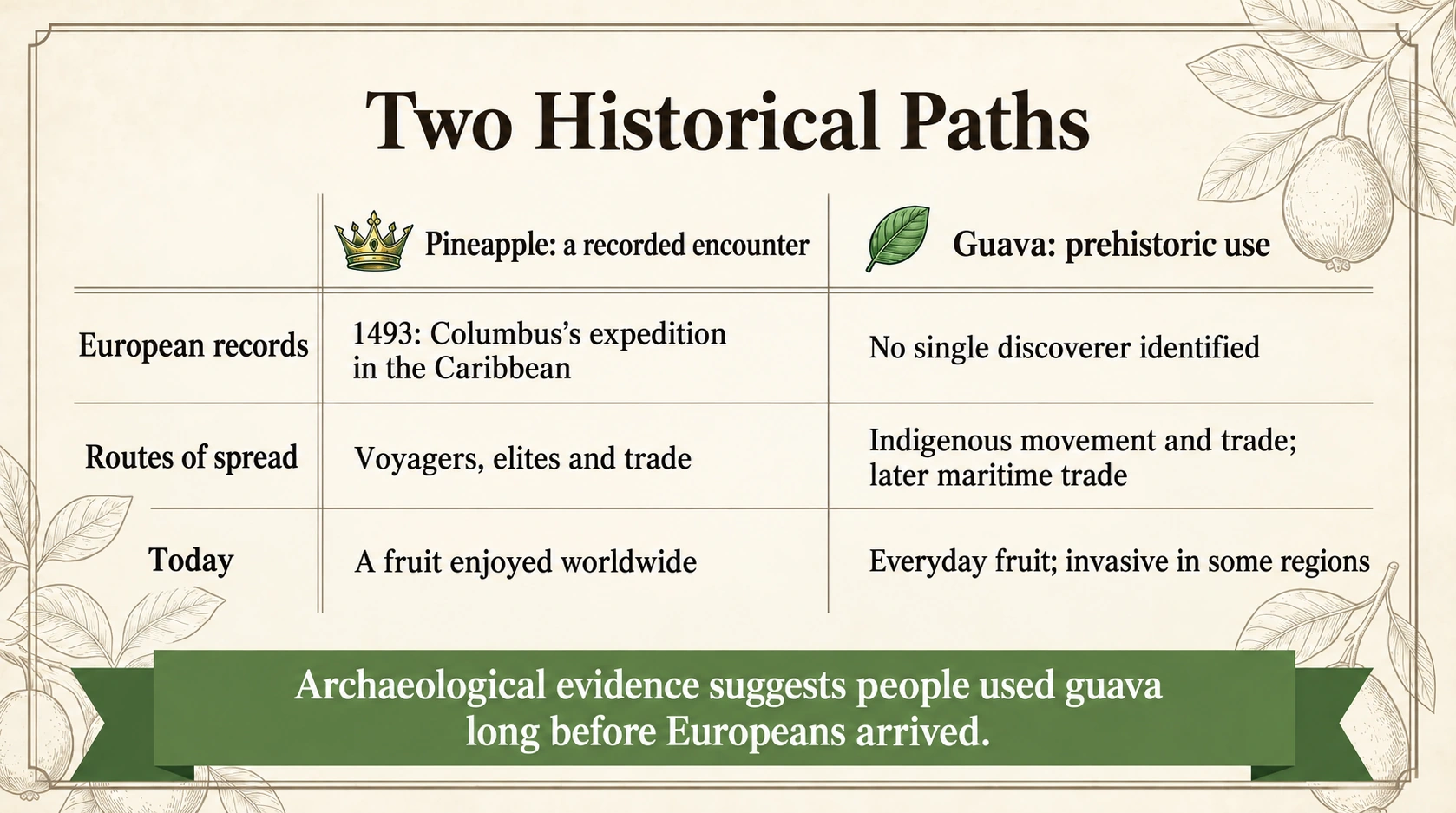
Pineapple has a famous encounter tied to a person and a year: Columbus’s expedition encountered it in the Caribbean in 1493.
Guava’s spread cannot be reduced to a single voyager or year. Indigenous movement and trade helped disperse it within the Americas. After European expansion, new maritime trading networks are thought to have carried it to tropical and subtropical Asia, Africa and Oceania.
The Manila galleon trade connecting Manila and Acapulco from 1565 to 1815 was an important link between the Americas and Asia. However, the sources reviewed for this article do not identify a confirmed date or vessel for guava’s arrival in the Philippines.
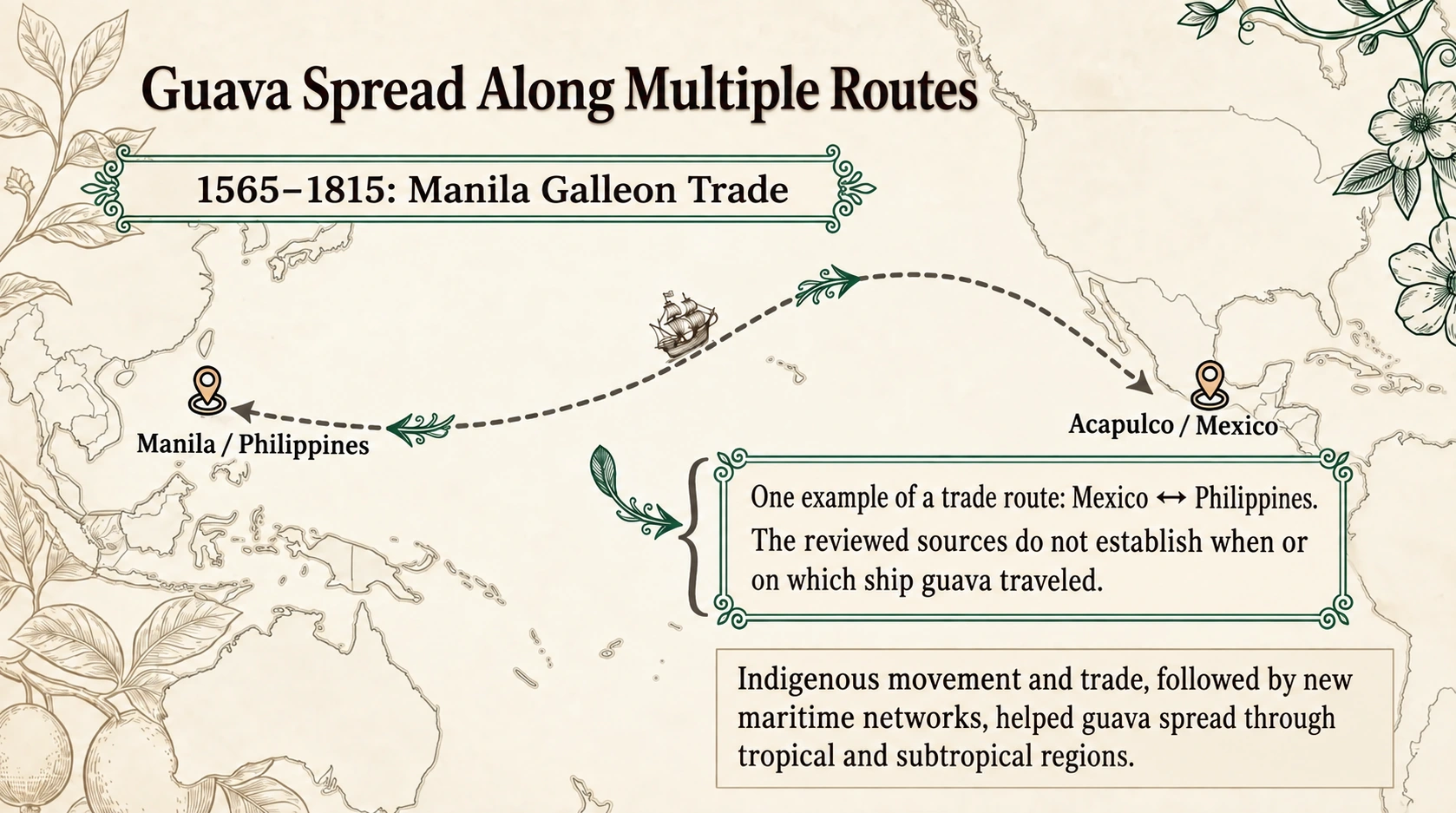
Where pineapple has a well-known story associated with a recorded European encounter, guava’s expansion unfolded over a long period along multiple routes. That contrast gives the two fruits different historical narratives.
When guava becomes an invasive species
This quiet global expansion has another side. Guava reproduces readily and can become an invasive alien species in places where it has been introduced, affecting native ecosystems.
It has naturalized on islands including Hawaii and the Galápagos. Animals that eat the fruit and disperse the seeds help it spread.
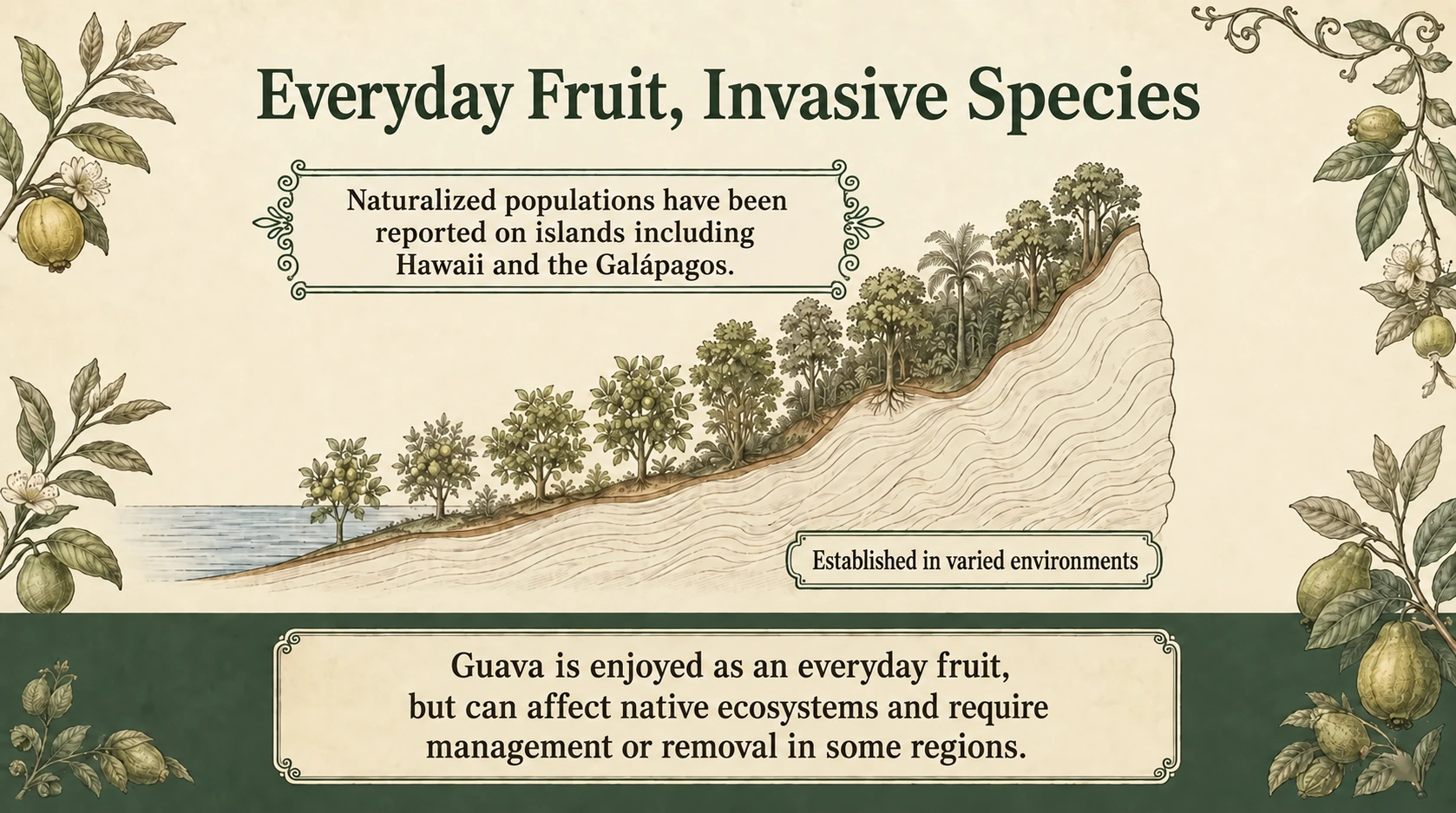
Pineapple is often portrayed as a fruit wearing a crown. Guava became an everyday fruit, but also a target for management or removal in some regions. Both aspects belong to its story.
Vietnam’s “laughing guava tree”
The sources reviewed for this article did not establish a guava origin myth indigenous to Vietnam. A Vietnamese-language story titled Sự tích cây ổi (“The origin of the guava tree”) is presented as a Philippine folktale; its contents and the word bayabas point to that background. Being available in Vietnamese does not make a story Vietnamese in origin.
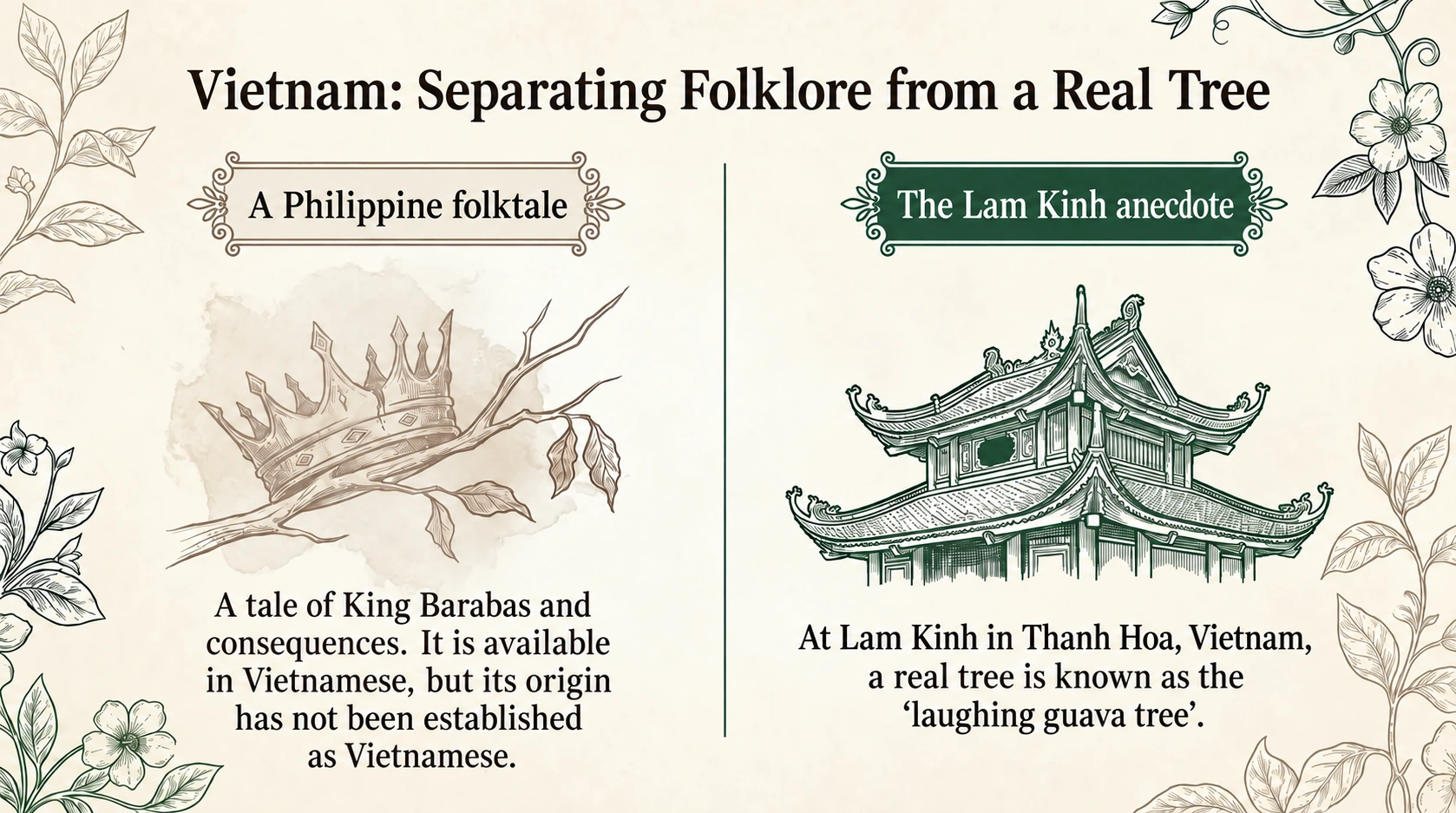
Vietnam does, however, have a remarkable story about a real tree. At Lam Kinh, a historic site in Thanh Hoa Province in north-central Vietnam, stands a tree known as the “laughing guava tree.” Lam Kinh is associated with Le Thai To, also known as Le Loi, the founder of the Later Le dynasty, whose tomb is there.
According to Vietnamese newspaper reports, in 1933, Tran Hung Giang of Nam Dinh donated a guava tree, two camphor-family trees and four elephant statues to Lam Kinh. A wish for children forms part of the story, but it should be treated as a locally transmitted anecdote.
The tree is known for a reported phenomenon in which its branches and leaves move when the trunk or base is gently rubbed. Reports differ on when it was noticed: VietnamNet gives 1994, while Dân Việt gives 2000. VietnamNet reports that poet Hoang Ngoc Phach gave the tree its current name in 2001.
Dân Việt reports that a 2003 investigation proposed electrical stimulation spreading to the branches and leaves. The mechanism has not been established in peer-reviewed research confirmed for this article. A genetic research project reportedly began in 2008, but its findings could not be confirmed from the reviewed reports.
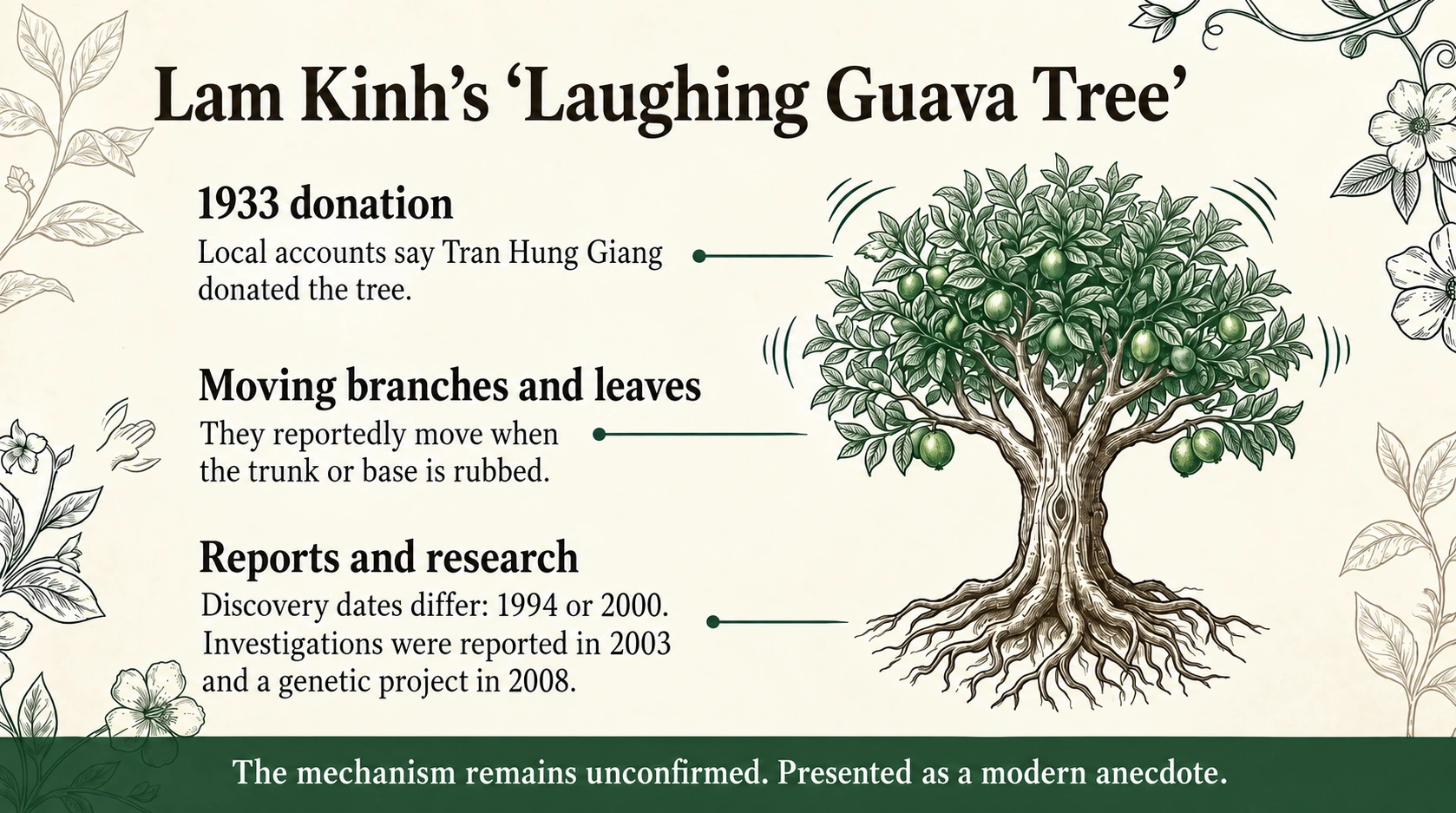
More than 90 years after its reported donation in 1933, the tree remains a talking point in accounts of Lam Kinh. It is best understood as a modern anecdote about a living tree, rather than a traditional creation myth. The story shows the interest a familiar fruit tree can inspire.
A fruit that never became a king
Pineapple’s familiar narrative moves from a recorded encounter in the Caribbean in 1493 to luxury on European elite tables and eventually to everyday consumption through the canning industry.
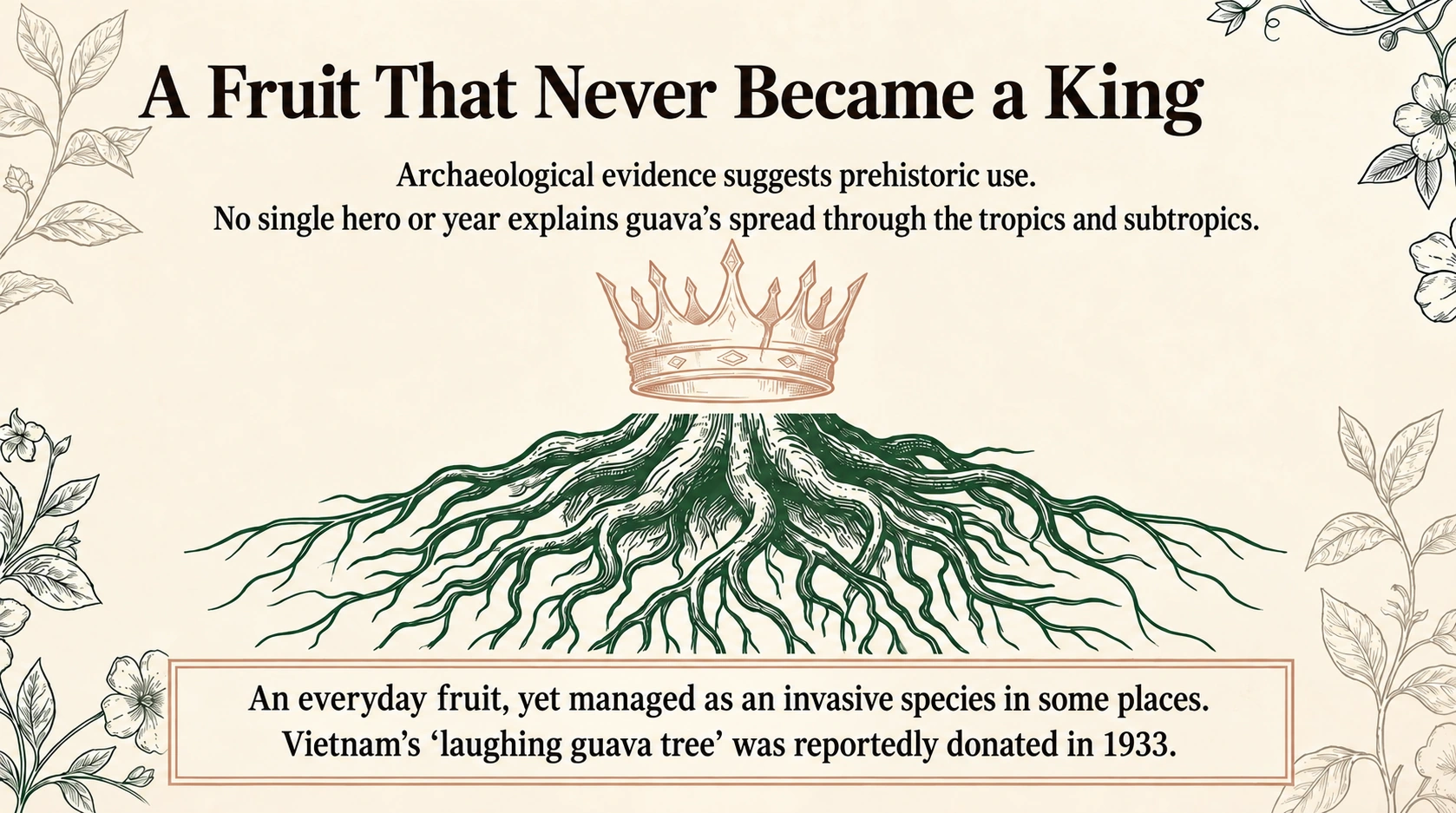
Guava’s journey has a different character. Archaeological evidence suggests people used it thousands of years ago, but no single hero or year explains its global spread. It became an everyday fruit while also being managed as an invasive species in some regions. Vietnam’s Lam Kinh adds the story of the “laughing guava tree,” reportedly donated in 1933.
The next time you bite into guava, consider the long history of people, movement and trade behind this familiar fruit.
For its classification, ecology, nutrition, flesh colors, availability and reference prices in Vietnam, see the Guava Guide.
Frequently asked questions about guava’s history
Where did guava originate?
It originated in tropical America. Its exact wild origins and domestication centers remain debated; recent research highlights connections with the Amazon region of South America.
Where does the word “guava” come from?
It is thought to derive from an Indigenous Caribbean word through the Spanish guayaba.
When did guava reach Asia?
After Indigenous movement and trade helped spread it within the Americas, maritime networks following European expansion are thought to have carried it to Asia. The sources reviewed here do not establish a particular ship or year.
What is Vietnam’s “laughing guava tree”?
It is a real tree at Lam Kinh in Thanh Hoa Province. Its branches and leaves reportedly move when its trunk or base is rubbed. Reports differ on the discovery date, and the mechanism remains uncertain. This is a modern anecdote, rather than a traditional creation myth.
Related articles
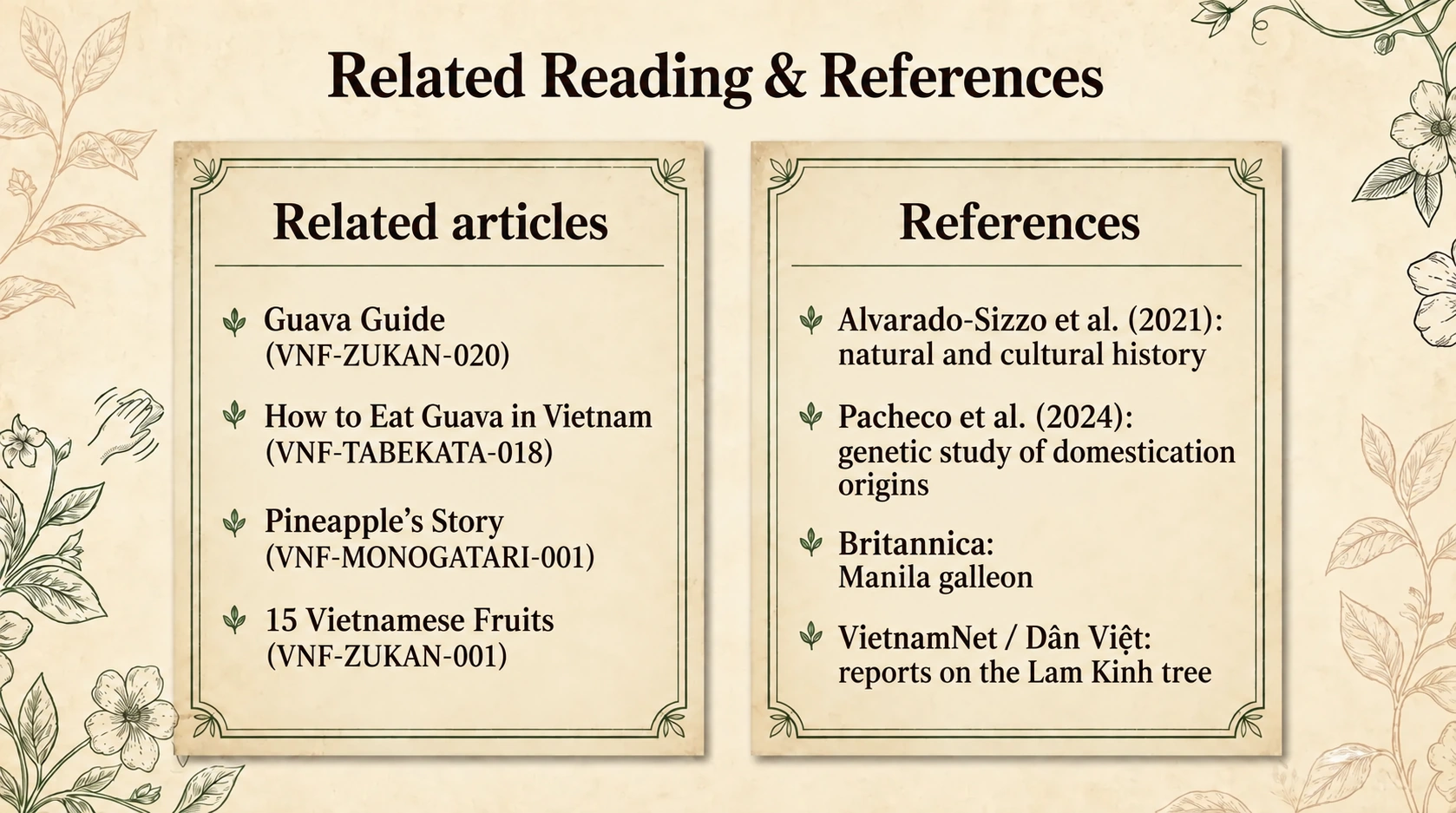
- Taste, seasons, nutrition, varieties and Vietnamese name: Guava Guide
- Selecting, cutting, seeds and storage: How to Eat Guava in Vietnam
- Another fruit that traveled from tropical America: Pineapple’s story
- More fruit to enjoy locally: 15 Vietnamese Fruits
References
- Alvarado-Sizzo et al.: The Taming of Psidium guajava: Natural and Cultural History of a Neotropical Fruit
- Pacheco et al.: Genetic analyses and dispersal patterns unveil the Amazonian origin of guava domestication
- Britannica: Manila galleon
- Guahan Sustainable Culture: Spanish Colonial Period
- Reef Resilience Network: Hawaii — Invasive Species
- Hawaii Tourism Authority Aloha Program: Harmful Plants
- eva.vn: Folktale — The Origin of the Guava Tree
- vietnamnet.vn: The Laughing Guava Tree and the 300-Year-Old Banyan
- danviet.vn: Reports of the Laughing Guava Tree at Lam Kinh
About the Author

Chuta
Based in Hanoi, Vietnam, Chuta buys fruit at local markets and supermarkets and writes about its taste, seasons, selection and preparation. Drawing on life in Vietnam, he introduces tropical fruits that are less familiar to readers in Japan.
About Fruit Guide