
この記事の結論
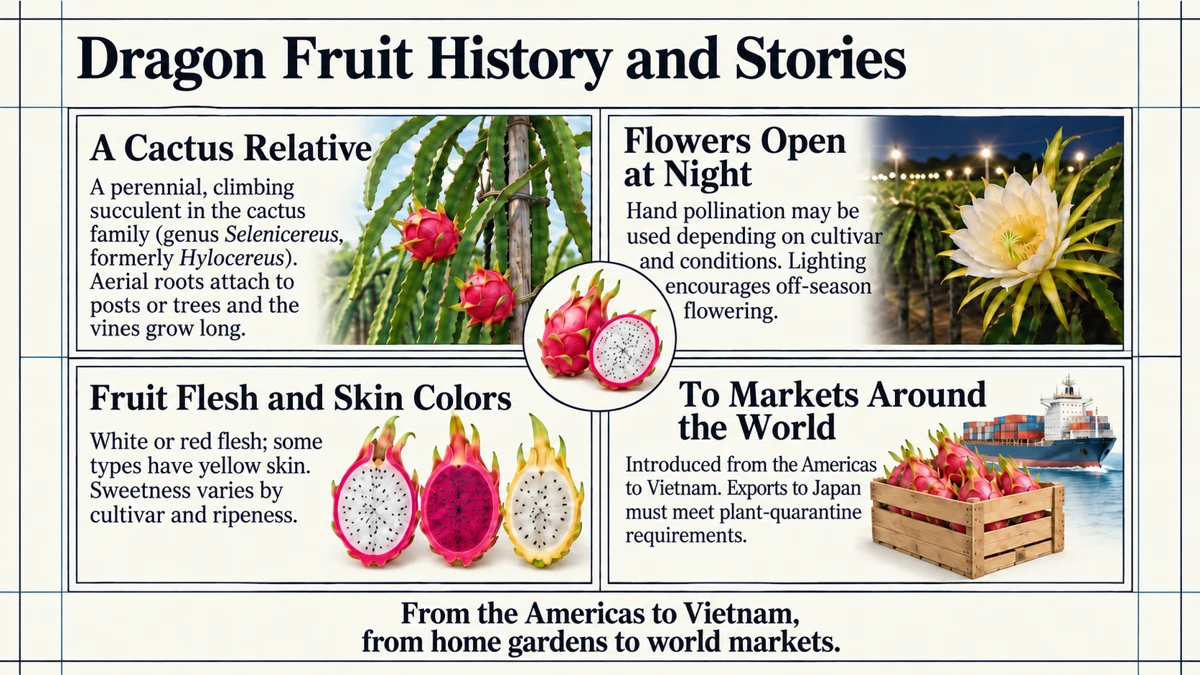
Vivid pink dragon fruit fills Vietnam's market baskets, but its home lies in the Americas. It is thought to have crossed the ocean to Indochina in the nineteenth century. Familiar…
| 記事タイプ | 主な比較ポイント | 向いている人 |
|---|---|---|
| 図鑑 | 分類・生態・品種・旬 | 特徴や違いを比較したい人 |
| 物語 | 原産地・歴史・文化・伝説 | 背景まで深く知りたい人 |
| 食べ方 | 選び方・切り方・保存方法 | 買って実際に楽しみたい人 |
Vivid pink dragon fruit fills Vietnam’s market baskets, but its home lies in the Americas. It is thought to have crossed the ocean to Indochina in the nineteenth century. Familiar as it is today, widespread commercial cultivation in Vietnam developed only in the second half of the twentieth century.
From its use in the Americas and the origins of its names to its arrival in Vietnam and expansion into world markets, this article traces the journey while distinguishing documented history from stories passed down in growing regions.
Dragon Fruit’s Origins in the Americas
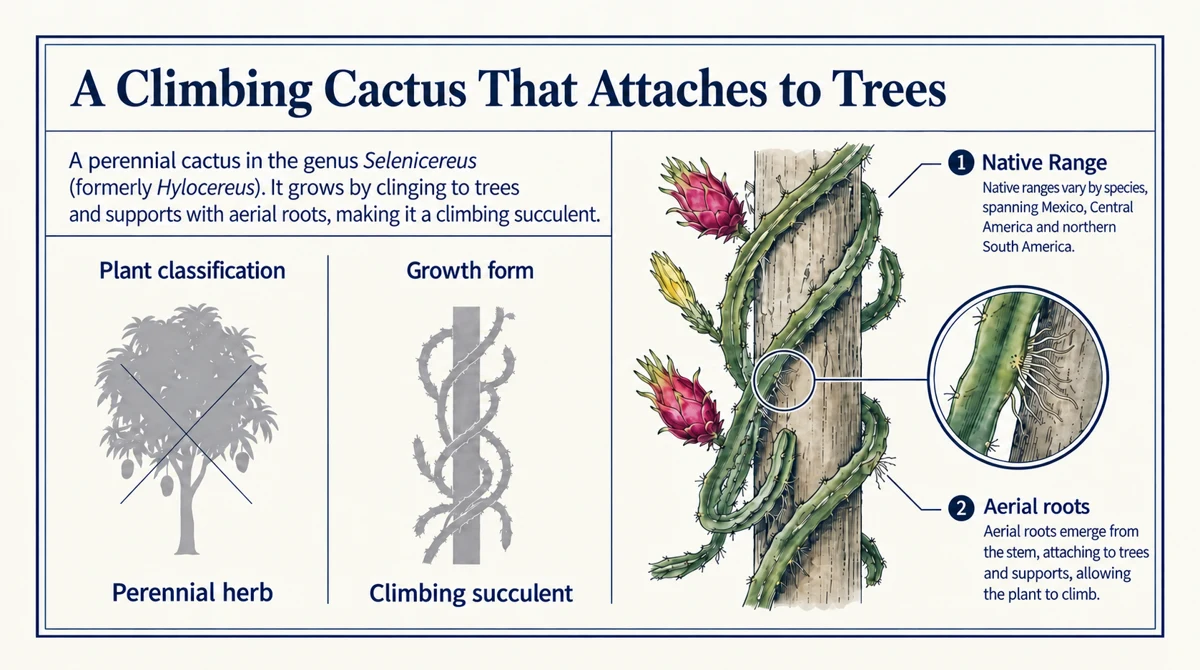
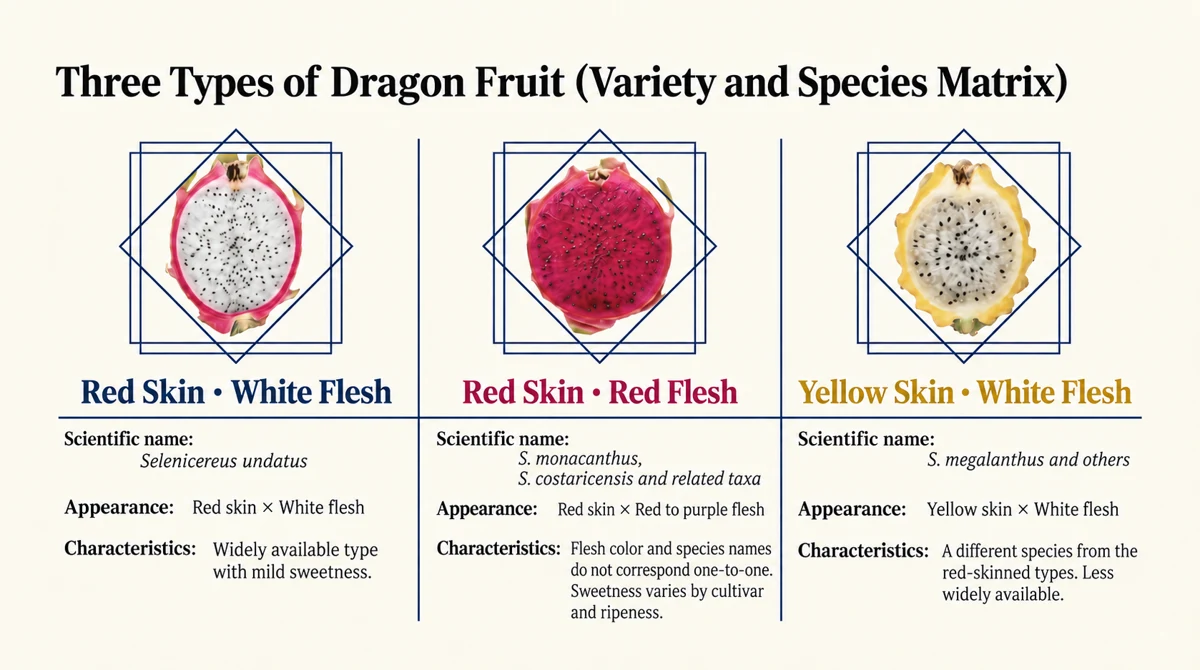
The Selenicereus plants known as dragon fruit have native ranges extending, depending on the species, through Mexico, Central America and northern South America. Indigenous peoples are believed to have used edible cacti before Europeans arrived. For classification and biology, see the companion Dragon Fruit Field Guide.
“Pitaya” and “pitahaya” are generally traced to Indigenous languages of the Antilles and spread through Spanish. They are sometimes glossed as “scaly fruit,” but several explanations exist for their meaning and transmission. Today these names apply not only to Selenicereus, but also to edible cacti and fruits in several other genera.
In 1535, Spanish chronicler Gonzalo Fernández de Oviedo mentioned pitahaya in his writing. However, the name at that time need not have referred only to species now marketed as dragon fruit. As the plants traveled, their names also moved widely and changed in meaning.
Records of “Pitaya” and a Fruit’s Ocean Journey
There is no simple starting point in which a particular explorer was the first to taste dragon fruit. Edible cacti were used in the Americas before Europeans arrived, and the name pitahaya appeared in Spanish records in the sixteenth century. The names and plants subsequently spread along different routes.
An important turning point leading to the modern industry was the reported introduction of the plant to Vietnam by French people in the nineteenth century. Sources vary on the person and exact year, so this account follows the broader nineteenth-century introduction.
Dragon Fruit Arrives in Vietnam in the Nineteenth Century
A 2019 account by an expert from Vietnam’s Plant Protection Department describes dragon fruit as having been introduced to Vietnam by French people during the nineteenth century. Rather than a large commercial crop, it was initially a plant grown around homes and gardens.
A more specific local story survives in Phan Thiet, in southern Vietnam’s former Binh Thuan Province, now part of Lam Dong Province. It tells of a local official under French rule who brought seedlings from South America in the early twentieth century and planted them as ornamentals in his garden.
When fruit eventually appeared, the official supposedly suspected it was poisonous and ordered it discarded, only for a servant to discover that it was edible. I could not verify contemporary records supporting this story about the official and servant. It is best read as an oral tradition preserved in local tourism and regional-history accounts.
The story cannot be presented as established historical fact. Even so, it continues to be told in Phan Thiet as an anecdote symbolizing the memory of an ornamental garden plant becoming a regional crop.
The Names “Dragon Fruit” and “Thanh long”
One story says dragon fruit emerged from a dragon’s final breath of fire and was presented to an emperor by the victorious fighters. However, I could not find primary evidence establishing it as an old folktale. This story alone cannot explain the direct origins of the English name “dragon fruit” or Vietnamese “thanh long.”
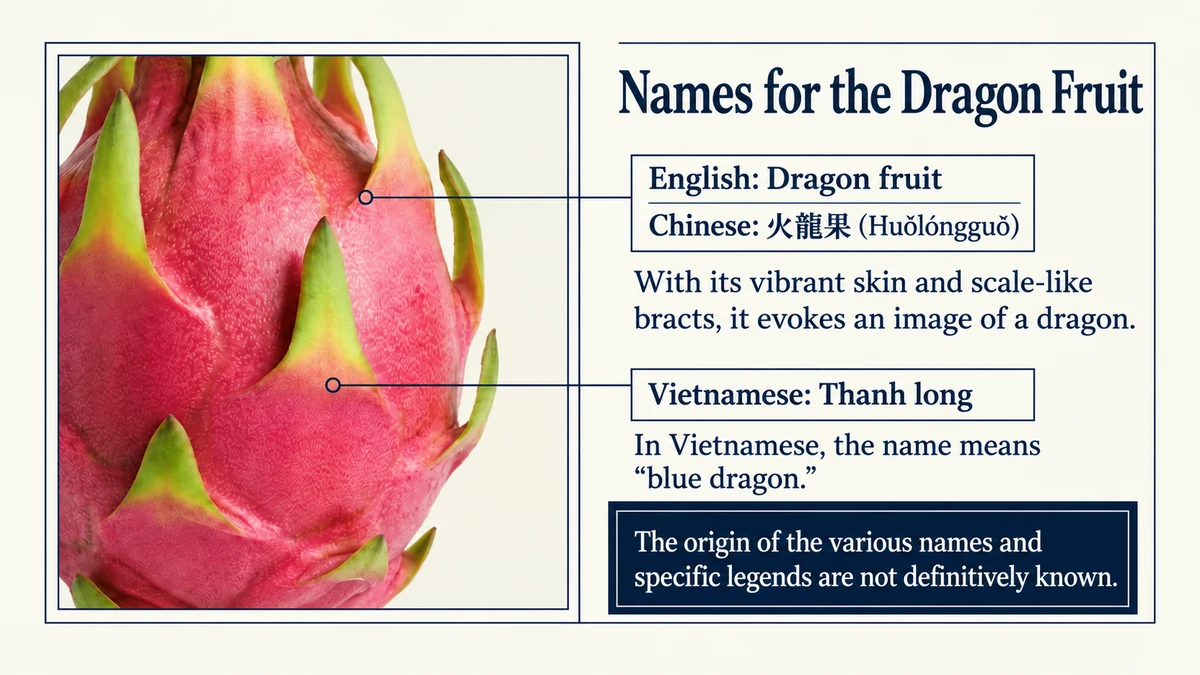
What is clear is that red skin and scale-like bracts became associated with dragon-related names in Asia. Vietnamese “thanh long” is a Sino-Vietnamese term for a blue/green dragon. In Chinese, the fruit is called “火龍果.”
Another theory, that Chinese growers invented the dragon legend for marketing in the nineteenth century, appears on horticultural blogs but could not be verified in reliable historical sources. This article does not assign a definite date or author, treating it as an origin story circulating today.
A Fruit Remembered as “Worth a Bicycle”
Dragon fruit gradually moved from an unusual ornamental plant to a recognized edible fruit. Yet it took a long time for that change to grow into a substantial industry.
Commercial cultivation in Vietnam is described as expanding from the 1980s, while regional accounts from Binh Thuan recall around 1989–1990 as a turning point. Some reminiscences describe prices of about 80,000 dong per kilogram in the early 1990s, “equivalent to a bicycle.” I could not verify primary records identifying the precise date, market and bicycle price, so this is treated as a local recollection of its perceived value.
The anecdote symbolizes an unusual garden plant becoming a valuable commercial crop.

Vietnamese Dragon Fruit Reaches World Markets
From this point, dragon fruit spread internationally with a speed that seems to make up for its long quiet years.
As commercial cultivation expanded from the 1980s, Vietnam became a major producer and exporter. A 2024 Ministry of Industry and Trade report gives about 55,000 ha under cultivation and over 1.2 million tonnes produced at the end of 2023. The main regions were then Binh Thuan, Long An and Tien Giang provinces. White-fleshed dragon fruit from Binh Thuan was registered under Japan’s geographical indication (GI) protection system on October 7, 2021.
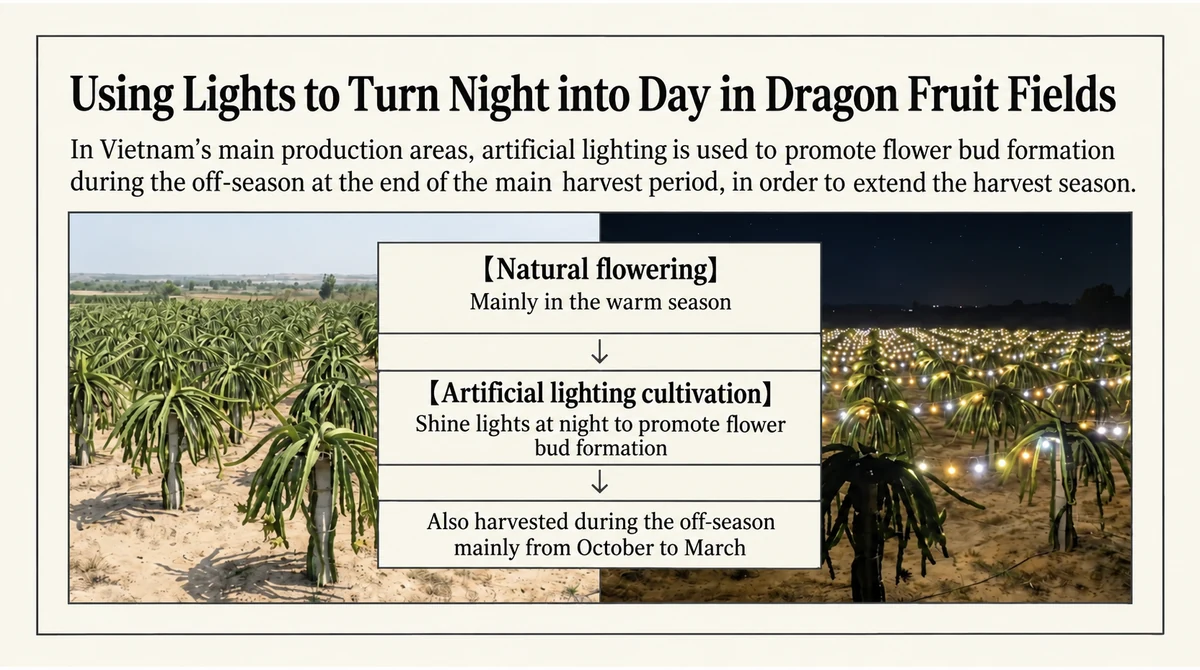
Around the same period, cultivation and breeding research also progressed in countries such as Israel. Dragon fruit’s growing world extended across the Americas, Southeast Asia and the Middle East. In Vietnam, lighting to stimulate off-season flower-bud formation became widespread, helping extend the supply season.
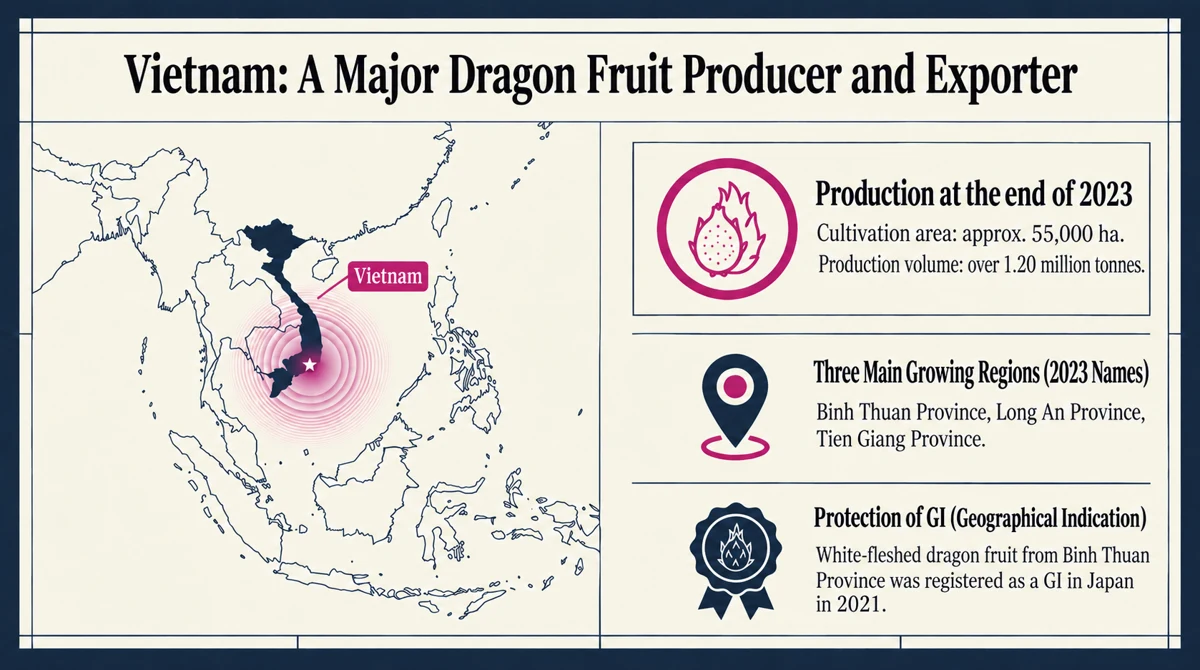
These regional names reflect the 2023 administrative divisions. Under the 2025 reorganization, former Binh Thuan was incorporated into Lam Dong, former Long An into Tay Ninh, and former Tien Giang into Dong Thap.
Japan Opens Imports of Vietnamese Dragon Fruit
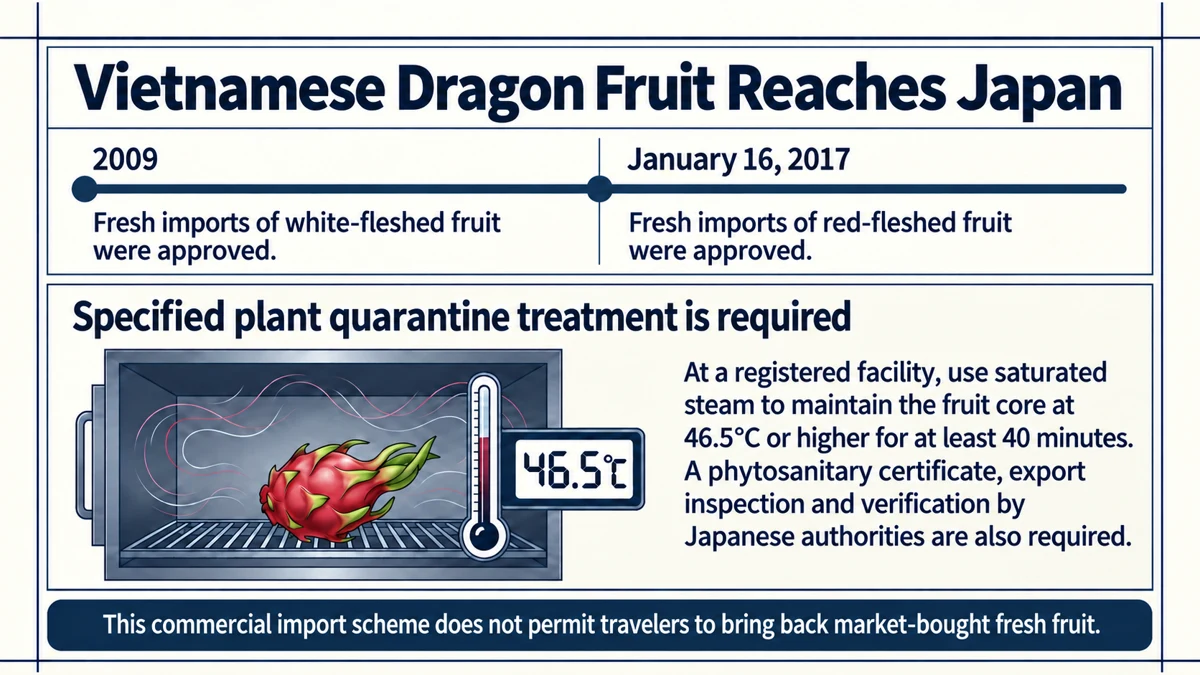
A new turning point in the relationship with Japan came in the twenty-first century. Japan approved fresh imports of Vietnamese white-fleshed dragon fruit in 2009 and red-fleshed fruit on January 16, 2017.
Fresh fruit destined for Japan must meet specified plant-quarantine conditions. These include vapor heat treatment with saturated steam at a registered facility, maintaining the fruit core at 46.5°C or above for at least 40 minutes. A phytosanitary certificate and inspections are also required; travelers cannot simply bring back fresh fruit bought at a market.
A fruit that crossed to Indochina in the nineteenth century and rapidly developed as a commercial crop in the late twentieth century began reaching Japan under strict quarantine conditions in the twenty-first. Its encounter with Japan forms another chapter in this relatively recent industrial history.
Dragon Fruit History and Stories: Looking Back
Tracing dragon fruit’s history reveals a journey from edible cacti in the Americas to Vietnam, and from a regional crop to a product of world markets.
A climbing cactus long used in the Americas crossed to Vietnam in the nineteenth century and became a major export crop in the second half of the twentieth. Documented industrial history overlaps with local memories of a “fruit suspected of being poisonous” and a “price worth a bicycle.”
The next time you cut through its vivid skin, take a moment to remember that long journey from the Americas to Indochina, and from garden plants to world markets.
Frequently Asked Questions About Dragon Fruit History
Where does dragon fruit originate?
Depending on the species, the native ranges of the Selenicereus plants called dragon fruit extend through Mexico, Central America and northern South America.
When did dragon fruit reach Vietnam?
An account by an expert from Vietnam’s Plant Protection Department describes its introduction by French people in the nineteenth century. This article does not identify a definite individual or exact year.
Where does the name “dragon fruit” come from?
Red skin and scale-like bracts evoke a dragon and are associated with English “dragon fruit,” Chinese “火龍果,” and Vietnamese “thanh long” (blue/green dragon). The order in which these names arose cannot be established definitively.
When did commercial cultivation expand in Vietnam?
It began expanding in the 1980s. Regional accounts from Binh Thuan describe around 1989–1990 as a turning point.
Related Articles
- Biology, taste, nutrition and varieties: Dragon Fruit Field Guide: Taste, Nutrition, Varieties and Cactus Biology
- Prices, choosing, cutting and storage in Vietnam: How to Eat Dragon Fruit in Vietnam: Prices, Choosing, Cutting and Storage
- More fruit to discover in Vietnam: 15 Vietnamese Fruits
References
- Mizrahi“Vine-cacti pitayas: the new crops of the world”Revista Brasileira de Fruticultura 36 (2014)
- Trivellini et al.“Pitaya, an Attractive Alternative Crop for Mediterranean Region”Agronomy 10, 1065 (2020)
- Royal Botanic Gardens, Kew, Plants of the World Online“Selenicereus undatus”
- ASALE“pitahaya”Diccionario de americanismos
- Phan Thi Thu Hien: The Dragon Fruit Export Challenge and Experiences in Vietnam, FFTC Agricultural Policy Platform (2019)
- Phan Thiết Chill: History of Binh Thuan Dragon Fruit (local traditions about the official, servant and prices)
- Vietnam Ministry of Industry and Trade: Tình hình sản xuất trái thanh long (2024 report; end-2023 area and production; in Vietnamese)
- MAFF: GI Registration No. 110, Binh Thuan Dragon Fruit (in Japanese)
- MAFF: Approval of Fresh Vietnamese Dragon Fruit Imports (in Japanese)
- JETRO: Approval of Fresh Japanese Pear Imports (Vietnam, Japan; in Japanese)
- Government of Vietnam: Resolution on the 2025 Administrative Reorganization
