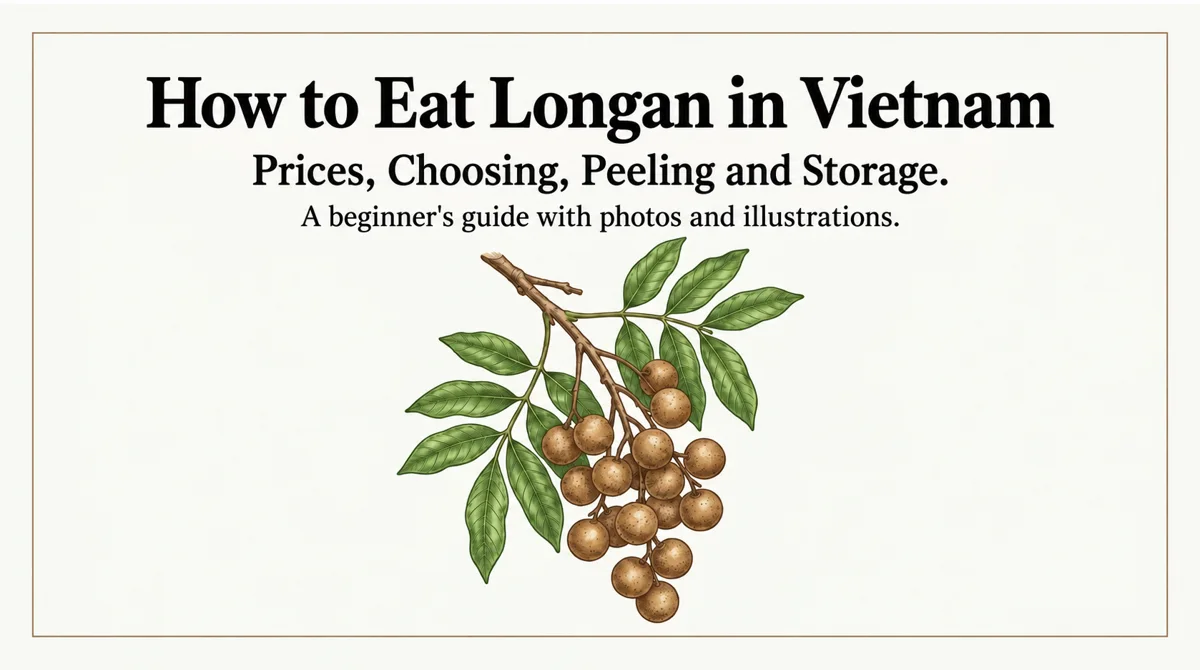
Have you noticed clusters of small round brown fruit in a Vietnamese market or supermarket? They are longan. Their modest appearance can make them easy to overlook if you do not know how to eat them.
Peeling is simple: press the shell with your fingers, crack it and open the split to reveal the pale edible aril. A thumbnail can help start a firm shell; a knife is usually unnecessary.
This article follows the process of finding, pricing, choosing, peeling, eating and storing longan in Vietnam, then explains the rules for taking it to Japan.
Buying and Eating: Quick Reference
| Item | Details |
|---|---|
| Vietnamese name | Nhãn |
| Pronunciation note | Approximately “nyan”; listen locally for the Vietnamese tone |
| Taste | Rich, honey-like sweetness; gentler fragrance than lychee |
| Texture | Soft and springy |
| Main season | July–September in northern Vietnam; southern supplies can extend beyond it |
| Dated price example | 79,900 VND/kg list price; about 45,000 VND/kg discounted (author’s July 2026 supermarket record) |
| Where to buy | Supermarkets and open-air markets |
| Basic preparation | Crack the thin, firm shell with fingers, remove the pale aril and discard the seed |
| Local serving idea | Chè hạt sen nhãn lồng: sweet soup with lotus seeds and longan |
| Author’s beginner rating | ★★★☆☆ |
The Vietnamese Name: Nhãn
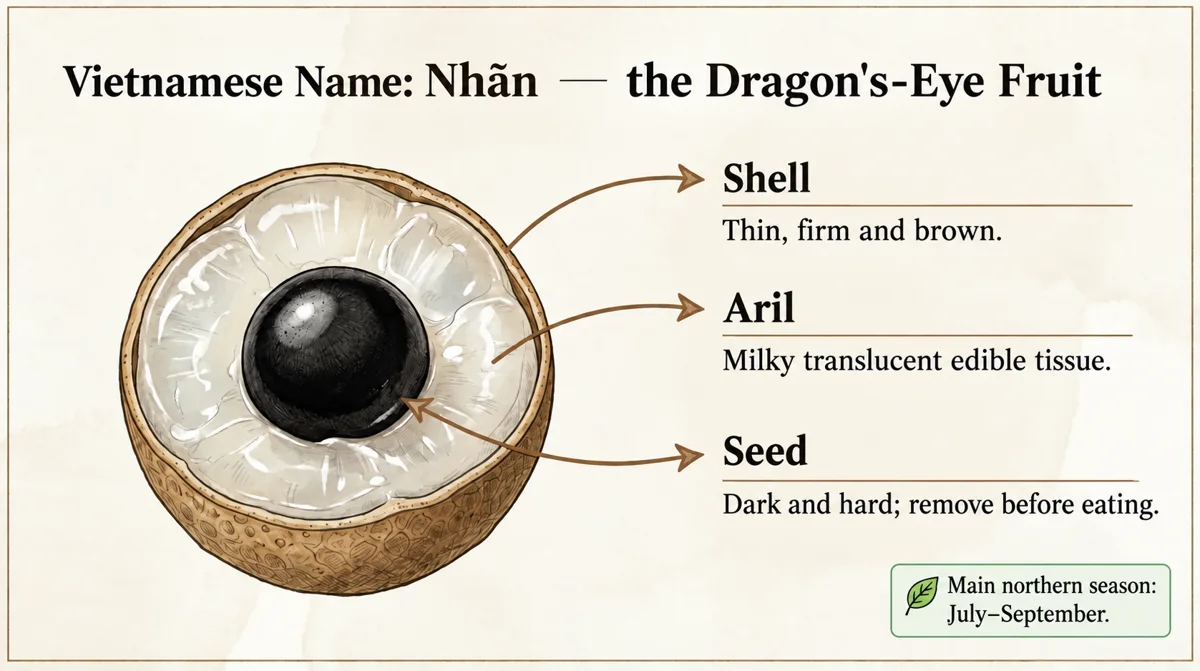
Longan is called Nhãn in Vietnamese. Remembering this word is useful when shopping.
The dark seed and pale aril resemble a dragon’s eye, the name explained in Longan Guide. Nhãn also corresponds to “eye” in Sino-Vietnamese vocabulary.
You can ask the price with this phrase:
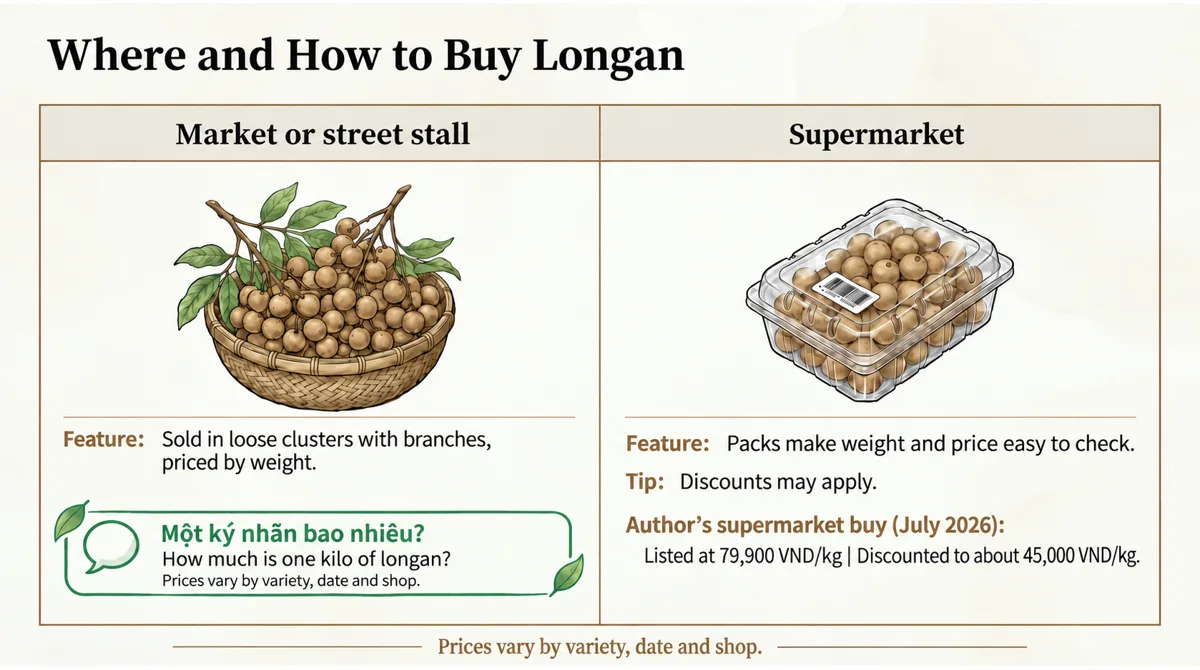
Một ký nhãn bao nhiêu?
“How much is one kilo of longan?”
In northern Vietnam, một cân is also used for one kilogram.
Longan is often sold by weight, with prices quoted per kilogram. Clusters may still have their small branches attached.
Longan’s Taste, Texture and Differences from Lychee
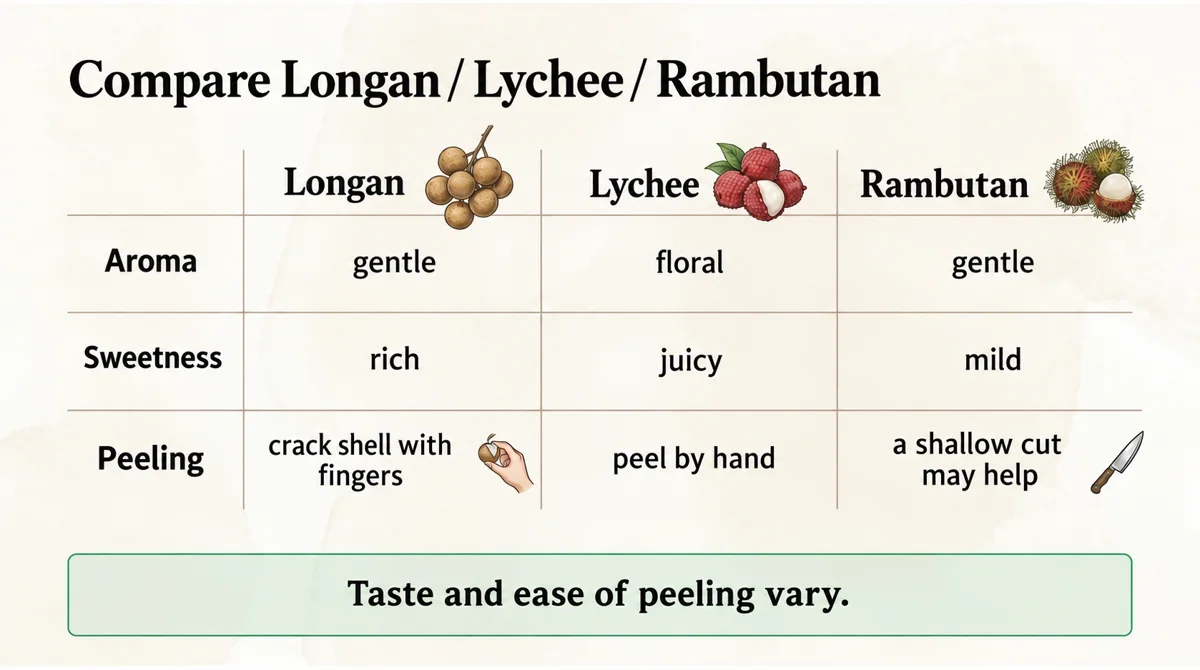
Vietnamese longan has rich sweetness reminiscent of honey. In the author’s tasting notes, the aril felt soft and springy with concentrated, honey-like sweetness. Compared with lychee, its fragrance was gentler.
The fruit is bite-sized, but the juice can make hands sticky. A tissue or paper towel is useful.
Prices and Where to Buy Longan in Vietnam
In July 2026, the author found a supermarket list price of 79,900 VND/kg. A discounted pack weighing 0.86 kg cost 38,700 VND, equivalent to about 45,000 VND/kg. These are dated purchase examples rather than a current universal market price; variety, origin, season and shop affect prices.
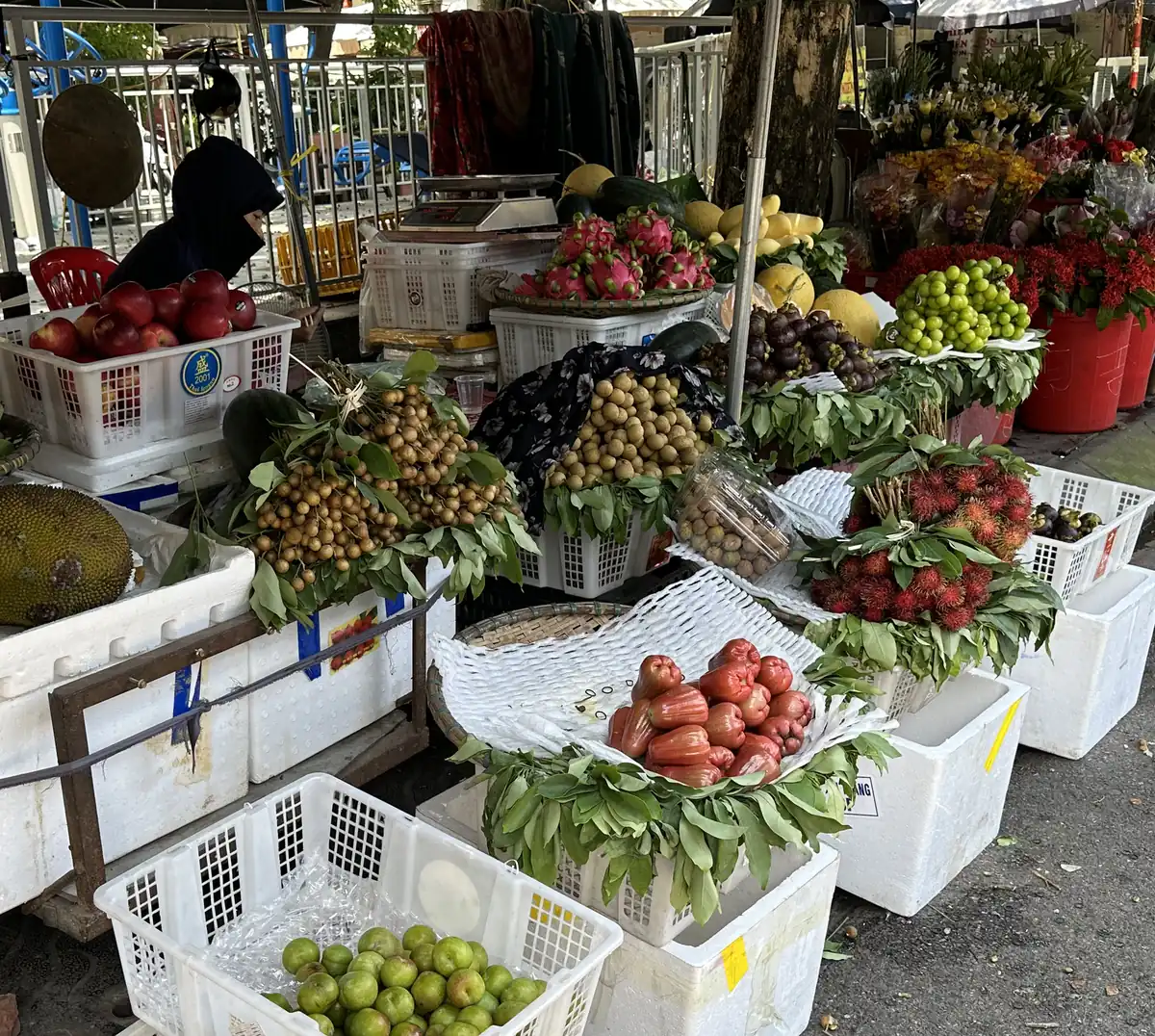
Open-Air Markets and Street Fruit Sellers
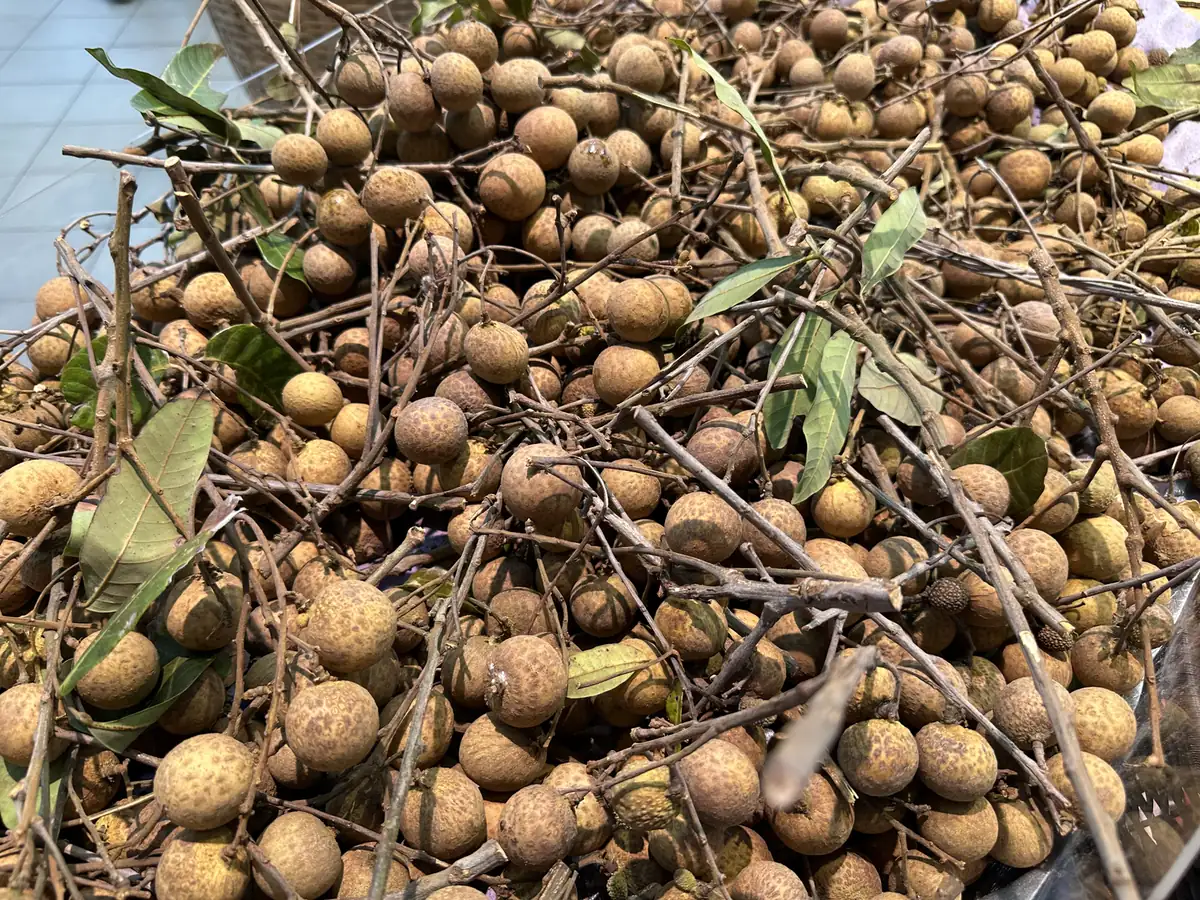
Markets often display heaps of longan in large baskets and sell it by weight. Clusters can include small branches.
Supermarkets
Packs make the weight and total cost easy to check. Look for discounts as well as the original price on the label; reductions can be substantial.
Fruit Shops and Delivery Apps
Fruit specialists and delivery services may offer clearer origin and freshness information, although prices can be higher than at markets.
How to Choose Good Longan
As explained in Longan Guide, longan does not become sweeter through ripening after harvest. Choosing good fruit at the time of purchase matters.
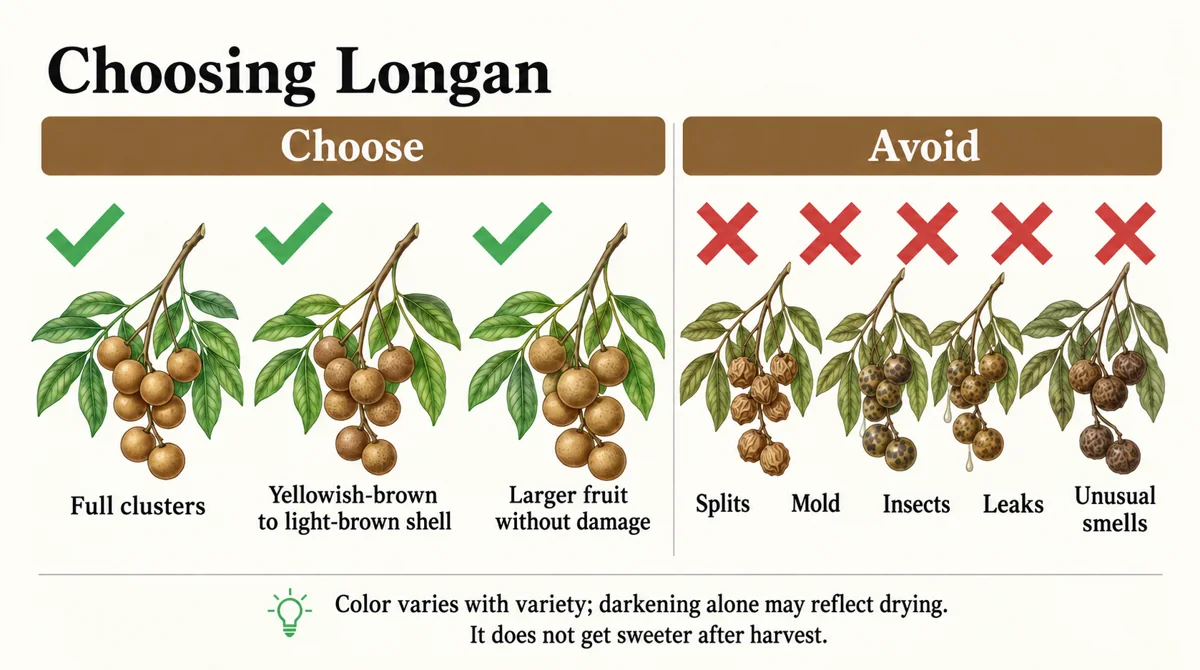
Check the whole cluster. Look for smooth shells ranging from yellowish brown to light brown, depending on the variety. Color alone is not enough: check for splits, mold, insect damage, leaks and unusual smells. Larger fruit without obvious damage are a useful guide.
How to Peel Longan: Three Steps by Hand
The shell is thin and fairly firm, but usually does not need a knife cut.
- Hold the fruit between your fingers. Press a thumbnail lightly against the shell and crack it.
- Open both sides from the split to expose and remove the translucent white aril.
- Remove the dark, hard seed from the center before eating the aril.
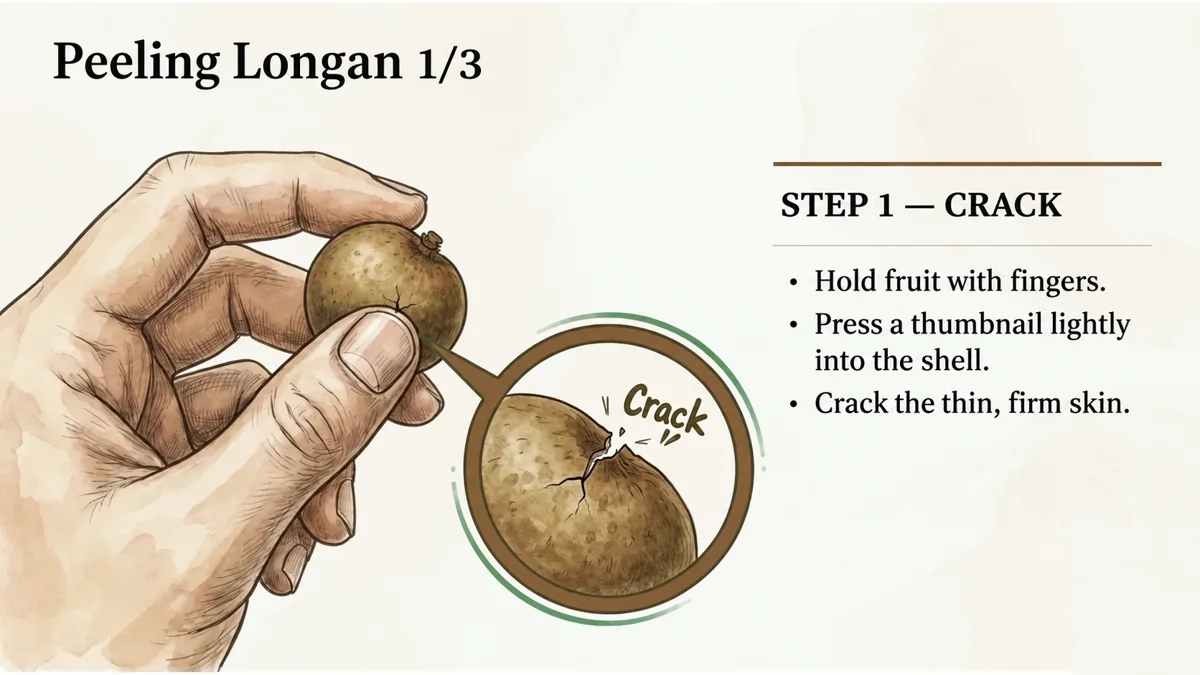
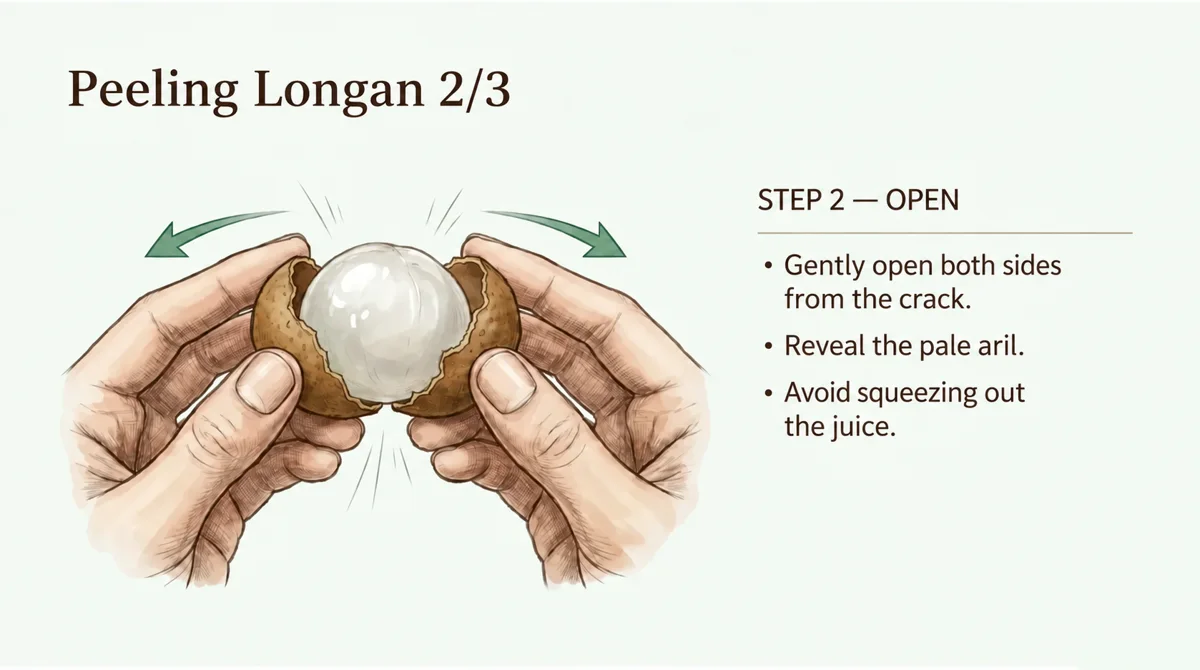
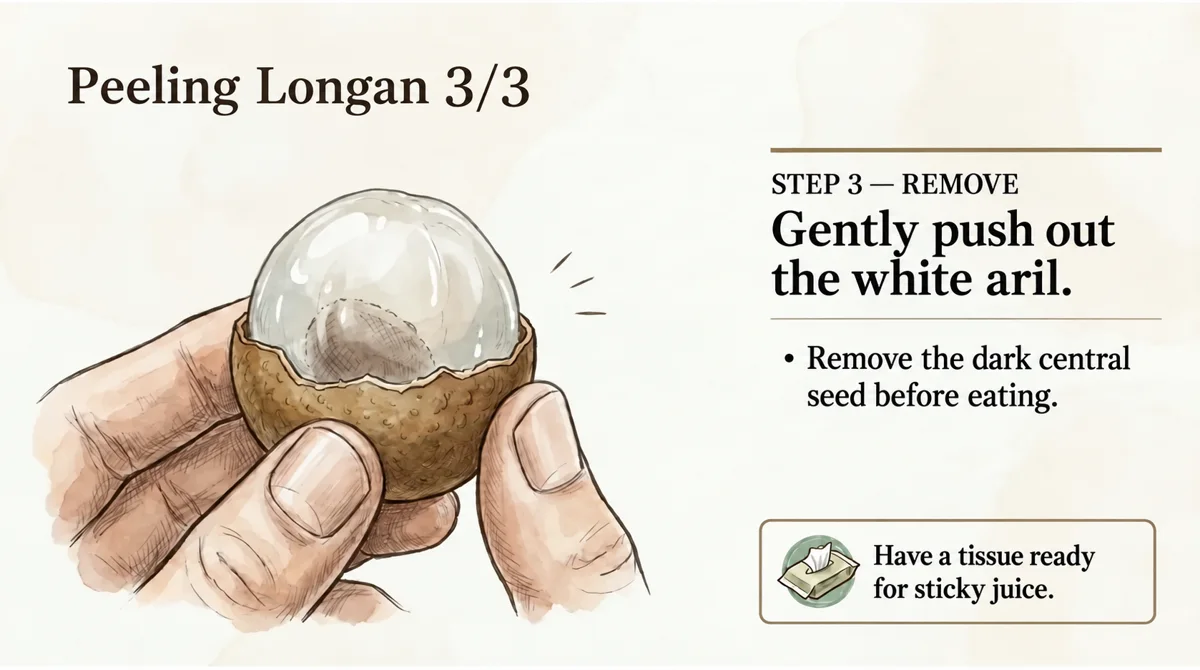
You can crack the shell with your fingers and eat the aril after removing the seed.
Four Ways to Enjoy Longan in Vietnam
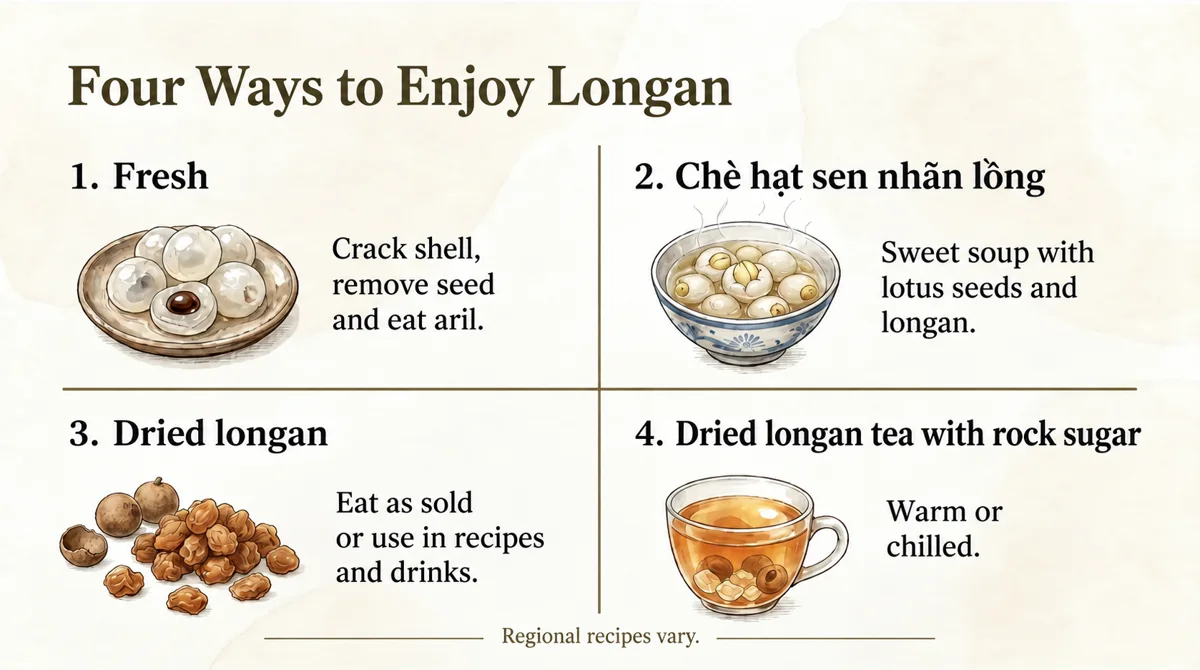
1. Eat It Fresh
Fresh is the simplest way to eat longan in Vietnam. Crack the shell and remove the seed. Chilled fruit makes a pleasant dessert on a hot day.
2. Chè hạt sen nhãn lồng: Lotus Seed and Longan Sweet Soup
Chè hạt sen nhãn lồng is a traditional Vietnamese sweet soup combining lotus seeds, hạt sen, and longan. Some accounts associate it with court cuisine. It can be served warm or chilled.
3. Dried Longan: Long nhãn or Nhãn nhục
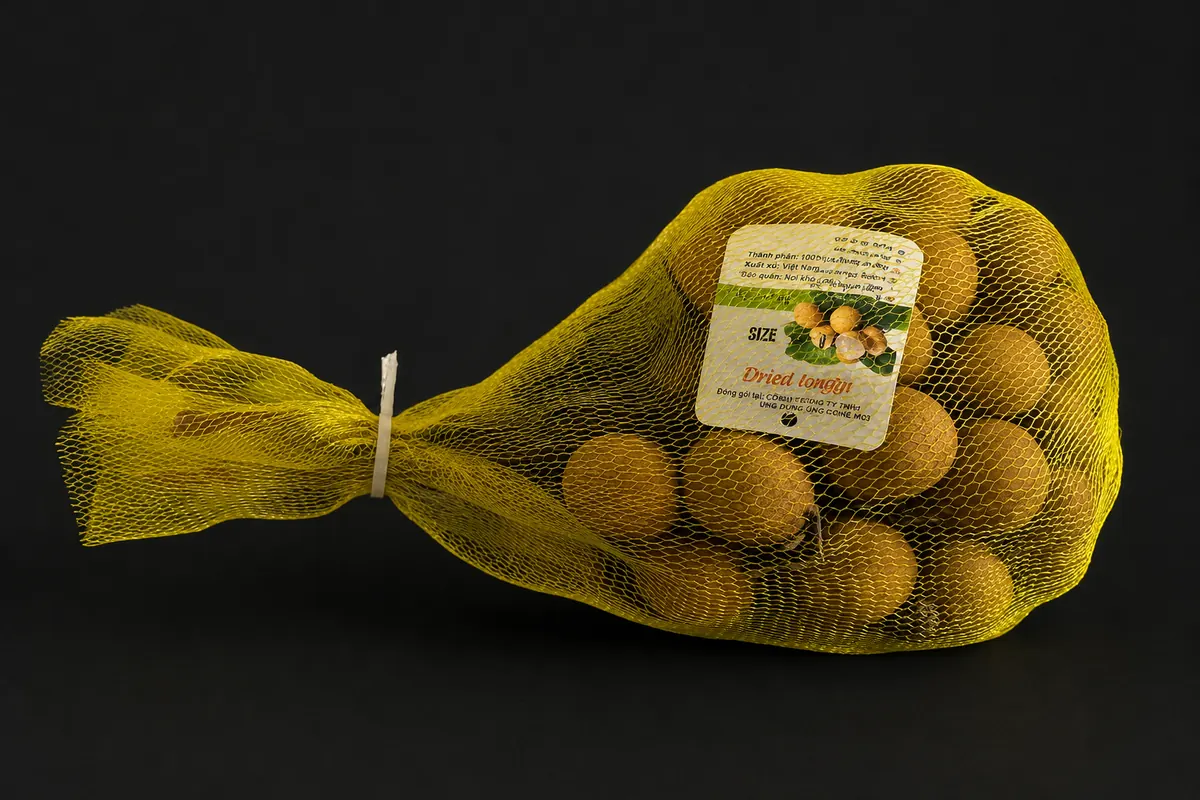
Dried longan is called long nhãn or nhãn nhục. Some products retain the shell, while others consist of dried, pitted arils. It may be eaten as sold or rehydrated for sweet soups and drinks. Chinese names include guiyuan rou and longyan rou.
4. Dried Longan Tea with Rock Sugar
Dried longan can also be simmered with rock sugar for a sweet drink, known by names such as trà nhãn nhục đường phèn. Enjoy it warm or over ice.
Can You Eat Longan Seeds?
The seed and shell are not the edible portions. The seed is hard and can be a choking hazard, particularly for small children; remove it from the aril before eating.
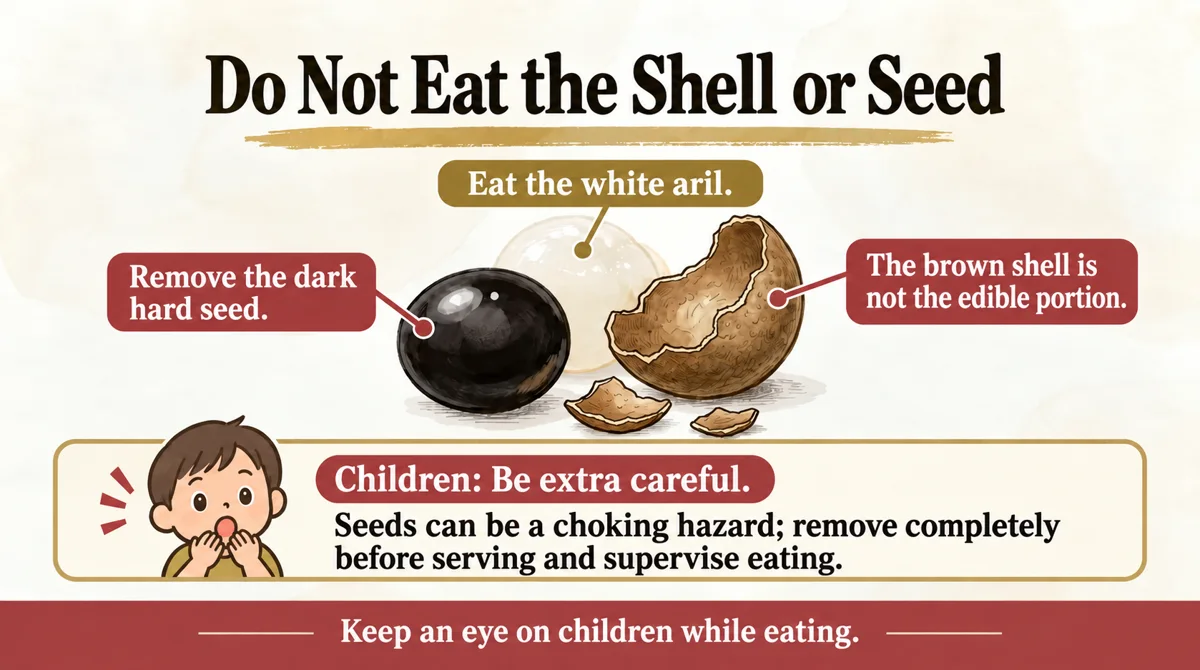
For children, remove seeds completely before serving and supervise eating. Seek urgent medical assistance if a child chokes.
Storing Longan: Refrigeration and Freezing
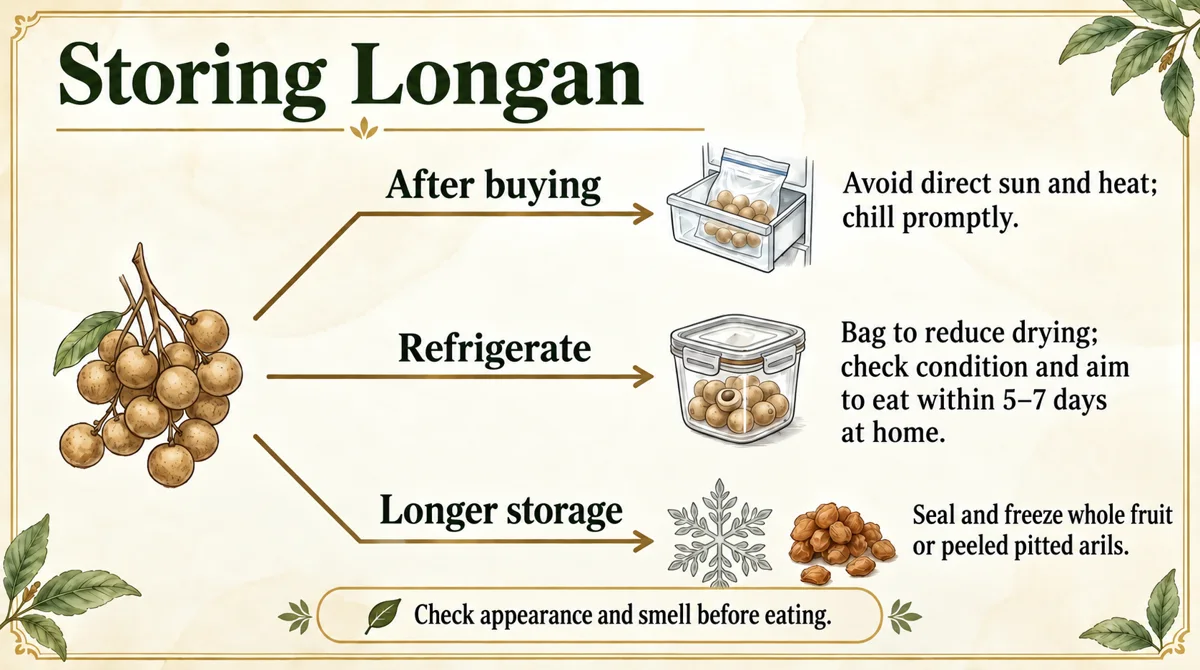
Longan will not become sweeter by leaving it after purchase, so eat it while in good condition. Chill promptly and use a bag to reduce drying. A practical home target is five to seven days, but storage history affects quality: inspect the fruit and smell it before eating. Shell darkening alone may reflect drying; reject moldy, leaking or foul-smelling fruit.
- After purchase: avoid direct sunlight and heat; chill promptly.
- Aim to eat within five to seven days: refrigerate in a bag to reduce moisture loss; check the condition before eating.
- For longer storage: seal and freeze whole fruit or peeled, pitted arils.
Can You Take Fresh Longan to Japan?
Travelers cannot bring fresh longan bought in Vietnam into Japan as a personal souvenir.
The Plant Protection Station’s Vietnam guidance lists fresh longan among fruit that cannot be carried in travelers’ personal baggage. Check the current guidance before travel.
As discussed in Longan Guide, conditional commercial imports opened on November 18, 2022, for Vietnamese fresh longan meeting specified standards and detailed procedures. That is separate from bringing market-bought fruit home in baggage. The Plant Protection Station lists dried longan as outside plant quarantine requirements. Highly processed items such as canned fruit are also generally outside those requirements; check the product and route before buying.
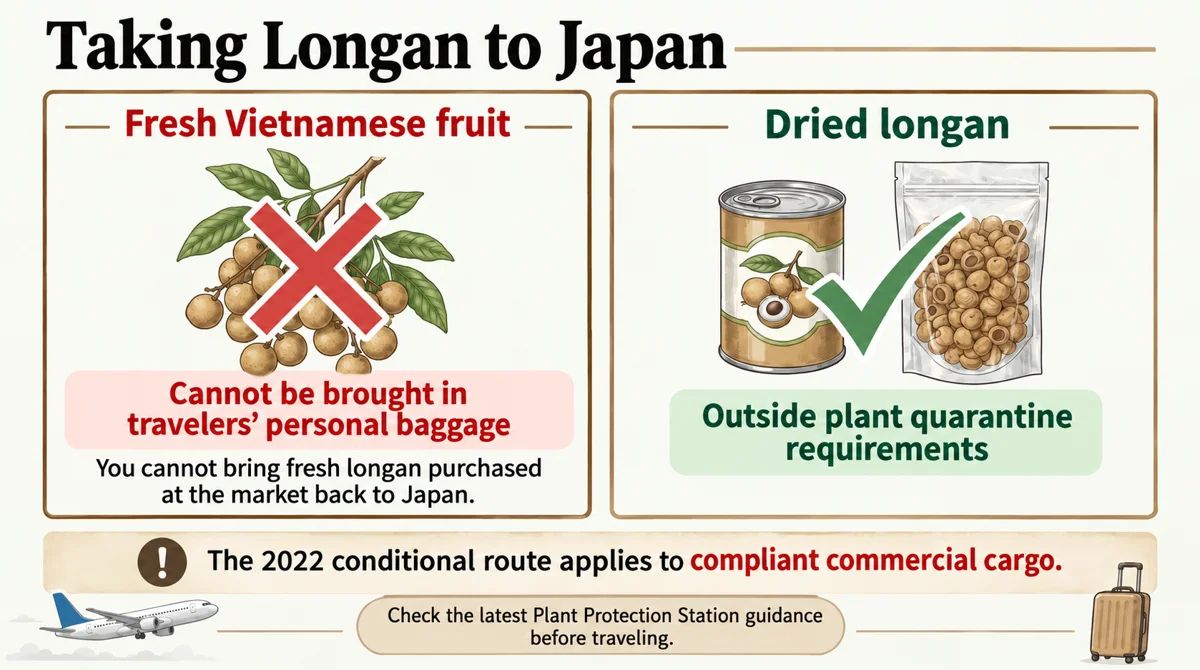
Quarantine conditions can change. Always check the latest official information before traveling.
The Author’s Tasting Notes
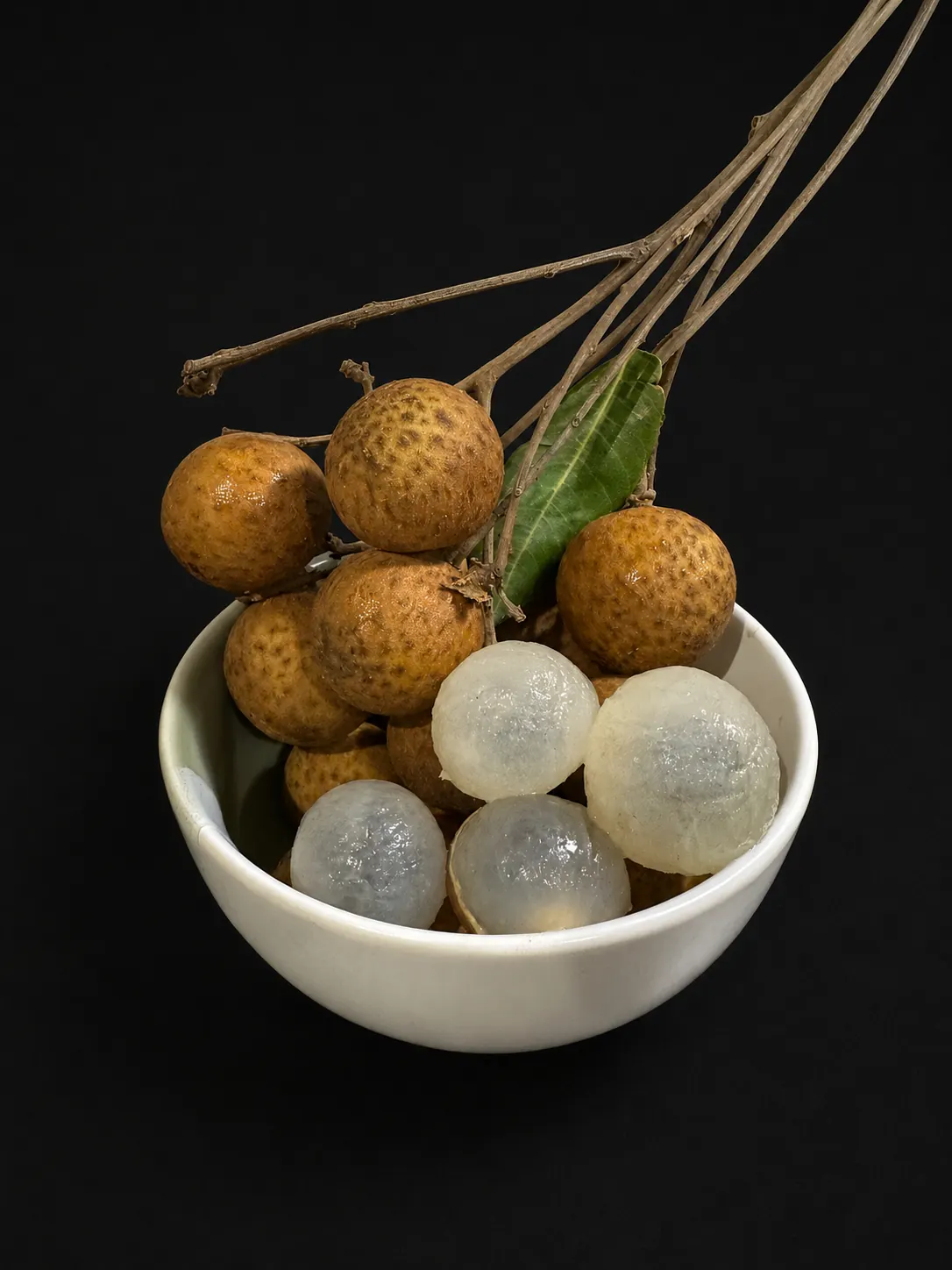
Purchase record
Place: supermarket
Date: July 2026
Price: 79,900 VND/kg list price; discounted 0.86 kg pack for 38,700 VND, or about 45,000 VND/kg.
Tasting notes
Soft, springy texture and rich sweetness reminiscent of honey.
Author’s recommendation for beginners: ★★★☆☆.
Frequently Asked Questions
Can you buy longan all year in Vietnam?
The main northern season is around July to September. Southern growing schedules can provide supplies beyond that season, depending on region and shop. See Longan Guide for details.
Will it become sweeter after buying?
No. Longan does not become sweeter after harvest. Check the whole cluster when buying and eat promptly.
Can you eat the seeds?
The seed and shell are not the edible portions. Remove the hard seed, especially before serving to children.
Can you take it to Japan?
Fresh Vietnamese longan cannot be brought in travelers’ personal baggage. Dried longan or canned fruit can be practical souvenirs; check the latest official requirements for the product.
Key Points
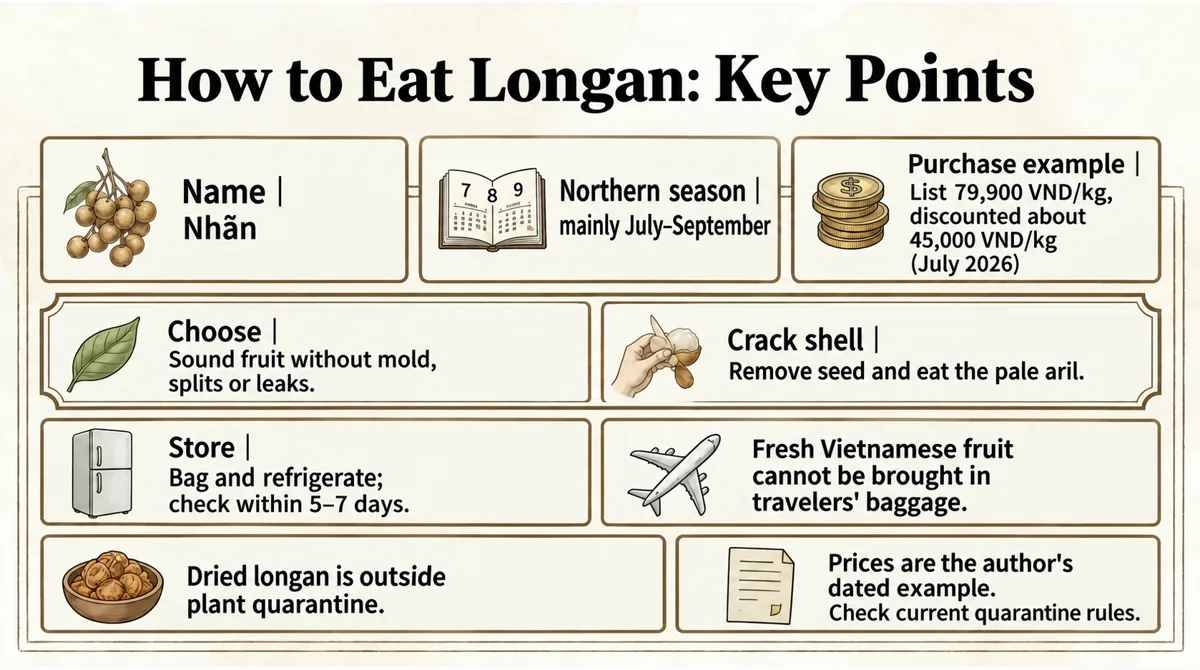
Longan is easy to try in Vietnam: crack the shell by hand, remove the seed and enjoy the pale aril.
- Choose: check the whole cluster because longan does not become sweeter after harvest.
- Peel: crack the shell by hand, remove the pale aril and discard the seed.
- Eat: fresh, in lotus-seed sweet soup, dried, or as longan tea with rock sugar.
- Take care: the shell and seed are not the edible portions; remove seeds before serving to children.
- Store: chill promptly, bag and refrigerate; check the condition and aim to eat within five to seven days.
- Travel: Vietnamese fresh fruit cannot be brought to Japan in travelers’ baggage. Dried longan is outside plant quarantine requirements.
If you see it at a market, start with a small cluster. You can open it with your fingers and try it without special equipment.
Learn More About Longan
See Longan Guide for biology, names, varieties and Japan quarantine information. Longan History and Stories covers Han tribute accounts, Hưng Yên’s ancestral tree and dragon-eye folklore.
References
- UC Davis: Longan postharvest facts
- University of Florida IFAS: Longan Growing in the Florida Home Landscape
- Helen’s Recipes: Lotus Seed and Longan Sweet Soup
- Delightful Plate: Lotus Seed Sweet Soup with Longan
- Vicky Pham: Vietnamese Dried Longan Iced Tea
- Japan Plant Protection Station: Vietnam traveler guidance
- Japan Plant Protection Station: Products outside import plant quarantine
- Japan Plant Protection Station: Conditional commercial imports of longan
