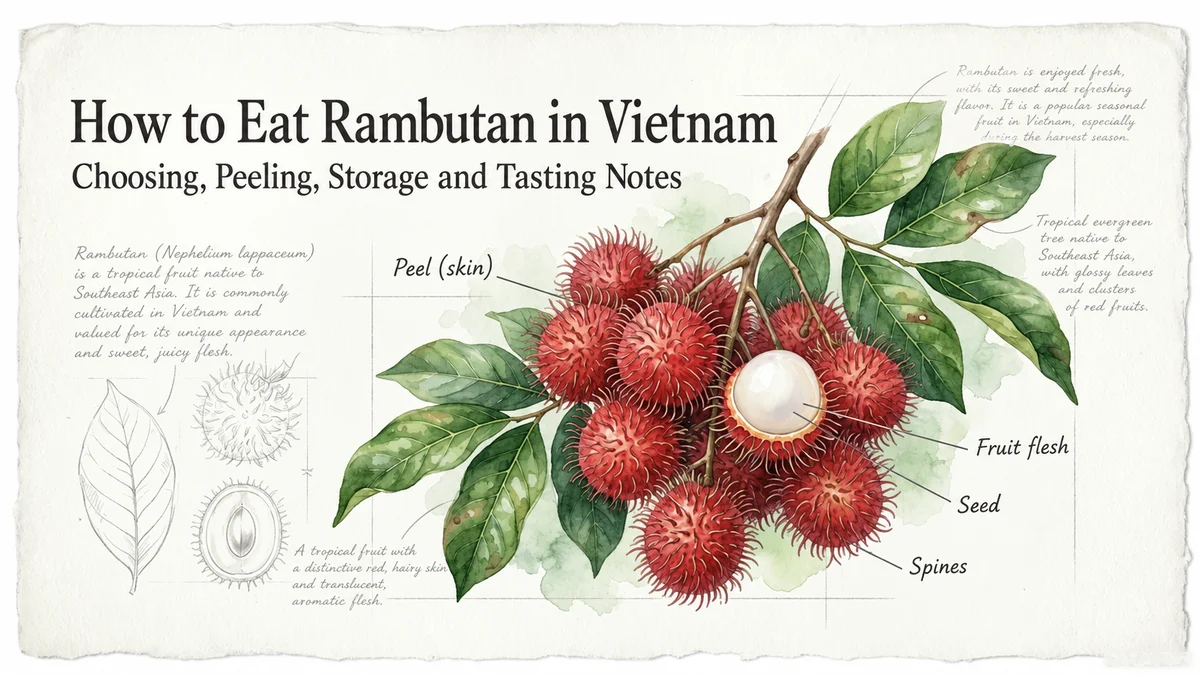
To eat rambutan in Vietnam, open the rind covered in soft projections and eat the white flesh inside. The projections are not sharp spines. You can split the rind by hand or make a shallow cut with a knife.
This article explains prices and places to buy, choosing good fruit, peeling, handling the seed, local ways to enjoy it, refrigeration and freezing, and travel restrictions for Japan, with firsthand tasting photographs and diagrams.
For taste, nutrition and varieties, see Rambutan Guide: Taste, Nutrition, Varieties and Names. For origins and history, see Rambutan History and Stories: Origins, Names and Documented Journeys.
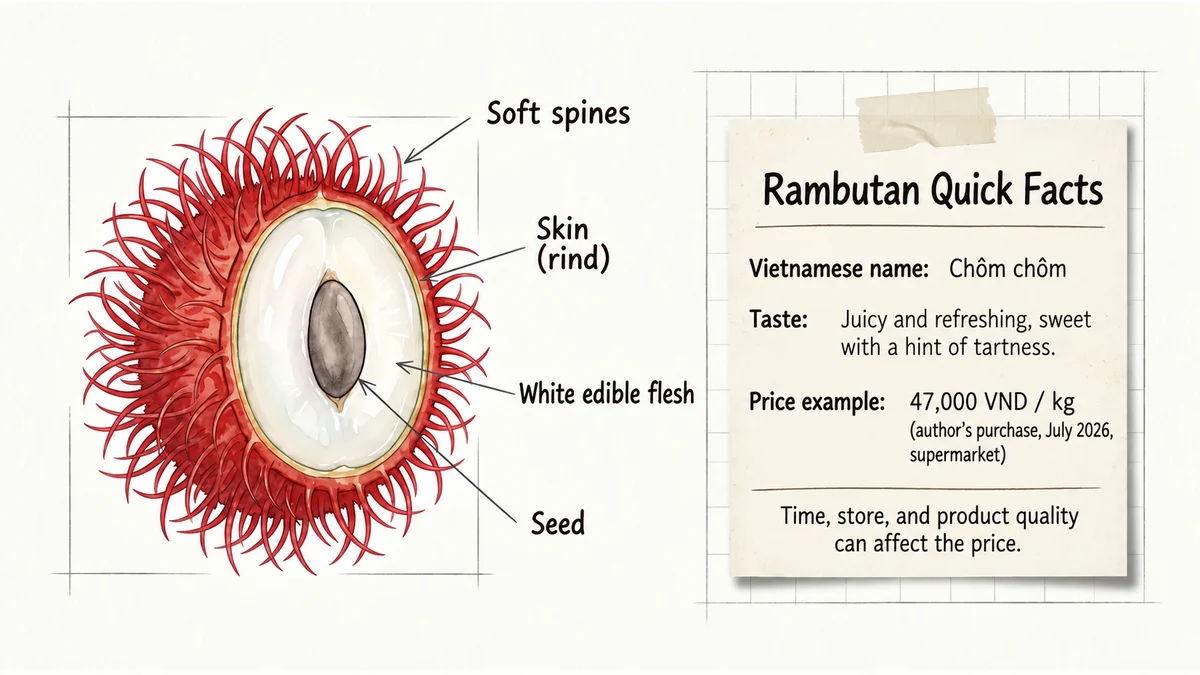
Rambutan in Vietnam: Prices, Taste and Eating at a Glance
| Item | Details |
|---|---|
| Vietnamese name | Chôm chôm |
| Taste and texture | Sweet with mild acidity; juicy and springy |
| Where to buy | Markets, street fruit sellers, supermarkets, fruit shops and delivery apps |
| Basic peeling method | Split the middle of the rind with your thumbs, or make a shallow cut and twist |
| Parts not eaten | Rind and seed |
| After harvest | Does not become sweeter when left to stand |
Season and prices vary with region, cultivar and year. In July 2026, the author paid about 47,000 VND per kilogram at a supermarket. This is one purchase example, not a fixed market price.
Where Can You Buy Rambutan?
Markets and Street Fruit Sellers
You can compare fruit and buy the amount you need by weight. If no price is displayed, ask “Một ký bao nhiêu tiền?” (How much for one kilogram?), and check the quantity and total price.
Supermarkets and Fruit Shops
Displayed prices and receipts make these convenient options for travellers. Even with packaged fruit, check for pooled juice, mould and large splits.
How to Choose Fresh Rambutan
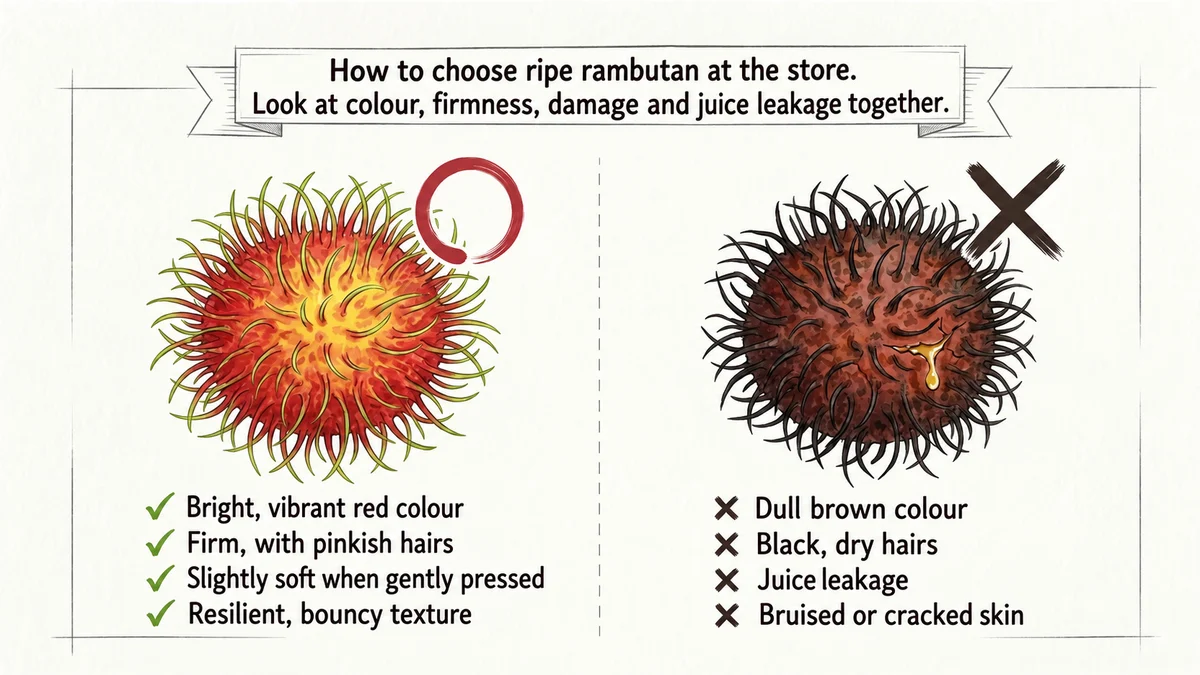
UC Davis lists development of red colour as a main harvest indicator, and uniform colour, absence of damage and absence of decay as quality indicators. However, yellow-fruited and other cultivars exist: redder does not always mean better.
Check the following when choosing fruit.
- A vivid colour appropriate to the cultivar, without extensive browning of the rind
- Projections that are not extremely dry and shrivelled
- No leaking juice, mould, deep wounds or widespread softening
- Firmness and weight compared with other fruit at the same stall
Browning of the rind and projections can result from moisture loss, damage or chilling injury. Colour alone does not establish internal safety. Do not eat fruit with an unusual smell or decay.
How to Peel Rambutan: By Hand or with a Knife
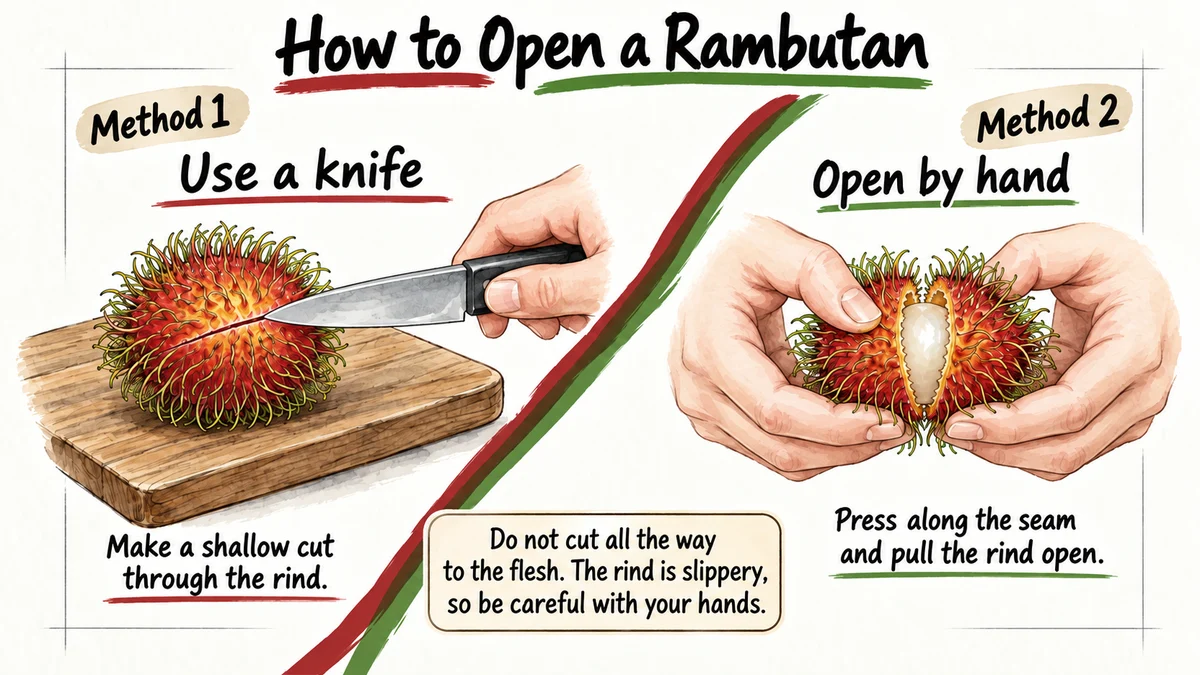
Ripe fruit may split when you press near the middle of the rind with your thumbs. If it will not open easily, use a clean knife to score only the rind. Avoid pulling a blade forcefully towards a fruit resting in your palm.
1. Wash
Rinse the rind under running water to remove surface dirt. Clean your hands before and after peeling.
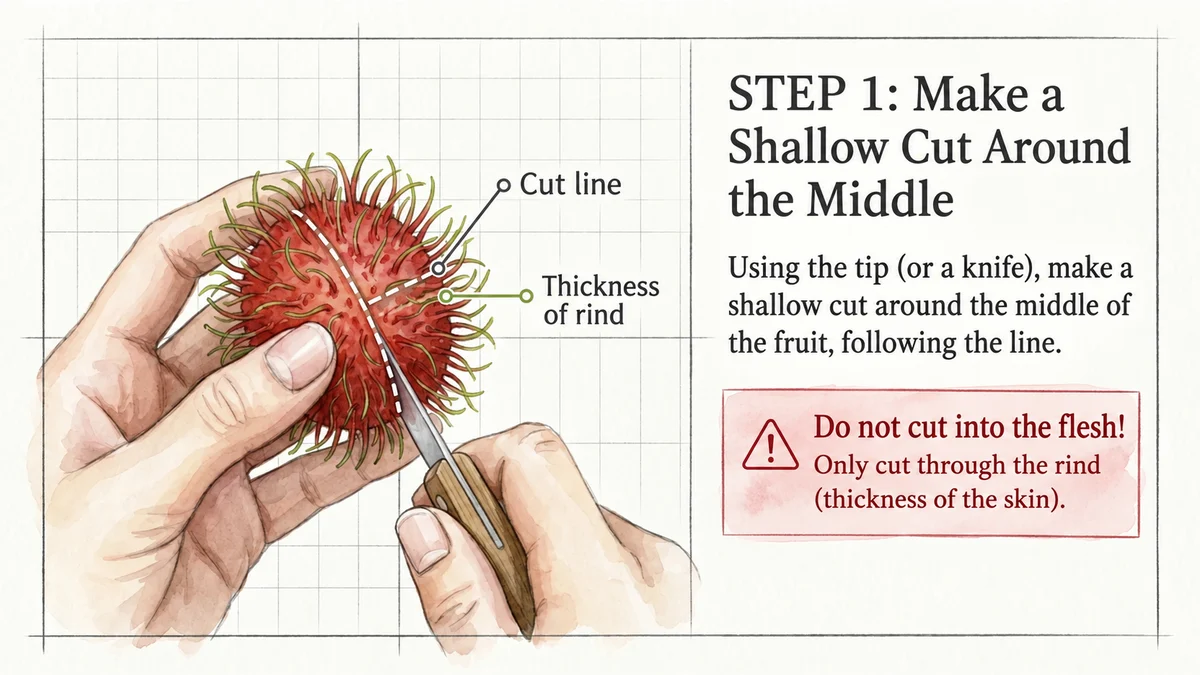
2. Split the Rind
Press it open with your thumbs, or score shallowly around the middle with a knife. Avoid cutting deeply into the white edible flesh.
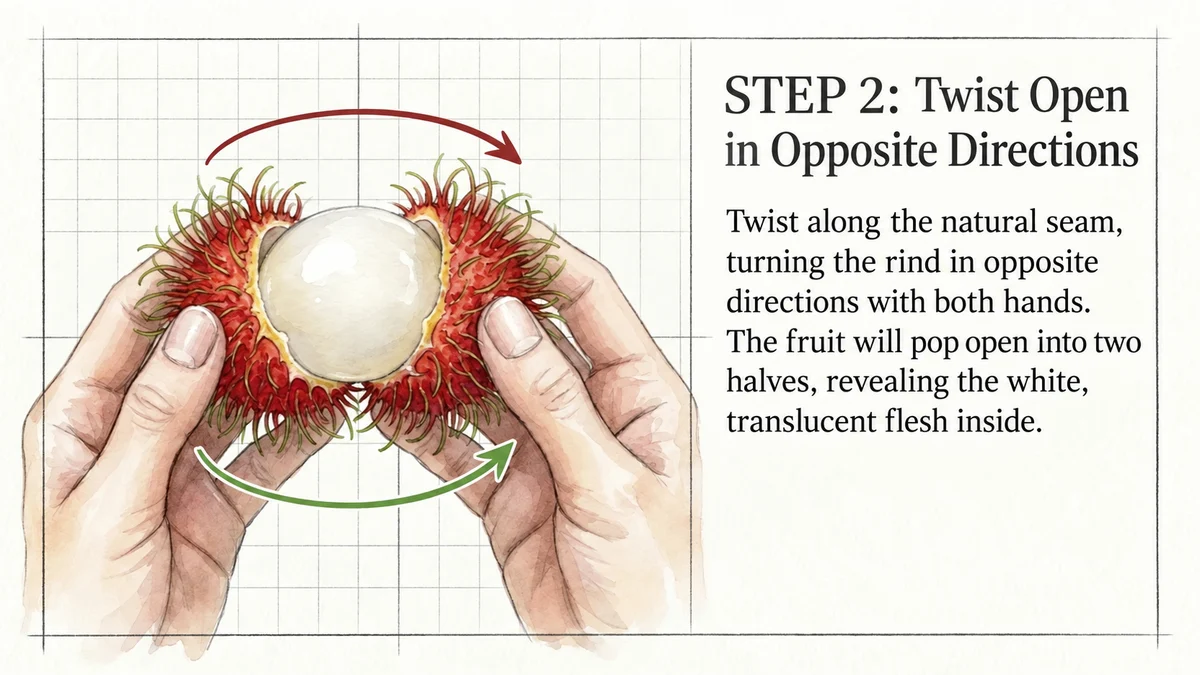
3. Twist Open
Hold the two sides of the cut and slowly twist in opposite directions to separate the rind into two halves.
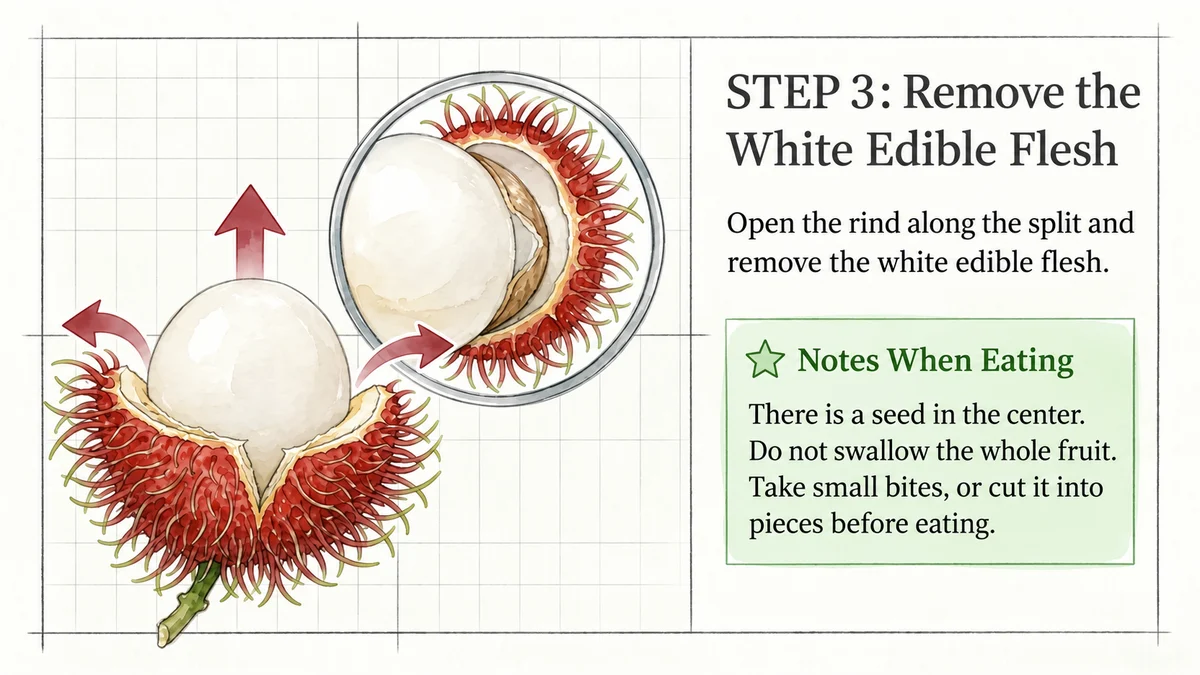
4. Eat Around the Seed
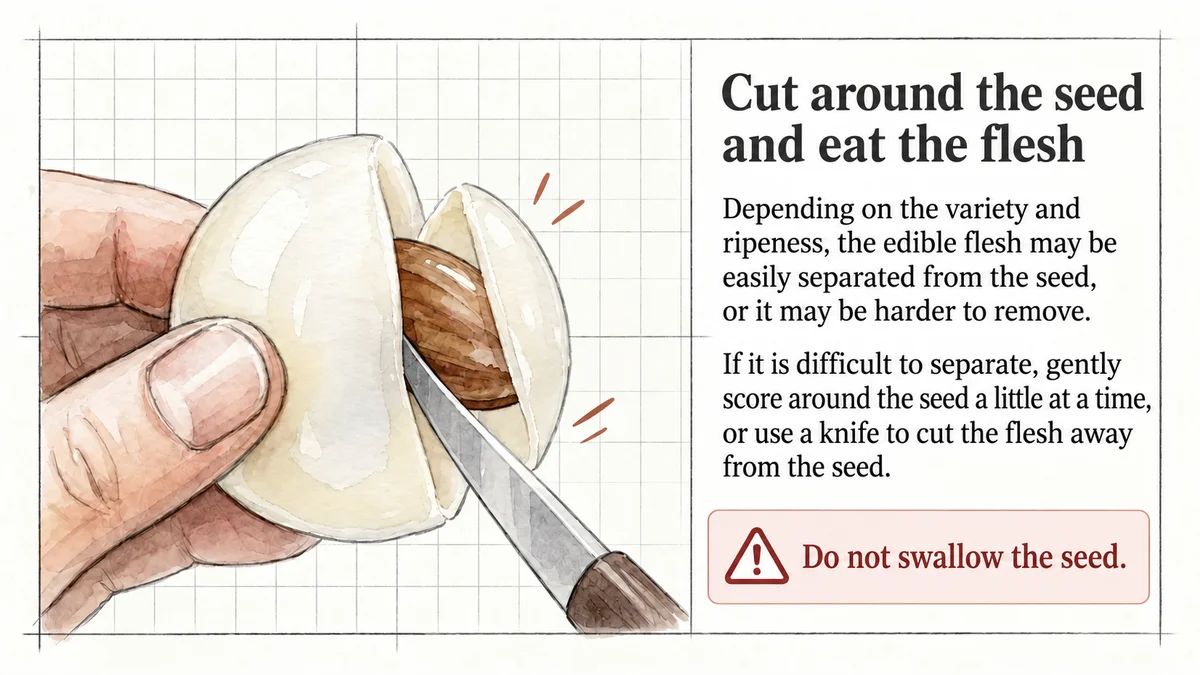
There is a seed in the centre. Bite the flesh gradually or cut it away, and discard the seed without swallowing it. A thin layer of seed coat may adhere to the flesh in some cultivars.
Ease of removing flesh and separating the seed varies by cultivar. Pushing from the stem end does not guarantee that the seed coat stays behind, and the seed will not always slide out easily.
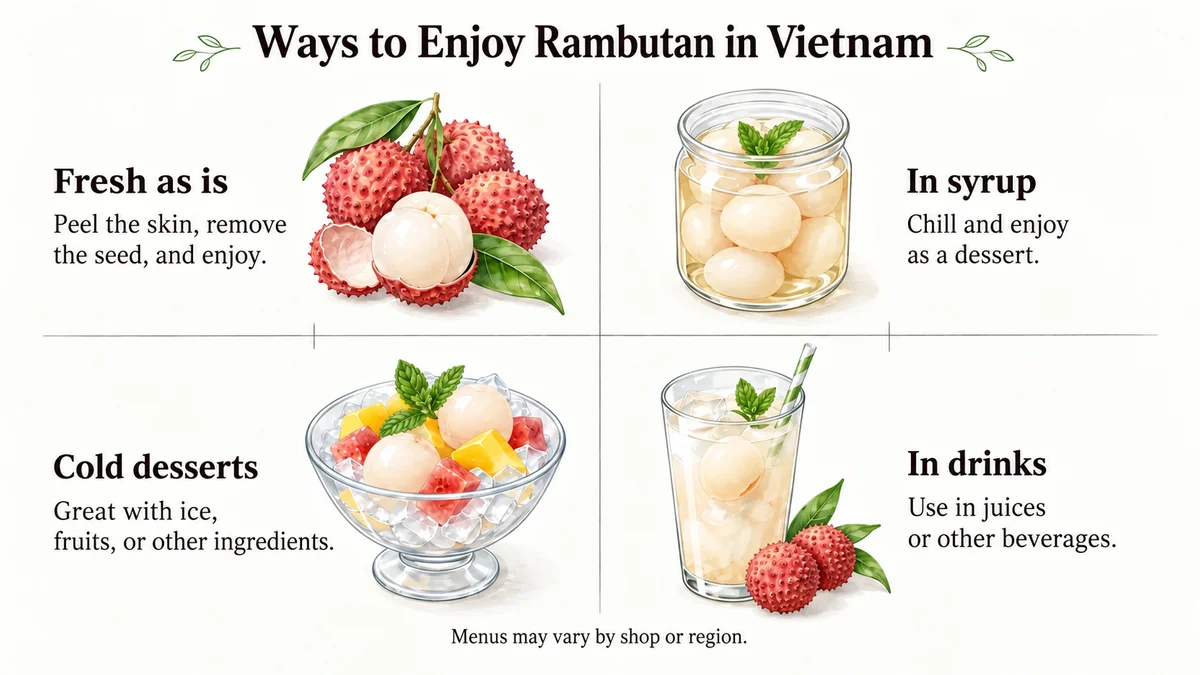
Ways to Enjoy Rambutan in Vietnam
The simplest option is to eat chilled fruit fresh. Seedless flesh is also used in syrup, cold desserts and drinks.
Specific dish names, ingredients and prices differ by region and shop. When presenting an actual menu item, include the venue, dish name, price and photograph date.
Rambutan Storage: Refrigeration and Freezing
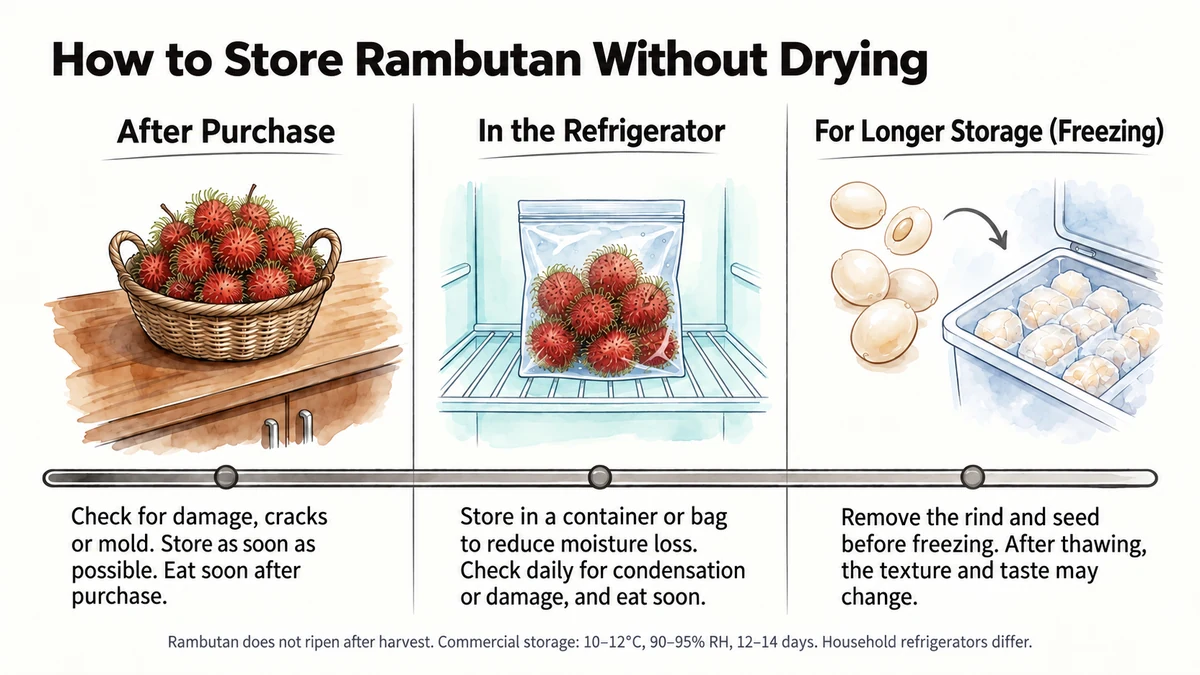
Rambutan does not become sweeter after harvest. UC Davis recommends commercial storage at 10–12°C and 90–95% relative humidity, with a potential life of 12–14 days. Household refrigerators are colder and drier, so this is not a guaranteed domestic storage period.
- Keep purchased fruit away from direct sun and high temperatures; eat it promptly
- If refrigerating, use a bag or container to reduce drying, and check daily for condensation and decay
- For longer storage, remove rind and seeds before freezing; use thawed flesh in drinks or desserts
Can You Eat the Seed?
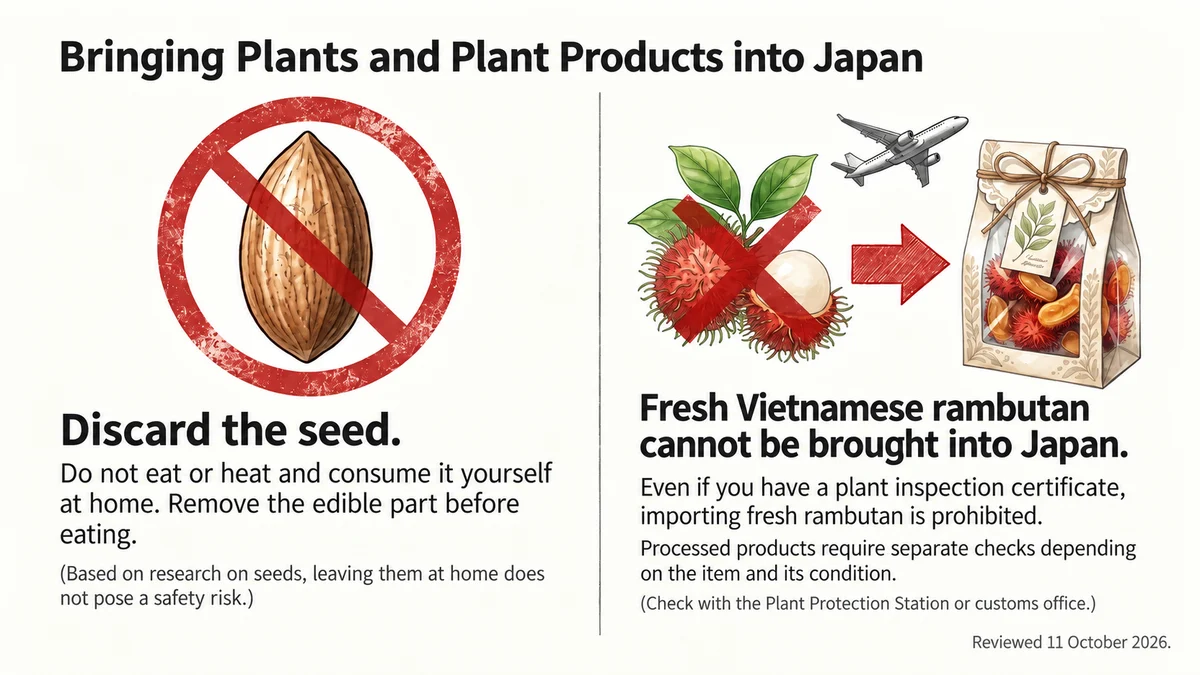
In normal eating, discard the seed. Research has examined fermented, dried and roasted rambutan seeds as food ingredients, but tests of powder processed under specific conditions do not establish that raw or home-roasted seeds are safe to eat.
Reliable human evidence establishing safe amounts and symptoms was not identified, so a claim such as “one seed is safe” cannot be made. Do not improvise raw or heated seed consumption at home; remove the seeds.
Can You Bring Rambutan from Vietnam to Japan?
Fresh rambutan cannot be taken from Vietnam into Japan. A phytosanitary certificate does not make this prohibited fruit admissible. Enjoy it locally.
Thoroughly processed products such as canned fruit differ from fresh fruit, but conditions may depend on the product and other ingredients. Check current Plant Protection Station and customs guidance before purchasing or travelling.
The Author’s Tasting Notes
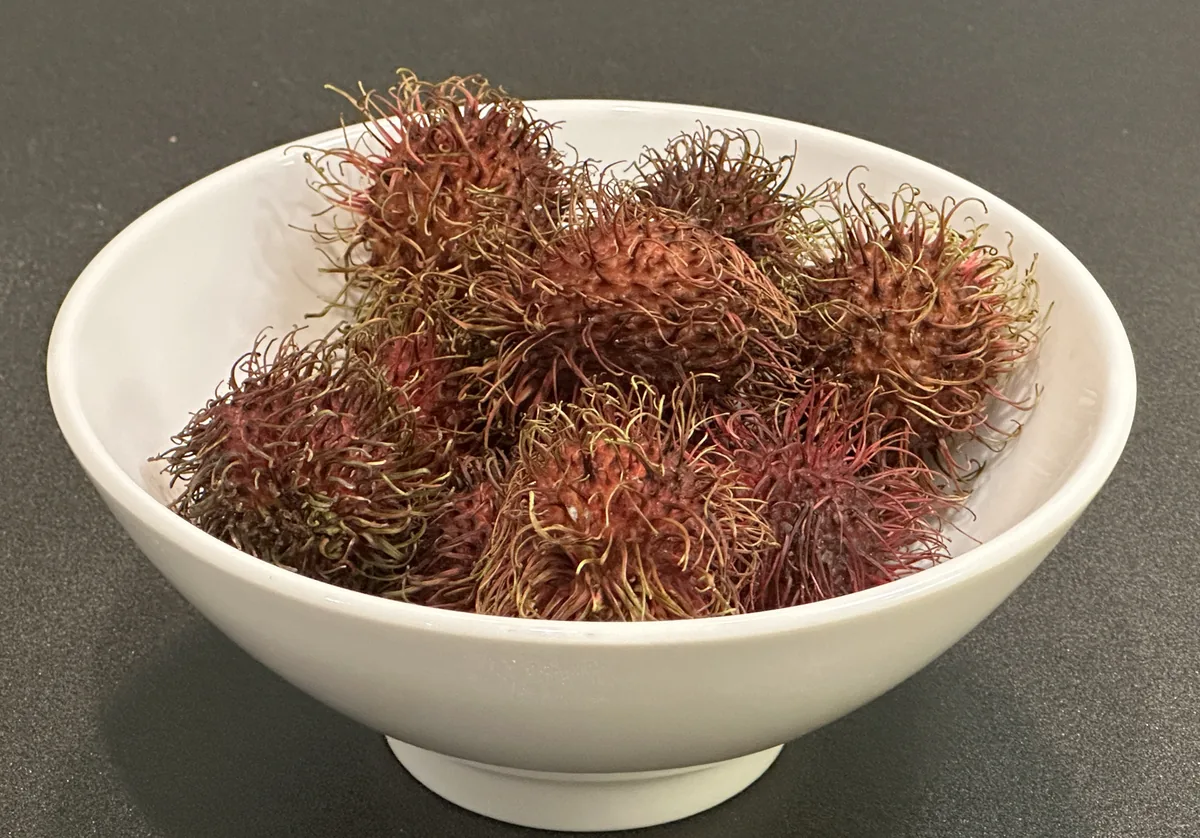
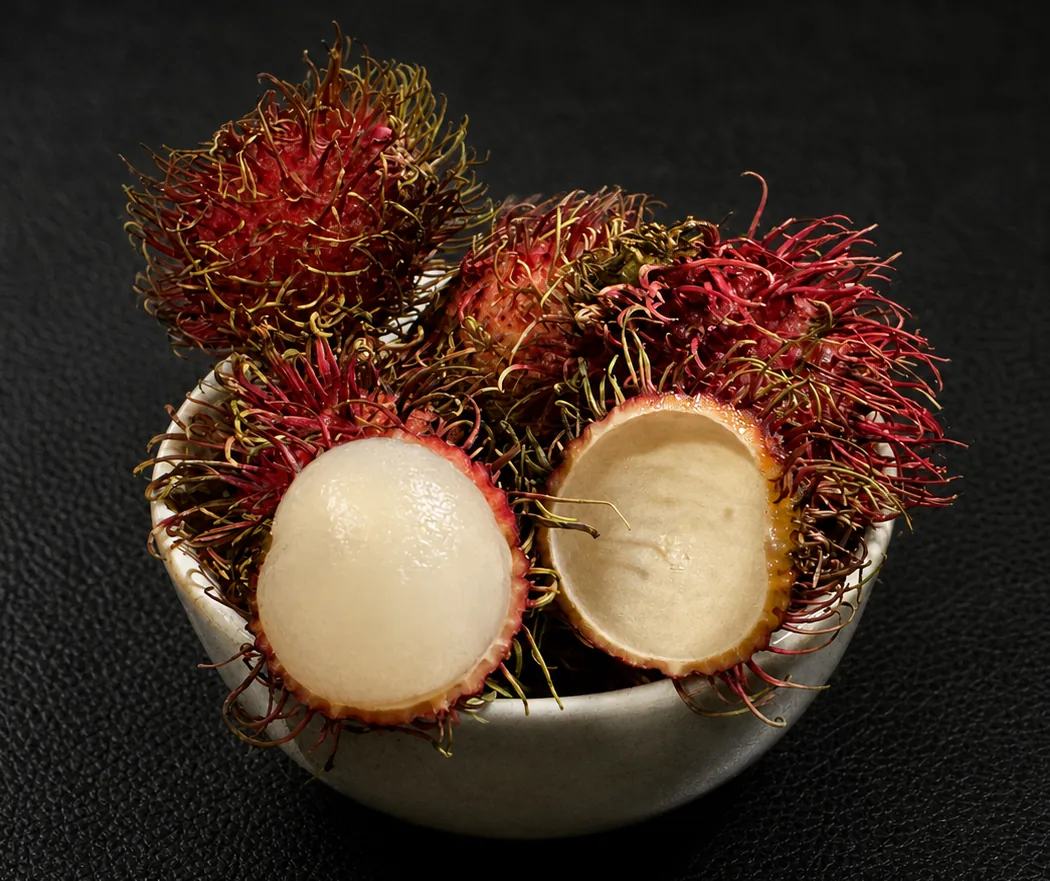
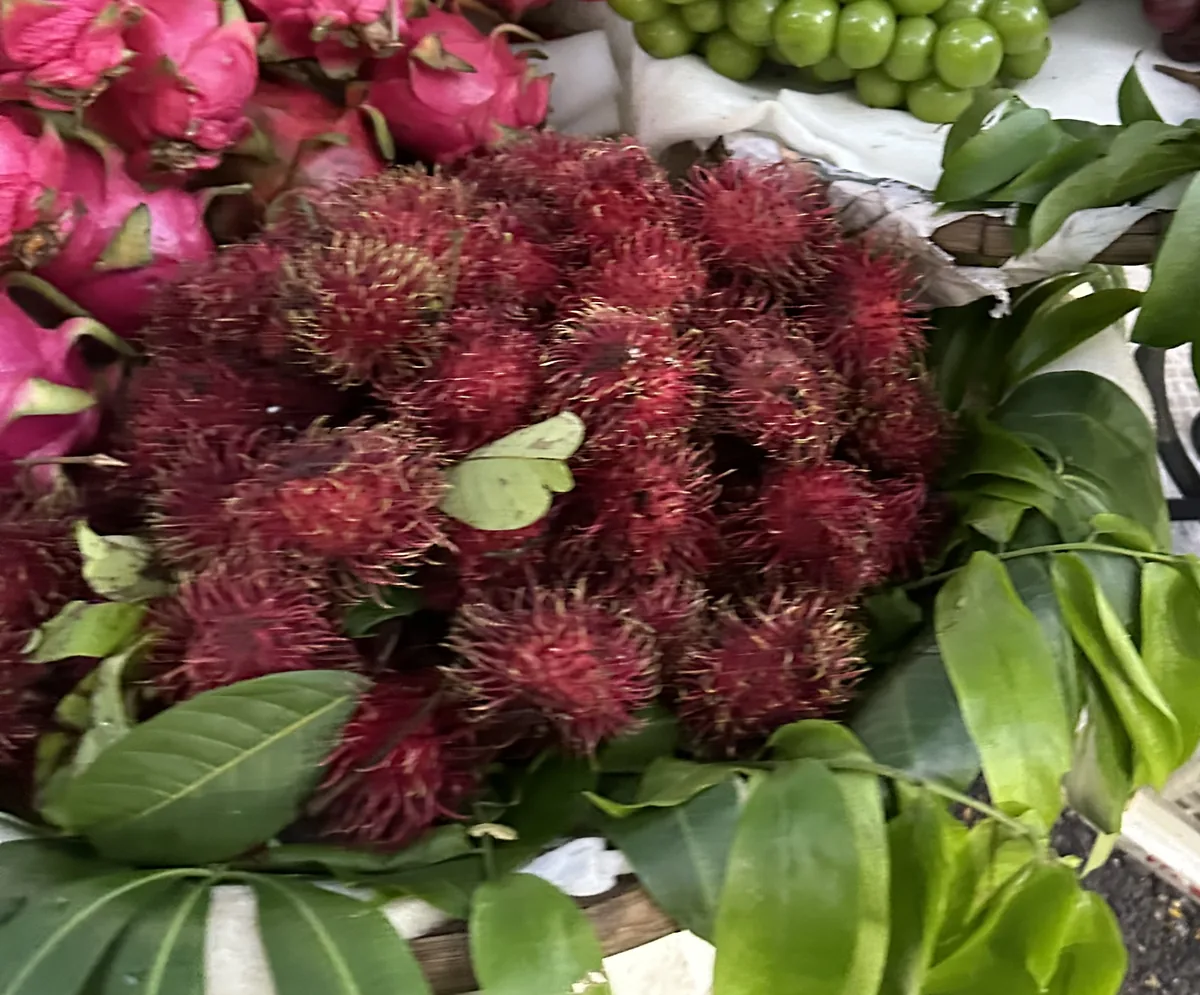
Purchase record
Place: supermarket
Date: July 2026
Price: about 47,000 VND per kilogram
Tasting notes
A shallow cut around the middle of the rind and a twist made it easy to open. The white flesh was springy, juicy and sweet.
Beginner-friendly rating: ★★★☆☆
FAQs
Will Rambutan Become Sweeter After Purchase?
No. It is harvested ready to eat on the tree and does not become sweeter after harvest.
Do the Projections on the Rind Hurt?
On ripe fruit they are soft, not sharp spines. The rind is not eaten.
Can You Eat Rambutan Seeds?
They are normally discarded. Do not eat them raw or attempt home processing; remove the seeds and eat only the flesh.
Can I Take It Home to Japan?
Fresh Vietnamese rambutan cannot be brought in. Check the latest conditions with Japan’s Plant Protection Station.
Key Points
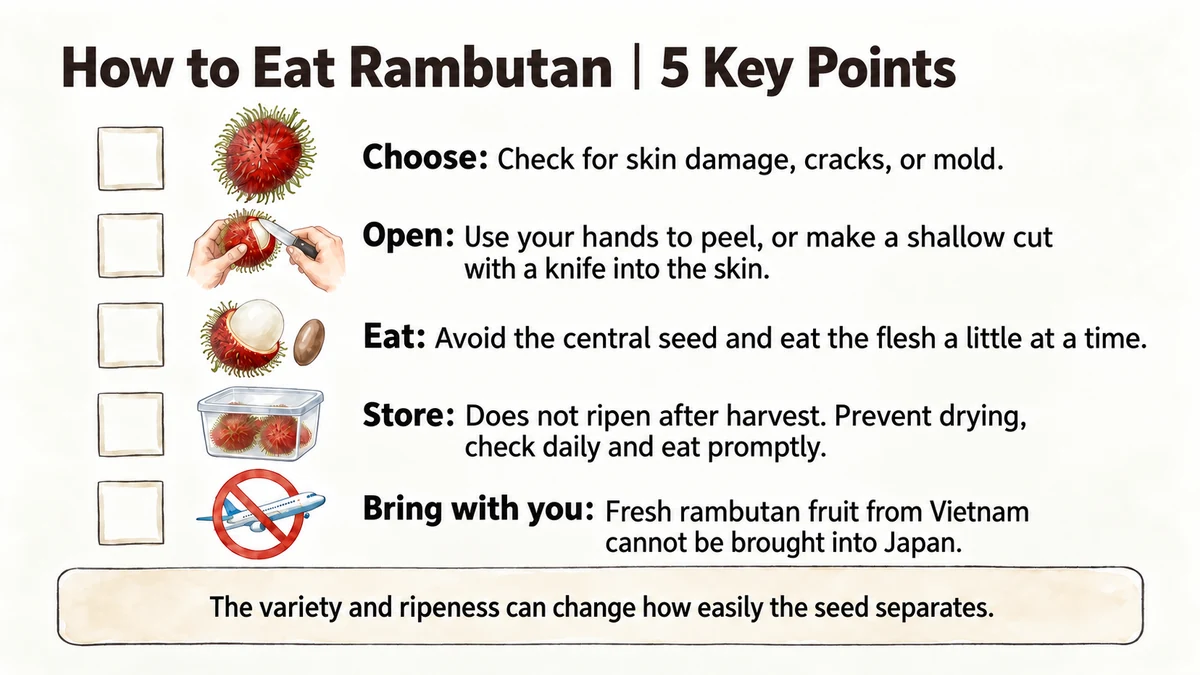
- Choose fruit by its cultivar-appropriate colour, firmness, dryness, damage and juice leakage
- Wash, then split by hand or score the rind shallowly and twist
- Eat the white flesh; discard rind and seed
- Prevent drying and eat promptly, as fruit does not become sweeter after harvest
- Do not take fresh Vietnamese rambutan into Japan
References
- UC Davis Postharvest Research and Extension Center: Rambutan
- World Agroforestry: Nephelium lappaceum species profile
- Chai et al.: Physicochemical properties and toxicity of cocoa powder-like product from roasted rambutan seeds
- Japan Plant Protection Station: Examples of non-compliance with plant quarantine requirements
- Japan Plant Protection Station: Import prohibitions
Japan Plant Protection Station: Vietnam traveller restrictions — Reviewed 11 October 2026. Fresh rambutan cannot be brought into Japan.