Rambutan’s history cannot be drawn as one neat arrow. A fruit travelling west from the Malay Archipelago is an appealing story, but wild distribution, domestication and human movement of seeds are separate questions.
This article follows its history while distinguishing documented records from later theories and tales.
For taste, nutrition and varieties, see Rambutan Guide: Taste, Nutrition, Varieties and Names. For buying and peeling, see How to Eat Rambutan in Vietnam: Prices, Choosing, Peeling and Storage.
Rambutan Origins: Native Range and Domestication
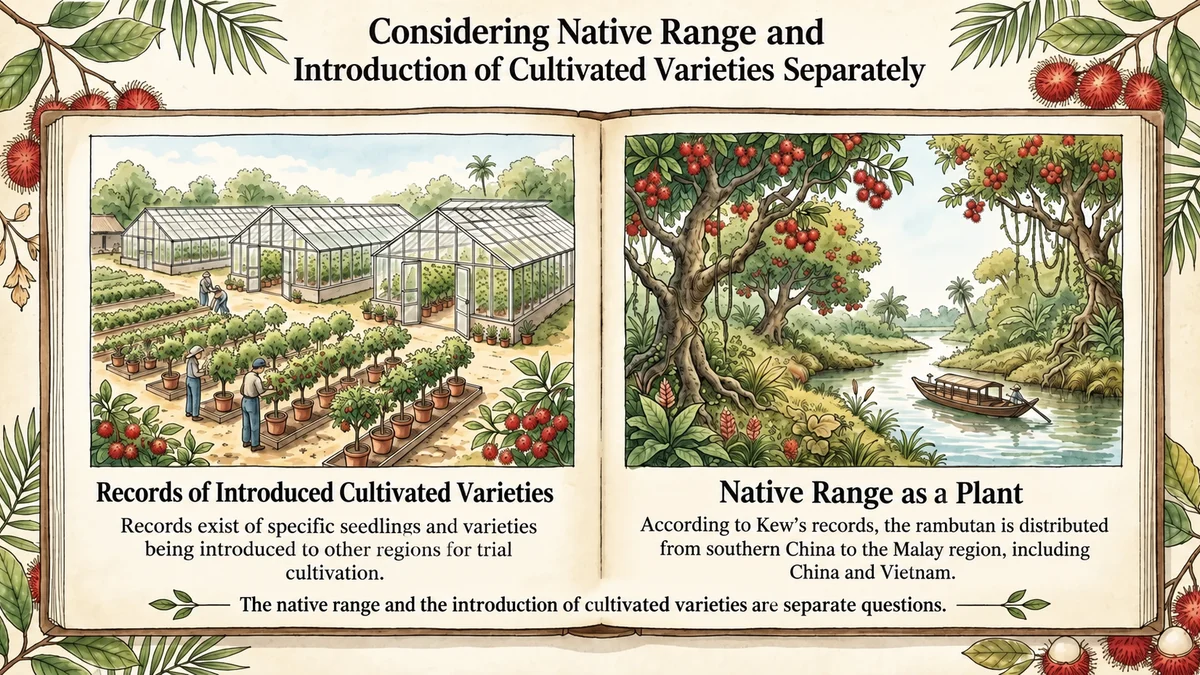
Kew’s Plants of the World Online gives the native range of Nephelium lappaceum as southern China to Malesia, listing the Malay Peninsula, Borneo, Sumatra, Sulawesi, the Philippines, Thailand, Myanmar and Vietnam, among other areas.
Some agricultural and forestry sources describe Malaysia and Indonesia as the origin or domestication centre. These accounts do not establish when rambutan “arrived in Vietnam” or that it was absent from China until the 1960s. Wild distribution must be distinguished from the introduction of particular cultivars.
Traditional Uses in Everyday Life
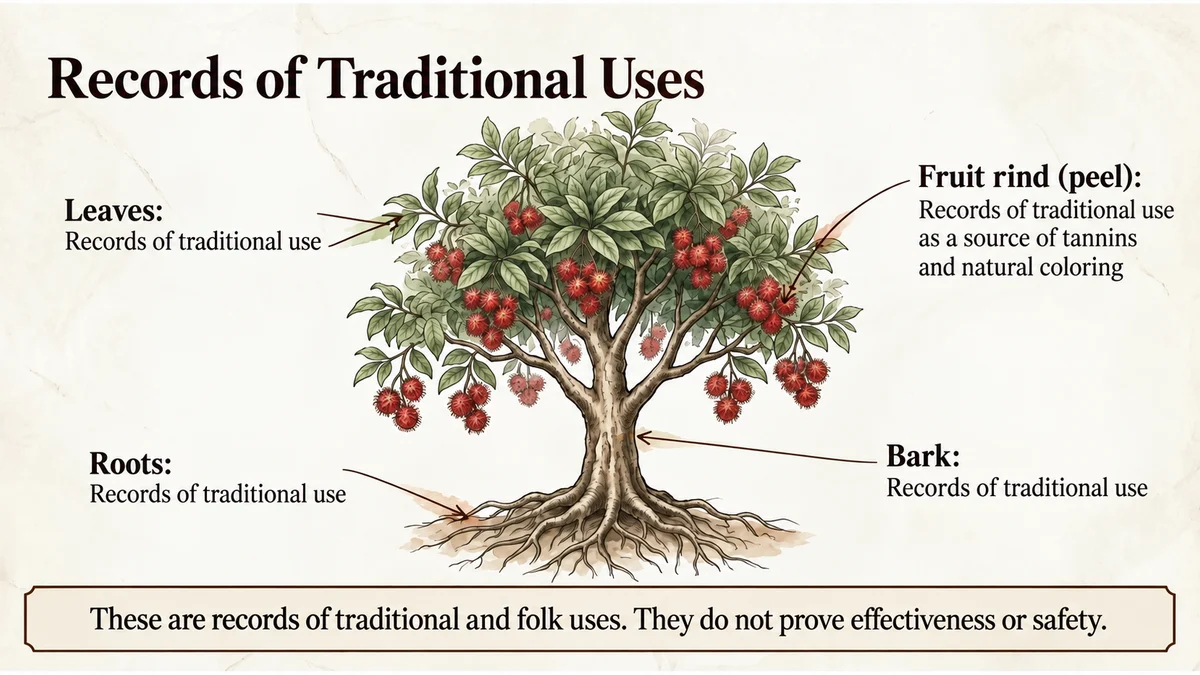
Rambutan wood, bark, leaves and roots have been reported in local traditional uses and as sources of dye. These are records of cultural practice, not clinical evidence that such uses are safe or effective against disease.
Where the Name Rambutan Comes From
Rambutan derives from Malay and Indonesian rambut, meaning hair, referring to the soft hair-like projections on the rind. In Vietnamese it is Chôm chôm, but a reliable etymological source was not identified, so its meaning is not asserted here.
1767: Linnaeus Publishes the Scientific Name
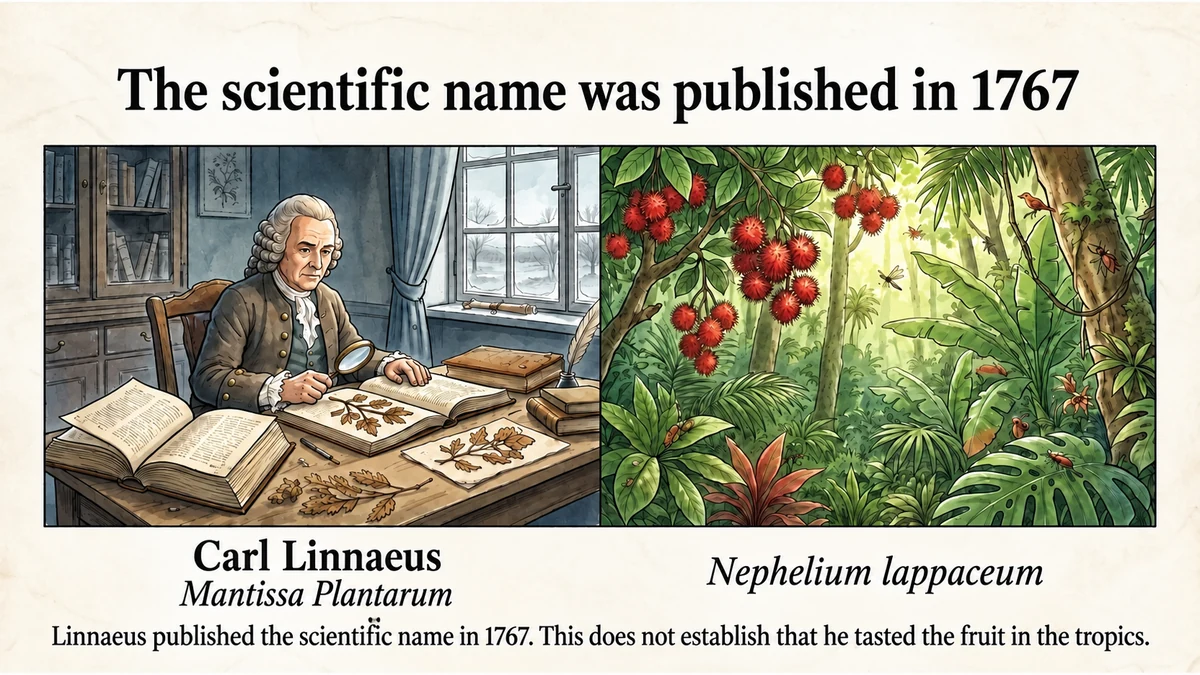
Carl Linnaeus published the scientific name Nephelium lappaceum in Mantissa Plantarum in 1767. Kew’s database records the accepted name and publication year.
No record was identified showing that Linnaeus tasted the fruit in the tropics before naming it, or establishing the precise route of the material he used. The secure milestone is the publication of the name in 1767.
Accounts of Crossing the Indian and Atlantic Oceans
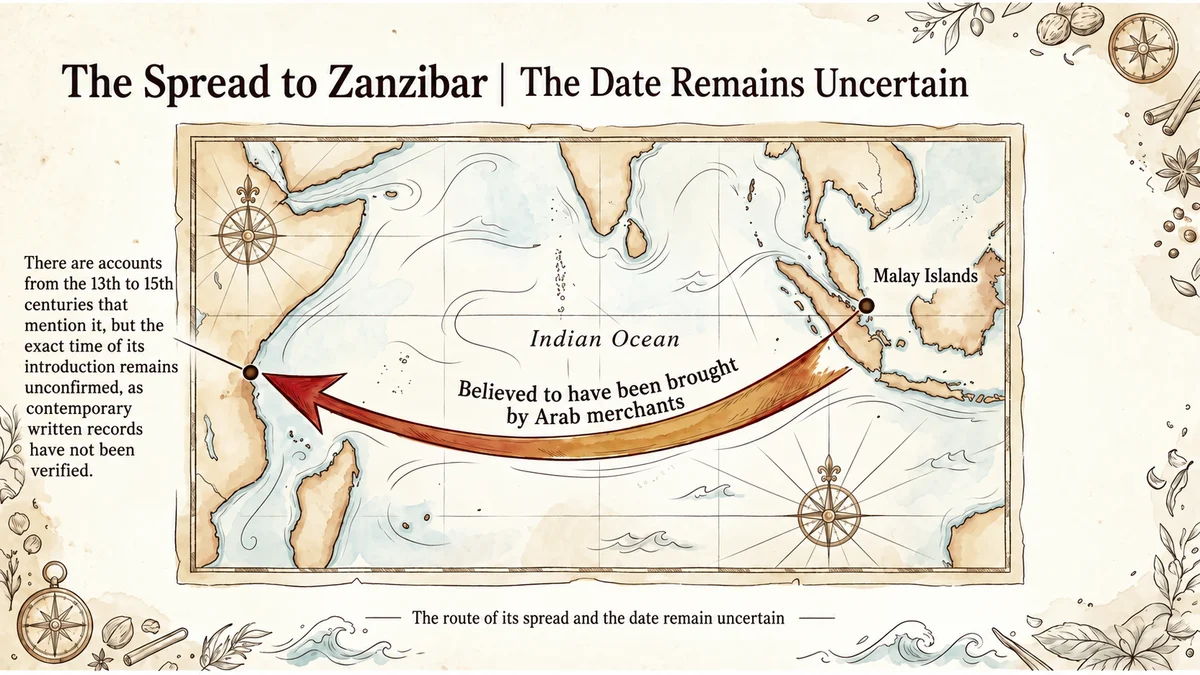
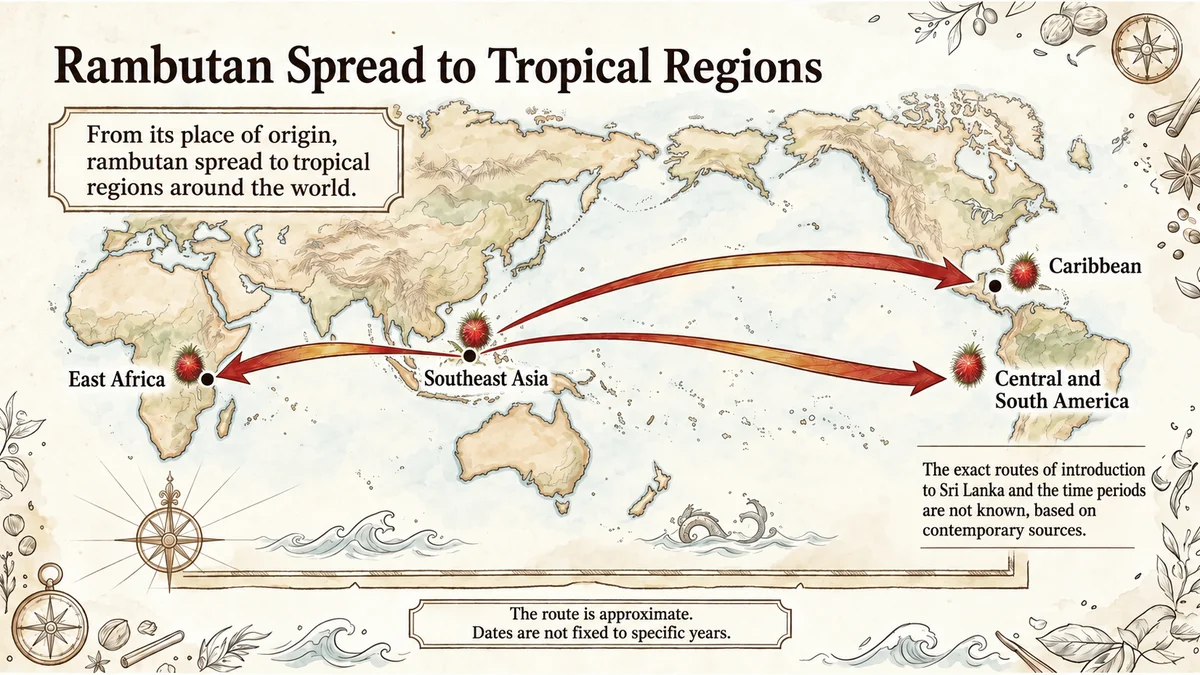
Rambutan is now grown in humid tropical regions beyond Southeast Asia, including Zanzibar in East Africa, the Caribbean and Central and South America.
Claims that Arab traders took it to Zanzibar in the 13th–15th centuries, or that Dutch settlers introduced it from Indonesia to Suriname in the 19th century, are widely repeated. Contemporary evidence establishing these dates was not identified. A recent Zanzibar study places introduction by Arab traders in the 19th century, conflicting with the earlier dating.
It is reasonable to describe movement through tropical trade and colonial-era exchanges as a reported account. Exact dates and carriers remain uncertain.
1906: A USDA Plant Introduction Record
The USDA plant introduction inventory records rambutan seeds received on 16 February 1906 from the botanical garden at what is now Bogor, Java. The accession is SPI 17515.
This establishes rambutan’s presence in an official plant introduction programme by the early 20th century. It was subsequently cultivated in places including Puerto Rico and Hawaiʻi. In 2011, rules provided for movement of Puerto Rican rambutan to the US mainland under specified conditions.
Rambutan was not a fruit unable to leave its homeland. It has spread to several continents while remaining suited to humid tropical environments.
In Vietnam, a Fruit Bearing a Place Name
Kew includes Vietnam in the native range, but the movement of today’s cultivated varieties into particular growing areas is a separate issue. The ages of old trees cannot establish an introduction date for the entire country.
One documented milestone is 2016. On 8 June, Vietnam’s Intellectual Property Office registered Long Khánh in Đồng Nai Province as a geographical indication for rambutan. This records a modern connection between product quality and place without inventing an origin story to fill gaps.
Tales Whose Original Sources Remain Unidentified
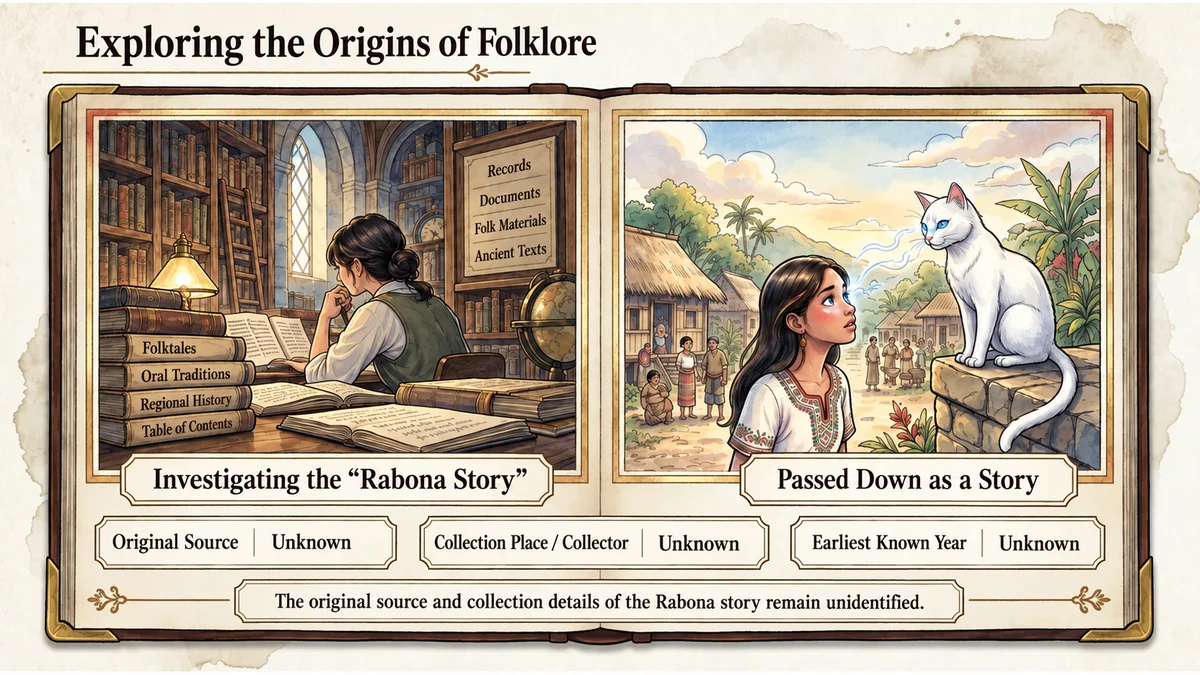
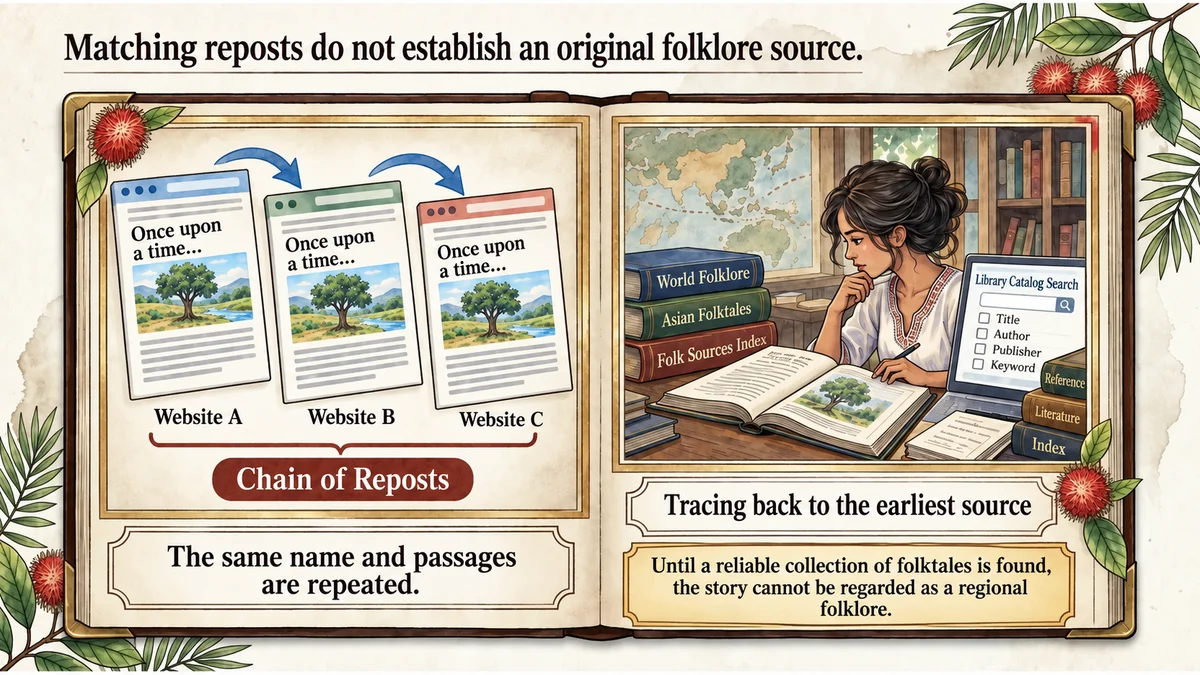
A tale about a girl named Rabona becoming rambutan is sometimes described as a Philippine folktale. The sources identified for this article were Vietnamese-language websites without an original text, collection location, collector or first publication date. Matching character names across sites do not prove independent evidence rather than copying.
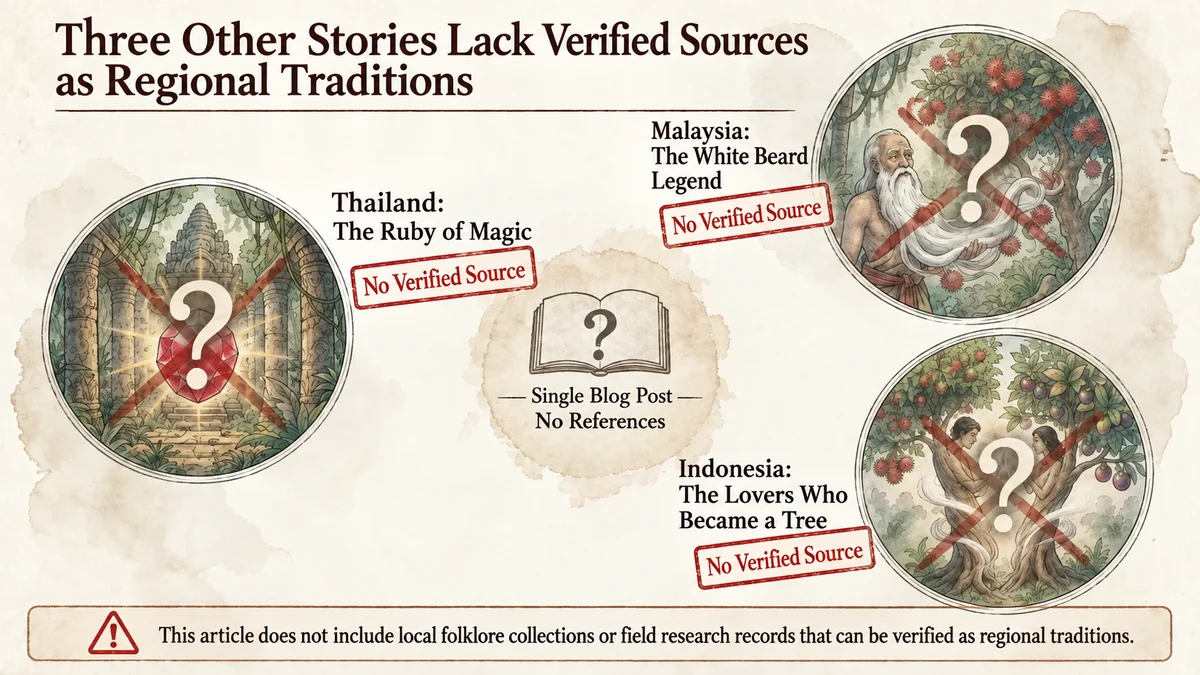
Three further tales—a white-bearded old man in Malaysia, a magical ruby in Thailand and lovers in Indonesia—depended on one blog without references. Presenting them as established regional legends could make modern invention appear to be documented folklore.
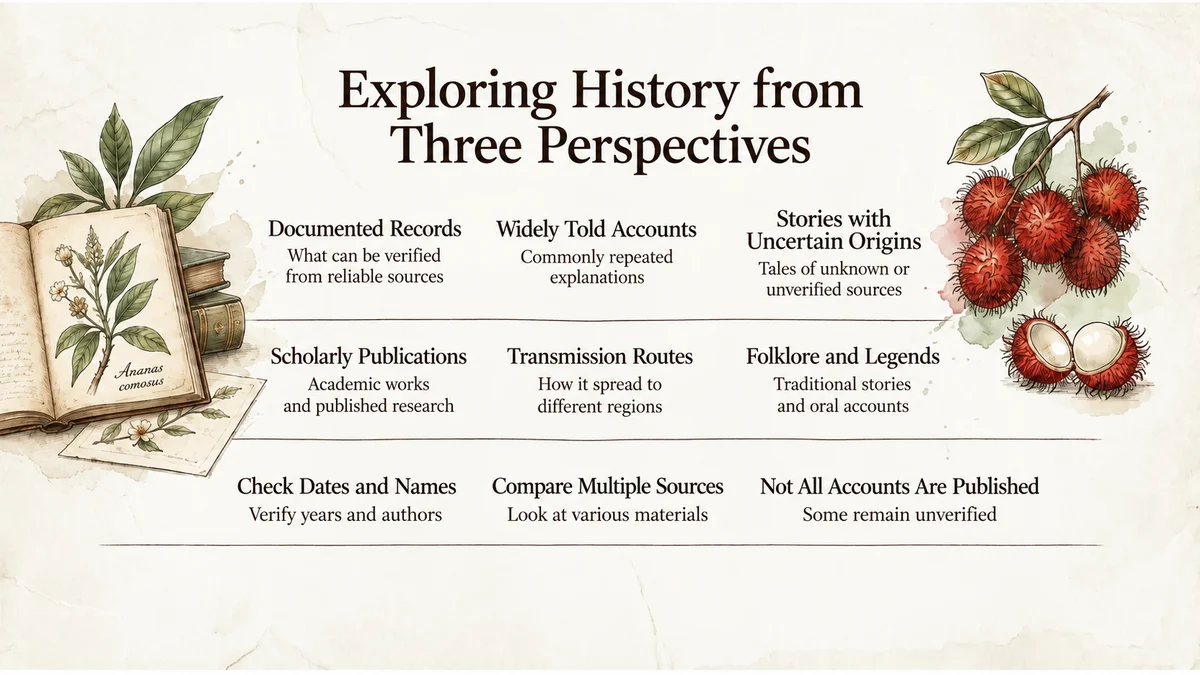
A tale should be introduced with its original source or a reliable folklore collection, including collection location, collector and publication year. For now, the plots are omitted; the illustrations show the missing evidence and how to investigate it.
Japan: A Question of Quarantine Conditions
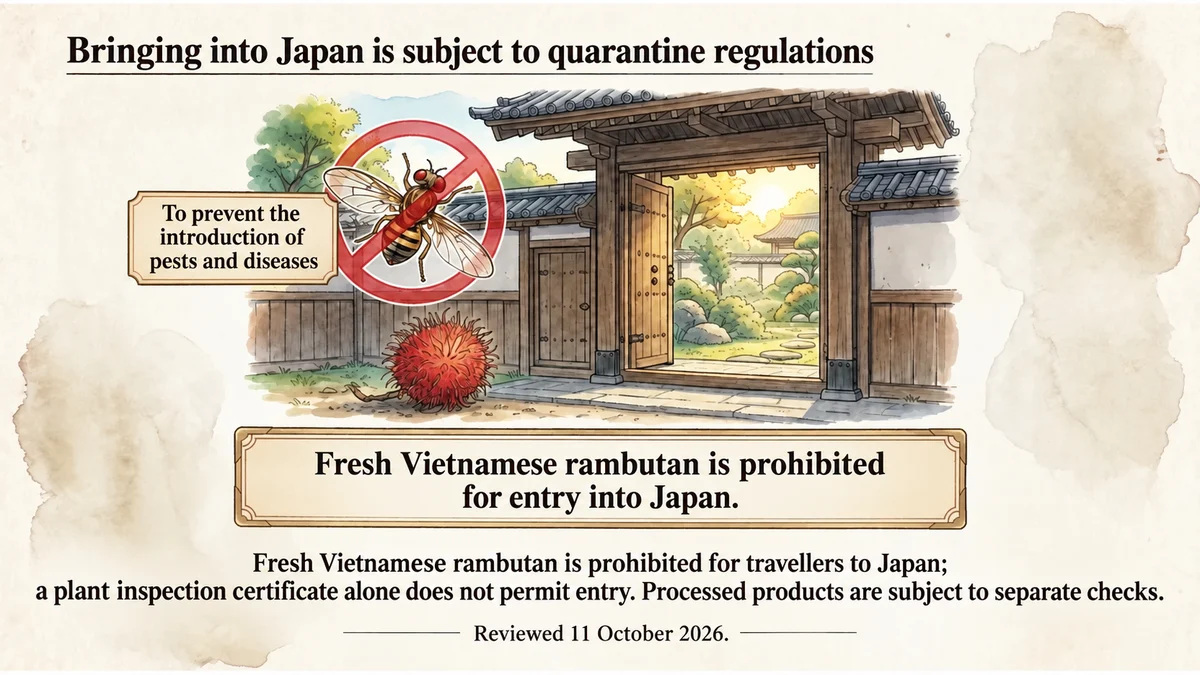
Fresh rambutan from Vietnam and other areas affected by the oriental fruit fly cannot be brought into Japan. Describing this as a fruit unable to open “the last gate of its journey” obscures the country-specific plant quarantine rules.
Plant quarantine prevents the introduction of pests and diseases; it does not measure a fruit’s popularity or the success of its travels. Conditions can change, so check the Plant Protection Station’s current information before travel.
Gaps in the Record Are Part of the History
Secure milestones include publication of the scientific name in 1767, USDA receipt of seeds in 1906 and registration of the Long Khánh geographical indication in 2016.
The introduction date in Zanzibar, specific introducers in Suriname, the arrival of cultivated varieties in Vietnamese growing areas and online folktales remain partly unresolved. Showing where the record is strong or thin brings readers closer to the fruit’s history than filling gaps with dramatic invention.
Rambutan History FAQs
Where Does Rambutan Originate?
Kew gives a native range from southern China to Malesia, including Vietnam. Malaysia and Indonesia are also described as centres of domestication.
What Does the Name Rambutan Mean?
It derives from Malay and Indonesian rambut, meaning hair.
When Was Rambutan’s Scientific Name Published?
Carl Linnaeus published Nephelium lappaceum in Mantissa Plantarum in 1767.
Are Online Rambutan Folktales Authentic?
Original sources or collection records were not identified for the four tales examined here. They cannot be presented as established regional traditions without reliable folklore sources.
Related Articles
- Taste, nutrition and varieties: Rambutan Guide: Taste, Nutrition, Varieties and Names
- Prices, choosing and peeling: How to Eat Rambutan in Vietnam: Prices, Choosing, Peeling and Storage
- Browse 15 Vietnamese Fruits
References
- Royal Botanic Gardens, Kew: Nephelium lappaceum L.
- World Agroforestry: Nephelium lappaceum species profile
- USDA: Seeds and Plants Imported, December 1905 to July 1906 — SPI 17515
- U.S. Federal Register: Interstate Movement of Rambutan From Puerto Rico
- Intellectual Property Office of Vietnam: List of Geographical Indications protected in Vietnam
- Japan Plant Protection Station: Examples of non-compliance with plant quarantine requirements
Japan Plant Protection Station: Vietnam traveller restrictions — Reviewed 11 October 2026. Fresh rambutan cannot be brought into Japan.