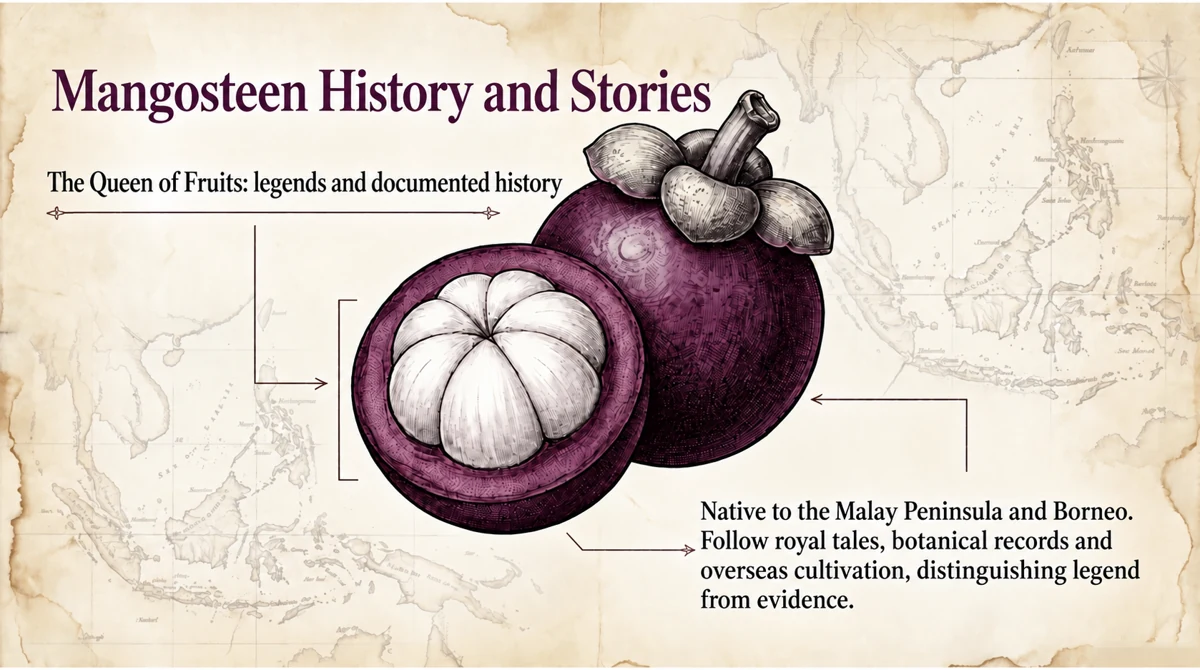
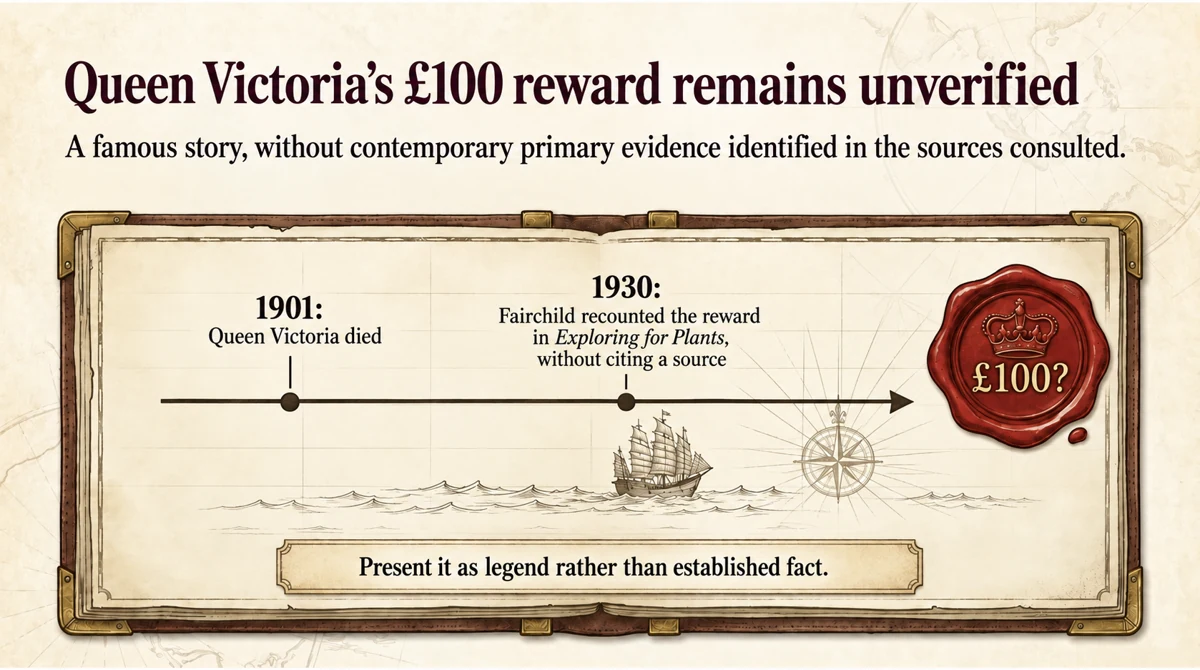
“Queen Victoria promised £100 to anyone who could bring her fresh mangosteen.” This colourful story is often repeated about the fruit.
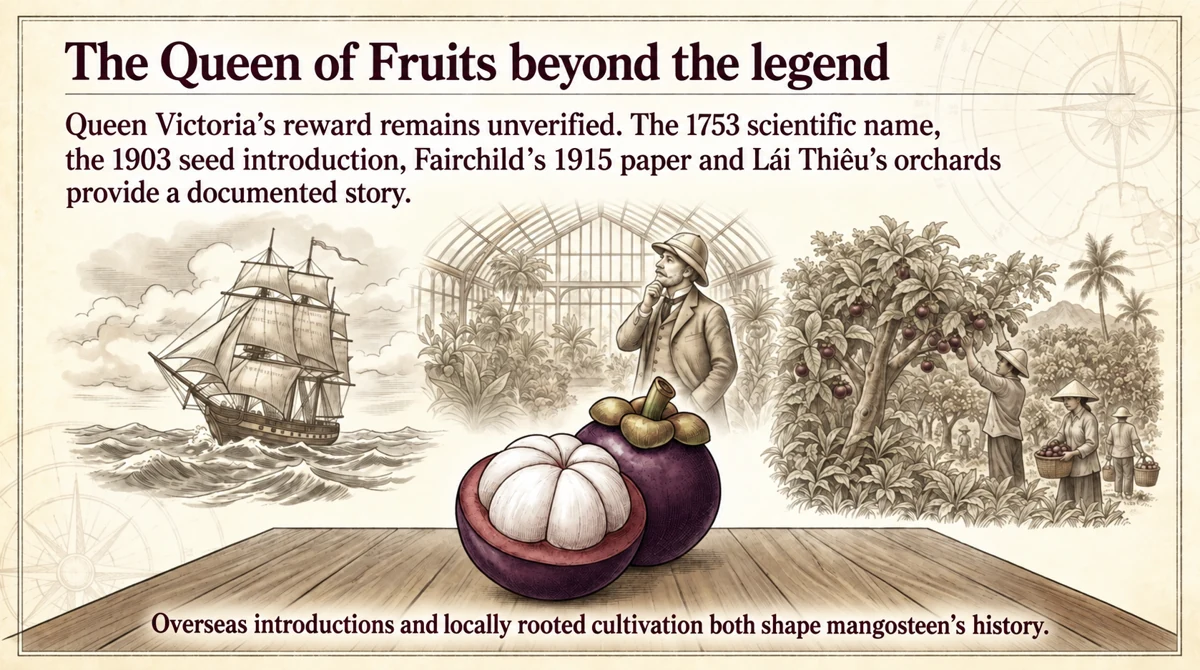
Within the sources consulted here, however, contemporary primary evidence for the reward has not been identified. Historical publications do call mangosteen the Queen of Fruits. By separating legend from documented records, we can follow its origins, international introductions and the orchards of Lái Thiêu in Vietnam.
Origins Around the Malay Peninsula and Borneo
Kew’s Plants of the World Online lists the native range of Garcinia mangostana as the Malay Peninsula and Borneo. When and from which population the cultivated edible variety, G. mangostana var. mangostana, arose remains unresolved.
A 2023 review identifies wild or partly cultivated var. malaccensis as a strong candidate ancestor, while questioning older hybrid-origin explanations and aspects of domestication. Rather than imagining the modern cultivated fruit unchanged in the wild since ancient times, it is better to acknowledge an unresolved history that may lie at the boundary between human cultivation and wild populations.
Asian and European Records
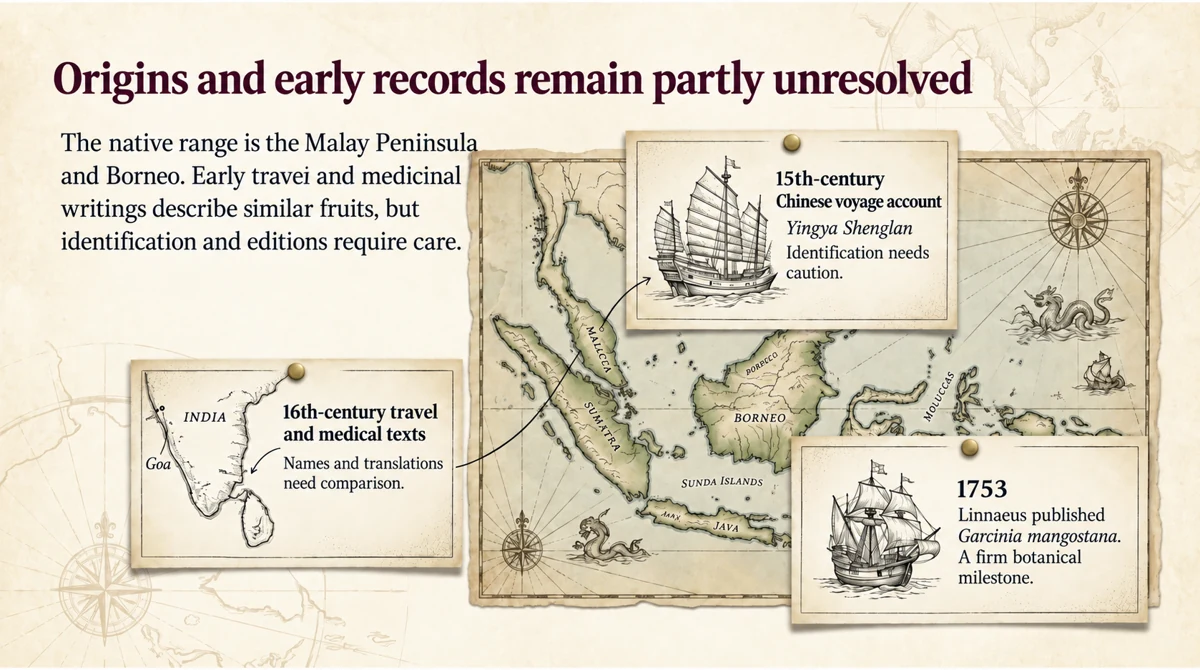
Mangosteen was known in Southeast Asia before European naturalists gave it a scientific name. The origin review discusses accounts associated with the fifteenth-century Yingya Shenglan and sixteenth-century writings of Portuguese physician Garcia de Orta.
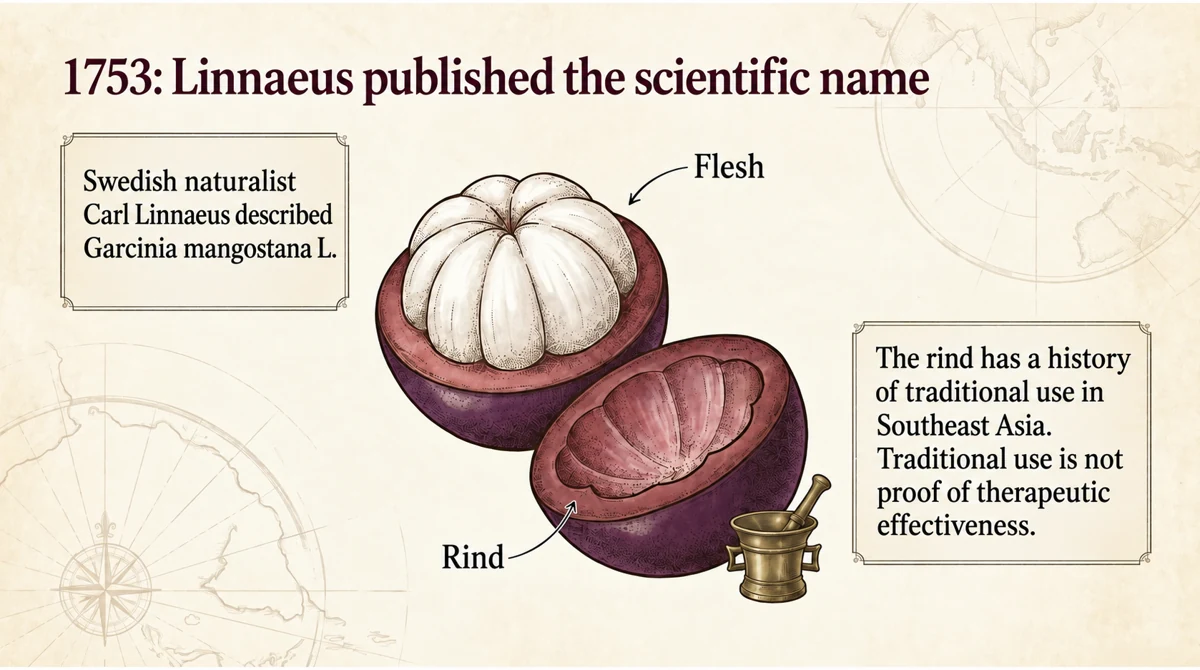
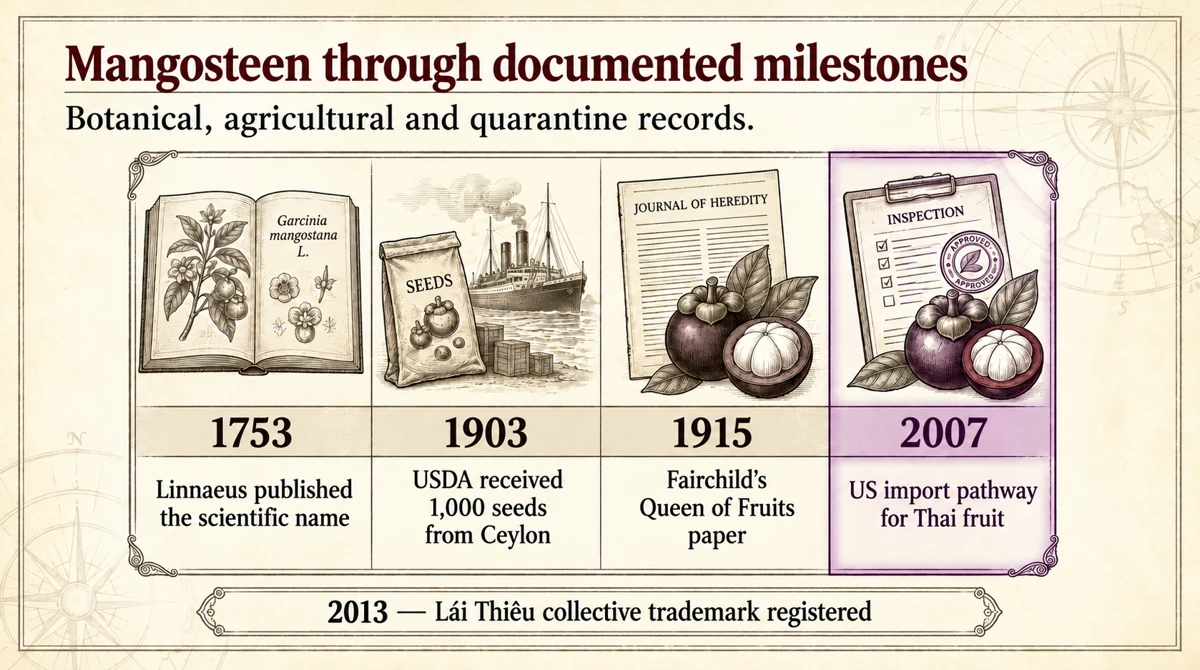
Plant identification and differences between editions create historical uncertainties, so this article does not claim a definitive mangosteen record in 1451. What is clear is that European natural-history literature discussed the fruit by the eighteenth century, and Carl Linnaeus published Garcinia mangostana in Species Plantarum in 1753.
Who First Called It the Queen of Fruits?
In his 1930 book Exploring for Plants, published after Queen Victoria’s death, David Fairchild recounted the £100 reward story. He did not provide a source for the claim.
Since contemporary primary evidence has not been identified within the sources consulted here, the story is treated as a widely repeated legend whose historical accuracy remains unconfirmed.
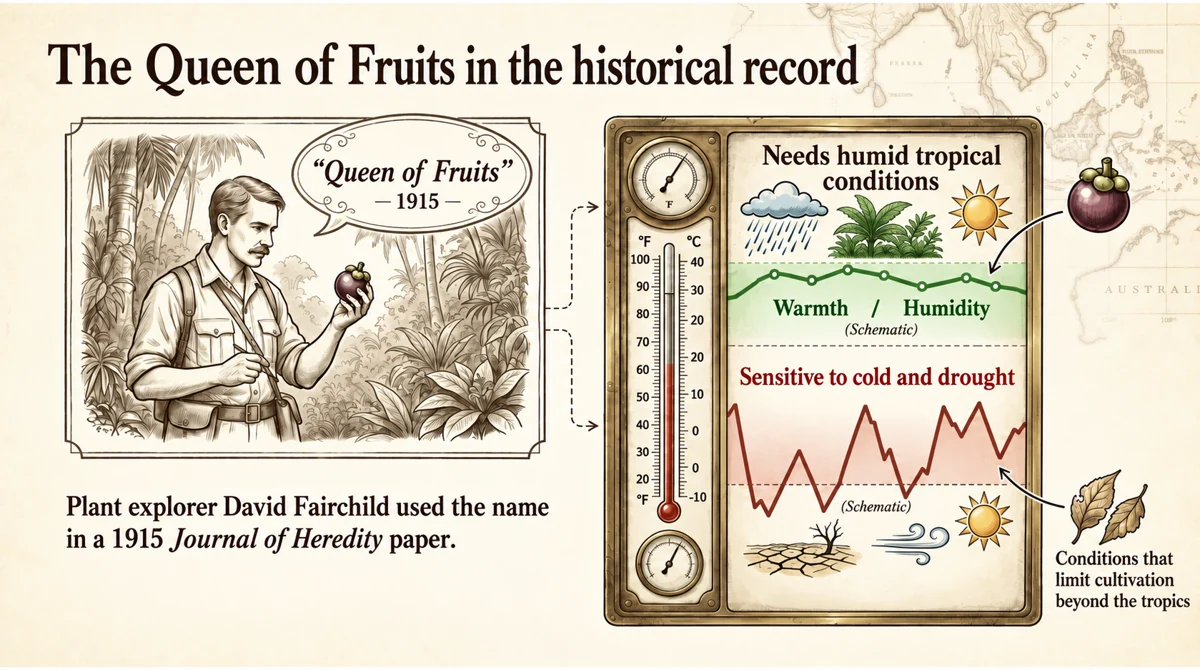
Fairchild’s admiration for mangosteen is documented. In 1915, he published “The Mangosteen: ‘Queen of Fruits’” in the Journal of Heredity. That does not establish that he coined the phrase, but it makes him an important figure in popularizing it in English.
The Seeds Fairchild Helped Introduce
US Department of Agriculture introduction records document the receipt of 1,000 mangosteen seeds from Ceylon, now Sri Lanka, in October 1903. Fairchild hoped the fruit could benefit Puerto Rico’s fruit-growing industry.
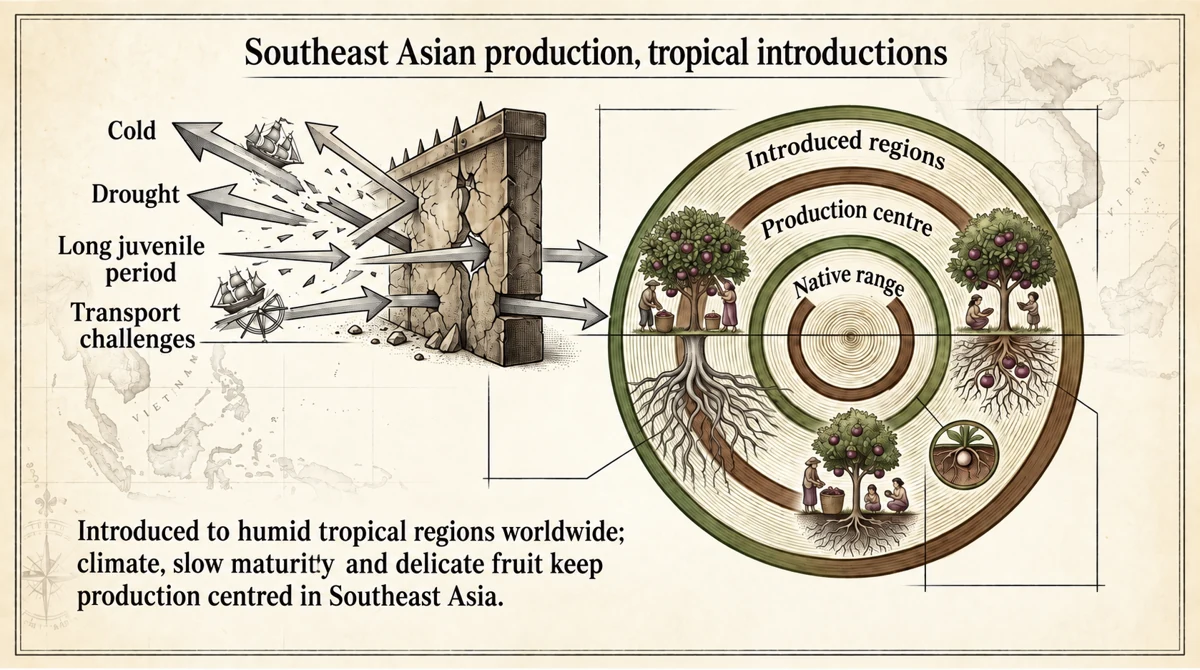
Mangosteen needs warmth and humidity, grows slowly when young and is sensitive to cold and drought. Much of the continental United States was unsuitable. Yet it would be inaccurate to say the fruit never became established in the Americas: it has been cultivated in tropical places including Hawaii and Puerto Rico, and fruiting of trees introduced by Fairchild is documented in Panama.
Mangosteen did travel beyond its homeland. Expanding commercial production outside the humid tropics was the greater challenge.
The 2007 Rule Opening a US Import Pathway
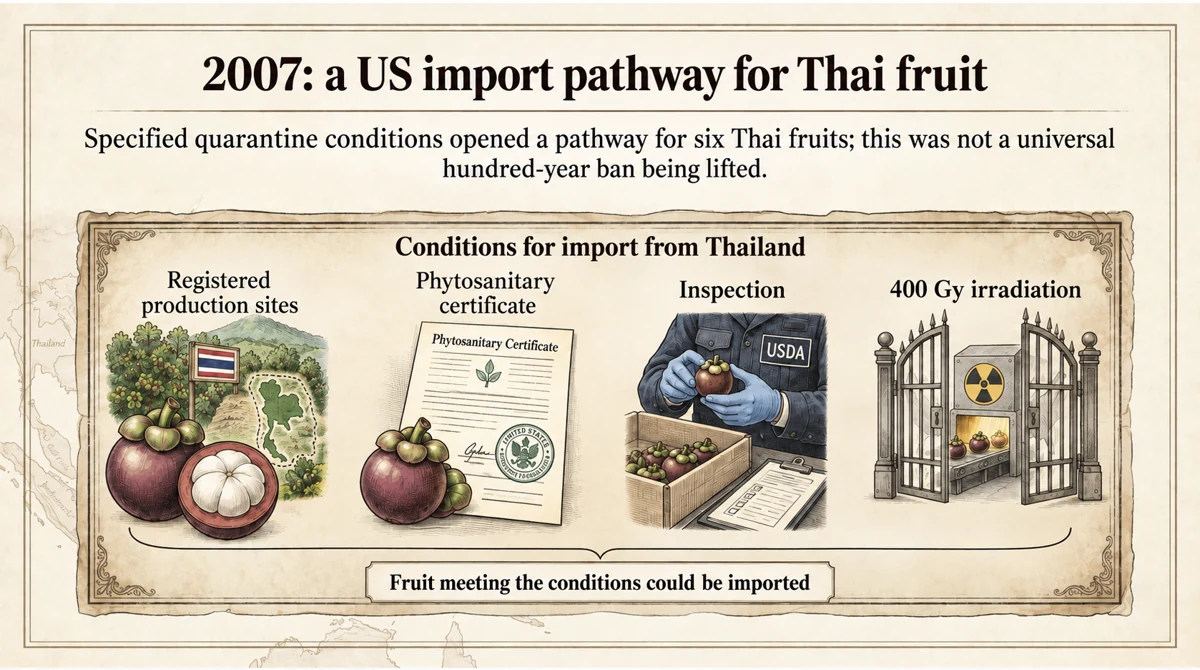
In June 2007, the United States published a final rule allowing imports of six Thai fruits—lychee, longan, mango, mangosteen, pineapple and rambutan—under conditions including registered production sites, phytosanitary certification, inspection and irradiation at 400 Gy.
This was not the end of a universal, century-long ban on all mangosteen. Hawaii and Puerto Rico are US territories, and conditions for other sources were not identical. More precisely, it was a turning point opening an import pathway for those six Thai fruits.
Orchards That Continue in Lái Thiêu, Vietnam
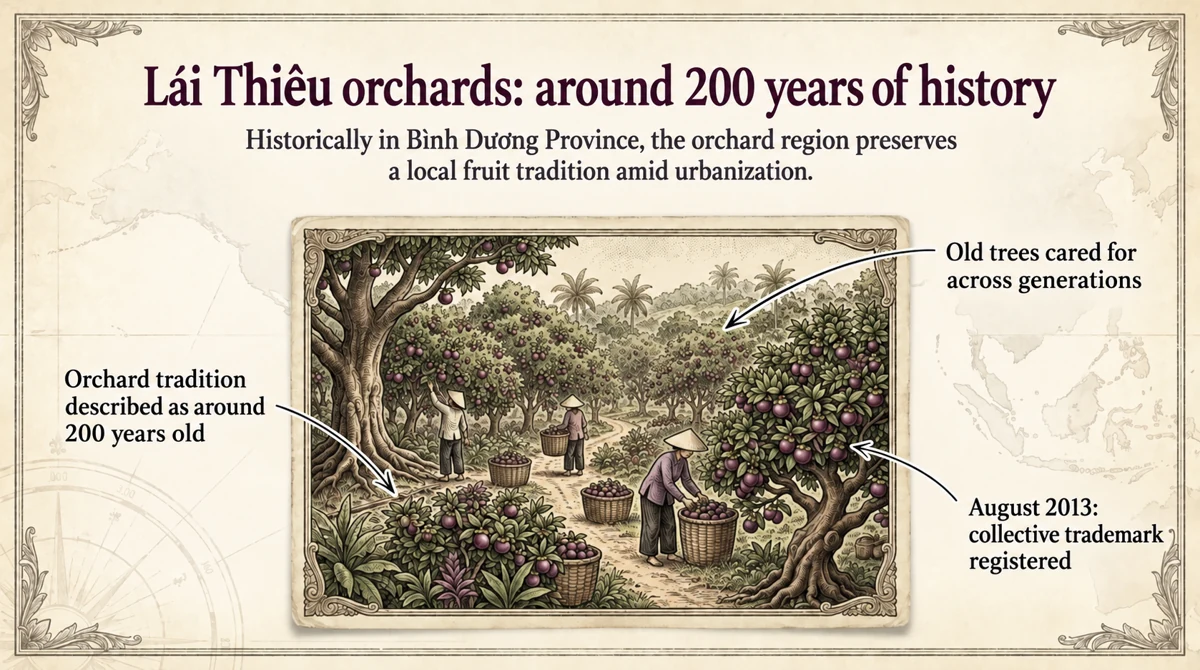
The Lái Thiêu area north of central Ho Chi Minh City, historically in Bình Dương Province, is known for mangosteen orchards. The former provincial tourism authority described the orchard region along the Saigon River as having around 200 years of history. Durian, langsat and jackfruit have also been cultivated there.
“Măng cụt Lái Thiêu” was registered as a collective trademark in August 2013. A Ministry of Industry and Trade article records farmers caring for approximately 80-year-old trees inherited from their fathers and grandfathers.
Urbanization makes orchard preservation more difficult, while efforts continue to protect the regional fruit and develop its market. This is the story of a crop maintained through changes in local life and land use.
A Lineage Usually Continued Without Fertilization
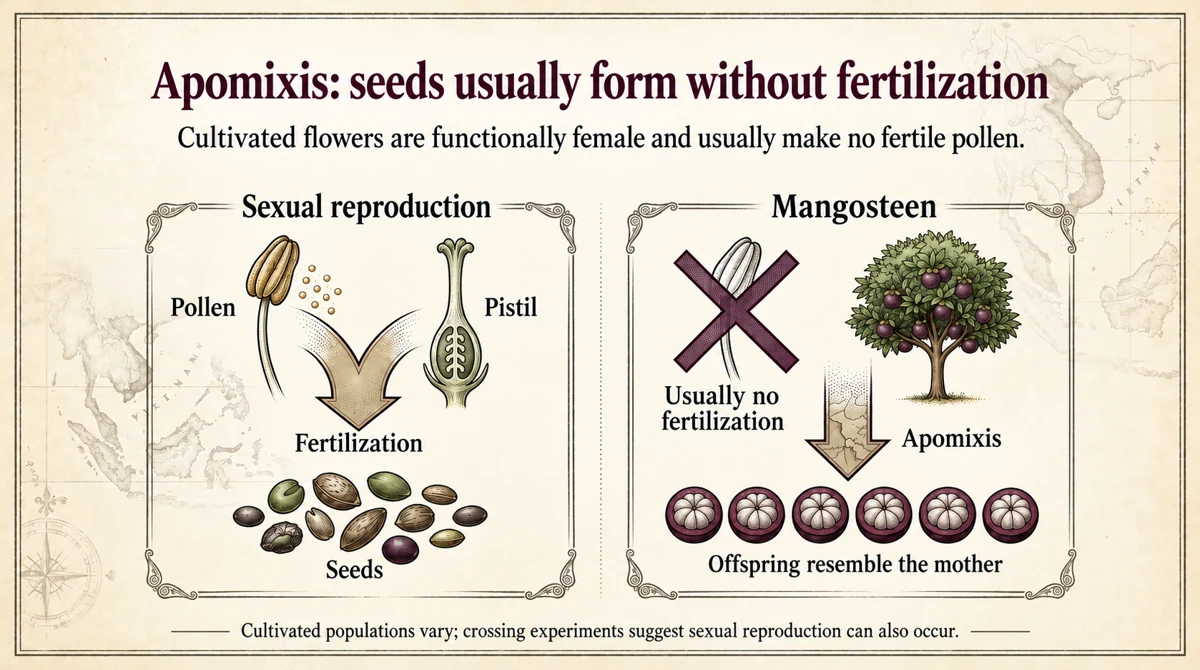
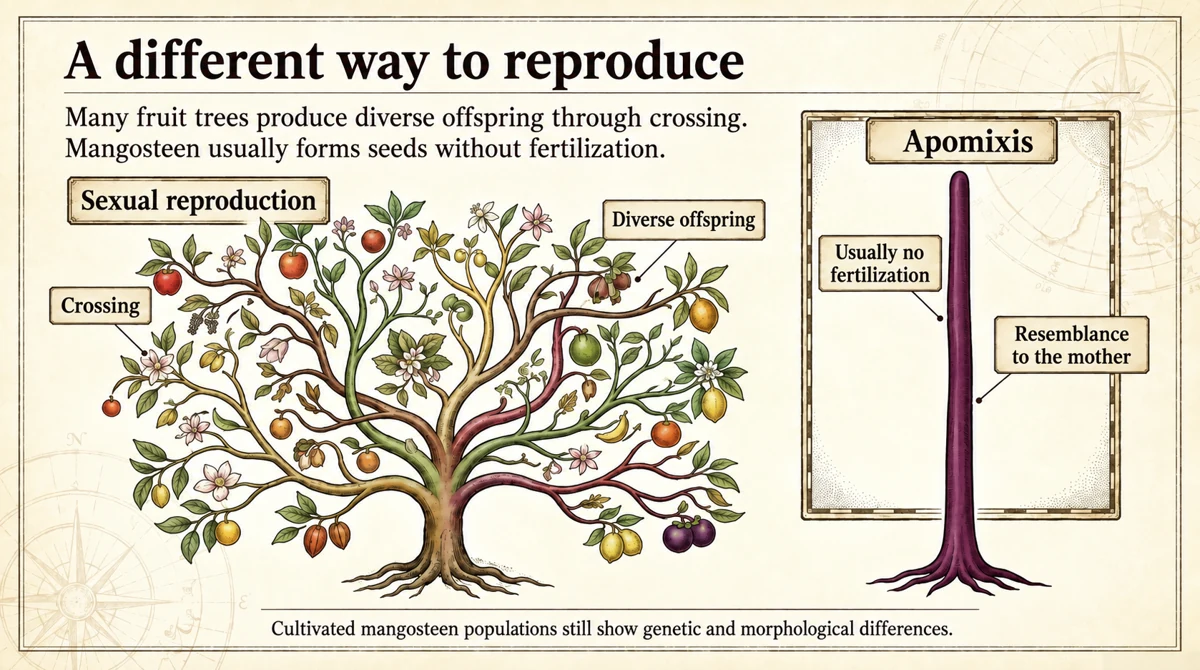
Cultivated mangosteen usually forms embryos through apomixis, without fertilization by pollen. Offspring closely resemble the mother tree, but that does not make all trees genetically identical. Studies report genetic variation, and crossing experiments using pollen from a related botanical variety suggest that sexual reproduction can occur.
There is also no evidence that apomixis itself “refused adaptation” and therefore prevented expansion. Sensitivity to cold and drought, a long juvenile period, handling losses and quarantine requirements together provide a more reasonable explanation for limits to cultivation.
The Queen of Fruits Is Interesting Beyond the Legend
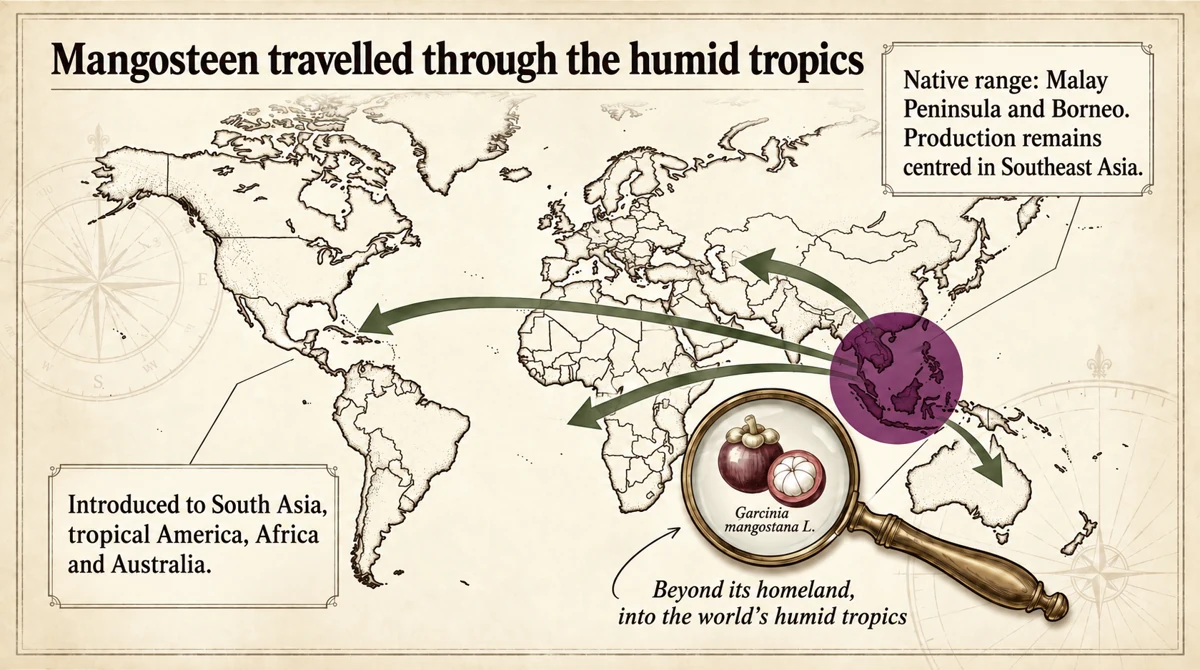
Mangosteen did spread beyond Southeast Asia, reaching humid tropical regions of the Americas, Africa and Australia. Large-scale production remains concentrated in Southeast Asia because the tree has demanding environmental requirements and takes a long time to mature.
Queen Victoria’s reward cannot be presented as established history without supporting evidence. Yet Fairchild’s Queen of Fruits description, growers’ efforts to cultivate a demanding tree and Lái Thiêu farmers’ care for old orchards are documented. These records convey the fruit’s enduring appeal without turning legend into fact.
Frequently Asked Questions About Mangosteen History
Does the Queen of Fruits name come from Queen Victoria?
The reward story is famous, but contemporary primary evidence has not been identified within the sources consulted here. Fairchild’s use of “Queen of Fruits” in a 1915 paper title is documented.
Where does mangosteen originate?
Kew’s Plants of the World Online lists the Malay Peninsula and Borneo as its native range.
Did mangosteen spread beyond Southeast Asia?
Yes. It was introduced to humid tropical regions including South Asia, the tropical Americas, Africa and Australia.
Why is Lái Thiêu in Vietnam famous?
It is known for an orchard tradition of around 200 years, with mangosteen among its characteristic crops. “Măng cụt Lái Thiêu” was registered as a collective trademark in 2013.
Related Articles
- Taste, season, nutrition and origins: Mangosteen Guide.
- Choosing, opening and eating the fruit in Vietnam: How to Eat Mangosteen in Vietnam.
- More fruits to enjoy in Vietnam: 15 Vietnamese Fruits.
References
- Royal Botanic Gardens, Kew: Garcinia mangostana L.
- Yao et al.: The origin of cultivated mangosteen
- David Fairchild: The Mangosteen, Journal of Heredity 6(8), 1915
- David Fairchild: Exploring for Plants, Macmillan, 1930
- USDA: Inventory No. 10, Foreign Seeds and Plants Imported, 1900–1903
- US Federal Register: Importation of Fruits and Vegetables from Thailand, June 21, 2007
- Vietnam’s Ministry of Industry and Trade: developing the market for Lái Thiêu mangosteen (Vietnamese)
- Bình Dương Tourism: Lái Thiêu orchards
Place-name note: Bình Dương Province merged into the expanded Ho Chi Minh City on 1 July 2025. Historical source names are retained in the references. Ho Chi Minh City People’s Council (Vietnamese)
