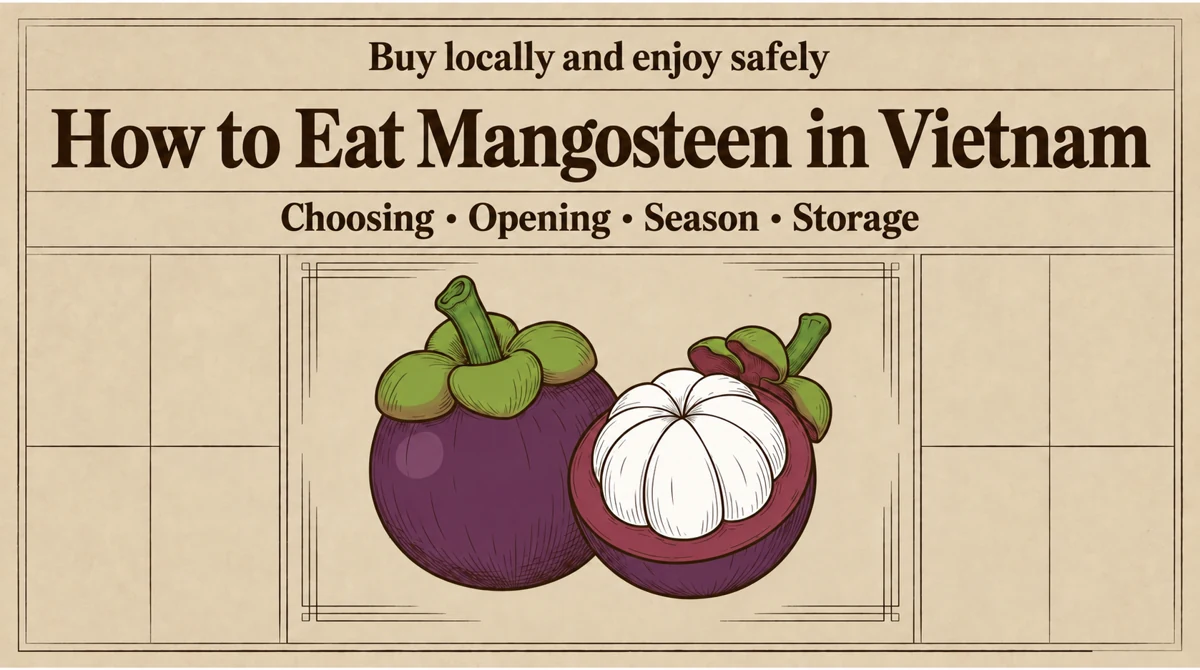
Open a mangosteen’s thick purple rind and you will find soft white flesh. Eating it is straightforward, but a hard rind does not necessarily mean freshness, and the rind’s pigment and yellow latex can stain clothes.
Choose reddish-purple to deep-purple fruit with a little give. On a cutting board, make a shallow cut around the rind, put the knife down away from your hands, and then twist the halves apart with both hands.
Buying and Eating at a Glance
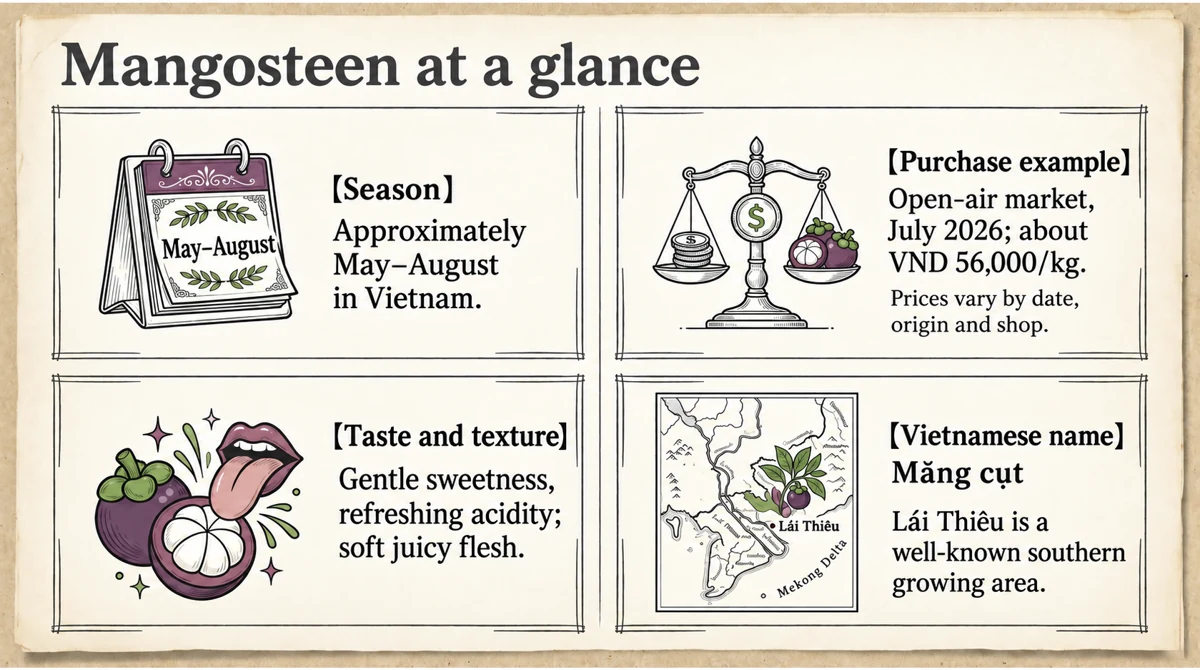
| Feature | Details |
|---|---|
| Vietnamese name | Măng cụt |
| Pronunciation guide | Approximately “mang koot”; Vietnamese tones also affect pronunciation |
| Taste | Sweet with gentle acidity |
| Texture | Soft and juicy |
| Typical availability | Approximately May–August; varies by region and year |
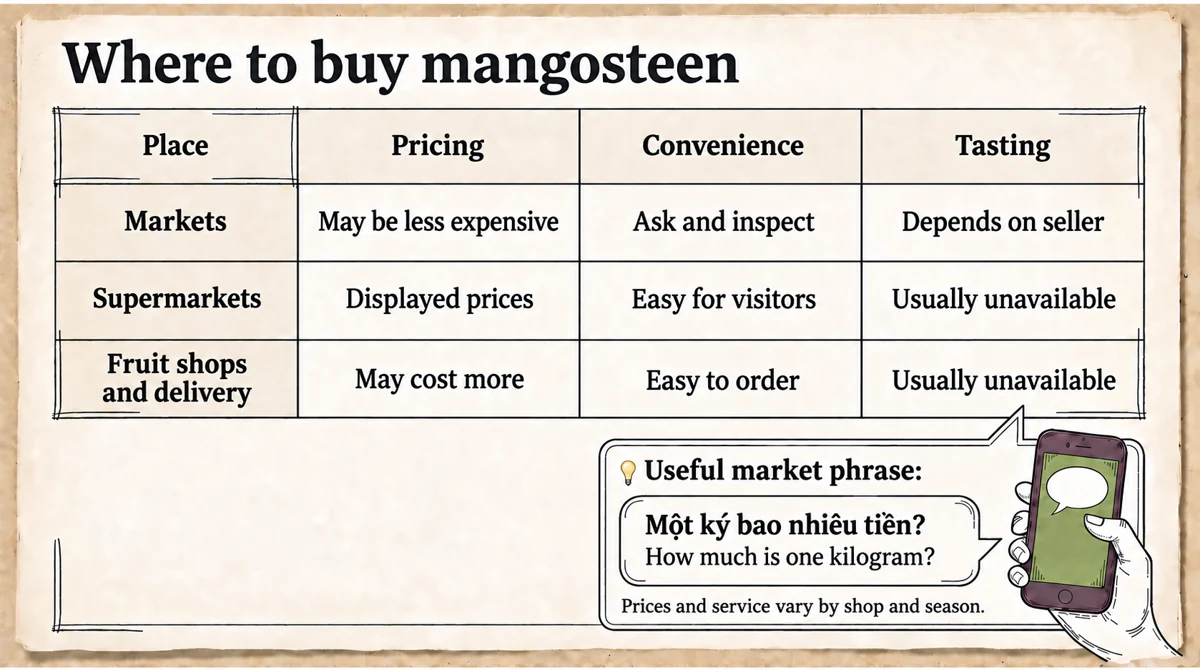
| Where to buy | Markets, street fruit sellers, supermarkets, fruit shops and delivery apps |
| Basic opening method | Score the rind shallowly around the middle and twist apart, or gently press and split a yielding fruit with both hands |
| Local dish | Gỏi gà măng cụt: chicken and mangosteen salad |
When the author bought mangosteen at an open-air market in July 2026, the price was approximately VND 56,000 per kilogram. Prices vary by origin, date, grade and shop; this is a recorded purchase rather than a fixed market rate.
Where Can You Buy Mangosteen?
Open-Air Markets and Street Fruit Sellers
During the season, there is often a good selection and you can inspect individual fruit. If there is no price label, ask “Một ký bao nhiêu tiền?” (“How much is one kilogram?”). For fruit sold by weight, confirm the quantity and total price before taking it.
Supermarkets and Fruit Shops
Clear price labels and receipts can make these convenient choices for visitors. Even with packaged fruit, check for cracked rind, leaking juice and mould. Since delivery orders do not let you choose each fruit, use a shop you trust.
How to Choose Fresh Mangosteen
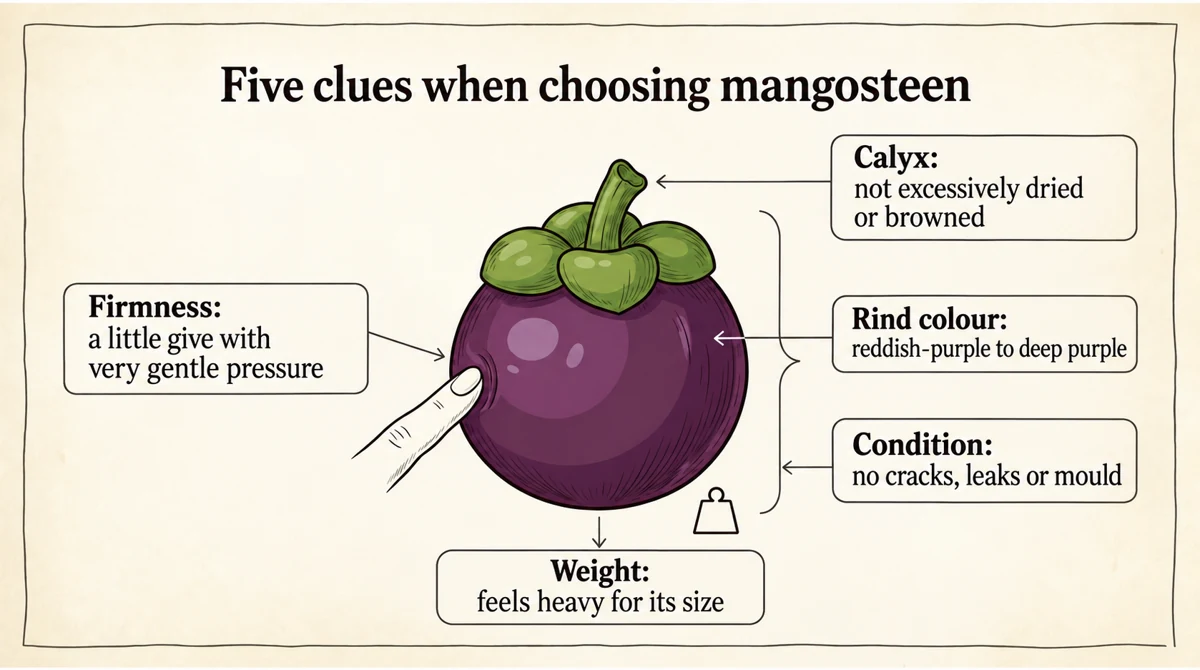
UC Davis identifies a change to reddish-purple rind as a major maturity indicator. Quality indicators include size, shape, colour and freedom from cracks, injury, latex stains and insect damage. At the shop, look for the following.
- Reddish-purple to deep-purple rind, without conspicuous cracks or leaks
- The calyx near the stem is not excessively dried or browned
- A fruit that feels reasonably heavy for its size
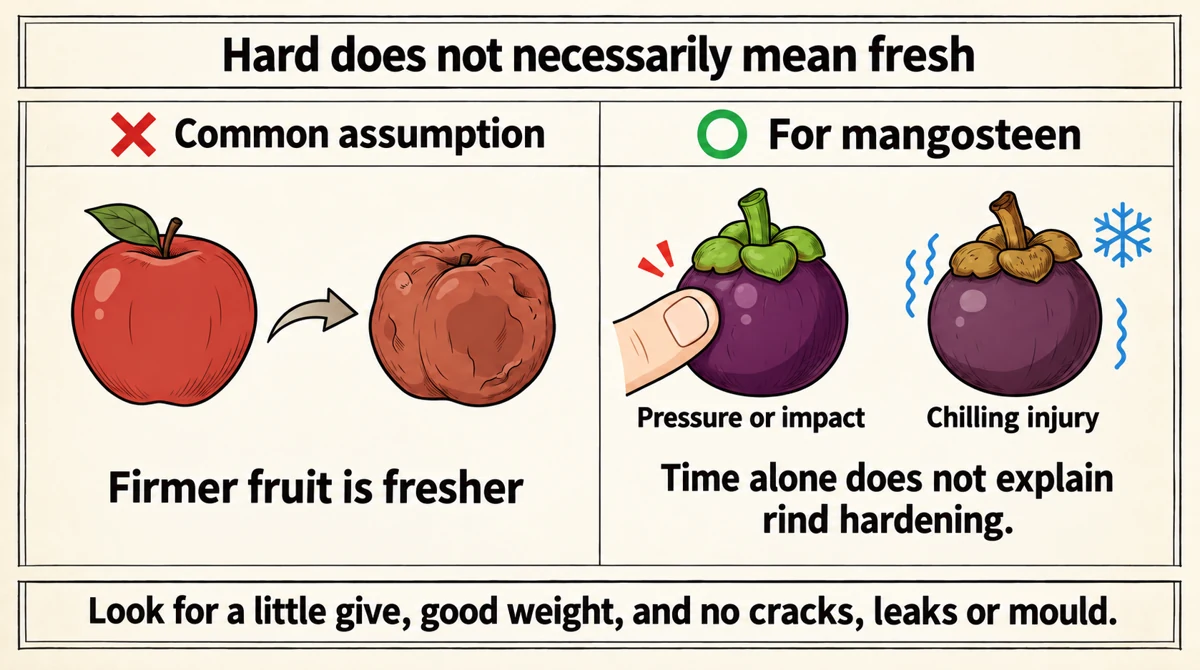
- A little give when the rind is pressed very gently
- No mould, fermented smell or widespread softening
Avoid rock-hard rind, but do not assume it proves age alone: pressure, impact and chilling injury can also cause hardening. Very soft, collapsing or leaking fruit is also a poor choice.
How to Open a Mangosteen
Work over a plate or cutting board because purple-red rind liquid can stain fabric. Rinse dirt off the surface under running water and dry the fruit first.
Using a Knife
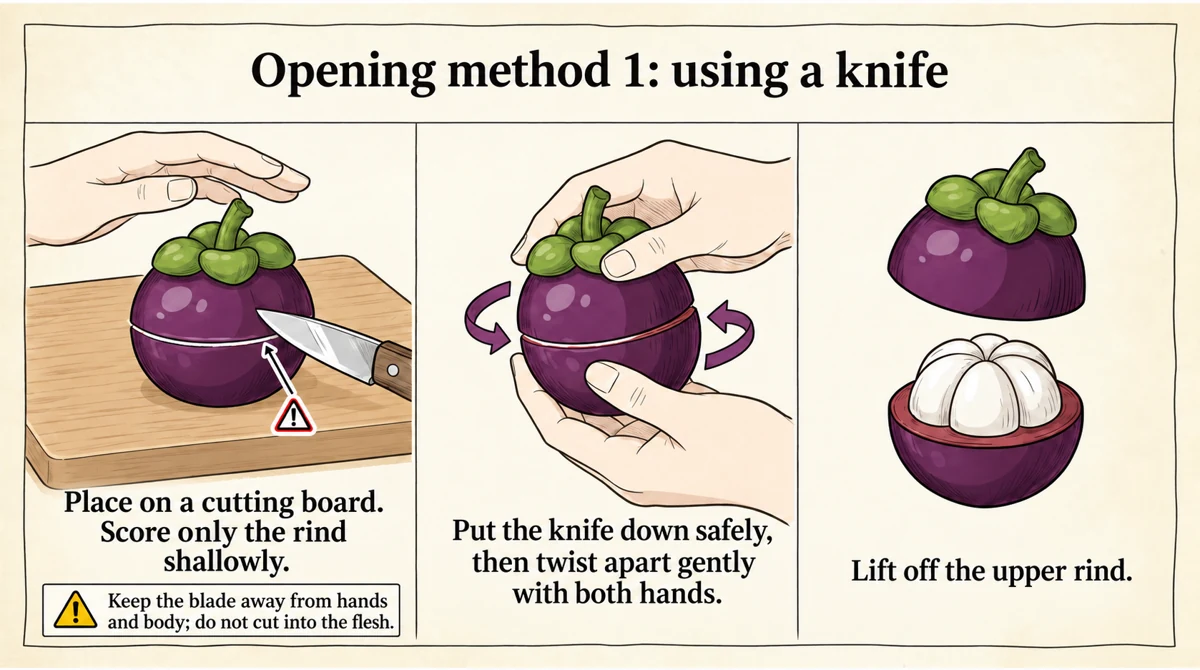
- Place the fruit on a cutting board and make a shallow cut around the rind near the middle.
- Put the knife down safely, then hold the upper and lower rind with both hands and gently twist apart.
- Lift out the white flesh with a spoon or fork.
A deep cut can damage the flesh or make the knife slip. Do not force a blade into fruit that is too hard to cut comfortably.
Opening It Without a Knife
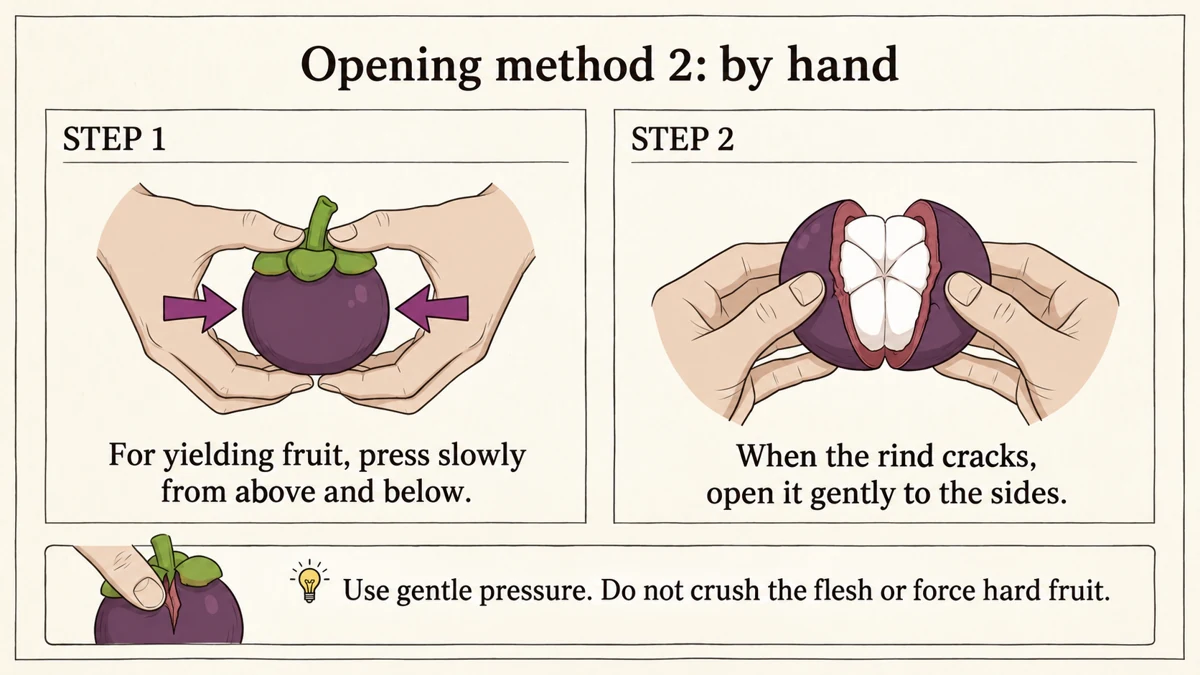
If the rind has enough give, hold the fruit stem-side up and press slowly from above and below. Once it cracks, open it to the sides. Do not force hard fruit; use a shallow scoring method only if you can handle it safely.
Yellow Latex and Abnormal Flesh
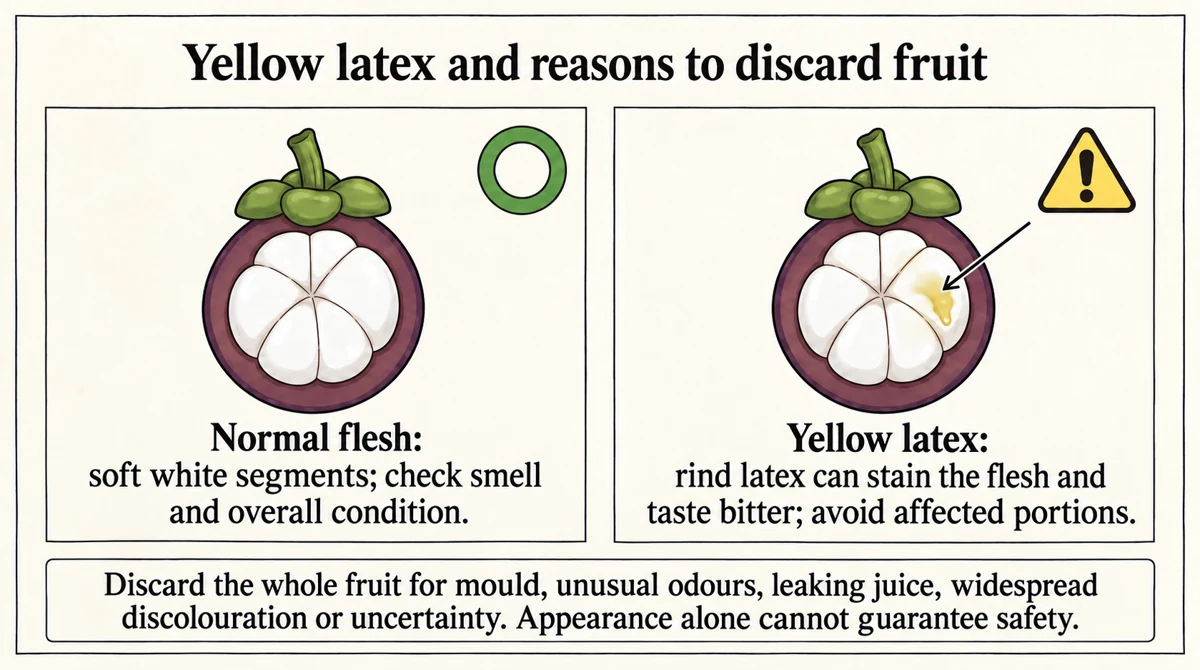
Mangosteen rind contains yellow latex that may seep into the flesh following physical damage or other disorders. Yellow-stained portions can taste bitter or astringent, so avoid eating them.
Firm, translucent flesh is a separate physiological disorder. Impact, nutrient conditions and excessive water entering the fruit have been associated with it.
Remove portions contaminated with yellow latex. Discard the whole fruit if it has mould, rotten or fermented odours, widespread discolouration or softening, or if you are uncertain whether it is suitable to eat. Appearance alone cannot guarantee that the remaining white segments are safe.
The Star at the Base and the Segments Inside
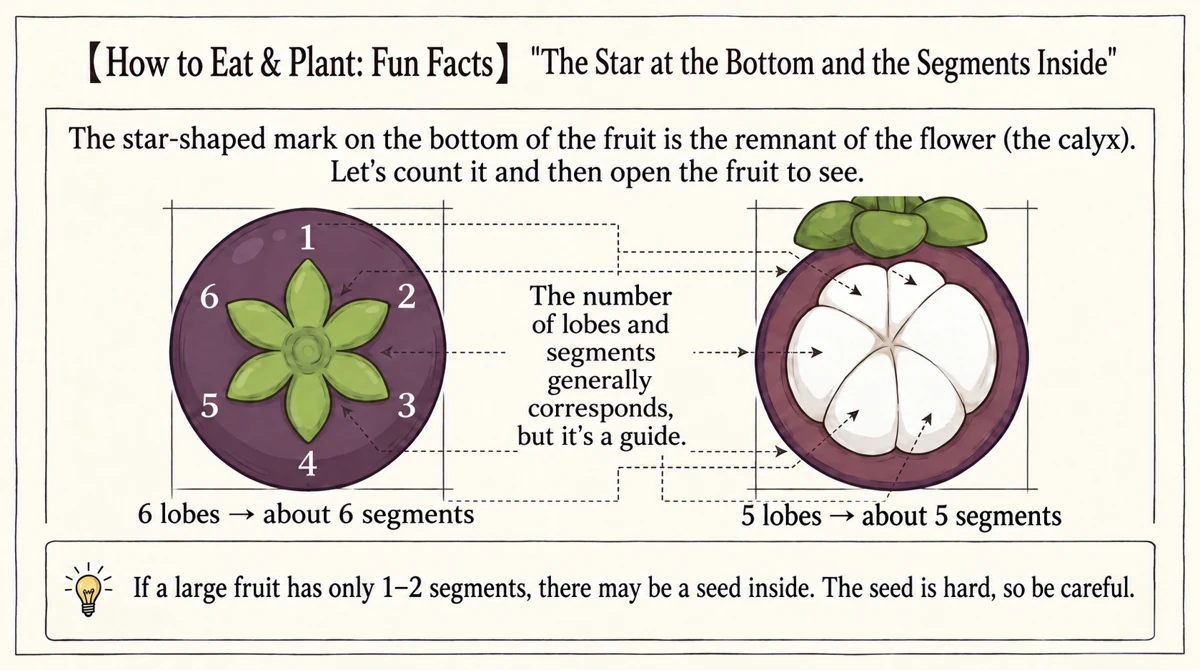
The star-shaped structure at the base is a persistent stigma, the remains of the flower’s stigma, rather than a calyx. Its lobe count roughly indicates the number of segments. Fruit commonly has around five to eight segments; one or two larger segments may contain seeds.
Large segments can contain hard seeds. Do not bite through them; remove and discard them.
Ways to Enjoy Mangosteen in Vietnam
1. Fresh, With Brief Chilling
Ripe mangosteen is usually peeled and eaten as it is. If you want it cool, chilling briefly before eating is easier on the fruit than prolonged cold storage.
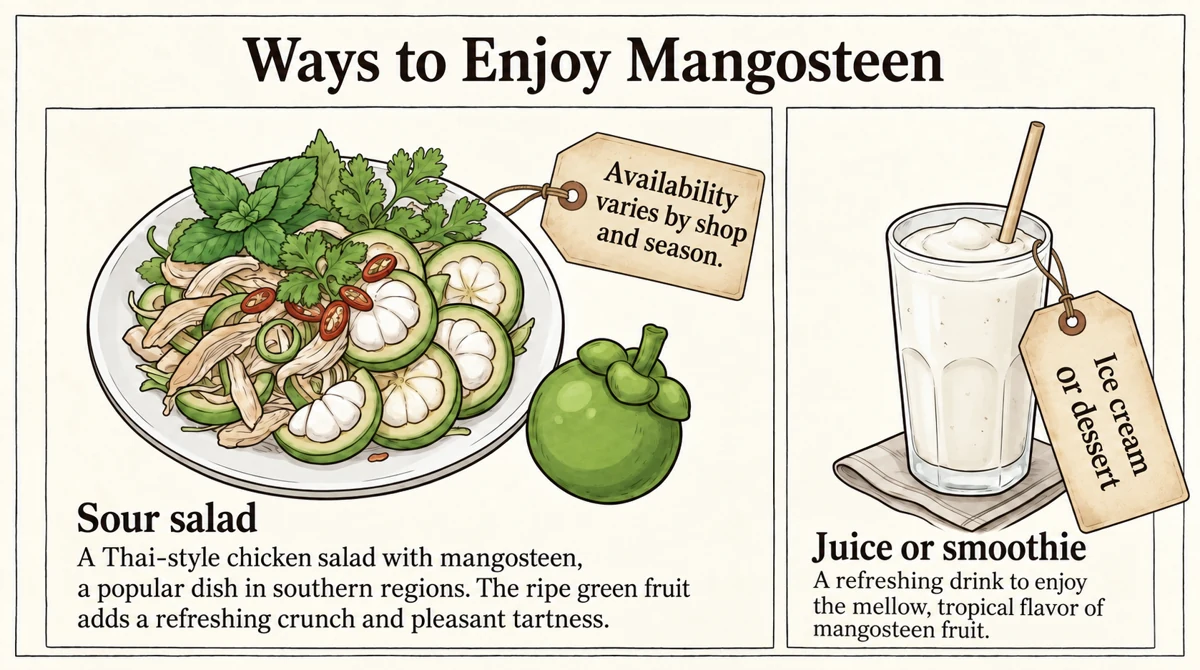
2. Gỏi Gà Măng Cụt: Chicken and Mangosteen Salad
This southern dish is associated with Lái Thiêu, historically in Bình Dương Province. It attracted widespread social-media attention in 2023, but had been described before then.
The dish uses sufficiently developed mangosteen whose rind is still green. The flesh is firmer than in ripe fruit, with sweet-tart notes and some astringency. It is inaccurate to claim that the flesh is fully ripe inside a green rind or has no bitterness. Preparing the hard rind and latex makes it labour-intensive at home.
3. Smoothies and Desserts
Ripe flesh can be blended with ice, milk, yoghurt or condensed milk. Remove the seeds before blending. The quantity of dairy and sweetener varies by shop and recipe.
How to Store Mangosteen
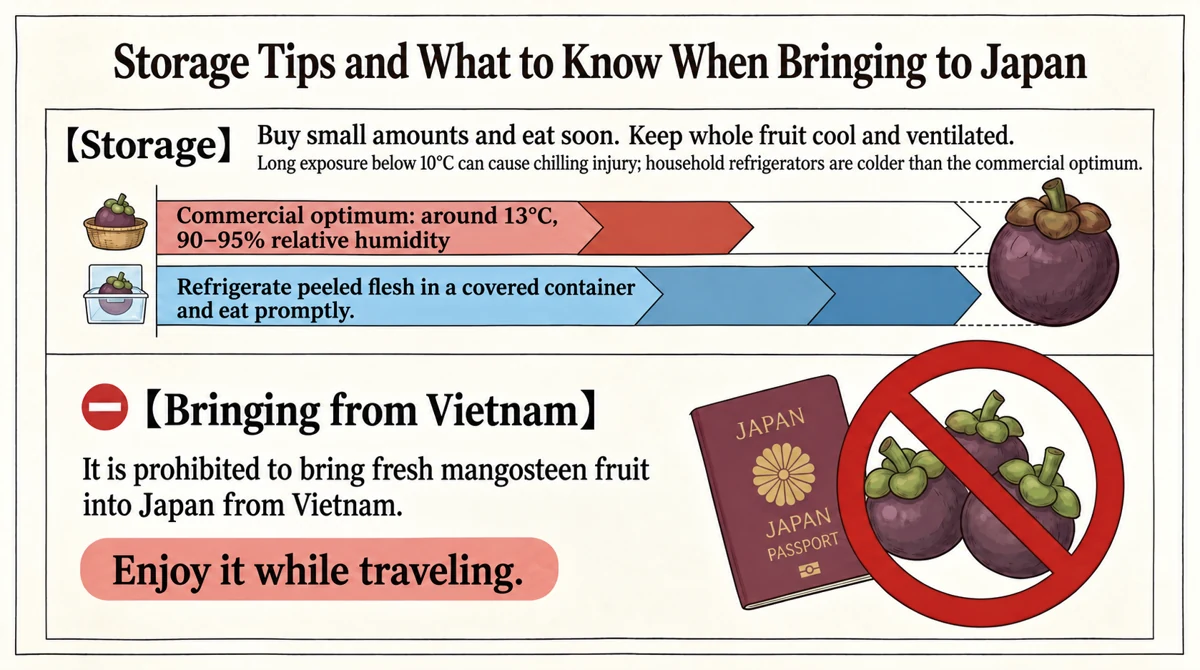
Commercial storage guidance gives 13 ± 1°C and 90–95% relative humidity, with a possible storage life of two to four weeks depending on ripeness. This applies to controlled commercial conditions.
At home, use the following approach.
- Buy only what you can eat soon and avoid leaving fruit in a hot room.
- Protect it from drying and pressure; eat it while the rind still has some give.
- Do not assume a household refrigerator provides long-term storage.
- Prolonged exposure below 10°C may cause chilling injury, so check the fruit regularly.
Can You Take Mangosteen from Vietnam to Japan?
Japan’s Plant Protection Station lists fresh mangosteen from Vietnam as prohibited in travellers’ baggage. This also applies to small souvenirs and fruit for personal consumption. Enjoy it during your stay.
Approved Thai exports follow a separate system of designated production, sorting and quarantine conditions. That system does not apply to fruit bought at a market in Vietnam. Check the latest official requirements before travelling.
The Author’s Tasting Notes
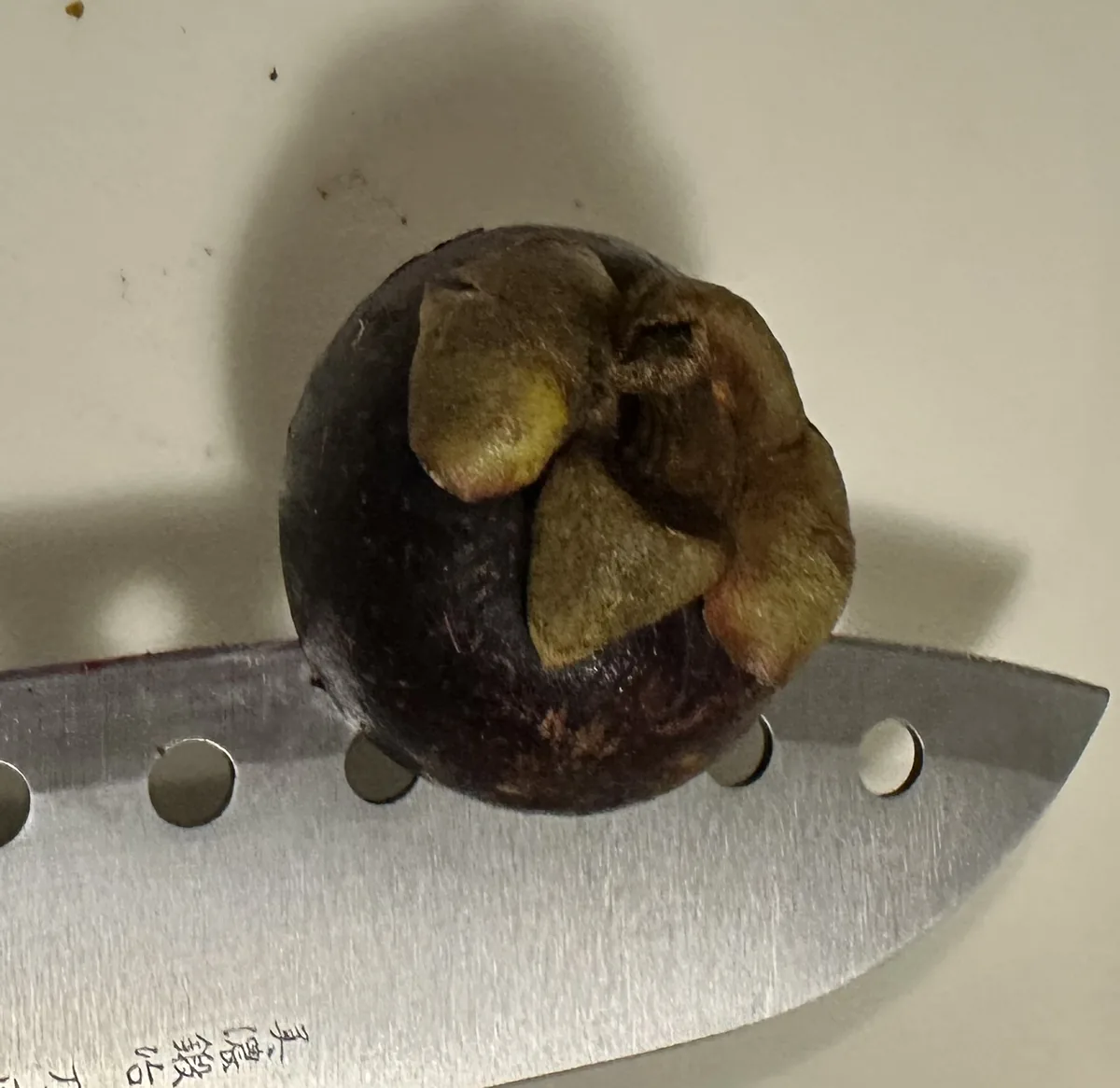
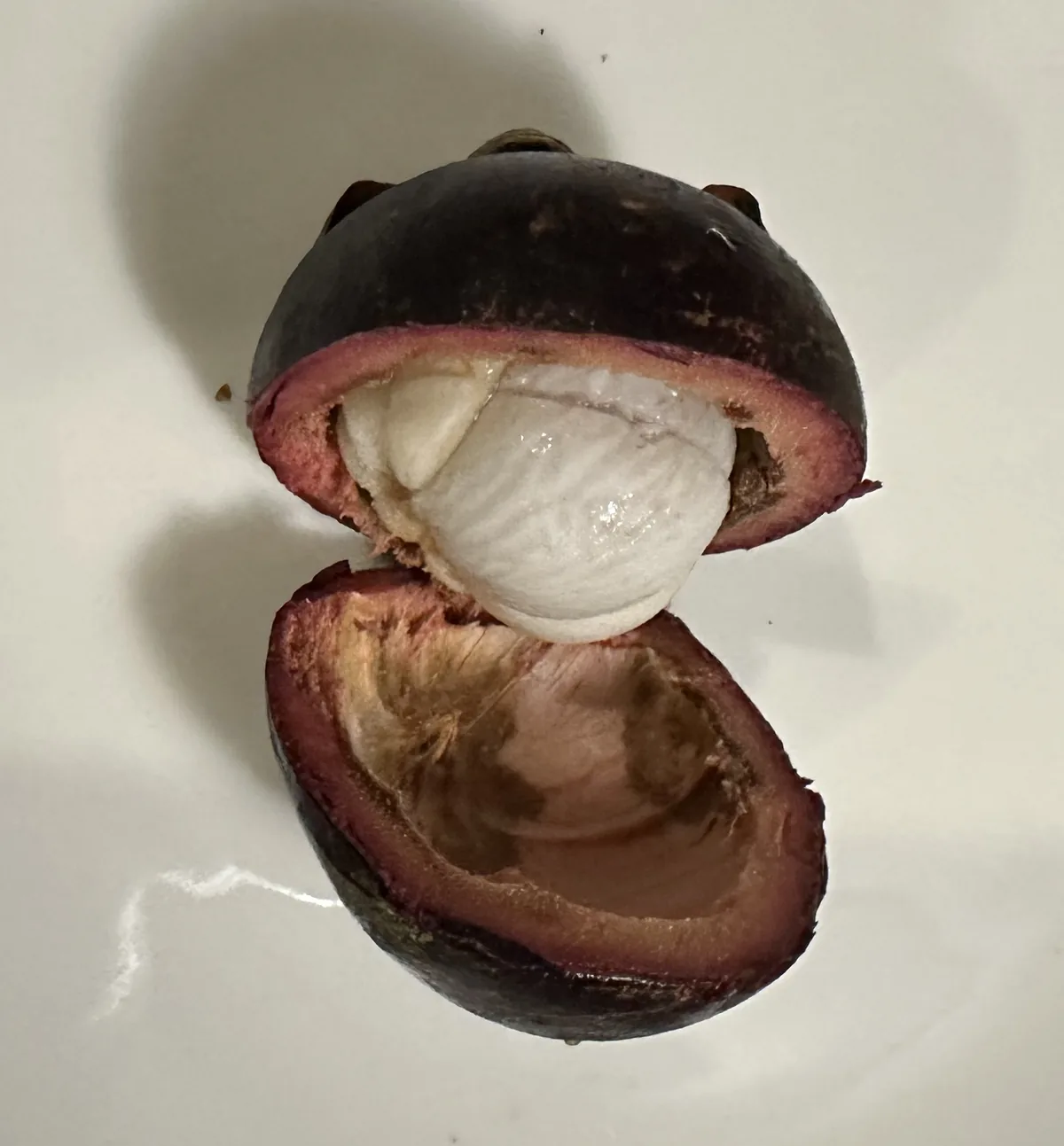
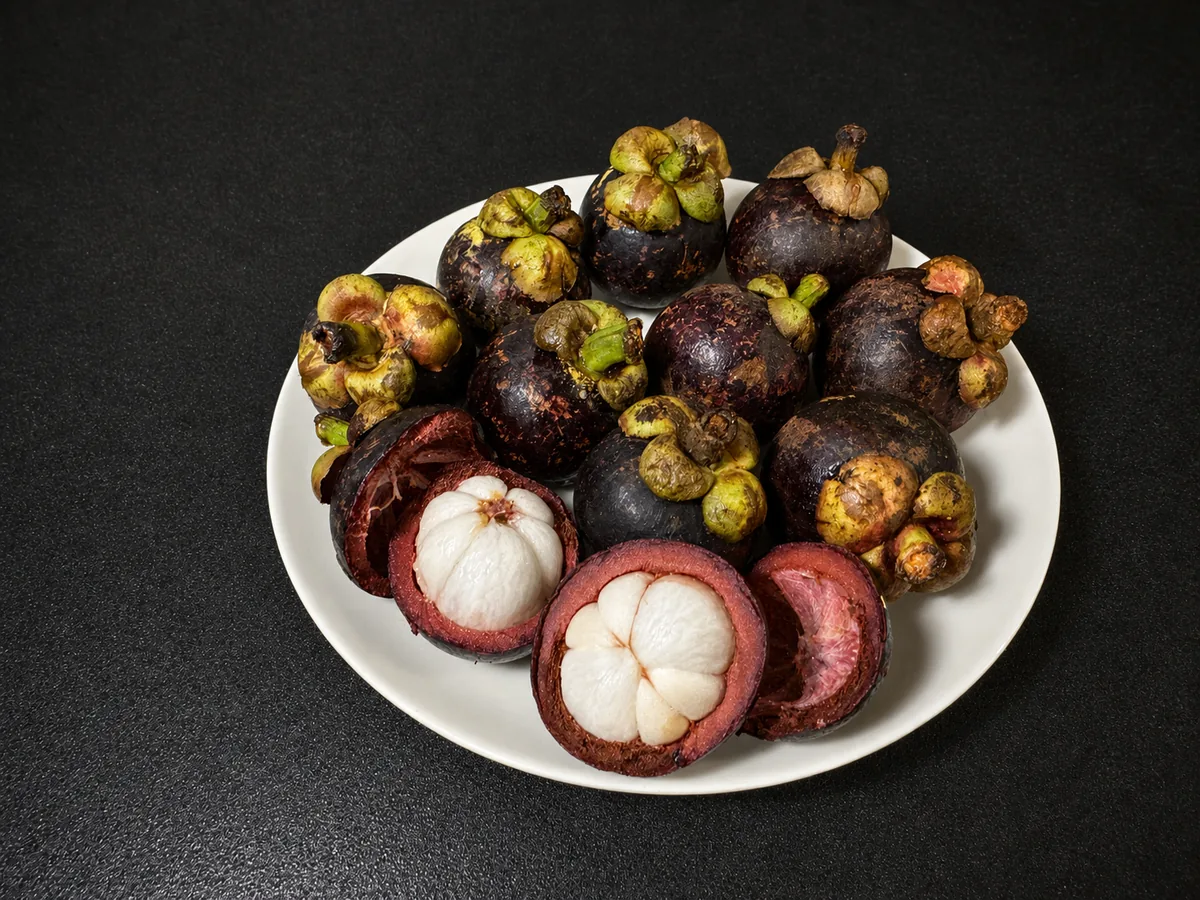
Purchase record
Place: open-air market
Date: July 2026
Price: approximately VND 56,000/kg
Tasting impression
The texture was smooth and the flavour delicious—it is the author’s personal favourite.
Recommendation for first-time tasters: ★★★★☆
Frequently Asked Questions About Eating Mangosteen
Does rock-hard rind mean the fruit is old?
It may, but impact and chilling injury can also harden it. Avoid pressing hard to test it; assess cracks, leaks, smell, weight and the condition of the calyx together.
Can you eat the yellow parts?
Yellow-latex contamination can taste bitter, so remove affected portions. If the fruit has mould, rotten odours, extensive discolouration, or you are unsure, discard the whole fruit.
Can you eat the seeds?
Large segments may contain hard seeds. Do not bite through them; remove and discard them.
Can you take the fruit from Vietnam to Japan?
Fresh fruit is prohibited. Eat it during your stay in Vietnam.
Key Points
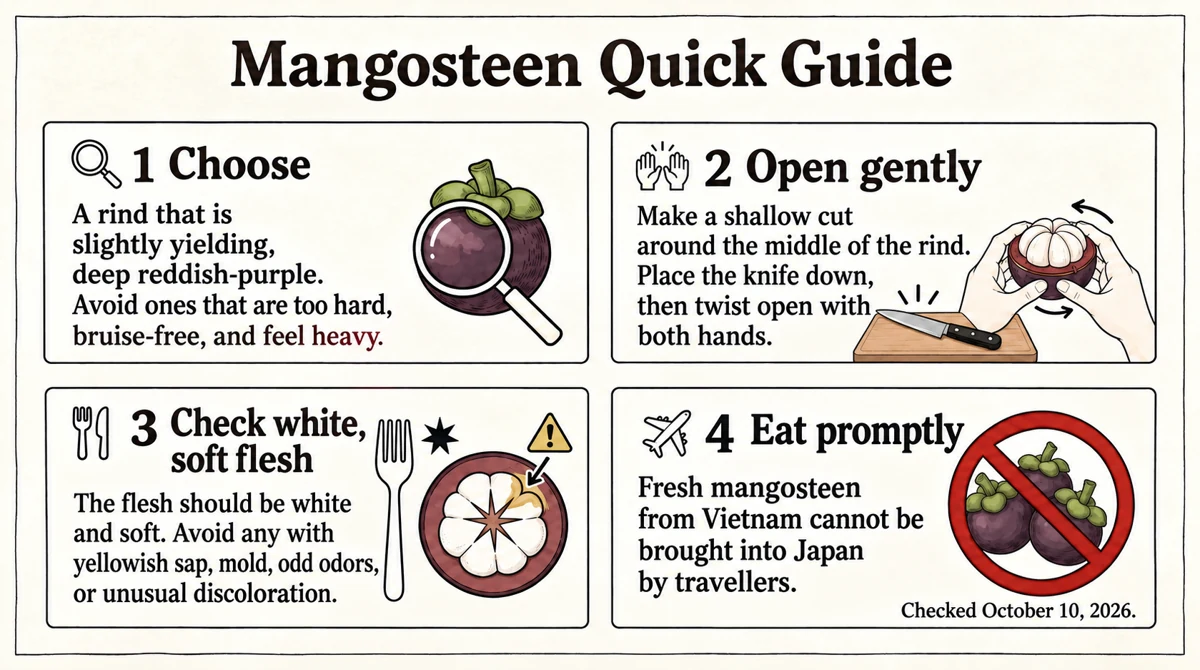
- Choose reddish-purple to deep-purple fruit with a little give and no cracks, leaks or mould.
- Score the rind shallowly and twist apart, or slowly press open a yielding fruit by hand.
- The star at the base is a persistent stigma and roughly indicates segment count.
- Yellow latex, translucent flesh and decay are different conditions.
- At home, check condition and eat promptly instead of relying on a fixed number of storage days.
- Fresh mangosteen from Vietnam cannot be brought into Japan in travellers’ baggage.
Learn More About Mangosteen
- Taste, season, nutrition and origins: Mangosteen Guide.
- The Queen of Fruits name and its history around the world and in Vietnam: Mangosteen History and Stories.
- More fruits to enjoy in Vietnam: 15 Vietnamese Fruits.
References
- UC Davis Postharvest Research and Extension Center: Mangosteen
- Paull and Ketsa: Mangosteen
- Bình Dương Tourism: Lái Thiêu orchards
- Thanh Niên: the origins of green mangosteen chicken salad (Vietnamese)
- Japan’s Plant Protection Station: traveller imports from Vietnam (Japanese)
Japan’s Plant Protection Station: traveller imports from Vietnam (Japanese) — Reviewed 10 October 2026.
Place-name note: Bình Dương Province merged into the expanded Ho Chi Minh City on 1 July 2025. Historical source names are retained in the references. Ho Chi Minh City People’s Council (Vietnamese)
