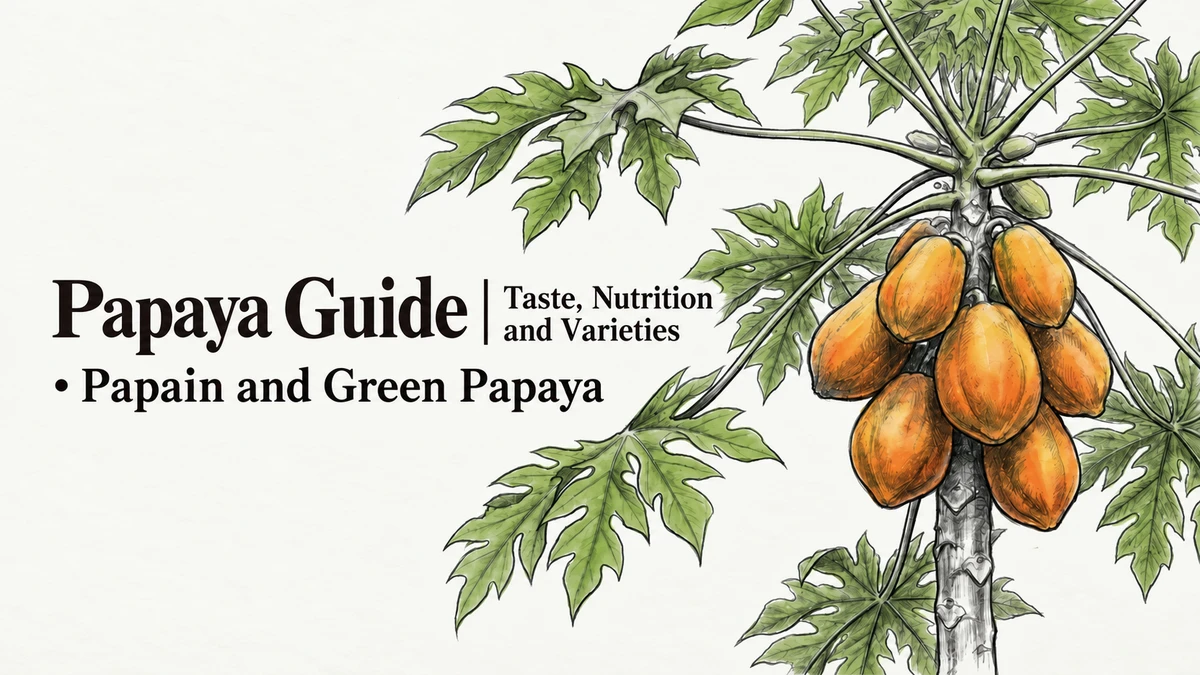
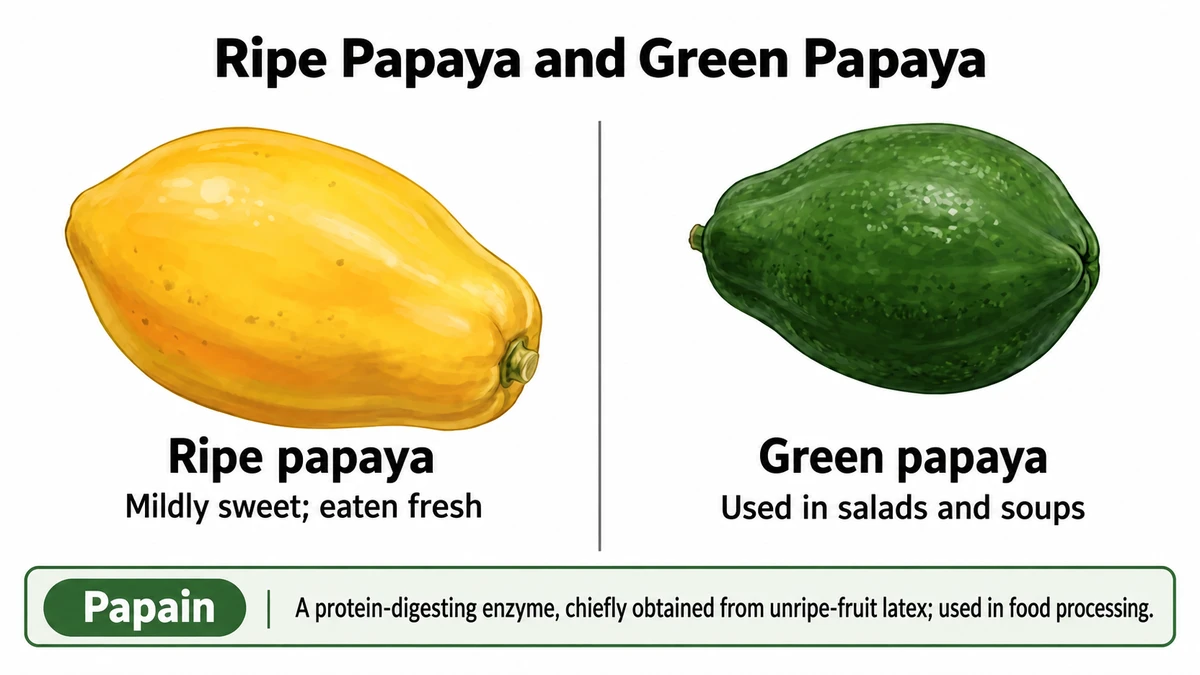
Ripe papaya has a gently sweet flavor and soft flesh, while green papaya is firm and used as a vegetable in salads and soups.
Although it looks like a tree, papaya is a large perennial herb. This guide explores its growth, flowers, nutrition, papain, commercial types and life in Vietnam.
For practical tips, see How to Eat Papaya in Vietnam; for its origins, names and cultural history, see Papaya History and Stories.
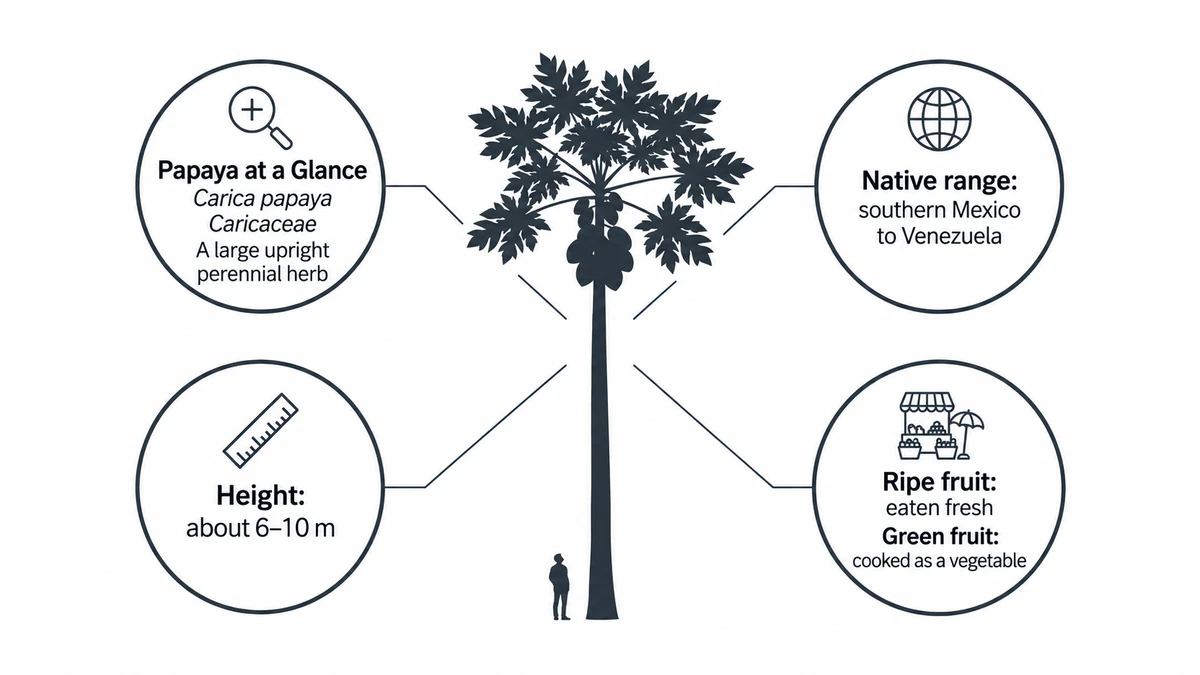
Papaya at a glance
| Item | Details |
|---|---|
| Common name | Papaya |
| Vietnamese name | Đu đủ |
| Scientific name | Carica papaya |
| Classification | Family Caricaceae; genus Carica; a large upright perennial herb |
| Native range | Southern Mexico to Venezuela |
| Height | Up to about 10 m; dwarf cultivars may be around 2–3 m |
| Cultivation in Japan | Warm areas including Okinawa |
| Availability in Vietnam | Sold year-round; ripe fruit is eaten fresh and green fruit is used as a vegetable |
| Notable components | Vitamin C and potassium in ripe fruit; papain in unripe-fruit latex |
Sources: Kew Plants of the World Online, UF/IFAS and Japan’s food composition tables. Details appear in the references below.
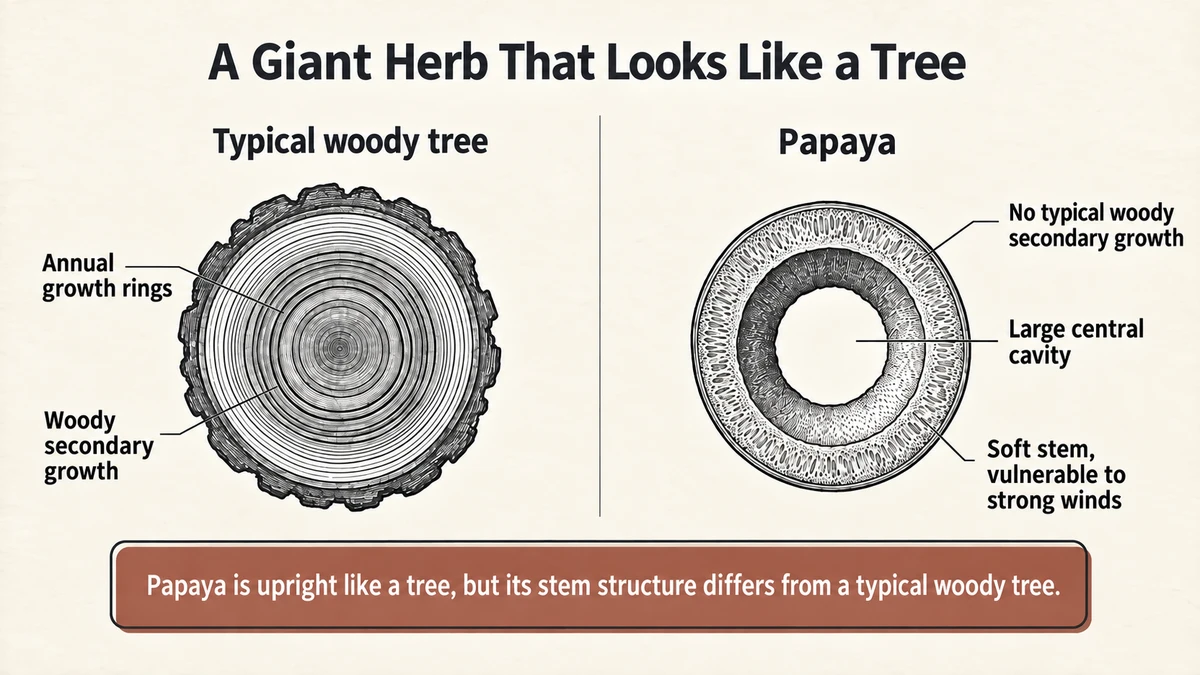
Why a papaya “tree” is really a large herb
Papaya has a soft stem and a large central cavity. It does not produce wood through the typical secondary growth of an ordinary tree, and strong winds can damage or break it.
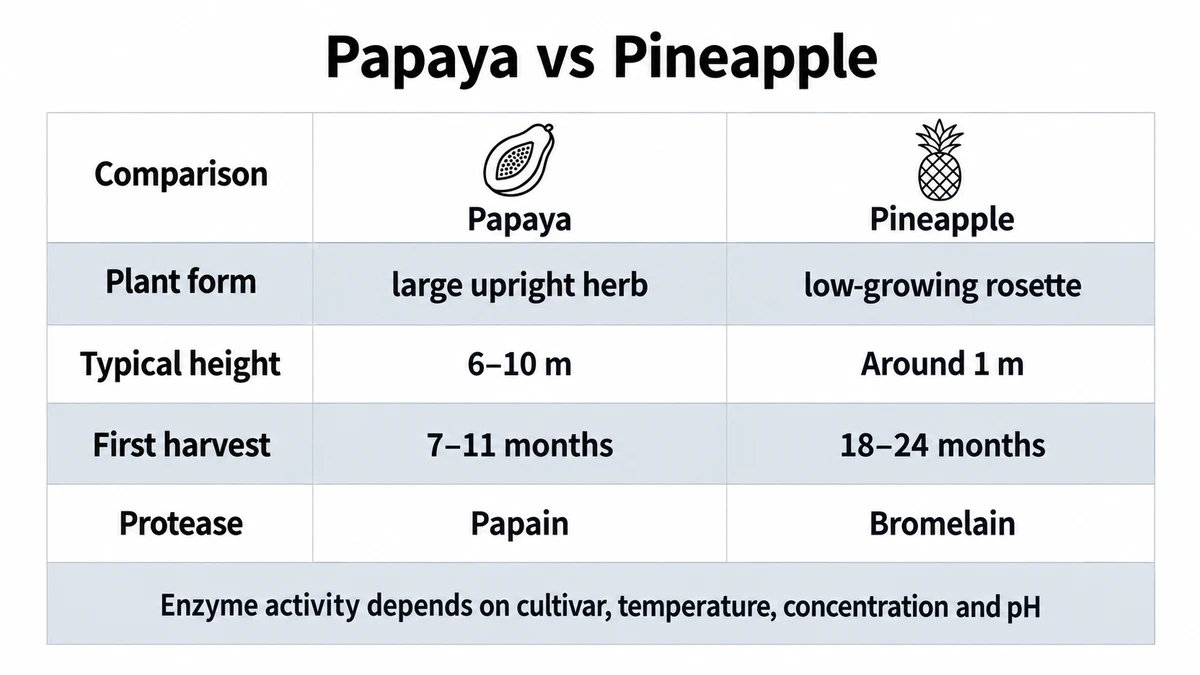
UF/IFAS describes papaya plants reaching roughly 6–10 m. That is strikingly tall compared with a pineapple plant, which is usually about 1 m high.
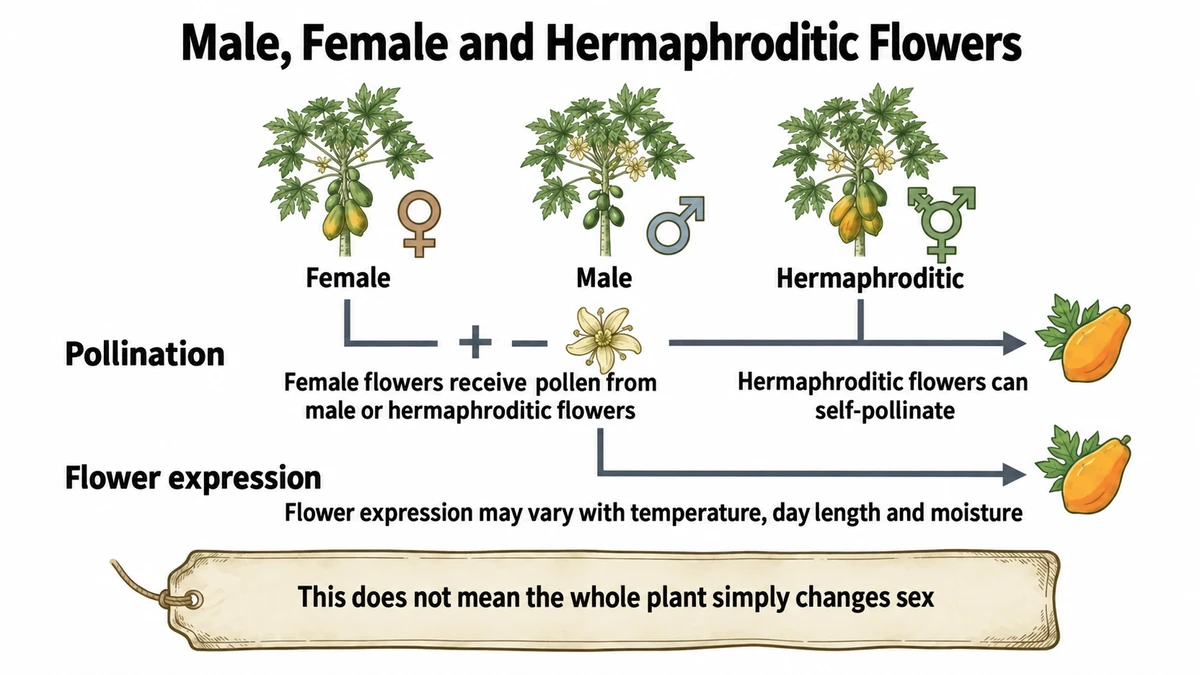
Male, female and hermaphroditic flowers
Papaya has male, female and hermaphroditic flower types. Female and hermaphroditic plants generally produce fruit. Female flowers need pollen from male or hermaphroditic flowers; a seed or young seedling does not reveal its future sex, so growers may plant several seedlings and select them after flowering.
Hermaphroditic flowers can self-pollinate and are widely used in commercial cultivation. Temperature, day length and moisture can influence flower expression, with different flower types sometimes appearing on one plant. This is more nuanced than saying that an entire plant simply becomes male or female.
Female flowers may also develop fruit without fertilization through parthenocarpy under some conditions.
Fast growth: flowering and the first harvest
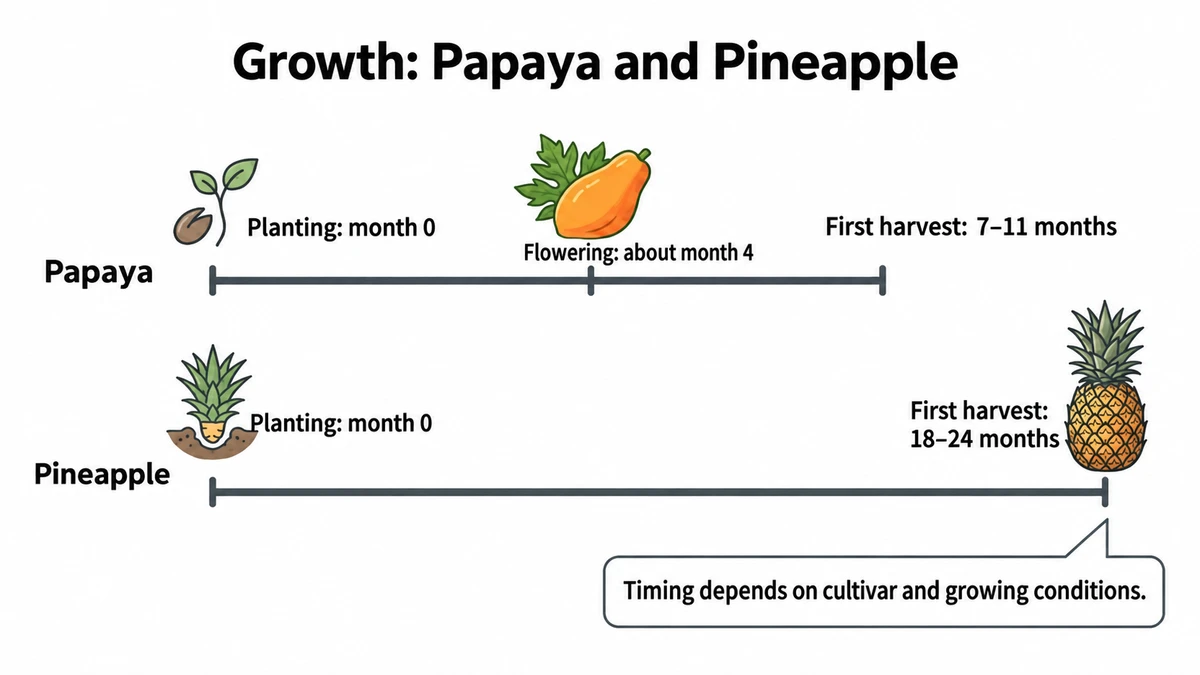
Under suitable management, UF/IFAS reports flowering around four months after planting and first harvest around 7–11 months. Cultivar, temperature, water and growing conditions affect the timing.
For comparison, pineapple commonly takes about 18–24 months from planting to its first harvest.
Taste, nutrition and the enzyme papain
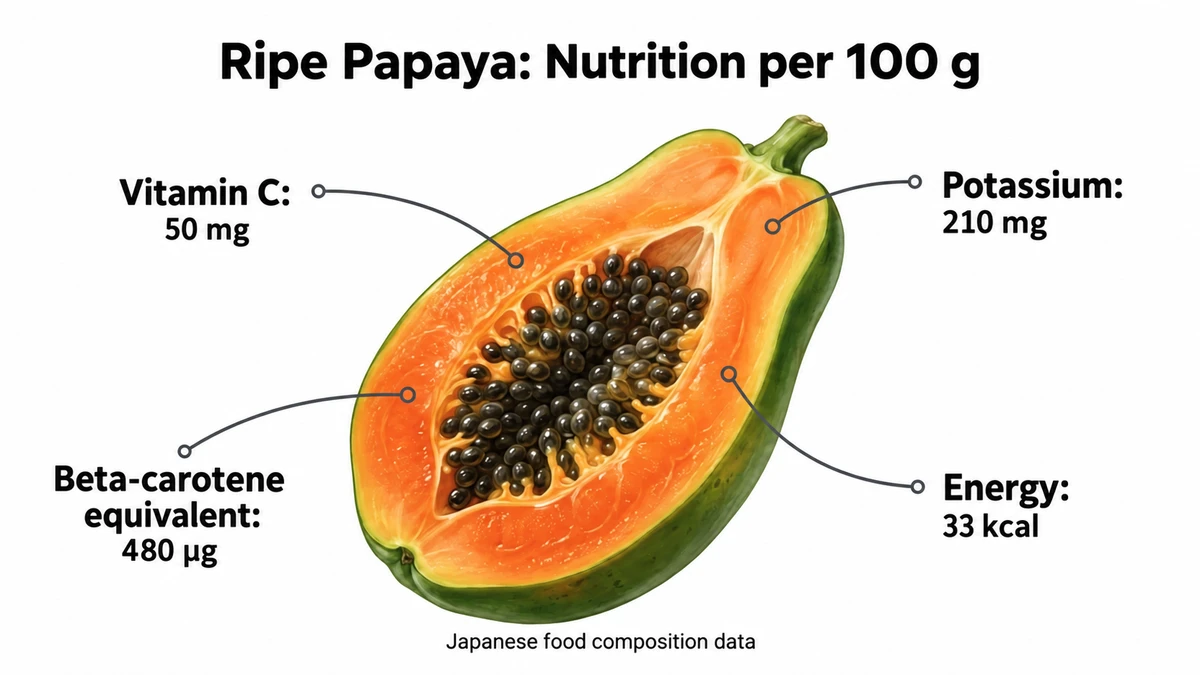
Ripe papaya is soft and gently sweet. Japan’s food composition tables give these values per 100 g of ripe edible fruit:
- Vitamin C: 50 mg
- Beta-carotene equivalent: 480 µg
- Potassium: 210 mg
Energy: 33 kcal
Papain is a protein-digesting enzyme obtained chiefly from the latex of unripe papaya. It is used in meat tenderizers, food processing and other industrial applications. Calling it the “king of enzymes” is not an official scientific classification, and eating papaya does not by itself establish a particular health benefit.
Pineapple contains another protein-digesting enzyme, bromelain. Enzyme activity and inactivation depend on temperature, pH, concentration and exposure time; there is no single temperature that applies to every food preparation.
Pregnancy and allergies: what the research can tell us
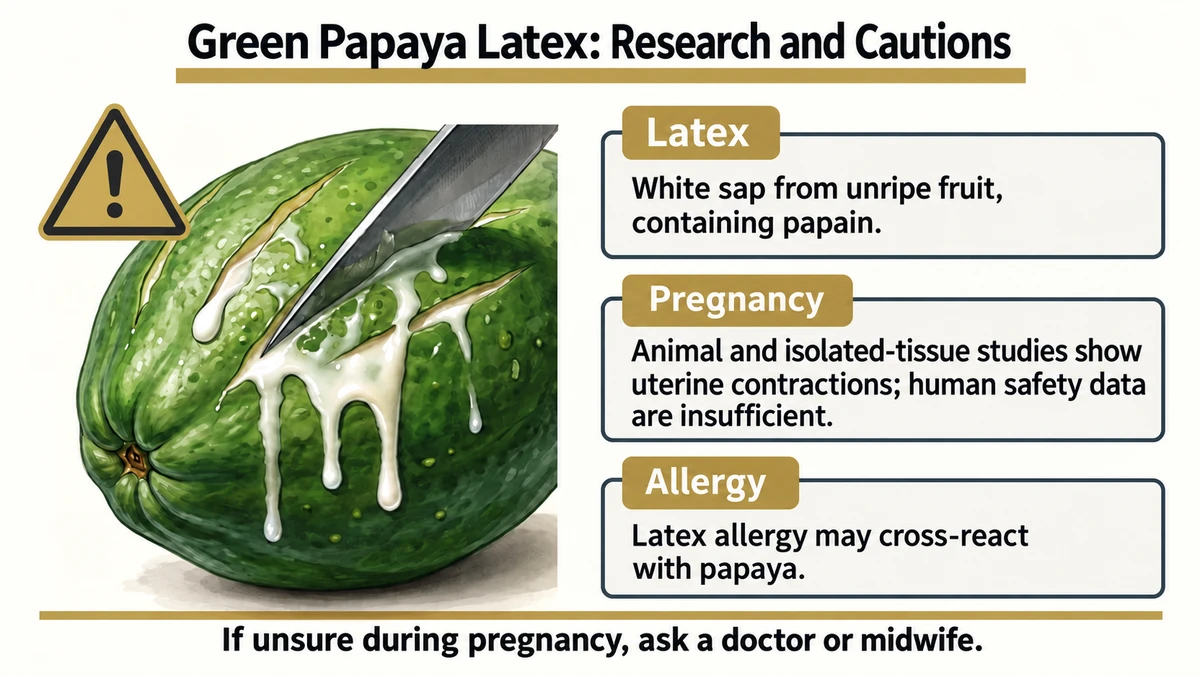
Research in rats and isolated rat uterine tissue found that unripe-papaya latex could cause uterine contractions. Human clinical evidence is insufficient to establish food safety during pregnancy. A rat study did not find obvious harmful effects from ripe papaya, but that does not guarantee safety in humans. If unsure, consult a doctor or midwife.
People with latex allergy may cross-react with papaya. Reactions can also occur in people with other fruit allergies, including kiwi or pineapple. Stop eating it if symptoms develop and seek appropriate medical advice.
Commercial types and varieties
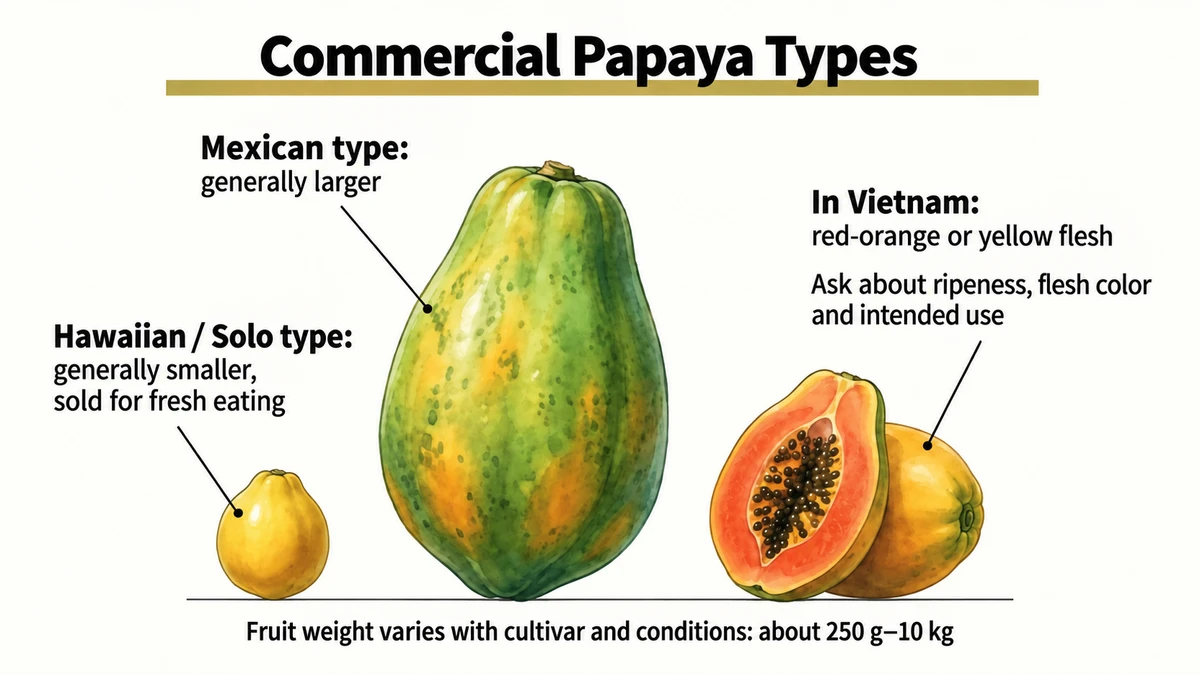
“Hawaiian type” and “Mexican type” are useful commercial descriptions of generally smaller and larger fruit, rather than a strict botanical classification. UF/IFAS notes that fruit weight can range from about 250 g to 10 kg, depending on cultivar and conditions.
Papaya sold in Vietnam
Vietnamese markets sell papayas with red-orange or yellow flesh. Names such as “Taiwan papaya” appear in commerce, but do not establish one uniform national cultivar or fruit size. Ask about intended use, ripeness and flesh color when buying.
Production and everyday life in Vietnam
In Hanoi, Đu đủ is available through the year in supermarkets and open markets.
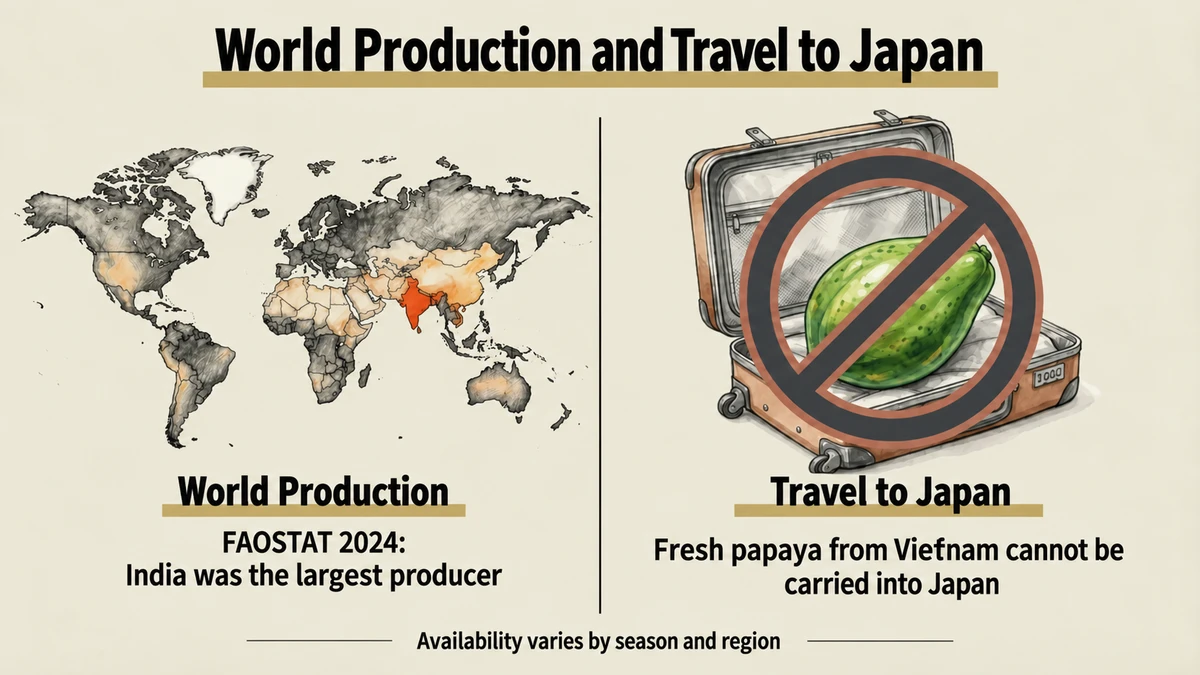
FAOSTAT data for 2024 placed India as the world’s largest papaya producer. This is a dated statistical reference, rather than a claim about the current year.
In Vietnam, green papaya is used in cooking and ripe papaya is eaten as fruit.
Papaya is also grown in warm Japanese regions such as Okinawa. Imported quantities and supplying countries vary from year to year.
Can travellers take Vietnamese papaya to Japan?
Japan’s Plant Protection Station lists fresh papaya from Vietnam among fruit subject to import prohibition because of fruit-fly risks. A phytosanitary certificate alone does not make a prohibited fruit admissible. Check the latest official traveller restrictions before departure.
Papaya: the main points
Papaya combines an unusual plant structure with two very different culinary uses:
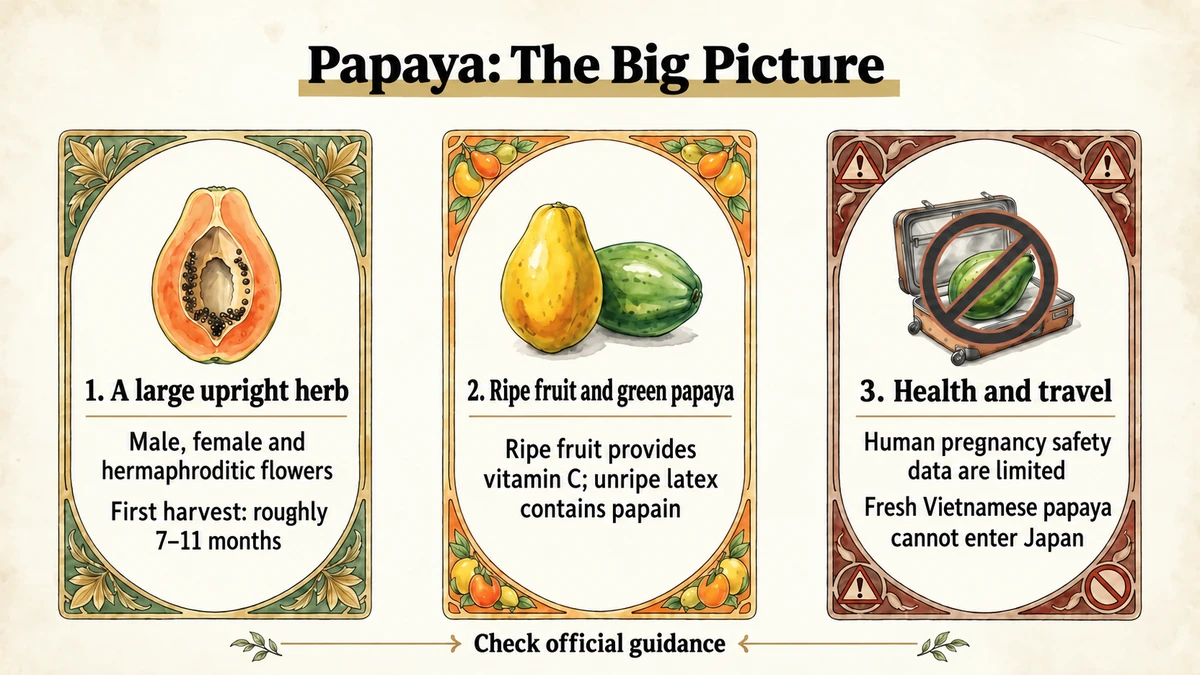
- It is a large perennial herb that looks like a tree.
- Flower expression can vary with environmental conditions.
- Ripe fruit provides vitamin C; unripe-fruit latex contains papain.
- Pregnancy research in animals and isolated tissue is not enough to establish safety in humans.
- India led production in the cited 2024 data; fresh Vietnamese papaya cannot be carried into Japan.
Frequently asked questions
What does papaya taste like?
Ripe papaya is soft and gently sweet. Green papaya has a mild flavor and a crisp texture suited to cooking.
Are green and ripe papaya different fruits?
They are the same species at different stages of maturity, used differently in the kitchen.
Where is papain found?
It is obtained chiefly from the latex of unripe papaya.
Can I take fresh papaya from Vietnam to Japan?
No. Check Japan’s latest official traveller restrictions for the specific origin and fruit.
Related articles
Explore Vietnam Fruit Guide: 15 Fruits, How to Eat Papaya in Vietnam and Papaya History and Stories.
References
- Kew Plants of the World Online: Carica papaya
- UF/IFAS: Papaya Growing in the Florida Home Landscape
- Japan MEXT: Food Composition Database, ripe papaya
- Adebiyi et al.: Papaya consumption in pregnancy—fact or fable?
- Cherian: Effects of papaya latex extract on isolated rat uterine preparations
- Blanco et al.: Latex-fruit syndrome and cross-reacting allergens
- Rojas-Mandujano et al.: Latex-papaya syndrome
- FAOSTAT: Crops and livestock products
- Japan Plant Protection Station: Traveller restrictions for Vietnam
- Japan Plant Protection Station: Bilateral import conditions
- Japan: Ordinance for Enforcement of the Plant Protection Act
Japan Plant Protection Station: Vietnam traveller restrictions — Reviewed 11 October 2026.
