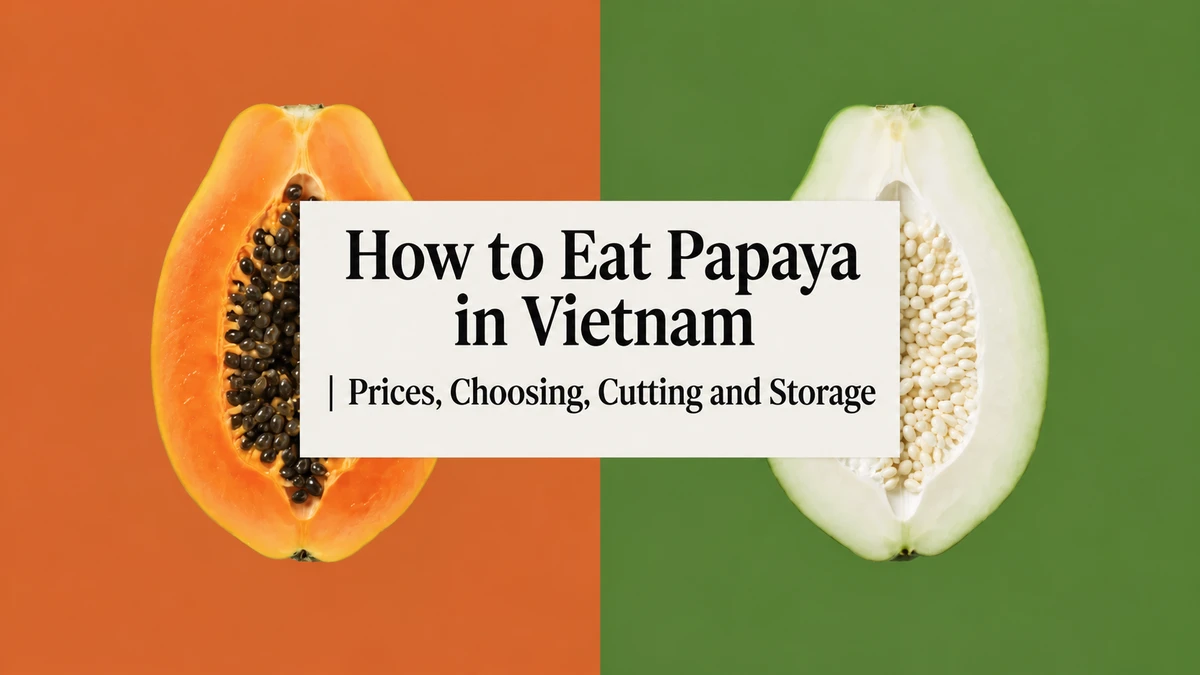
For ripe papaya, halve it lengthwise and scoop out the black seeds. For green papaya, remove the peel and immature seeds, then shred it for salads or cut it for soup.
This article covers prices, choosing fruit, cutting, local dishes and storage, with the author’s own purchase and tasting record.
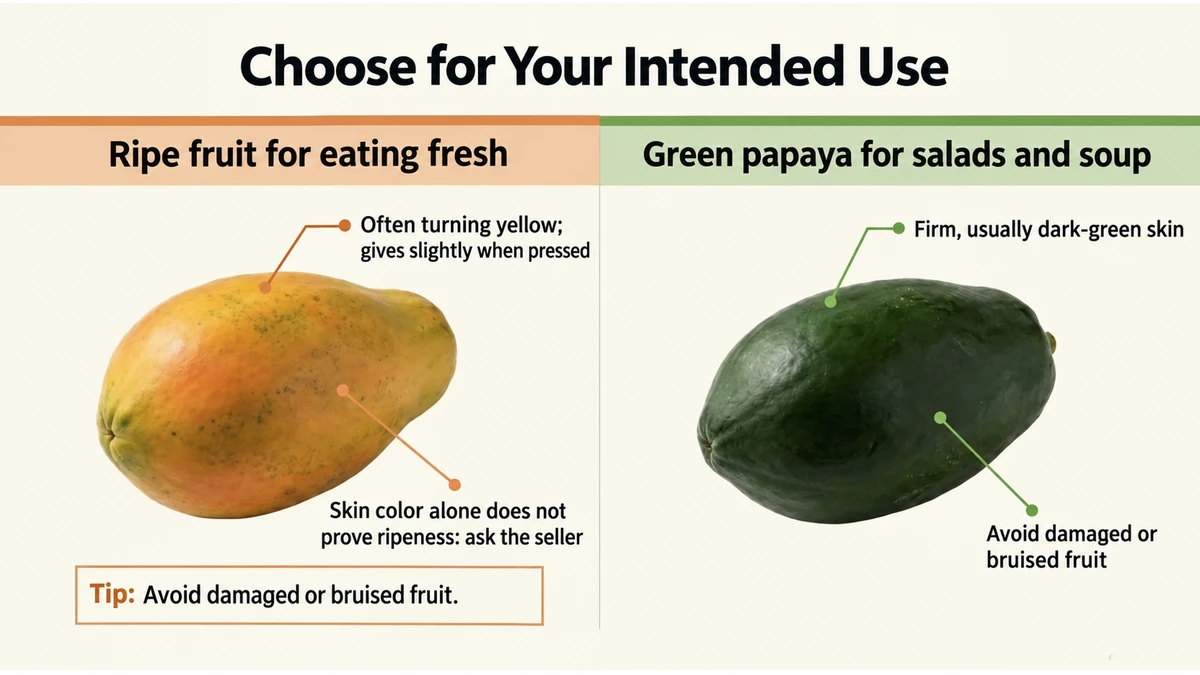
A papaya that looks green outside may have ripe orange flesh inside. Ask about ripeness and intended use, rather than relying only on skin color.
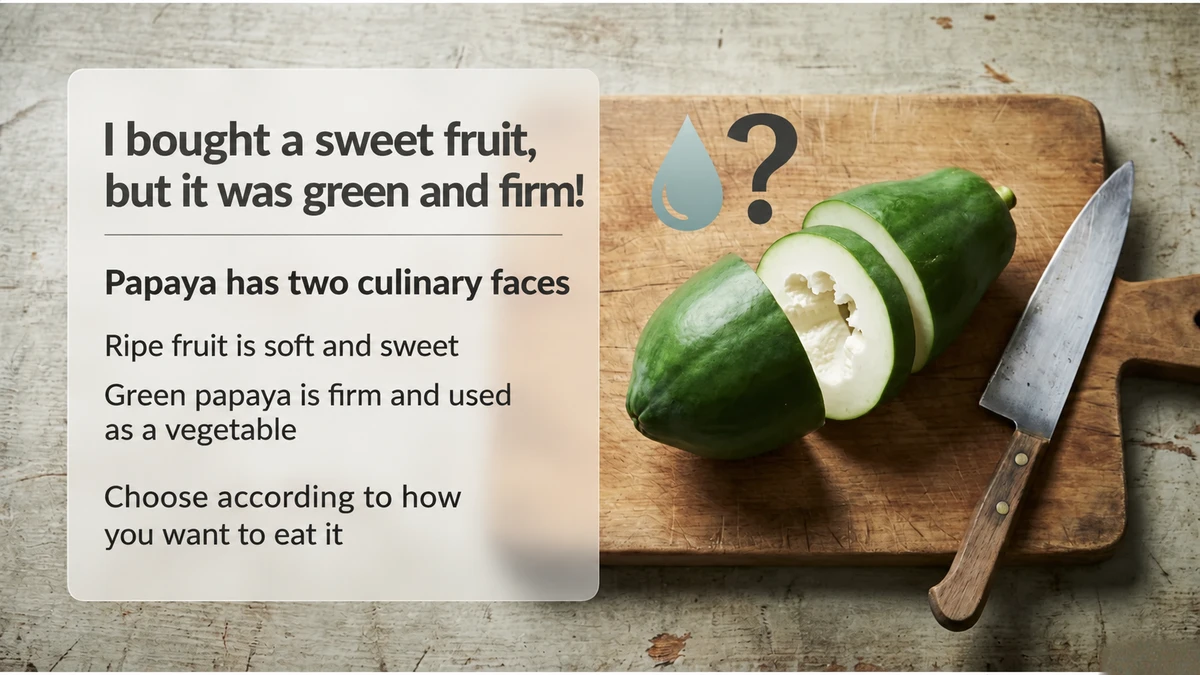
Think of ripe papaya as a dessert fruit and green papaya as a vegetable.
See Papaya Guide for biology and nutrition, and Papaya History and Stories for origins and culture.
Papaya quick facts in Vietnam
| Item | Details |
|---|---|
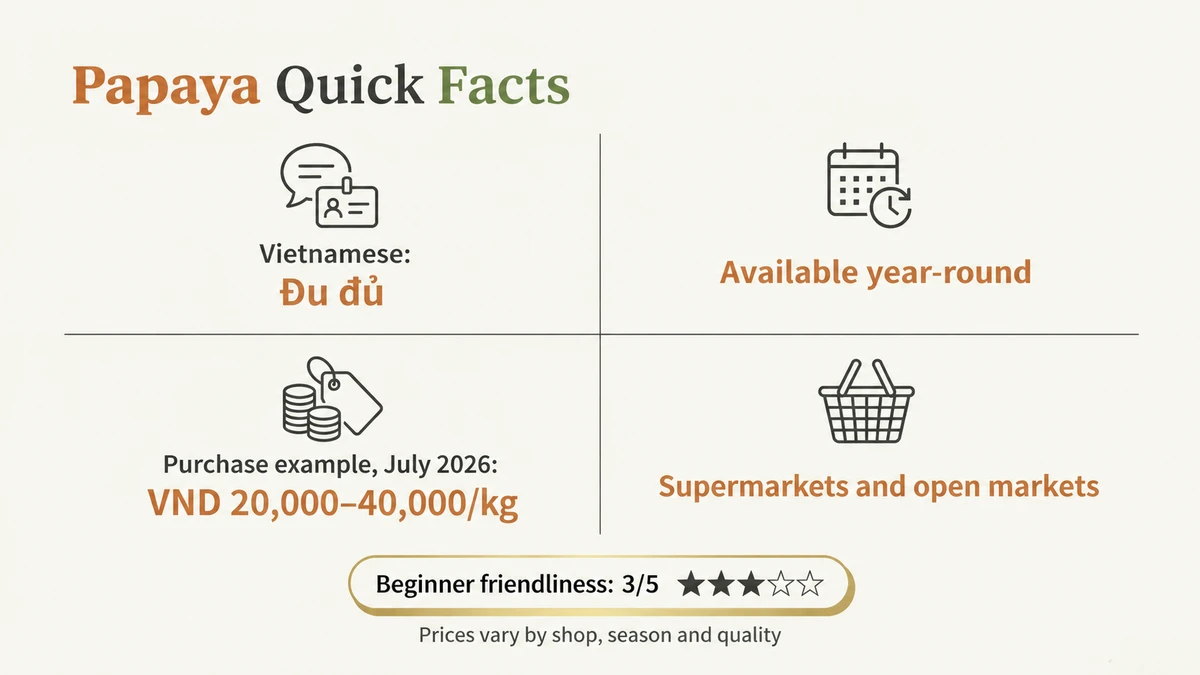
| Vietnamese name | Đu đủ |
| Pronunciation guide | Approximately “doo-doo”; Vietnamese tones affect the pronunciation |
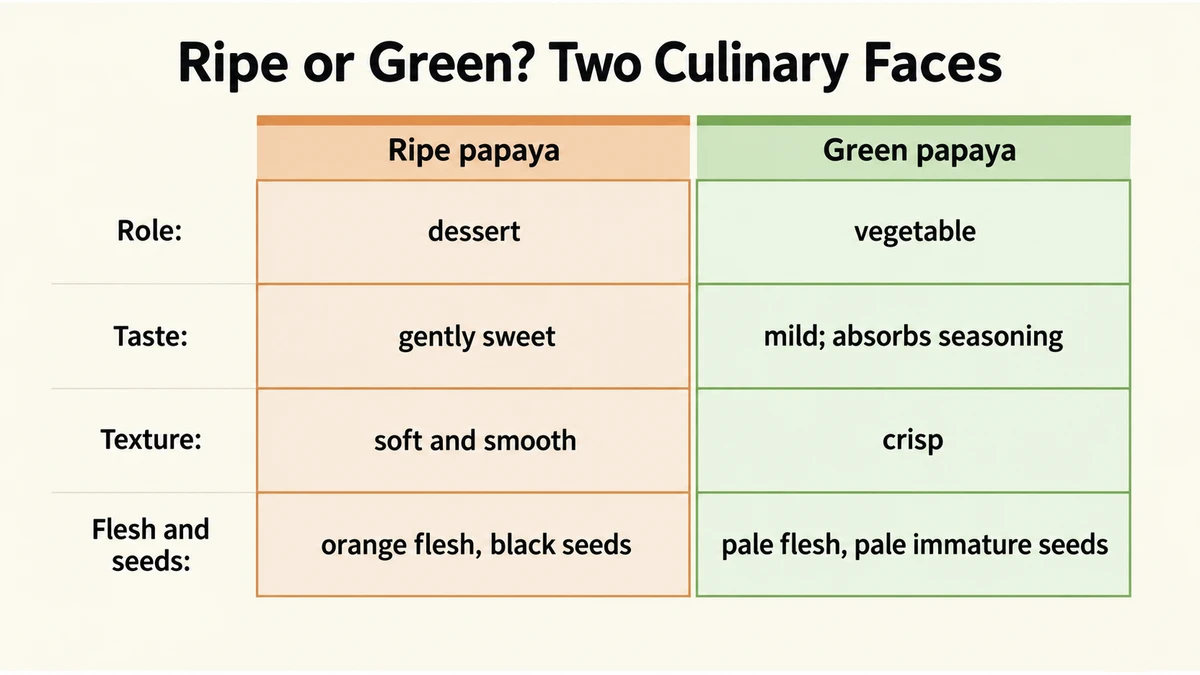
| Taste | Ripe fruit: gently sweet; green papaya: mild and absorbs seasoning |
| Texture | Ripe fruit: soft and smooth; green papaya: crisp |
| Season | Available year-round |
| Purchase price example | VND 20,000–40,000 per kg |
| Where to buy | Supermarkets and open markets |
| Preparation | Ripe: halve and remove seeds; green: peel, deseed and shred |
| Local dish | Nộm đu đủ bò khô, Hanoi’s green-papaya salad with dried beef |
| Beginner friendliness | ★★★☆☆ |
Its Vietnamese name and a useful shopping phrase
Papaya is Đu đủ in Vietnamese. Papaya Guide covers the plant itself; Papaya History and Stories explains the New Year wordplay around its name.
To ask the price per kilogram, you can say:
Một cân này bao nhiêu? — “How much is one kilogram of this?”
Taste and texture: ripe versus green
Ripeness changes both the flavor and how you use papaya.
Ripe papaya has orange flesh and a soft texture. The author found it lightly sweet rather than intensely sugary. See Vietnam Fruit Guide: 15 Fruits for the broader fruit guide.
Green papaya has pale, firm flesh and a mild flavor reminiscent of cucumber or daikon. It is widely used as a vegetable in Southeast Asian cooking.
Price and where to buy
The author paid about VND 20,000–40,000/kg in a supermarket in July 2026. Prices vary with location, season, size and quality; the record is an example from that purchase.
Open markets
Markets sell fruit at different stages. Tell the seller whether you want ripe papaya to eat immediately or green papaya for cooking.
Supermarkets
Supermarkets may sell whole fruit, cut ripe fruit and sometimes pre-shredded green papaya.
Fruit shops and delivery services
For eating soon, ask for a fruit that is already ripe rather than assuming every green-looking papaya will ripen well at home.
Choosing papaya for your intended use
Papaya can ripen after harvest, but fruit picked too immature may not ripen satisfactorily.
For eating fresh
Look for fruit starting to turn yellow and giving slightly to gentle pressure, without damage or bruising. Some ripe fruit retains green skin, so ask the seller. Fruit that has begun to yellow can usually finish ripening at room temperature.
For salads and soup
Choose firm green papaya for cooking. Young fruit typically has pale flesh and pale immature seeds suited to shredding.
How to cut papaya
Ripe papaya
- Halve it lengthwise.
- Scoop out the black seeds with a spoon.
- Peel and cut the flesh into bite-size pieces.
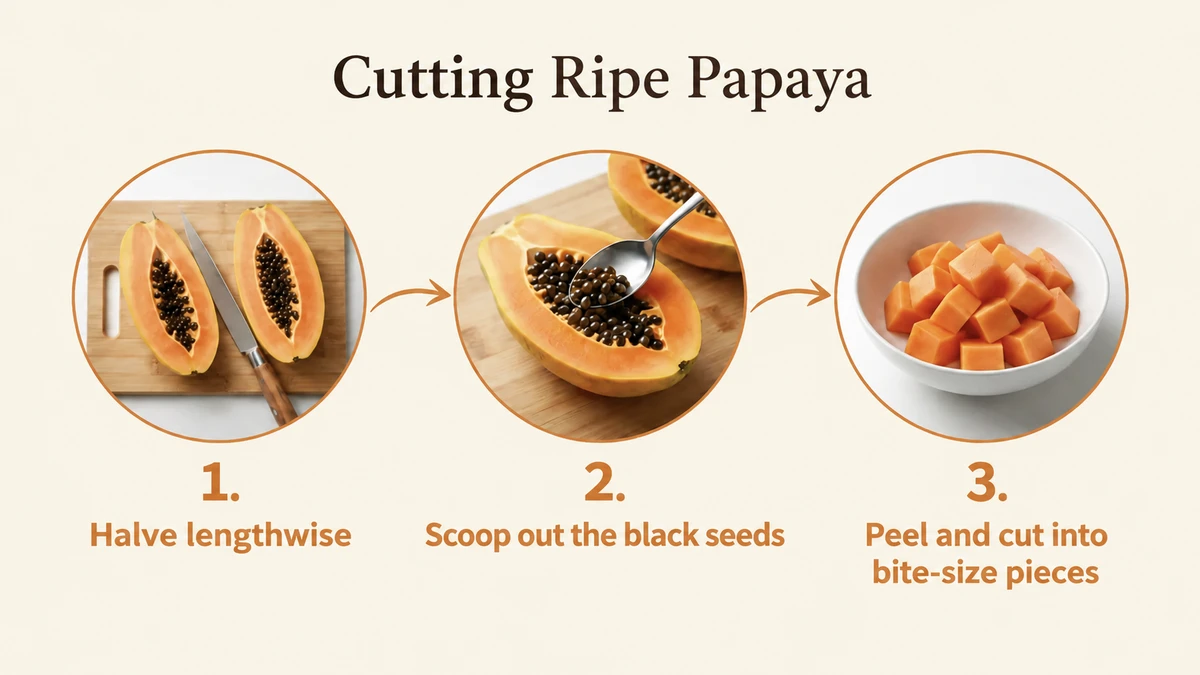
It is simpler to prepare than pineapple, although the central seeds need removing. A spoon helps, as it does when scooping dragon fruit.
Green papaya
- Remove the peel.
- Halve it lengthwise and remove the immature seeds.
- Shred it with a mandoline or knife, keeping fingers clear of the blade.
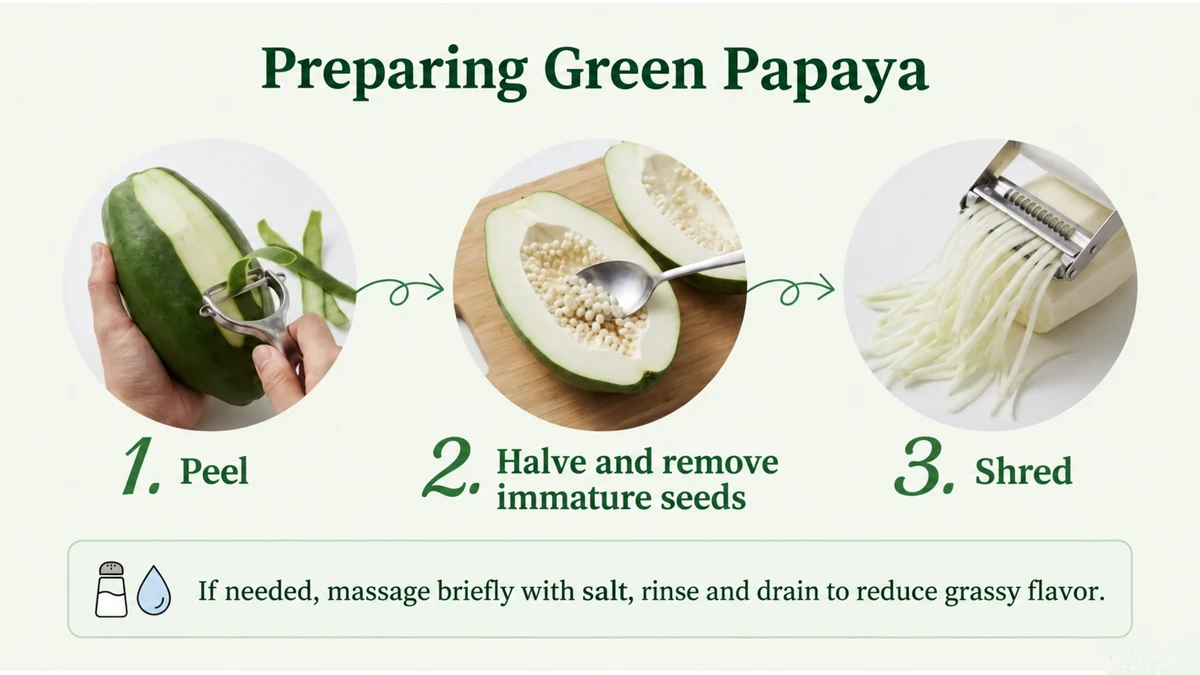
If the grassy flavor is strong, briefly massage the shreds with salt, rinse and drain before using them.
Four ways to eat papaya in Vietnam
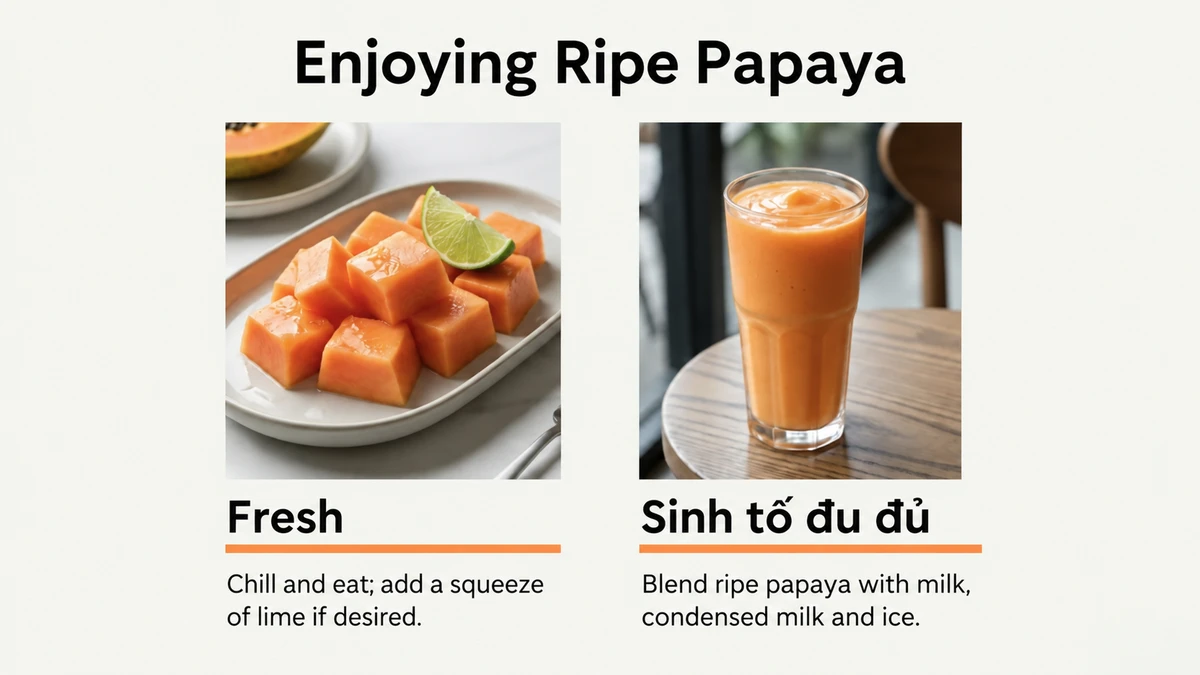
1. Ripe fruit, fresh
Chill it for breakfast or a snack. A squeeze of lemon or lime can add a bright contrast to the mild sweetness.
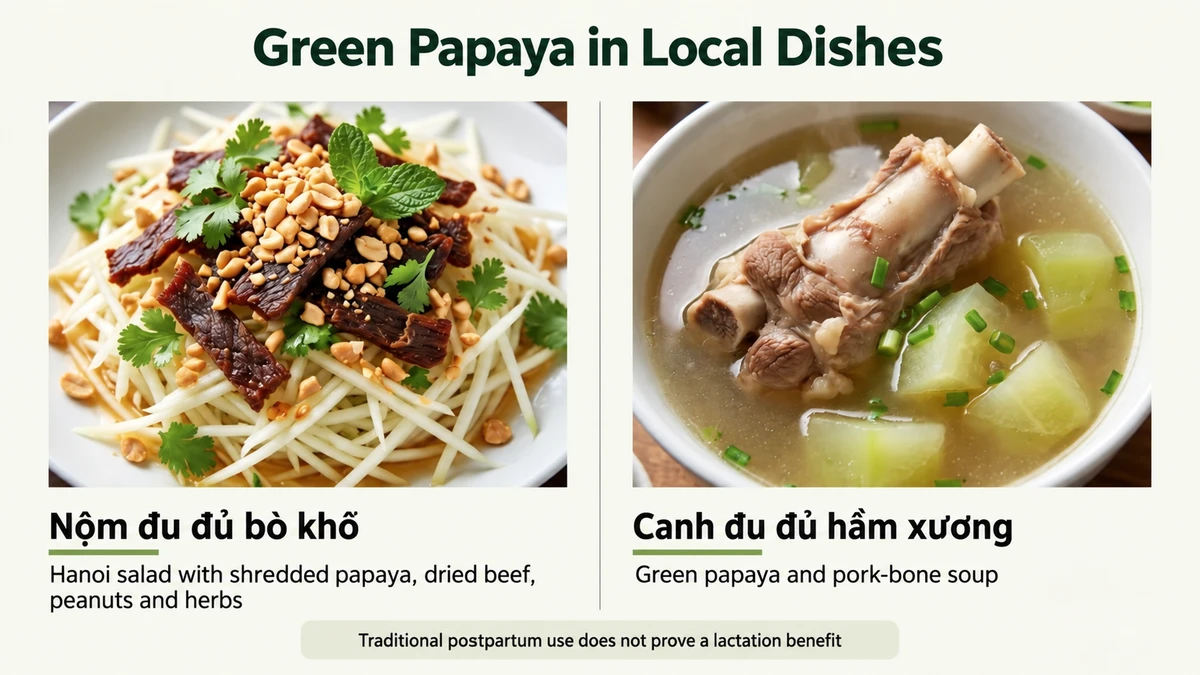
2. Hanoi’s green-papaya and dried-beef salad
Nộm đu đủ bò khô combines shredded green papaya and carrot with seasoned dried beef, peanuts, herbs and a sweet-sour fish-sauce dressing. It is a familiar Hanoi street food.
3. Green-papaya and pork-bone soup
Canh đu đủ hầm xương simmers green papaya with pork bones or trotters. It is traditionally served after childbirth in some households; that custom is not proof that it increases milk production.
4. Papaya smoothie
Sinh tố đu đủ blends ripe papaya with milk, condensed milk and ice.
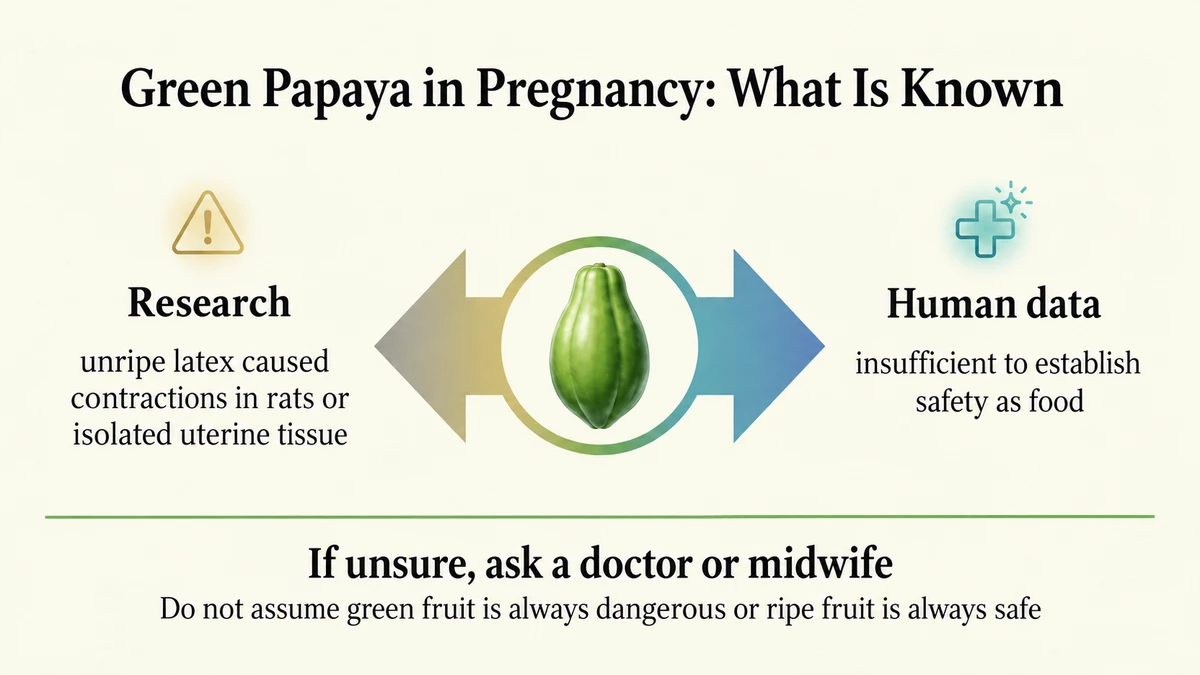
Pregnancy: interpret the research carefully
Studies in rats and isolated rat uterine tissue found contractions after exposure to unripe-papaya latex. Human safety evidence is insufficient, and those findings do not directly establish the effects of ordinary food portions in people.
If unsure during pregnancy, ask a doctor or midwife. Avoid categorical claims that green papaya is always dangerous or ripe papaya is always safe. Traditional postpartum soup is a food custom, rather than a demonstrated treatment for milk supply.
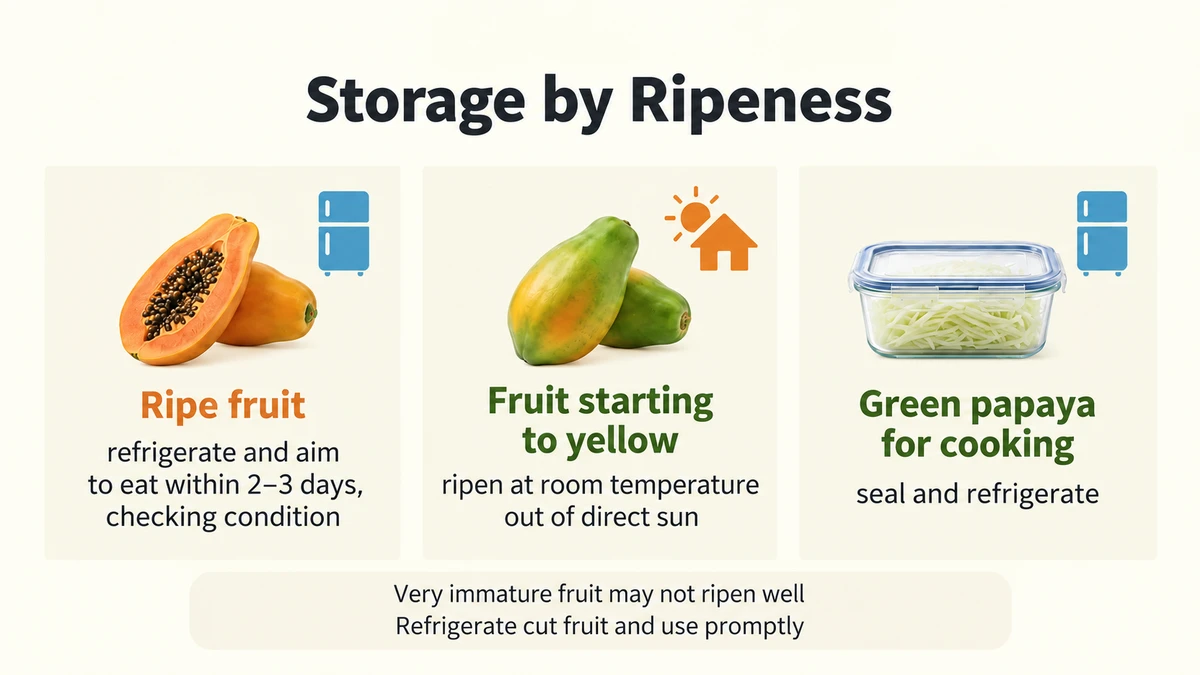
How to store papaya
Ripe fruit is perishable. Fruit that has started yellowing can ripen at room temperature, while very immature green fruit may not ripen well.
- Ripe fruit: refrigerate and aim to eat within 2–3 days, checking its actual condition.
- Fruit starting to yellow: leave at room temperature out of direct sunlight and monitor ripening.
- Green papaya for cooking: seal cut fruit and refrigerate; use promptly and check for deterioration.
Can I take it home to Japan?
Fresh papaya from Vietnam cannot be carried into Japan.
Japan’s Plant Protection Station lists restrictions because of fruit-fly risks. The official traveller list is the direct basis for this advice; check its latest version before travelling.
A phytosanitary certificate alone does not make a prohibited fresh fruit admissible. Processed products depend on ingredients and processing conditions, so check the specific product. Enjoy fresh papaya while in Vietnam.
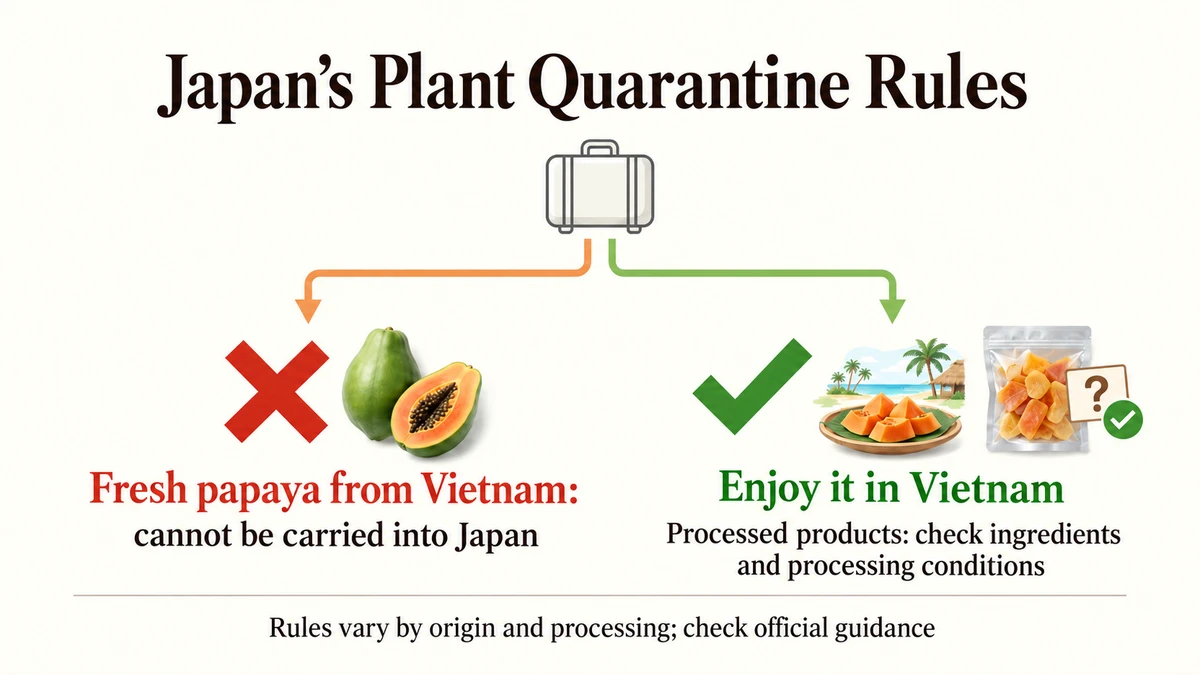
Consult Japan’s official Plant Protection Station guidance for updates.
The author’s purchase and tasting notes
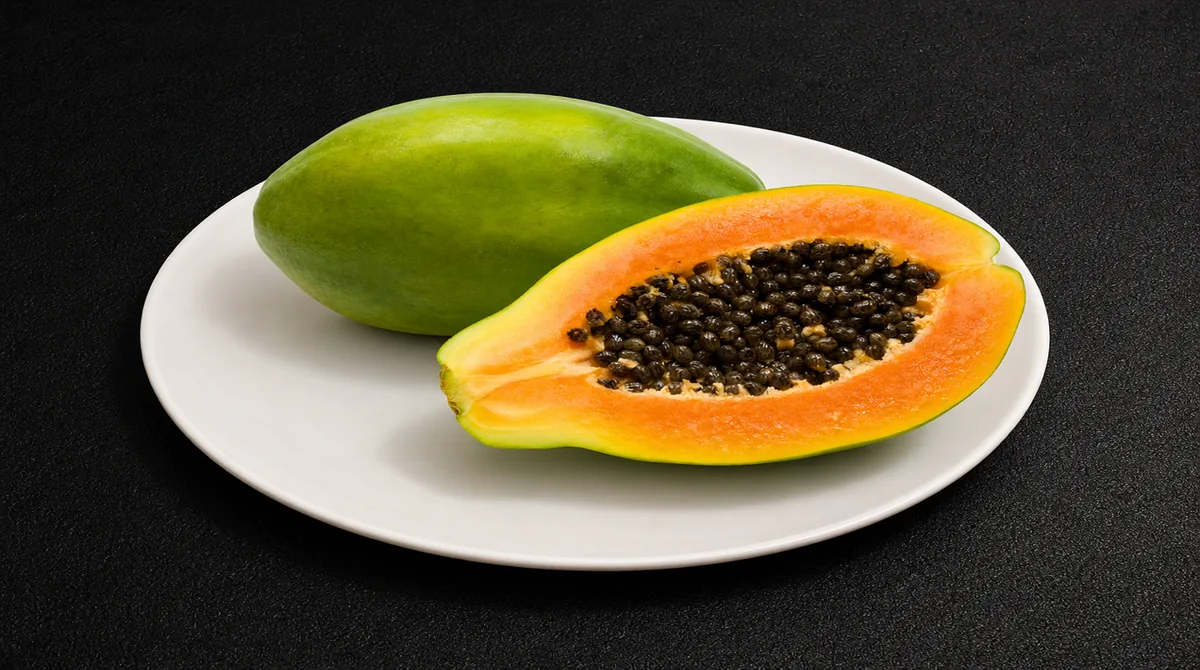
Purchase record: bought in a supermarket in July 2026 for around VND 20,000–40,000/kg. This is a historical example from the author’s purchase.
Tasting notes: soft flesh with a gentle sweetness. Beginner friendliness: ★★★☆☆.
Frequently asked questions
Which papaya should I buy?
For dessert, choose ripe fruit with a slight give; it often turns yellow, but may retain green skin. For cooking, choose firm green papaya. Ask the seller about ripeness and use.
What if it is still green and firm?
Fruit that has begun yellowing can usually ripen at room temperature, but very immature fruit may not. Ask the seller whether it is intended for fresh eating or cooking.
Can I eat it during pregnancy?
Human safety evidence is limited; animal and isolated-tissue findings do not establish the effects in people. Ask a doctor or midwife if unsure, and see Papaya Guide for the research context.
Can I take Vietnamese papaya to Japan?
Fresh fruit cannot be carried into Japan. For processed products, check the exact ingredients and processing conditions against official guidance.
Enjoying papaya: the main points
Papaya has two culinary faces: a soft ripe fruit and a crisp green vegetable.
- Choose according to intended use and confirm ripeness with the seller.
- Remove seeds; slice ripe fruit or shred green papaya.
- Try fresh fruit, smoothies, green-papaya salad or soup.
- If unsure during pregnancy, consult a doctor or midwife.
- Refrigerate ripe or cut fruit and check its condition.
- Fresh Vietnamese papaya cannot be carried into Japan; processed products require individual checking.
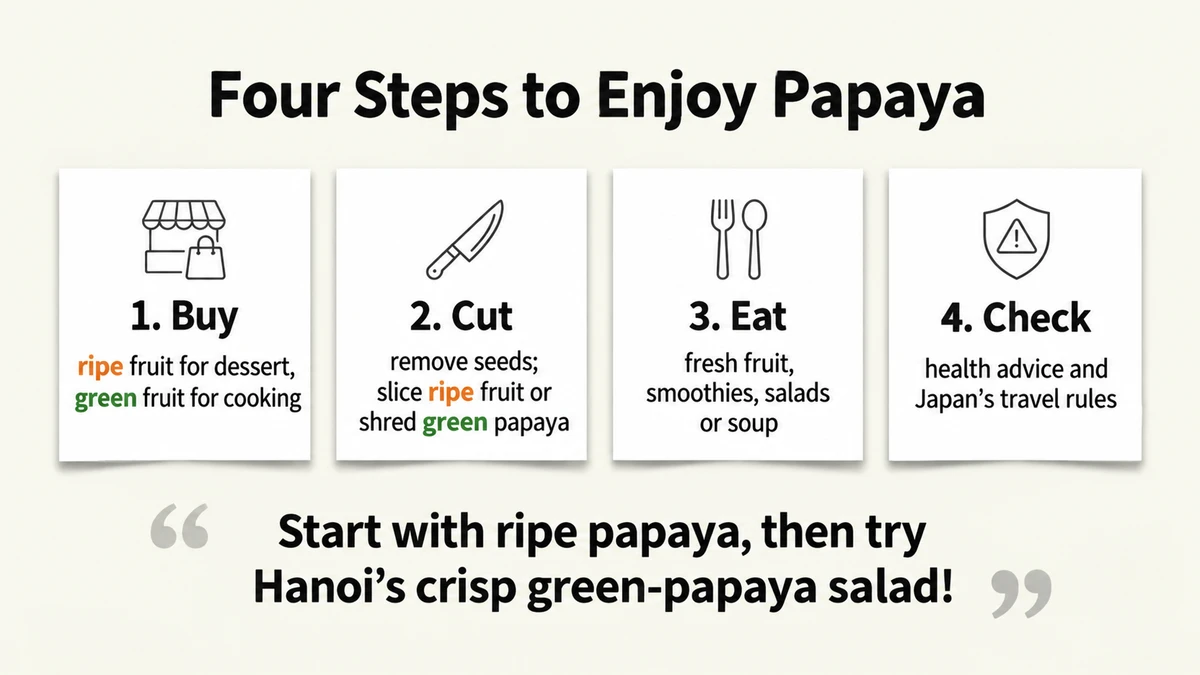
Start with a piece of ripe papaya, then try Hanoi’s green-papaya salad for a different texture and flavor.
Related articles
Explore Papaya Guide and Papaya History and Stories.
References
- Tripi: Green-papaya and dried-beef salad shops in Hanoi
- Bách hóa XANH: Green-papaya and dried-beef salad recipe
- Điện máy XANH: Green-papaya and dried-beef salad recipe
- UF/IFAS: Papaya Growing in the Florida Home Landscape
- Adebiyi et al.: Papaya consumption in pregnancy—fact or fable?
- Cherian: Effects of papaya latex extract on isolated rat uterine preparations
- Japan Plant Protection Station: Traveller restrictions for Vietnam
Japan Plant Protection Station: Vietnam traveller restrictions — Reviewed 11 October 2026.
