How to Eat Kiwifruit in Vietnam: Ripeness, Cutting, Storage
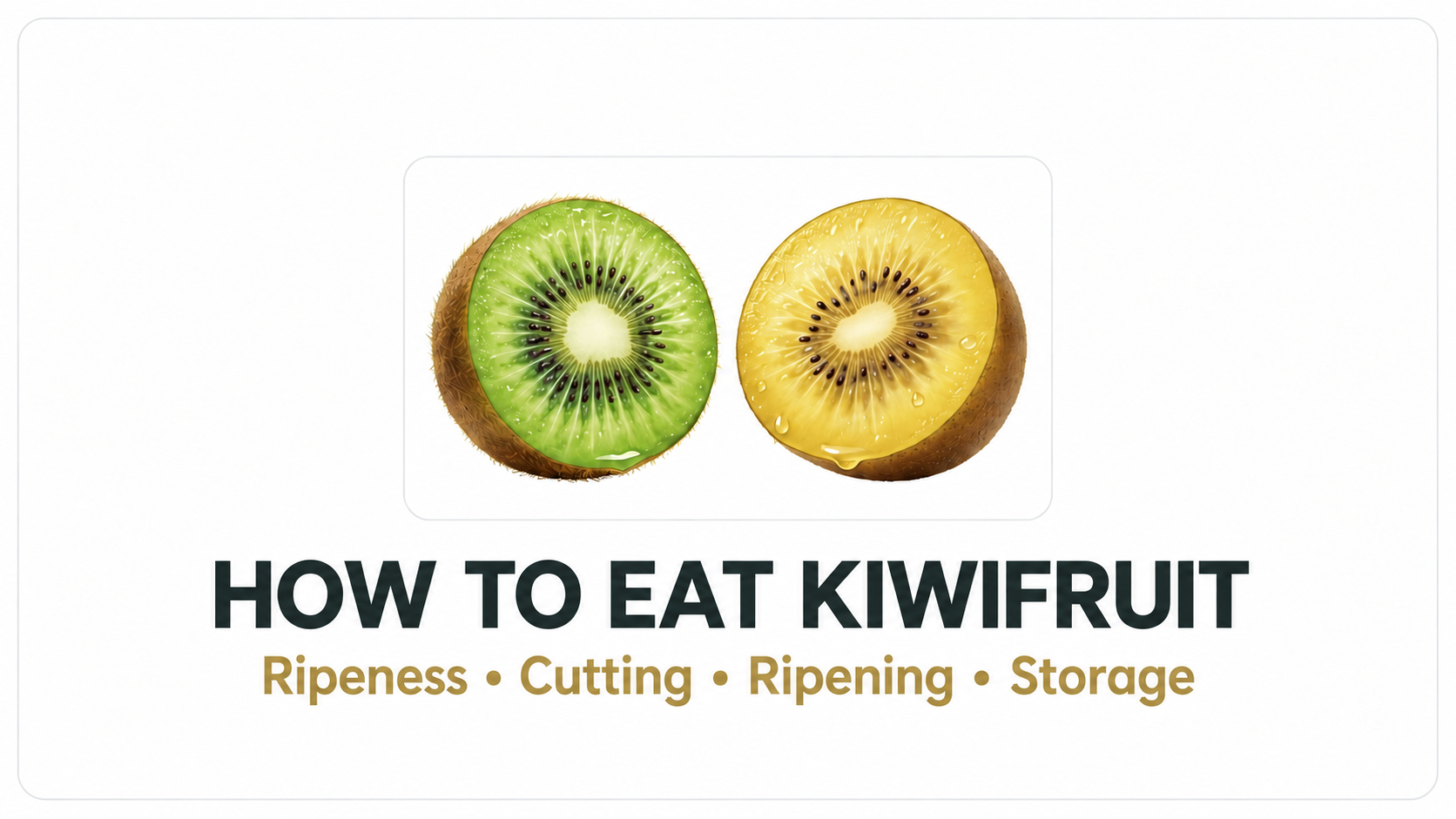
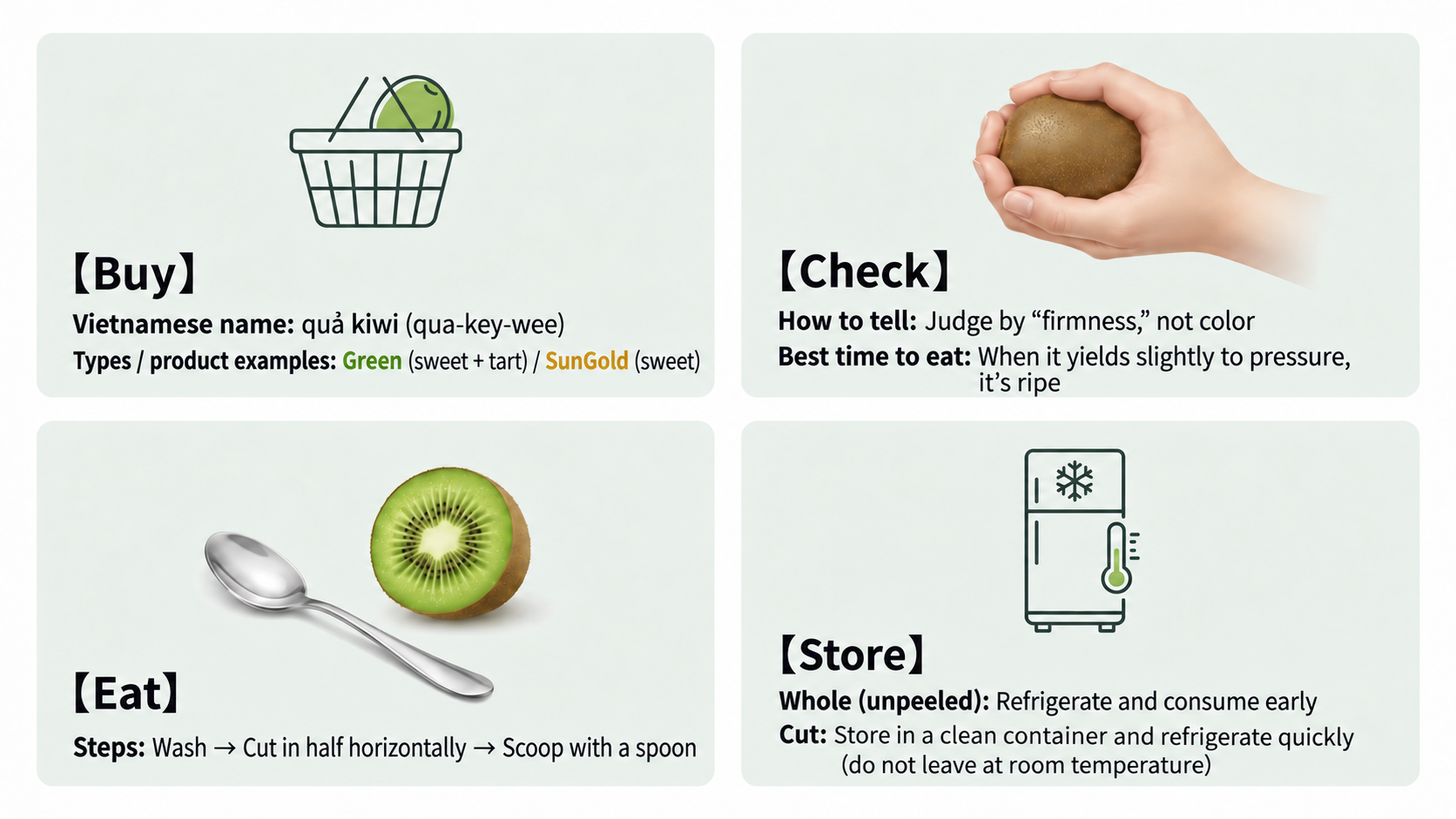
A kiwifruit is ready to eat when it yields slightly to gentle pressure in your palm. Wash it under running water, cut it in half, and scoop out the flesh with a spoon. If it is still hard, leave the whole fruit at room temperature and check it every day.
Quick Guide: Buy, Check, Eat, and Store
Choosing Kiwifruit in Vietnam
In Vietnamese, kiwifruit is quả kiwi. Store labels may use kiwi xanh for green kiwifruit and kiwi vàng for gold kiwifruit. Imported fruit may be sold by kilogram, by fruit, or by pack, so compare the unit before comparing prices.
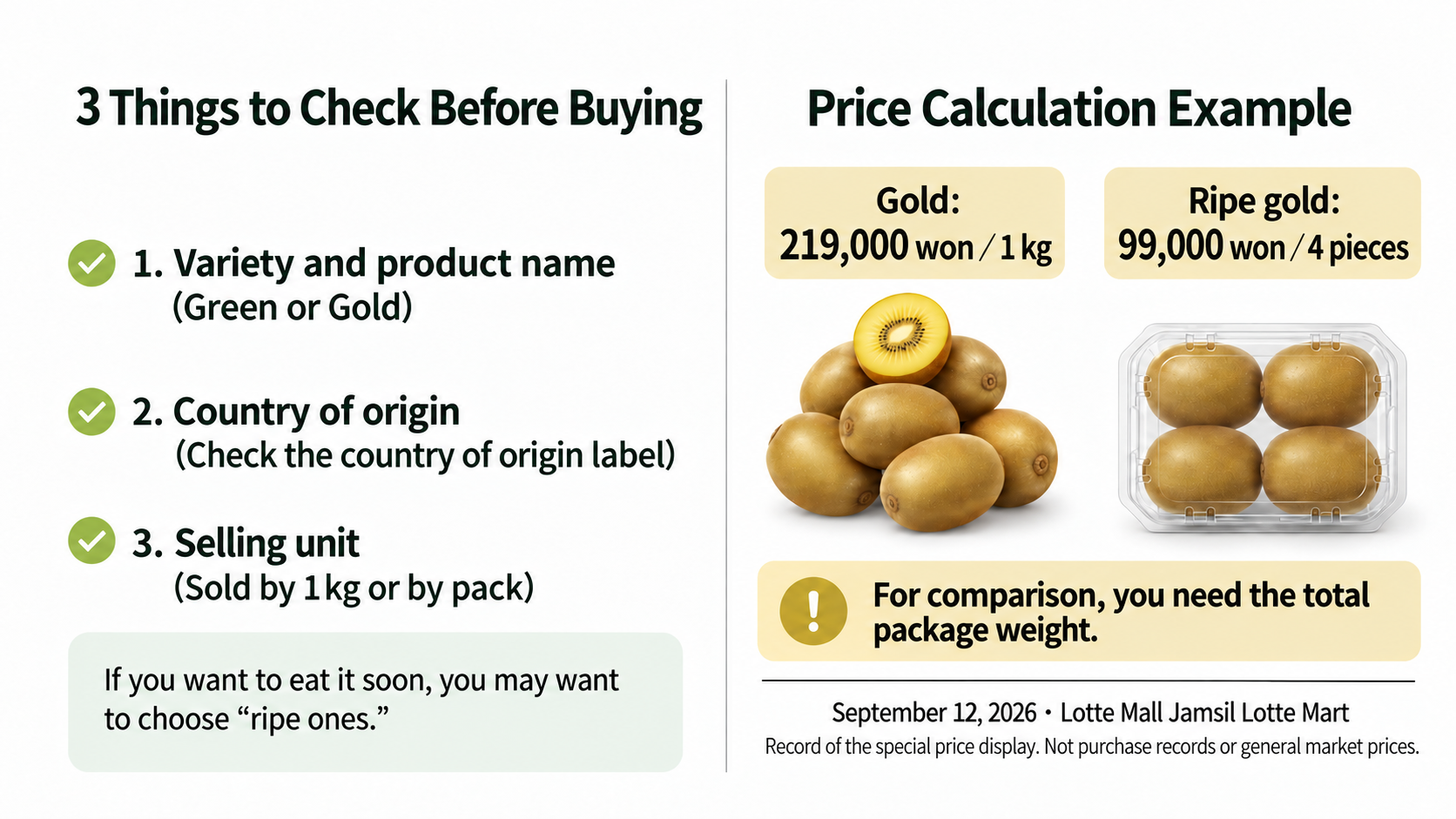
On September 12, 2026, the author photographed the following promotional labels at Lotte Mart inside Lotte Mall. These are store-display examples, not purchase records or a nationwide Vietnam price survey.
| Displayed product | Origin shown | Promotional price | Sales unit |
|---|---|---|---|
| Green kiwifruit | New Zealand | VND 139,000 | Per kilogram |
| Gold kiwifruit | New Zealand | VND 219,000 | Per kilogram |
| Ripe gold kiwifruit | New Zealand | VND 99,000 | Pack of four |
| Check | What to look for |
|---|---|
| Type or product name | Green, gold, SunGold, or another named product |
| Country of origin | Read the package or price card; do not infer origin from flesh color |
| Sales unit | VND/kg, VND/fruit, or price per pack |
| Condition | Avoid damaged packages, leaking juice, mold, or fruit that looks rotten |
| When you plan to eat it | Choose slightly yielding fruit for soon; firmer fruit if you can wait |
How to Tell When Kiwifruit Is Ripe
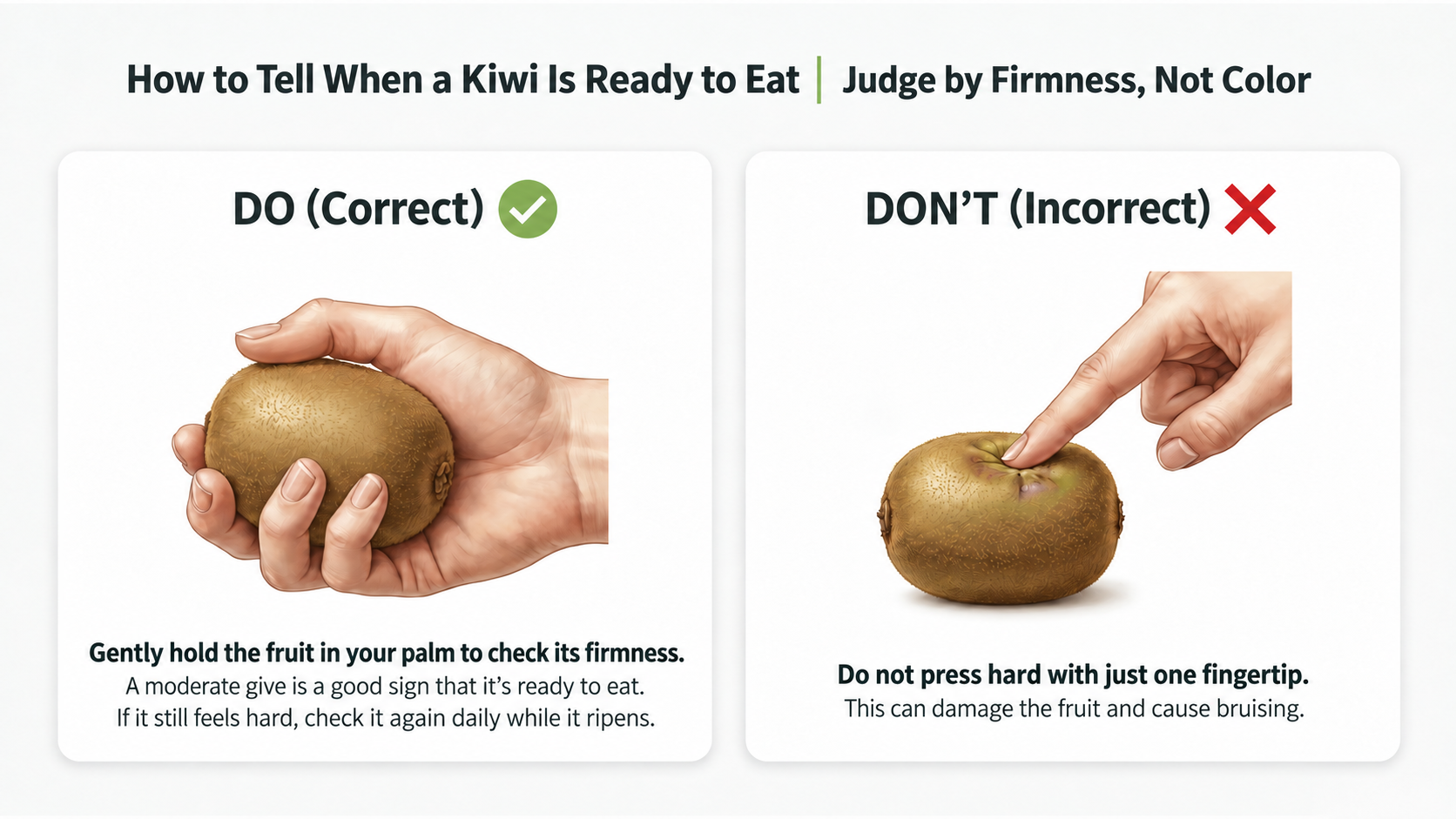
Color is not a reliable test because the skin of many varieties changes little as the flesh softens. Hold the fruit in your palm and press very gently. A ready-to-eat fruit should yield slightly and evenly. A rock-hard fruit needs more time. A very soft, collapsed, wet, or leaking fruit may be overripe or spoiled.
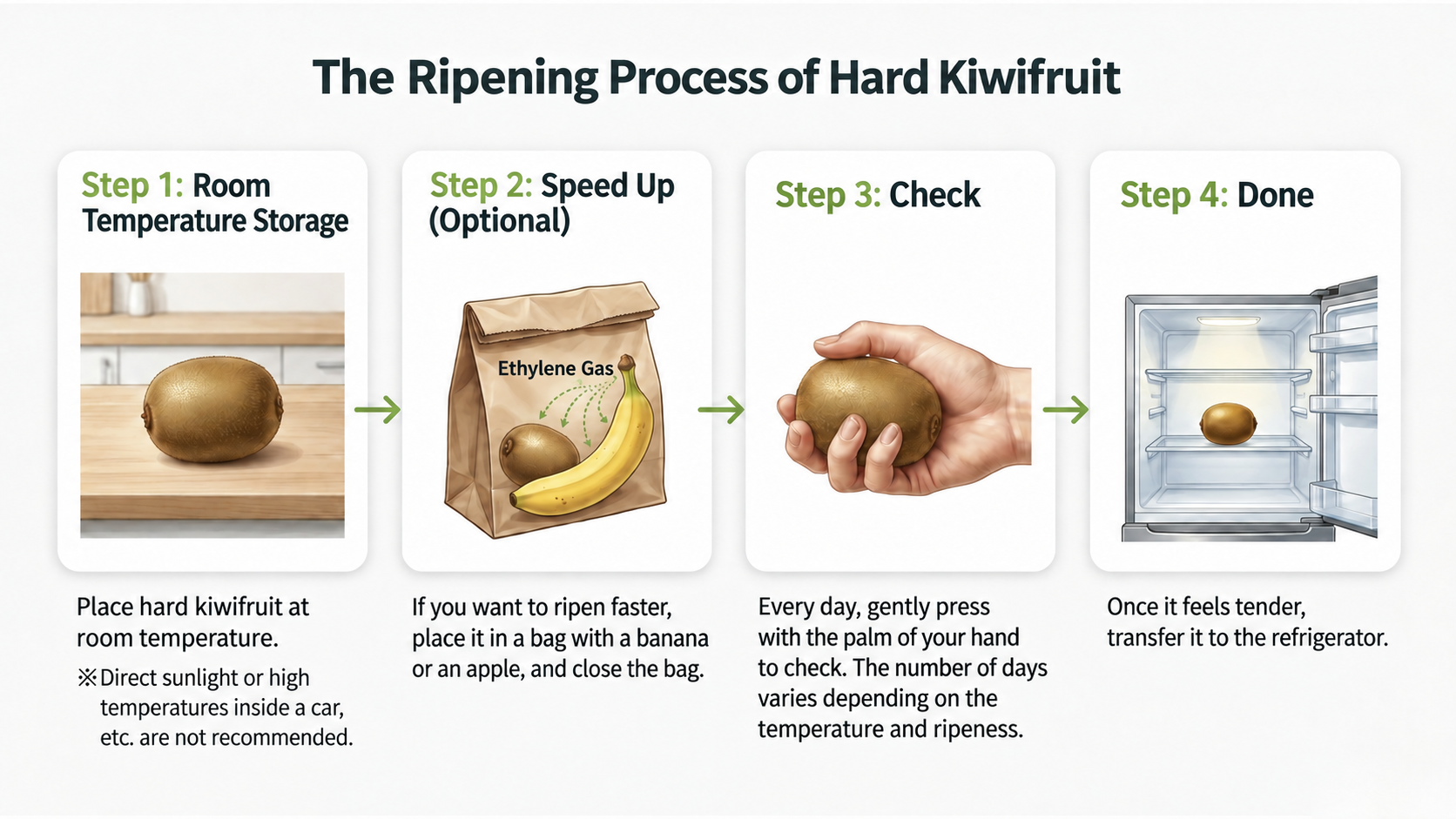
How to Ripen Hard Kiwifruit
Leave the whole fruit at room temperature, away from direct sun or a hot parked car, and check it daily. To speed ripening, place it in a food-safe bag with a banana or apple. These fruits release ethylene, which promotes ripening. Zespri gives two to three days as a guide, but temperature and starting ripeness vary, so judge the fruit itself rather than the calendar. Once it reaches the desired softness, remove it from the bag and move it to the refrigerator.
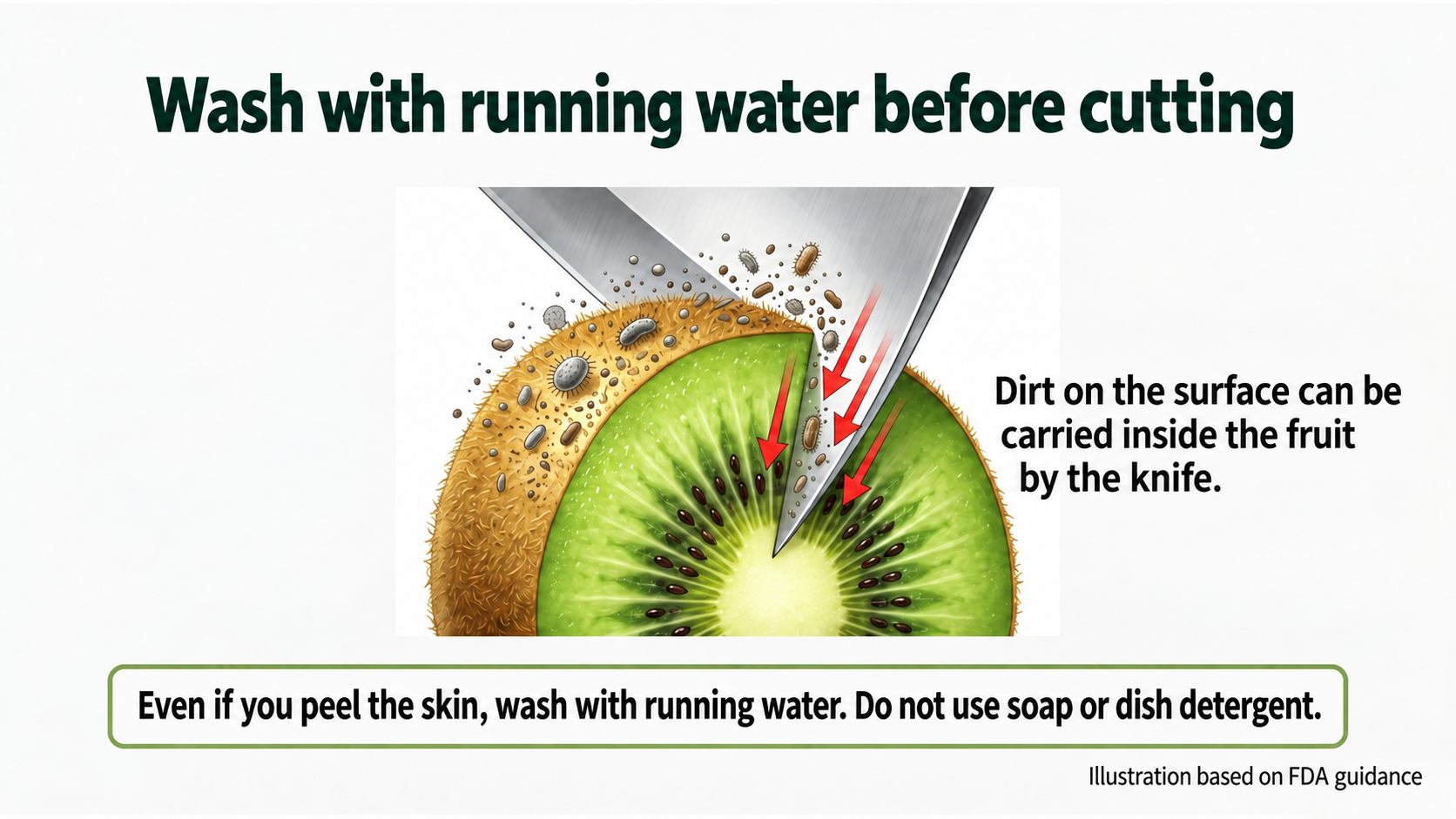
How to Wash, Cut, and Scoop Kiwifruit
Wash your hands and rinse the whole fruit under running water before cutting, even if you do not plan to eat the skin. A knife can carry material from the surface into the flesh. Do not wash produce with soap, detergent, or commercial household cleaners.
Three-step cut-and-scoop method
- Wash and dry the whole fruit.
- Cut it across the middle.
- Slide a spoon between the skin and flesh and scoop it out.
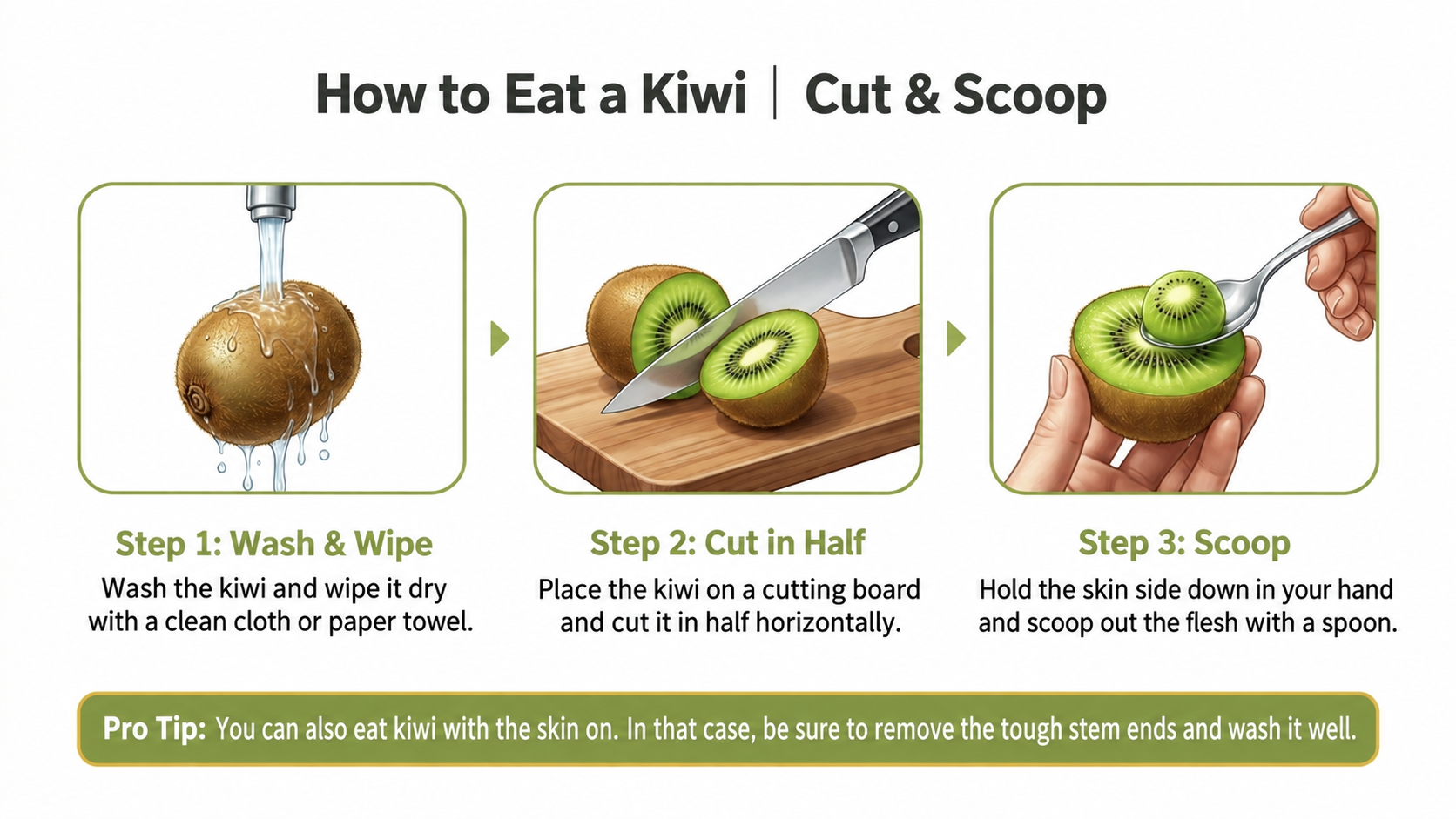
The skin is edible after thorough washing, although its texture and fuzz vary by cultivar and personal preference.
Four Easy Ways to Serve Kiwifruit
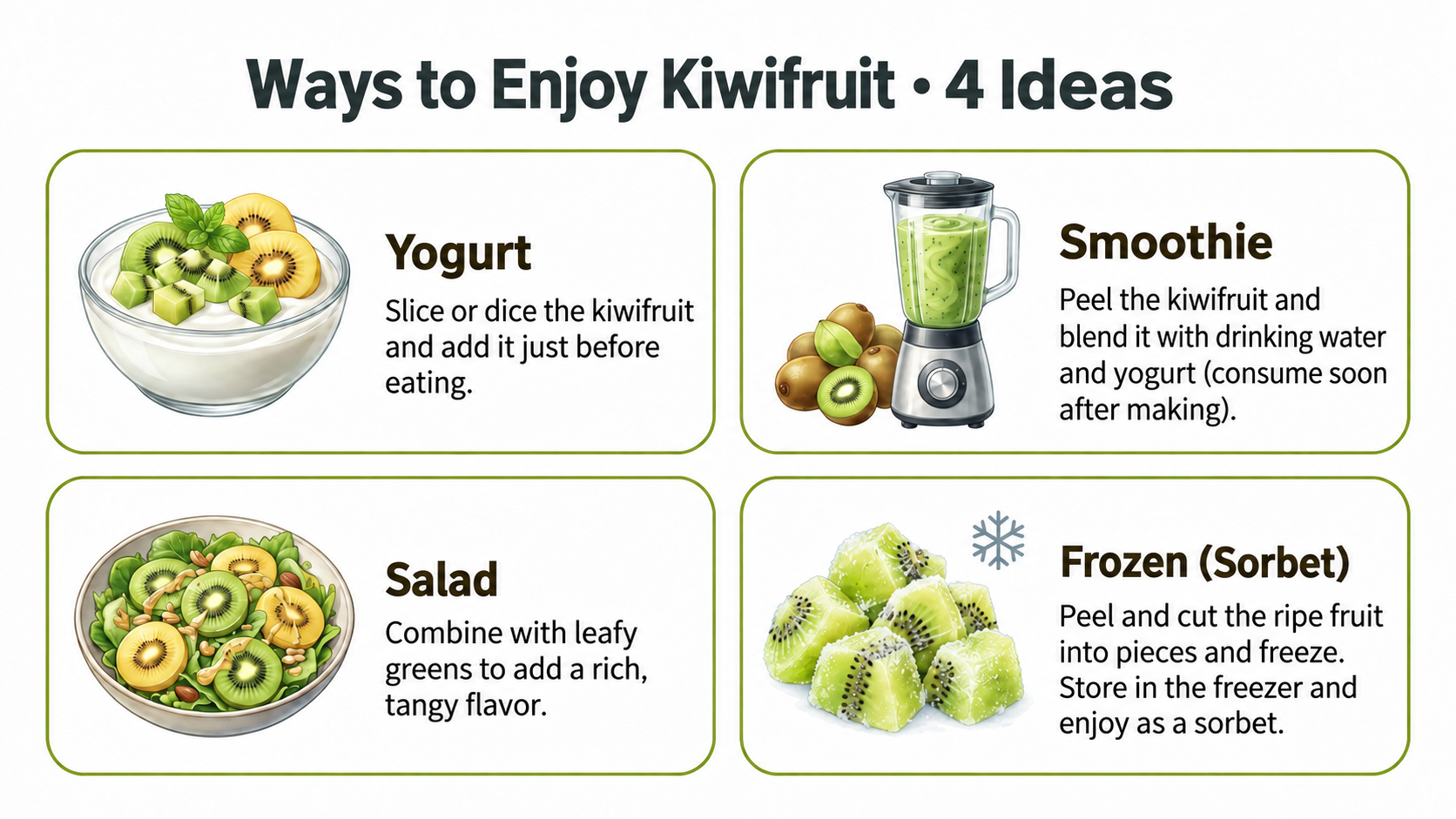
Fresh kiwifruit can interfere with gelatin setting and can soften dairy or protein-rich foods over time because of actinidin. Combine it shortly before serving when texture matters.
Storage: Whole, Cut, and Frozen
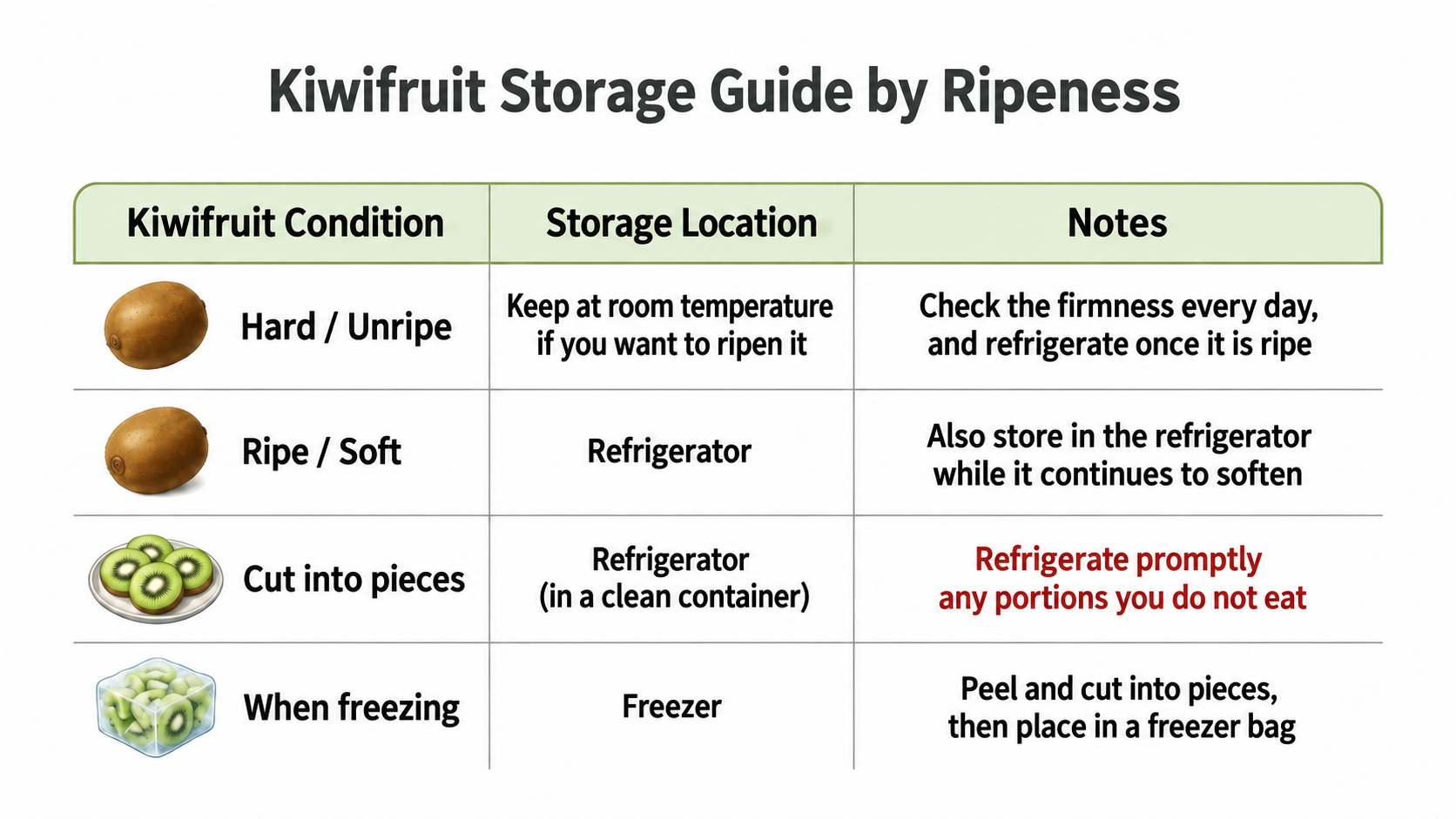
| Condition | Storage | Key point |
|---|---|---|
| Whole and still hard | Room temperature if you want it to ripen | Check daily; refrigerate when ripe |
| Whole and ripe | Refrigerator | It continues to change, so eat it soon |
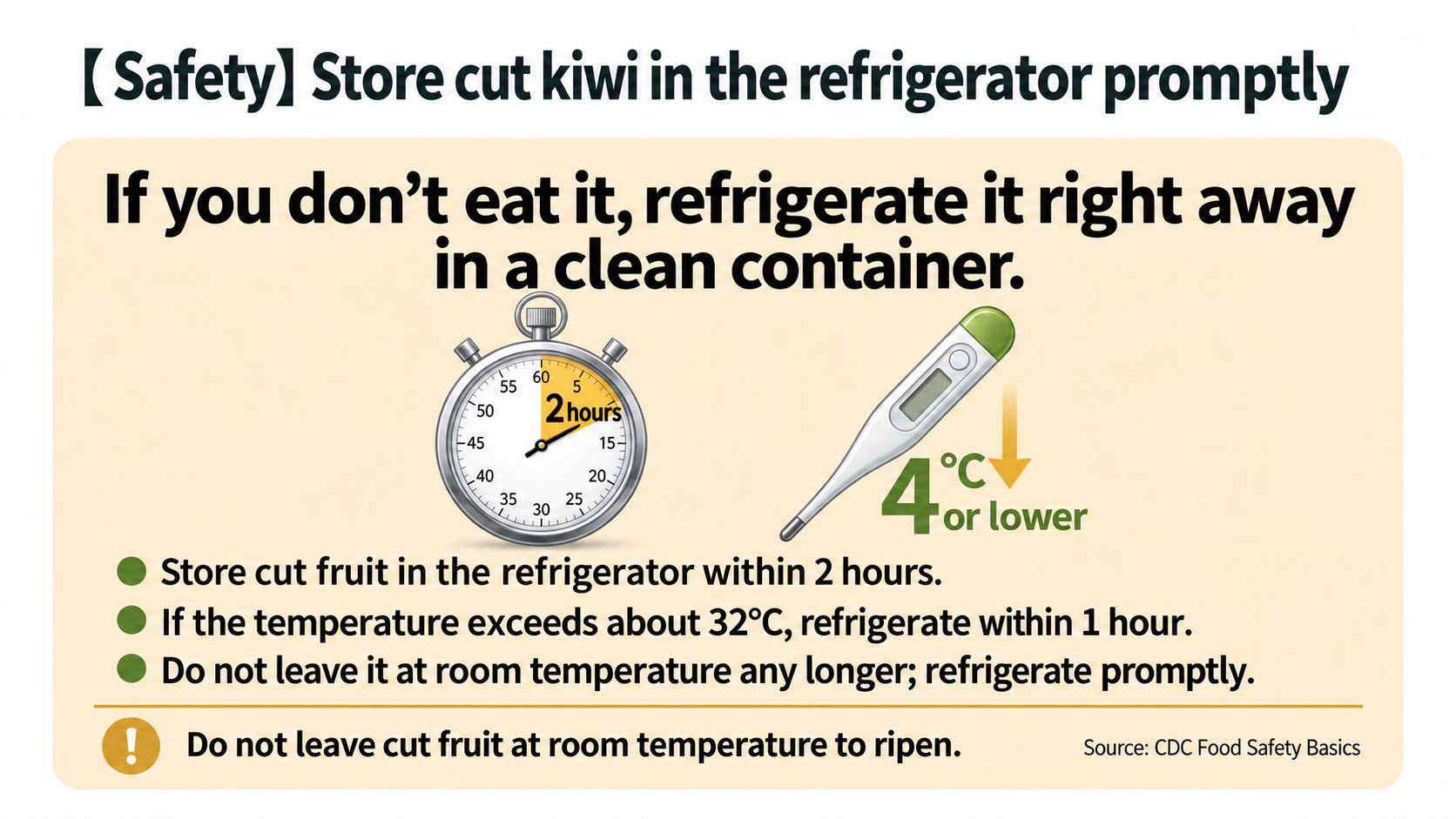
| Peeled or cut | Clean covered container in the refrigerator | Do not leave it at room temperature to “ripen” |
| Ripe fruit for freezing | Peel, cut, and pack in freezer-safe portions | Freeze in portions that are easy to remove |
Signs of spoilage
Softness alone does not prove spoilage. Separate normal ripeness from warning signs: visible mold, collapsing or rotten-looking flesh, an unusual unpleasant odor, damaged packaging, or leaking juice. Moldy or rotten fruit should be discarded rather than trimmed and eaten. Foodborne pathogens may not change appearance or smell, so time and temperature still matter.
Allergy and Serving Young Children
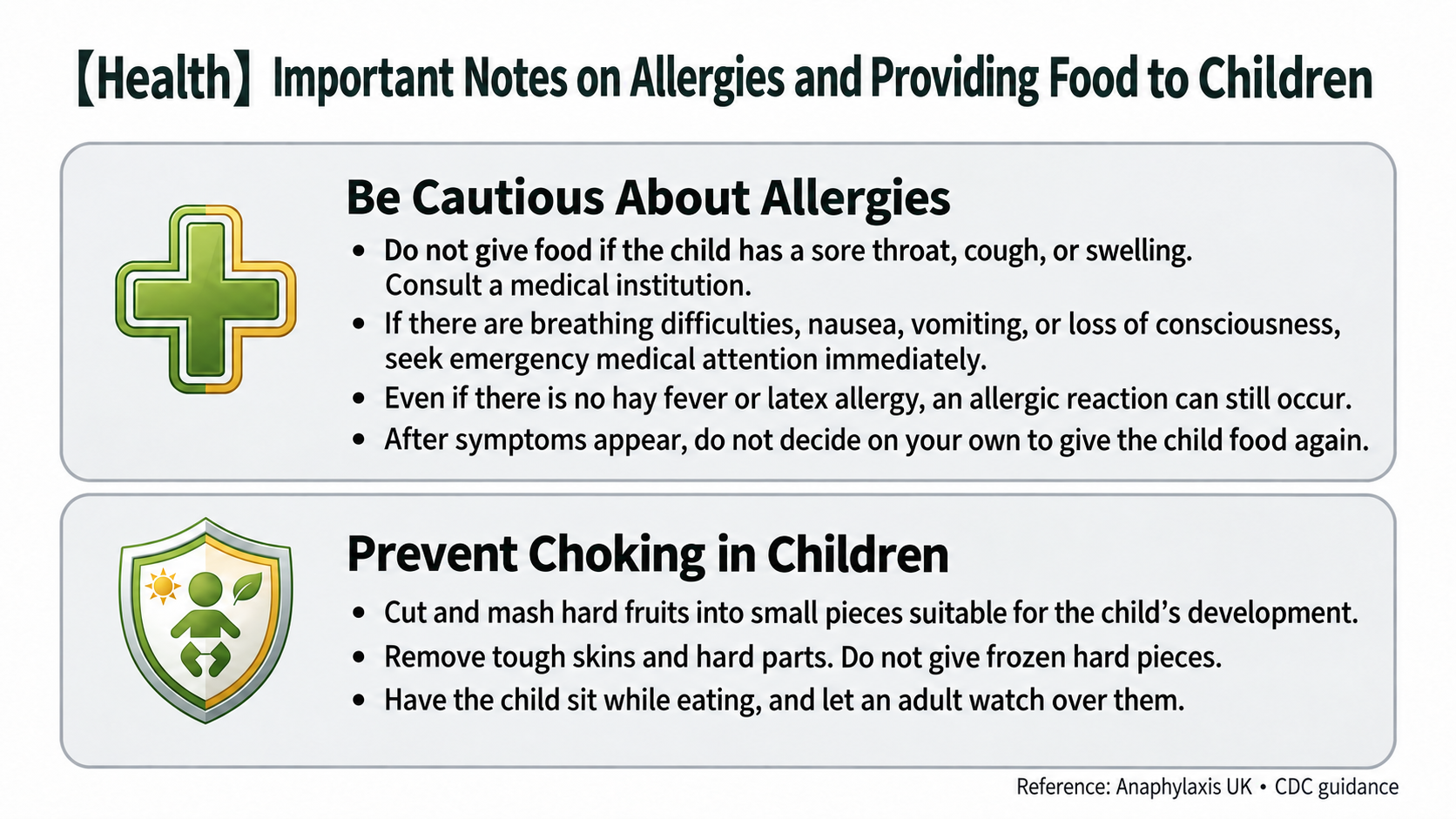
Kiwifruit can cause allergy symptoms. Stop eating and seek medical advice if the mouth or throat becomes itchy or swollen. Difficulty breathing or swallowing, sudden hoarseness, faintness, or loss of consciousness requires emergency help. Follow the prescribed plan if you carry an epinephrine auto-injector.
For young children, use ripe flesh and prepare a texture and size appropriate to their development. Remove the skin and hard pieces. Seat the child upright and supervise closely. Do not give a hard frozen chunk whole.
Can You Take Fresh Kiwifruit from Vietnam to Japan?
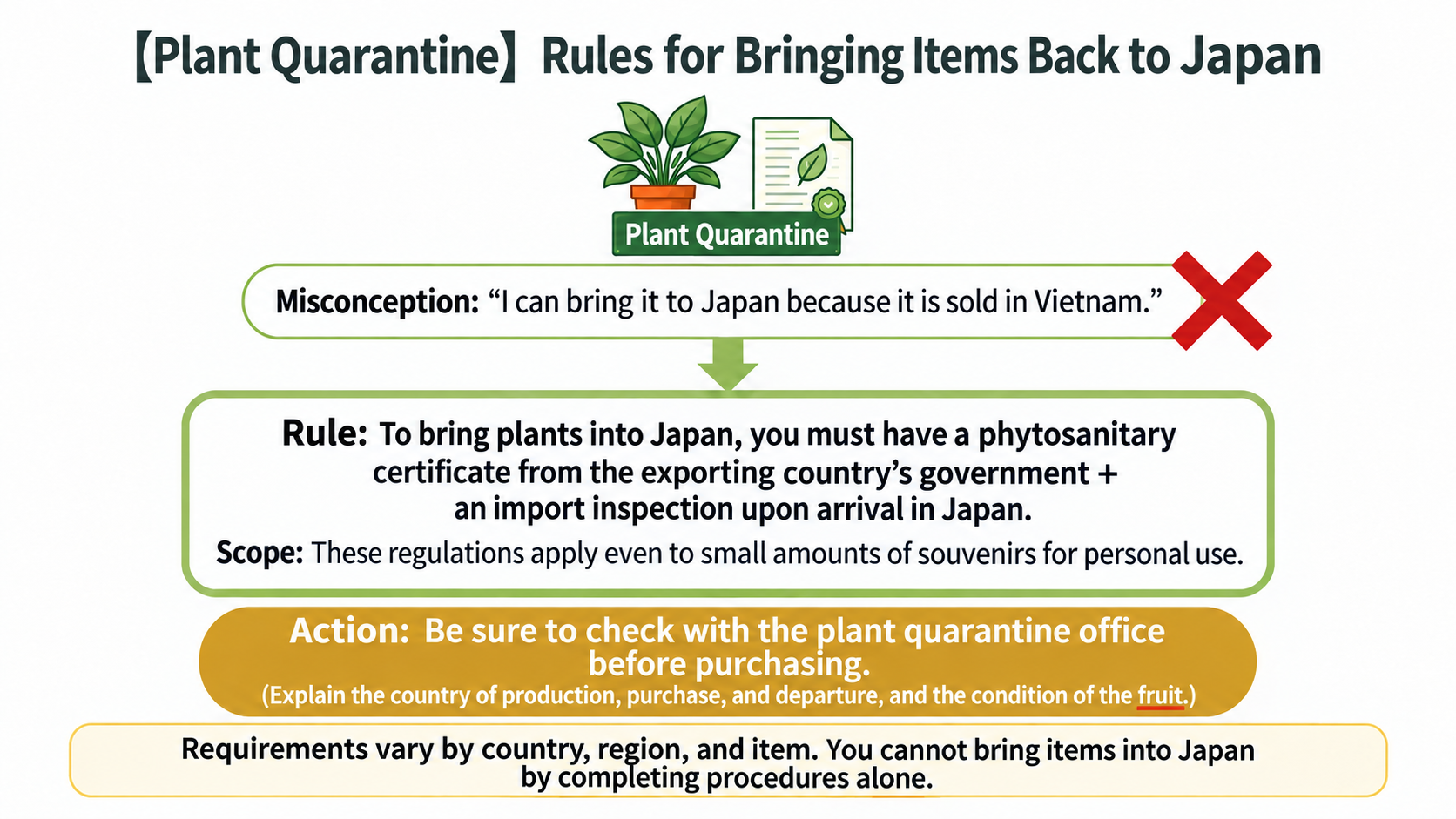
Buying fruit in Vietnam does not automatically mean it can be carried into Japan. Japan’s Plant Protection Station applies rules according to the fruit, country or region of origin, and condition. As a general rule, travelers need an official phytosanitary certificate from the exporting country and must pass import inspection on arrival. The rules also apply to small personal gifts.
Hanoi SunGold Review: TOMIBUNN Kim Mã
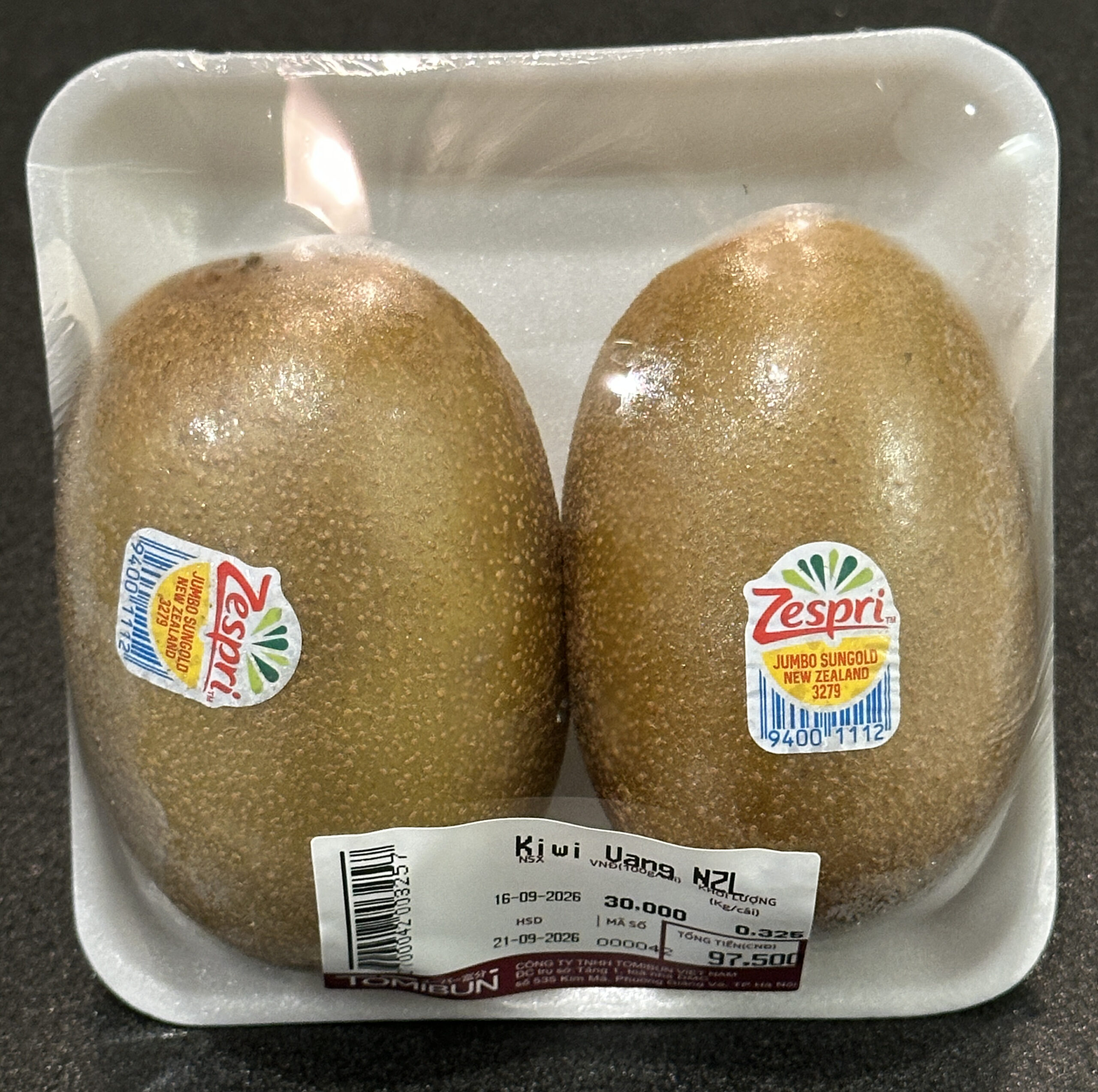
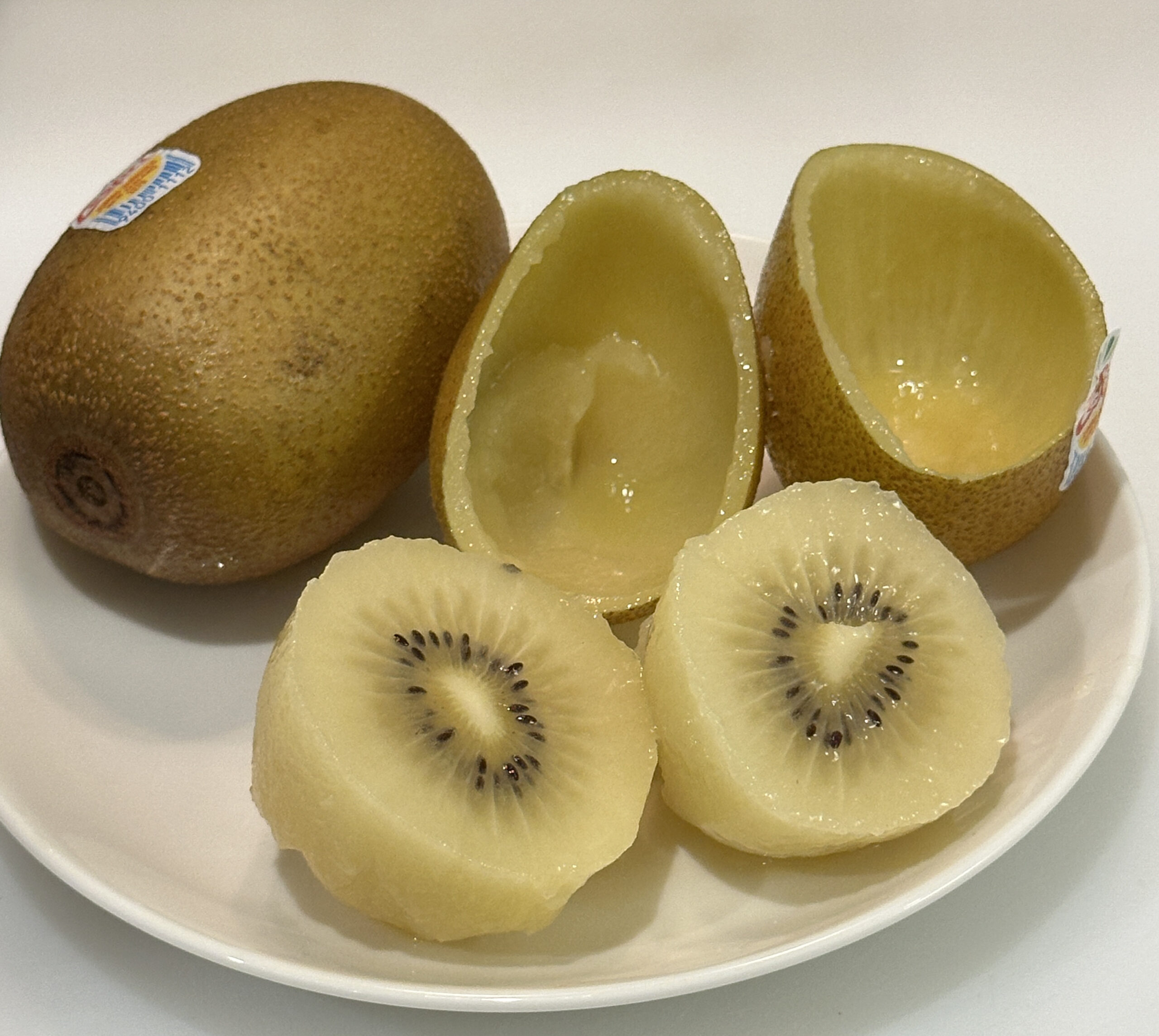
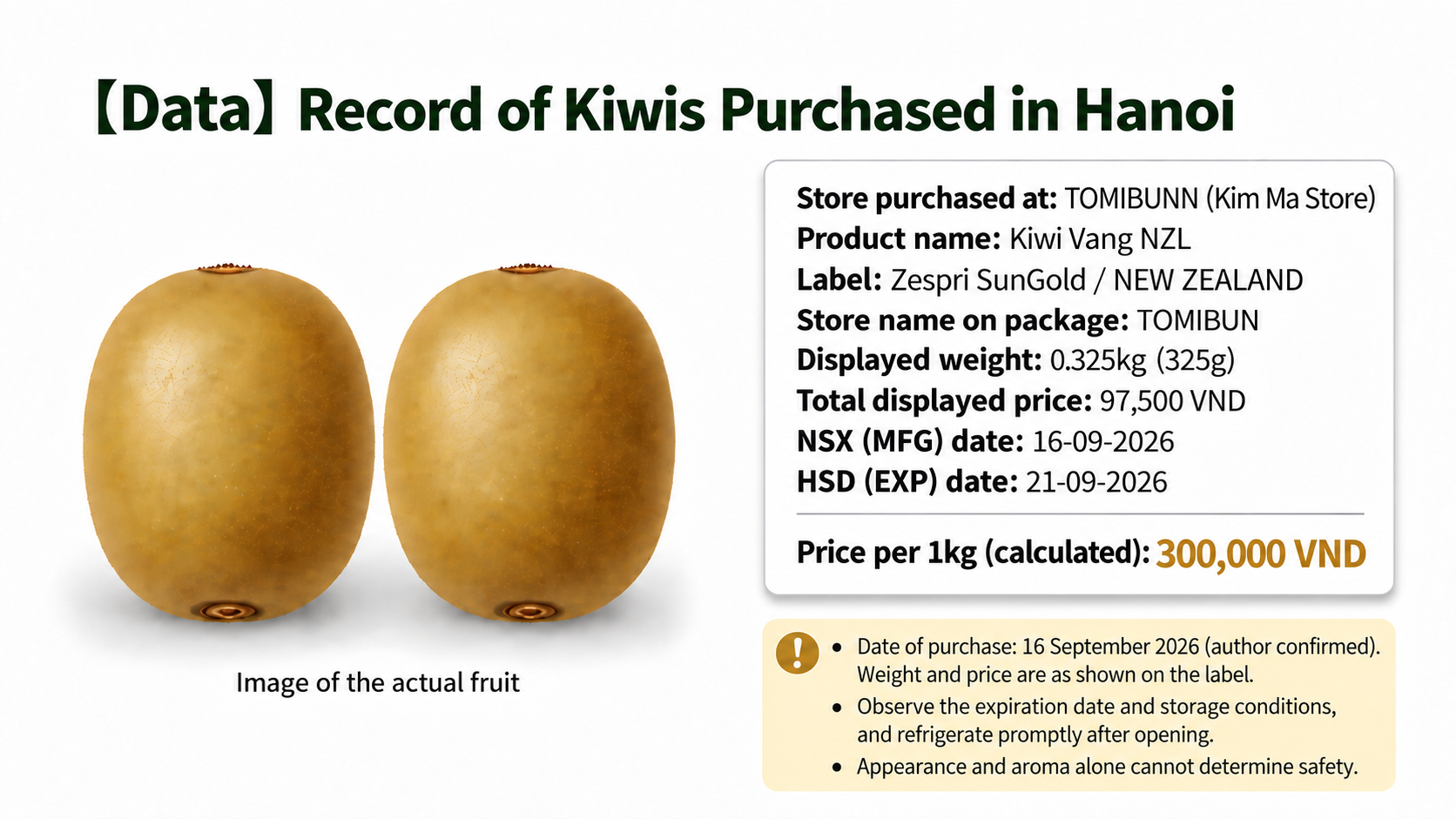
The fruit stickers identify Zespri SunGold and “NEW ZEALAND.” This was a New Zealand-origin product bought in Hanoi, not a record of Hanoi-grown kiwifruit. The author bought it on September 16, 2026, and tasted it on September 20.
| Label item | Record |
|---|---|
| Package product name | Kiwi Vang NZL |
| Fruit sticker | Zespri / SunGold / NEW ZEALAND |
| Brand and product | Zespri SunGold, based on the sticker |
| Package store name | TOMIBUN |
| Purchase store | TOMIBUNN, Kim Mã branch, confirmed by the author |
| Number of fruits | Two, visible in the photo |
| Displayed weight | 0.325 kg; not independently measured |
| Displayed total | VND 97,500 |
| NSX field | 16-09-2026 |
| HSD field | 21-09-2026 |
Tasting Notes, September 20, 2026
- Method: cut and scoop
- Flesh: yellow-green, typical of SunGold
- Sweetness: very sweet
- Acidity: slight
- Texture: smooth
- Ripeness: fully ripe and just right
- Would buy again: yes; the price felt reasonable and the texture was good
- Overall rating:
The fruit was very sweet with a little acidity and a smooth texture. It was fully ripe and tasted excellent. The author regularly sees this product at the supermarket and would buy it again.
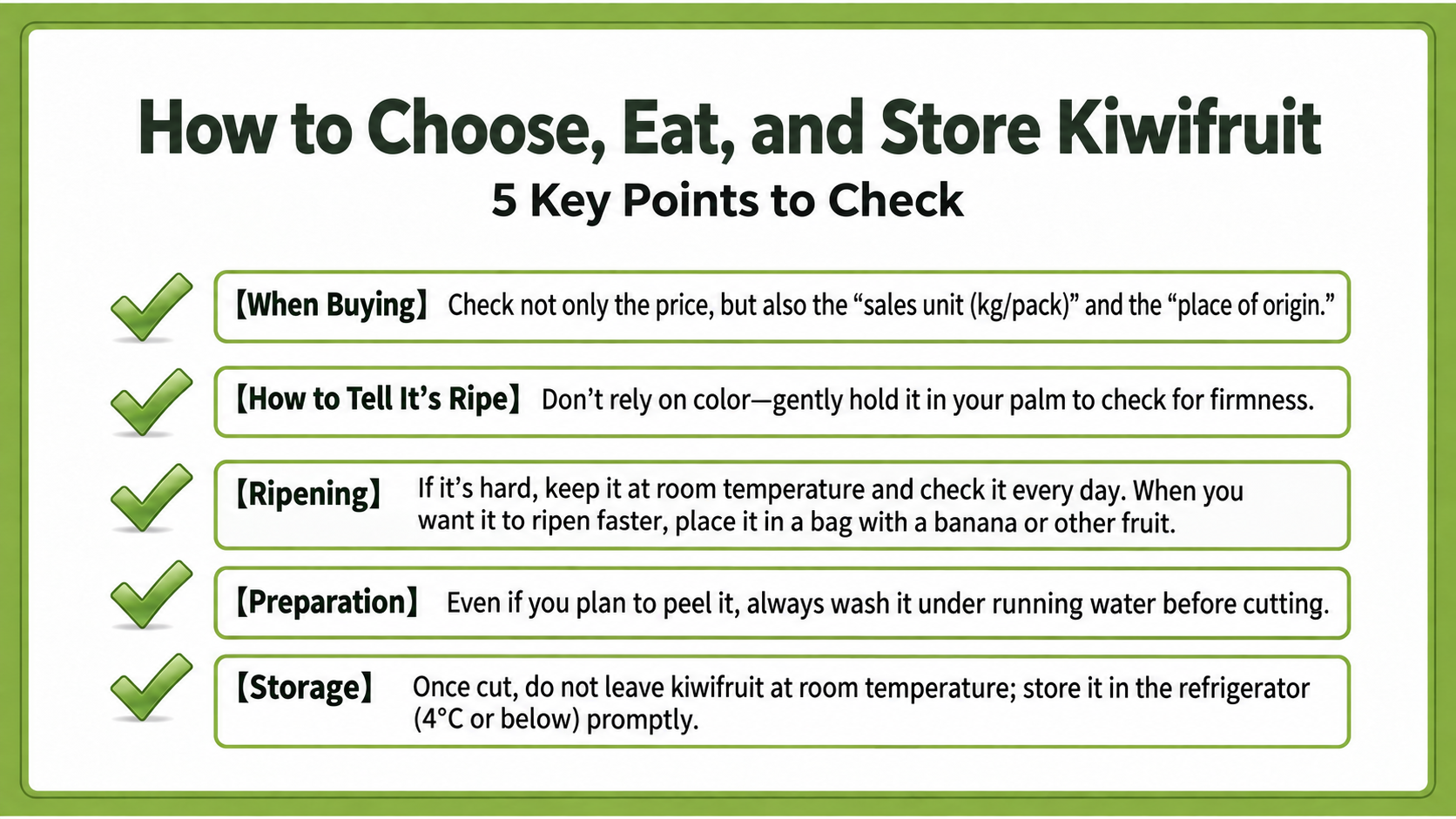
Five-Step Checklist
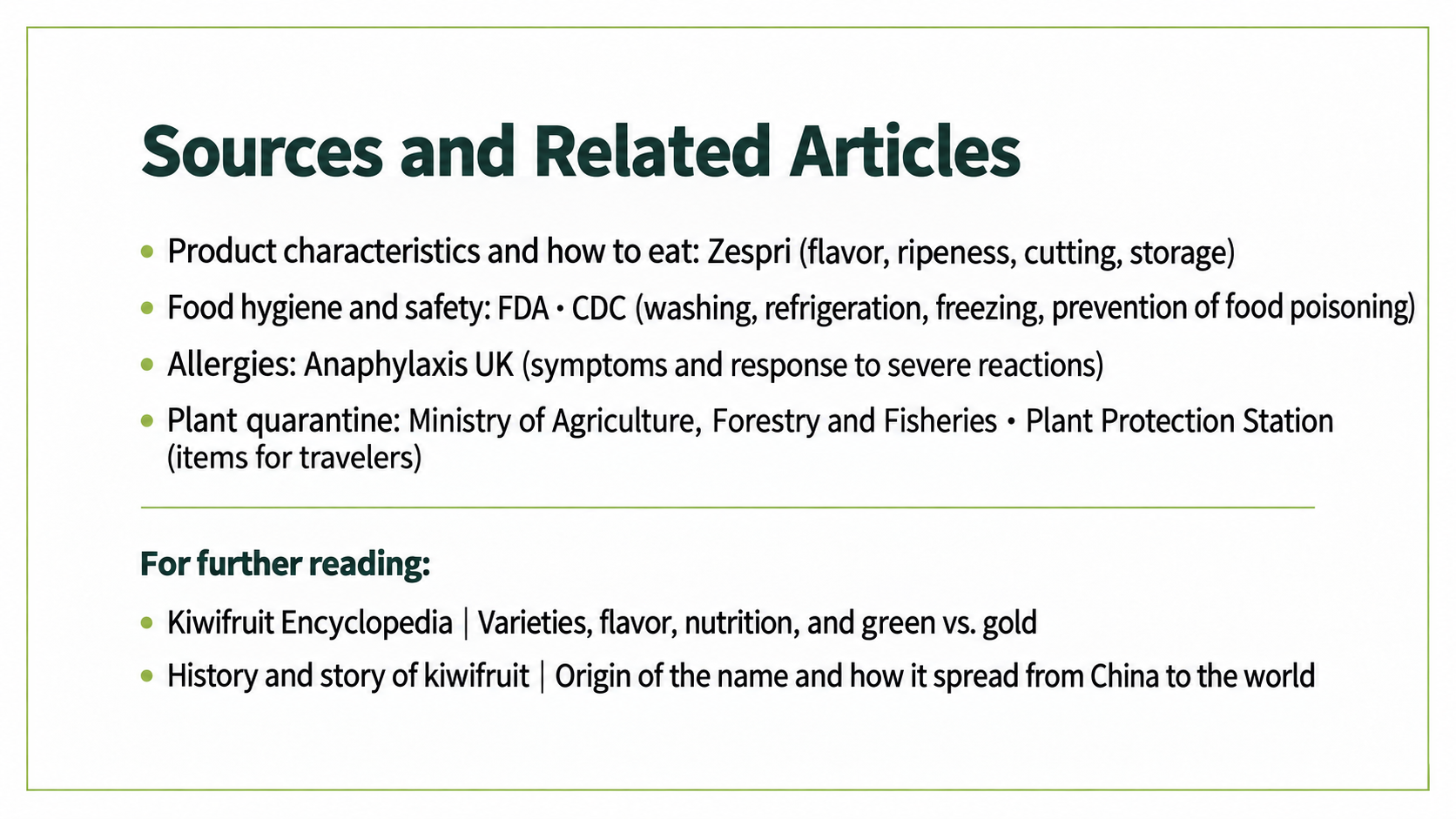
References
- Zespri: choosing and ripening kiwifruit (Japanese)
- Zespri FAQ (Japanese)
- FDA: Selecting and Serving Produce Safely
- FDA: Seven Tips for Cleaning Fruits and Vegetables
- CDC: Preventing Food Poisoning
- Anaphylaxis UK: Kiwifruit Allergy
- CDC: Choking Hazards
- Japan Plant Protection Station: Traveler Baggage (Japanese)
About the Author
Chuta is based in Hanoi, Vietnam, and buys fruit at local markets and supermarkets to share first-hand observations on flavor, seasons, selection, and preparation.
