Kiwifruit Guide: Types, Nutrition, Green vs. Gold
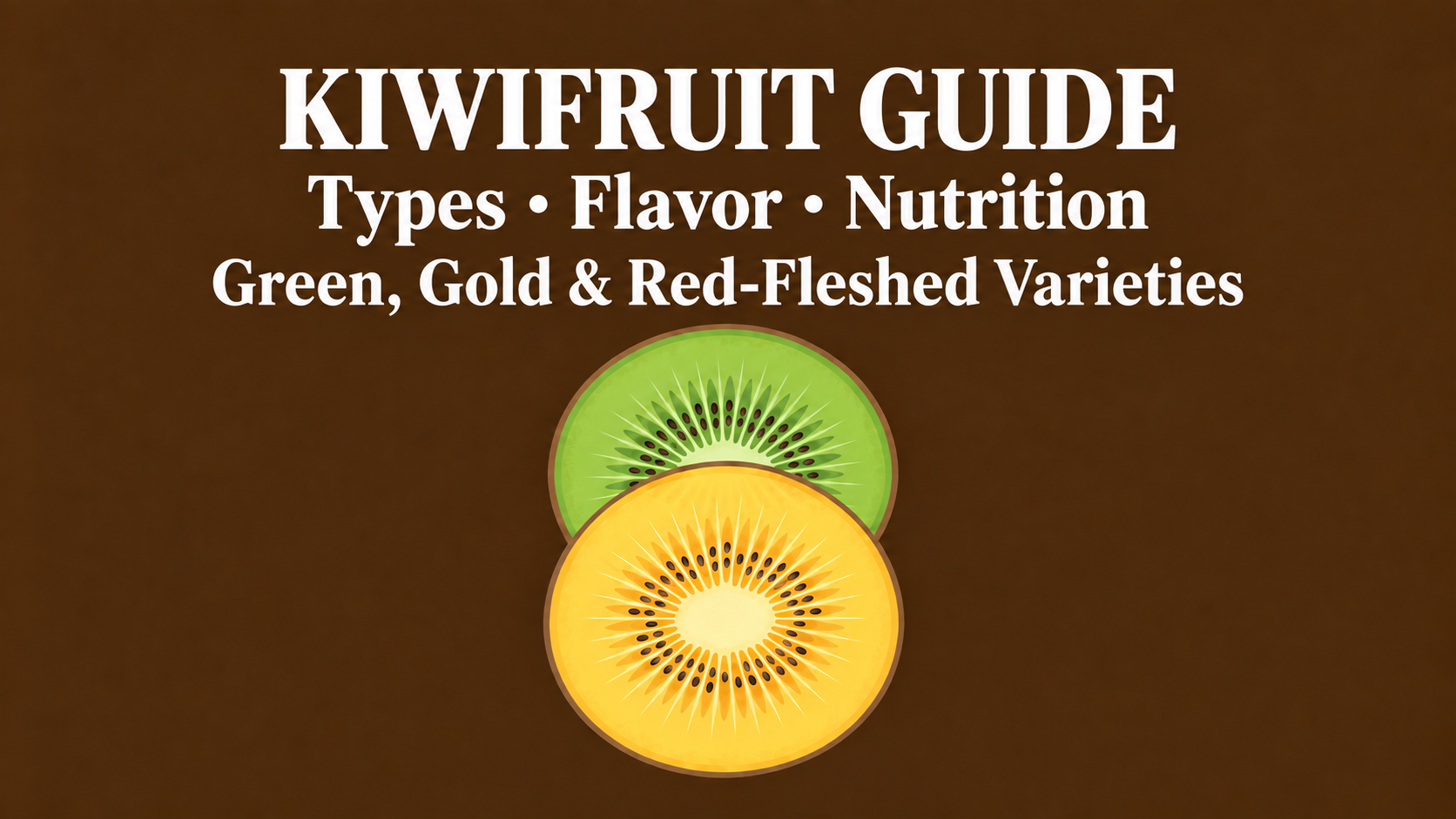
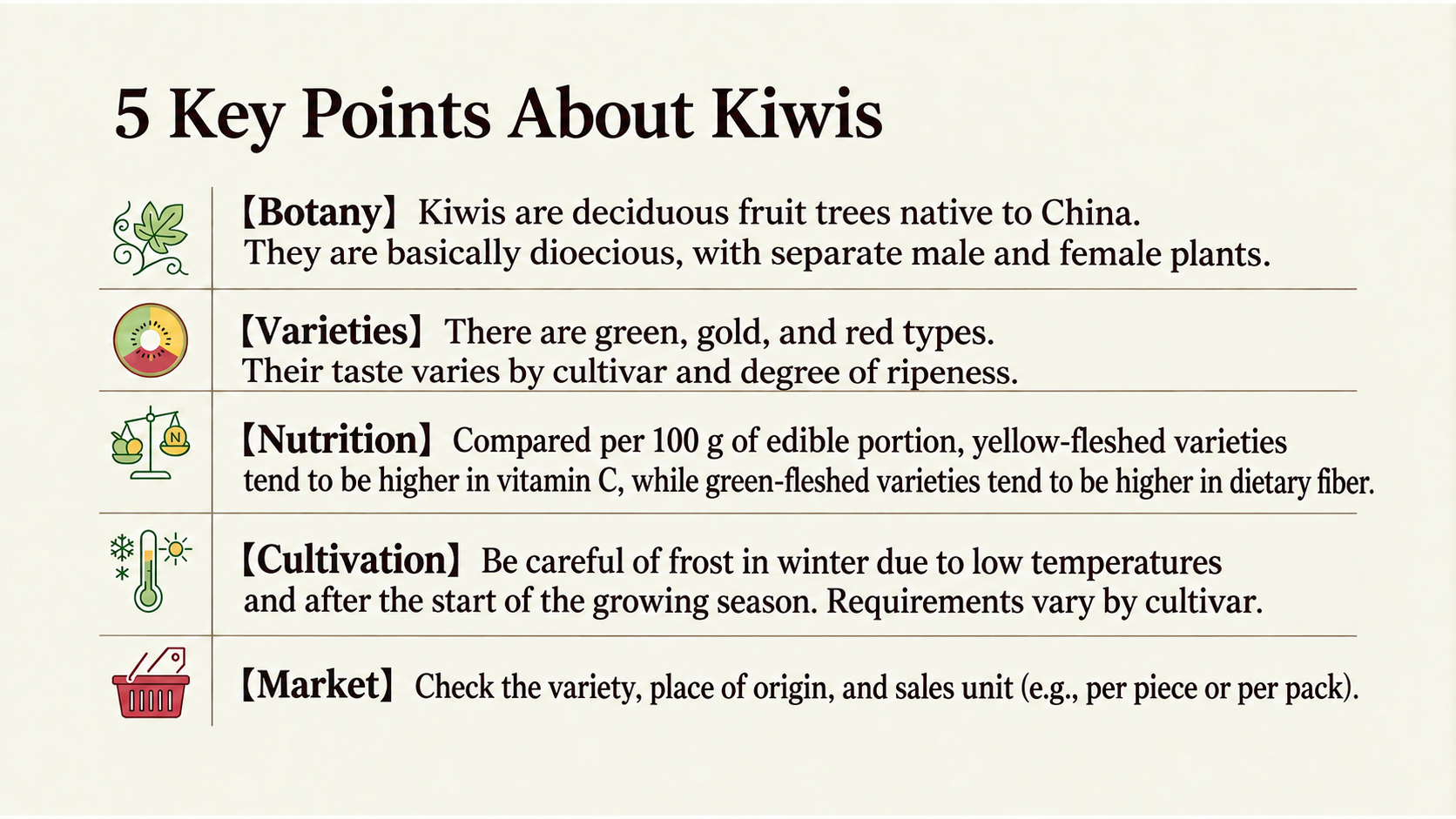
Kiwifruit originated in China. It grows on a woody vine, and its flesh may be green, yellow, or red-tinged. Flavor varies by variety and ripeness. In Japan’s food composition tables, yellow-fleshed kiwifruit contains more vitamin C per 100 g than green-fleshed fruit, while green-fleshed fruit contains more dietary fiber.
This guide explains kiwifruit types and flavor, nutrition and calories per 100 g, origin, growing conditions, seasonal supply, and labels seen in Vietnamese supermarkets. In Vietnamese, kiwifruit is called quả kiwi.
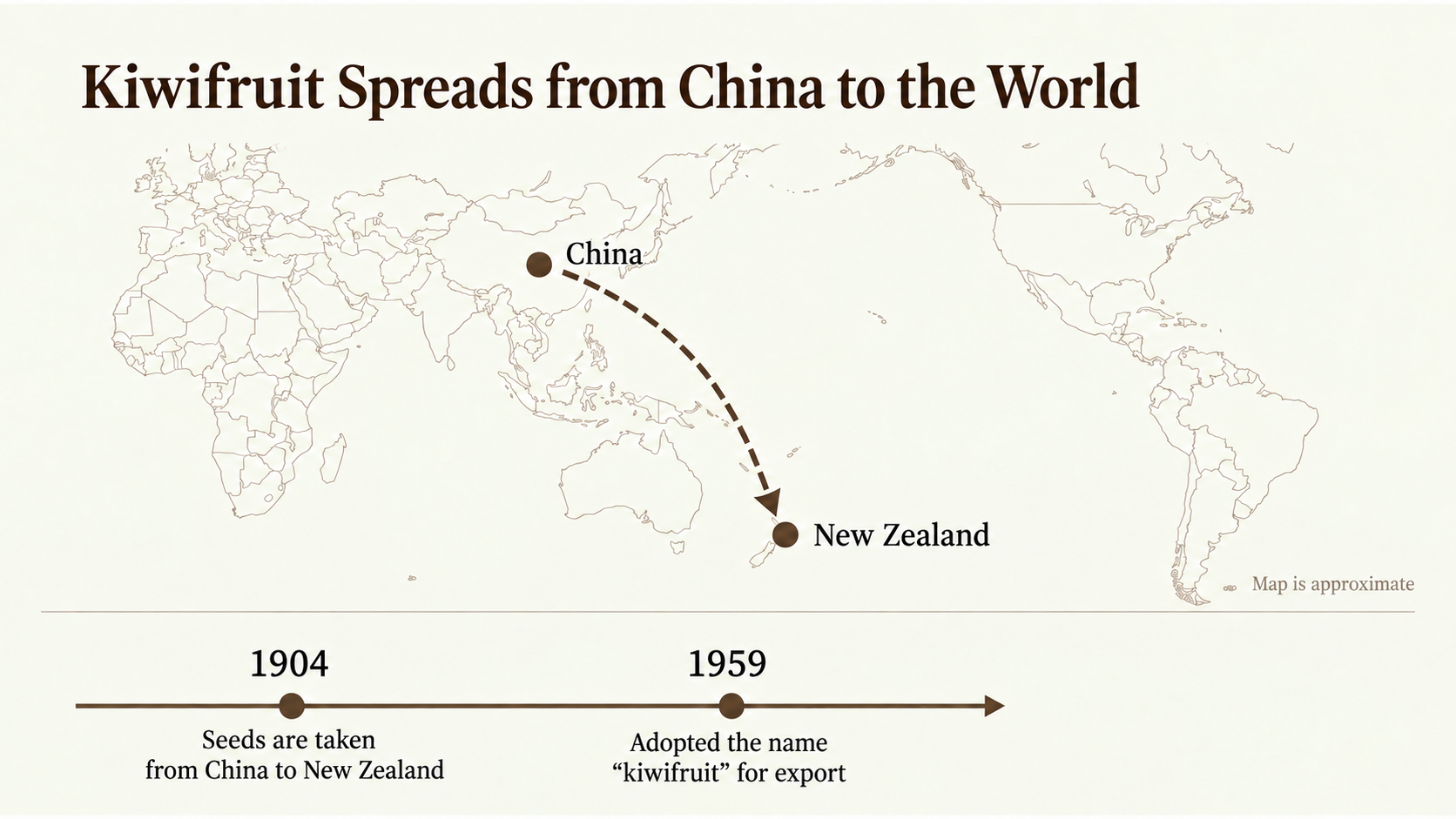
What Is Kiwifruit? Origin, Scientific Names, and Vietnamese Name
| English name | Kiwifruit |
|---|---|
| Vietnamese name | quả kiwi |
| Family and genus | Actinidiaceae, Actinidia |
| Main scientific names | Actinidia deliciosa; Actinidia chinensis |
| Origin | China |
| Growth habit | Deciduous woody vine |
| Flowers | Usually male and female flowers grow on separate plants |
| Notable components | Vitamin C, dietary fiber, potassium, and the protein-digesting enzyme actinidin |
How Kiwifruit Grows: Vines, Flowers, and Fruit
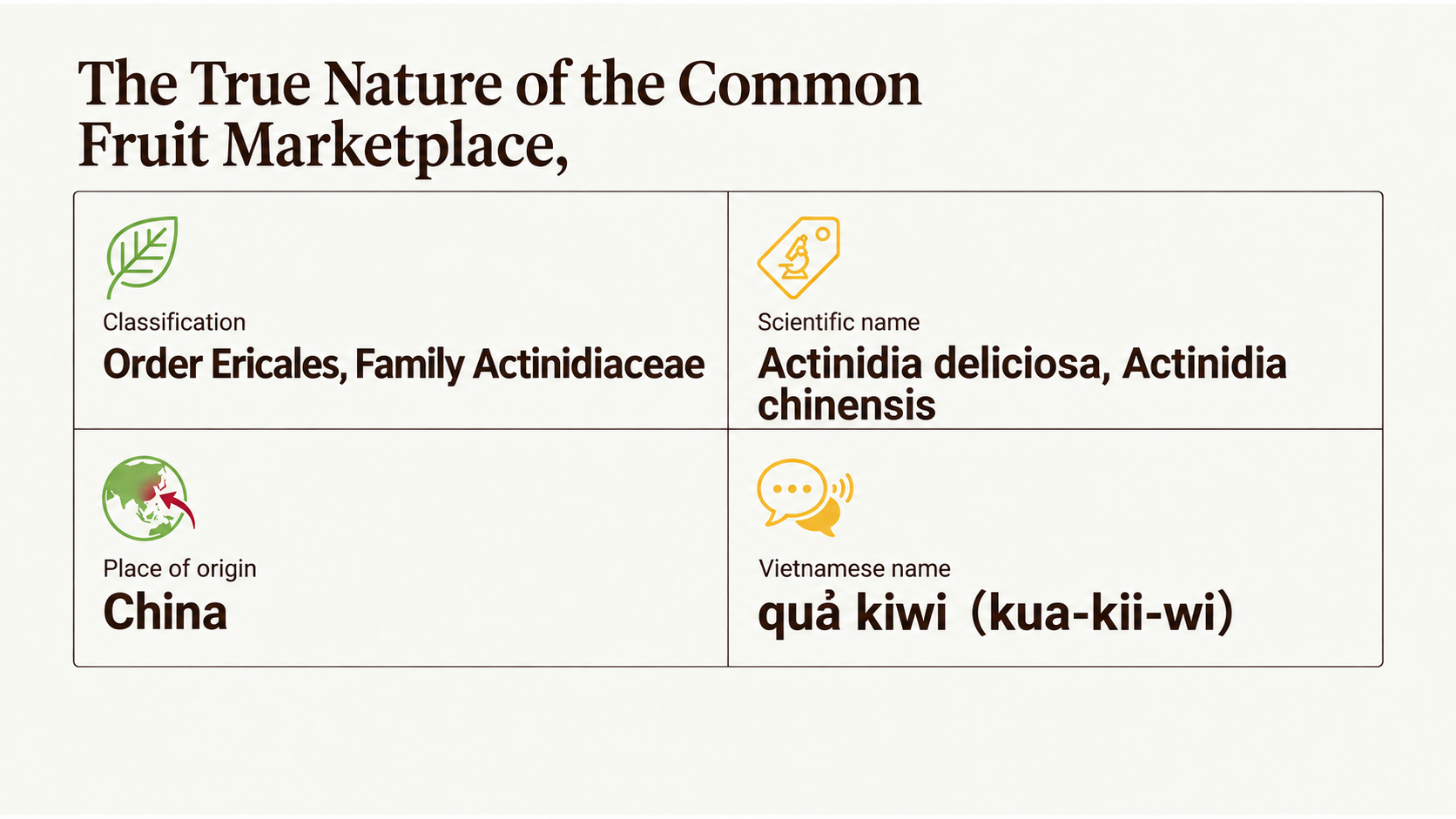
Kiwifruit sends out long vine-like shoots. In orchards, growers train the branches over trellises so the fruit can hang beneath a canopy. Most commercial kiwifruit is dioecious: male and female flowers occur on separate plants. Female flowers must receive compatible pollen, so orchards need male and female vines whose flowering periods overlap.
From China to New Zealand
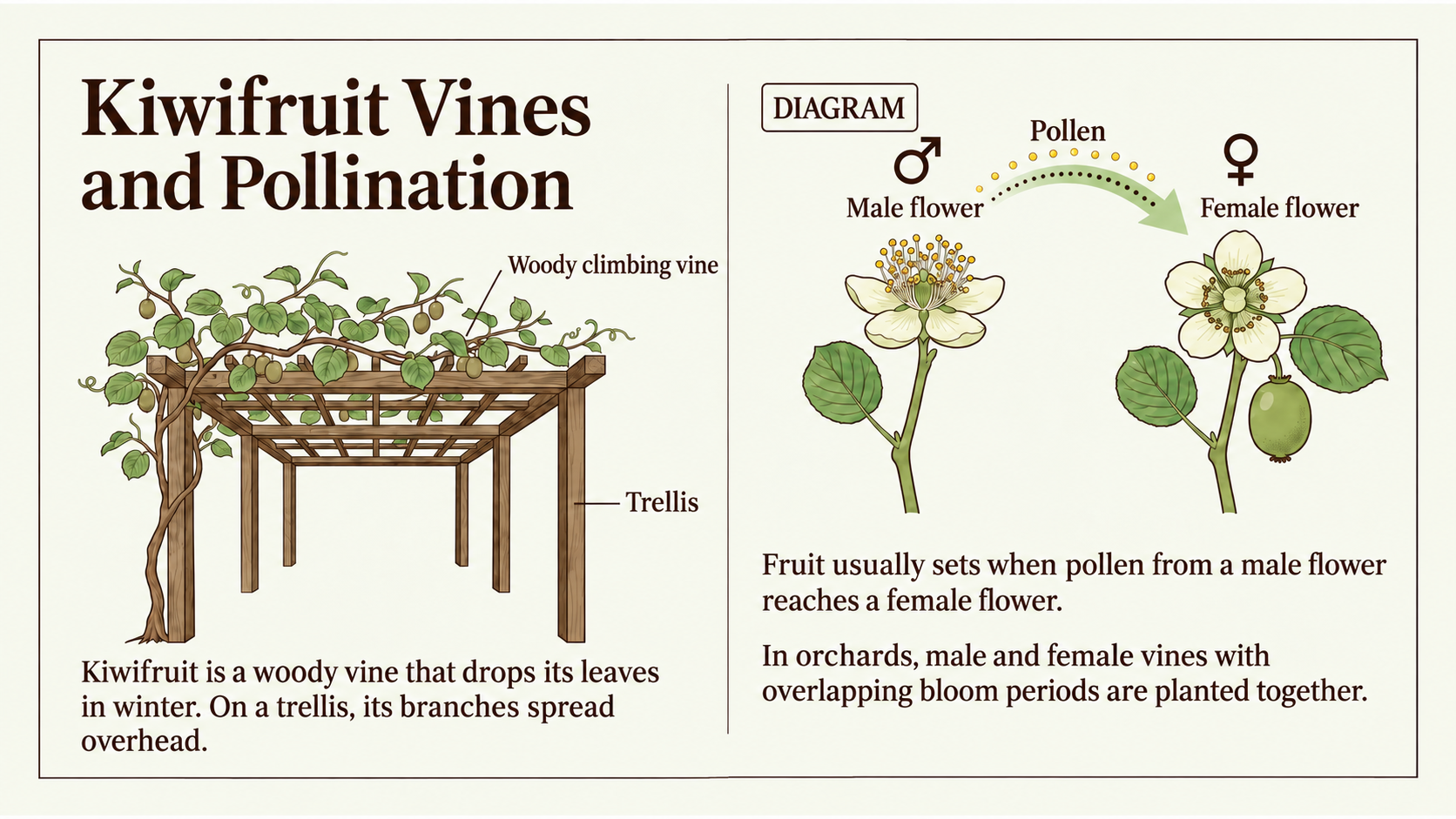
Although kiwifruit is closely associated with New Zealand, it is native to China. Seeds reached New Zealand in 1904. In 1959, exporters adopted the name “kiwifruit.” The fruit is now grown in countries including China, New Zealand, and Italy.
Green, Gold, and Red-Fleshed Kiwifruit
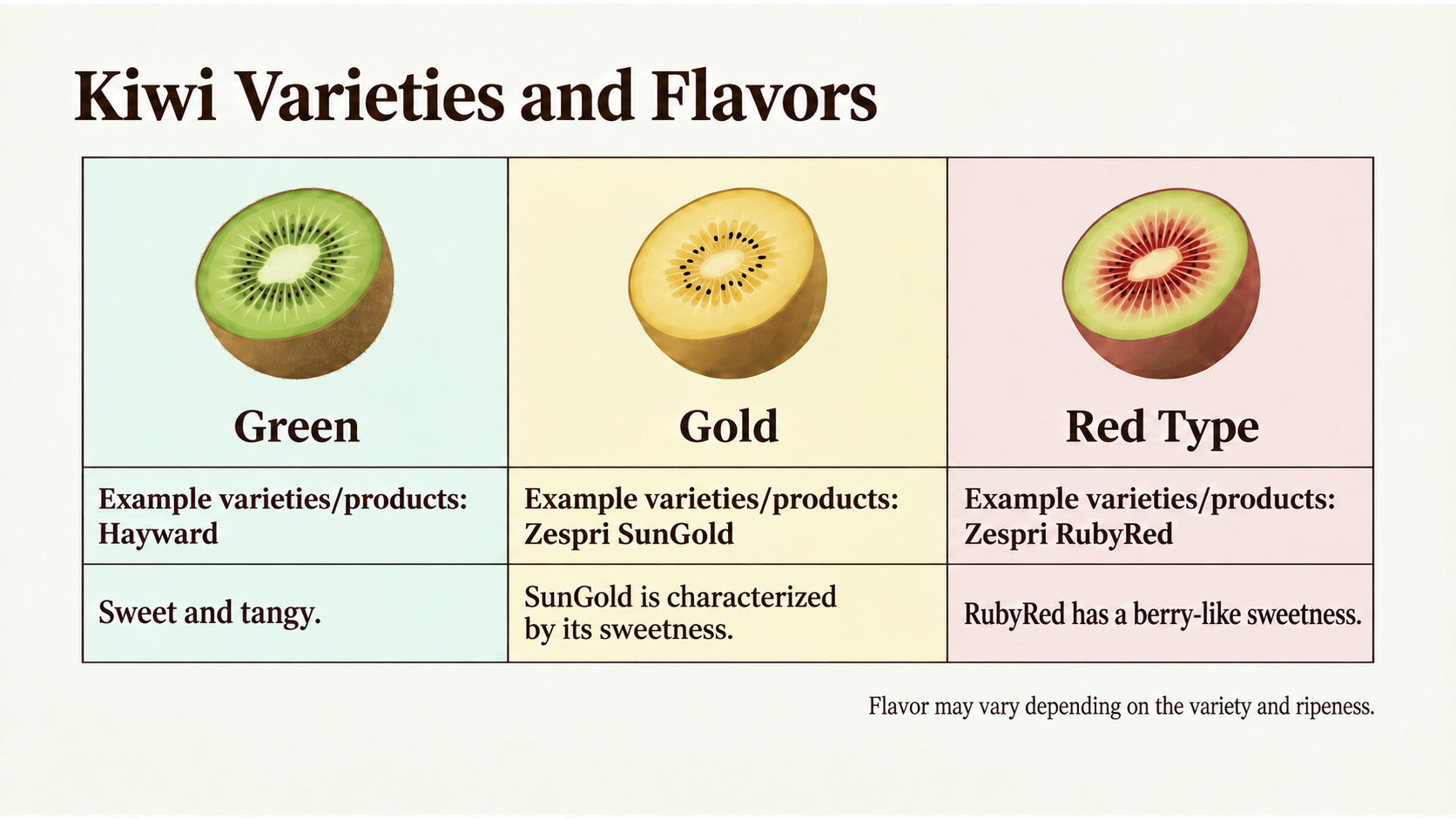
Flesh color is a useful starting point, but a color category is not the same as a cultivar or brand. “Gold” on a label does not mean every fruit is the same cultivar.
| Type | Examples | Flesh | Typical flavor description |
|---|---|---|---|
| Green | Hayward; Zespri Green | Green flesh with black seeds | A balance of sweetness and tartness |
| Gold | Zespri SunGold and others | Yellow flesh | SunGold is known for pronounced sweetness |
| Red-fleshed | Zespri RubyRed and others | Red or red-centered flesh | RubyRed is described as sweet with berry-like notes |
Kiwifruit Nutrition and Calories per 100 g
The figures below are for 100 g of edible raw fruit, excluding the skin and other inedible parts. They come from Japan’s Standard Tables of Food Composition.
| Nutrient per 100 g, raw | Green-fleshed | Yellow-fleshed |
|---|---|---|
| Energy | 51 kcal | 63 kcal |
| Water | 84.7 g | 83.2 g |
| Carbohydrate | 13.4 g | 14.9 g |
| Dietary fiber | 2.6 g | 1.4 g |
| Potassium | 300 mg | 300 mg |
| Vitamin C | 71 mg | 140 mg |
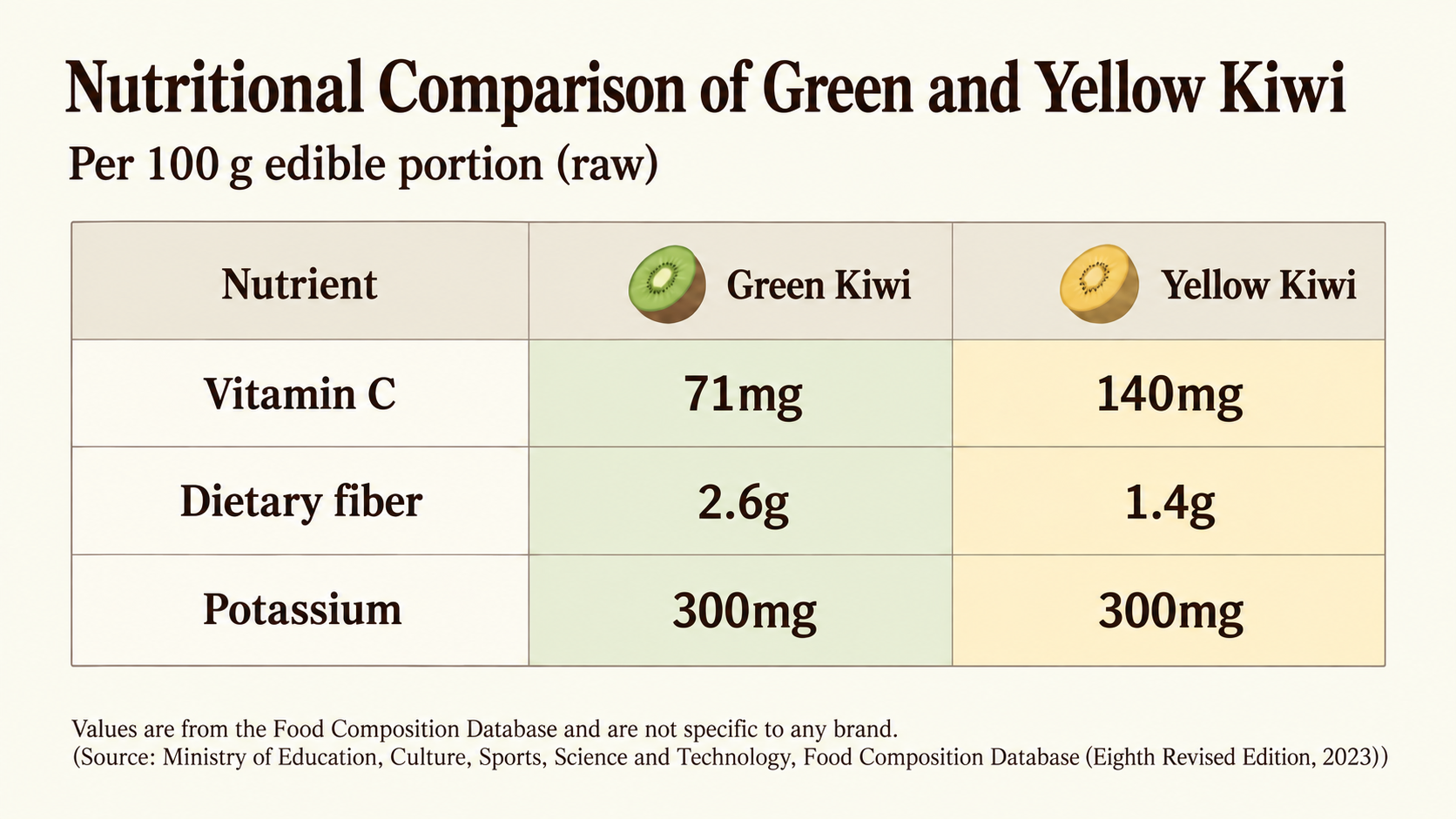
These standard values do not necessarily match every piece of fruit or every branded product.
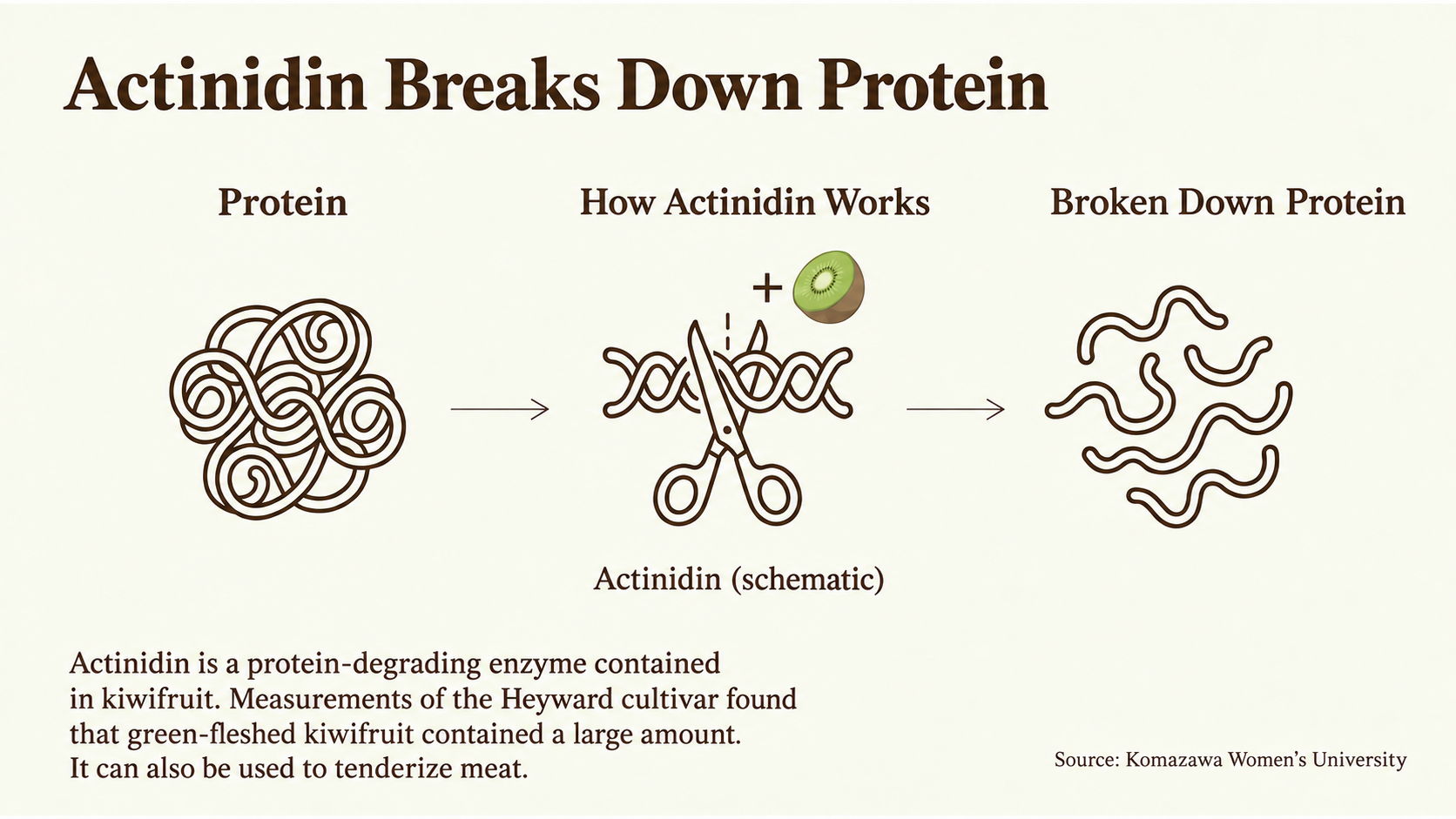
Actinidin: a protein-digesting enzyme
Kiwifruit contains actinidin, an enzyme that breaks down proteins. Juice or mashed flesh can therefore be used to tenderize meat before cooking. Research summarized by Komazawa Women’s University notes that actinidin in Hayward kiwifruit is distributed through the green flesh, rather than being concentrated only just beneath the skin.
Growing Conditions: Winter Chill and Spring Frost
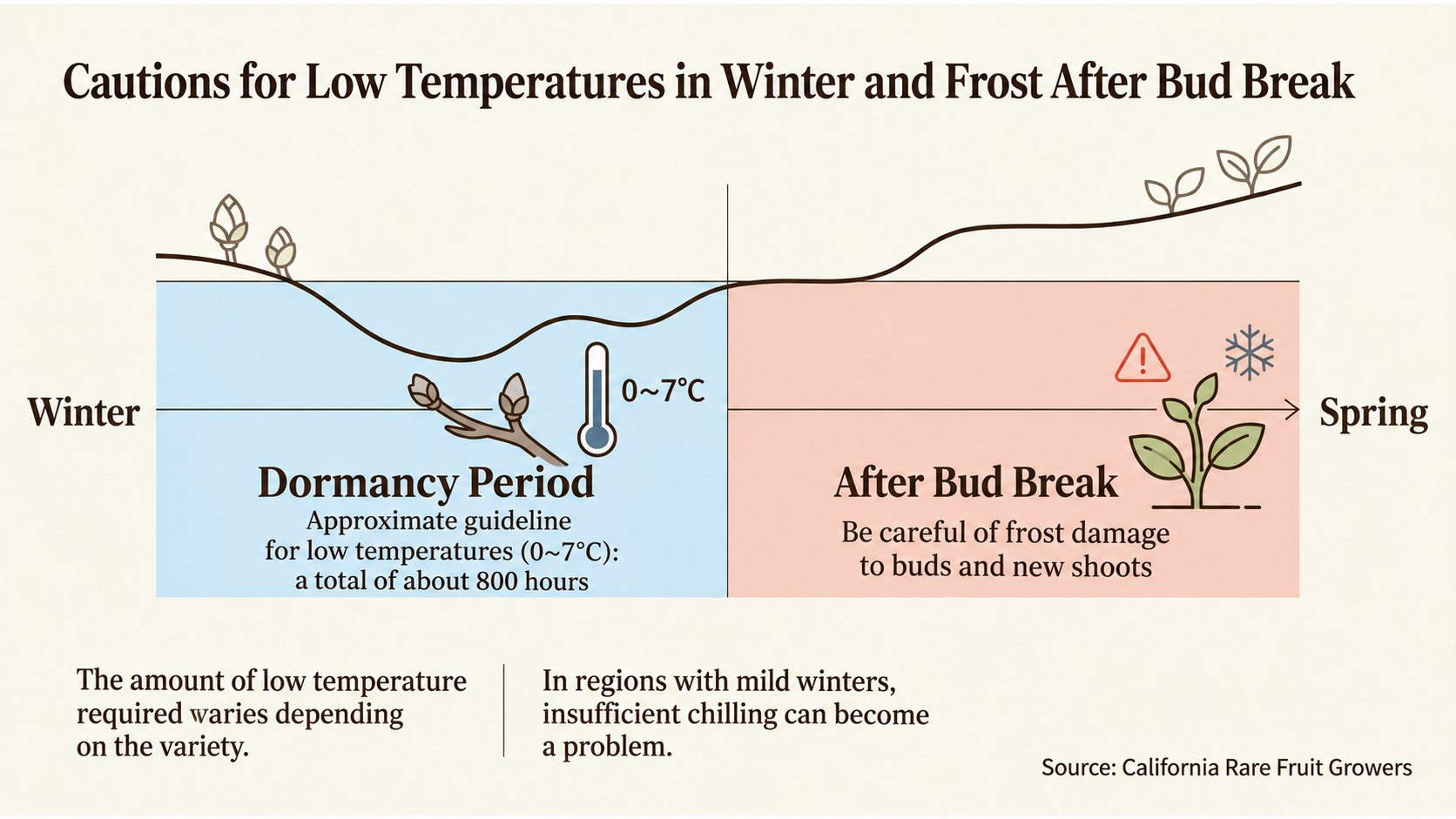
Winter chill helps kiwifruit complete dormancy. California Rare Fruit Growers gives Hayward a guide of roughly 800 accumulated hours at about 0–7°C. This is a cultivar-specific reference, not a universal requirement. Once buds begin growing, freezing temperatures can damage tender new growth.
Season and Supply: Why Origin Matters
There is no single global “kiwifruit month.” New Zealand is in the Southern Hemisphere, while Italy, France, Greece, Korea, and Japan are in the Northern Hemisphere. Harvest, storage, shipping, and retail periods are also different. A harvest season is therefore not identical to the period when fruit appears in Vietnamese stores.
A Zespri supply update from December 2025 described the New Zealand selling season as nearing its end while Northern Hemisphere sales were beginning. The company presents Northern Hemisphere production as part of its effort to supply major markets throughout the year. Actual availability still changes by year, location, retailer, cultivar, and inventory.
| Check at the store | Why it matters |
|---|---|
| Country of origin | The source country may change with the season. |
| Cultivar or product name | Green, gold, and red products may have different supply windows. |
| Packing date, use-by date, and storage instructions | Harvest timing alone cannot tell you the condition of the fruit in front of you. |
Kiwifruit in Vietnam: Imported Fruit and Retail Labels
Look for the word kiwi when shopping in Vietnam. On September 12, 2026, the author recorded the following New Zealand-origin labels at Lotte Mart inside Lotte Mall.
| Product seen | Origin shown | Sales unit |
|---|---|---|
| Green kiwifruit | New Zealand | Per kilogram |
| Gold kiwifruit | New Zealand | Per kilogram |
| Ripe gold kiwifruit | New Zealand | Pack of four |
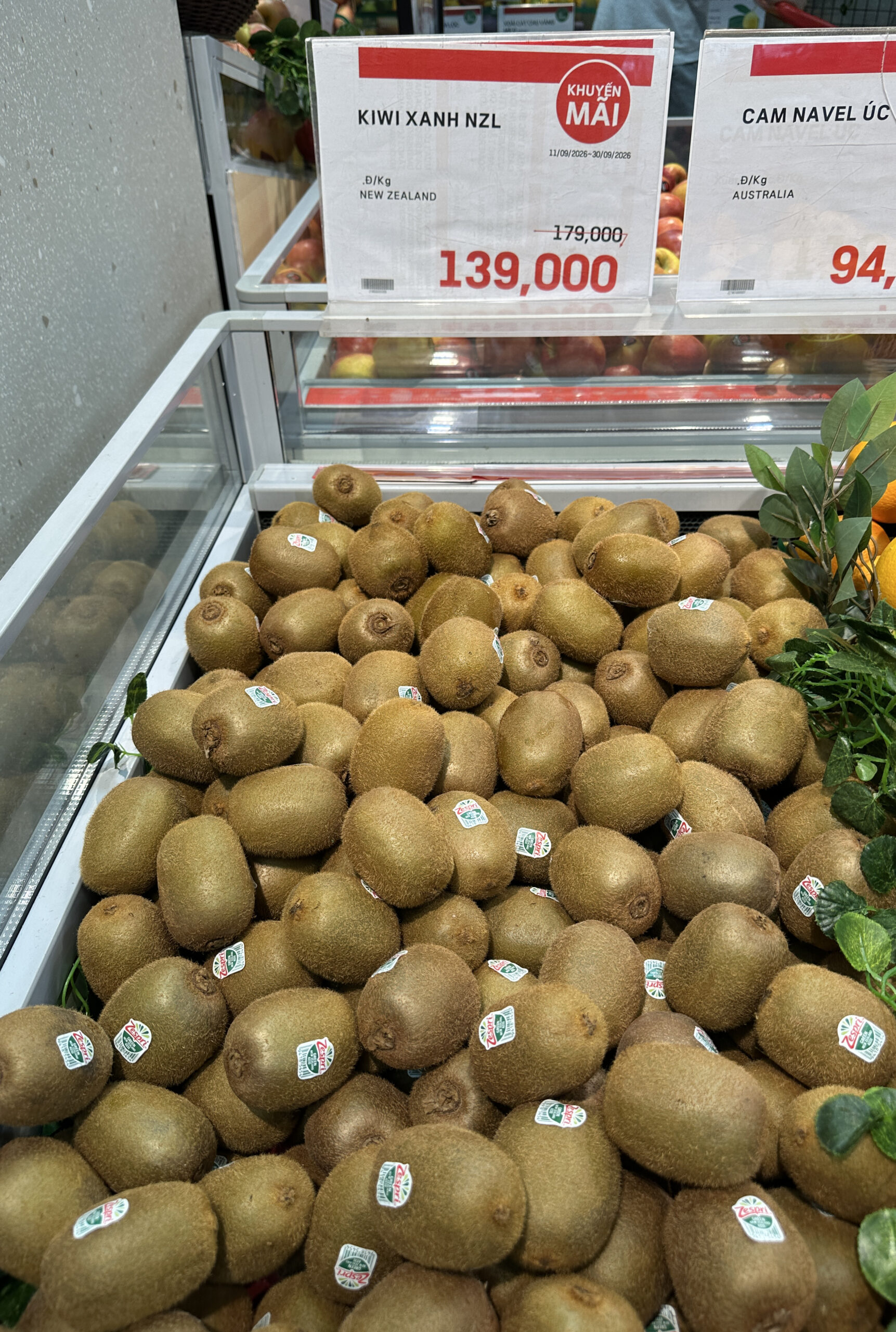
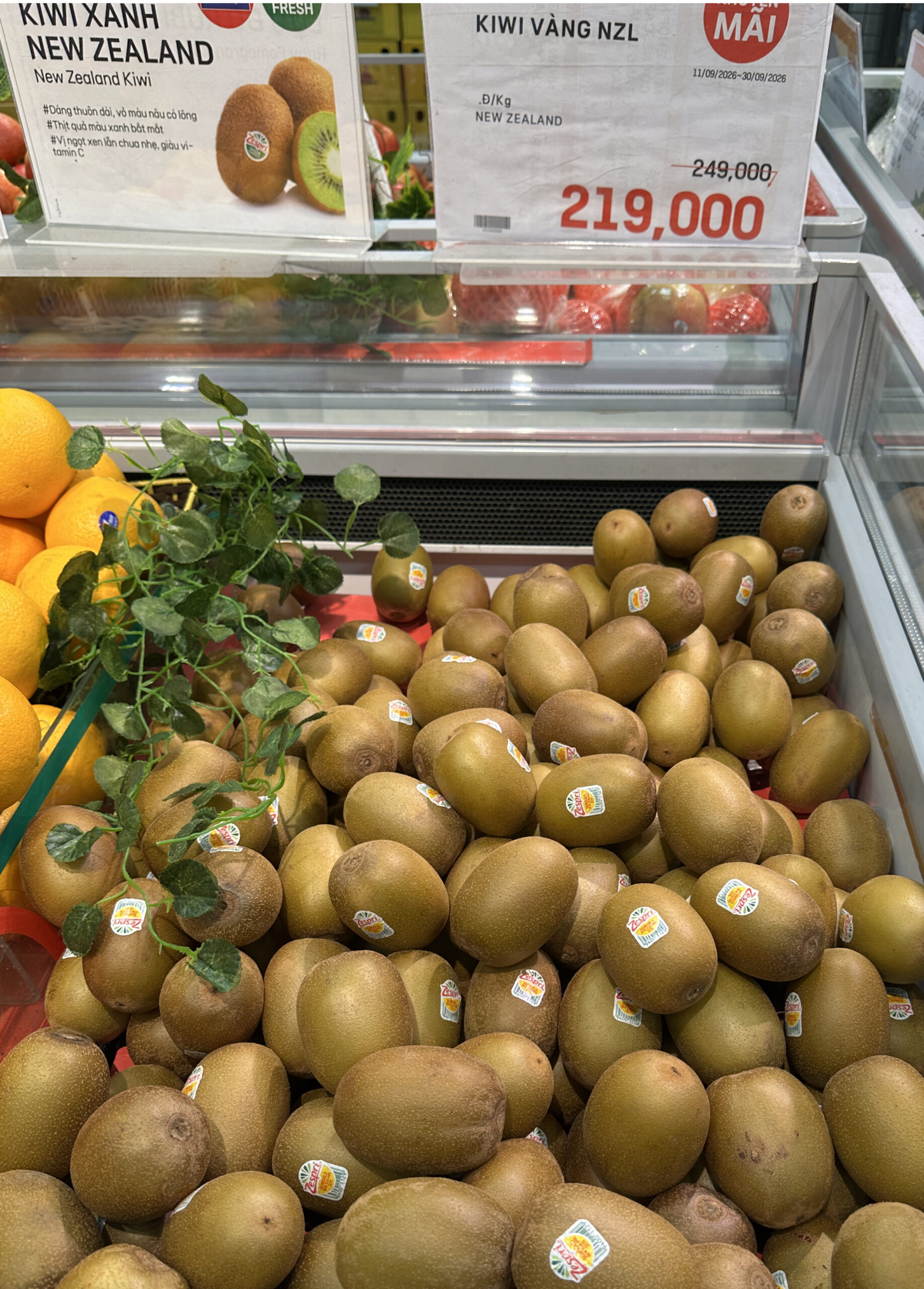
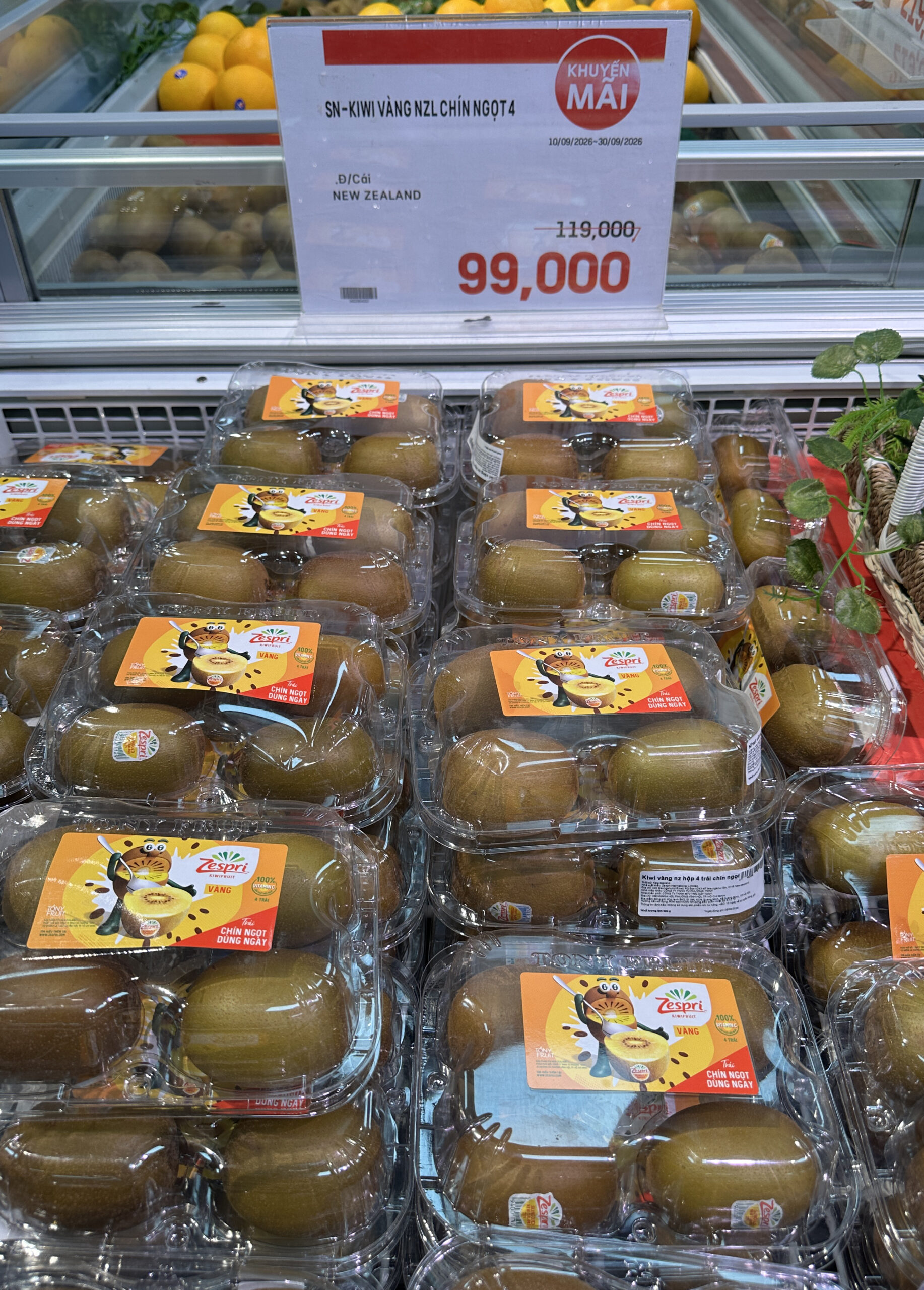
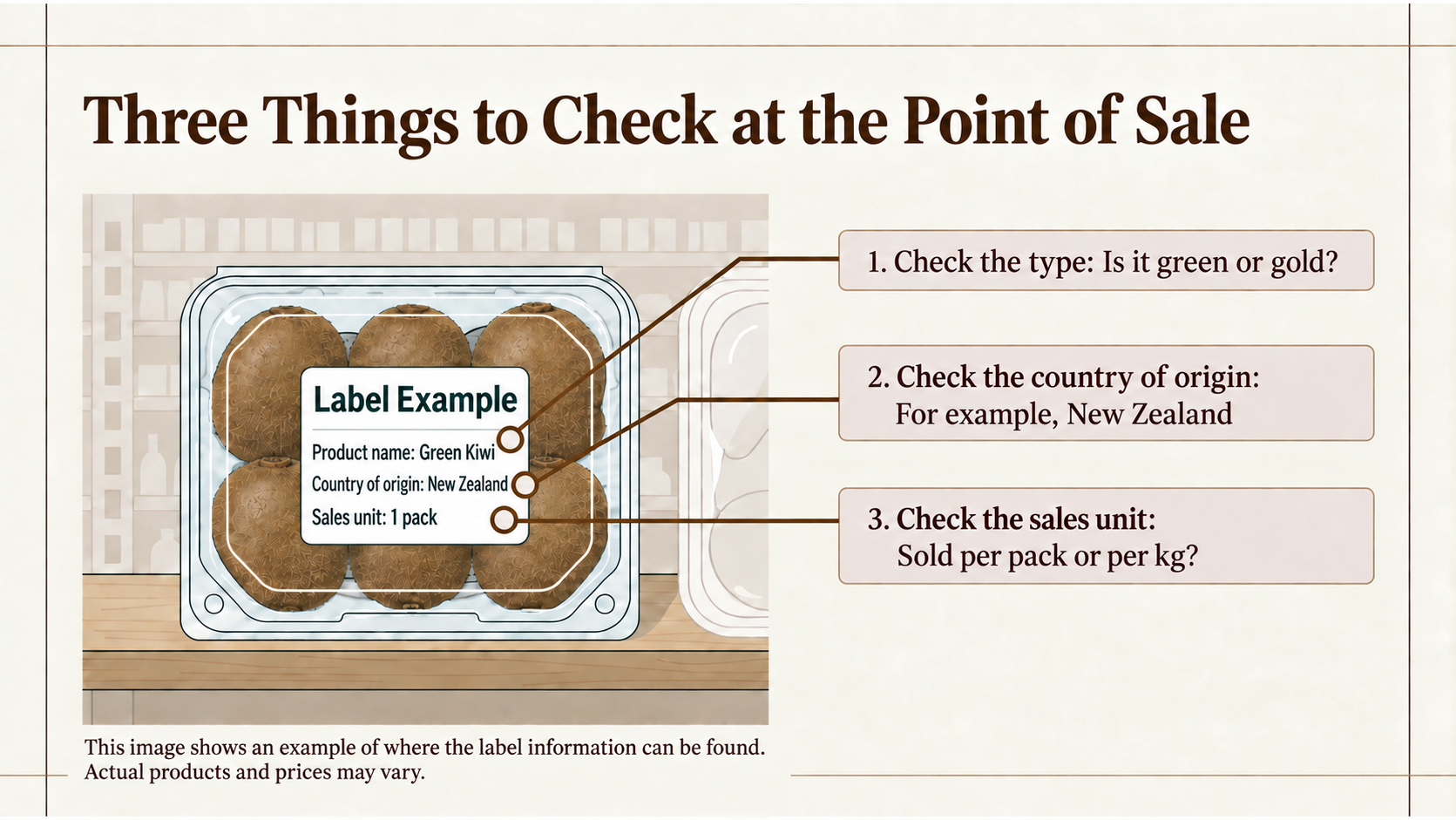
Origin of the species, country of production, and brand are different facts. Kiwifruit originated in China, but the product in front of you may have been grown elsewhere. Flesh color also does not identify the origin, so read the price tag and package.
Five Points to Remember
References
- California Rare Fruit Growers: Kiwifruit
- NZ History: Chinese gooseberry becomes kiwifruit
- Zespri product information (Japanese)
- MEXT Food Composition Database: green-fleshed kiwifruit
- MEXT Food Composition Database: yellow-fleshed kiwifruit
- Komazawa Women’s University: actinidin (Japanese)
- Zespri Kiwiflier, December 2025 (PDF)
About the Author
Chuta is based in Hanoi, Vietnam, and buys fruit at local markets and supermarkets to share first-hand observations on flavor, seasons, selection, and preparation.
