The History and Story of Kiwifruit: From China to the World
Kiwifruit began in China, not New Zealand. Seeds were brought to New Zealand in 1904, growers selected commercially useful fruit, exporters adopted the name “kiwifruit” in 1959, and later industry cooperation helped build a global business.
Kiwifruit History Timeline
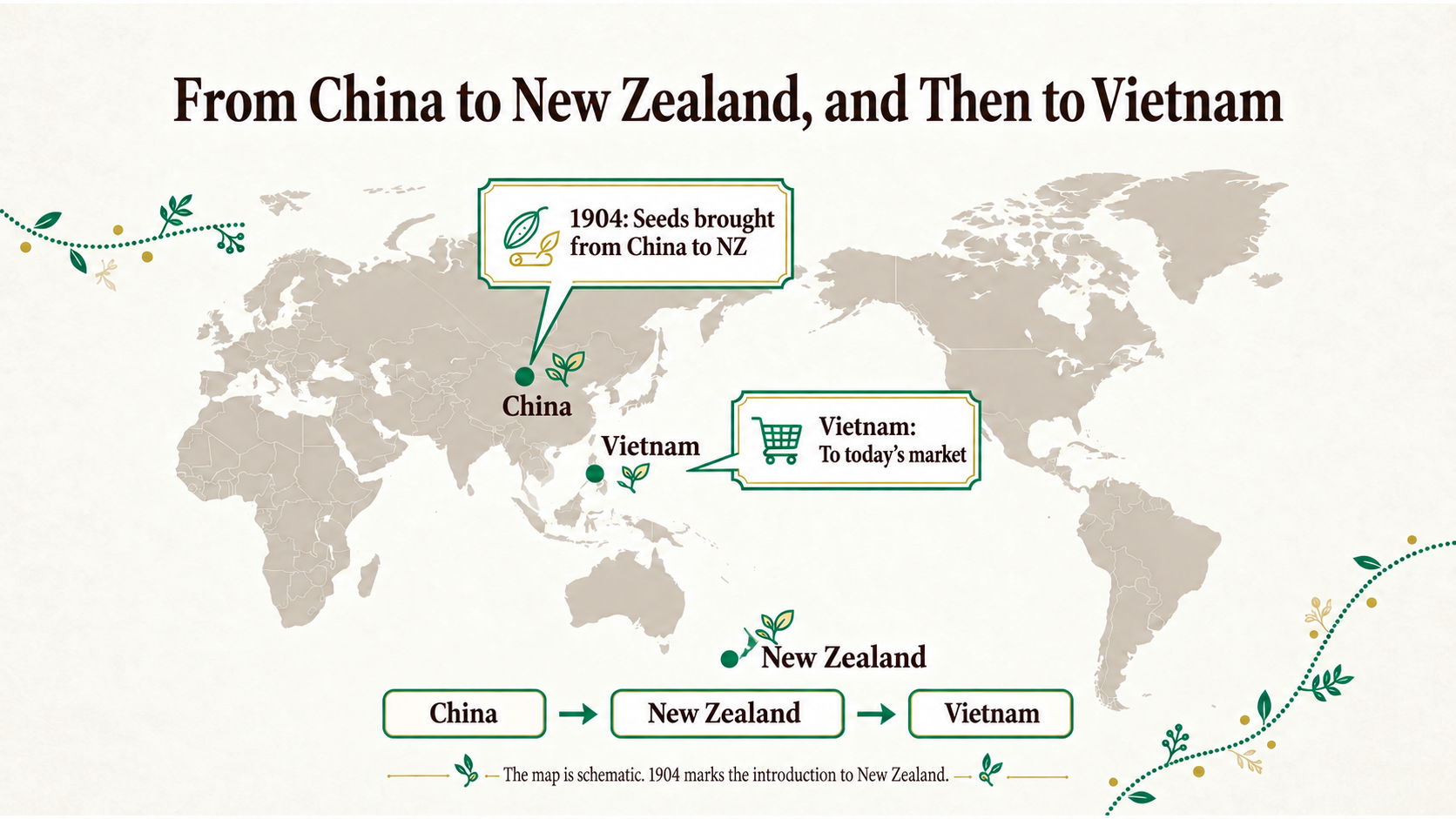
China Before 1904: Homeland and Local Names
Species now grouped under Actinidia are native to China. Before the fruit entered New Zealand horticulture, Chinese communities already knew it by more than one name. Historical sources use names such as mihoutao (“macaque peach”), while regional usage varied. This matters because 1904 marks a transfer of seed to New Zealand, not the beginning of the fruit’s history.
1904: Seeds Travel from China to New Zealand
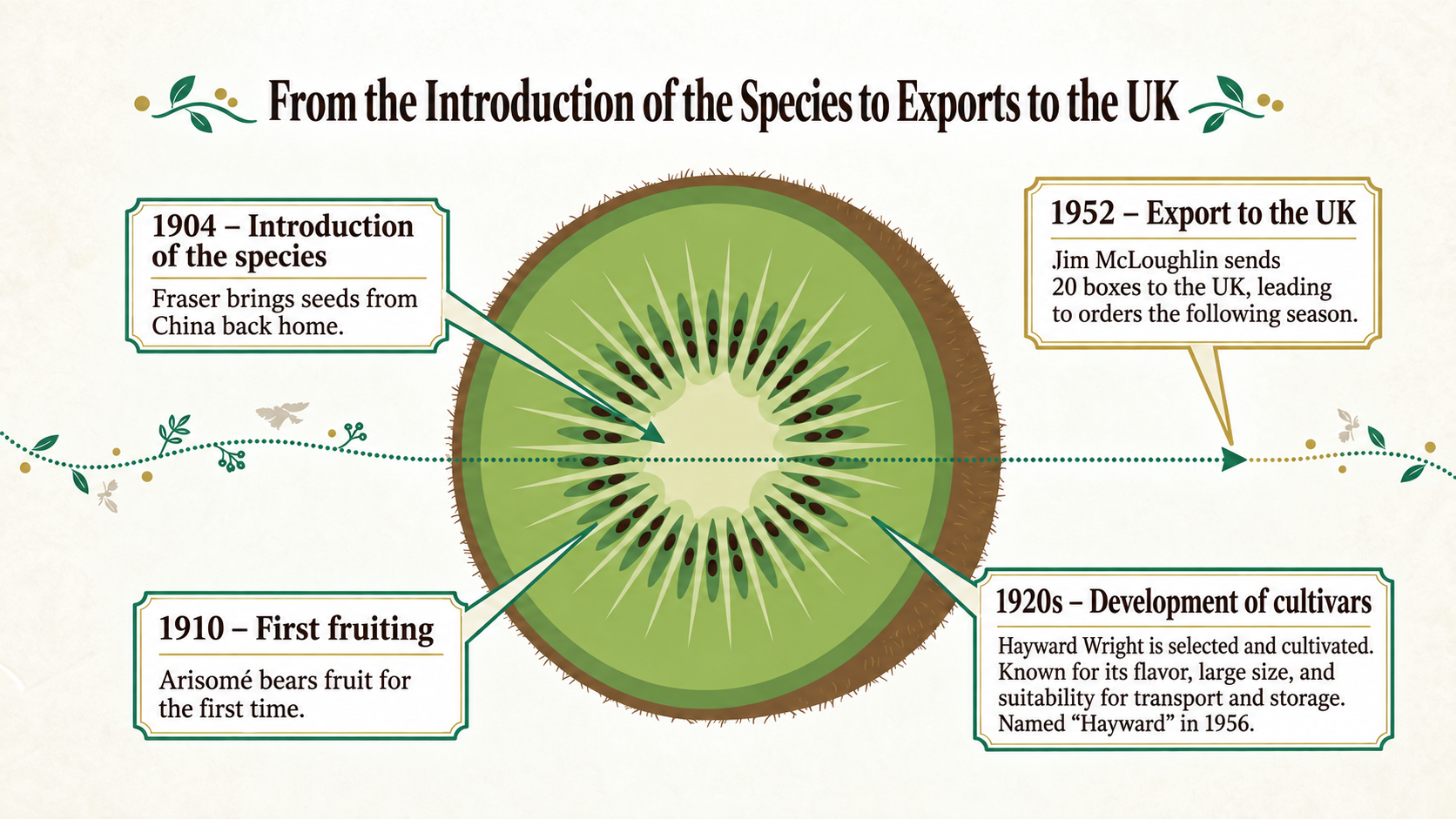
In 1904, New Zealand teacher Mary Isabel Fraser returned from China with seeds. Local grower Alexander Allison raised plants from those seeds, and the first recorded fruiting followed in 1910. This story is often summarized as the fruit’s “arrival” in New Zealand, but the plants still had to be selected and improved before they became a commercial crop.
Hayward and the 1952 Shipment to Britain
Horticulturist Hayward Wright selected a large, flavorful type that also stored well. In 1956, it was named the Hayward cultivar in his honor. It remains the best-known green-fleshed cultivar. A shipment of 20 cases sent to Britain in 1952 arrived in good condition and led to orders for the following season, showing that the fruit could be exported over long distances. Exporters still faced a naming problem.
Why the Fruit Was Renamed “Kiwifruit” in 1959
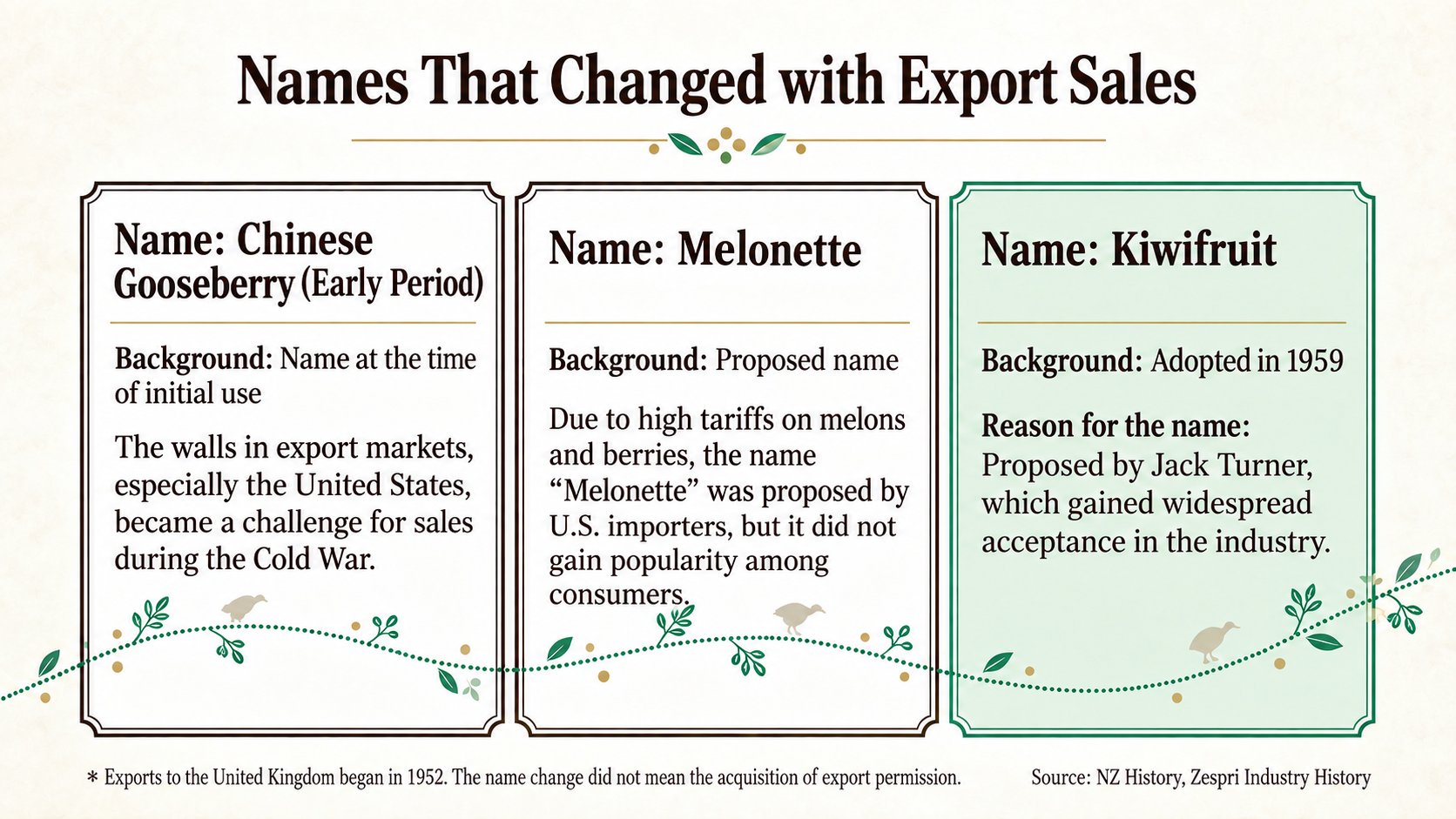
English-speaking markets had called it “Chinese gooseberry,” although it is not a true gooseberry. During the Cold War, the word “Chinese” was considered a marketing obstacle in the United States. Exporters also considered “melonette,” but the U.S. importer disliked a name associated with melons and berries because those products faced high tariffs. In June 1959, Jack Turner of Turners & Growers proposed “kiwifruit,” and the name spread through the export industry.
The new word evoked New Zealand’s kiwi bird and national identity. The fruit’s brown, fuzzy appearance strengthened that association, but the change was also a practical marketing decision. Exports to Britain had already begun in 1952, so the 1959 renaming was not an export permit or the start of international trade.
From Grower Cooperation to Zespri
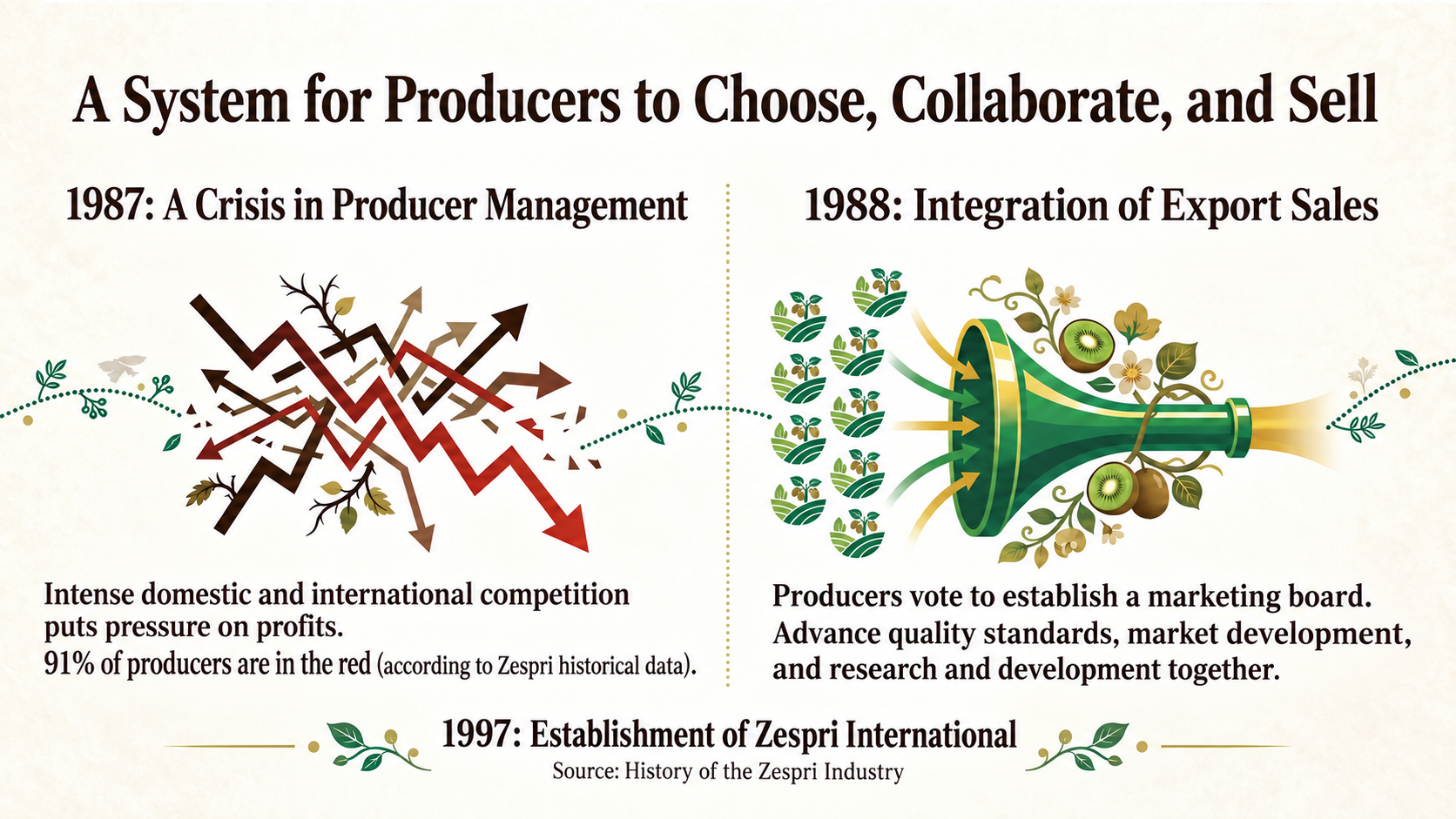
New Zealand growers faced unstable prices and fragmented marketing. Zespri’s industry history reports that 91% of New Zealand kiwifruit growers were operating at a loss in 1987. Following a grower vote, the industry moved in 1988 toward coordinated export through a “single-desk” system. The New Zealand Kiwifruit Marketing Board created a shared basis for quality standards, market development, and research. Zespri International was established in 1997.
SunGold, Psa, and Variety Development
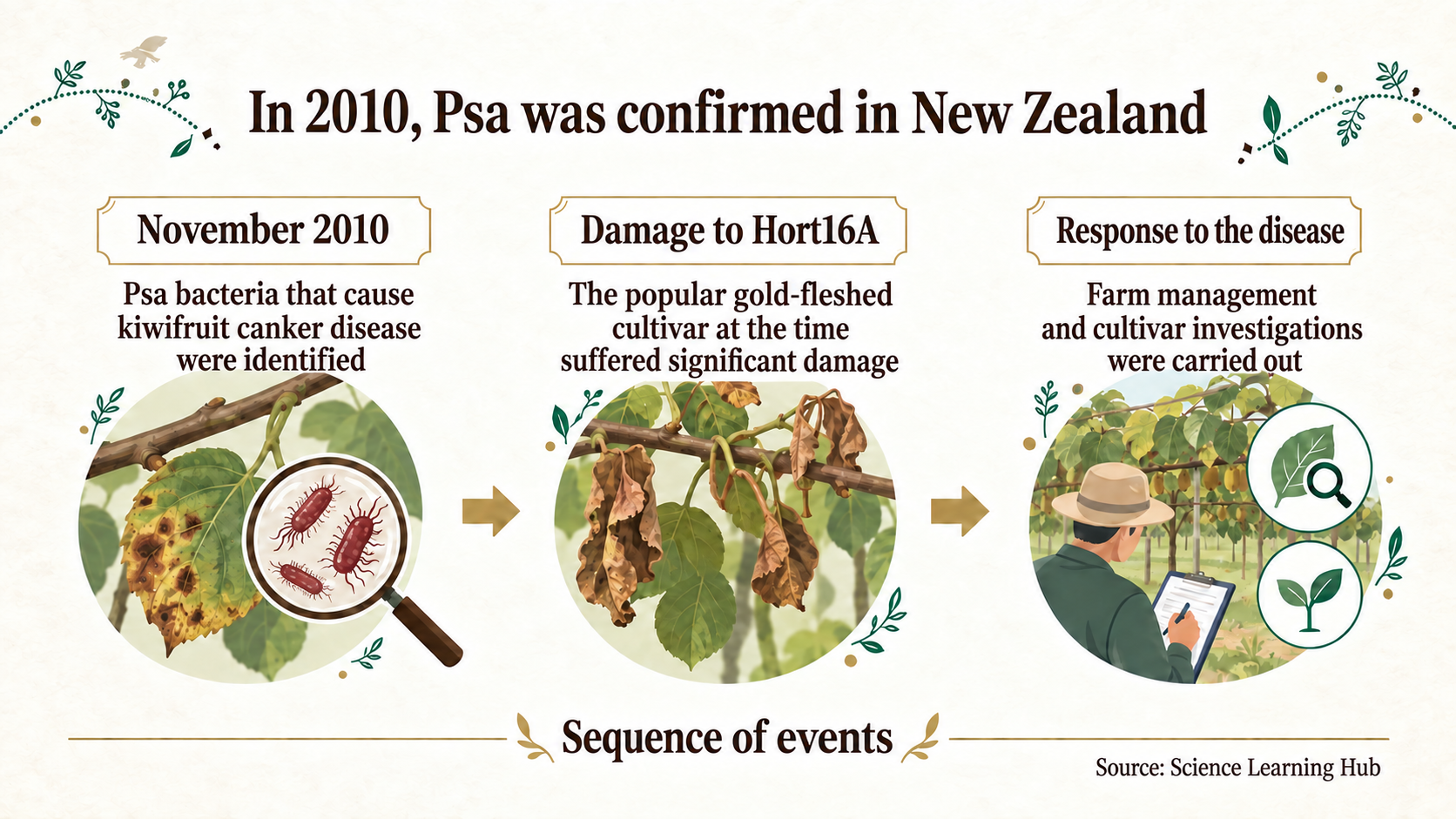
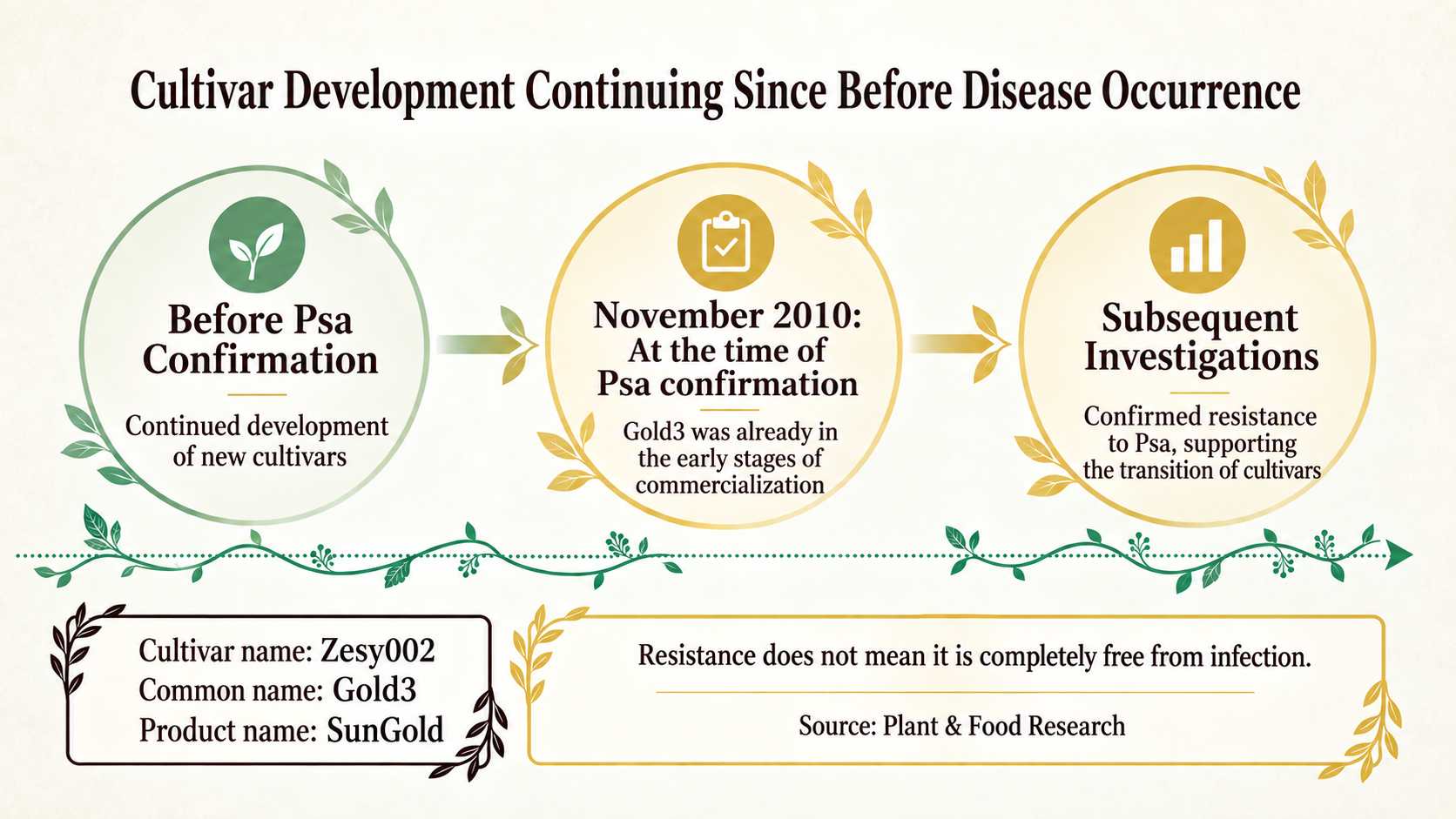
New Zealand’s earlier gold kiwifruit cultivar, Hort16A, was marketed as Zespri Gold. The bacterial disease Psa-V was confirmed in New Zealand in November 2010 and caused severe losses, particularly in Hort16A orchards. Gold3, whose registered cultivar name is Zesy002, was already at an early stage of commercialization when Psa was detected. Subsequent research found greater tolerance, and the industry moved toward it. Gold3 is marketed as Zespri SunGold.
Psa tolerance does not mean immunity. Disease management still depends on monitoring, hygiene, climate, and orchard practice.
Plant Variety Rights and the Gold3 Dispute in China
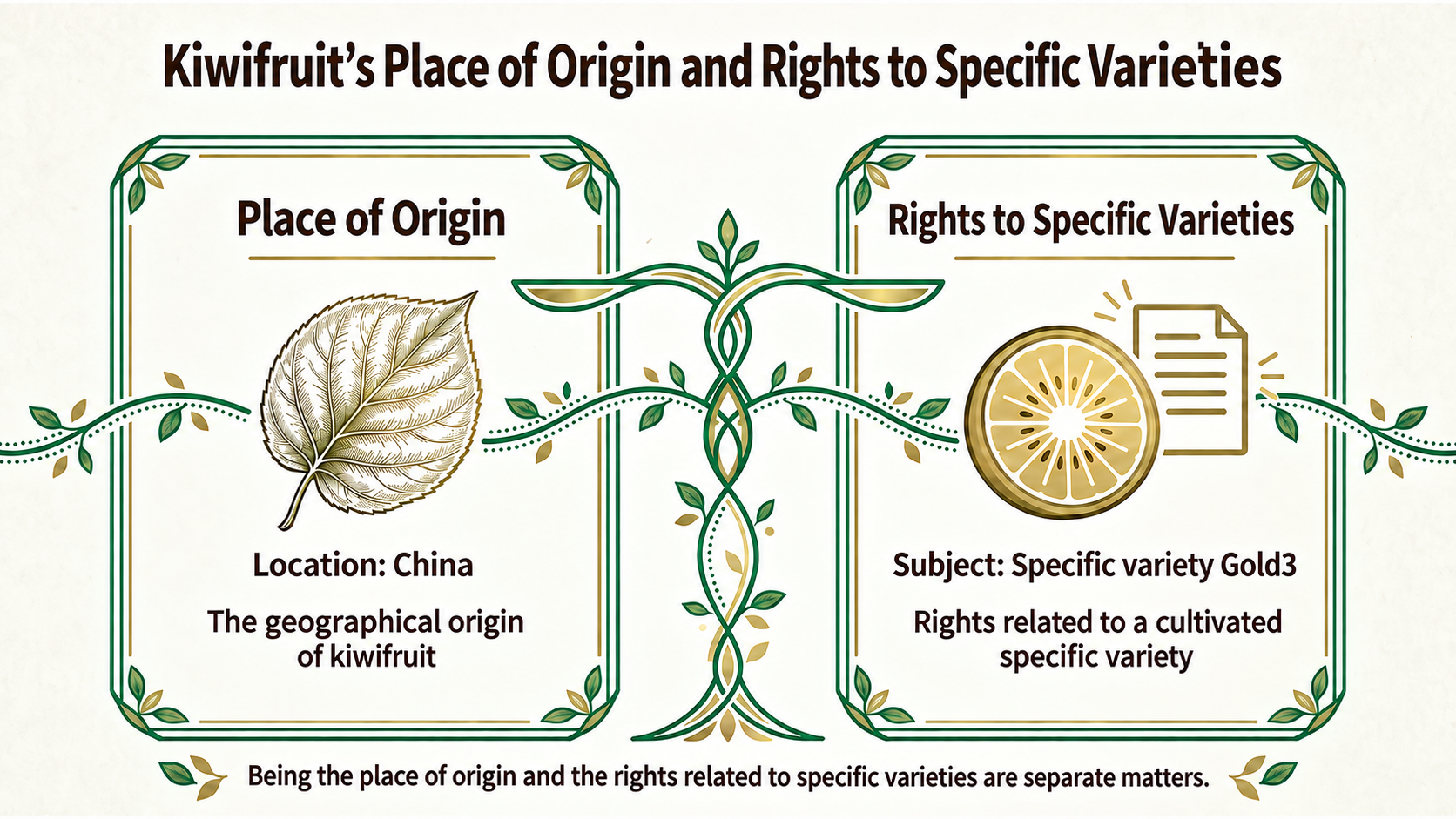
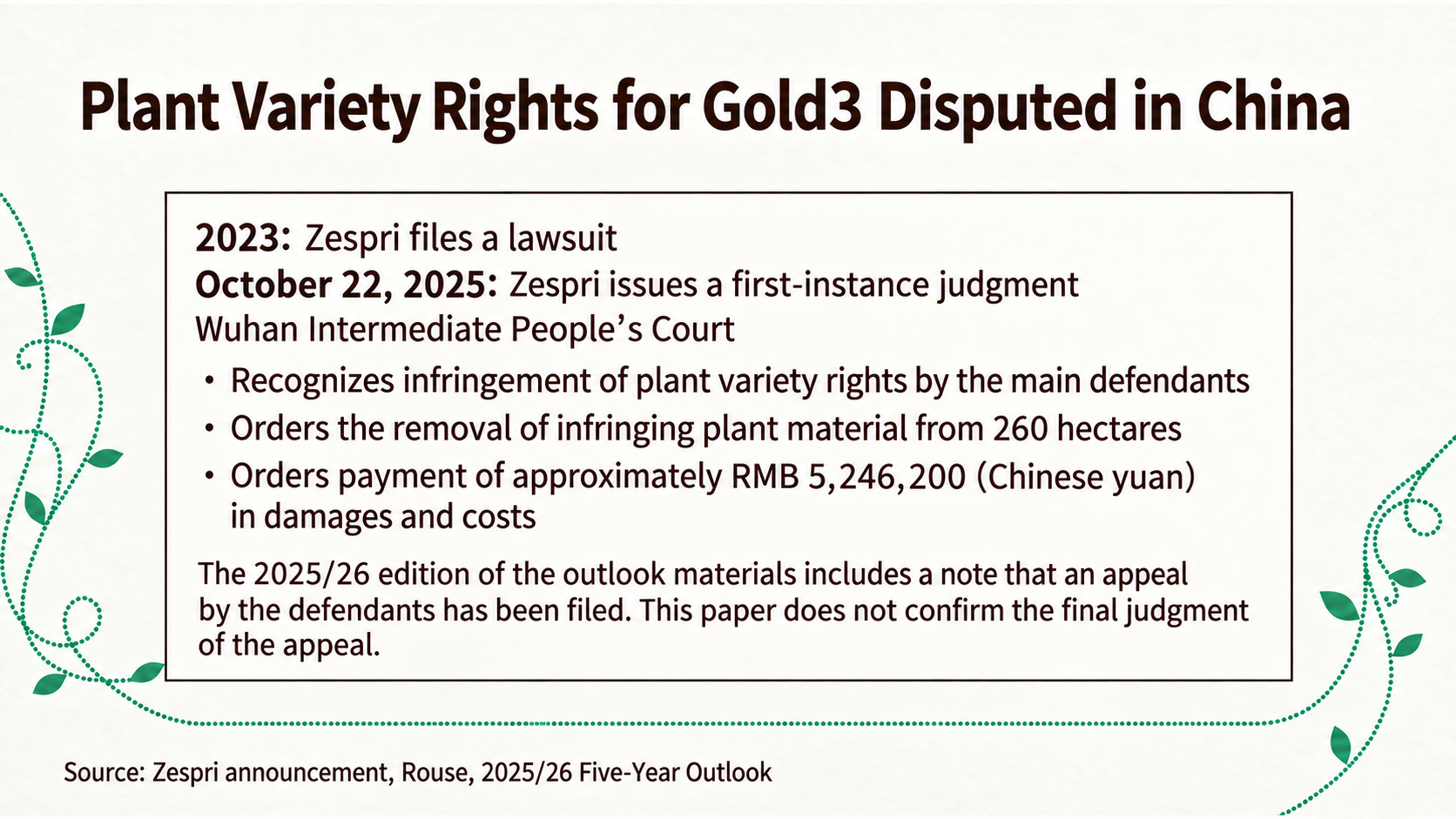
Gold3 is protected through plant variety rights (PVR), a form of intellectual property for new plant varieties. Zespri filed suit in China in 2023 over unauthorized propagation and sale. In a statement dated October 22, 2025, the company said the Wuhan Intermediate People’s Court found infringement by key defendants, ordered the removal of infringing plant material across 260 hectares, and awarded about RMB 5.2462 million in damages and costs.
The law firm representing Zespri described this as a first-instance judgment. Zespri’s 2025/26 Five-Year Outlook says the defendants appealed. A check of the cited Zespri and representative sources on October 7, 2026 did not identify a final appellate decision, so this English version describes only the first-instance ruling and the reported appeal.
From New Zealand to Vietnamese Stores
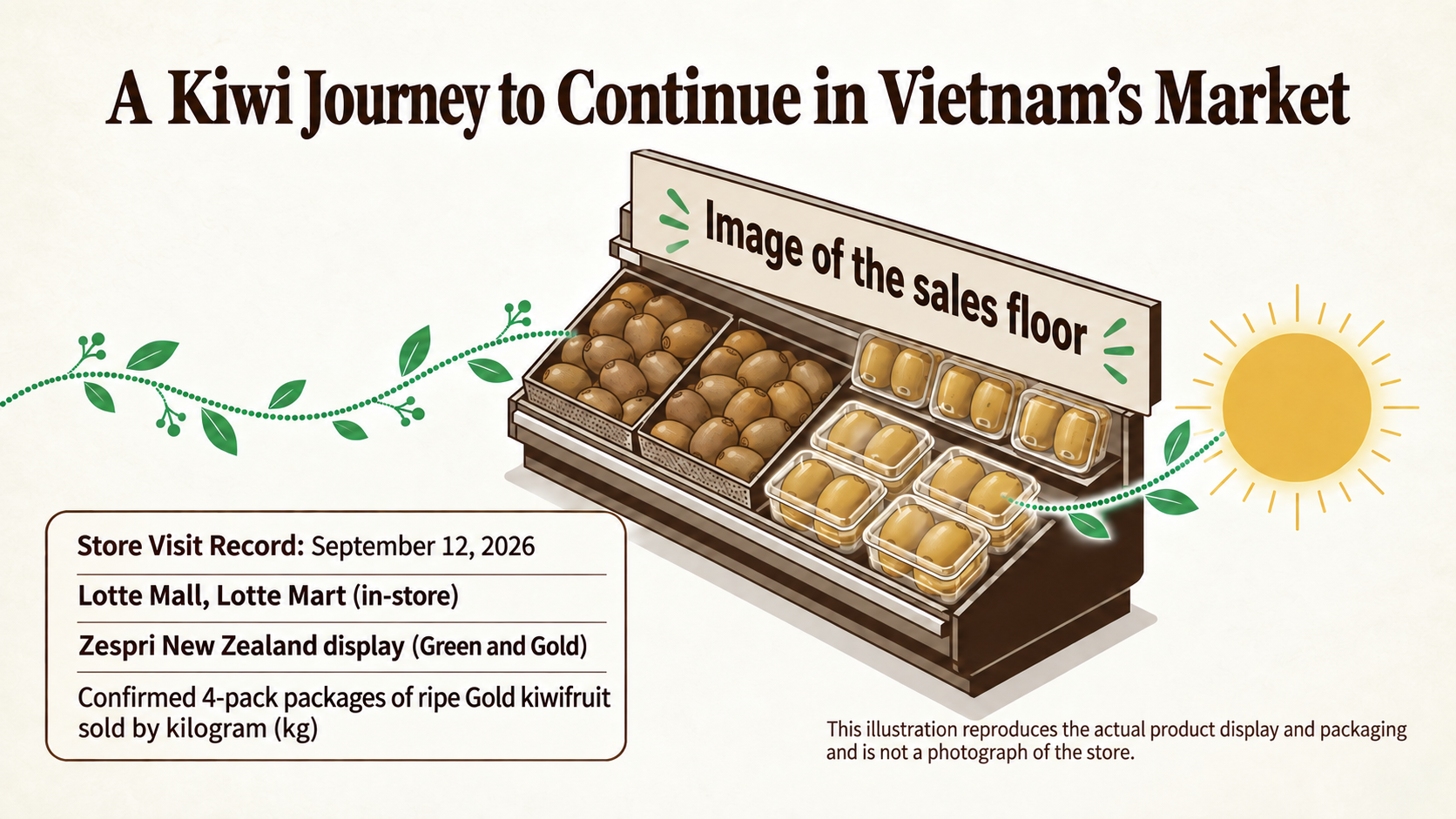
Vietnamese supermarkets sell imported green and gold kiwifruit. The author’s September 2026 store records include New Zealand-origin products sold by kilogram and in packs. The journey from Chinese origin to New Zealand cultivar development and then to a Vietnamese retail shelf combines botany, migration, breeding, shipping, branding, and consumer choice.
The People and Systems Behind the Story

References
- Te Ara: The hairy berry
- Te Ara: Early history, names and varieties
- NZ History: Chinese gooseberry becomes kiwifruit
- Zespri: Our history
- Science Learning Hub: Kiwifruit — learning to live with Psa
- Plant & Food Research: Science behind Gold3
- Zespri: Gold3 plant variety rights case in China
- Rouse: first-instance judgment
- Zespri: 2025/26 Five-Year Outlook
About the Author
Chuta is based in Hanoi, Vietnam, and buys fruit at local markets and supermarkets to share first-hand observations on flavor, seasons, selection, and preparation.
