How to Eat Watermelon in Vietnam: Choosing, Cutting and Storing
Published October 8, 2026
The watermelon you see in Vietnam’s markets and supermarkets is called dưa hấu. When buying a whole fruit, you may wonder how to choose a sweet one and how to cut and store it afterward.
This guide takes you from checking prices and choosing fruit in good condition to cutting, eating and storing it. You cannot judge the inside perfectly before cutting, but knowing what to look for at the stall makes choosing easier.
For varieties and nutrition, read the Watermelon Guide. For origins and cultural background, continue to The History and Stories of Watermelon.
Vietnamese watermelon at a glance
| Item | Details |
|---|---|
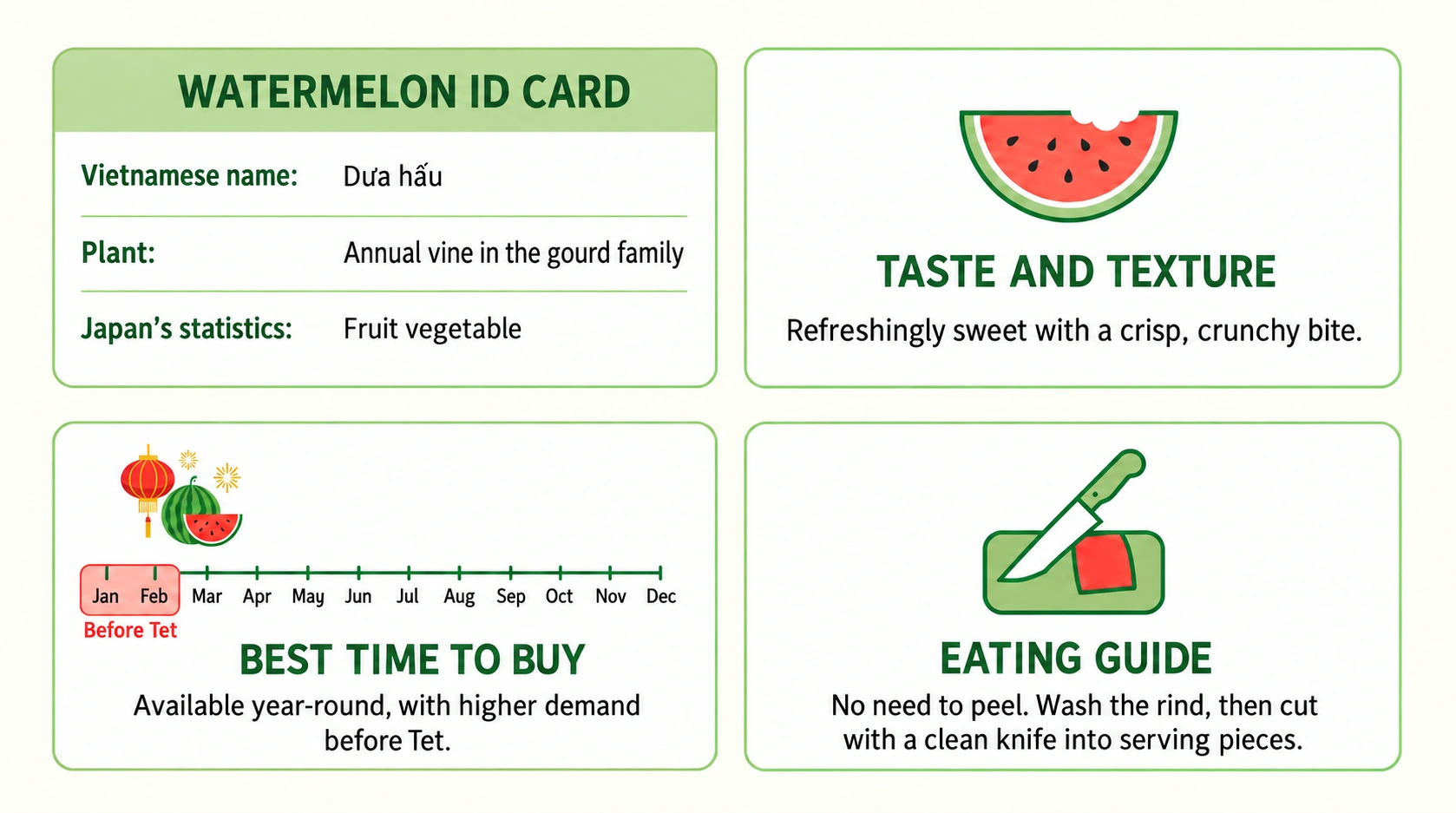
| Vietnamese name | Dưa hấu |
| Taste | Refreshing sweetness |
| Texture | Crisp and juicy |
| Availability | Throughout the year; demand and shipments increase before Tết |
| One observed price | VND 29,900/kg for Hắc Mỹ Nhân, photographed by the author at a supermarket in August 2026 |
| Where to buy | Supermarkets, open-air markets and roadside fruit sellers |
| Basic preparation | Wash, halve and cut into wedges |
| Local preparations | Hạt dưa, roasted seeds; mứt dưa hấu, candied rind |
| Ease for beginners | ★★★★★ |
The Vietnamese name: dưa hấu
In Vietnam, watermelon is called dưa hấu. You will find red- and yellow-fleshed varieties, with round or elongated shapes. Knowing the name helps when looking for it in a market or supermarket.
Flavor and texture
Watermelon sold in Vietnam is typically crisp, juicy and sweet. Almost 90% of the flesh is water, making it a refreshing fruit in the country’s hot weather.
Sweetness and firmness depend on variety and ripeness. The familiar difficulty is that you cannot fully judge the inside before cutting, which makes checking the fruit’s external condition worthwhile.
Prices and where to buy
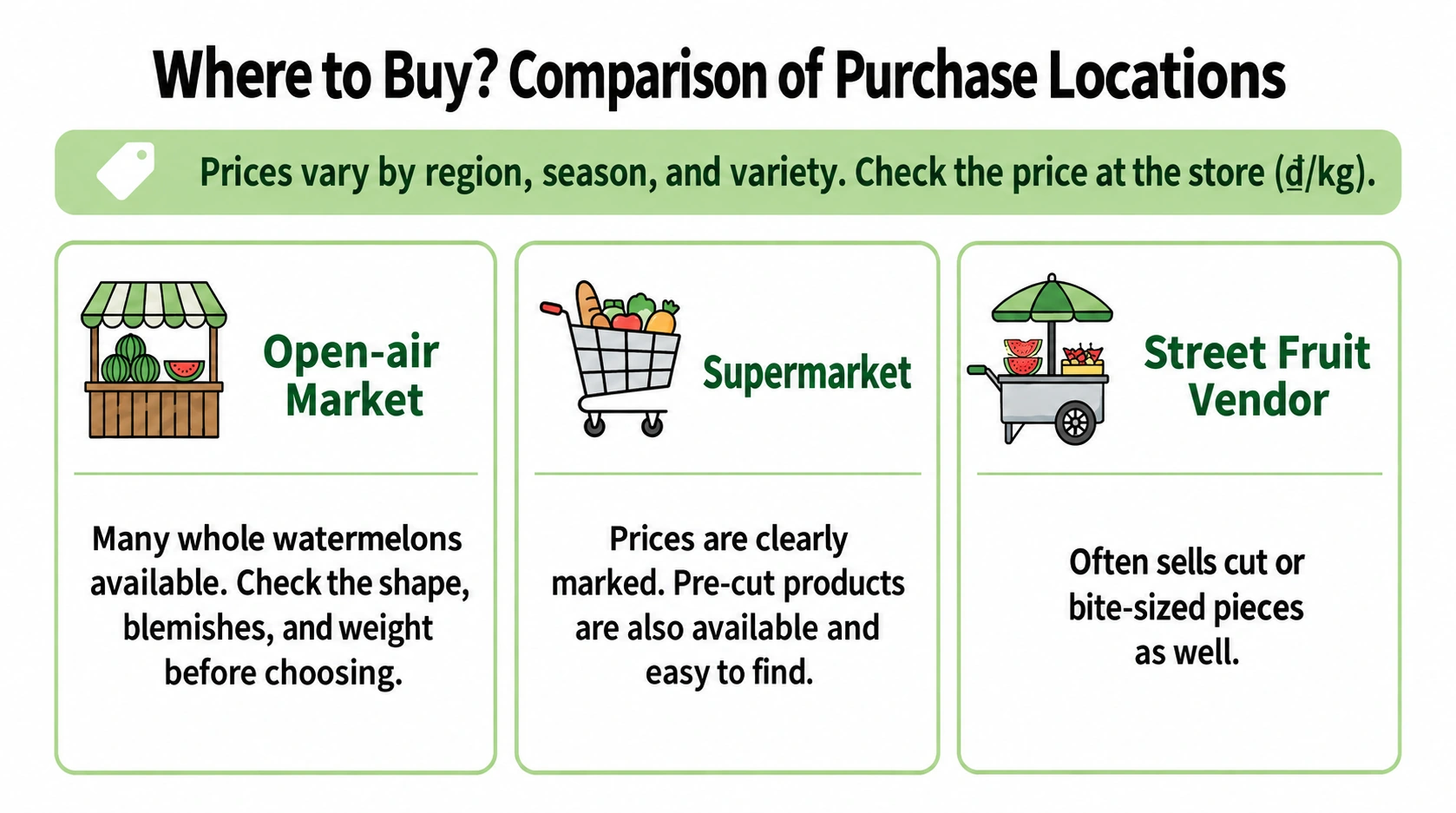
Prices vary considerably with location, season, variety and whether the fruit is sold whole or cut. Check the price marked đ/kg, meaning Vietnamese đồng per kilogram. In August 2026, the author photographed a supermarket label for Dưa hấu Hắc Mỹ Nhân at VND 29,900/kg. This is one dated observation, rather than a general current price.
Open-air markets and roadside fruit sellers
Large watermelons are often piled up for sale. Customers may tap them while choosing. Besides whole fruit, some sellers offer pre-cut pieces in bags.
Supermarkets
Weight and price are usually easier to check, and wrapped cut portions may be available. This can be convenient if you are not comfortable discussing your purchase at a market.
Street stalls selling cut fruit
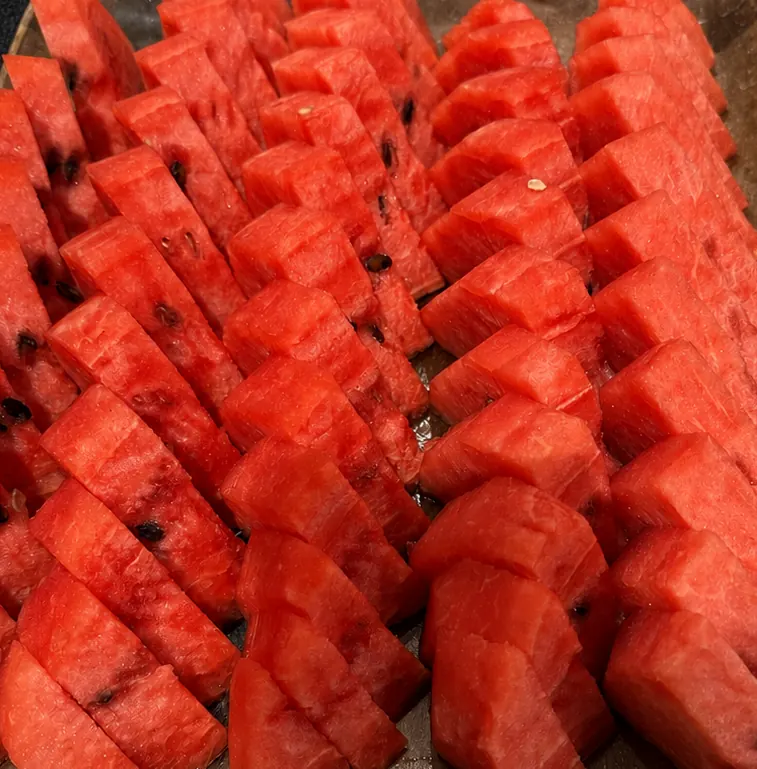
Small bags of wedges or cubes, sometimes supplied with a toothpick, are useful if you want a small portion to eat immediately.
How to choose a watermelon
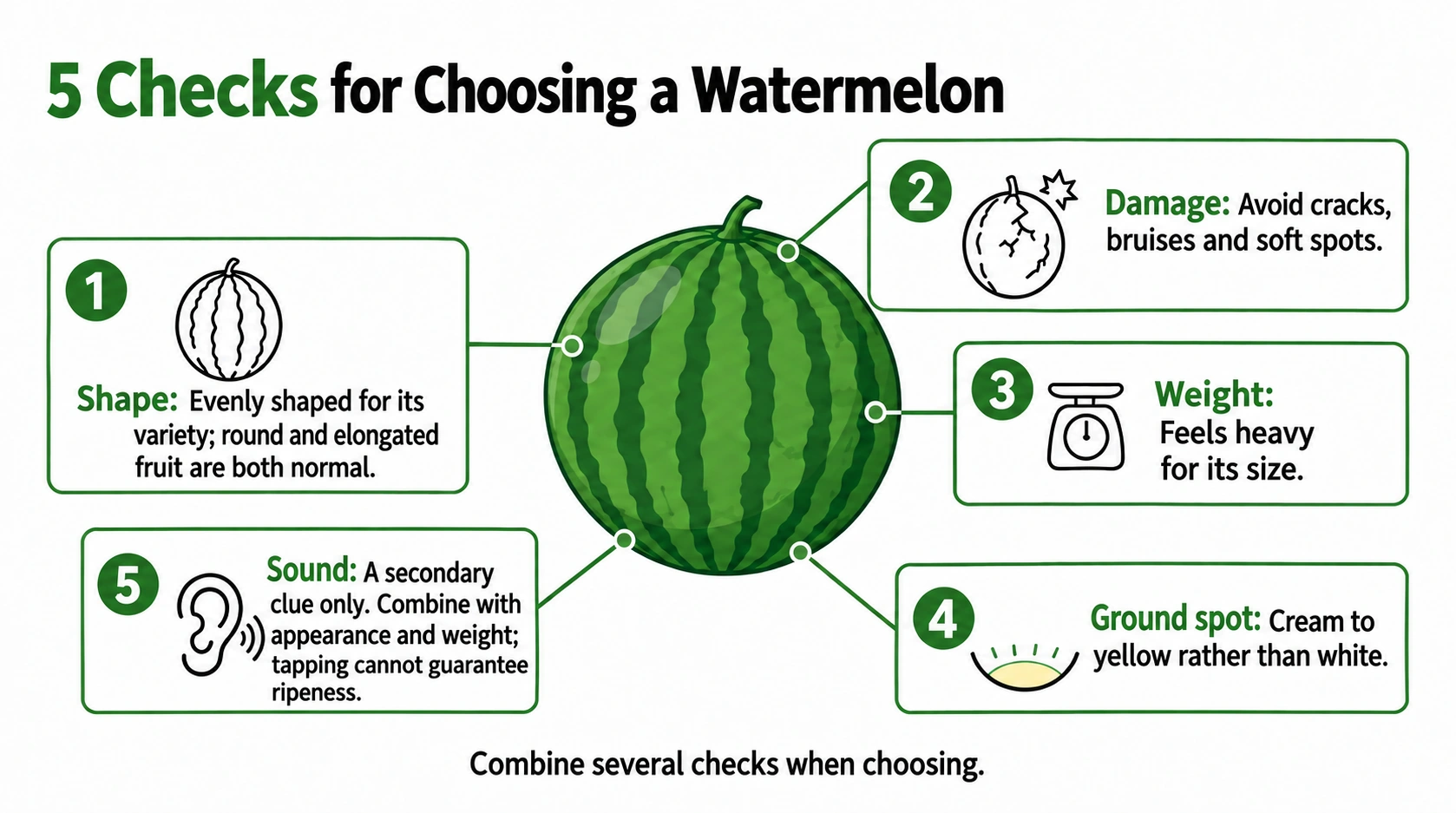
No external check can reveal the inside perfectly. Combining several observations can help you avoid fruit in poor condition:
- Shape and damage: choose an evenly shaped fruit without cracks, soft areas or substantial bruising.
- Weight: among fruit of similar size, one that feels heavy can be a useful indication.
- Ground spot: look at the patch that rested on the soil. Cream to yellow is generally a better sign than white.
- Surface: check that its color and markings look normal for the variety and that the skin is in good condition.
- Sound as a secondary clue: tapping alone cannot reliably determine ripeness. A low, muffled sound can sometimes indicate overripeness. Use sound alongside appearance and weight.
These are practical rules of thumb, not guarantees of sweetness or perfect ripeness.
Cutting watermelon safely in four steps
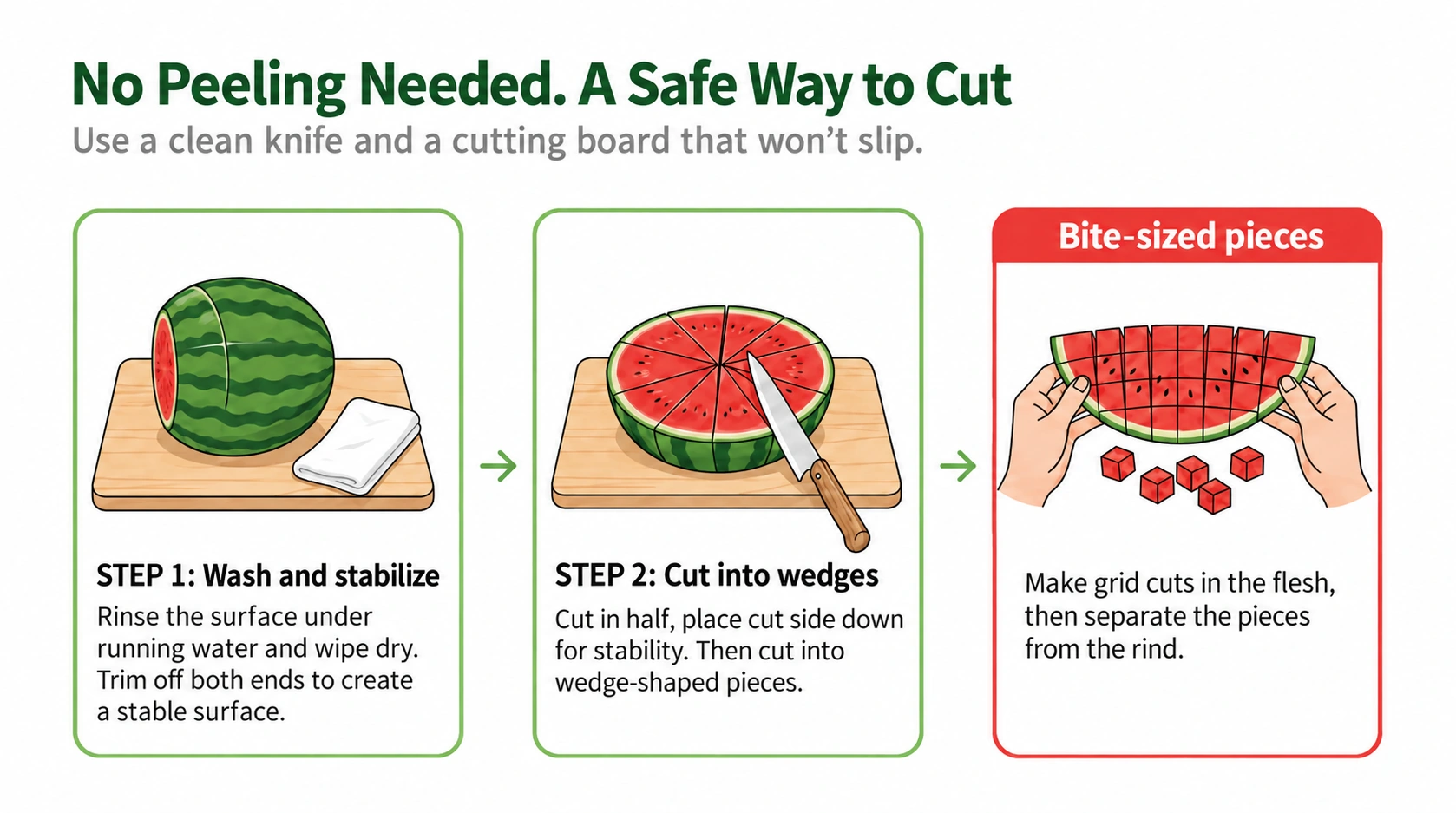
Compared with spiral-peeling a pineapple or separating pomelo segments, watermelon is straightforward. You do not need to peel it before cutting wedges.
- Wash the whole surface thoroughly under running water, then dry it with a clean cloth or paper towel.
- Use a stable, nonslip cutting board and a clean, sharp knife. For a large fruit, first trim a thin slice from one end to create a stable base rather than forcing the knife through in one movement.
- Halve the fruit carefully, then set each half cut-side down.
- Cut into wedges. The rind can serve as a handle while eating.
For bite-size pieces, or when sharing with young children:
- Cut a grid into the flesh after making wedges.
- Run the knife along the rind to release small pieces.
- Transfer them to a plate and eat with a fork or spoon. For young children, consider both seeds and the size of the pieces.
Four ways to enjoy watermelon in Vietnam
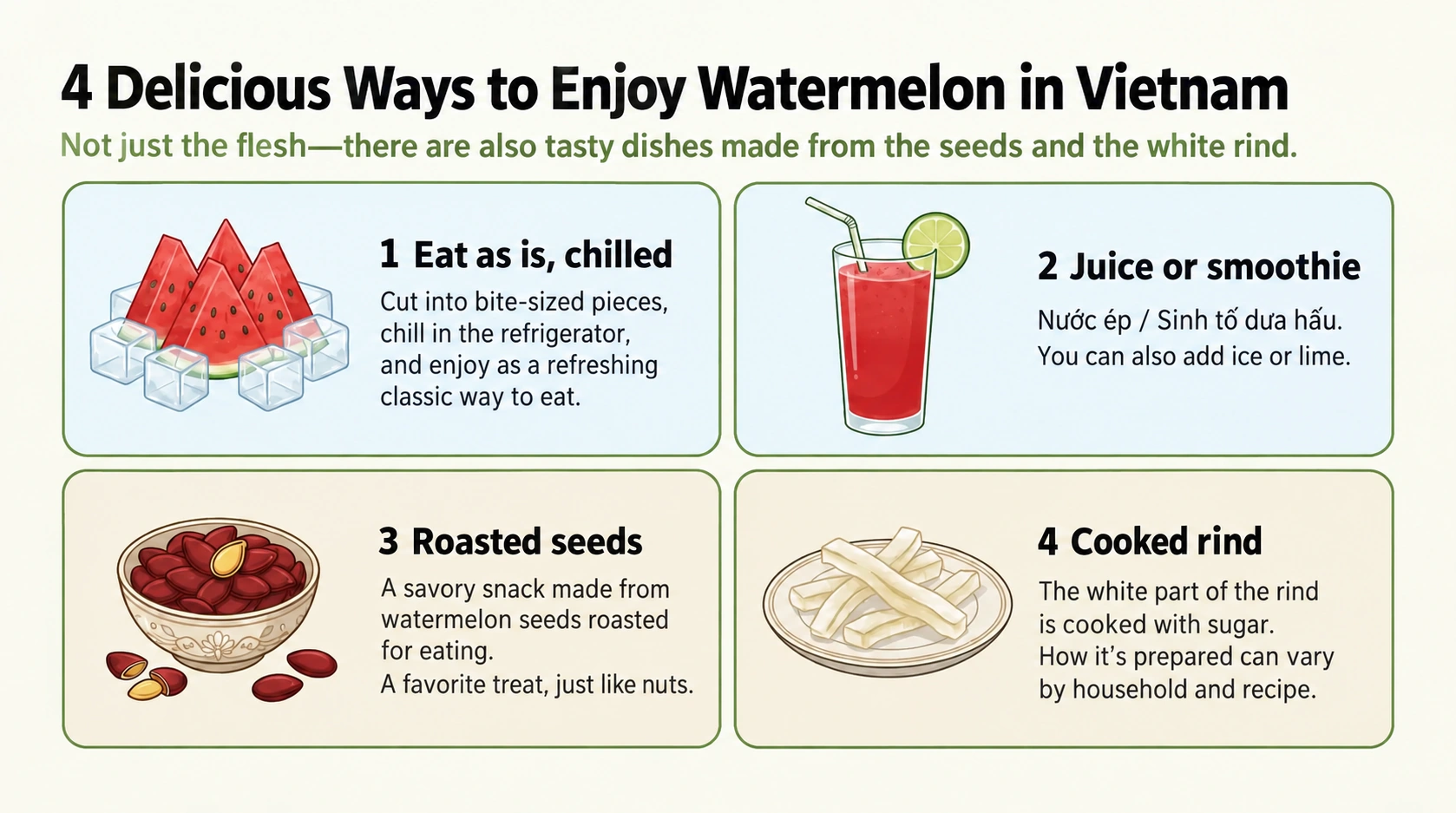
1. Chilled and fresh
Cut watermelon into wedges and chill it. This simple preparation is especially refreshing in hot weather.
2. Nước ép dưa hấu and sinh tố dưa hấu: juice and smoothies
Blended watermelon is a popular drink. Recipes may add ice, sugar or a little lime.
3. Hạt dưa: roasted watermelon seeds
Roasted seeds are a familiar Tết snack. Seeds intended for eating are dried and roasted; some products have red- or black-colored shells. The shell is cracked open and the kernel eaten. These snacks are not necessarily made from seeds removed from the flesh varieties sold for fresh eating.
4. Mứt dưa hấu: candied watermelon rind
The white part of the rind can be cooked with sugar to make a sweet. Recipes differ: some use food-grade limewater to firm the texture or pandan for fragrance. It is sometimes presented as a Tết sweet.
Storing watermelon after cutting
- Whole fruit: keep it out of direct sunlight in a cool, well-ventilated place.
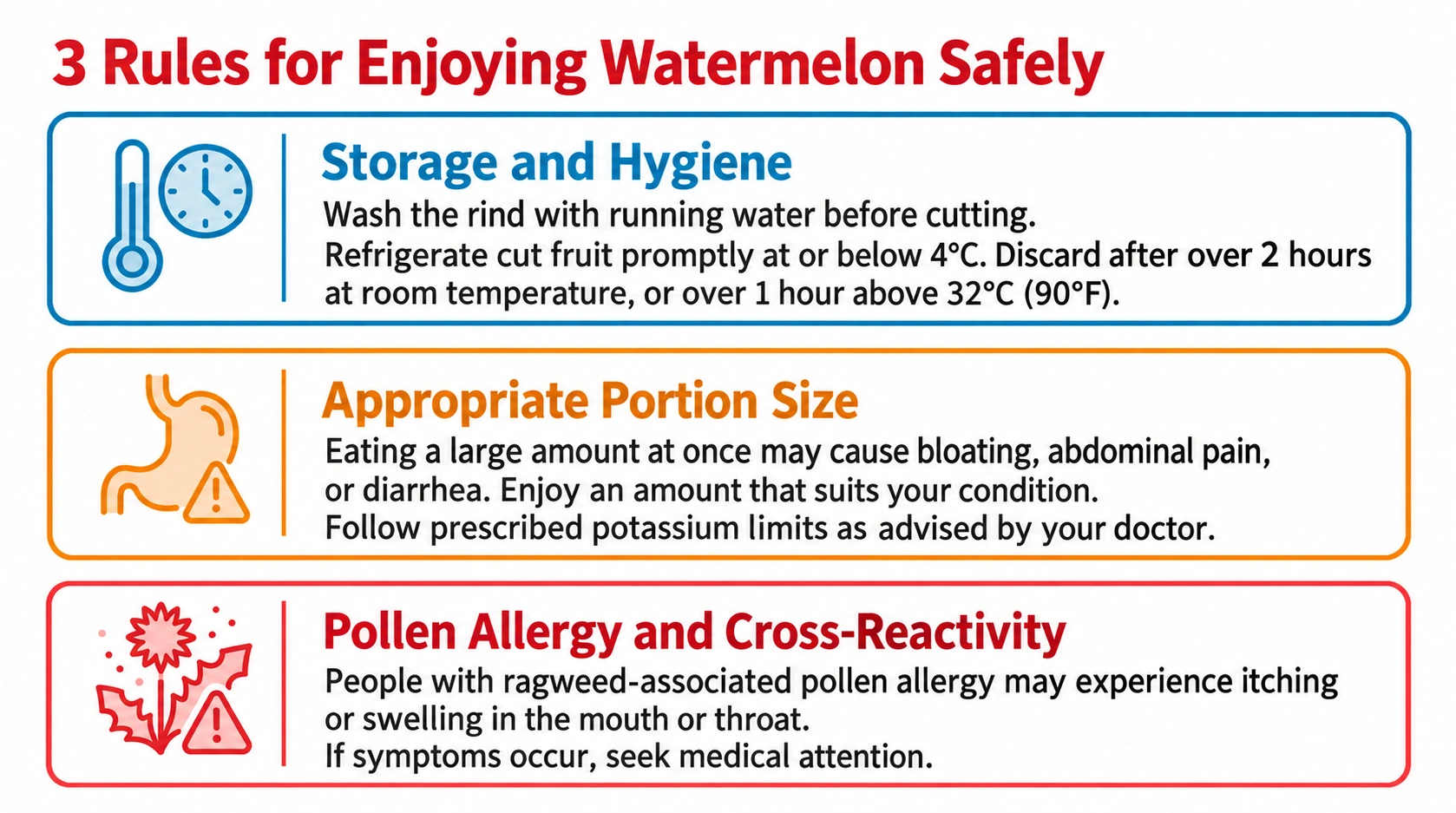
- Cut fruit: refrigerate promptly at 4°C or below. CDC guidance says to discard cut melon left at room temperature for more than two hours, or one hour when the temperature exceeds 32°C/90°F. Eat refrigerated pieces promptly and do not keep them beyond one week. Before cutting, wash the rind under running water and use clean utensils.
Things to consider when eating watermelon
Watermelon contains fermentable carbohydrates, including fructose. Large servings may cause bloating, abdominal pain or diarrhea in some people. Enjoy an amount that suits you. If you have been prescribed potassium restriction for kidney disease or another condition, follow advice from your doctor or dietitian.
Watermelon and other gourd-family fruits can also cause itching or swelling in the mouth or throat in some people with ragweed pollen allergy, as part of pollen-food allergy syndrome. Ask a doctor about previous reactions or concerns. Breathing difficulty or symptoms affecting the whole body require urgent medical attention.
Can you take fresh Vietnamese watermelon into Japan?
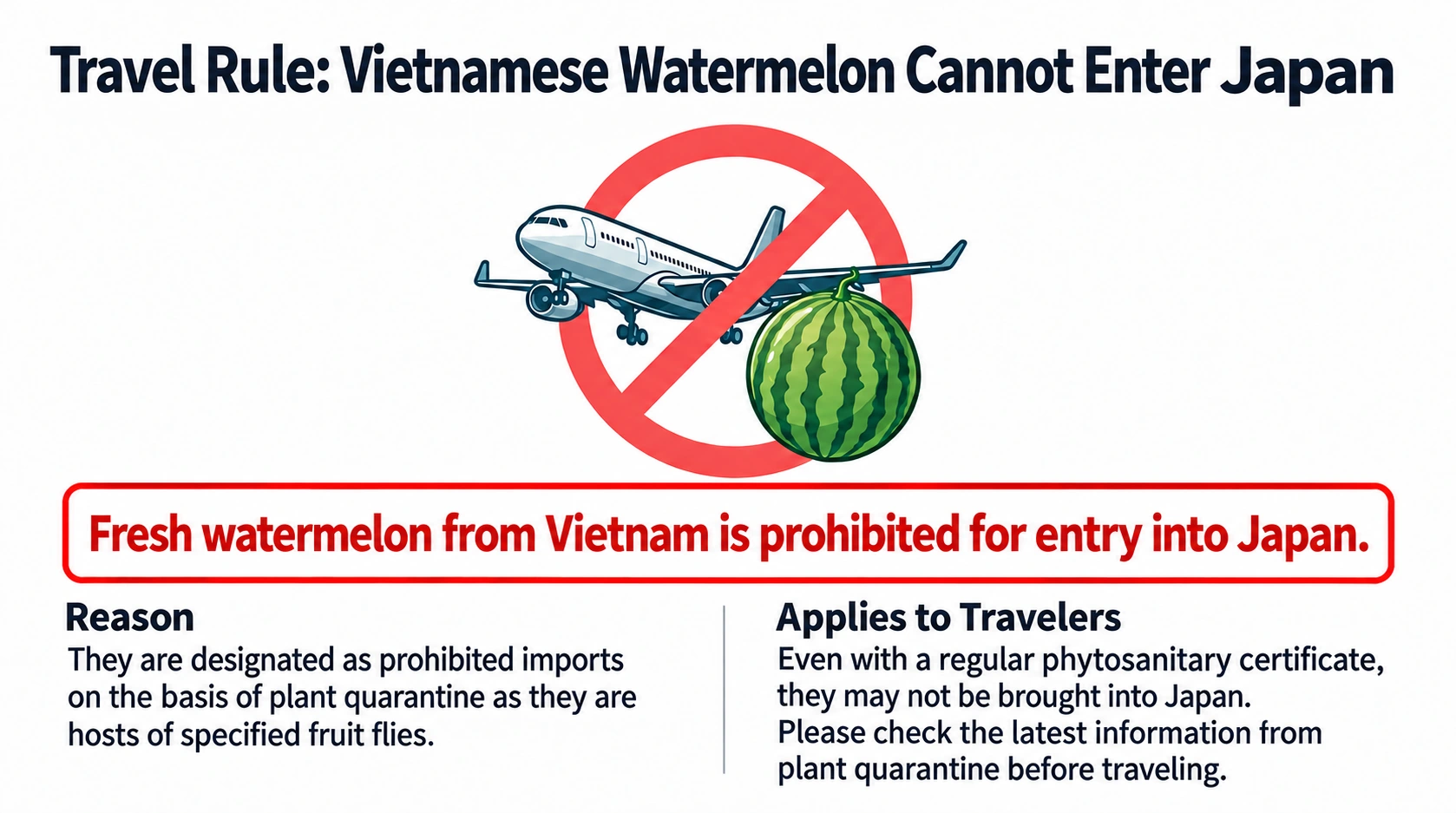
No. Japan lists fresh watermelon from Vietnam as a prohibited import because it is a host of specified fruit flies. Travelers cannot bring it home. Its absence from a market-access request list is supporting context, rather than the legal basis of the prohibition.
Quarantine conditions can change. Check the Plant Protection Station’s latest rules before traveling.
The author’s tasting notes
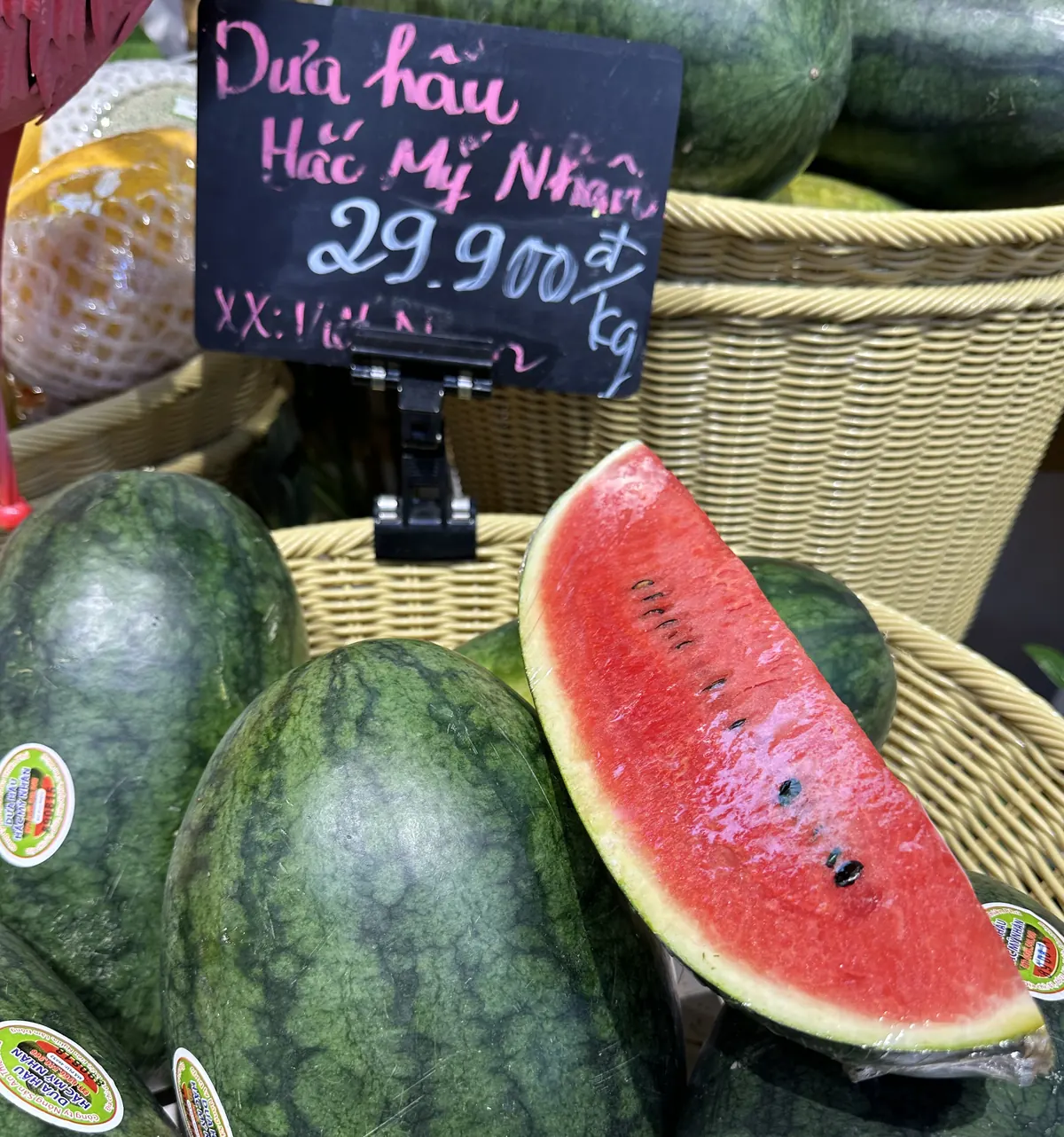
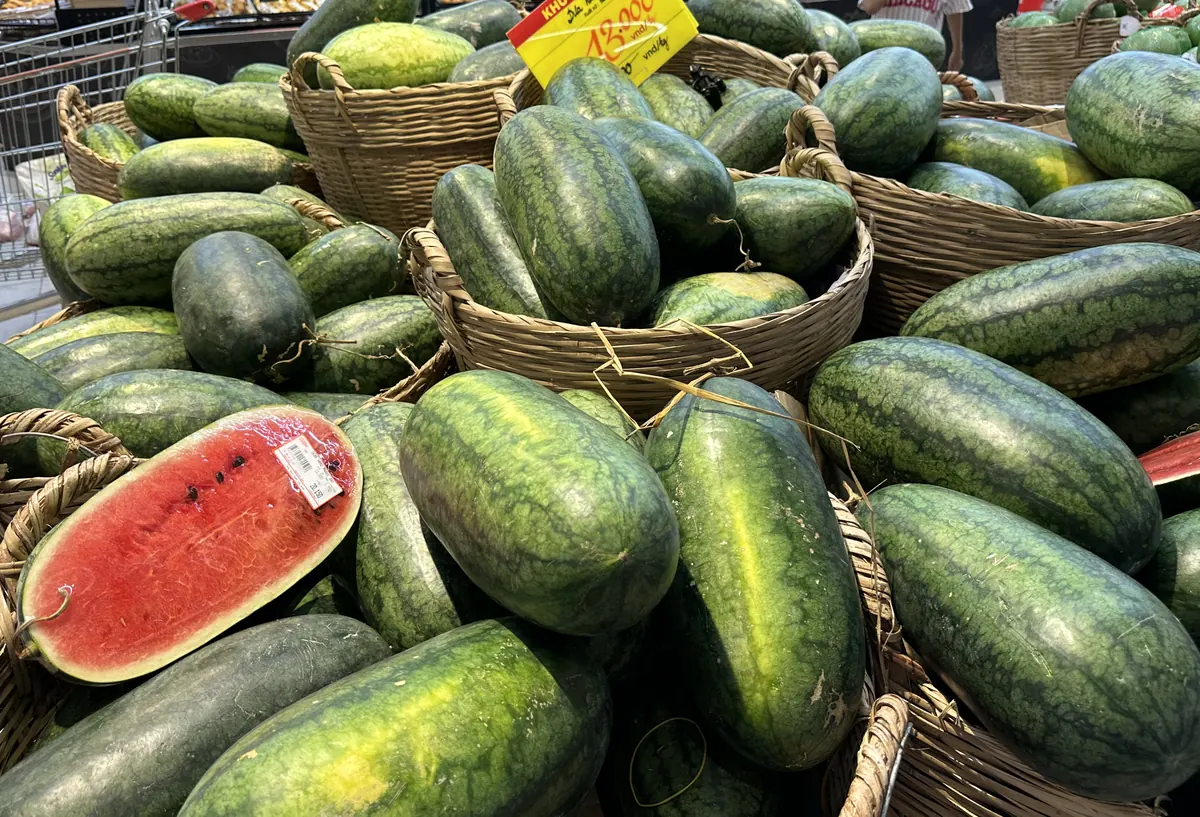
Purchase record: supermarket; August 2026; VND 29,900/kg; label: “Dưa hấu Hắc Mỹ Nhân.”
My impressions: I often ate watermelon at hotel breakfasts or as dessert after a meal. Its crisp texture and refreshing sweetness stood out. Ease for beginners: ★★★★★.
Frequently asked questions
Can I buy it throughout the year?
Watermelon is generally easy to find year-round. Demand and shipments increase particularly before Tết.
Do I need to peel it?
No. Wash it thoroughly, halve it and cut it into wedges.
Can you eat the seeds?
The seeds are edible, and swallowing a small number is usually not a problem. Hard shells can present a choking risk for young children. In Vietnam, seeds grown or prepared for eating are dried and roasted as hạt dưa, a popular Tết snack.
Can I take it home to Japan?
Fresh Vietnamese watermelon is prohibited. Check the latest plant quarantine guidance before departure, as rules may change.
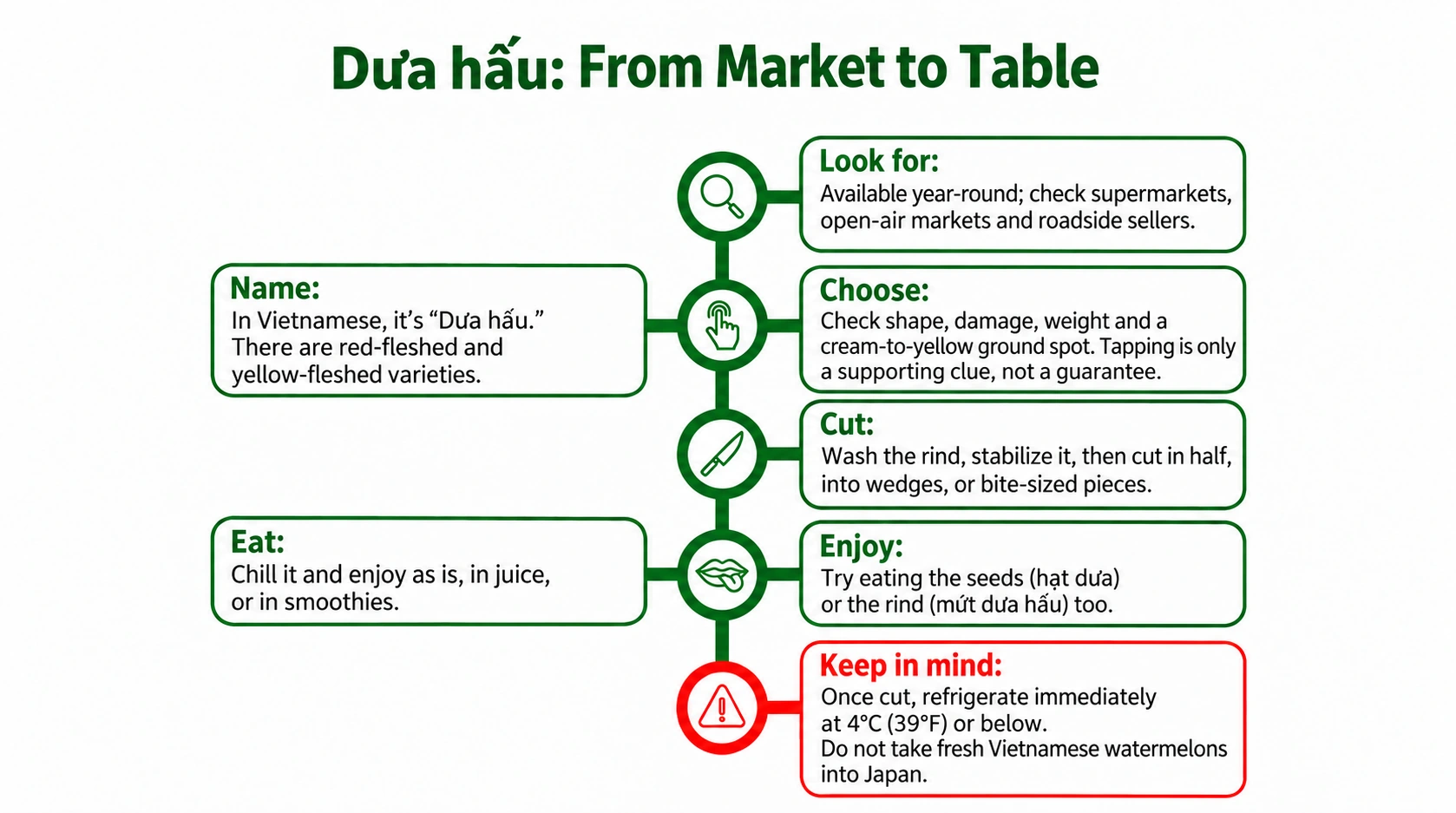
From the market to your table
Watermelon is an approachable fruit: no peeling is needed before cutting wedges.
- Choose: check shape, damage, weight, the ground spot and skin condition; use tapping only as a supporting clue.
- Cut: wash thoroughly, stabilize the fruit and cut into wedges or small cubes.
- Enjoy: eat chilled, blend into juice or smoothies, or try commercially prepared roasted seeds and candied rind.
- Consider your health: serving size and pollen-related reactions matter for some people.
- Store: refrigerate cut pieces promptly at 4°C or below and eat them soon.
- Travel: do not take fresh Vietnamese watermelon into Japan.
When you next see watermelons at a market, start with the shape, skin condition, weight and ground spot, and choose a fruit in good condition.
More about watermelon
- Watermelon Guide: biology, nutrition, varieties and trade.
- The History and Stories of Watermelon: ancient Egypt, cultural history and Mai An Tiêm.
- 15 Fruits to Try in Vietnam (in Japanese).
References
- Utah State University Extension: Cucurbits—Harvest and Handling
- US FDA: Selecting and Serving Produce Safely
- US CDC: Preventing Listeria Infection
- The nature of melon allergy in ragweed-allergic subjects: a study of 1,000 patients
- Gibson and Shepherd (2010): Evidence-based dietary management of functional gastrointestinal symptoms: The FODMAP approach
- HelloBacsi community: traditional hạt dưa snacks (in Vietnamese)
- Điện Máy Chợ Lớn: candied watermelon rind (in Vietnamese)
- Japan Plant Protection Station: import conditions for Vietnam (in Japanese)
About the Author

Chuta
Based in Hanoi, Vietnam, Chuta buys fruit at local markets and supermarkets and writes about its taste, seasons, selection and preparation. Drawing on life in Vietnam, he introduces tropical fruits that are less familiar to readers in Japan.
About Fruit Guide