
Japanese satsuma is thought to have originated in Nagashima, Kagoshima, yet its Japanese name invokes China’s Wenzhou and its international name invokes Satsuma. Follow its cultural story through Chinese poetry, changing Japanese tastes, American orchards and Vietnamese sayings and court traditions.
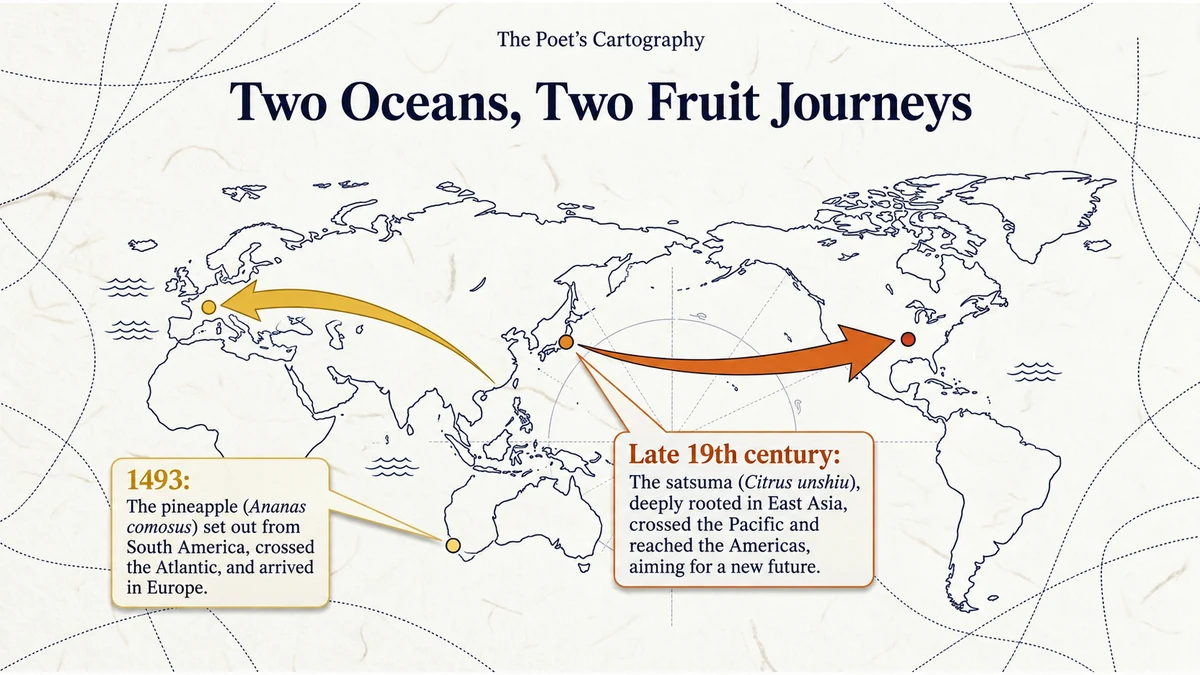
In Pineapple Story, a fruit already cultivated and enjoyed by Indigenous peoples of the Americas enters European accounts after Columbus encountered it in 1493. Pineapple then crossed the Atlantic toward Europe. That is one route in the much longer history of fruit cultivation.
Mandarin’s story begins within East Asia’s ancient citrus culture. Much later, Japanese satsumas crossed the Pacific to America. The contrast is between origins, oceans and cultural meanings; it is not a claim that pineapple traveled west to Europe while satsuma traveled east.
Qu Yuan’s Citrus: A Symbol of Steadfastness
For satsuma’s scientific name and proposed Japanese birthplace, see Mandarin Guide. Here, the focus is the broader citrus tradition that long predates this particular Japanese cultivar.
The Chinese poet Qu Yuan, traditionally dated to about 340–278 BCE, is associated with Ju Song, often translated as “Ode to the Orange,” in the Chu Ci collection. Its deeply rooted citrus tree has been interpreted as an image of loyalty, integrity and commitment to one’s native land. The poem’s precise date and circumstances are debated; its cultural force does not depend on identifying the tree as a modern satsuma.
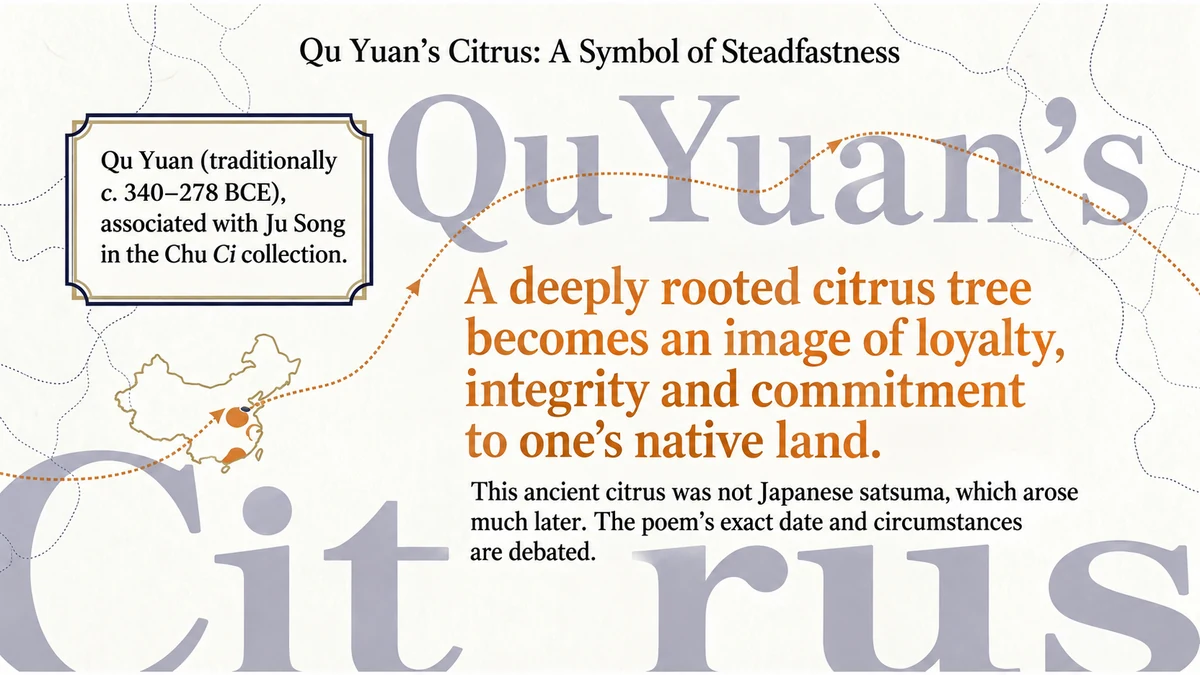
The citrus in this ancient poem was not Japanese satsuma, which arose much later. It belongs here as an early chapter in the cultural history of citrus, rather than proof that satsuma existed in ancient China.
Japan: When Seedlessness Was Said to Be Unlucky
The proposed birth of satsuma in Nagashima is covered in Mandarin Guide. A different part of its story concerns the way people interpreted its lack of seeds.
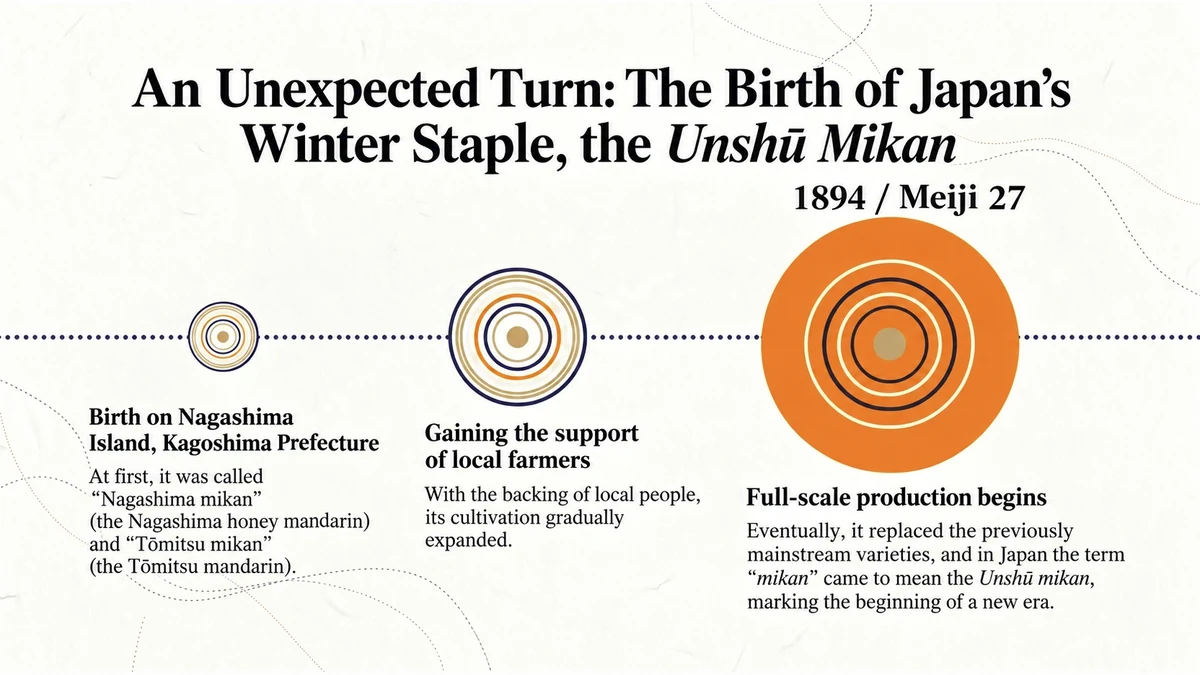
A frequently repeated account says that seedless fruit could evoke the absence of descendants in samurai society, giving early satsumas an unlucky reputation. Names such as Nagashima mikan and tō mikan are associated with the fruit’s early history. The seedlessness story should be read as a historical anecdote, not as a complete explanation for agricultural decisions throughout Japan.
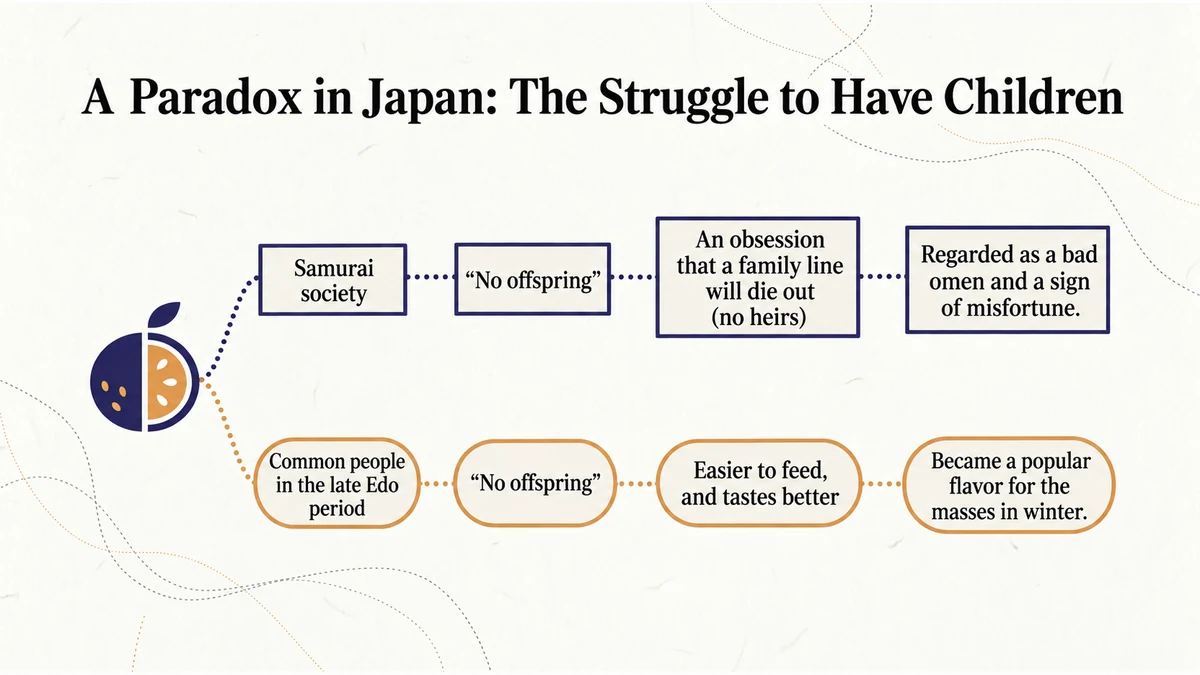
Over the late Edo and Meiji periods, cultivation expanded and the fruit’s flavor and ease of eating gained wider appreciation. By the late nineteenth century it was increasingly important in commercial production. Satsuma eventually became the familiar winter mikan on Japanese tables, replacing smaller mandarins in many everyday settings.
Across the Pacific: The Name Satsuma in America
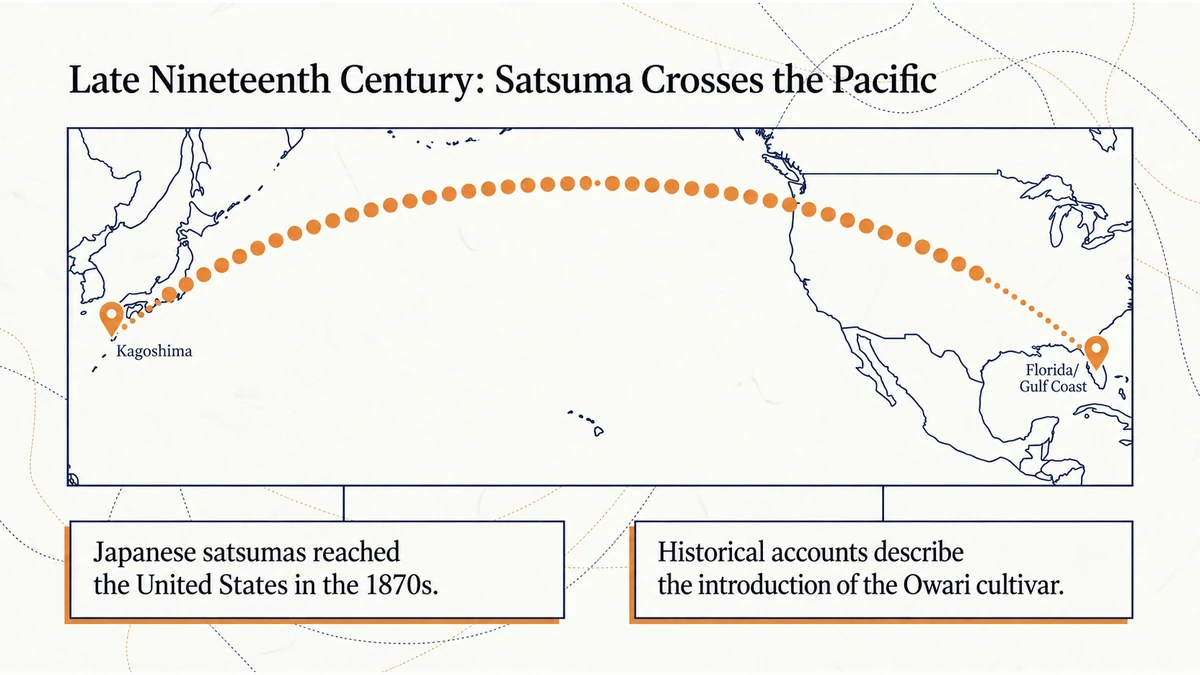
In the late nineteenth century, the fruit made another journey, crossing the Pacific from Japan to the United States.
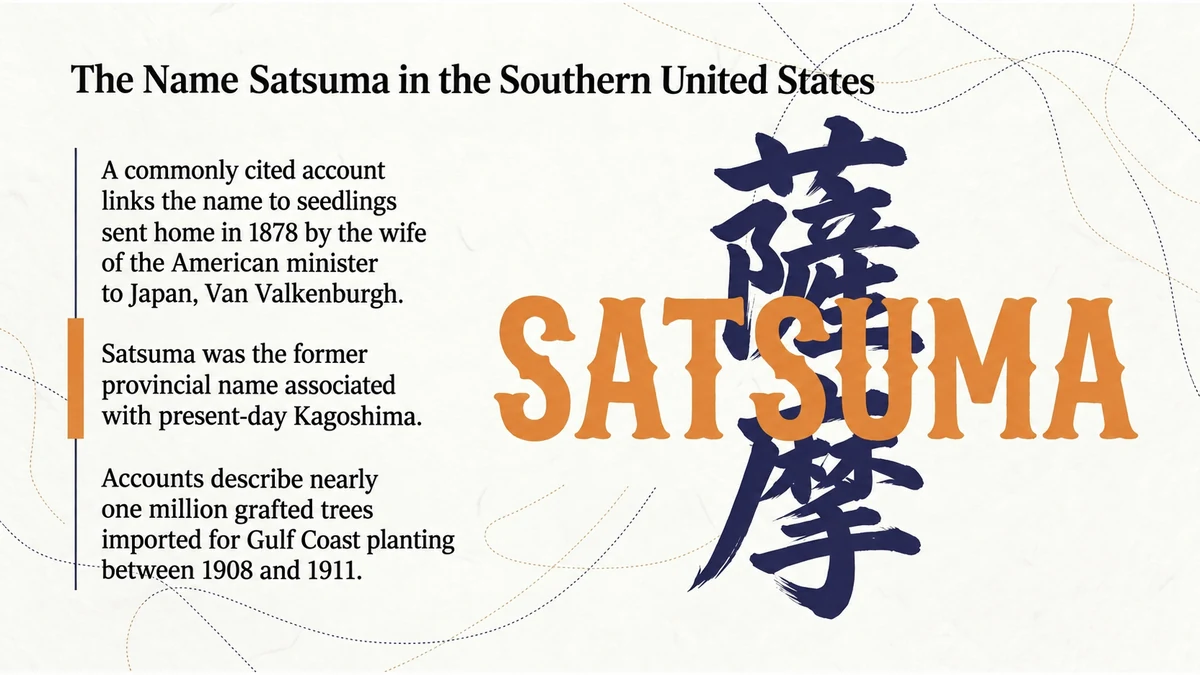
Historical accounts place introductions of Japanese satsumas in the United States in the 1870s and describe the arrival of the Owari cultivar. A commonly cited naming account links the name satsuma with seedlings sent home in 1878 by the wife of the American minister to Japan, Van Valkenburgh. Satsuma was the former provincial name associated with present-day Kagoshima: a Japanese regional name traveled with the fruit.
Accounts of subsequent expansion describe nearly a million grafted trees imported for planting in Gulf Coast states between 1908 and 1911. The fruit’s American story thus differs from pineapple’s reception in European horticulture or orange’s introduction to the Americas. Satsuma became part of southern American citrus farming while retaining a Japanese place name.
Vietnam: A Proverb and an Imperial Offering
Vietnamese Quýt has two contrasting cultural roles in the accounts considered here.
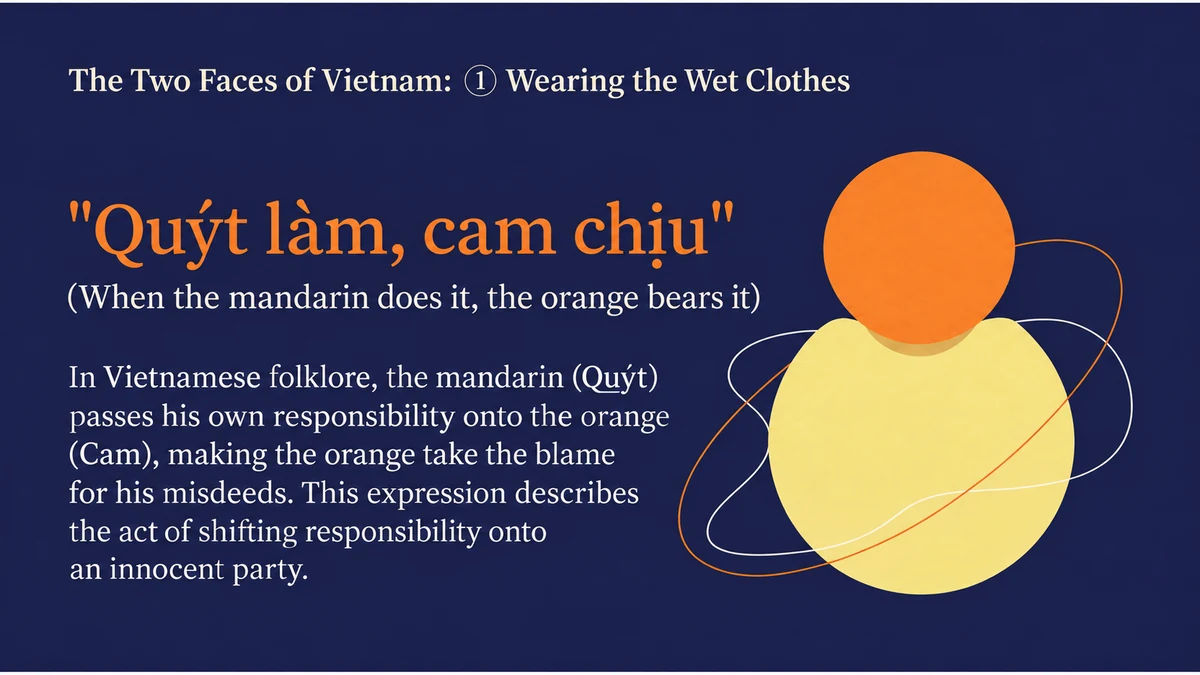
The saying Quýt làm, cam chịu places the action with mandarin and the burden with orange. It is used for a situation in which someone bears the consequences of another’s actions. See Orange Story for the related citrus story. The proverb is a linguistic image, rather than a botanical claim.
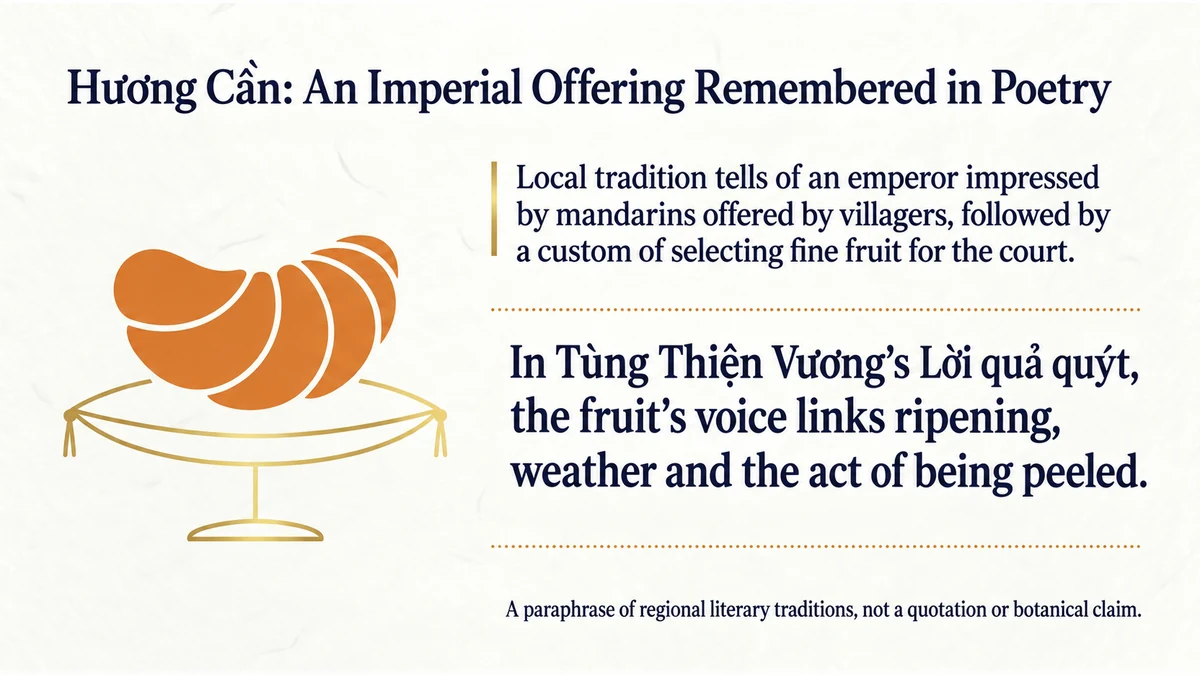
Quýt Hương Cần, from the Huế area, has a more honored reputation. Local tradition tells of an emperor impressed by fruit offered by villagers, followed by a custom of selecting fine fruit for the court. It is remembered as an imperial-offering specialty. The poet Tùng Thiện Vương’s Lời quả quýt gives the fruit a voice, linking ripening, weather and the intimate act of being peeled. Local accounts also associate the cultivar with Nguyễn Du and regional songs. These literary and court stories should be distinguished from documented cultivar biology.
This celebrated regional fruit also faced decline. Reports describe cultivation as severely depleted around 2002 and conservation recognition in 2005, followed by efforts to restore it. The contrast is striking: the broader mandarin plays the troublemaker in a proverb, while one local variety represents a region’s cherished food heritage.

Citrus Across Two Millennia of Poetry and Culture
Pineapple’s appearance in European accounts in 1493 is one recognizable episode; the fruit’s Indigenous cultivation and later global spread extend well beyond that encounter.
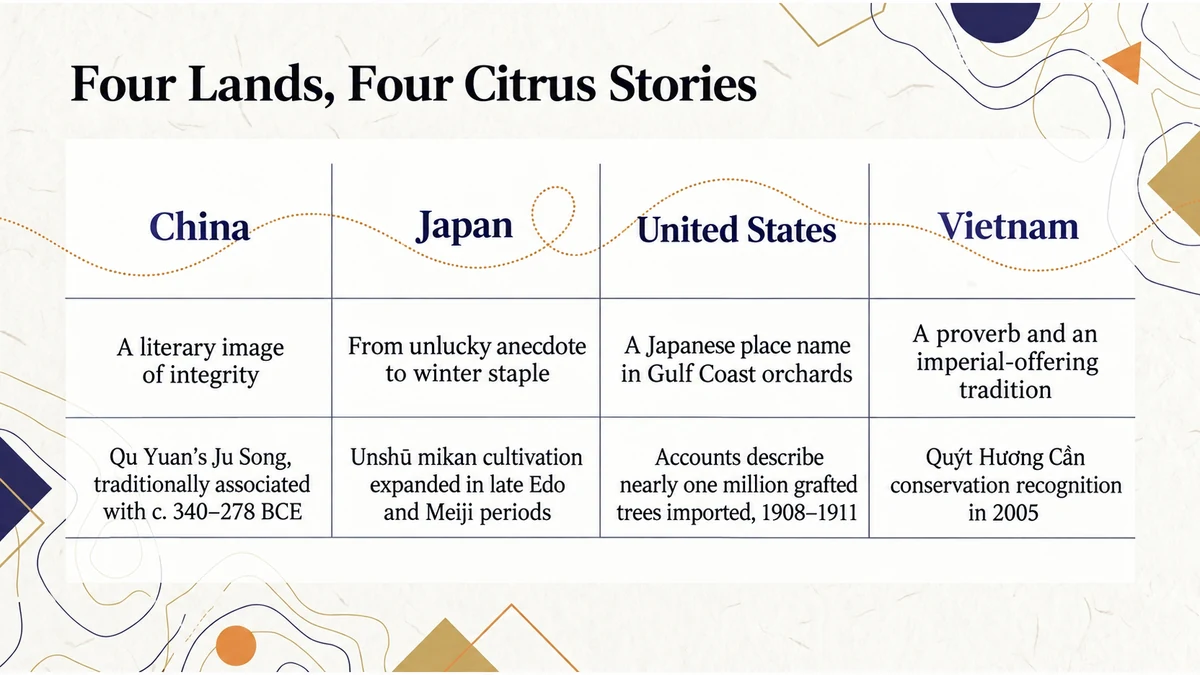
The citrus family’s cultural journey spans several stories. Chinese poetry uses a rooted tree as an image of integrity. A Japanese anecdote attaches an unlucky meaning to seedlessness, while later consumers value the same trait. In America, satsuma becomes a farming name. In Vietnam, mandarin appears both in a proverb about misplaced blame and in Hương Cần’s court-offering tradition.
These are not all stories about one identical cultivar. They connect the Japanese satsuma with a wider citrus world across places and centuries. Next time you peel a mandarin, consider how a familiar fruit can carry names, memories and meanings far beyond its orchard.

For biology, nutrition and Vietnamese regional varieties, return to Mandarin Guide. For choosing and peeling, see How to Eat Mandarins in Vietnam.
Frequently Asked Questions About Satsuma History
Why does satsuma have a Chinese place name in Japanese?
One explanation is that the name unshū honored Wenzhou’s reputation for citrus, although the satsuma itself is generally thought to have originated in Nagashima, Japan.
Why is it called satsuma overseas?
Satsuma was the former name of a province associated with present-day Kagoshima. The name became established internationally as Japanese fruit and seedlings traveled abroad in the nineteenth century.
Was Qu Yuan’s citrus poem about Japanese satsuma?
No. Its citrus tree predates Japanese satsuma. It is discussed here as part of the broader cultural history of citrus.
Related Mandarin Articles
- Biology, nutrition and varieties: Mandarin Guide.
- Buying, peeling and firsthand tasting: How to Eat Mandarins in Vietnam.
- Pineapple’s transatlantic story: Pineapple Story.
- The proverb Quýt làm, cam chịu: Orange Story.
- Fruit to explore in Vietnam: Vietnam Fruit Guide.
References
- Chu Ci and Jiu Zhang: Chinese-language overview sources on Qu Yuan and his citrus poem. Source 1, Source 2
- Gushiwen: text and commentary for Ju Song (Chinese). Source 1
- Fruit-column: the Japanese historical anecdote about seedlessness and descendants (Japanese). Source 1
- What’s Cooking America: “Satsuma Oranges,” an account of American introductions and naming. Source 1
- Learn Japanese with Yuko: “The US and the Satsuma Mandarin,” on American expansion. Source 1
- VDict and Thanh Niên: explanations of Quýt làm, cam chịu (Vietnamese). Source 1, Source 2
- VietnamPlus: Hương Cần harvest, literary associations and conservation background (Vietnamese). Source 1
- Vinfruits: local court-offering tradition and Hương Cần’s decline and recovery (Vietnamese). Source 1
