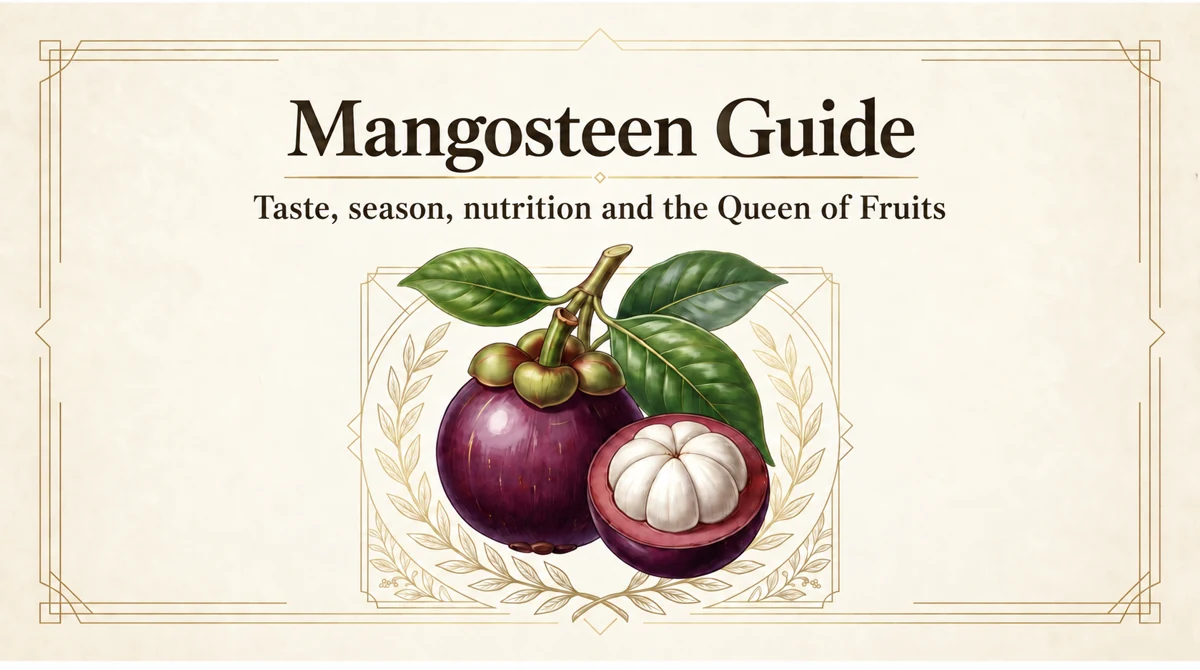
Mangosteen is a tropical fruit with a thick purple rind and soft white segments. It is widely known as the “Queen of Fruits,” but its biology is just as remarkable: cultivated mangosteen usually forms seeds through apomixis, without fertilization by pollen.
That does not mean every tree is genetically identical or that there is only one cultivar. Researchers have found genetic and morphological variation in cultivated populations, and some countries select superior lines. This guide distinguishes older assumptions from more recent findings.
Read on for a practical overview of taste, season, native range, nutrition, the Queen of Fruits name and mangosteen’s unusual reproductive biology.
What Is Mangosteen? Taste, Season and Origins at a Glance
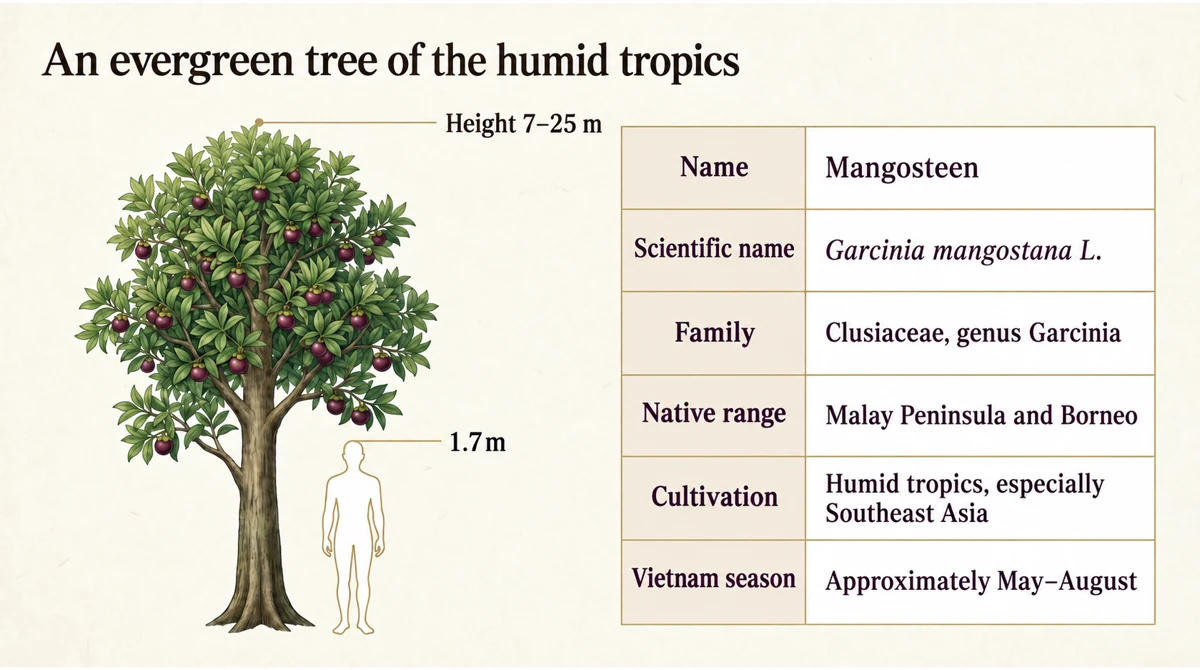
| Feature | Details |
|---|---|
| Common name | Mangosteen |
| Scientific name | Garcinia mangostana L. |
| Classification | An evergreen tree in the family Clusiaceae, genus Garcinia |
| Native range | The Malay Peninsula and Borneo, according to Kew’s Plants of the World Online |
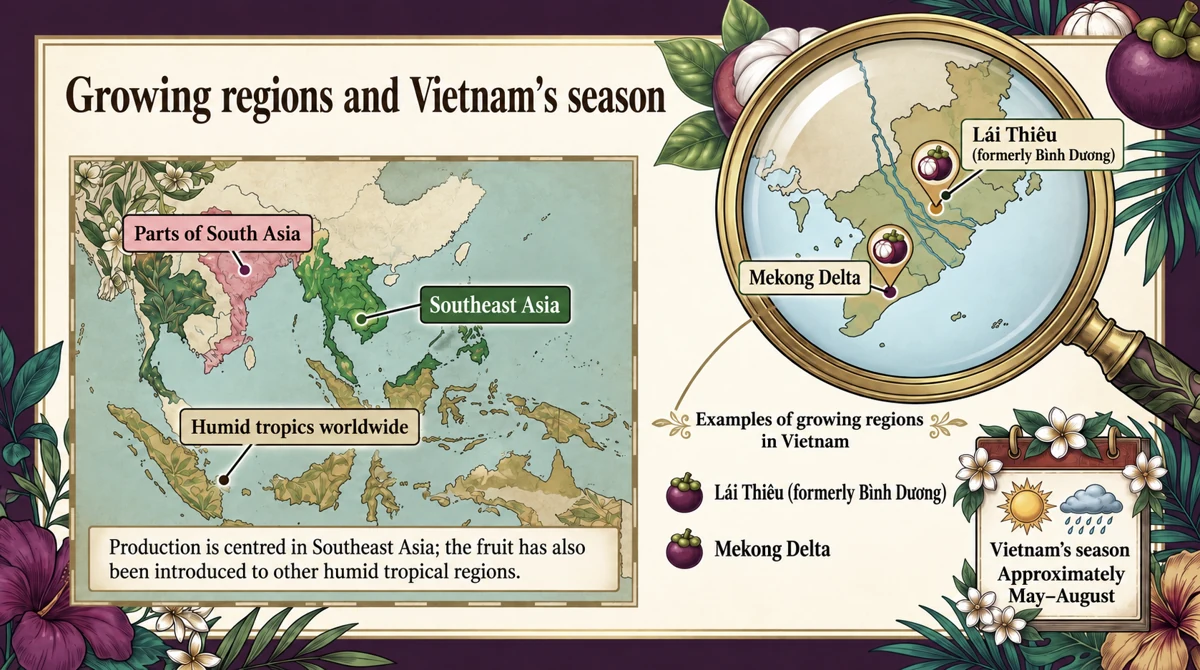
| Main growing regions | The humid tropics, especially Southeast Asia; also introduced to tropical parts of the Americas, Africa and Australia |
| Tree height | Approximately 7–25 m, depending on growing conditions |
| Typical availability in Vietnam | Approximately May–August; timing varies by location and year |
| Taste | Gentle sweetness and refreshing acidity |
| Texture | Soft, juicy, white segments |
| Edible part | The white segmented flesh, botanically the endocarp |
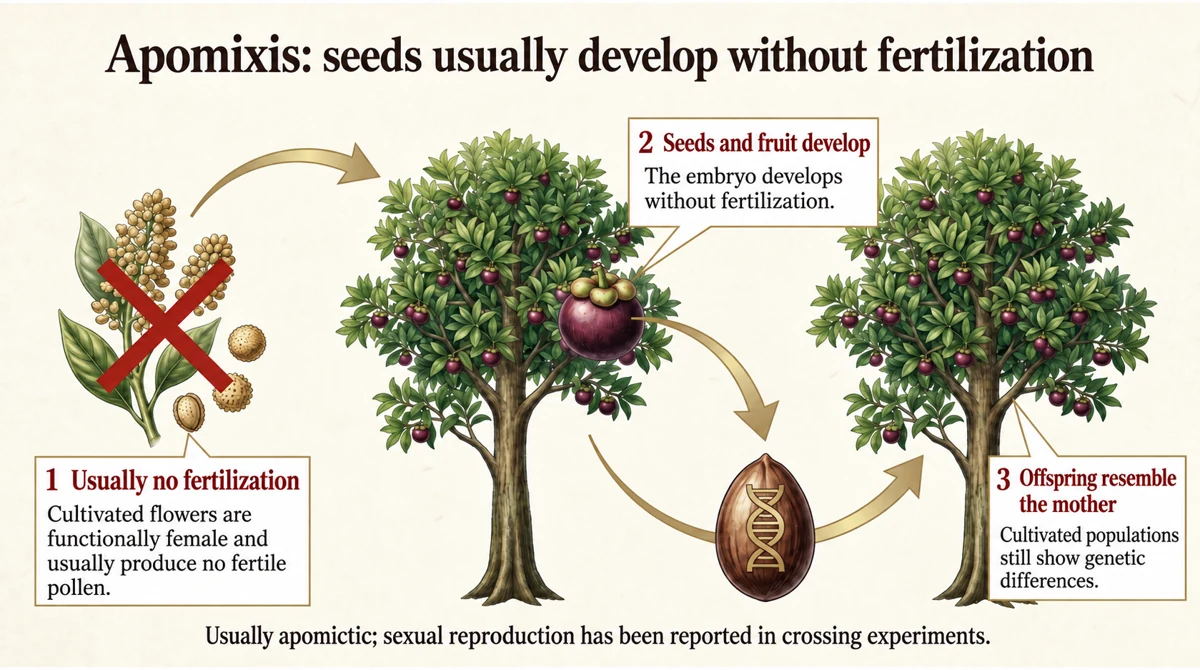
Apomixis: Seeds Usually Form Without Fertilization
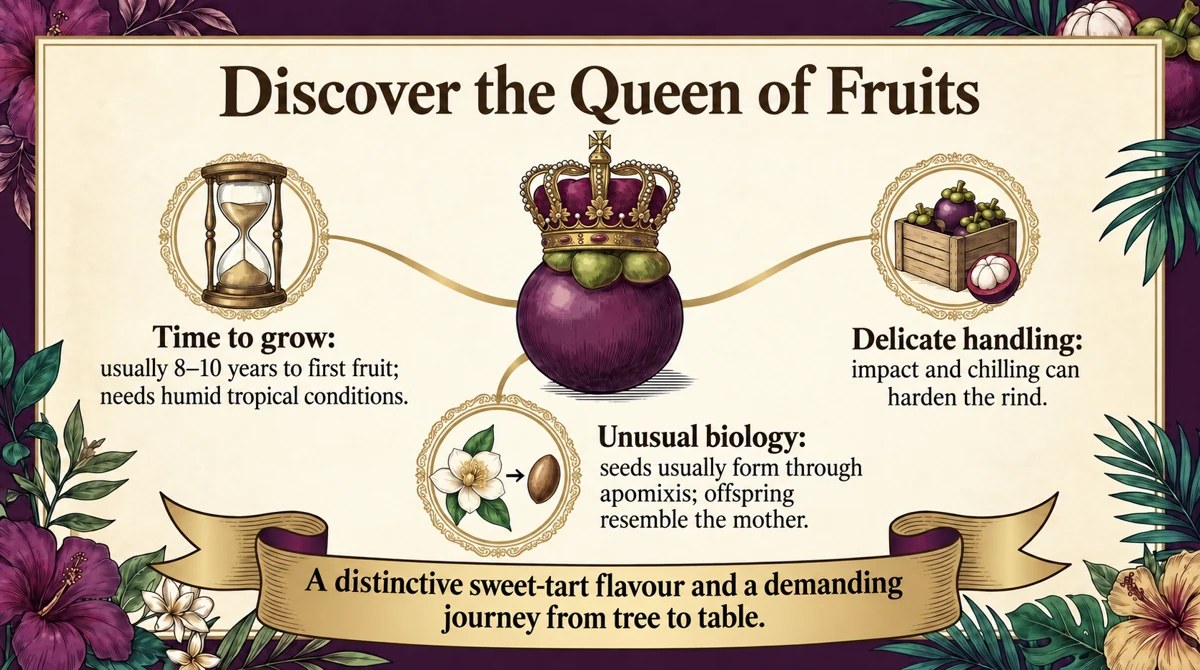
Cultivated mangosteen flowers are functionally female. Their stamen-like structures usually do not produce fertile pollen. Bagging experiments have shown that fruit can develop when pollen is excluded. Embryos develop from somatic cells within the ovule without fertilization.
This process is called apomixis. Offspring produced asexually closely resemble the mother tree, although genetic and morphological differences have been detected among cultivated populations.
Crossing experiments using pollen from a closely related botanical variety have also produced seedlings that may have arisen through sexual reproduction. It is therefore more accurate to say mangosteen usually reproduces through apomixis than to claim fertilization is impossible under every condition.
Does Mangosteen Really Have No Varieties?
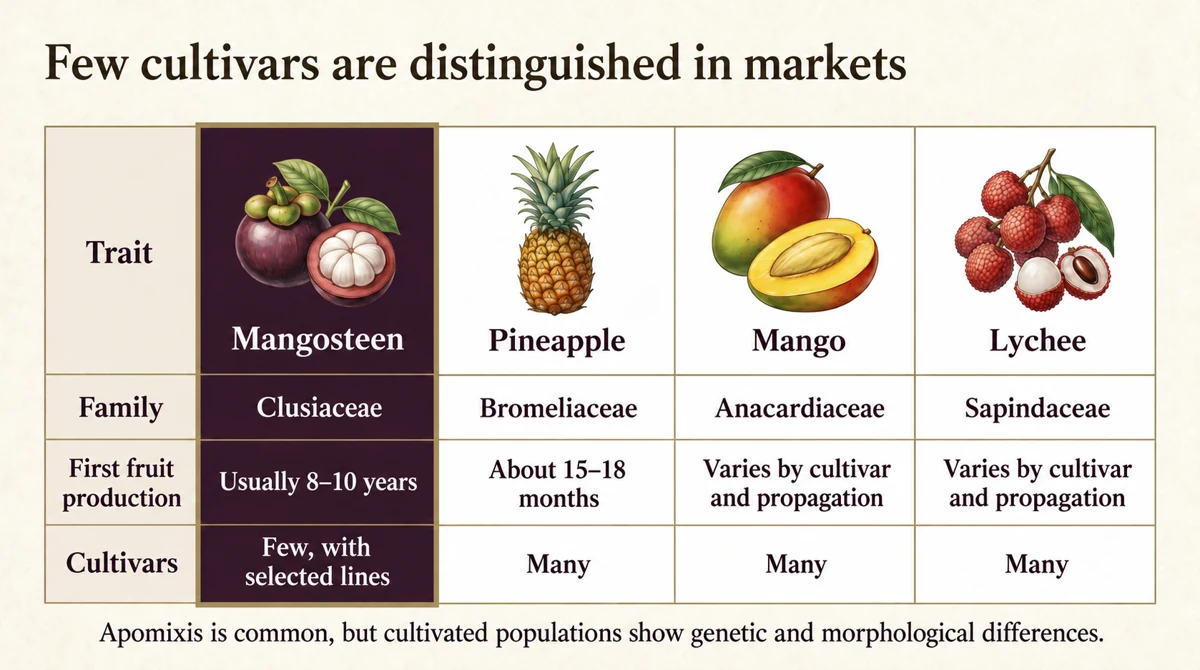
Markets do not commonly distinguish as many named mangosteen cultivars as they do mangoes or apples. Three different ideas should nevertheless be kept separate.
- Kew recognizes three botanical varieties within Garcinia mangostana.
- The widely cultivated edible fruit is mainly G. mangostana var. mangostana.
- Cultivated populations show morphological and genetic differences. Selected lines and cultivars have been reported in countries including Indonesia.
Rather than “no cultivars exist,” a closer description is that few cultivars are distinguished in markets, and the fruit looks relatively uniform.
The Star at the Base and the Number of Segments
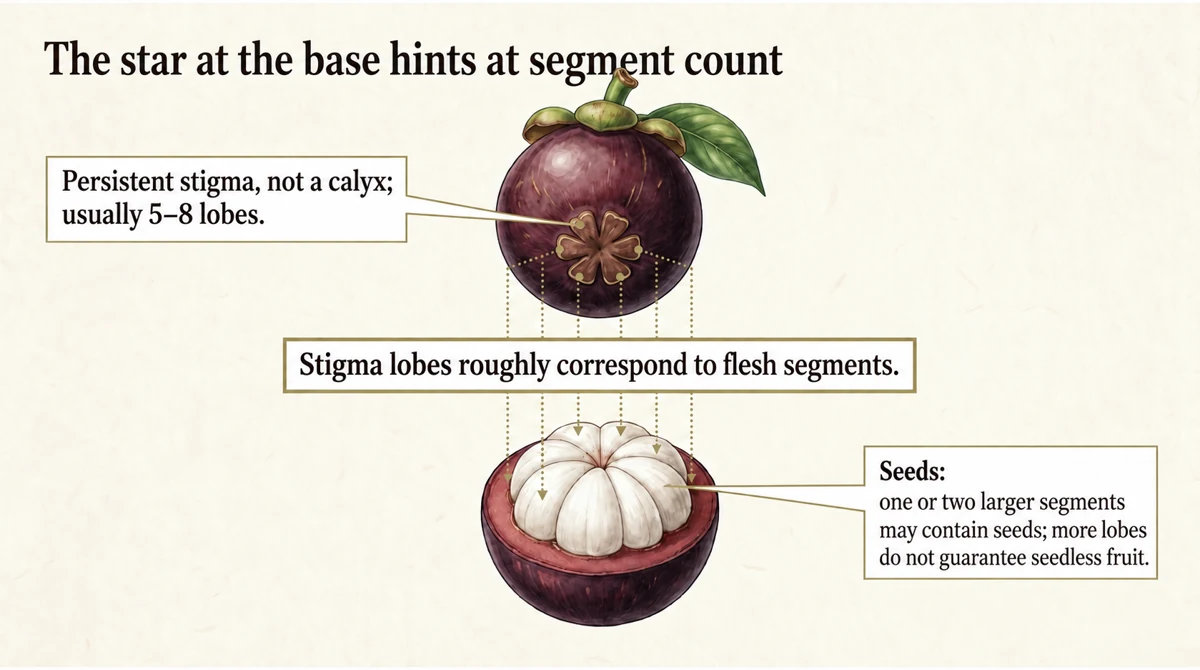
The star-shaped structure opposite the stem is a persistent stigma, the remains of the flower’s stigma, rather than a calyx. Its lobes correspond to the carpels of the ovary and offer a rough guide to the number of segments inside. Fruit commonly has around five to eight segments.
Large segments may contain seeds. More stigma lobes do not guarantee seedless fruit, so treat the star as an enjoyable clue to segment count.
A Long Wait for the First Harvest
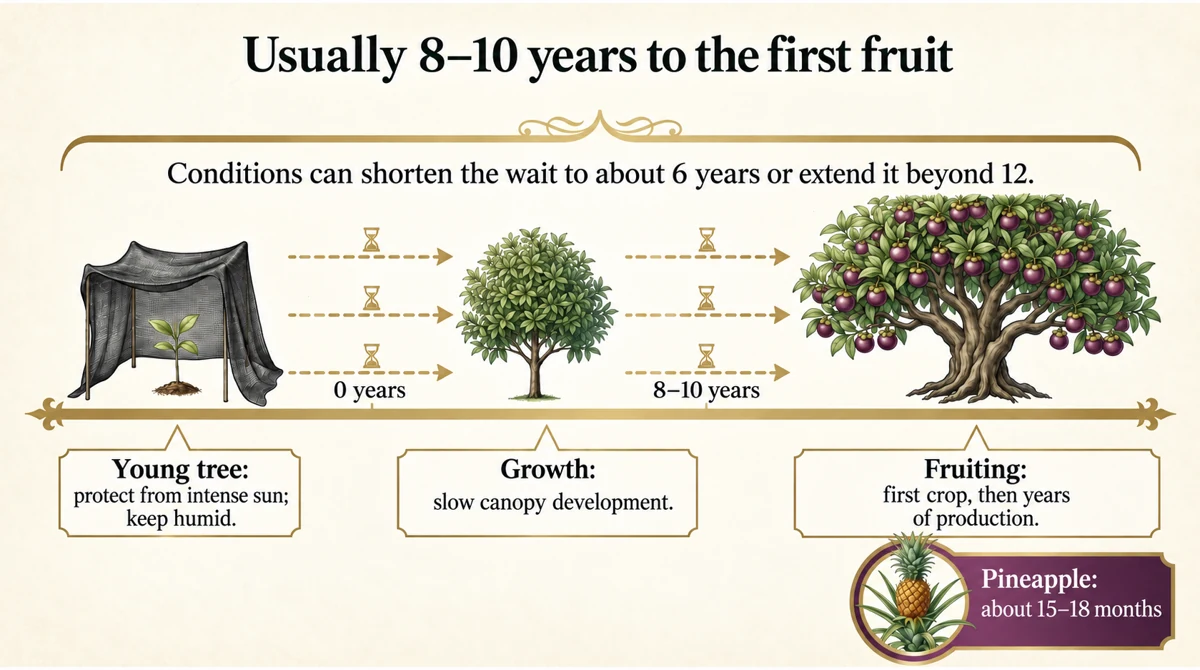
Young mangosteen trees grow slowly and need protection from intense sunlight. First fruiting is often described as taking about eight to ten years. Depending on the seedling, soil, temperature, water and management, some trees may fruit in roughly six years, while others take twelve years or longer.
This long juvenile period makes cultivation expansion and breeding difficult. Established trees, however, can keep producing for many years.
Why the Rind Becomes Hard, and How to Store the Fruit
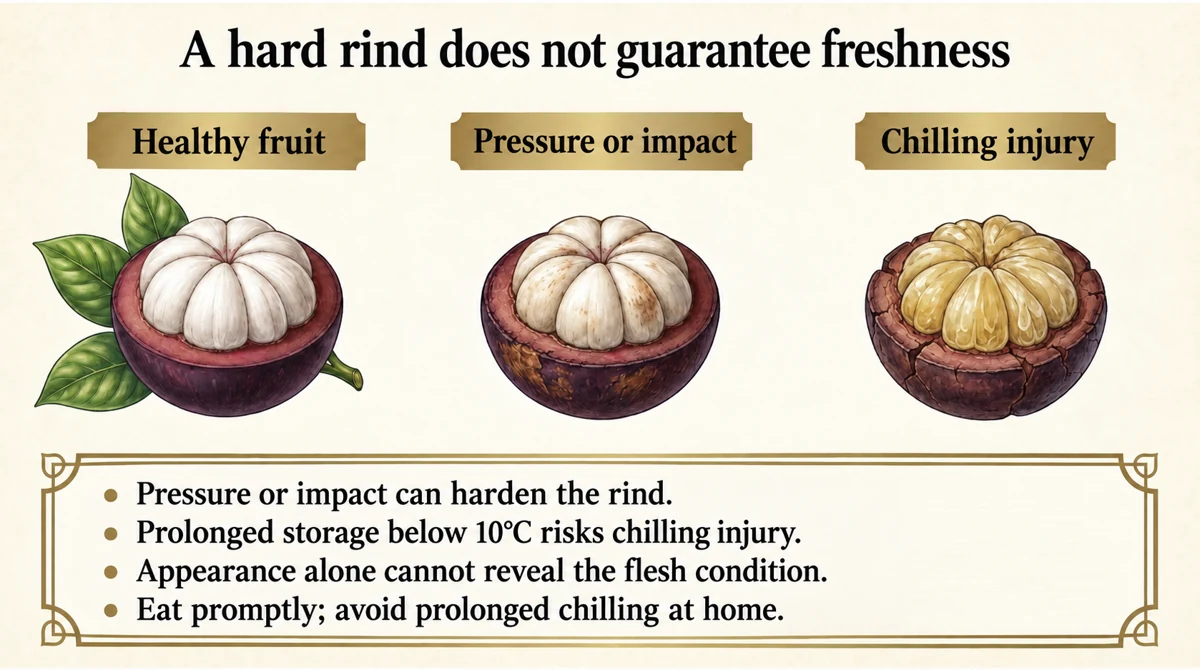
Rind hardening cannot be explained simply as an inevitable consequence of time after harvest. UC Davis describes hardening caused by pressure or impact during harvesting and transport; the flesh may also become firm or translucent. Prolonged storage below 10°C can cause chilling injury, including rind darkening and hardening.
Commercial guidance recommends 13 ± 1°C and 90–95% relative humidity, with a potential storage life of two to four weeks depending on ripeness. Household refrigerators have different conditions, so it is sensible to eat fruit promptly while the rind still has some give.
The Queen of Fruits and the Queen Victoria Story
Mangosteen has long been called the “Queen of Fruits” or “Queen of Tropical Fruits” in English. American plant explorer David Fairchild used “Queen of Fruits” in the title of a 1915 paper.
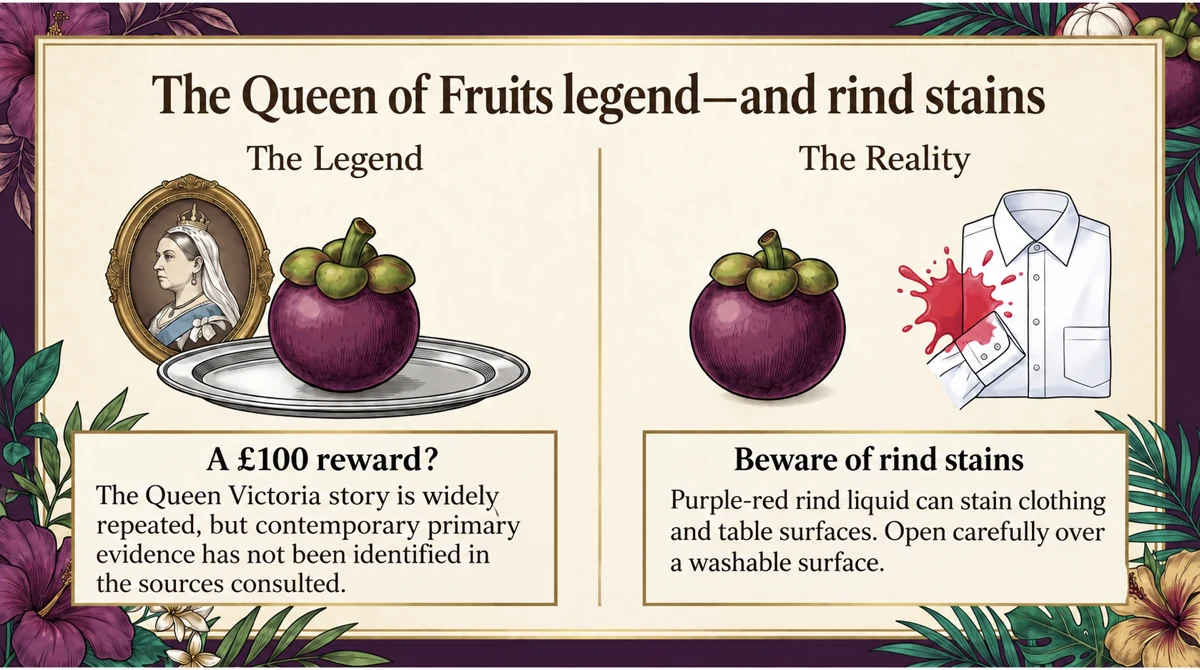
A famous story claims Queen Victoria promised a £100 reward to anyone who brought her fresh mangosteen. Within the sources consulted for this article, contemporary primary evidence supporting that reward has not been identified. It is treated here as an unverified legend, rather than an established historical fact.
The purple-red liquid from the rind can leave stubborn stains on clothing. Open the fruit over a surface that can be cleaned easily.
Mangosteen Nutrition and Xanthones
The Japanese Standard Tables of Food Composition list the following values per 100 g of raw edible mangosteen.
| Nutrient | Amount |
|---|---|
| Energy | 71 kcal |
| Water | 81.5 g |
| Dietary fibre | 1.4 g |
| Potassium | 100 mg |
| Calcium | 6 mg |
| Folate | 20 μg |
| Vitamin C | 3 mg |
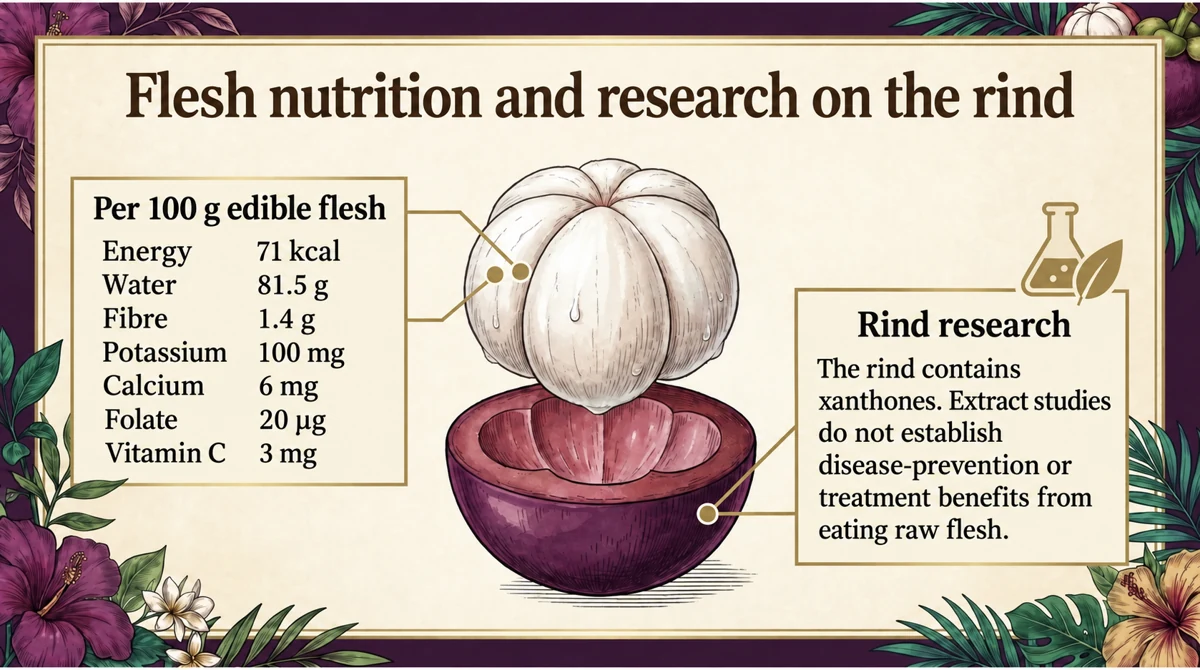
Mangosteen rind contains xanthones, which have been investigated in studies including cell and animal experiments. Findings about rind extracts do not establish that eating raw flesh prevents or treats disease, and this article does not establish the effectiveness of supplements.
Mangosteen Origins, Growing Areas and Season in Vietnam
Mangosteen is grown mainly in southern Vietnam. Lái Thiêu, historically part of Bình Dương Province, is a well-known growing area. The former province’s tourism authority described its orchard region as having about 200 years of history. “Măng cụt Lái Thiêu” was registered as a collective trademark in 2013.
Production figures differ in year and methodology, and some international statistics combine mangosteens with mangoes and guavas. This article therefore avoids unsupported claims about a country’s global rank.
Commercial Imports to Japan and Fruit in Travellers’ Baggage
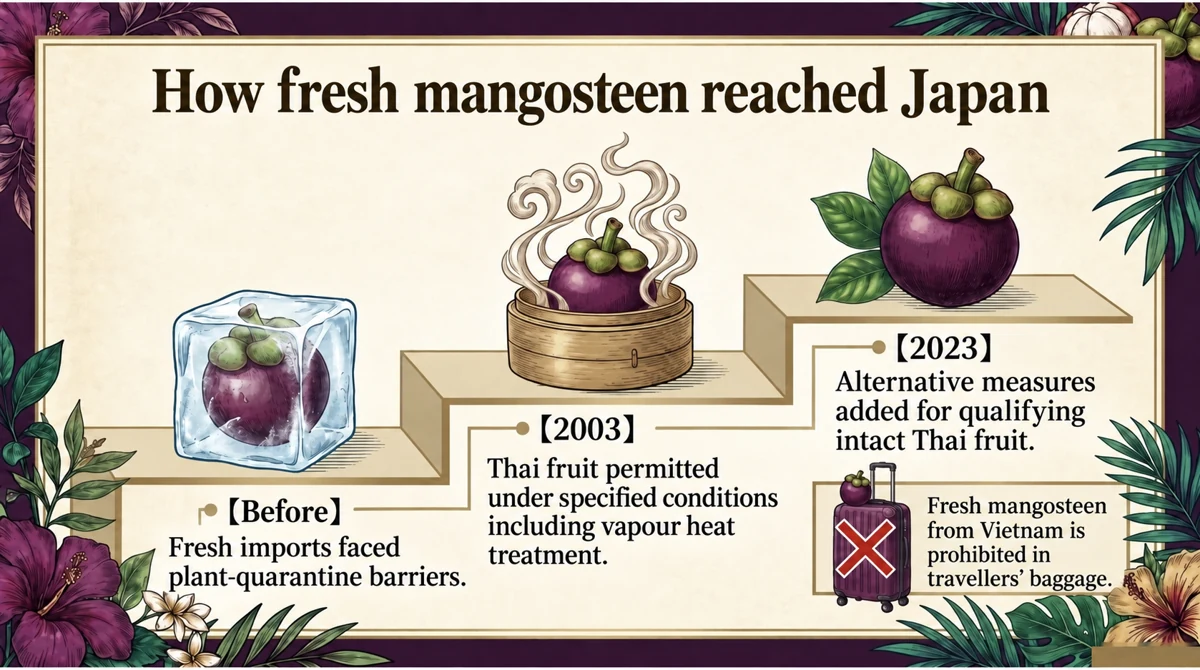
In April 2003, Japan permitted fresh mangosteens from Thailand under specified conditions, including vapour heat treatment. In August 2023, an alternative pathway was added using measures including designated orchard management, removal of damaged fruit, sorting and inspection. Qualifying intact fruit can enter through that pathway without vapour heat treatment.
These are approved commercial export pathways for Thai fruit. Japan’s Plant Protection Station lists fresh mangosteen from Vietnam as prohibited in travellers’ baggage. Requirements can change, so check the official information before travelling.
Frequently Asked Questions About Mangosteen
What does mangosteen taste like?
It combines gentle sweetness with refreshing acidity. The white flesh is soft and juicy.
When is mangosteen in season in Vietnam?
Approximately May–August, with variation by growing area and weather.
Why is it called the Queen of Fruits?
The definitive origin of the name is uncertain. Fairchild used “Queen of Fruits” in a 1915 paper title. The Queen Victoria £100 reward story remains unsupported by contemporary primary evidence within the sources consulted here.
Can you buy mangosteen in Japan?
Fresh Thai mangosteens meeting specified quarantine conditions are sometimes sold. Availability depends on the season and retailer; check stores specializing in imported fruit.
Key Points
- Cultivated mangosteen usually forms seeds through apomixis without fertilization by pollen.
- Few cultivars are distinguished in markets, which is different from saying no cultivars exist.
- The star at the base is a persistent stigma and offers a clue to segment count.
- Impact and chilling injury can harden the rind; elapsed time alone does not explain every case.
- Queen Victoria’s £100 reward is treated as an unverified legend.
- Fresh mangosteen cannot be brought from Vietnam into Japan in travellers’ baggage.
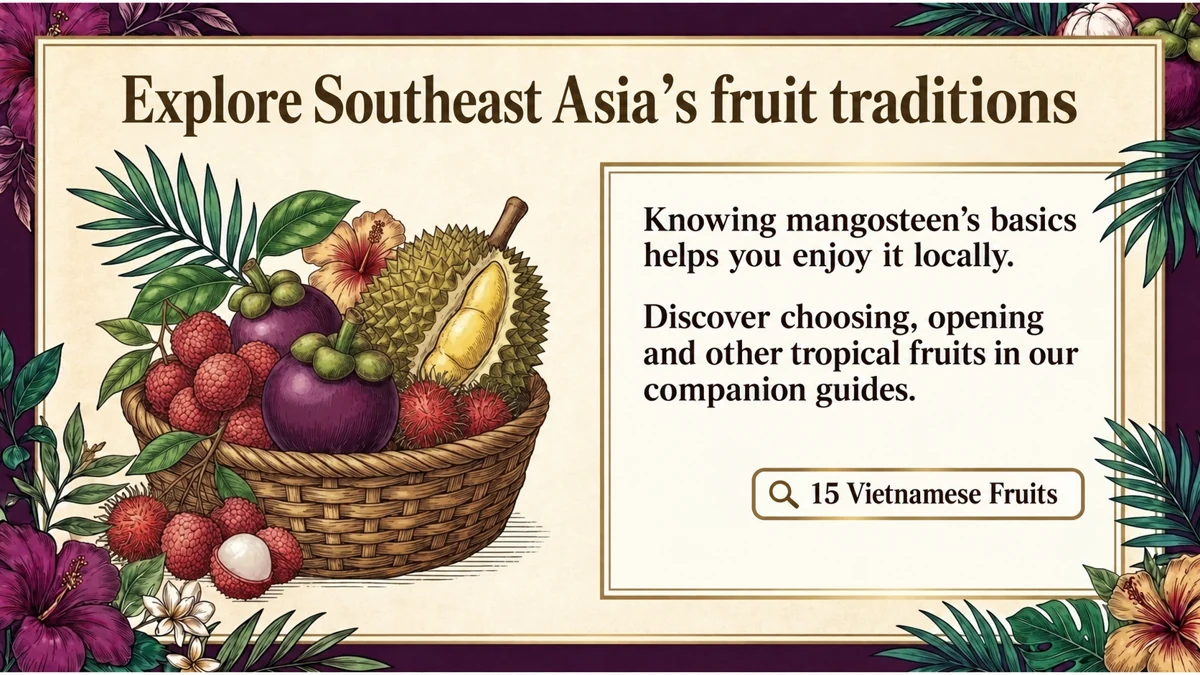
For more fruit ideas, explore 15 Vietnamese Fruits. For practical buying and opening advice, see How to Eat Mangosteen in Vietnam; for the Queen of Fruits name and its historical journey, read Mangosteen History and Stories.
References
- Royal Botanic Gardens, Kew: Garcinia mangostana L.
- Yao et al.: The origin of cultivated mangosteen
- FAO: Fruits of Vietnam
- UC Davis Postharvest Research and Extension Center: Mangosteen
- Japan’s Ministry of Education: Food Composition Database, raw mangosteen (Japanese)
- Japan’s Ministry of Agriculture: import-access and plant-quarantine measures (Japanese)
- Japan’s Plant Protection Station: traveller imports from Vietnam (Japanese)
- Vietnam’s Ministry of Industry and Trade: developing the market for Lái Thiêu mangosteen (Vietnamese)
- Bình Dương Tourism: Lái Thiêu orchards
Japan’s Plant Protection Station: traveller imports from Vietnam (Japanese) — Reviewed 10 October 2026.
Place-name note: Bình Dương Province merged into the expanded Ho Chi Minh City on 1 July 2025. Historical source names are retained in the references. Ho Chi Minh City People’s Council (Vietnamese)