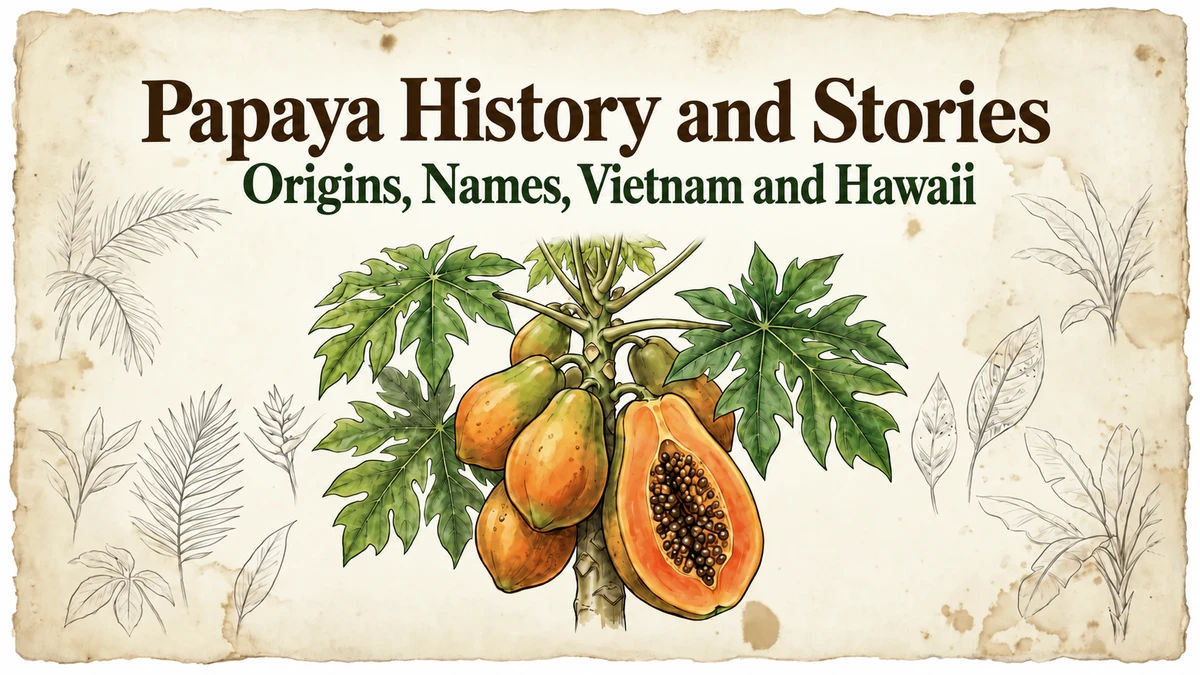
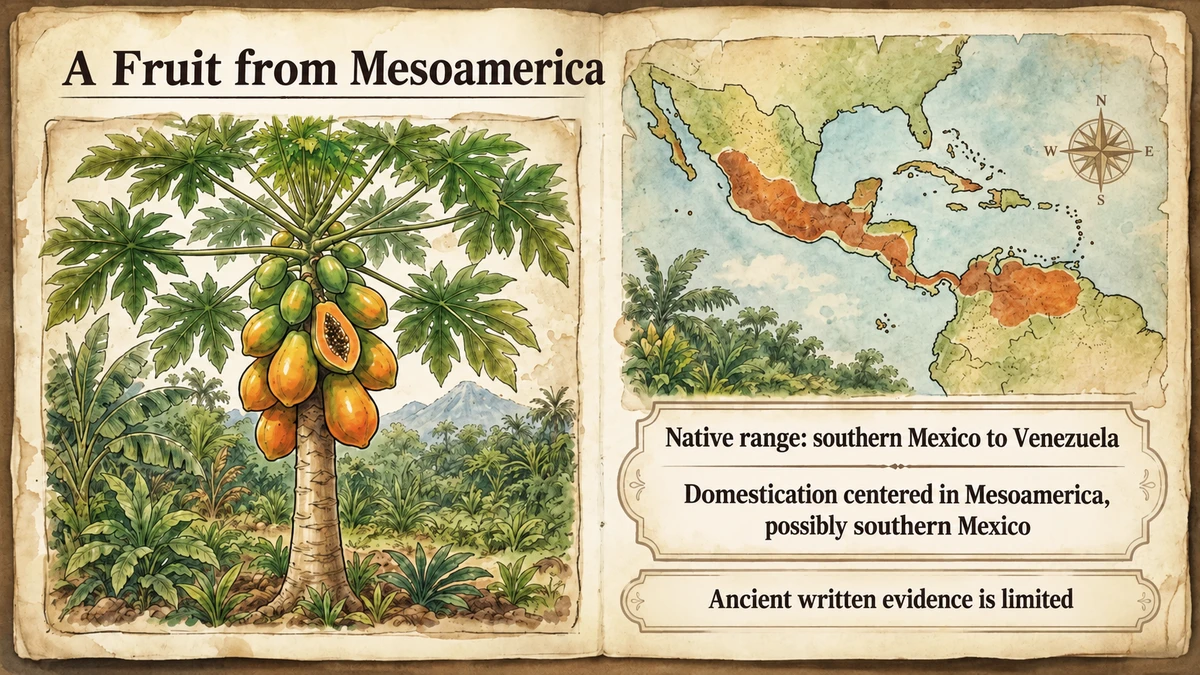
Papaya’s native range extends from southern Mexico to Venezuela. Domestication centered in Mesoamerica, and maritime networks carried it to tropical Asia and Africa from the 16th century.
Its story includes travel, names, Vietnamese wordplay and plant-disease research. Each adds a different layer to this familiar tropical fruit.
For the plant’s biology, see Papaya Guide; for shopping and preparation, see How to Eat Papaya in Vietnam.
Origins: a fruit from Mesoamerica
Kew gives its native range as southern Mexico to Venezuela. A review of domestication and genetic diversity places the center of domestication in Mesoamerica, possibly especially southern Mexico.
Learn more about its growth and flowers in Papaya Guide.
Where did the name “papaya” come from?
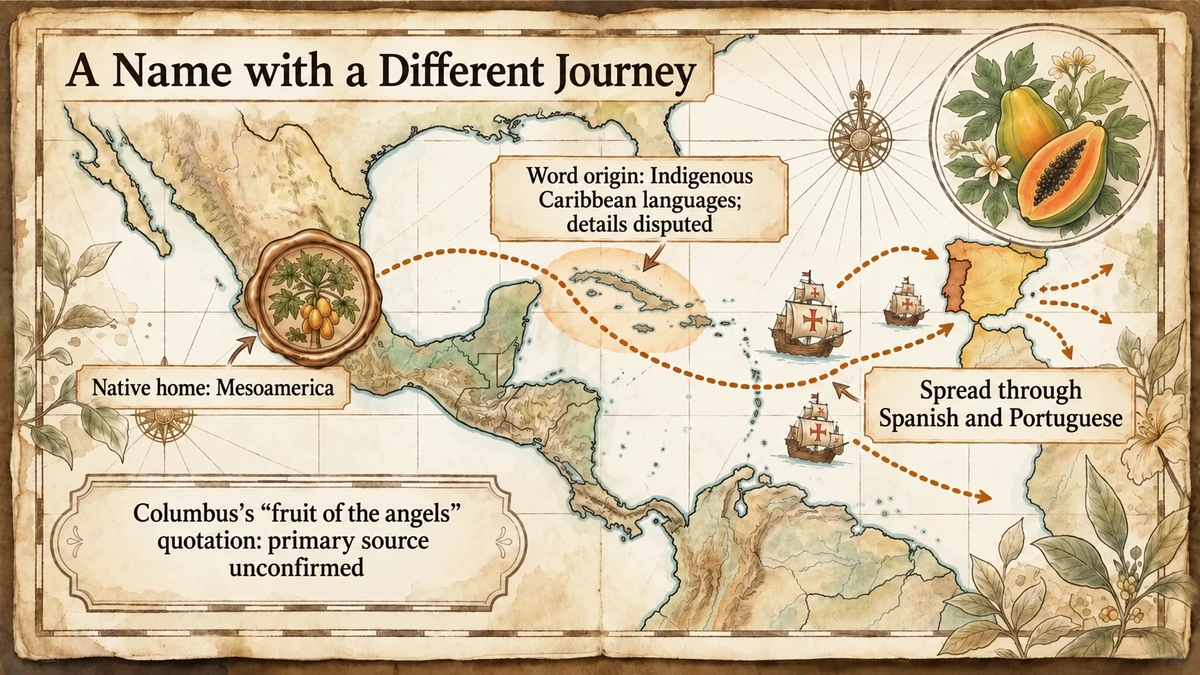
The name spread through Spanish and Portuguese and is generally traced to Indigenous languages of the Caribbean. Accounts differ about the exact language and word form, so one precise origin should not be presented as settled fact.
Across the seas in the 16th century
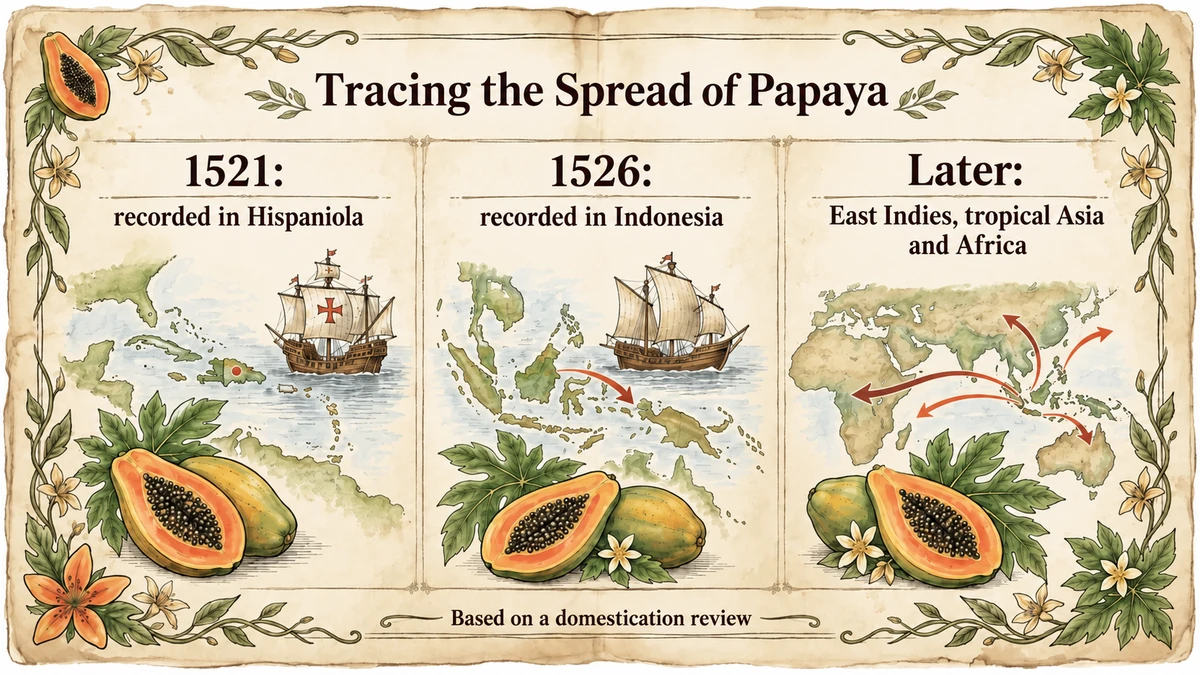
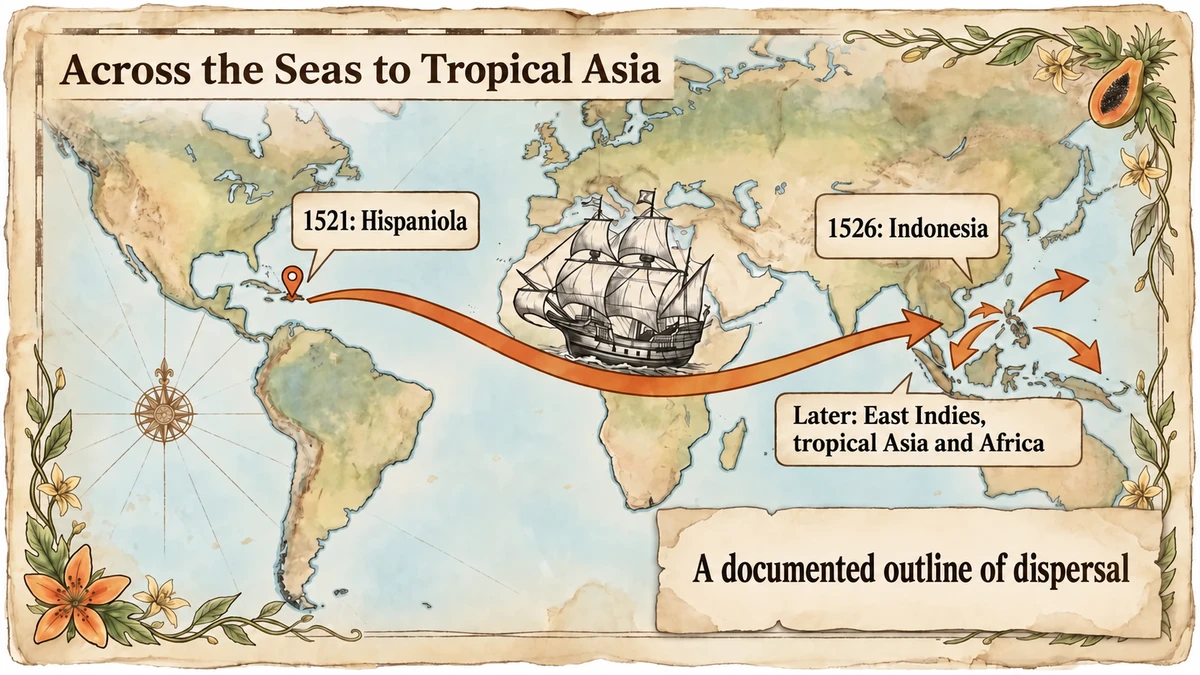
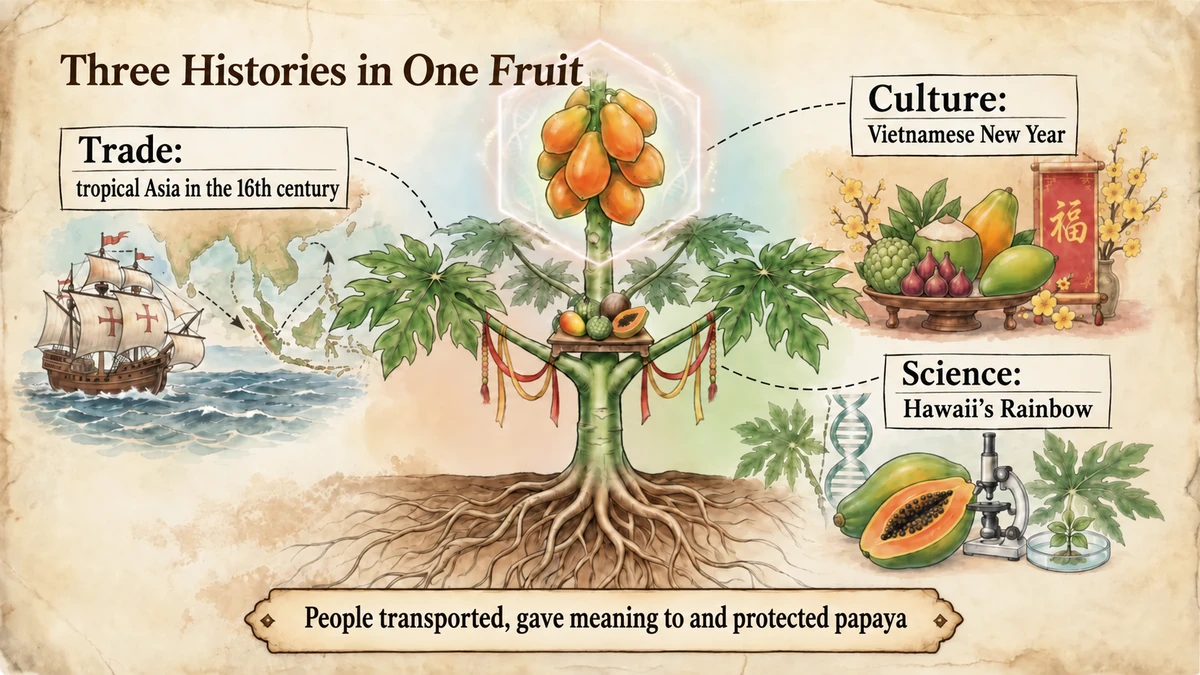
A domestication review records papaya in Hispaniola in 1521 and Indonesia in 1526, followed by the East Indies, tropical Asia and Africa. Spanish and other colonial trade networks helped carry the fruit and its seeds between regions.
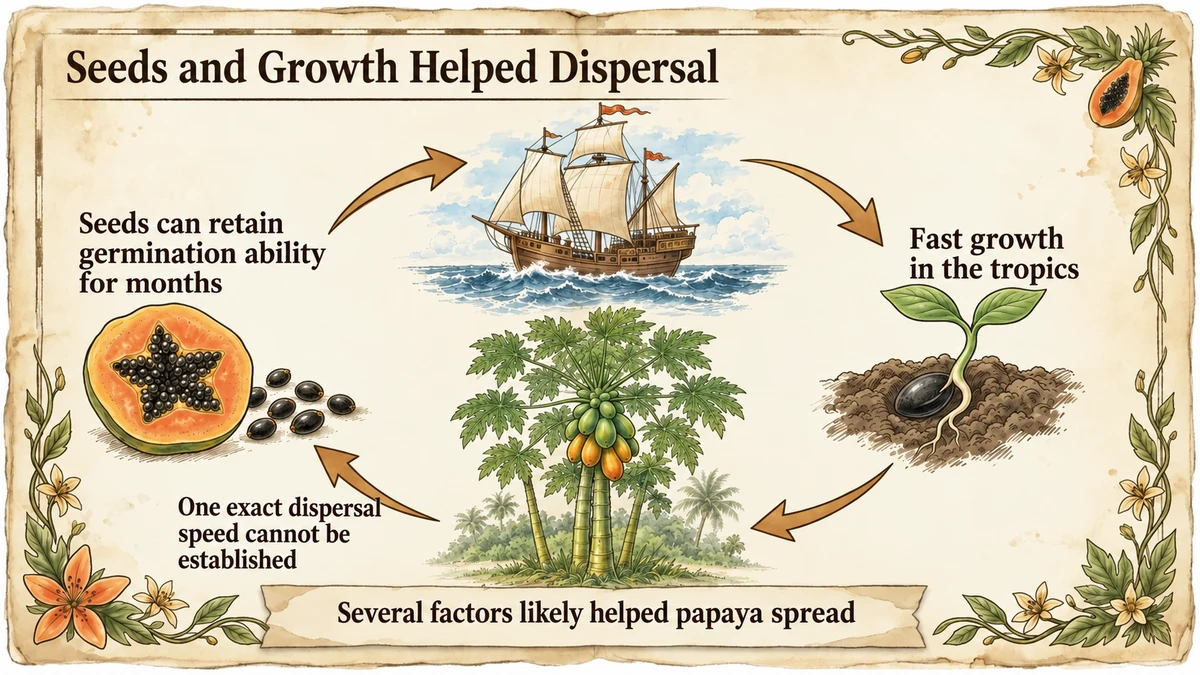
Seeds can retain their ability to germinate for months, and the plant grows quickly in suitable tropical conditions. Those features may have helped its spread, although one exact dispersal speed cannot be established.
Vietnamese Tết: a wish for “enough”
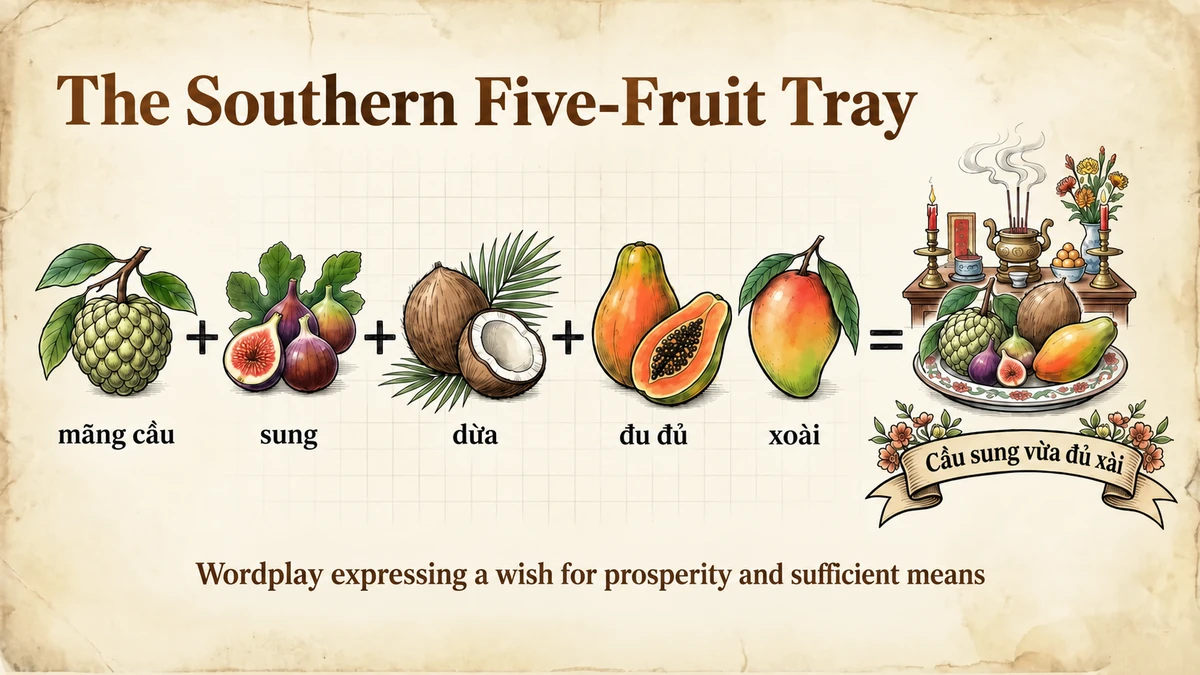
In Vietnamese, papaya is đu đủ. The word đủ means “enough,” making it useful in New Year wordplay.
Vietnam’s Food Safety Agency describes a southern five-fruit tray with custard apple (mãng cầu), fig (sung), coconut (dừa), papaya (đu đủ) and mango (xoài). Their names echo “Cầu sung vừa đủ xài,” expressing a wish for prosperity and enough means to live on.
Mango History and Stories explores how xoài echoes xài, “to spend/use.” Here papaya contributes đủ, “enough.” The custom uses sound and meaning together, rather than a literal sentence formed from fruit names.

Hawaii: papaya ringspot virus and Rainbow
Hawaii developed an important papaya industry in the 20th century, but papaya ringspot virus (PRSV) posed a severe threat.
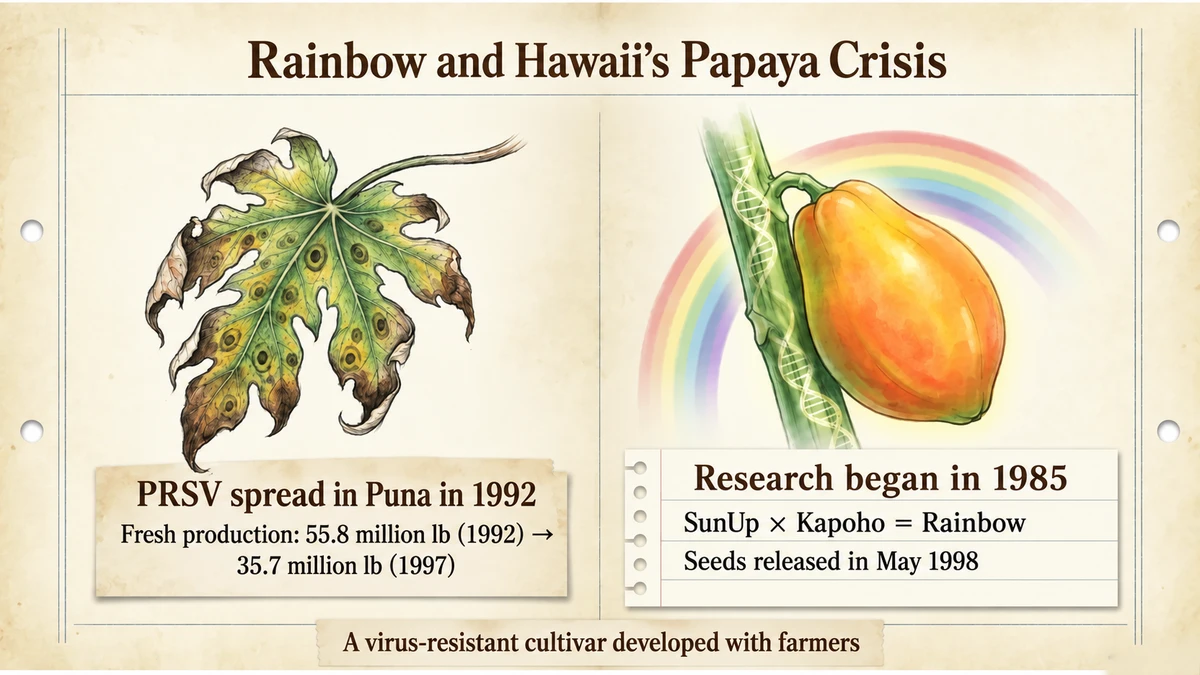
PRSV spread into Puna in 1992. The cited account reports fresh production falling from 55.8 million pounds in 1992 to 35.7 million pounds in 1997.
Dennis Gonsalves and collaborators began research in 1985. A virus coat-protein gene was introduced to develop the red-fleshed transgenic SunUp line. Crossing SunUp with the non-transgenic, yellow-fleshed Kapoho cultivar produced Rainbow.
After regulatory approval and licensing arrangements, seeds were distributed in May 1998. Farmers adopted the resistant cultivar rapidly.
Centuries after ships carried papaya across oceans, laboratories and fields became another setting for its history: researchers and farmers worked to protect a crop from disease.
Trade, culture and science in one fruit
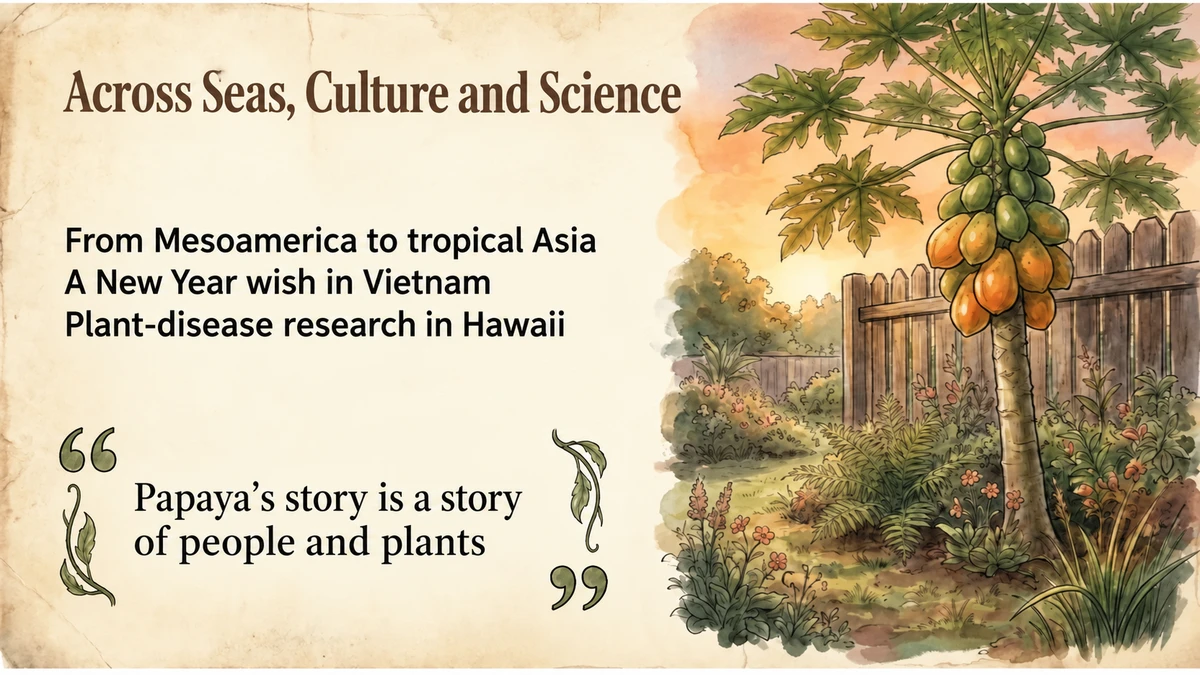
Papaya travelled from Mesoamerica to tropical Asia, became part of Vietnamese New Year wordplay and later stood at the center of plant-disease research in Hawaii.
Its history is interesting enough without adding unsupported quotations or colorful origin myths. The available sources show how people transported the plant, gave it meaning and worked to protect it.
Frequently asked questions
Where did papaya originate?
Its native range is southern Mexico to Venezuela; domestication centered in Mesoamerica, possibly southern Mexico.
Where did its name come from?
It spread through Spanish and Portuguese and is generally traced to Indigenous Caribbean languages, with details disputed.
Why is papaya used at Vietnamese Tết?
Its Vietnamese name, đu đủ, echoes đủ, “enough,” in New Year wishes for a sufficient life.
How was Rainbow papaya developed?
Rainbow came from crossing SunUp with Kapoho. Seeds were released in May 1998.
Related articles
References
- Kew Plants of the World Online: Carica papaya
- Frontiers: Papaya domestication and genetic diversity review
- Online Etymology Dictionary: Papaya
- Vietnam Food Safety Agency: The five-fruit tray at Tết
- American Phytopathological Society: Transgenic virus-resistant papaya
- American Phytopathological Society: Hawaiian Rainbow papaya
