Banana History: The 1516 Caribbean Crossing & Banana Republics
Published October 9, 2026
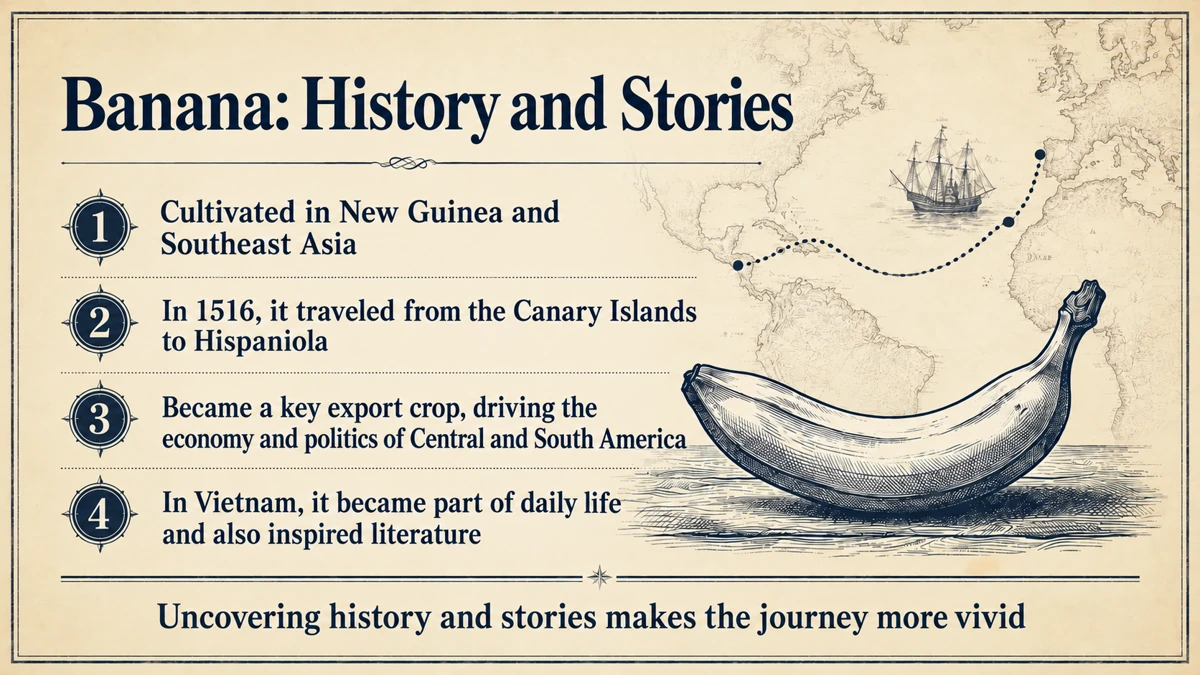
Even the bananas always available at the supermarket have a long history of crossing continents. Domesticated in New Guinea and Southeast Asia, they spread with human migration and trade to South Asia, the Middle East and Africa, then crossed the Atlantic to the Caribbean in the early sixteenth century.
Compared with the history of pineapples, which traveled from South America to Europe, bananas reveal a contrasting direction of movement across the Atlantic during the Age of Exploration. Neither journey was a simple straight line, but following these fruits brings trade and everyday life into view.
This article follows bananas from their origins and worldwide spread to proposed explanations for the scientific name Musa, the background of “banana republic,” and an original children’s story from Vietnam.
For varieties, seasons and nutrition, see the Banana Guide. For choosing, cooking and storing them locally, see How to Eat Bananas in Vietnam.
Banana Origins and Domestication: New Guinea and Southeast Asia
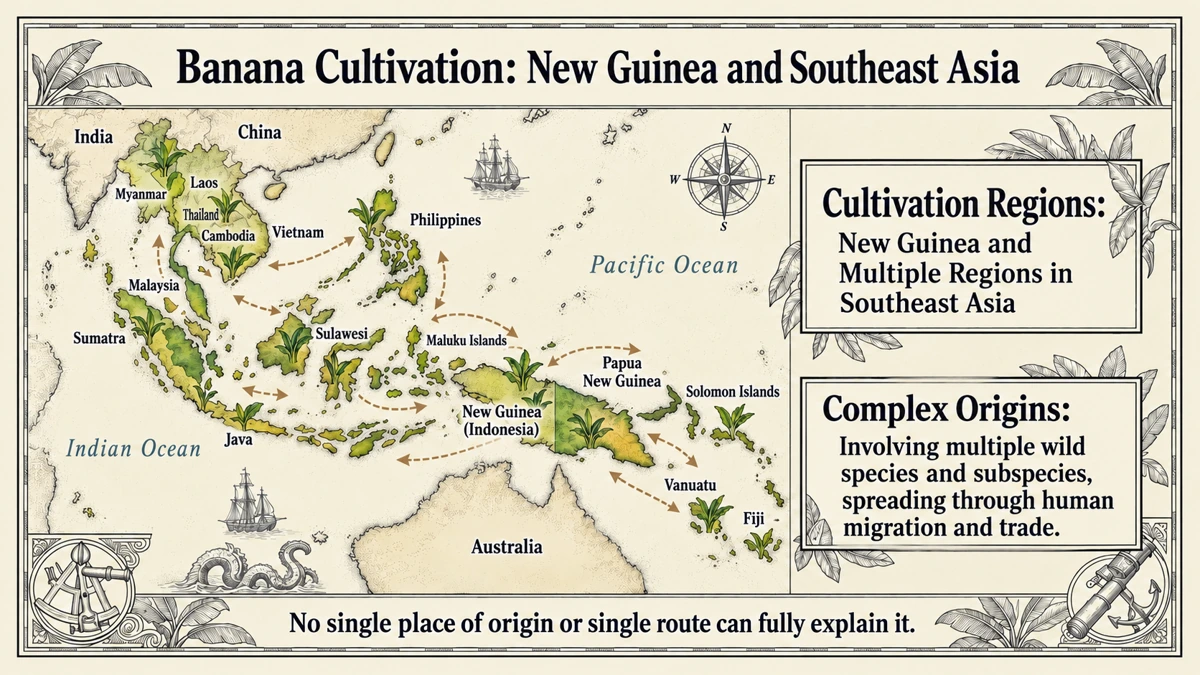
Edible bananas are thought to have been domesticated in several parts of New Guinea and Southeast Asia. Their major ancestors are Musa acuminata and Musa balbisiana, but recent genetic research points to a complex history involving other wild species and multiple subspecies. The companion Banana Guide explains this in more detail.
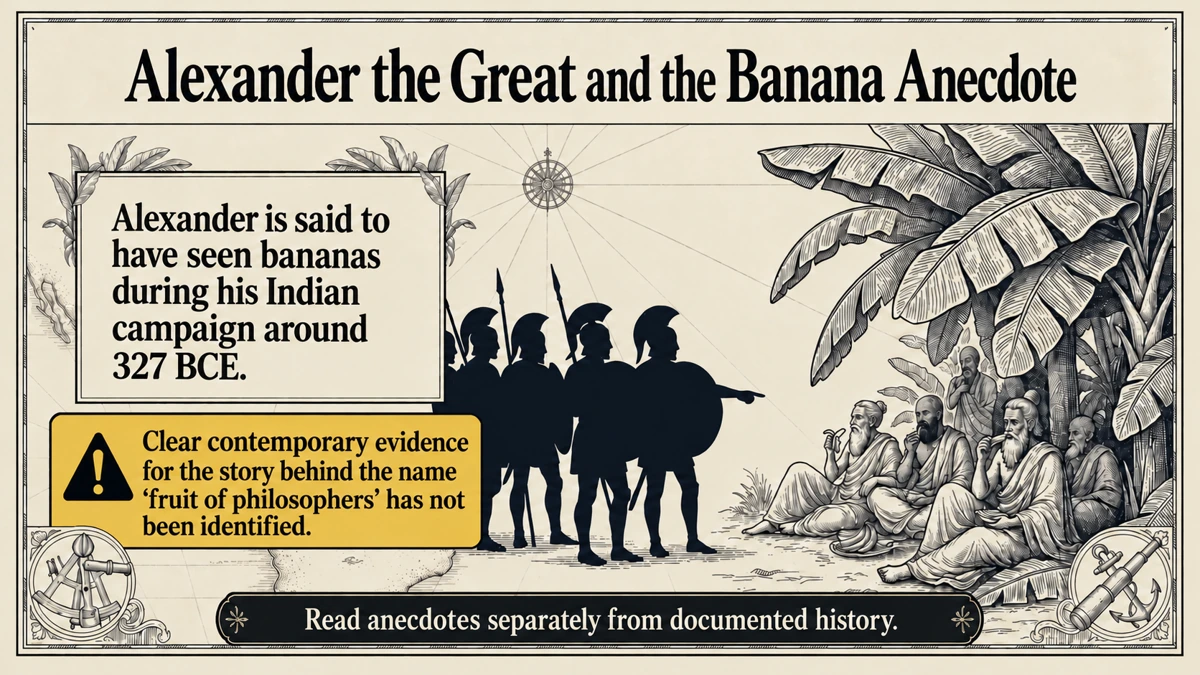
An often-repeated anecdote says Alexander the Great saw bananas during his Indian campaign around 327 BCE. However, clear contemporary evidence has not been identified for the story that Indian philosophers ate fruit in the shade and that Westerners therefore called it the “fruit of philosophers.” It should not be treated as established history.
The Name Musa and the Image of Paradise
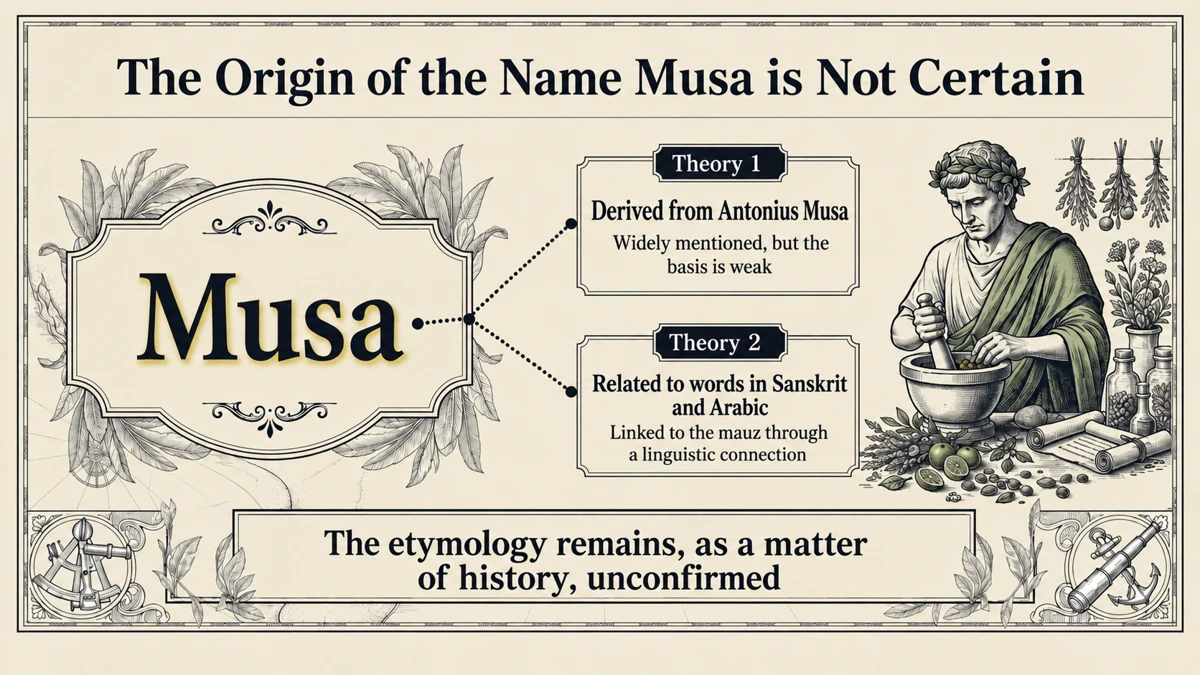
One theory links the genus name Musa to Antonius Musa, physician to Augustus, the first Roman emperor. A food-history reference work describes this explanation as weakly supported and instead notes a linguistic connection from Sanskrit through the Arabic mauz. The physician’s name therefore cannot be presented as the definitive origin.
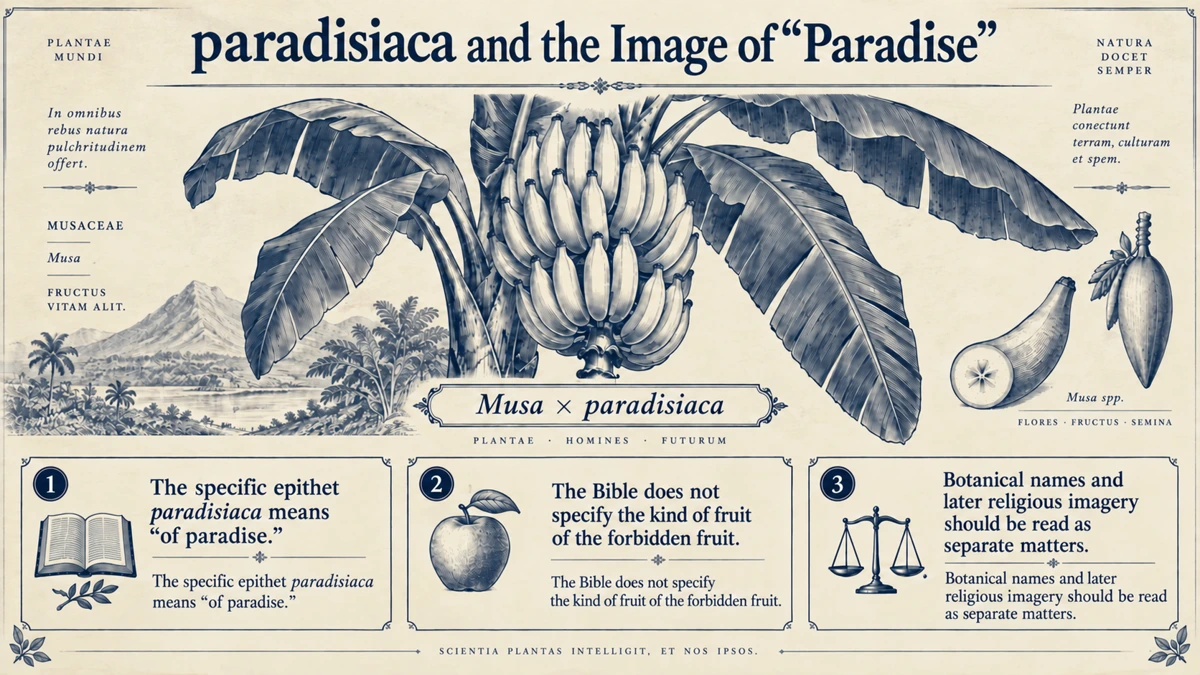
The epithet paradisiaca, used in the cultivated banana name Musa × paradisiaca, means “of paradise.” It is sometimes explained in connection with traditions identifying the forbidden fruit as a banana. The Bible, however, does not name the fruit species. Botanical nomenclature and later religious imagery should be considered separately.
Bananas Reached the Americas in 1516: The Opposite Direction to Pineapples
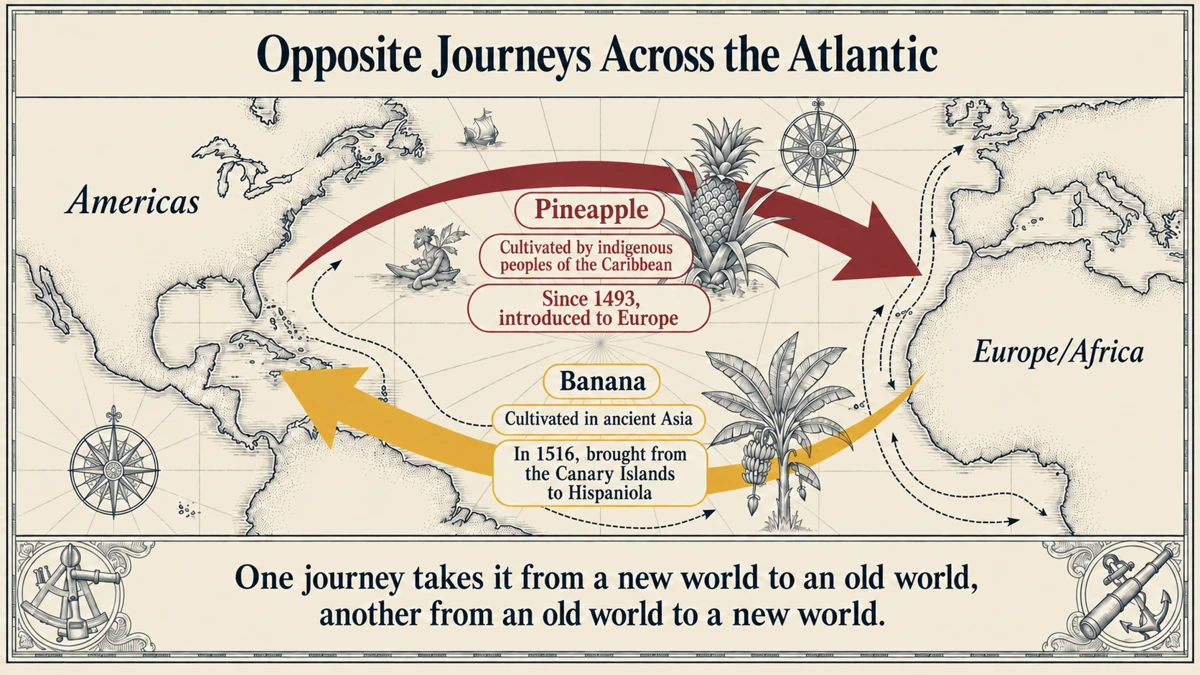
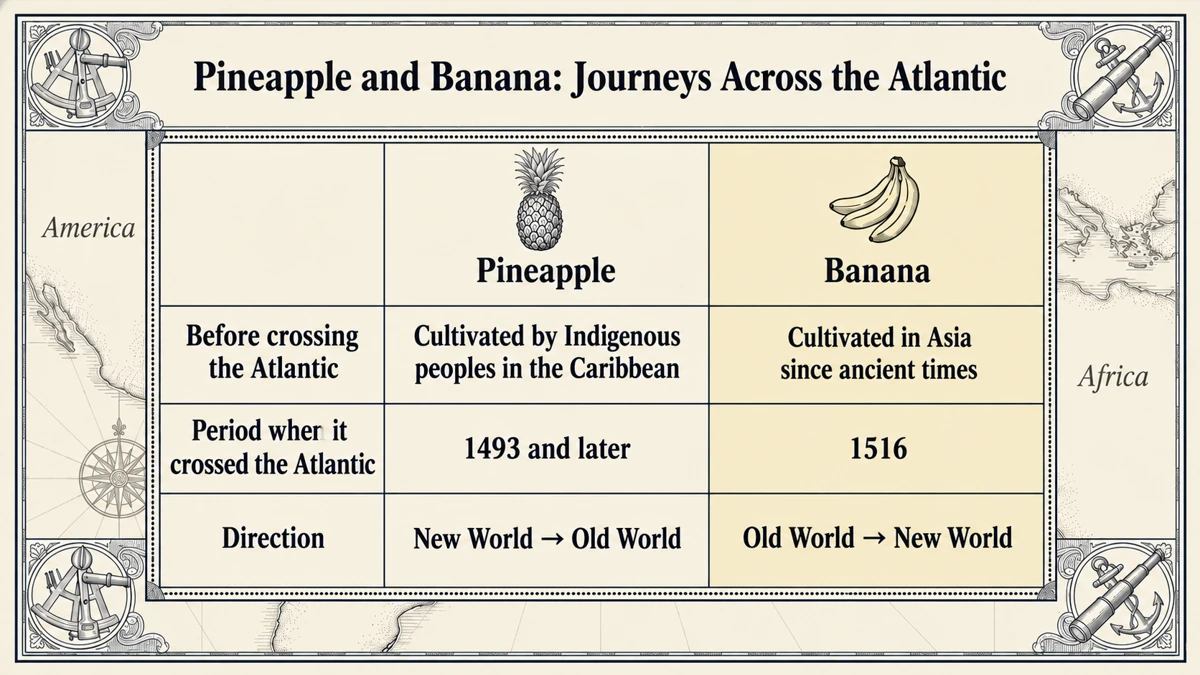
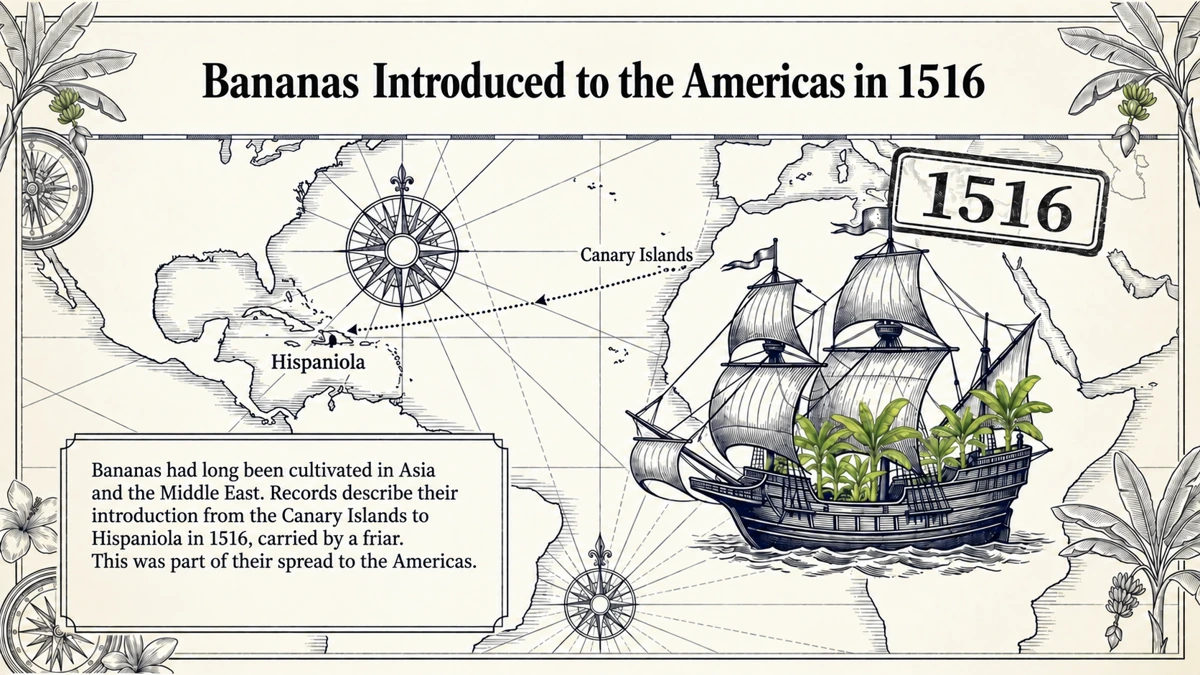
Bananas were familiar in Asia and the Middle East in antiquity, while records of their introduction to the Caribbean date to the early sixteenth century. In 1516, a friar is said to have brought plants via the Spanish Canary Islands to Hispaniola, now shared by Haiti and the Dominican Republic.
The contrast with pineapples is striking. Indigenous Caribbean communities cultivated pineapples before contact with Columbus’s second expedition in 1493; the fruit was subsequently taken to Europe. Bananas moved the other way, from the Old World to the New World. Their recorded Atlantic crossing came a little more than twenty years later.
“Banana Republic”: Meaning, Origins and the Twentieth-Century Export Industry
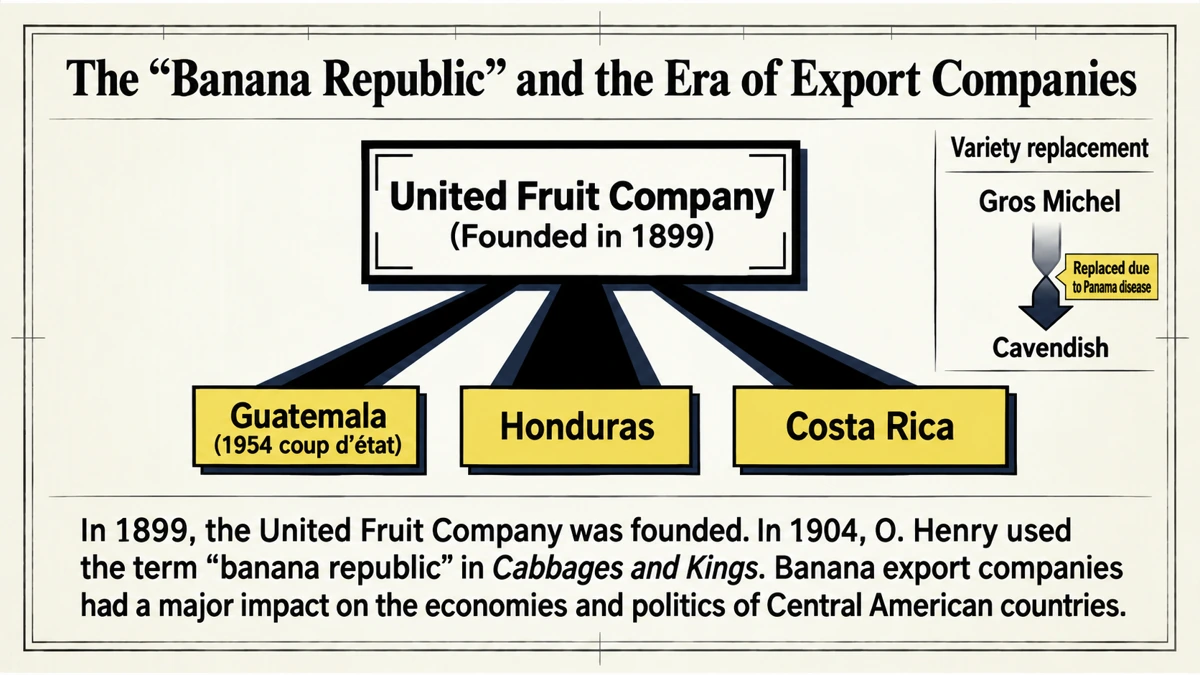
After reaching the Americas, bananas became a major force in Latin American economies and politics. United Fruit Company was formed in 1899 through the merger of several fruit businesses. Its plantations in countries including Guatemala, Honduras and Costa Rica gave it substantial economic and political influence. The company later became associated with the Chiquita brand.
The American writer O. Henry used “banana republic” in his 1901 story “Rouge et Noir.” With the fictional country’s name changed, the story was also included in his 1904 collection Cabbages and Kings. Drawing on his time in Honduras, the expression spread as a description of countries heavily dependent on a small number of export commodities or foreign capital. In 1954, Guatemala’s government was overthrown in a coup in which United Fruit’s interests are regarded as part of the background. It is an unusual example of a fruit’s name becoming a term for political and economic conditions.
Another major twentieth-century development was the replacement of Gros Michel after severe losses from Panama disease. From the 1950s, exporters shifted to the Cavendish subgroup, resistant to race 1 of the pathogen. For the cultivar transition and the continuing threat of TR4, see the Banana Guide.
A Vietnamese Children’s Story: Phạm Hổ’s Father and Son
Vietnamese children’s author Phạm Hổ included “Những bàn tay nhiều ngón (hay là sự tích cây chuối)”—“Hands with Many Fingers, or the Origin of the Banana Plant”—in Chuyện hoa chuyện quả, a collection of stories about flowers and fruits. It is an original children’s story explaining the banana’s shape and name, rather than an anonymous folk tradition.
In the story, the god of trees has many children. His youngest, Tiêu Lá, loves his newborn son and decides to create a plant that is as delightful as the child, offers something to play with, and provides tasty fruit to nourish him.
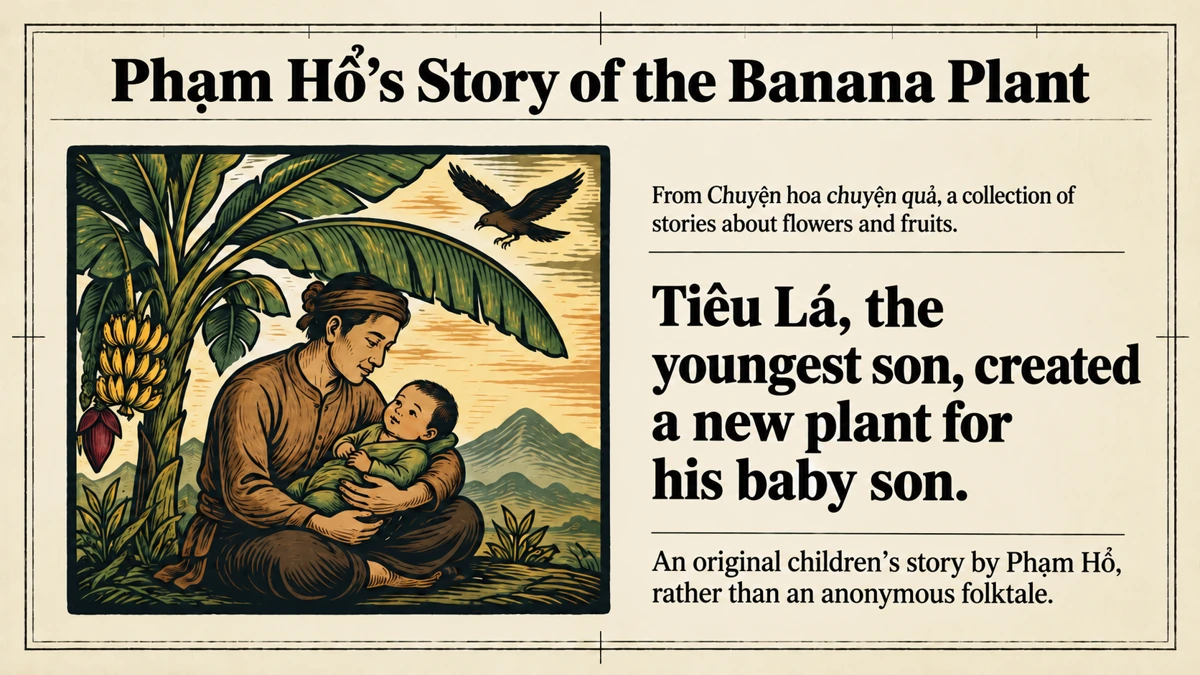
After a malicious bird eats the seeds, Tiêu Lá changes the plant so it can multiply from its base. When the bird later attacks the fruit, he drives it away and notices that it fears his hand. He arranges the fruits like fingers to resemble a hand: this is the story’s explanation of their form.
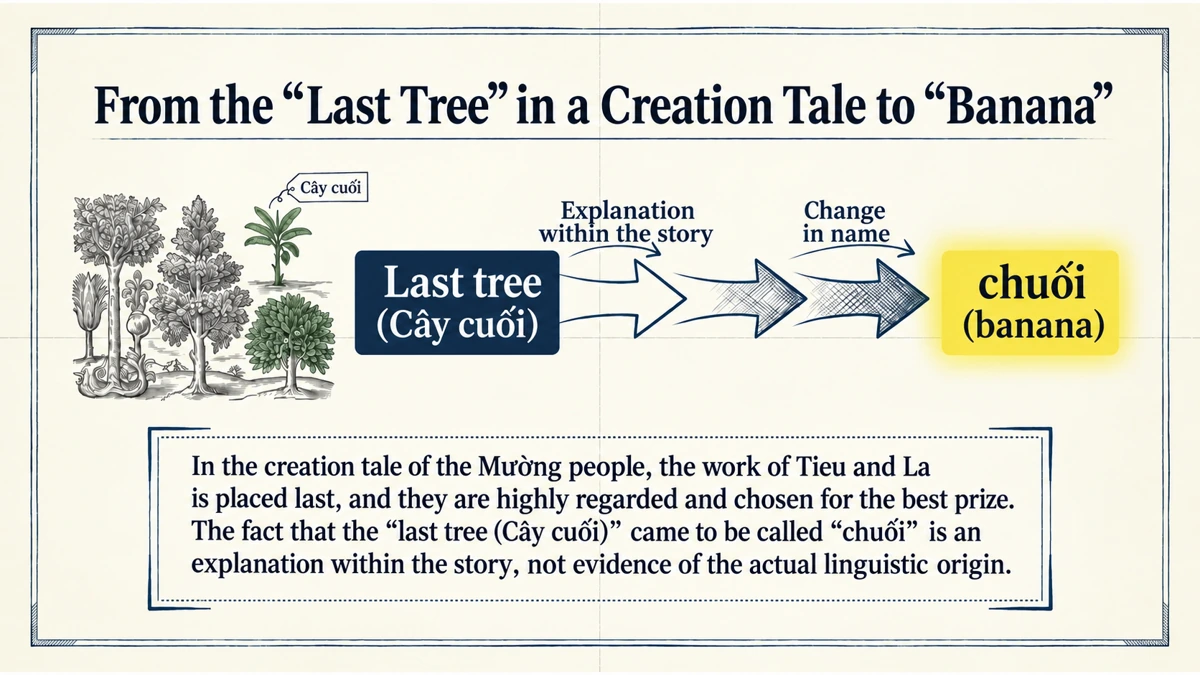
The plant arrives late at a competition and is placed in the last row, yet wins first prize. The tale ends with wordplay: Cây cuối, “the last tree,” becomes chuối, banana. This is not historical evidence of the word’s actual origin.
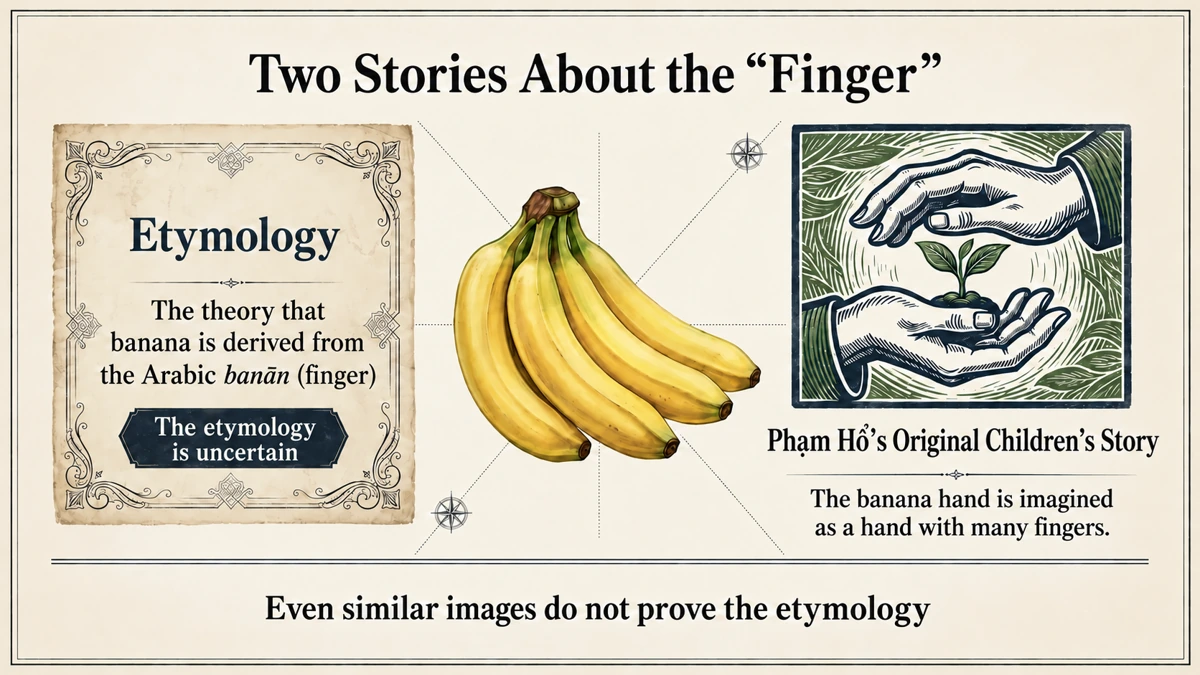
The story likens the banana’s finger-shaped fruits to a hand. Actual cultivation and trade terminology likewise calls each tier a “hand” and each fruit a “finger.” This resemblance is a metaphor for shape; it does not prove that “banana” derives from the Arabic word for fingers.
Frequently Asked Questions About Banana History
Where Did Bananas Originate?
Edible bananas are thought to have been domesticated in several parts of New Guinea and Southeast Asia, through a complex history involving multiple wild species and subspecies.
When Did Bananas Reach the Americas?
Records describe banana plants being taken from the Canary Islands to Hispaniola in 1516.
Is “Fruit of Philosophers” a Historical Name?
The anecdote about Alexander seeing bananas in India is widely repeated, but clear contemporary evidence for the “fruit of philosophers” explanation has not been identified.
Was Musa Named After a Roman Physician?
A theory connects it with Antonius Musa, but the evidence is regarded as weak. A linguistic connection from Sanskrit through Arabic mauz has also been proposed. The origin is unresolved.
Summary: The Banana’s Journey Around the World
Pineapples were domesticated in South America and traveled to Europe through Indigenous Caribbean societies. They later became a luxury at royal and aristocratic tables before the canning industry helped bring them into wider circulation.
Bananas followed a complex domestication history in New Guinea and Southeast Asia before spreading to Asia, the Middle East and Africa. Their introduction from the Canary Islands to Hispaniola is recorded in 1516. In the twentieth century, they became deeply entangled with Central American politics and economics, even giving rise to “banana republic.” In Vietnam, Phạm Hổ imagined their form and name through a father’s loving creation for his child.
The next time you peel a banana, its hand-like shape may remind you of a history that spread around the world with people and trade.
For banana biology, nutrition, world and Vietnamese varieties, and market trends, see the companion Banana Guide.
Related Articles
- Biology, nutrition, varieties and markets: Banana Guide
- A South American fruit that traveled from luxury tables to everyday meals: Pineapple history
- Fruit to enjoy in Vietnam: 15 Fruits in Vietnam (in Japanese)
Ready to buy and enjoy them? See How to Eat Bananas in Vietnam for local buying, cooking and storage tips.
References
- Perrier et al., “Multidisciplinary perspectives on banana domestication,” PNAS
- Martin et al., “Interspecific introgression patterns reveal the origins of worldwide cultivated bananas in New Guinea,” The Plant Journal
- Oxford Companion to Food: Botanical Names for Banana
- Marly et al., “The Dispersal of Bananas (Musa spp.) to the Americas in the Sixteenth Century,” Economic Botany
- Kotobank: Chiquita Brands International (in Japanese); Wikipedia: Chiquita Brands (in Japanese)
- Merriam-Webster: The History of Banana Republic; Smithsonian Magazine: Where We Got the Term Banana Republic
- Phạm Hổ, Chuyện hoa chuyện quả: Những bàn tay nhiều ngón (hay là sự tích cây chuối)
About the Author

Chuta
Based in Hanoi, Vietnam, Chuta buys fruit at local markets and supermarkets and writes about its taste, seasons, selection and preparation. Drawing on life in Vietnam, he introduces tropical fruits that are less familiar to readers in Japan.
About Fruit Guide