
Oranges include familiar varieties such as navel and Valencia and provide vitamin C. In Vietnam, citrus sold as cam includes regional favourites such as cam sành and Cam Xã Đoài. This guide explains their varieties, seasons, nutrition and origins, as well as Japan’s traveller restrictions.
“Orange” is both a fruit name and a colour. Which meaning came first?
The fruit name came first. English records of “orange” as a colour date to the early sixteenth century; before that, it chiefly named the fruit. The plant has another surprise: sweet orange is an evergreen citrus tree with a complex ancestry involving mandarin and pummelo lineages. This guide explores its biology and varieties from the perspective of an author living in Vietnam.
An orange field guide, from complex hybrid ancestry to varieties and seasons.
Orange Facts: Varieties, Season and Nutrition
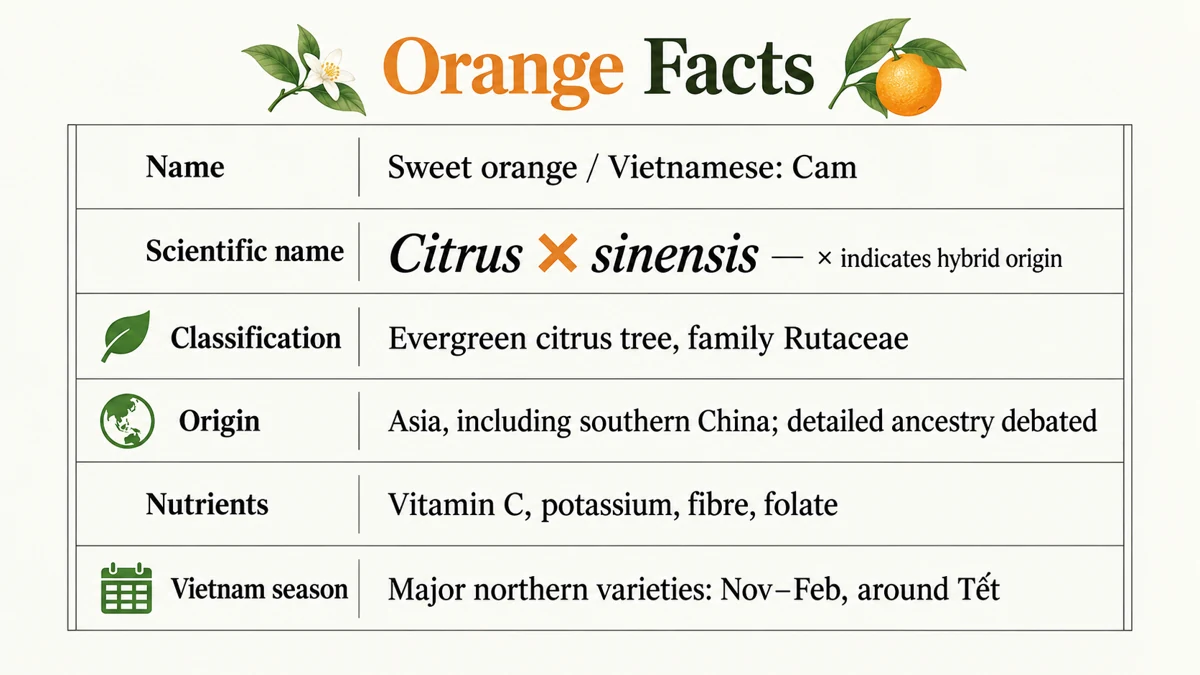
| Item | Details |
|---|---|
| Common name | Orange (sweet orange) |
| Vietnamese name | Cam |
| Scientific name | Citrus × sinensis (× indicates hybrid origin) |
| Classification | An evergreen tree in the citrus genus, family Rutaceae, with complex mandarin and pummelo ancestry |
| Origin | Thought to have arisen in Asia, including southern China; several models describe its detailed ancestry |
| Season in Vietnam | Varies by cultivar; major northern varieties peak in winter, roughly November–February around Tết |
| Growing regions in Vietnam | Northern growing regions historically known as Hà Giang, Tuyên Quang and Yên Bái, Nghệ An, and the southern Mekong Delta |
| Key nutrients | Vitamin C, potassium, dietary fibre and folate |
Sources are listed at the end of this article.
Origins and Complex Hybrid Ancestry
While watermelons often prompt the question “fruit or vegetable?”, oranges raise a different question: how did several citrus lineages combine to produce a cultivated fruit?
What Genomes Reveal About Hybrid Origin
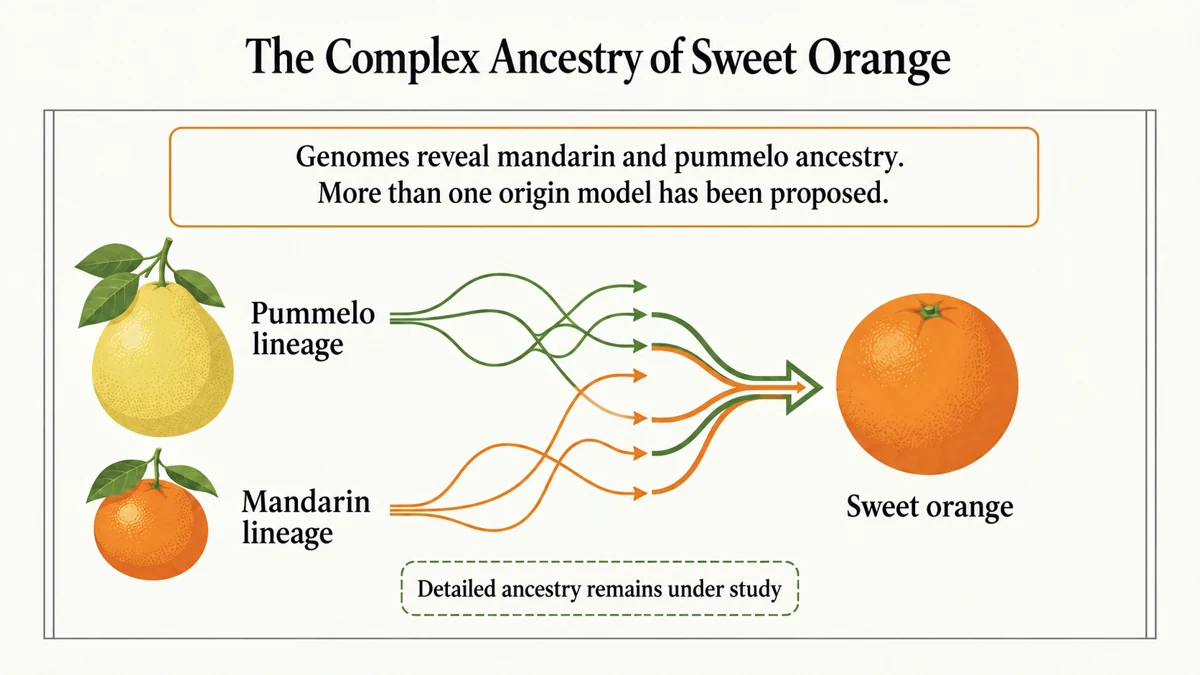
The scientific name Citrus × sinensis indicates hybrid ancestry. Genome studies identify both mandarin (Citrus reticulata) and pummelo (Citrus maxima) ancestry. This was not simply one cross between the two: research has proposed parents with previous hybrid ancestry, and more recent work suggests a cross involving sour orange and a Ponkan-like mandarin.
It is therefore inaccurate to describe an orange as exactly half mandarin and half pummelo. Sweet orange has no confirmed single wild ancestral species. It is better understood as cultivated citrus selected over a long history and propagated by grafting and other vegetative methods. Pummelo, described in our Pomelo Guide, is one ancestral lineage.
A Fruit That Really Grows on a Tree
Unlike watermelon, an annual vine, or banana, a herbaceous plant, orange is a woody tree. It is evergreen and commonly reaches about 3–10 metres, producing fragrant white flowers. Citrus flower scents are used in perfumery, and newly planted trees generally take several years to bear fruit.
Which Came First: Orange the Fruit or Orange the Colour?
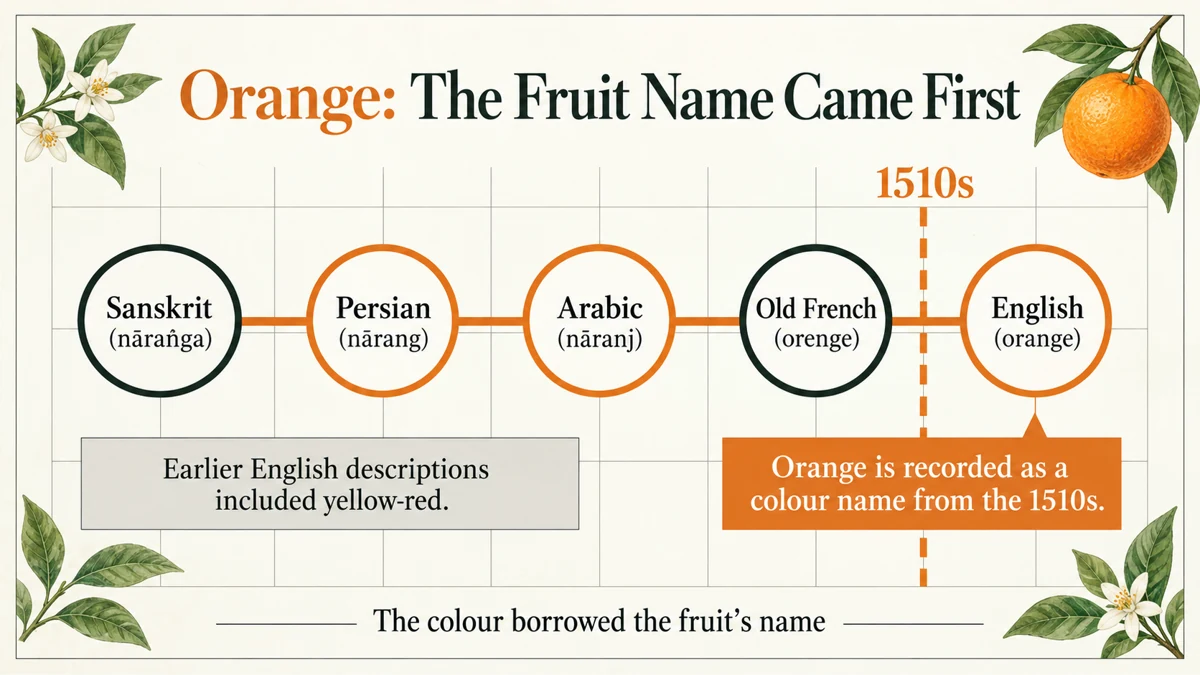
English “orange” is generally traced to Sanskrit nāraṅga, through Persian nārang, Arabic nāranj and Old French orenge.
English records of “orange” as a colour begin in the 1510s. Earlier descriptions used terms such as yellow-red. The fruit name was established first and later lent its name to the colour.
Washington Navel: A Lineage Spread From Brazilian Budwood
Navel oranges have a small secondary fruit at the blossom end, giving the appearance of a navel. They usually produce few or no seeds and are propagated by grafting and other vegetative methods.
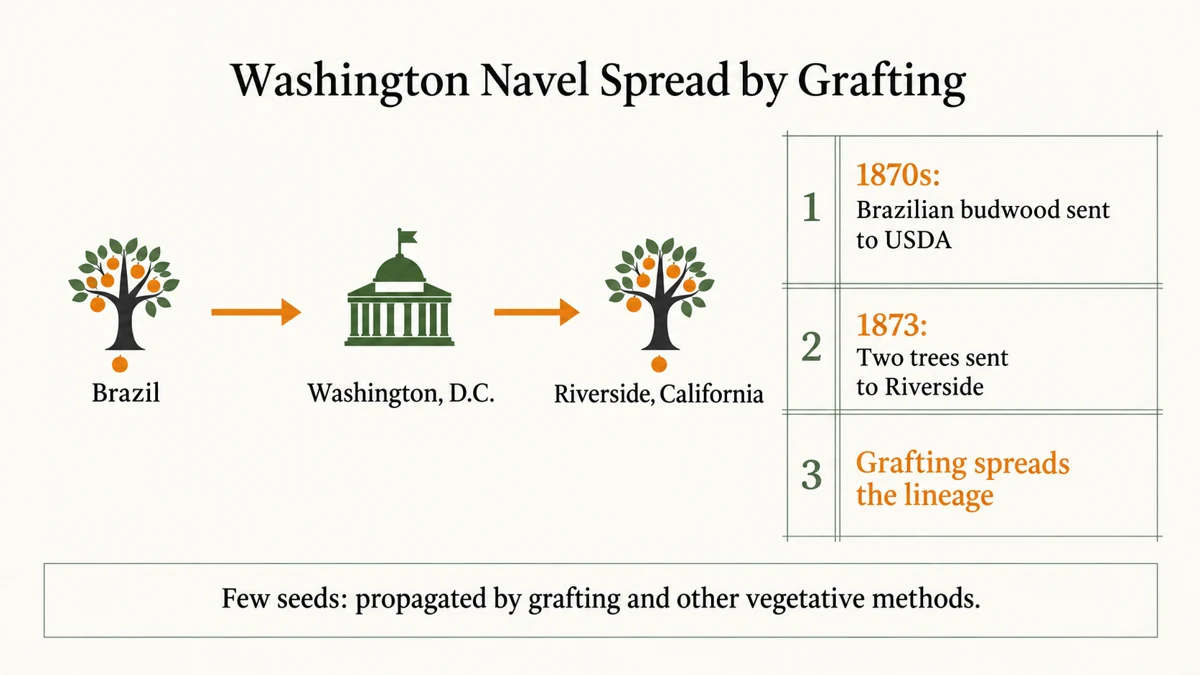
The Washington navel lineage descends from budwood sent from Bahia, Brazil, to the US Department of Agriculture in the 1870s. Two resulting trees reached Riverside, California, in 1873 and helped establish a major citrus industry. This does not mean every navel orange in the world descends from one Californian tree.
Orange Nutrition
Raw navel orange juice sacs contain the following nutrients per 100 g of edible portion.
- Energy: 48 kcal
- Water: 86.8 g
- Carbohydrate: 11.8 g
- Dietary fibre: 1.0 g
- Potassium: 180 mg
- Vitamin C: 60 mg
- Folate: 34 μg
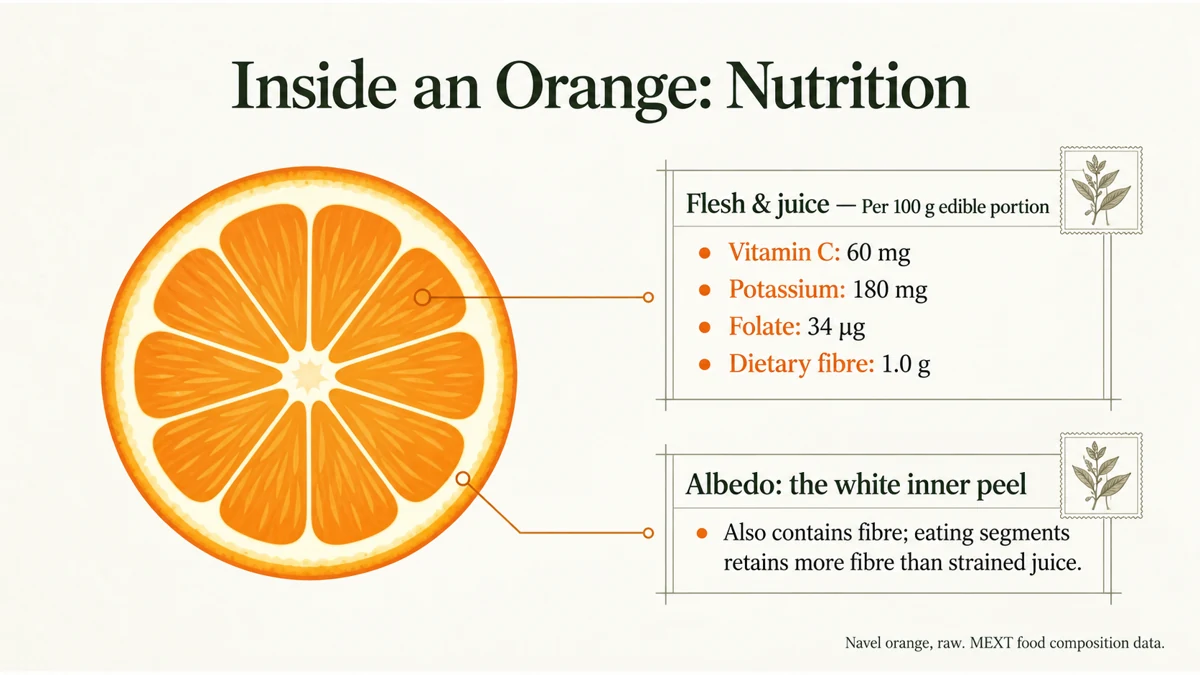
Vitamin C is a notable nutrient. At 60 mg per 100 g, an orange with around 150 g of edible flesh provides about 90 mg. Potassium contributes to normal fluid balance, while folate is particularly important during pregnancy.
These are general nutrient functions, not evidence that eating oranges treats a particular condition. The white albedo also contains fibre; eating the segments rather than only drinking strained juice helps retain fibre.
Main Varieties and Growing Regions
Brazil: A Major Producer
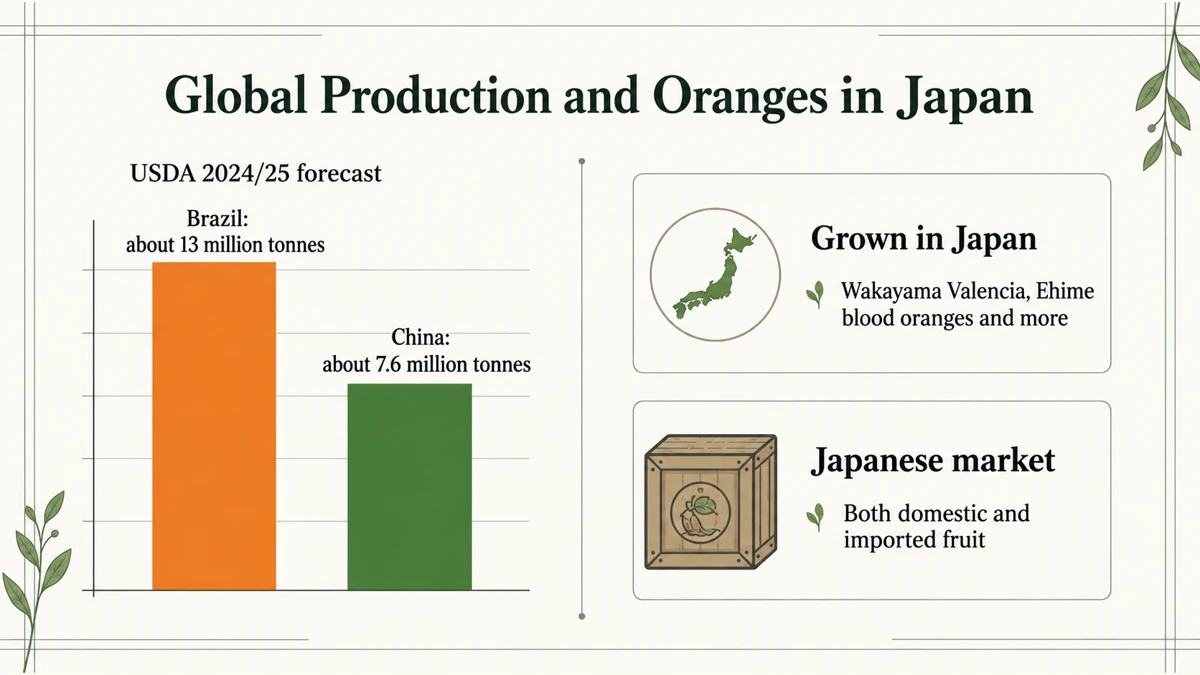
Rankings and volumes vary by statistical year and coverage. Brazil is one of the largest orange producers. The USDA’s 2024/25 forecast put Brazil at about 13 million tonnes and China at about 7.6 million tonnes. Brazil is also a major producer and exporter of orange juice.
Japanese Varieties and Imported Oranges
Japanese orange-growing regions include Hiroshima, Shizuoka and Wakayama. Wakayama accounts for almost all domestic Valencia production in the cited statistics; Valencia is relatively mild and available into summer. Ehime grows winter-to-spring navels and is also a leading Japanese producer of blood oranges.
Imported oranges are widely sold in Japan, including fruit from California, commonly arriving around April–August, and South Africa. Domestic regional varieties are available too, but imports play a major role in the Japanese orange market.
Vietnamese Names and Varieties
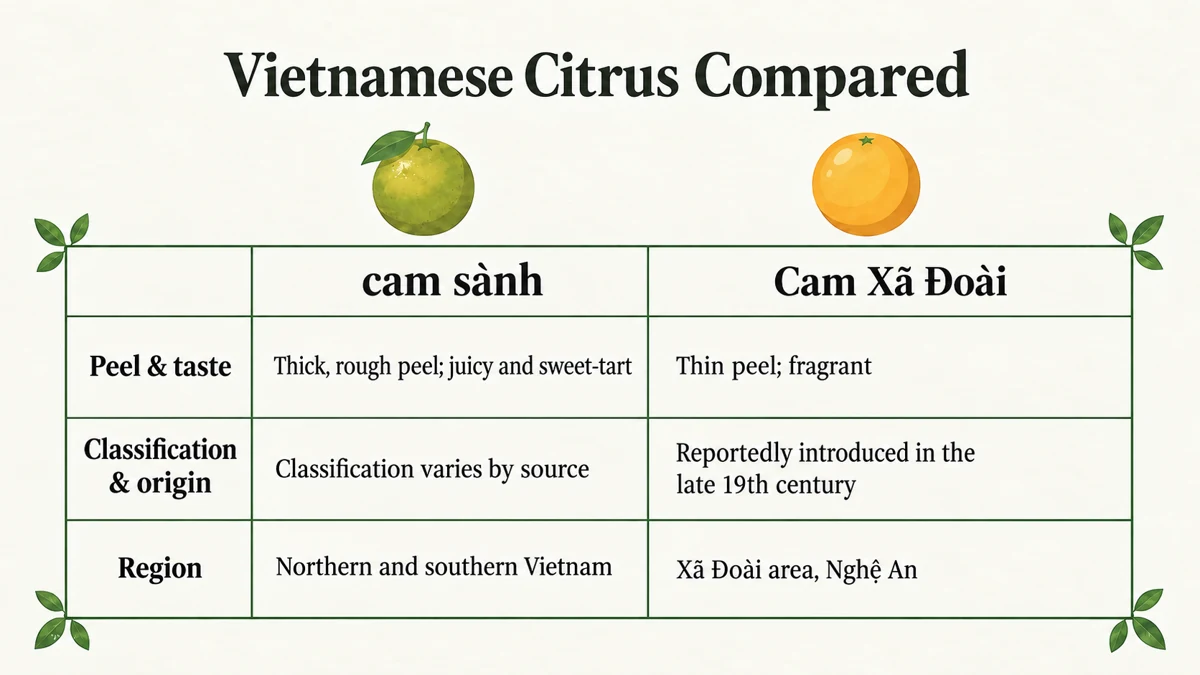
In Vietnamese, oranges and related citrus are called cam. Cam sành typically has thick, rough peel that may turn from green to yellow-green or yellow as it ripens. The flesh is juicy, with sweetness and acidity. It is grown in northern regions such as Hà Giang, Tuyên Quang and Yên Bái and in the south.
Sources do not consistently agree on the scientific or horticultural classification of cam sành. Some Vietnamese official and research sources classify it as Citrus reticulata; it is not necessarily identical to sweet orange (Citrus × sinensis). Here it is included under the everyday Vietnamese name cam.
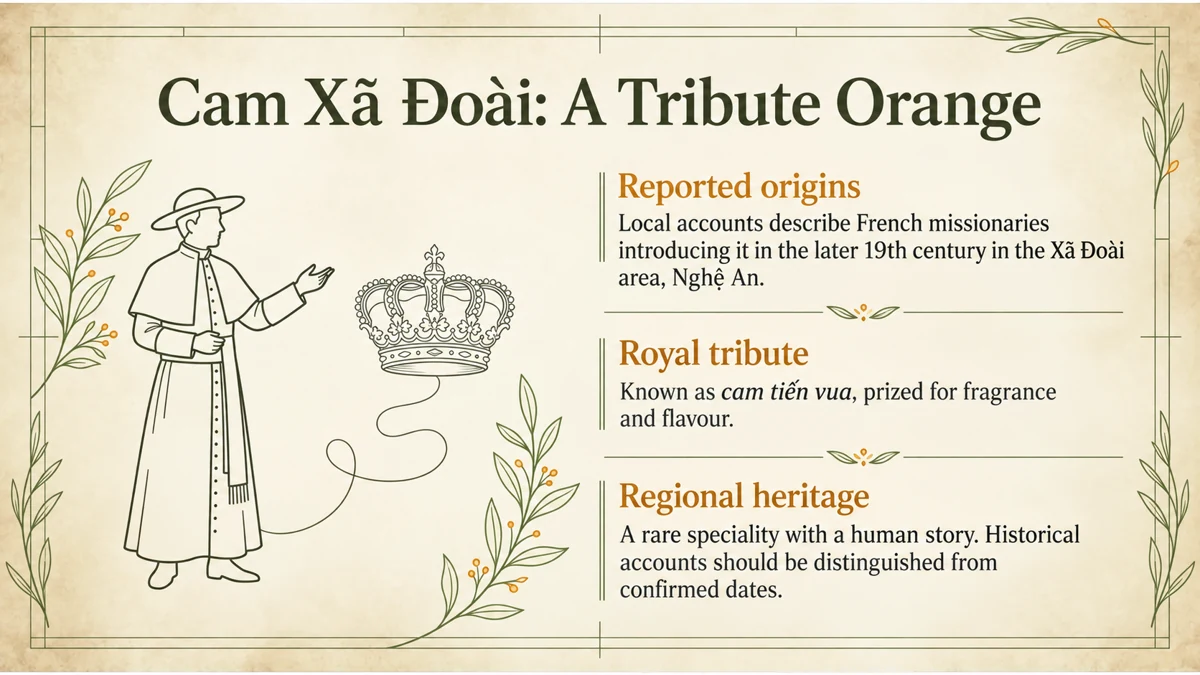
Cam Xã Đoài is a speciality historically associated with Nghi Diên commune, Nghi Lộc district, Nghệ An. Local accounts say French missionaries introduced it in the later nineteenth century. It is also called cam tiến vua, or tribute orange, and is prized for thin peel and fragrance. A 2020 report described pre-Tết gift fruit selling for 80,000–100,000 VND each. That is a historical example, not a current general price.
Oranges in Vietnam and Travel to Japan
An Everyday Fruit in Vietnam
Cam sành and other citrus sold as cam grow from the northern mountains to the Mekong Delta. They are familiar market and after-meal fruits, and demand often increases around Tết.
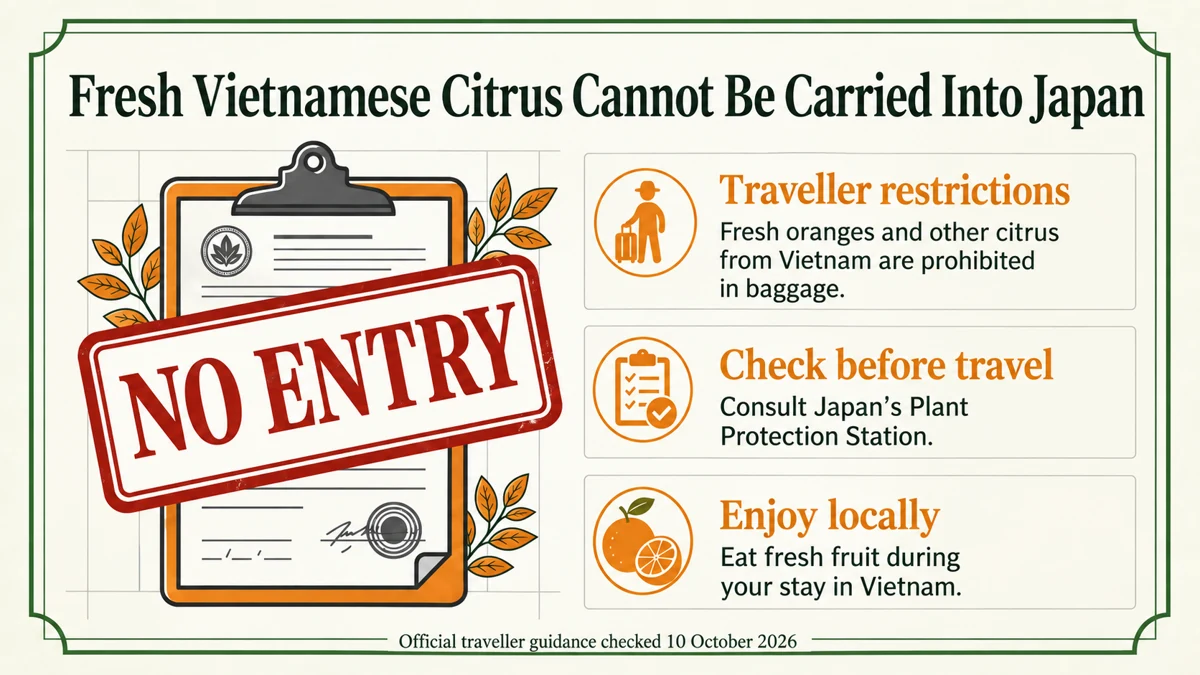
Fresh Vietnamese Citrus Cannot Be Carried Into Japan
Japan’s Plant Protection Station lists fresh oranges and other citrus from Vietnam as prohibited in travellers’ baggage. This traveller-specific list is the direct basis for the guidance here.
Travellers therefore cannot bring fresh Vietnamese oranges into Japan. Conditions can change; check the latest Plant Protection Station guidance before travelling or importing plants.
Frequently Asked Questions
What Are the Main Types of Orange?
Common types include navel oranges with a small secondary fruit, juicy Valencia oranges, and red-fleshed blood oranges. In Vietnam, cam sành and Cam Xã Đoài are also popular.
When Are Oranges in Season?
It depends on the variety and origin. Major northern Vietnamese varieties peak roughly November–February. Japanese navels are available in winter and spring, while Wakayama Valencia oranges arrive in spring and summer. Imports help make oranges available year-round in Japan.
Which Nutrients Do Oranges Provide?
Per 100 g of edible portion, raw navel orange contains 60 mg vitamin C, 180 mg potassium, 1.0 g dietary fibre and 34 μg folate, according to Japan’s official food composition database.
Can I Bring Vietnamese Oranges Into Japan?
Travellers cannot carry fresh Vietnamese oranges or other citrus into Japan. Check the latest Plant Protection Station conditions before departure.
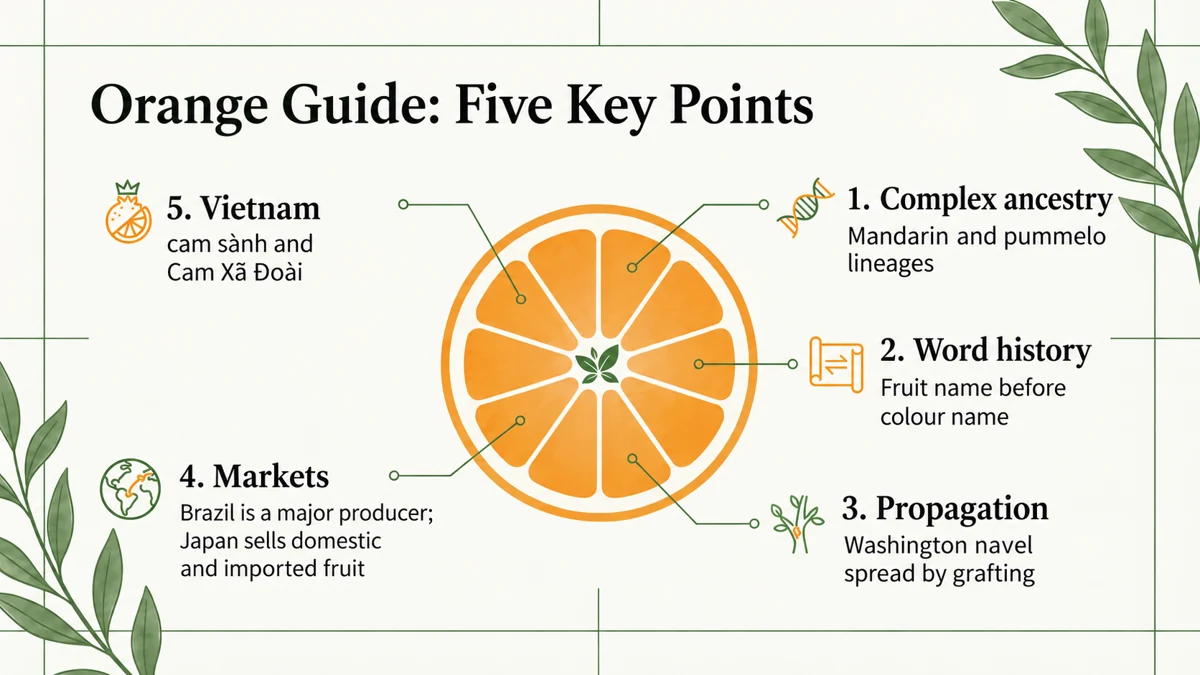
Orange Guide: Key Points
Here are the main points.
- Sweet orange is an evergreen citrus tree with complex mandarin and pummelo ancestry, reflected in the name Citrus × sinensis.
- “Orange” named the fruit before the colour; its word history reaches back to Sanskrit, and English colour usage is recorded from the 1510s.
- Oranges provide vitamin C, potassium and folate. Washington navel’s Brazilian-derived lineage spread by grafting and other vegetative methods.
- Brazil is a major producer. Japan sells both imported and domestic fruit, including Wakayama Valencia and Ehime blood oranges. Vietnam has cam sành and the prized Cam Xã Đoài.
- Fresh citrus from Vietnam is prohibited in travellers’ baggage entering Japan.
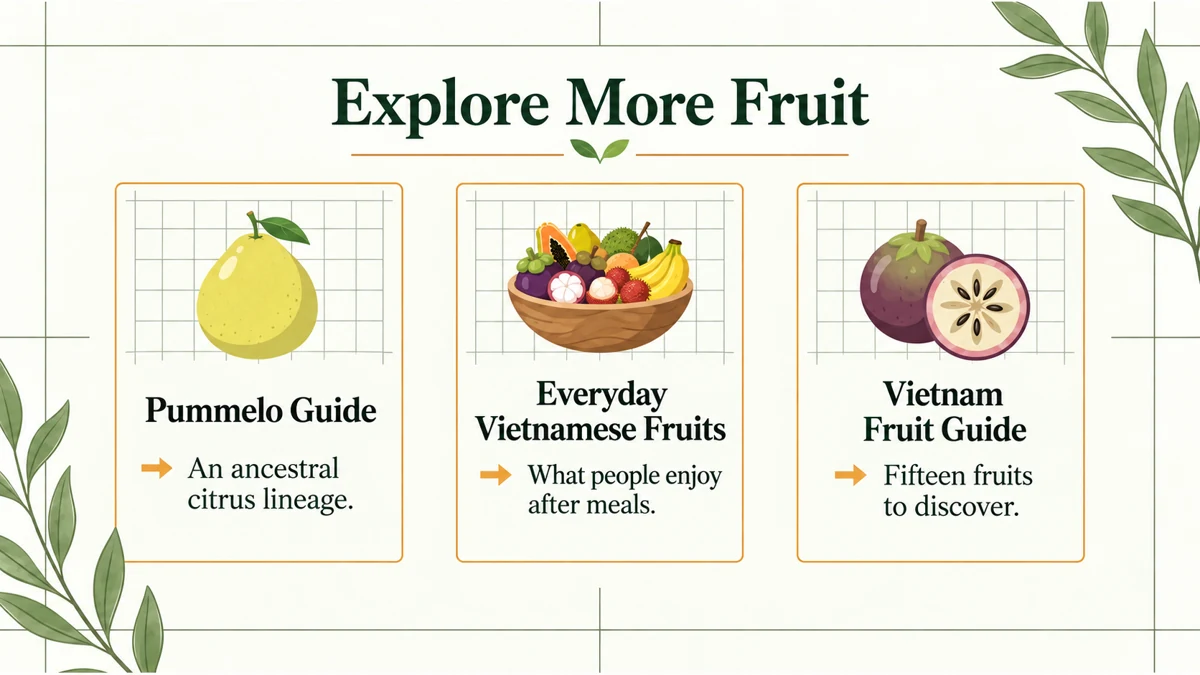
Explore origins and culture in Orange History and Stories, and practical buying and preparation in How to Eat Oranges in Vietnam. For other fruits, see Vietnam Fruit Guide and Everyday Vietnamese Fruits. Our Pomelo Guide explains one of orange’s ancestral lineages.
References
- NARO: Repeated crosses among a small number of ancestral cultivars produced diverse citrus varieties
- Etymonline: Orange — Etymology, Origin & Meaning
- Nature Biotechnology: Sequencing of diverse mandarin, pummelo and orange genomes reveals complex history of admixture during citrus domestication; Nature Genetics: Origin and de novo domestication of sweet orange
- University of California Agriculture and Natural Resources: The Parent Washington Navel Orange Tree — Its First Years
- MEXT Food Composition Database: Raw navel orange juice sacs, Standard Tables of Food Composition in Japan, 2023 supplement
- USDA Foreign Agricultural Service: Citrus — World Markets and Trade
- Foodslink: Orange varieties, regions and seasons; Wakayama Prefecture: Valencia Orange
- Vietnam Ministry of Science and Technology: Đưa cam đặc sản “lên sàn”; Vietnam Journal of Food Control: Syrup development from Hà Giang oranges
- Người Lao Động: Cam “tiến vua” Xã Đoài, ăn một lần là nhớ mãi
- MAFF: Vietnam requests for market access; Plant Protection Station: Traveller restrictions for Vietnam
Japan Plant Protection Station: Vietnam traveller restrictions — Reviewed 10 October 2026.
