15 Fruits Vietnamese People Eat After Meals: Chili Salt & More
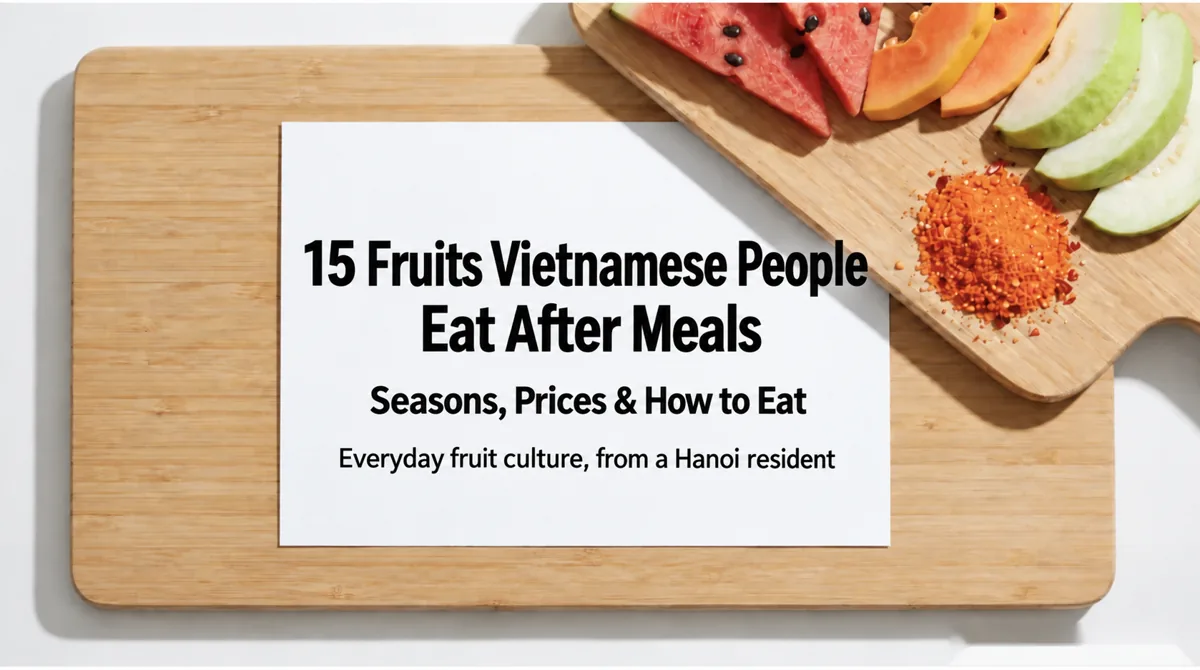
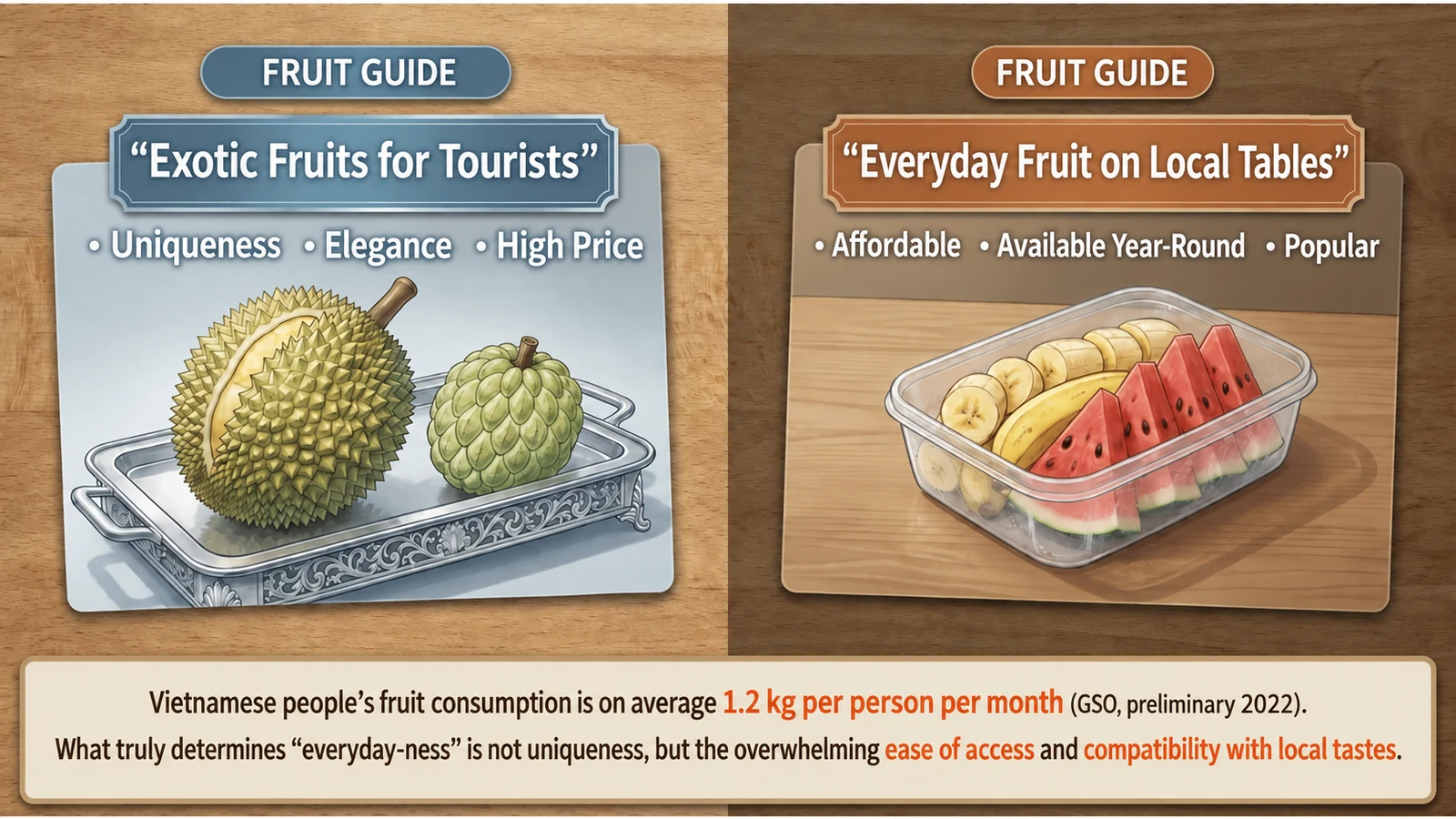
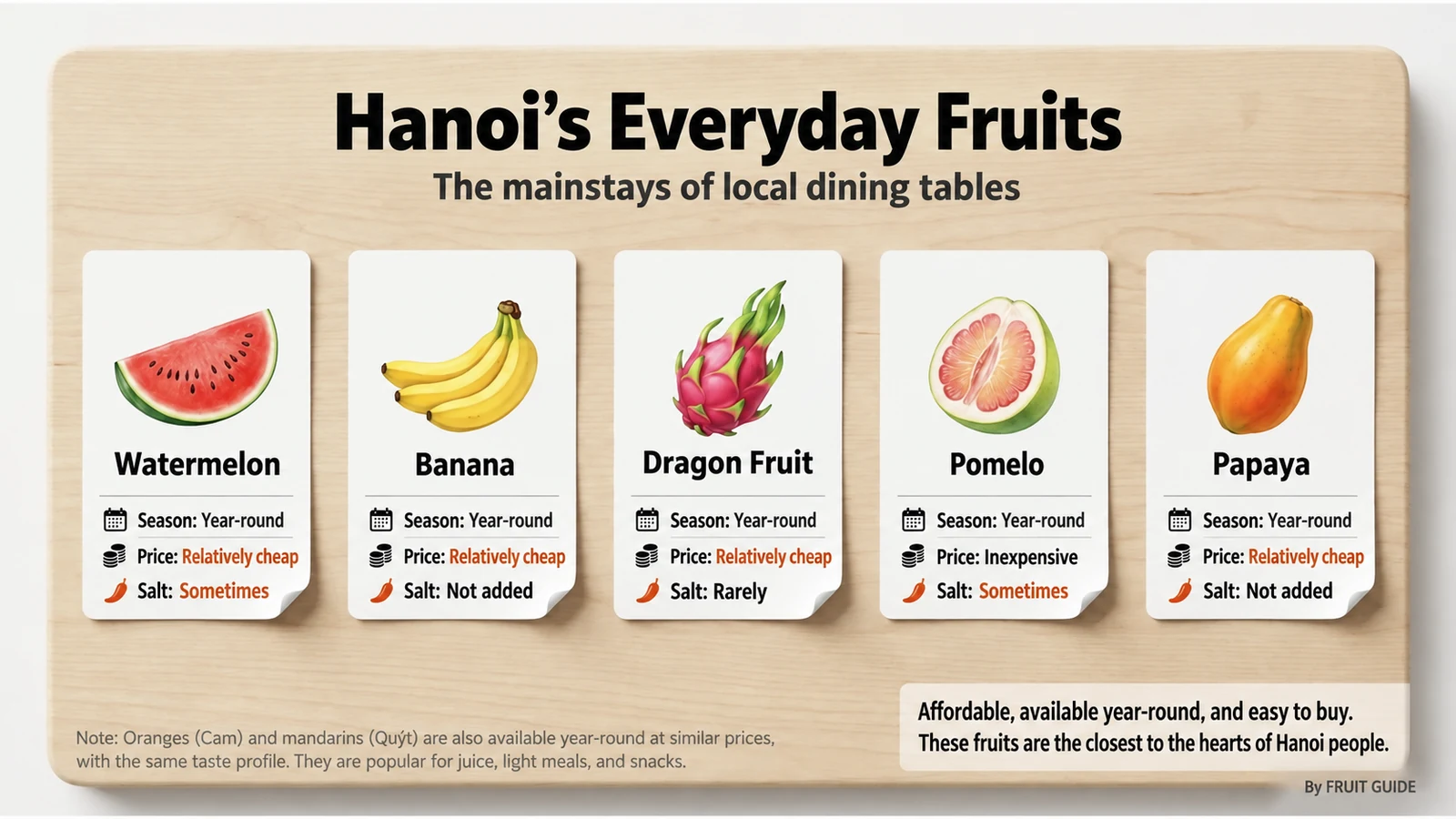
Watermelon, bananas, dragon fruit, pomelo, and papaya are familiar fruits after meals in Vietnam. Fruit that is easy to find year-round and affordable often appears on the everyday table.
Based on what I have seen while living in Hanoi, this guide introduces 15 familiar fruits with their seasons, prices, Vietnamese names, and ways to eat them. Their order reflects my observations of everyday meals, snacks, and celebrations; it is not a national consumption ranking.
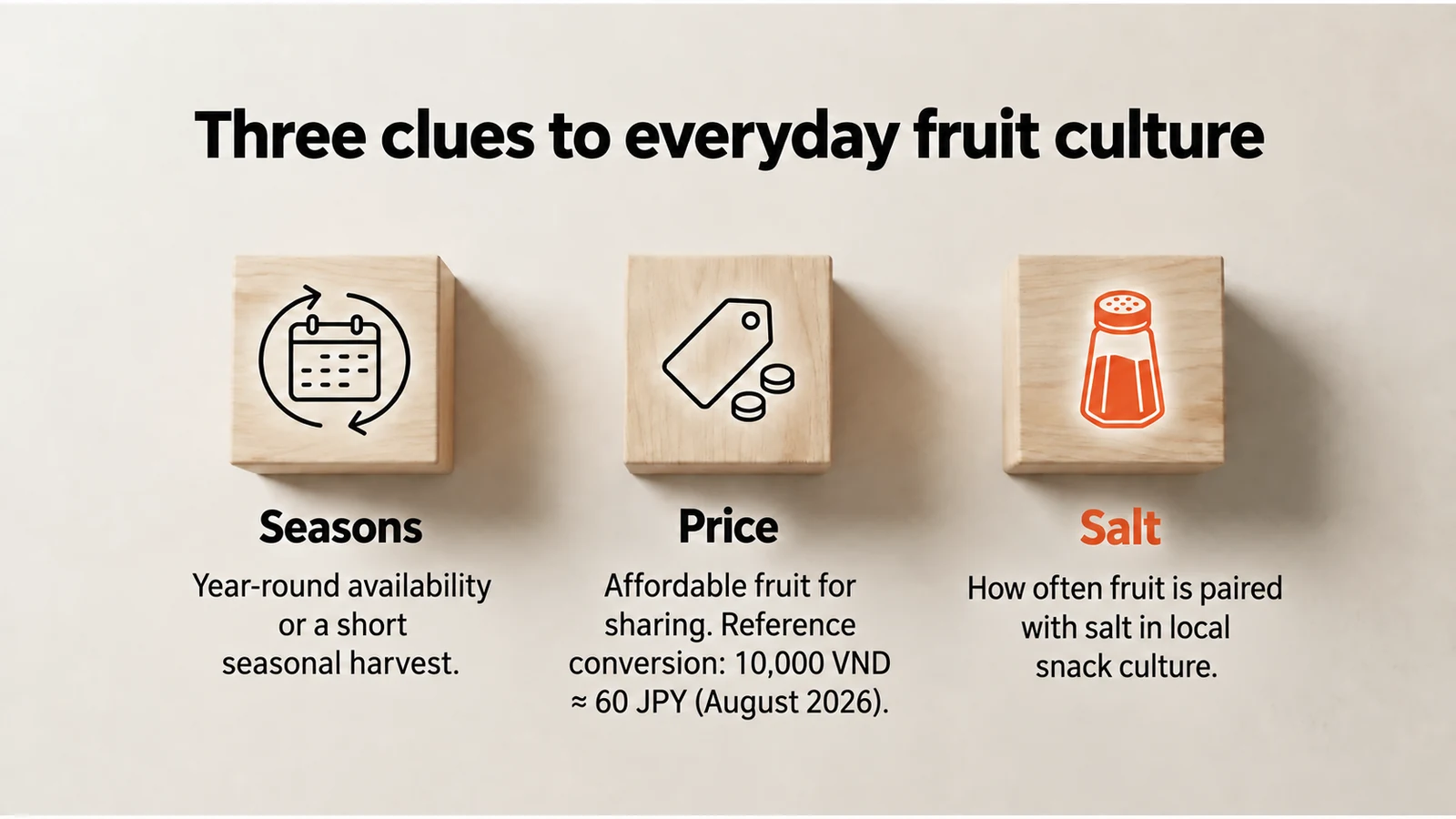
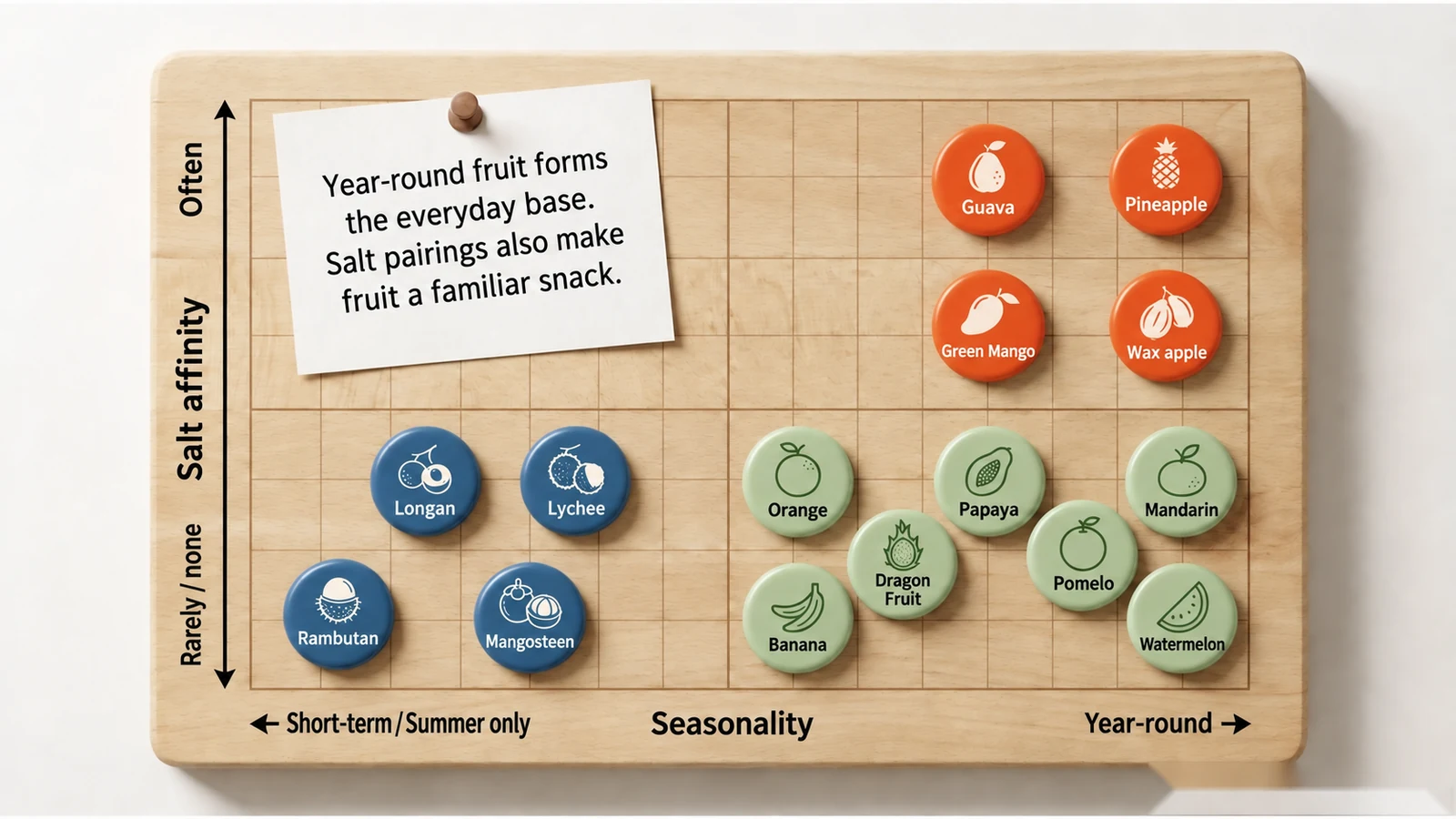
Some fruits are enjoyed with chili salt (Muối ớt) or shrimp salt (Muối tôm). Start with the table below to compare seasons, prices, and how often salt is added.
15 Everyday Vietnamese Fruits: Seasons and Prices
| No. | Fruit | Vietnamese name | Season / availability | Salt use | Price guide (VND/kg) |
|---|---|---|---|---|---|
| 1 | Watermelon | Dưa hấu | Year-round | Sometimes | 20,000–50,000 |
| 2 | Banana | Chuối | Year-round | Usually none | 30,000–50,000 |
| 3 | Dragon fruit | Thanh long | Year-round | Rarely | 30,000–55,000 |
| 4 | Pomelo | Bưởi | Year-round | Sometimes | 45,000–120,000 |
| 5 | Papaya | Đu đủ | Year-round | Usually none | 20,000–40,000 |
| 6 | Guava | Ổi | Year-round | Very often | 20,000–70,000 |
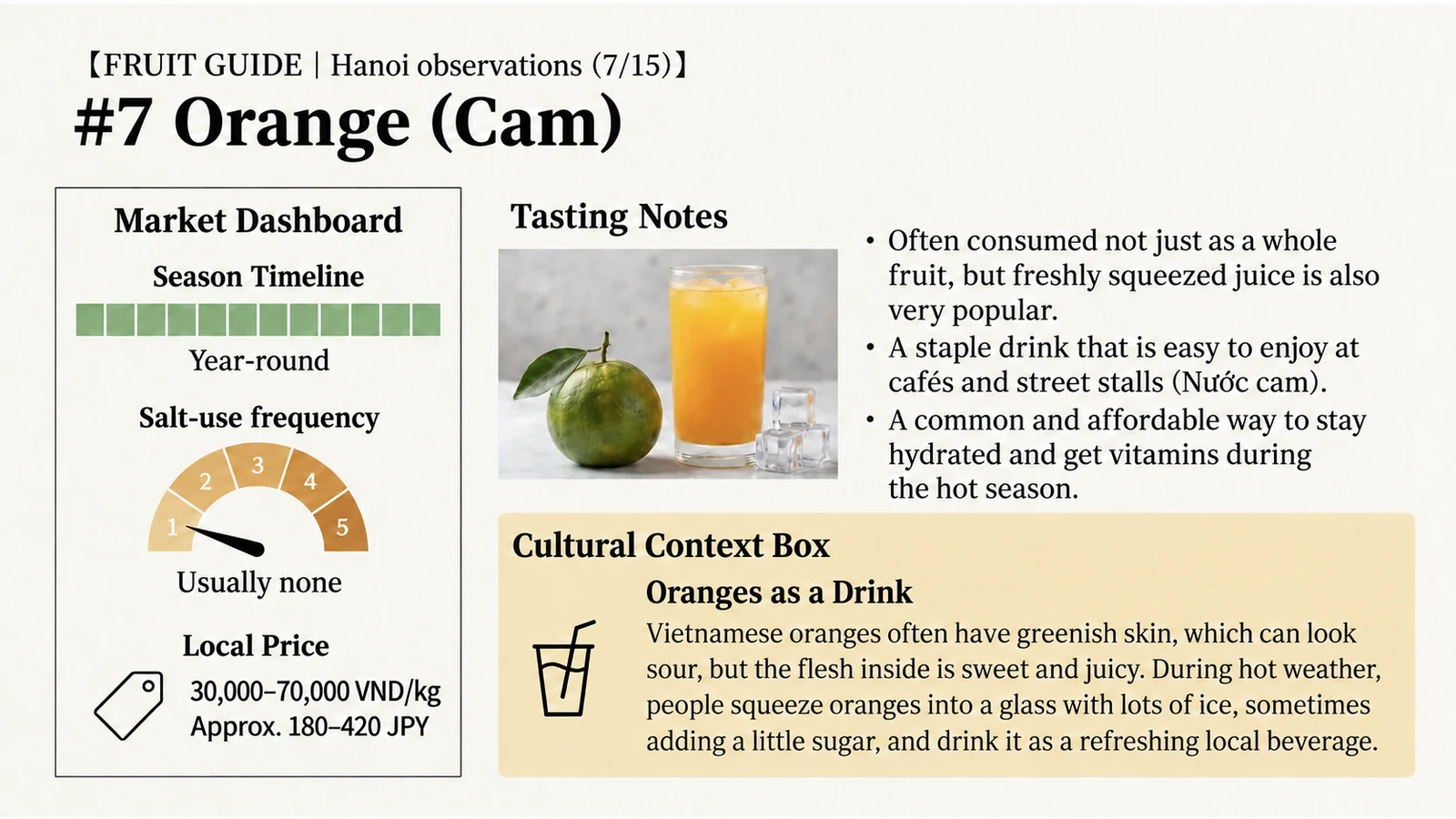
| 7 | Orange | Cam | Year-round | Usually none | 30,000–70,000 |
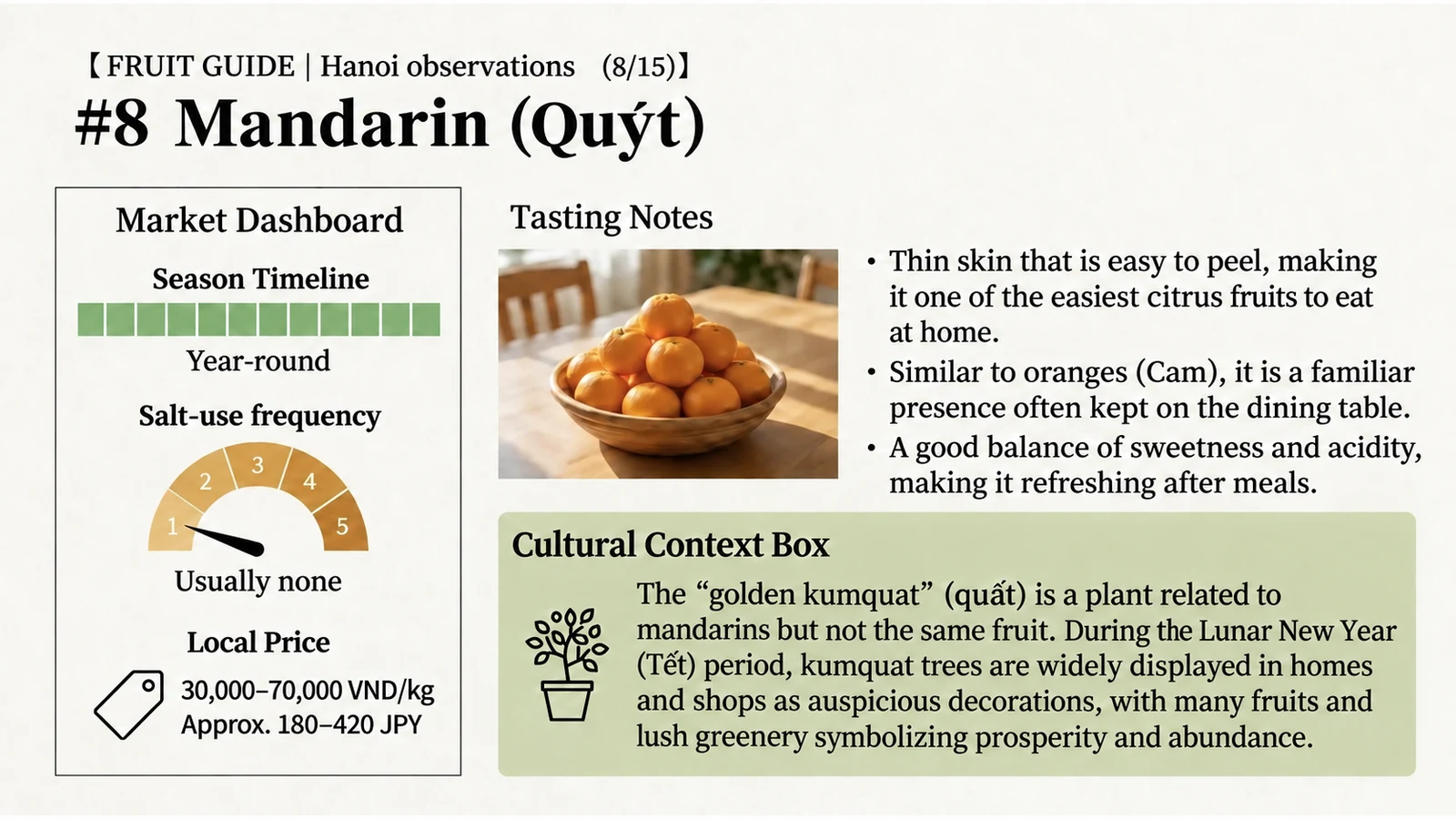
| 8 | Mandarin | Quýt | Year-round | Usually none | 30,000–70,000 |
| 9 | Pineapple | Dứa / Thơm / Khóm | Year-round | Often | 20,000–30,000 15,000–30,000 per fruit |
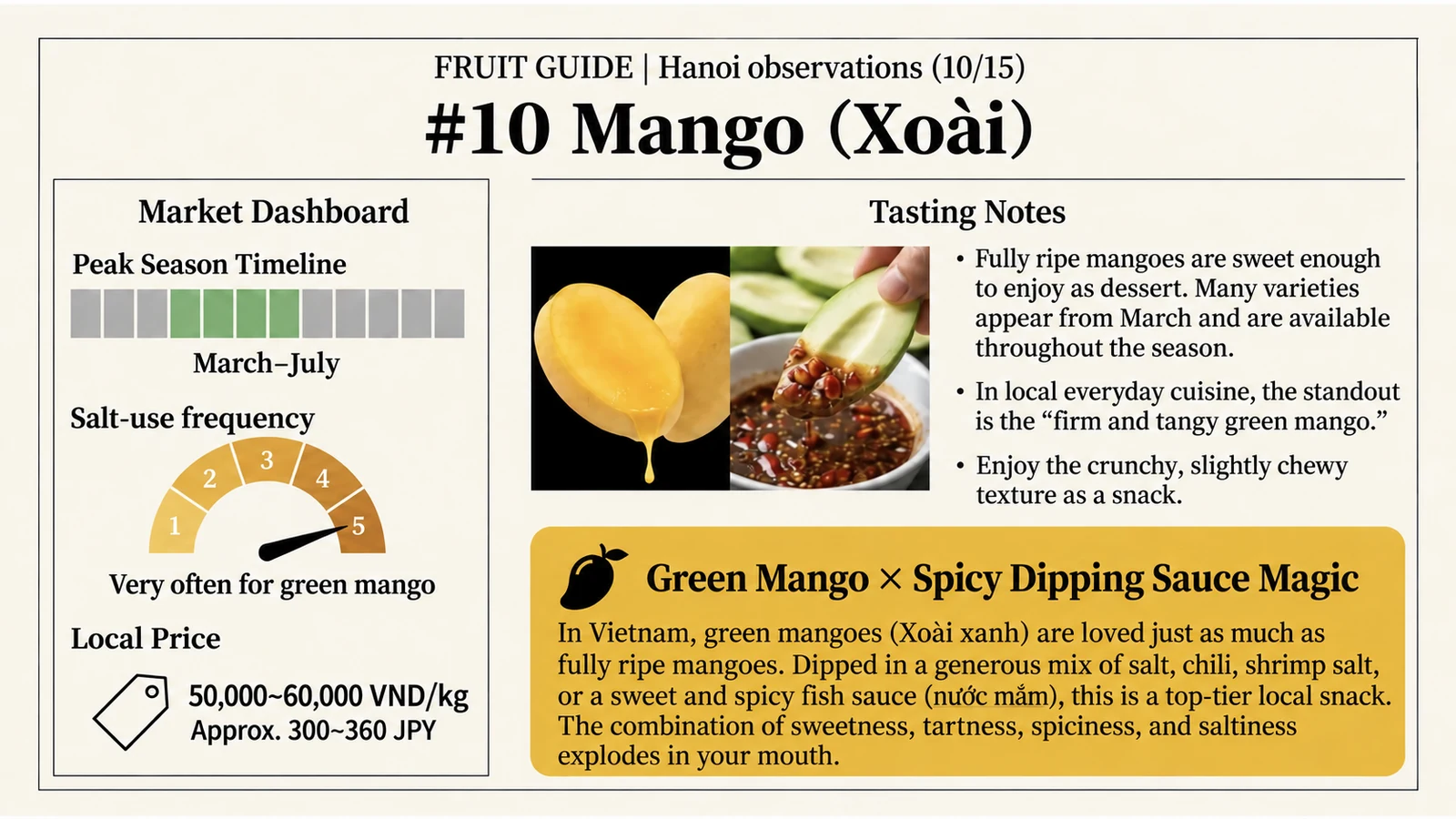
| 10 | Mango | Xoài | March–July | Very often for green mango | 50,000–60,000 |
| 11 | Wax apple | Roi (north) / Mận (south) | Year-round; peaks around May–August and December–February | Very often | 40,000–70,000 |
| 12 | Longan | Nhãn | July–September; peak around August | Usually none | 45,000–80,000 |
| 13 | Lychee | Vải | May–July; peak around June | Usually none | 30,000–60,000 |
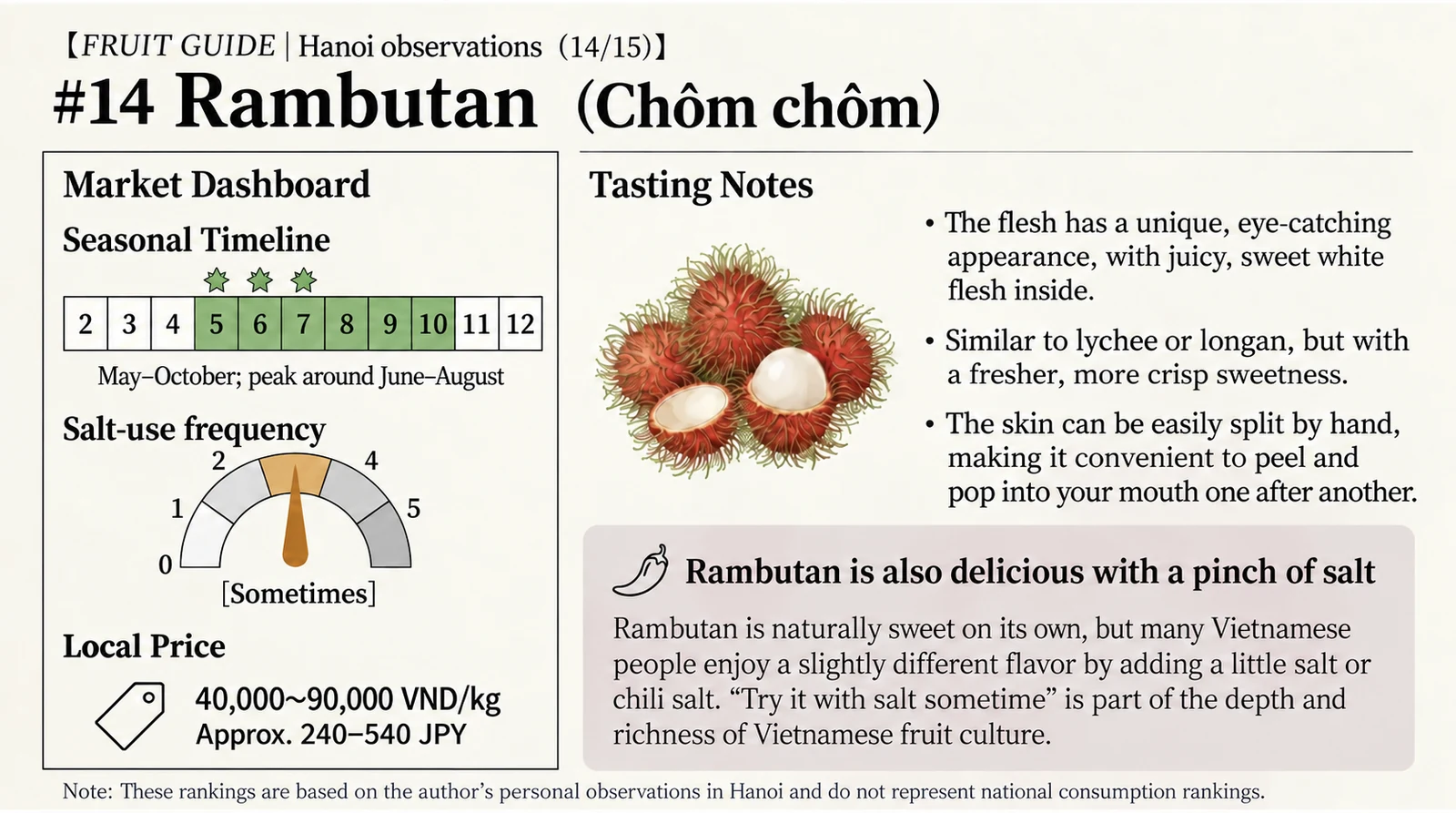
| 14 | Rambutan | Chôm chôm | May–October; peak around June–August | Sometimes | 40,000–90,000 |
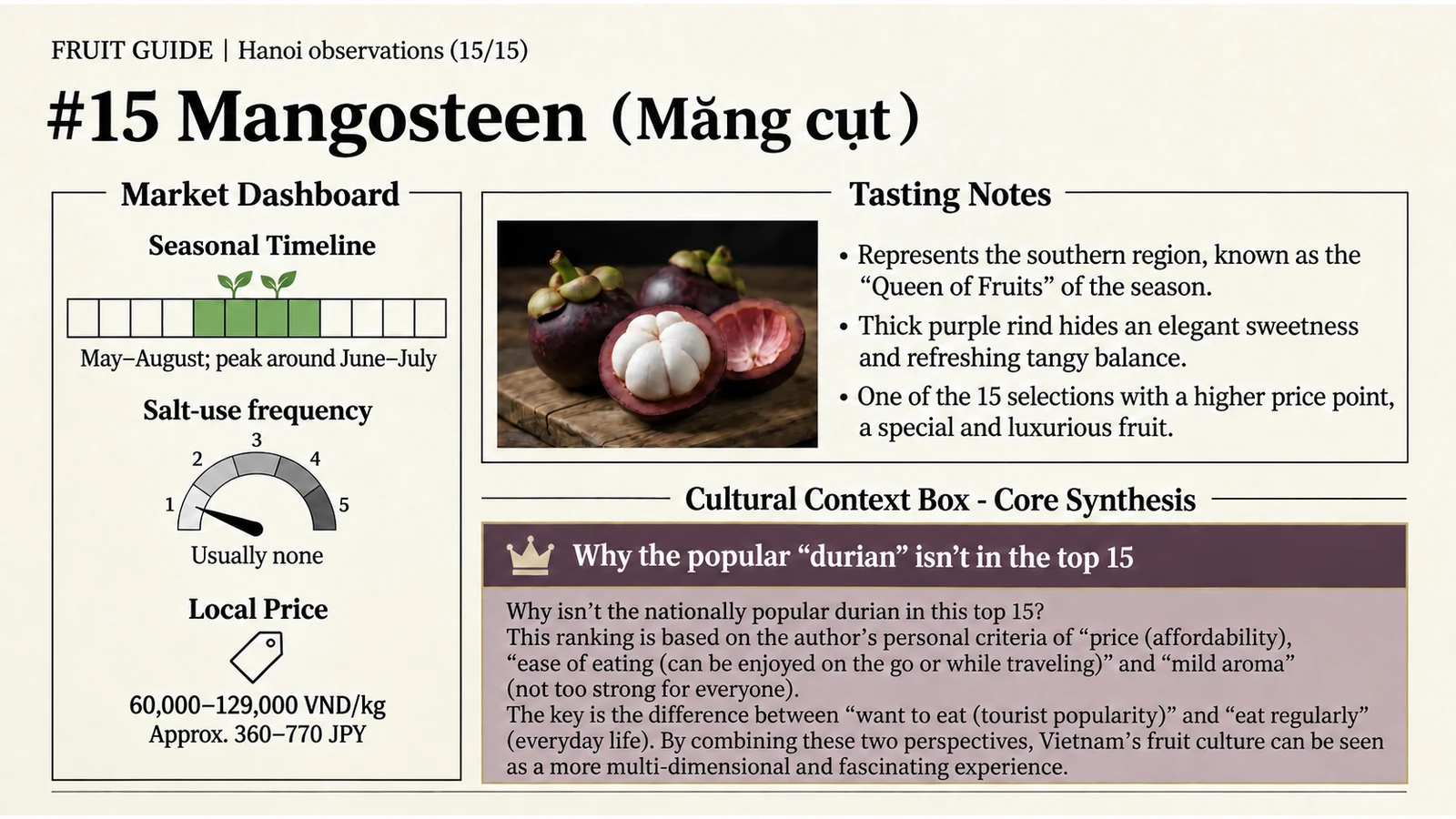
| 15 | Mangosteen | Măng cụt | May–August; peak around June–July | Usually none | 60,000–129,000 |
Except for pomelo prices, seasons, salt use, and prices are based on information checked by the author on August 20, 2026. Pomelo prices come from a Hanoi market report dated March 7, 2026. Illustrative conversion: VND 10,000 ≈ JPY 60 (the original article’s August 2026 reference). “Year-round” means availability, not that the fruit is always at its seasonal peak.
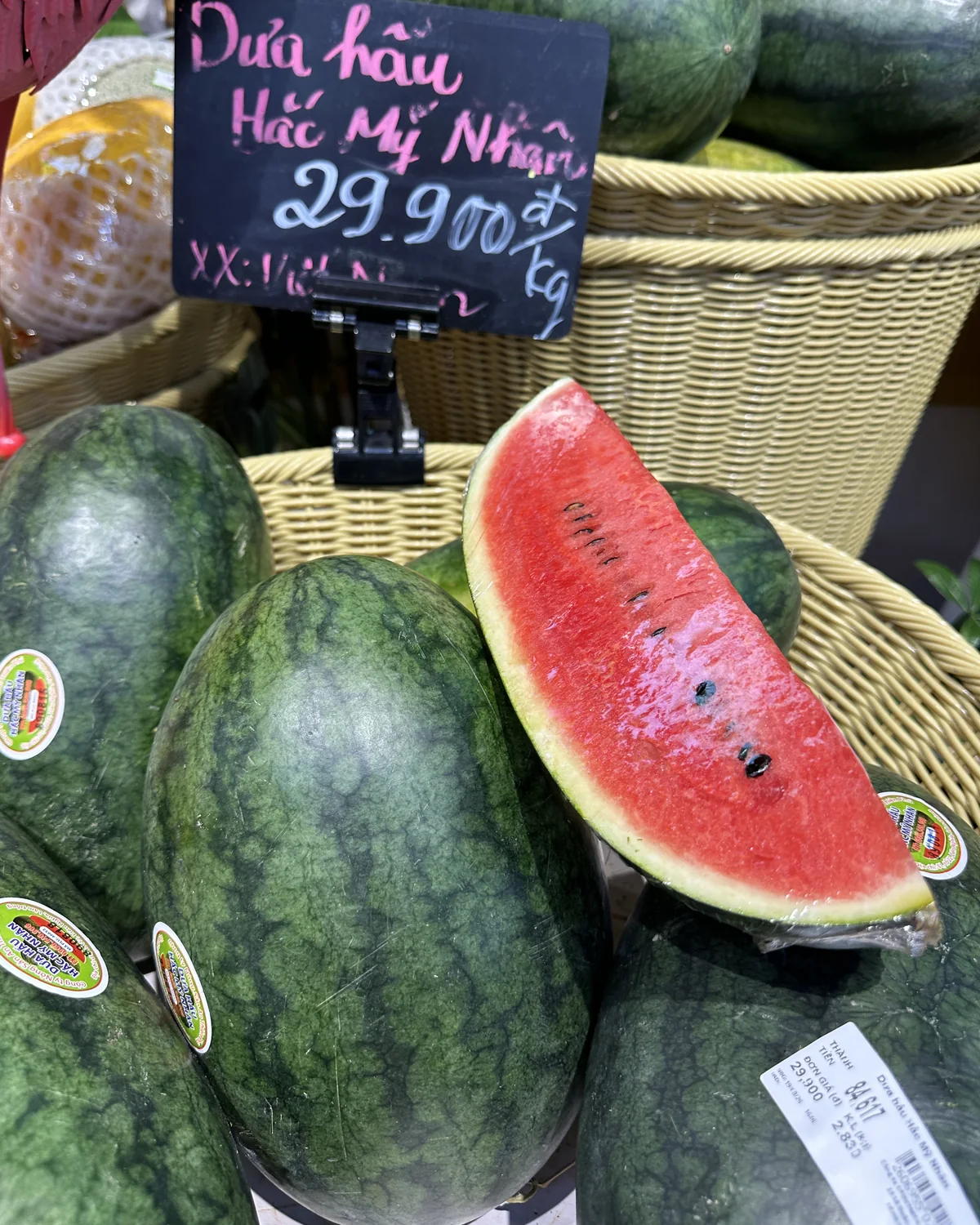
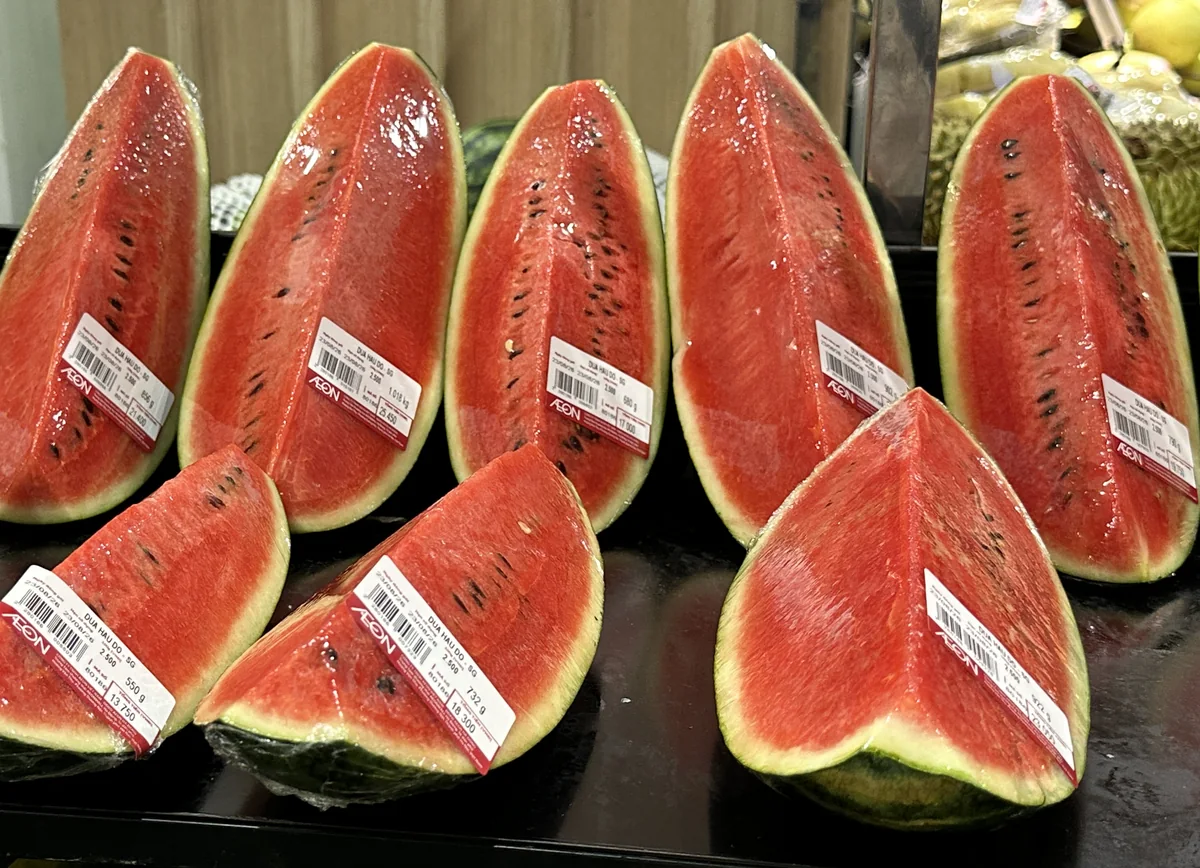
Prices vary by date, shop, variety, and origin. Photos include imported or prepared products, so their price labels may differ from the ranges in the text. Salt-use descriptions are observations and vary by region, household, and personal preference. “Usually none” describes customary preparation rather than an absolute rule.
15 Familiar Fruits on Vietnam’s Everyday Table
1. Watermelon (Dưa hấu)
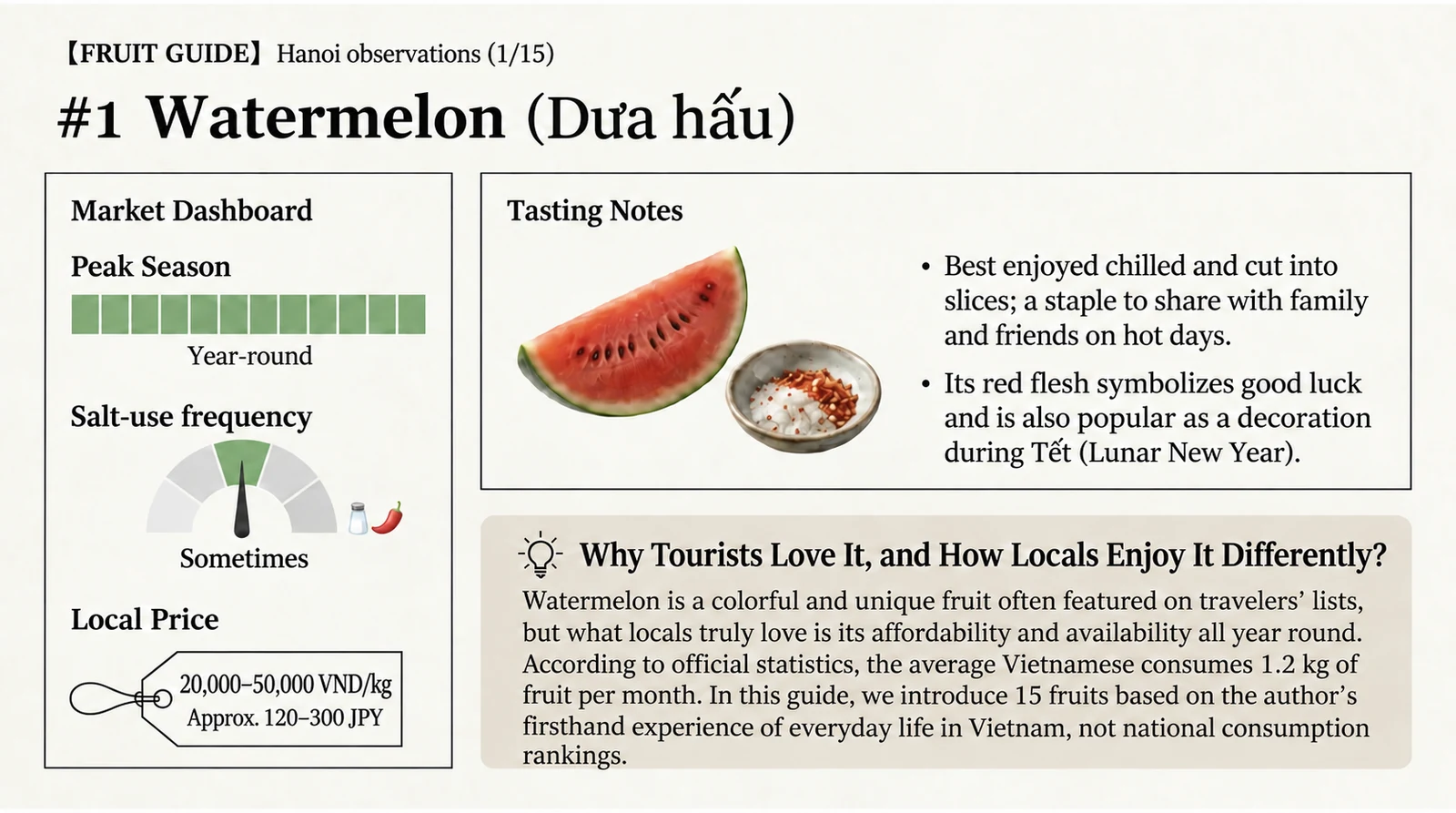
Chilled watermelon cut into pieces is a familiar dessert after meals on hot days. Its red flesh is considered an auspicious color, and watermelon is also used in Lunar New Year displays. Salt is sometimes added: either plain salt or chili salt. It typically costs VND 20,000–50,000 per kilogram (about JPY 120–300).
Read more: Watermelon Guide · How to Eat Watermelon · The History and Stories of Watermelon
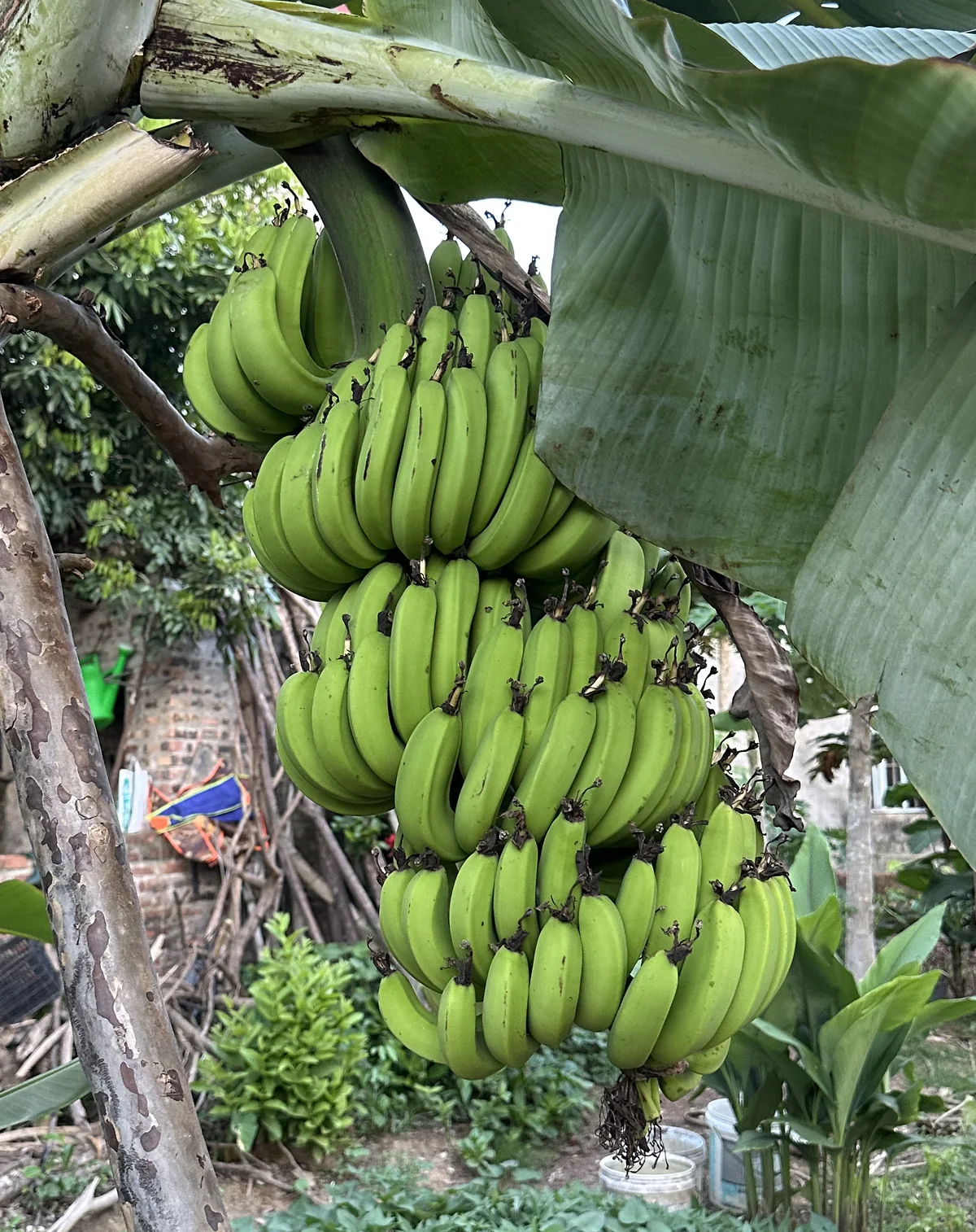
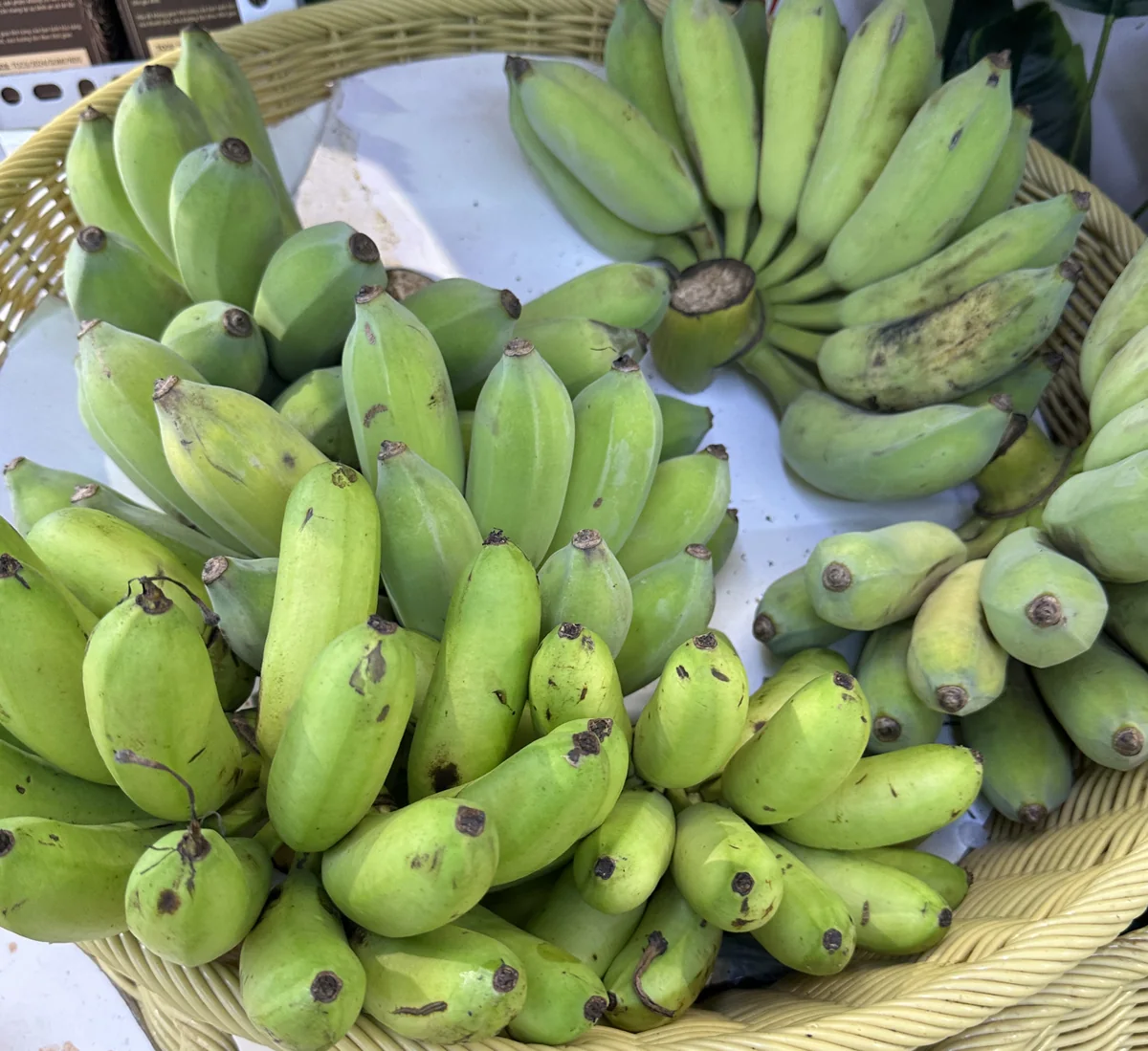
2. Banana (Chuối)
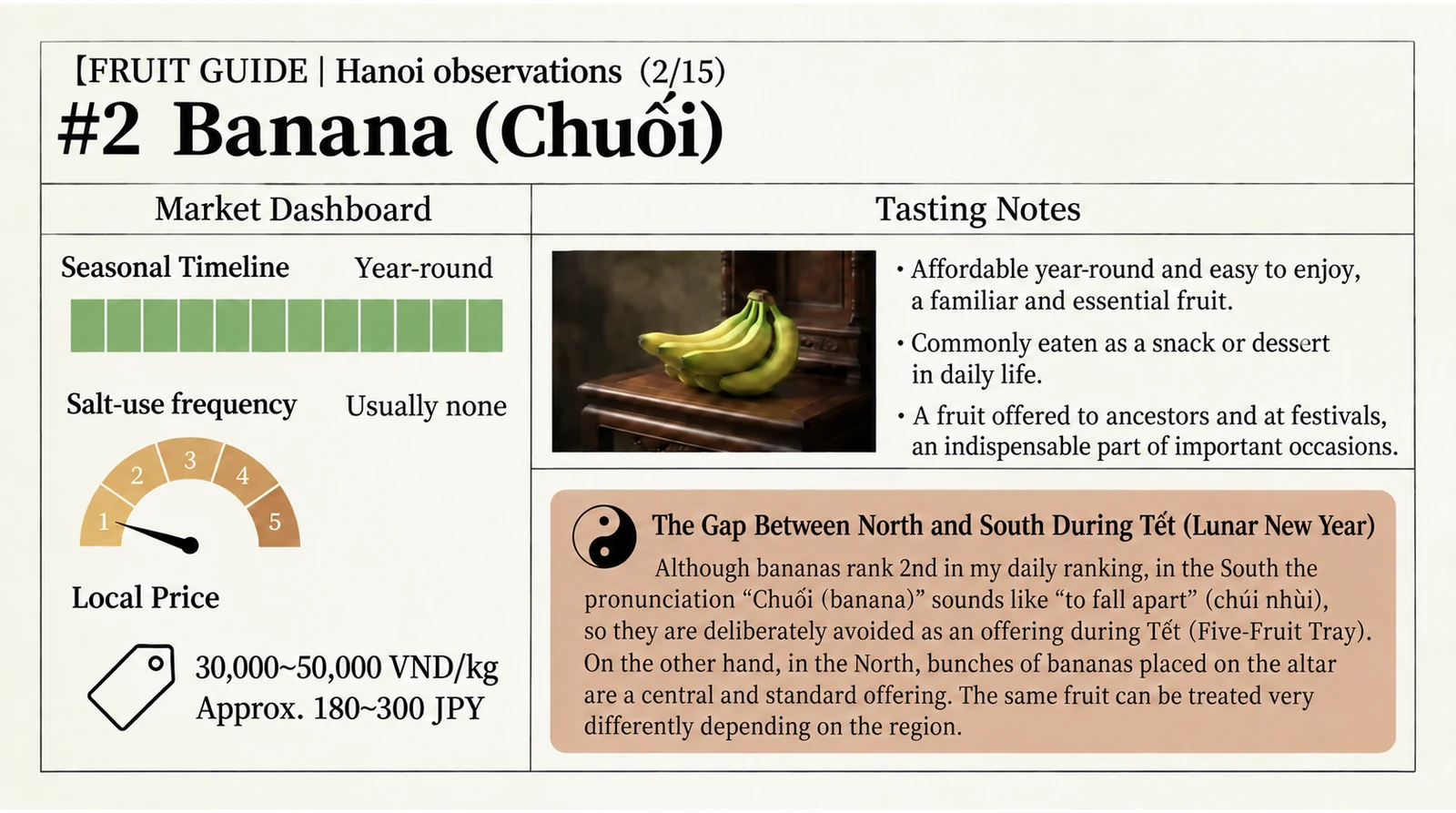
Bananas are easy to find year-round and are a familiar everyday fruit. They are generally eaten without salt. Retail prices are around VND 30,000–50,000/kg (about JPY 180–300).
They are eaten as snacks and desserts and are often offered on ancestral altars. Lunar New Year fruit displays vary by region, however: bananas are traditionally avoided in the south. This regional difference is explained below.
Read more: Banana Guide · How to Eat Bananas · Banana: History and Stories
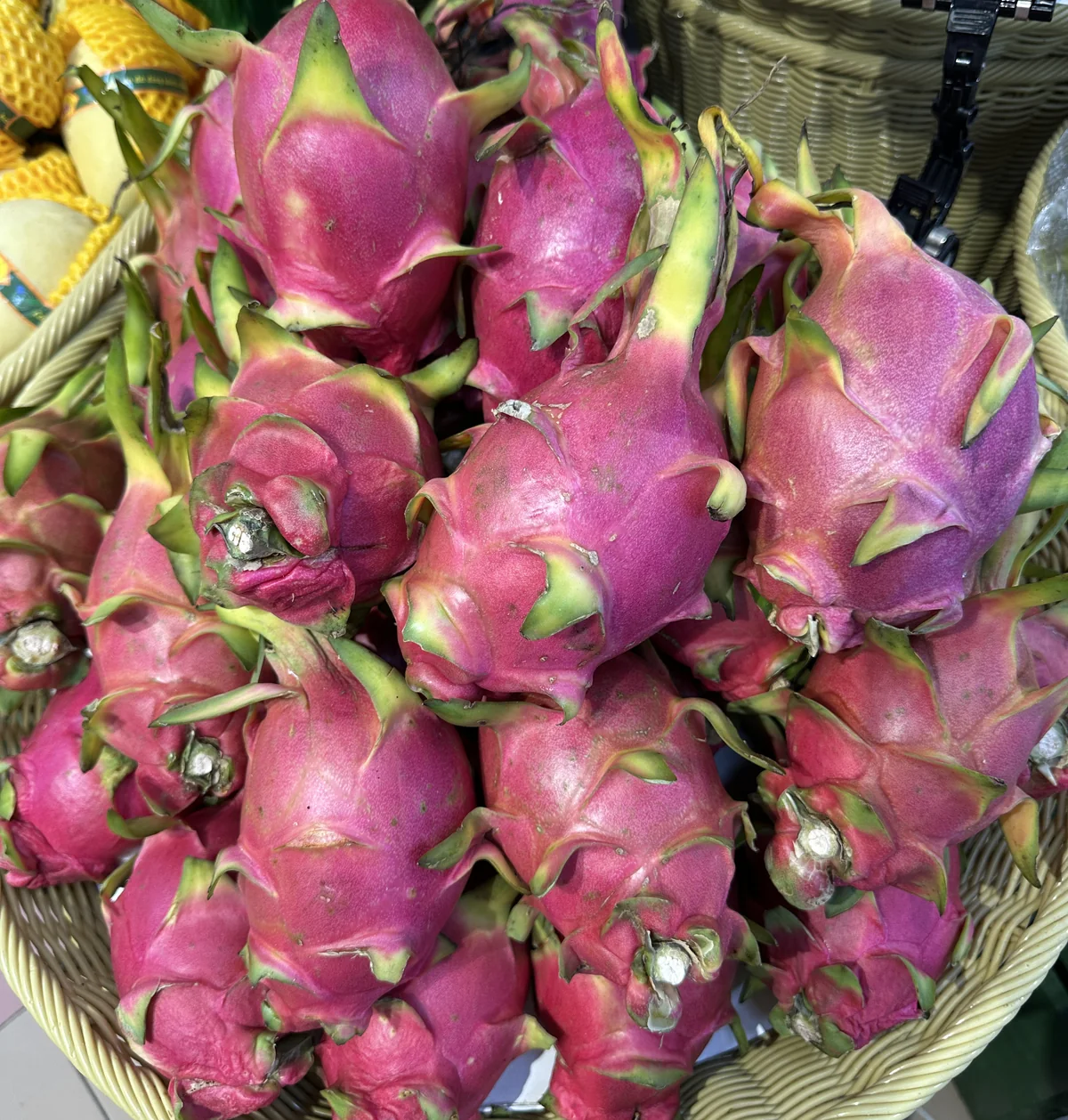
3. Dragon fruit (Thanh long)
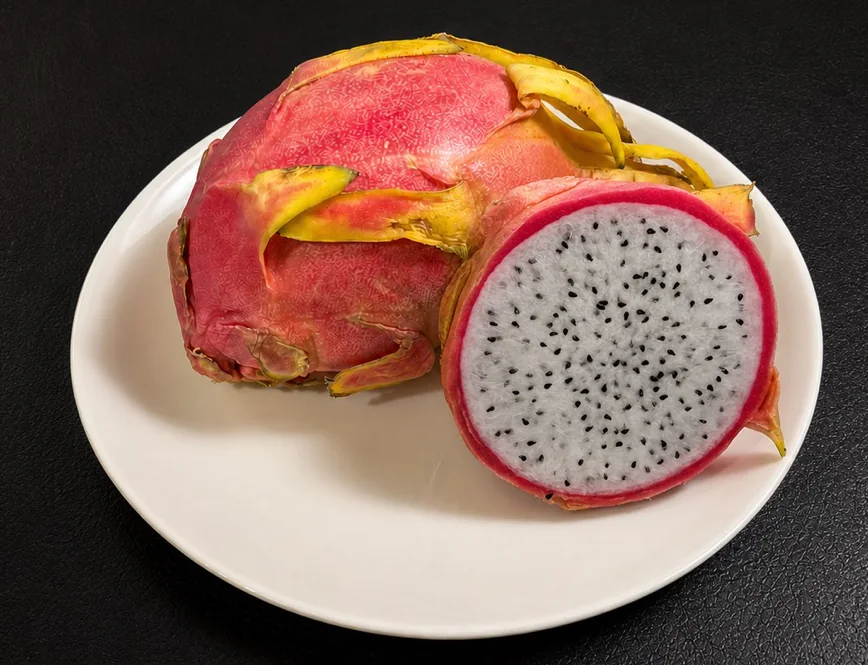
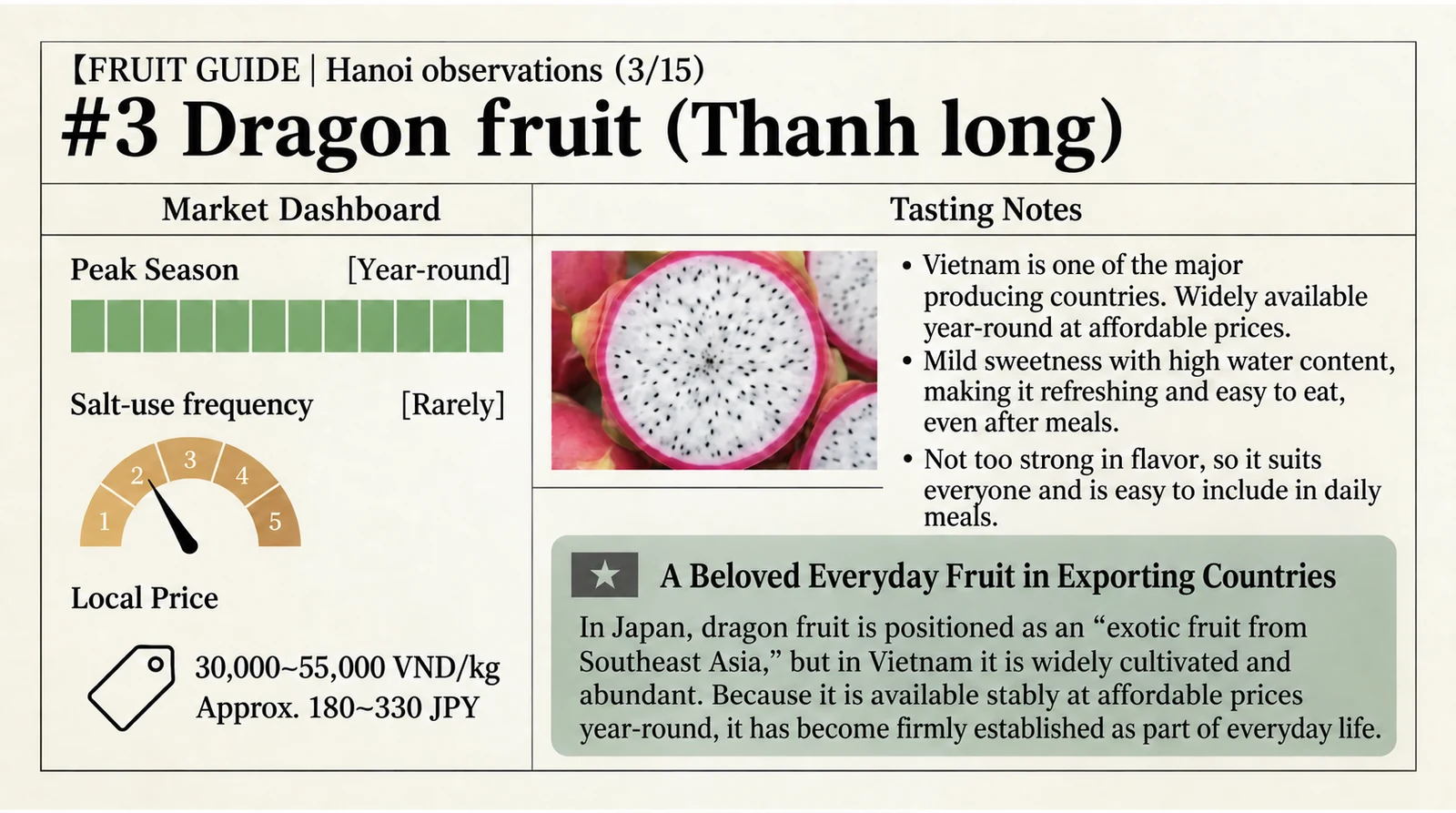
Dragon fruit makes a refreshing dessert after meals. Sweetness varies by variety and ripeness. Salt is rarely added, although some people use chili salt. Vietnam is a major producing country, and the fruit is available at many supermarkets at reasonable prices through much of the year. Expect around VND 30,000–55,000/kg (about JPY 180–330).
Read more: Dragon fruit Guide · How to Eat Dragon fruit · Dragon Fruit History and Stories
4. Pomelo (Bưởi)
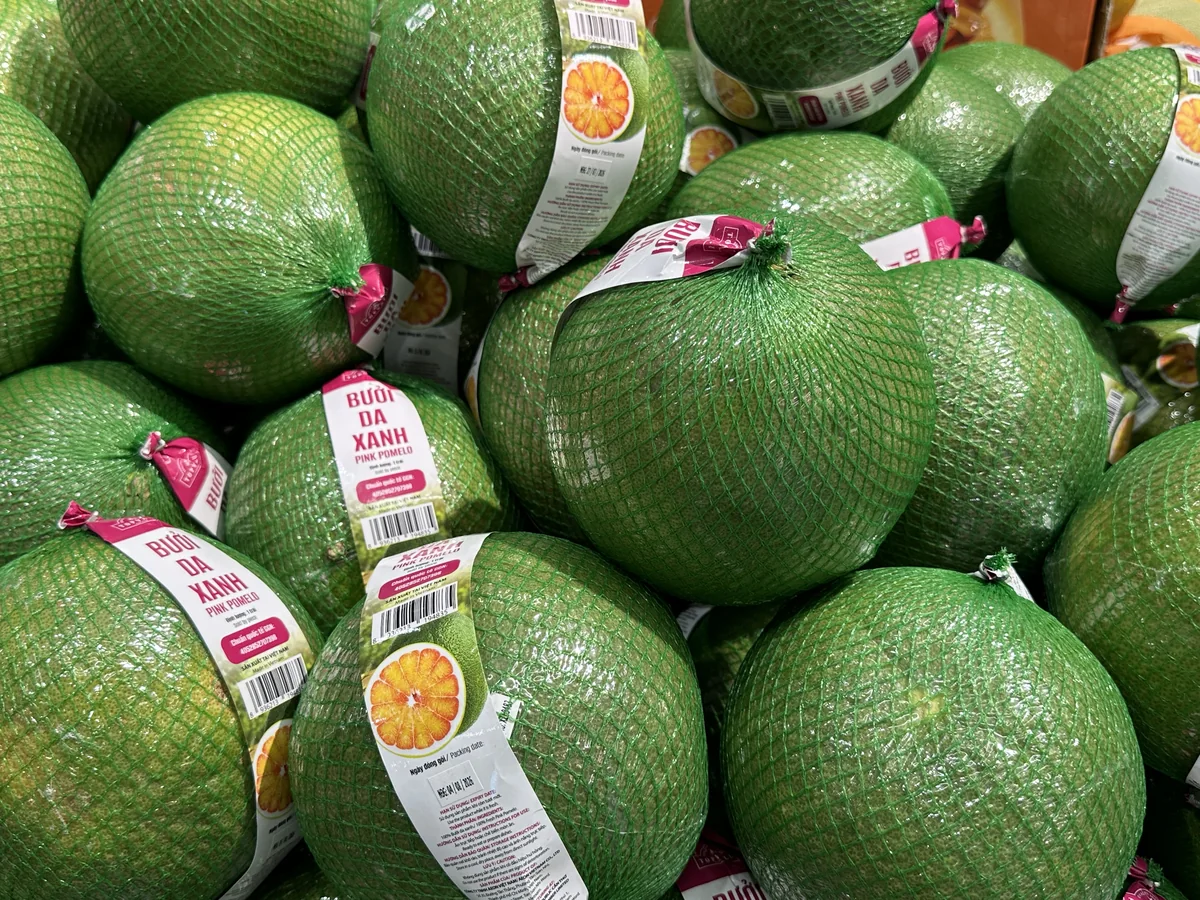
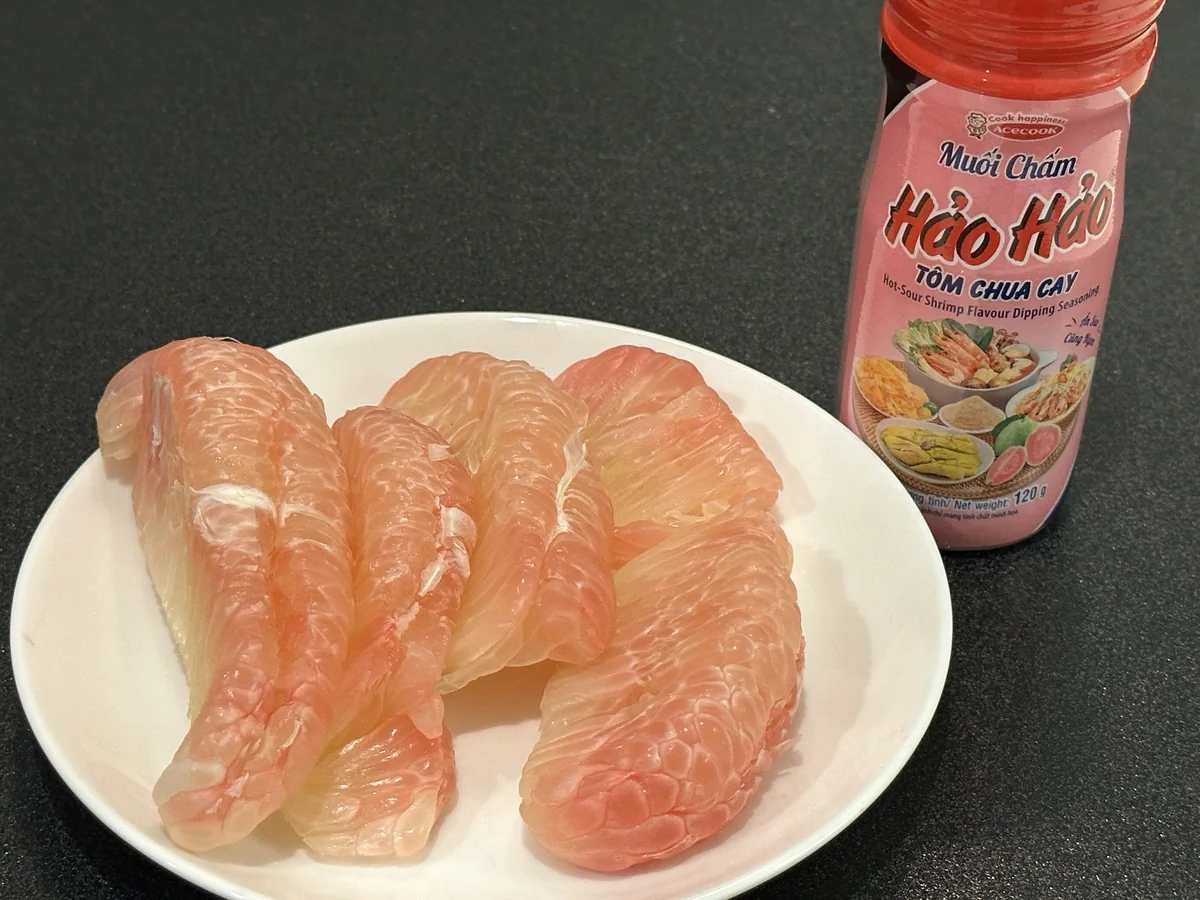
Separated into segments and shared with the family, pomelo is a familiar after-meal fruit. Chili salt or shrimp salt is sometimes served with it. This large citrus fruit is commonly seen year-round. A Hanoi market report gives a retail example of VND 45,000–120,000/kg for Bưởi da xanh (about JPY 270–720 using this article’s conversion rate; March 7, 2026). In northern Lunar New Year displays, yellow pomelo can represent the color associated with earth.
The price is per kilogram, not per fruit. It comes from page 18 of the Hanoi Agricultural Extension Center’s market report and is a recorded example rather than a guarantee of today’s shop price. For fruit sold individually, check both the weight and the pricing unit.
Read more: Pomelo Guide · How to Eat Pomelo · The Story of Pomelo
5. Papaya (Đu đủ)
Ripe papaya is chilled, cut, and eaten without salt. It is available year-round at around VND 20,000–40,000/kg (about JPY 120–240), making it an accessible snack or dessert. Unripe green papaya is also used in salads such as Nộm đu đủ.
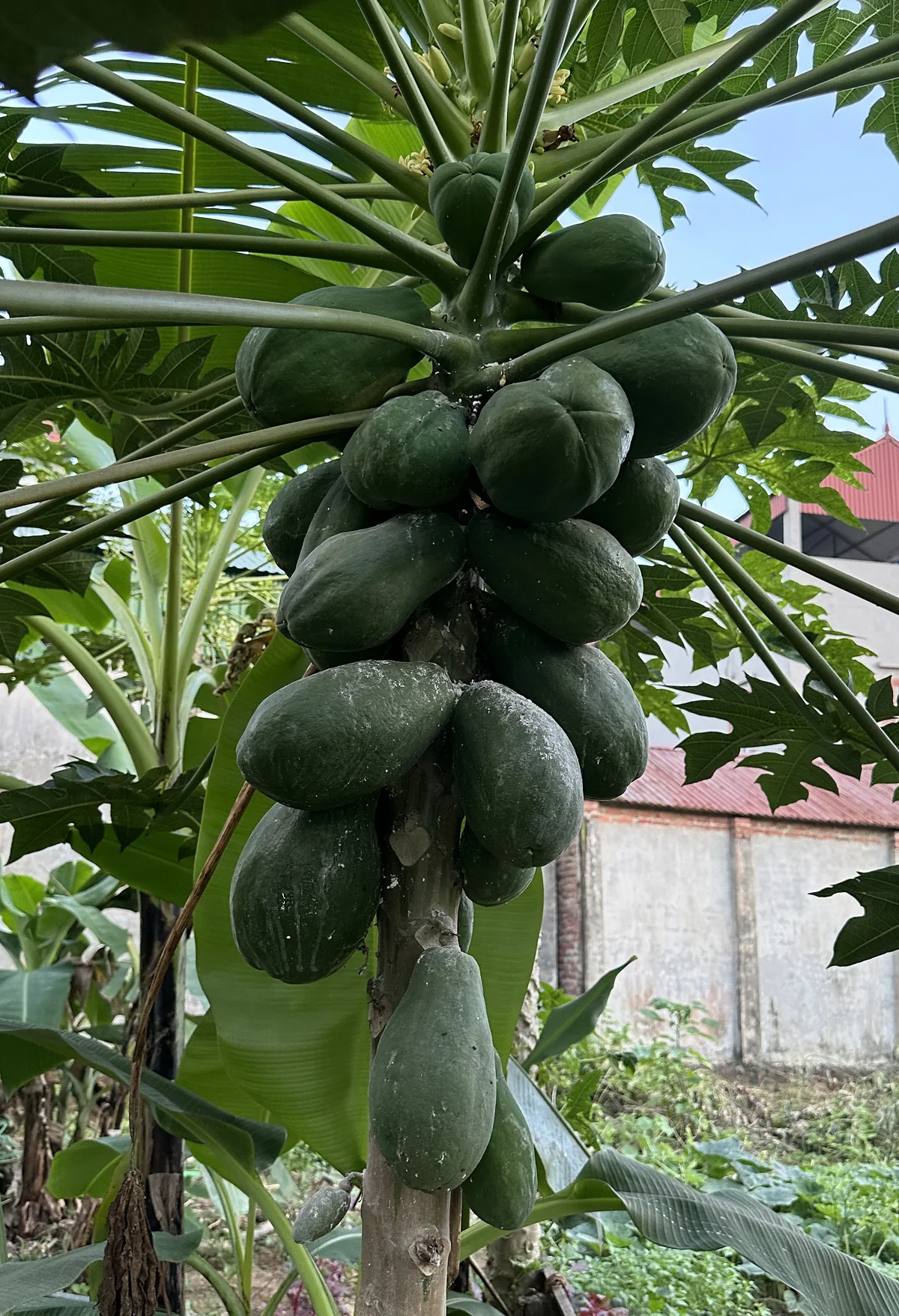
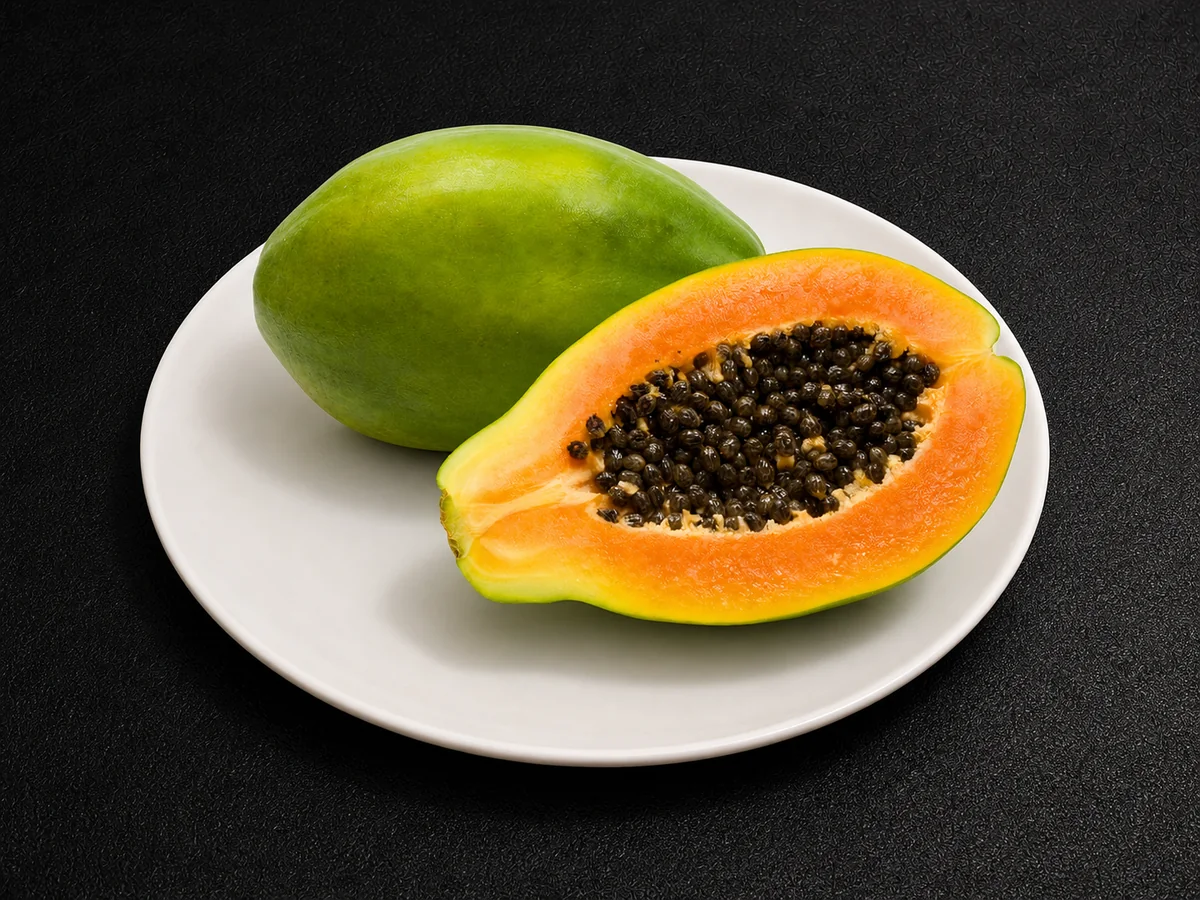
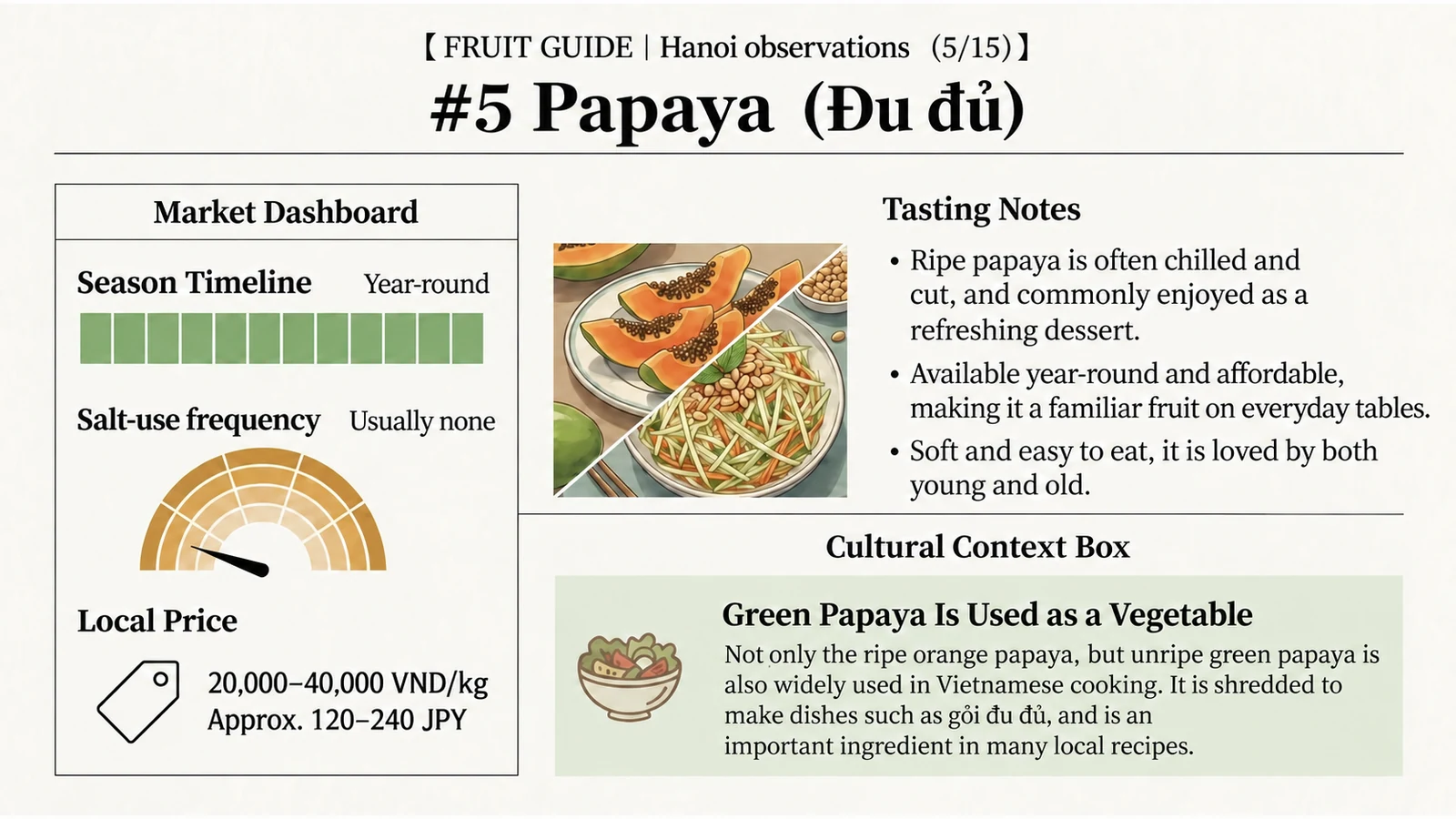
Read more: Papaya Guide · How to Eat Papaya · The Story of Papaya
6. Guava (Ổi)
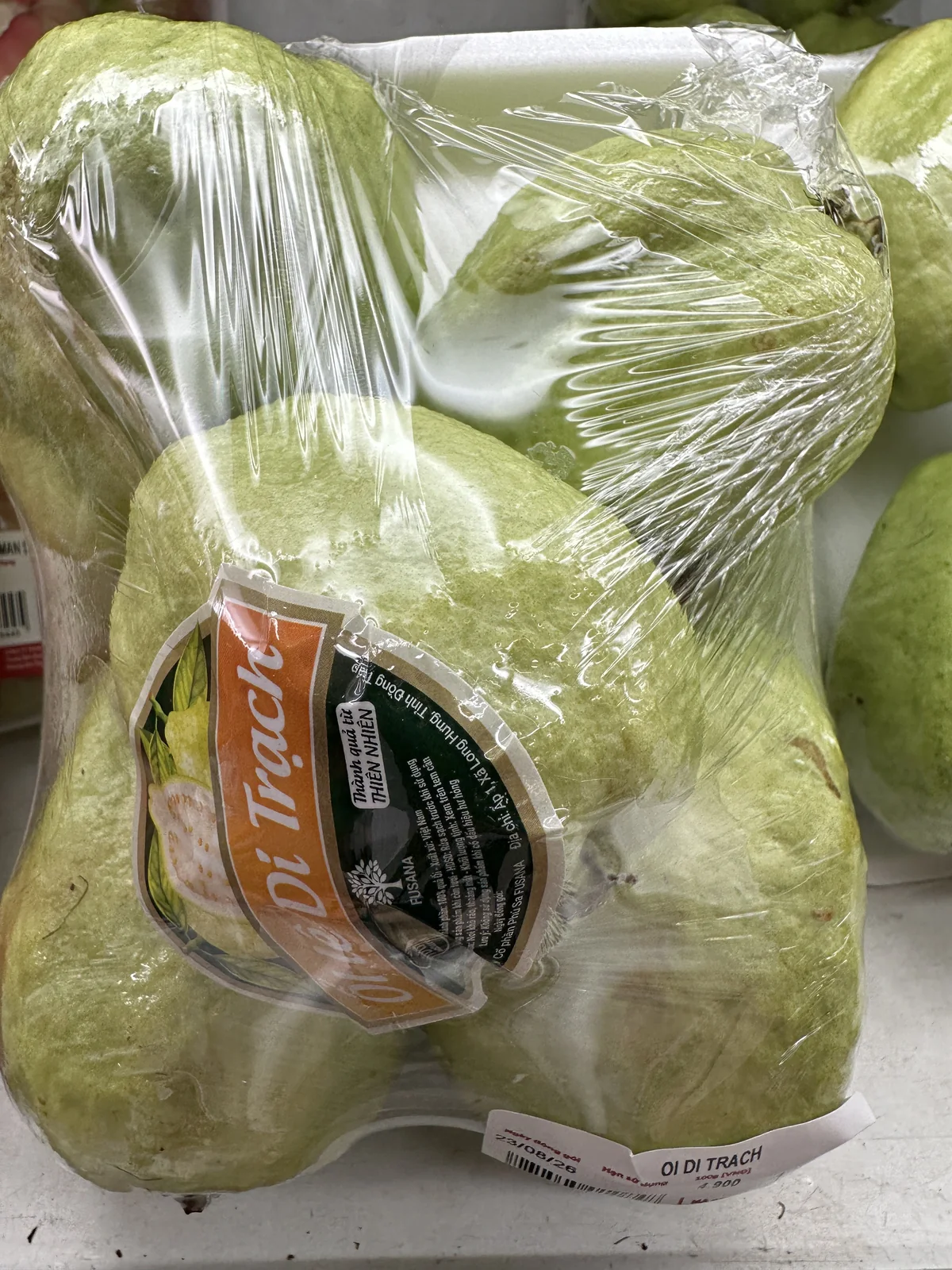
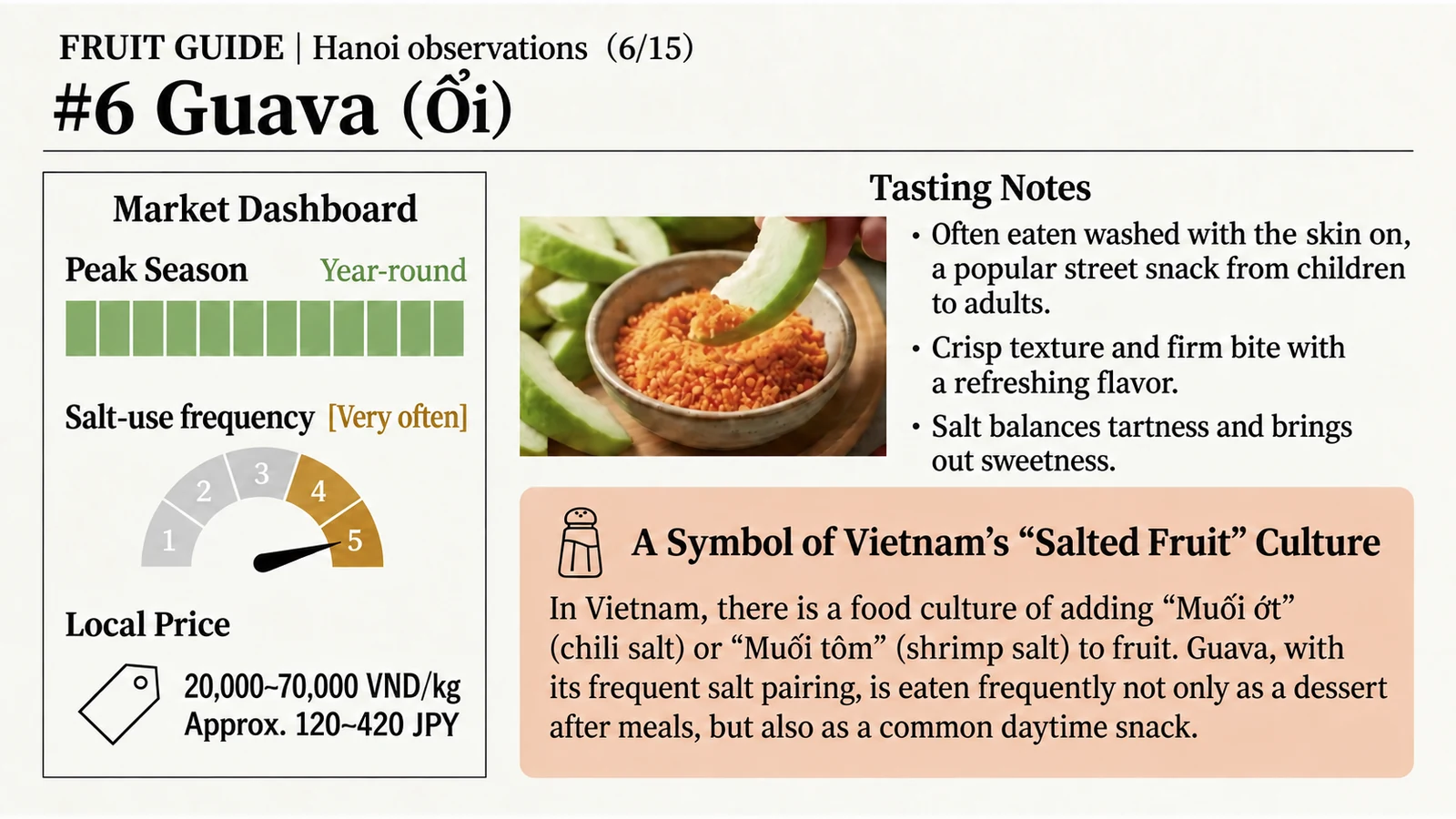
Guava is a familiar street snack. After washing it well, people cut it with the skin on and serve it with chili salt (Muối ớt) or shrimp salt (Muối tôm) [2]. In my local surroundings, it is one of the fruits very often eaten with salt. Prices are around VND 20,000–70,000/kg (about JPY 120–420).
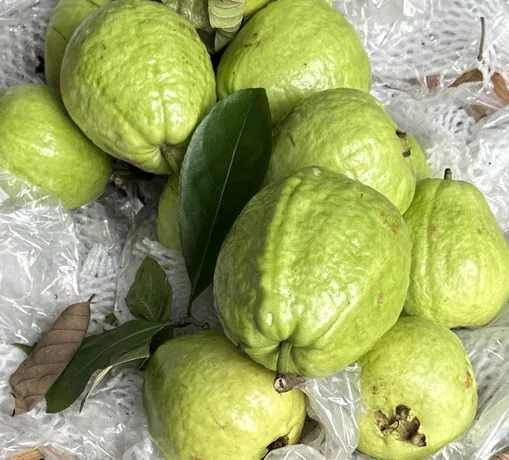
Read more (Japanese): Guava Guide · How to Eat Guava · The Story of Guava
7. Orange (Cam)
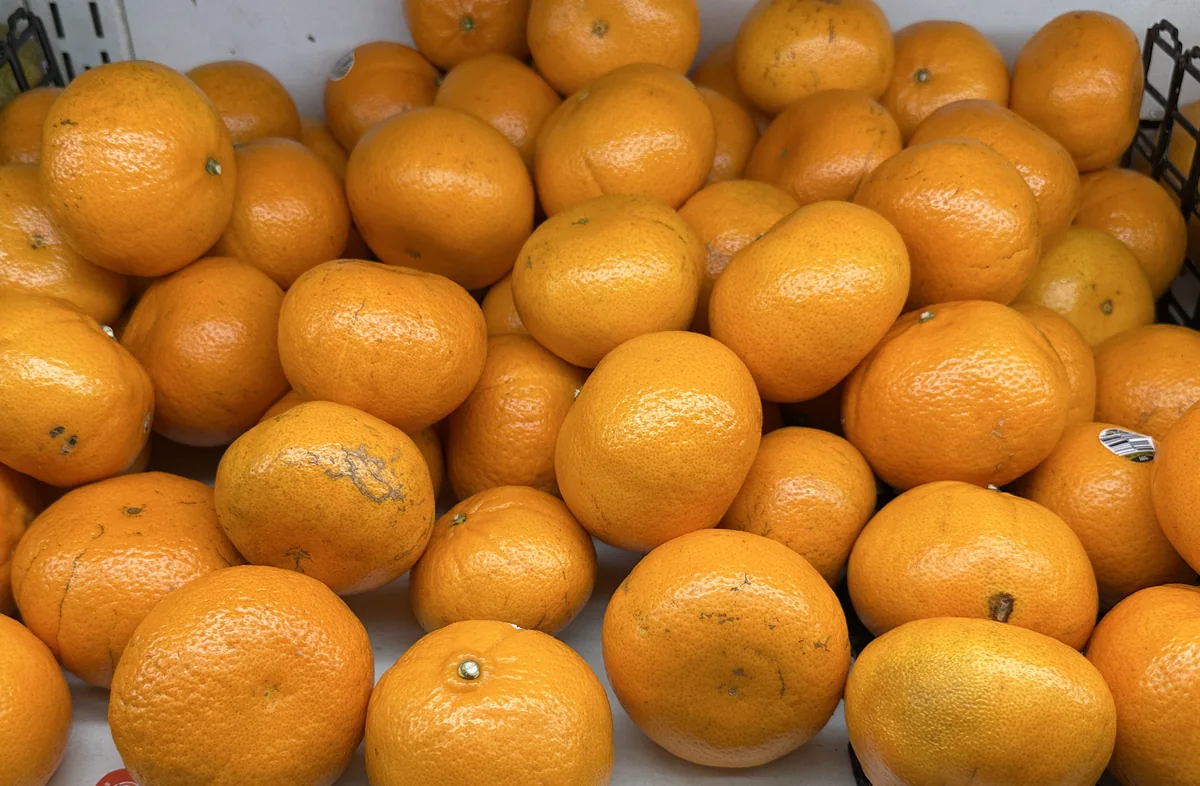
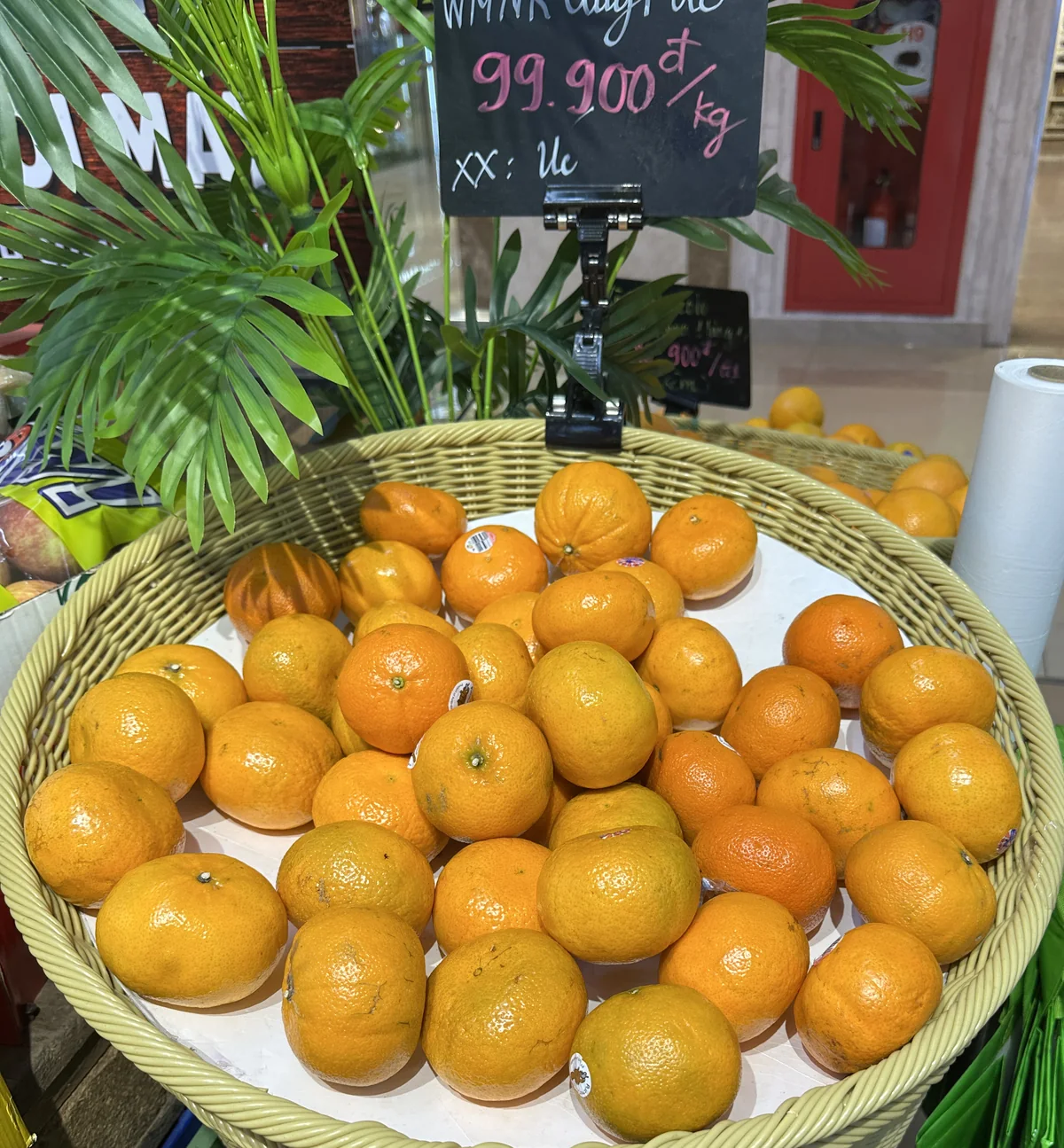
Oranges are eaten fresh and frequently squeezed for juice. They are generally enjoyed without salt. Prices are around VND 30,000–70,000/kg (about JPY 180–420).
Read more: Orange Guide · How to Eat Orange · The Story of Orange
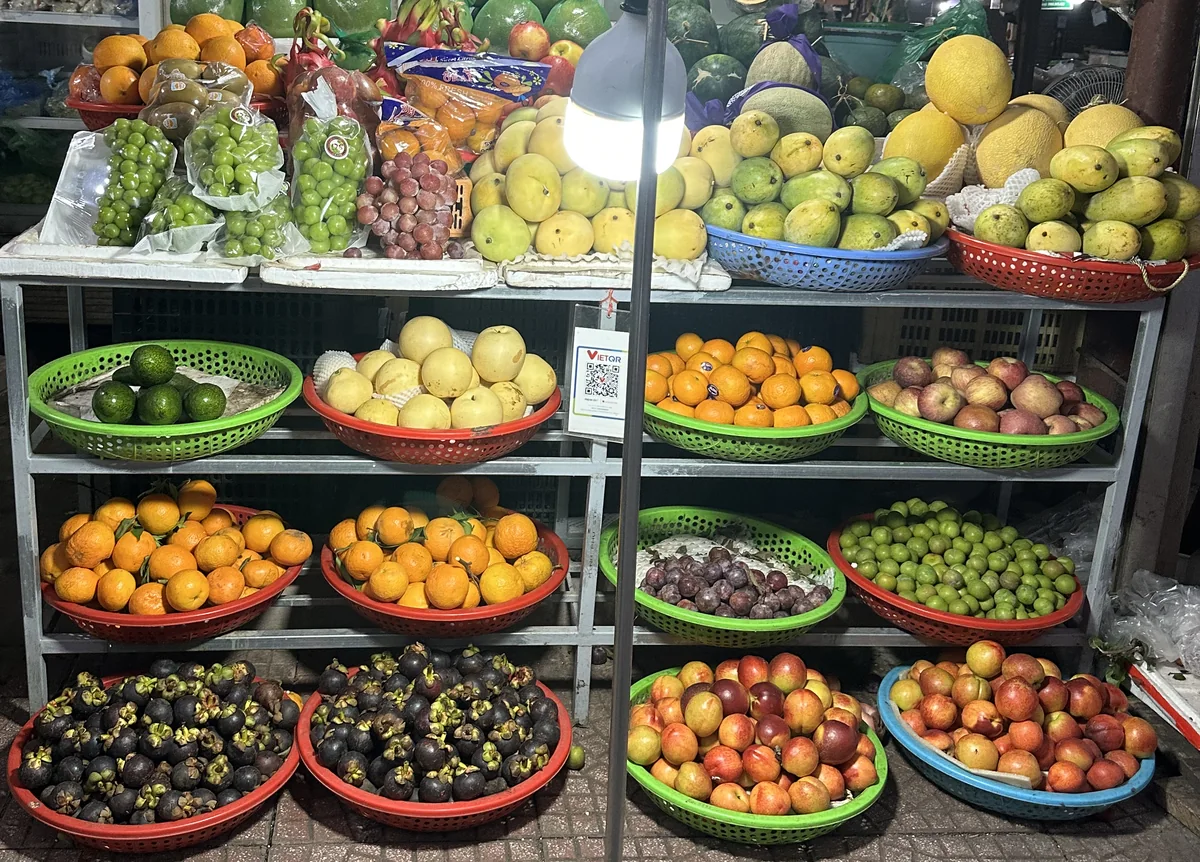
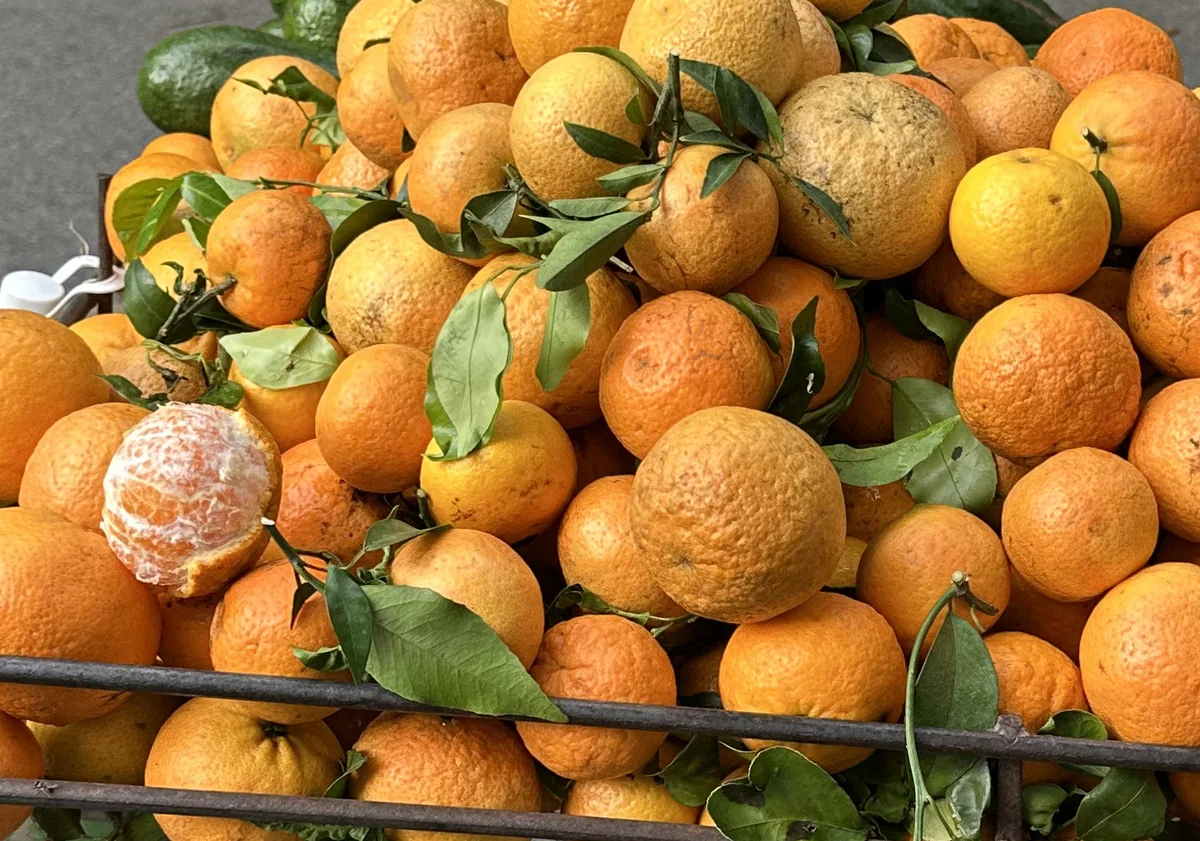
8. Mandarin (Quýt)
Easy to peel by hand, mandarins are convenient fruit to eat at home, usually without salt. At Lunar New Year, the related kumquat tree (quất) is also displayed as a symbol of good fortune. Mandarin prices are around VND 30,000–70,000/kg (about JPY 180–420).
Read more: Mandarin Guide · How to Eat Mandarin · The Story of Mandarin
9. Pineapple (Dứa / Thơm / Khóm)
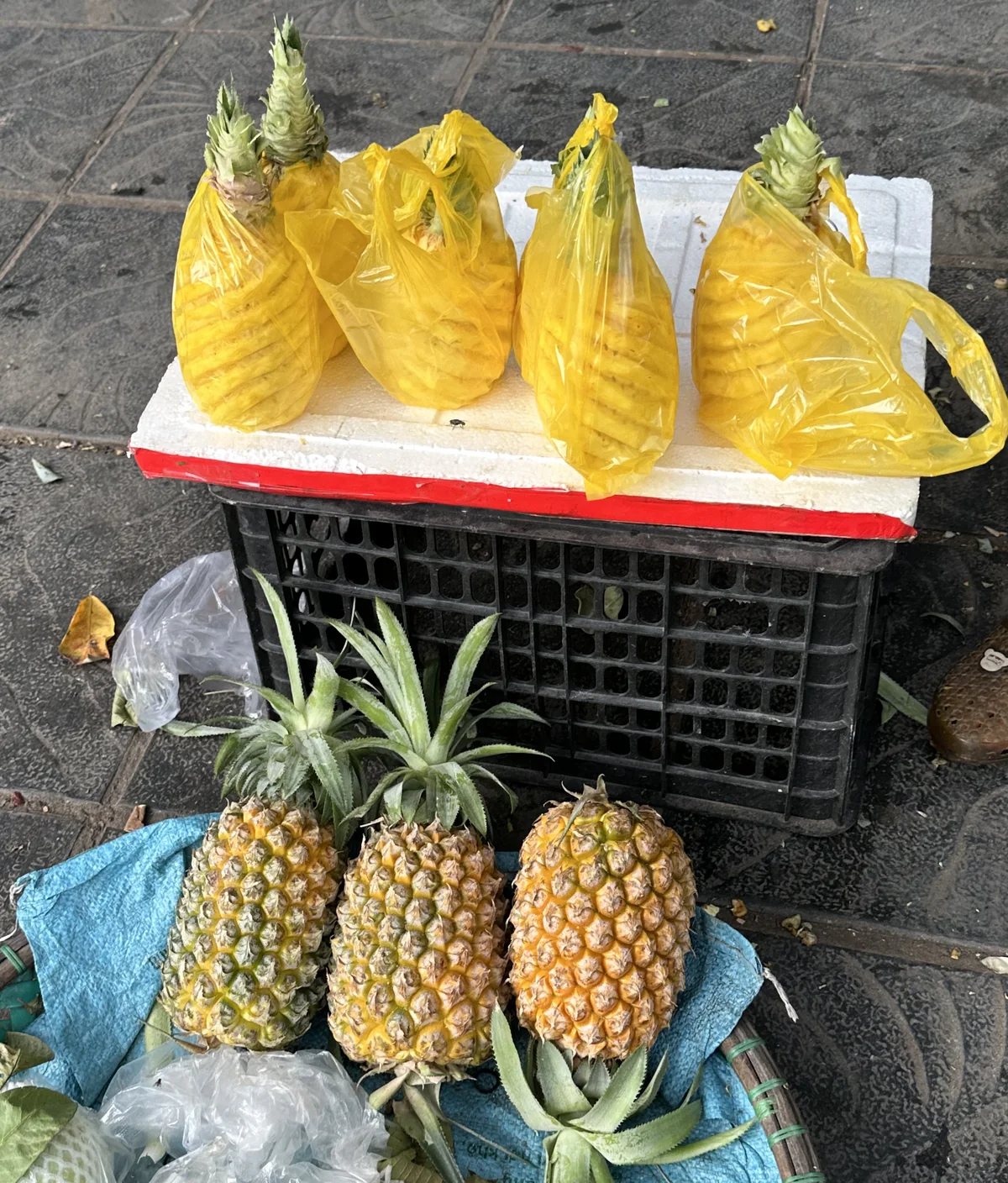
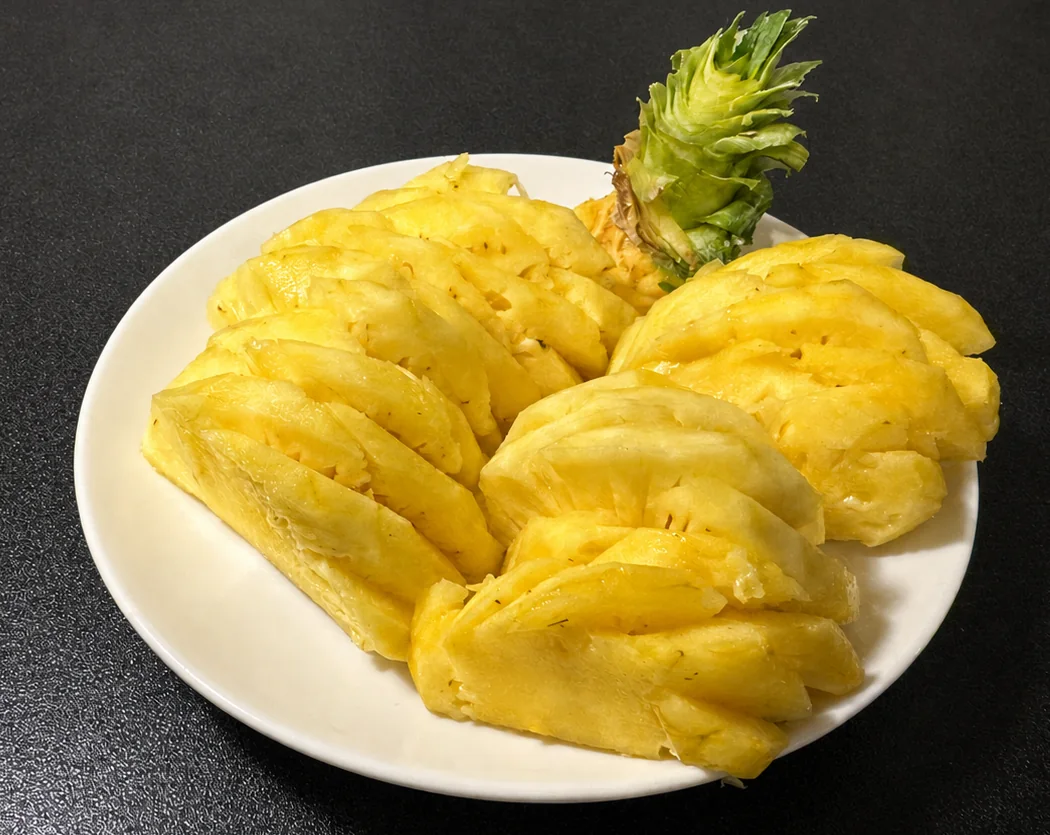
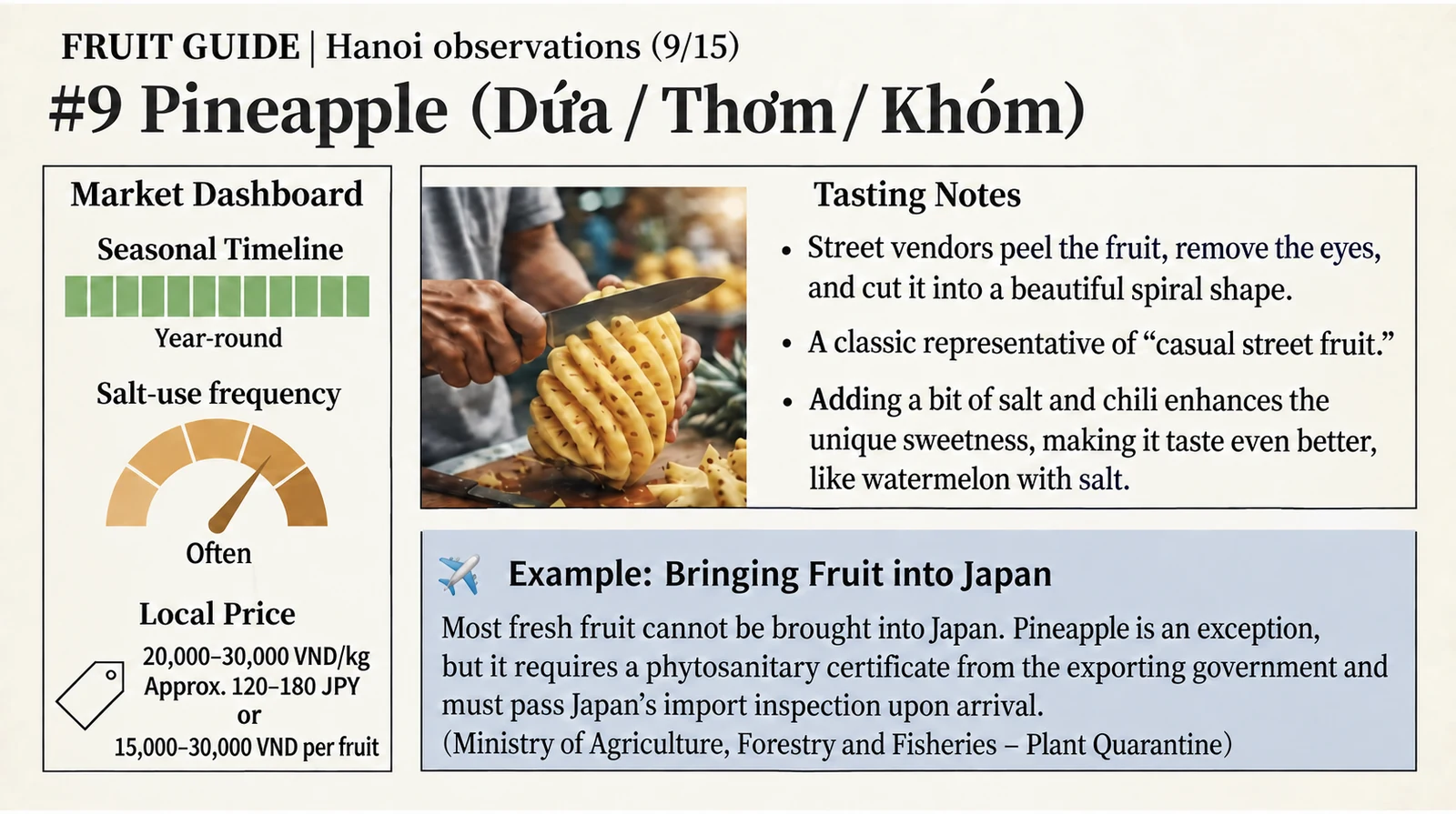
Pineapple is often served with chili salt, combining its sweetness and acidity with salty and spicy flavors. Street vendors may peel it on the spot, making it an easy cut-fruit snack. It is sold year-round at around VND 20,000–30,000/kg (about JPY 120–180), or VND 15,000–30,000 per fruit (about JPY 90–180).
Read more: Pineapple Guide · How to Eat Pineapple · The Story of Pineapple
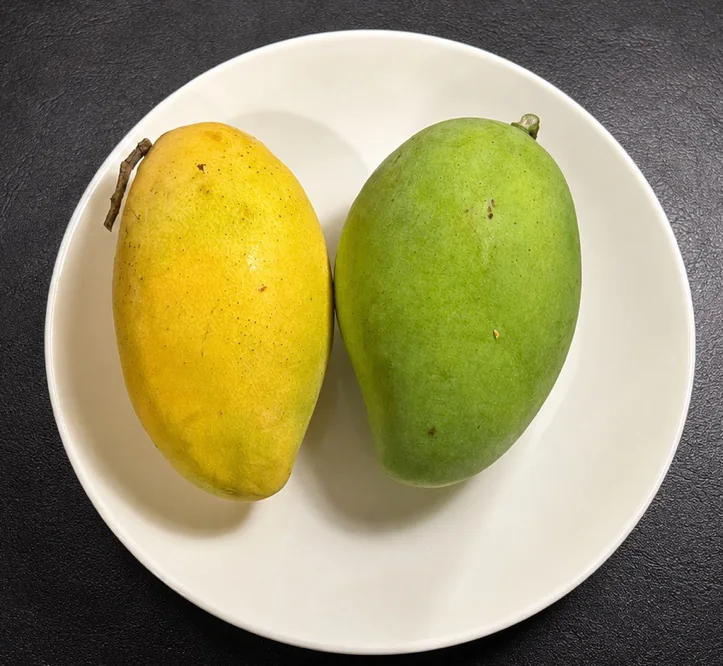
10. Mango (Xoài)
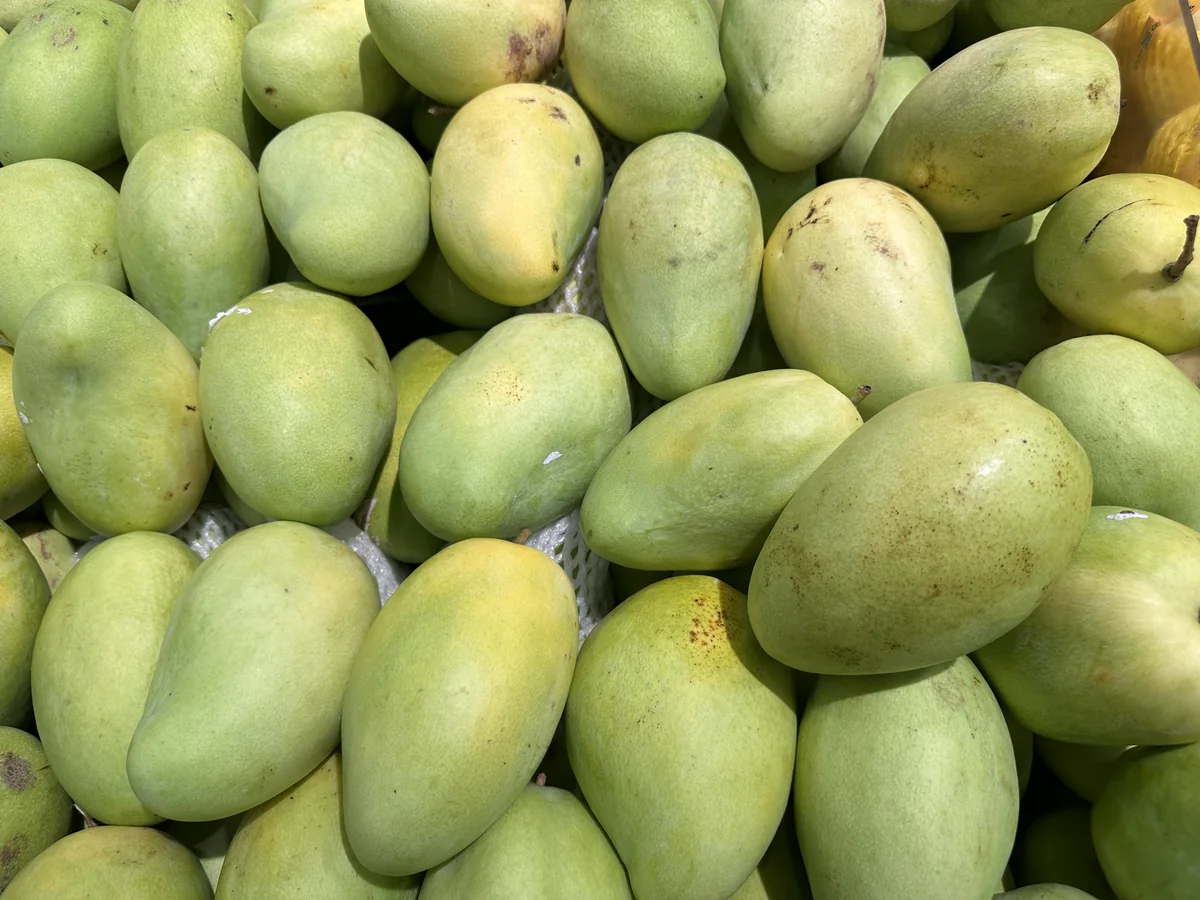
Ripe mango is eaten on its own. Green mango is very often dipped in chili salt, shrimp salt, or a sweet-and-spicy fish sauce dressing. Mango appears especially often on the table during its March–July season.
The season differs by variety. The Mango Guide uses April–July for representative varieties, while this article includes early varieties available from March. Prices are around VND 50,000–60,000/kg (about JPY 300–360).
Read more: Mango Guide · How to Eat Mango · The Story of Mango
11. Wax apple (Roi (north) / Mận (south))
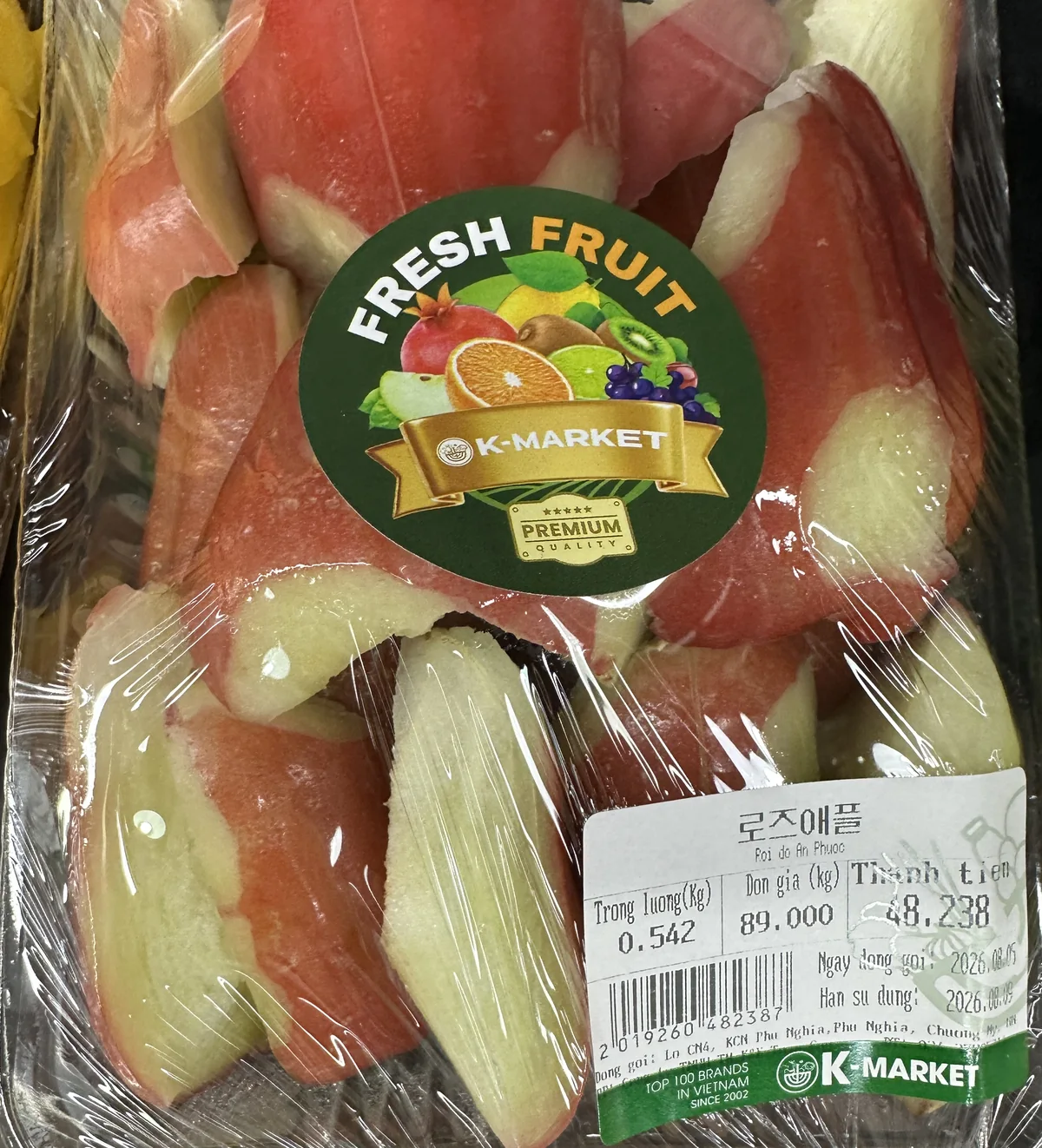
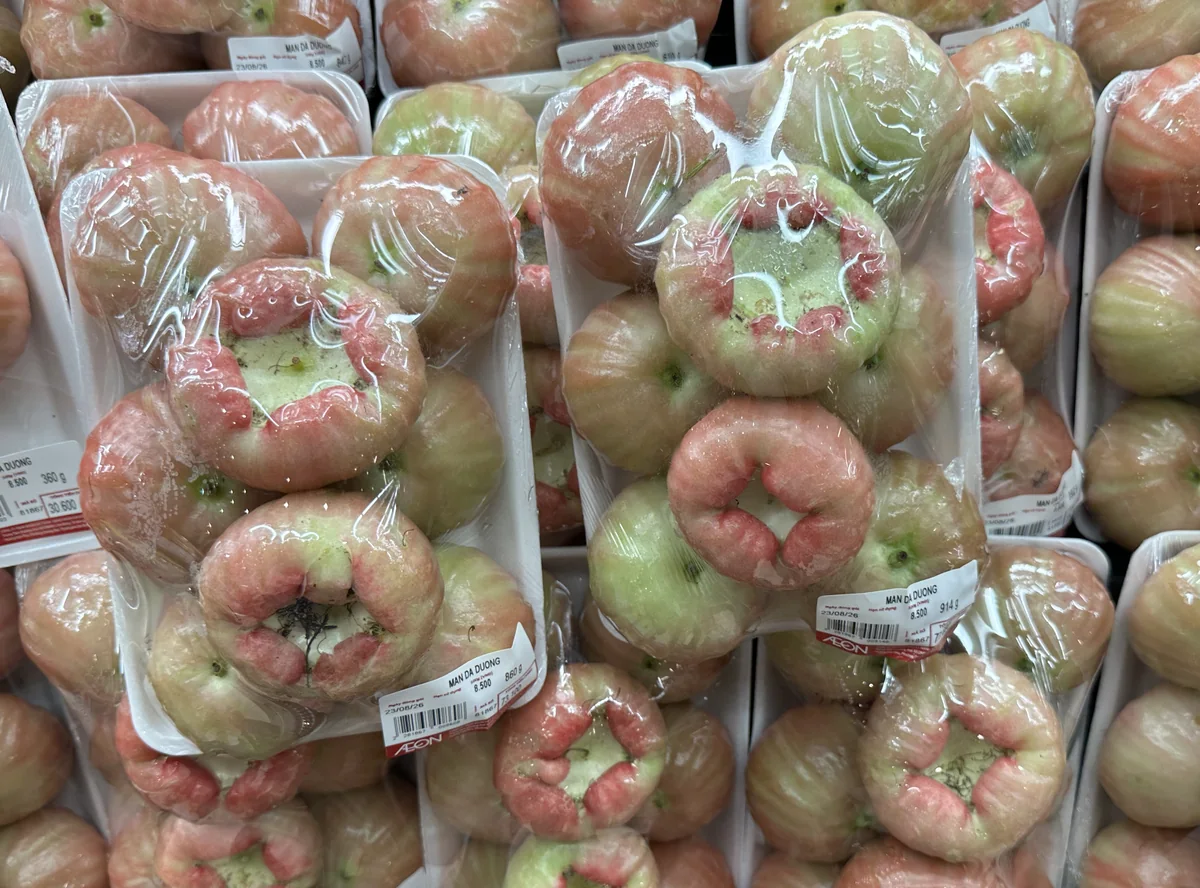
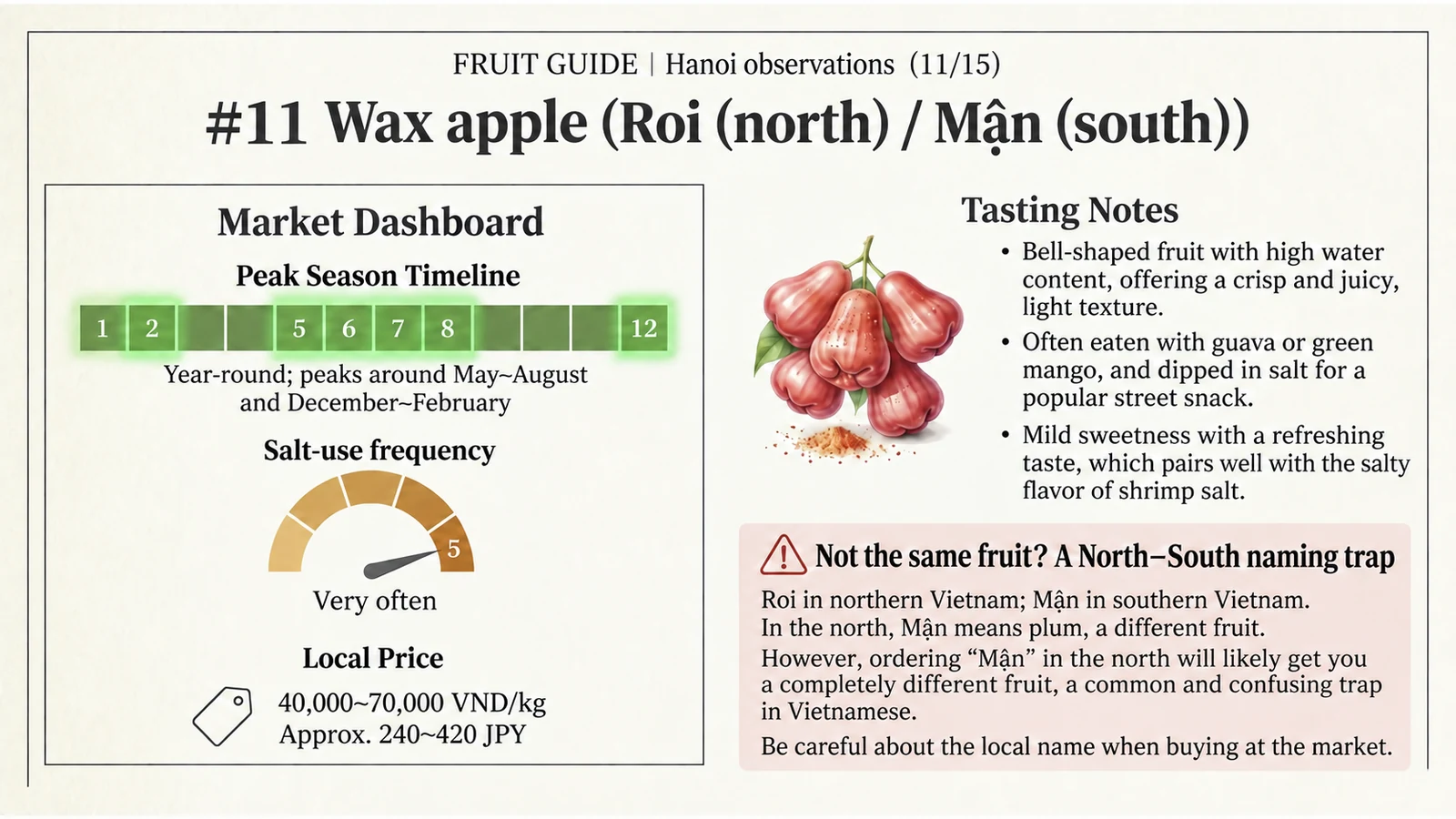
Wax apple is watery and crisp. It is very often served with chili salt or shrimp salt [2] and, like guava, is a familiar street snack. It is available year-round, with peak periods around May–August and December–February. Prices are around VND 40,000–70,000/kg (about JPY 240–420).
The regional names can be confusing: wax apple is called Roi in the north and Mận in the south. In northern Vietnam, Mận means a different fruit—a plum. The same word can refer to different fruits depending on where you are.
Read more: Wax Apple Guide · How to Eat Wax Apple · The Story of Wax Apple
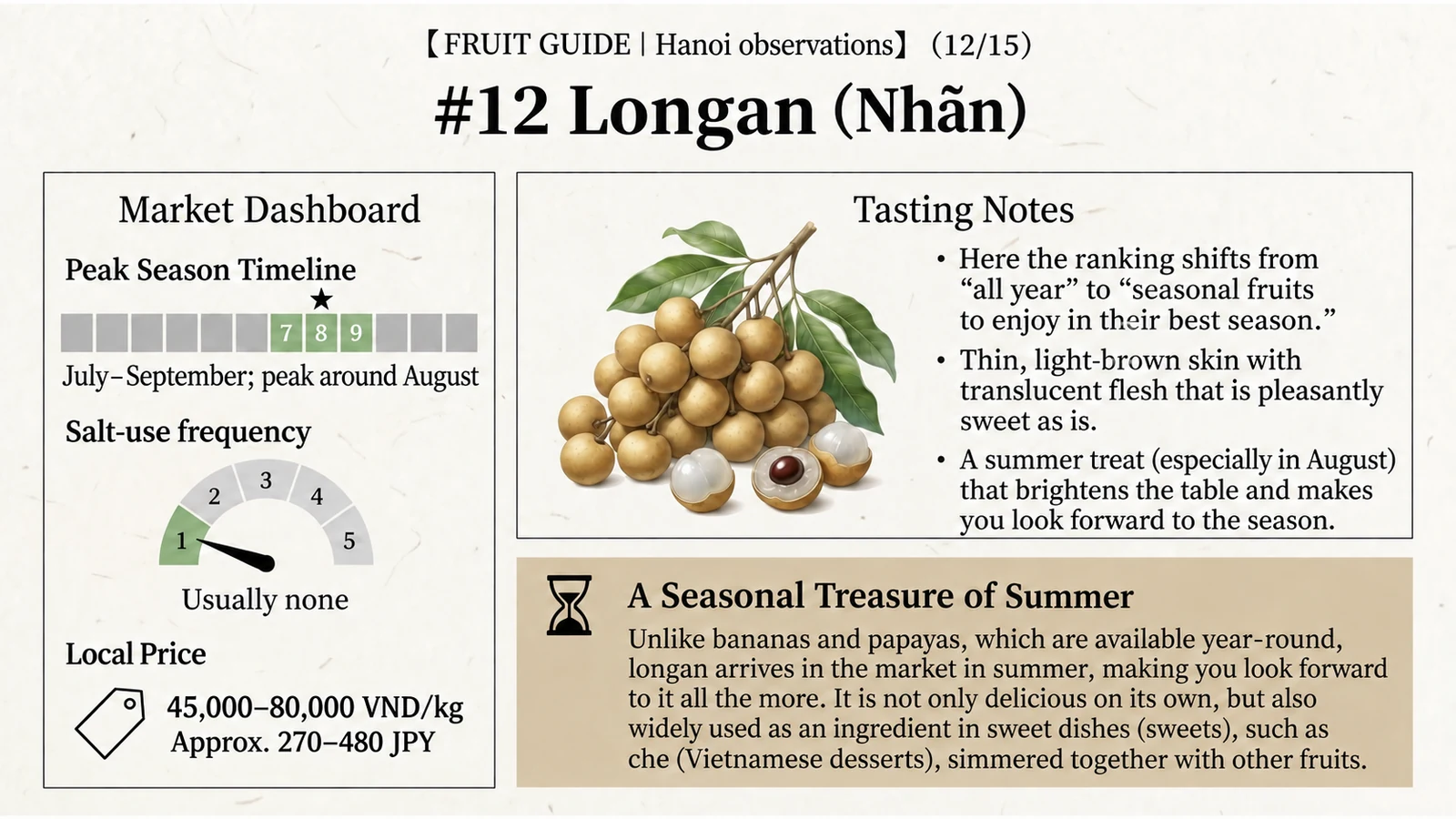
12. Longan (Nhãn)
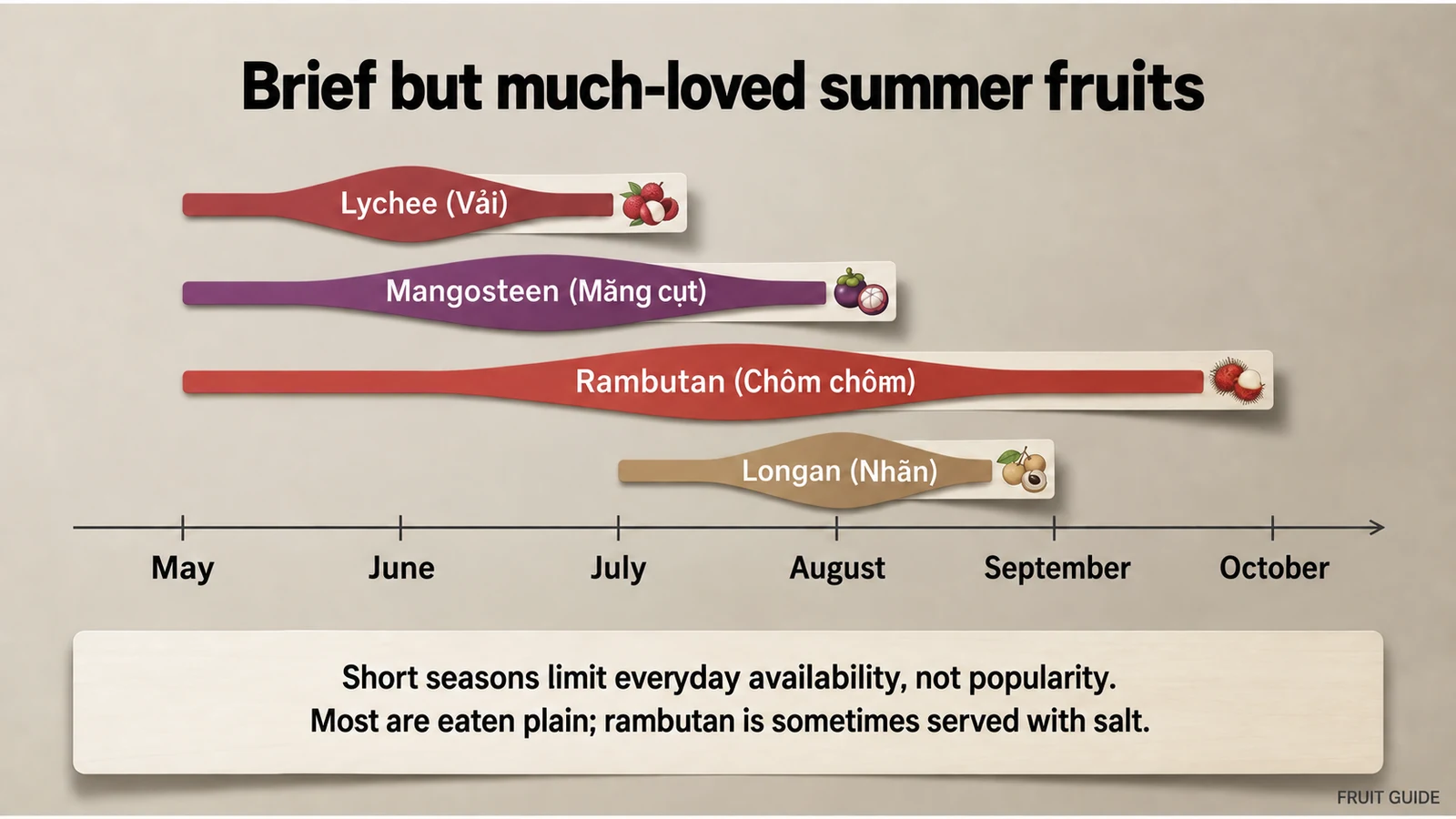
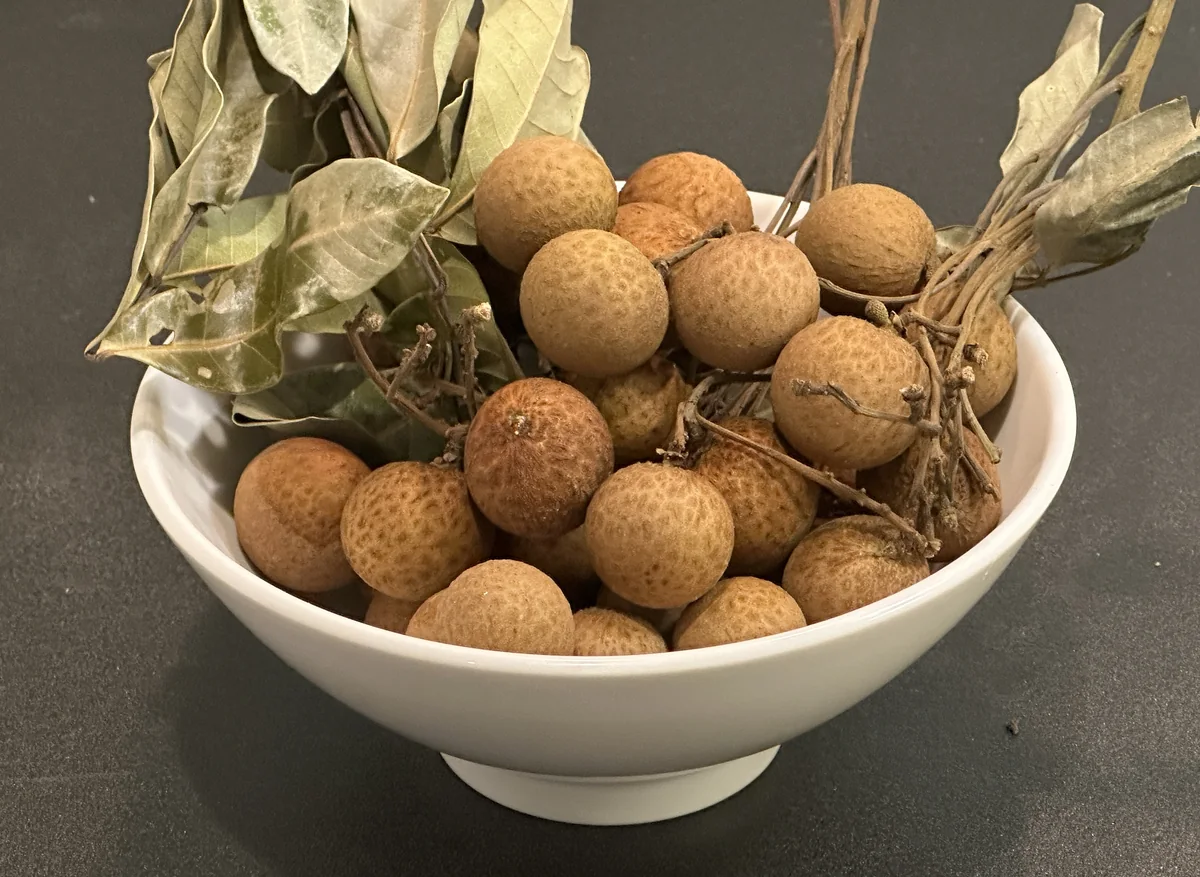
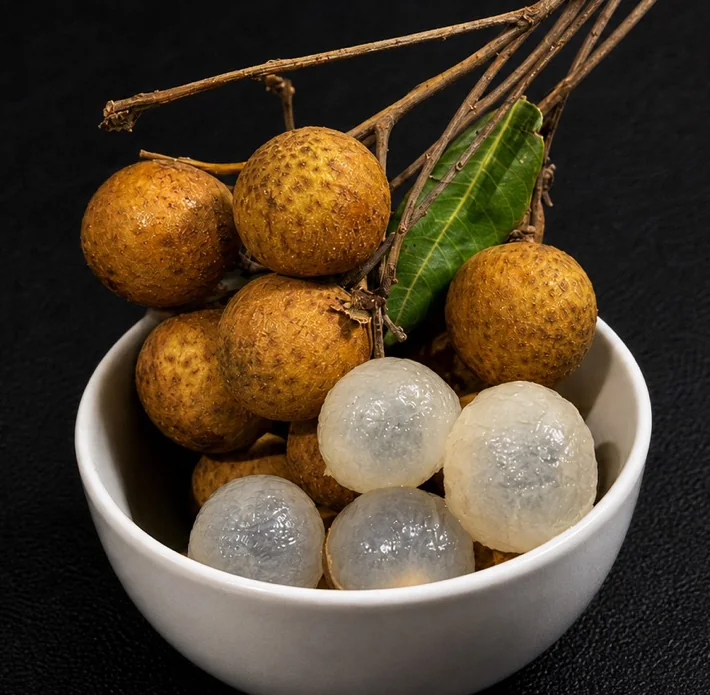
Peel longan and eat the flesh as it is, usually without salt. Its season is July–September, peaking around August. Prices are around VND 45,000–80,000/kg (about JPY 270–480).
Read more: Longan Guide · How to Eat Longan · The Story of Longan
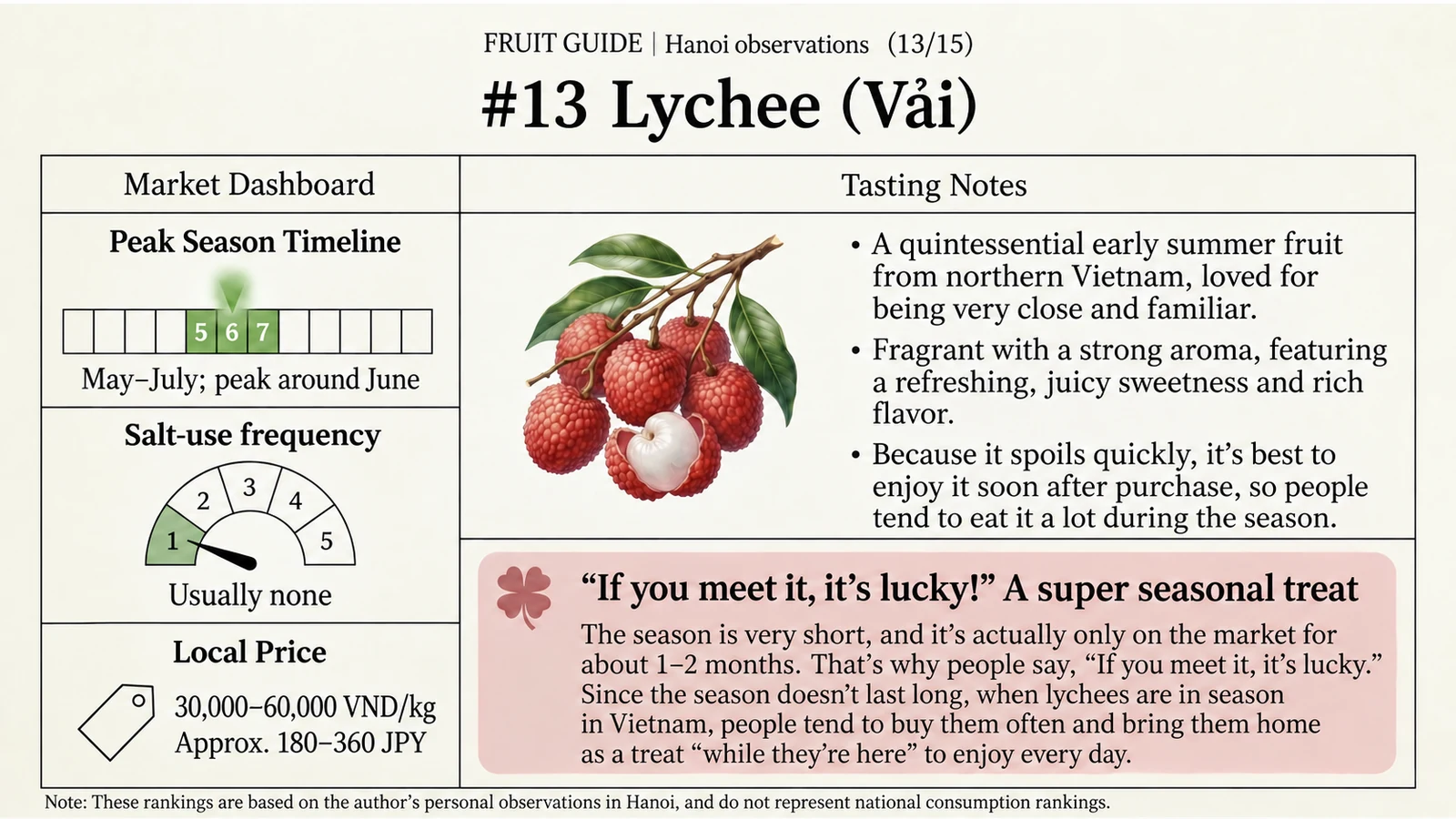
13. Lychee (Vải)
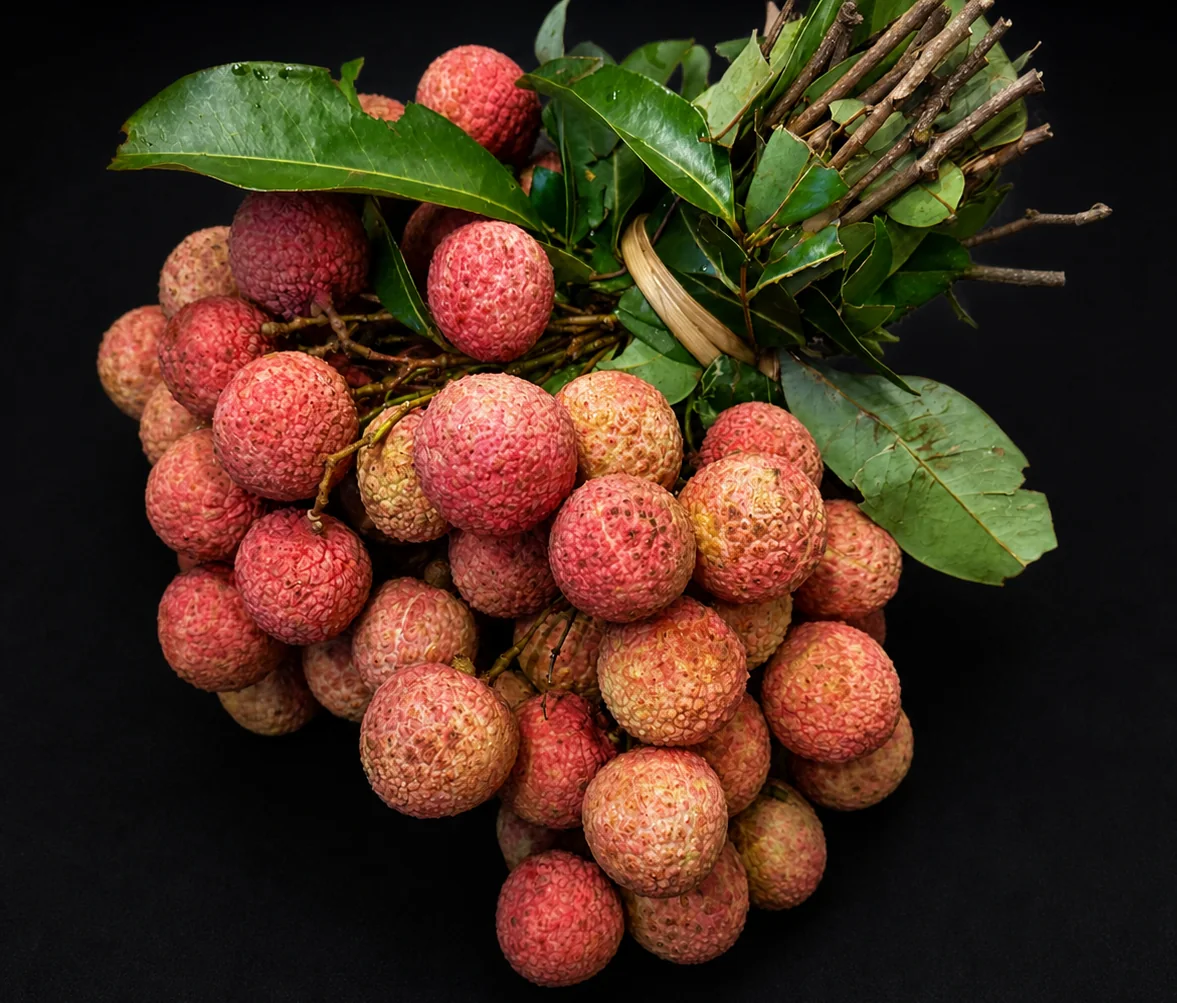
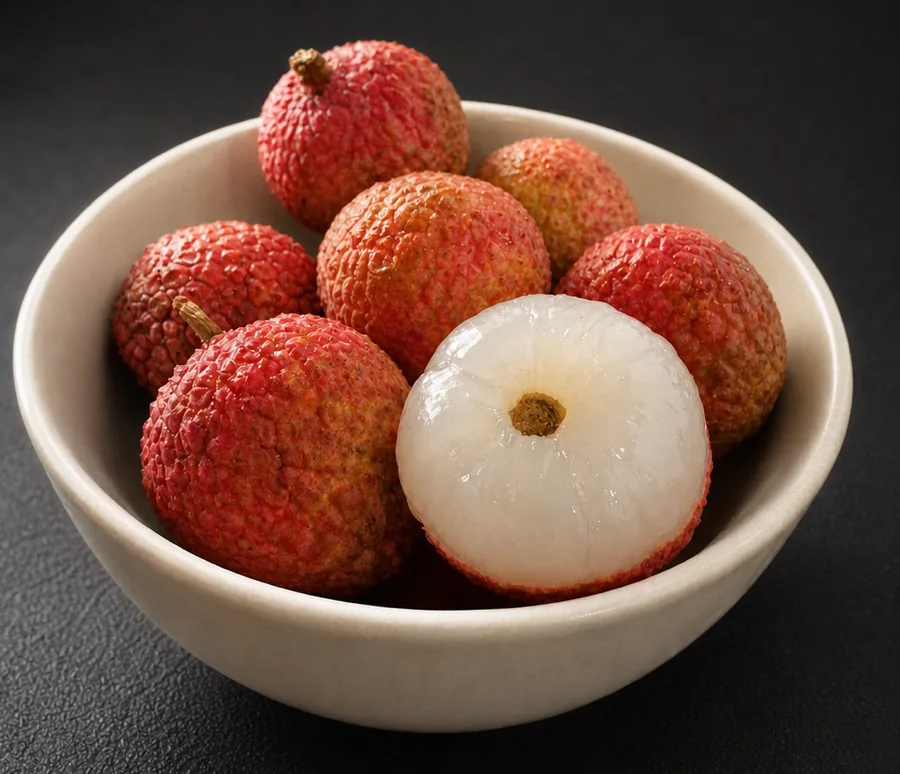
Lychee is generally eaten without salt and is especially familiar in northern Vietnam. Its season is May–July, peaking around June. Prices are around VND 30,000–60,000/kg (about JPY 180–360). Its short season means it can be hard to find once the main harvest has passed.
Read more: Lychee Guide · How to Eat Lychee · The Story of Lychee
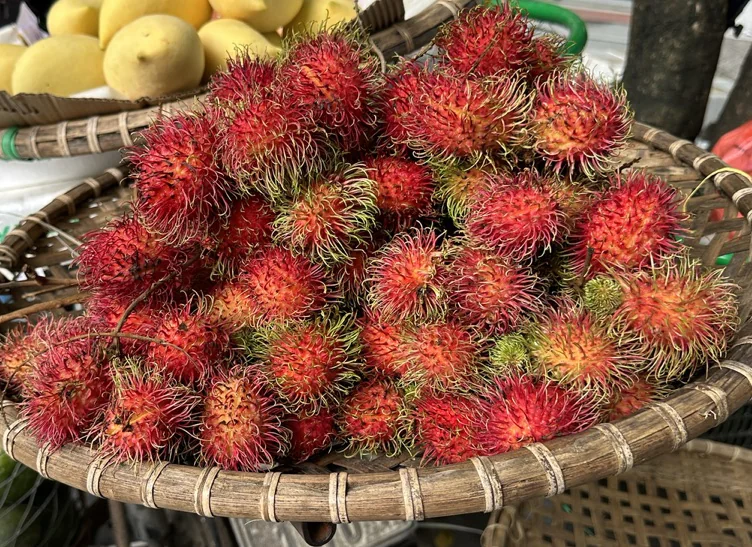
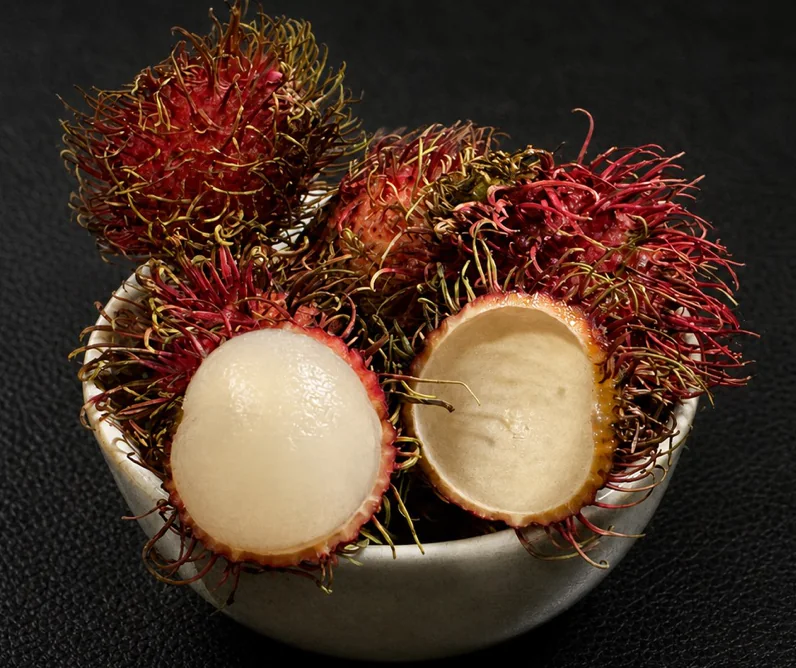
14. Rambutan (Chôm chôm)
Rambutan is normally eaten on its own, but a little chili salt is sometimes added. Its season runs from May to October, with a peak around June–August. Prices are around VND 40,000–90,000/kg (about JPY 240–540).
Read more: Rambutan Guide · How to Eat Rambutan · The Story of Rambutan
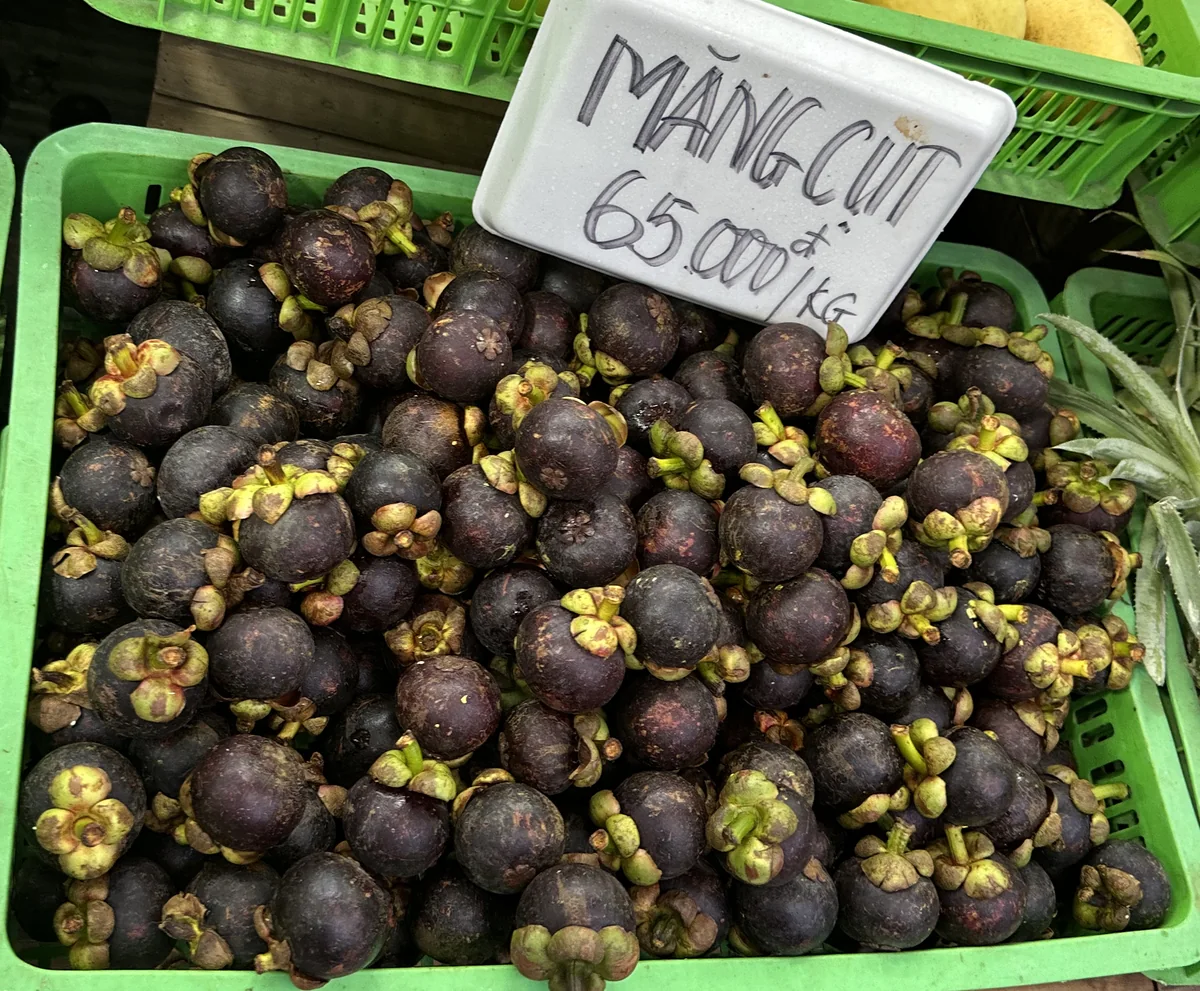
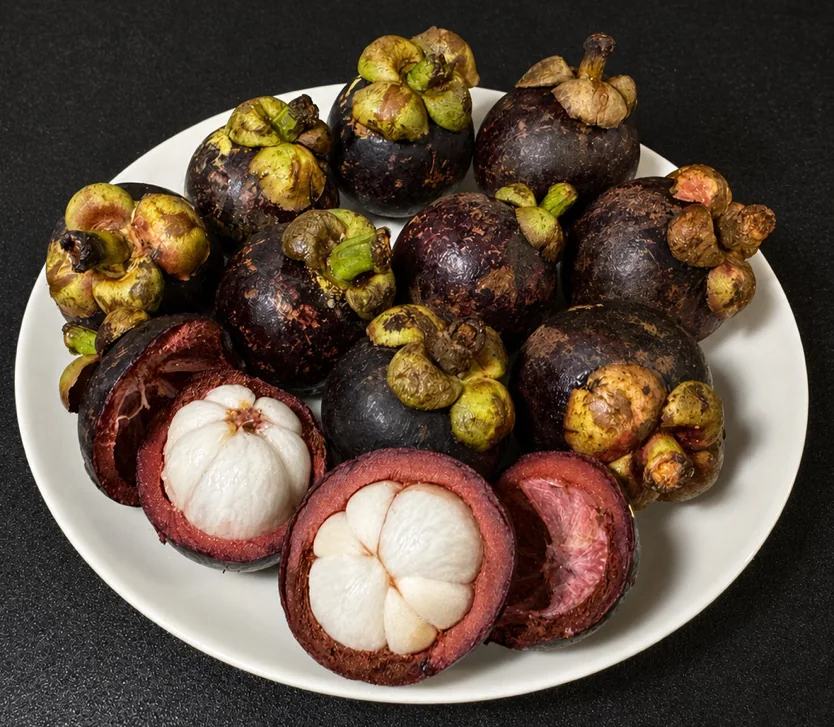
15. Mangosteen (Măng cụt)
Mangosteen is a representative seasonal fruit of southern Vietnam. It is eaten without salt. Its season is May–August, peaking around June–July. Prices are around VND 60,000–129,000/kg (about JPY 360–770, rounded).
Read more: Mangosteen Guide · How to Eat Mangosteen · The Story of Mangosteen
Why Vietnamese People Dip Fruit in Chili Salt
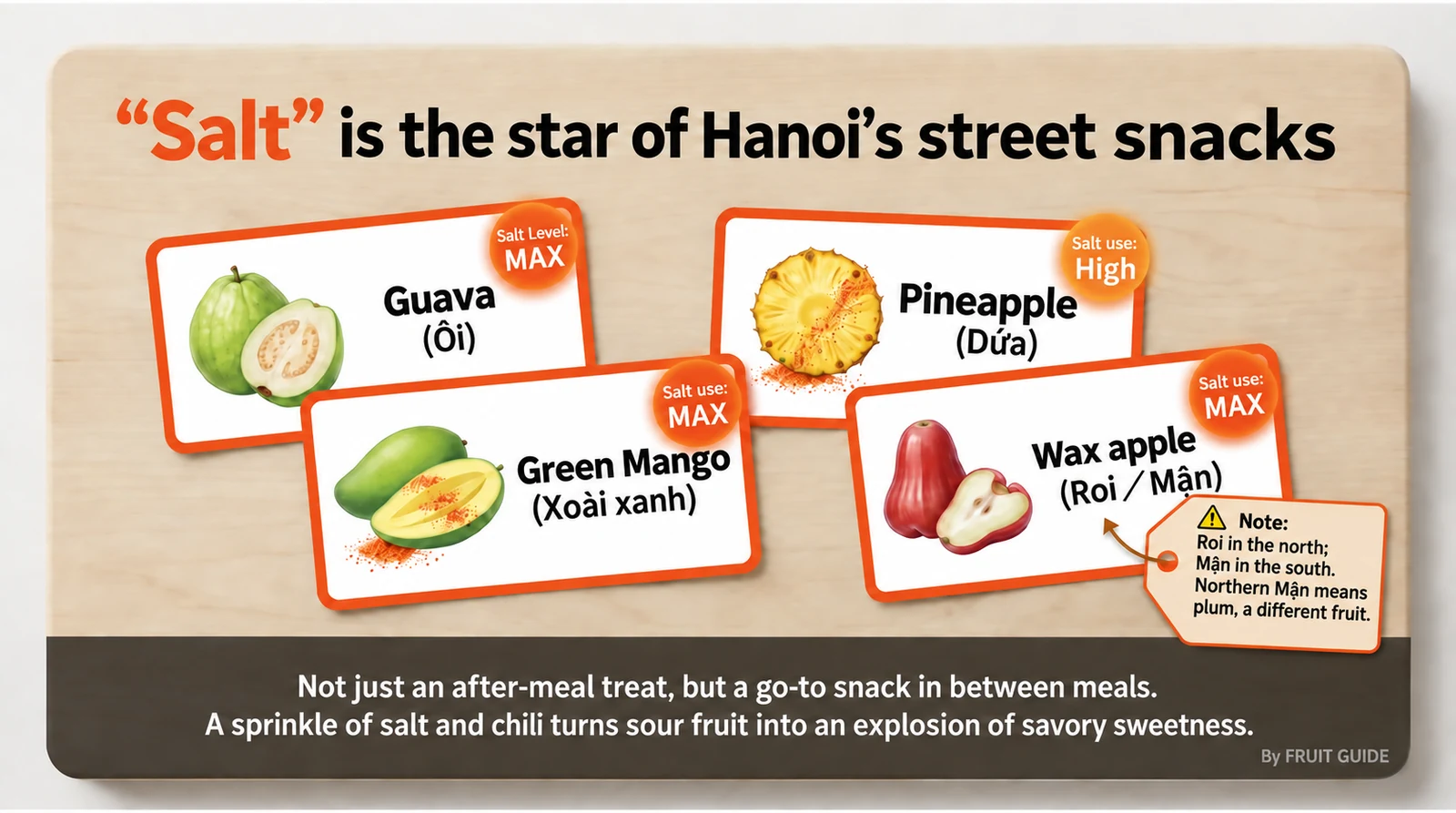
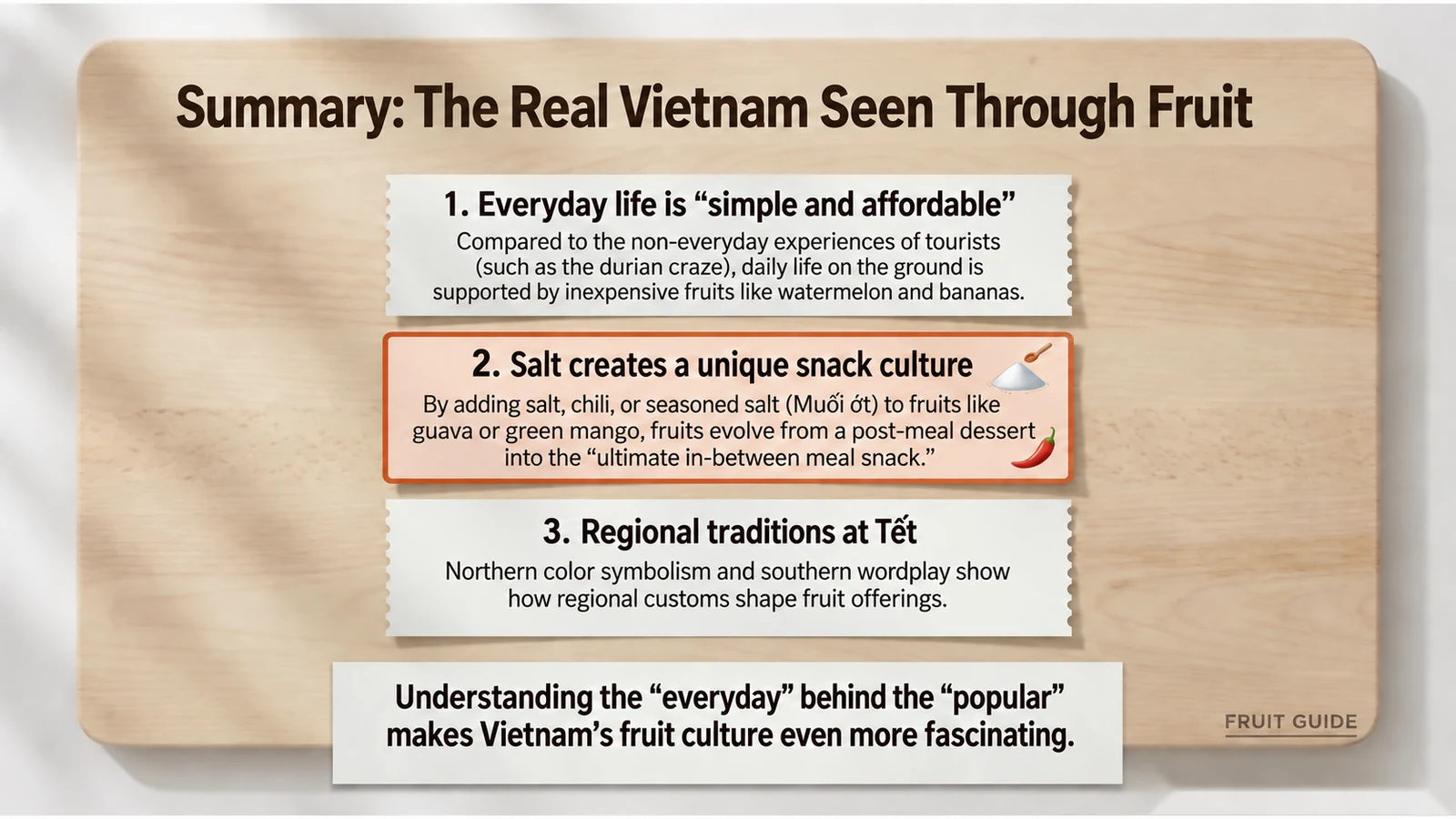
Chili salt (muối ớt) and shrimp salt (muối tôm) are familiar companions to fruit in Vietnam. Their saltiness and heat complement the fruit’s sweetness and tartness. The choice of seasoning and the amount used depend on the fruit and personal preference.
| Fruit | Frequency | Typical accompaniment |
|---|---|---|
| Guava | Very often | Chili salt or shrimp salt |
| Green mango | Very often | Chili salt, shrimp salt, or sweet and spicy fish sauce |
| Wax apple | Very often | Chili salt or shrimp salt |
| Pineapple | Often | Chili salt |
| Pomelo | Sometimes | Chili salt or shrimp salt |
| Watermelon | Sometimes | Plain salt or chili salt |
| Rambutan | Sometimes | A little chili salt |
| Dragon fruit | Rarely | Chili salt, depending on preference |
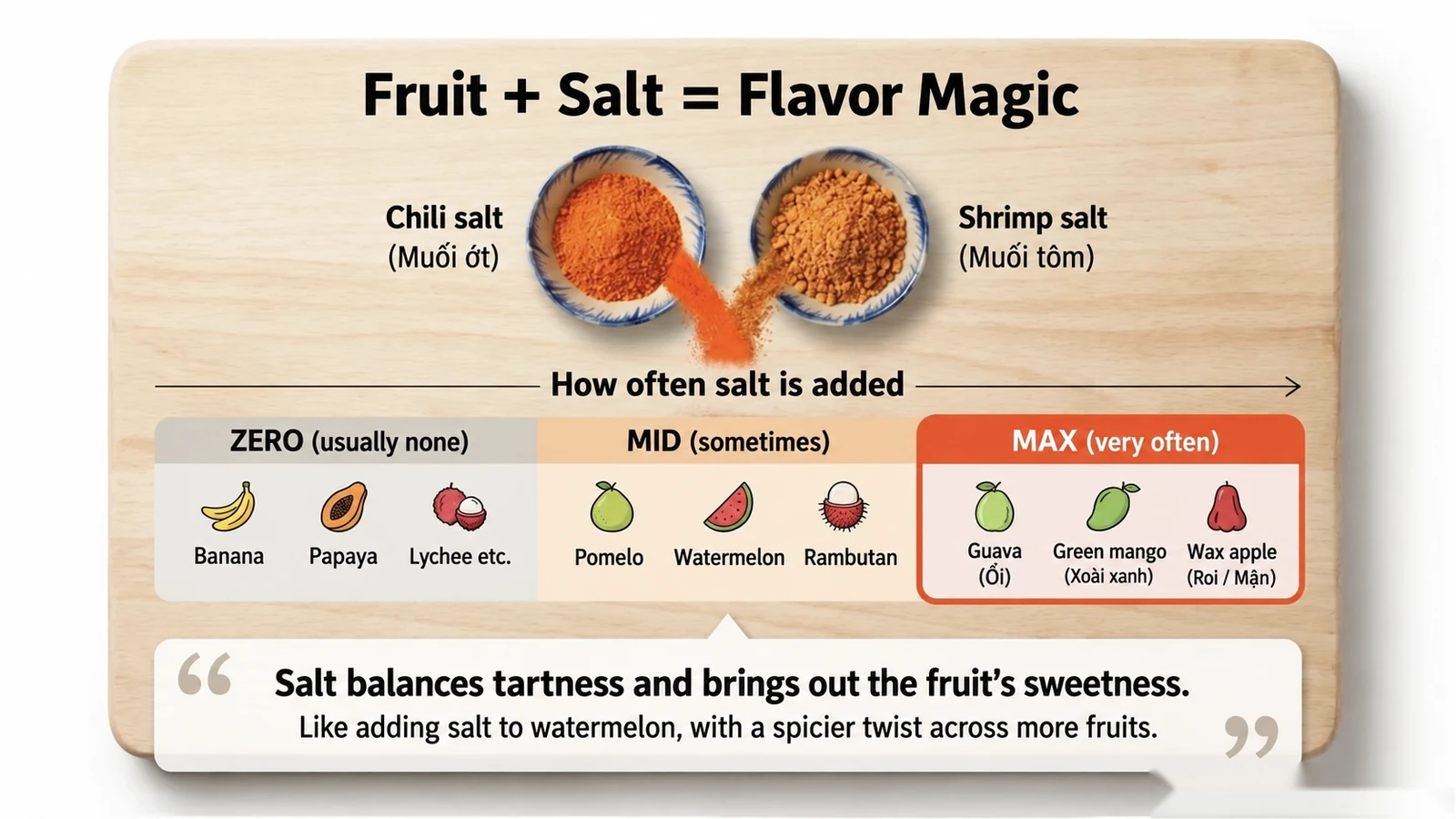
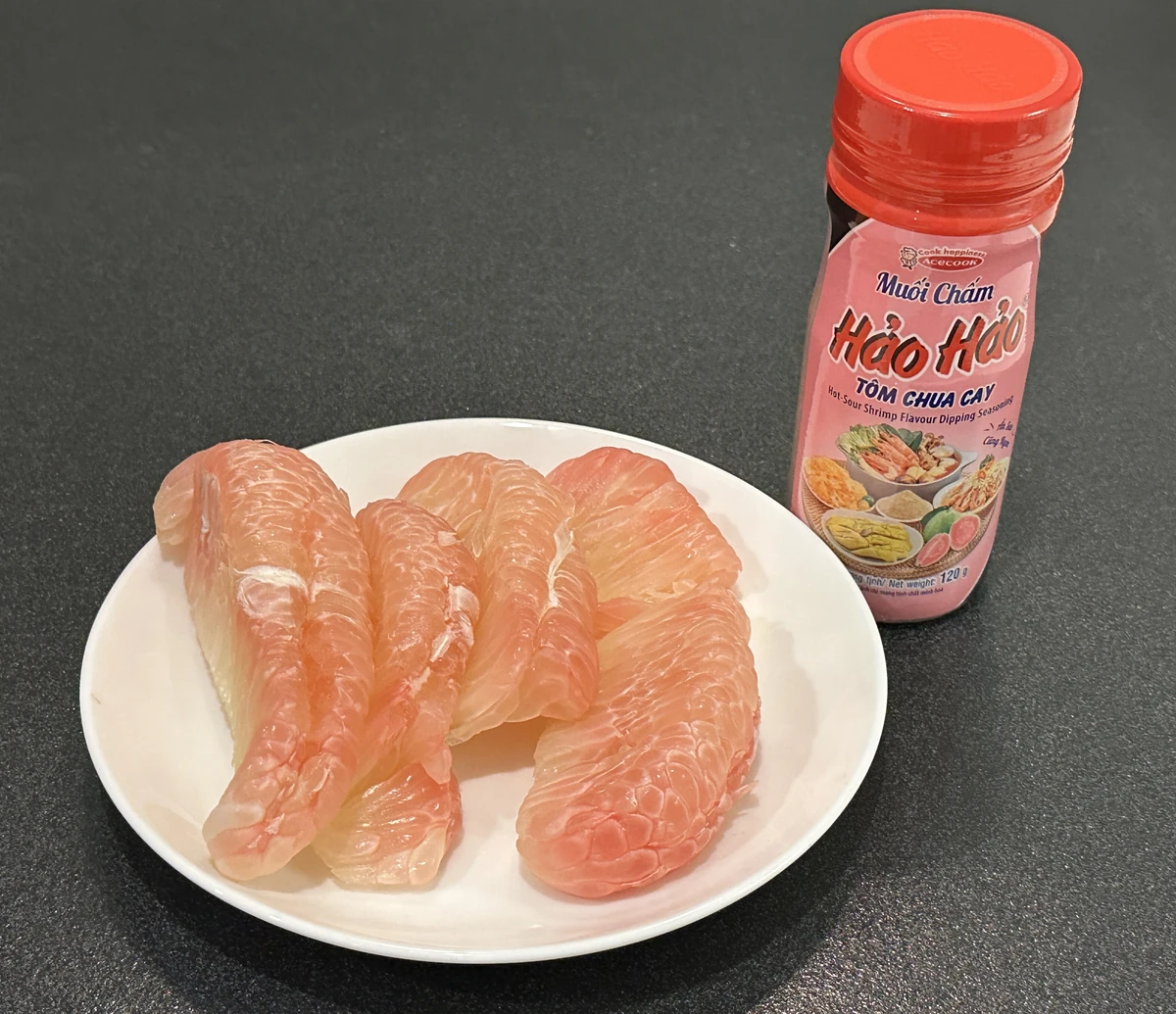
Bananas, papaya, oranges, mandarins, ripe mangoes, longan, lychees and mangosteen are generally eaten without salt in the situations I have observed. Fruit served as a snack may come with seasoning, while the same fruit after a meal may be served plain. These are everyday observations, rather than rules followed by everyone.
Fruit at Tết: The Five-Fruit Tray
At Tết, the Vietnamese Lunar New Year, many families arrange a five-fruit tray (mâm ngũ quả) on an ancestral altar. Its selection and arrangement vary by region and family.
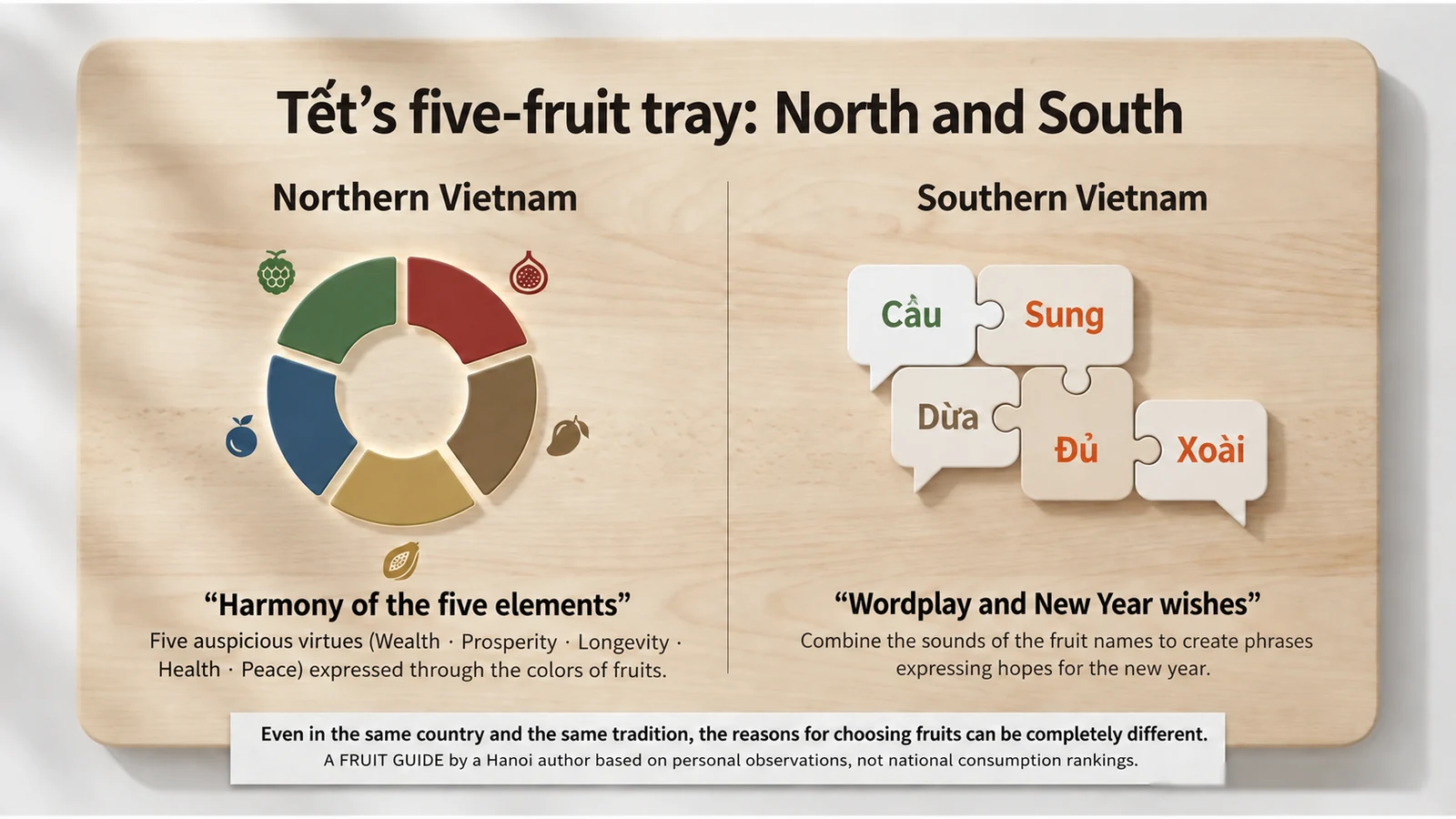
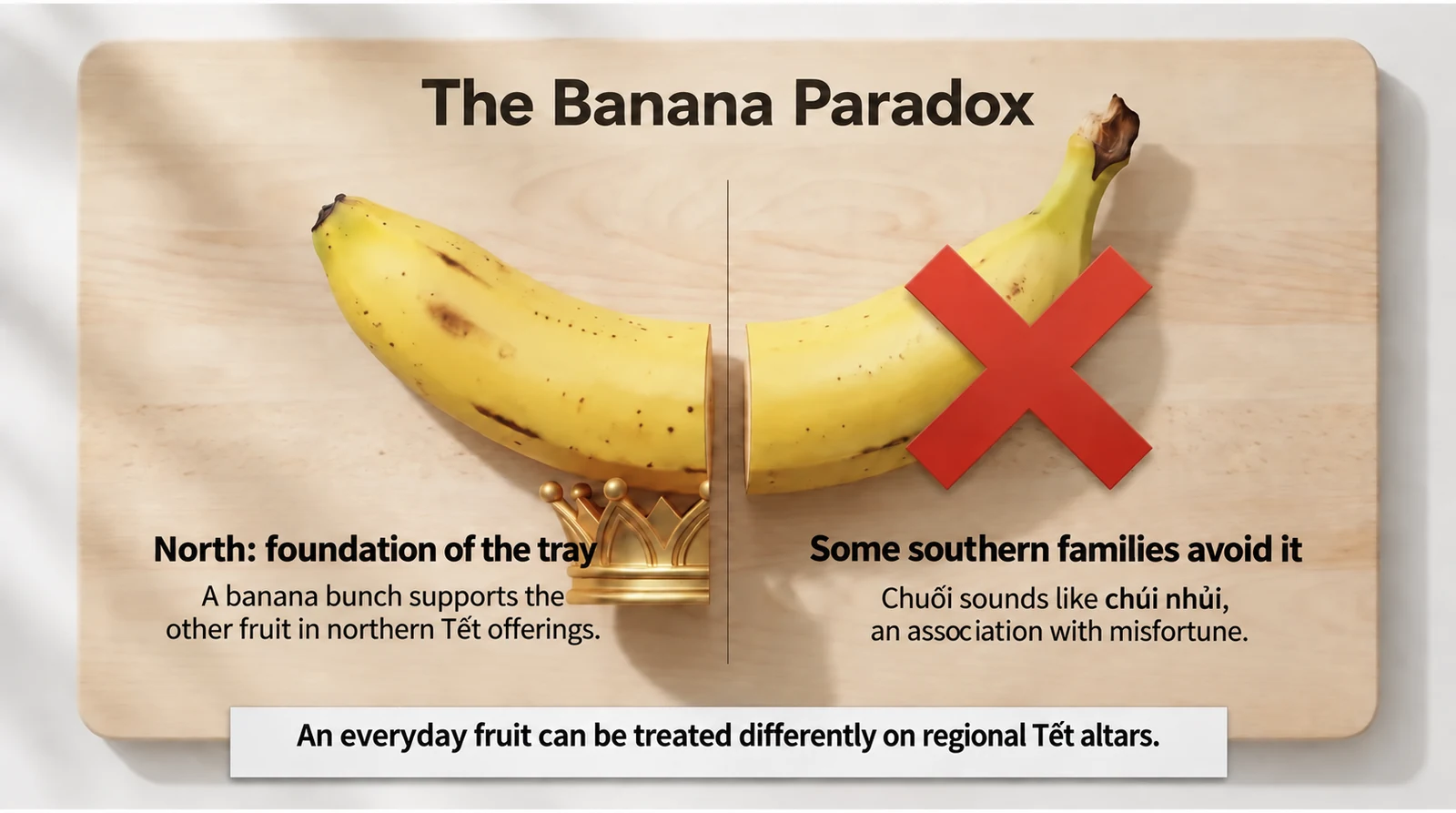
The tray is a cultural offering, so its contents do not necessarily match the fruit eaten most often after everyday meals. For regional examples, see the Vietnamese VietNamNet guide to Tết fruit trays.
Why Durian Is Not Included in These 15 Fruits
Durian is popular and is an important Vietnamese export. That does not automatically make it an everyday after-meal fruit in the households and shops I observe in Hanoi.
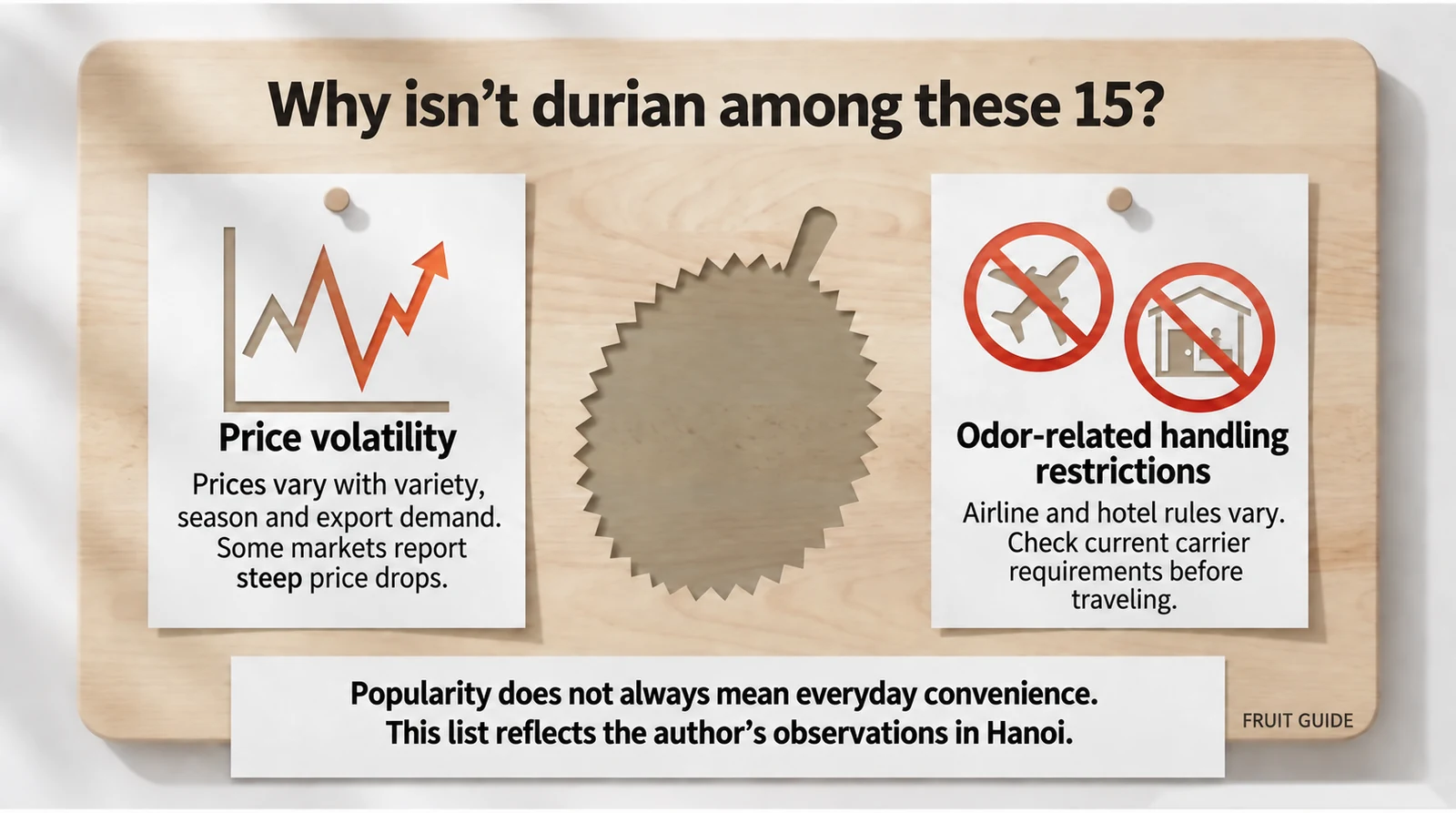
This list reflects the author’s observations of everyday meals and snacks. It is not a nationwide popularity or consumption ranking. Read more in the durian guide, and check the airline’s current rules for odorous baggage before traveling.
Can You Bring Fresh Fruit from Vietnam to Japan?
Most fresh fruits in this article cannot be brought from Vietnam into Japan. The rules are based on the fruit and its place of origin, rather than whether it was bought in a supermarket or packed in checked baggage.
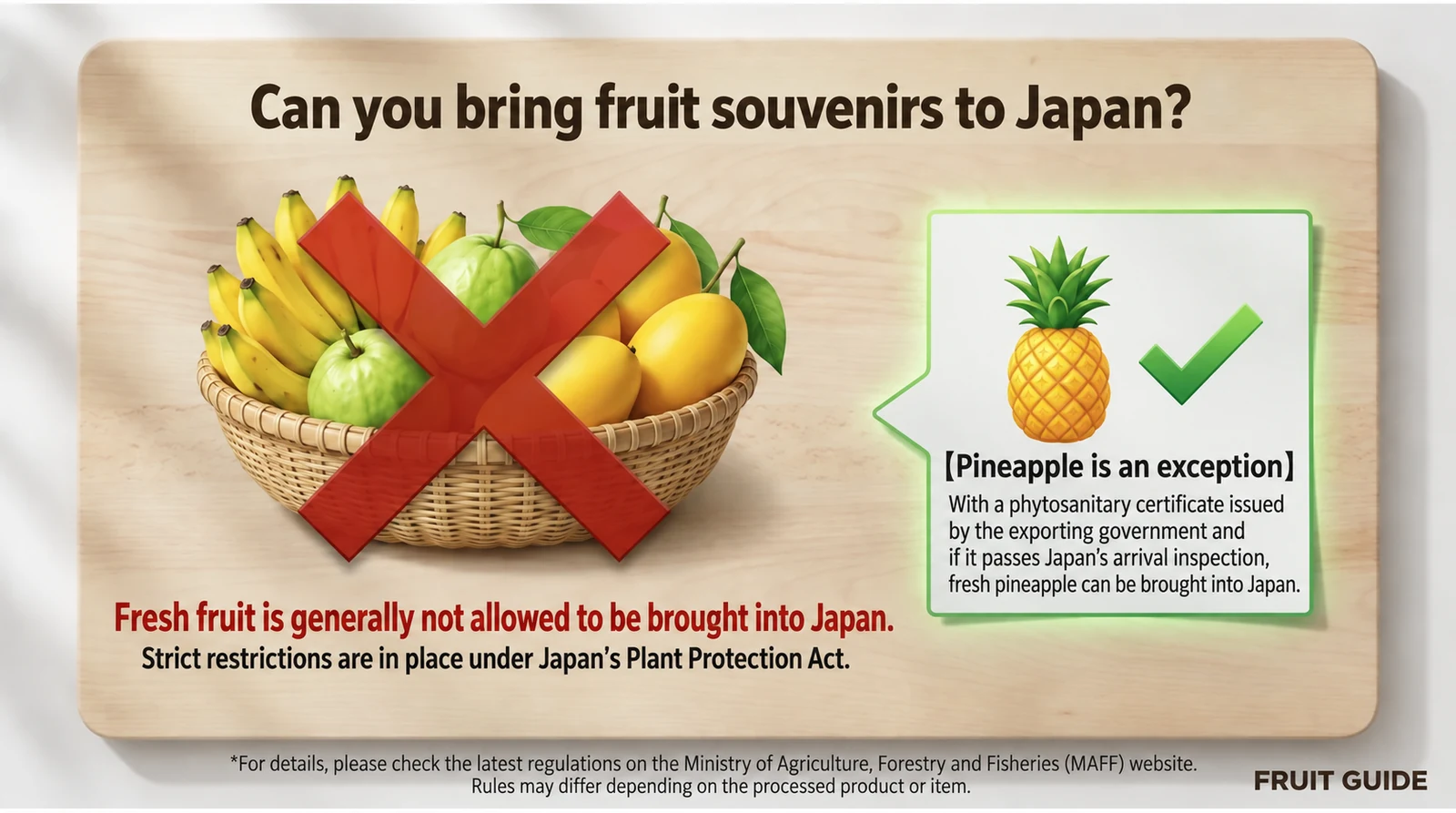
Rules checked on October 6, 2026. Confirm the latest requirements with Japan’s Plant Protection Station: imports from Vietnam before purchasing fruit to take home. See also the travel guide’s plant quarantine section.
Choosing Fruit for Everyday Meals
- For an easy starting point, look for affordable fruits available throughout the year, such as watermelon, banana, dragon fruit and papaya.
- Try seasonal lychees, longan, rambutan or mangosteen when they are plentiful. Availability and prices vary by region and year.
- Chili salt is part of the local fruit-eating culture, especially with guava, green mango and wax apple. Start with a small amount if you want to try it.
A fruit’s popularity, export volume and everyday presence are different things. This article focuses on the fruit I see on ordinary tables, at snack time and on festive occasions in Hanoi.
Frequently Asked Questions
What fruits do Vietnamese people commonly eat after meals?
Watermelon, banana, dragon fruit, pomelo and papaya are familiar examples in the author’s observations. The 15 fruits above describe everyday life in Hanoi and are not a nationwide consumption ranking.
Why is fruit served with chili salt?
Salt and chili add a savory, spicy contrast to sweet or tart fruit. Guava, green mango and wax apple are frequently paired with it, but preferences vary.
When is the best season for Vietnamese fruit?
Many seasonal fruits are abundant between May and August, including lychees and mangosteen. Bananas, dragon fruit, papaya and several other fruits can be found throughout the year.
Can tourists take these fruits back to Japan?
Most of the fresh fruits listed here are prohibited from Vietnam. Pineapple has certificate and inspection requirements. Check the official rules linked in the plant quarantine section before traveling.
More Vietnamese Fruit Guides
- 15 Vietnamese Fruits: A First-Time Visitor’s Guide (English) — flavors, seasons, eating tips and travel advice.
- Vietnam vs. Japan: Fruit Price Comparison (English) — compares 15 fruits by price per kilogram.
- Original Japanese version of this article.
References and Notes
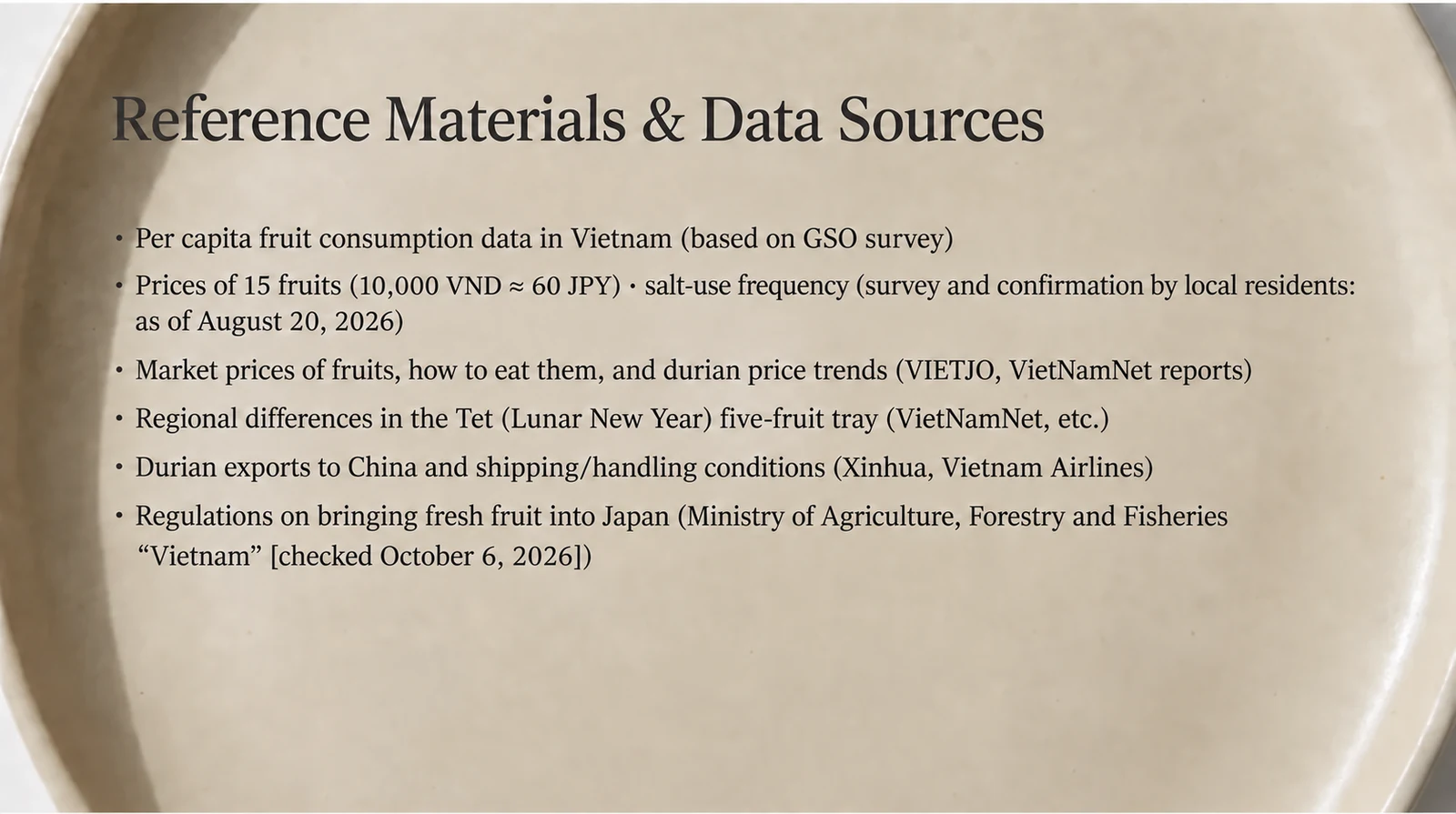
The selection, everyday frequency and salt-dipping habits are based on the author’s experience in Hanoi. Prices are examples, not fixed nationwide rates. The observation dates are listed above the comparison table.
- General Statistics Office of Vietnam, Statistical Yearbook, Table 160, printed page 1343: preliminary 2022 fruit consumption of 1.2 kg per person per month. This is an overall consumption measure, not a ranking of individual fruits.
- VIETJO fruit references: guava and wax apple (Japanese).
- Hanoi agricultural extension market bulletin (Vietnamese), referenced for pomelo prices dated March 7, 2026.
- VietNamNet: Tết five-fruit trays (Vietnamese).
- Xinhua: Vietnamese durian exports (Japanese, 2024).
- VietNamNet: durian prices in Hanoi markets (Vietnamese, 2025).
- Vietnam Airlines: odorous baggage (English).
- Japan’s Plant Protection Station: fruit and other plant imports from Vietnam (Japanese).
About the Author
Chuta is based in Hanoi, Vietnam, and buys fruit at local markets and supermarkets to share first-hand observations on flavor, seasons, selection, and preparation.
