When buying persimmons in Vietnam, ask whether they are ready to eat and whether their astringency has been removed. Color, shape and firmness cannot reliably answer those questions. Non-astringent fruit and treated astringent fruit can be washed, cut and eaten once they are at eating ripeness.
This guide covers useful Vietnamese words, choosing fruit, dealing with astringency, cutting, storage and practical precautions. It concerns persimmons bought in Vietnam, including imported fruit, rather than only fruit grown there. It also includes the author’s purchase and tasting record for Moc Chau persimmons bought in Hanoi.
The persimmon trilogy: History and stories · Types, nutrition and seasons
Quick guide: buying, eating and storing
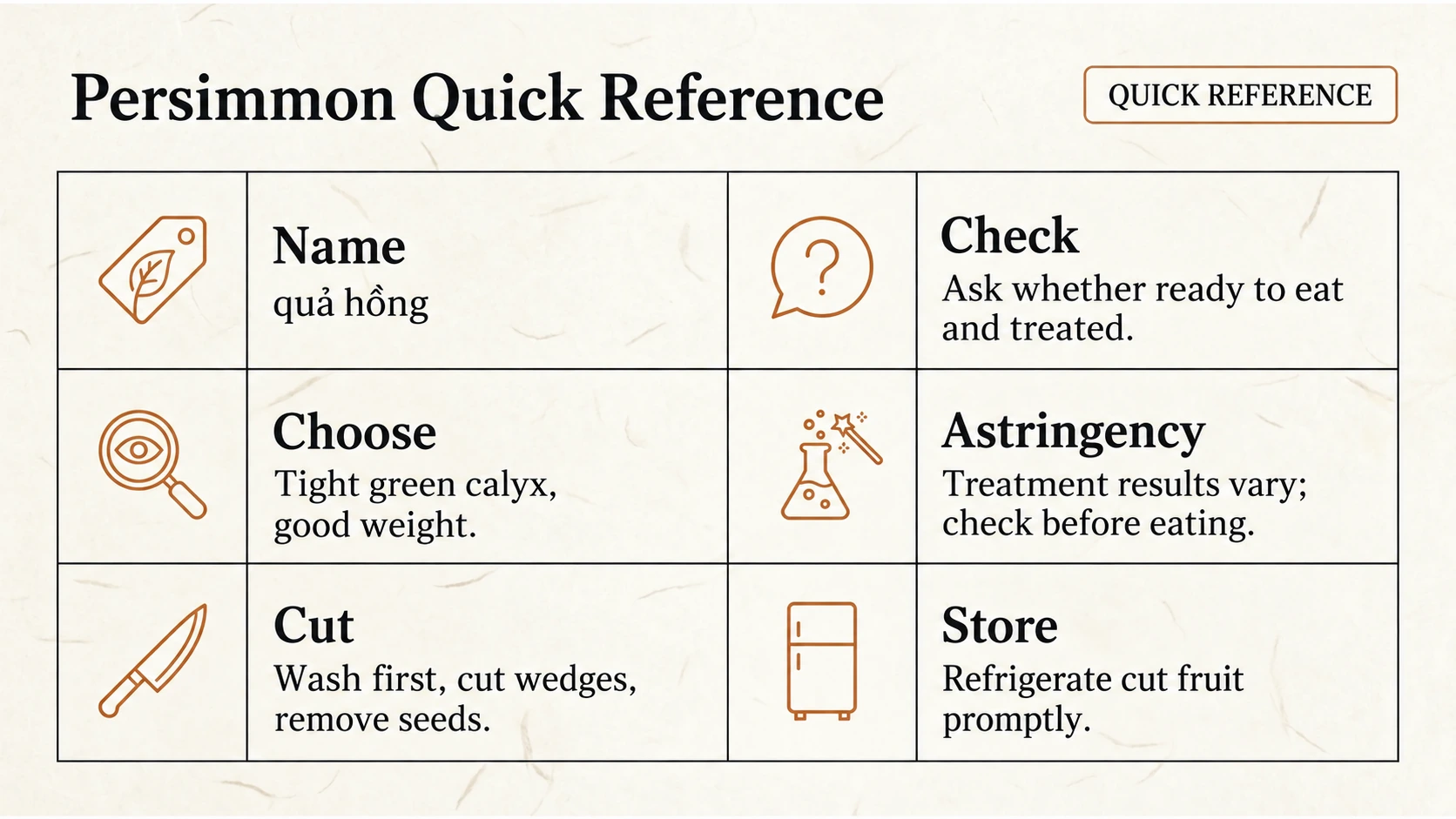
| Question | Practical answer |
|---|---|
| What is it called? | quả hồng |
| What should I ask? | Is it ready to eat? Has its astringency been removed? |
| What should I look for? | A tight green calyx and fruit that feels heavy for its size |
| What if it is astringent? | Ask the seller about suitable treatment, then check again before eating |
| How do I prepare it? | Wash, cut into wedges, remove seeds and peel if preferred |
| How do I keep it firm? | Put damp paper on the calyx, wrap and refrigerate calyx-side down |
| What should I avoid? | Eating large quantities at once or forcing down astringent fruit |
Selection and whole-fruit storage advice draws on Japan MAFF’s aff magazine, October 2018, whose persimmon feature was supervised by JA Chikuzen Asakura.
Choosing persimmons in Vietnam
Useful Vietnamese words
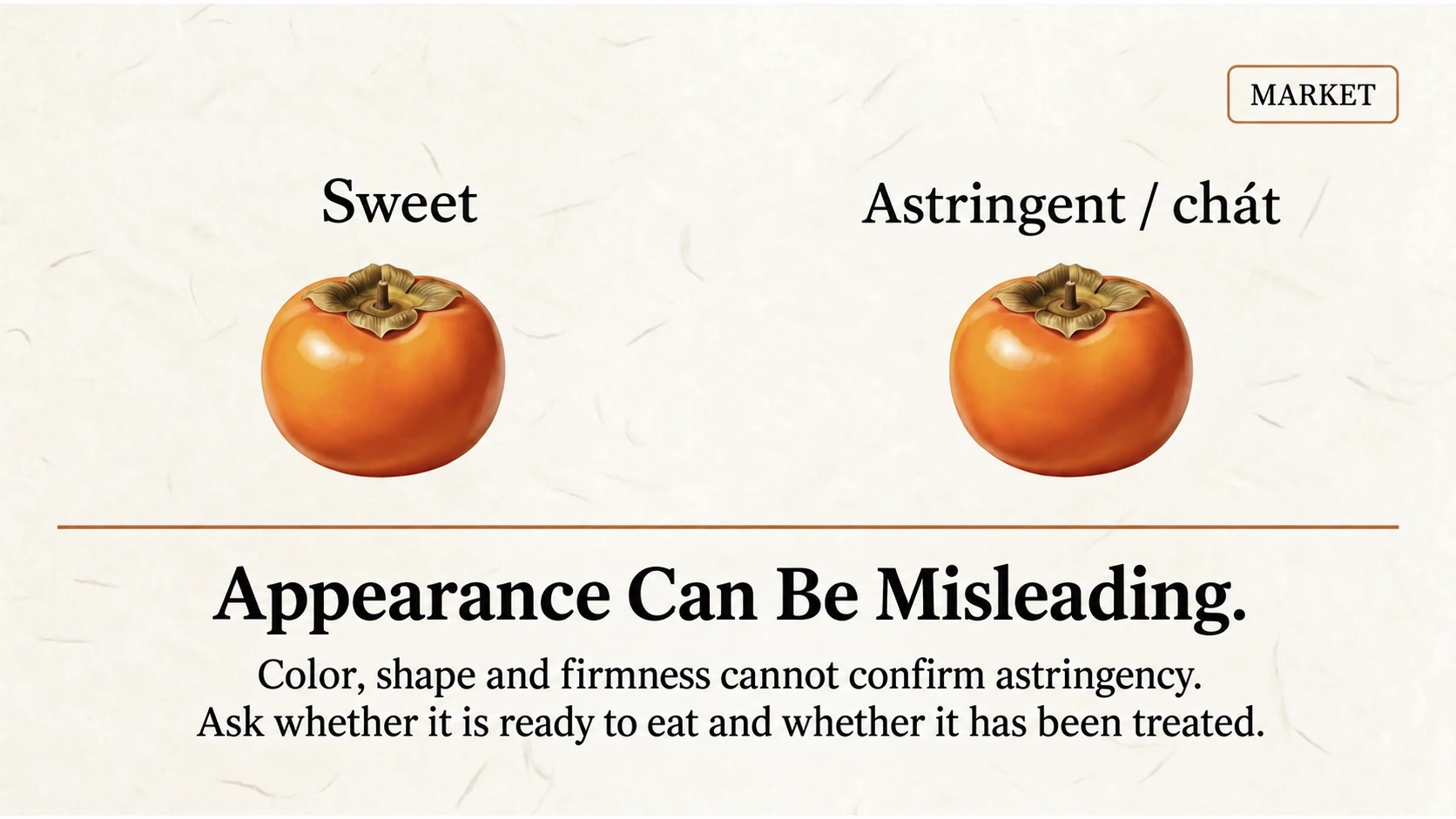
Sweet and astringent fruit can look alike. These words help you read labels and ask the seller.
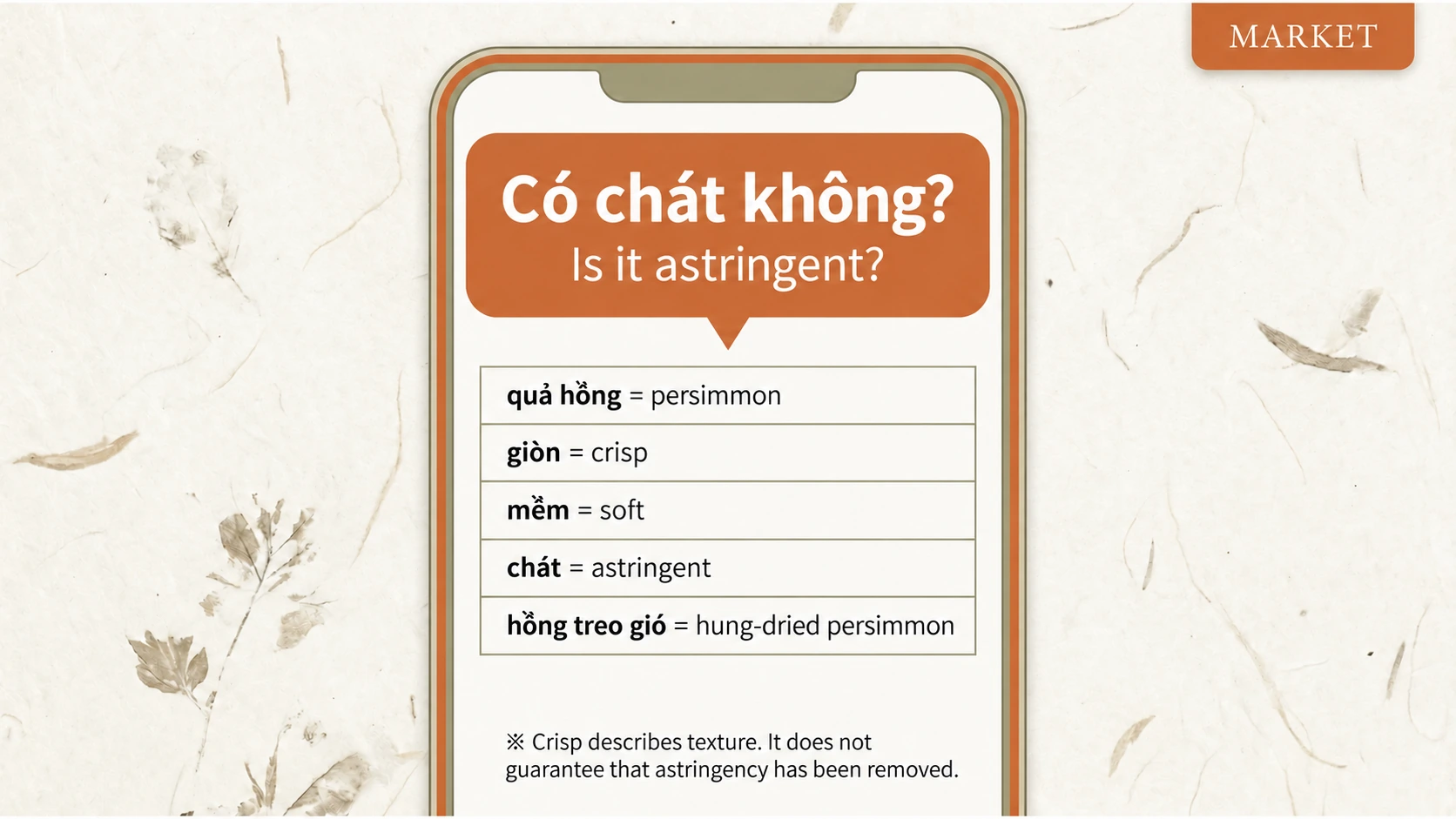
| Vietnamese | Meaning |
|---|---|
| quả hồng | Persimmon |
| giòn | Crisp or crunchy |
| mềm | Soft |
| chát | Astringent; producing a puckering sensation |
| hồng treo gió | Hung-dried persimmon, literally fruit hung in the wind |
Có chát không? means “Is it astringent?” Label wording differs between shops. Giòn describes texture: it does not identify a cultivar or guarantee that astringency has been removed. Check the origin on packaging or the price ticket.
Six signs to look for
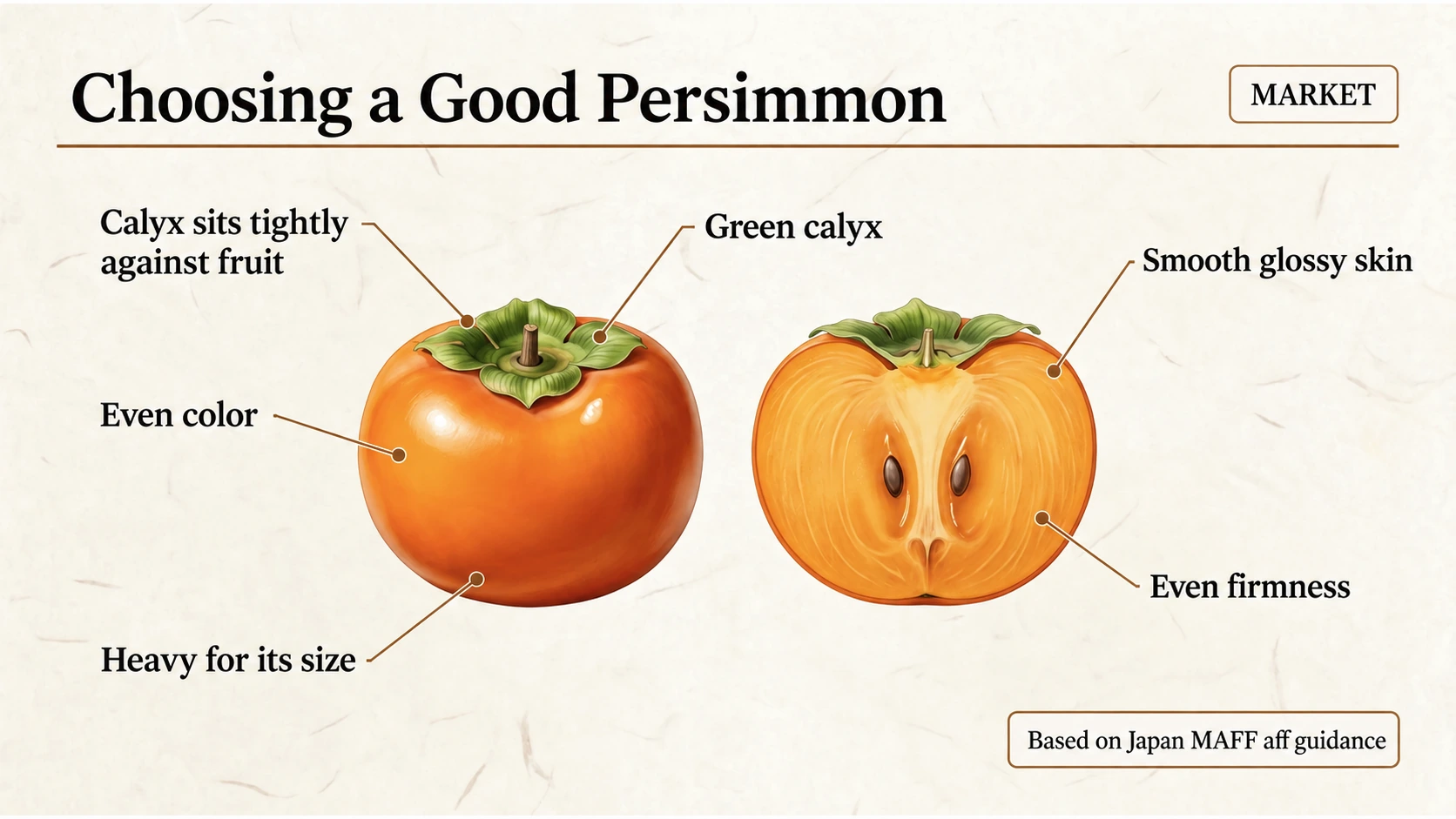
MAFF’s aff feature gives the following selection pointers:
- The calyx sits closely against the fruit, without a gap.
- The calyx is a fresh green color.
- The fruit is evenly colored.
- It feels heavy for its size.
- The skin looks taut and glossy.
- Firmness is even, without excessively hard or soft areas.
These are selection clues, not proof that a fruit is non-astringent. If you want to eat it immediately, confirm that it is ready. Eat sooner for a crisp texture, or allow appropriate fruit to soften if that is your preference. Source: aff
What to do with an astringent persimmon
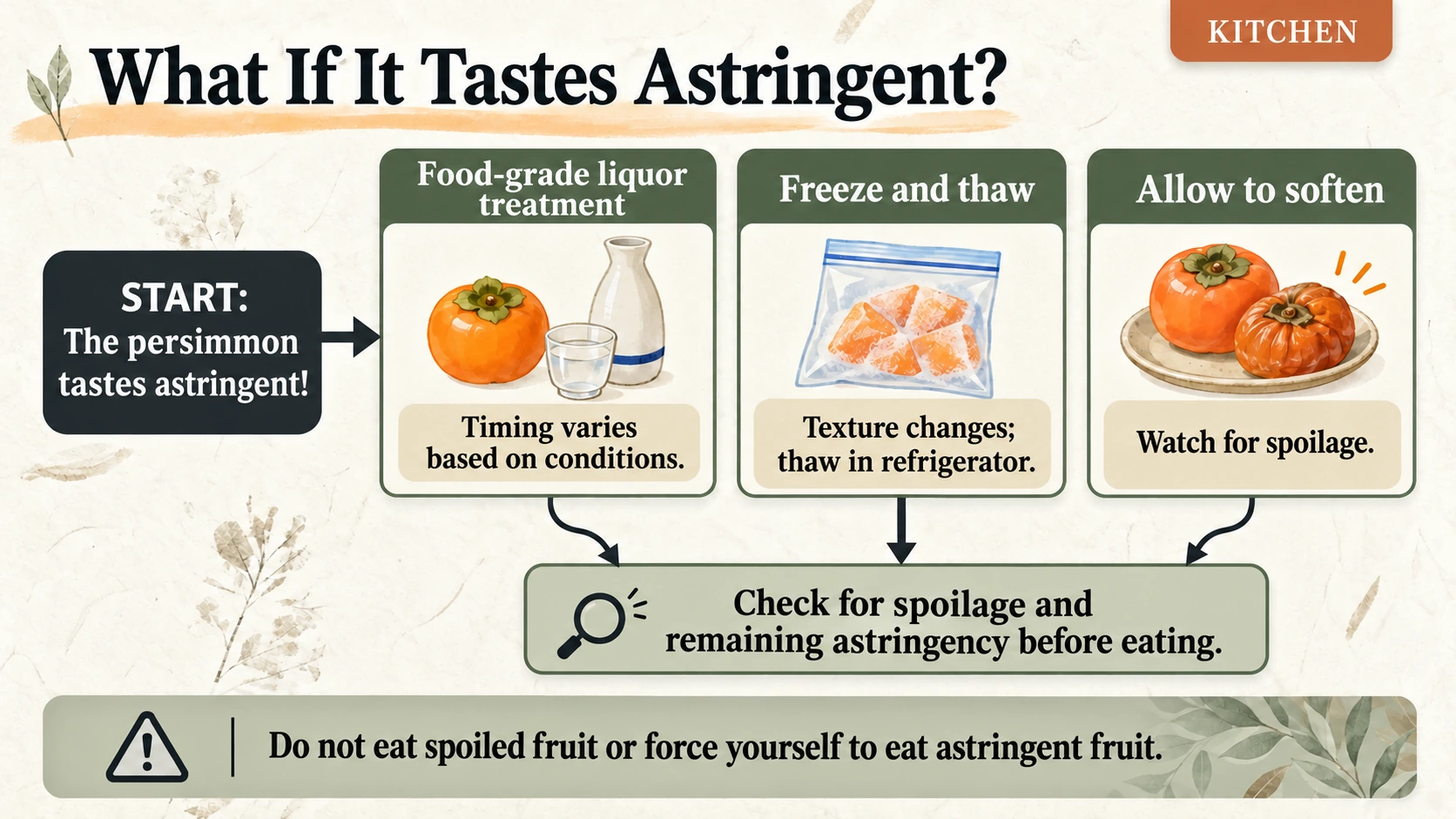
If the fruit is sound, suitable treatment may make it pleasant to eat. Soluble tannins cause the puckering sensation; making them less soluble reduces that sensation. The persimmon guide explains the mechanism.
| Method | Texture and conditions | Check before eating |
|---|---|---|
| Shochu or another suitable drinking spirit | Use edible alcohol only; timing varies | Spoilage and remaining astringency; treatment details if avoiding alcohol |
| Freezing and thawing | Flesh becomes softer | Thaw in the refrigerator, then test a small amount for remaining astringency |
| Allowing full softening | Observe sound whole fruit as it ripens | Softness alone is not enough; check for mold, unusual odors and astringency |
None of these methods makes spoiled fruit suitable to eat. Do not keep eating fruit that remains unpleasantly astringent.
Shochu treatment
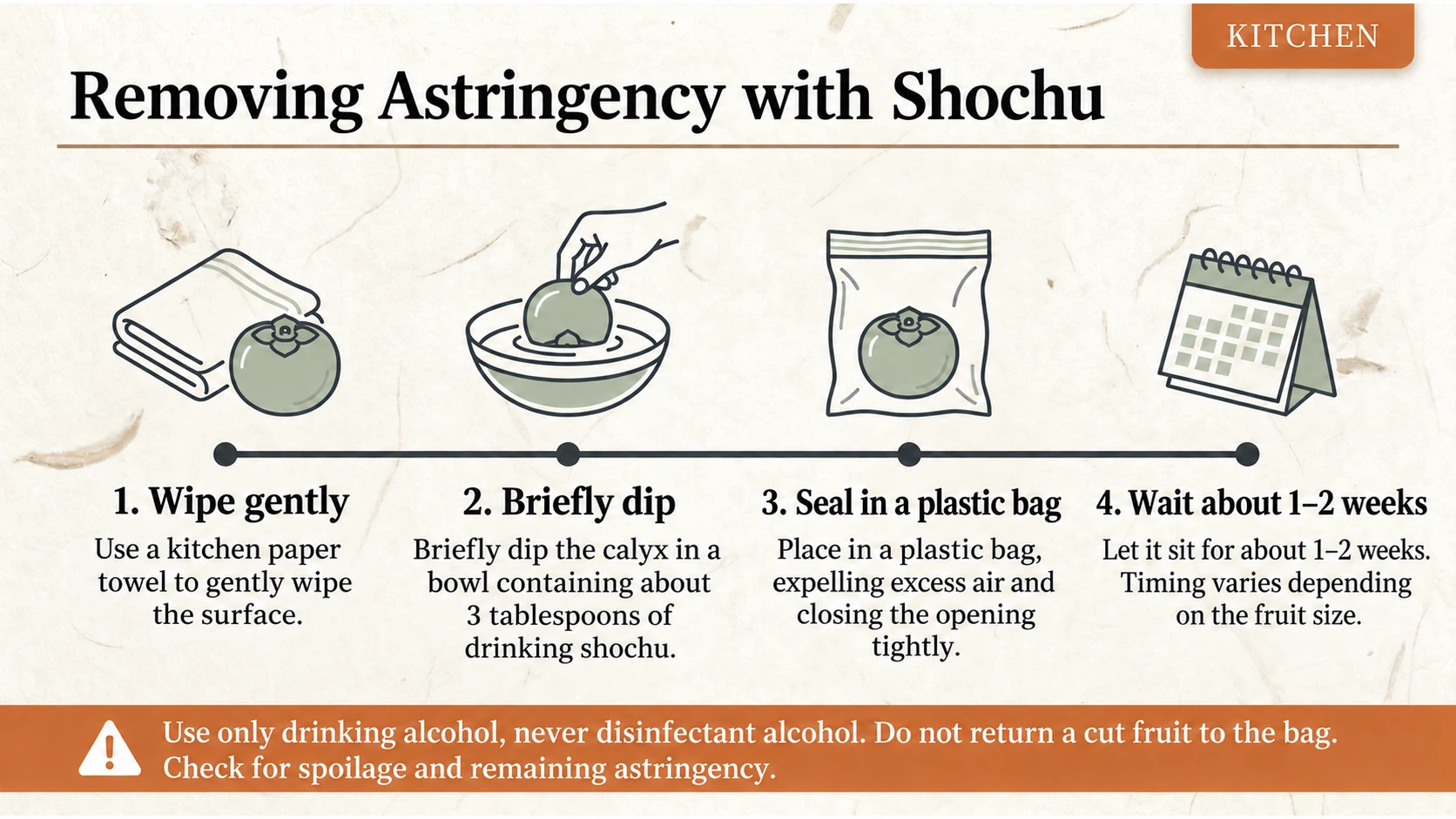
JA Fruits Yamanashi’s official online shop describes this home method:
- Gently wipe the persimmon with kitchen paper.
- Put about three tablespoons of shochu in a bowl for one persimmon. Briefly dip the fruit calyx-side down. The source allows substitution with another drinking spirit of at least 30% alcohol.
- Place the fruit in a plastic bag, close it and leave for about one to two weeks. The source gives roughly one week for smaller fruit and two for larger fruit.
These times are guides, not guarantees. Check that the fruit remains sound. After about a week, remove one to check for remaining astringency. Do not return cut fruit to the room-temperature treatment bag; refrigerate it. Never use disinfectant alcohol.
If you need to avoid alcohol, choose a product whose treatment method can be confirmed. This article cannot establish the residual alcohol level in home-treated fruit.
Freezing may help, but check the result
California Rare Fruit Growers describes freezing overnight and then thawing as a way to soften the fruit and remove astringency. Do not assume that one night guarantees success. Thaw in the refrigerator and try a small amount only after checking for spoilage. Stop if it remains astringent. Softened flesh can be eaten with a spoon.
Waiting until fully soft
Some astringent persimmons lose their astringency when fully soft. Shimane Prefecture’s guidance explains this relationship for the Saijo cultivar.
Keep whole fruit at room temperature away from excessive heat and inspect it daily. When it softens, check for spoilage and remaining astringency before eating. MAFF’s aff feature also describes placing it in a bag with an apple to encourage ripening. Discard fruit with mold or an unpleasant, unusual smell.
Washing and cutting persimmons
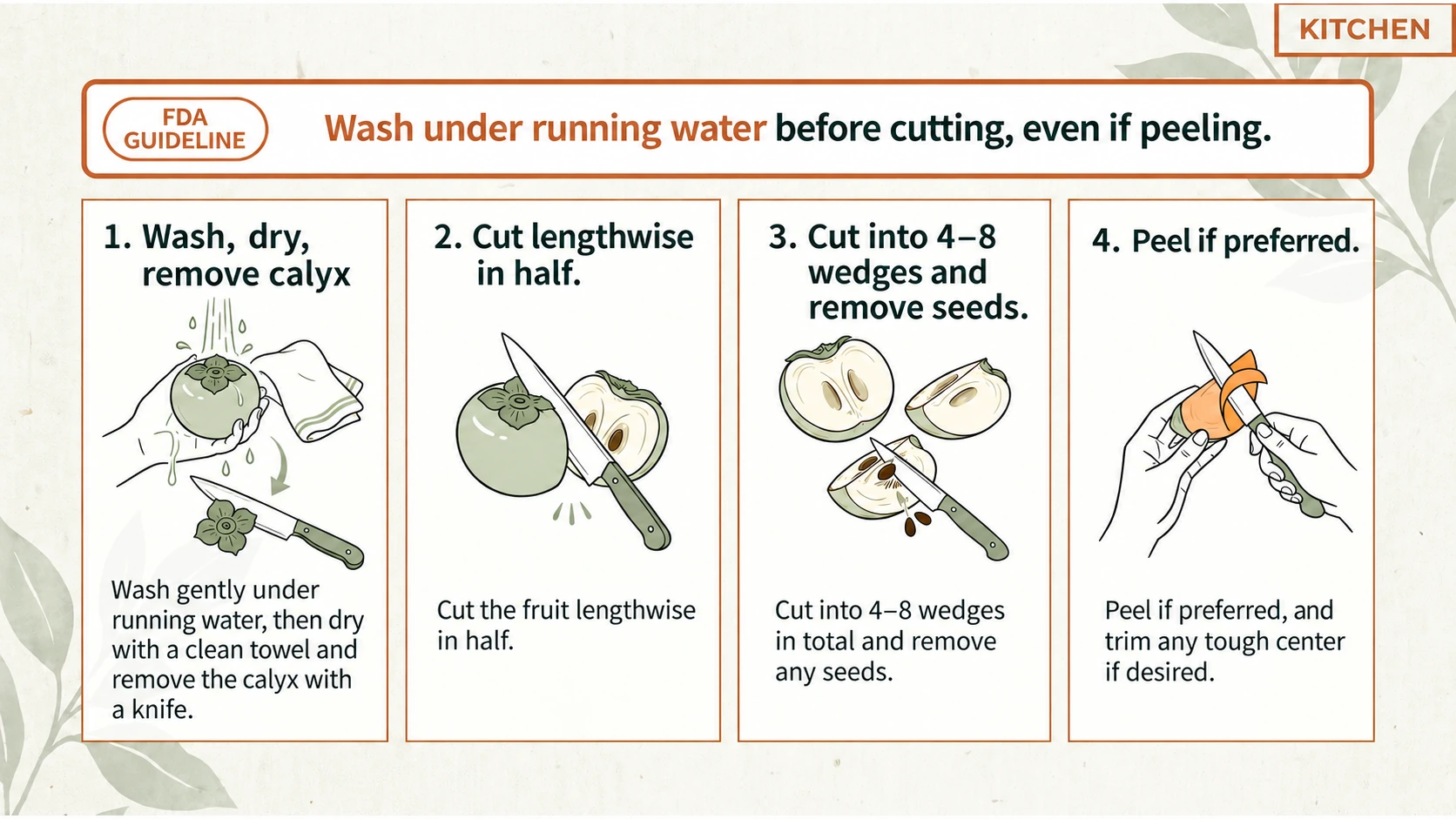
Wash before cutting, even if you will peel it
Start with clean hands, a clean knife and a clean cutting board. Gently rinse the fruit under running water before cutting so surface dirt is less likely to be carried into the flesh. Do not use soap or dishwashing detergent. Source: FDA
Cutting into wedges
- Dry the washed fruit and cut away the calyx.
- Cut lengthwise in half, then into four to eight wedges in total.
- Remove any seeds. Trim a tough central section if you prefer.
- Peel with a knife if desired.
Firm fruit may be easier to peel before cutting. For very soft, ripe fruit, remove the calyx, cut across the fruit and scoop out the flesh with a spoon.
Can you eat the skin?
The skin is edible, though you may prefer to remove it because of its texture. Wash skin-on fruit under running water and remove the calyx and seeds. Peeling alone does not establish whether astringency has been removed. Source: CRFG
Serving ideas: frozen fruit, pudding and salad
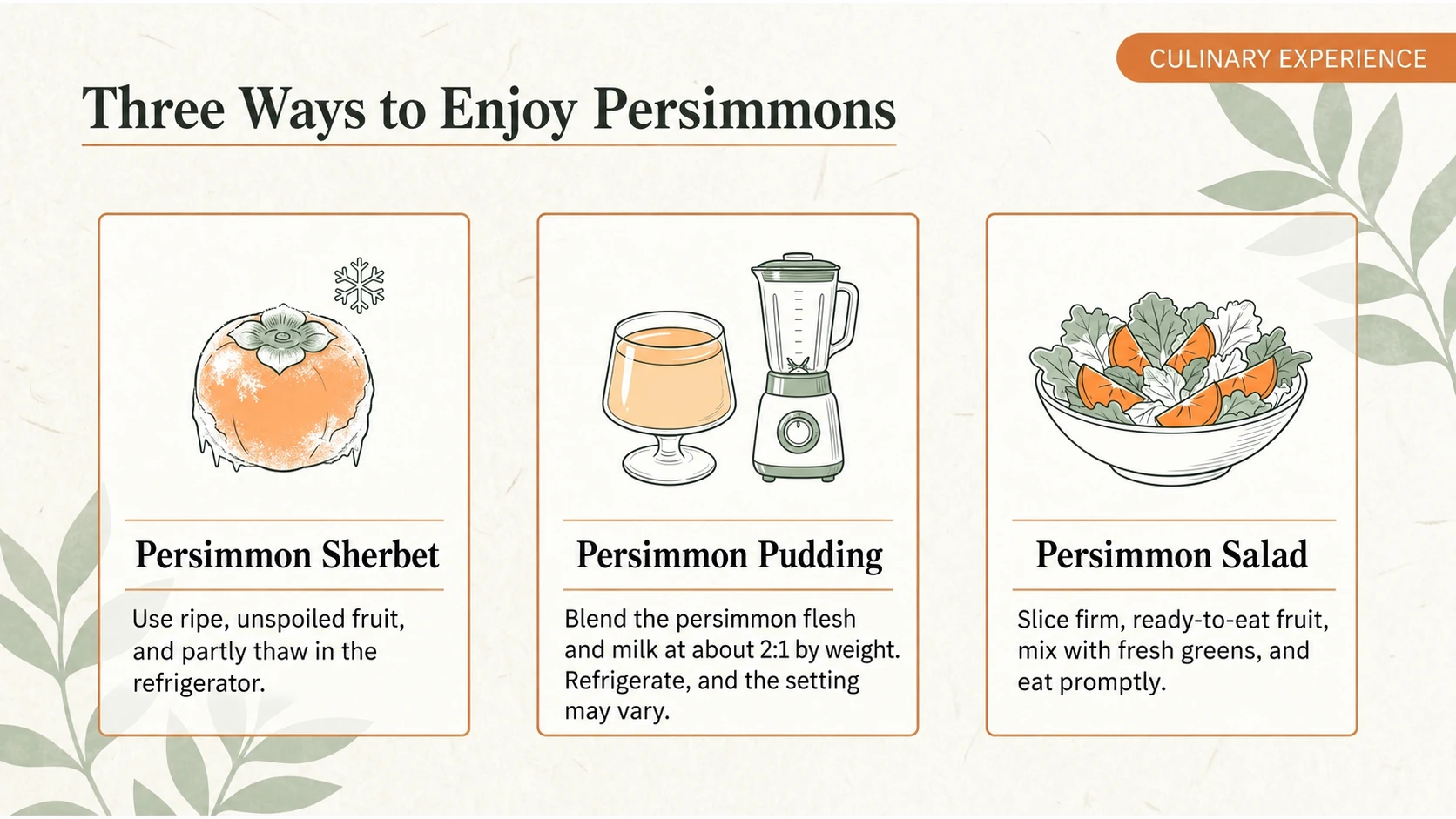
- Frozen dessert: Freeze a ripe, unspoiled persimmon, then partially thaw it in the refrigerator for an icy, spoonable texture.
- Persimmon pudding: Blend persimmon flesh and milk at roughly 2:1 by weight, then refrigerate. MAFF’s aff feature explains that persimmon pectin and calcium in milk help it set. Results vary with the fruit and other conditions.
- Salad: Thinly slice a firm, ready-to-eat persimmon and combine it with leafy greens.
- Dried fruit: Dalat’s hồng treo gió can be enjoyed as a ready-to-eat dried-fruit snack.
The frozen-fruit and pudding ideas come from aff; salad is a home serving suggestion. Eat prepared dishes promptly and refrigerate leftovers without delay. Follow the cold-storage guidance below.
How to store persimmons
The aff feature mentions softening in around two days at room temperature, but the actual pace depends on cultivar, ripeness and temperature. That timing should not be assumed in a hot Vietnamese room.
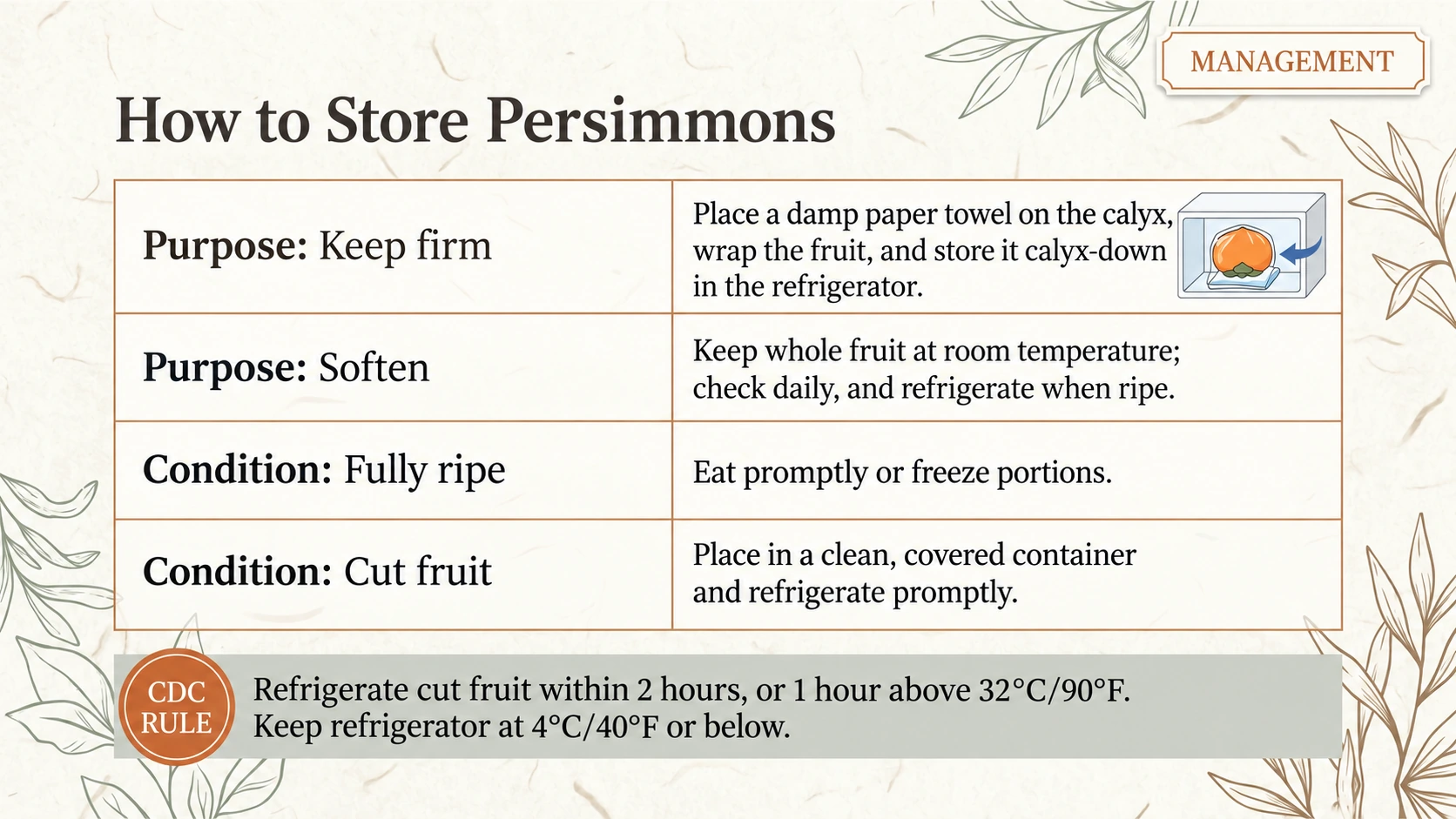
To help keep whole fruit firm:
- Place damp paper over the calyx.
- Cover the fruit with food wrap.
- Store calyx-side down in the refrigerator’s vegetable compartment.
This helps slow further ripening. Continue to check the fruit and use it promptly. Source: aff
| Fruit condition or goal | Storage method | Key point |
|---|---|---|
| Keep whole fruit firm | Damp paper on calyx; wrap; refrigerate calyx-down | It still changes in storage |
| Allow full softening | Observe whole fruit at room temperature away from excessive heat | Check daily; refrigerate when ripe |
| Fully ripe and unspoiled | Eat promptly or freeze in portions | Thaw in the refrigerator |
| Peeled or cut | Clean, covered container in the refrigerator | Do not leave it sitting at room temperature |
Refrigerate cut fruit within two hours, or within one hour when the temperature exceeds about 32°C (90°F). Keep the refrigerator at about 4°C (40°F) or below. Source: CDC food-safety guidance
Recognizing spoilage
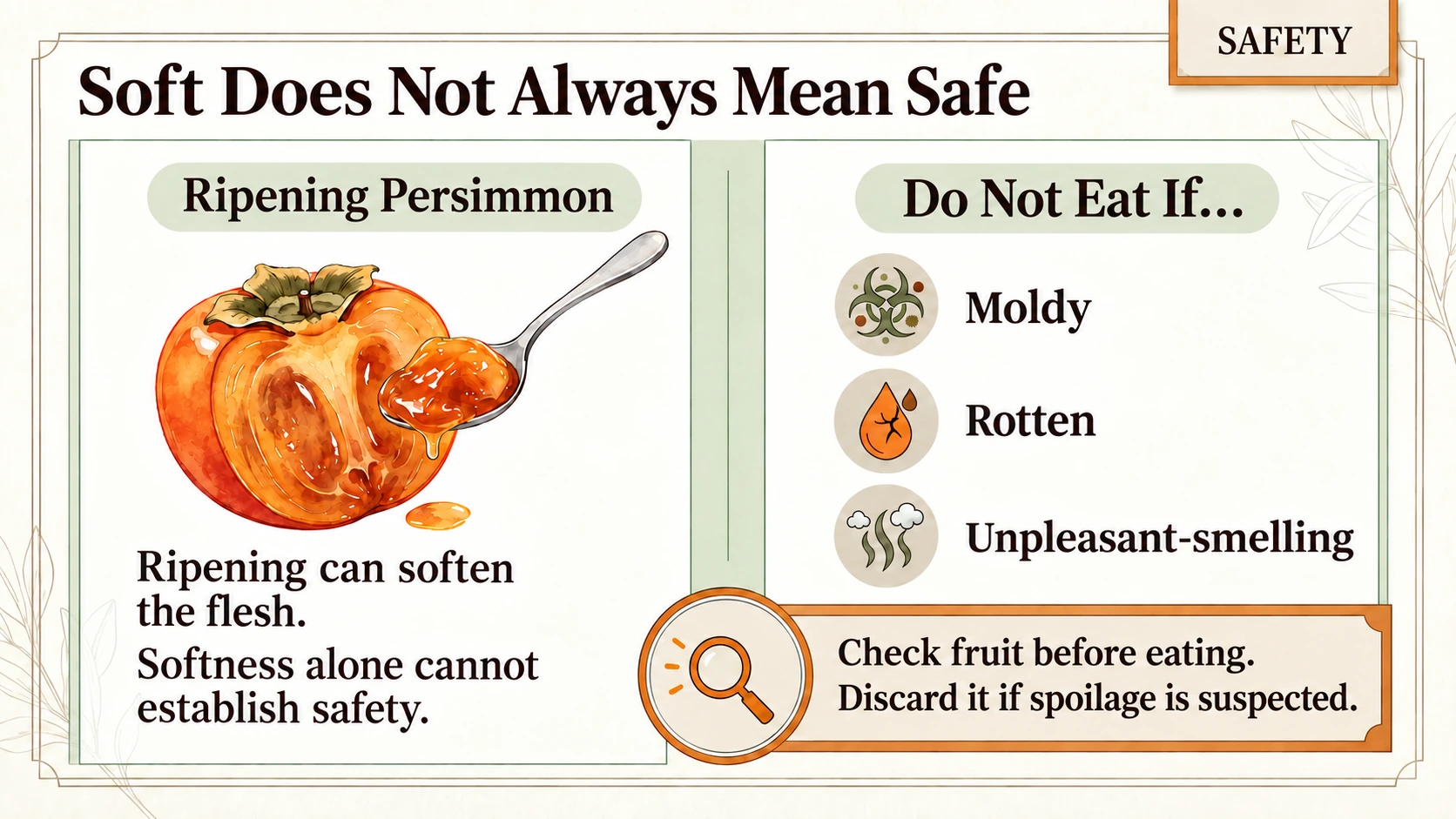
Softness can be a normal part of ripening, but it does not prove that fruit is safe. Do not eat fruit with:
- Mold on the skin or cut flesh.
- Broken skin, leaking juice and a rotten appearance.
- An unusual, unpleasant or fermented smell.
FDA advises discarding produce that looks rotten and foods that are moldy. Do not simply cut mold off a soft persimmon and eat the rest. When spoilage is suspected, discard the fruit. FDA produce guidance; FDA storage guidance
Eating precautions
Avoid large quantities at once
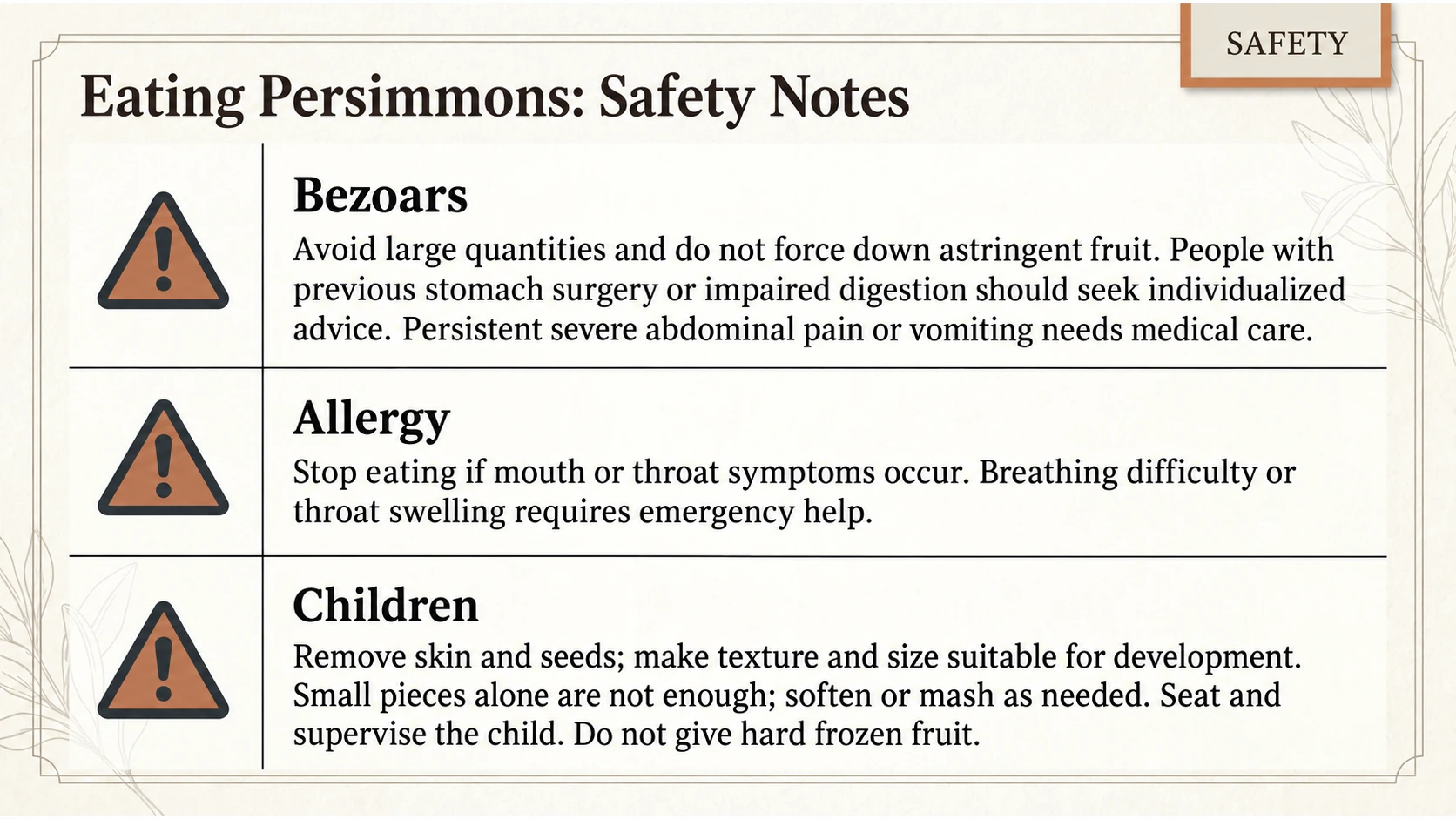
Case reports describe persimmon bezoars, masses of material that can form in the digestive tract. Tannins and fiber are thought to be involved. Previous stomach surgery, diabetes and older age are among reported risk factors. Source: a 2025 clinical case report
A case report cannot establish one safe number of persimmons for everyone. Follow any dietary advice you have been given for a medical condition. Avoid eating large quantities at once or forcing down astringent fruit. Persistent severe abdominal pain or nausea after eating requires medical attention.
Mouth or throat symptoms
Stop eating and seek medical advice if fruit causes itching or swelling in the mouth or throat. Sudden mouth or throat swelling, breathing difficulty or trouble swallowing requires emergency help. Source: NHS food-allergy guidance
Serving young children
Remove skin and seeds, and adapt texture, shape and size to the child’s developmental stage. Cutting hard flesh into small pieces is not enough on its own: soften it by cooking or mash it as needed. Have the child sit while eating and supervise closely. Do not hand over hard, frozen persimmon. Source: CDC choking-hazard guidance
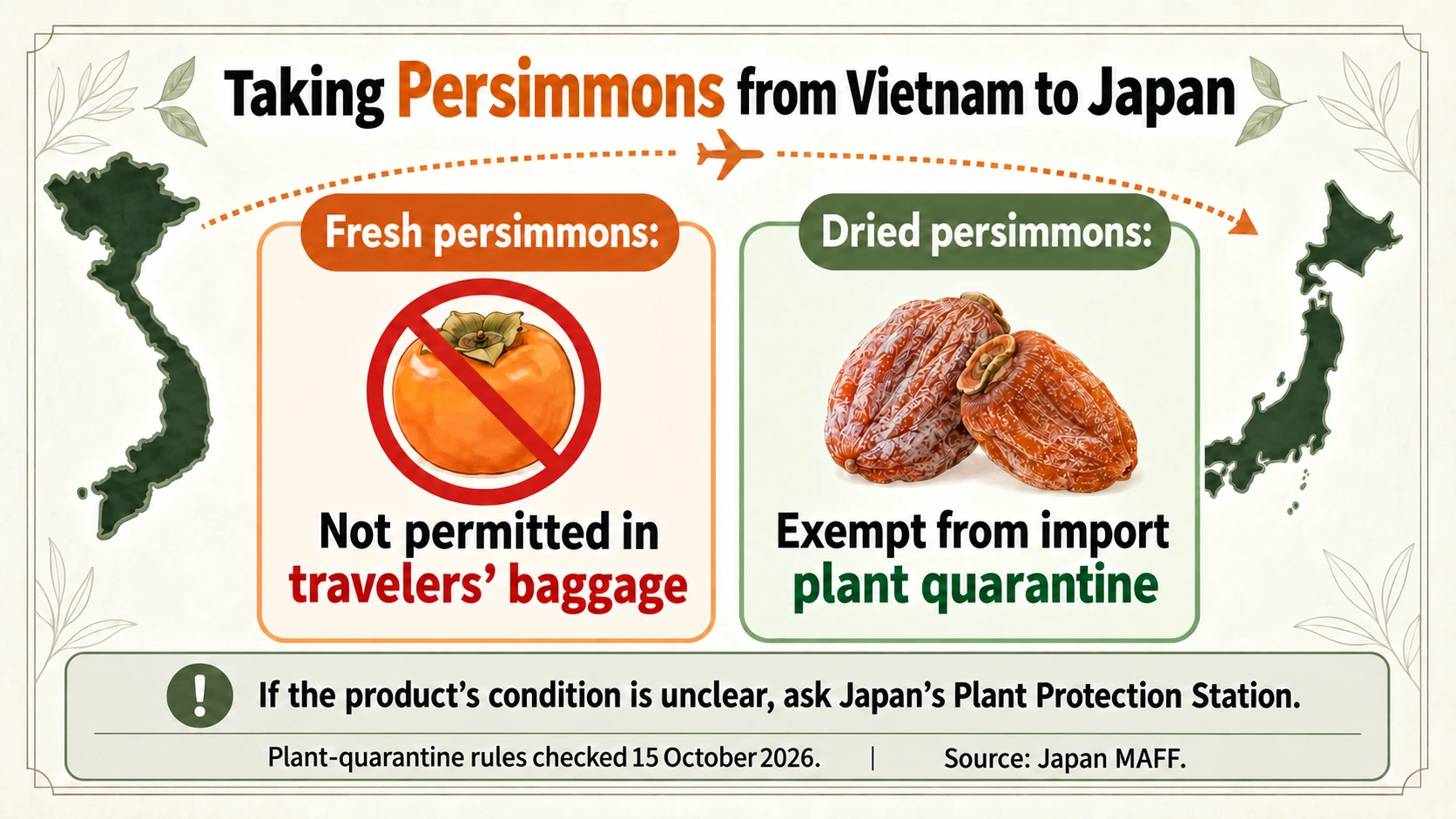
Can you take persimmons from Vietnam to Japan?
Travelers cannot bring fresh persimmons from Vietnam into Japan in their baggage. Japan’s Plant Protection Station lists persimmons from Vietnam in the “cannot be brought in” category. Source: MAFF Vietnam entry rules
In contrast, dried persimmons are exempt from import plant quarantine. Fresh fruit and products qualifying as dried fruit are therefore treated differently. If you cannot tell whether a particular product meets that description, contact the Plant Protection Station with its labeling and condition before buying it for the journey. Source: MAFF exemptions
| Product | Treatment under Japan’s plant-quarantine rules |
|---|---|
| Fresh persimmons from Vietnam in travelers’ baggage | Not permitted |
| Products qualifying as dried persimmons | Exempt from import plant quarantine |
| Product whose dried-fruit status is unclear | Ask the Plant Protection Station |
These are Japan’s plant-quarantine rules, checked for Japanese v08 on 15 October 2026. A product name alone may not establish its classification. The table does not describe the rules of other destination countries or every other import requirement.
Moc Chau persimmons bought in Hanoi: price and tasting notes
The author bought fruit labeled Hồng giòn Mộc Châu at a Hanoi supermarket. Mộc Châu is the place name Moc Chau, while giòn describes a crisp texture. The label alone does not identify the cultivar or its treatment, but the fruit bought on this occasion was firm and sweet.
Photos | The purchased persimmons and cut fruit
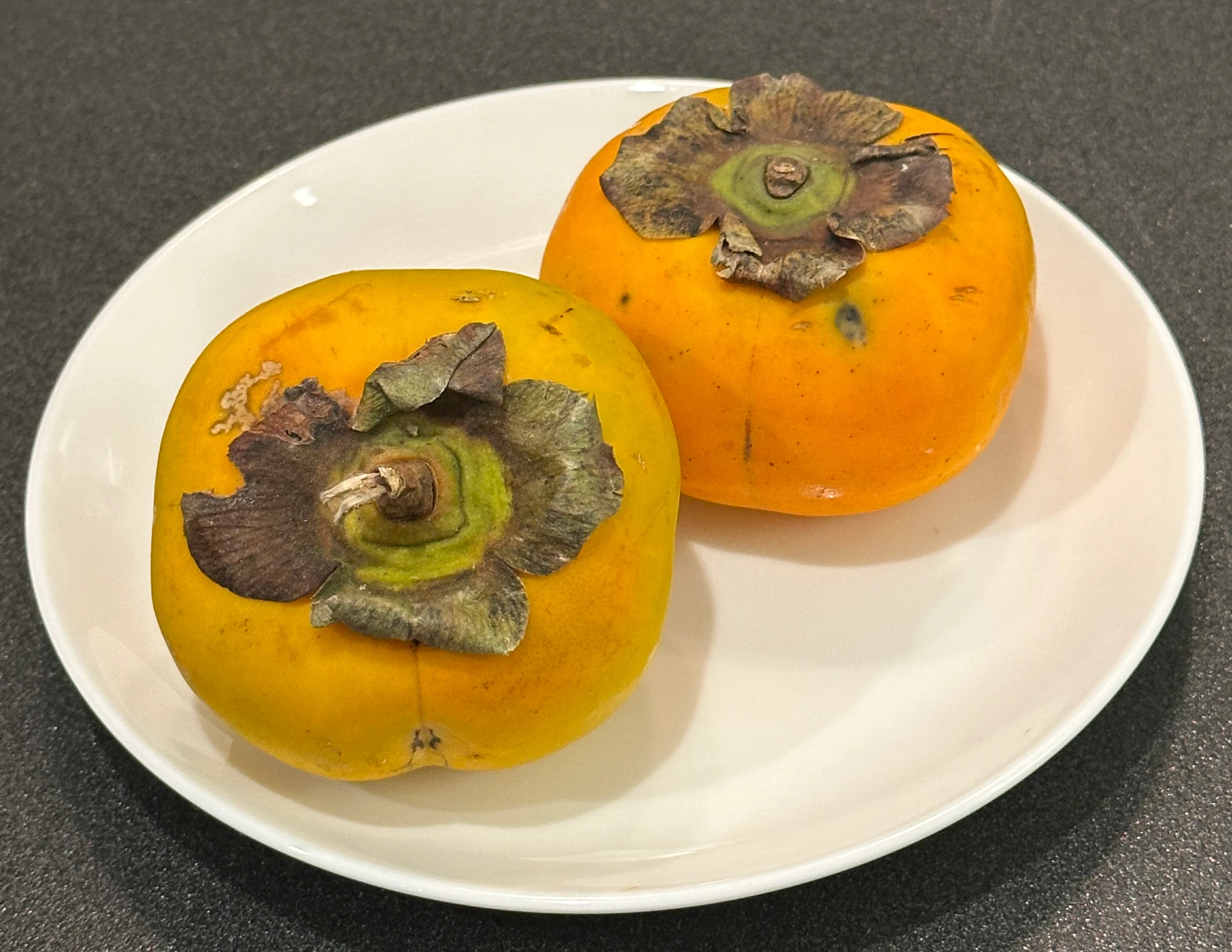
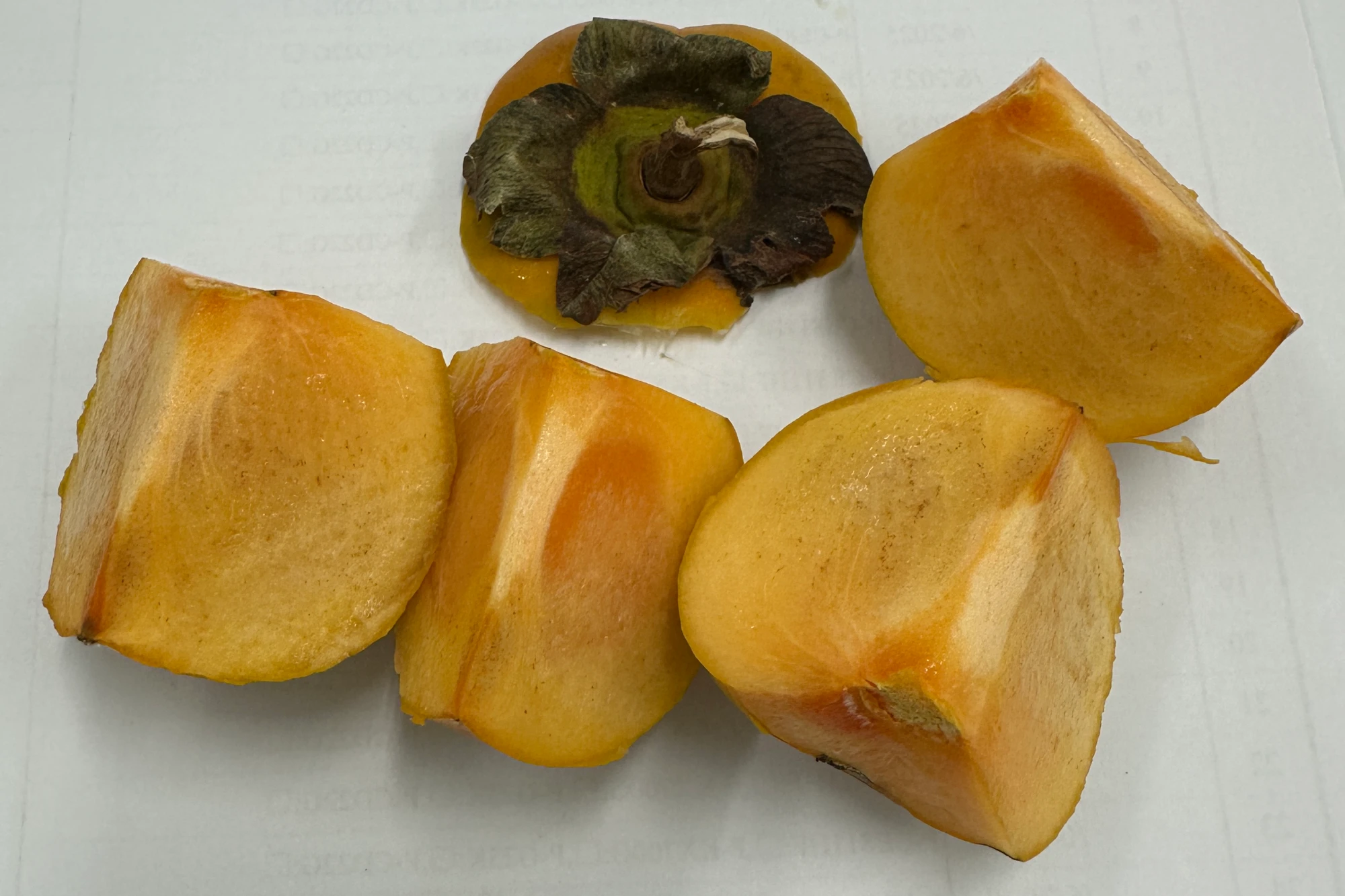
Photographs: the author.
Purchase record
| Item | Record |
|---|---|
| Purchase date | 23 August 2026 |
| Shop | GO! Thang Long, Hanoi |
| Product name | Hồng giòn Mộc Châu |
| Label description | Crisp persimmons associated with Moc Chau |
| Weight | 0.268 kg |
| Unit price | VND 49,000/kg |
| Total price | VND 13,132 |
VND 49,000 × 0.268 kg = VND 13,132, matching the recorded total. This is one purchase at one shop, not a national market price. Hanoi was the purchase location; Moc Chau was the origin indicated by the product name.
Taste: light, refreshing sweetness
The persimmons had a gentle, refreshing sweetness rather than an intensely sugary flavor, with a clean finish. The fruit sampled had no seeds, which made it easy to eat.
Texture: crisp, like an apple or pear
The flesh had a crisp bite reminiscent of an apple or pear. It was firm and satisfying to chew, rather than soft or melting.
These observations describe this purchase. Seed formation varies with cultivar and pollination, so the same product name does not guarantee seedless fruit every time. The purchase date is recorded; a separate tasting date was not supplied.
A practical routine
- Ask whether the fruit is ready to eat and whether astringency has been removed.
- Look at the calyx, color, weight and skin condition.
- If it is astringent, ask about suitable treatment and check the result before eating.
- Wash, cut into wedges, remove seeds and trim any tough center if desired.
- Refrigerate whole fruit calyx-down to help retain firmness, and refrigerate cut fruit promptly.
Avoid large quantities at once, and do not force yourself to eat astringent fruit. If traveling to Japan from Vietnam, leave fresh persimmons behind.
Continue the persimmon trilogy
- Persimmon History and Stories: Why It Is Called Kaki
- Persimmons in Vietnam: Types, Nutrition and Seasons
Sources
Source links are attached to the relevant passages. This English edition retains the evidence and dated purchase record of Japanese v08.
