
A quiet sea journey for a fruit that was never crowned.
Wax apple, known in Japanese as renbu, comes from Southeast Asia, commonly described as the Malay Peninsula and Malay Archipelago. Accounts place its arrival in Taiwan in the seventeenth-century Dutch period. Vietnam calls it roi in the north and mận in the south; Japanese sources describe introduction from Taiwan to Okinawa around 1940.
Its story lacks a famous European “discoverer” or a celebrated royal fashion. Instead, it invites us to follow growers, borrowed words and regional journeys. This article separates the broad history reported by sources from the personal details and motives those sources do not establish.
For a contrasting history, read Pineapple History and Stories.
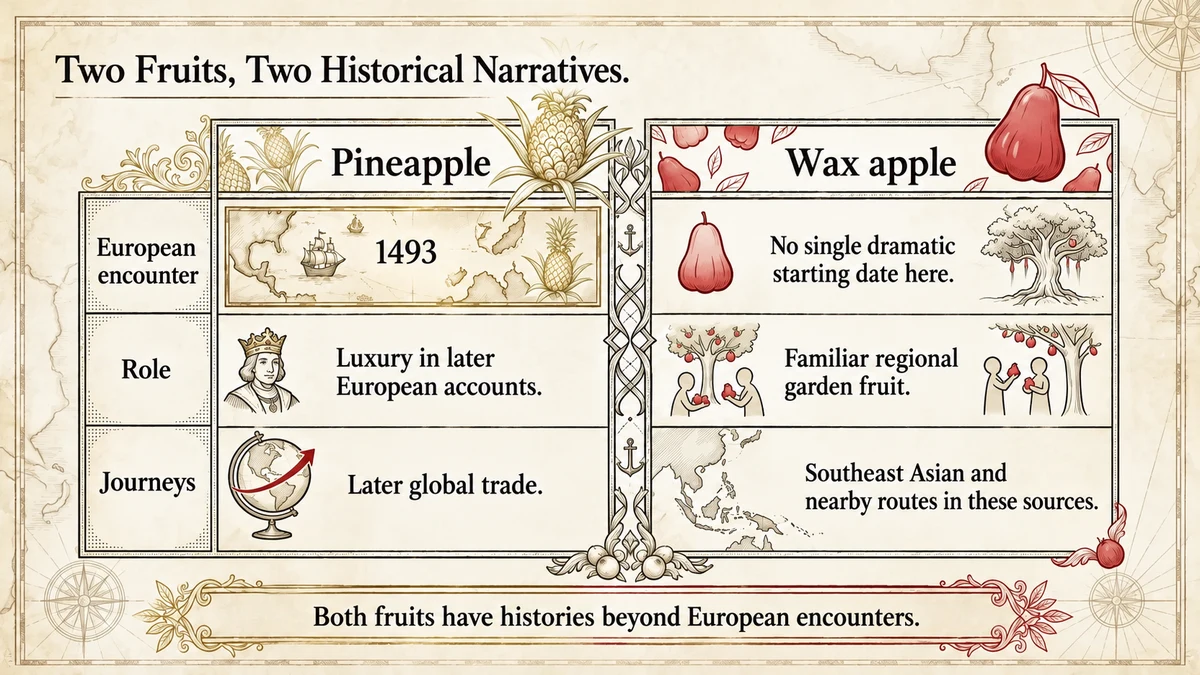
A Fruit Long Familiar Around Southeast Asian Seas
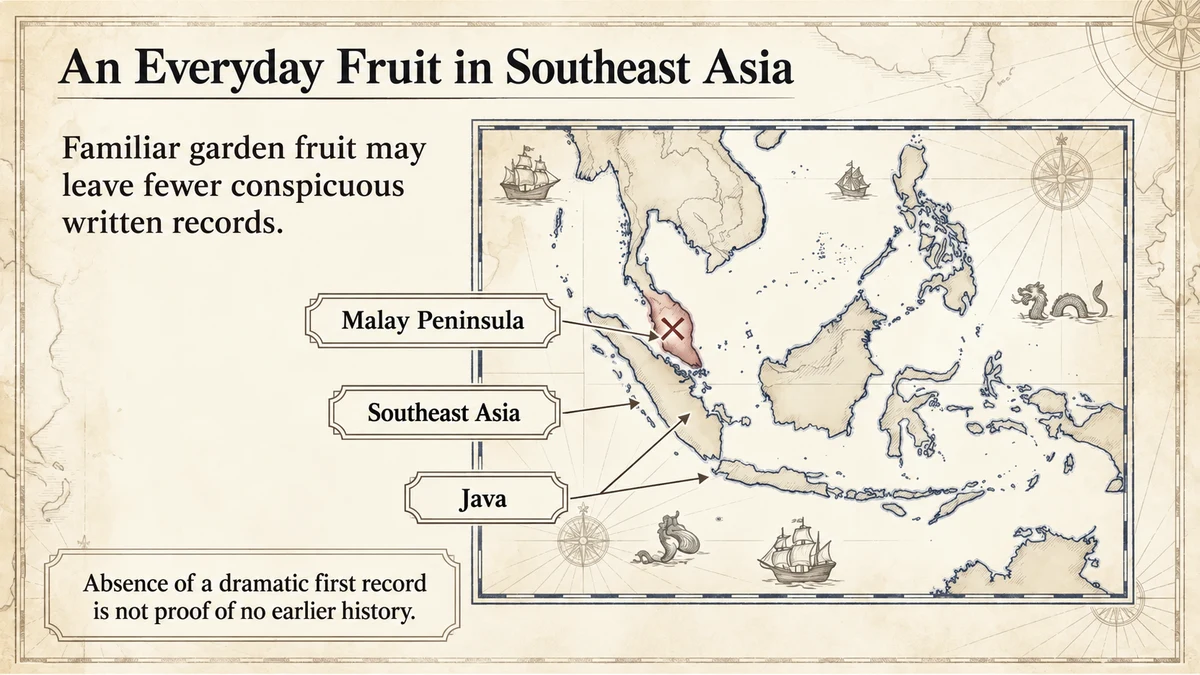
Wax apple’s origins are usually described in Southeast Asian terms. For its botany and varieties, see Wax Apple Guide: Taste, Nutrition, Seasons and Varieties.
The sources consulted here do not offer a single dramatic starting date comparable with the familiar European account of pineapple in 1493, or with ancient Egyptian evidence for watermelon.
That absence does not prove that no ruler ever valued wax apple. It leaves room for a quieter interpretation: fruit long grown near homes may have seemed too familiar to become an exotic headline. This is a narrative reading of the surviving accounts, not evidence about every early grower.
The Seventeenth-Century Journey to Taiwan
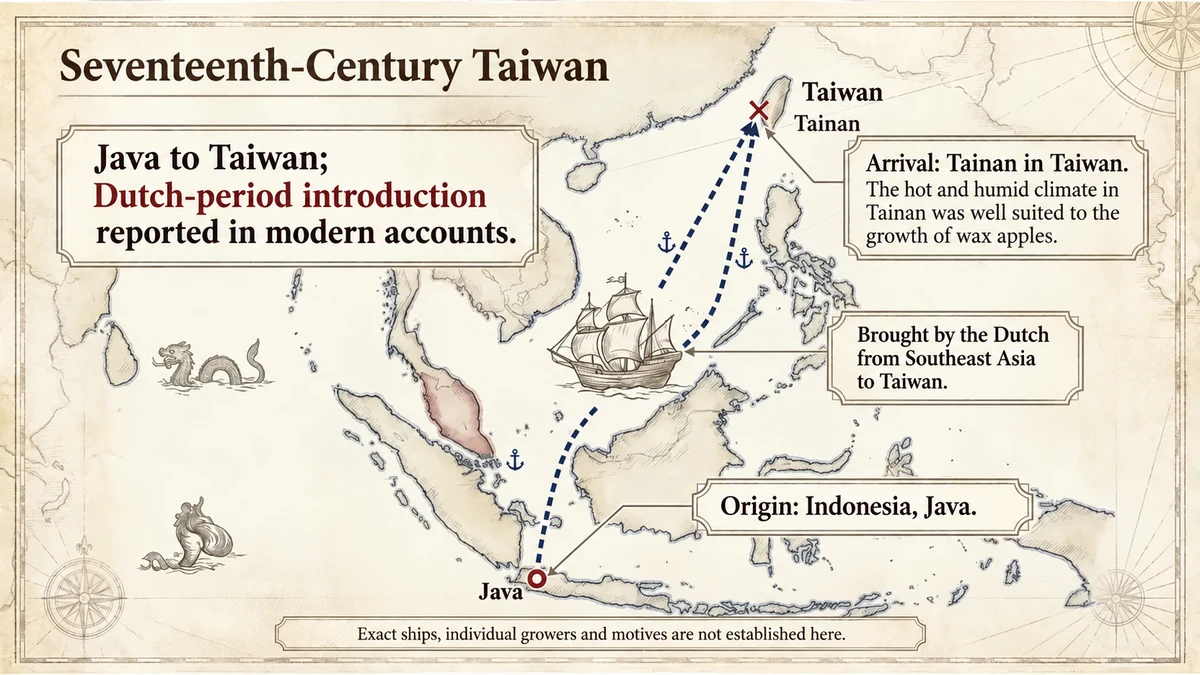
Introduction to Taiwan in the seventeenth century is one of the recurring milestones in modern accounts of wax apple history.
Those accounts describe transport from Java during Dutch rule, with southern Taiwan and the trading center of Tainan featuring in the story. Warm conditions suited cultivation, which later spread in the south. The broad account does not identify every ship, grower or planting date.
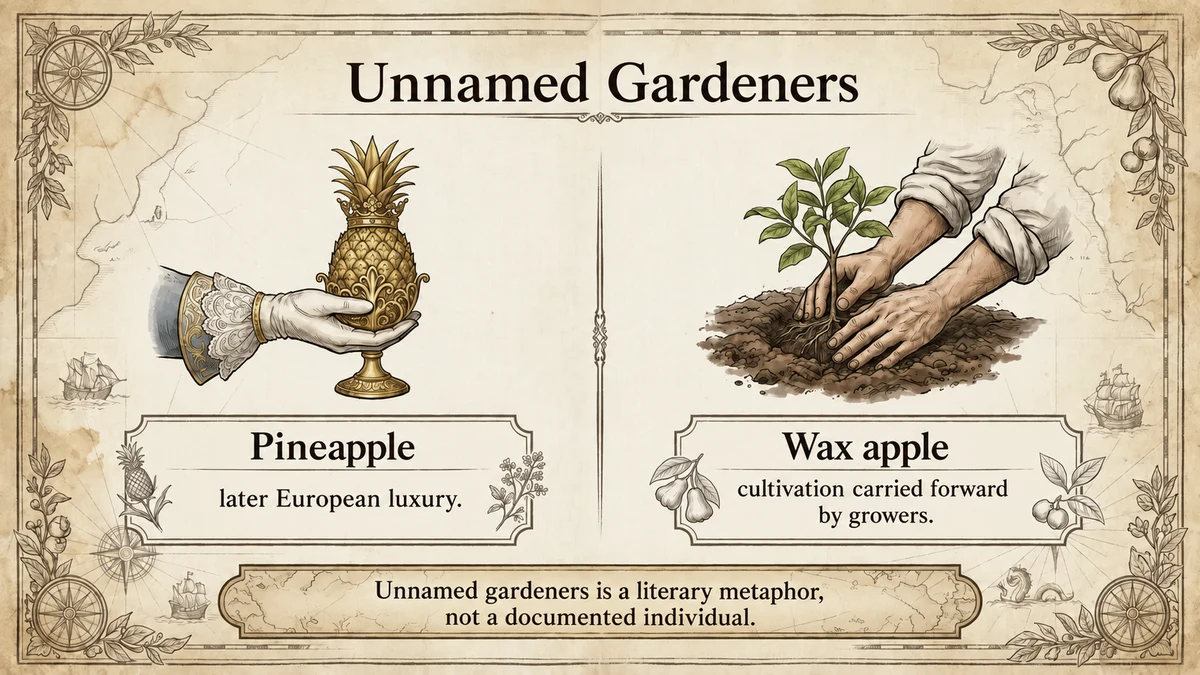
The contrast with pineapple is useful, but its limits matter. Here, “unnamed gardeners” is a literary image for people who carried cultivation forward. It is not the name of a documented individual, nor proof that the Dutch planted the fruit solely for their own meals.
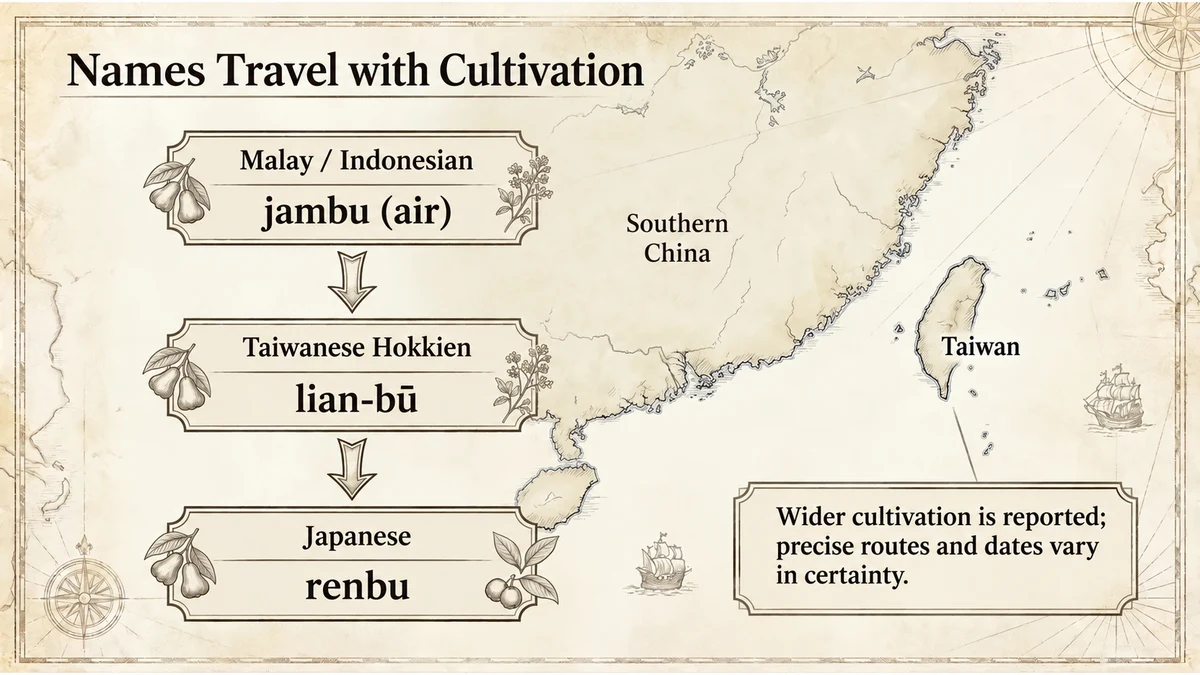
In Taiwan the fruit acquired a new name. Speakers of Taiwanese Hokkien adapted jambu, a word used in Malay and Indonesian naming, into the name written 蓮霧, lian-bū. The Japanese renbu derives from this Taiwanese name; Wax Apple Guide: Taste, Nutrition, Seasons and Varieties explains the linguistic account in more detail.
Accounts also describe cultivation in southern China, including Guangdong, Hainan and Guangxi. Statements about several centuries of cultivation do not, by themselves, establish an exact Taiwan-to-China route or date for every region.
Vietnam Divided the Name, Rather Than the Species
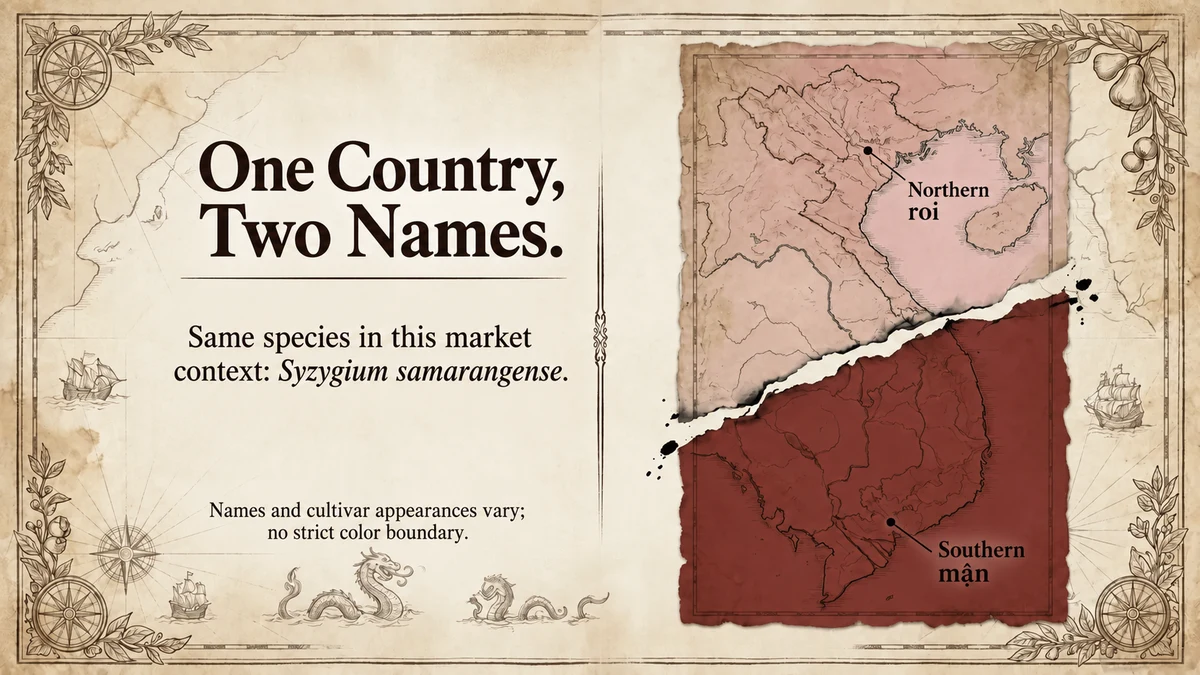
One of the most engaging parts of this journey occurs within Vietnam itself.
Northern Vietnam commonly calls the fruit roi, while the south calls it mận. Pale fruit and deep red fruit can create a strong impression of difference, but color alone does not establish a different species.
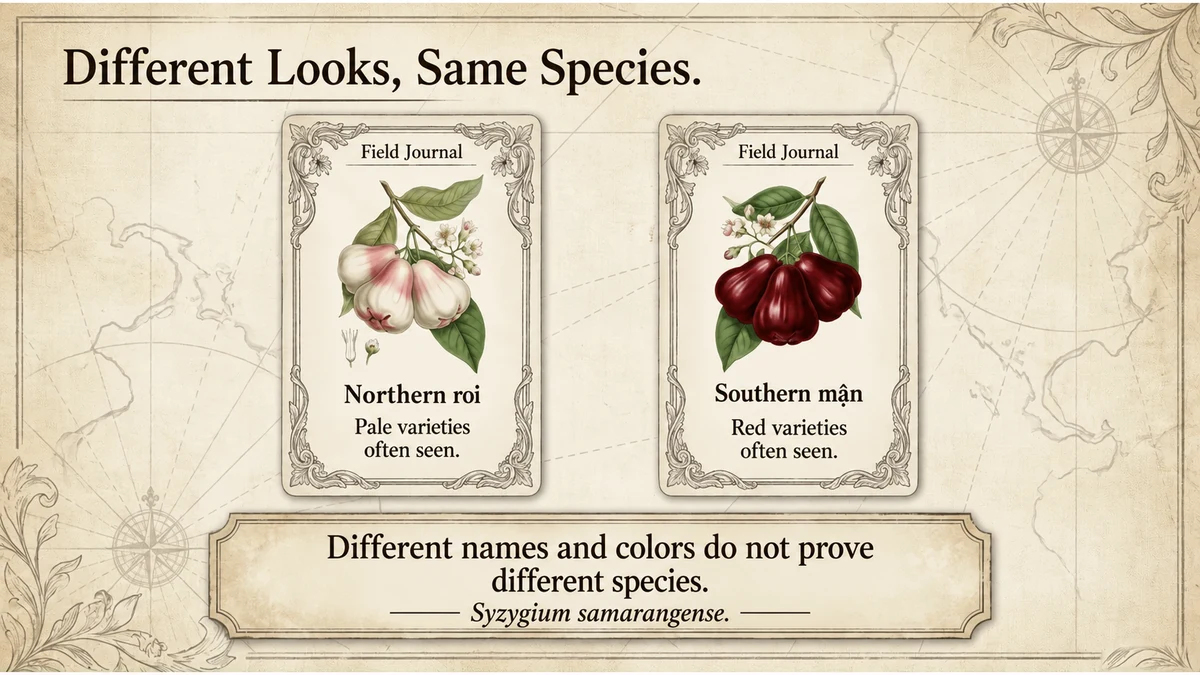
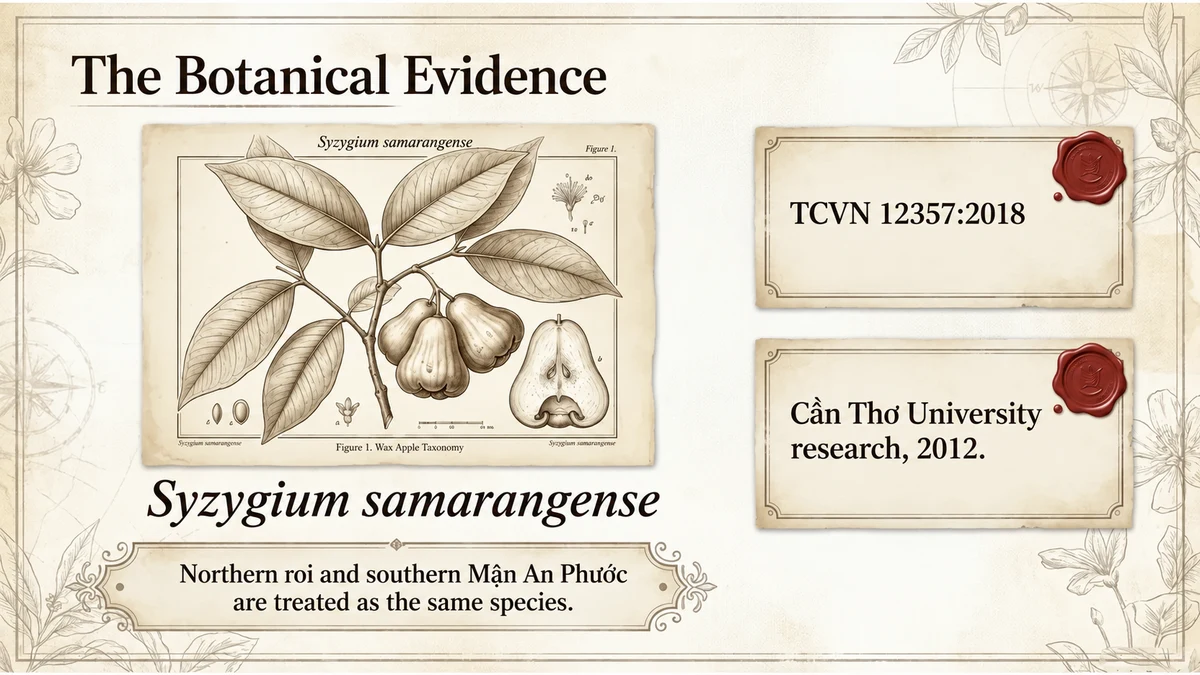
As explained in Wax Apple Guide: Taste, Nutrition, Seasons and Varieties, northern market roi and southern Mận An Phước are treated as Syzygium samarangense in Vietnamese standard TCVN 12357:2018 and Cần Thơ University research. The clearest division here is in the names.
There is a real twist: northern mận means plum, a fruit in the rose family. Southern mận can mean wax apple. One species has two names, while one name can refer to two unrelated fruits. This makes a market conversation a small lesson in regional language.
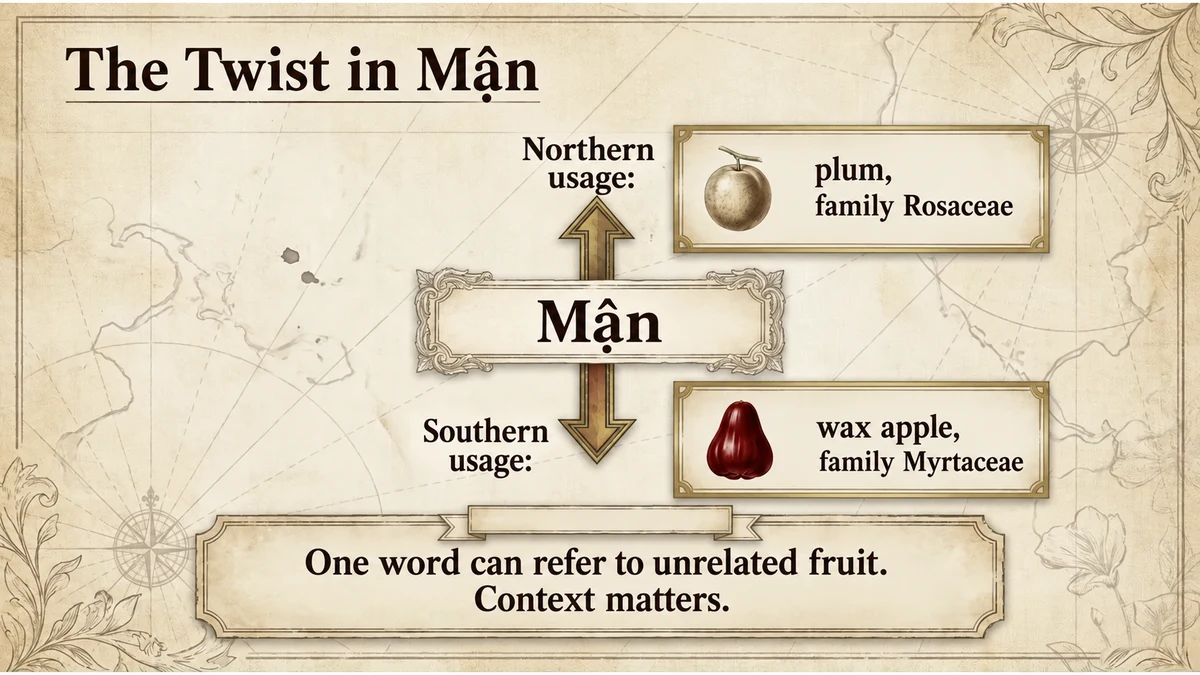
Why did the names diverge? The sources consulted for this article do not establish a definite historical explanation. Different regional trading connections are a possible context, but they do not prove the origin of this particular vocabulary split.
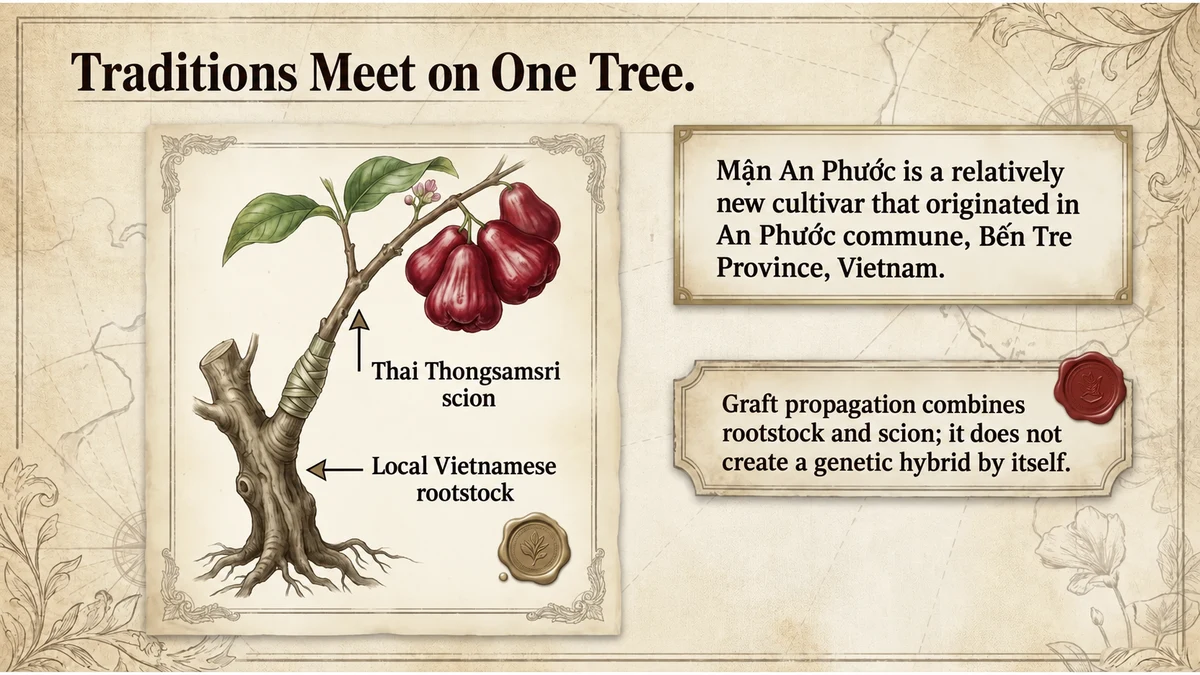
Accounts of the southern Mận An Phước describe a Thai selection, Thongsamsri, grafted onto local rootstock in An Phước, Bến Tre. Different growing traditions meet on one tree. Grafting combines a scion and rootstock; it does not itself demonstrate genetic hybridization or breeding of a new cultivar.
Around 1940: From Taiwan to Okinawa
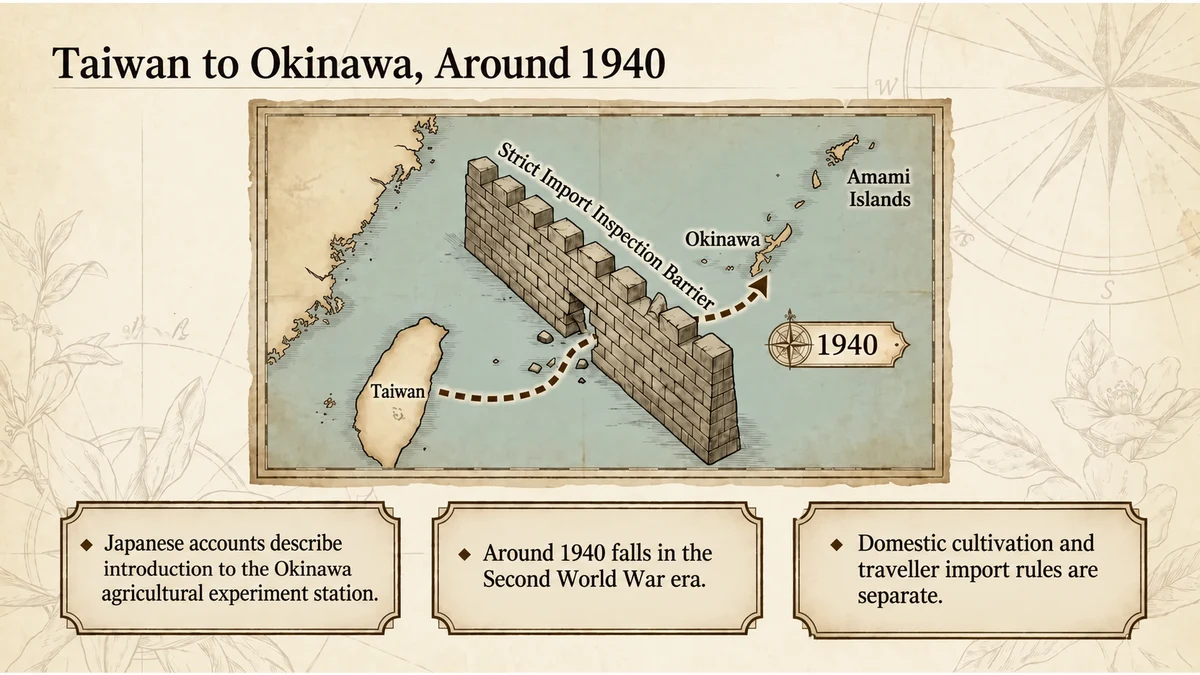
Fresh Vietnamese wax apple cannot be brought into Japan in travellers’ baggage under the official list consulted. A separate story concerns cultivation already established within Japan.
Japanese accounts describe the Okinawa agricultural experiment station introducing wax apple from Taiwan around 1940. Cultivation subsequently continued in Okinawa and the Amami Islands, roughly three centuries after the commonly described arrival in Dutch-period Taiwan.
The journey to subtropical Japan is an important regional step in these accounts. Traveller restrictions on Vietnamese fresh fruit and domestic Japanese cultivation concern different situations.
Frequently Asked Questions About Wax Apple History
Where Did Wax Apple Originate?
Its origins are commonly described as Southeast Asia, particularly the Malay Peninsula and Malay Archipelago.
When Did It Arrive in Taiwan?
Modern accounts describe introduction from Java during the seventeenth-century Dutch period. The Taiwanese name lian-bū later contributed to Japanese renbu.
When Did It Arrive in Japan?
Japanese accounts describe introduction from Taiwan to the Okinawa agricultural experiment station around 1940, followed by cultivation in Okinawa and Amami.
The Fruit That Was Never Crowned
Pineapple’s European history is often organized around Columbus’s encounter in 1493. That familiar starting point does not erase the fruit’s much longer Indigenous history.
Wax apple invites a different narrative. Familiar in Southeast Asian gardens, it appears in accounts of Dutch-period Taiwan, acquires a Taiwanese name, carries different names within Vietnam and reaches Okinawa around 1940. The known milestones sit alongside gaps in the record; no single famous traveller connects them all.
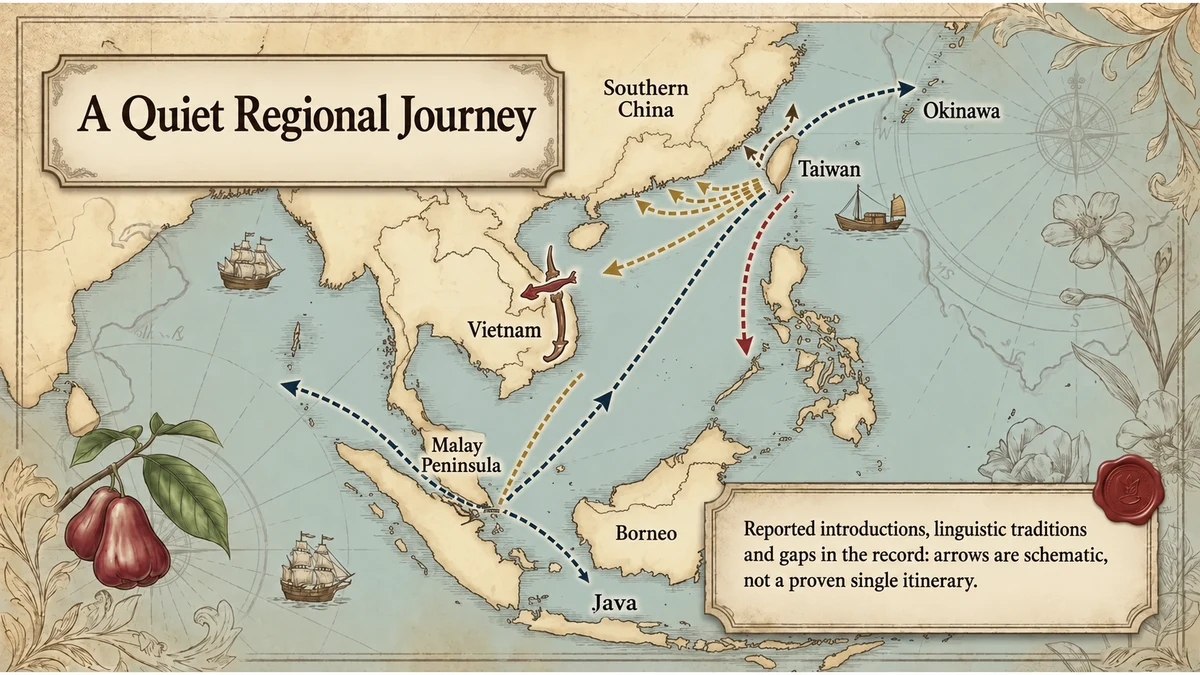
This story need not become a grand tale of conquest to be interesting. Names and growing traditions connect Java, Taiwan, Vietnam and Okinawa in the accounts used here. Next time you see wax apple’s glossy skin, remember the people who grew it and the words that travelled with it.
For taste, botany, nutrition and varieties, read Wax Apple Guide: Taste, Nutrition, Seasons and Varieties.
Related Articles
- Botany, nutrition and varieties: Wax Apple Guide: Taste, Nutrition, Seasons and Varieties
- Choosing, washing, cutting and storing: How to Eat Wax Apple in Vietnam: Buying, Washing, Cutting and Storage
- Pineapple’s Indigenous origins and later global travels: Pineapple History and Stories
- Watermelon and evidence from ancient Egypt: Watermelon History and Stories
- More fruit to enjoy in Vietnam: 15 Vietnamese Fruits
References
- News & Market Taiwan: Wax apple history
- Syowp: Taiwanese wax apple and its history
- Chinese Text Project; Wikisource; Baidu entry on wax apple; Bencao Gangmu transcription; Modern botanical-name account
- Japanese Wikipedia: Wax apple; VIETJO on regional Vietnamese vocabulary; Regional Vietnamese vocabulary
- Lê Văn Hòa and colleagues, Cần Thơ University (2012)
- Cần Thơ agricultural product listing: Mận An Phước
- Mynavi Agriculture: Wax apple cultivation in Okinawa
- Japan Plant Protection Station: Vietnam traveller restrictions
Japan Plant Protection Station: Vietnam traveller restrictions — Reviewed 11 October 2026. Fresh wax apple from Vietnam cannot be brought into Japan in travellers’ baggage.
