
A practical traveller’s guide to Vietnam’s crisp, watery fruit.
Wax apple can be eaten with its skin. Wash the surface and the hollow at the blossom end thoroughly under running water, then bite into it or cut it lengthwise. Remove any seeds. Its crisp, watery flesh is usually mildly sweet.
This guide covers buying, prices, choosing fresh fruit, washing and cutting, local serving ideas, refrigeration and travel rules for Japan. Read Wax Apple Guide: Taste, Nutrition, Seasons and Varieties for names, varieties and nutrition, and Wax Apple History and Stories: Names, Growers and Sea Journeys for history.
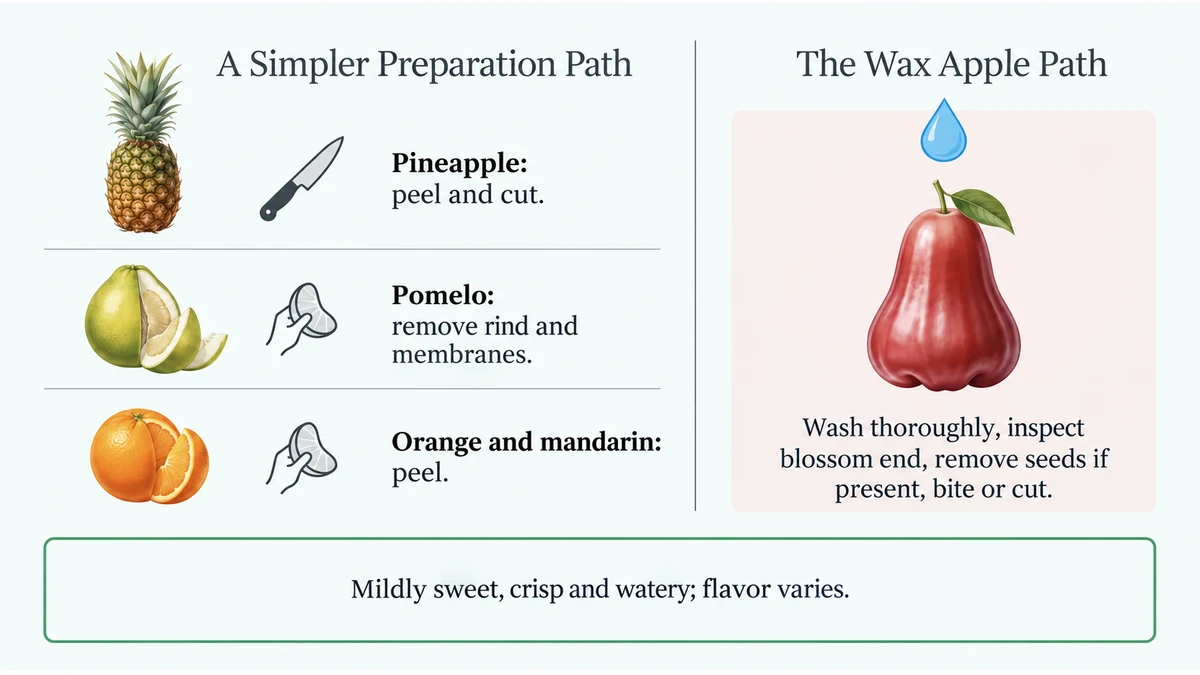
Unlike pineapple or pomelo, wax apple needs no peeling. Preparation is also simpler than for orange or mandarin: wash carefully and it is ready to eat.
Buying and Eating at a Glance
| Item | Details |
|---|---|
| Vietnamese names | Roi in the north; mận in the south |
| Pronunciation guide | Roi; mận, with the Vietnamese tones depending on regional pronunciation |
| Taste | Mildly sweet and delicate; varies by cultivar |
| Texture | Crisp, crunchy and watery |
| Availability | Seen for much of the year where flowering is managed; main harvest timing varies, often described as spring to early summer |
| Example price range | A retailer’s 2026 reference page lists Mận An Phước at VND 27,000–80,000 per kg. This is a source-specific example, not a fixed market price. |
| Where to buy | Supermarkets, open-air markets and street fruit sellers |
| Basic preparation | Wash thoroughly, then eat with the skin or cut lengthwise; remove seeds if present |
| Local serving ideas | Chilli salt (muối ớt), shrimp salt (muối tôm), or gỏi mận, a wax apple salad |
| Ease for beginners | ★★★★★ |
Ask for Roi or Mận
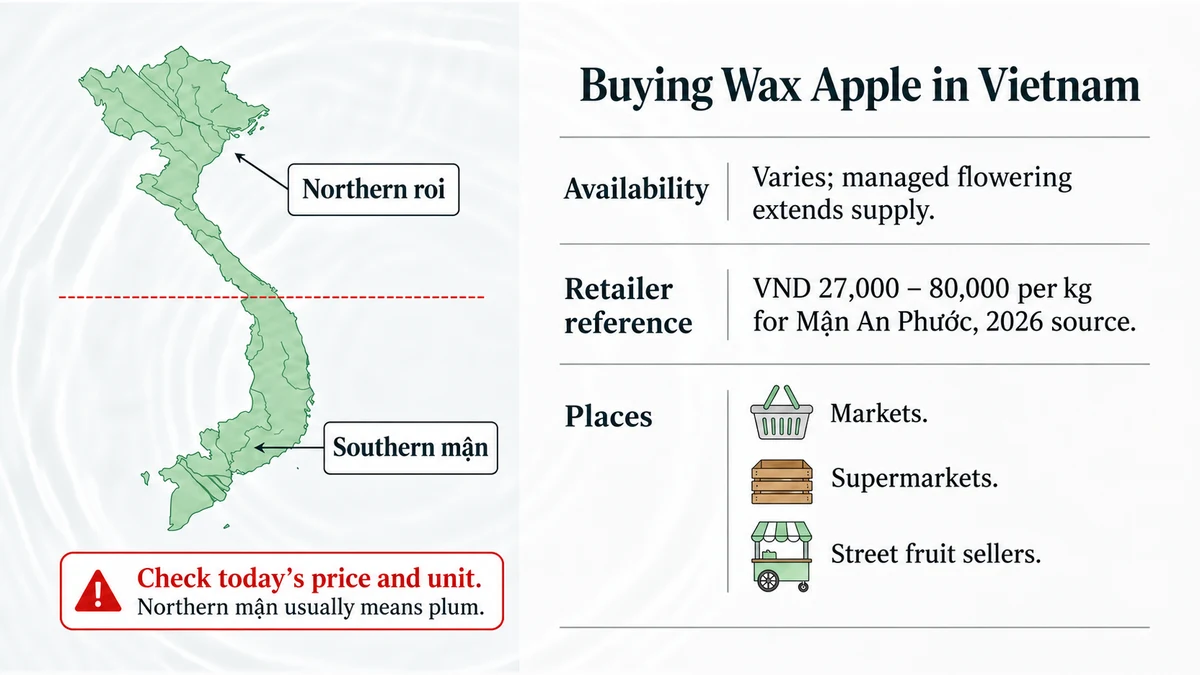
Wax apple is commonly roi in northern Vietnam and mận in the south. As Wax Apple Guide: Taste, Nutrition, Seasons and Varieties explains, the market fruit under these names is Syzygium samarangense. Knowing the local term makes shopping easier.
Remember that northern mận usually means plum. A picture, the word roi in the north, or a cultivar name can help avoid confusion.
Taste and Texture
Wax apple sold in Vietnam is generally crisp and delicately sweet, with a light, watery flavor. The center can be less flavorful than the firmer outer flesh. Cultivars and individual fruit vary, so treat these as tasting descriptions rather than guarantees.
Some cultivars turn red or pink, while others remain pale or white when ripe. Color alone is therefore an unreliable way to judge sweetness or maturity.
Prices and Places to Buy in Vietnam
Kingfoodmart’s 2026 reference article lists Mận An Phước at VND 27,000–80,000 per kg, depending on size, selection, season and sales channel. Check the price and unit on the current shop label; the range is not a nationwide quote.
Open-Air Markets
Fruit is often sold loose in baskets or piles. Look for glossy, firm fruit without visible deterioration.
Supermarkets
Labels make weight and price easier to compare, and packaged fruit can be convenient if market conversation feels unfamiliar.
Street Fruit Sellers
Fruit may be sold from shoulder poles, carts or roadside stalls. Some sellers include a small packet of chilli salt.
How to Choose Wax Apple
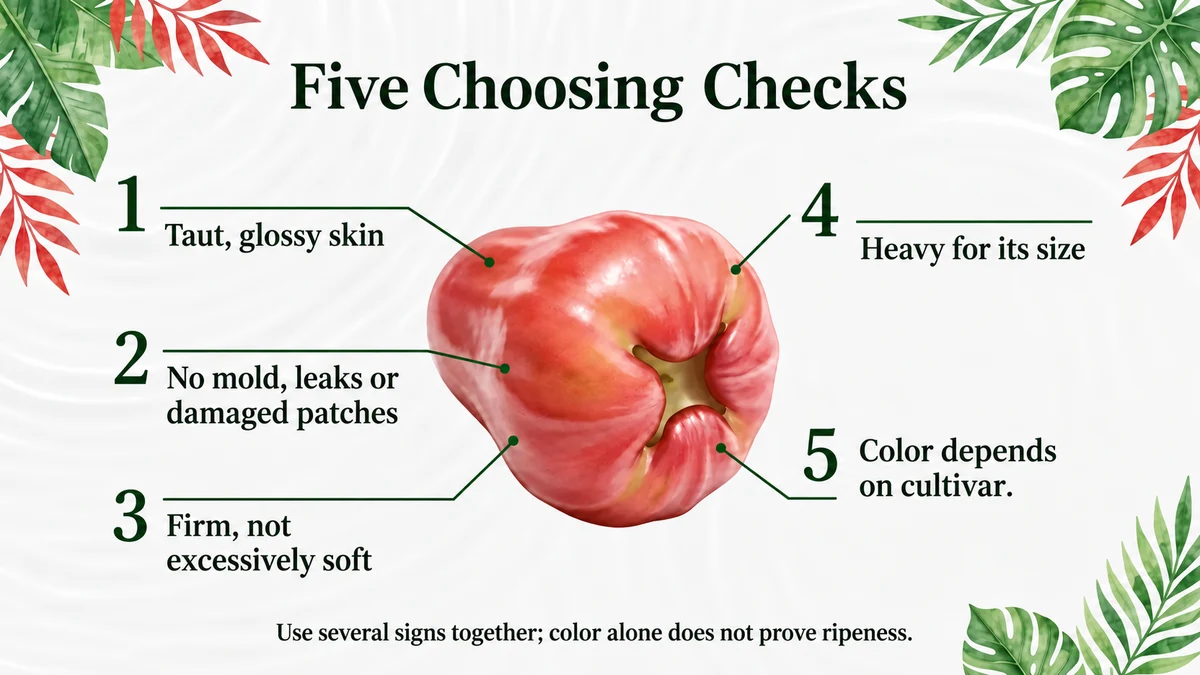
Check several features together.
- Taut, glossy skin: choose smooth fruit; avoid shrivelling and marked wrinkles.
- Condition: avoid mold, spreading dark patches, leaks and damaged areas.
- Firmness: fruit should feel firm with light handling, rather than excessively soft.
- Weight: choose fruit that feels relatively heavy for its size.
- Color depends on the cultivar: ripe fruit may be red, pink or white. Use color alongside other observations.
These practical signs are useful guides, not a test that guarantees flavor or freshness. Consider them together.
Three Steps to Wash and Cut Wax Apple
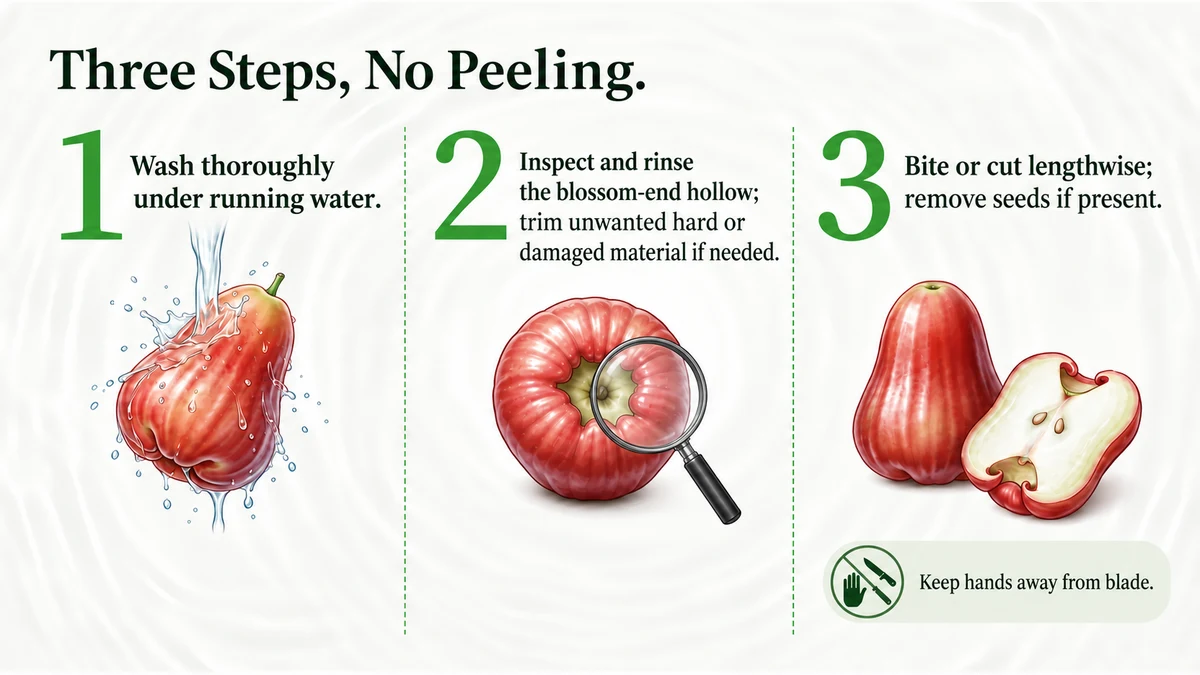
Preparation is simple compared with peeling pineapple, pomelo, orange or mandarin. You can leave the skin on.
- Wash the surface thoroughly under running water and dry it. Take care because the skin will be eaten.
- Inspect the hollow and persistent calyx at the blossom end. Rinse out dirt and trim any unwanted hard or damaged material if needed.
- Eat whole, halve lengthwise or cut into wedges. Remove seeds if present before eating.
Lengthwise wedges are convenient for bite-sized portions. Use a stable board and keep fingers away from the blade.
Serving Ideas to Try in Vietnam
1. Eat It Plain, Lightly Chilled
After washing, eat it whole or in pieces. Chilling can make it pleasantly refreshing, though it does not guarantee greater sweetness.
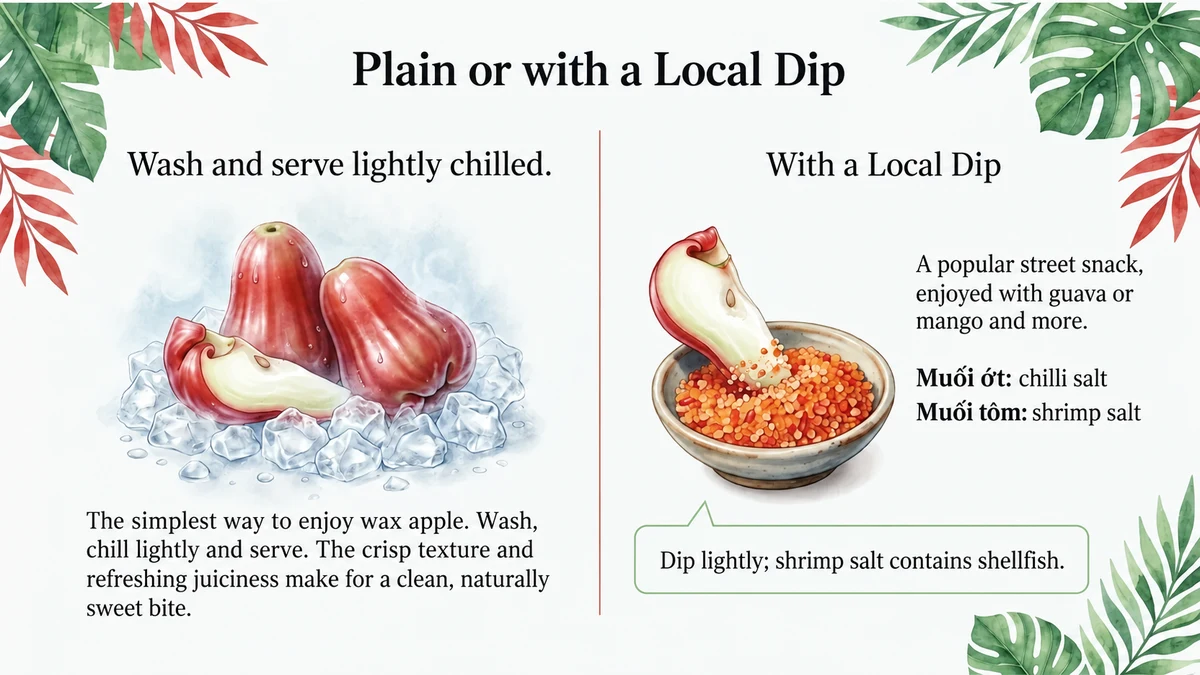
2. Try Chilli Salt or Shrimp Salt
Wax apple is often enjoyed with muối ớt, chilli salt, or muối tôm, shrimp salt, much like guava or green mango. Dip lightly, or toss sliced fruit with seasoning and let it stand briefly. Shrimp salt contains shellfish; choose a suitable alternative if needed.
3. Gỏi Mận: Wax Apple Salad
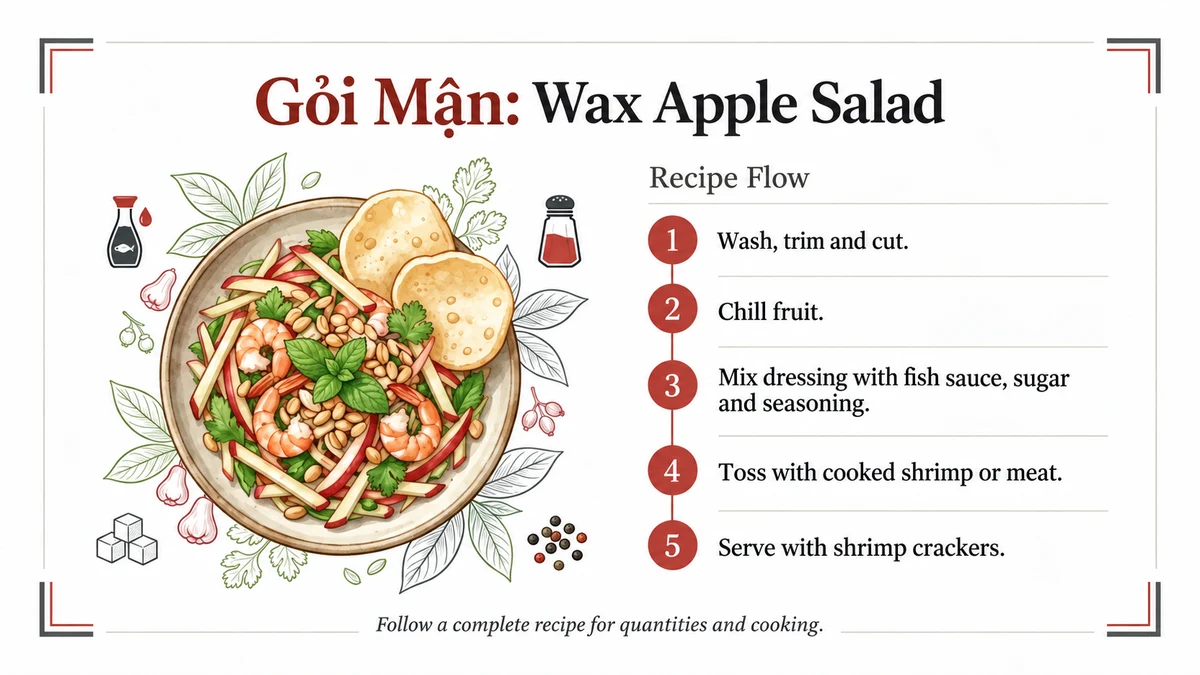
Wax apple salad is associated with Mekong Delta cooking and may also be called gỏi roi miền Tây. Wash, trim, cut and chill the fruit. Some recipes use a brief light-salt-water soak. Toss with a dressing based on fish sauce, sugar, salt and pepper, and add cooked shrimp or meat. Shrimp crackers, bánh phồng tôm, are a familiar accompaniment. Follow a complete recipe for quantities and cooking; use fully cooked seafood or meat.
Storage: Refrigerate and Eat Soon
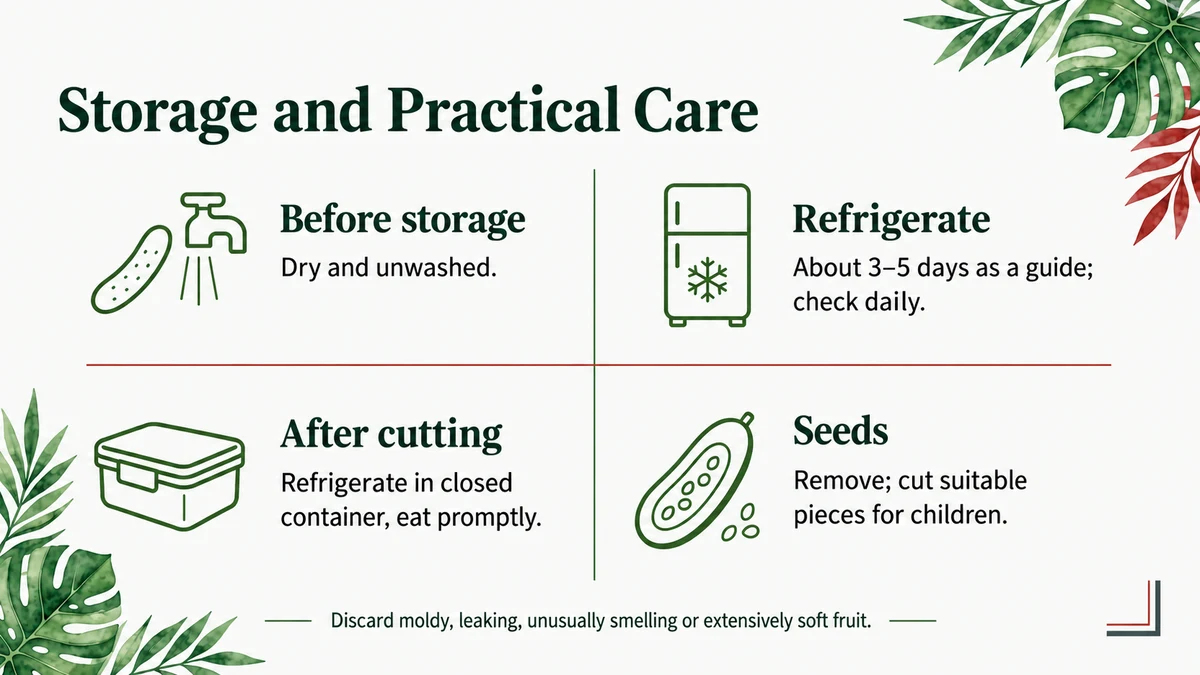
- Before storage: keep fruit dry and unwashed; wash just before eating.
- Refrigeration: store in a suitable bag or container and aim to eat within about 3–5 days. This is a household guide, not a guarantee; condition at purchase and refrigerator conditions matter.
- After cutting: refrigerate in a closed container and eat the same day when possible. Discard fruit with mold, unusual odor, leaks or extensive softening.
Seeds and Practical Precautions
Wash the skin and blossom-end hollow thoroughly under running water before eating.
Remove any seeds. For young children, cut the fruit into suitable pieces and check that seeds and hard material have been removed. Supervise eating.
Can You Bring Fresh Wax Apple into Japan?
Japan’s Plant Protection Station traveller list states that fresh wax apple from Vietnam cannot be brought into Japan. This concerns travellers’ baggage; commercial cargo has separate conditions.
Wax apple is also grown in Japan, including Okinawa. Domestic fruit may be available seasonally. The baggage restriction does not establish a blanket statement about all commercial imports.

Rules can change. Check the official Plant Protection Station information before travelling.
The Author’s Tasting Notes
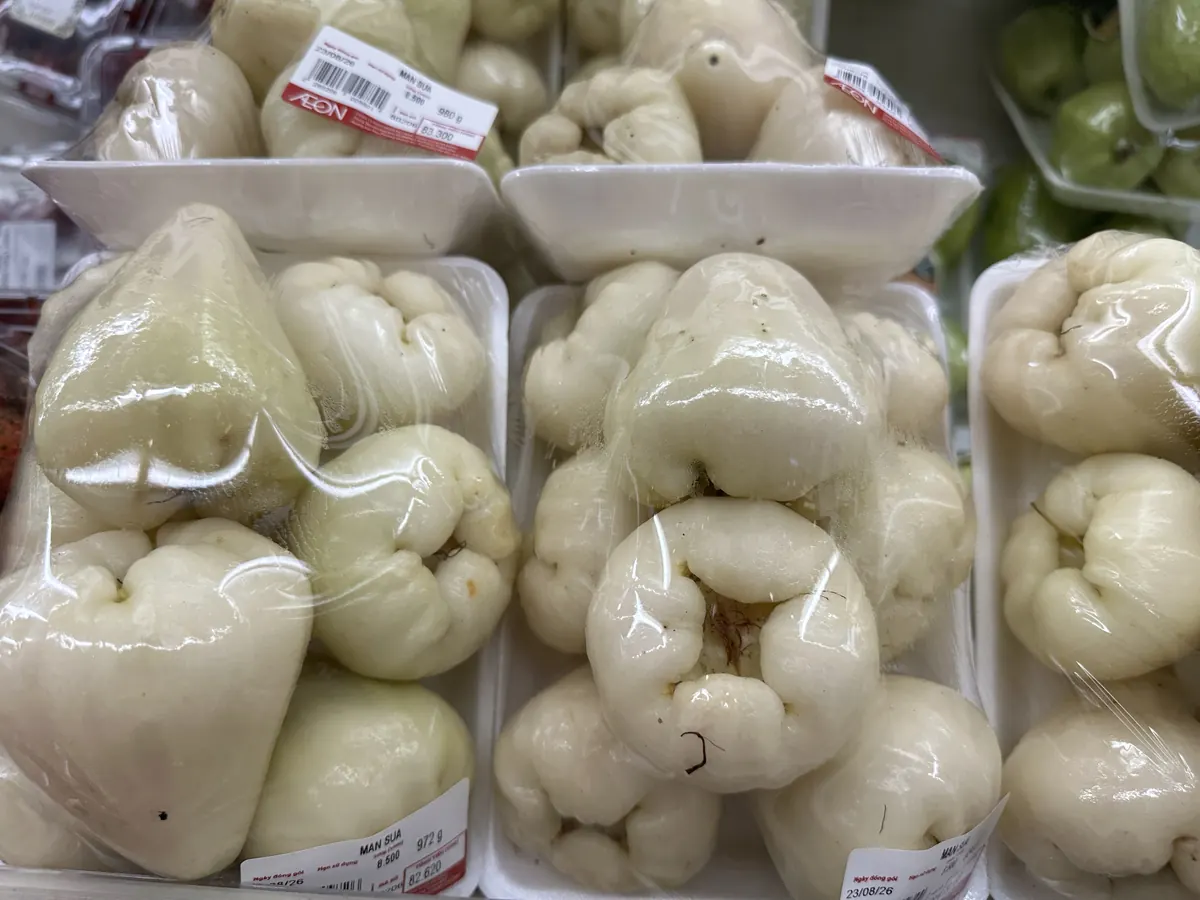
Purchase record
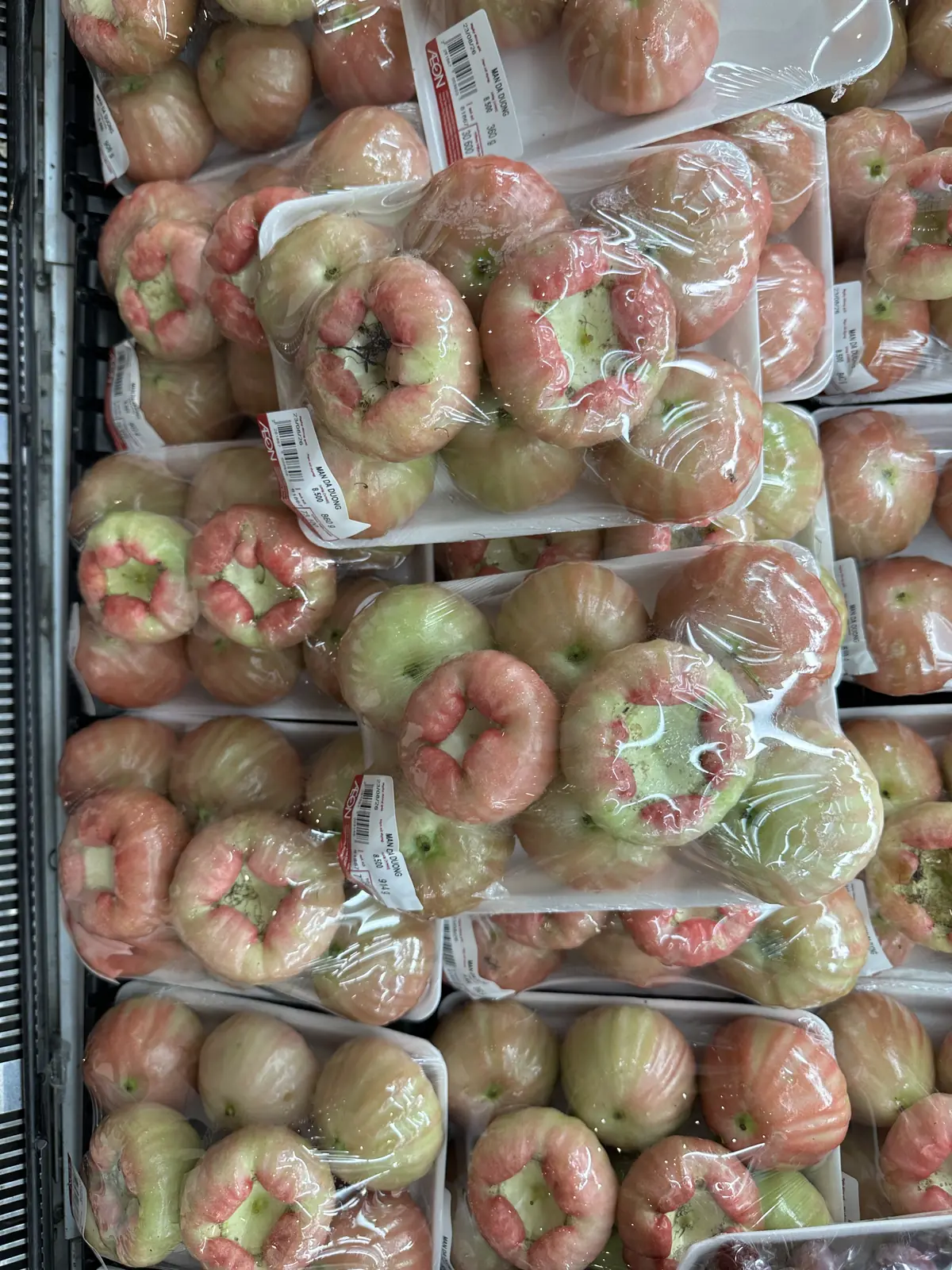
Shop: AEON supermarket. Price: VND 85,000 per kg; the original note gives an approximate JPY 510 equivalent.
Tasting impression
Crisp and refreshing, with plenty of water.
This purchase was slightly above the retailer reference range cited earlier. Cultivar, grade, packaging and sales channel can all affect price. The purchase note is an individual example, not a current quote; its yen conversion is the original approximate figure.
Frequently Asked Questions
Can You Buy It All Year?
It is available for much of the year in areas using managed flowering. Harvest timing differs by cultivar and locality; spring to early summer is often described as a main period.
Do You Need to Peel It?
No. Wash it thoroughly, then eat whole or cut into pieces with the skin on.
Should You Eat the Seeds?
Remove seeds if present. When serving young children, check for seeds and hard material and cut into suitable pieces.
Can You Take It to Japan?
The traveller list prohibits fresh wax apple from Vietnam. Enjoy it during your stay. Fruit grown domestically in Japan may be available through Japanese sellers.
Key Practical Points
Wax apple is an easy fruit to enjoy: it needs careful washing and checking, but no peeling.
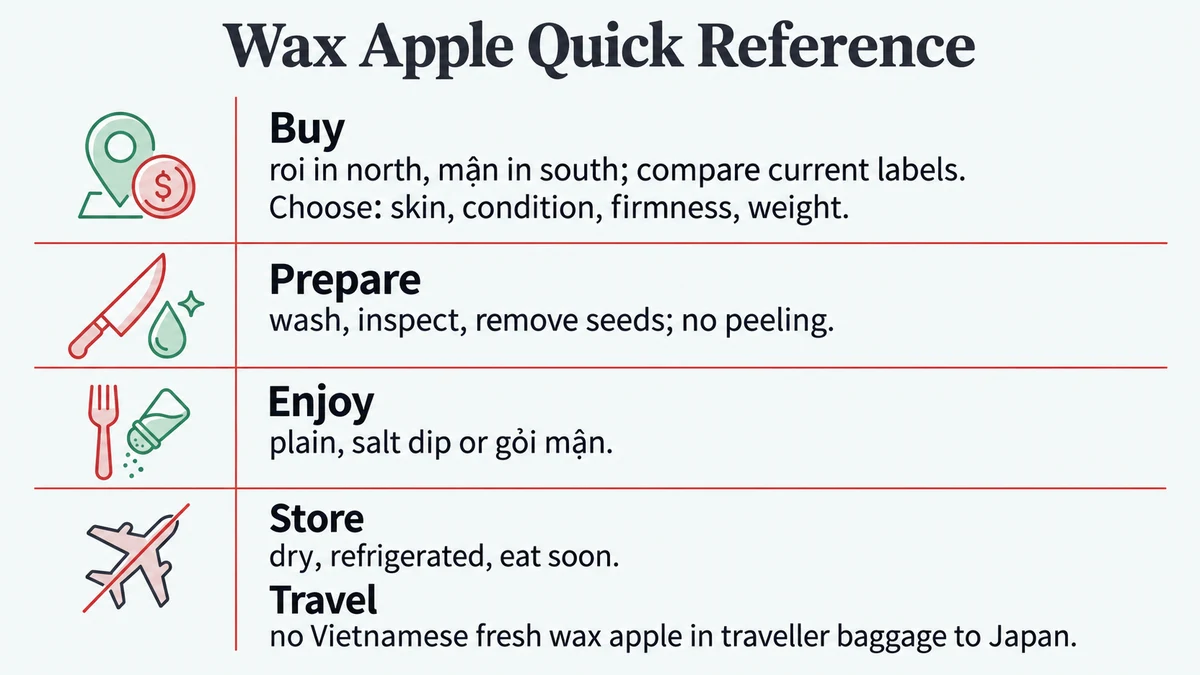
- Choose: check taut skin, condition, firmness and weight. Color varies by cultivar.
- Prepare: wash thoroughly, inspect the blossom-end hollow, and eat whole or in pieces after removing seeds.
- Enjoy: plain and chilled, with chilli or shrimp salt, or in gỏi mận salad.
- Take care: wash well and remove seeds; cut suitable pieces for young children.
- Store: keep dry and unwashed in the refrigerator; about 3–5 days is a guide. Refrigerate cut fruit and eat it promptly.
- Travel: fresh Vietnamese wax apple cannot be brought into Japan in travellers’ baggage. Japanese domestic fruit is a separate option.
When you see wax apple in a market or supermarket, choose a firm fruit in good condition, wash it carefully and try its crisp flesh with the skin on.
Learn More About Wax Apple
- Botany, nutrition and varieties: Wax Apple Guide: Taste, Nutrition, Seasons and Varieties
- Names and journeys from Southeast Asia to Taiwan and Okinawa: Wax Apple History and Stories: Names, Growers and Sea Journeys
- More fruit to enjoy in Vietnam: 15 Vietnamese Fruits
References
- Tropicataneca: Wax apple
- Kingfoodmart: Mận An Phước price reference (2026)
- Dũng Hà: Wax apple serving ideas
- Khánh Hòa newspaper: Gỏi mận
- Vietnam agricultural newspaper: Mận An Phước on Tân Lộc
- Japan Plant Protection Station: Vietnam traveller restrictions
- Mynavi Agriculture: Wax apple cultivation in Okinawa
Japan Plant Protection Station: Vietnam traveller restrictions — Reviewed 11 October 2026. Fresh wax apple from Vietnam cannot be brought into Japan in travellers’ baggage.