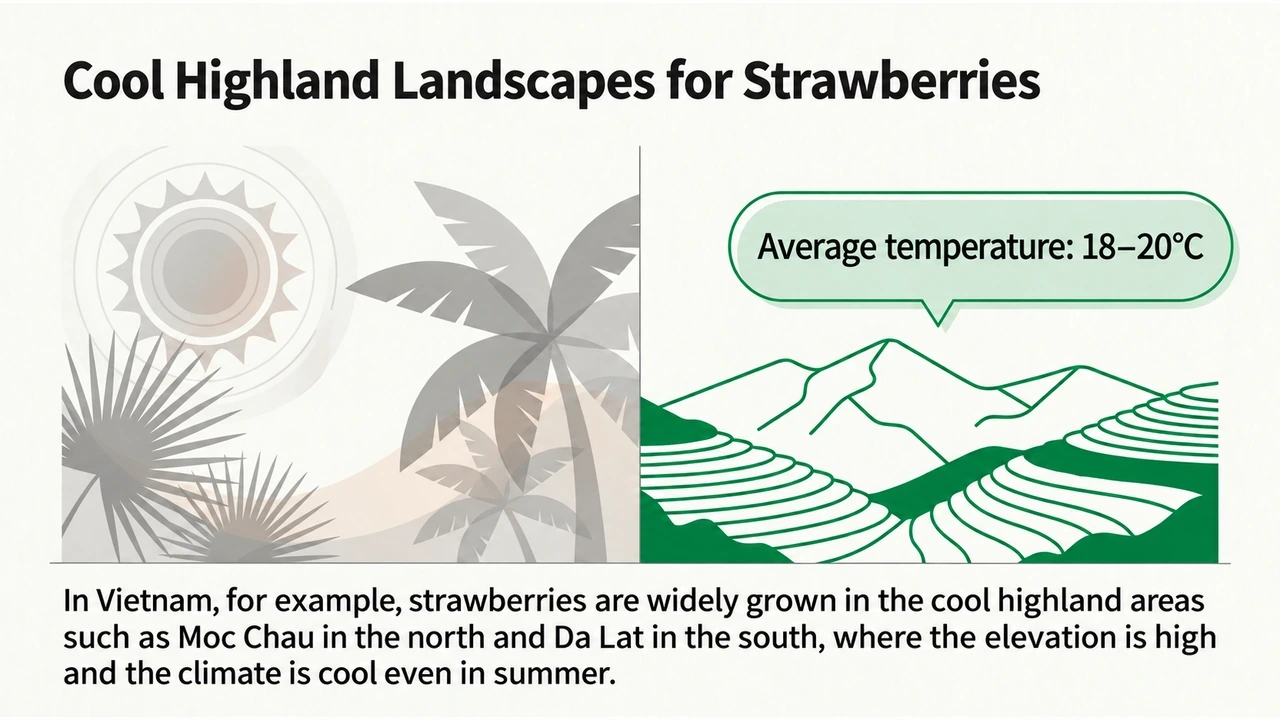
Vietnam is often associated with a tropical climate, yet strawberries are grown in cooler highland areas. Da Lat is the best-known example, while Moc Chau in northern Vietnam also has strawberry farms and harvest experiences.
A strawberry is familiar on the plate but unusual in botanical terms. The red flesh is not the botanical fruit itself. The small dots on its surface are the actual fruits. This guide explains the plant’s structure, the origin of the modern cultivated strawberry, nutrition, Vietnamese growing regions and the information to check on a retail pack.
What you will learn
- what the red flesh and surface dots really are
- where the modern cultivated strawberry originated
- why Da Lat and Moc Chau are suitable examples of Vietnamese growing regions
- key nutrients per 100 g of edible raw fruit
- whether strawberries ripen after harvest
- how to separate origin, cultivar and price information
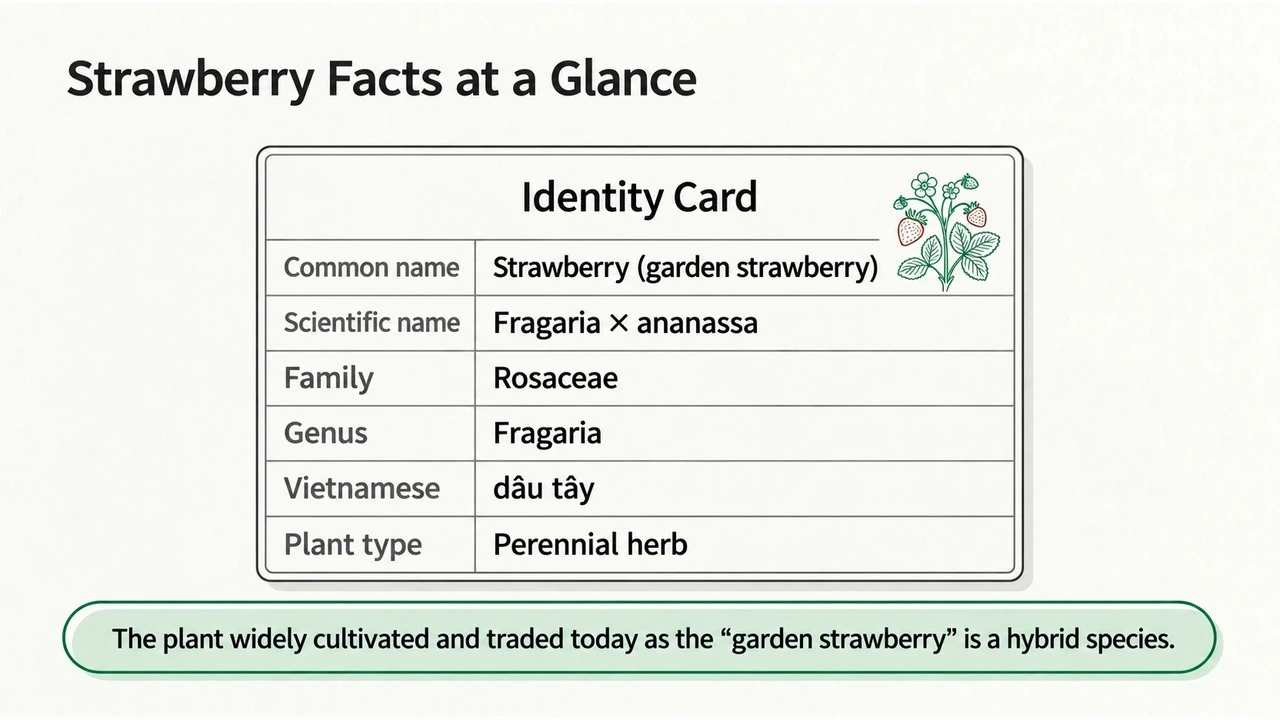
Strawberry facts at a glance
| Item | Details |
|---|---|
| Common name | Strawberry; garden strawberry |
| Vietnamese name | dâu tây |
| Family and genus | Rosaceae; Fragaria |
| Scientific name | Fragaria × ananassa |
| Origin of the cultivated species | Developed in eighteenth-century Europe from North and South American species |
| Growth habit | Perennial herb that produces daughter plants on runners |
| Edible red part | Enlarged receptacle; the surface achenes are the true fruits |
| Nutrition reference | Per 100 g edible raw fruit: vitamin C 62 mg; dietary fiber 1.4 g |
| Vietnamese growing regions discussed here | Da Lat and Moc Chau |
This article focuses on the garden strawberry now widely cultivated and sold. Not every wild strawberry species arose from the same hybridization.
What kind of plant is a strawberry?
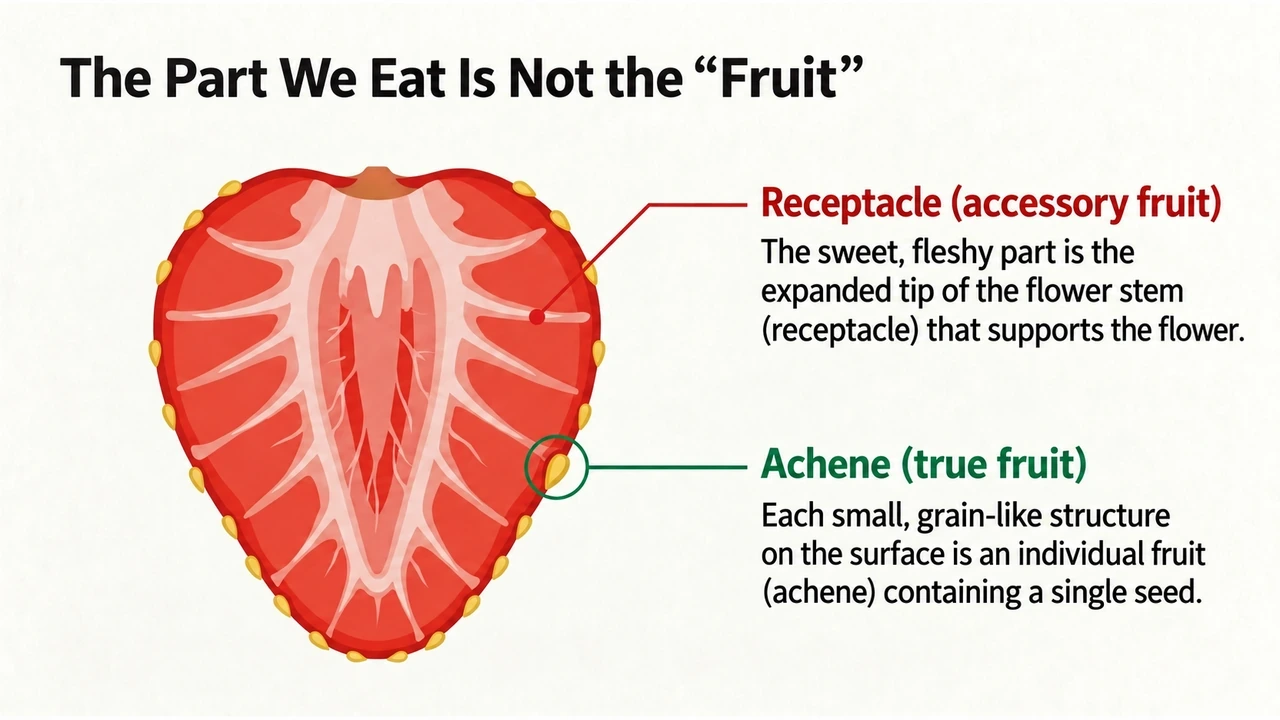
The surface dots are small fruits containing seeds
The dots on a strawberry are not bare seeds. Each one is an achene, a small dry fruit that contains a seed.
The sweet, juicy red tissue is an enlarged receptacle, the part of the flower that supported the ovaries. Because tissue outside the ovary becomes the part we eat, a strawberry is often described as an accessory fruit. It is also an aggregate fruit because many small fruits are arranged together. These terms describe different aspects of the same structure. See Japan’s Ministry of Agriculture, Forestry and Fisheries, “Strawberry facts,” in Japanese.
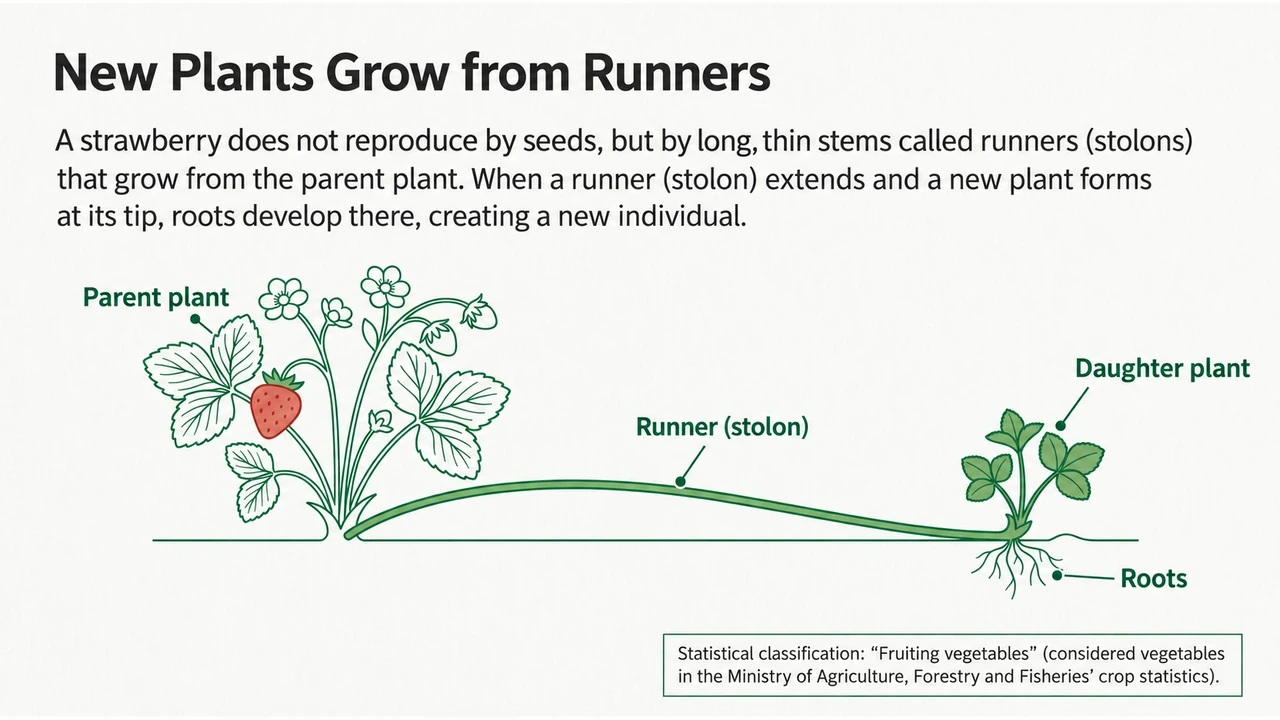
Runners produce daughter plants
A strawberry is a perennial herb, not a tree. The plant sends out slender stems called runners. Daughter plants form along them, take root and develop into new plants. Growers use this trait to produce planting material. University of Minnesota: How strawberry plants grow
Japanese agricultural statistics classify strawberries as vegetables, while consumers commonly treat them as fruit. This is why they are sometimes called “fruit vegetables” in Japan. Botanical structure, statistical classification and culinary use answer different questions.
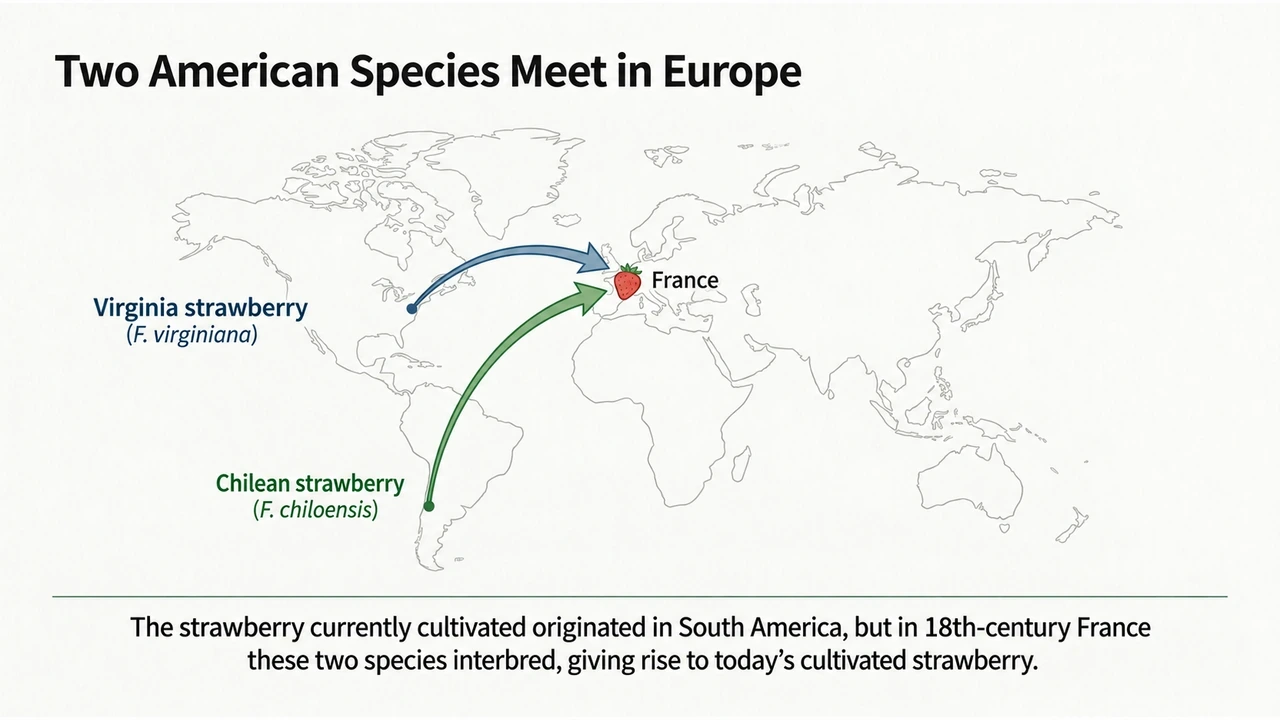
Strawberry origins: two American species met in Europe
The modern garden strawberry developed in eighteenth-century Europe from hybridization between the Virginia strawberry (Fragaria virginiana), native to eastern North America, and the Chilean strawberry (Fragaria chiloensis), native to South America.
It helps to separate the ancestral ranges from the place where the cultivated hybrid arose. Its ancestors came from North and South America; the cultivated form emerged after they were brought together in Europe. The Japanese source follows the Tochigi Prefecture Strawberry Research Institute’s history, in Japanese, which describes its formation in France.
Breeding later produced cultivars with different balances of sweetness, acidity, aroma, firmness and transportability. A country name alone does not determine flavor or texture. UC Davis Strawberry Breeding Program: Fruit Quality
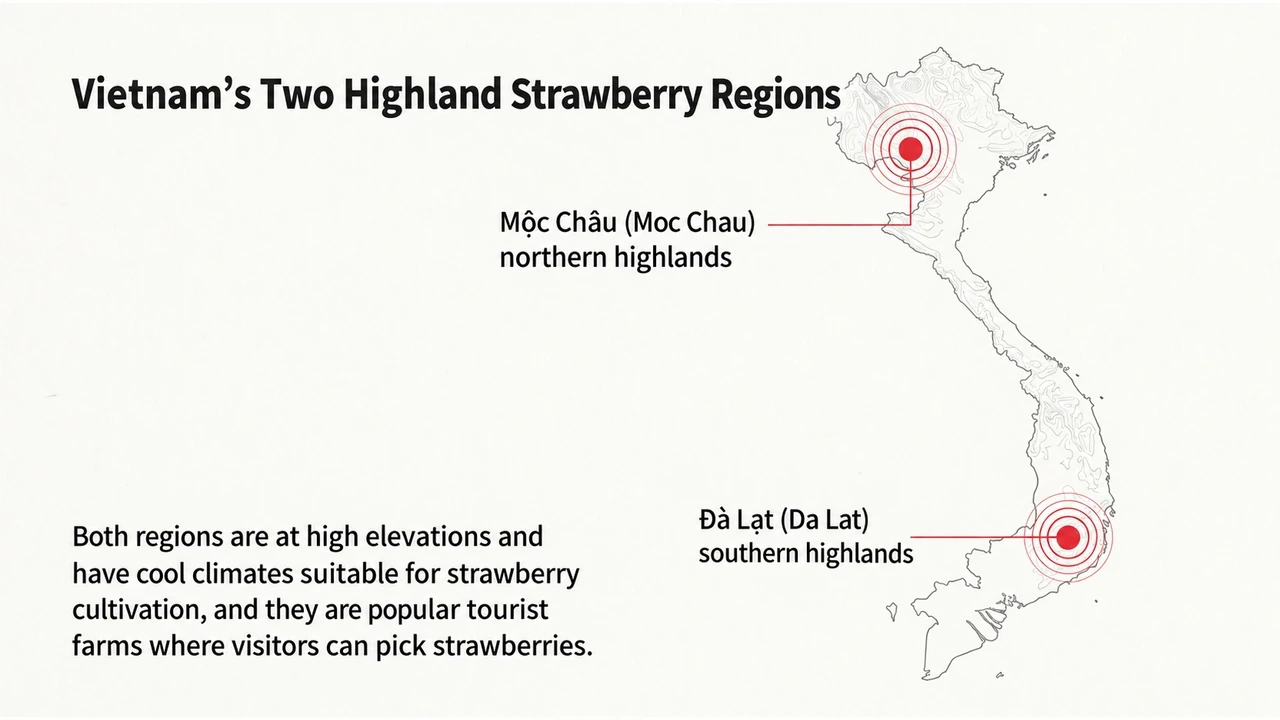
Strawberry-growing regions in Vietnam: Da Lat and Moc Chau
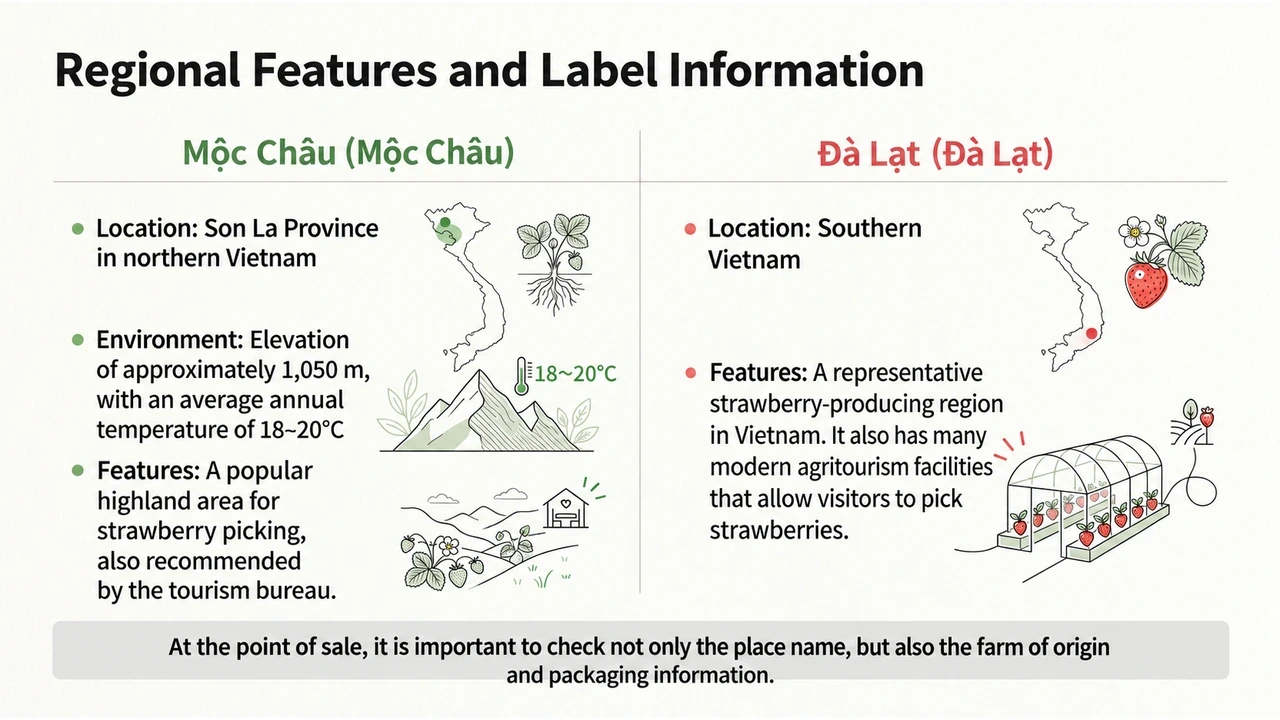
Da Lat: a highland region with farm visits
Da Lat has strawberry farms, and Vietnam’s official tourism site presents a farm where visitors can harvest ripe fruit. Strawberries are both a commercial crop and part of the region’s agricultural tourism. Vietnam Tourism: Farmer for a day in Da Lat Strawberry Garden
The same tourism authority also describes protected strawberry cultivation in Da Lat. The regional name covers different farms, cultivars and production systems. Vietnam Tourism: Agrotourism in Dalat
Moc Chau: strawberry farms in northern Vietnam
Da Lat is not Vietnam’s only strawberry region. A Vietnam National Authority of Tourism article also describes strawberry farms and harvest experiences on the Moc Chau plateau. Moc Chau plateau, a refreshing retreat
An official district profile published in 2018 describes the plateau’s average elevation as about 1,050 m and its annual average temperature as roughly 18–20°C. Those conditions help explain why this northern highland differs from Vietnam’s warmer lowlands. Moc Chau district profile, in Vietnamese
| Region | Names you may see | Details worth checking |
|---|---|---|
| Da Lat | Đà Lạt / Da Lat | Farm, location, cultivar and packing information |
| Moc Chau | Mộc Châu / Moc Chau | Farm, location, cultivar and packing information |
A regional name is only a starting point. The farm and cultivar make future comparisons much more useful.
Strawberry nutrition per 100 g
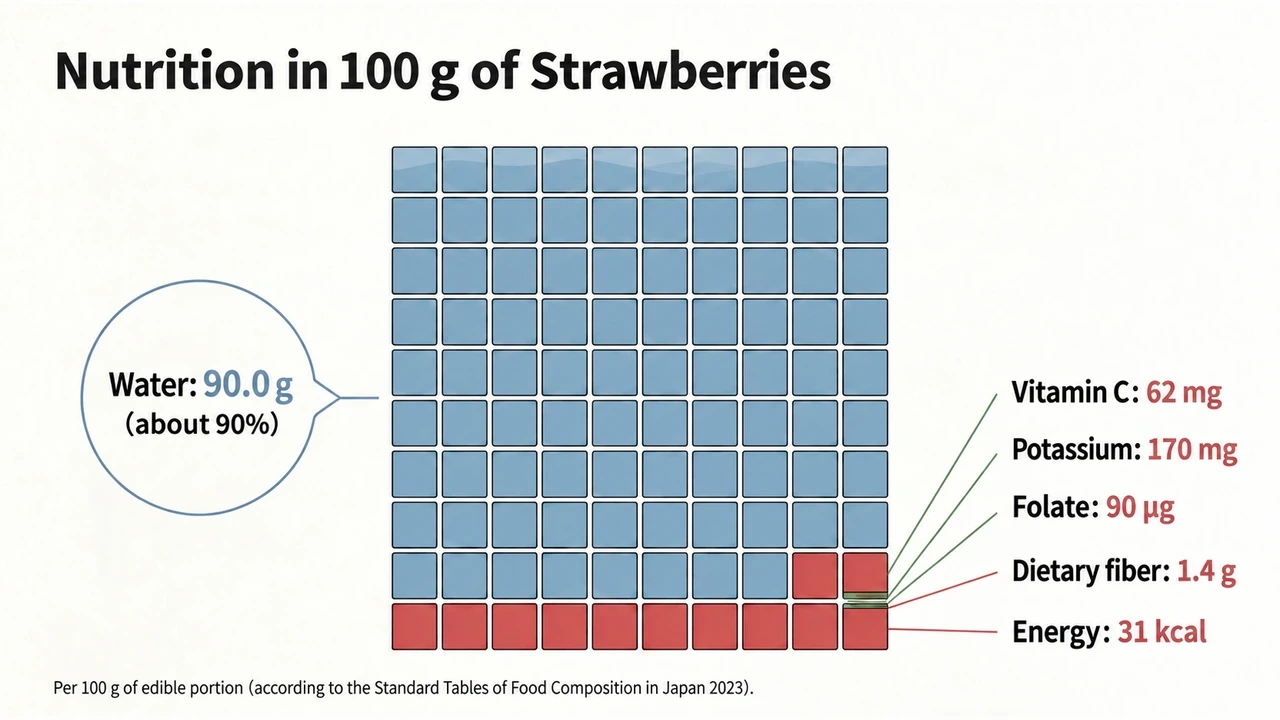
Japan’s MEXT food composition database gives the following values for 100 g of edible raw strawberry.
| Component | Per 100 g edible portion |
|---|---|
| Energy | 31 kcal |
| Water | 90.0 g |
| Carbohydrate | 8.5 g |
| Dietary fiber | 1.4 g |
| Potassium | 170 mg |
| Folate | 90 μg |
| Vitamin C | 62 mg |
Source: MEXT Food Composition Database, strawberries, raw, Standard Tables of Food Composition in Japan, eighth edition, 2023 supplement.
Strawberries are about 90% water and contain vitamin C, folate and dietary fiber. These values refer to the edible portion, not to one berry or one retail pack. They are not a laboratory analysis of a specific Vietnamese cultivar; actual composition varies with cultivar and growing conditions.
Do strawberries ripen after harvest?
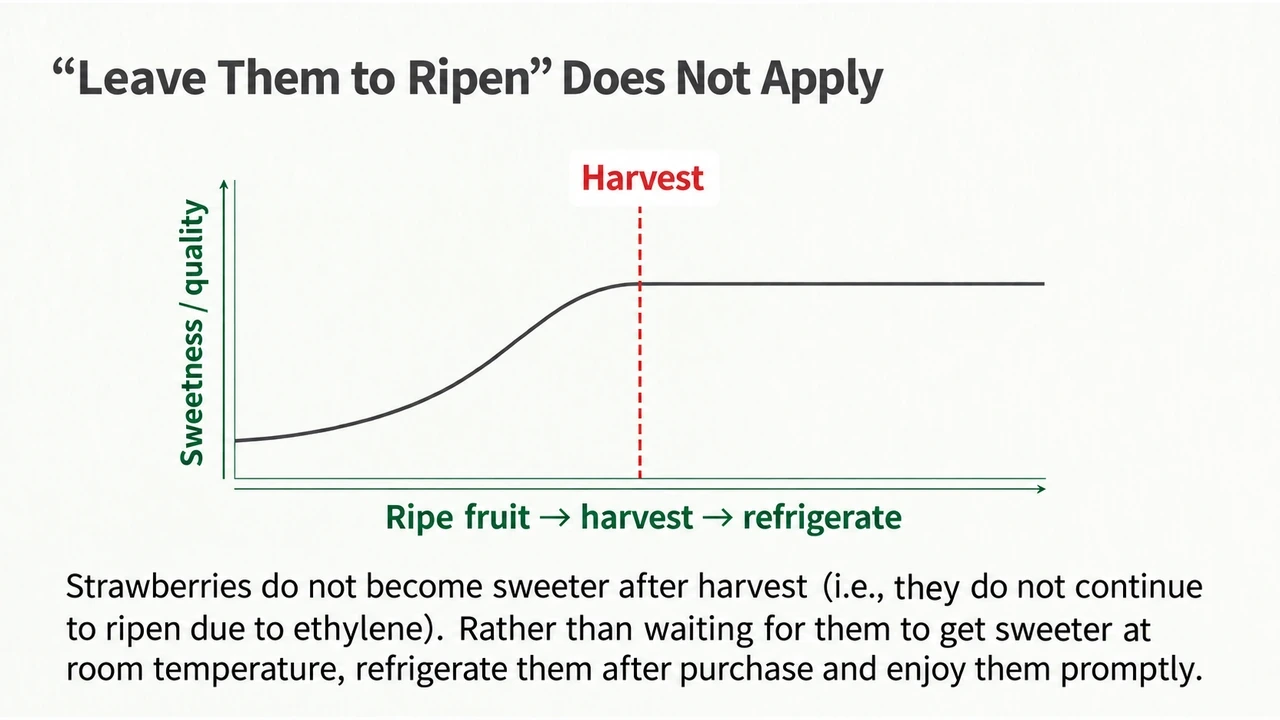
Do not expect strawberries to become sweeter through postharvest ripening. UC Davis explains that ethylene does not stimulate ripening and that fruit must be harvested at or near the desired stage of ripeness. UC Davis Postharvest Research and Extension Center: Strawberry
After purchase, refrigerate them and eat them while their quality is good instead of leaving them at room temperature to “ripen.” Storage life depends on temperature and damage, so it cannot be assigned to a country of origin alone.
Buying strawberries in Vietnam: read origin, cultivar and price separately
Appearance cannot prove the country of origin
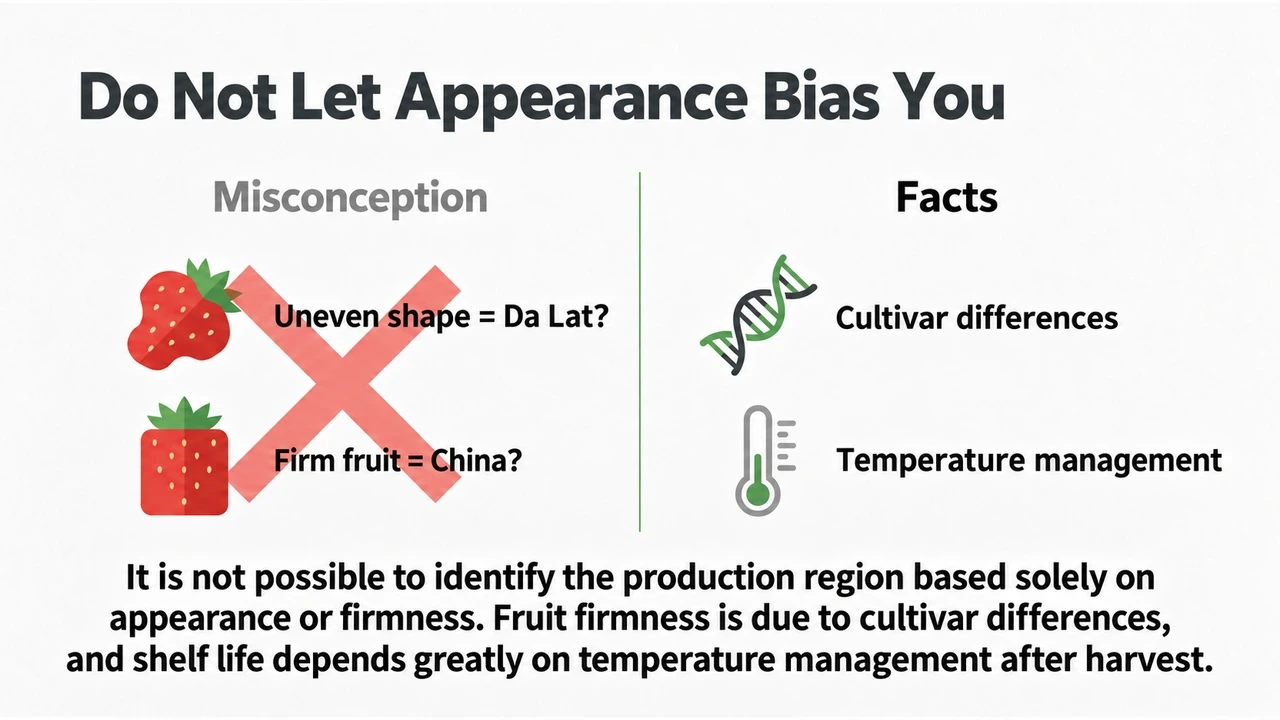
Statements such as “uneven fruit means Da Lat” or “large, firm berries must be Chinese” are not reliable ways to establish origin. Firmness varies by cultivar, while shelf life also depends on temperature management. Appearance helps you assess condition, but origin should come from labels and supplier information. UC Davis: Fruit Quality
A cultivar’s background is different from where the pack was grown
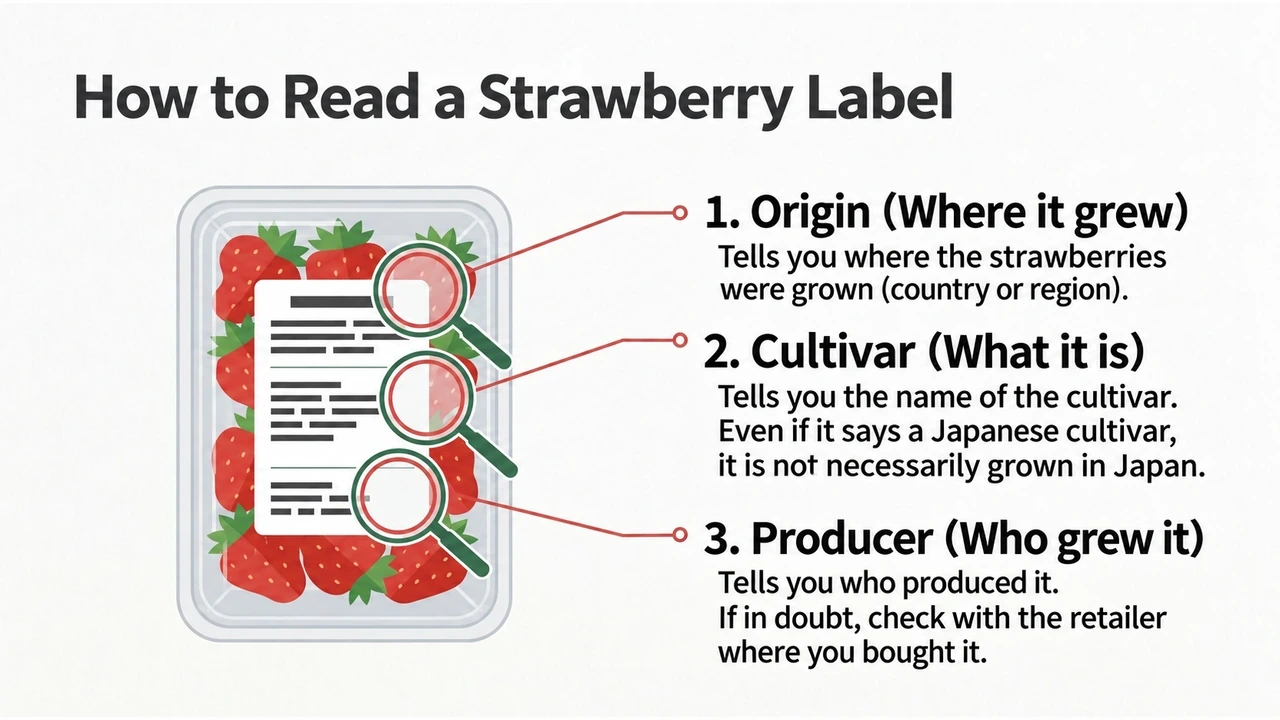
Labels such as “Japanese variety” or “Korean variety” do not necessarily mean the fruit was grown in Japan or Korea. Ask three separate questions: Where was it grown? What is the cultivar? Who produced or packed it?
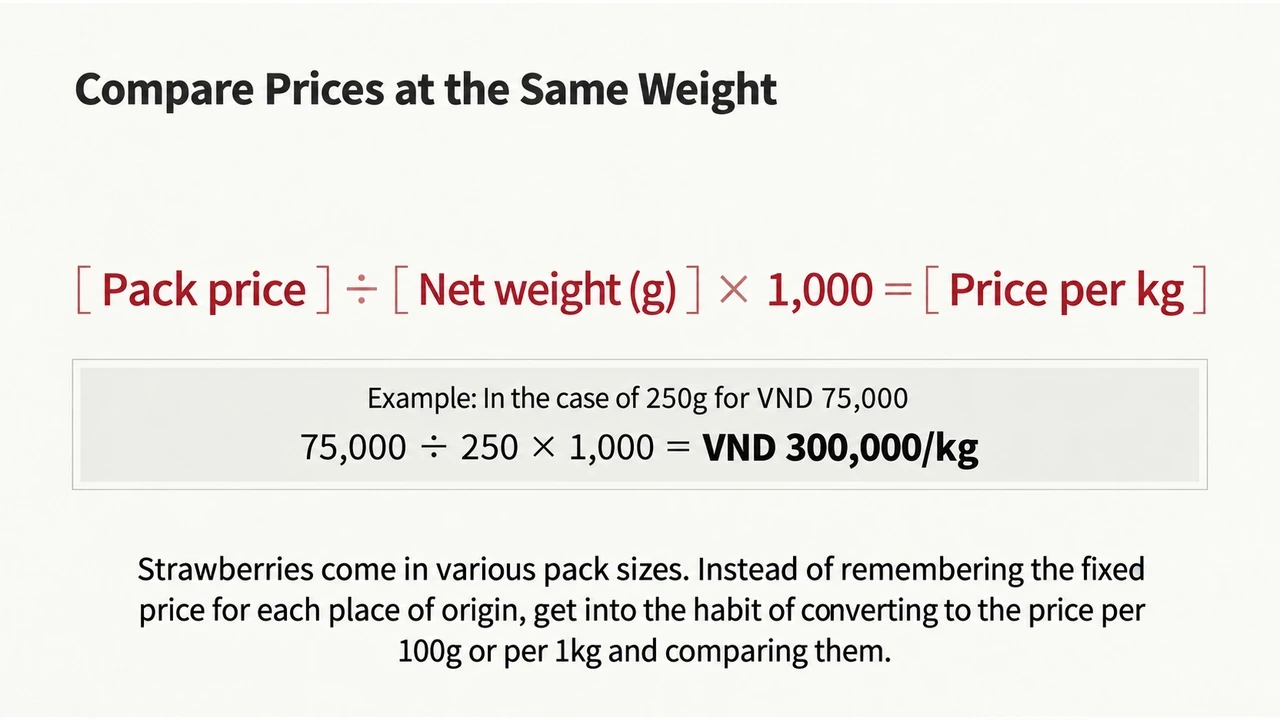
Compare prices at the same weight
Prices change with season, shop, cultivar, berry grade and packaging. Convert packs to the same unit instead of memorizing a fixed price by region.
To calculate a per-kilogram price, use:
pack price ÷ net weight in grams × 1,000
For example, a 250 g pack priced at VND 75,000 equals VND 300,000 per kg. This is an illustration of the method, not a reported retail price.
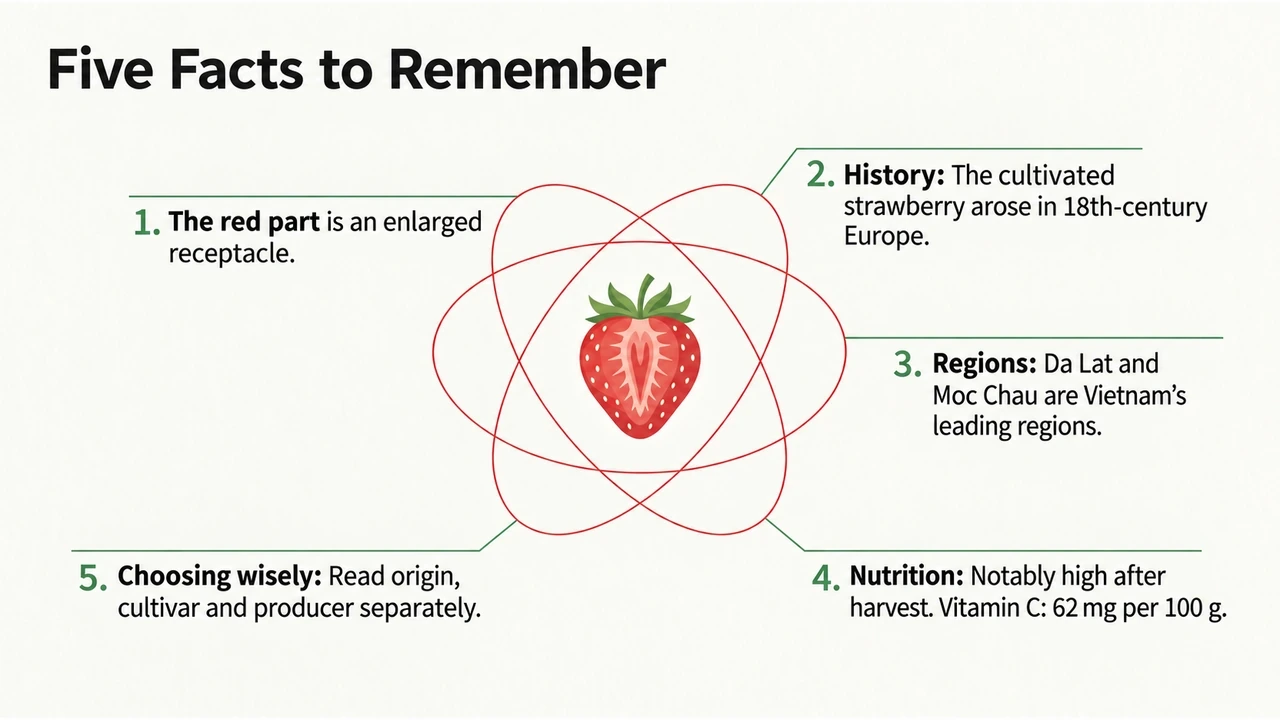
Five points to remember
- The red edible part is mainly an enlarged receptacle; each surface achene is a true fruit containing a seed.
- The modern garden strawberry arose from North and South American species brought together in eighteenth-century Europe.
- Da Lat and Moc Chau are two Vietnamese highland regions associated with strawberry production.
- MEXT lists 62 mg of vitamin C per 100 g of edible raw strawberry, and the fruit should not be left out in the hope that it will become sweeter.
- Check origin on the label, keep cultivar and origin separate, and compare prices at the same weight.
More in the Strawberry Trilogy
- The History and Story of Strawberries: Origins, Breeding and a Global Journey
- How to Eat Strawberries in Vietnam: Choosing, Washing, Storing and Farm Visits
Sources and editorial notes
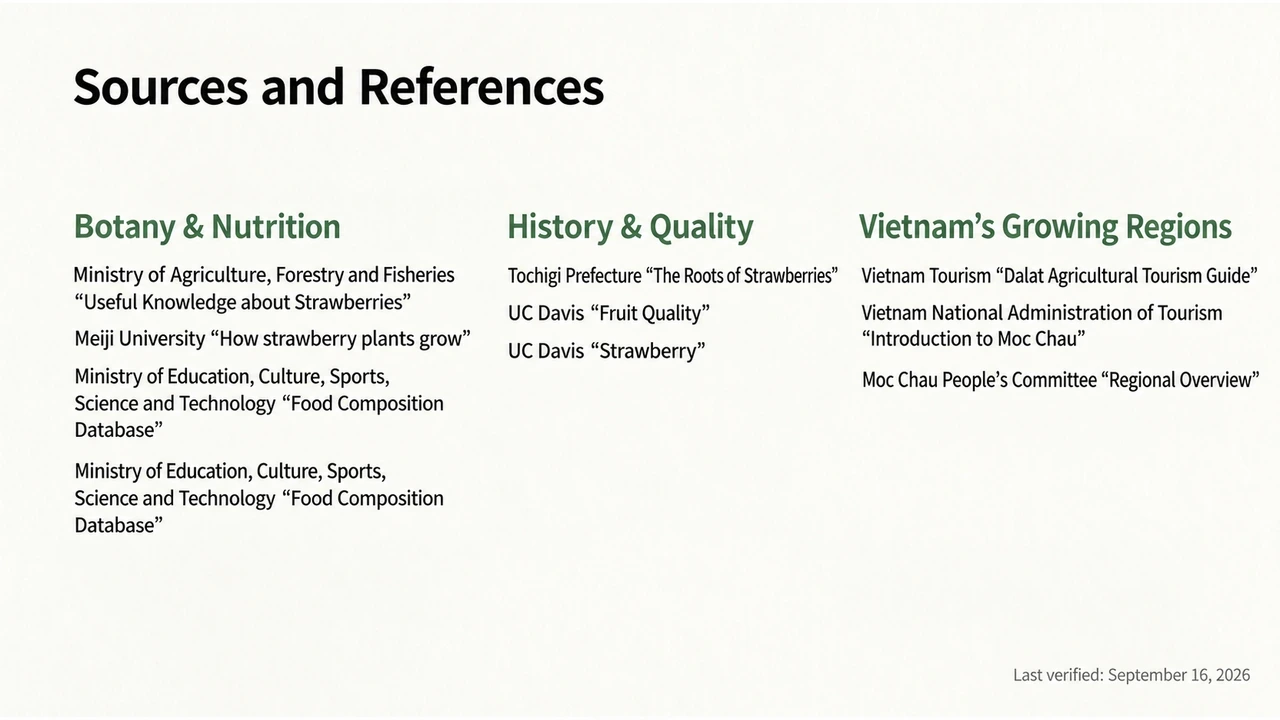
This English edition is based on Japanese v05 dated October 25, 2026. Links appear beside the claims they support. The nutrition database and current Chimi Farm details used elsewhere in the series were rechecked on that date. No tasting record or photograph has been invented or added.