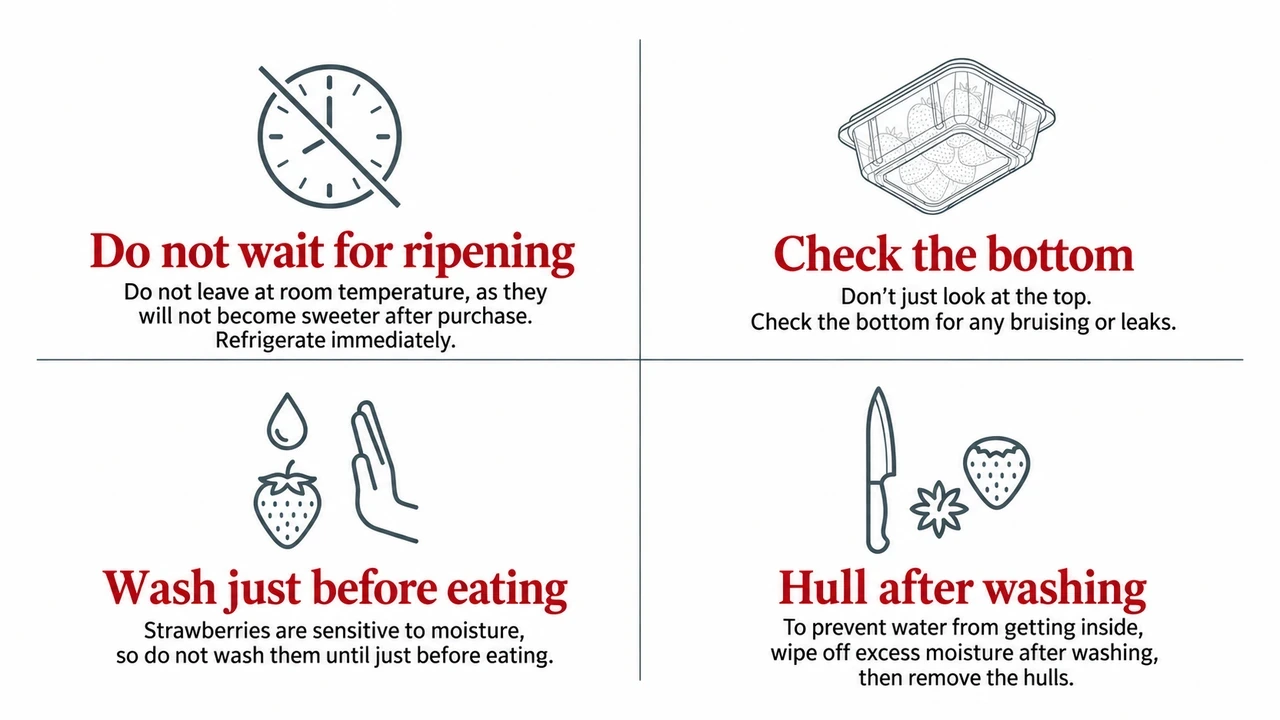
After buying strawberries in Vietnam, refrigerate them promptly and eat them while their quality is good. Do not leave them at room temperature expecting them to become sweeter; strawberries are not fruit that develop extra sweetness through postharvest ripening.
This guide covers the steps from reading a retail label to choosing, washing, cutting, refrigerating and freezing the fruit. It also introduces a Hanoi-area farm and explains what to check before taking fresh strawberries to Japan.
Tasting record: Strawberries are currently out of season, so this draft does not yet include a tasting record. It will be added after an in-season purchase and tasting.
The short answer
- inspect the bottom of the pack for crushed fruit, leaks and mold
- wash only the portion you will eat, just before serving
- keep the caps on while washing, dry the berries, then hull them
- refrigerate unwashed berries with the caps attached
- freeze sound fruit before it begins to deteriorate
Quick guide: the order for washing, hulling and storing
| Question | Practical answer |
|---|---|
| Vietnamese name | dâu tây |
| Ripening after harvest | Do not expect extra sweetness; refrigerate after purchase |
| Choosing | Look for cultivar-appropriate color and avoid crushing, leaks and mold |
| When to wash | Just before eating, with the caps still attached |
| Basic order | Wash → dry → remove caps → serve whole or cut |
| Refrigerator | Store unwashed with caps attached in a clean container; aim for 4°C or below |
| Reference time | About 2–3 days refrigerated, adjusted for condition at purchase |
| Freezer | Wash sound fruit, dry it thoroughly, remove caps and freeze |
Storage times are references, not safety guarantees. Condition at purchase and temperature during transport matter.
Buying strawberries in Vietnam: check origin, cultivar and net weight
Da Lat and Moc Chau are Vietnamese strawberry-growing regions. At the shop, check:
- the country or region of production
- the producer or farm
- the cultivar name, if supplied
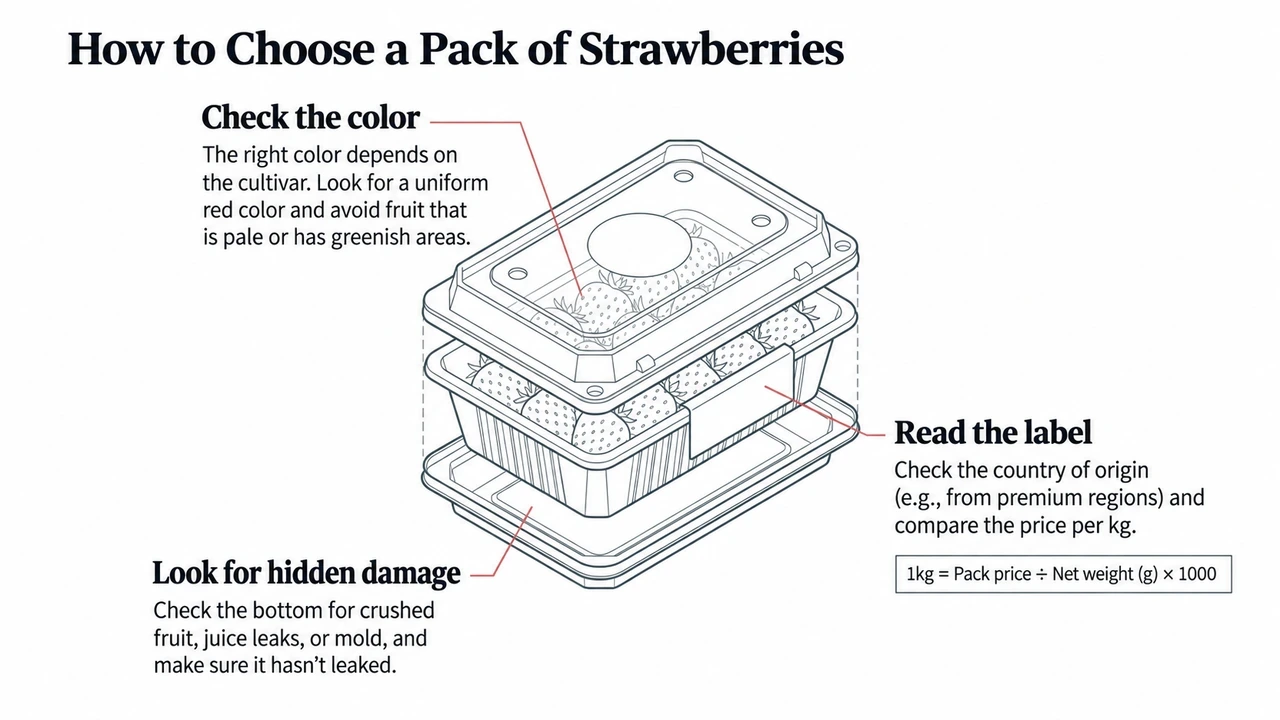
- the price and net weight
- whether you can keep the fruit cold and eat the quantity promptly
A label such as “Japanese variety” or “Korean variety” does not by itself identify where the fruit was grown. Terms such as “VIP” are also not cultivar names or grade specifications.
For a per-kilogram comparison, calculate pack price ÷ net weight in grams × 1,000. A hypothetical 250 g pack at VND 75,000 equals VND 300,000 per kg. This is an example of the calculation, not a recorded shop price.
How to choose strawberries: inspect more than the color
Separate ripeness from damage
For red cultivars, look for the coloring expected of that cultivar. White-fruited cultivars exist, so pale color does not always mean unripe. The angle of the green cap cannot prove how many days have passed since harvest.
Look through the top and bottom of the pack for crushed berries, juice leaks and mold. Aroma and color can guide you, but they do not guarantee sweetness. Strawberry quality reflects color, shape, firmness and the balance of sugars and acids. UC Davis: Strawberry
Do not infer origin from appearance or shelf life
Berry size and firmness vary by cultivar, and shelf life is affected by temperature management. A neat shape does not prove Chinese origin, and a long shelf life does not prove that preservatives were used. Read the label or ask the seller. UC Davis: Fruit Quality
Transport and washing: keep cool and wash just before eating
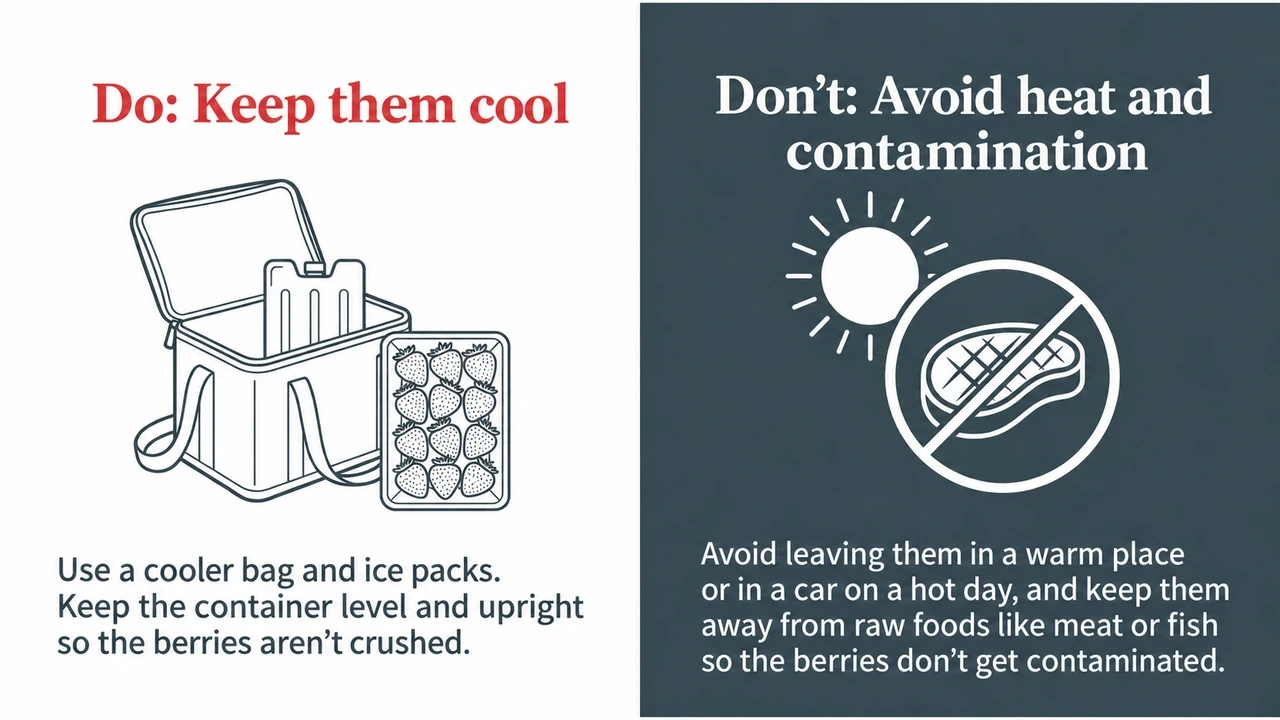
Refrigerate the fruit soon after shopping. In hot weather or after a farm visit, use an insulated bag with ice packs. Keep the container upright so the fruit is not crushed, and separate it from raw meat and fish.
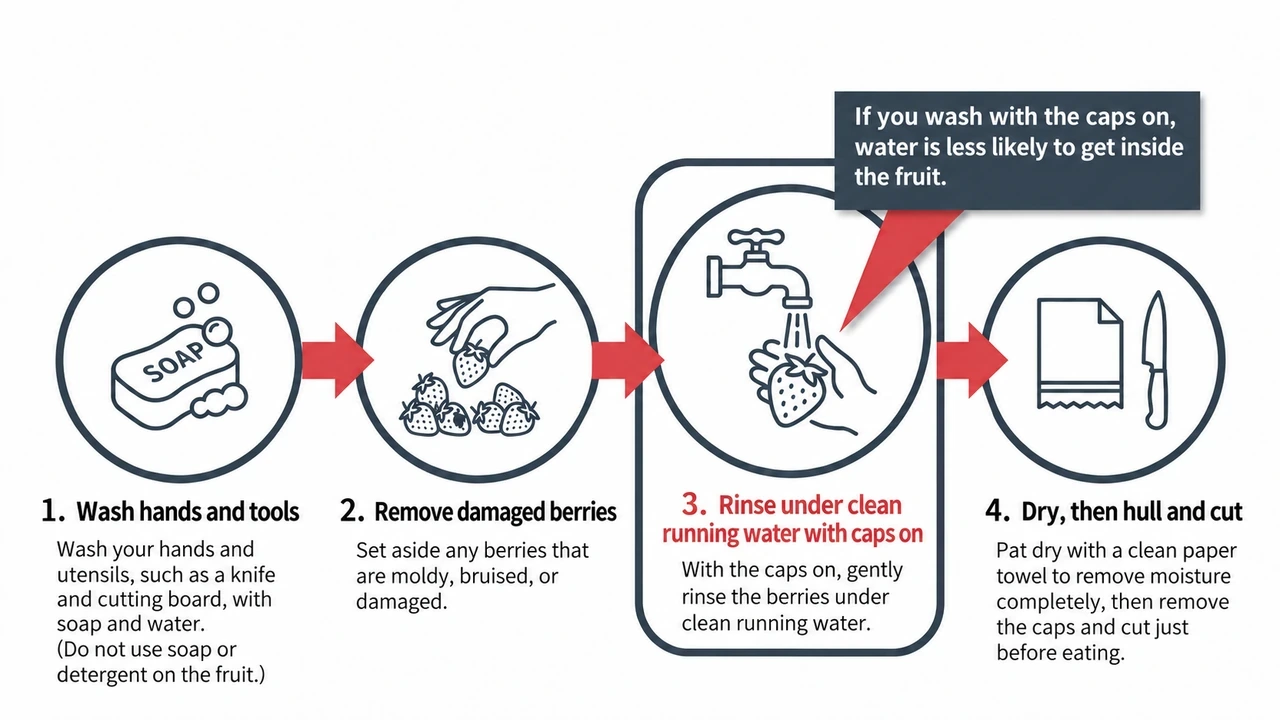
Five washing steps
- Wash your hands and prepare a clean knife, cutting board and container.
- Remove moldy or rotten fruit.
- With the caps still attached, rinse the berries gently under safe running water.
- Dry them with a clean cloth or paper towel.
- Remove the caps shallowly, then serve the fruit whole or cut.
Do not soak strawberries for a long time or wash them with soap or household detergent. Wash farm-picked berries before eating as well. University of Minnesota: Cottage food uses for your strawberry crop
Washing reduces surface soil and microbes but does not remove everything. Prevent recontamination from dirty tools or raw meat after washing. FDA: Selecting and Serving Produce Safely
Cutting and serving strawberries
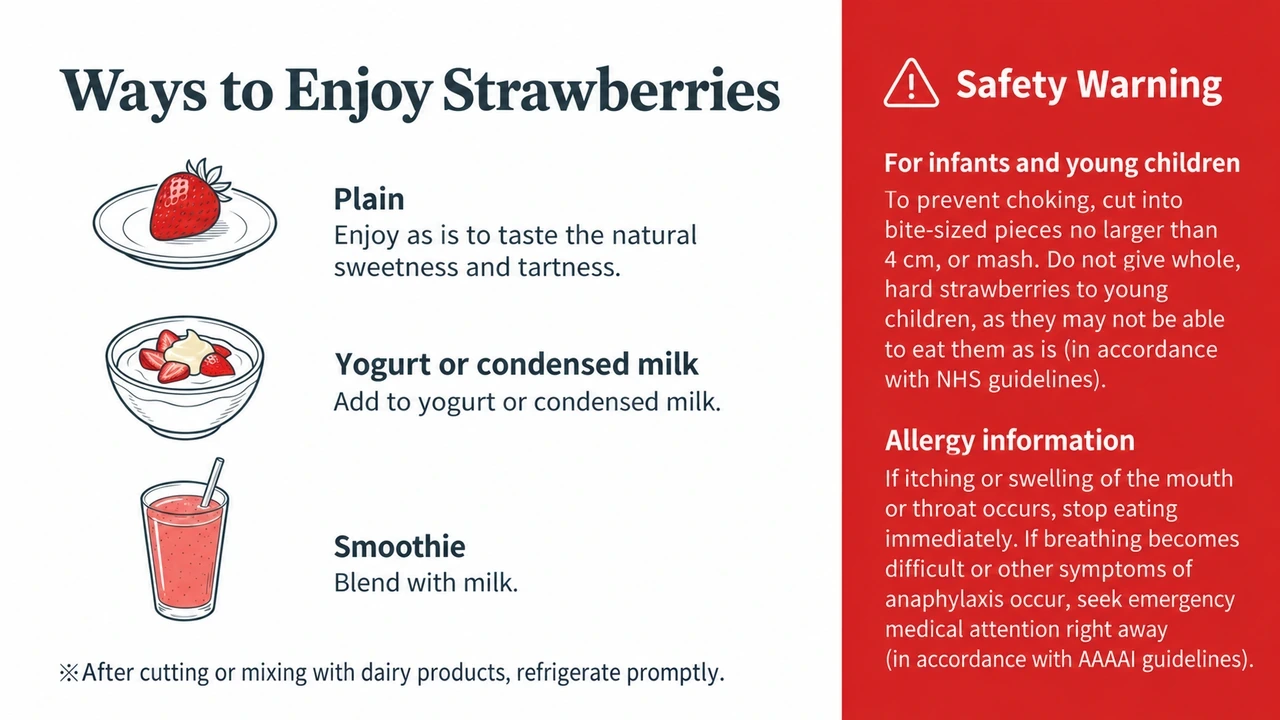
Remove the cap with your fingers or cut it away shallowly with a small knife. Adults can eat strawberries whole or cut lengthwise into halves or quarters.
Taste the fruit plain first to notice sweetness, acidity, aroma and texture. You can also add plain yogurt or condensed milk, or blend the berries with milk into a smoothie. These are home serving suggestions, not claims about a single traditional Vietnamese method.
Refrigerate cut fruit and dairy combinations promptly. If you know you will not finish the pack, set aside sound fruit for freezing before it deteriorates.
Strawberry storage: refrigerator and freezer need different preparation
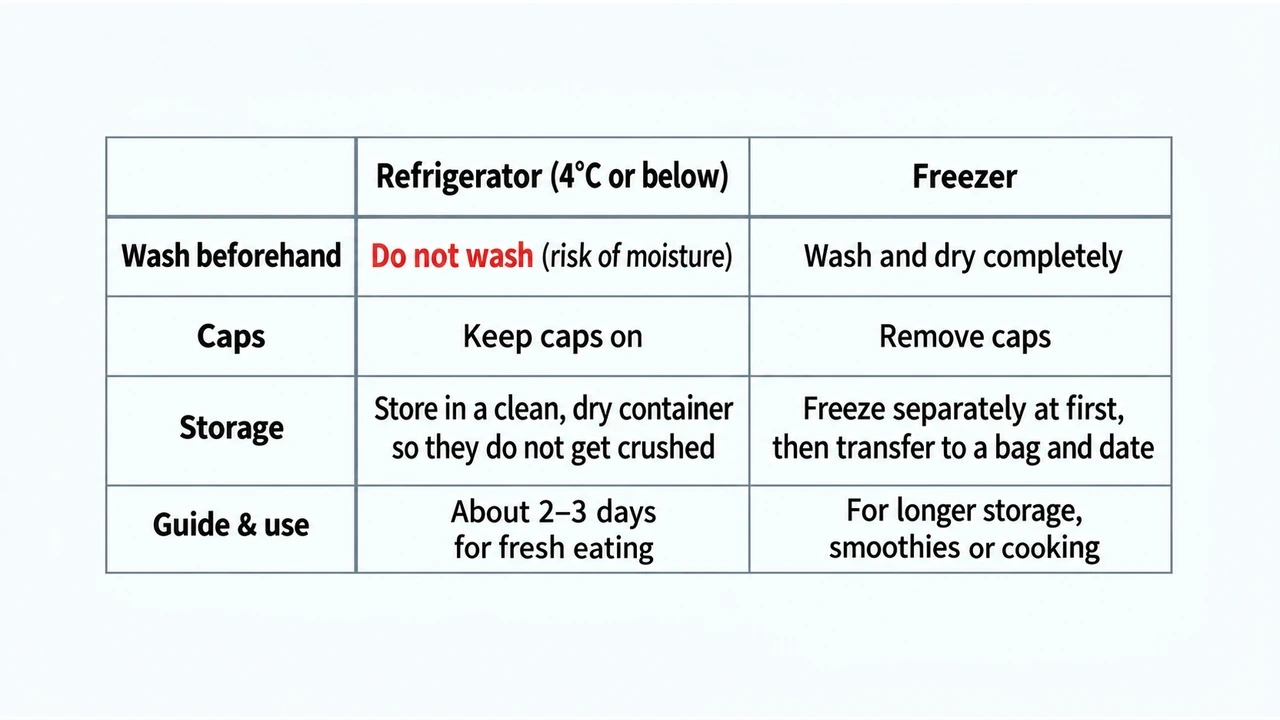
Refrigerator: keep berries unwashed with the caps attached
Place unwashed berries in a clean container without crushing them, and prevent moisture from pooling. Wash only before use. The University of Maryland gives 2–3 days as a household reference for refrigerated berries, including strawberries. Storing Garden Fruits and Vegetables
Aim to keep the refrigerator at 4°C or below. If you use a produce drawer, check the appliance setting. Follow any storage instruction supplied with the product and assess the fruit’s actual condition.
Freezer: wash, dry and hull first
For freezing, follow the order wash → dry → hull. Use sound fruit, write the date on the freezer container or bag, and freeze. If you first freeze dry berries in a single layer on a tray, they are easier to portion later. National Center for Home Food Preservation: Freezing Strawberries
Thawed strawberries will be softer than fresh fruit, so they work well in smoothies or cooked dishes. Freezing is not sterilization and cannot restore spoiled fruit.
Discard moldy berries instead of trimming them
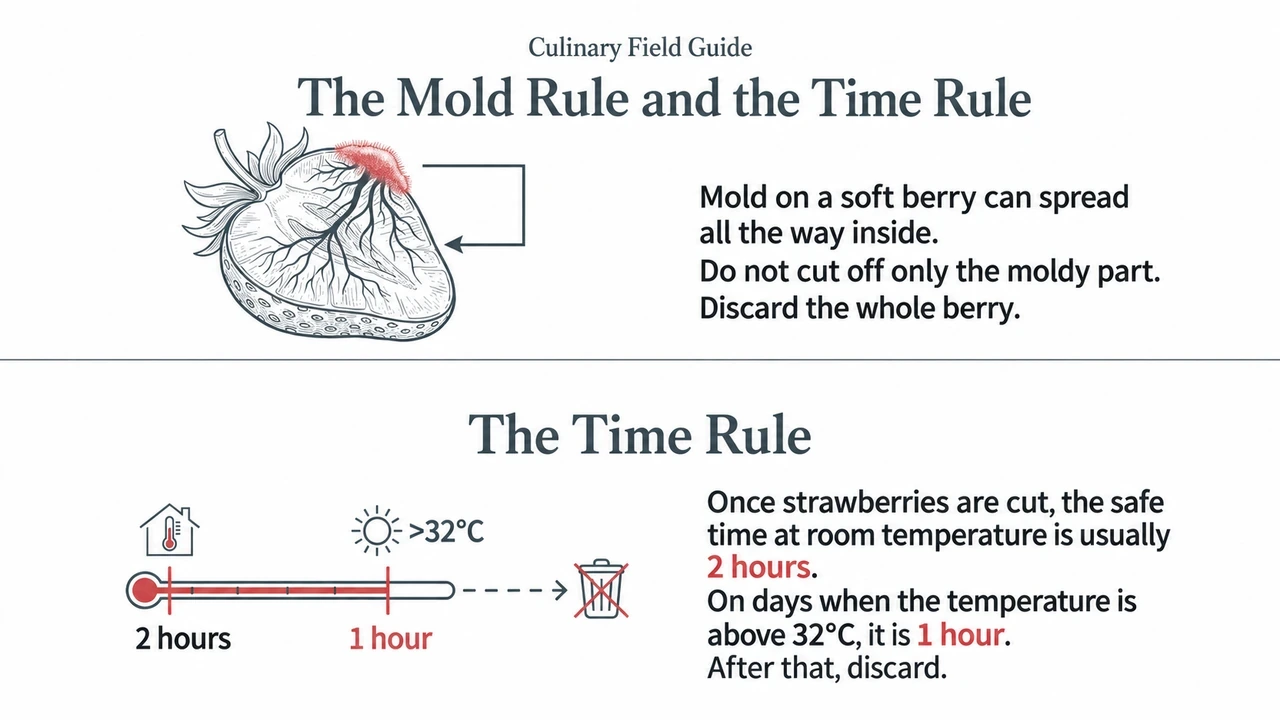
Mold can extend below the surface of a soft fruit such as a strawberry. Discard a moldy berry whole and inspect the other fruit in the same container. Do not divert moldy or rotten berries into jam or smoothies. USDA: Molds on Food—Are They Dangerous?
Do not leave cut strawberries or dairy combinations at room temperature for long. FDA guidance for perishable food uses a two-hour limit, shortened to one hour when the temperature is above about 32°C. Refrigerate leftovers sooner rather than waiting for the limit. FDA: Are You Storing Food Safely?
Strawberry picking near Hanoi: Chimi Farm 4
Moc Chau is about 200 km from Hanoi, so it is not the closest option for a casual strawberry-picking trip. Chimi Farm 4 in Dong Anh, north of Nhat Tan Bridge, is a more practical Hanoi-area candidate.
According to the farm’s official site, Farm 4 is about 1 km from the foot of Nhat Tan Bridge and around a 15-minute drive from central Hanoi. Its strawberry harvest season is listed as January through March. Other activities include seasonal fruit harvests, animals and play areas. Chimi Farm official site
| Item | Details |
|---|---|
| Facility | Chimi Farm 4 – Cầu Nhật Tân, Đông Anh |
| Address | Near Nhat Tan Bridge, Vĩnh Thanh village, Vĩnh Ngọc commune, Đông Anh, Hà Nội |
| Landmark | About 1 km from the foot of Nhat Tan Bridge |
| Listed strawberry season | January–March |
| Telephone | 082 989 1110 |
| Official information | Main site · Contact page |
On October 25, 2026, the official shop listed an entrance ticket at VND 70,000 and strawberries at VND 350,000 per kg. Prices and picking arrangements can change. Confirm whether admission and harvested fruit are charged separately. Chimi Farm shop
Even during the listed season, ripe fruit and picking access depend on farm conditions. Before visiting, ask whether hái dâu tây is available, whether reservations are needed, the opening hours, current fees, wash-station rules and what to bring for chilled transport.
Safety when serving strawberries
Stop eating if you develop itching in the mouth or throat, swelling of the lips or other possible allergy symptoms, and seek medical advice. Breathing difficulty, throat tightness or severe dizziness requires immediate emergency help. Follow your prescribed epinephrine plan if you have one. AAAAI: Food Allergy; Anaphylaxis
For young children, do not serve a whole round strawberry. Cut it lengthwise into quarters and adapt the size or mash it according to the child’s development and eating skills. Seat the child upright and supervise eating. Do not offer a whole hard-frozen berry. NHS: Preparing food safely for babies
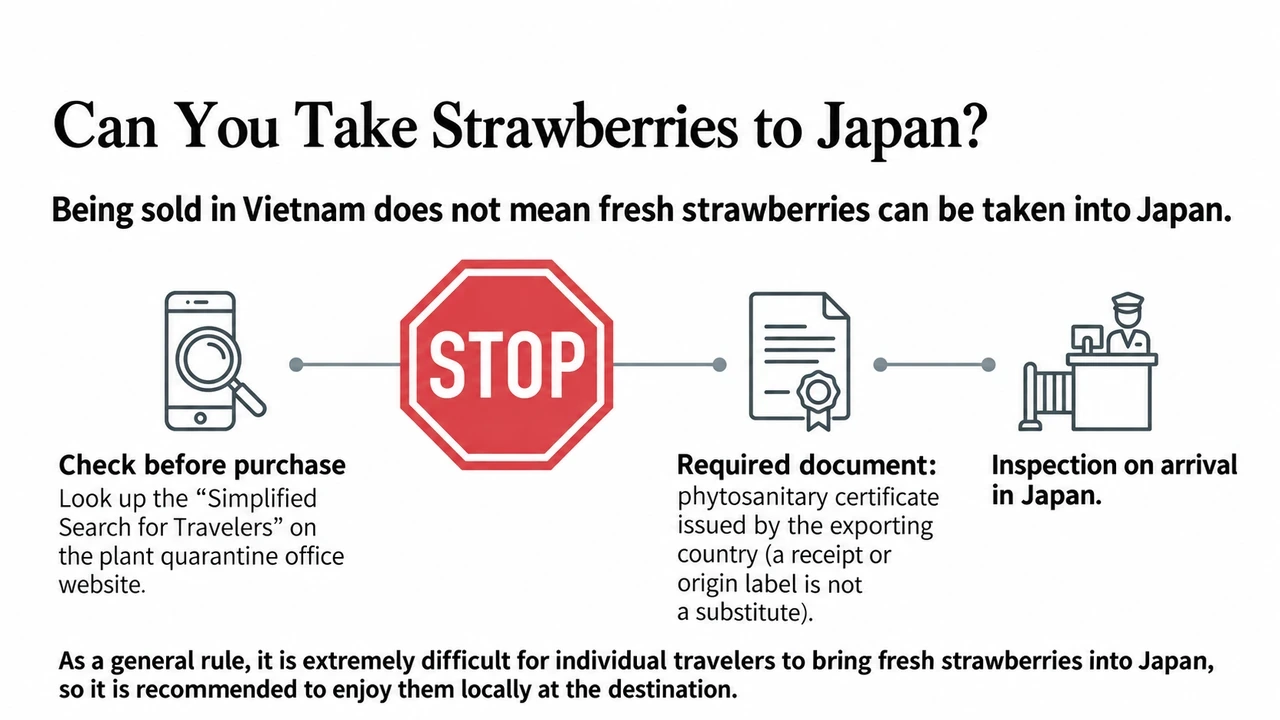
Before taking fresh strawberries from Vietnam to Japan
Being able to buy fruit in Vietnam does not mean you may take it into Japan. Fresh fruit is subject to plant quarantine, and requirements depend on the commodity, country of production and other conditions.
Check Japan’s Plant Protection Station traveler information, in Japanese. If the commodity is not listed, use the detailed import-condition search or contact the Plant Protection Station.
Eligible plants generally require an official phytosanitary certificate from the exporting country and import inspection on arrival in Japan. A receipt or origin label is not a substitute. Verify the current rule before buying. Important notice on phytosanitary certificates, in Japanese
Five practical points
- Choose sound fruit and inspect the bottom of the pack.
- Keep strawberries cool and do not wait for them to become sweeter after harvest.
- Wash under running water with the caps on, dry, then hull.
- Refrigerate unwashed berries; wash, dry and hull before freezing.
- Confirm farm conditions and plant-quarantine requirements from current official sources.

More in the Strawberry Trilogy
- Strawberries in Vietnam: Features, Nutrition and Growing Regions
- The History and Story of Strawberries: Origins, Breeding and a Global Journey
Sources and editorial notes
This English edition is based on Japanese v05 dated October 25, 2026. Chimi Farm’s listed season, location, telephone and shop prices were rechecked on that date. Because strawberries were out of season for the author, this article contains no invented purchase, tasting record or photograph.
