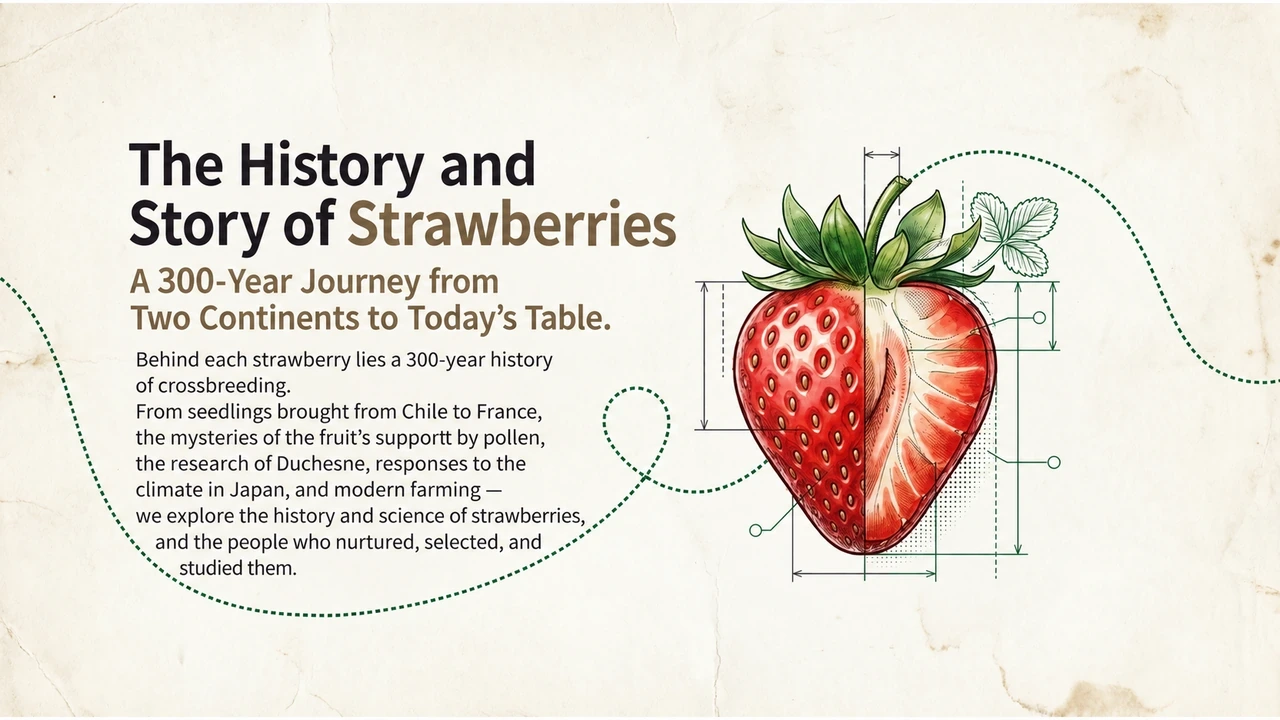
Plants carried across the ocean produced flowers, yet little fruit. That puzzle became an important chapter in the history of the strawberry.
The garden strawberry we eat today developed after a North American species and a South American species met in eighteenth-century Europe. Its story continued through observation, breeding, legal protection and adaptation to new regions, including Japan and Vietnam.
The journey in five stages
- The Chilean strawberry traveled from South America to France.
- It crossed with the Virginia strawberry from North America.
- Antoine Nicolas Duchesne recorded and interpreted the hybrid’s history.
- Cultivated strawberries reached Japan, where locally adapted breeding produced ‘Fukuba.’
- Strawberry cultivation spread to highland regions such as Da Lat and Moc Chau in Vietnam.
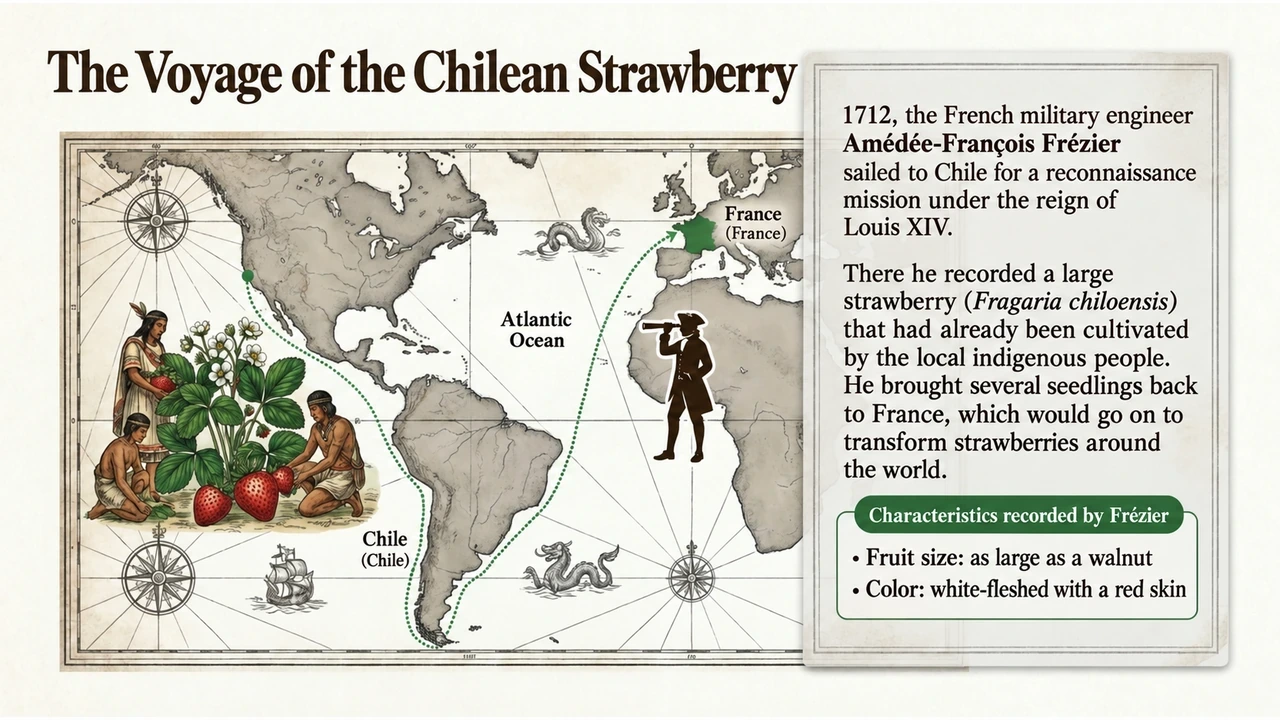
1712: Frézier carried the Chilean strawberry to France
In 1712, French military engineer Amédée-François Frézier traveled to Chile under Louis XIV. His assignment included reconnaissance of military installations, and he also recorded local plants and animals.
There he encountered the large-fruited Chilean strawberry, Fragaria chiloensis. According to the University of Minnesota, Frézier compared the fruit’s size to walnuts or hens’ eggs and described its pale red color and flavor. A spy, a botanist, and a strawberry
The history did not begin when Frézier saw the plant. Indigenous people in Chile were already cultivating it. The plants he carried to Europe came from a longer history of local knowledge and care.
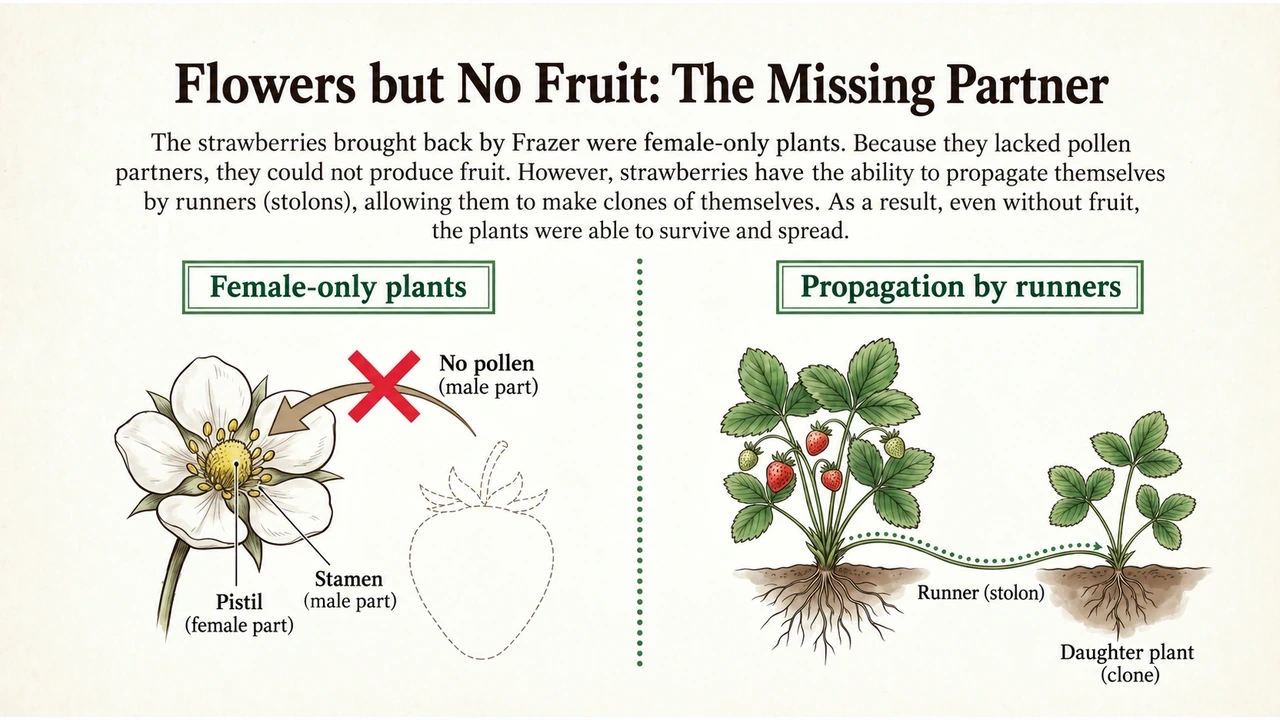
Why the Chilean strawberry failed to fruit well in Europe
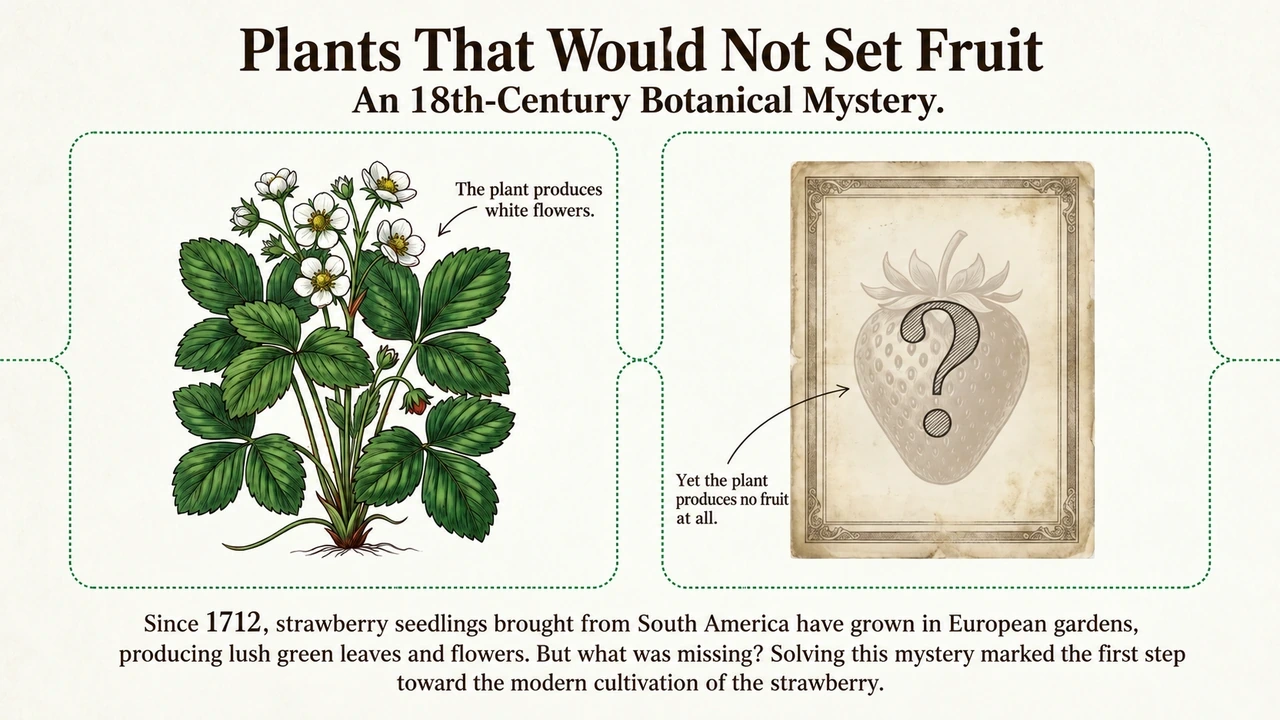
Frézier returned to France with Chilean strawberry plants. In European gardens, however, they often flowered without setting much fruit.
George M. Darrow’s The Strawberry describes the poor fruit set of the female plants associated with Frézier’s introduction and the later recognition that compatible pollen was needed. Darrow, The Strawberry, p. 36
This does not mean that every modern cultivated strawberry requires separate male and female plants. The statement concerns the plants in this historical episode.
Fruit production and plant propagation are also different processes. Even when fruit set was poor, strawberries could produce daughter plants on runners. That allowed gardeners to keep the material alive and multiply it while the pollination problem remained unresolved. University of Minnesota: How strawberry plants grow
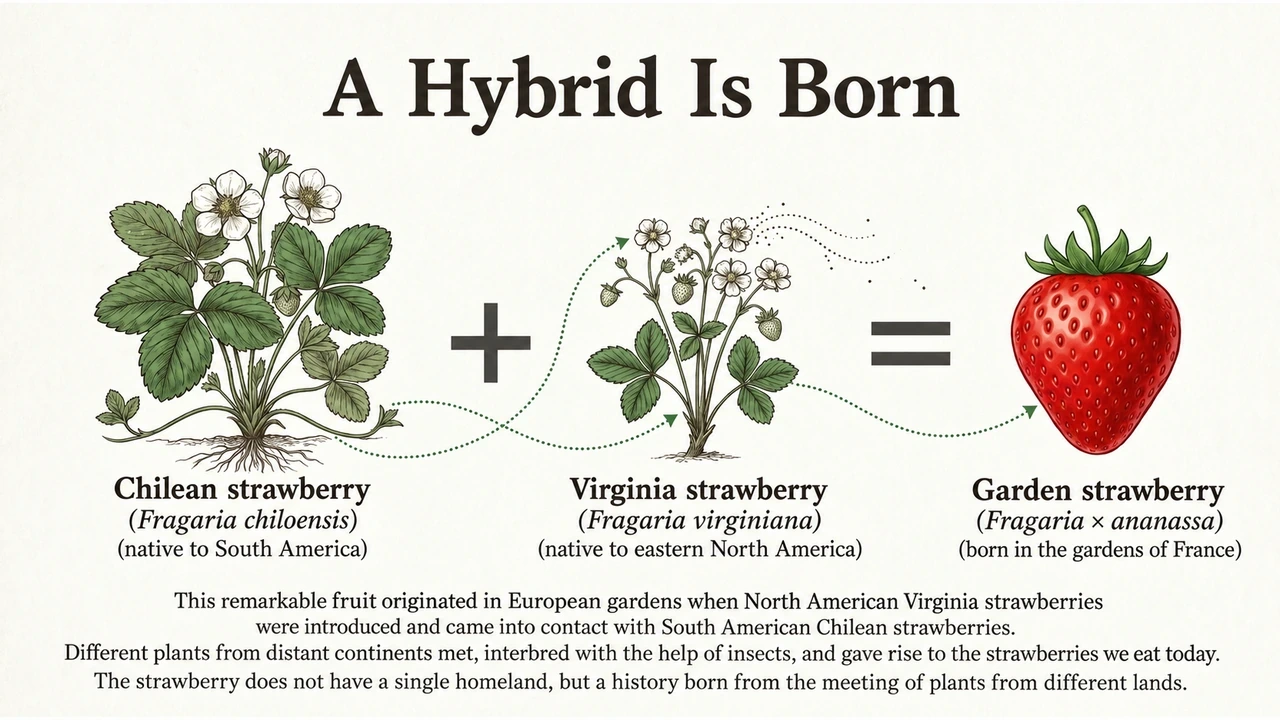
The cultivated strawberry emerged from a transatlantic hybrid
The Virginia strawberry, Fragaria virginiana, had also reached Europe from eastern North America. Crosses between it and the Chilean strawberry produced the garden strawberry, Fragaria × ananassa. The Tochigi Prefecture Strawberry Research Institute, in Japanese places this development in eighteenth-century France.
Pollination that produces a berry and seed is not yet the same as establishing a new hybrid line. Seeds from a cross must grow into plants that express inherited traits from both parents.
A historical review describes large, red-fleshed hybrid strawberries appearing in European gardens and contributing to later cultivation. Rather than reducing the first hybrid to one bee or one garden, it is more accurate to see it as the result of plants from different continents being brought together and cultivated. Hancock et al., “Our Southern Strawberry Heritage”
The cultivated strawberry has both ancestral homelands and a place where those lineages met.
1766: Duchesne documented the hybrid story
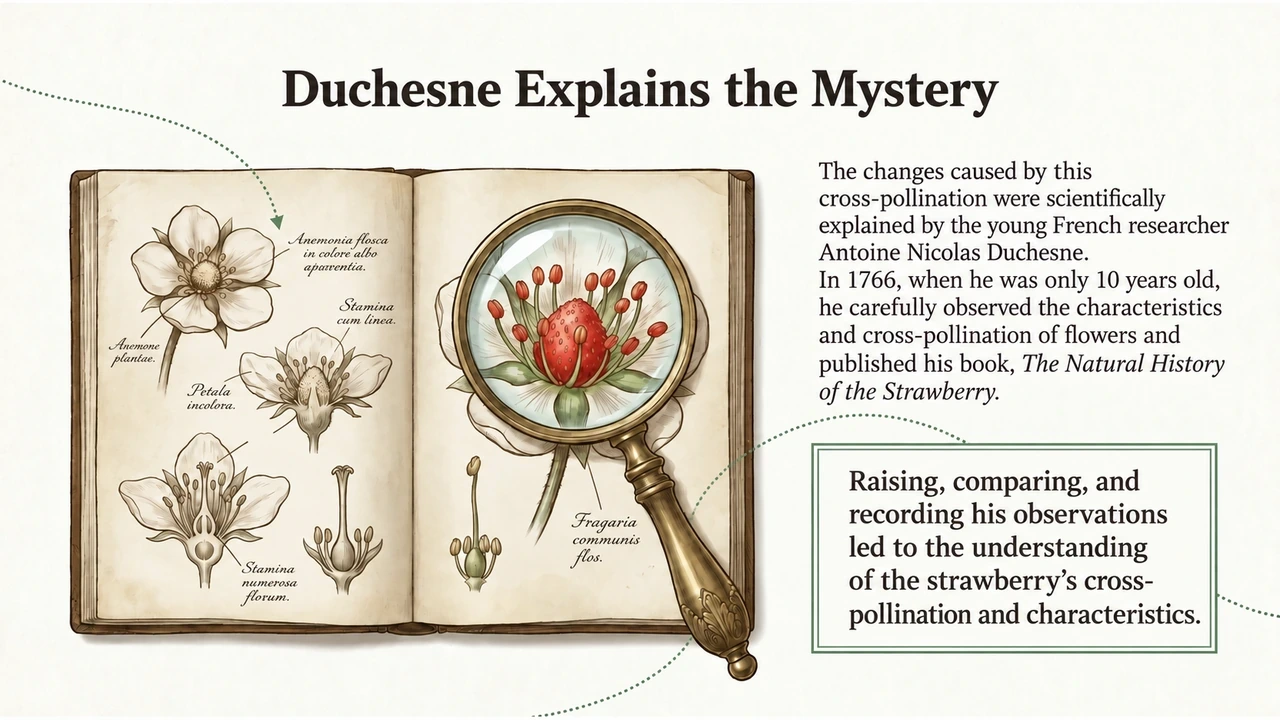
French botanist Antoine Nicolas Duchesne studied strawberry flowers and hybridization. In 1766 he published Histoire naturelle des fraisiers. Born in 1747, he was still a teenager. Hortalia bibliographic record
Historical reviews credit Duchesne with explaining the large cultivated strawberry as a hybrid between the Chilean and Virginia species. His work shows that transport alone did not reveal the plant’s story. Careful cultivation, comparison and records were essential.
Strawberries reached Japan and breeding produced ‘Fukuba’
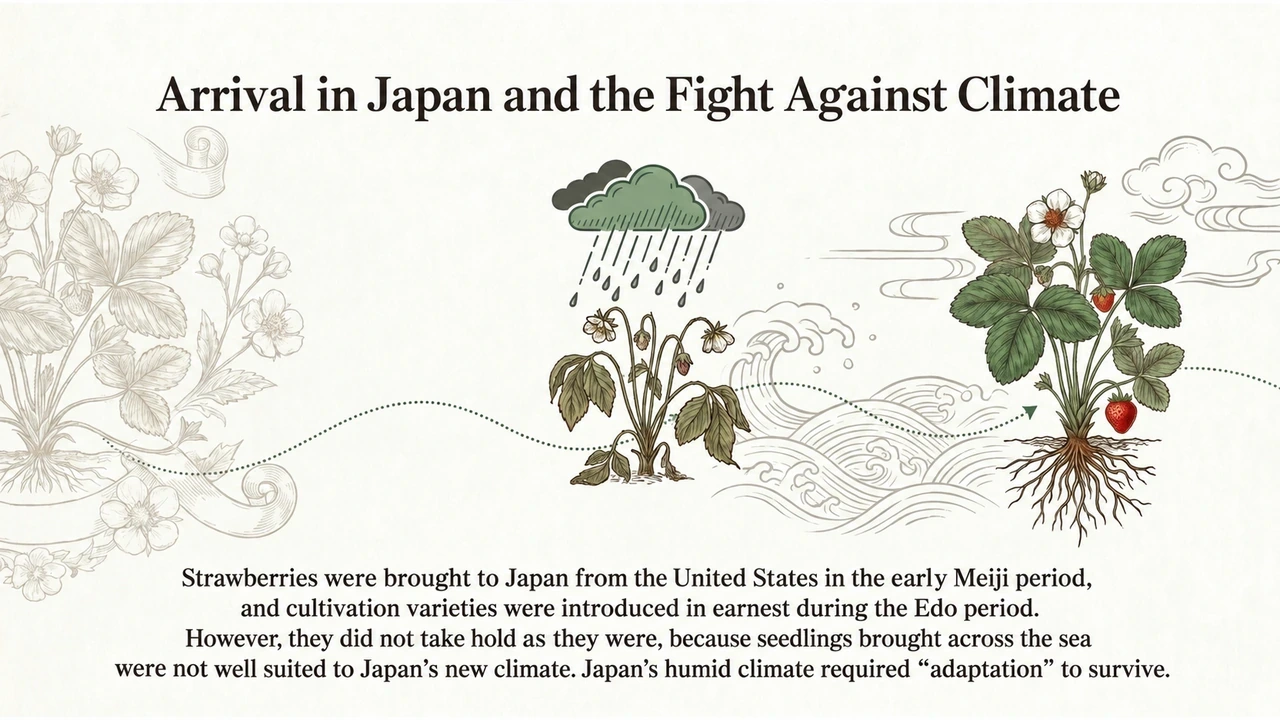
Cultivated strawberries are thought to have reached Japan late in the Edo period. Varieties were imported for cultivation in the early Meiji period, but the first introductions did not immediately thrive in Japan’s climate.
Breeder Hayato Fukuba later raised the cultivar ‘Fukuba’ from seed imported from abroad. Tochigi Prefecture describes this cultivar, suited to Japanese conditions, as an important foundation for wider cultivation.
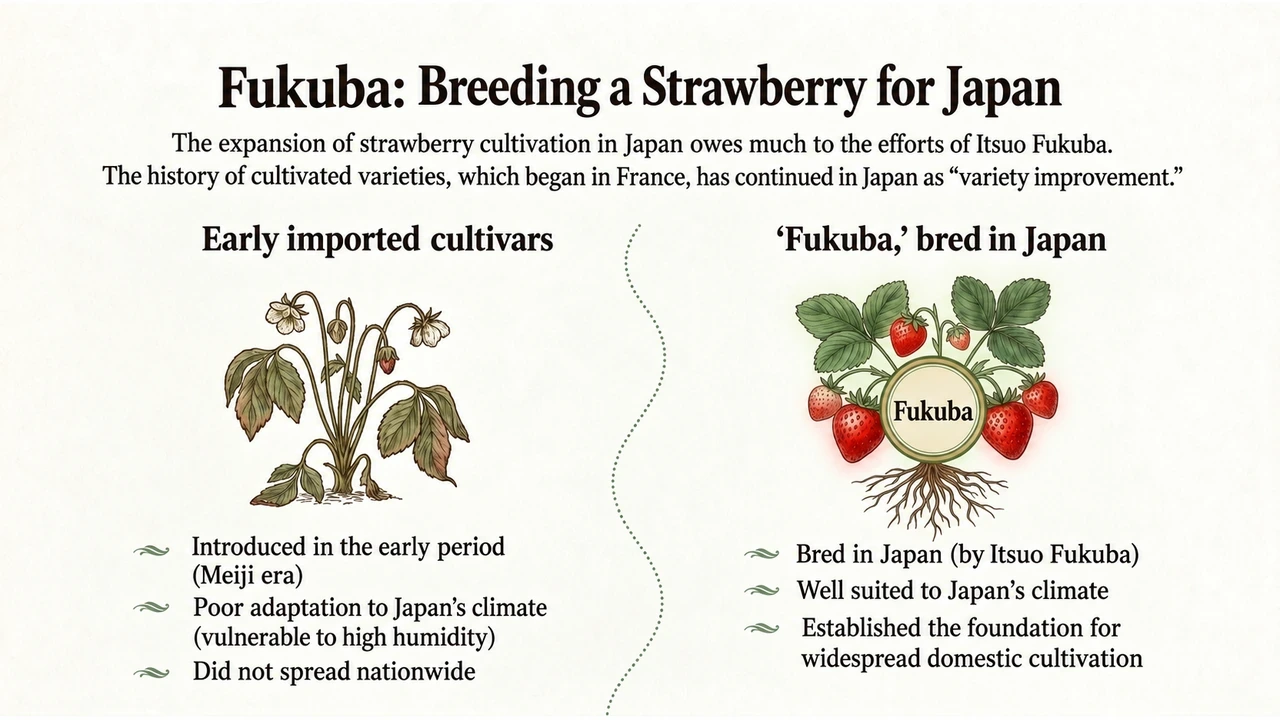
A plant can cross a national border without being adapted to its new environment. Growers and breeders select, cross and evaluate plants for local climates. The history that began with hybridization in Europe therefore continued through breeding in Japan.
Cultivar movement, unauthorized propagation and plant breeders’ rights
When a new cultivar crosses a border, agreements and legal protection matter as well as horticulture.
Japan’s Ministry of Agriculture, Forestry and Fisheries reports that the Japanese cultivars ‘Akihime’ and ‘Red Pearl’ were licensed for use in South Korea but spread beyond the authorized parties. The ministry also notes that strawberries became eligible for plant variety protection in South Korea in 2012. MAFF: Background to the strawberry issue in South Korea, in Japanese
Licensing terms, propagation after transfer and later breeding are distinct events. They should not be collapsed into one claim.
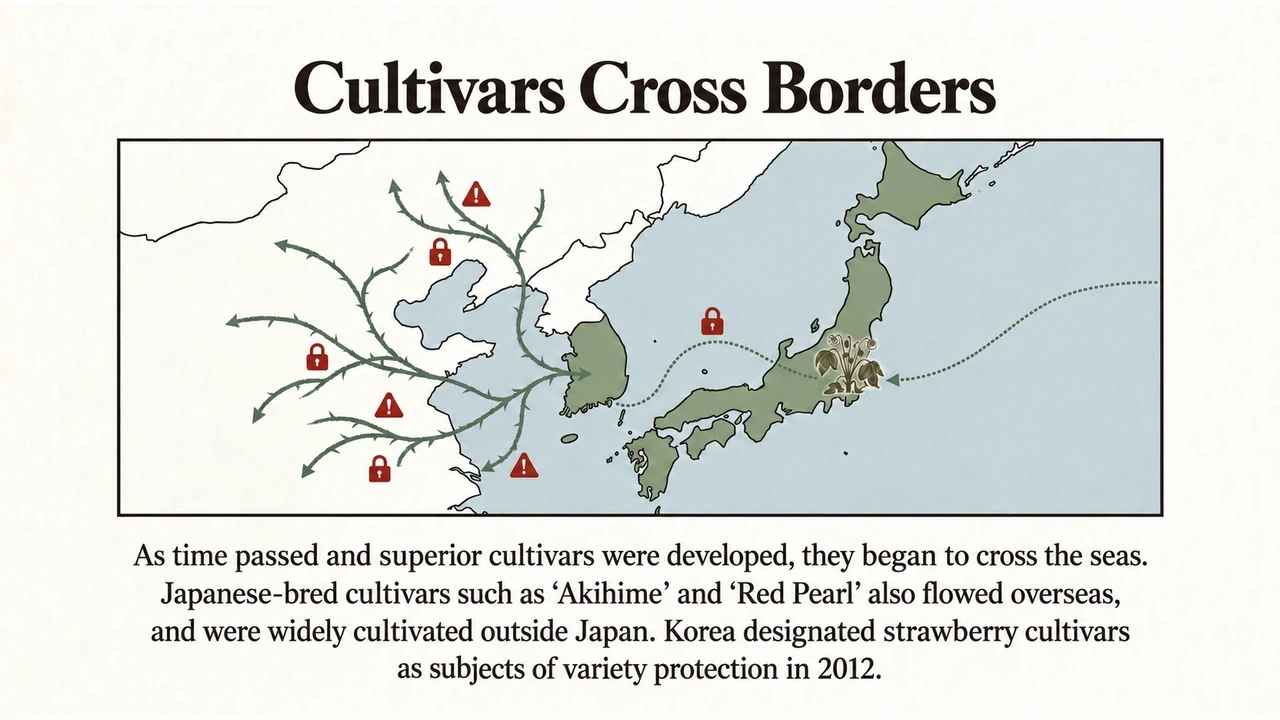
Japan’s 2020 amendment to the Plant Variety Protection and Seed Act introduced a system allowing the breeder of a registered variety to specify permitted export destinations and domestic production areas. This portion took effect in April 2021. MAFF overview of the amended act, in Japanese
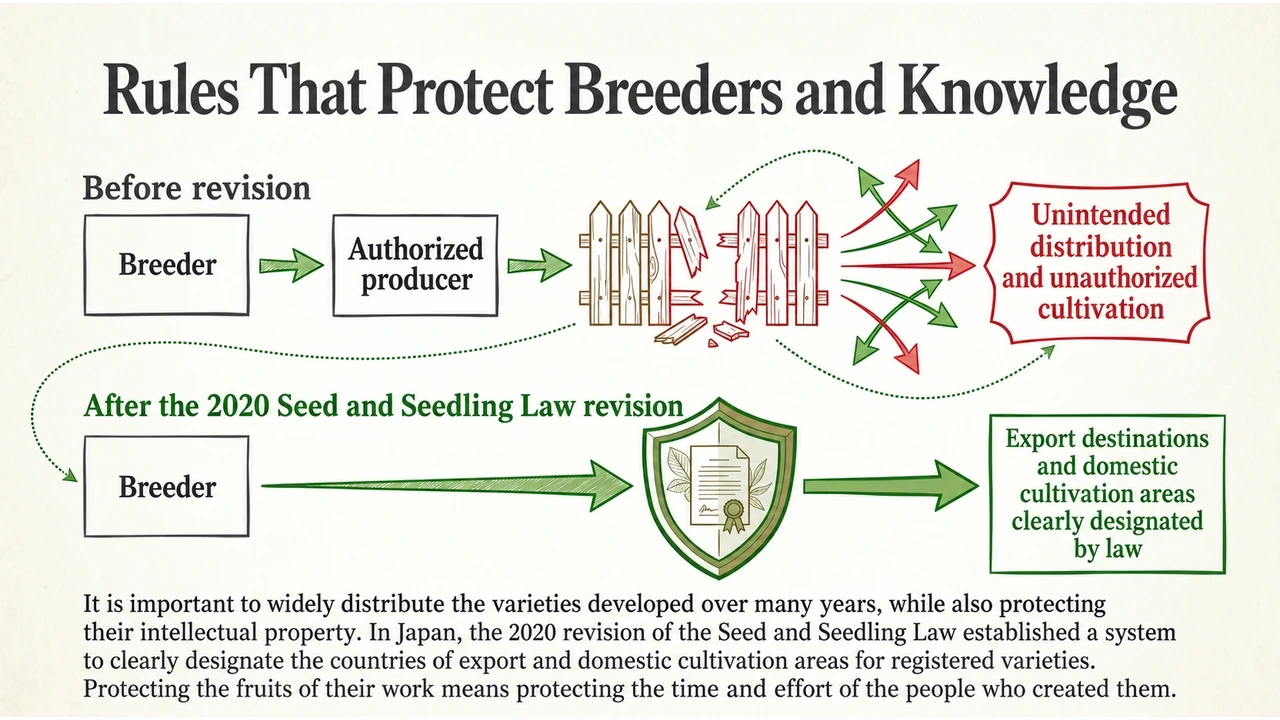
The challenge is to make improved cultivars available while protecting the work that created them.
Strawberry cultivation in Vietnam: Da Lat and Moc Chau
The story continues in Vietnam’s highlands. Vietnam Tourism presents strawberry harvesting at a farm in Da Lat, while a national tourism article describes strawberry farms and harvest experiences on the Moc Chau plateau. Da Lat strawberry garden; Moc Chau plateau
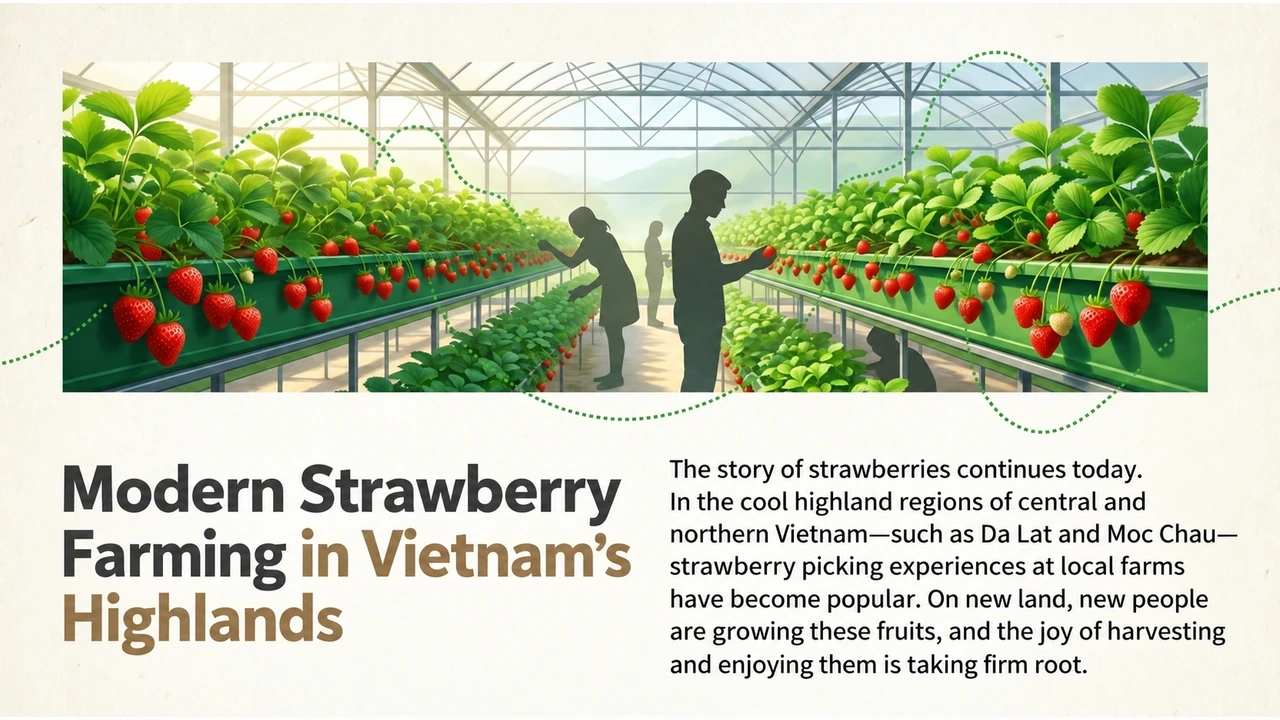
The sources reviewed for this edition do not establish the first year strawberries were introduced to Vietnam or connect every current cultivar to a specific historical plant. They do establish the presence of modern cultivation and farm experiences.
A country-of-origin label and a cultivar’s ancestry are different information. A pack labeled “Vietnam” or “Korea” cannot by itself prove descent from a particular Japanese cultivar. A cultivar name and farm name provide a better starting point for tracing its history.
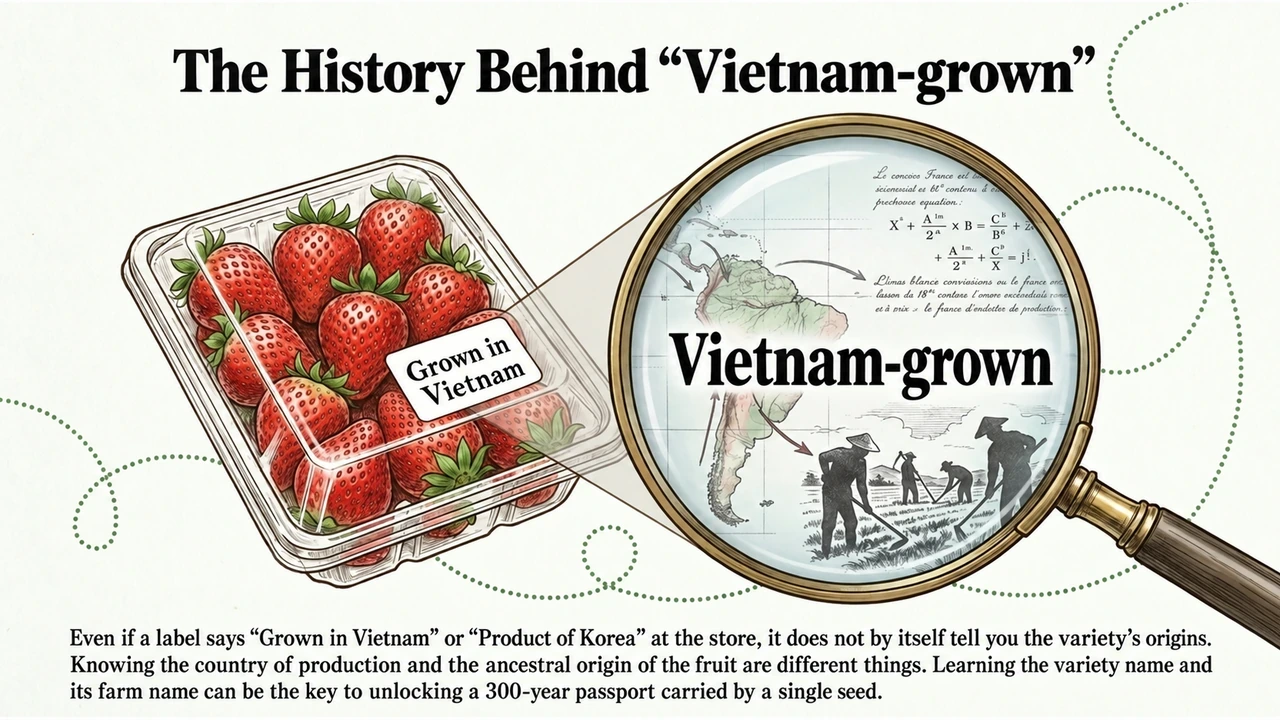
A 300-year relay behind one strawberry
The strawberry’s history includes Indigenous cultivators in Chile, people who transported plants, gardeners who kept them alive, researchers who studied them and breeders who adapted them to new places.
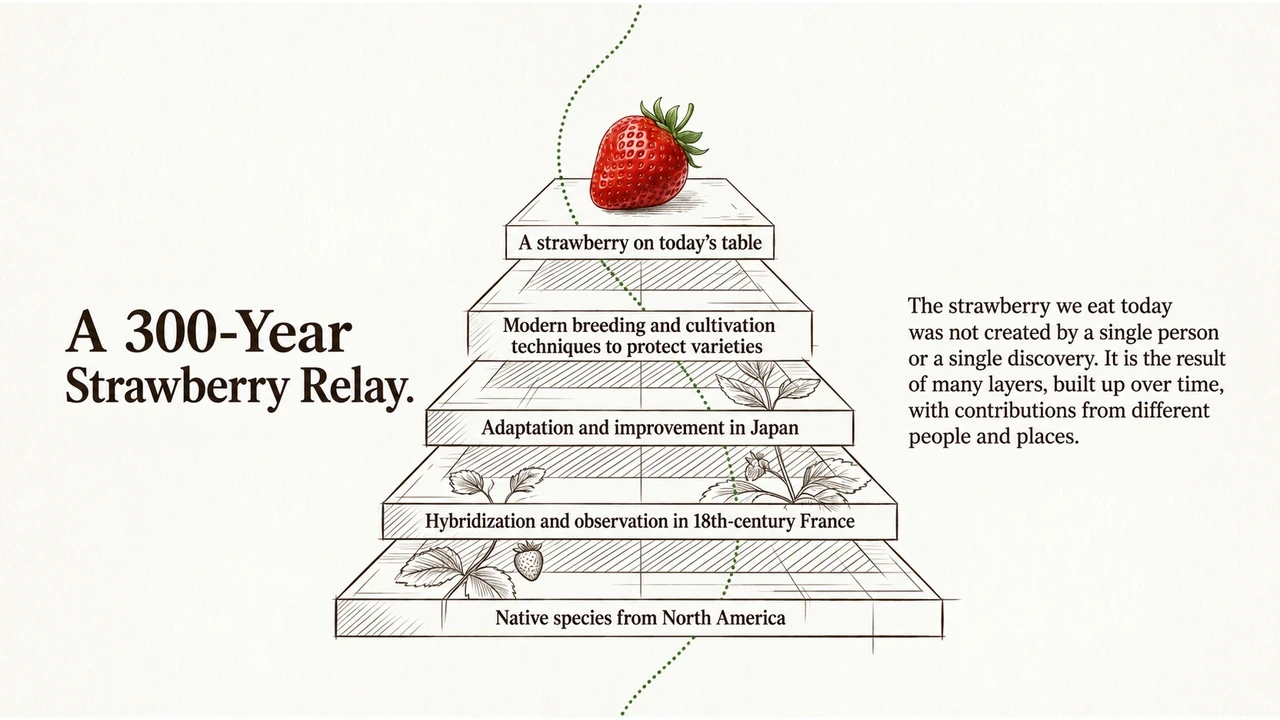
No single discovery or person created the strawberry on today’s table. Plants were received, cultivated, observed and passed onward. That relay shaped the familiar fruit.
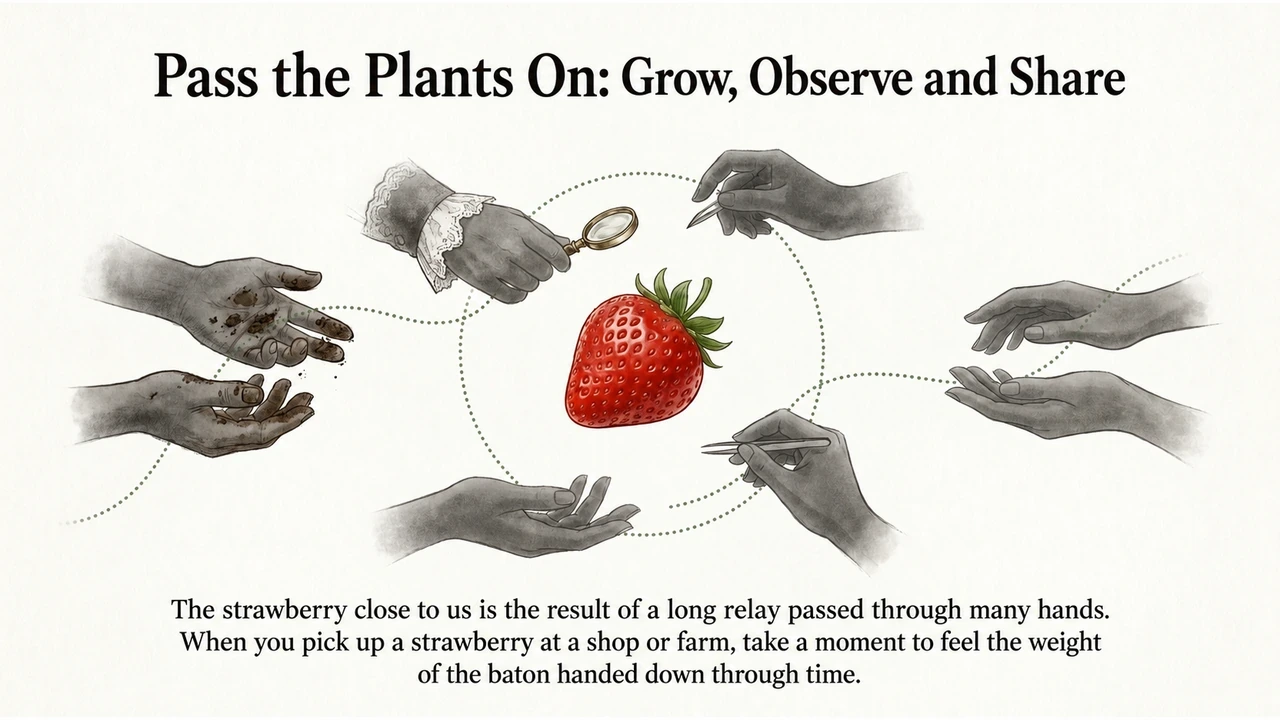
When you find strawberries in a Vietnamese shop or farm, look for the farm, place and cultivar name. Those details connect a present-day pack to a much longer history.
More in the Strawberry Trilogy
- Strawberries in Vietnam: Features, Nutrition and Growing Regions
- How to Eat Strawberries in Vietnam: Choosing, Washing, Storing and Farm Visits
Sources and editorial notes
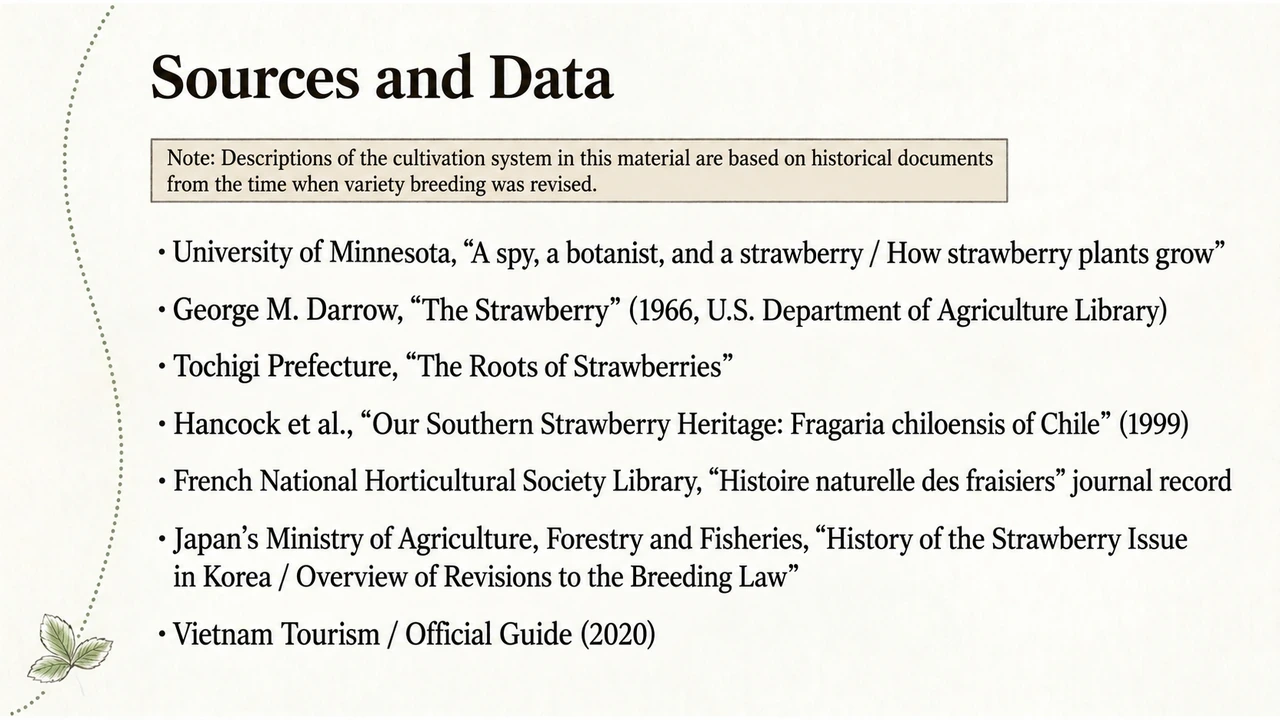
This English edition is based on Japanese v05 dated October 25, 2026. It distinguishes documented history from inference and separates origin, cultivar ancestry and production country. No photograph has been added.
