How to Eat Guava in Vietnam: Choosing, Cutting, Seeds and Storage
Published October 8, 2026
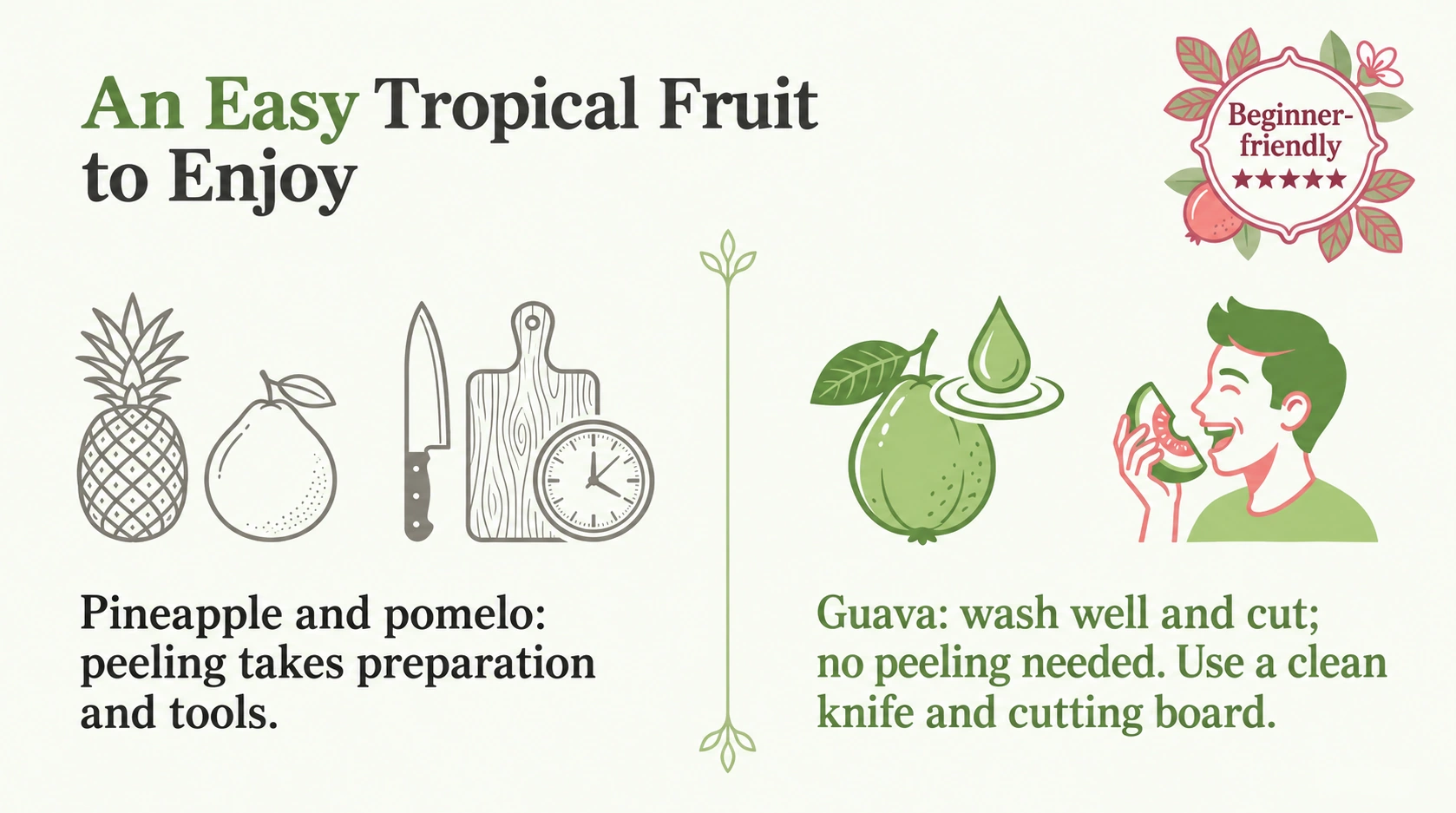
Guava, commonly sold in Vietnam, can be enjoyed by washing it thoroughly under running water and cutting it into wedges with the peel on. The center contains hard seeds; remove the seed-rich core if you find them uncomfortable to eat.
Firm, crunchy guava is popular locally, while ripe guava offers a sweet aroma and softer flesh. This guide covers choosing fruit to suit your preference, cutting it, handling the seeds, trying chili salt and storing it.
For taste, seasons, nutrition and varieties, see the Guava Guide. For its origins and cultural background, see Guava: History and Stories.
Guava in Vietnam: quick reference
| Item | Details |
|---|---|
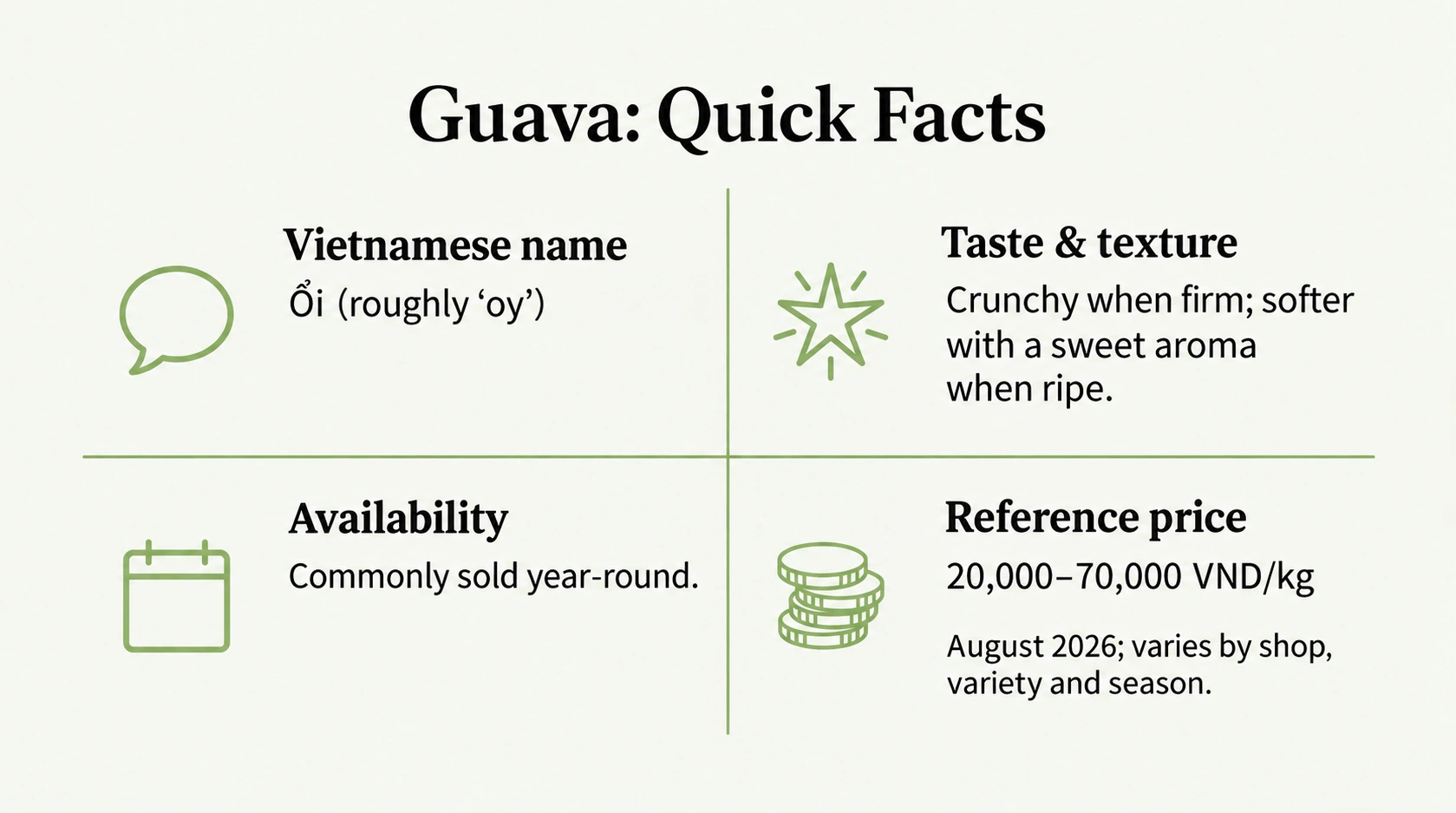
| Vietnamese name | Ổi |
| Approximate pronunciation | “Oy,” with a Vietnamese tone |
| Taste and aroma | Mild sweetness and a green aroma when firm; stronger sweet aroma when ripe |
| Texture | Crunchy when firm; softer when ripe |
| Availability | Commonly available year-round |
| Reference price | 20,000–70,000 VND per kg (August 2026; varies by shop, variety and season) |
| Where to buy | Supermarkets, open-air markets, roadside fruit stalls and cut-fruit shops |
| Basic preparation | Wash well under running water; cut into wedges with the peel on |
| Local pairing | Chili salt (muối ớt) or shrimp salt (muối tôm) |
| Author’s ease-of-use rating | ★★★★★ |
The Vietnamese name: Ổi
Guava is called Ổi in Vietnamese. Its flesh may be white, yellow, pink or red, depending on the variety. White-fleshed, firm and crunchy guava is commonly seen in Vietnam.
What does guava taste like? Choosing your preferred ripeness
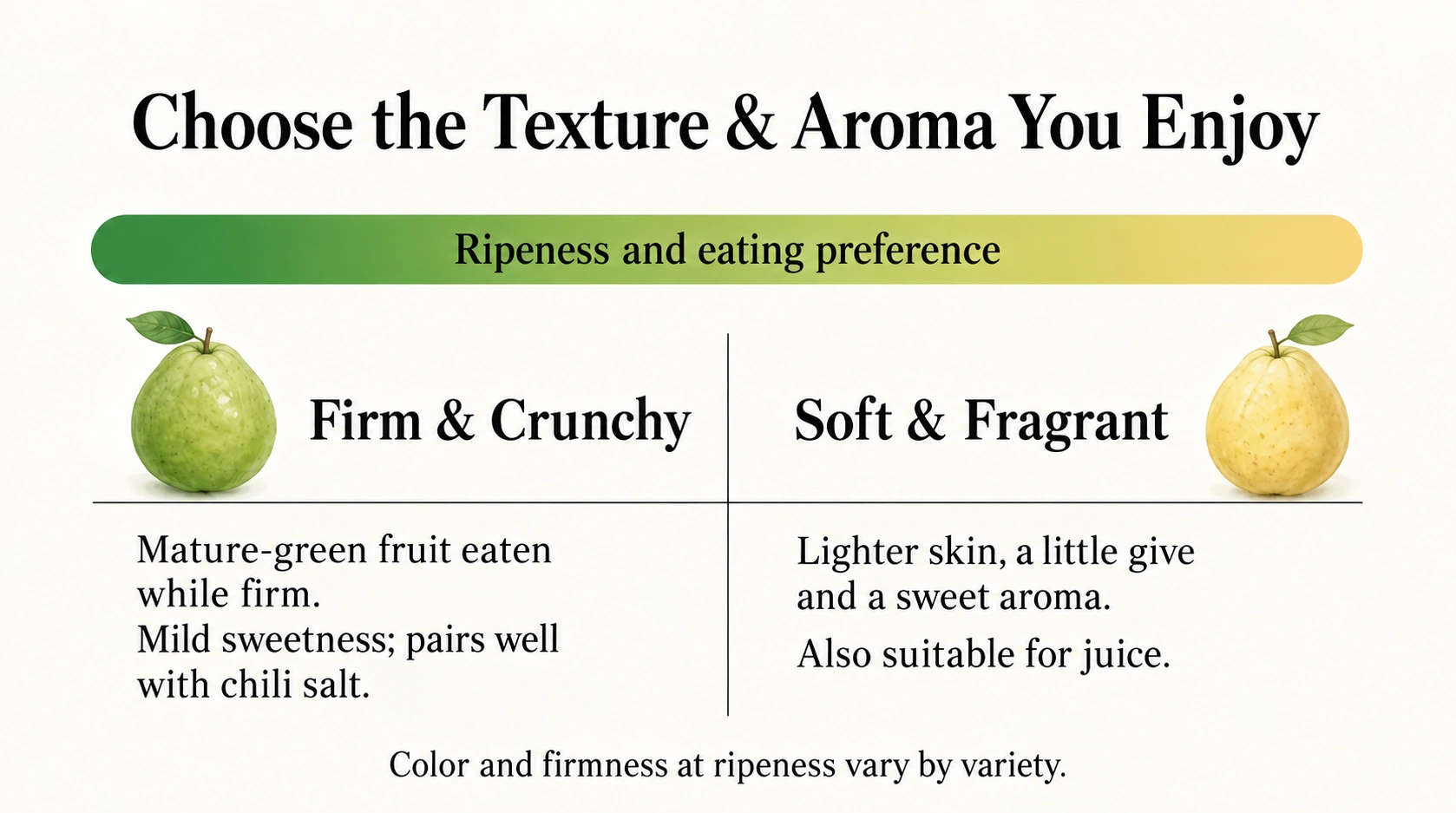
The right stage depends on the variety and your preference. In some places, guava is eaten at the mature-green stage, when the skin has changed from dark to lighter green. Elsewhere, it is left to become yellow and soft.
- For a Vietnamese-style crunch: look for firm fruit that feels heavy for its size.
- For a sweet aroma and softer texture: consider lighter-colored skin, a little give under gentle pressure, and a sweet scent.
Dark-green, immature fruit may not ripen well after purchase. Green skin does not guarantee that the fruit will ripen properly.
Prices and where to buy guava in Vietnam
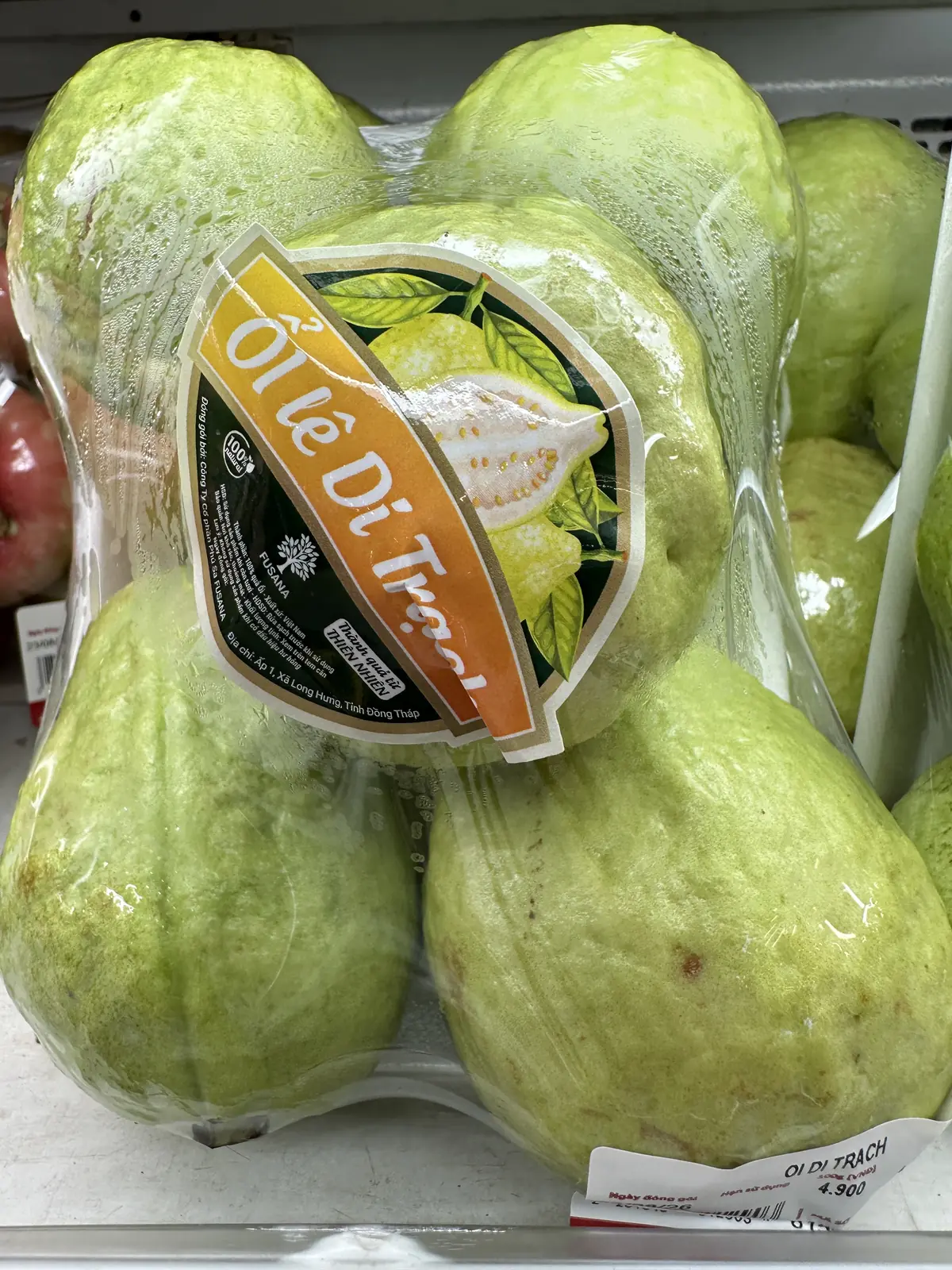
A reference range is 20,000–70,000 VND per kg, based on August 2026 prices. The author bought a supermarket pack labeled Ổi lê Di Trạch at 20,000 VND per kg. Prices vary with shop, region, variety, quality and season, so check the label at the time of purchase.
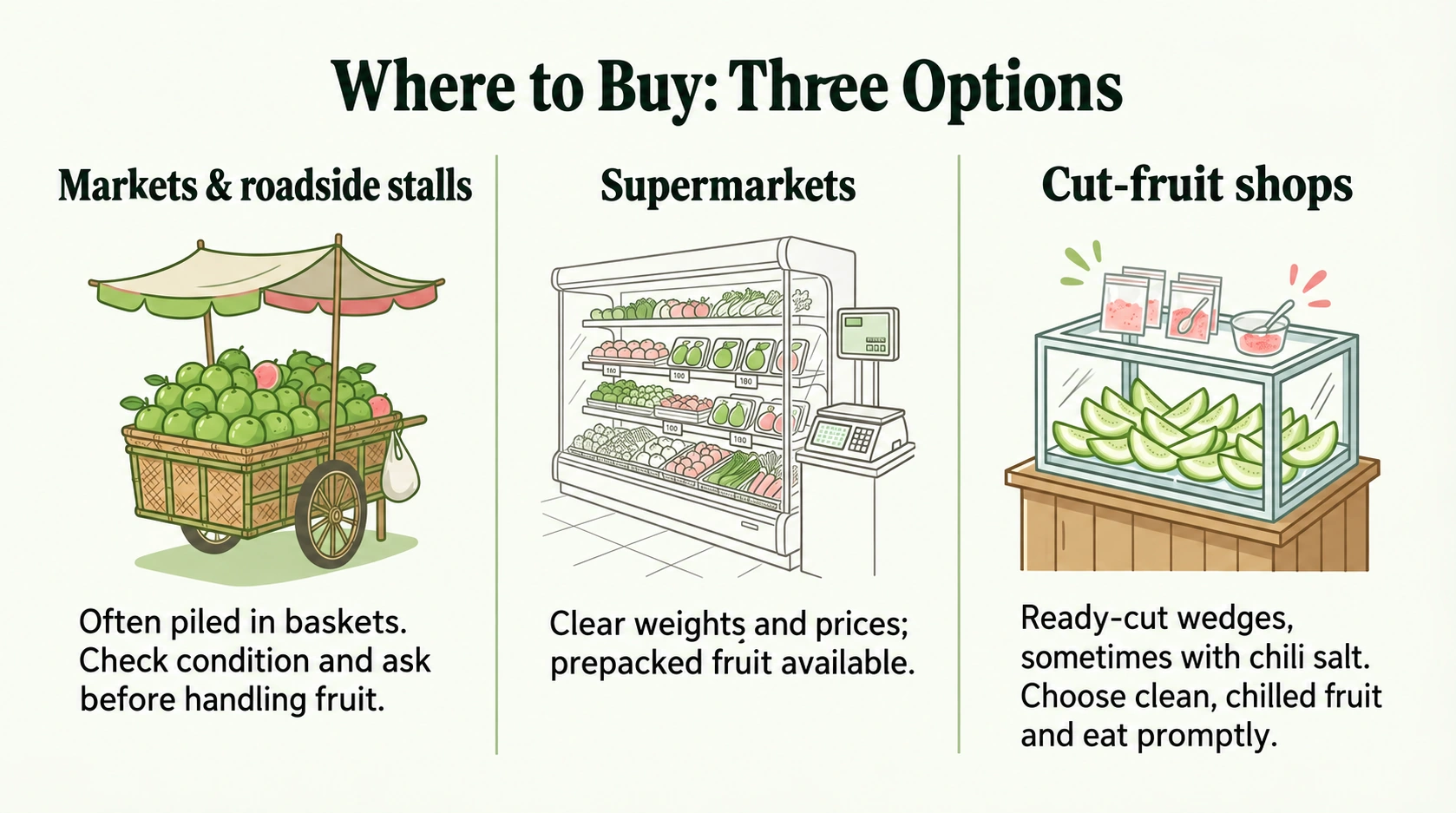
Open-air markets and roadside fruit stalls
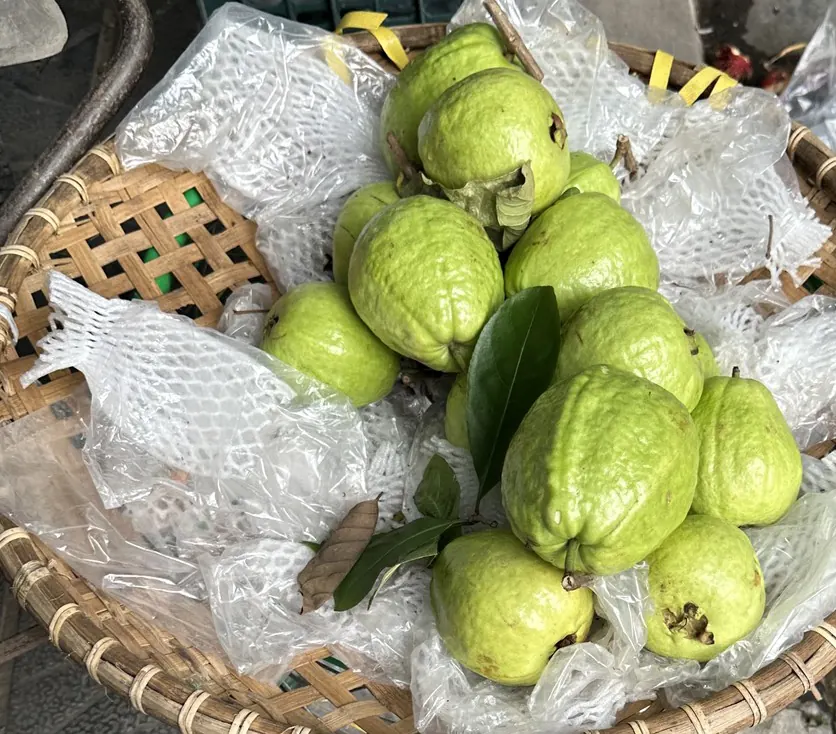
Guava is often piled in baskets or on stalls. Check for damage and ask the vendor before handling the fruit.
Supermarkets
Weights and prices are usually easy to check, and prepacked fruit is available. Supermarkets can be convenient if you are unsure about conversations at a market.
Cut-fruit shops
Some shops sell guava wedges with a small sachet of chili salt. Choose cut fruit in clean containers, kept refrigerated or on ice, and eat it promptly after purchase.
How to choose good guava
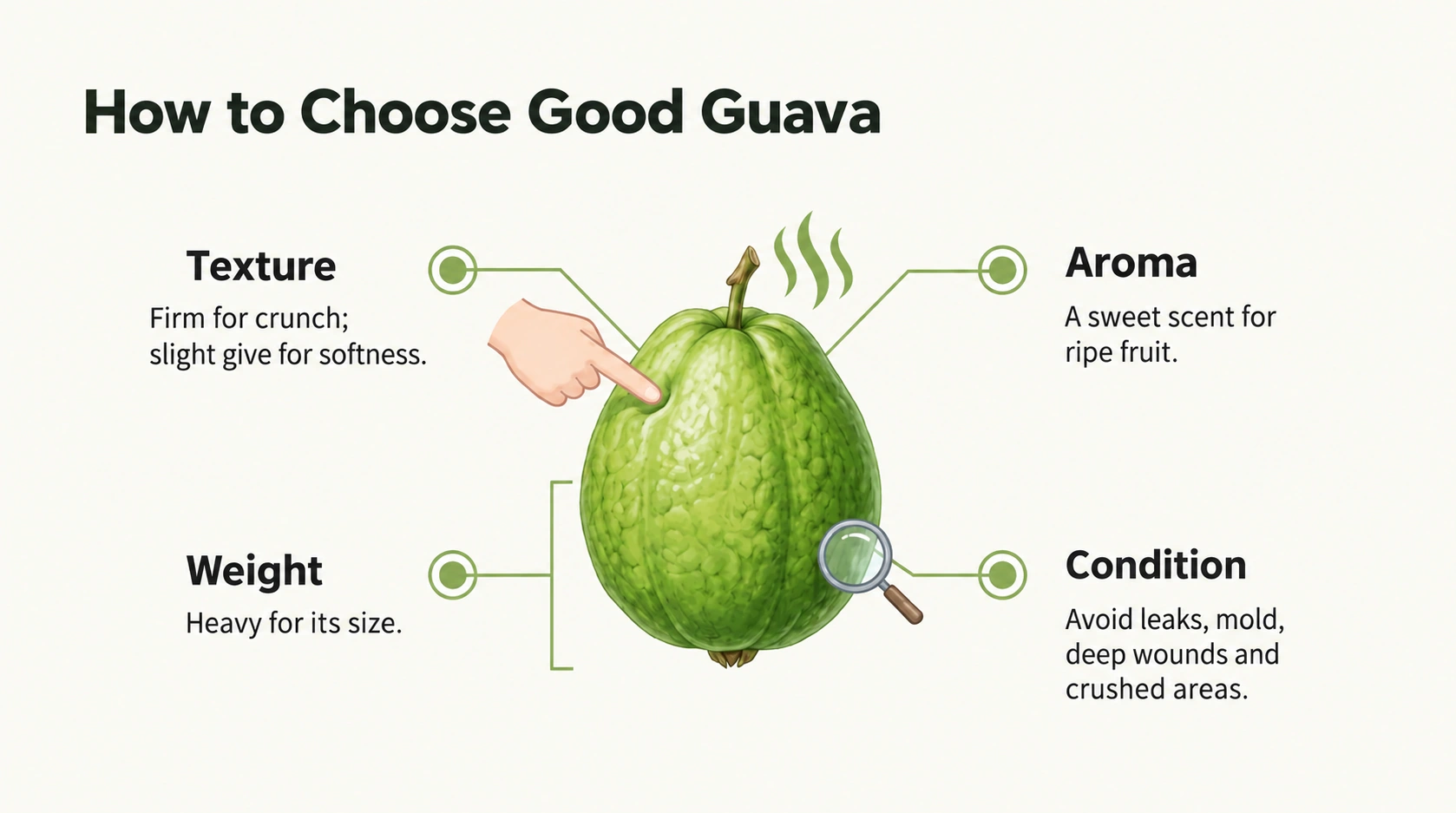
Use several signs together:
- Your texture preference: choose firm fruit for crunch, or fruit with a little give if you prefer softness.
- Aroma: look for a sweet scent when choosing ripe guava.
- Weight: among similarly sized fruit, choose one that feels heavy.
- Condition: avoid leaking juice, mold, deep wounds and badly crushed areas.
Skin color varies by variety, so even coloring alone does not establish ripeness.
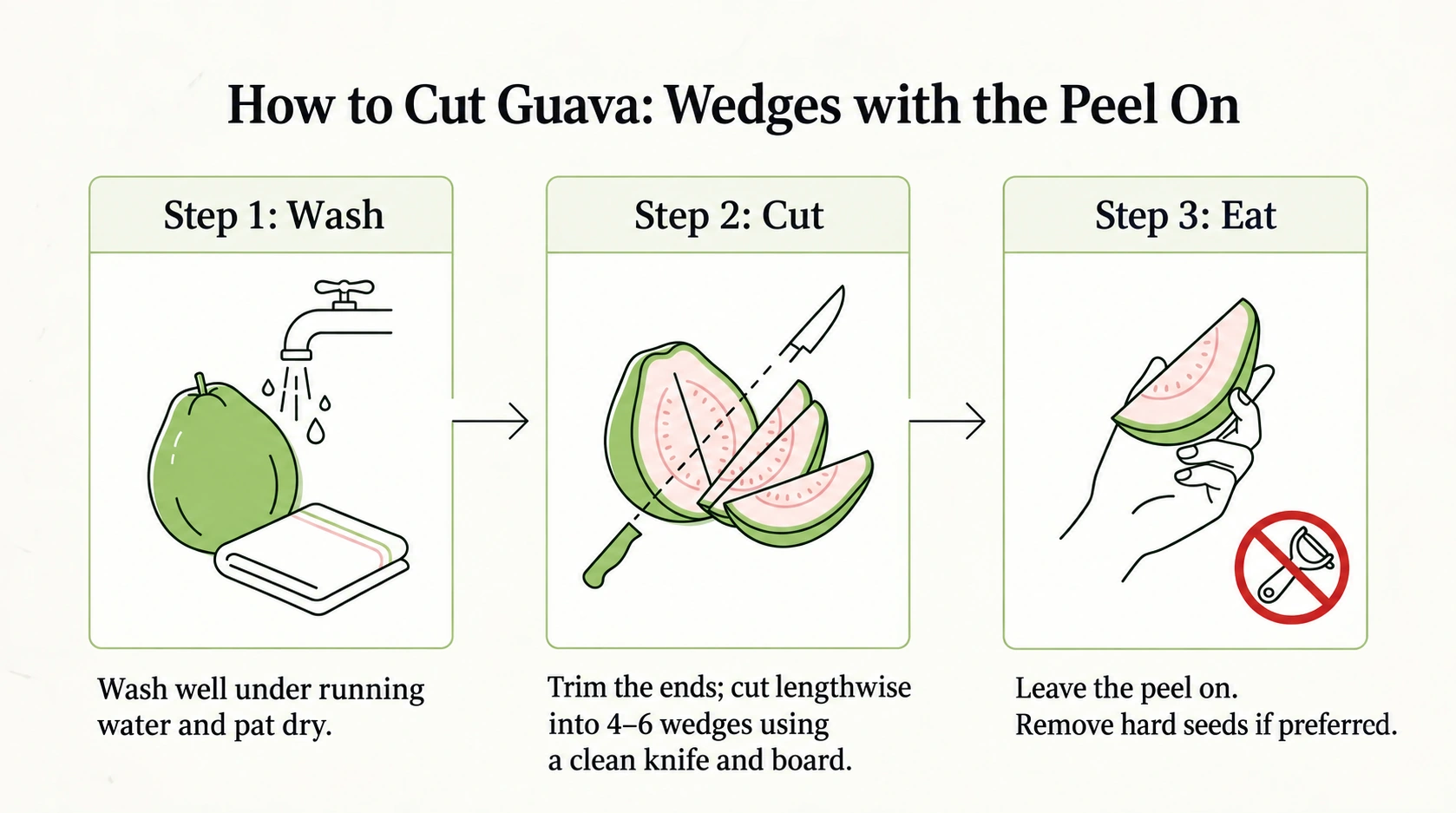
How to cut guava and eat it with the peel on
- Just before cutting, wash the surface thoroughly under running water and pat it dry.
- Use a clean knife and cutting board. Trim the stem end and the opposite tip.
- Cut lengthwise into four to six wedges.
- Eat with the peel on.
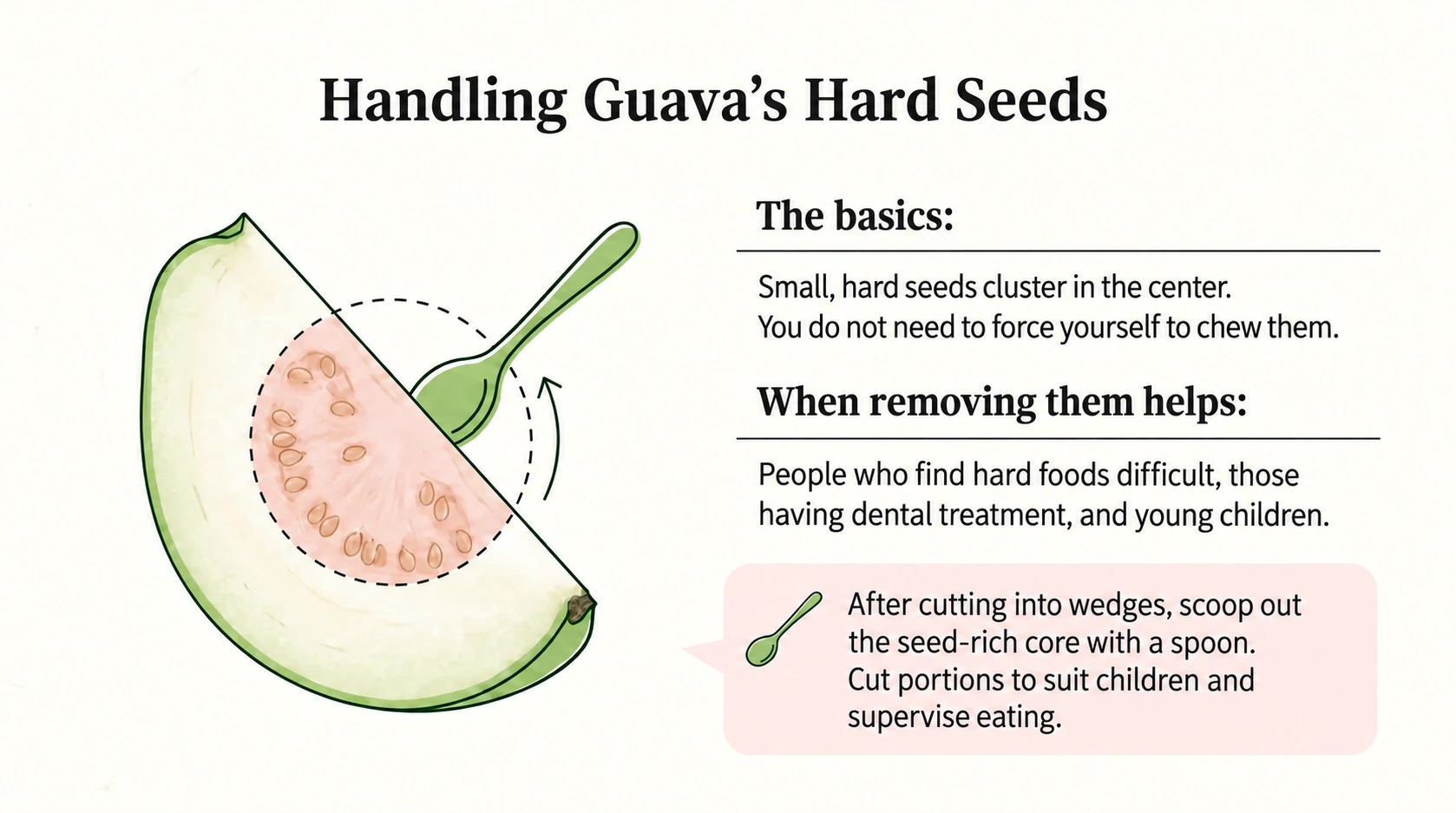
The center contains clusters of hard seeds. Some people eat them with the flesh, but you do not need to force yourself to chew them. If you find hard foods difficult to chew, are having dental treatment, or are serving young children, removing the seed-rich center with a spoon or knife can make the fruit easier to eat. Cut pieces to suit a child’s age and chewing ability, and supervise eating.
Vietnamese ways to enjoy guava
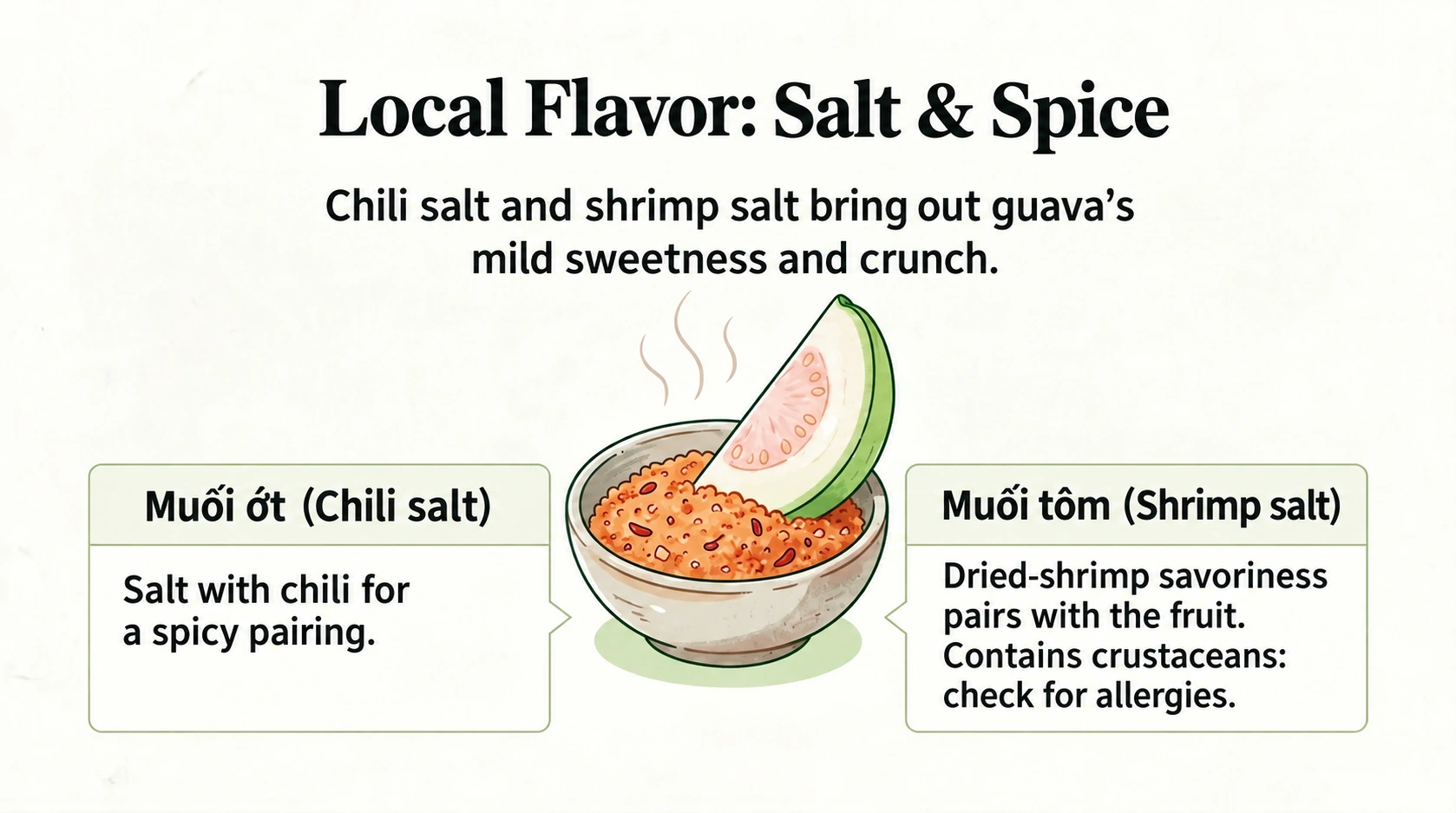
1. Chili salt or shrimp salt
Guava wedges dipped in chili salt (muối ớt) or shrimp salt (muối tôm) are popular in Vietnam. Salt and chili bring out the fruit’s mild sweetness. Shrimp salt contains crustaceans, so avoid it if you have a relevant allergy.
2. Juice and smoothies
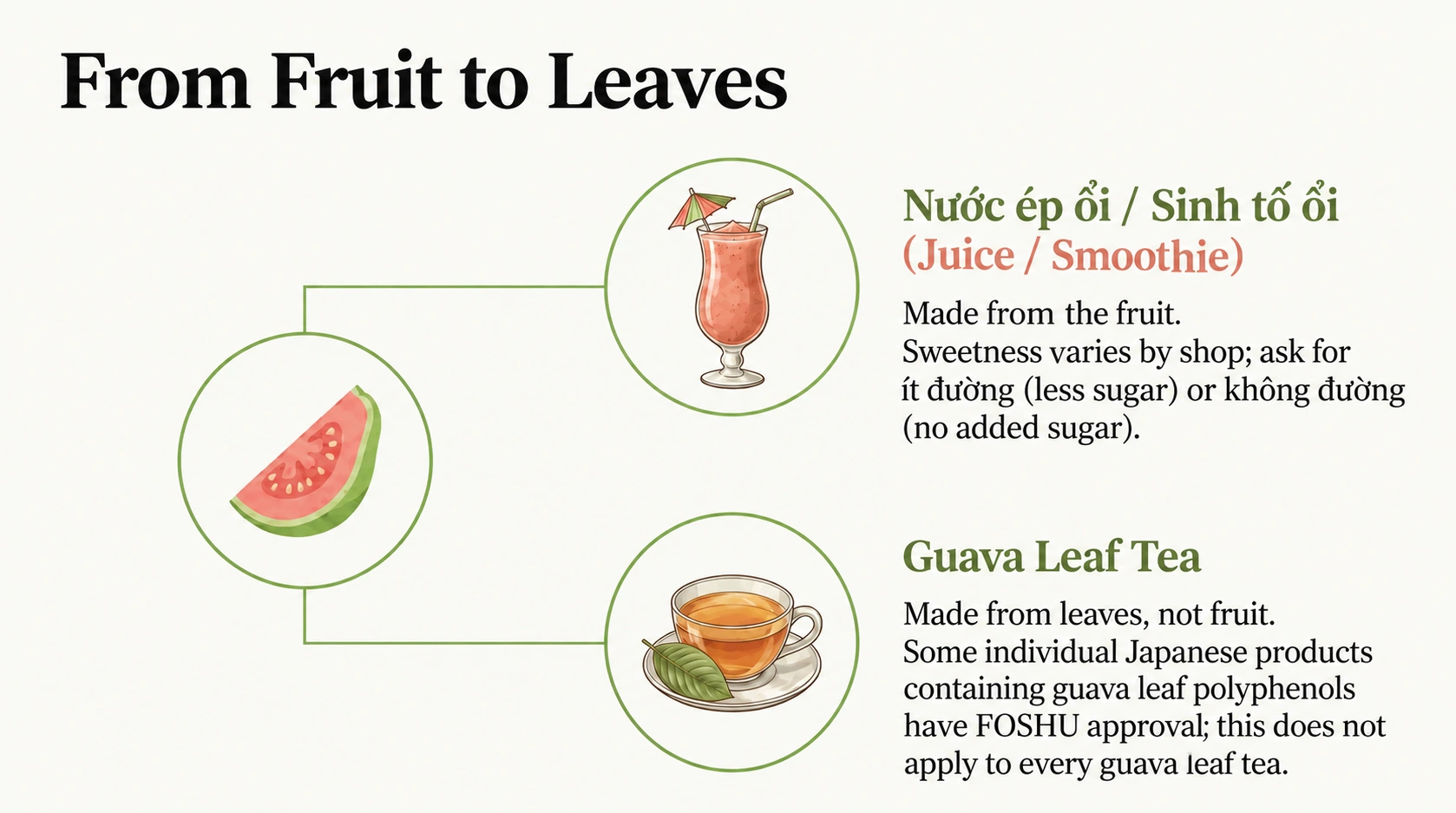
Cafés may serve guava juice (nước ép ổi) and guava smoothies (sinh tố ổi). Ask for ít đường for less sugar or không đường for no added sugar.
3. Guava leaf tea
Guava leaves are also used to make tea. Japan has some products containing guava leaf polyphenols approved as Foods for Specified Health Uses (FOSHU). Consumer Affairs Agency approval applies to individual products; it does not establish the same approved health claims for all guava leaf teas.
How to store guava
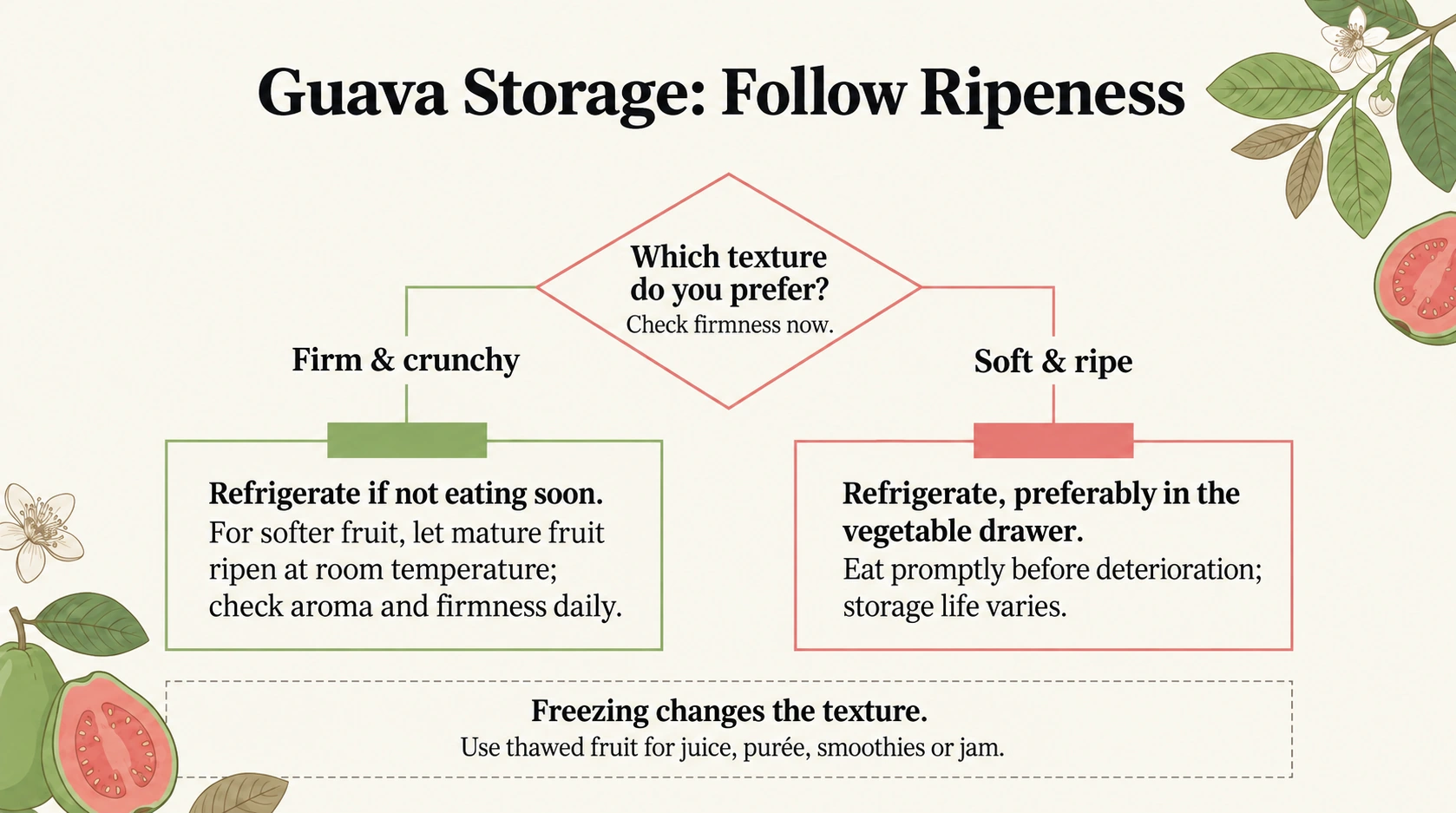
- Firm guava: refrigerate if you are not eating it soon. If you prefer a softer ripe texture, leave mature fruit at room temperature and check its aroma and firmness daily. Immature fruit may not ripen normally.
- Soft, ripe guava: refrigerate and eat it promptly before deterioration. Guava can be sensitive to low temperatures; at home, use the vegetable drawer and check ripeness and condition rather than relying on a fixed number of days.
- Cut guava: keep in a sealed container in the refrigerator and eat it the same day if possible.
- Freezing: texture changes, so frozen fruit is better suited to juice, smoothies, purée or jam after thawing.
Storage life depends on ripeness at purchase, damage and refrigerator temperature. Do not eat fruit with an unusual appearance or smell.
Points to keep in mind when eating guava
- Wash under running water just before cutting, especially because the peel is eaten.
- Do not force yourself to chew hard seeds; remove the center if needed.
- Check shrimp salt ingredients if you have a crustacean allergy.
- Choose cut fruit kept hygienically at low temperatures and eat it promptly.
Adjust the amount you eat to suit how you feel. Enjoy guava as food, rather than as a treatment for particular symptoms.
Can I take fresh guava from Vietnam into Japan?
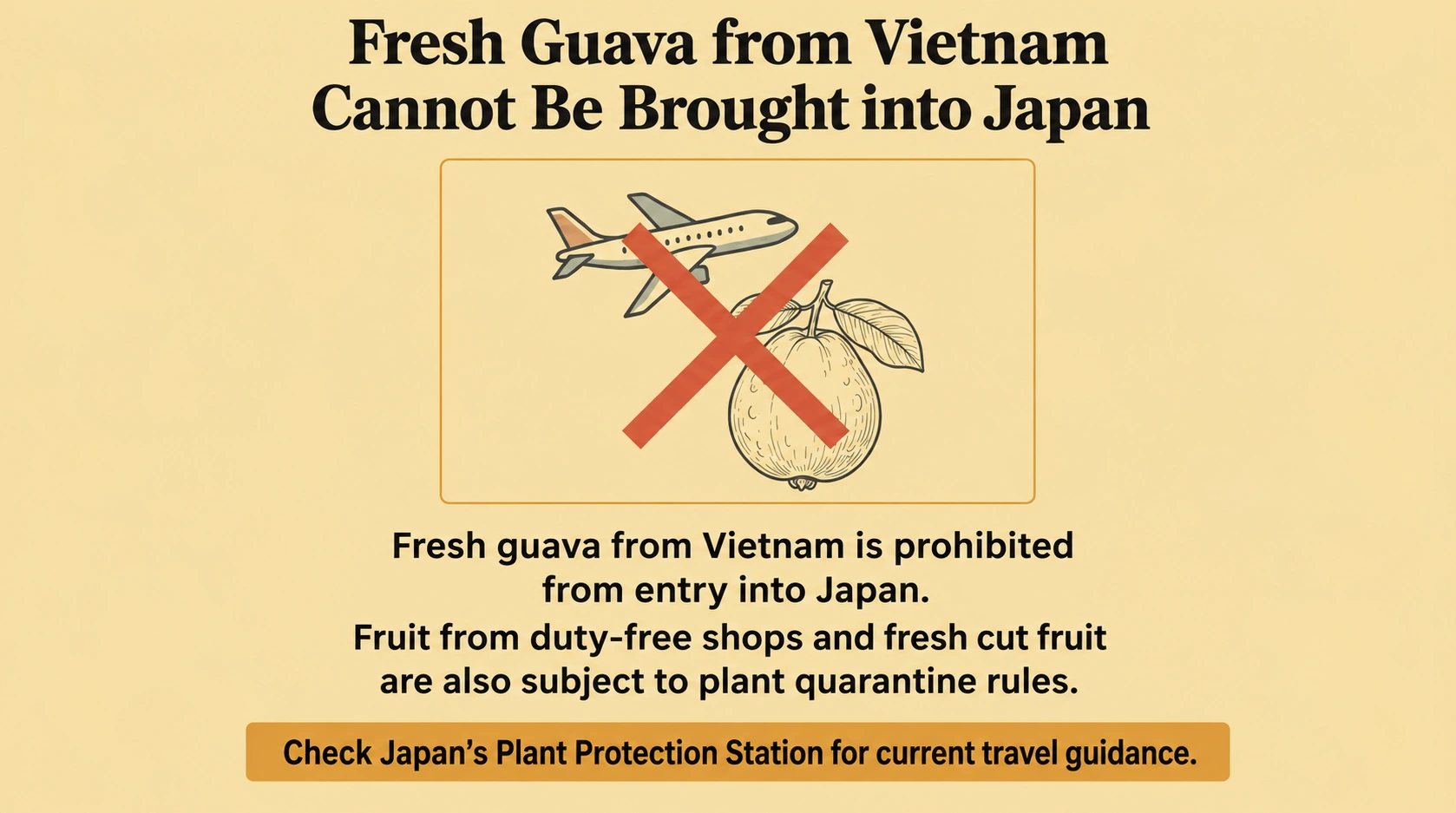
No. Fresh guava from Vietnam cannot be brought into Japan. The Plant Protection Station explicitly lists guava as a prohibited fruit.
Plant quarantine rules help prevent the introduction of pests and diseases. Fruit bought in airport duty-free shops and fresh cut fruit are also subject to the rules. Check the Plant Protection Station’s current guidance before traveling.
The author’s guava tasting notes in Vietnam
Purchase record
- Place: supermarket
- Price: 20,000 VND per kg (purchased in August 2026; currency conversions fluctuate)
- Impression: crunchy texture, hard seeds and little noticeable sweetness
This was a useful example of the firm, crunchy type familiar in Vietnam. If you are looking for a sweet aroma and softer flesh, check ripeness when buying.
Frequently asked questions about eating guava
Do guaba, guwaba and gwaba refer to the same fruit?
Yes. They are different Japanese spellings for guava. English uses “guava.”
Do I need to peel it?
Usually not. Wash it thoroughly under running water, cut it into wedges and eat it with the peel on.
Is green, firm guava unripe?
Not necessarily. In Vietnam, mature-green guava may be eaten while still firm. If you prefer softer fruit, also check aroma, skin color and gentle firmness.
Can I eat the seeds?
Some people eat the seeds with the flesh, but they are hard. You do not need to force yourself to chew them. Remove the seed-rich center if you prefer.
Can I take it home to Japan?
Fresh guava from Vietnam is prohibited from entry into Japan. Enjoy it during your trip.
Eating guava in Vietnam: key points
- Wash thoroughly and cut into wedges with the peel on.
- Choose firm fruit for crunch; use aroma and gentle firmness to find softer, ripe fruit.
- Remove the seed-rich core if hard seeds bother you.
- Try chili salt or shrimp salt for a local pairing, checking ingredients for allergies.
- Refrigerate ripe and cut fruit and eat it promptly.
- Fresh guava from Vietnam cannot be brought into Japan.
More about guava
- Taste, seasons, nutrition, varieties and Vietnamese name: Guava Guide
- Origins, names and global history: Guava: History and Stories
- More local fruits: 15 Vietnamese Fruits
References
- UC Davis Postharvest Research and Extension Center: Guava
- University of Florida IFAS Extension: Guava Growing in the Florida Home Landscape
- Japan Plant Protection Station: Information for Visitors to Japan
- Japan Plant Protection Station: Rules for Bringing Vegetables and Fruit from Overseas
- Consumer Affairs Agency: Foods for Specified Health Uses (FOSHU)
- Yakult Central Institute: Guava Leaf Polyphenols
- VIETJO: Guava / Ổi
About the Author

Chuta
Based in Hanoi, Vietnam, Chuta buys fruit at local markets and supermarkets and writes about its taste, seasons, selection and preparation. Drawing on life in Vietnam, he introduces tropical fruits that are less familiar to readers in Japan.
About Fruit Guide